Pompeii · Italy · Archaeological site
Pompeii Archaeological Park
The Roman city buried by the eruption of Vesuvius in 79 AD, with streets, houses, baths, theatres and an amphitheatre. UNESCO World Heritage.

 Search
 Brazil
 Antarctica
 Argentina
 Bolivia
 Chile
 Colombia
 Ecuador
 Falkland Islands (Malvinas)
 French Guiana
 Guyana
 Paraguay
 Peru
 Suriname
 Uruguay
 Venezuela
 Austria
 Belgium
 Croatia
 Denmark
 Finland
 France
 Germany
 Greece
 Hungary
 Iceland
 IrelandItaly
 Luxembourg
 Norway
 Poland
 Portugal
 Slovakia
 Slovenia
 Spain
 Sweden
 Switzerland
 the Czech Republic
 the Netherlands
 the United Kingdom
 Turkey
 Bermuda
 Canada
 Greenland
 Mexico
 Saint Pierre and Miquelon
 the United States
 the Dominican Republic
 JapanTurkey
 Egypt
 South Africa
 Australia
 Fiji
 New Zealand
 Papua New Guinea
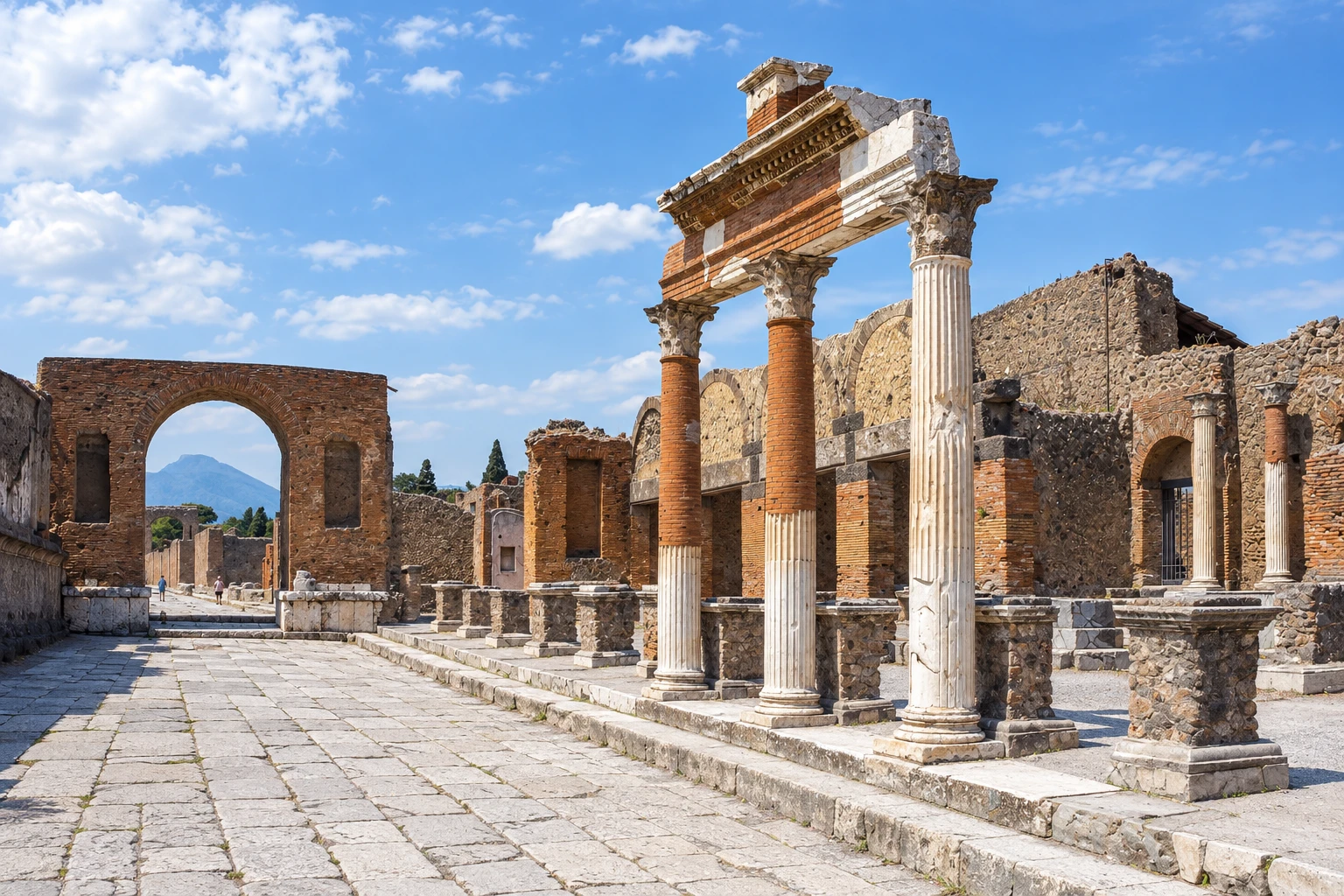
In the photo: Parco archeologico di Pompei, Pompei
Illustrative images. The pictures in this guide are illustrations based on the real place, not photographs, and may differ from it.

The city
Pompeia is the Roman city buried by Vesuvius in 79 AD, today one of the largest archaeological sites in the world, with the Villa dei Misteri and its frescoes. Beside the ruins, the modern town revolves around the Santuario della Beata Vergine del Rosario. Nearby are Herculano, the Villa di Poppea in Oplontis and the trail up to the crater of Vesuvius.
30 places to stay in Pompeii.
30 places to eat in Pompeii.
Hotéis e restaurantes da cidade no mapa.
how to get there · how many days · itinerary · questions
The local experience
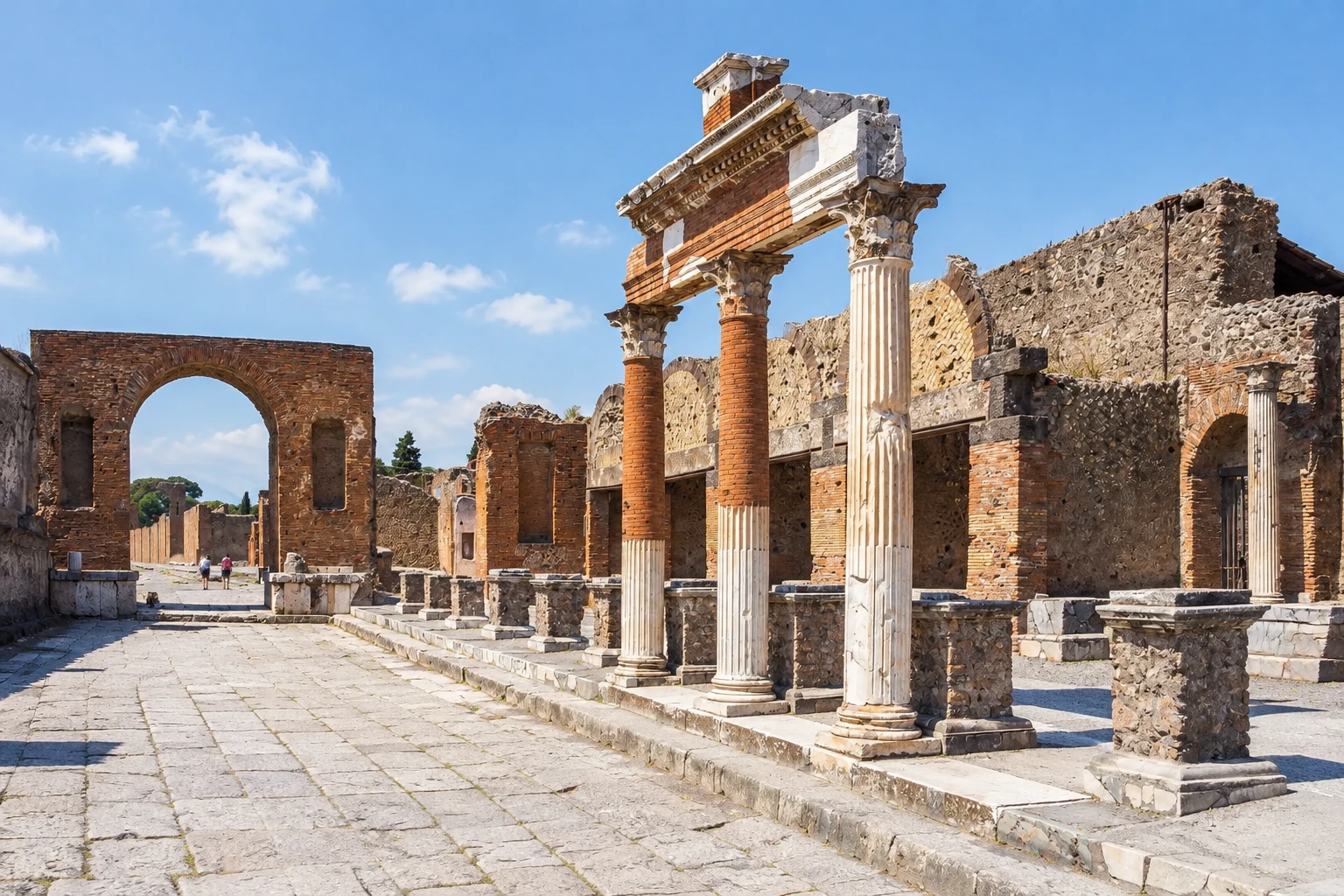
The Roman city buried by the eruption of Vesuvius in 79 AD, with streets, houses, baths, theatres and an amphitheatre. UNESCO World Heritage.
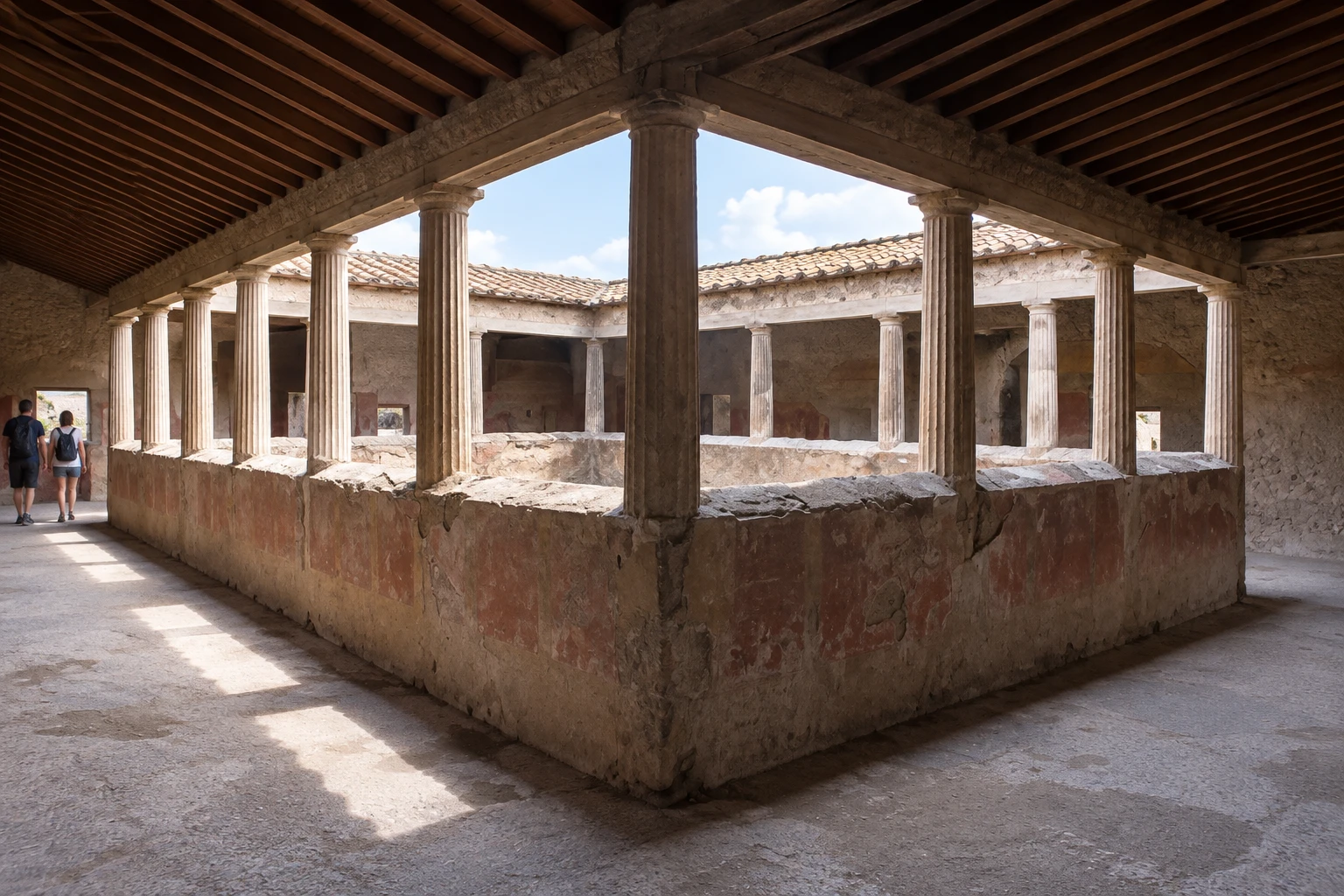
Large Roman villa outside Pompeia's walls, famous for the cycle of red-background frescoes depicting a rite linked to Dionysus.
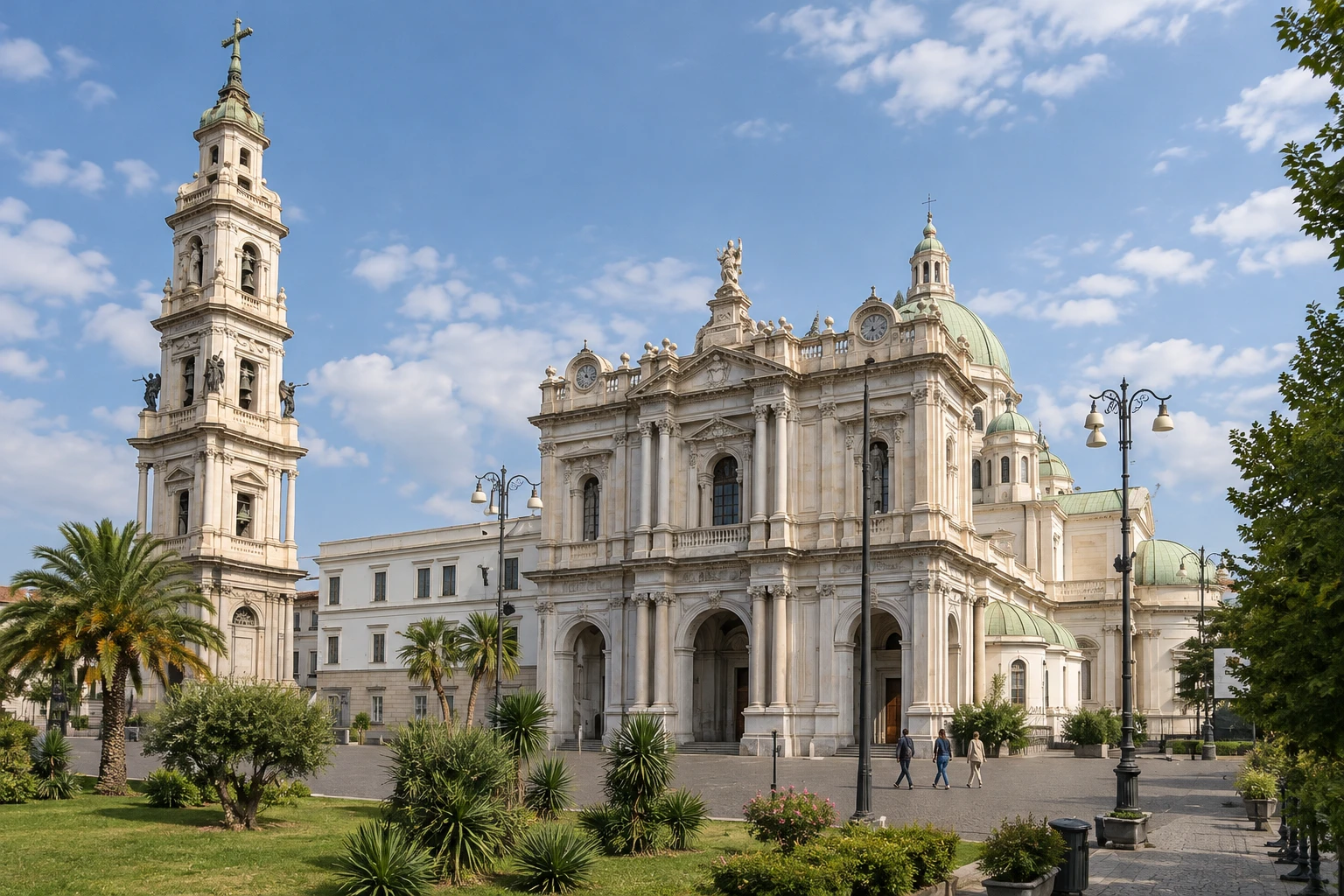
Late-19th-century basilica in the center of modern Pompeia, one of Italy's most visited Marian shrines.
Explore Shrine of the Blessed Virgin of the Rosary of Pompei
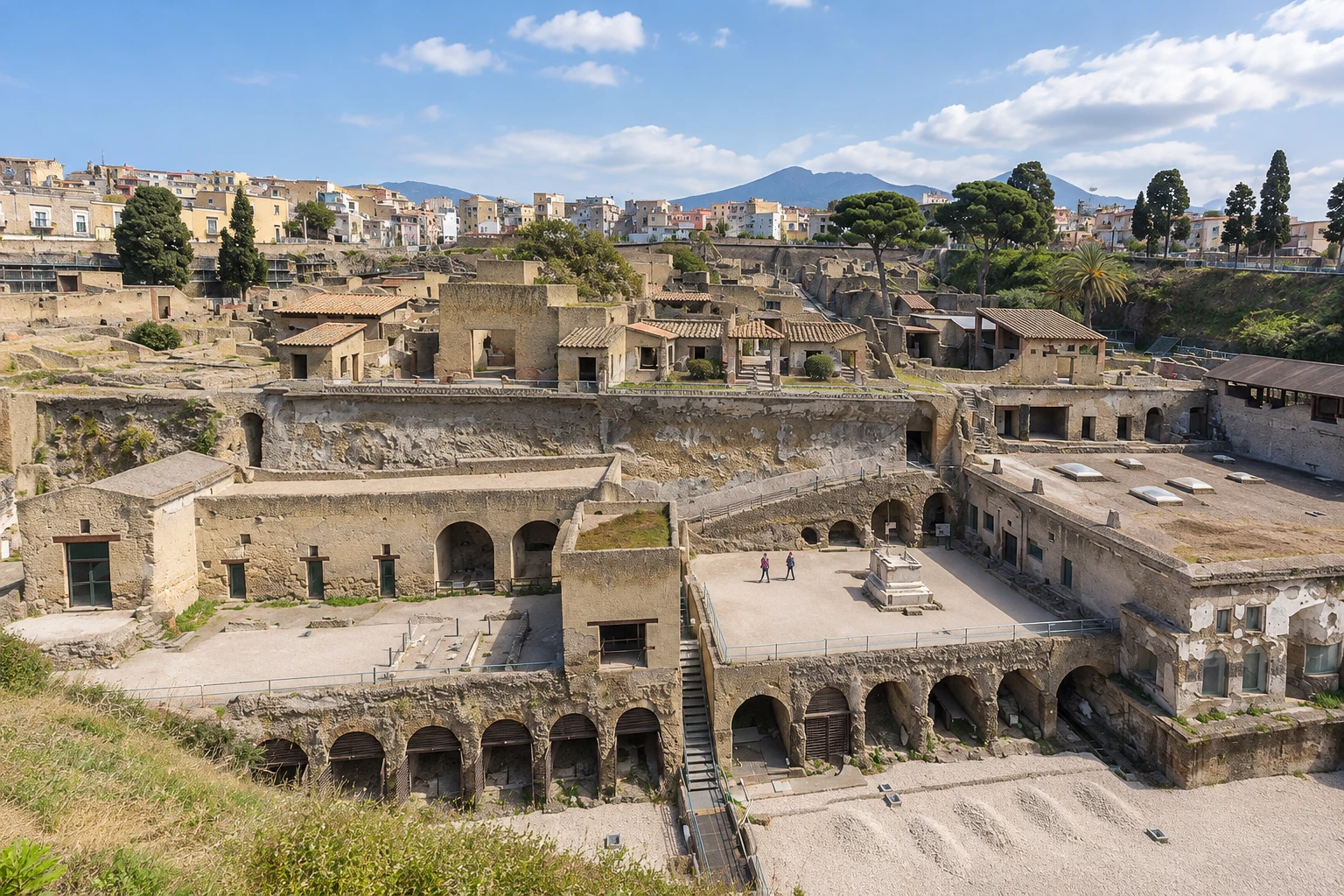
Herculano, the neighboring Roman town buried by the same AD 79 eruption, smaller than Pompeia and with two-storey houses and preserved wood.
Before you go
Pompeii – Italy Destination Naples, Pompeii, and Capri about 27 km from Naples
Approximate distances. Check flights and bus, train or boat schedules before you travel.
From Naples, the Circumvesuviana (Napoli–Sorrento line) departs from Porta Nolana station and the Garibaldi stop next to Napoli Centrale, and reaches Pompei Scavi – Villa dei Misteri in about 35 to 40 minutes. Those coming from Rome take the high-speed train to Naples and change to the Circumvesuviana. There are also buses and Trenitalia trains to Pompei station, in the modern town centre.
One day is enough for the ruins, including the Villa dei Misteri and the sanctuary. With two days you can add Herculano and the climb to Vesuvius, or the Villa di Poppea in Oplontis. Most visitors come from Naples or Sorrento and return to sleep.
April, May, September and October usually have pleasant temperatures for walking among the ruins. In summer, from June to August, the heat is strong and there is little shade: enter at opening time. In winter the site closes earlier. On the first Sunday of the month entry is free and visitor numbers are usually much higher.
The seasons shown are the most usual ones; nature doesn't always follow the calendar.
No. The Circumvesuviana links Pompeia with Naples, Herculano, Oplontis and Sorrento, and there are buses to Vesuvius from the stations. Those arriving by car will find parking lots near the entrances to the ruins.
Suggested itinerary
Built with the places on this page. No rush: it's paced so you have time to see them.
Enter through Porta Marina at opening time. Walk to the Forum, with Vesuvius in the background, pass the Stabian Baths, the Casa del Fauno and the House of the Vettii, and see the bakeries and the lupanar.
After a snack, walk east to the Grande Theatre and the amphitheatre, passing along the Via dell'Abbondanza, the main street, with shops and inscriptions on the walls.
Head back towards Porta Ercolano and follow the Via dei Sepolcri to the Villa dei Misteri, with its red-background frescoes, if your ticket includes the suburban villas.
Go to Piazza Bartolo Longo, see the façade of the Santuario della Beata Vergine del Rosario and have dinner in the centre of Pompeia before returning to Naples or Sorrento.
Check before you go. Opening hours and days change, and places may close for renovations, holidays or events. This itinerary is a suggestion from Cidade Turismo, not a commitment: plan yours by checking directly with each place you intend to visit.
Before you go
Yes. The Circumvesuviana takes about 35 to 40 minutes from Naples to Pompei Scavi, and a full day at the ruins is easily enough to return at night.
Pompeia is larger and shows an entire city, with a Forum, theatres and an amphitheatre. Herculano is smaller and better preserved. If possible, see both on different days.
It helps to understand the site and not get lost in a huge place. Those who prefer to go alone can download the official map and plan a route beforehand.
Water, a hat, sunscreen and comfortable closed shoes. The streets have large, uneven stones and there is almost no shade. Large luggage is not allowed.
It is possible but tiring. A more relaxed option is Pompeia one day and Herculano with Vesuvius on another, buying the trail ticket online in advance.