Via dei Tribunali: the main decumanus from Port’Alba to the Duomo
From Piazza Dante (Dante metro station, Line 1) Self-guided walk About 3 hours, including the visits Morning Easy, on a narrow, busy street
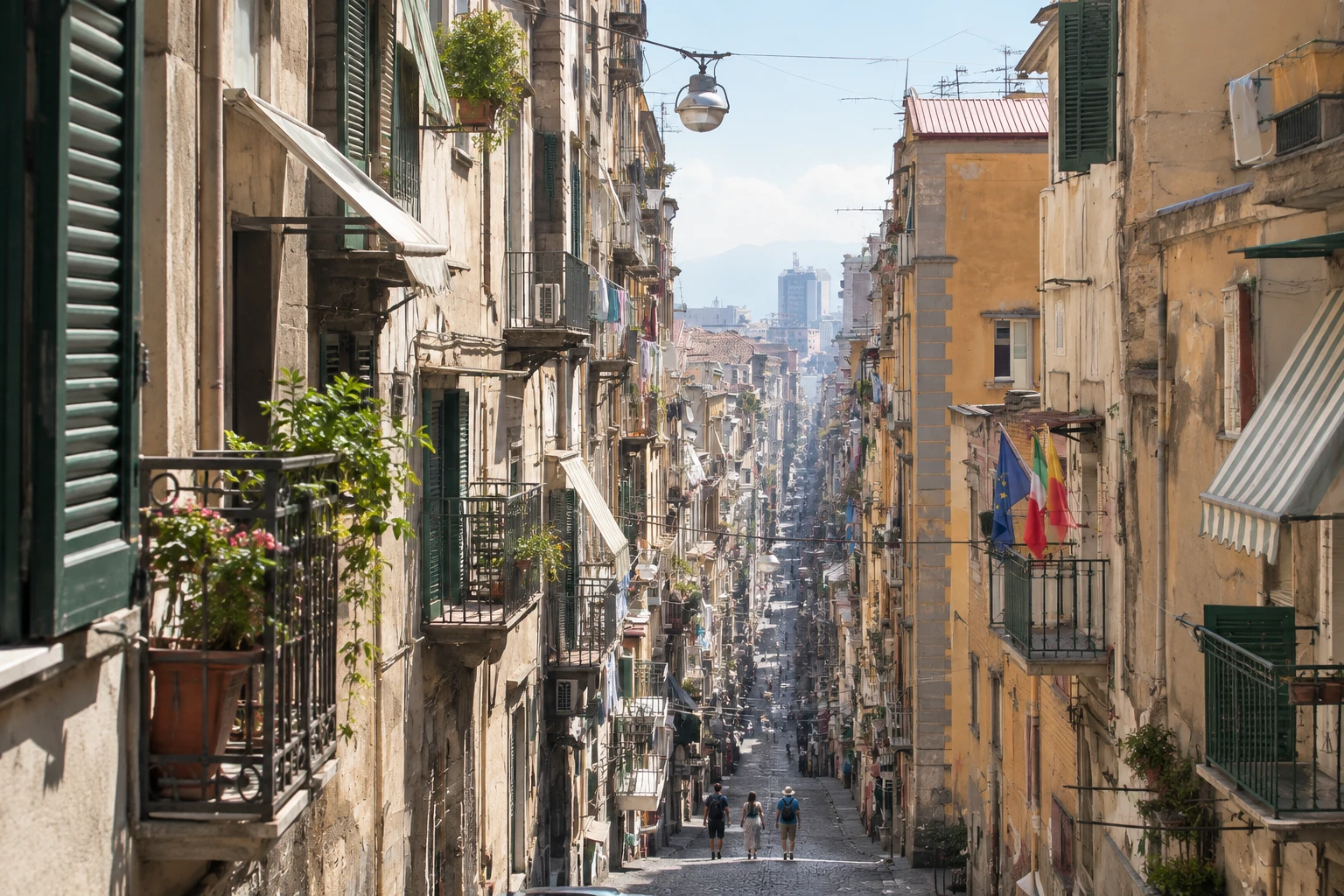
Via dei Tribunali follows the main decumanus, the principal street of Greek and Roman Neapolis. Enter through Port'Alba, the booksellers' passage beside Piazza Dante, and stop at Piazza Bellini, where a section of the Greek walls lies below the level of the café-lined square.
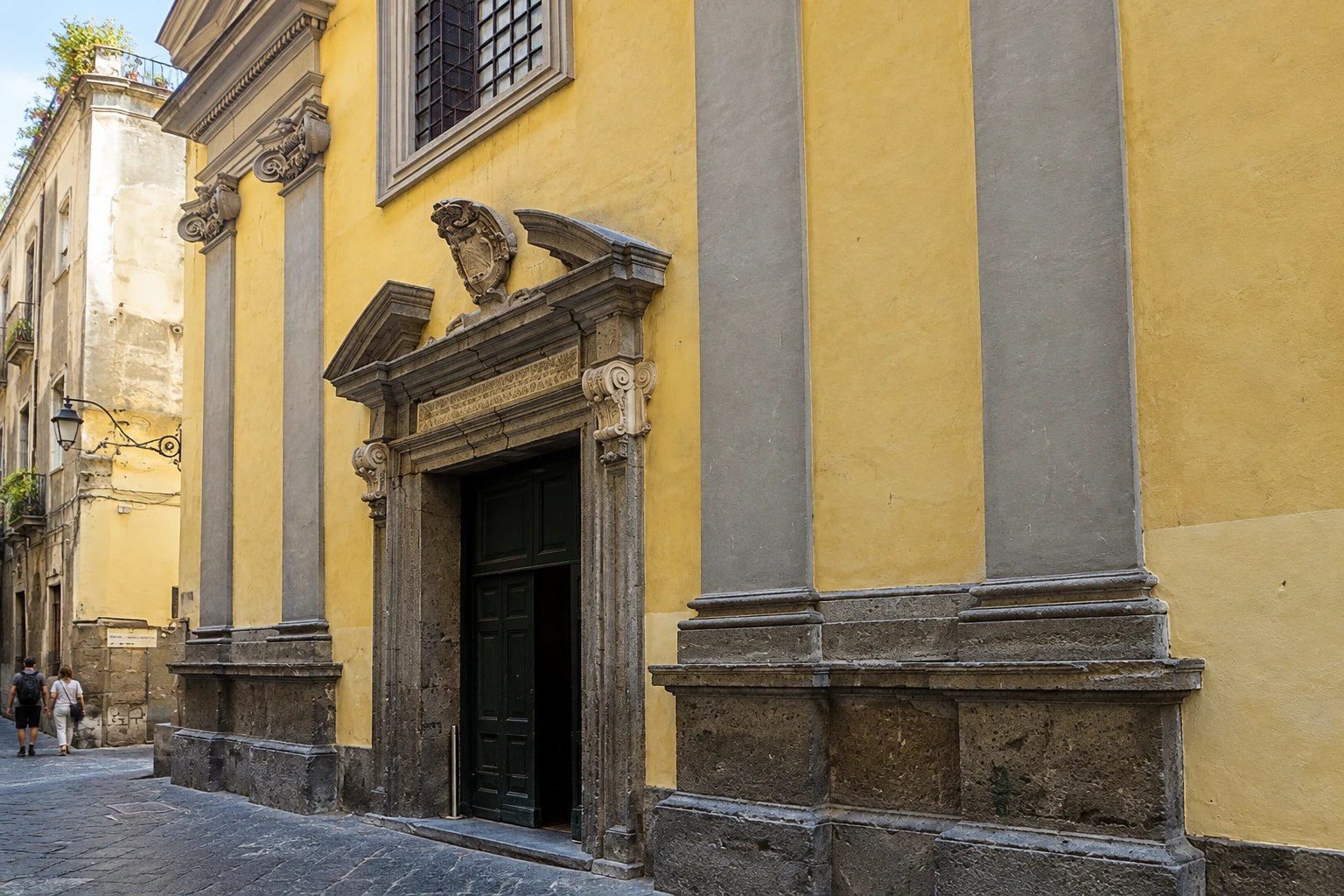
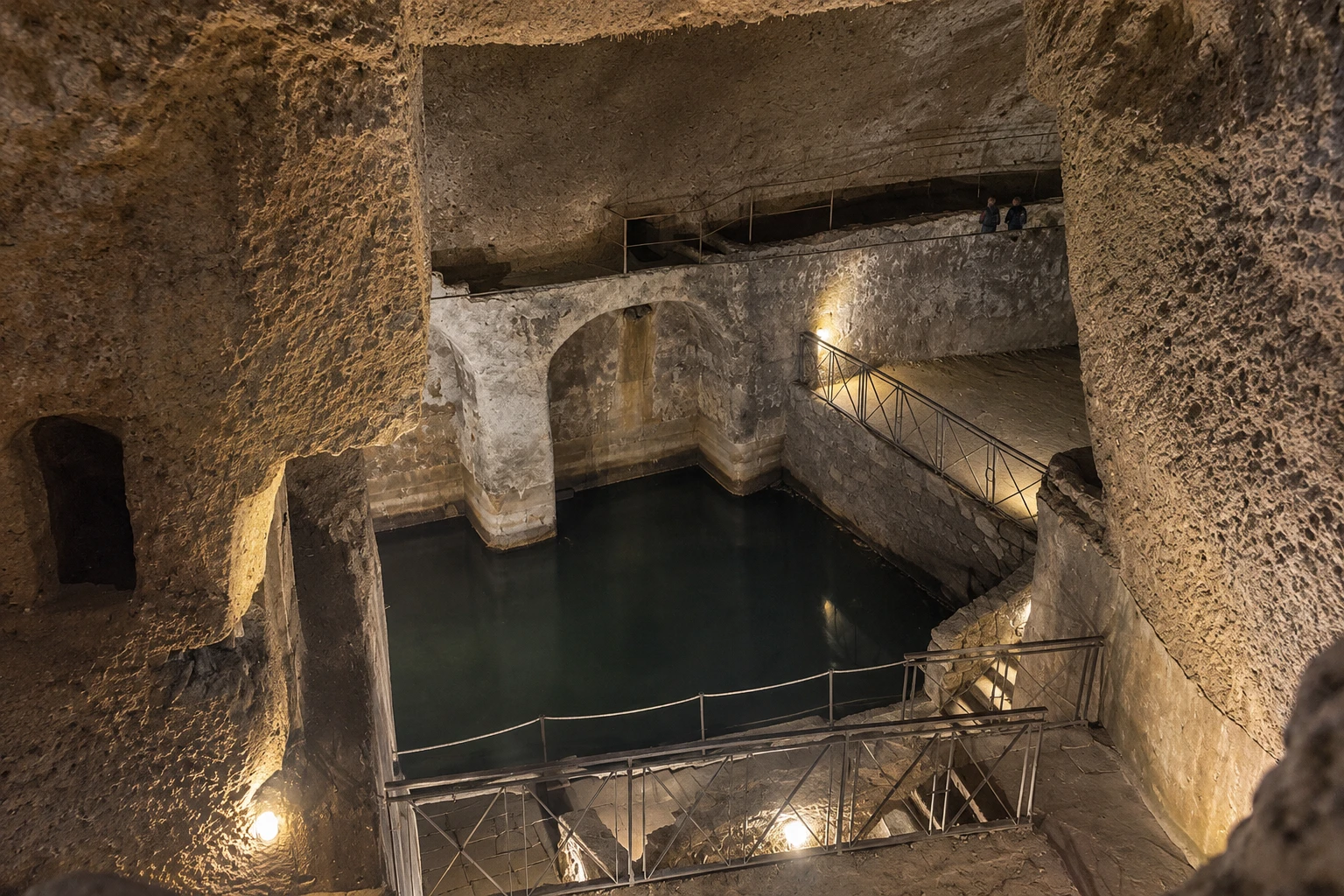
Along the street, bronze skulls stand outside Santa Maria delle Anime del Purgatorio ad Arco. Beneath the church is a burial chamber associated with popular devotions to souls in purgatory. Piazza San Gaetano stands on the site of the Greek agora and Roman forum. Here you'll find San Paolo Maggiore, with two columns from the ancient temple of the Dioscuri in its facade, and the Gothic Basilica di San Lorenzo Maggiore. The latter gives access to the Roman market excavations beneath the convent, including part of an ancient street and its shops.
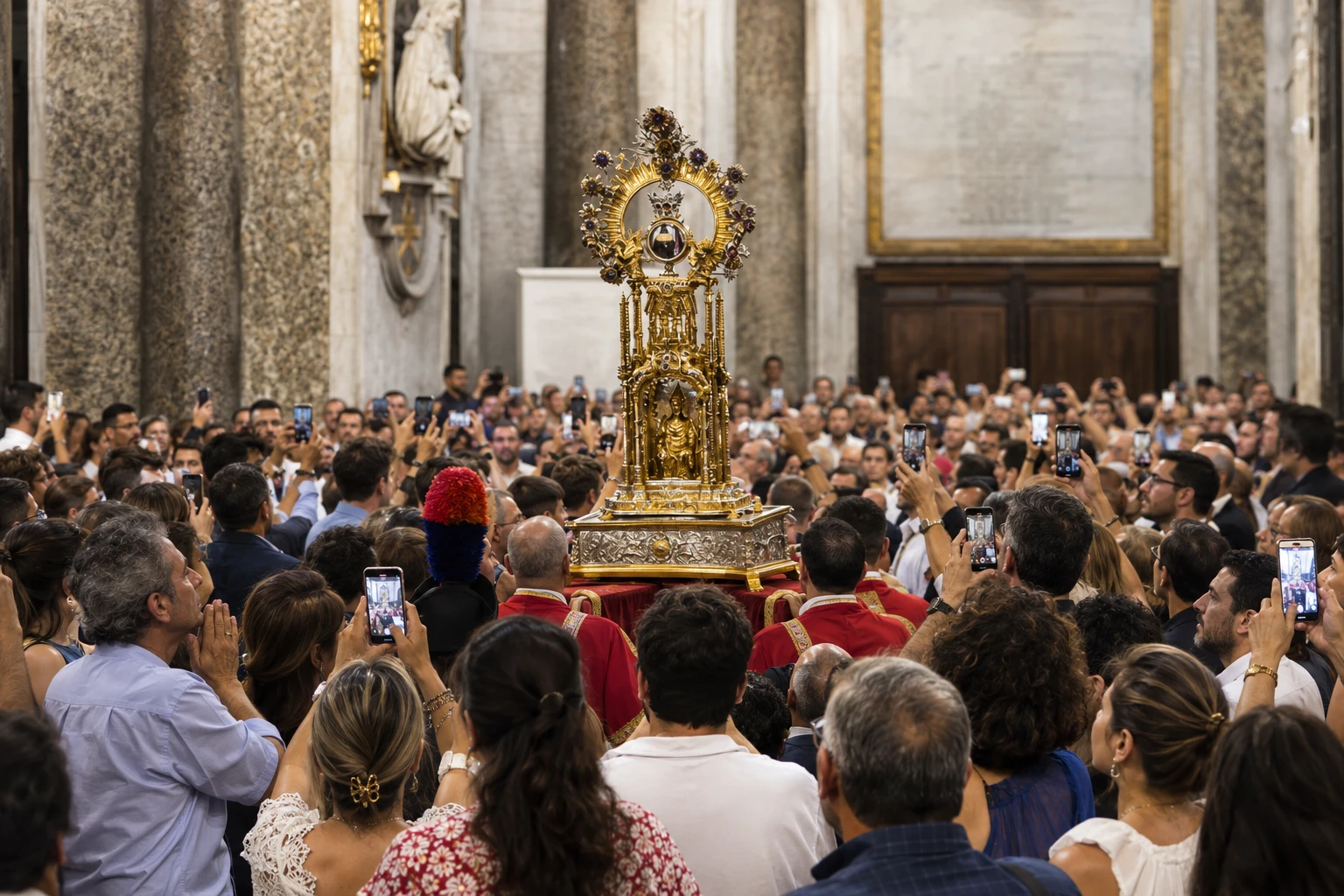
Near Via Duomo is Pio Monte della Misericordia, the octagonal church of a 17th-century brotherhood. Caravaggio's Seven Works of Mercy hangs over the high altar. The obelisk of San Gennaro rises on the neighboring square. Finish at the Duomo, the Cathedral of Santa Maria Assunta. It combines 14th-century Gothic architecture with Baroque additions and a Gothic Revival facade. Inside are the Chapel of the Treasure of San Gennaro and the Basilica of Santa Restituta.
Stops: Port'Alba, Piazza Bellini, Via dei Tribunali, Piazza San Gaetano, Basilica di San Lorenzo Maggiore, Pio Monte della Misericordia, Naples Cathedral.
Includes: Walking the street and visiting the Duomo are free. The excavations at San Lorenzo Maggiore, Pio Monte della Misericordia, the Purgatorio ad Arco complex and the Museum of the Treasure of San Gennaro charge separate admission. Check current rates.
Tip: Lines form at the pizzerias at lunch and dinner. Eating early or in the middle of the afternoon shortens the wait. Churches often close at midday. Plan interior visits for the morning and check before going.
Best time: Year-round. In December the street and the side lanes lined with nativity scenes get very busy.
Spaccanapoli: from Gesù Nuovo to San Gregorio Armeno
From Piazza del Gesù Nuovo (Dante or Toledo metro station) Self-guided walk About 3 hours Morning or afternoon Easy
Spaccanapoli is the popular name for the lower decumanus, the straight line through the old center whose street name changes along the way, from Via Benedetto Croce to Via San Biagio dei Librai. Viewed from Vomero, it seems to split Naples in two, hence the nickname.
Start on Piazza del Gesù Nuovo, with the Immaculate Conception obelisk in the middle. The Baroque church of Gesù Nuovo reused the facade of a 15th-century palace, faced in pointed stone blocks. Opposite, the Santa Chiara complex includes the Gothic church of the Angevin kings, rebuilt after bombing in 1943, and the Poor Clares' cloister, where 18th-century painted majolica covers the pillars and benches.
Farther along, Piazza San Domenico Maggiore has another obelisk and the Dominican church. The Cappella Sansevero, home of the Veiled Christ, is on a side street and requires reservations. On Piazzetta Nilo, locals call the Roman statue of the Nile god the Corpo di Napoli.
Via San Gregorio Armeno links Spaccanapoli and Via dei Tribunali. It's the street of Nativity artisans, whose workshops sell shepherd figurines year-round alongside figures of politicians, actors, and soccer players. On the same stretch, the monastery of San Gregorio Armeno opens its cloister with a Baroque marble fountain.
Stops: Piazza del Gesù Nuovo, Complesso di Santa Chiara, Piazza San Domenico Maggiore, Cappella Sansevero, Piazzetta Nilo, Via San Gregorio Armeno.
Includes: The street, squares and churches of Gesù Nuovo and San Domenico are free to visit. The Santa Chiara and San Gregorio Armeno cloisters and Cappella Sansevero each charge admission. Check current rates.
Tip: Book Cappella Sansevero ahead and plan the walk around your time slot. Combined with Via dei Tribunali, the full circuit of the two decumani takes a day.
Best time: Year-round. Via San Gregorio Armeno gets very busy from late November through Christmas.
The National Archaeological Museum, Piazza Cavour, and Galleria Principe di Napoli
From Museo station (line 1) or Piazza Cavour (line 2) On foot after the metro ride 3 to 4 hours Morning Easy
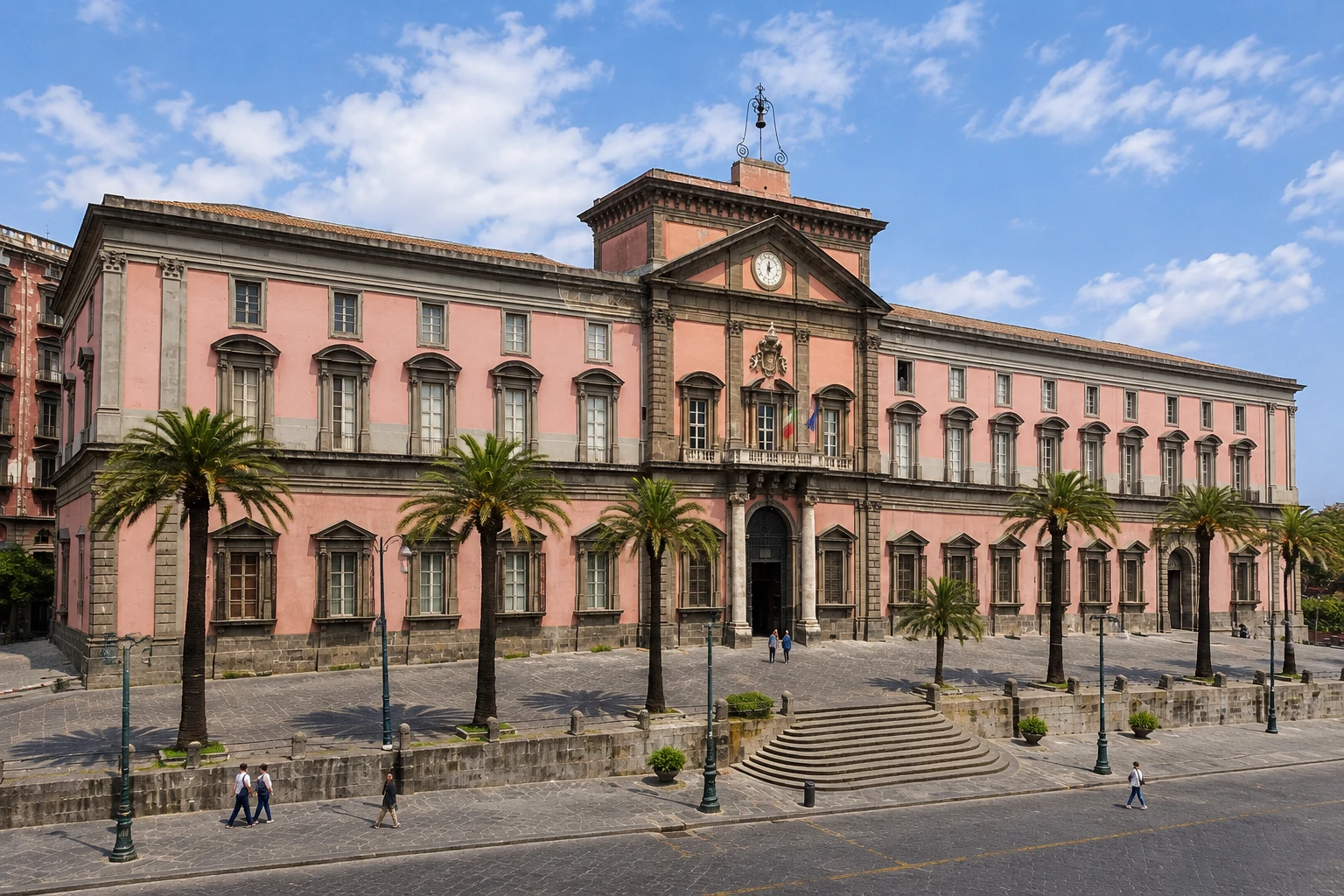
The Museo Archeologico Nazionale, or MANN, occupies a large palace at the northern edge of the old town. It houses finds from the homes of Pompeii and Herculaneum as well as the Farnese sculpture collection. With only a morning, focus on three groups: the Farnese sculptures on the ground floor, the mosaics and Secret Cabinet on the mezzanine, and the frescoes upstairs, where you'll also find the great Hall of the Sundial.
Museo metro station, designed by Gae Aulenti, connects by moving walkway to Piazza Cavour station on Line 2. It displays reproductions and objects related to the museum. Outside, the iron-and-glass Galleria Principe di Napoli stands opposite the museum building.
Afterward, walk down Via Pessina to the semicircular Piazza Dante and enter the old town through Port'Alba. The museum pairs well with a trip to Pompeii. The mosaics, paintings, and everyday objects here give fuller meaning to much of what you see in the ruins.
Stops: Naples National Archaeological Museum, Museo Station, Piazza Dante.
Includes: The museum charges admission. Check current prices and opening days. Some rooms open in rotation.
Tip: The museum closes one day a week. Check before planning your route. Save time and energy for the mosaics and frescoes, the sections connected with Pompeii.
Best time: Year-round. A good choice for rainy days and hot afternoons.
The length of Via Toledo: Gallerie d’Italia, Pignasecca and the Spanish Quarter
From Piazza Dante (Dante metro station, Line 1) On foot, downhill along the street 2 to 3 hours Afternoon Easy, with sloping side streets
Via Toledo opened in 1536 beside the old city walls and links Piazza Dante to Piazza Trieste e Trento. It's the city's main shopping street and largely pedestrian-only.
Walking down from Piazza Dante, stop first at Pignasecca on your right, a street market with stalls selling fish, vegetables, fried snacks, and offal. Back on Via Toledo, the former Banco di Napoli building houses the Gallerie d'Italia, displaying Neapolitan painting from the 17th through the 20th century, Greek ceramics, and Caravaggio's last painting, The Martyrdom of Saint Ursula, from 1610.
Toledo metro station, designed by Óscar Tusquets, is worth the escalator ride through mosaics in shades of blue. Across the street begin the Quartieri Spagnoli, a grid of lanes laid out to house Spanish troops, now home to the Maradona mural and neighborhood trattorias.
At the bottom, Galleria Umberto I with its iron-and-glass dome opens onto the Teatro di San Carlo. Via Toledo ends at Piazza Trieste e Trento beside Piazza del Plebiscito.
Stops: Via Toledo, Pignasecca Market, Gallerie d'Italia, Toledo Station, Quartieri Spagnoli, Galleria Umberto I.
Includes: The street, market, Spanish Quarter and arcade are free to explore. The Gallerie d’Italia charges admission. A city transit ticket gets you into the metro station. Check current rates.
Tip: In the late afternoon, locals fill the street for a stroll. If you want something to eat standing up, try pizza a portafoglio, folded into quarters, fried pizza or a cuoppo, a paper cone of fried snacks.
Best time: Year-round.
Inside Castel Nuovo, Teatro di San Carlo and the Royal Palace
From Piazza Municipio (Municipio metro station, lines 1 and 6) On foot, with visits indoors 3 to 4 hours Morning or afternoon Easy
The monumental district lies between the port and Pizzofalcone Hill. You can walk between its sights in a few minutes. Charles I of Anjou commissioned Castel Nuovo, known to Neapolitans as the Maschio Angioino, as a royal residence in the 13th century. It later became an Aragonese fortress. A marble triumphal arch marks the entrance between two round towers. Inside, visit the octagonal-vaulted Sala dei Baroni, the Cappella Palatina, the only surviving room of the Angevin palace, and the Museo Civico, with paintings and sculptures from the 15th through the 20th century.
On the way up to the square is the Teatro di San Carlo, founded in 1737 and described as the oldest opera house still in operation. Guided tours of the auditorium are available outside rehearsal and performance times.
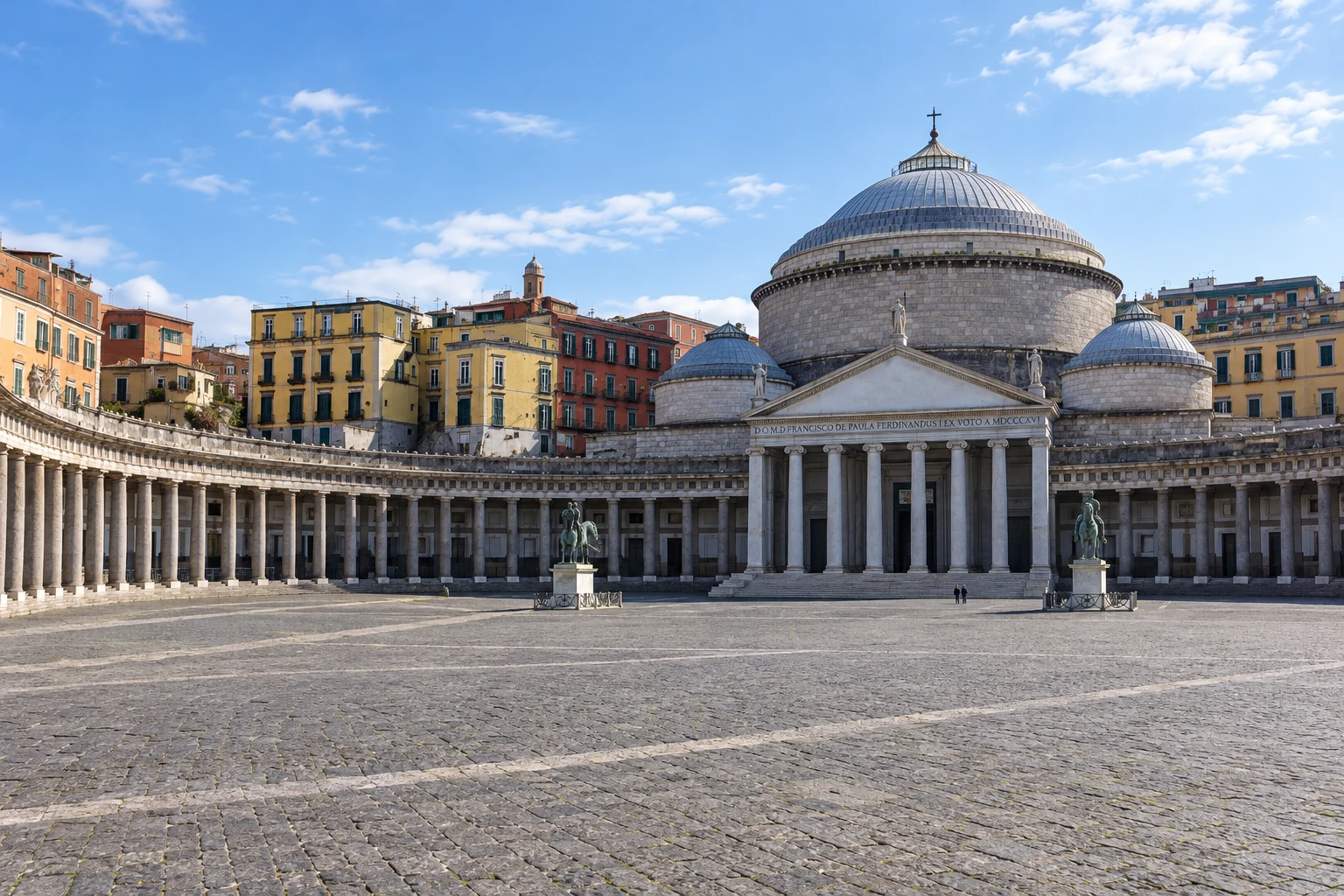
The Palazzo Reale, dating to 1600, faces Piazza del Plebiscito. Statues on the facade depict sovereigns of the dynasties that ruled Naples. Inside, the route takes in the grand staircase, court theater, throne room, and historic apartments. The complex also includes gardens and the Biblioteca Nazionale. Across the square you can visit the circular basilica of San Francesco di Paola.
Stops: Castel Nuovo (Maschio Angioino), Teatro di San Carlo, Royal Palace of Naples, Piazza del Plebiscito, Basilica di San Francesco di Paola.
Includes: Castel Nuovo, Palazzo Reale, and the guided tour of Teatro di San Carlo charge separately. Check current prices. The square and basilica are free.
Tip: Theater visits depend on the day's program. Check times before going. Caffè Gambrinus, on the corner of the square, is the area's historic café.
Best time: Year-round. San Carlo's opera and ballet season runs for much of the year. Check the program.
Walking the waterfront from Santa Lucia to Mergellina via Villa Comunale
From Via Nazario Sauro in Santa Lucia (walking distance from Piazza del Plebiscito) On foot or by bike 1 hour 30 minutes to 2 hours one way Early morning or late afternoon Easy, flat
The Naples waterfront stretches about 3 km from Via Nazario Sauro to Mergellina, with the bay on your left for most of the walk, Vesuvius behind you, and Posillipo Hill ahead. On clear days you can see Capri and the Sorrento peninsula.
Start on pedestrian-only Via Partenope, lined with historic hotels, restaurants, and pizzerias. Opposite is the islet of Megaride, with Castel dell'Ovo, the city's oldest fortress. At its foot is Borgo Marinari, a small boat harbor with seafood restaurants and boating clubs. The bridge and the waterfront afford good views of the castle. Access to the interior and terraces depends on whether the monument is open to visitors.
At Piazza Vittoria, enter the Villa Comunale, a public garden laid out between 1778 and 1780 as a promenade for the court. Its tree-lined walks, fountains, and statues lie between the Riviera di Chiaia and Via Caracciolo. At the end of the avenue, Mergellina has a harbor for fishing and motorboats. Stop at one of the traditional kiosks, called chalets, for gelato and coffee overlooking the sea.
Stops: Via Partenope, Borgo Marinari, Piazza Vittoria, Villa Comunale, Via Caracciolo, Mergellina.
Includes: The waterfront walk and Villa Comunale are free.
Tip: Check that Castel dell'Ovo is open to visitors. Metro lines 2 and 6 run back from Mergellina. To continue uphill, the Mergellina funicular goes to Posillipo.
Best time: Year-round. In summer the waterfront stays busy late into the evening. In winter, choose a calm day.


 Brazil
 Antarctica
 Argentina
 Bolivia
 Chile
 Colombia
 Ecuador
 Falkland Islands (Malvinas)
 French Guiana
 Guyana
 Paraguay
 Peru
 Suriname
 Uruguay
 Venezuela
 Austria
 Belgium
 Croatia
 Denmark
 Finland
 France
 Germany
 Greece
 Hungary
 Iceland
 Ireland
 Luxembourg
 Norway
 Poland
 Portugal
 Slovakia
 Slovenia
 Spain
 Sweden
 Switzerland
 the Czech Republic
 the Netherlands
 the United Kingdom
 Turkey
 Bermuda
 Canada
 Greenland
 Mexico
 Saint Pierre and Miquelon
 the United States
 the Dominican Republic
 Japan
 Egypt
 South Africa
 Australia
 Fiji
 New Zealand
 Papua New Guinea