

 Brazil
 Chile
Chile Colombia
 Peru
Peru Uruguay
 Germany
 Belgium
 Spain
Spain France
 Greece
 the Netherlands
 Ireland
 Italy
Italy Portugal
 the United Kingdom
 Switzerland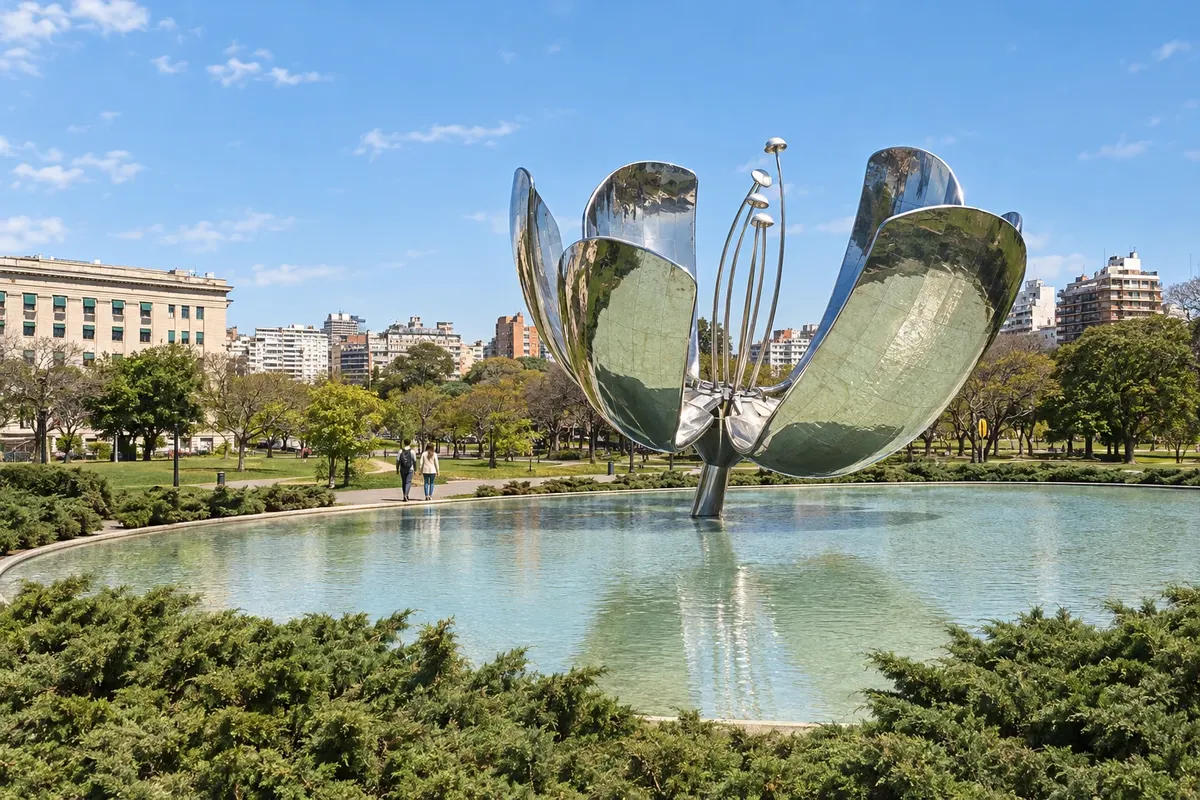
Province · Buenos Aires
Cidade de Buenos Aires
Tango, cafés, museums and neighborhoods on the shore of the Río de la Plata: Buenos Aires is explored between historic squares and streets of everyday life.
In the photo: Floralis Genérica, Plaza de las Naciones Unidas, Cidade de Buenos Aires
Illustrative images. The pictures in this guide are illustrations based on the real place, not photographs, and may differ from it.

The province
Get to know Cidade de Buenos Aires
The City of Buenos Aires is the Argentine capital, on the banks of the Río de la Plata. Plaza de Mayo brings together the Casa Rosada, the cathedral and the Cabildo; Avenida de Mayo runs among historic façades to the Congress.
San Telmo, La Boca, Recoleta and Palermo are neighborhoods, each with different sights. San Telmo has old houses and a market; La Boca brings together the colorful houses of the Caminito and the history of the port. Recoleta combines museums, a cemetery and plazas, while Palermo has parks and streets of restaurants. In Puerto Madero, the Puente de la Mujer crosses one of the old docks.
Immigration left marks on the architecture, on the table and in the music. Tango is part of that story and appears in milongas, theaters and at the Festival and World Tango Championship, held between August and September depending on the edition. The Teatro Colón and the museums add programs that fit rainy days.
At parrillas, cuts of meat are served with chimichurri; at bodegones, milanesa and pasta are part of everyday cuisine. Pizza porteña, empanadas and alfajores with dulce de leche also make the itinerary. Four or five days allow you to alternate the historic center, the neighborhoods and a trip to Tigre, which is in another jurisdiction.
When to go
March to May and September to November usually have milder temperatures for walking. From December to February, heat and humidity are more present; rain can occur in any month. June to August usually requires a coat, especially near the river, and snow is not typical for the trip. The Festival and World Tango Championship usually takes place in August and, in some editions, in early September; check the calendar for the year you choose.
Getting there
There are direct flights from several Brazilian state capitals. Aeroparque Jorge Newbery is in the City of Buenos Aires; Ministro Pistarini International Airport is in Ezeiza, outside the capital. Check which terminal is shown on your ticket. Ezeiza is connected to the city by the Autopista Riccheri. By car, RN 9 and RN 12 are among the routes accessing the northern metropolitan area; the final stretch depends on the border crossing used and the neighborhood where you are staying.
Your questions
Frequently asked questions about Cidade de Buenos Aires
How many days should you set aside to get to know Buenos Aires for the first time?
Allow four or five days for the center, Recoleta, Palermo, San Telmo and La Boca. If you want to add Tigre, set aside a separate day for the transfer and the boat trip, not on the same morning as a long tour in the capital.
Is it worth renting a car to get around the Argentine capital?
For an itinerary through the central neighborhoods, the subway, buses, taxis and walking usually work better. A car may make sense for trips into the interior, but it is not necessary to visit museums, squares and the Caminito.
Are Palermo, San Telmo and La Boca different cities?
They are neighborhoods of the Cidade de Buenos Aires. Tigre is a city in the province of Buenos Aires; leaving the capital to visit it is a metropolitan trip, with train and car options.
How to combine museums and outdoor sightseeing in Buenos Aires?
Group visits by neighborhood: Recoleta allows combining museums and plazas, and the center brings together historic buildings and theaters. Leave Palermo's parks for a period of favorable weather and check opening times for indoor visits before you go.