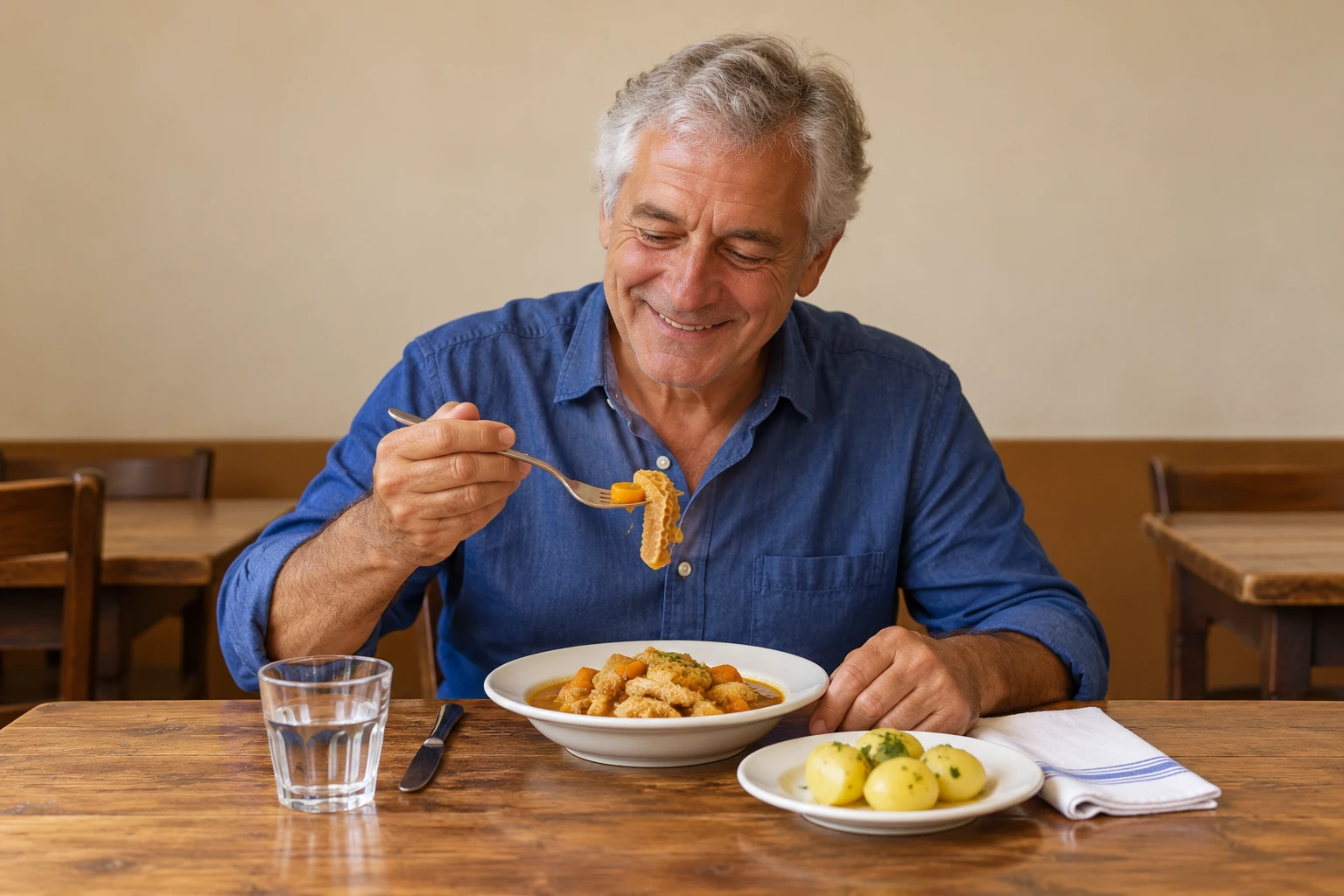
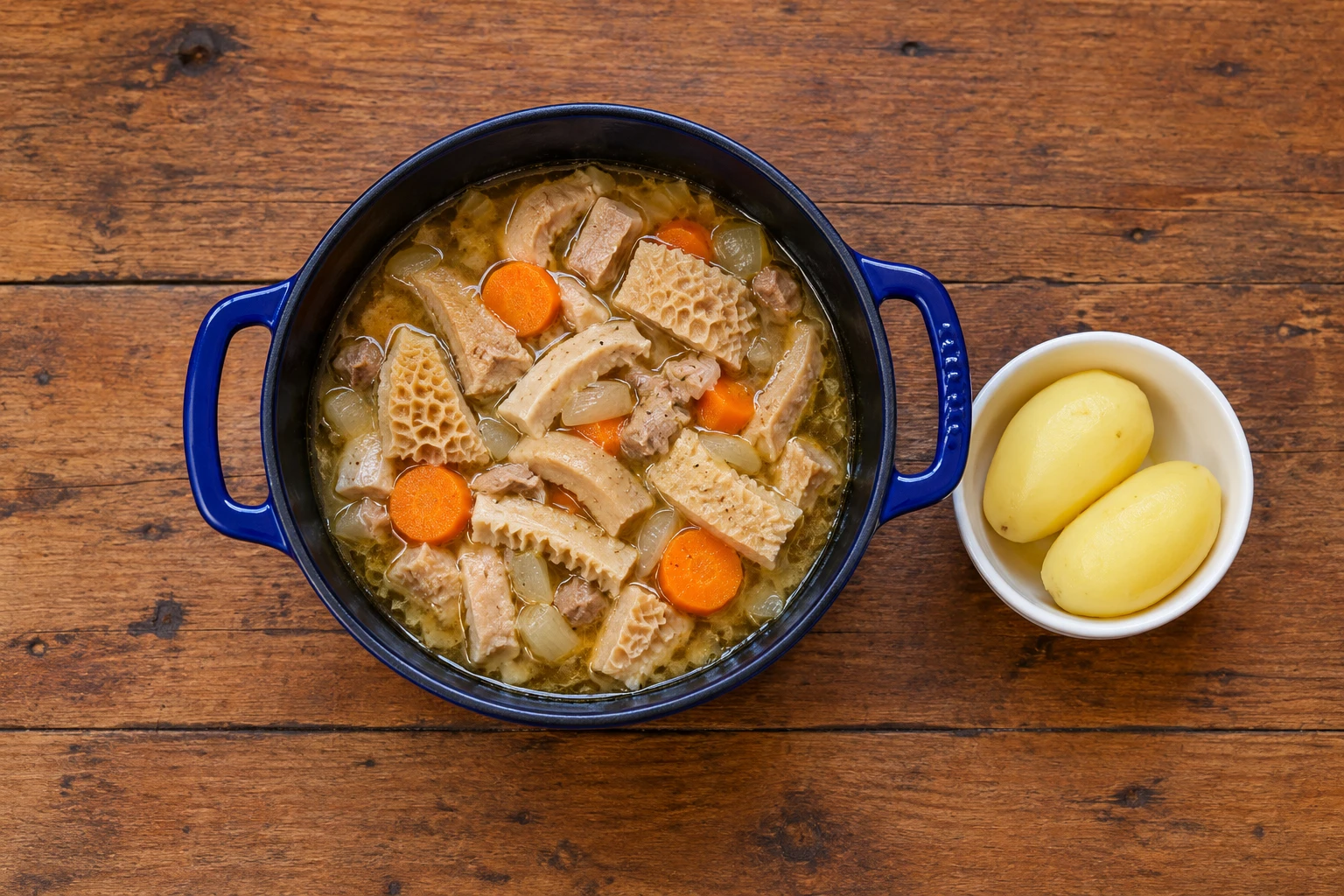
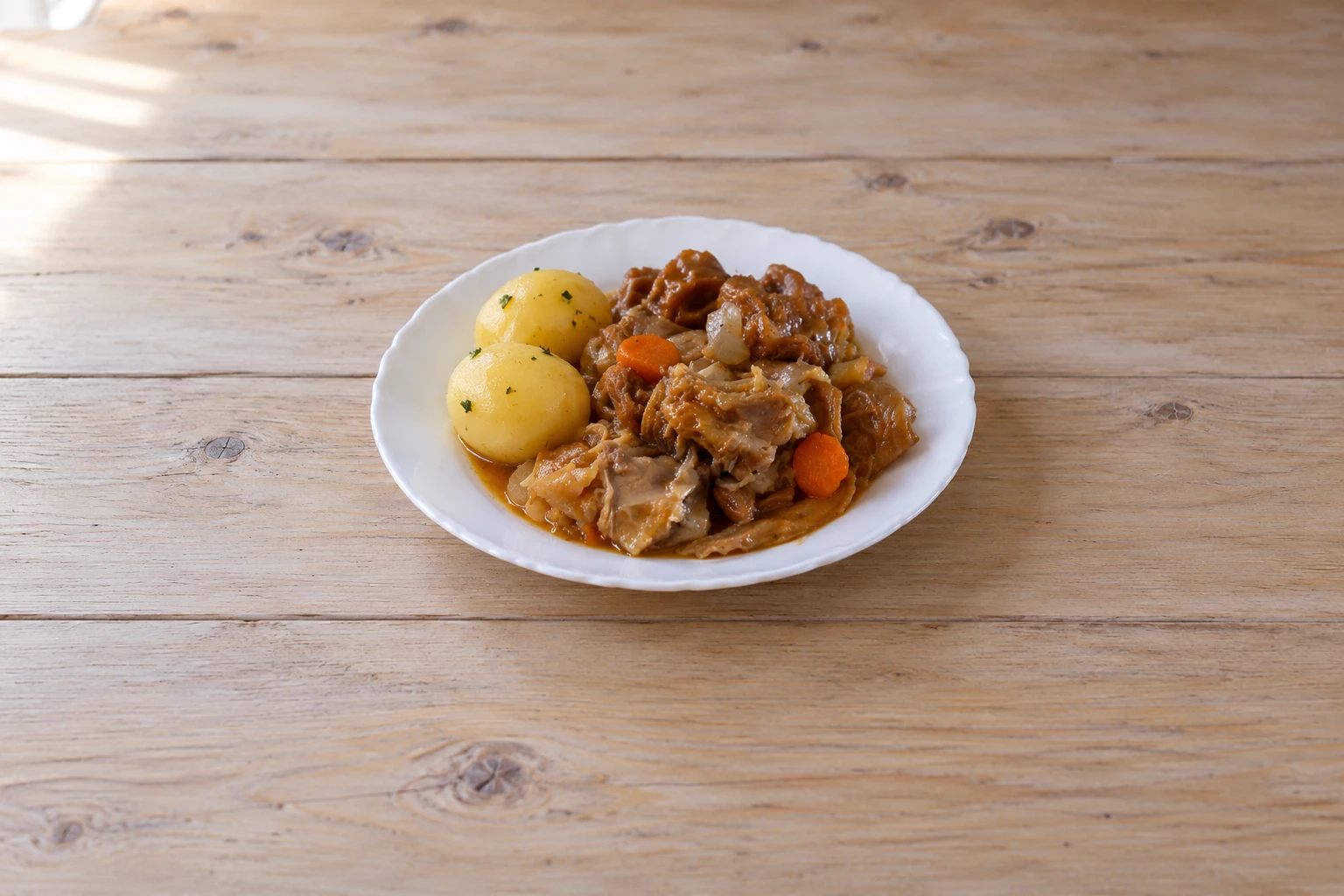
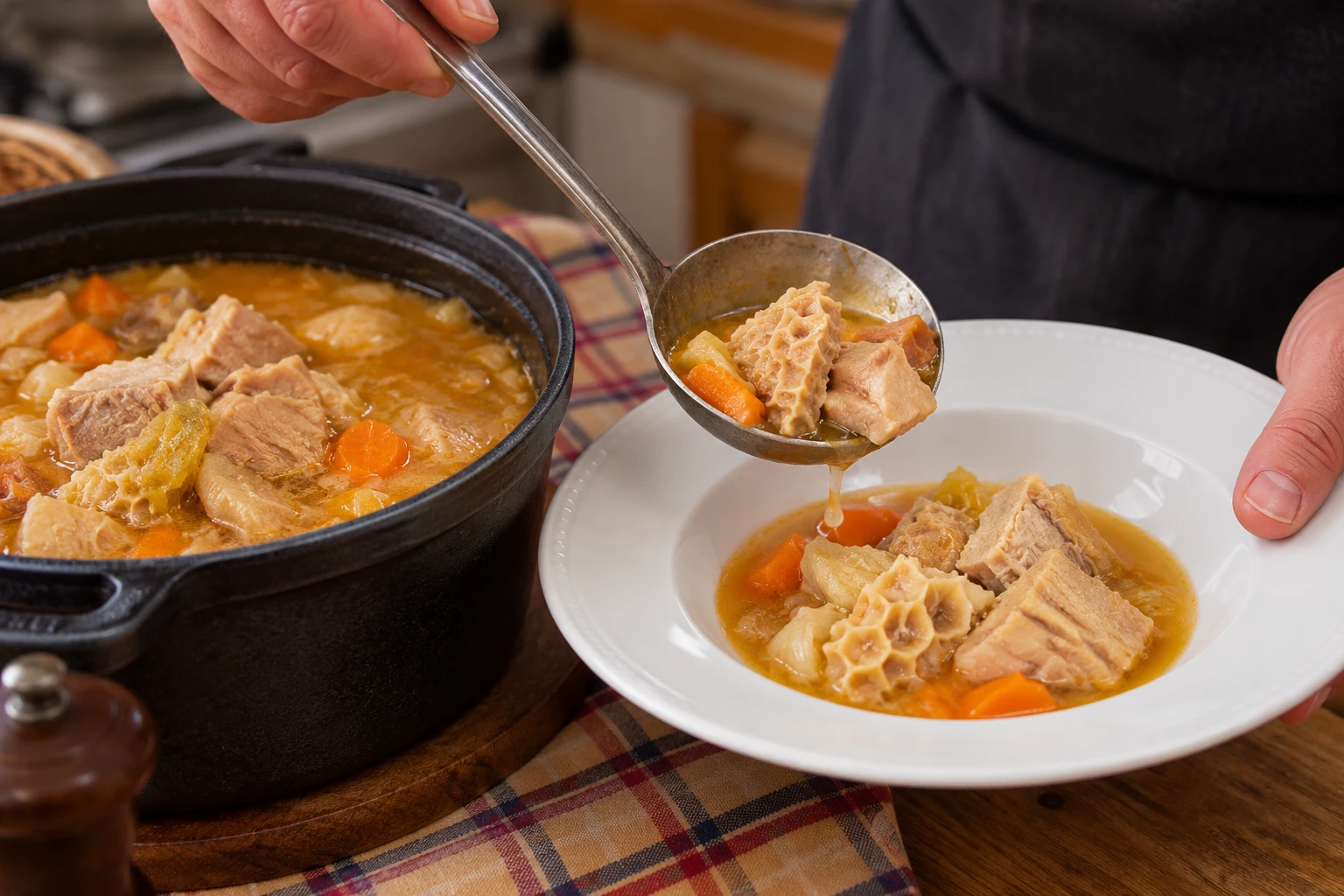
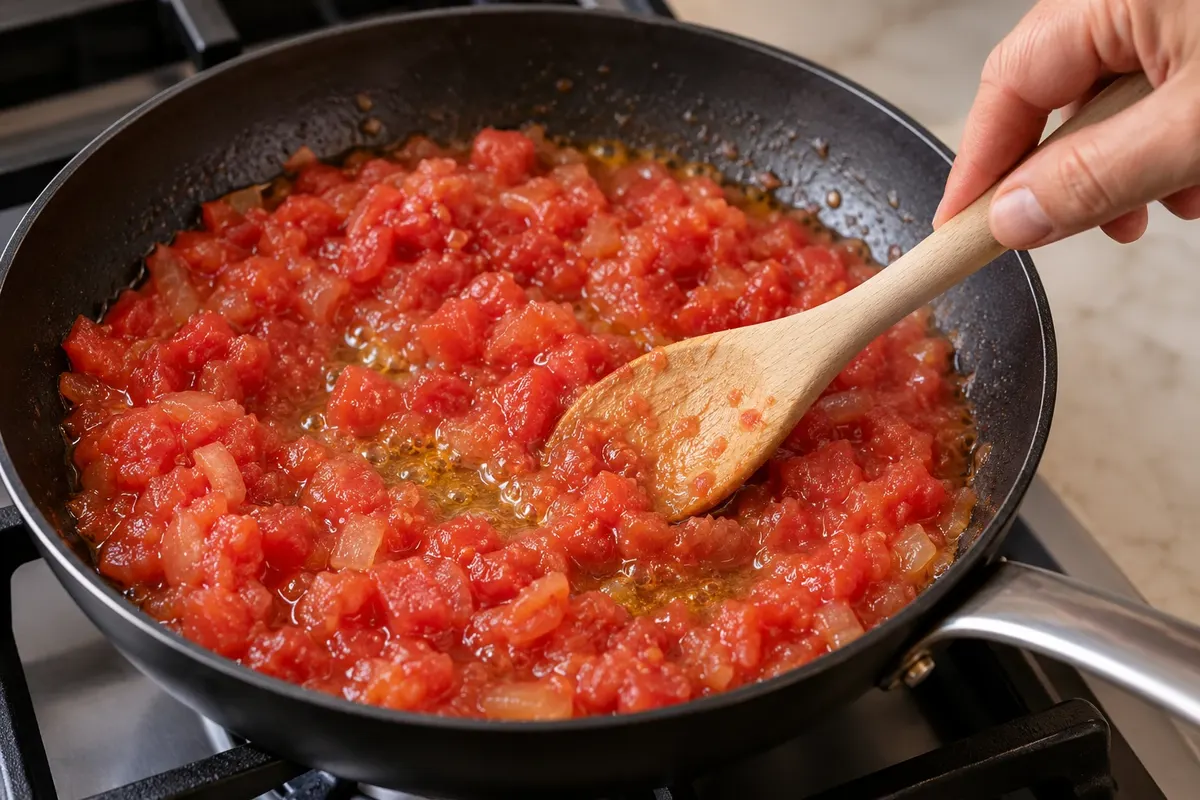
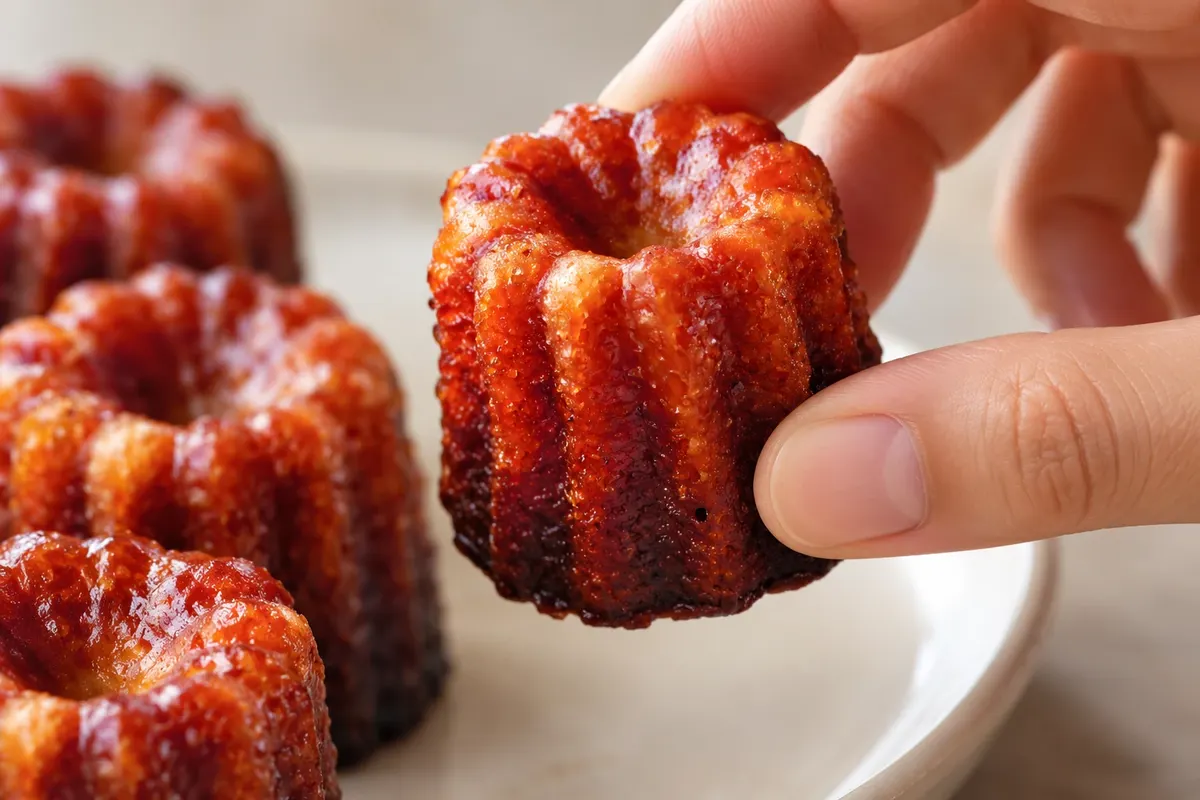
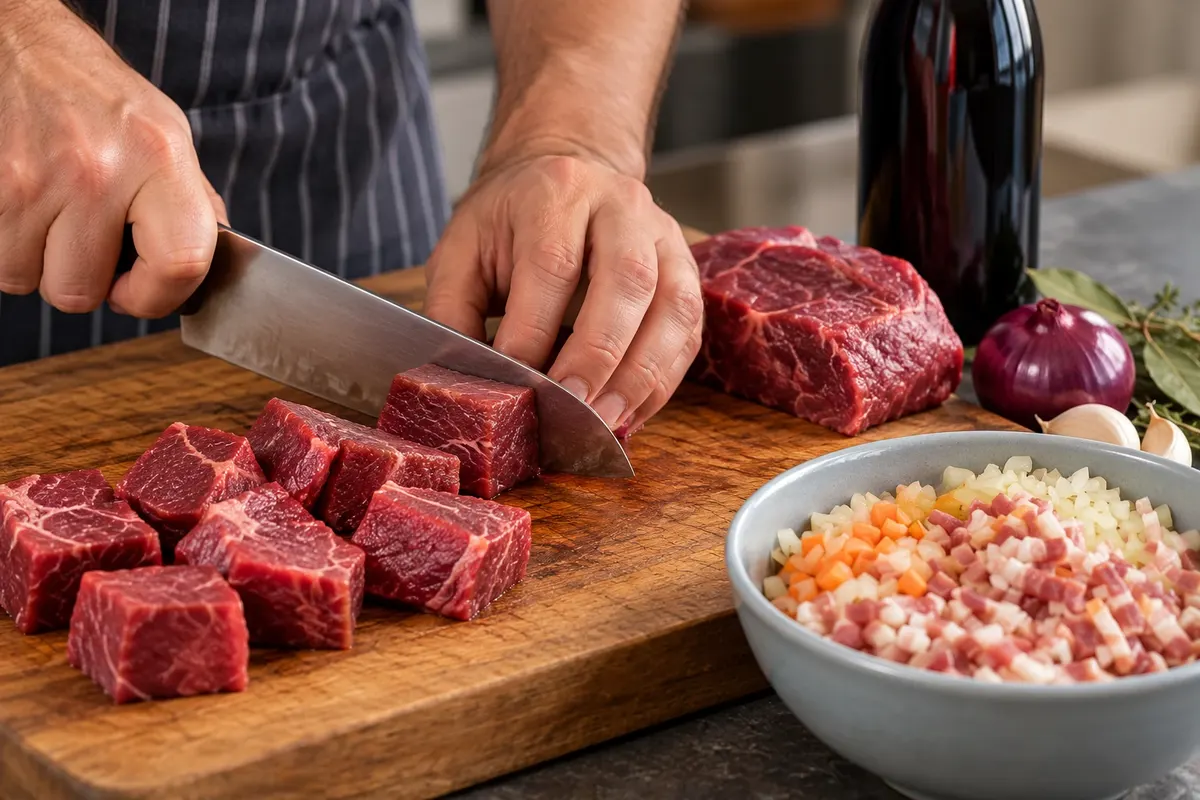
Tripes à la mode de Caen are made from the four parts of the cow’s stomach, cut into pieces, and the beef foot, which provides gelatin and thickens the broth. The meat goes into a tripière, a tall lidded clay pot, with carrot, onion studded with clove, leek, a bouquet of herbs, salt, pepper and water. The cooking, slow and in a low oven, lasts many hours; traditional recipes mention about twenty.
The tradition attributes the recipe to a monk cook of the Abbey of the Men of Caen, Sidoine Benoît, placed by most sources in the 14th century. Another tradition links the taste for tripe to William the Conqueror, who is said to have eaten them with apple juice. These are stories without documentary evidence.
In 1951 the Tripière d'Or was founded in Caen, officially declared in 1952, a Norman gastronomic brotherhood dedicated to tripes à la mode de Caen. Each year, in autumn, it organizes a competition for professionals that elects the best tripe of the year. Under the brotherhood’s rules, the recipe contains no alcoholic beverage.
The dish is sold ready-made by the city’s butchers and charcutiers and appears on the menus of Caen’s traditional restaurants.


 Brazilija
 Antarktika
 Argentina
 Bolivija
 Čile
 Kolumbija
 Ekvator
 Gvajana
 Francoska Gvajana
 Falklandski otoki (Malvini)
 Paragvaj
 Peru
 Surinam
 Urugvaj
 Venezuela
 Nemčija
 Avstrija
 Belgija
 Hrvaška
 Danska
 Slovaška
 Slovenija
 Španija
 Finska
 Grčija
 Nizozemska
 Madžarska
 Irska
 Islandija
 Italija
 Luksemburg
 Norveška
 Poljska
 Portugalska
 Združeno kraljestvo
 Češka
 Švedska
 Švica
 Turčija
 Bermudi
 Kanada
 Združene države Amerike
 Grenlandija
 Mehika
 Sveta Peter in Mihael
 Dominikanska republika
 Japonska
 Južnoafriška republika
 Egipt
 Avstralija
 Fidži
 Nova Zelandija
 Papua Nova Gvineja