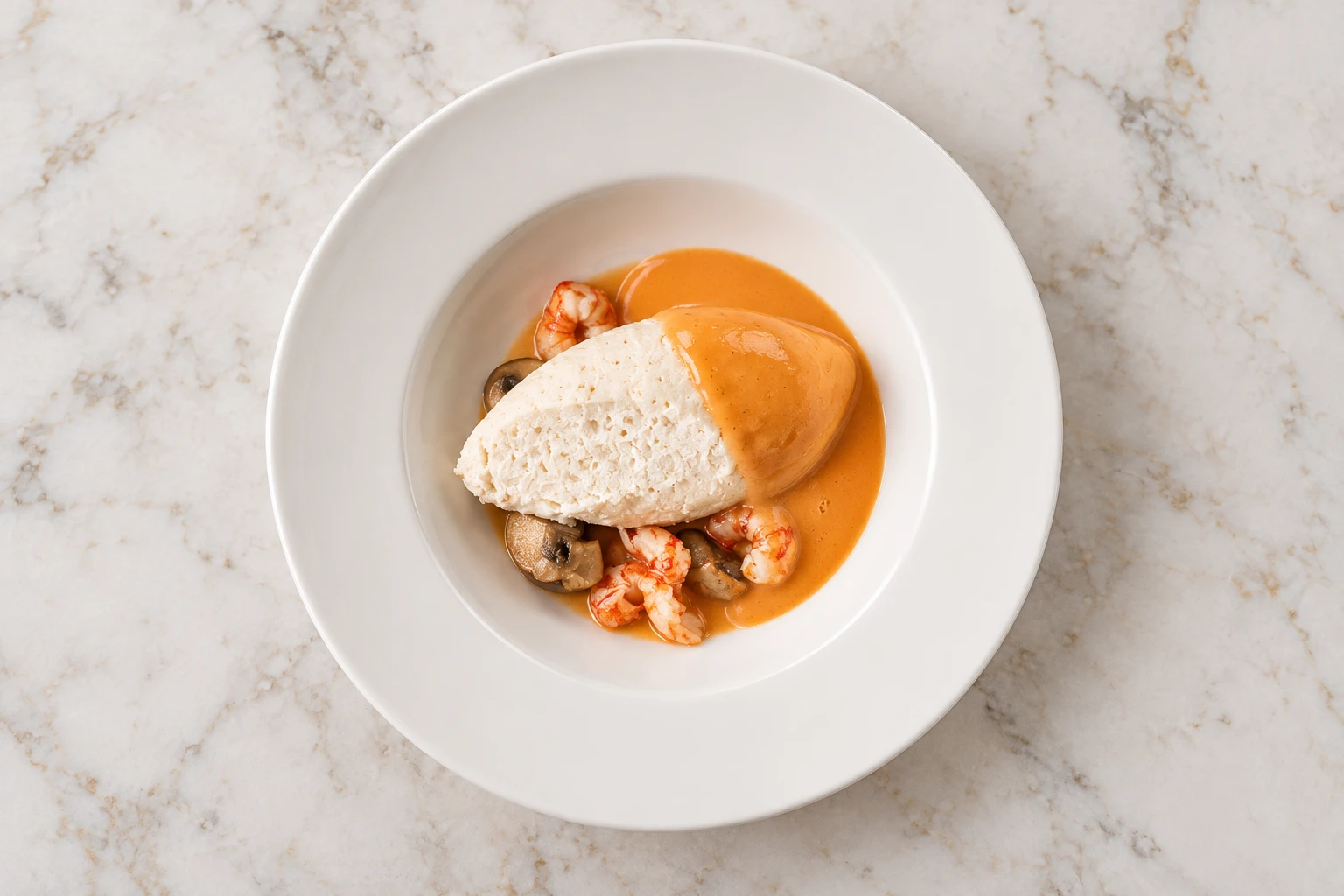
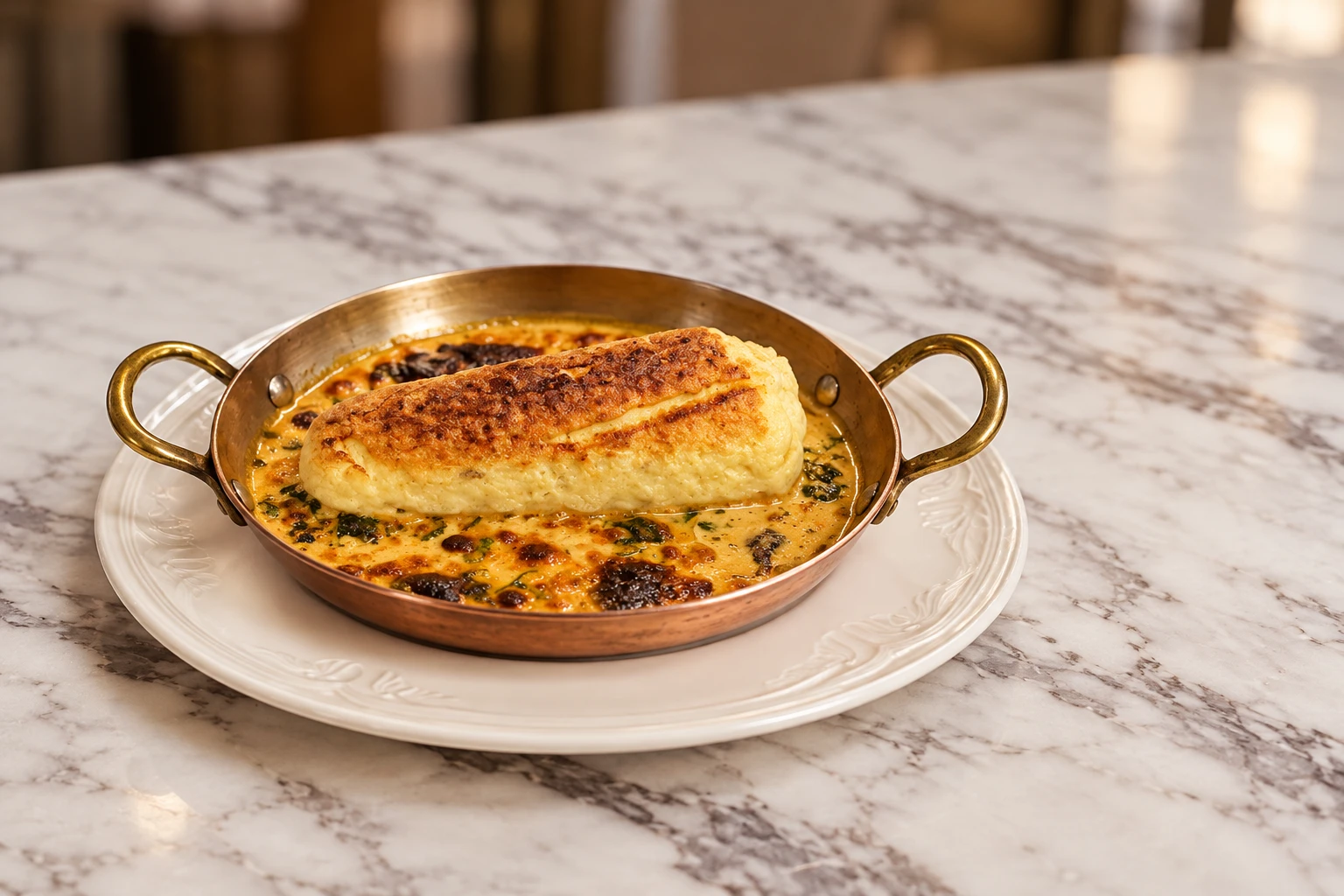
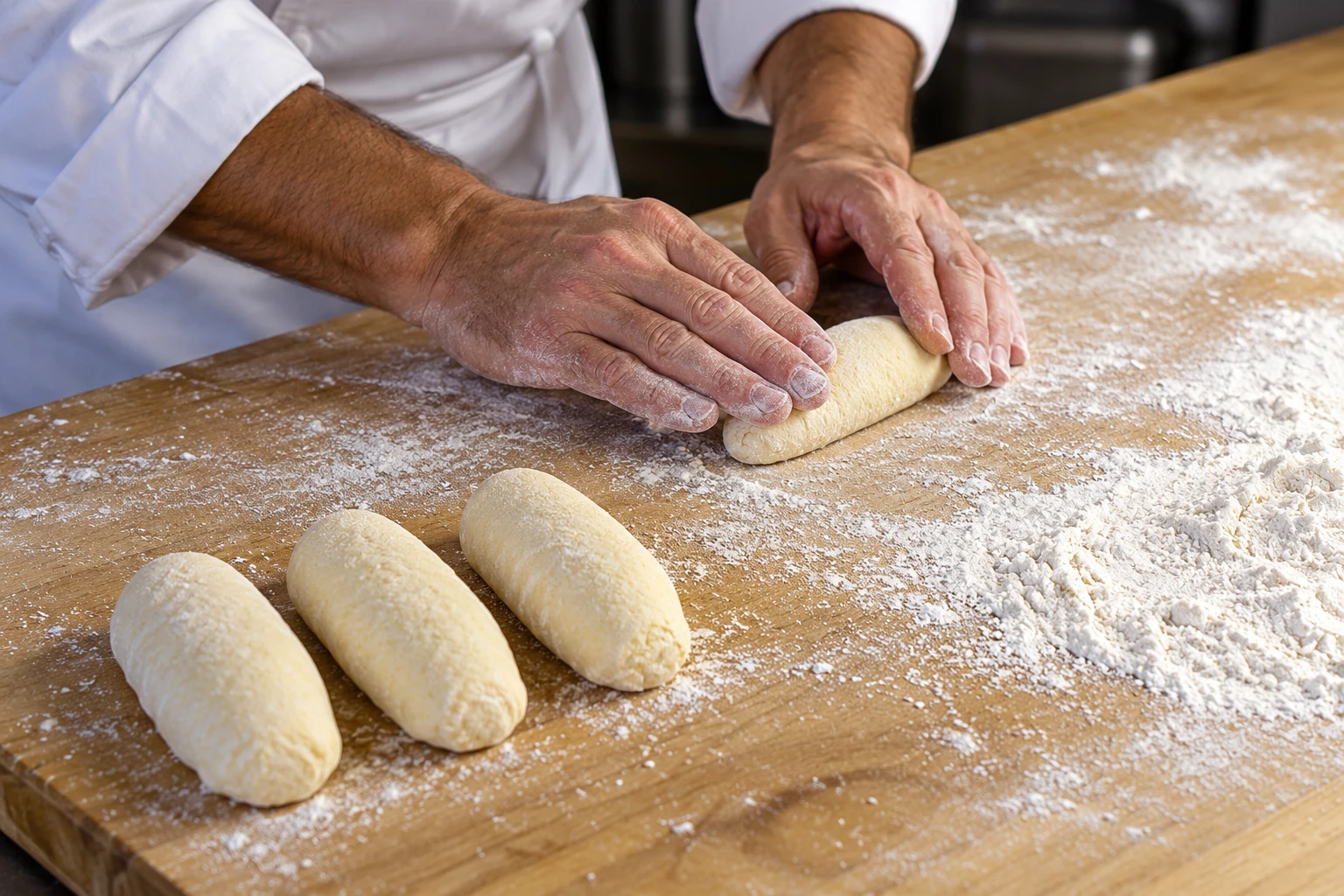
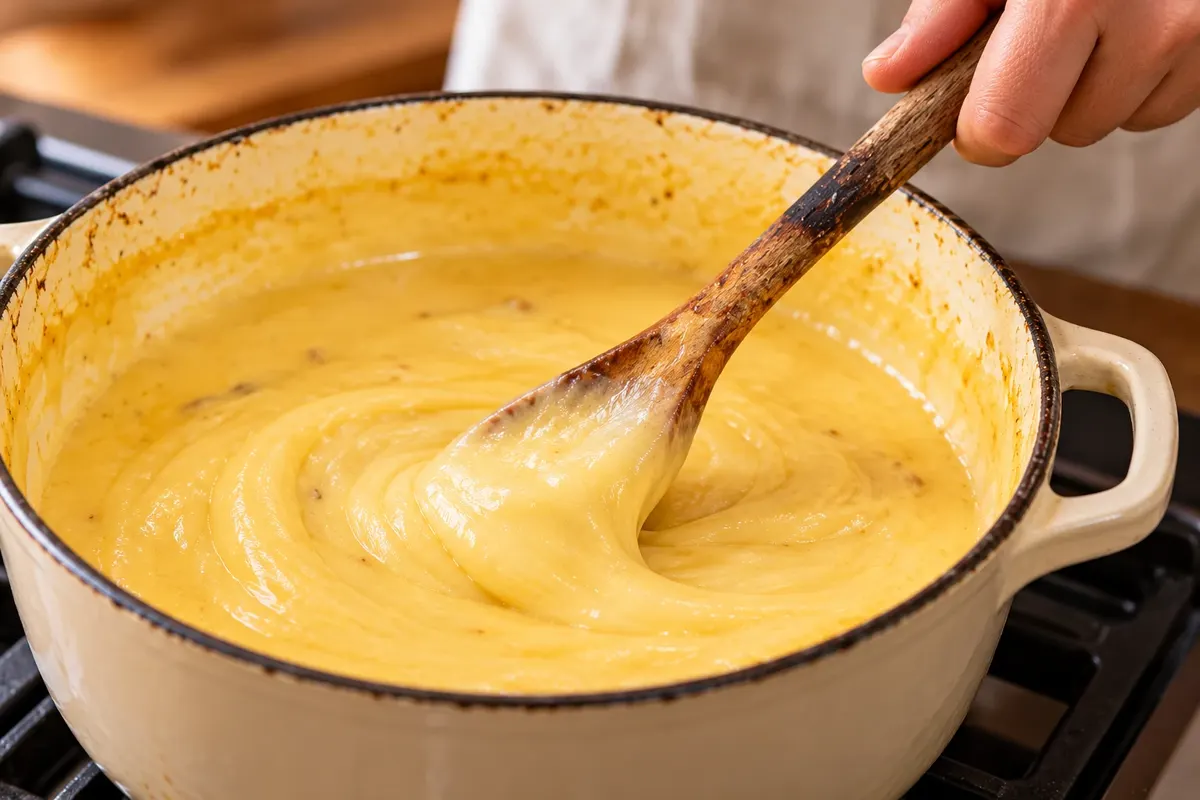
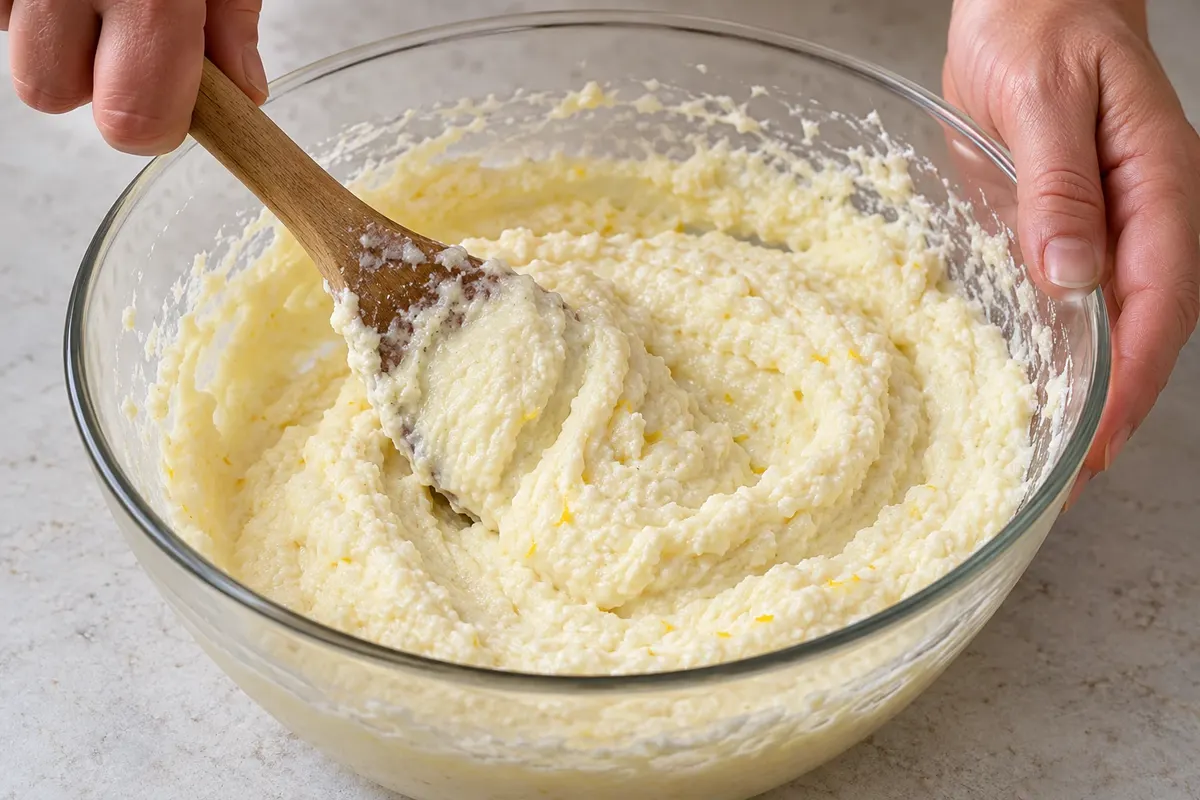
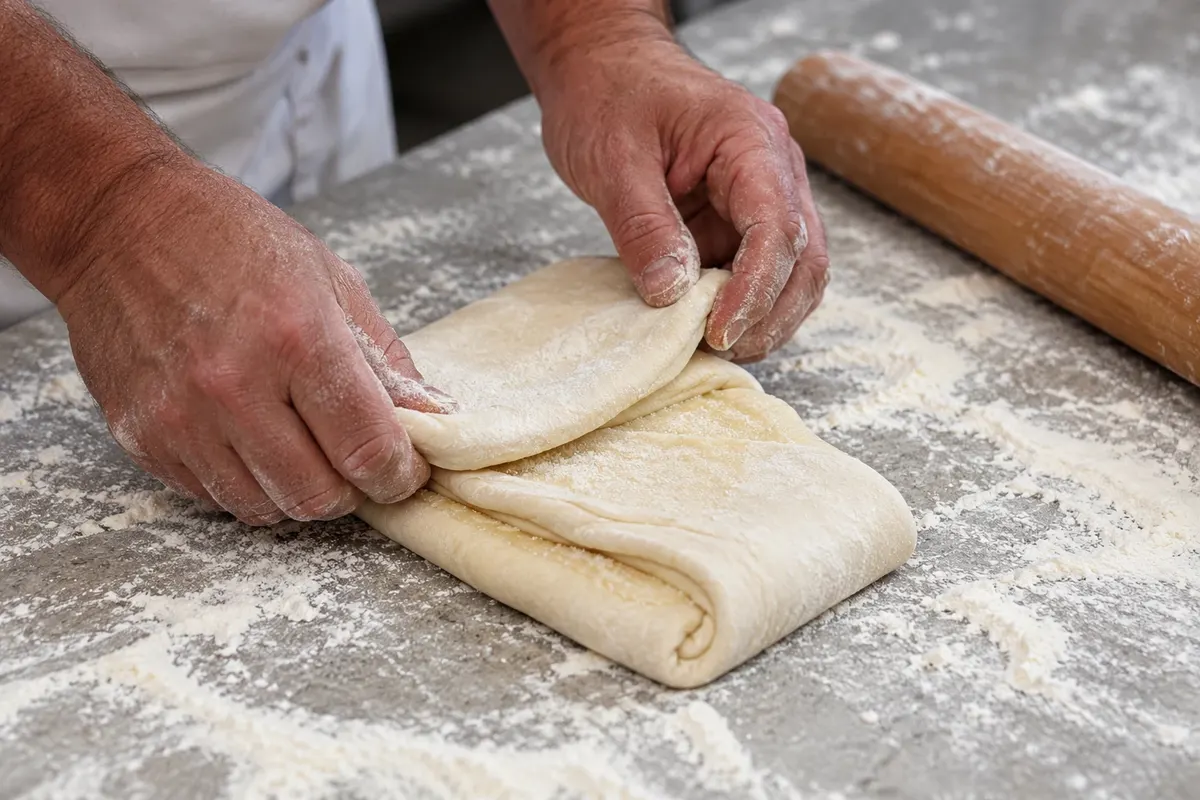
The quenelle de brochet is made from pike meat, a river and lake fish, mixed with a panade — a cooked mixture of flour, butter and milk — and eggs. The mixture is shaped into an elongated form with tapered ends and cooked in gently simmering water. It then goes into the oven, where it puffs and browns, covered with sauce.
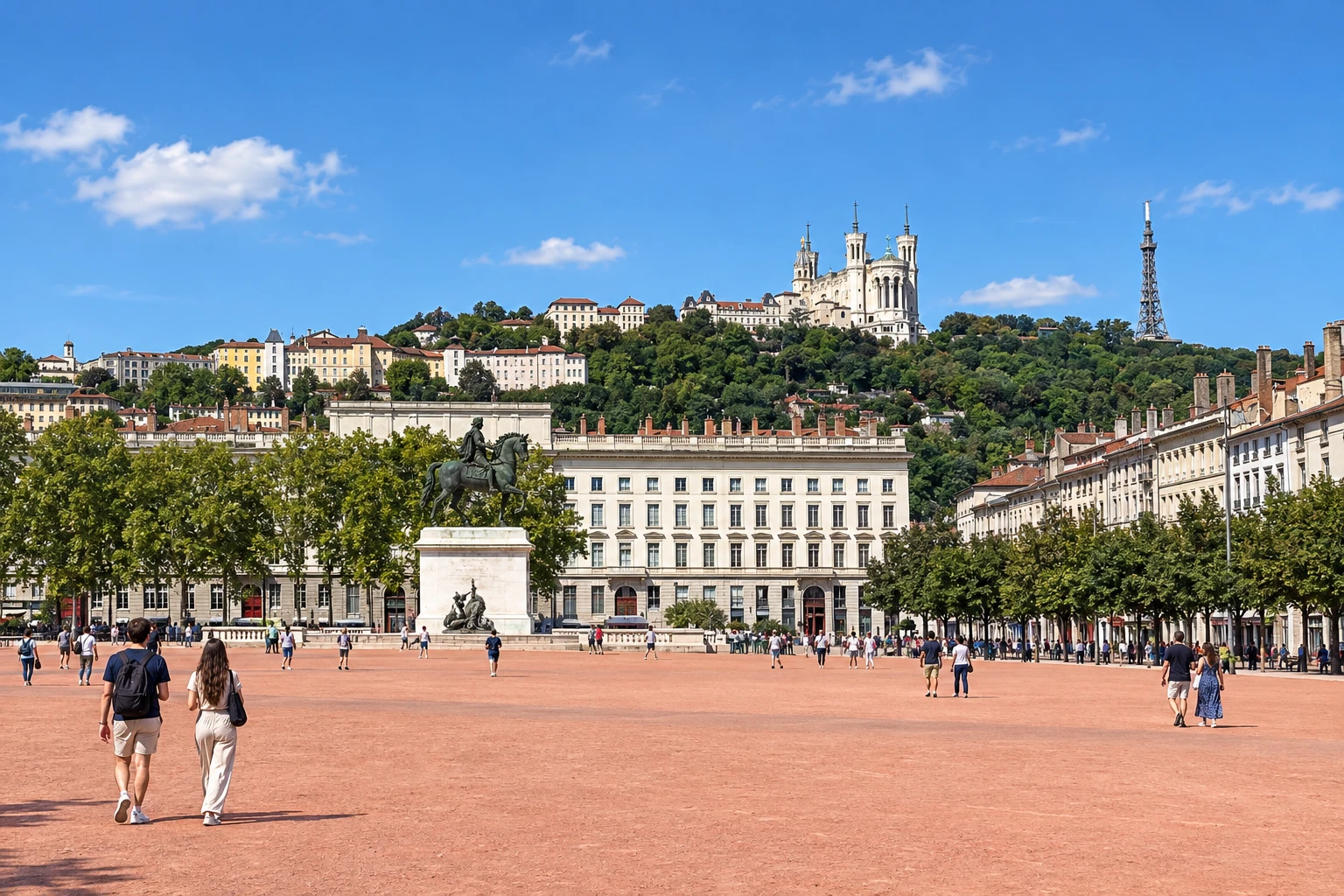
The history of Lyon’s quenelle begins in the 19th century. Lyon historian Yves Rouèche notes that preparations of minced, shaped and cooked fish date back to Antiquity. In Lyon, the recipe using pike is said to have appeared around the 1830s with a pastry chef; quenelle de poisson à la lyonnaise already appears in a 1890 culinary dictionary. For about a century, pastry chefs made them; later, charcutiers took over.
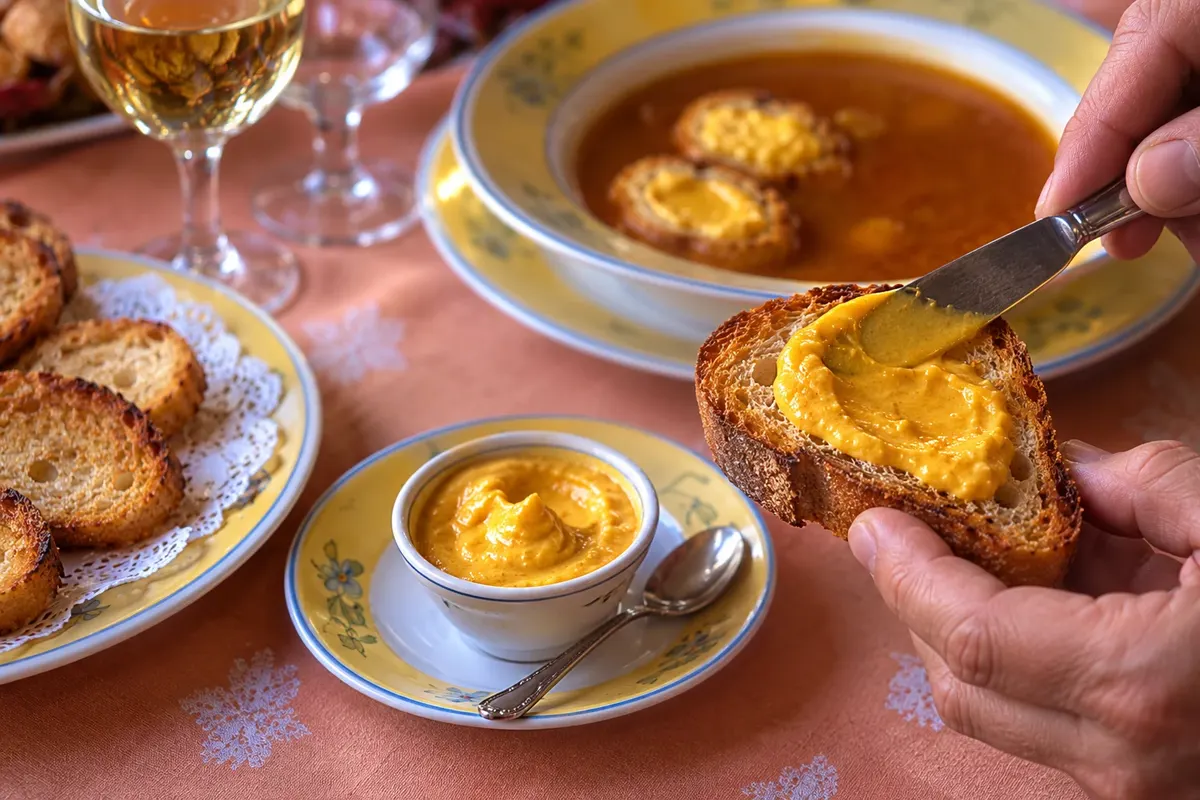
In the 1920s, beef fat was replaced by butter, and a charcutier developed a way to shape the quenelle with two special spoons, giving it the tapered form. Lyonnaise mothers, cooks in the city’s restaurants, served it with Nantua sauce made from crayfish. The origin is contested with the Nantua region and the lakes of the Dombes, from where the pike came.
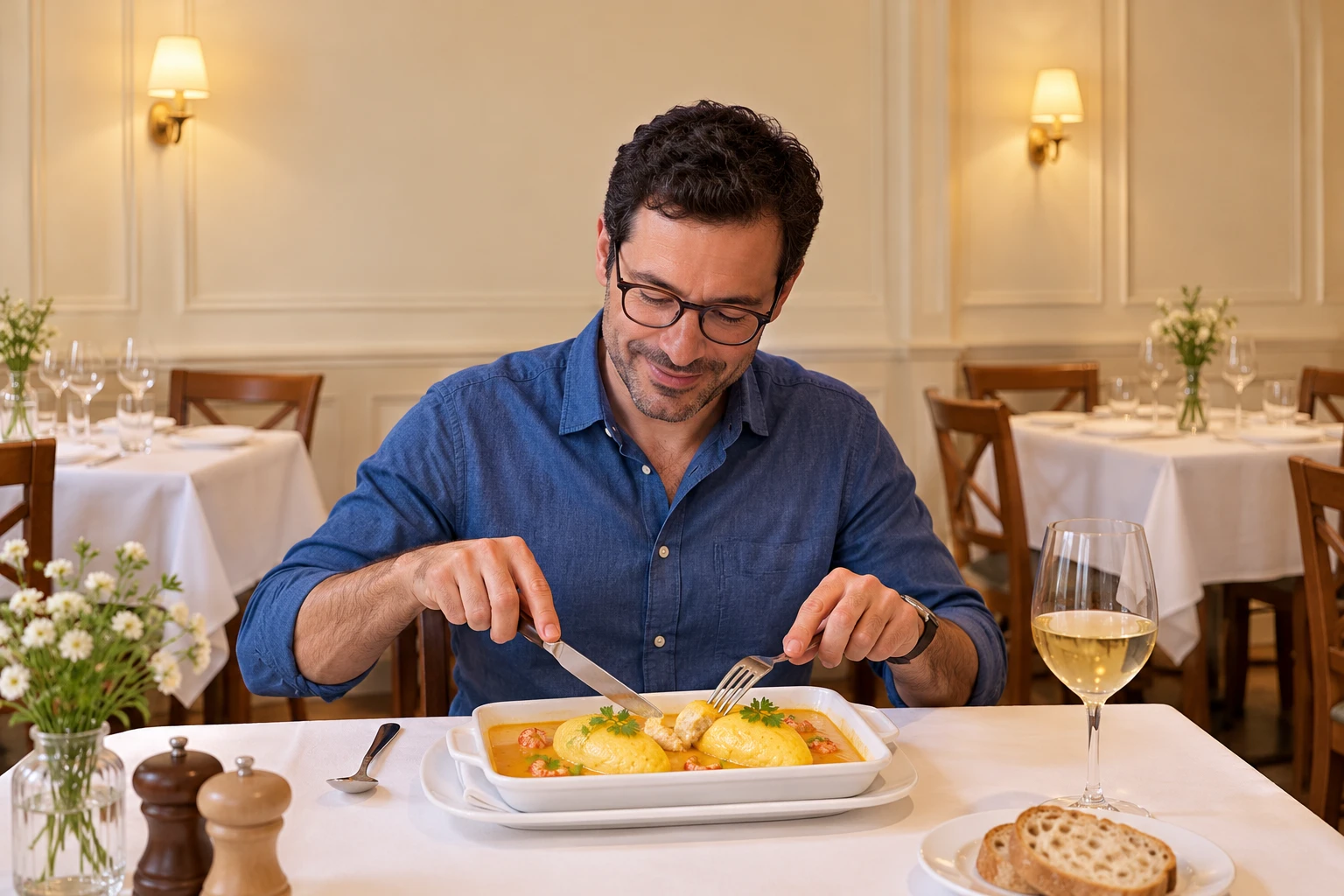
Today the quenelle is sold ready-made in Lyon charcuteries and appears on bouchon menus, gratinéed in individual dishes.


 Brazilija
 Antarktika
 Argentina
 Bolivija
 Čile
 Kolumbija
 Ekvator
 Gvajana
 Francoska Gvajana
 Falklandski otoki (Malvini)
 Paragvaj
 Peru
 Surinam
 Urugvaj
 Venezuela
 Nemčija
 Avstrija
 Belgija
 Hrvaška
 Danska
 Slovaška
 Slovenija
 Španija
 Finska
 Grčija
 Nizozemska
 Madžarska
 Irska
 Islandija
 Italija
 Luksemburg
 Norveška
 Poljska
 Portugalska
 Združeno kraljestvo
 Češka
 Švedska
 Švica
 Turčija
 Bermudi
 Kanada
 Združene države Amerike
 Grenlandija
 Mehika
 Sveta Peter in Mihael
 Dominikanska republika
 Japonska
 Južnoafriška republika
 Egipt
 Avstralija
 Fidži
 Nova Zelandija
 Papua Nova Gvineja