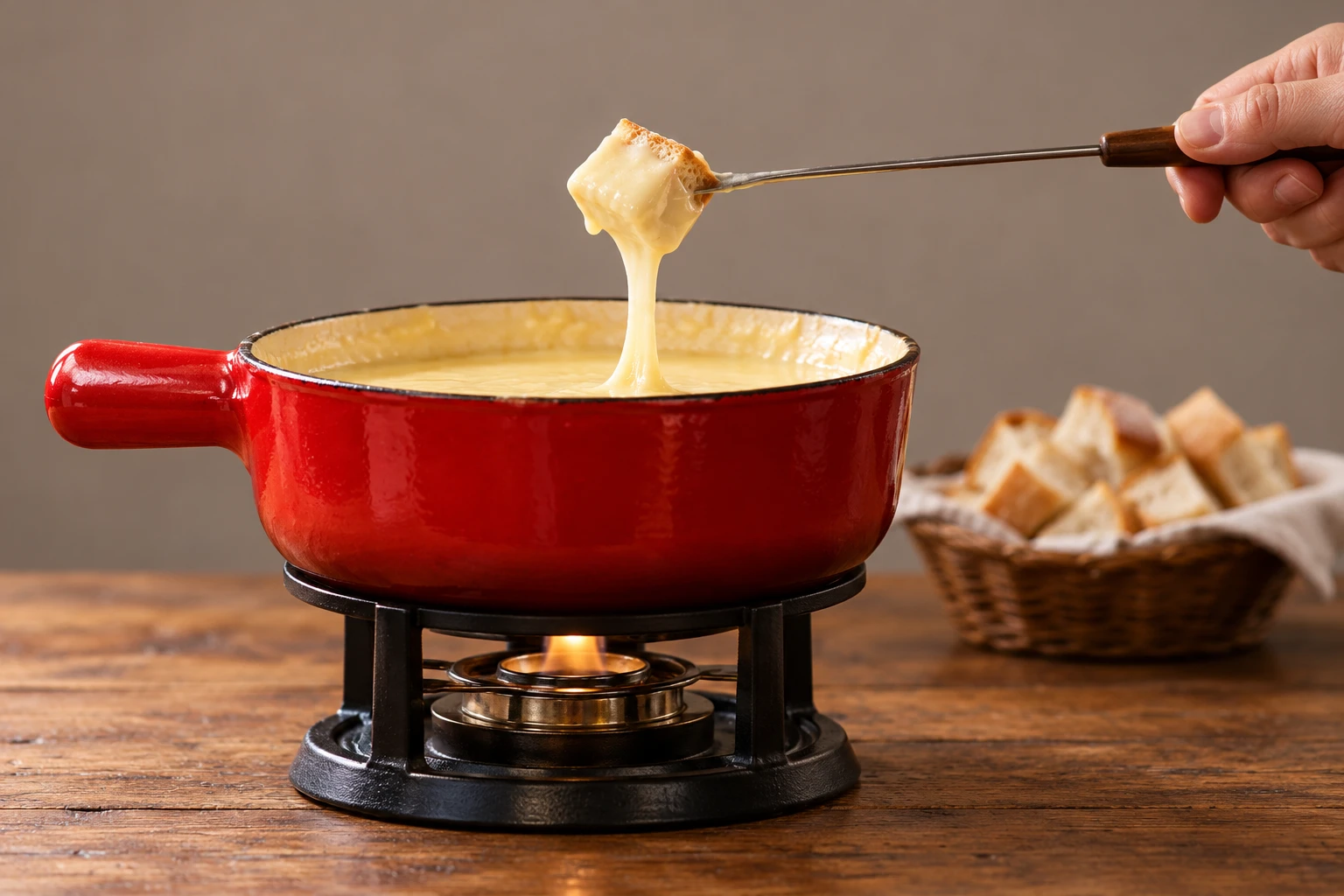
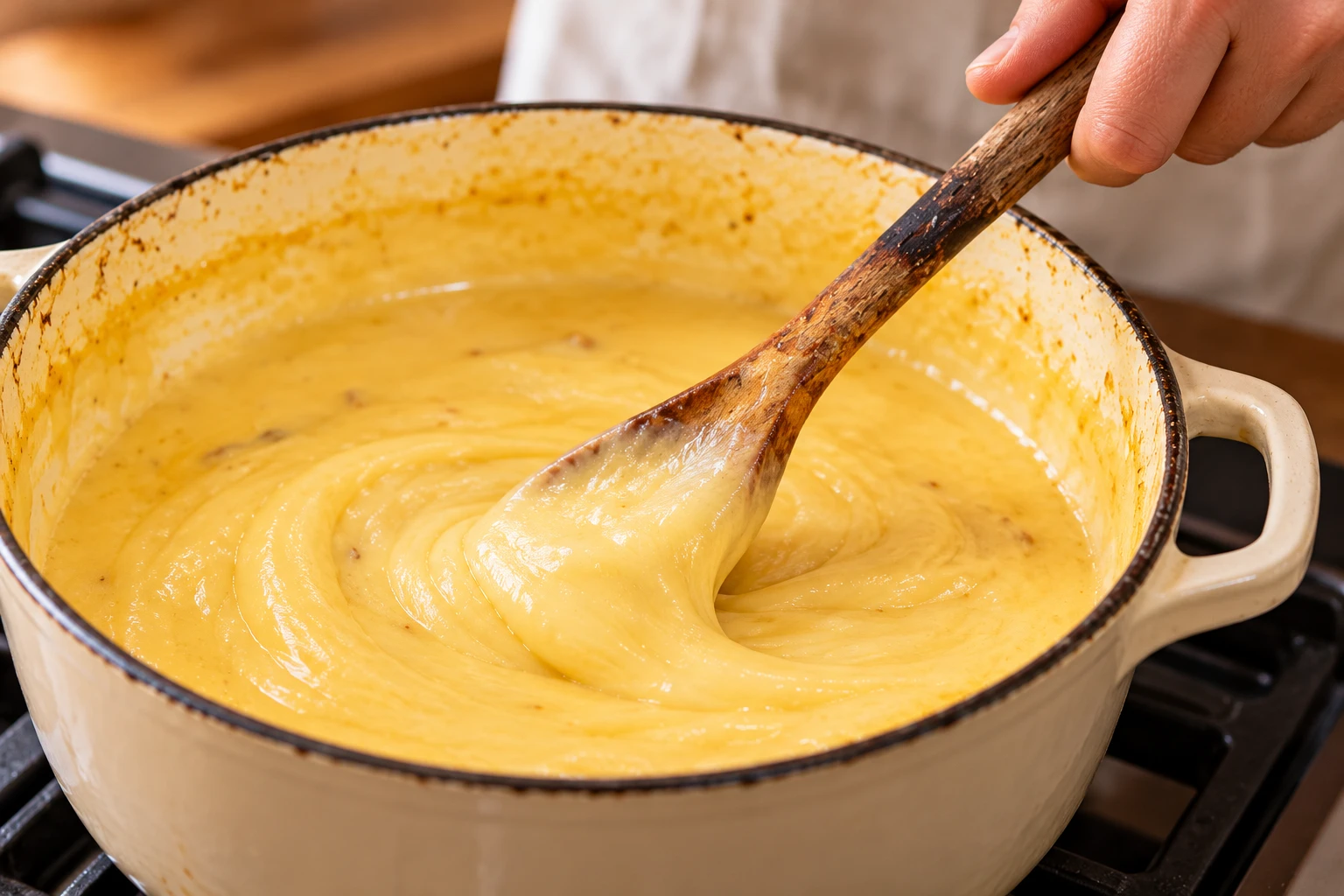
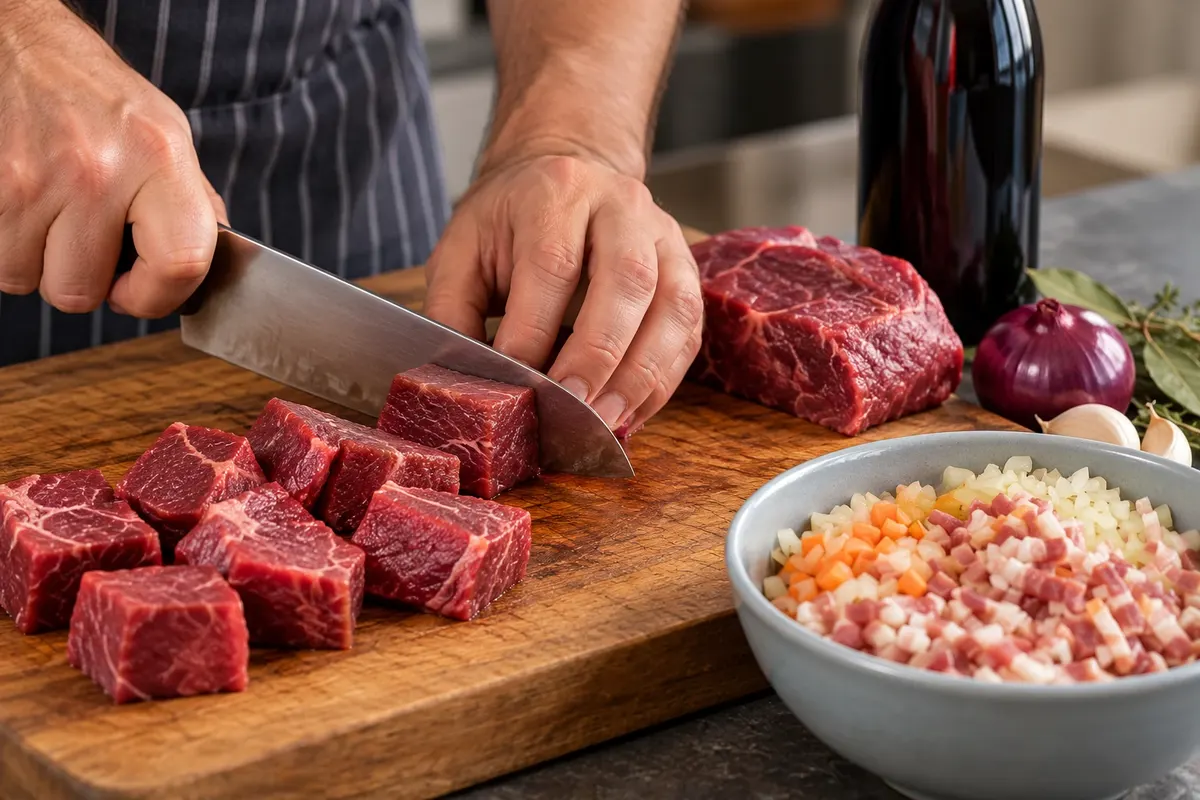
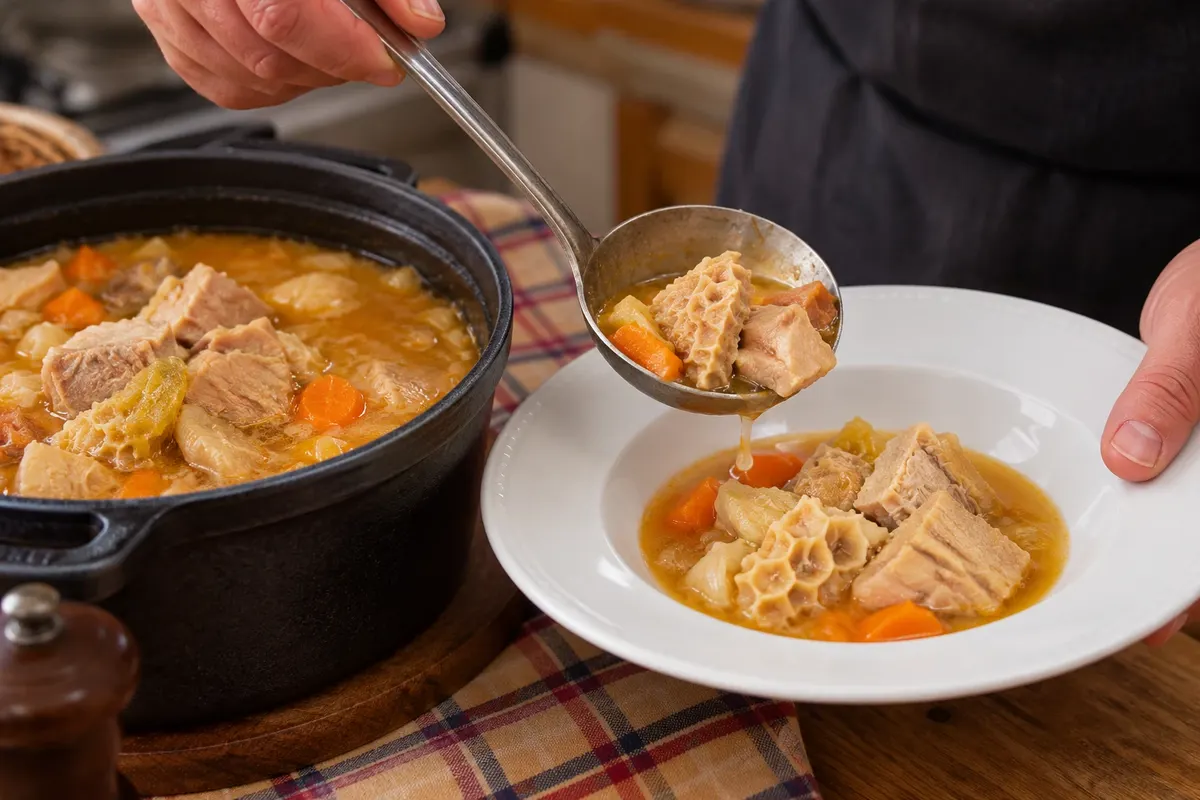
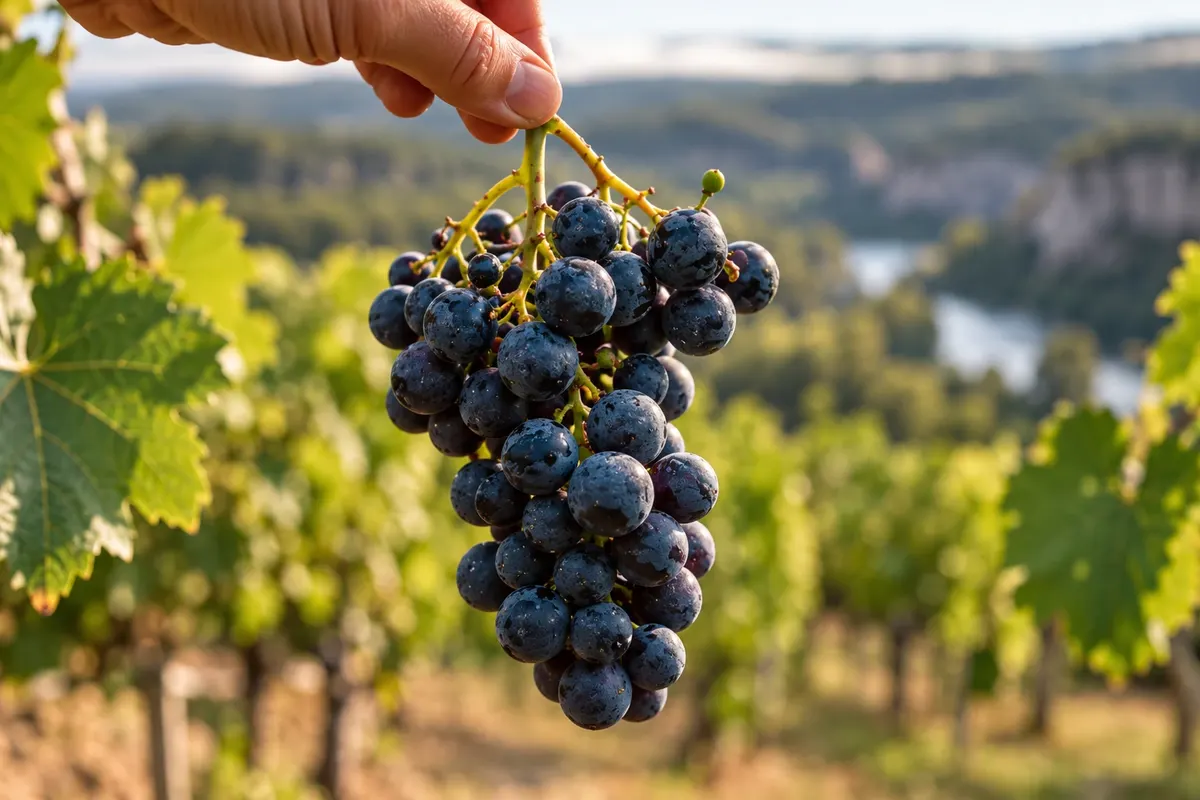
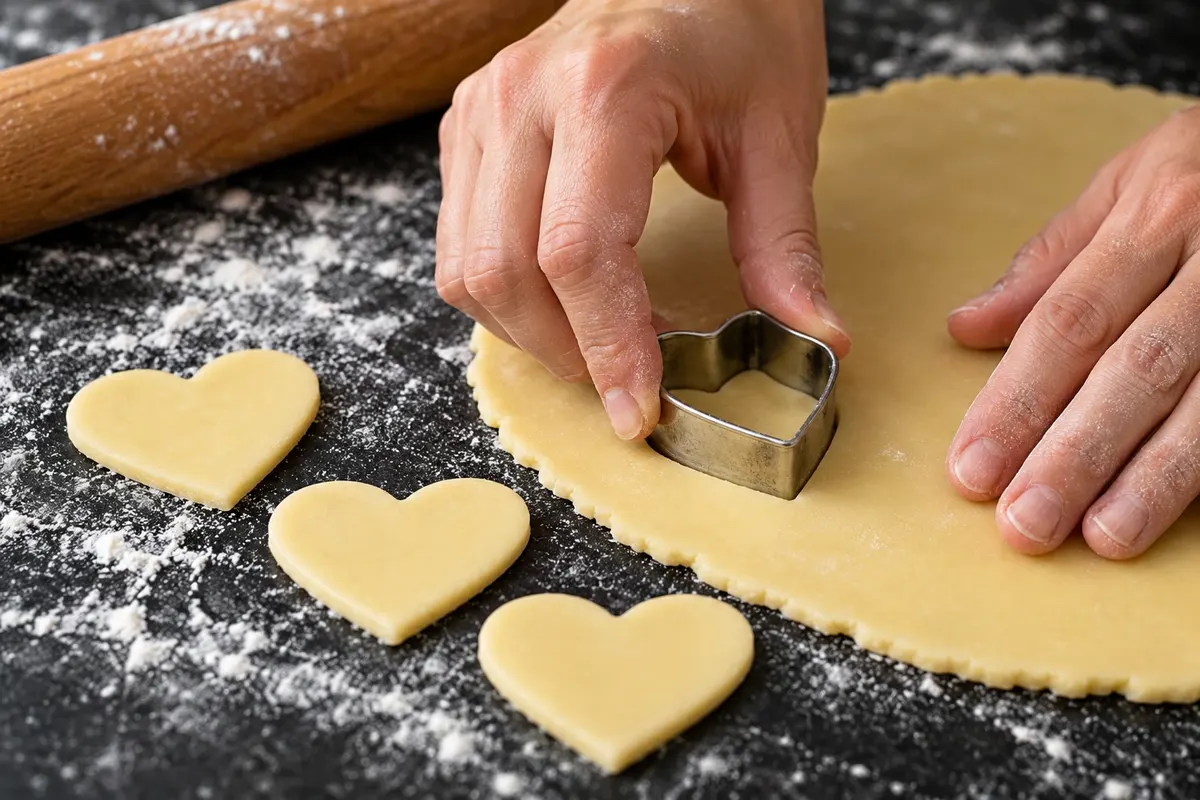
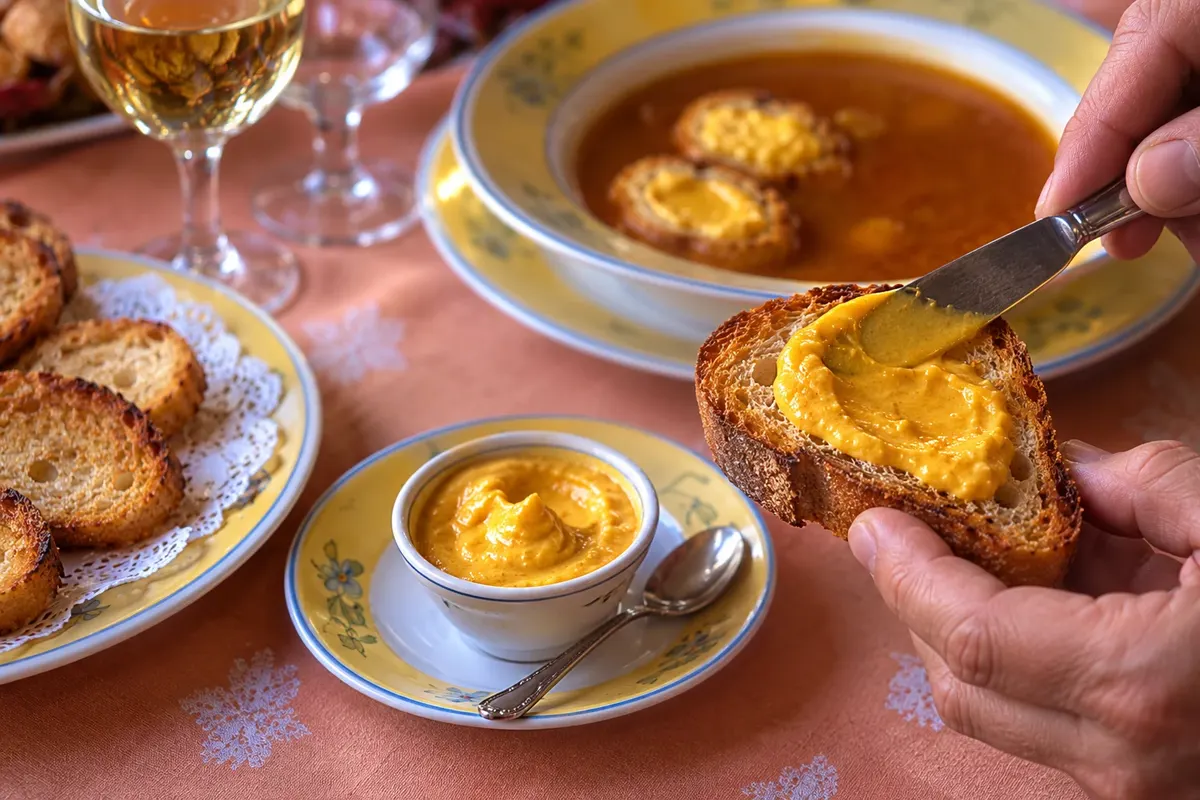
Fondue savoyarde is made with mountain cheeses grated or cut into cubes, slowly melted in dry white wine from Savoie, in a pot, the caquelon, rubbed with garlic. The most common recipe combines beaufort, abondance and emmental de Savoie, and many versions include comté. The pot is placed in the center of the table on a small burner so the cheese stays melted.
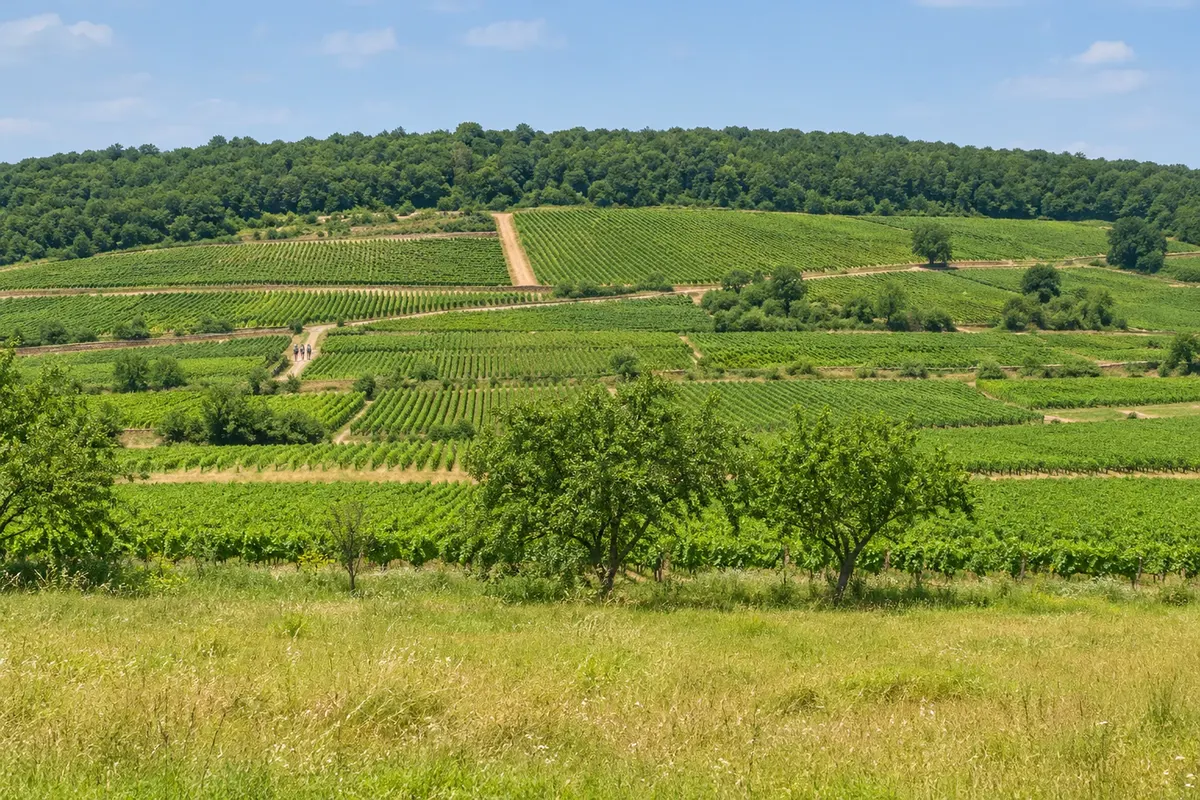
The dish belongs to the Savoies, the alpine departments of Savoie and Haute-Savoie, which today are part of the administrative region Auvergne-Rhône-Alpes. There, fondue is a winter and ski-season meal, linked to high-altitude pastures and raw-milk cheeses.
The origin is disputed. Savoie, the Franche-Comté and Switzerland all claim the fondue, and each region has its own cheese blend. The oldest known cheese fondue recipe dates from 1699, in a Zurich cookbook, and in the 19th century the gastronome Brillat-Savarin presented it as Swiss. The Savoyarde version is distinguished by its cheeses and by Savoie wine.
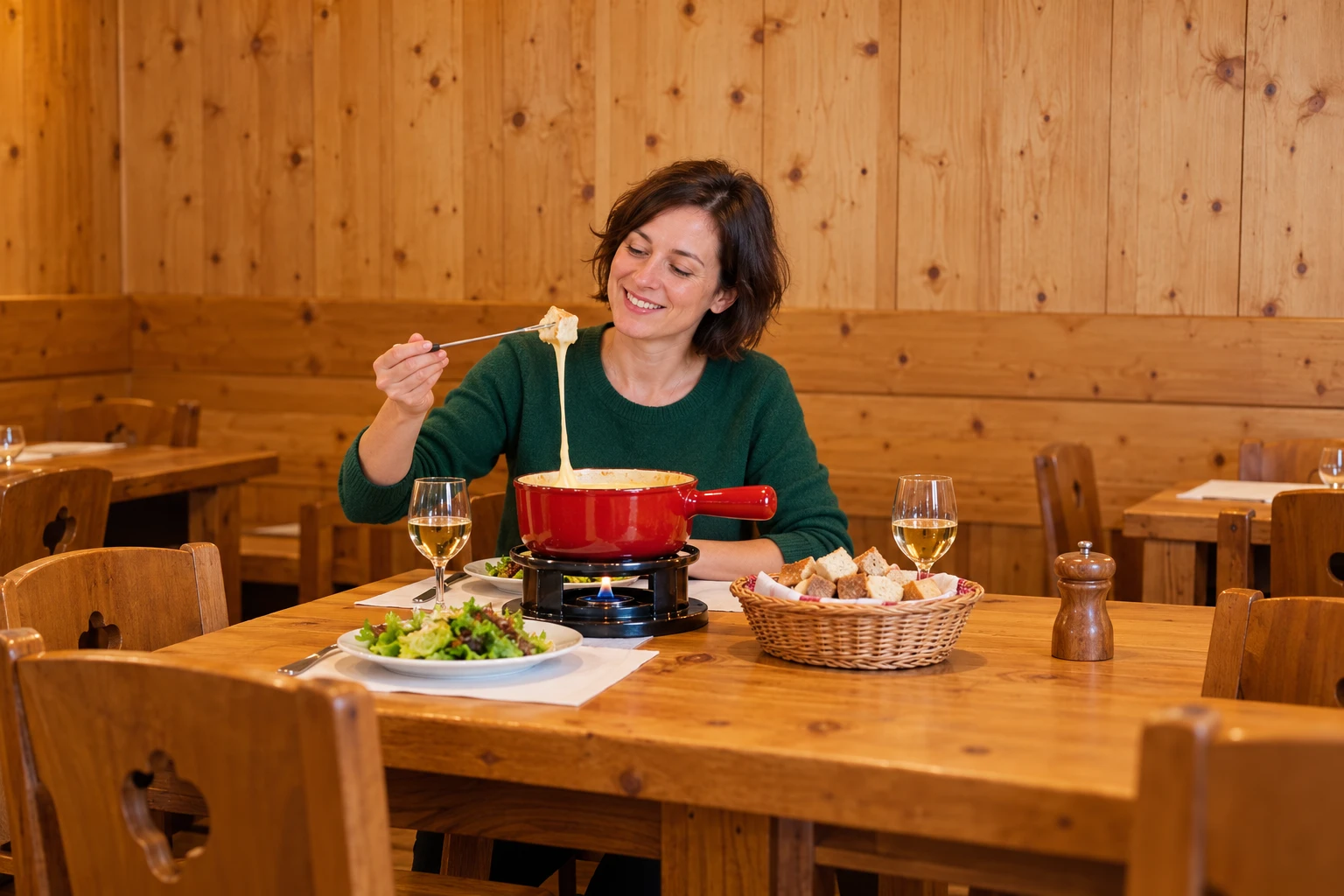
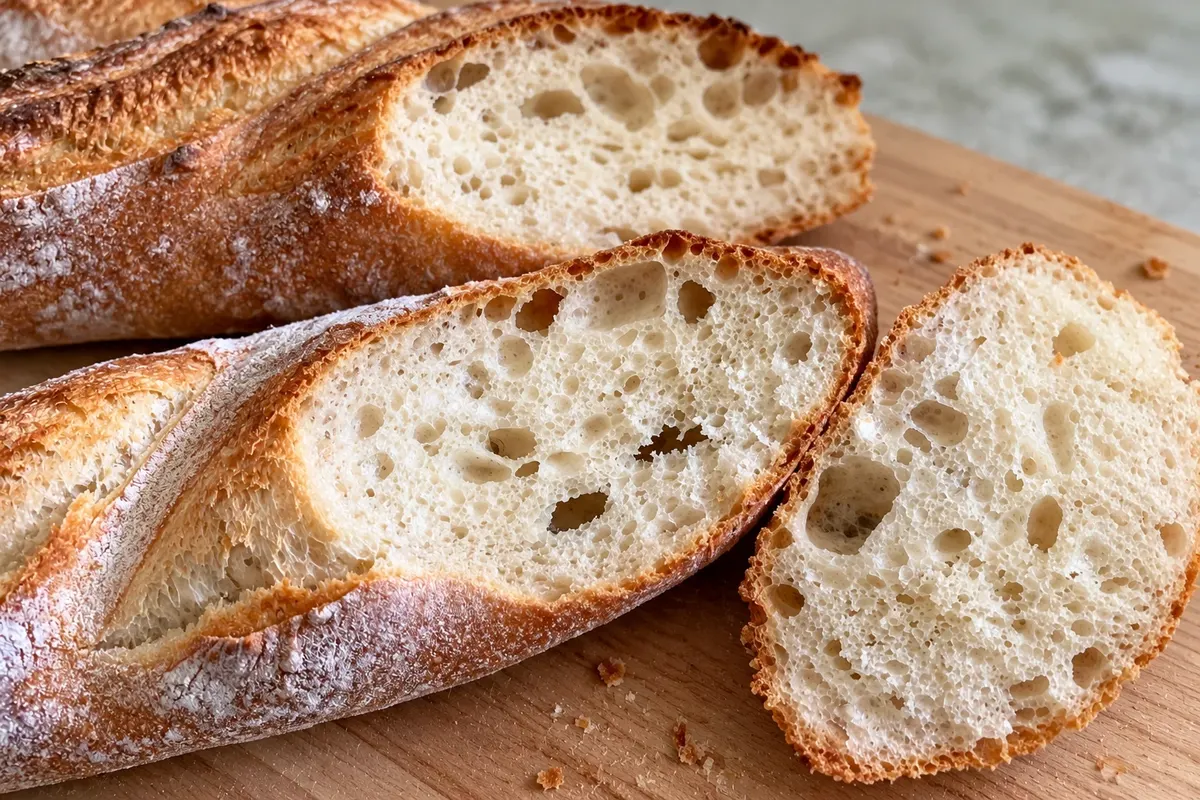
It is eaten in a group: each person skewers a bread cube on the long fork, dips it into the cheese and stirs in figure-eight motions so the mixture does not stick.


 Brazilija
 Antarktika
 Argentina
 Bolivija
 Čile
 Kolumbija
 Ekvator
 Gvajana
 Francoska Gvajana
 Falklandski otoki (Malvini)
 Paragvaj
 Peru
 Surinam
 Urugvaj
 Venezuela
 Nemčija
 Avstrija
 Belgija
 Hrvaška
 Danska
 Slovaška
 Slovenija
 Španija
 Finska
 Grčija
 Nizozemska
 Madžarska
 Irska
 Islandija
 Italija
 Luksemburg
 Norveška
 Poljska
 Portugalska
 Združeno kraljestvo
 Češka
 Švedska
 Švica
 Turčija
 Bermudi
 Kanada
 Združene države Amerike
 Grenlandija
 Mehika
 Sveta Peter in Mihael
 Dominikanska republika
 Japonska
 Južnoafriška republika
 Egipt
 Avstralija
 Fidži
 Nova Zelandija
 Papua Nova Gvineja