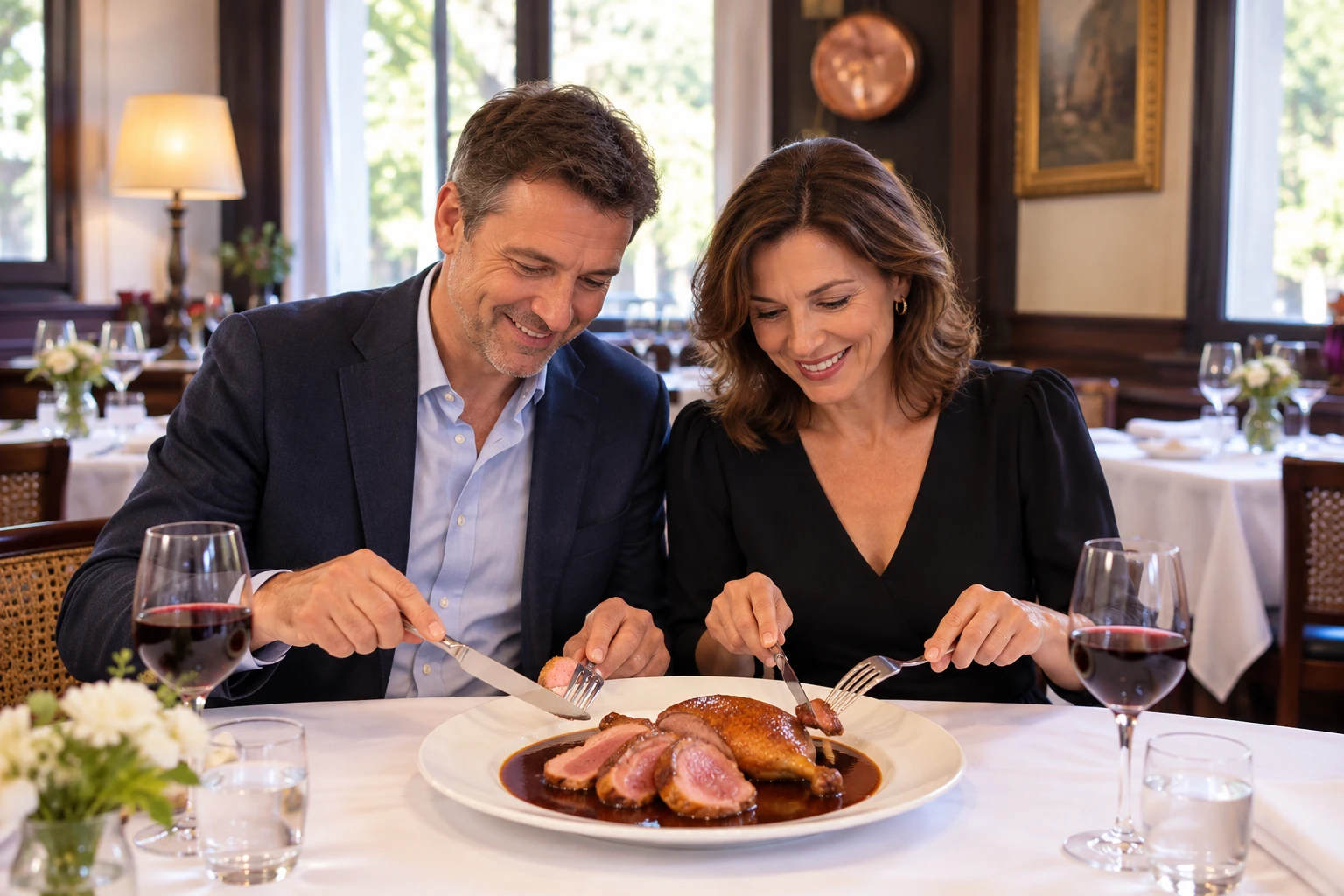
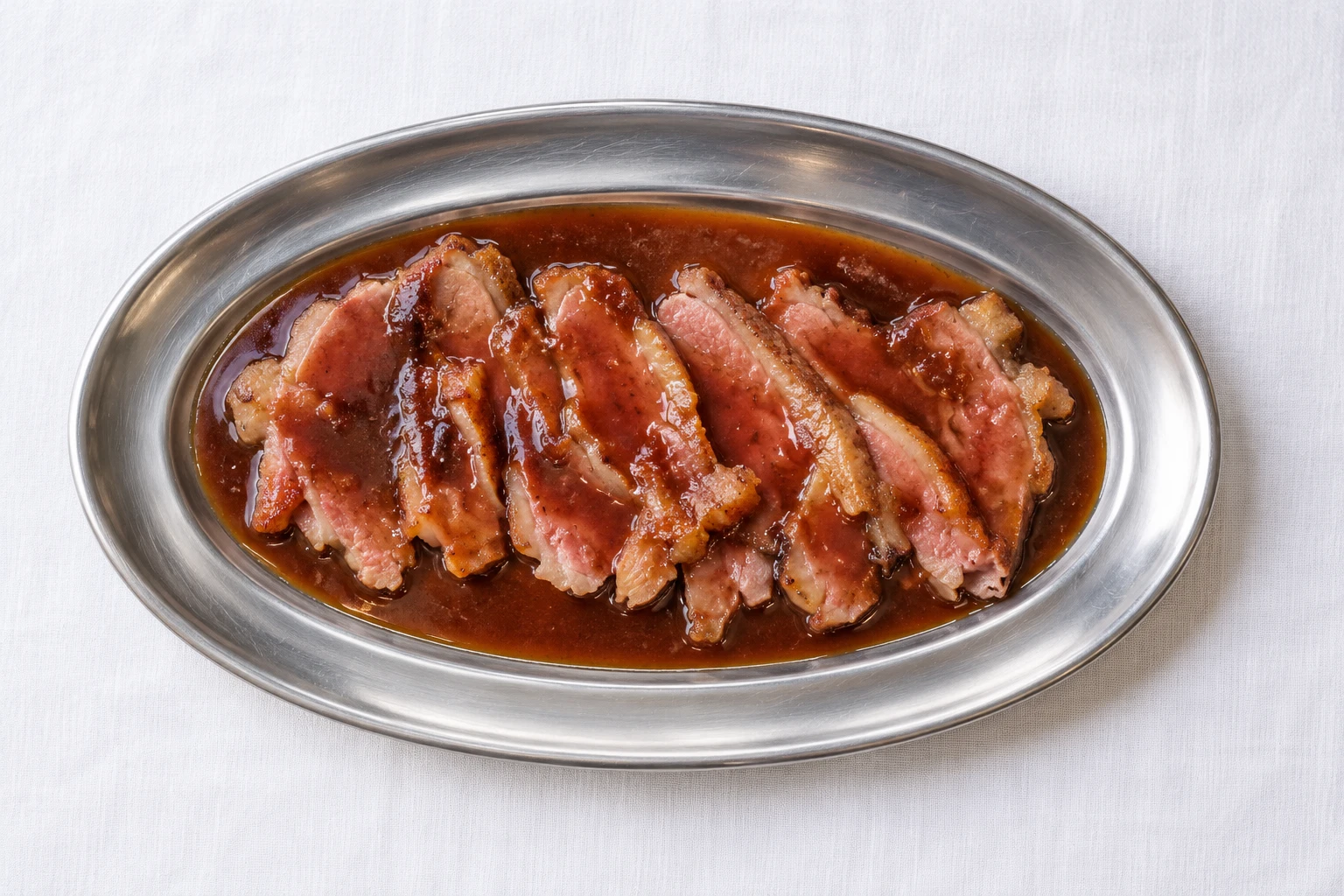
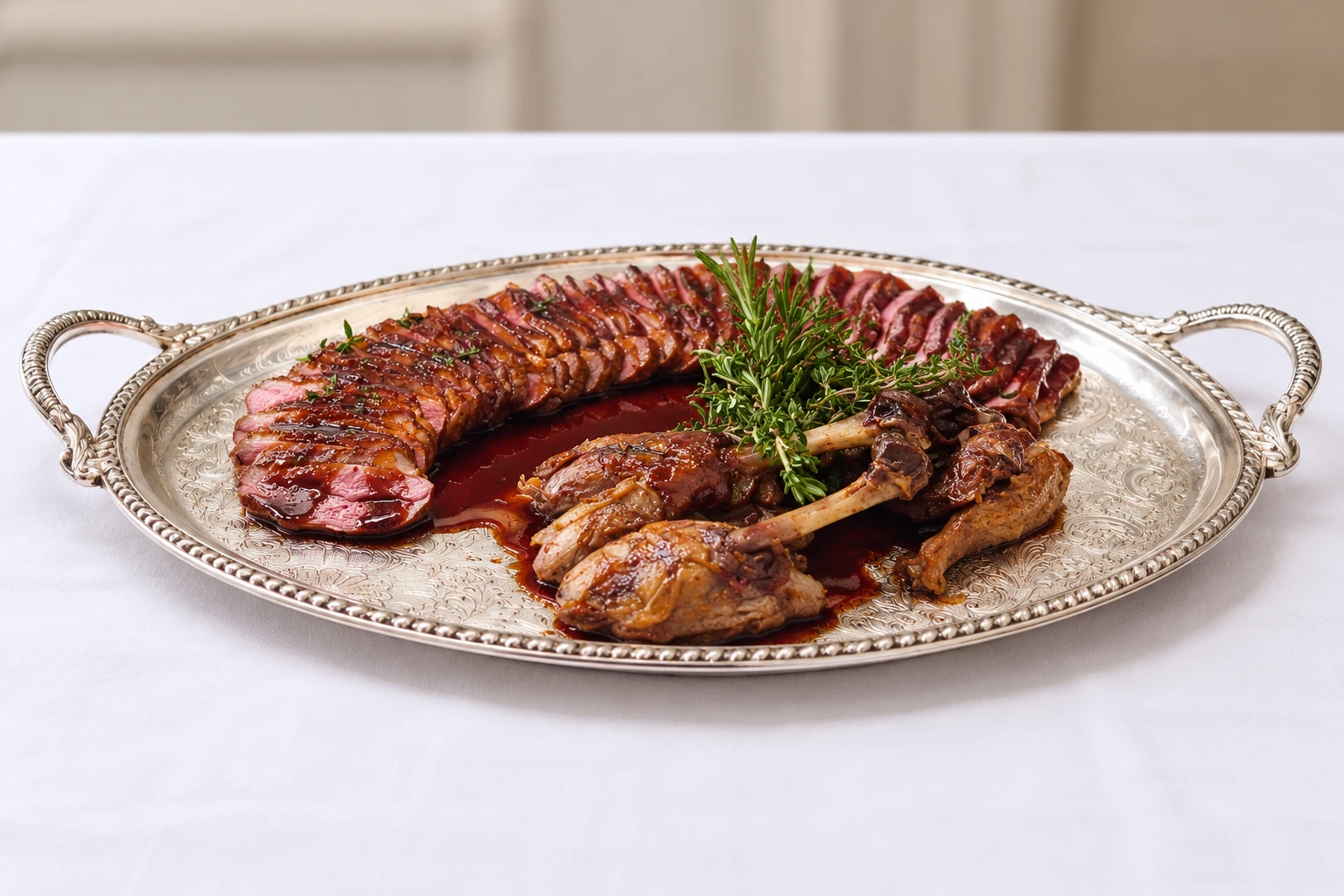
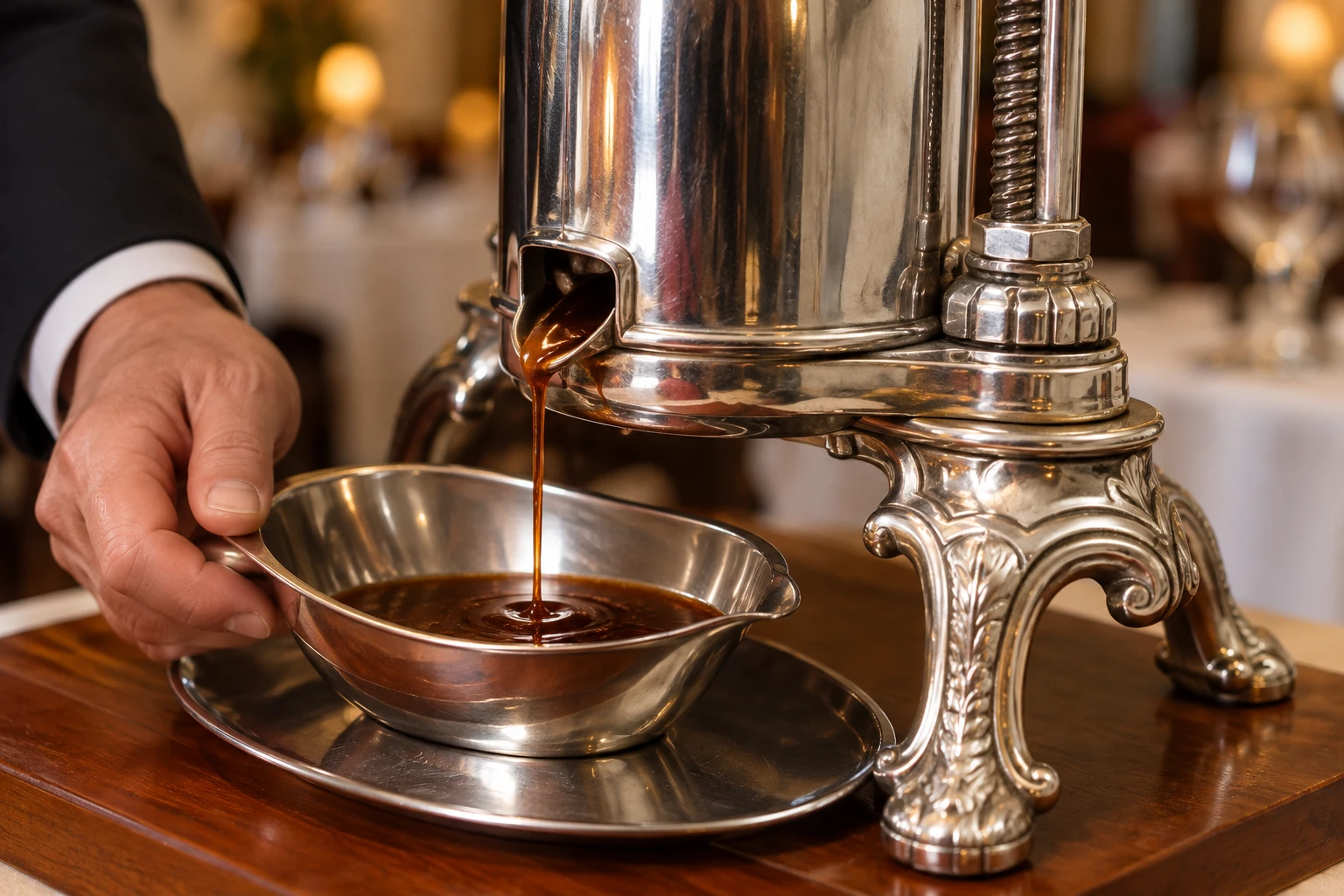
Canard à la rouennaise is a young duck, the caneton, roasted so the meat remains pink. In the classic version, the preparation finishes in front of the customer: the breasts, legs and wings are removed, and the carcass goes into a silver press that extracts the juice. That juice, with red wine and shallots, becomes the sauce that covers the meat, sometimes flambéed. Because of the pink meat and the sauce made from the juice, the dish is also called canard au sang.
The recipe is attributed to an innkeeper from Duclair, on the banks of the Seine west of Rouen, known as Père Denise, in the 19th century. The region has a tradition of duck farming, and Duclair still celebrates the animal in an annual festival.
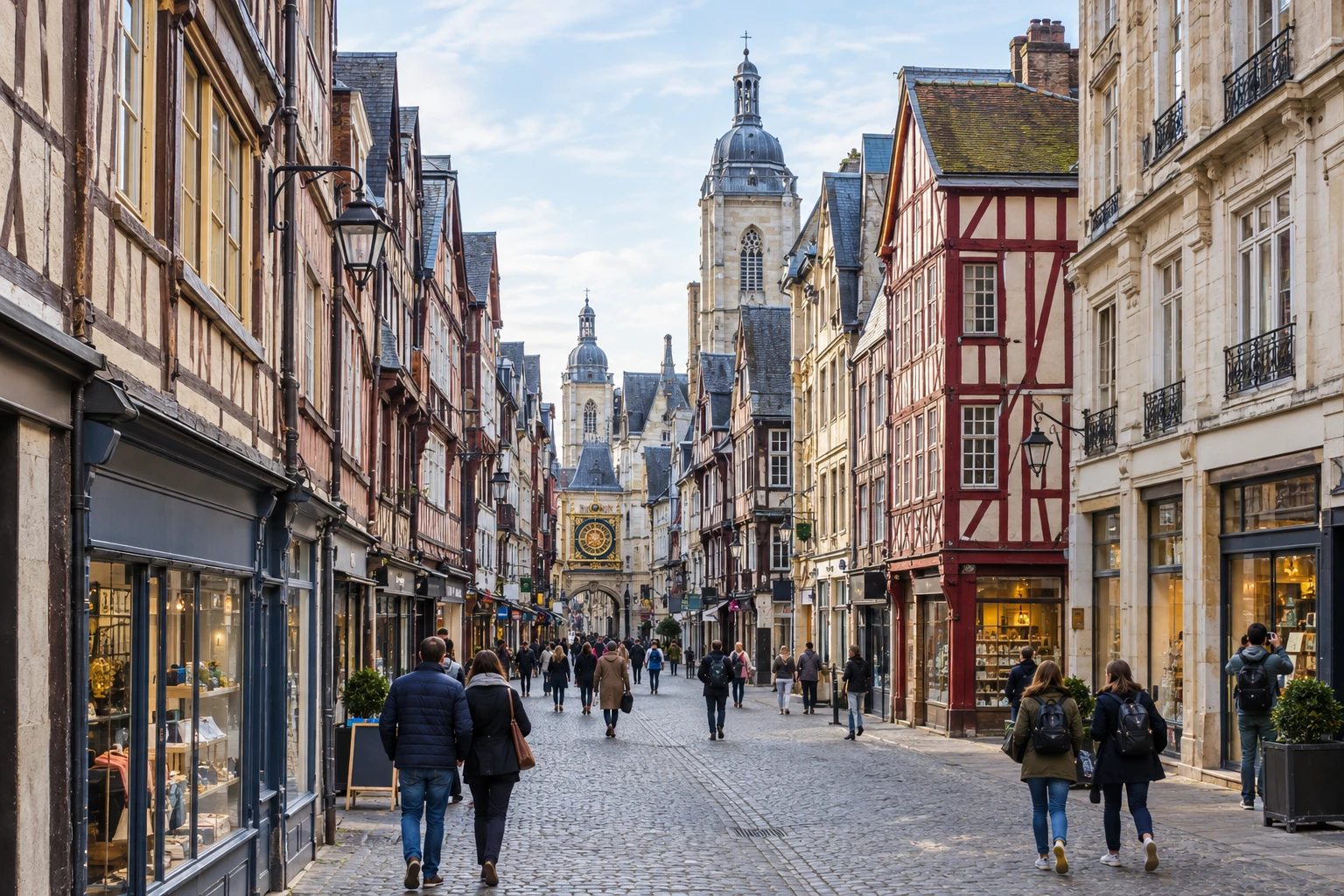
In Rouen the tourist office presents the dish as the city’s specialty. In 1986 the Ordre des Canardiers was created, an association dedicated to preserving this tradition. The city has been part of UNESCO’s Creative Cities Network for gastronomy since 2021.
The preparation requires the press and a trained cook, and the dish appears mainly in traditional restaurants as a ceremonial item.


 Brazilija
 Antarktika
 Argentina
 Bolivija
 Čile
 Kolumbija
 Ekvator
 Gvajana
 Francoska Gvajana
 Falklandski otoki (Malvini)
 Paragvaj
 Peru
 Surinam
 Urugvaj
 Venezuela
 Nemčija
 Avstrija
 Belgija
 Hrvaška
 Danska
 Slovaška
 Slovenija
 Španija
 Finska
 Grčija
 Nizozemska
 Madžarska
 Irska
 Islandija
 Italija
 Luksemburg
 Norveška
 Poljska
 Portugalska
 Združeno kraljestvo
 Češka
 Švedska
 Švica
 Turčija
 Bermudi
 Kanada
 Združene države Amerike
 Grenlandija
 Mehika
 Sveta Peter in Mihael
 Dominikanska republika
 Japonska
 Južnoafriška republika
 Egipt
 Avstralija
 Fidži
 Nova Zelandija
 Papua Nova Gvineja