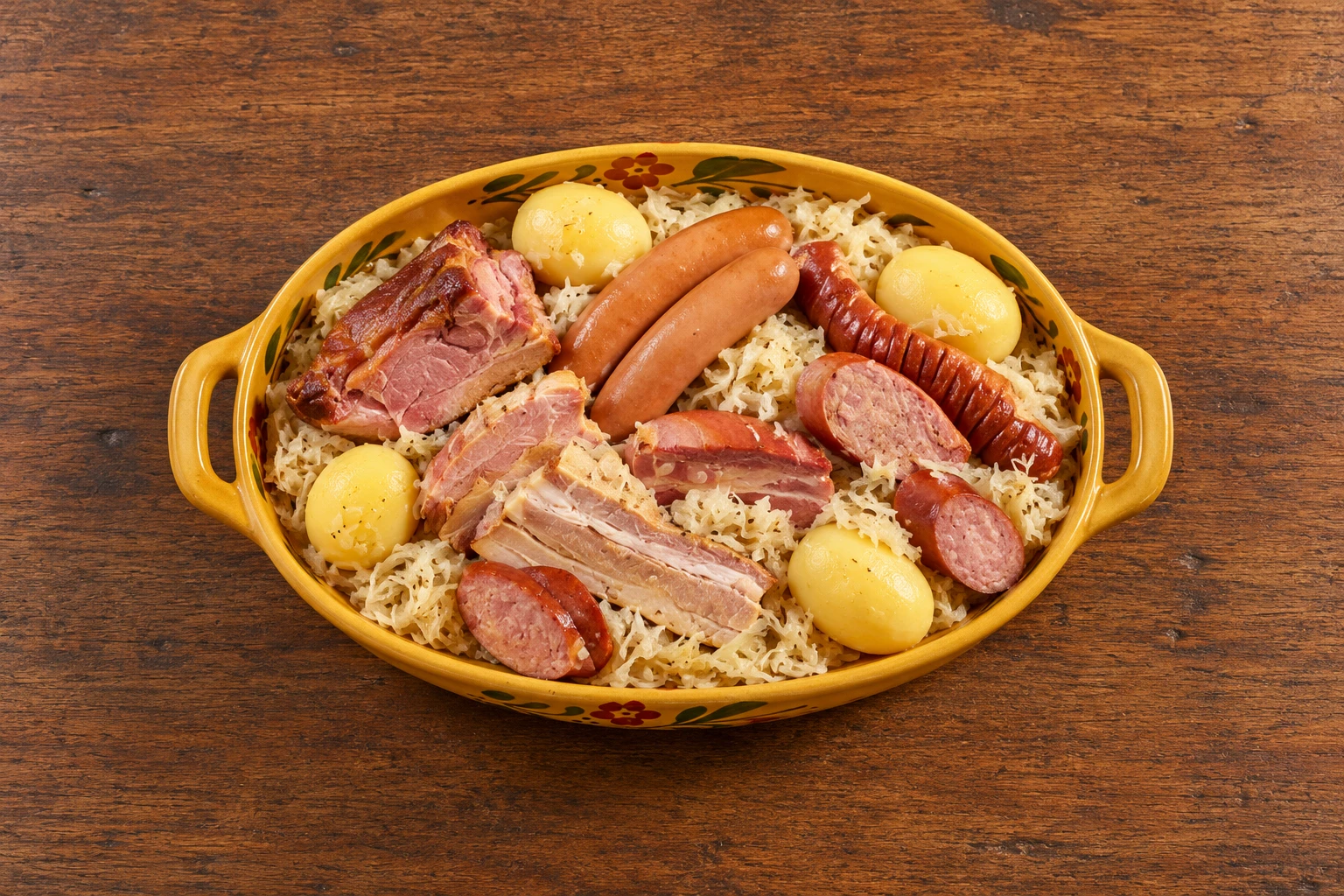
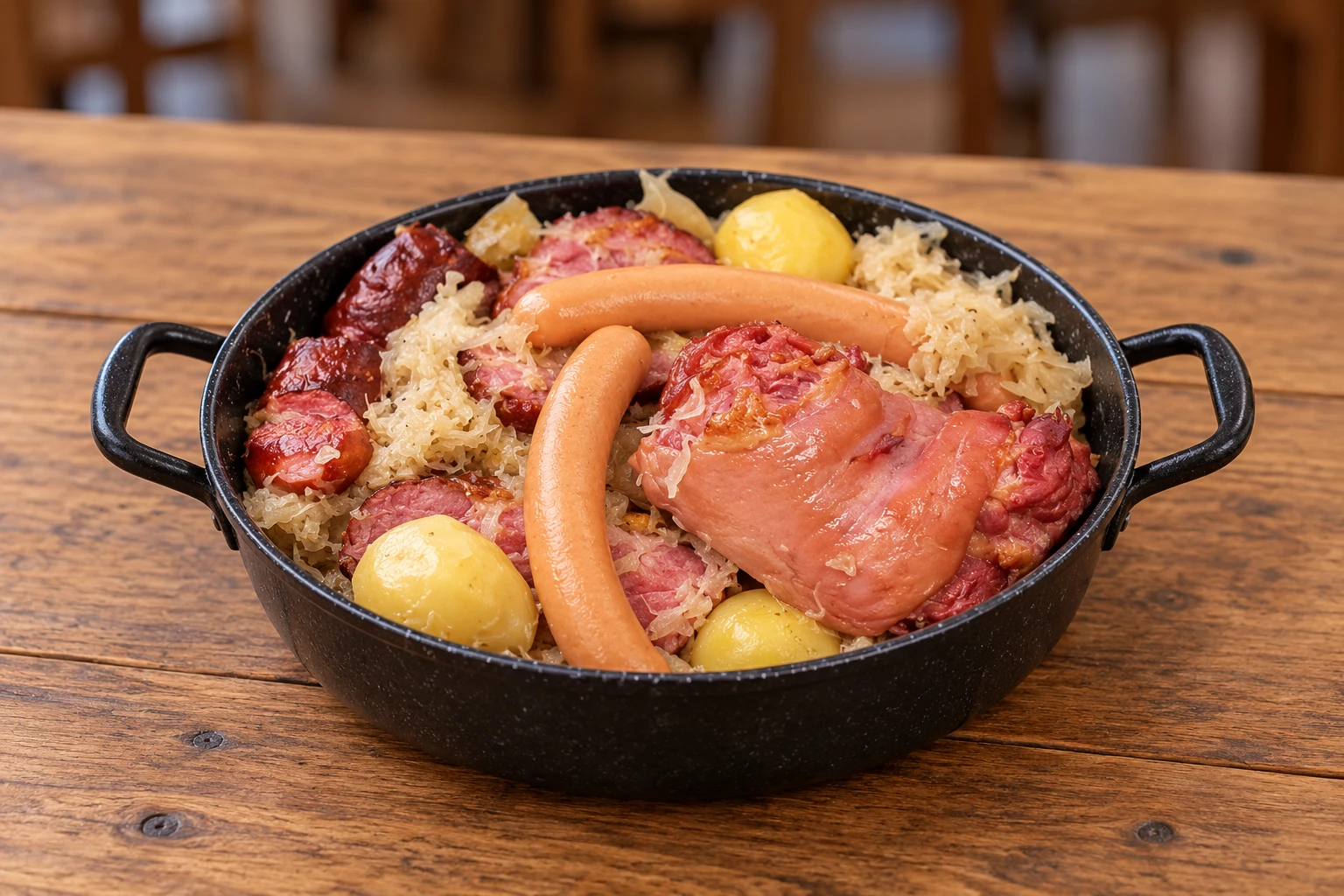
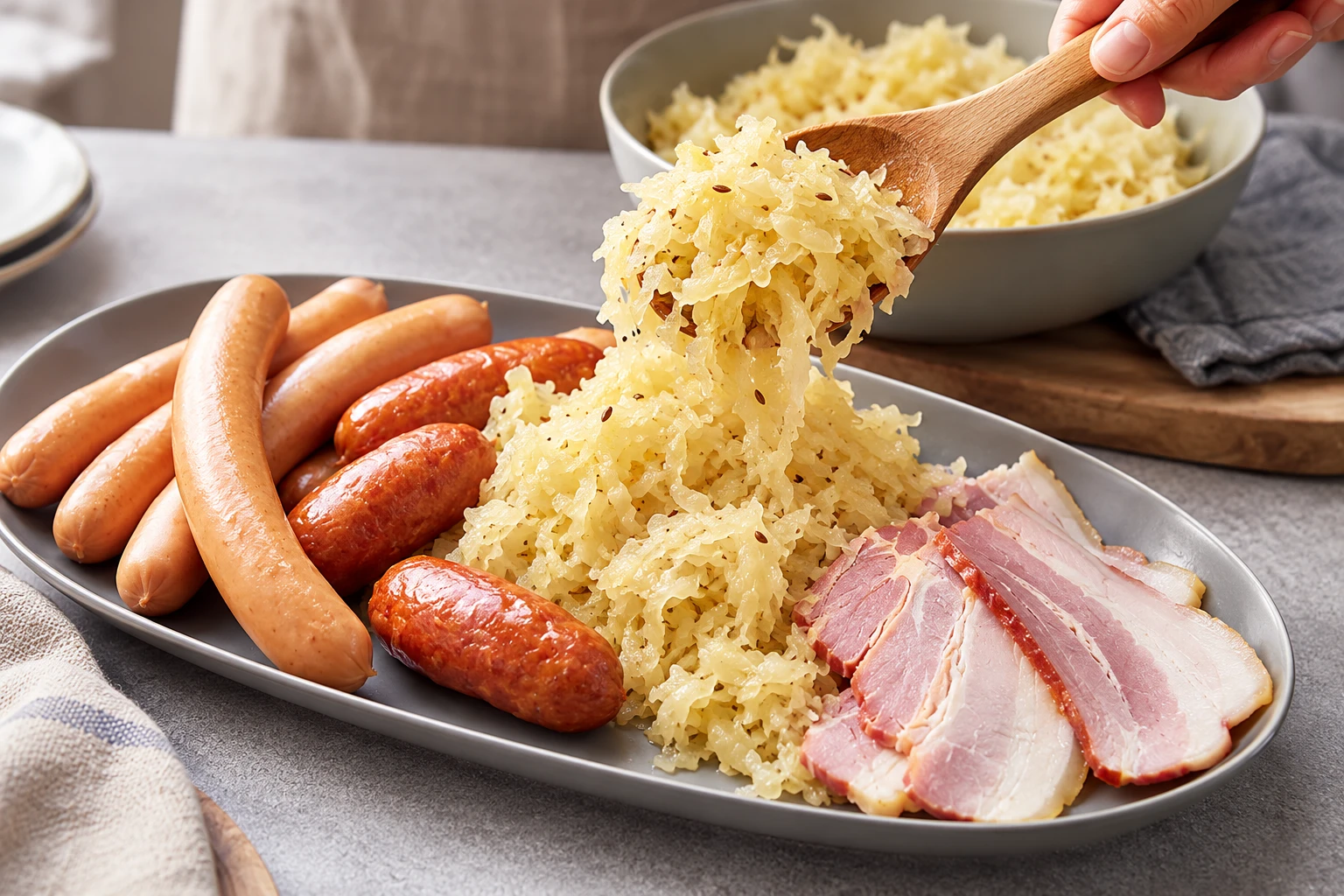
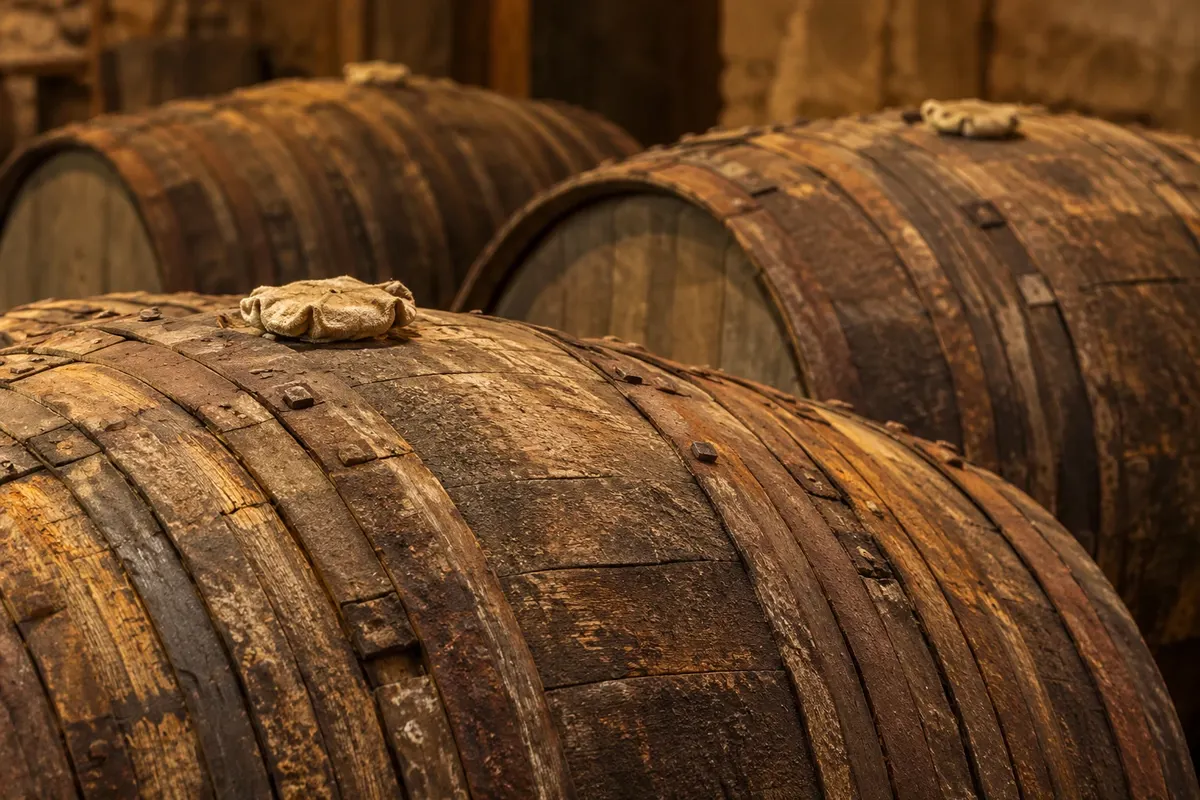
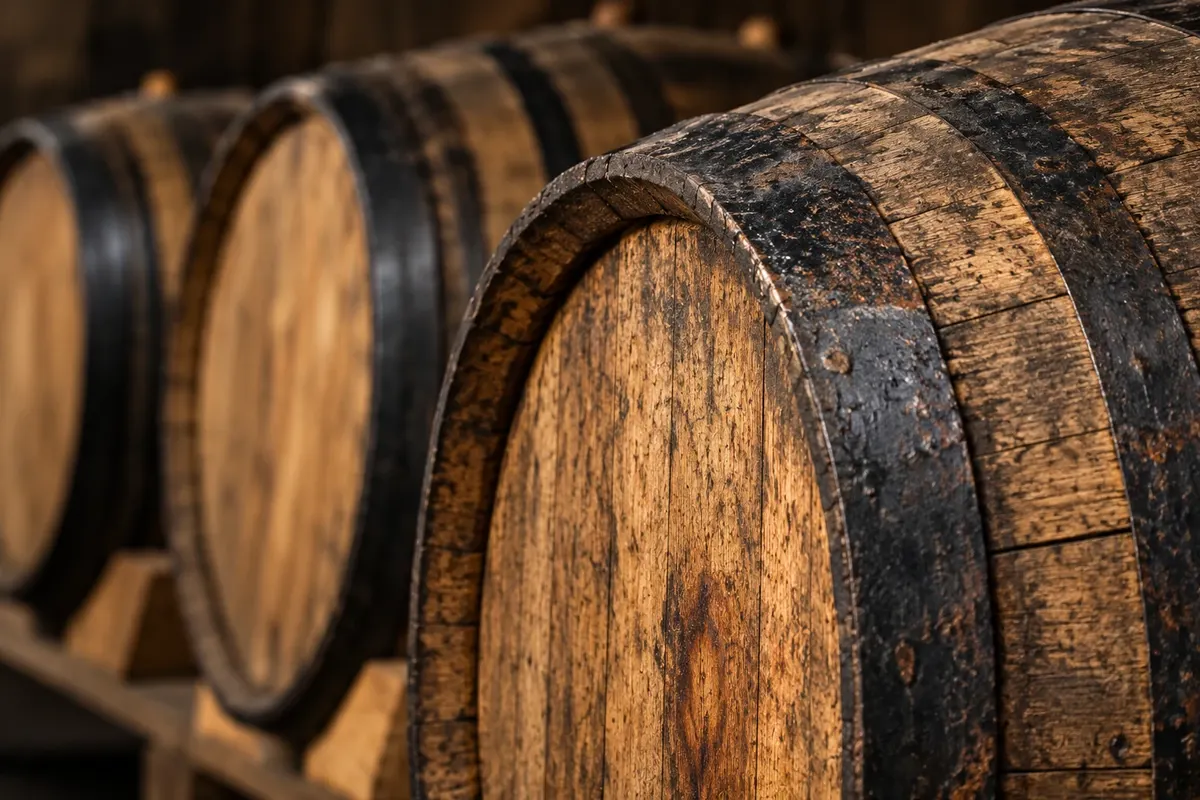
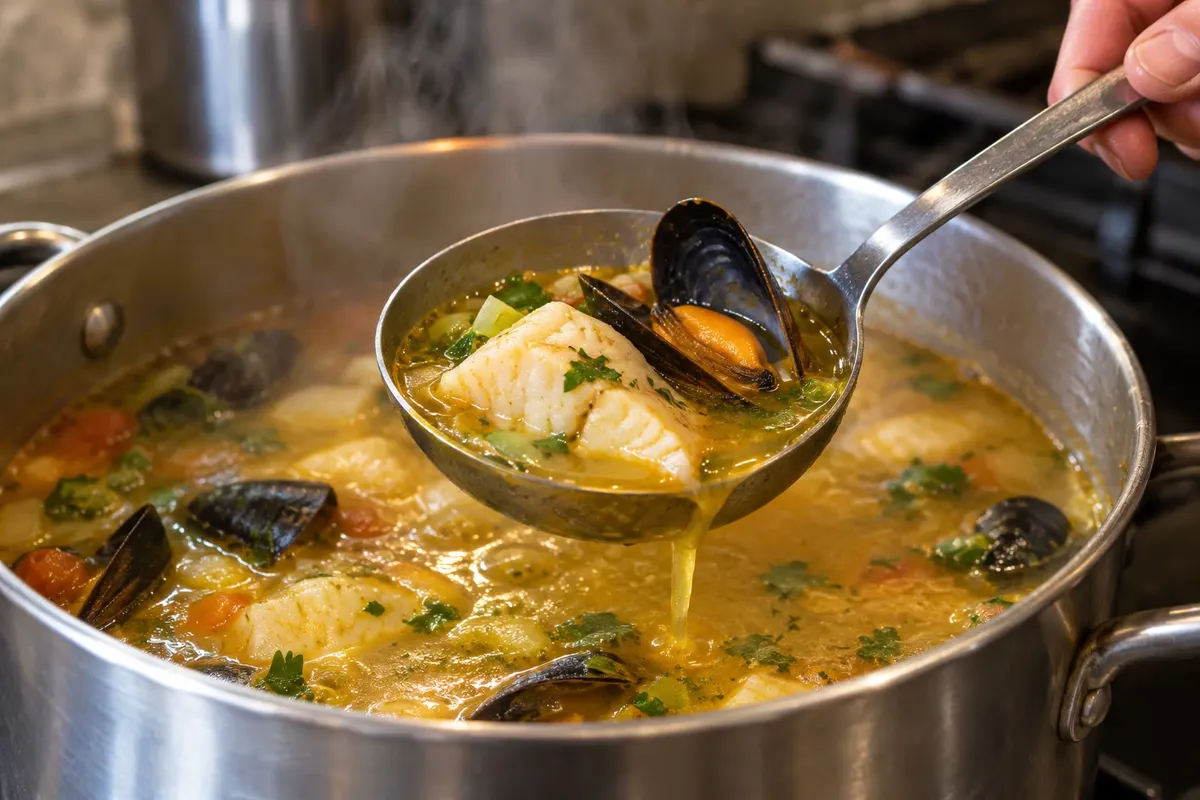
The word choucroute refers to the fermented cabbage itself: white cabbage is cut into thin strips, salted and left to ferment in barrels for weeks, until it develops a slightly acidic taste. The name comes from the Alsatian sürkrüt, meaning sour cabbage. Choucroute garnie is the full dish: the cooked sauerkraut with white wine and spices, topped with pork meats and served with potatoes.
The dish is from Alsace, the former Rhine province that is now part of the Grand Est administrative region. In the Alsatian version, the sauerkraut is accompanied by Strasbourg and Montbéliard sausages, bacon, pork knuckle and other smoked meats. There is also a version with river fish, sometimes called choucroute de la mer.
Cabbage has been grown for centuries on the plain south of Strasbourg; the village of Krautergersheim calls itself the capital of sauerkraut and holds a festival at the end of September. After about twenty years of effort, Choucroute d'Alsace received the European protected geographical indication in 2018.
Choucroute garnie is served in winstubs, the Alsatian taverns, and in many breweries in other regions of France.


 Brazilija
 Antarktika
 Argentina
 Bolivija
 Čile
 Kolumbija
 Ekvator
 Gvajana
 Francoska Gvajana
 Falklandski otoki (Malvini)
 Paragvaj
 Peru
 Surinam
 Urugvaj
 Venezuela
 Nemčija
 Avstrija
 Belgija
 Hrvaška
 Danska
 Slovaška
 Slovenija
 Španija
 Finska
 Grčija
 Nizozemska
 Madžarska
 Irska
 Islandija
 Italija
 Luksemburg
 Norveška
 Poljska
 Portugalska
 Združeno kraljestvo
 Češka
 Švedska
 Švica
 Turčija
 Bermudi
 Kanada
 Združene države Amerike
 Grenlandija
 Mehika
 Sveta Peter in Mihael
 Dominikanska republika
 Japonska
 Južnoafriška republika
 Egipt
 Avstralija
 Fidži
 Nova Zelandija
 Papua Nova Gvineja