

 Brazil
 Antarctica
 Argentina
 Bolivia
 Chile
 Colombia
 Ecuador
 Falkland Islands (Malvinas)
 French Guiana
 Guyana
 Paraguay
 Peru
 Suriname
 Uruguay
 Venezuela
 Austria
 Belgium
 Croatia
 Denmark
 Finland
 France
 Germany
 Greece
 Iceland
 Ireland
 Italy
 Luxembourg
 Norway
 Poland
 Portugal
 Slovakia
 Slovenia
 Spain
 Sweden
 Switzerland
 the Czech Republic
 the Netherlands
 the United Kingdom
 Turkey
 Bermuda
 Canada
 Greenland
 Mexico
 Saint Pierre and Miquelon
 the United States
 the Dominican Republic
 Japan
 Egypt
 South Africa
 Australia
 Fiji
 New Zealand
 Papua New Guinea
Food and countryside
Culinary travel in Hungary
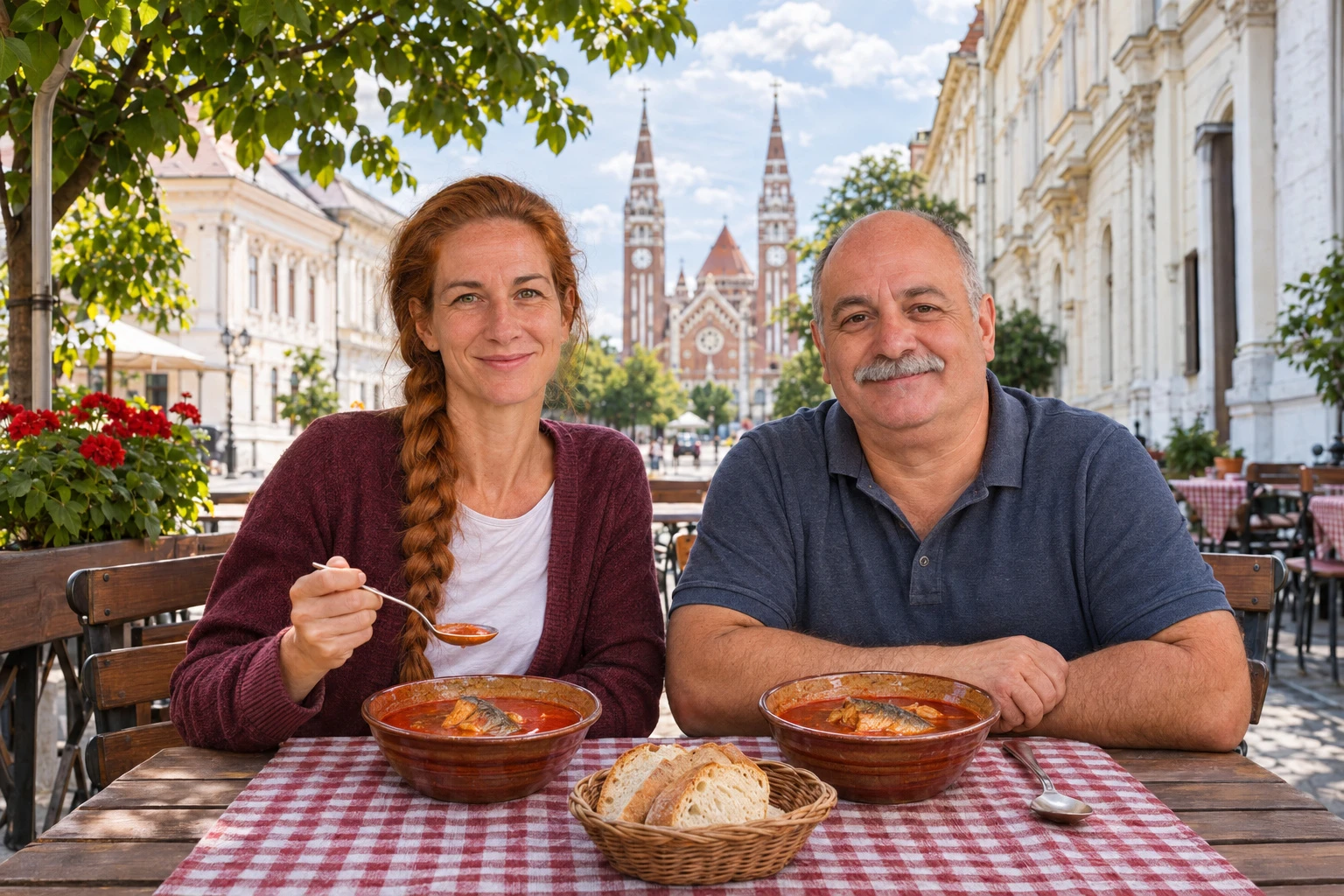
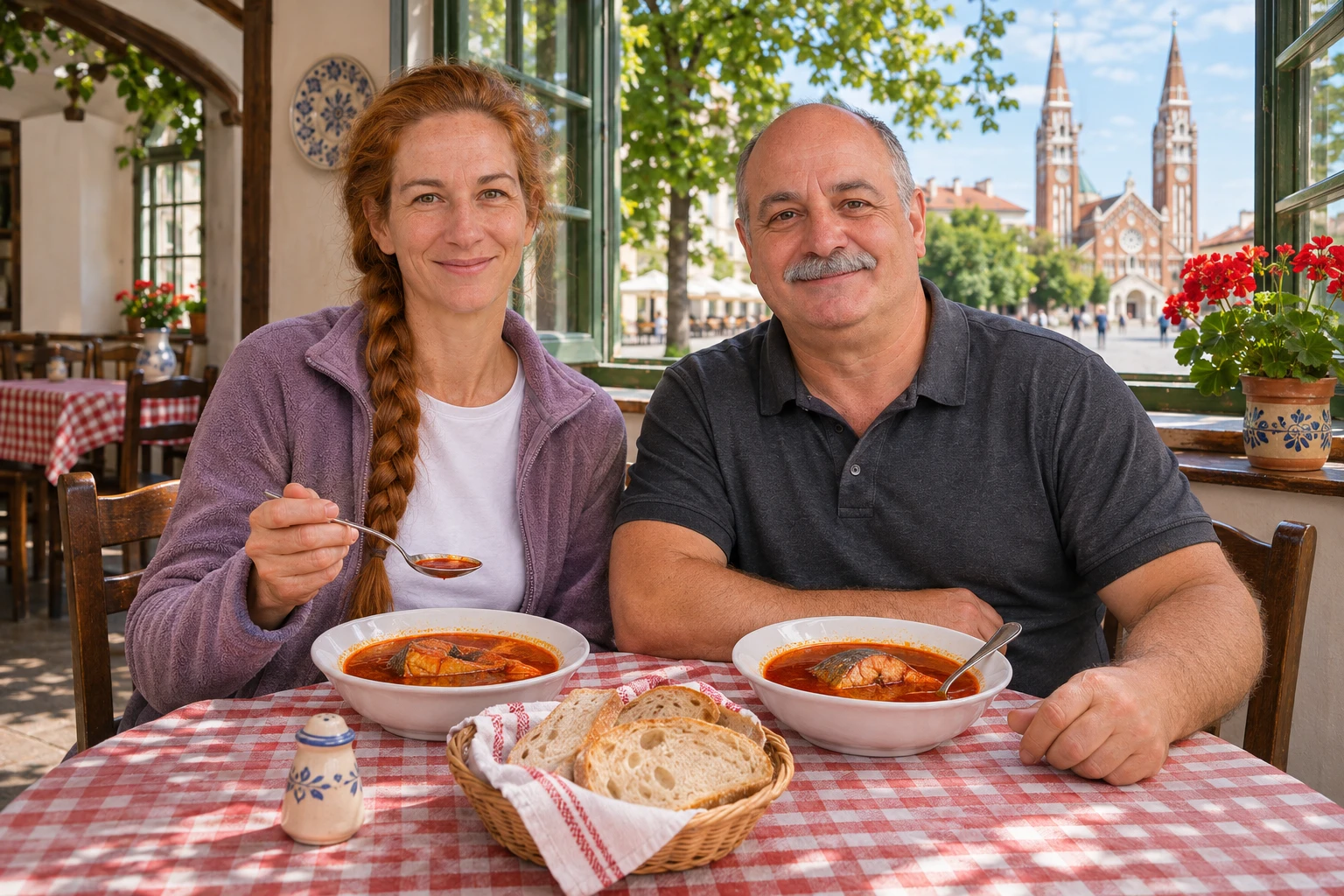
Order fish soup in Szeged and again in Baja. The first spoonful tells you which side of the plain the cook learned the recipe on.
In Hungary, two cities can list almost the same thing on their menus yet serve very different lunches. In Szeged, on the banks of the Tisza, cooks press the fish through a sieve to give the broth body. In Baja, on the Danube, pasta is part of the meal. Both soups contain paprika. You need to see what comes to the table to understand why each has a name and a tradition of its own.
Where to go in Brazil
Pick a region or type what you are looking for to see the cities and who offers each activity.
- Budapest BU
- Baja BK
- Szeged CS
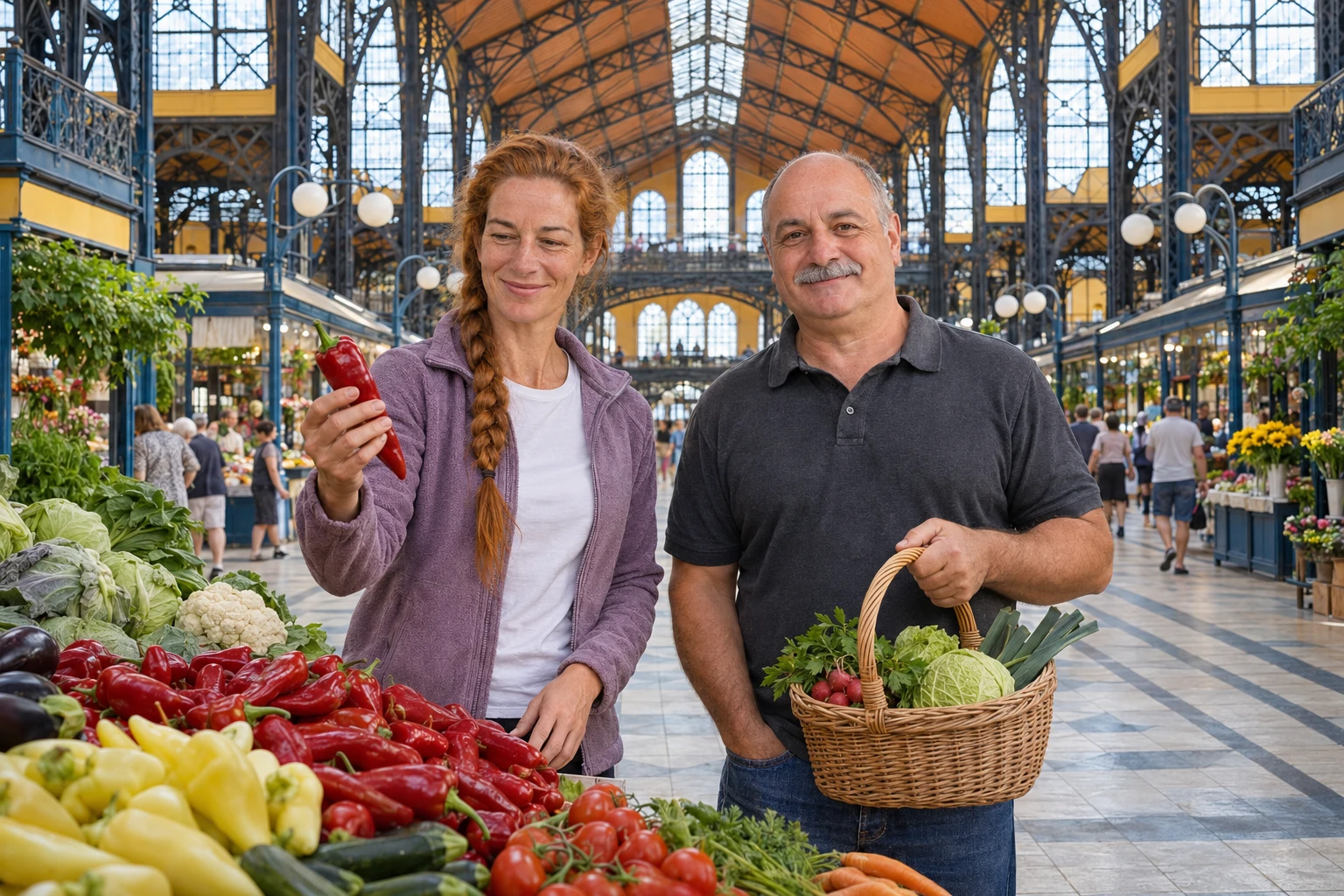
In Budapest, you can start exploring the city’s food before you even sit down to eat. At the Central Market Hall, packets of paprika share the spotlight with salamis, cheeses, and jars of honey. Just a few orders later, you can discover another chapter in the capital’s history: its pastry shops and the cafés where writers turned their tables into desks. A market visit, a regional dish, and a stop at a historic café offer different ways to explore, even if you have only one meal to spare.
Two fish soups between the Tisza and the Danube
Halászlé is the word to look for on the menu. In Szeged, the traditional base is made with fish and onion. Once cooked, the mixture is pressed through a sieve before the paprika and the pieces of fish that will be served in the soup are added. Start with a spoonful of the broth on its own. Much of its texture comes from the fish used to make the base.
In Baja, carp is a traditional choice, and the fish cooks with the onion and paprika. The usual accompaniment is thin pasta cut into strips about the size of matchsticks. Ask how the restaurant serves the pasta and the fish. If you’re expecting a starter, you may find you’ve ordered enough for lunch.
Szeged is also known for its paprika and salami. Try a slice of salami, then look for the city’s name on a packet of paprika. It’s a way to get to know two specialties that many people associate with each other simply because of their color. In the soup, paprika is the ingredient to pay attention to. In a slice of salami, notice the cut, the flecks of fat, and the flavor of the cured meat.
A walk among the stalls at Budapest’s Central Market Hall
The Central Market Hall, at the Pest end of Liberty Bridge, is a good place to start if you want to know what to look for on menus. On the ground floor, pick one product to compare from stall to stall. With paprika, for example, note the place of origin, the variety, and the weight. Two red packets may contain paprika of very different strengths, even if the same word stands out on both labels.
If you plan to cook during your trip, ask the vendor how they use the spice. If you’re looking for a snack, the question is a little different. See which products you can buy in small quantities and which counters serve ready-to-eat food. That way, you can try one thing at a time and save the heavier purchases for your way out.
There’s plenty to see between the stalls, too. The metal framework spans the hall, so you can see several aisles at once. Step out of the flow of shoppers to take a look at the building. Then go back to the stalls that caught your eye, now that you have a sense of where they are in relation to the entrance.
Coffee and pastries in the cafés of Budapest and Szeged
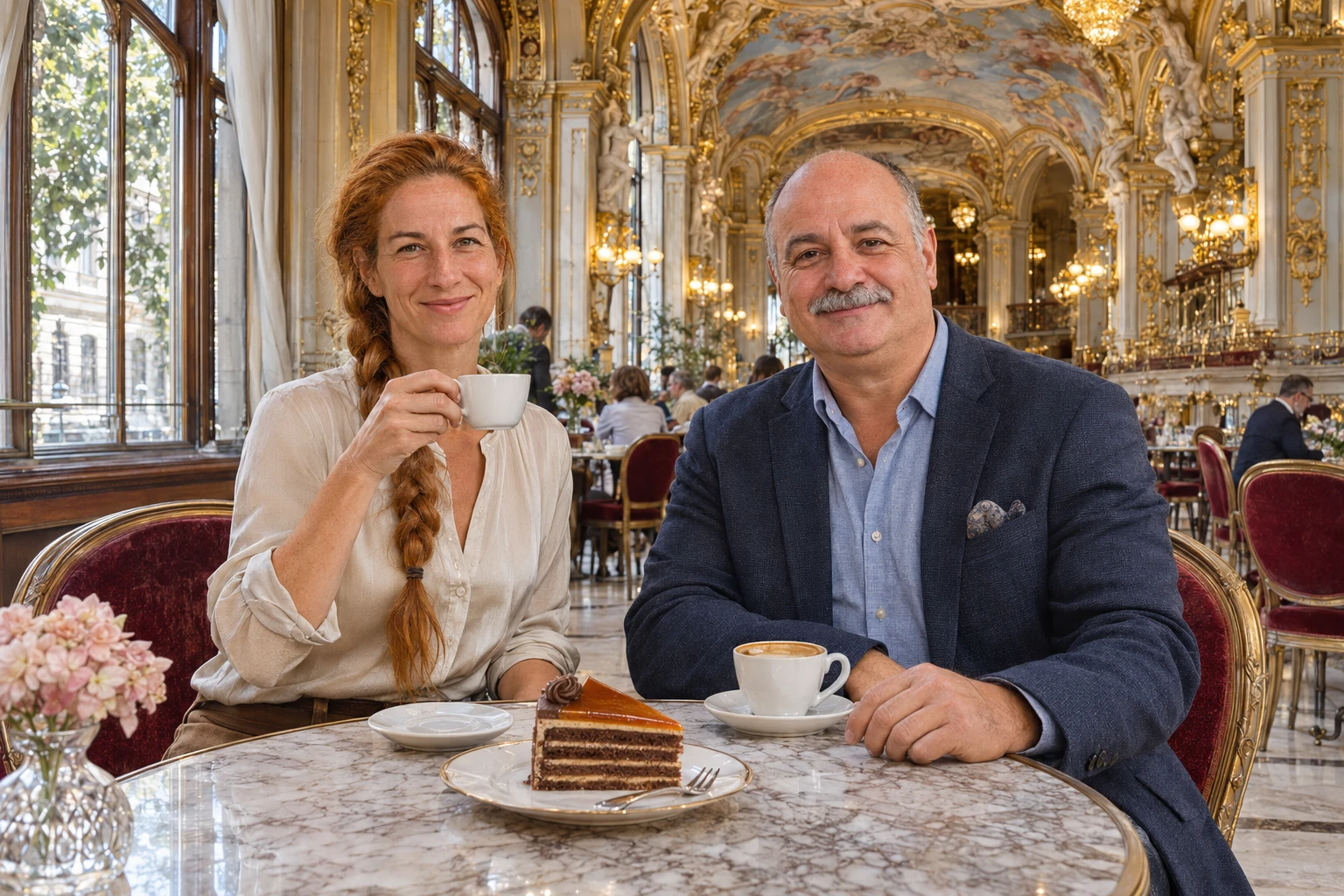
At Gerbeaud in Budapest, a good place to start is a slice of the cake that bears the café’s name. The cut side reveals layers of pastry, walnuts, and apricot jam beneath the chocolate topping. Even the way you enjoy the cake connects it to the café. Over a slice and a cup of coffee, you have time to notice the table next to yours, the display cases, and the comings and goings in Vörösmarty Square.
The New York Café has a different story to tell. Writers and editors used to meet there to read manuscripts, discuss their writing, and work. Ernő Osvát, an editor at the magazine Nyugat, had his own place to work in the gallery. Knowing this before you go in changes what you look for. As you take in the details of the ceiling and the marble tables, look for the spot where a magazine took shape.
In Szeged, the Virág pastry shop fits neatly into a walk around the city. Stop by in the afternoon after a fish lunch, or come back another day when you have an appetite for something sweet. The word cukrászda, which appears in the shop’s Hungarian name, means “pastry shop.” Knowing it will help you recognize other pastry shop signs on your trip.
Choosing a city based on what you want to eat
If you have a free day in Budapest, you can shop at the Central Market Hall and spend the afternoon sitting in a café. If there’s time for only one stop, think about what you’d like to take away with you. At the market, it might be a spice and an idea for how to use it. At a café, it might be the memory of a pastry or of a room whose history you discovered through a writer’s name.
In Szeged, fish soup from the Tisza, paprika, salami, and a visit to Virág let you alternate meals with sightseeing without leaving the city. Baja is worth a stop for a meal if you want to get to know the cooking traditions of the Danube, or if you’ve tried the Szeged soup and are curious about the pasta. To compare the two recipes, plan on lunch in each city and allow time for travel between them.
If you’re in a group, agree on what matters most before you order. If you want to try the soup, ask about portion sizes and whether the fish has bones. If you’d rather explore the ingredients, try the market, where everyone can decide what to buy. At a café, look over the dessert menu before ordering drinks, especially if anyone needs to ask what goes into a filling.
Using the names on the menu to decide what to order
The adjectives szegedi and bajai indicate a connection to Szeged and Baja, respectively. They’re better clues to the regional recipe than the color of the soup in a photo. If there’s more than one soup on the menu, ask which one has the strained broth, what fish is used, and how the accompaniment is served. The answers can help you choose even if the translated menu lists both simply as fish soup.
In shops and restaurants, prices are usually shown in Hungarian forints, marked Ft or HUF. At the market, check whether the price is per item, per package, or by weight. At a pastry shop, check whether the price is for a whole pastry or a slice. These small details make a difference when you want to try a little of several things.
Frequently asked questions
Where should you start a food tour of Budapest?
Start at the Central Market Hall to get to know the ingredients before lunch. For a break where you can sit down, choose Gerbeaud for its pastries or the New York Café for its literary connections.
Which Hungarian fish soup is served with pasta?
The one from Baja, which is part of the Danube’s culinary tradition. In Szeged, on the Tisza, the distinguishing feature is the broth, made with a fish base that’s pressed through a sieve.
What should you try in Szeged besides the soup?
The city is known for its salami and paprika. For something sweet, Virág is a well-known local pastry shop.
Is the tour a good choice for architecture lovers, too?
Yes. In Budapest, you can see how the stalls are laid out beneath the roof of the Central Market Hall, then take a closer look at the café interiors. Both are ways to get to know the city through food.
More in Food and countryside

Beyond the guide


