

 Brazil
 Antarctica
 Argentina
 Bolivia
 Chile
 Colombia
 Ecuador
 Falkland Islands (Malvinas)
 French Guiana
 Guyana
 Paraguay
 Peru
 Suriname
 Uruguay
 Venezuela
 Albania
 Austria
 Belgium
 Croatia
 Denmark
 Finland
 France
 Germany
 Greece
 Iceland
 Ireland
 Italy
 Luxembourg
 Norway
 Poland
 Portugal
 Slovakia
 Slovenia
 Spain
 Sweden
 Switzerland
 the Czech Republic
 the Netherlands
 the United Kingdom
 Turkey
 Bermuda
 Canada
 Greenland
 Mexico
 Saint Pierre and Miquelon
 the United States
 the Dominican Republic
 Japan
 Egypt
 South Africa
 Australia
 Fiji
 New Zealand
 Papua New Guinea
Food travel
Traditional Hungarian dishes in Szeged and Baja
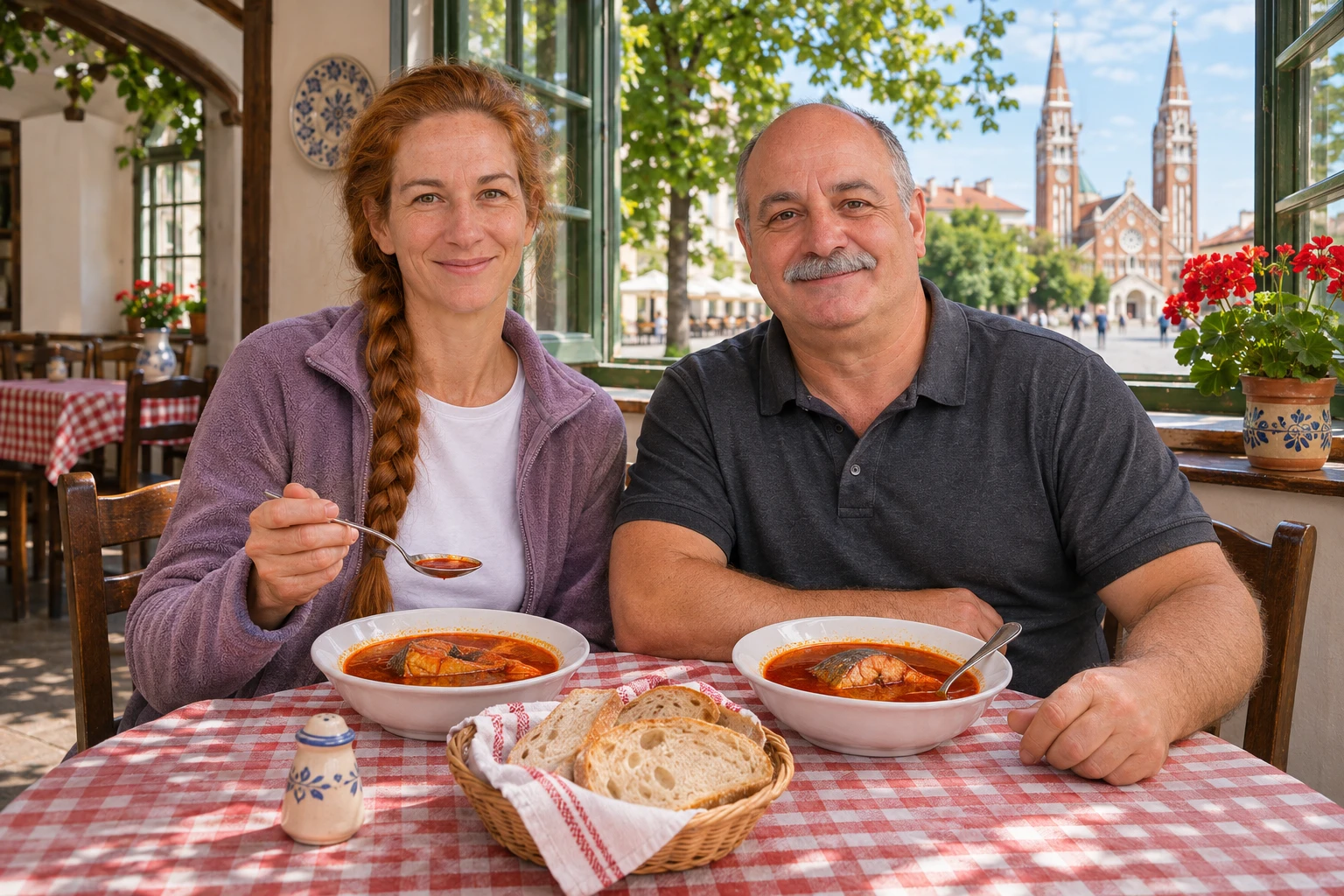
In Baja, the noodles tell you as much about the city as the fish does. They come to the table with halászlé, the soup that gets its red color from paprika and is part of meals along the banks of the Danube. In Szeged, on the banks of the Tisza, start with the broth if you want to discover the secret of the recipe. From the first spoonful, it has a texture that the pieces of fish alone can’t quite explain.
The two cities make for a short trip through Hungary’s regional cuisine. Even if your route takes you to only one of them, the local version is worth ordering. The name on the menu, the way the soup is served, and even what’s left on your spoon offer clues to the traditions of each river.
The strained broth in Szeged’s fish soup
In the traditional Tisza recipe, some of the fish is cooked with onions until it falls apart. The flesh is pressed through a sieve and returned to the liquid, giving the broth body. Only then are the paprika and the pieces of fish that will be served whole added. You can taste the fish in two ways in the same bowl: in the thick broth and in the pieces you can separate with your spoon.
Look for szegedi halászlé on the menu. The first word means Szeged-style. If the menu mentions ponty, that means carp. Asking which fish the kitchen is using that day usually tells you more than a photo of the dish. Even when the base is strained, the pieces added later may still contain bones.
The noodles served with fish in Baja
The Baja recipe brings together carp, onions, and paprika in a cauldron. The fish cooks directly in the liquid. The gyufatészta are prepared separately: these noodles are made from flour and eggs and cut into narrow strips about the width of matchsticks. On the menu, the name bajai halászlé connects this combination to the city and to the fishing traditions of the Danube.
One traditional way to serve the soup is to place the noodles in a bowl, pour the hot broth over them, and bring the fish steaks to the table on a separate platter. If everything arrives separately, try a little broth with the noodles before breaking into a piece of fish. It’s easy to see why the noodles are such an important part of the dish, even though they cook in a different pot.
Paprika and salami at the table in Szeged
If the red color catches your eye, ask about the paprika. The spice is part of Szeged’s identity and comes in both sweet and hot varieties. Taste the broth before adding pepper. The color tells you little about the heat, and you’ll notice the aroma of the paprika from the first spoonful.
Szeged salami offers another way to explore the local cuisine. A thin slice is enough to appreciate the texture of the meat and its small flecks of fat. If there’s more than one type of sausage on the plate, ask which one is from Szeged. If you’ve already ordered a generous serving of soup, you can save the salami for a snack another time.
How to order the portion you want
When choosing your meal, ask whether the soup serves one person or is meant for the table to share. In Baja, it’s also worth asking whether the noodles are included. That helps whether you’re planning to share lunch or want to try the fish and still have room for another specialty.
If someone in your group avoids a particular ingredient, ask about each part of the dish. In Baja, the traditional noodles contain wheat and eggs. In Szeged, the pieces you can see are only some of the fish that goes into the soup. Asking the kitchen before you order will clarify how that restaurant prepares and serves its version.
Frequently asked questions
Where can you try fish soup with noodles in Hungary?
In Baja, look for bajai halászlé with gyufatészta. The noodles are cooked separately and served with the fish and paprika broth.
What gives Szeged’s fish soup its thick texture?
The traditional method makes use of the fish that forms the base of the soup. Once cooked with onions, the fish is pressed through a sieve, giving body to the broth in which the pieces served at the table finish cooking.
What can you eat in Szeged besides fish?
Salami is another local specialty. If you’re interested in spices, it’s also worth getting to know the paprika produced in the region and asking how the variety you choose is used.
Where to go: Pratos típicos
Pick a region or type what you are looking for to see the cities and who offers it in each.

Beyond the guide


