Museum
Prado Museum
One of the largest collections of European painting in the world, with Velázquez, Goya, El Greco, Bosch, Titian and Rubens, in a neoclassical building by Juan de Villanueva on the Paseo del Prado.

 Search
 Brazil
 Antarctica
 Argentina
 Bolivia
 Chile
 Colombia
 Ecuador
 Falkland Islands (Malvinas)
 French Guiana
 Guyana
 Paraguay
 Peru
 Suriname
 Uruguay
 Venezuela
 Austria
 Belgium
 Croatia
 Denmark
 Finland
 France
 Germany
 Greece
 Hungary
 Iceland
 Ireland
 Italy
 Luxembourg
 Norway
 Poland
 Portugal
 Slovakia
 SloveniaSpain
 Sweden
 Switzerland
 the Czech Republic
 the Netherlands
 the United Kingdom
 Turkey
 Bermuda
 Canada
 Greenland
 Mexico
 Saint Pierre and Miquelon
 the United States
 the Dominican Republic
 JapanTurkey
 Egypt
 South Africa
 Australia
 Fiji
 New Zealand
 Papua New Guinea
Community of Madrid
30 places to visit Madrid (Spain), chosen by the Cidade Turismo guide.
Illustrative images. The pictures in this guide are illustrations based on the real place, not photographs, and may differ from it.
To start
One by one
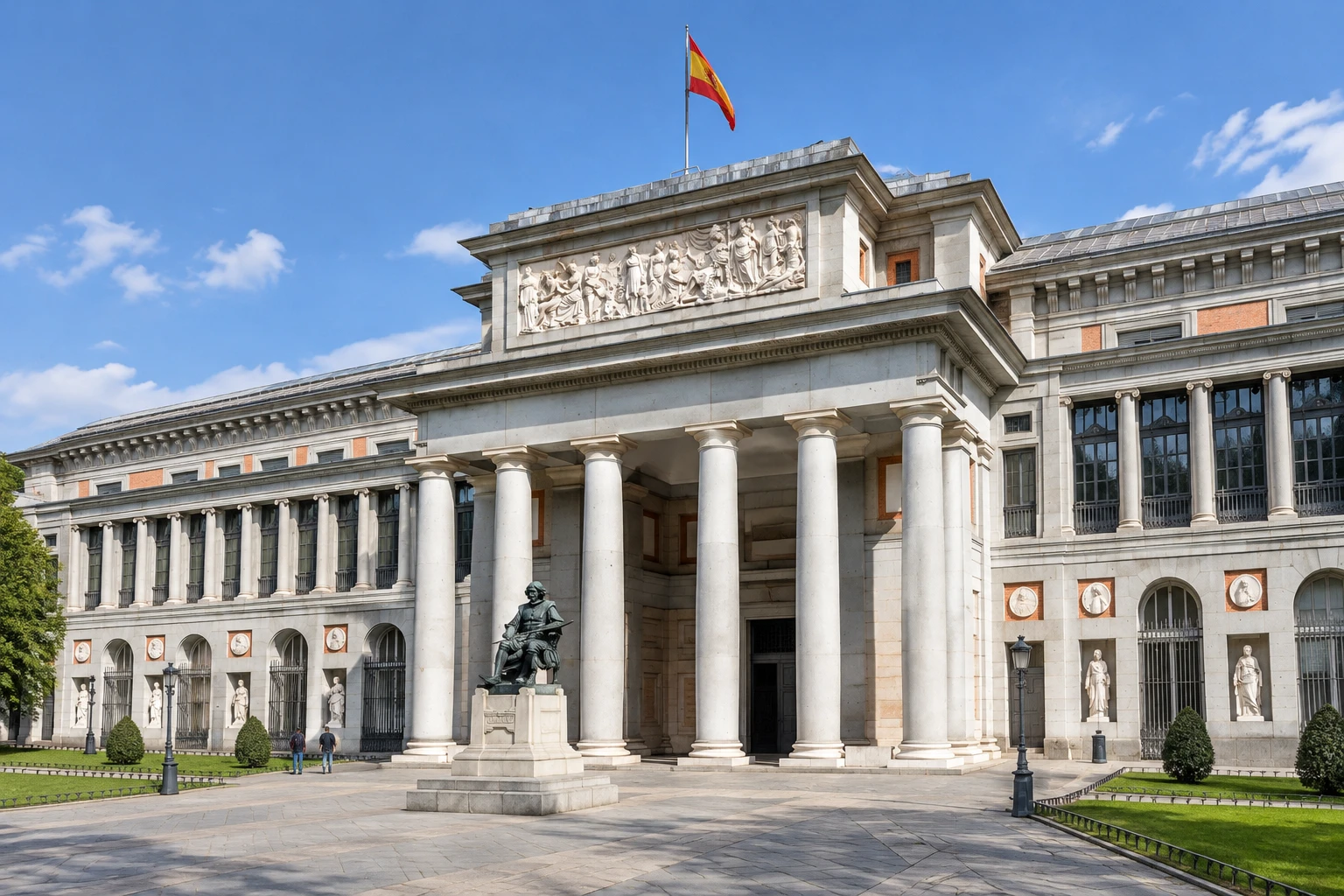
One of the largest collections of European painting in the world, with Velázquez, Goya, El Greco, Bosch, Titian and Rubens, in a neoclassical building by Juan de Villanueva on the Paseo del Prado.
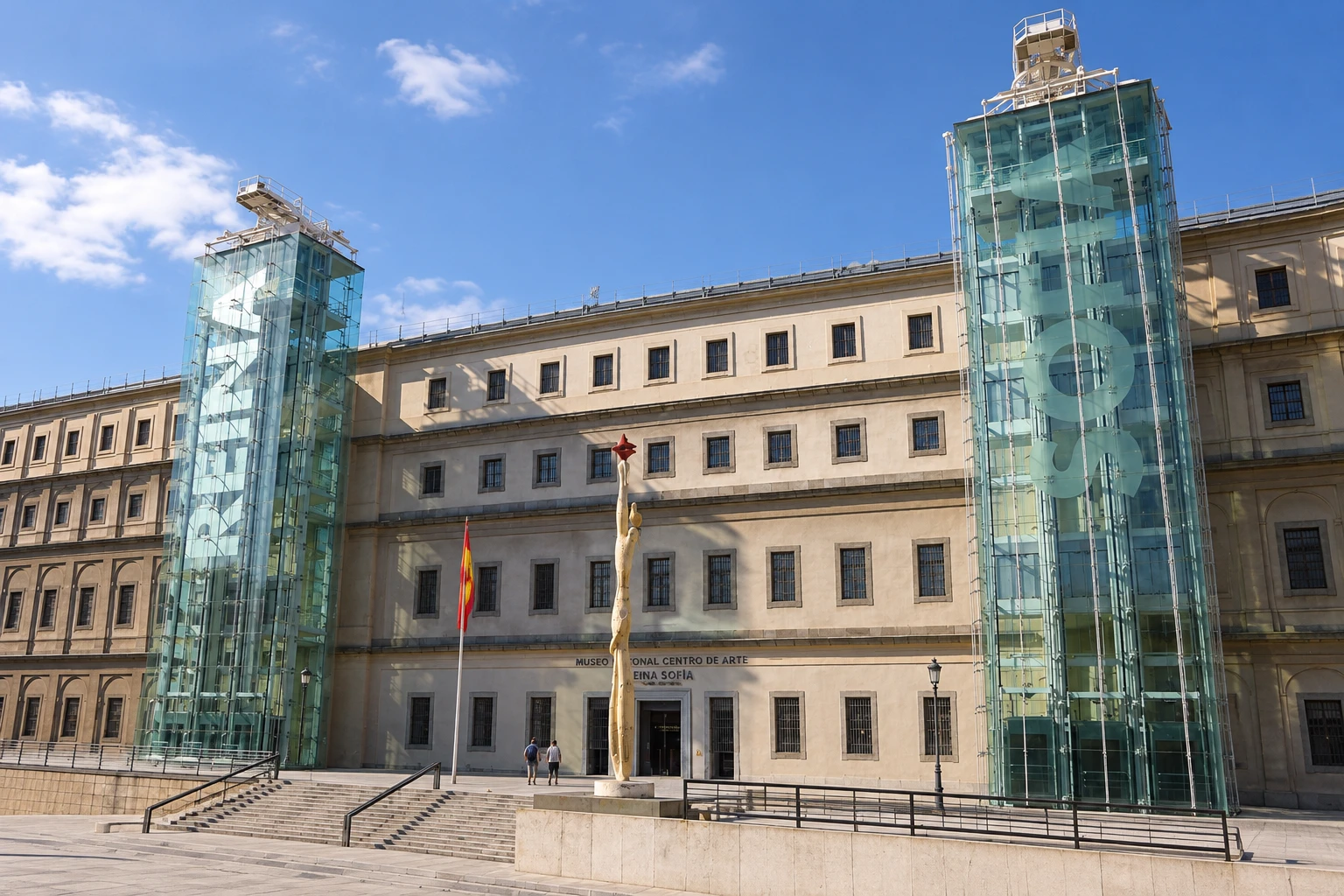
The national museum of modern and contemporary art of Spain. It houses Picasso’s Guernica and works by Dalí and Miró, in an 18th-century former hospital next to Atocha.
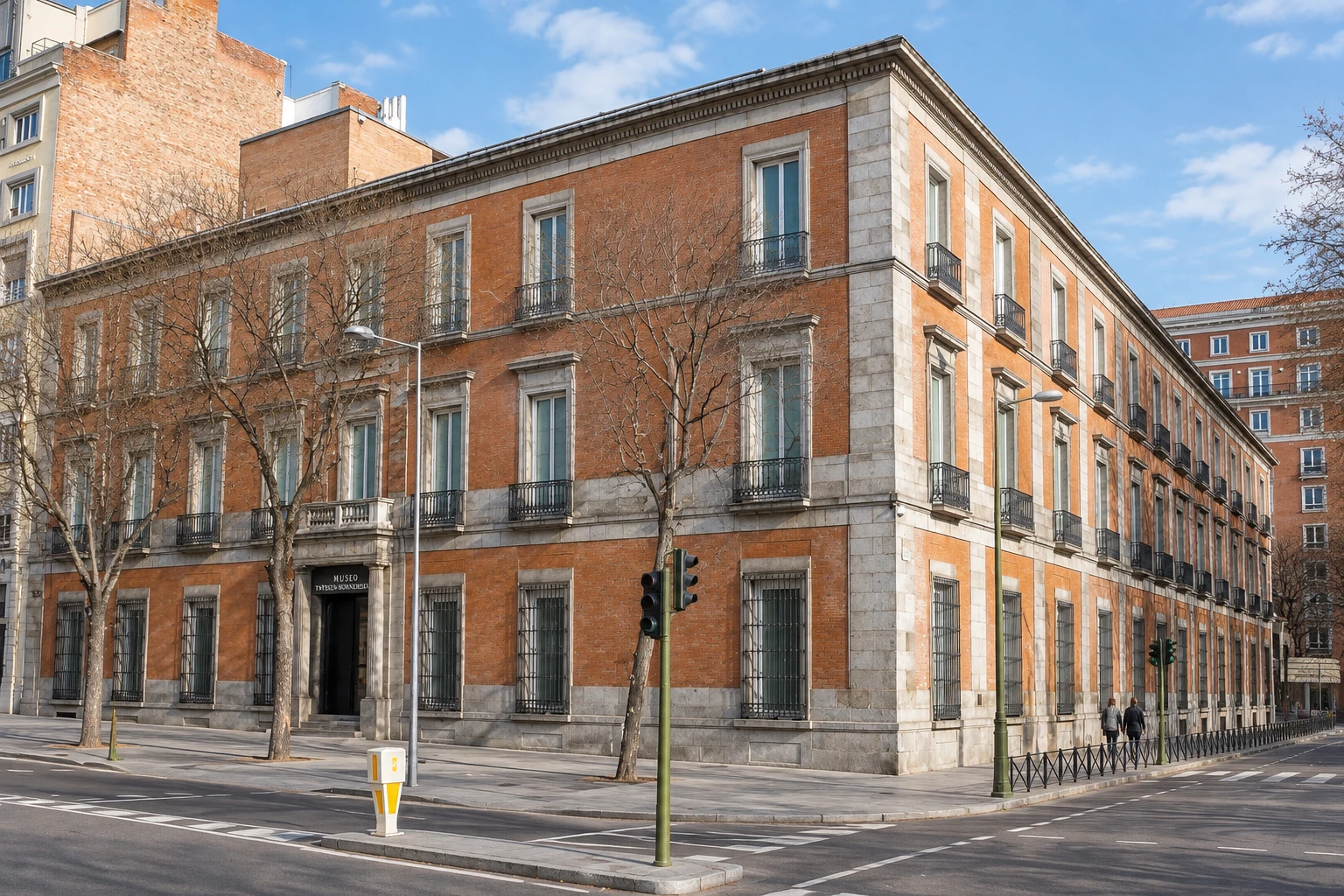
Private collection purchased by the Spanish State, ranging from 13th-century Italian painting to art of the 1980s, housed in a palace opposite the Prado.
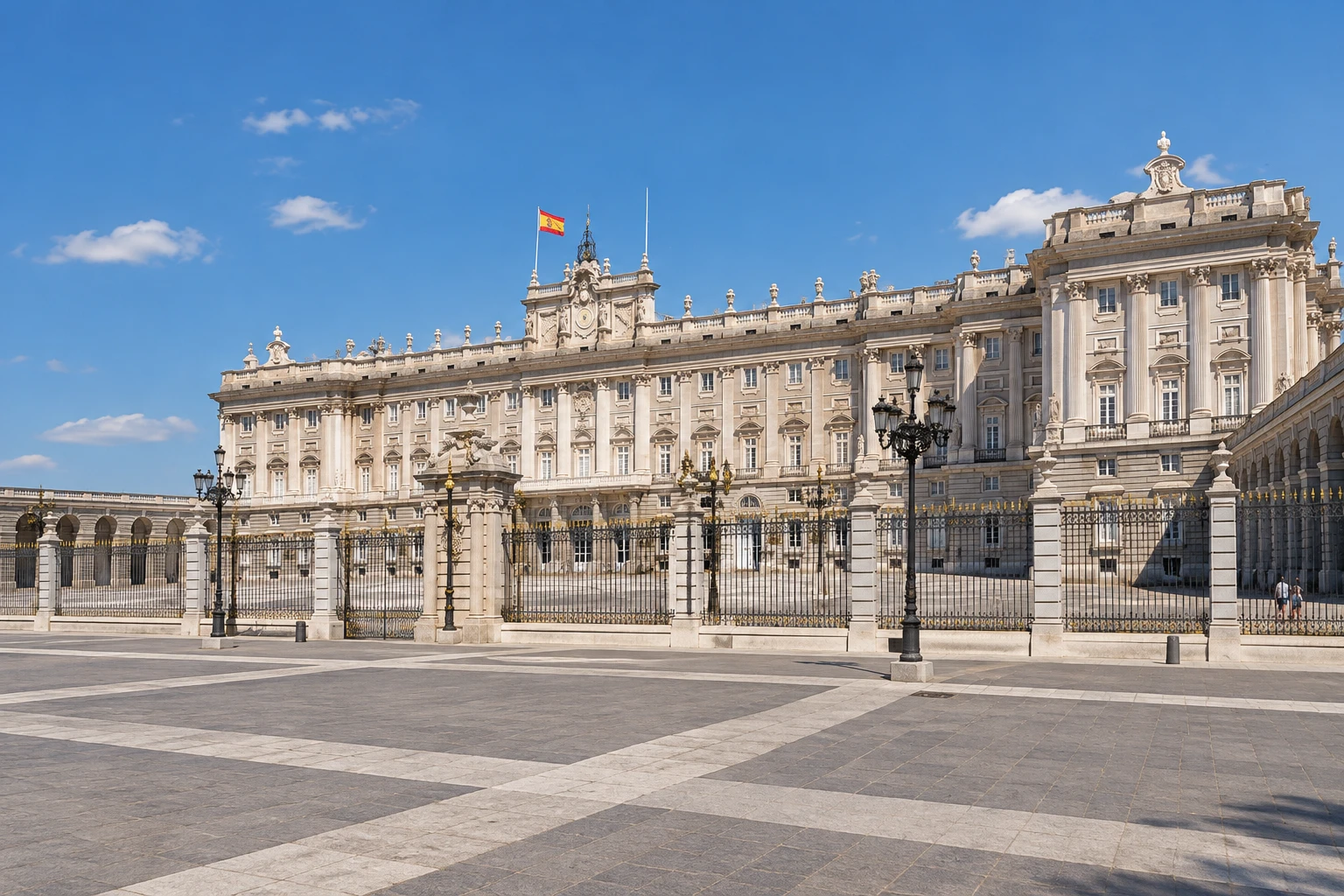
Official residence of the King of Spain, built in the 18th century on the site of the former Alcázar. It has 3,418 rooms, state rooms, the Royal Armory and, surrounding it, the Jardines de Sabatini and the Campo del Moro.
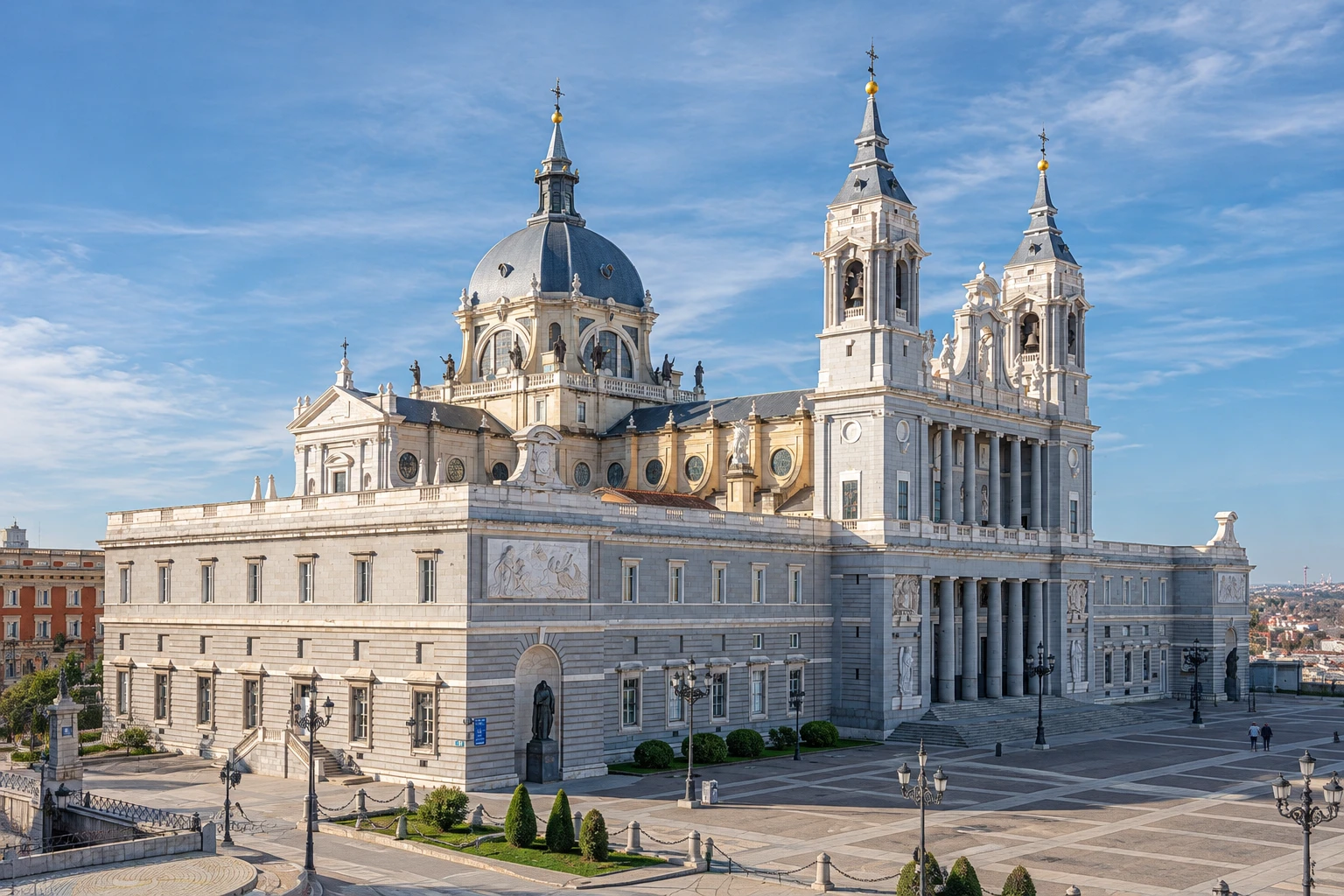
The cathedral of Madri, consecrated in 1993, stands opposite the Palácio Real. It has a neo-Gothic interior, a façade that relates to the palace, a neo-Romanesque crypt and a viewpoint in the dome.
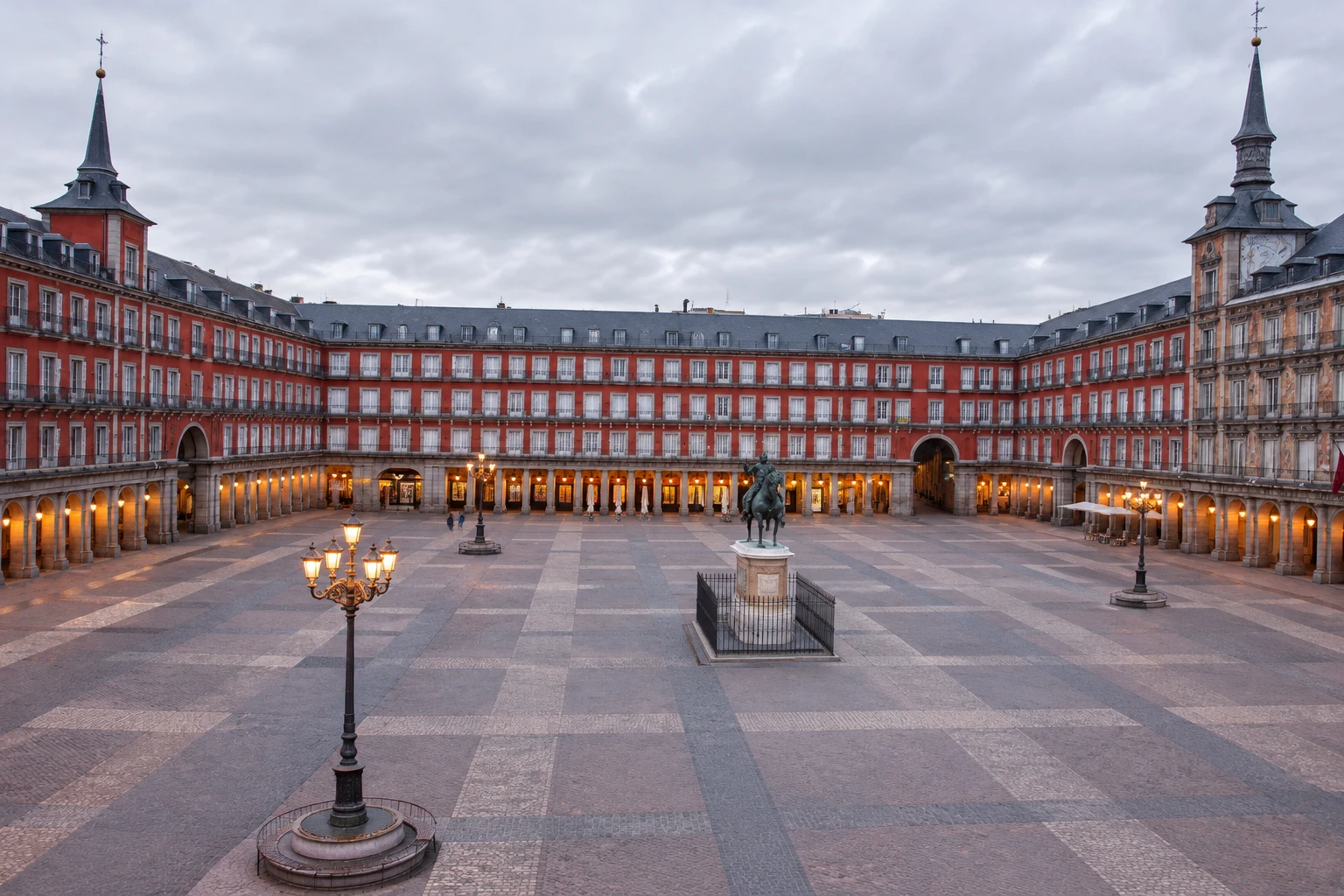
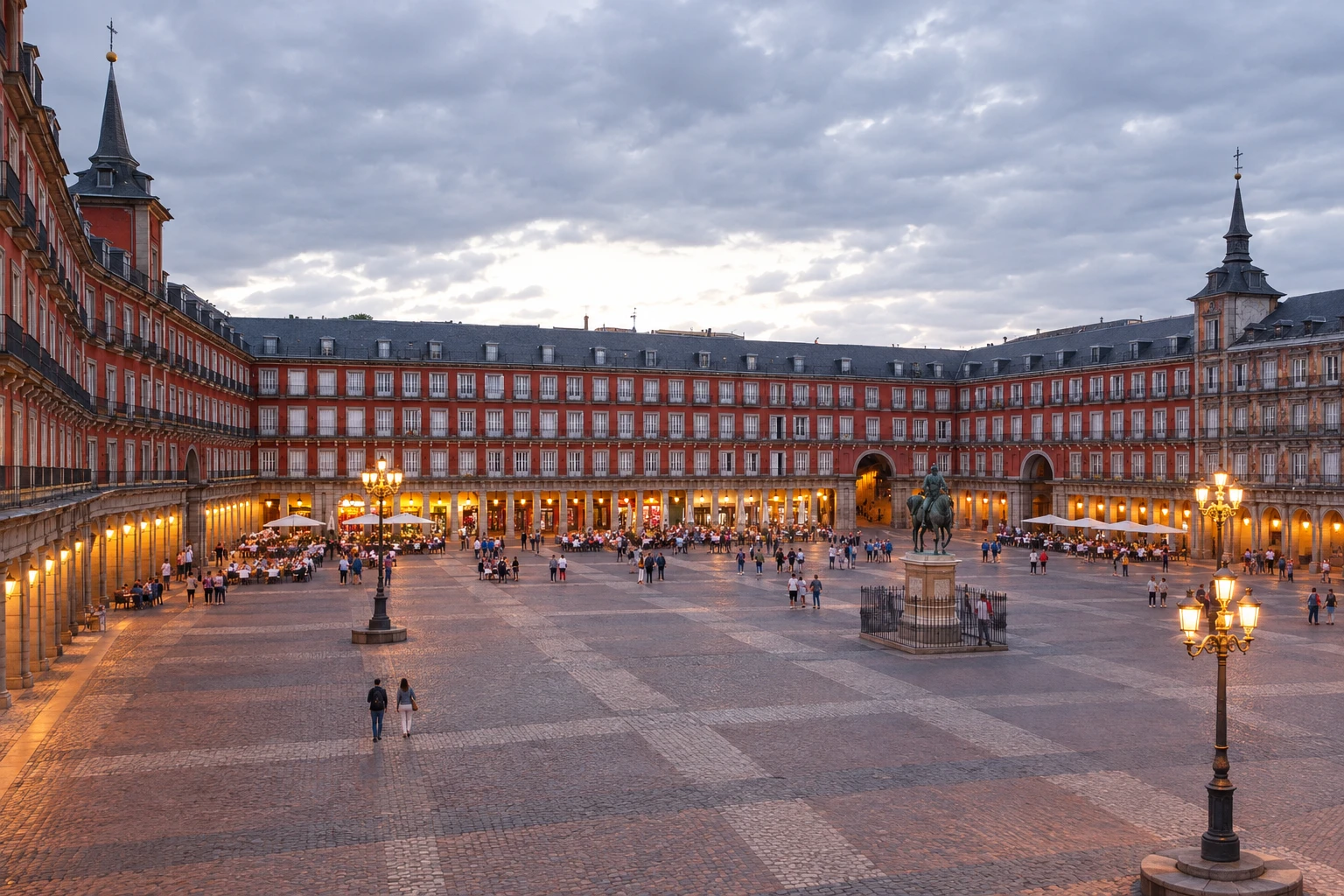
The large 17th-century rectangular square, surrounded by three-storey buildings with 237 balconies and arcades, in the heart of Madri de los Austrias.
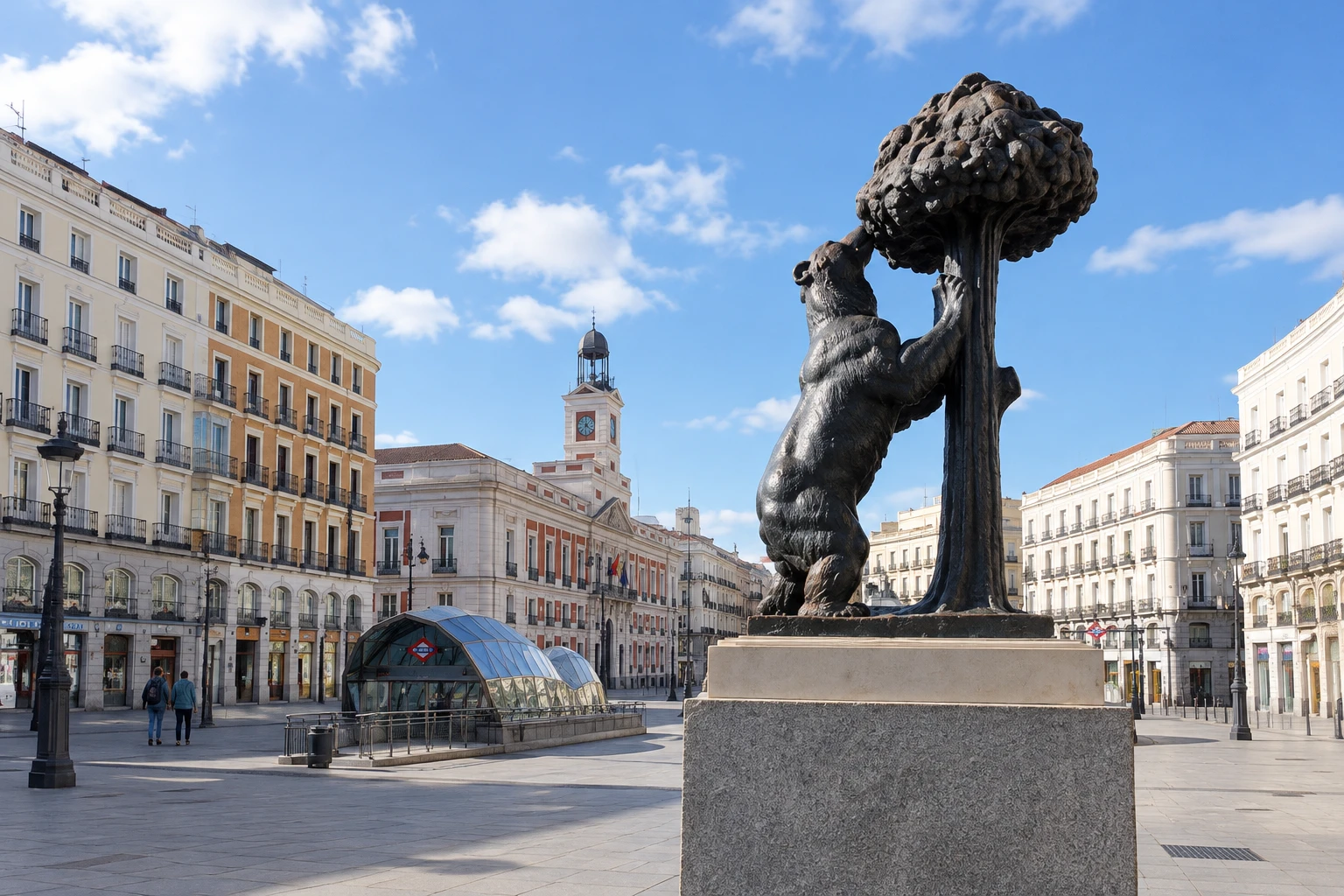
Madri’s central square, in the shape of a half-moon, featuring the Km 0 marker of Spanish roads, the New Year’s Eve clock and the statue of the Urso e o Medronheiro.
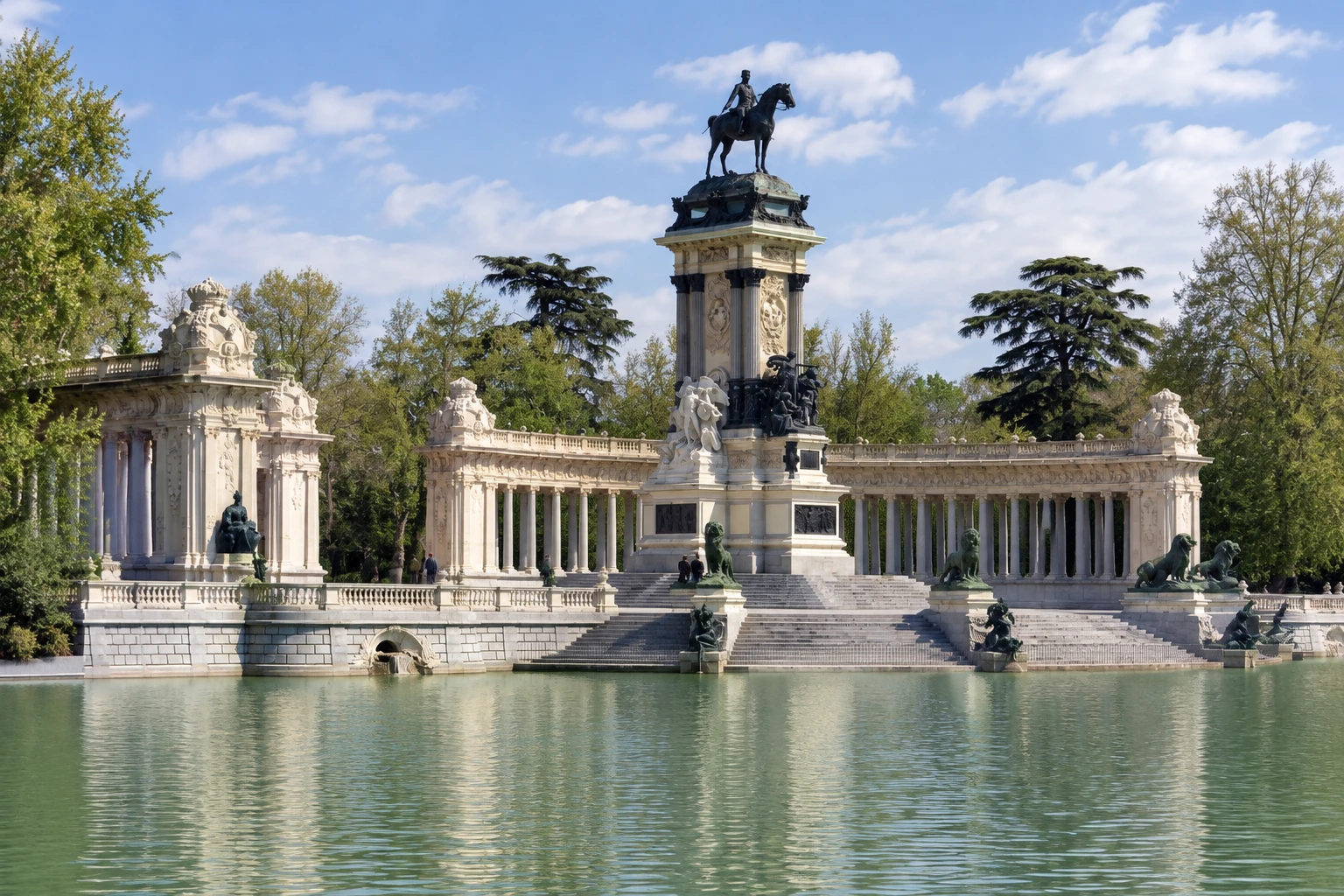
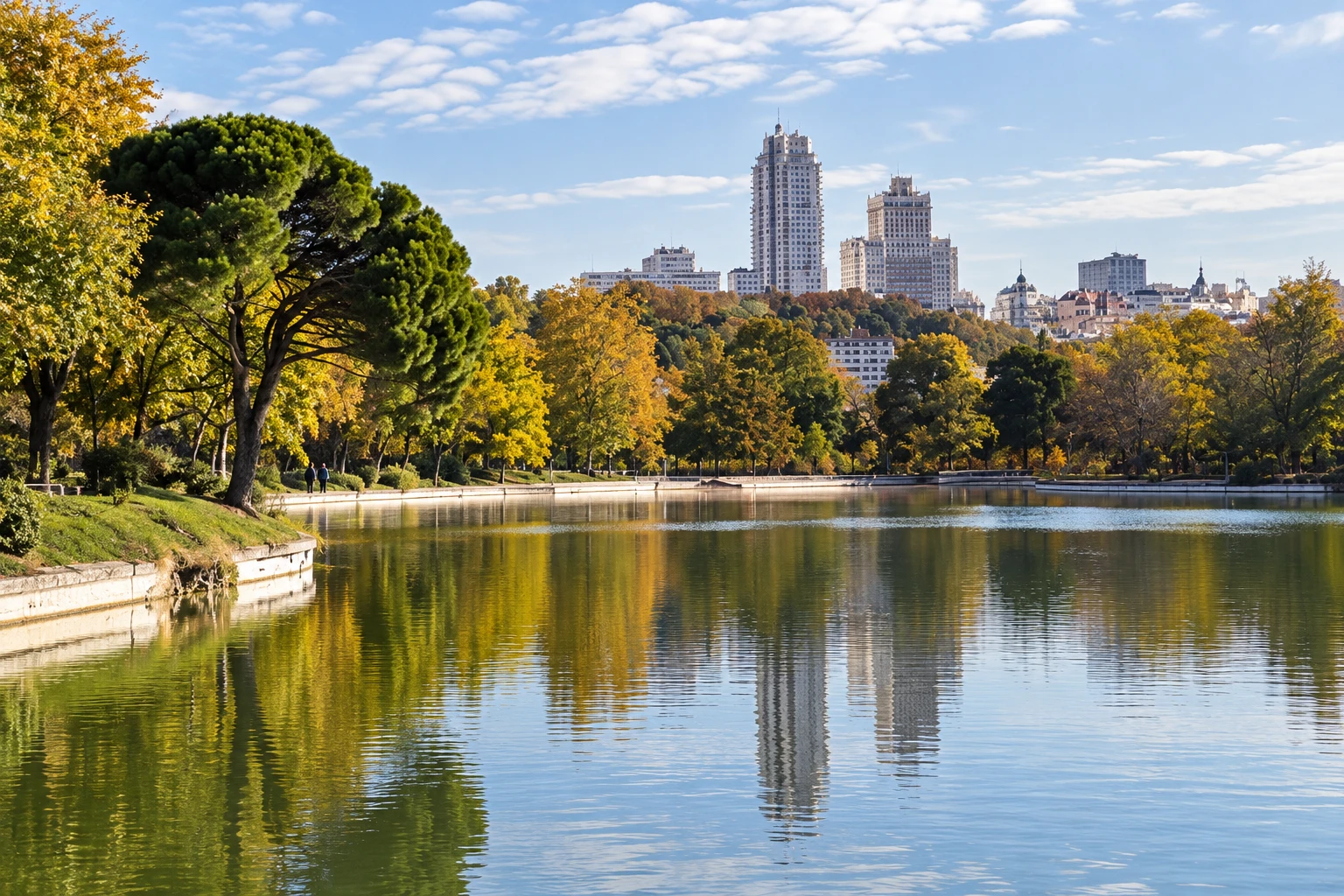
The large park of Madri, covering 143 hectares, began as the garden of a royal palace. It has the lake with rowboats, the monument to Alfonso XII, a rose garden and the Palacio de Velázquez.
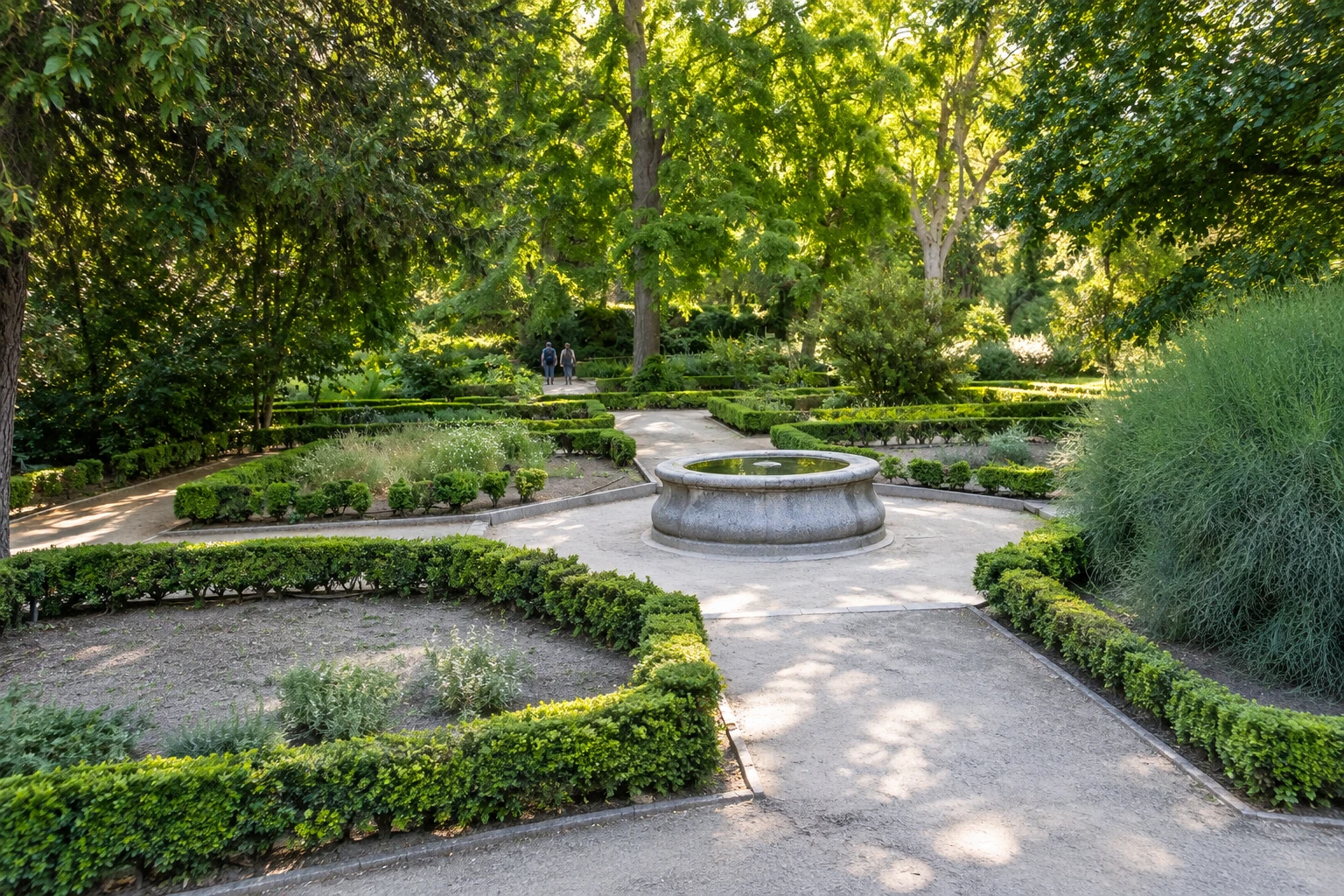
18th-century botanical garden next to the Prado, with about 8 hectares on three terraces, greenhouses and thousands of trees and plants.
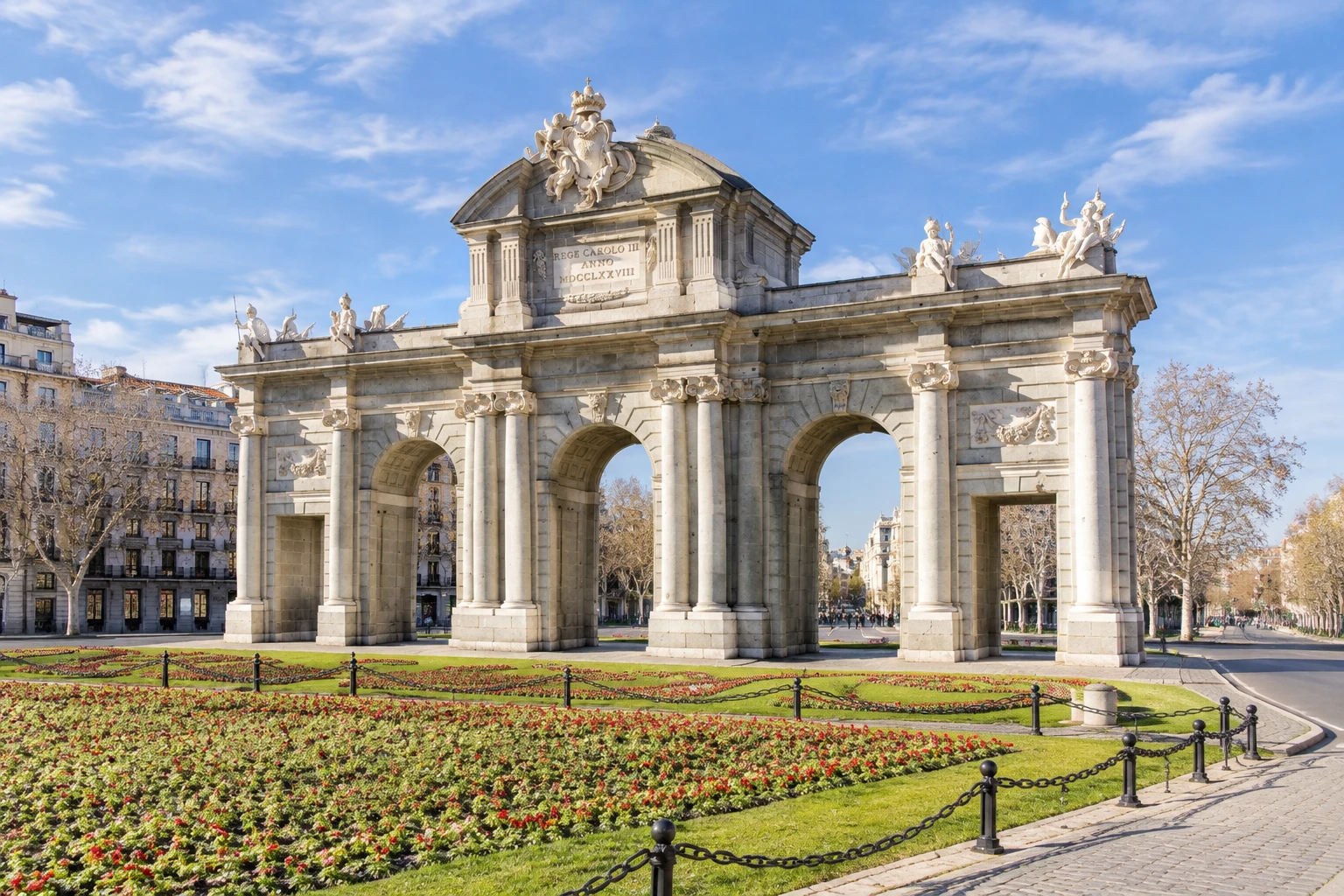
Neoclassical triumphal arch from 1778, designed by Francesco Sabatini for Carlos III, in the middle of the Plaza de la Independencia, beside the Retiro.
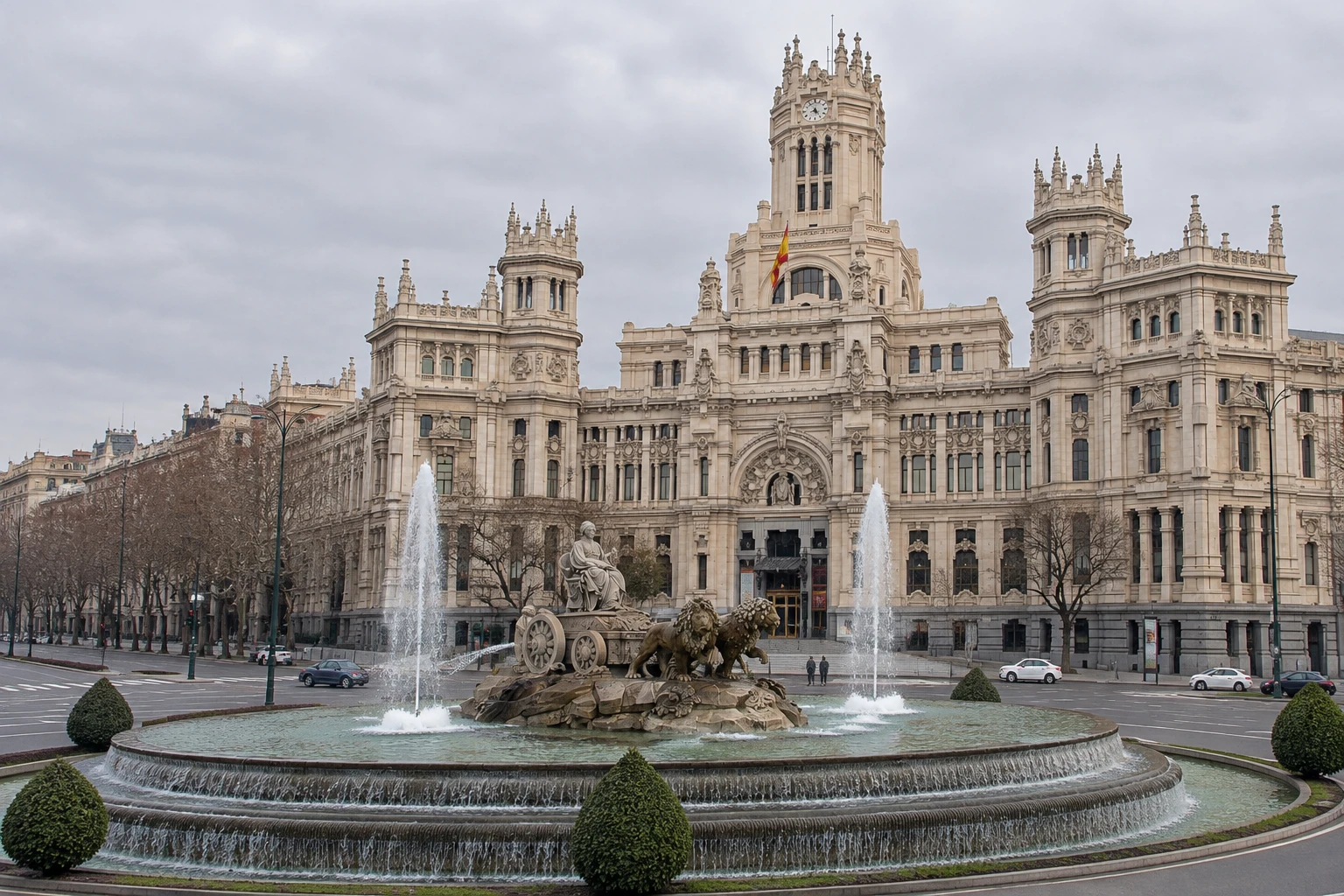
Square at the junction of Alcalá and the Paseo del Prado, featuring the fountain of the goddess Cibeles (1782) and four palaces on the corners, including the Palacio de Cibeles, the city hall, with a viewing platform.
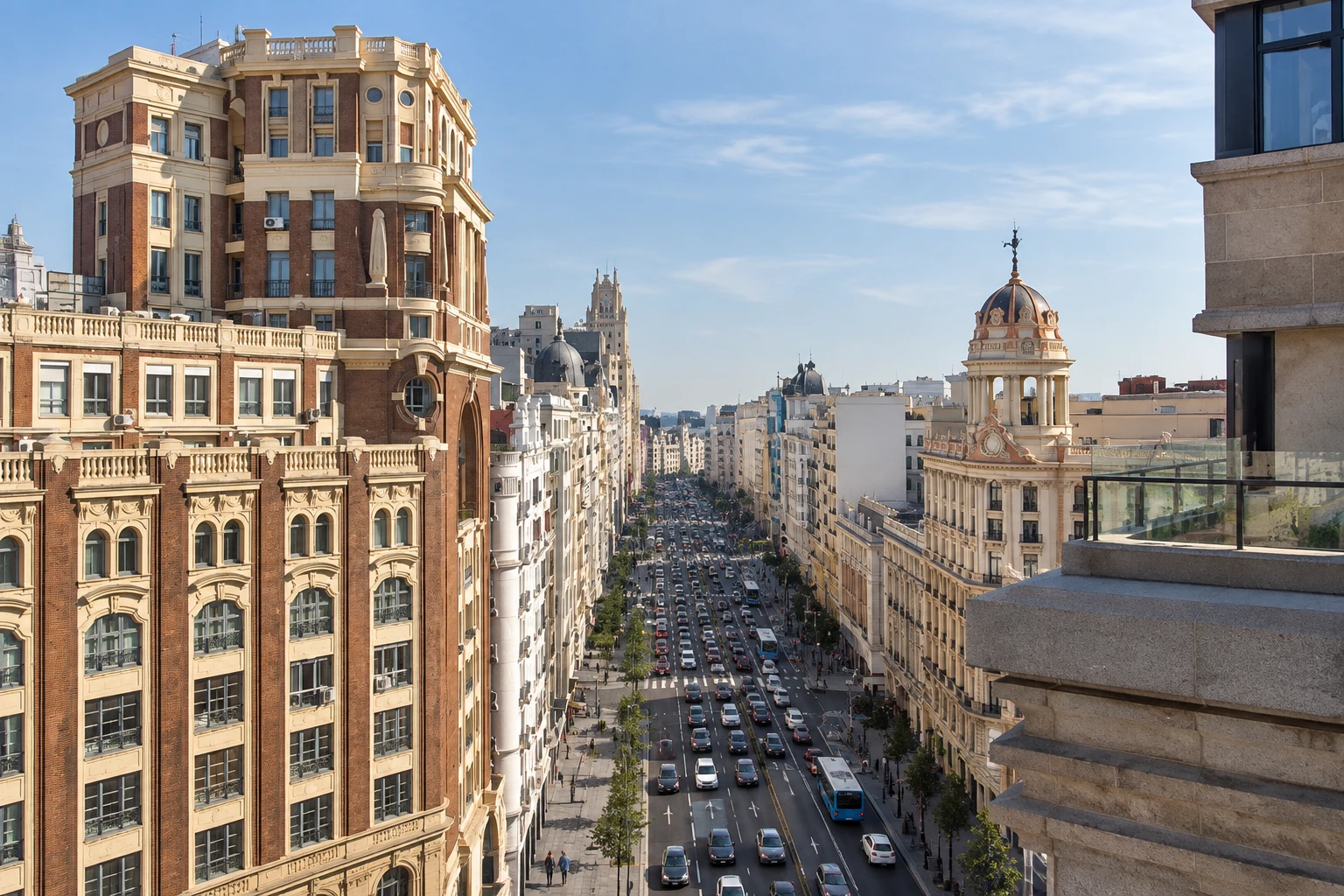
Avenue opened between 1910 and 1929 to link Calle de Alcalá with Plaza de España. It stretches 1.3 km with early 20th-century buildings, cinemas, theaters and shops.
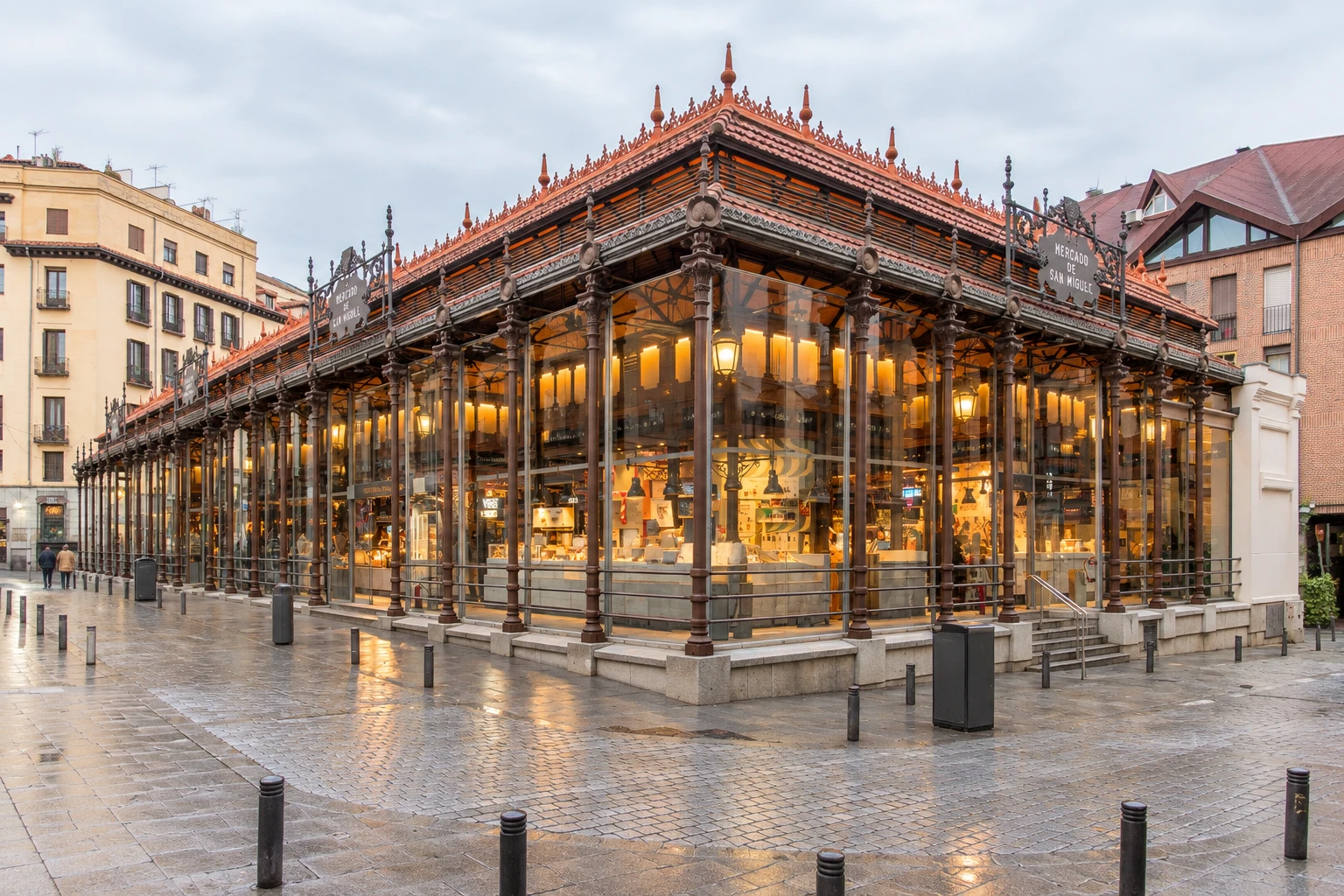
Iron-and-glass market from 1916, next to the Plaza Mayor, converted into a food hall with stalls offering tapas, seafood, jamón, cheeses and wines.
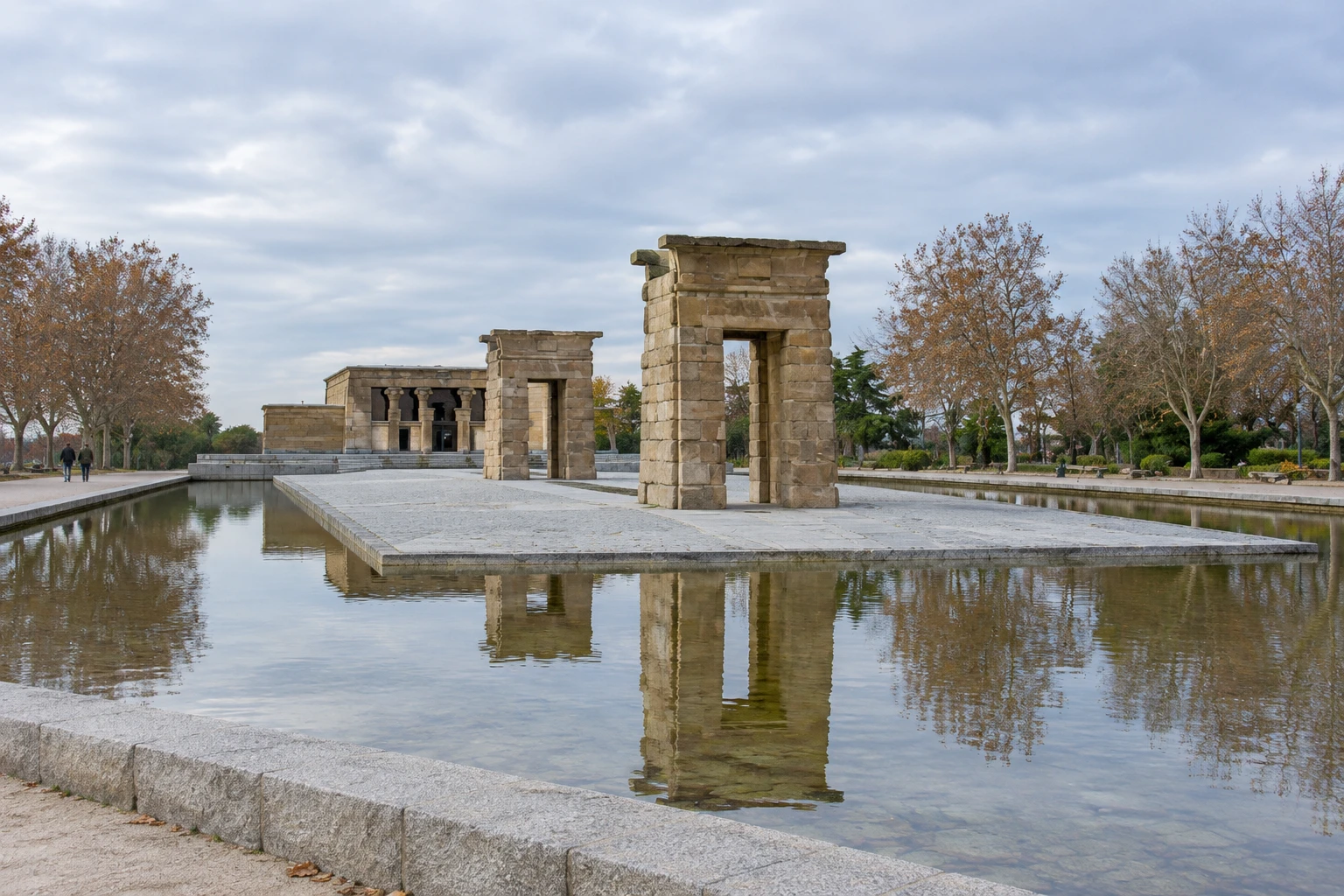
Egyptian temple from the 2nd century BC, donated by Egypt to Spain in 1968 and rebuilt stone by stone in a high park near the Plaza de España.
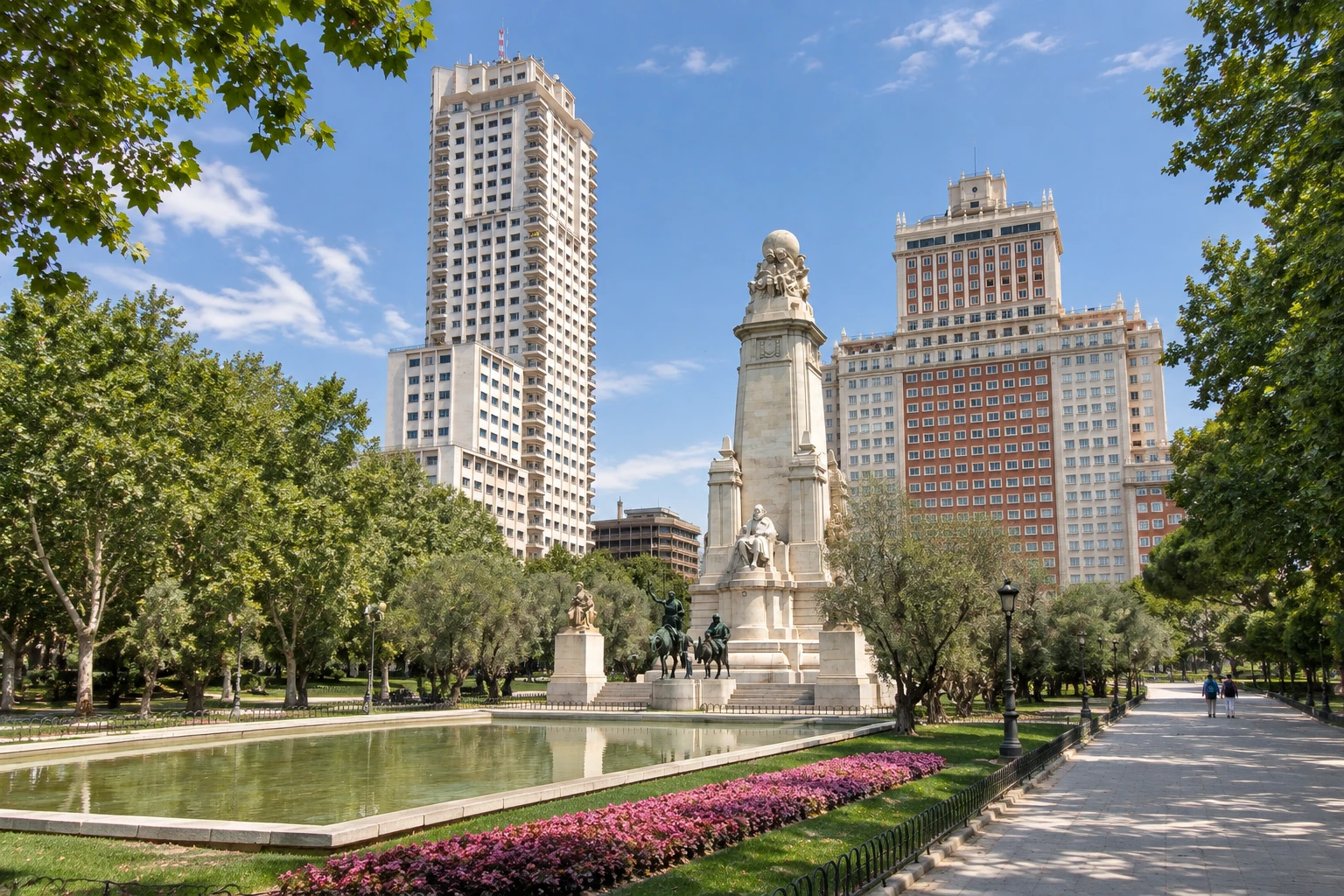
Square at the end of the Gran Vía, featuring the monument to Cervantes, Don Quixote and Sancho Panza, surrounded by the Edificio España and the Torre de Madrid.
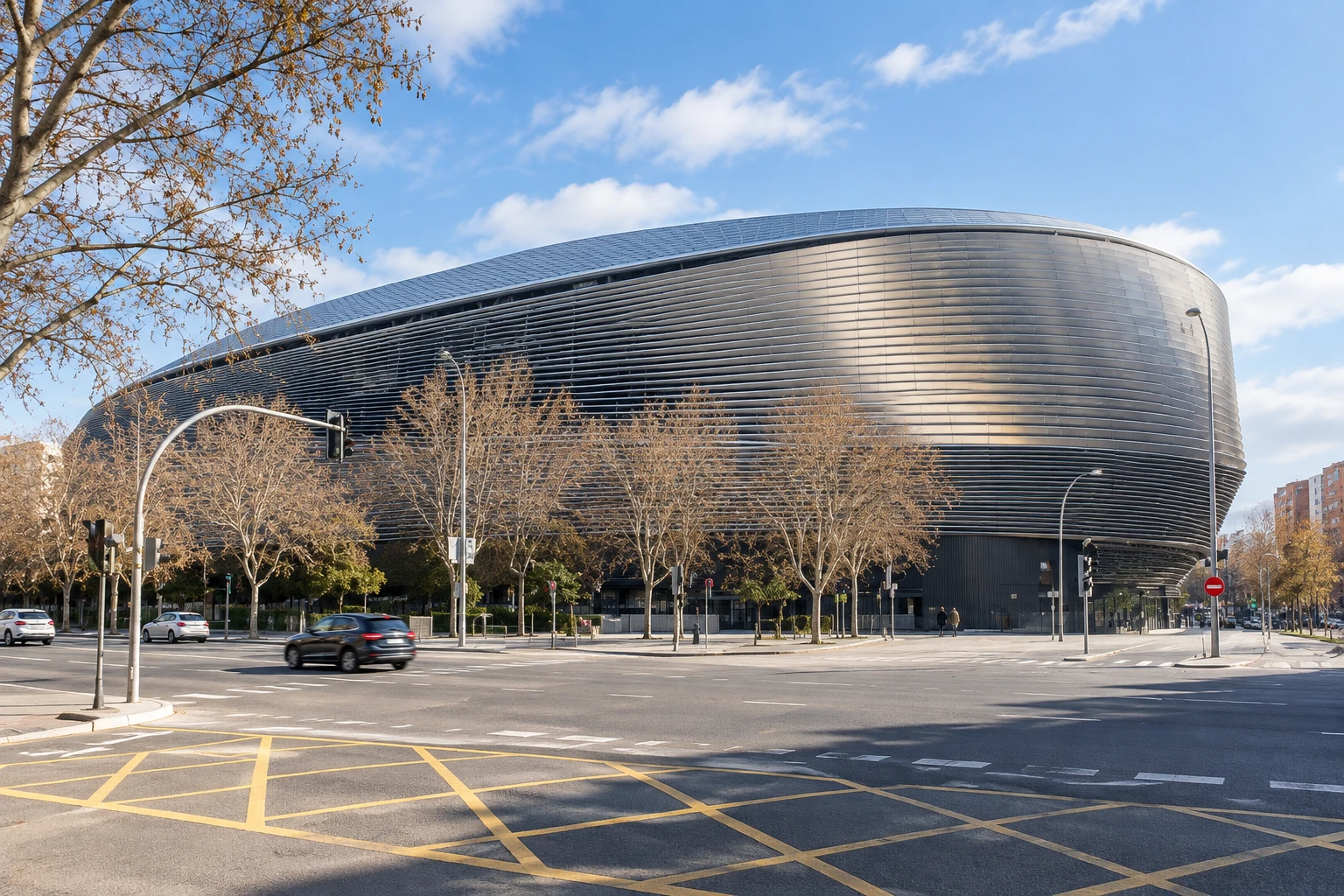
Home stadium of Real Madrid since 1947, on the Paseo de la Castellana. It gained a retractable roof in the recent renovation and welcomes visitors on the Tour Bernabéu, which includes a trophy museum, panoramic views, locker rooms and the substitute benches.
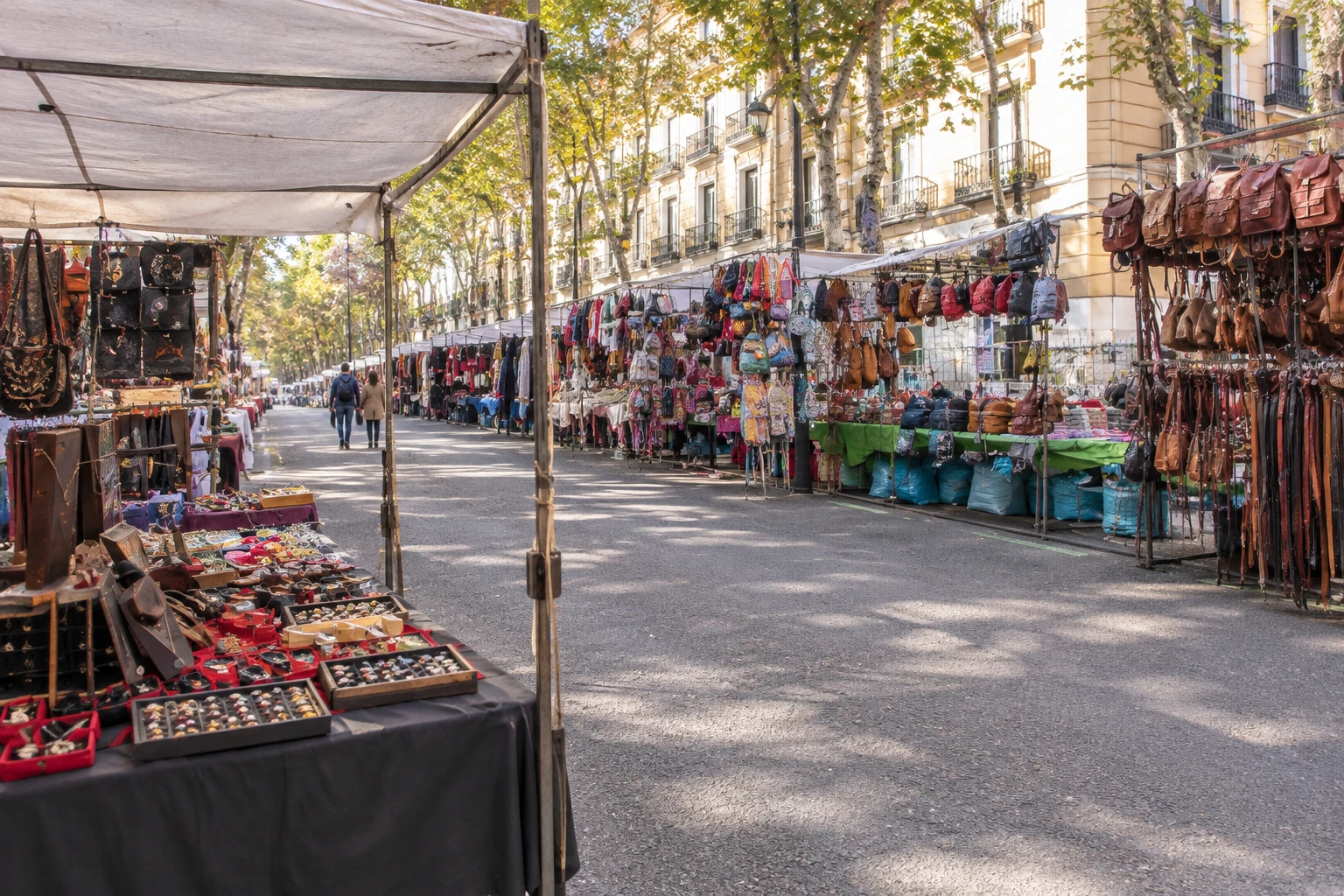
Outdoor market that occupies the streets of the Embajadores neighbourhood on Sundays and holidays, in the morning. It offers antiques, clothing, records, second‑hand books and many new items, between Plaza de Cascorro and Ribera de Curtidores.
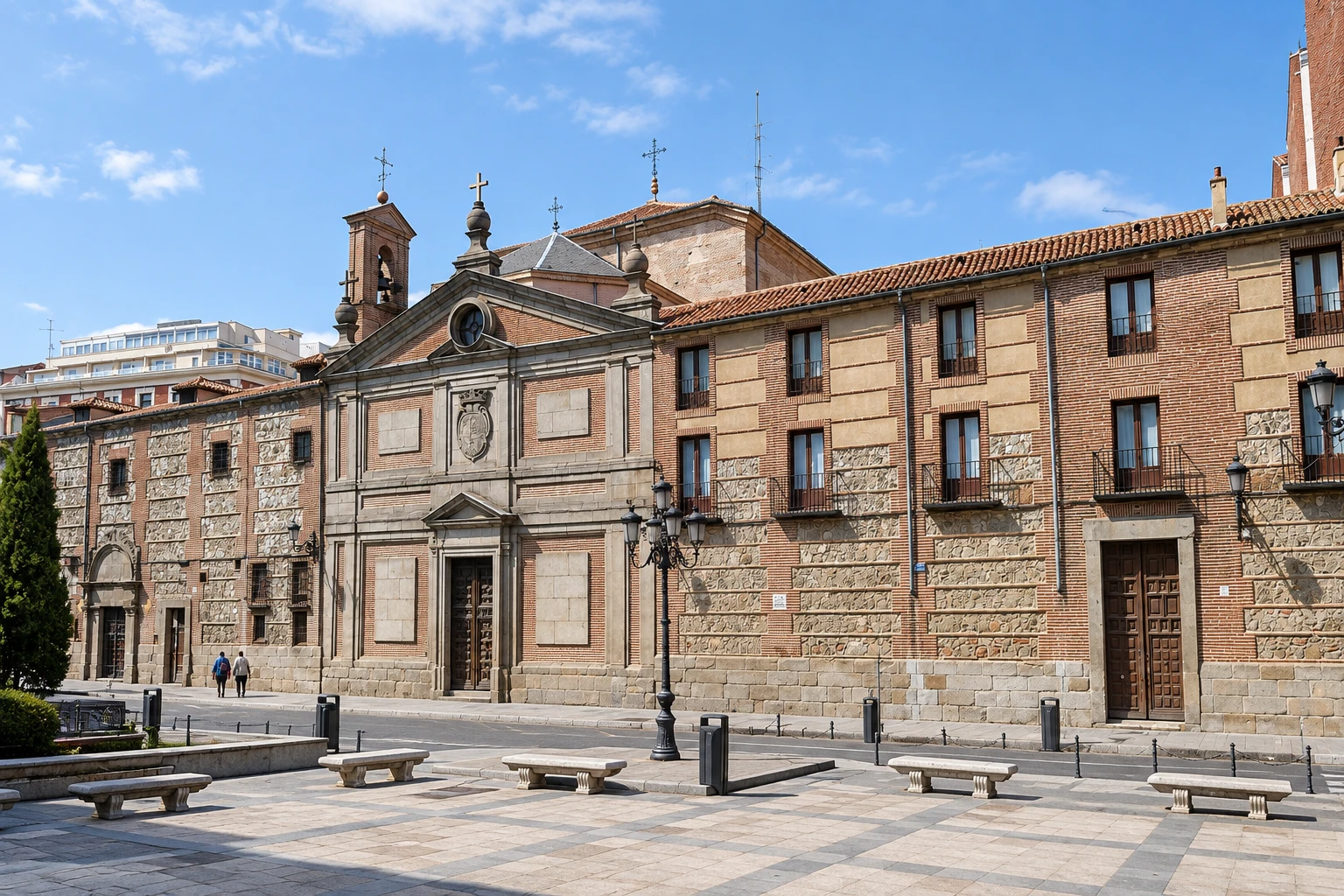
Clausura monastery founded in 1559 by Juana de Austria, sister of Philip II, a few steps from Puerta del Sol. The visit, always guided, shows the painted staircase, chapels and the tapestries designed by Rubens.
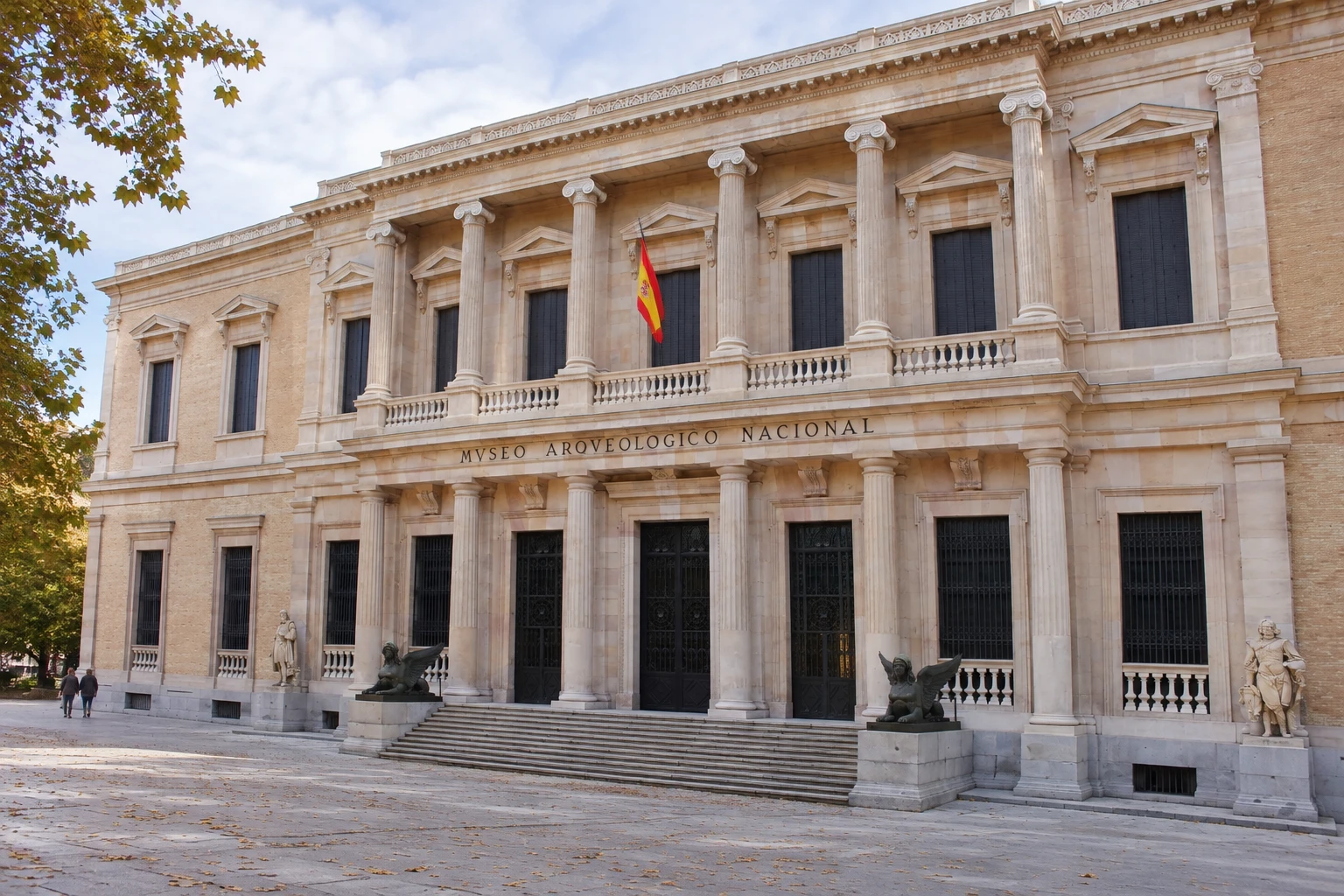
Main archaeology museum of Spain, next to Plaza de Colón. It houses the Dama de Elche, Visigothic crowns, Roman mosaics and Greek pottery, in a journey from prehistory to the 19th century.
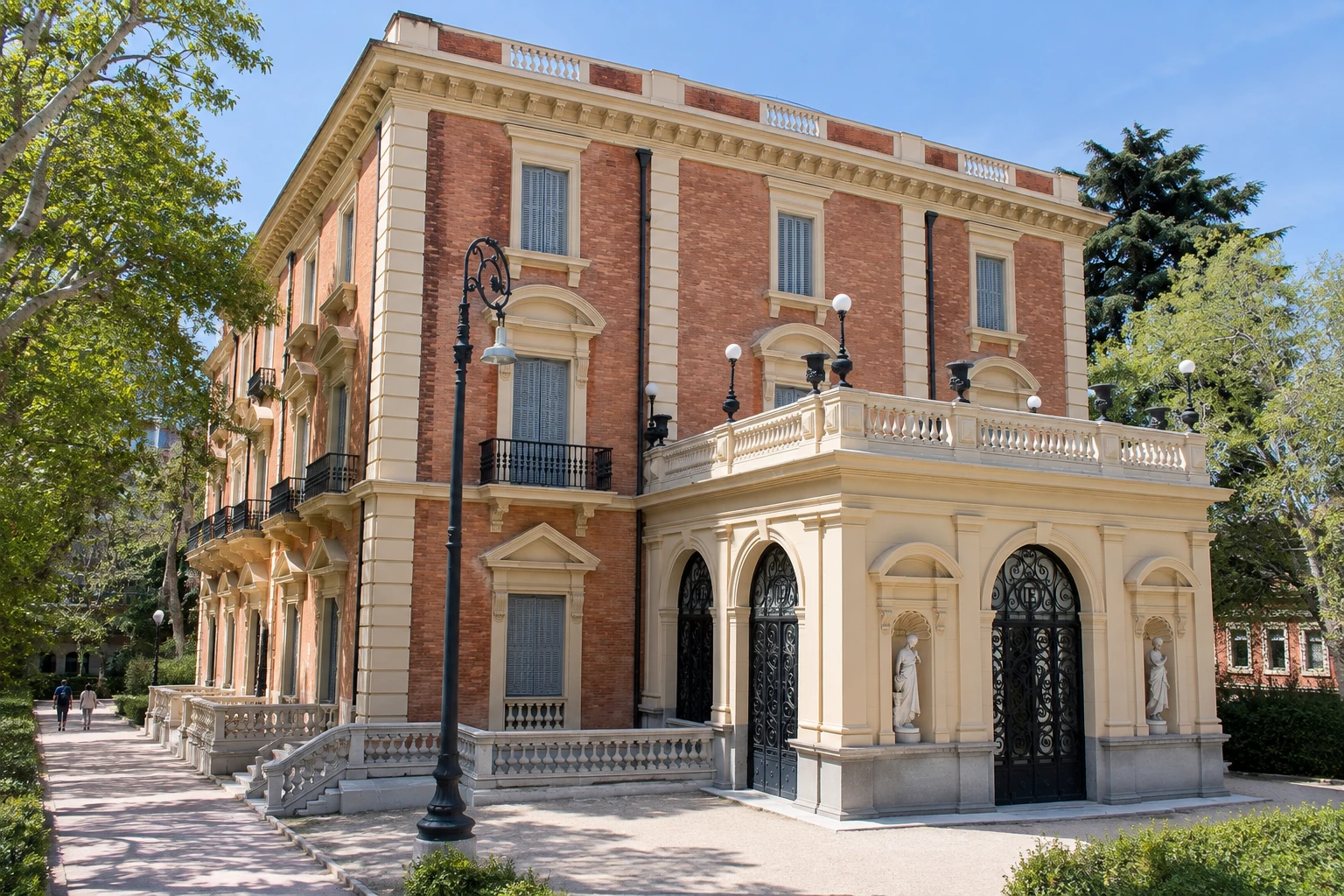
Mansion in the Salamanca neighborhood with the collection assembled by the publisher José Lázaro Galdiano: Goya, Bosch, El Greco, Zurbarán, English painting, jewelry, arms and ivories, spread across four floors.
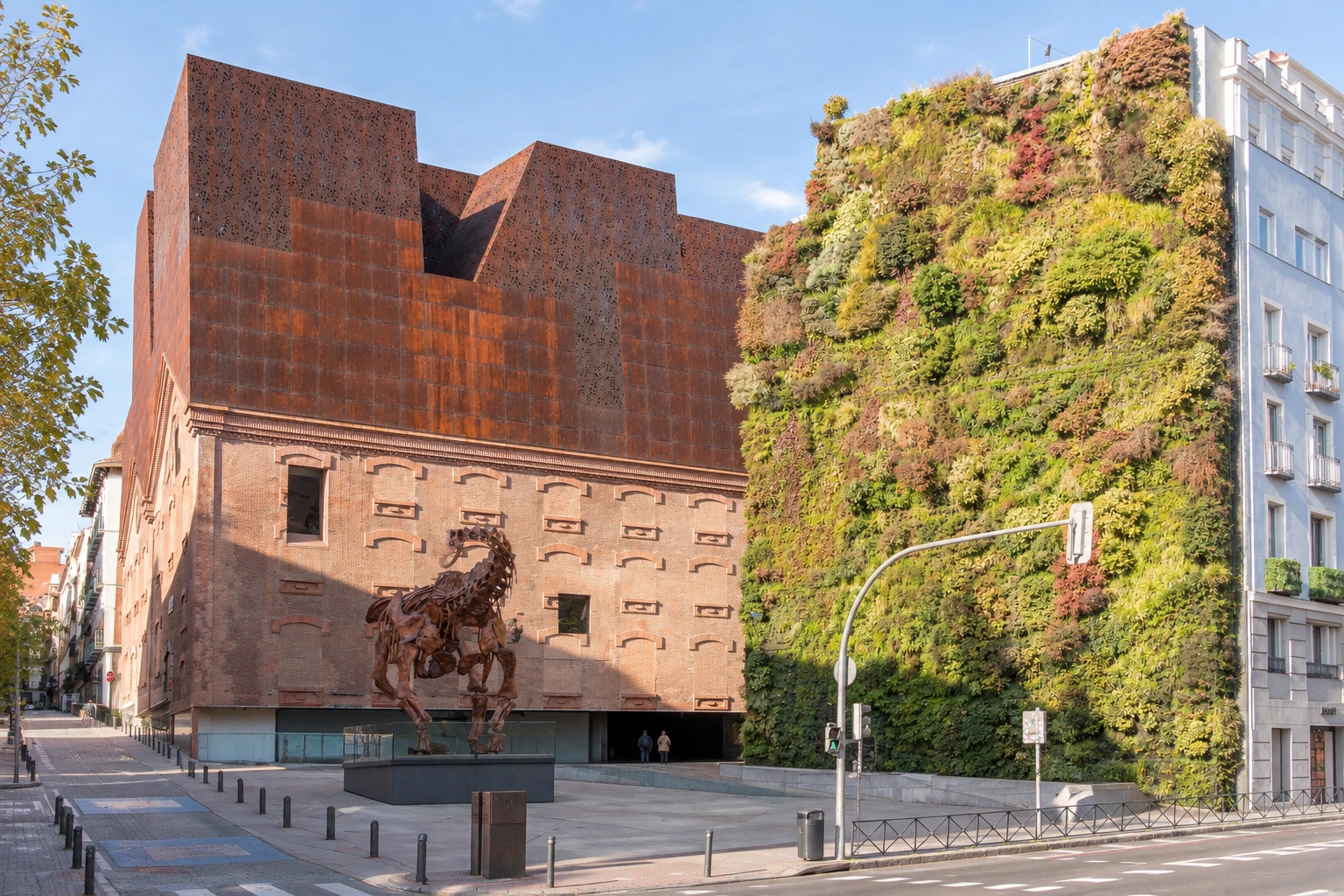
Cultural center on Paseo del Prado, in a former power station transformed by Herzog & de Meuron. It hosts temporary art exhibitions and a 460 m² vertical garden on the facade facing the square.
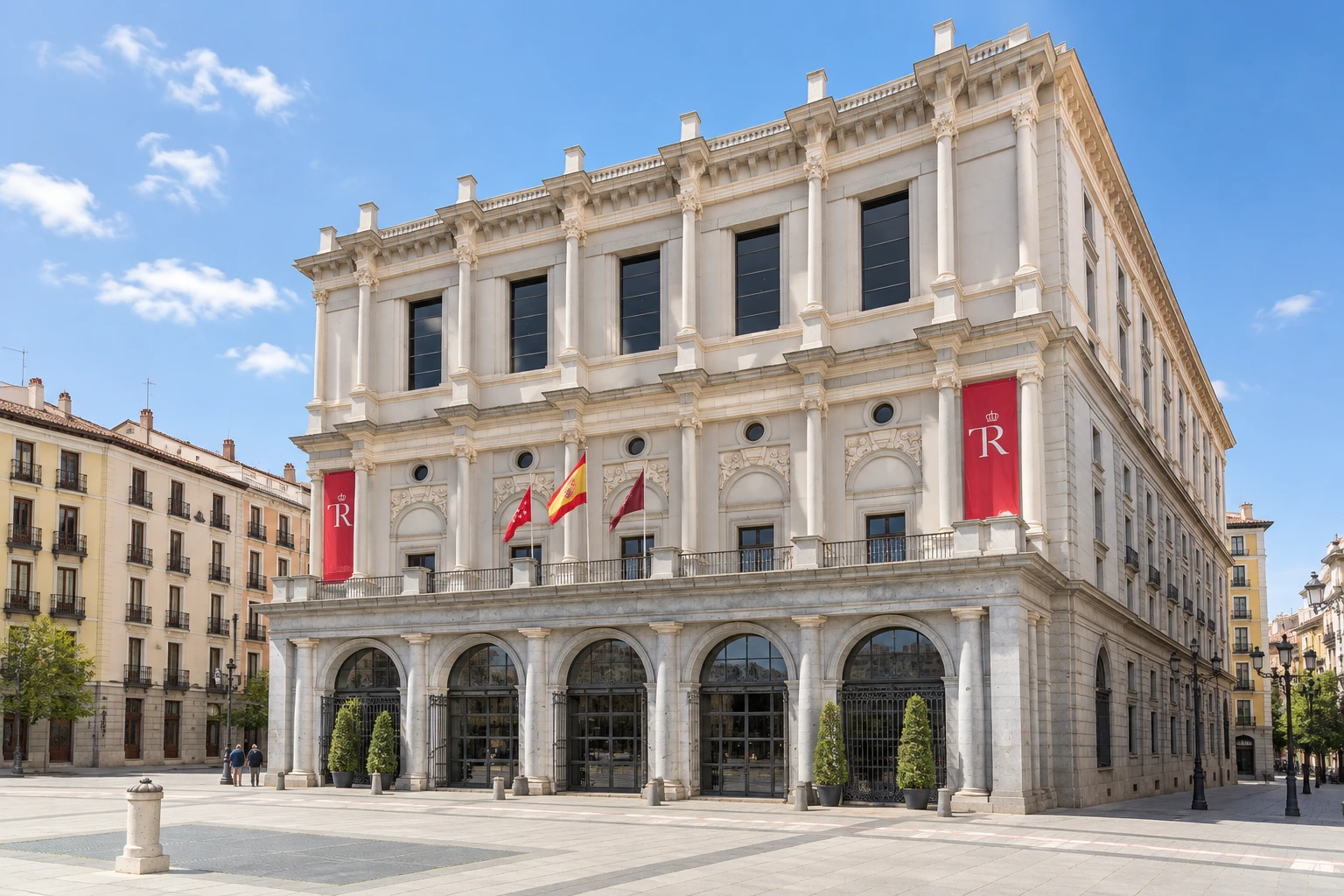
Opera house of Madrid, inaugurated in 1850 in Plaza de Oriente, opposite the Palacio Real. In addition to operas and ballets, it offers guided tours of the salons, the Palco Real and the backstage areas.
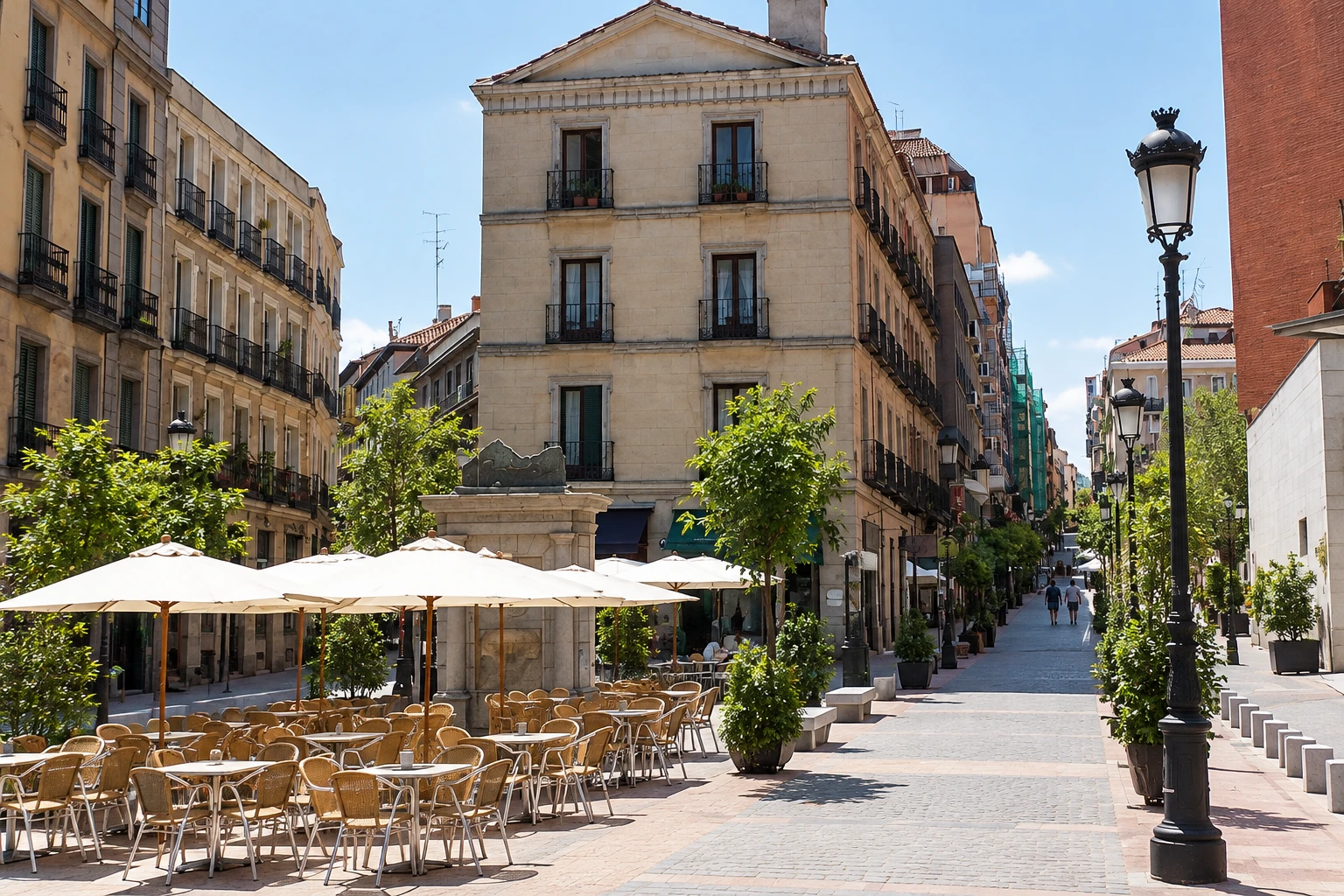
Neighborhood between the Puerta del Sol and the Paseo del Prado where Cervantes, Lope de Vega and Quevedo lived. Literary quotations can be found on the pavement of Calle de las Huertas, in the Plaza de Santa Ana and at the Casa Museo Lope de Vega.
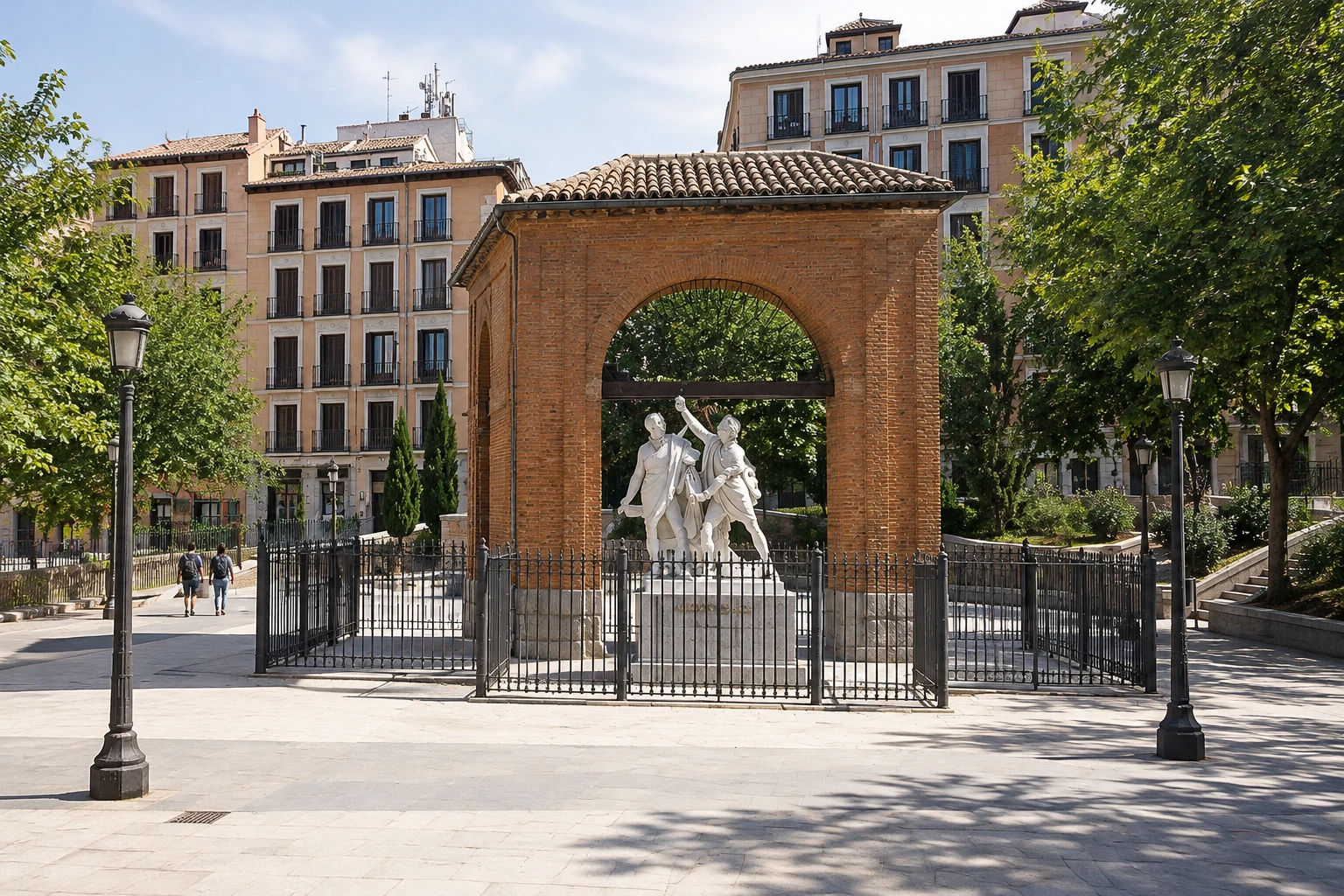
Neighborhood north of the Gran Vía, birthplace of the Movida madrileña of the 1980s. It has the Plaza del Dos de Mayo, vintage shops, cafés and bars, on streets of low-rise buildings with wrought-iron balconies.
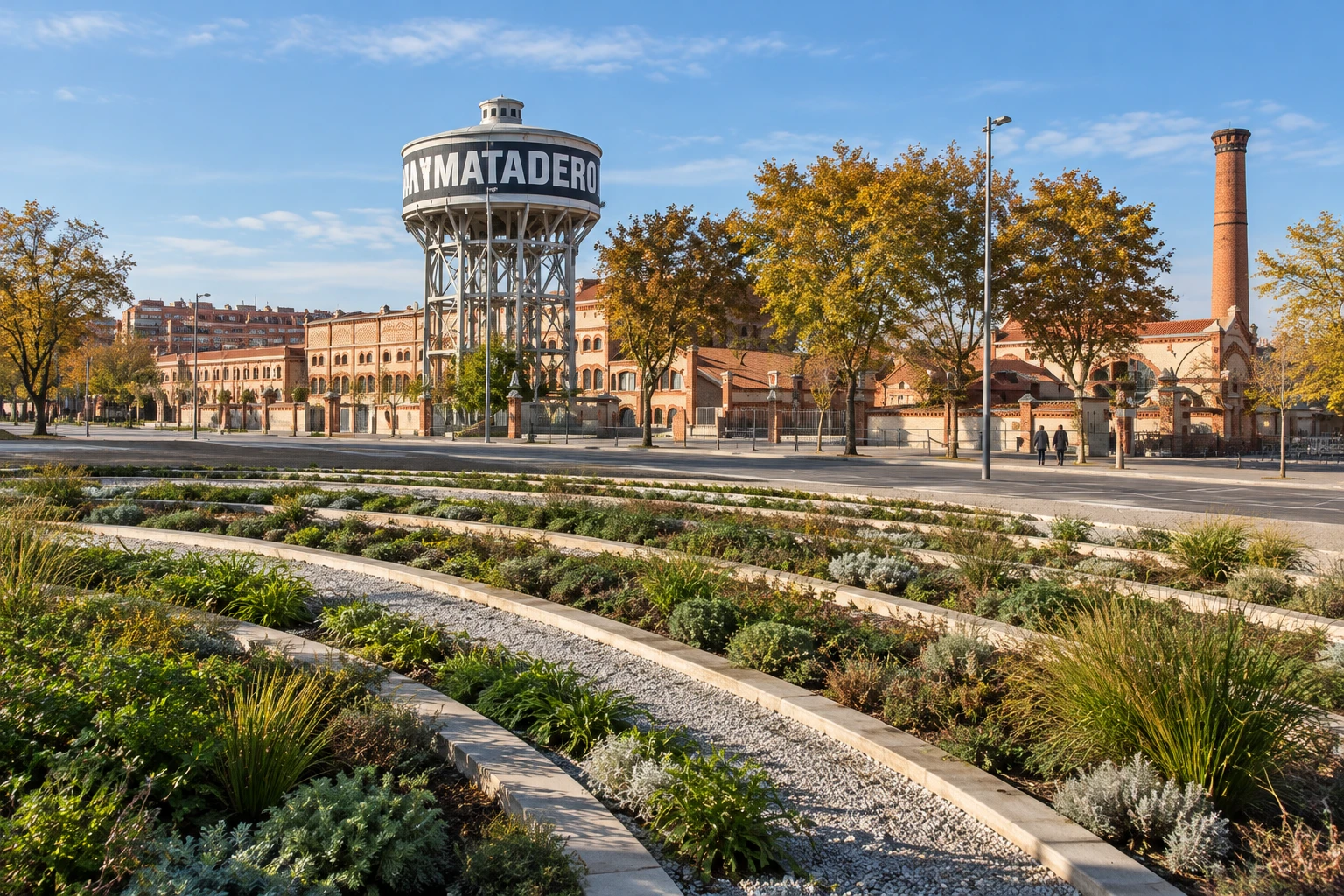
Former municipal slaughterhouse in neomudéjar brick pavilions on the banks of the Manzanares River, transformed into a contemporary art center with theater, dance, design, cinema and exhibitions.
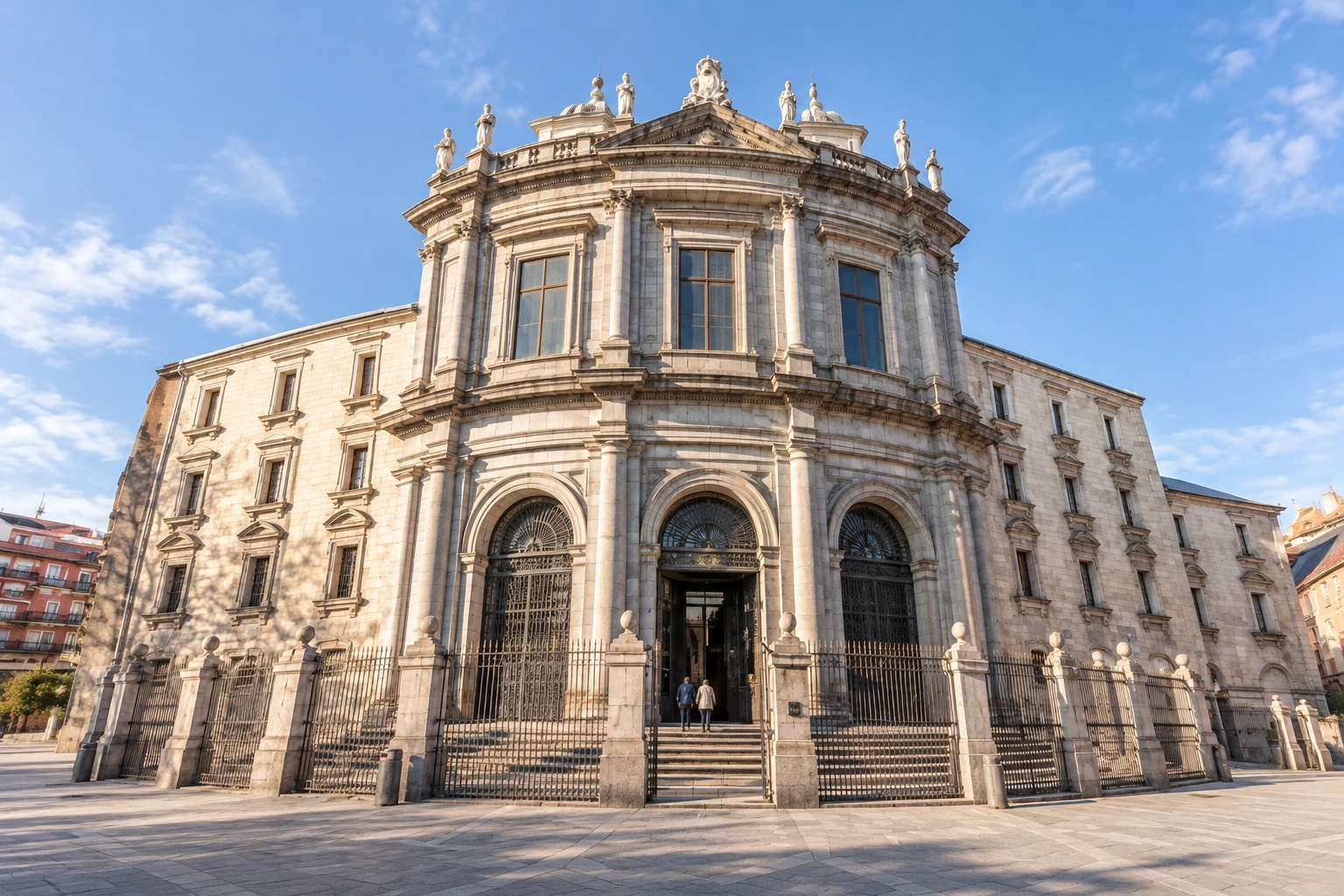
Neoclassical 18th-century basilica near La Latina, with the largest dome in Spain, 33 meters in diameter. It houses paintings by Goya and Zurbarán and chapels decorated at the end of the 19th century.
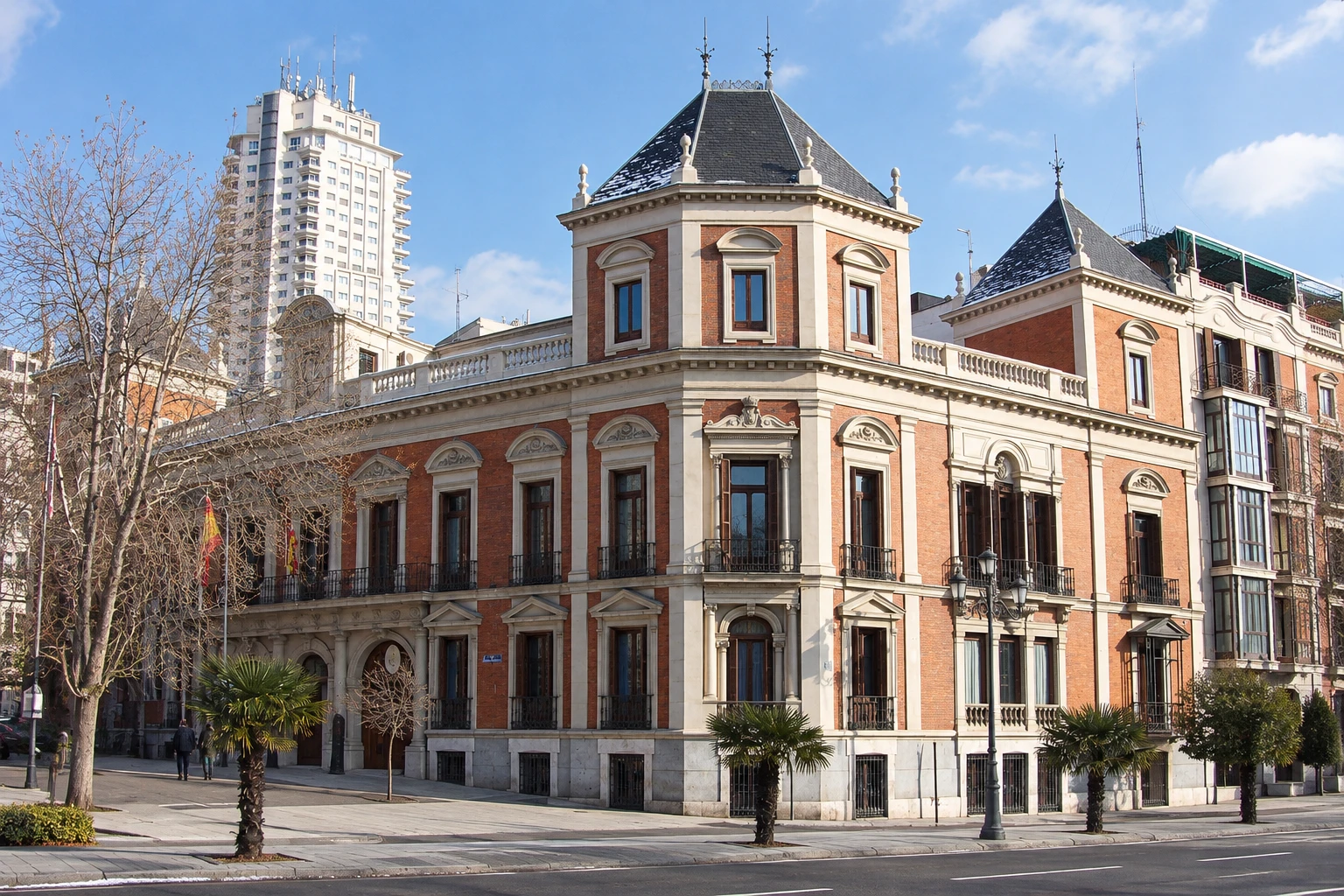
19th-century palace that preserves the original decoration and the collections of the Marquess of Cerralbo: paintings by El Greco and Zurbarán, armors, clocks, porcelain and a ballroom, near the Plaza de España.
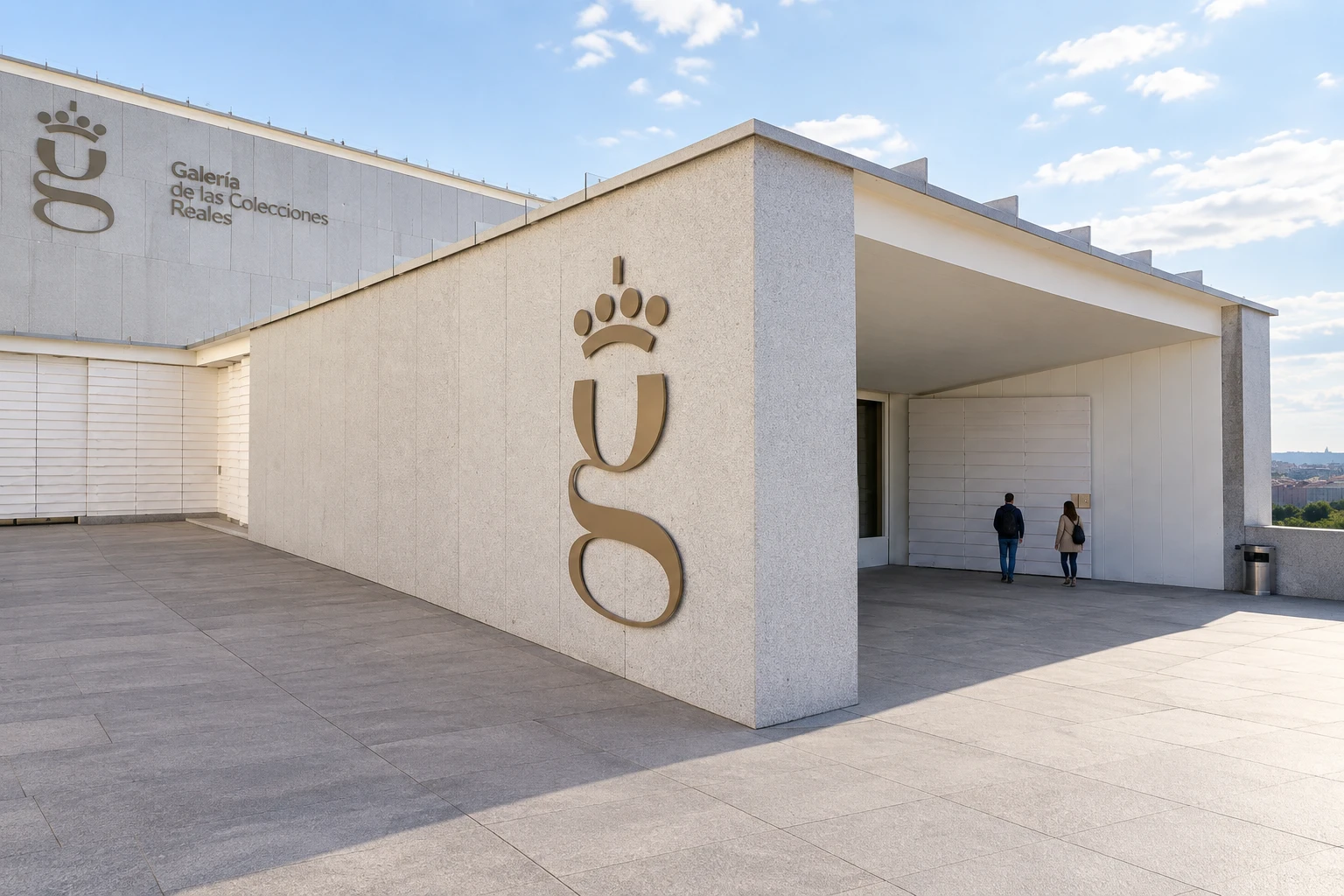
Museum of the National Heritage between the Palacio Real and the Catedral de la Almudena, in a granite building above the Campo del Moro gardens. It displays tapestries, carriages, paintings, armors and jewels gathered by the kings of Spain.
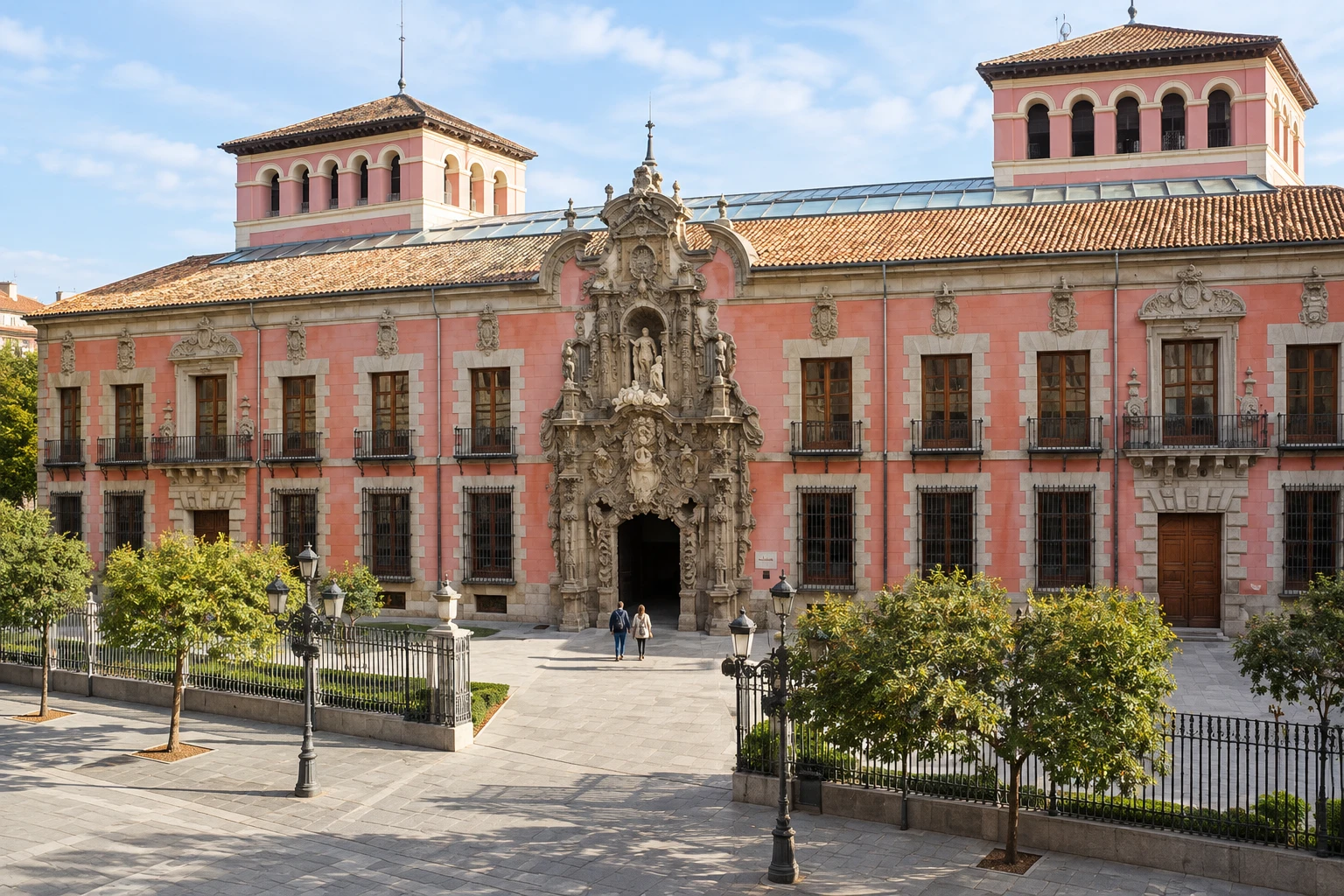
Municipal museum in the former Real Hospicio de San Fernando, with a Baroque façade by Pedro de Ribera. It tells the history of Madri since 1561, featuring the large model of the city from 1830 and an allegory painted by Goya.
Largest public park in Madri, with over 1,500 hectares of woodland to the west of the center. It has a lake with rowboats, trails, bike paths, the Parque de Atracciones and the Zoo Aquarium.
To plan