

 Brazil
 Antarctica
 Argentina
 Bolivia
 Chile
 Colombia
 Ecuador
 Falkland Islands (Malvinas)
 French Guiana
 Guyana
 Paraguay
 Peru
 Suriname
 Uruguay
 Venezuela
 Albania
 Austria
 Belgium
 Croatia
 Denmark
 Finland
 France
 Germany
 Greece
 Hungary
 Iceland
 Ireland
 Italy
 Luxembourg
 Norway
 Poland
 Portugal
 Slovakia
 Slovenia
 Sweden
 Switzerland
 the Czech Republic
 the Netherlands
 the United Kingdom
 Turkey
 Bermuda
 Canada
 Greenland
 Mexico
 Saint Pierre and Miquelon
 the United States
 the Dominican Republic
 Japan
 Egypt
 South Africa
 Australia
 Fiji
 New Zealand
 Papua New Guinea
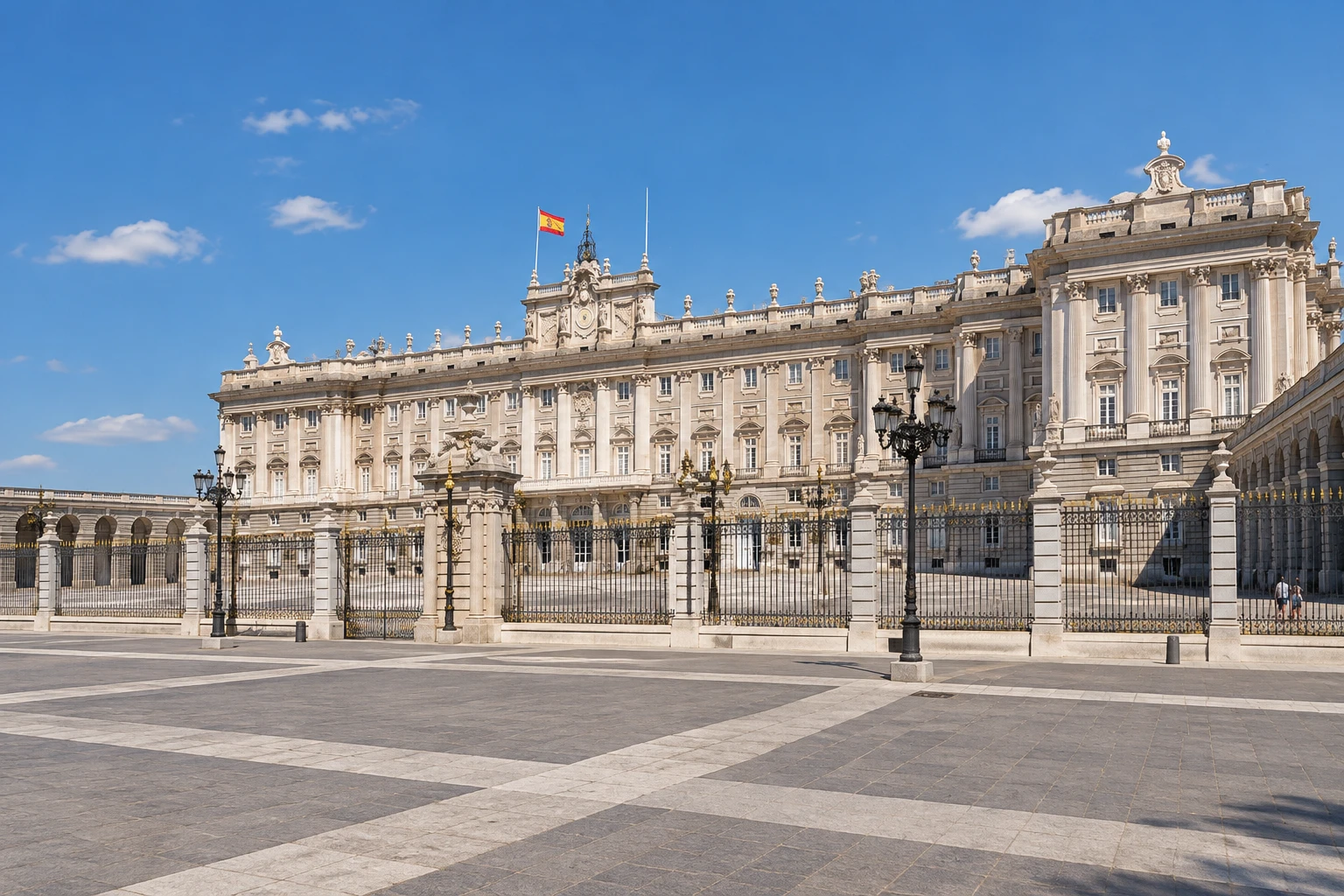
Palace · Madrid, Spain
Royal Palace of Madrid
Official residence of the King of Spain, built in the 18th century on the site of the former Alcázar. It has 3,418 rooms, state rooms, the Royal Armory and, surrounding it, the Jardines de Sabatini and the Campo del Moro.
Illustrative images. The pictures in this guide are illustrations based on the real place, not photographs, and may differ from it.

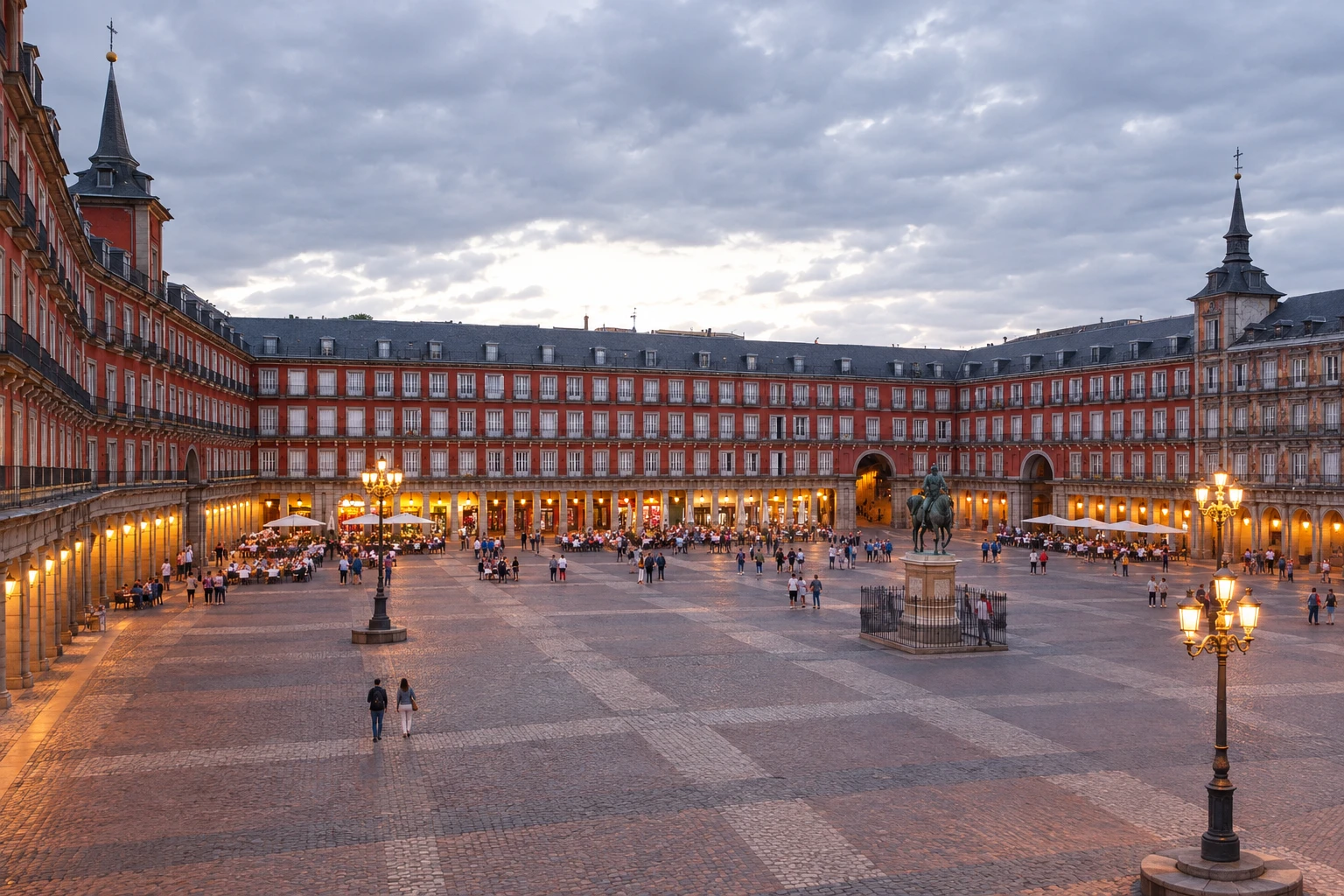
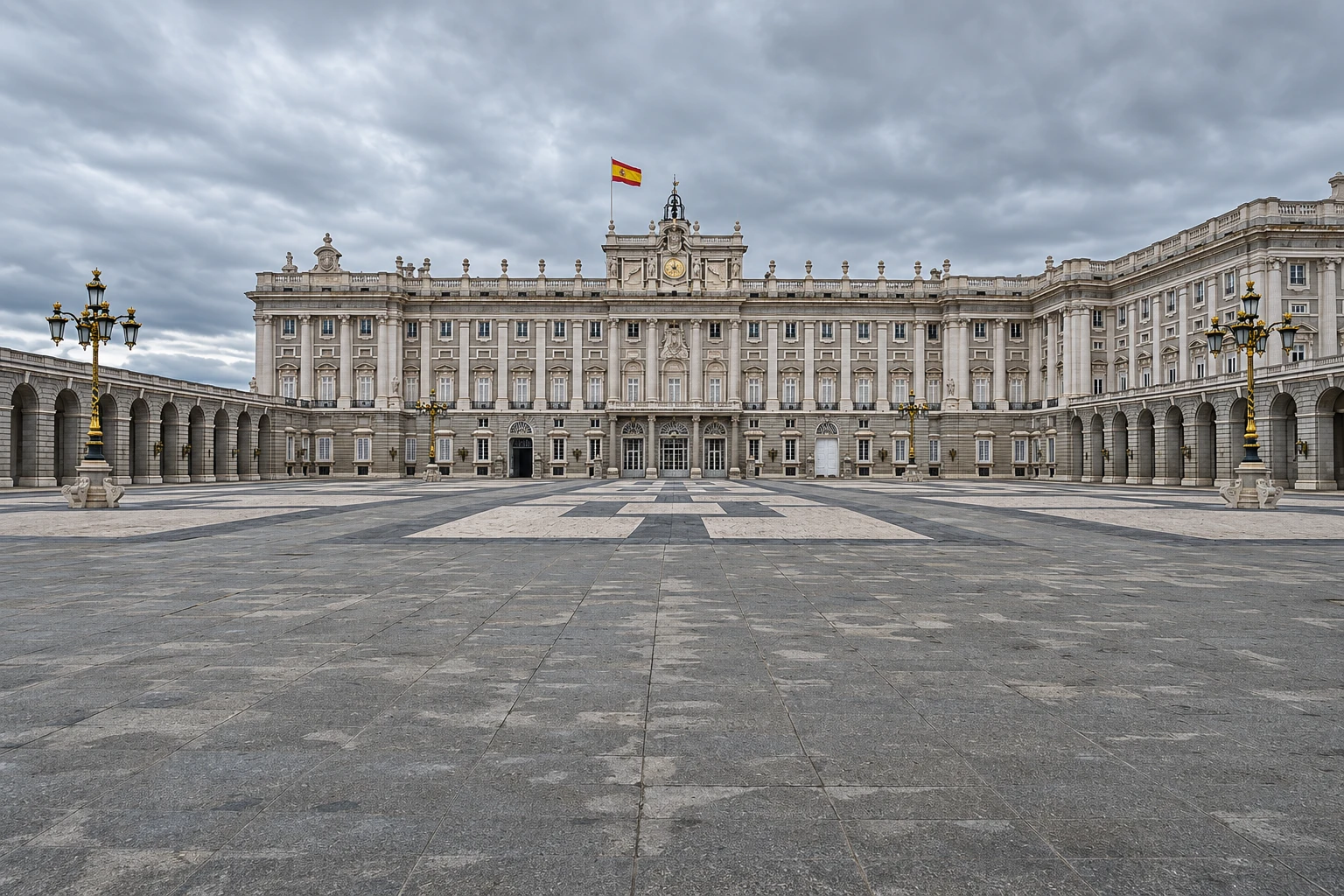
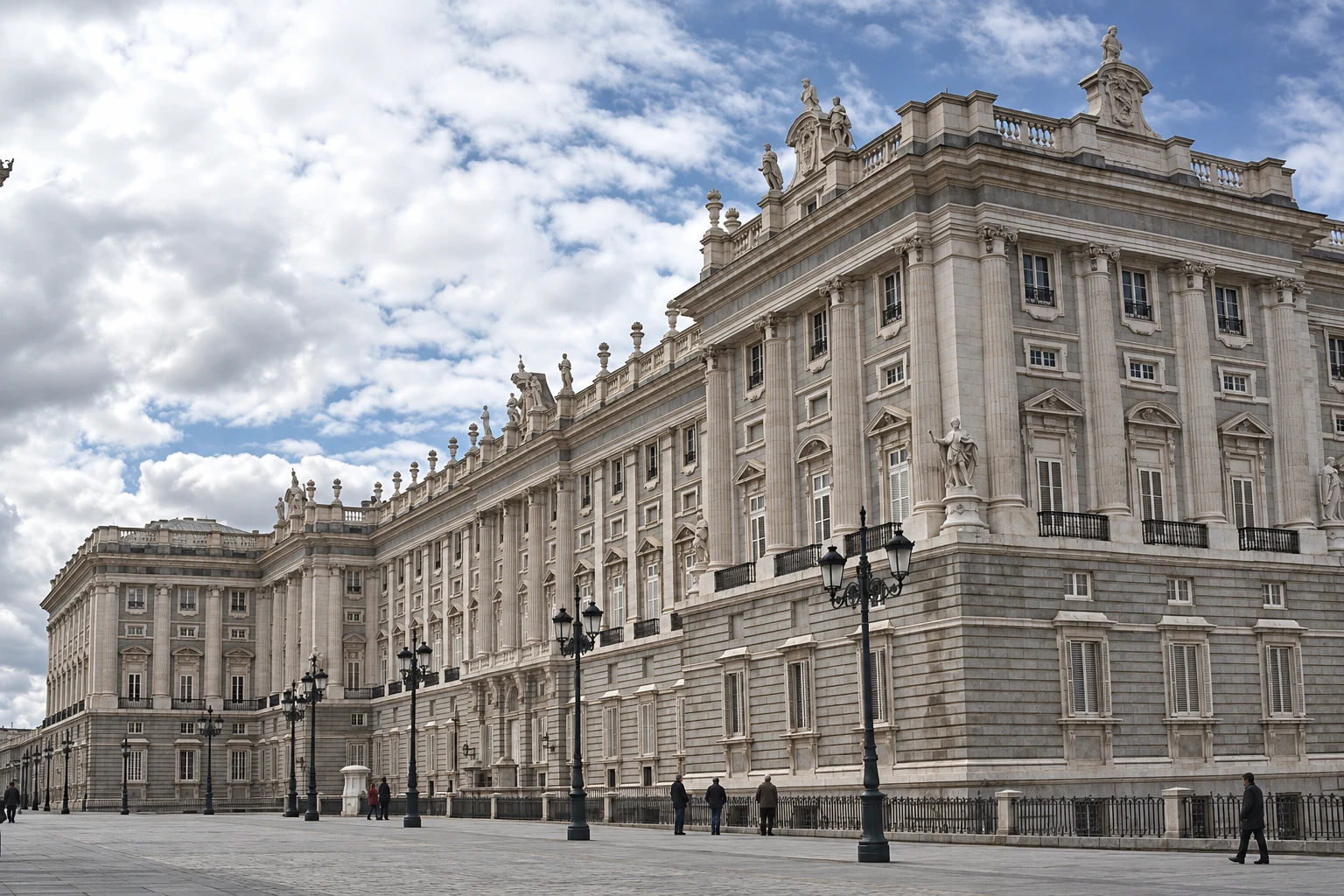
A look at the place
Royal Palace of Madrid in pictures
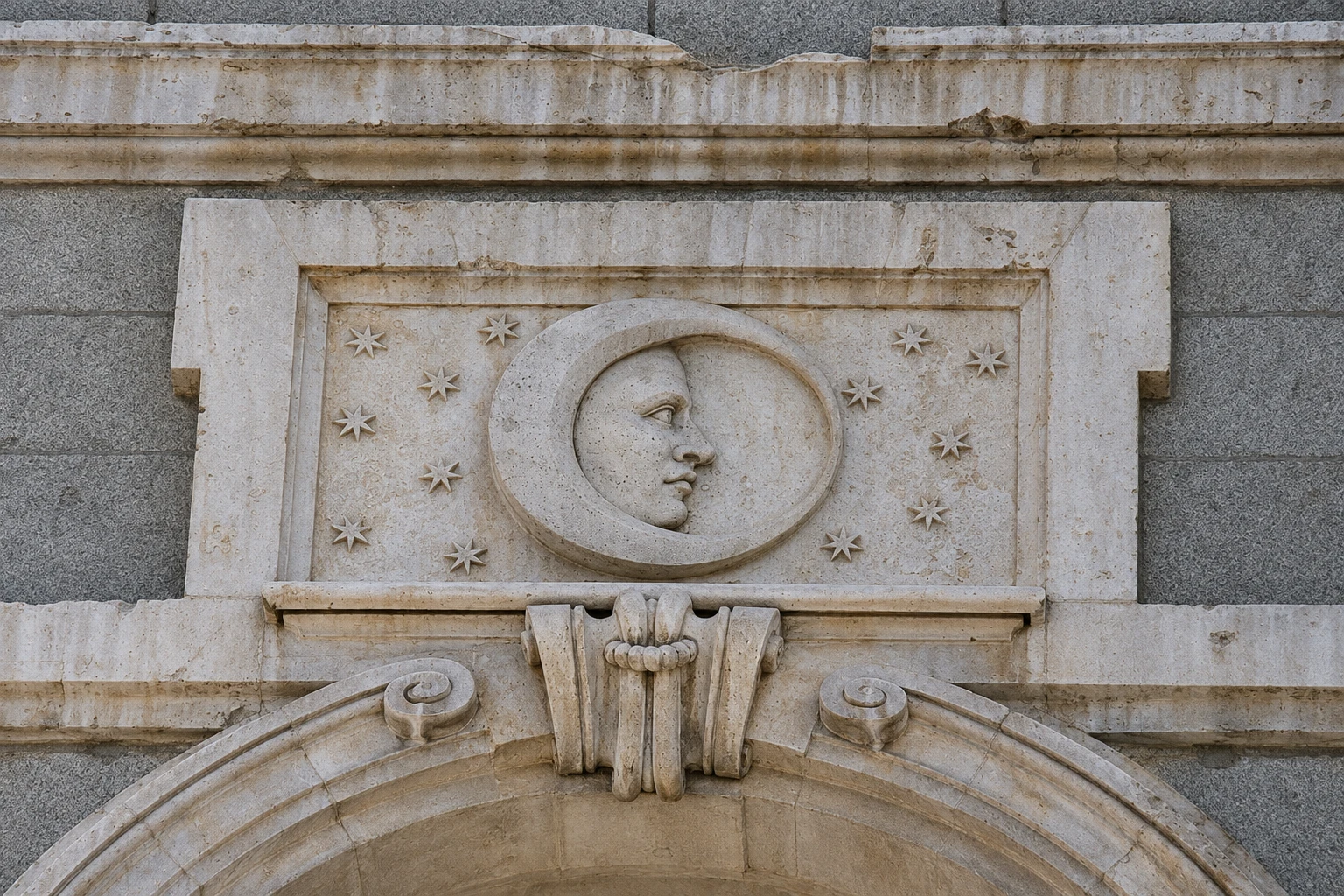
These pictures are illustrations based on the real place, not photographs. They may differ from the place.
Click the picture to enlarge it.
Discover
About Royal Palace of Madrid
The old Real Alcázar de Madri was destroyed by a fire on Christmas night in 1734. Felipe V ordered a new palace to be built on the same site. The first plans were by Filippo Juvarra, and Juan Bautista Sacchetti adapted the design to the terrain. Construction began in 1738. Charles III was the first king to live in the palace, from 1764.
The building covers about 135,000 square meters and has 3,418 rooms. It is the king’s official residence, but the royal family lives in the Palacio de la Zarzuela. The palace is used for state ceremonies and is open to visitors when there are no official events.
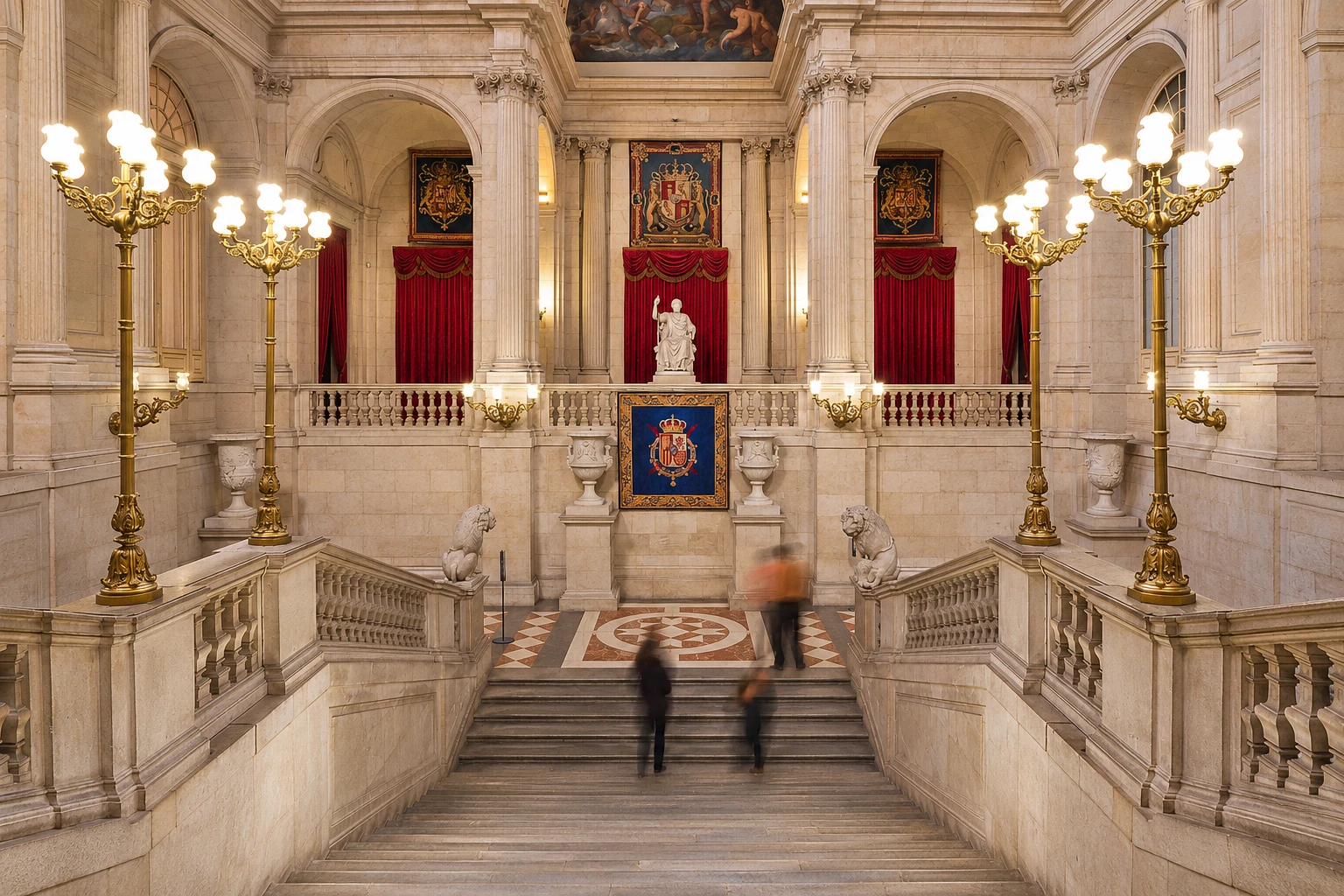
The visit goes through the main staircase, the Throne Hall, the Royal Chapel and rooms decorated for the Bourbon kings. The Real Armería, in a 1897 building next to the Plaza de la Armería, houses weapons and armor of Spanish kings since the 15th century. The Real Farmacia can also be seen.
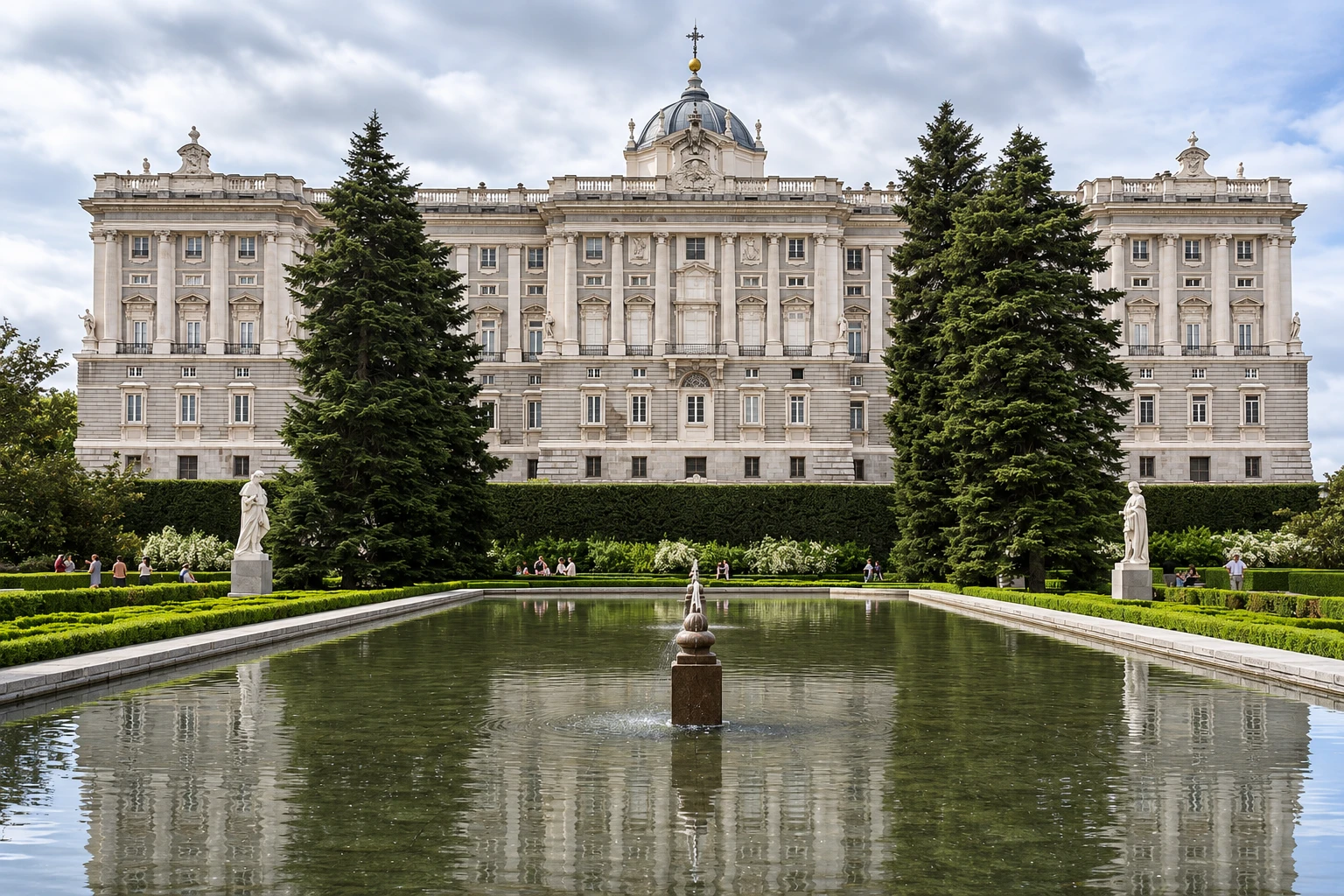
To the north of the palace are the Jardines de Sabatini, in French style, created in the 1930s where the stables designed by Francesco Sabatini once stood. To the west, descending toward the Manzanares River, is the Campo del Moro, a garden that looks out on the palace’s tallest façade.
On Wednesdays and Saturdays there is a changing of the guard at the Puerta del Príncipe on Calle de Bailén. On the first Wednesday of the month, except in January, August and September, the Relevo Solemne takes place, a larger ceremony in the Plaza de la Armería.
Before you go
Practical information
Cidade Turismo reviews its information regularly, but something may have changed. Check with the place before planning your trip.
How much time to set aside
Two to three hours including the Armería. The gardens take about an extra hour.
Best time
In the morning, right at opening, the lines are usually shorter. The changing of the guard takes place on Wednesdays and Saturdays, and the Relevo Solemne on the first Wednesday of the month, except in January, August and September. The palace can close without notice for official events.
How to get there
It is on Calle de Bailén, about a 15-minute walk from the Puerta del Sol. The nearest metro station is Ópera (lines 2 and 5). The Plaza de Oriente, in front of the east façade, is the most common walking route.
Tip
Buy the ticket online in advance, with a set date and time: the line at the ticket office is usually long. Check the official website to confirm the palace won’t be closed for an official event that day. The Catedral de la Almudena is on the other side of the Plaza de la Armería, and the two visits go well together.
Official website
Your questions
Frequently asked questions about Royal Palace of Madrid
Does the king live in the Royal Palace?
No. It's the official residence used for ceremonies, but the royal family lives in the Palacio de la Zarzuela, on the outskirts of Madrid.
When does the changing of the guard take place?
On Wednesdays and Saturdays, at the Puerta del Príncipe. The Relevo Solemne, the larger ceremony, is on the first Wednesday of the month, except in January, August and September. Ceremonies may be cancelled by official decree or bad weather.
What else can be seen besides the state rooms?
The Real Armory, with weapons and armors of the kings since the 15th century, and the Royal Pharmacy. Outside, the Jardines de Sabatini and the Campo del Moro.
Do I need to book a ticket?
It's recommended to buy online with a reserved date and time. Confirm conditions and prices on the Patrimonio Nacional website.