Bocadillo de calamares
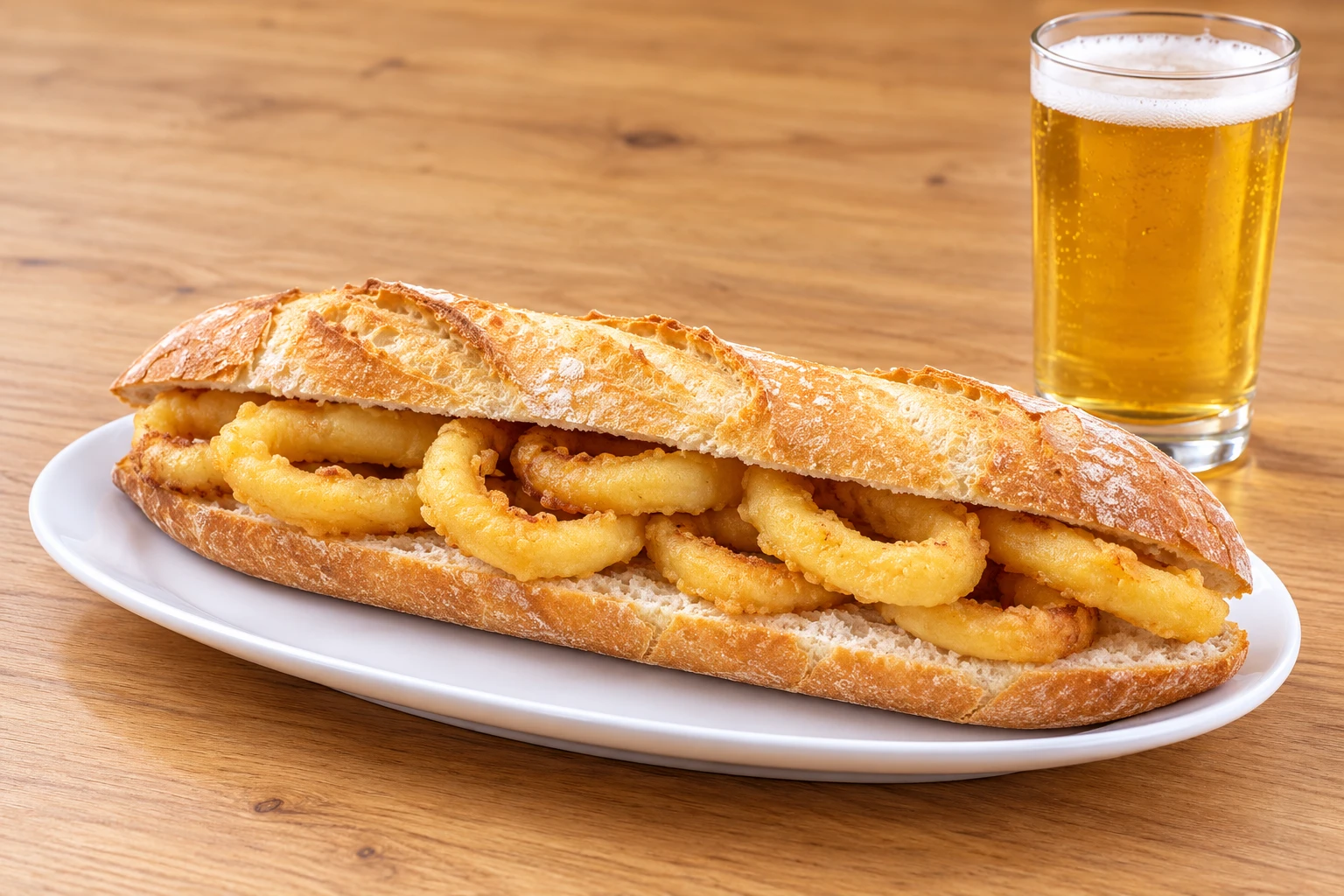
Baguette-style bread filled with breaded and fried squid rings, eaten standing at the bar. Madrid’s official tourism promotes it as a gastronomic icon of the city, typical of the bars around the Plaza Mayor.
Antarctica
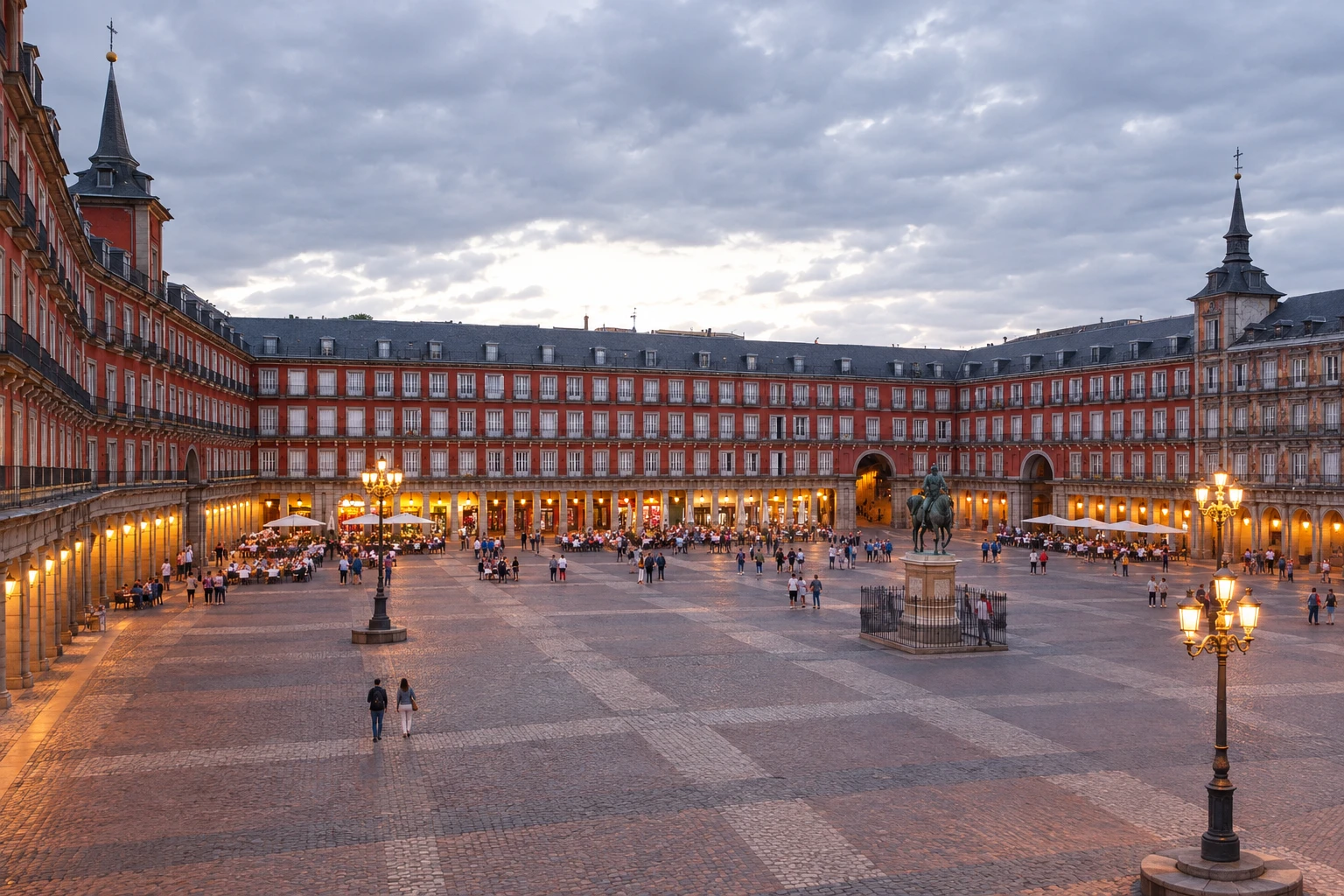
In the photo: Plaza Mayor de Madri
Illustrative images. The pictures in this guide are illustrations based on the real place, not photographs, and may differ from it.
The city
Capital of Spain and seat of the Community of Madri, in the center of the country. It brings together three major art museums on the Paseo del Prado: the Prado, the Thyssen-Bornemisza and the Reina Sofía. It has the Palacio Real and the Catedral de la Almudena, the Plaza Mayor, the Puerta del Sol, the Parque del Retiro and the Gran Vía. The language is Spanish (Castilian). It is the main gateway to Spain for those coming from Brazil.
There's no accommodation in the guide yet in Madrid.
Do you run a hotel, guesthouse or vacation rental here? List itThere are no restaurants in the guide yet in Madrid.
Know a good one? Recommend it to usThe city's hotels and restaurants on the map.
how to get there · how many days · itinerary · questions
Flavors of Spain

Baguette-style bread filled with breaded and fried squid rings, eaten standing at the bar. Madrid’s official tourism promotes it as a gastronomic icon of the city, typical of the bars around the Plaza Mayor.

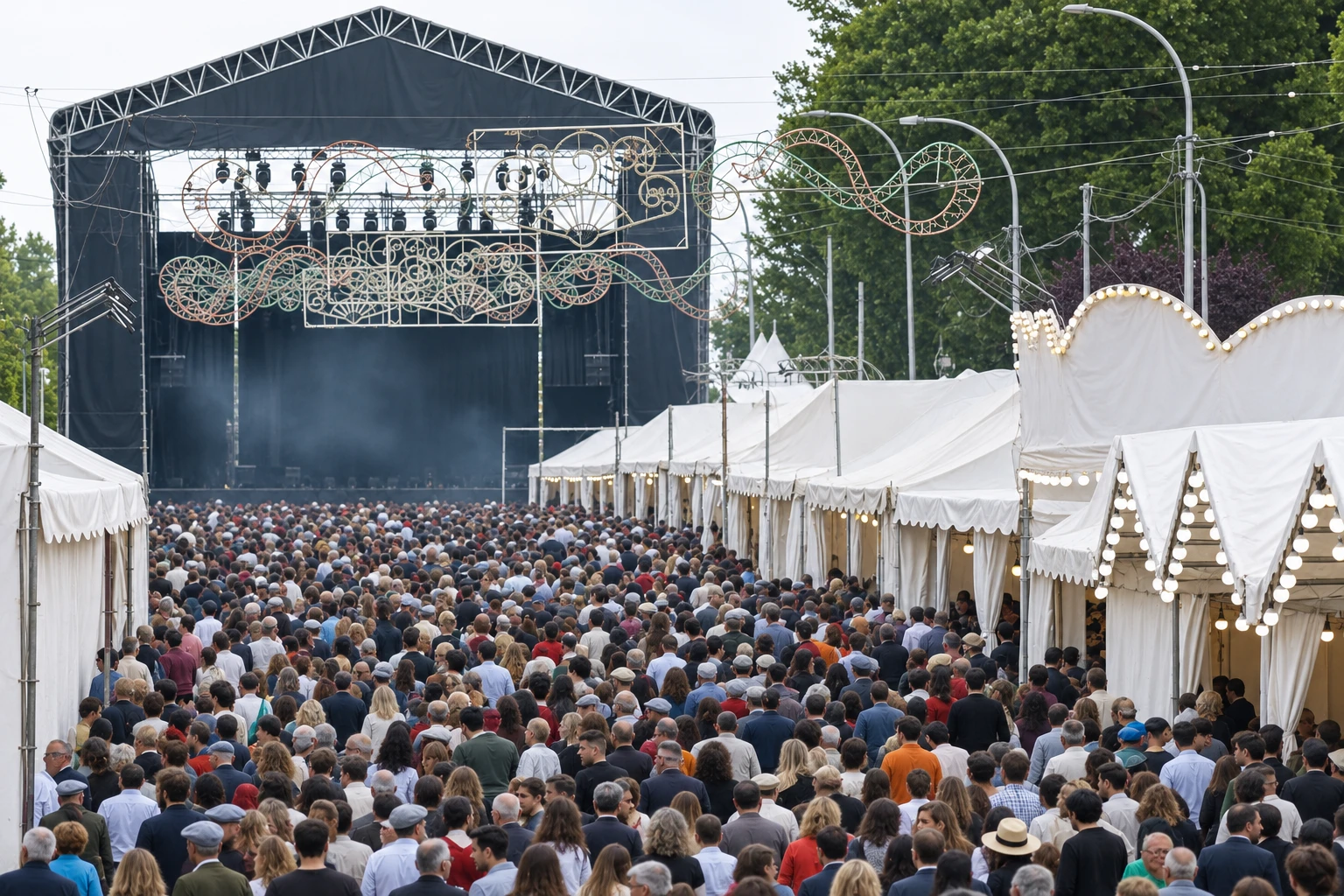
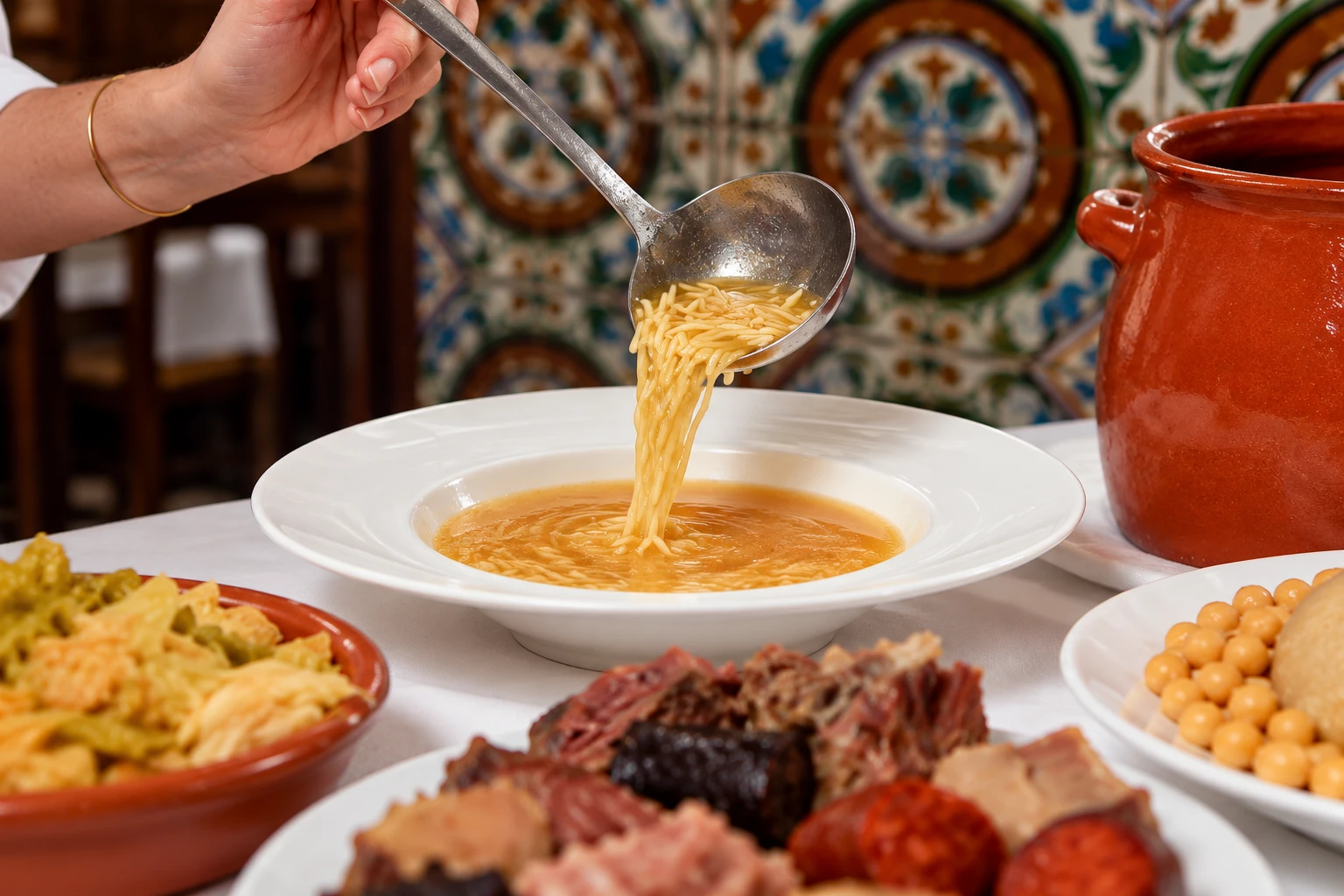
Chickpea stew with meats, cured sausages and vegetables, served in stages called vuelcos: first the soup, then the chickpeas with the vegetables and finally the meats. It was declared an Intangible Cultural Interest asset by the Community of Madrid.
Festivals and events
Dates change every year: check this year's date before you travel.
The local experience
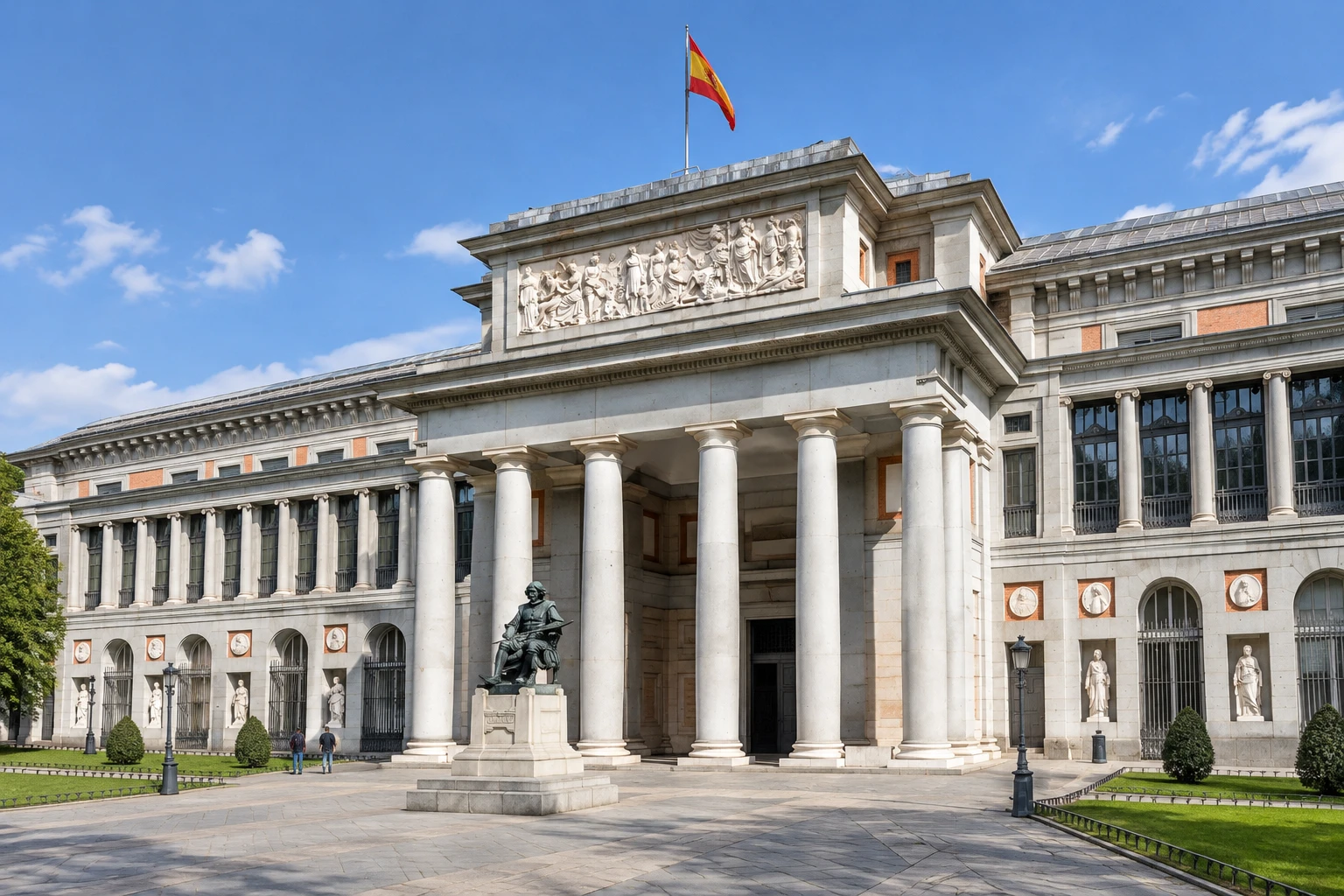
One of the largest collections of European painting in the world, with Velázquez, Goya, El Greco, Bosch, Titian and Rubens, in a neoclassical building by Juan de Villanueva on the Paseo del Prado.
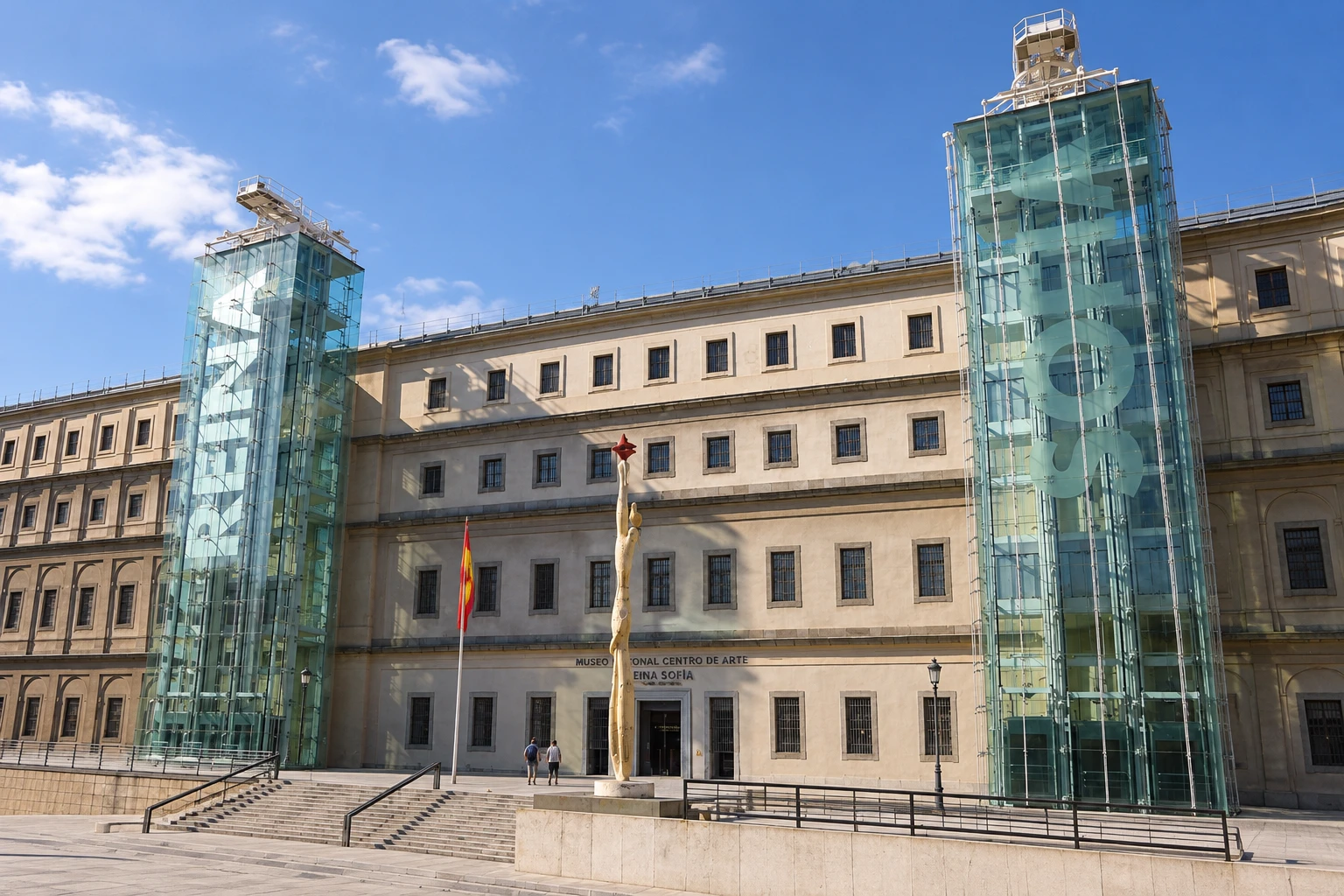
The national museum of modern and contemporary art of Spain. It houses Picasso’s Guernica and works by Dalí and Miró, in an 18th-century former hospital next to Atocha.
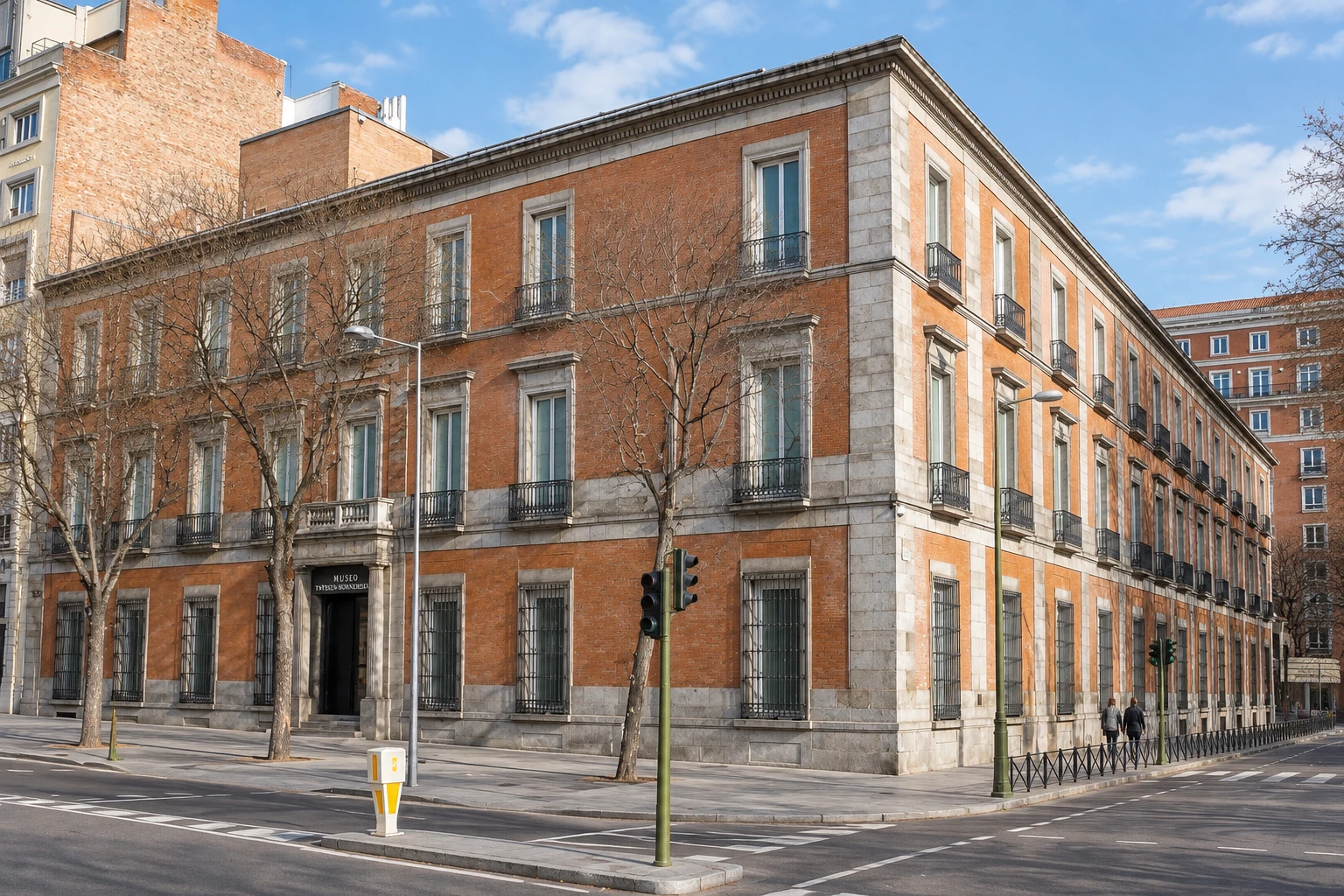
Private collection purchased by the Spanish State, ranging from 13th-century Italian painting to art of the 1980s, housed in a palace opposite the Prado.
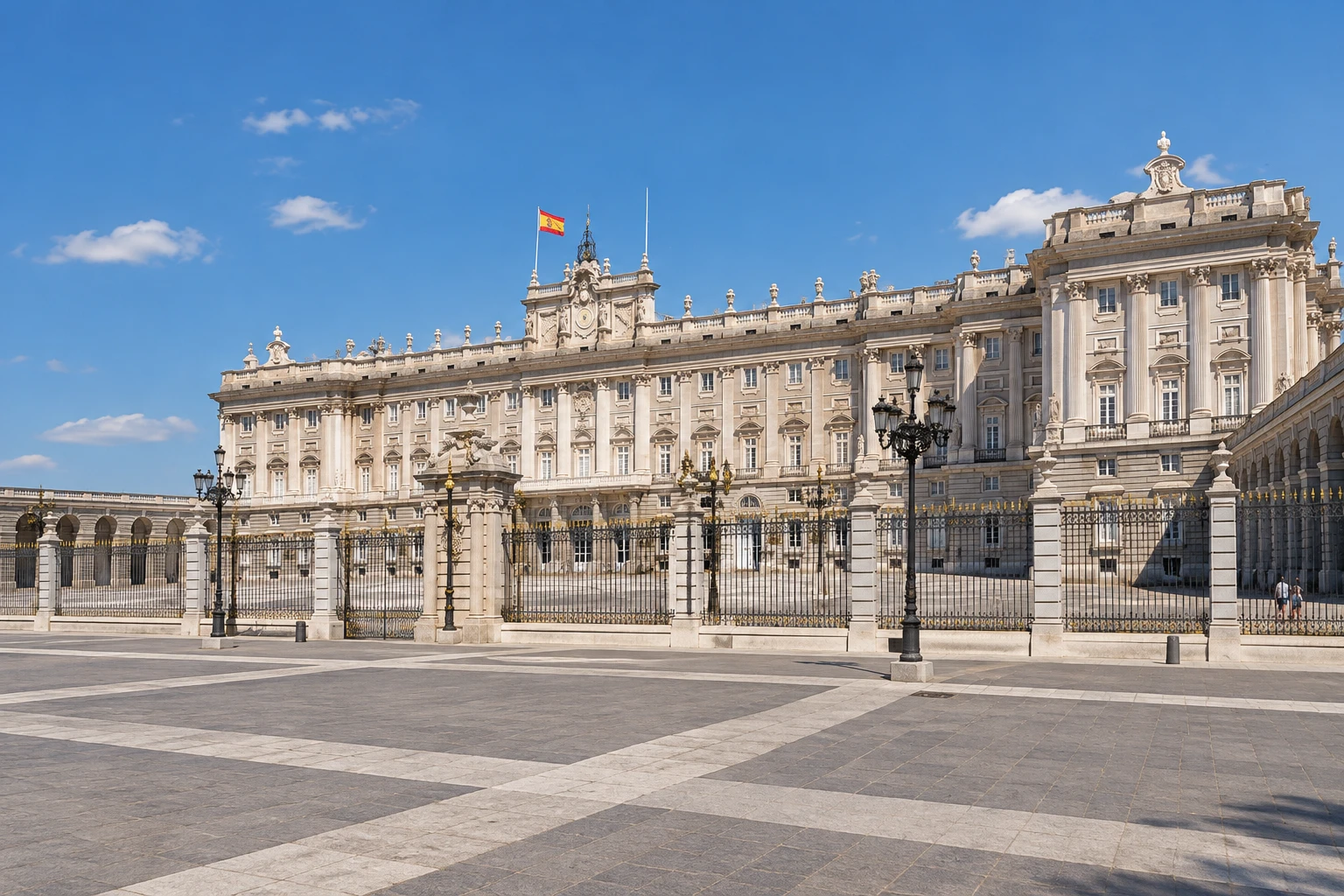
Official residence of the King of Spain, built in the 18th century on the site of the former Alcázar. It has 3,418 rooms, state rooms, the Royal Armory and, surrounding it, the Jardines de Sabatini and the Campo del Moro.
Before you go
Madrid – Spain Capital
Approximate distances. Check flights and bus, train or boat schedules before you travel.
Connections with Brazil can be direct flights or with stopovers, depending on the season and the airline. Confirm before buying. Barajas airport is about 12 km from the center and has the metro (line 8), Cercanías C-1 trains at terminal T4 and the Exprés Aeropuerto bus, with stops at Cibeles and Atocha. High-speed trains arrive at Atocha and Chamartín.
Two days are enough for the Prado, the Retiro, the Palacio Real and the historic center. With three days you can add the Reina Sofía, the Thyssen and a neighborhood like Malasaña or the Barrio de las Letras. More time allows for smaller museums and train day trips.
From March to May and from September to November the weather is usually mild. From June to August (winter in Brazil) afternoons exceed 30 °C and it's best to go out early and return to the streets at the end of the day. From December to February it's cold and the sun sets early. Compared to Brasília, the clock is 4 or 5 hours ahead, depending on the time of year.
The seasons shown are the most usual ones; nature doesn't always follow the calendar.
No. The center is walked and the metro reaches all the attractions and the airport. Driving in the center is difficult, there are restrictions for cars and parking is expensive. For other cities, the high-speed trains from Atocha and Chamartín are usually more practical.
Suggested itinerary
Built with the places on this page. No rush: it's paced so you have time to see them.
Start at the Museo Nacional del Prado as soon as it opens, with tickets bought in advance. Choose the rooms for Velázquez, Goya and Bosch and allow about three hours.
Have lunch near the Paseo del Prado and walk up Calle de Felipe IV to the Parque del Retiro. Pass by the Estanque Grande and exit via the Puerta de Alcalá. Walk down to the Plaza de Cibeles.
From Cibeles follow Gran Vía, looking at the Metrópolis and Telefónica buildings. Head down to the Puerta del Sol, look for the Km 0 plaque and continue to the Plaza Mayor.
Next to the Plaza Mayor, try tapas at the Mercado de San Miguel or in the bars of the Cava de San Miguel. Remember that dinner in Madrid usually starts after 9:00 pm.
Day 1
Start the day at the Museo Nacional del Prado. On exit, enter via the Plaza de Murillo into the Real Jardín Botánico for a break among the trees.
After lunch, visit the Museo Nacional Thyssen-Bornemisza, opposite the Prado. Walk to the Plaza de Cibeles and, if there's space, go up to the viewing platform of the Palacio de Cibeles.
Walk up Calle de Alcalá to the Puerta de Alcalá and enter the Parque del Retiro. Walk to the Estanque Grande and, if you like, rent a rowboat.
Dine in the Barrio de las Letras, between the Paseo del Prado and the Puerta del Sol, where there are many tapas bars.
Day 2
Start at the Palacio Real de Madrid with a timed ticket and include the Real Armería. Cross the Plaza de la Armería to the Catedral de la Almudena and, if time allows, go up to the dome.
Walk along Calle Mayor to the Mercado de San Miguel to have lunch in small portions. Afterwards, visit the Plaza Mayor and go down the steps of the Arco de Cuchilleros.
Return via Calle de Bailén to the Plaza de España and the monument to Cervantes. Head to the Templo de Debod and wait for sunset at the viewpoint.
Walk up Gran Vía with the lights on, or see a musical at one of the theatres. Finish at the Puerta del Sol, near the bear and the clock.
Day 1
Dedicate the whole morning to the Museo Nacional del Prado, with tickets purchased in advance, including the Goya rooms and the Moneo new wing.
Exit via the Plaza de Murillo to the Real Jardín Botánico and then head up to the Parque del Retiro. Pass by the Estanque Grande, the Palacio de Velázquez and the rose garden.
Leave the park via the Puerta de Alcalá and walk down to the Plaza de Cibeles. Go up to the mirador of the Palacio de Cibeles to see Gran Vía from above.
Dine in the streets of the Barrio de las Letras, near the Casa de Lope de Vega.
Day 2
Visit the Palacio Real de Madrid early at opening, including the Real Armería. If it's Wednesday or Saturday, watch the changing of the guard at the Puerta del Príncipe.
Enter the Catedral de la Almudena and go up to the dome. Have lunch at the Mercado de San Miguel and visit the Plaza Mayor.
Walk to the Plaza de España and see the monument to Cervantes. Finish at the Templo de Debod, on the viewpoint facing west.
Head up to Malasaña, a few blocks north of Gran Vía, to dine and see the bustle of the bars around Plaza del Dos de Mayo.
Day 3
Start at the Museo Nacional Centro de Arte Reina Sofía, opposite Atocha, go straight to the Guernica room. Remember that the museum is closed on Tuesdays.
After lunch, visit the Museo Nacional Thyssen-Bornemisza on the Paseo del Prado.
Walk along Gran Vía from the Edificio Metrópolis to the Plaza del Callao, taking in the Edificio Telefónica and the Schweppes billboard.
Finish at the Puerta del Sol, with the Km 0 and the Oso y el Madroño. Dine in the surrounding streets, which stay busy late.
Check before you go. Opening hours and days change, and places may close for renovations, holidays or events. This itinerary is a suggestion from Cidade Turismo, not a commitment: plan yours by checking directly with each place you intend to visit.
Before you go
There are three main public transport options. The metro (line 8) goes to Nuevos Ministerios, where you change lines. The Exprés Aeropuerto bus runs 24 hours and stops at Cibeles and Atocha. The Cercanías C-1 train departs from terminal T4. Taxis leave from the official rank and have a fixed fare to the center; confirm the price beforehand.
Atocha, whose official name is Madrid-Puerta de Atocha-Almudena Grandes, serves the south and east: Toledo, Seville, Córdoba, Málaga, Valencia and Barcelona. Chamartín-Clara Campoamor, in the north of the city, concentrates trains for the north of the country. Check your ticket to see which station the train departs from.
Much later than in Brazil. Lunch is usually between 2:00 and 4:00 pm, and dinner starts after 9:00 pm. Many restaurants close the kitchen between those times, but tapas bars serve dishes during the interval.
Not all. The Prado is open every day, except for three holidays. The Reina Sofía is closed on Tuesdays. The Thyssen is open on Mondays only for a few hours. Always check before you go.
Spanish (Castilian). In museums and on public transport there are signs and information in English. Many words are similar to Portuguese, which helps Brazilians.
Cross-border routes
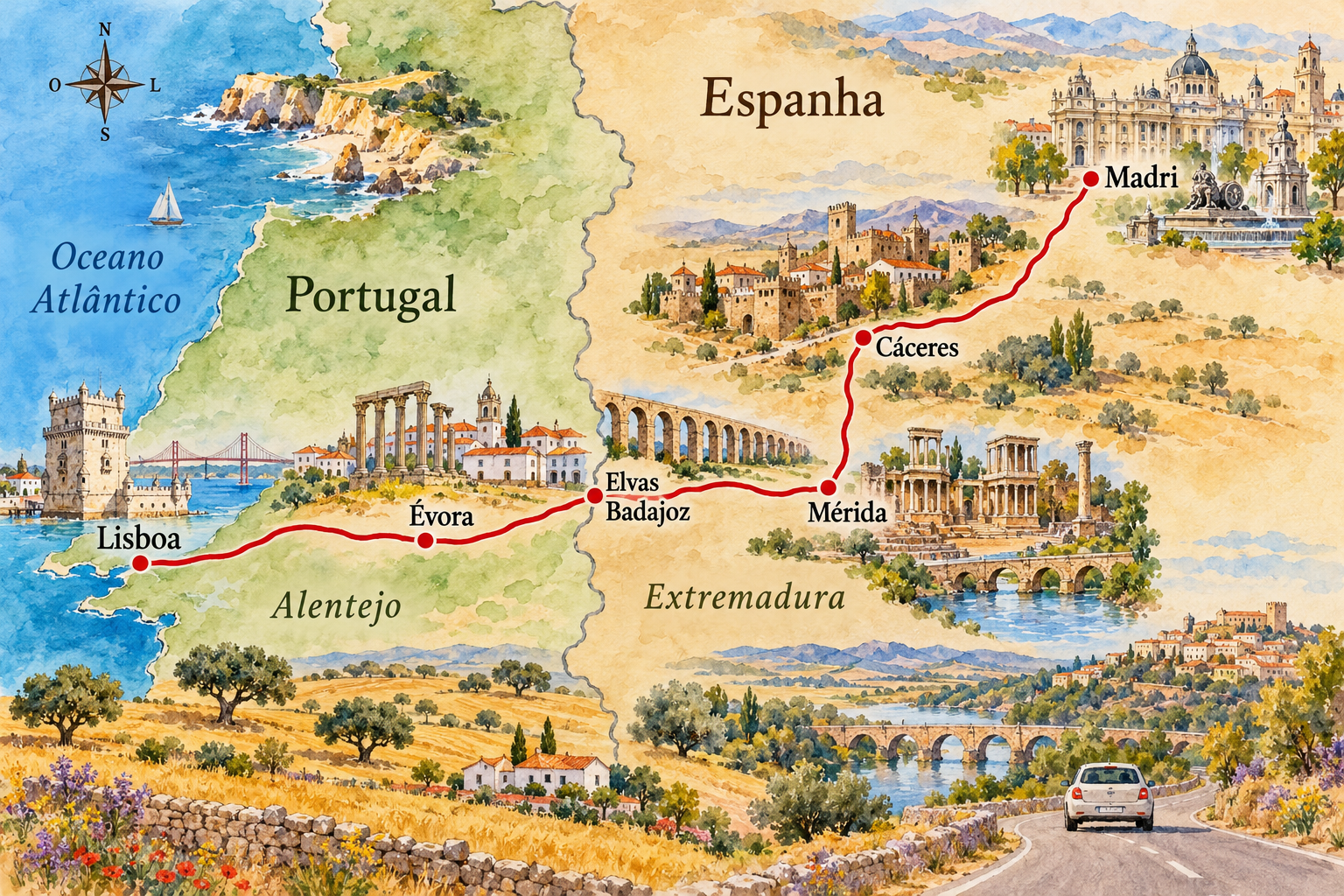
By car between the two capitals of the peninsula: the Alentejo around Évora, Roman Mérida and medieval Cáceres on the route from Lisbon to Madrid.