Brazil
 Argentina
 Chile
Chile Colombia
 Peru
Peru Uruguay
 Germany
 Spain
Spain France
 Greece
 the Netherlands
 Ireland
 Italy
Italy Portugal
 the United Kingdom
 Switzerland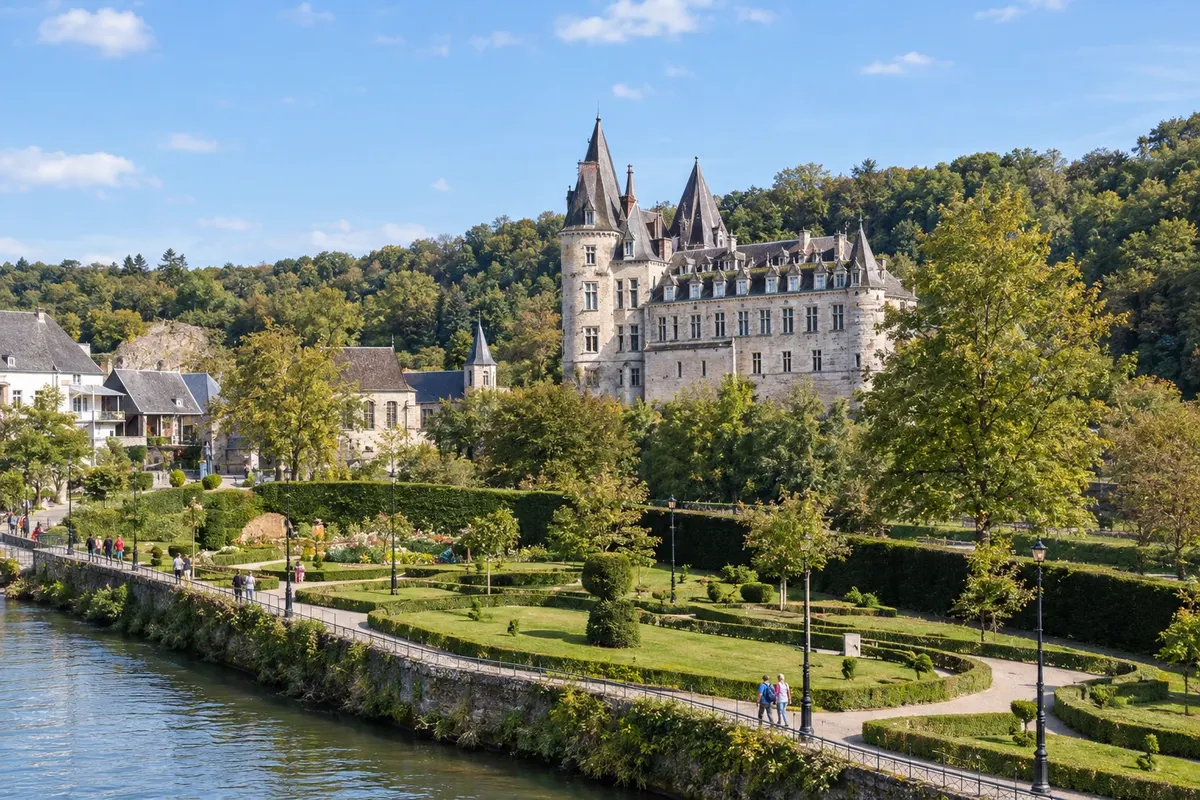
4 cities
Province · Valônia
Belgium's largest and least populated province: forests of the Ardenas, the bends of the Semois and the Ourthe, castles, abbeys and the memory of the Battle of the Ardennes.
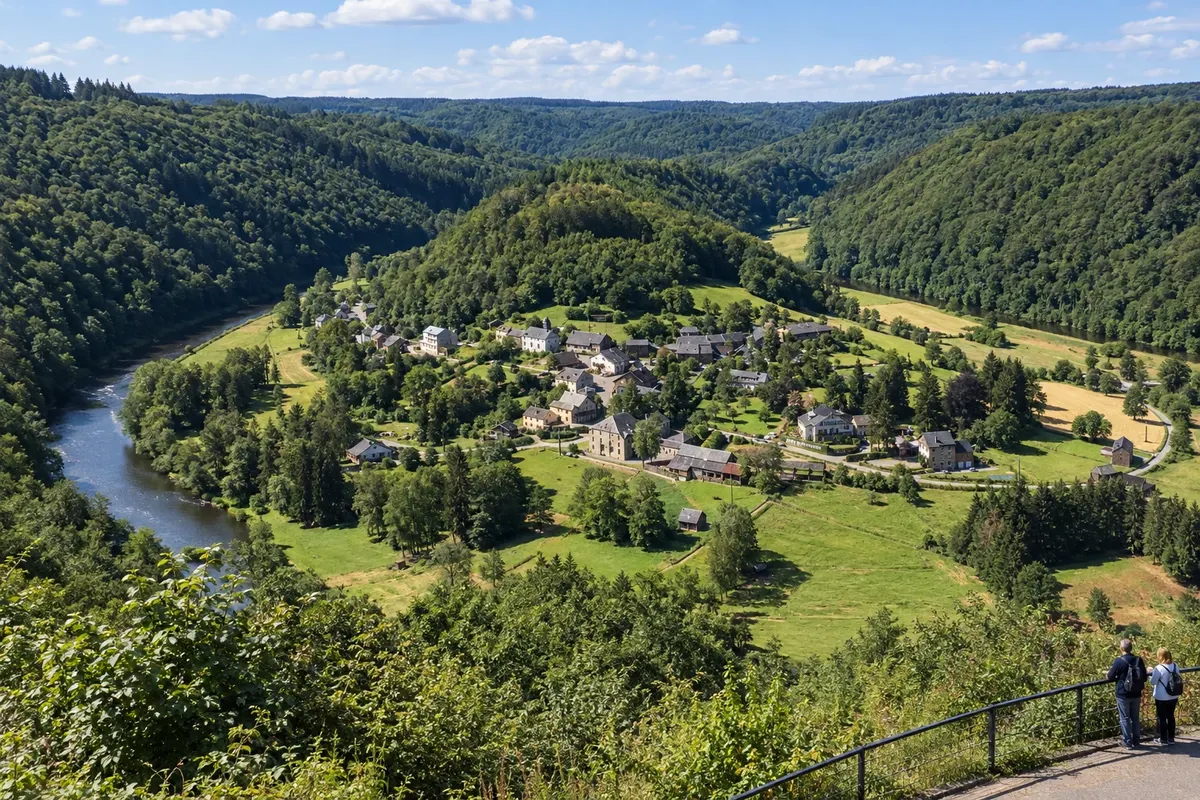
In the photo: Frahan, in the valley of the Semois
Illustrative images. The pictures in this guide are illustrations based on the real place, not photographs, and may differ from it.

The province
Despite the name, this is a Belgian province in southeastern Wallonia. It borders the Grand Duchy of Luxembourg, an independent country, and France. The two territories were one until 1839, when the French-speaking part went to Belgium. It is the country's largest province by area and the least populated, with villages scattered through the forests. The capital is Arlon, a town of Roman origin near the border, where Luxembourgish is still heard.
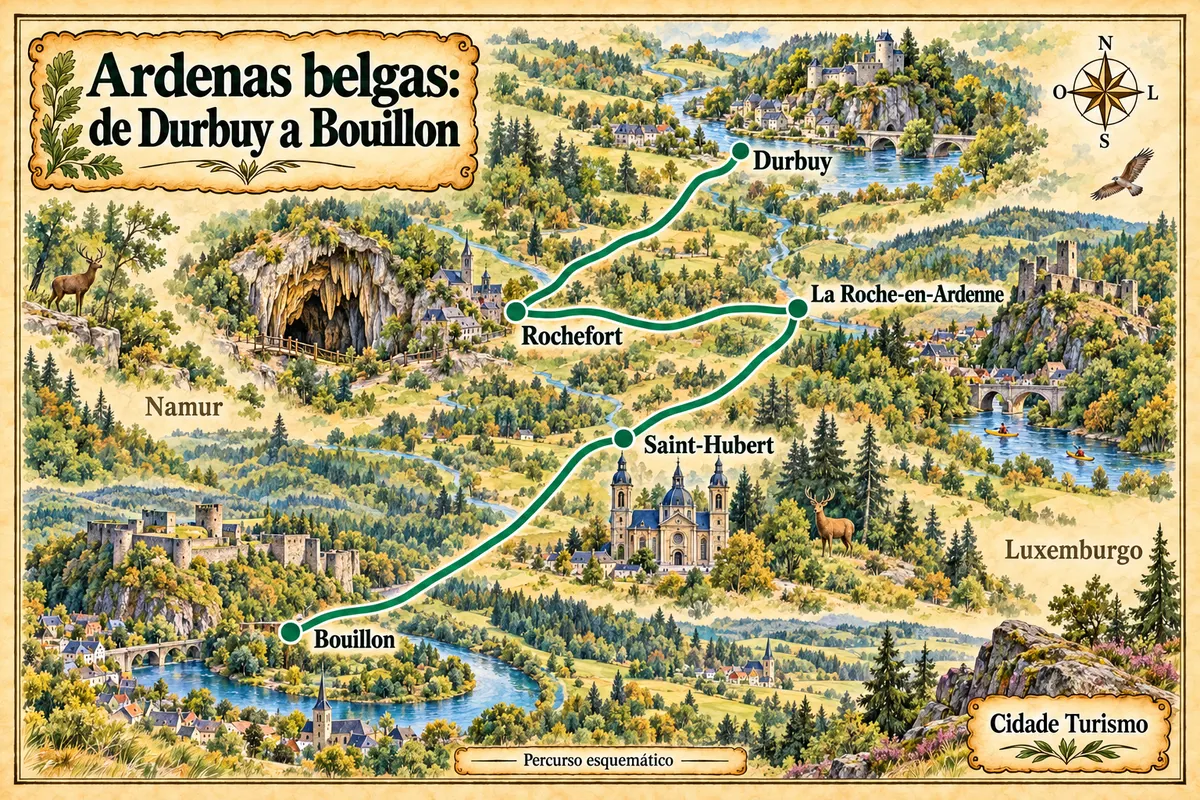
The landscape is that of the Ardenas: wooded hills, narrow river valleys and roads that go up and down. The Ourthe passes through Durbuy, a small town with cobbled streets, and La Roche-en-Ardenne, with the ruins of a castle above the river. To the south, the Semois draws tight meanders around Bouillon, whose castle belonged to Godofredo de Bouillon, one of the leaders of the First Crusade. Downstream, the village of Frahan is almost encircled by a bend of the Semois.
The province has places of faith and memory. Saint-Hubert gathers devotion to the patron of hunters around its basilica. The Abadia de Orval, near the French border, preserves the ruins of the old Cistercian abbey next to the monastery where monks still live and make beer and Trappist cheese. In Bastogne, the Mardasson memorial recalls the siege of the town in the winter of 1944–45, during the Battle of the Ardennes. Redu is devoted to books, with second-hand bookshops and stores along its streets.
On the table, jambon d'Ardenne, a salted and smoked ham, appears on almost every menu. In autumn, restaurants serve game from the forests, such as wild boar and venison, and trout comes from the rivers. The major rural festival is the Foire de Libramont, an agricultural fair held at the end of July. In Saint-Hubert, the saint's day, November 3, usually features a mass with hunting horns and a blessing of animals.
Destinations
Cities
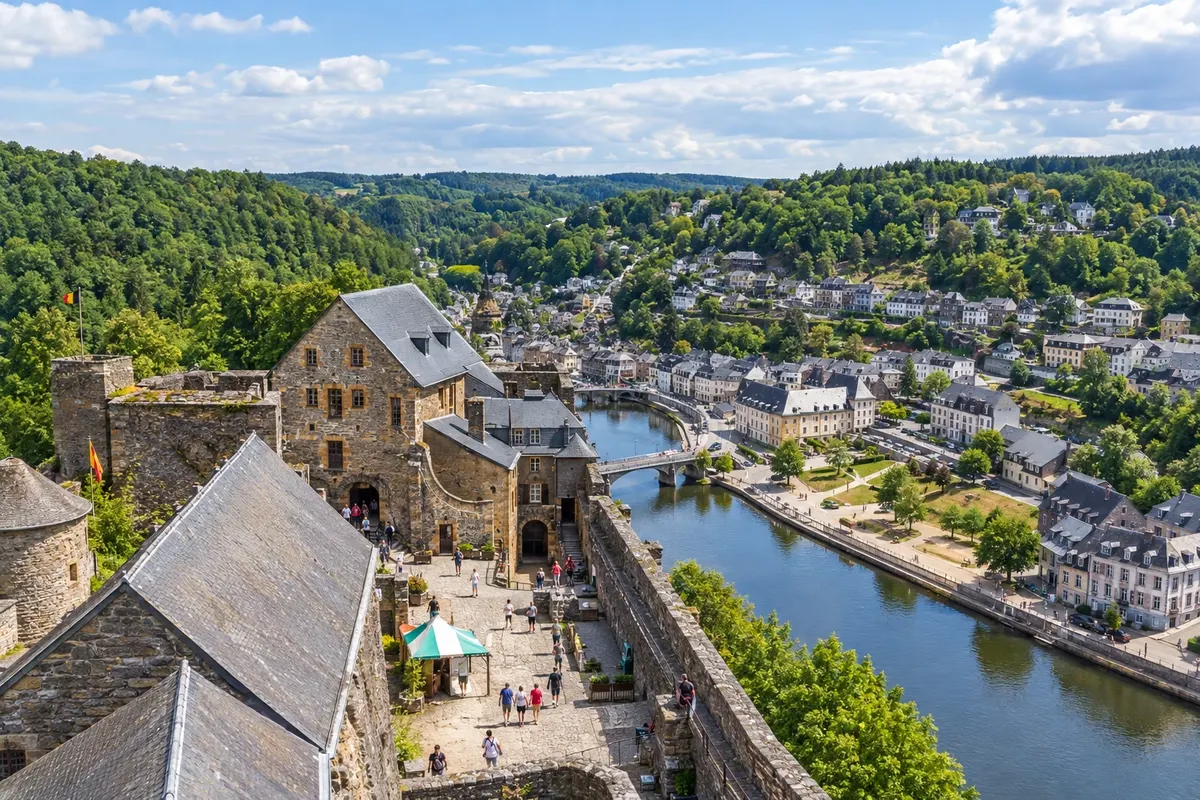
Bouillon is a small town on a tight bend of the Semois, in the southern part of Belgium's province of Luxembourg, near the French border. French is spoken. Perched on three rocky peaks is the Château de Bouillon, linked to Godfrey of Bouillon, leader of the First Crusade. The town also has the Musée ducal and the Bouillon Medieval Experience, and a few kilometres away is the Tombeau du Géant viewpoint.
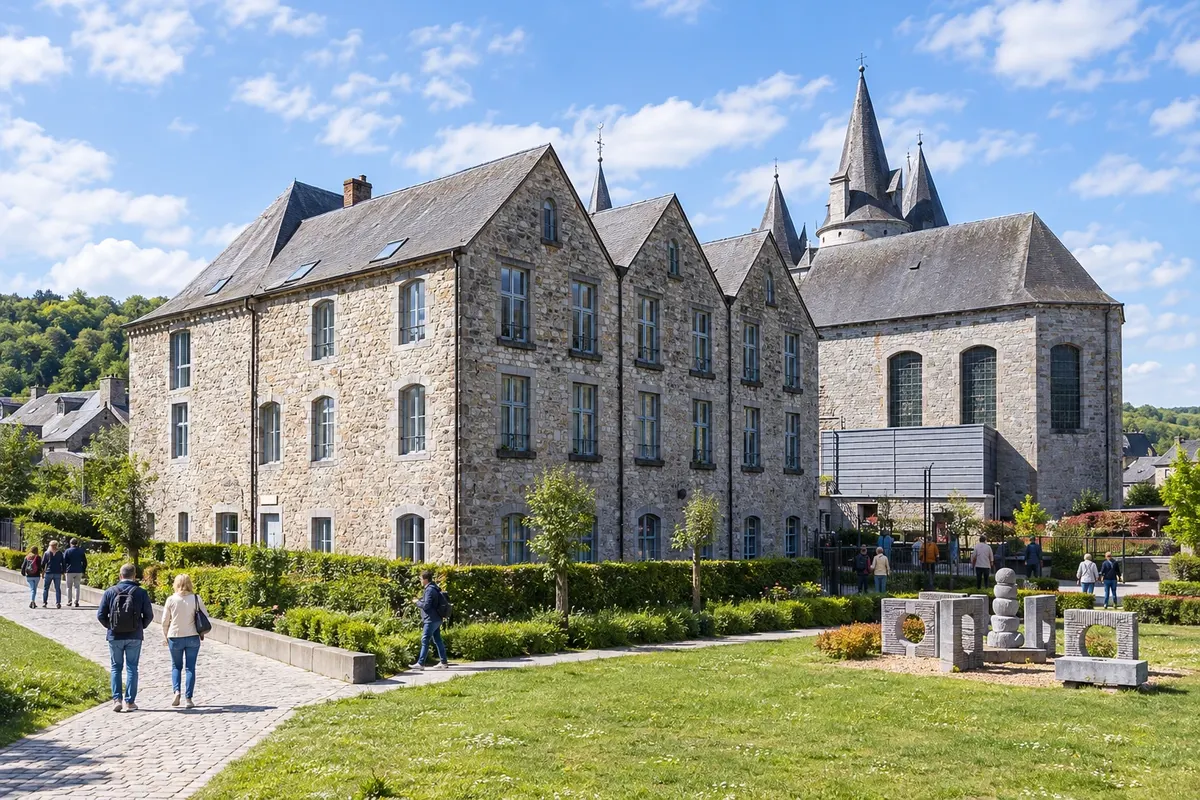
Durbuy is a small medieval town in the Ourthe valley, in the northern part of the Belgian province of Luxembourg, where French is spoken. It received its city charter in 1331 and likes to present itself as the smallest city in the world. The centre has cobbled streets, the Halle aux Blés, the counts' castle d'Ursel (viewed from the outside), the Parc des Topiaires and the Rocher de la Falize. The Wéris dolmens are about 10 km away.
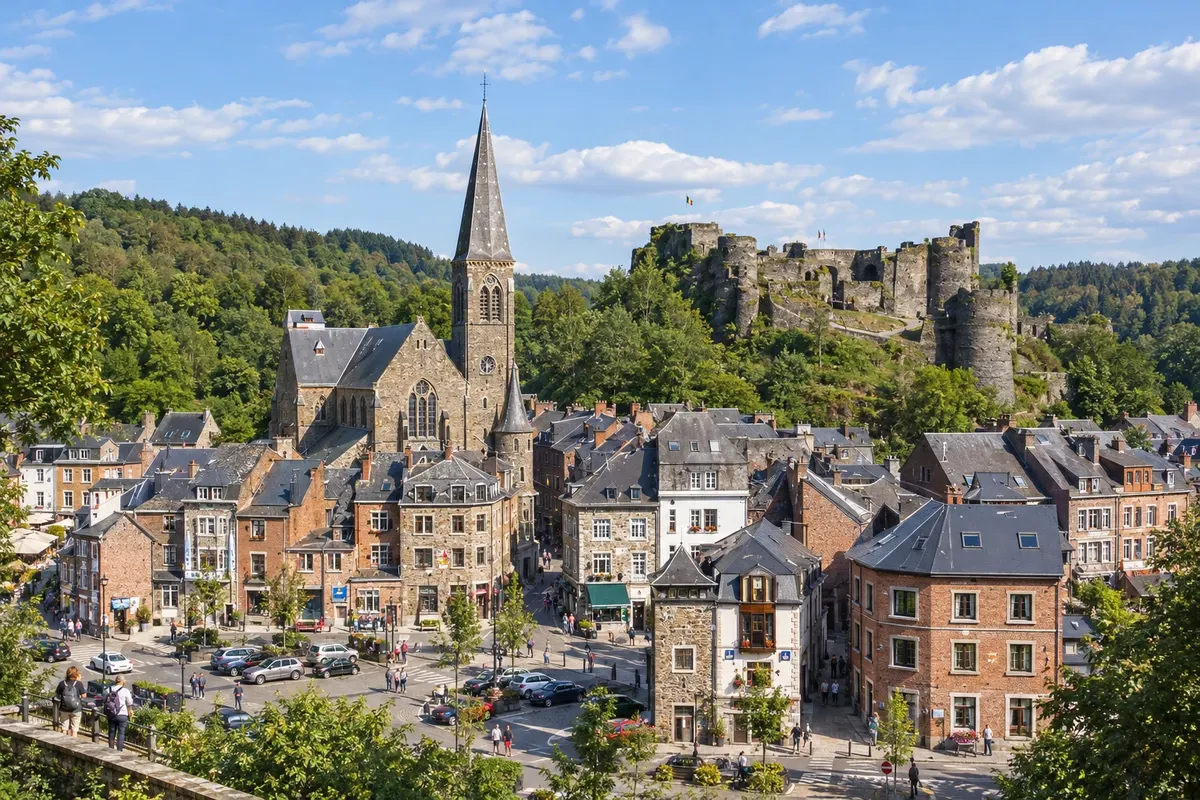
La Roche-en-Ardenne is a small town tucked into a bend of the Ourthe in the Belgian province of Luxembourg. French is spoken. It was marked by the Battle of the Ardennes: it was taken by the Germans in December 1944 and liberated in January 1945, with much of the town destroyed. Today it features the Château féodal, the Musée de la Bataille des Ardennes, the British Achilles tank and the Deister viewpoint.
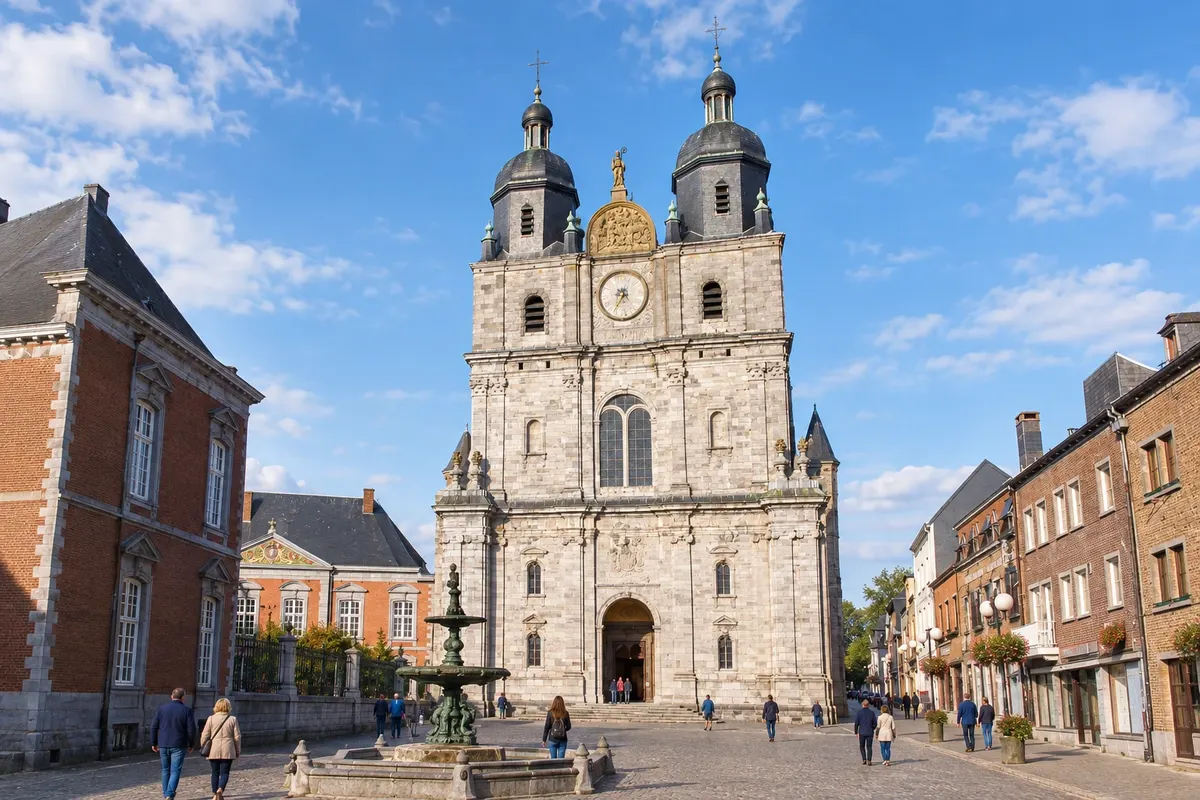
Town on the Ardennes plateau, at about 470 metres above sea level, surrounded by the large Saint-Hubert forest. It grew up around a Benedictine abbey that received, in the 9th century, the body of Saint Hubert, patron saint of hunters. The abbey's old church, now the Basilica of Saints Peter and Paul, has a 16th‑century Gothic nave and 60‑metre towers. Since 1991 the town has used the title European capital of hunting and nature.
Routes
It is the highest and coldest part of Belgium. From June to August the days are long and the rivers receive kayaks, especially the Ourthe and the Semois. September and October bring autumn colors, the hunting season and the rut, the roar of stags in heat, which is often heard in the forests at dusk. From December to February it is cold, the days are short and the high areas, like the Baraque de Fraiture, often have snow. The Foire de Libramont is at the end of July; the Saint-Hubert celebration is on November 3.
Brussels Airport, in Zaventem, is the most commonly used arrival point. Flights from Brazil usually involve a connection in another city. Check before booking. The airport of the city of Luxembourg, in the Grand Duchy, is close to Arlon. SNCB trains on the Bruxelas–Namur–Luxemburgo line stop at Libramont and Arlon; another line coming from Liège stops at Barvaux, near Durbuy, and at Melreux, from where buses depart for La Roche-en-Ardenne. Bouillon, Saint-Hubert and many of the villages depend on buses or a car. By car, the E411 descends from Bruxelas via Namur to Arlon, and the E25 links Liège to Bastogne and to the Grand Duchy.
Your questions
No. The province is part of Belgium, and its capital is Arlon. The Grand Duchy of Luxembourg is a neighboring country, with its capital in the city of Luxembourg. The two shared the same territory until 1839. The border today has no fixed controls, and many people live on one side and work on the other.
In practice, yes. Trains serve Arlon, Libramont and the Ourthe valley, near Durbuy and La Roche-en-Ardenne, but Bouillon, Saint-Hubert, Orval and the villages along the Semois are far from stations and have infrequent buses. With a car you can combine two or three towns in the same day. Roads are narrow and twisty; drive slowly.
Yes, partly. The ruins of the medieval abbey, the medicinal herb garden and the museum are open to the public. The monastery where the monks live is not open to visitors. Orval beer and cheese are sold in the abbey shop, and the brewery does not receive regular visits. Check opening days before going.
Two viewpoints are the best known. In Rochehaut, a terrace above the valley shows the village of Frahan inside a bend of the river. Near Botassart, the Tombeau du Géant viewpoint shows a meander shaped like a hill surrounded by water. Both are in the municipality of Bouillon. You can also descend the Semois by kayak in summer.
The Mardasson memorial, shaped like a star, honors the American soldiers who defended the besieged town in December 1944. Next to it, the Bastogne War Museum tells the story of the Battle of the Ardennes with exhibits and accounts from civilians and military personnel. In the central square, named after General McAuliffe, there is an American tank from the period.
It is the region's typical ham, salted, cured and smoked, with a protected designation in the European Union. It is usually served in thin slices as a starter, with bread and butter, or in dishes with potatoes. Butchers and village markets sell it vacuum-packed, convenient for travelers.
French, throughout the territory. In the Arlon region, near the border, some residents also speak Luxembourgish, the language of the neighboring country. In Bastogne and at the Second World War museums, service in English is common.