Brabante Flamengo

Province · Flandres

Brabante Flamengo

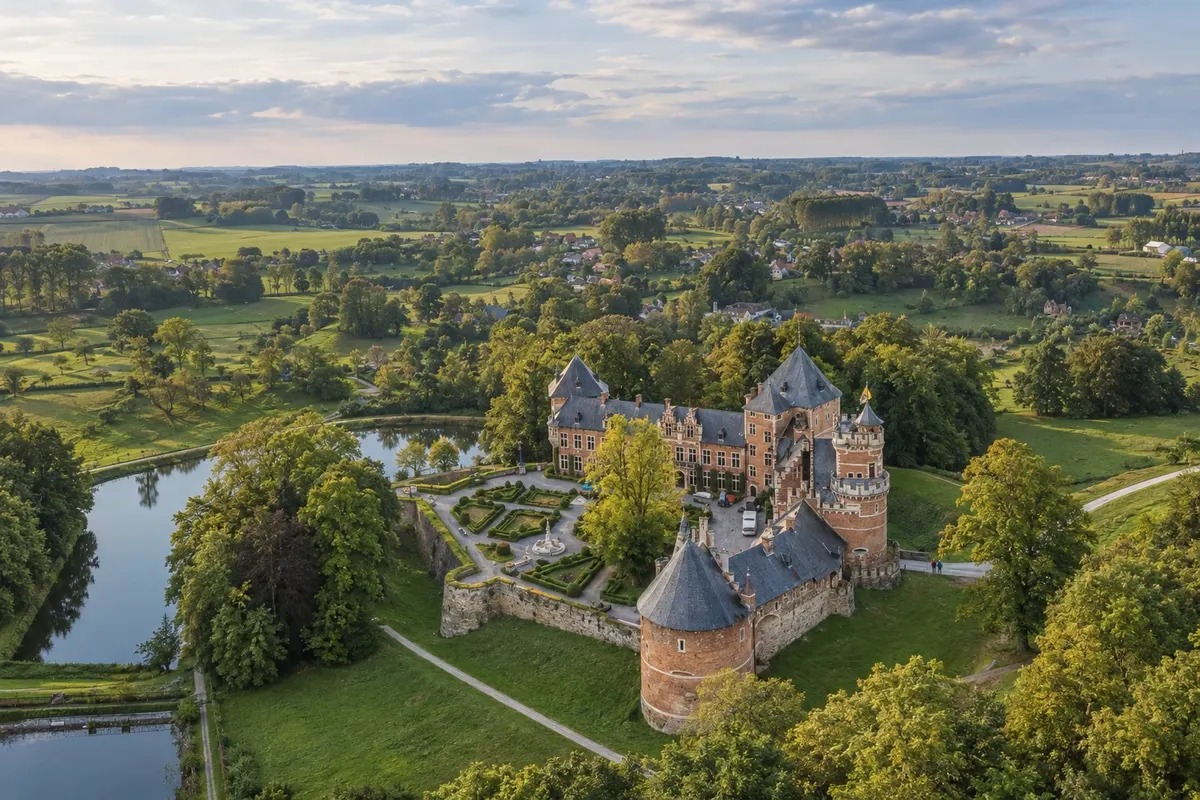
Around Brussels, Flemish Brabant has Lovaina and its university from 1425, the blue forest of Hallerbos, castles and the land of gueuze in the Pajottenland.

In the photo: Kasteel van Gaasbeek

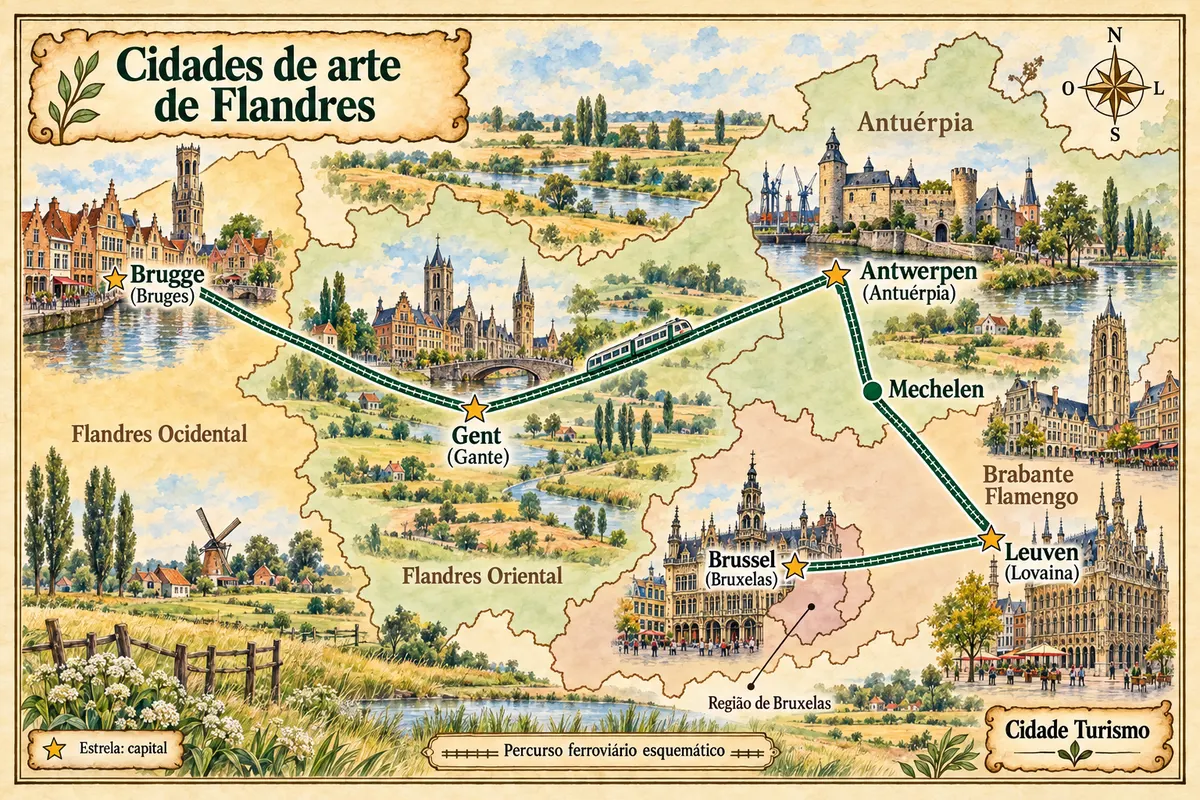
Illustrative images. The pictures in this guide are illustrations based on the real place, not photographs, and may differ from it.

Get it on Google Play

The province

Get to know Brabante Flamengo

Flemish Brabant is the Dutch-speaking province that surrounds almost the entire Brussels-Capital Region. It was created in 1995 with the division of the former province of Brabant, and has Lovaina (Leuven) as its capital. Brussels Airport, in Zaventem, lies within it, which makes the province the arrival gate for many travelers who do not even realize they have already left Brussels.

Lovaina is the main city. KU Leuven, founded in 1425, is the oldest university in the region that is now Belgium and sets the city's pace. The centre has the 15th-century Gothic town hall on the Grote Markt, the church of São Pedro, the Oude Markt full of bars and the Groot Begijnhof, a beguinage inscribed on the Unesco list. The Stella Artois brewery is also from there.

To the west of Brussels lies the Pajottenland, with hills and orchards, featuring the Kasteel van Gaasbeek and the valley of the river Zenne. It is the region of lambic and gueuze beer, with producers in Beersel and the surrounding villages, where there is also a medieval moated castle. To the south, near Halle, the Hallerbos is often covered in bluebells in spring.

To the east, the Hageland has drier hills, towns such as Diest and Aarschot, and vineyards with their own designation. Tienen is known for beet sugar. Closer to the capital, Tervuren has the AfricaMuseum and a large park, and Meise houses the Jardim Botânico. On the table are Flemish dishes like stoofvlees (meat stewed in beer), as well as white asparagus in spring.


Routes

Routes through Brabante Flamengo

When to go

It rains in every month, usually fine rain. In spring the Hallerbos bluebells usually bloom, generally from mid-April to early May; the date shifts with each year’s winter. Also in spring, from April to June, is the white asparagus season. From June to September the long days make it easier to explore the Pajottenland and the Hageland by bicycle, and the grape harvest in the Hageland is usually in September and October. From December to February the cold tightens and daylight ends in the middle of the afternoon; Lovaina is quieter during the university holidays in July and August.

Getting there

Brussels Airport (BRU) is in Zaventem, inside the province, and has direct trains to Lovaina, as well as services to central Brussels. For travelers coming from Brazil, this is the airport you arrive at. Charleroi airport is in Hainaut, much farther away. Leuven station is one of the busiest in the country, with frequent SNCB trains to Brussels, Antwerp, Liège and the airport. Halle, Vilvoorde, Tienen, Diest and Aarschot also have stations. By road, the E40 links Brussels to Lovaina and continues to Liège, the E314 goes from Lovaina to Limburgo and the R0 ring road circles Brussels through the province. Regional buses are run by De Lijn.

Your questions

Frequently asked questions about Brabante Flamengo

Are Lovaina and Louvain-la-Neuve the same city?

No. Lovaina (Leuven) is in Flemish Brabant, is Dutch-speaking and has KU Leuven, founded in 1425. Louvain-la-Neuve is a new town, built in the 1970s in Walloon Brabant for the francophone university that split from the old one. Check the name on the train ticket.

How much time should I allow for Lovaina when coming from Brussels?

One day. SNCB trains between Brussels and Lovaina are frequent, and Leuven station is a short walk from the Grote Markt. That time is usually enough for the centre, the Groot Begijnhof and the Oude Markt; those looking for the Oude Markt nightlife can spend the night there.

When do the Hallerbos jacintos bloom?

Generally between mid-April and early May, but the date varies with the winter. On bloom weekends the forest attracts many visitors and car access usually has special rules. Stay on the marked trails, because stepping on the flowers destroys them.

Will I need to speak Dutch?

Not necessarily. The province's official language is Dutch, Flanders' language. English is generally well understood, especially in Lovaina. In some municipalities near Brussels there are many French-speaking residents, but signs and public services are in Dutch.

Where to taste gueuze and lambic outside Brussels?

In the Pajottenland and the valley of the Zenne, southwest of Brussels, where several traditional producers are located, some with tasting rooms. Beersel and the nearby villages are the starting point. Check each brewery’s visiting days before you go.

Can you tour the Pajottenland and the Hageland without a car?

Yes, but with more planning. De Lijn buses reach Gaasbeek, Beersel and the villages of the Hageland, with longer intervals than city services. Many people make these trips by bicycle, using Flanders’ signposted cycle routes. Lovaina, Halle and Tervuren already have train or tram connections from Brussels.

Bruxelas Antuérpia Limburgo Flandres Oriental Flandres Ocidental Brabante Flamengo Brabante Valão Hainaut Liège Luxemburgo Namur Bruxelas Bruxelas
Tap a province to see its destinations. Contornos: © NGI-IGN, AdminVector, CC BY 4.0. Adaptação do Cidade Turismo.
Back