

 Brazil
 Argentina
 Chile
Chile Colombia
 Peru
Peru Uruguay
 Germany
 Spain
Spain France
 Greece
 the Netherlands
 Ireland
 Italy
Italy Portugal
 the United Kingdom
 Switzerland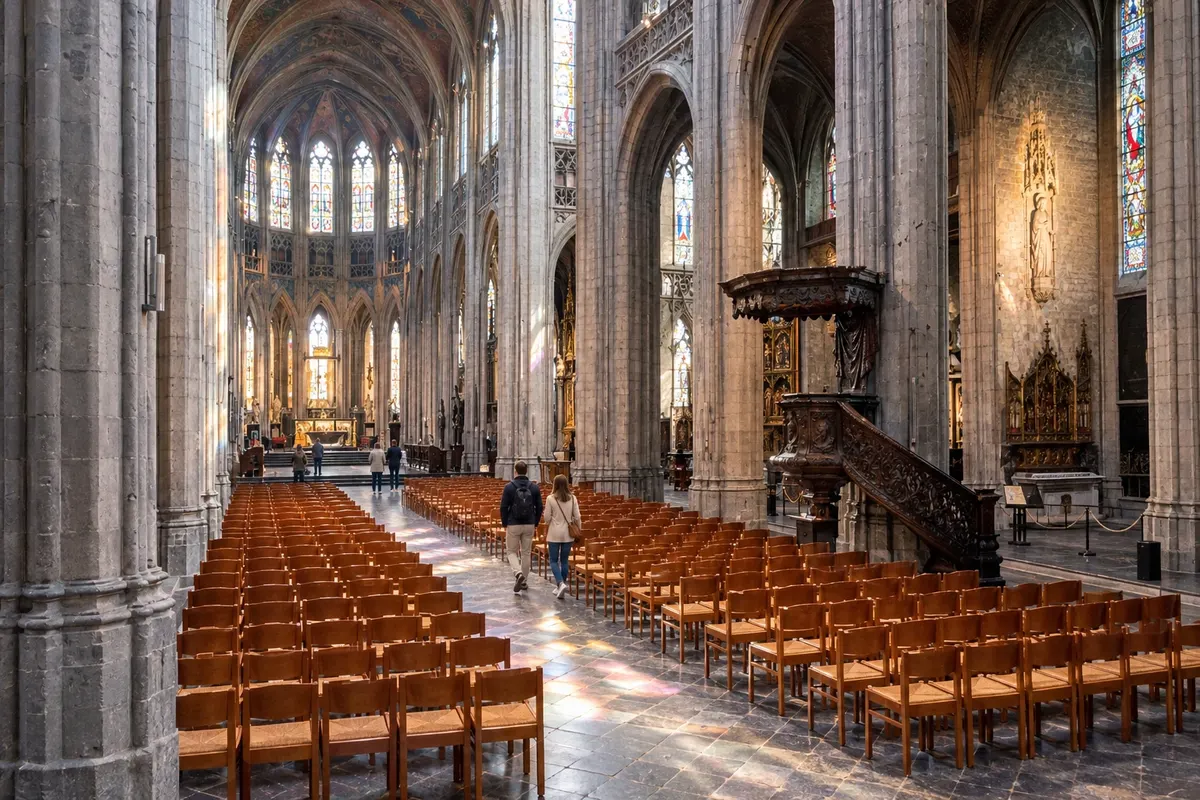
2 cities
Province · Valônia
From the Doudou of Mons to the carnival of Binche, from the towers of Tournai to the mining sites of the Borinage and Charleroi: Hainaut is the Wallonia of festivals, belfries and coal.
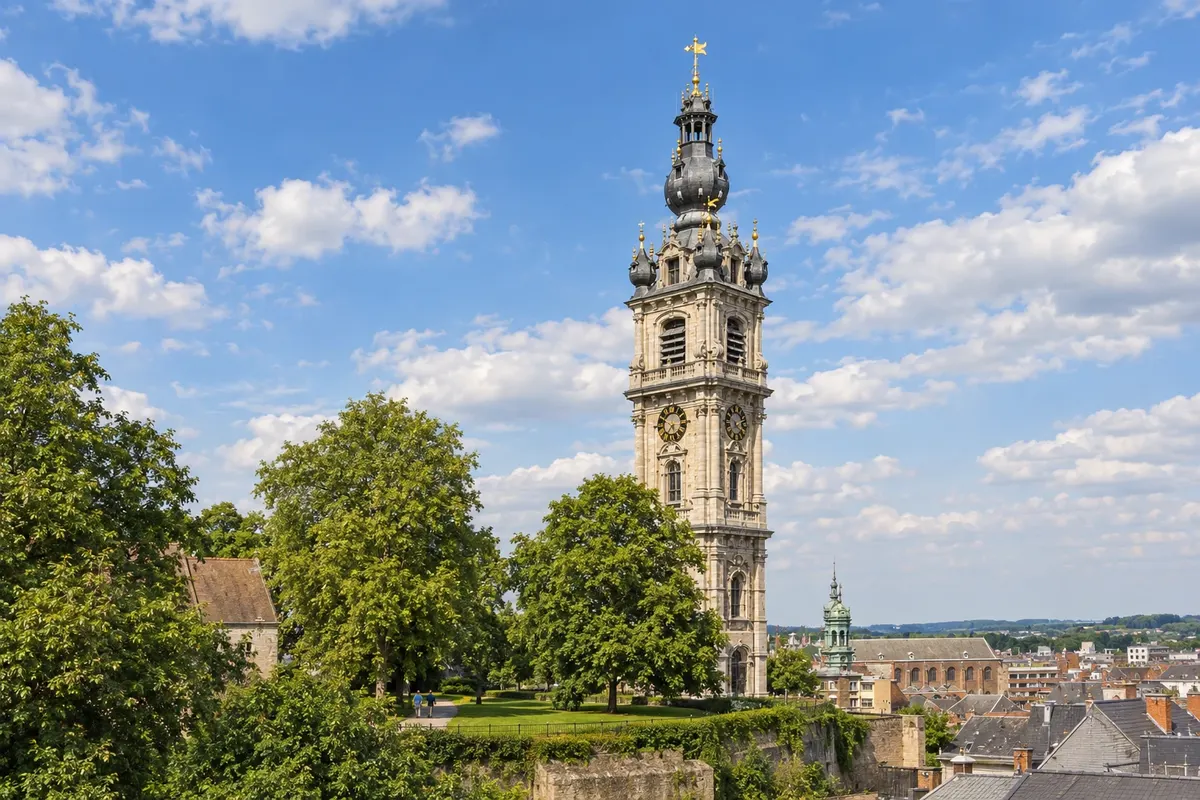
In the photo: Belfry of Mons
Illustrative images. The pictures in this guide are illustrations based on the real place, not photographs, and may differ from it.

The province
Hainaut is the province in western Wallonia, the part of Belgium where French is spoken, on the border with France. The capital is Mons, and the largest city is Charleroi. To the west, around Tournai, lies the Wallonie picarde, linked to Lille by the border; to the east, the lands along the Sambre extend to Thuin and Chimay. Comines-Warneton, a piece of the province, is separated from the rest, tucked between France and Flanders.
No other Belgian province has as many belfries on the UNESCO list: Mons, Tournai, Binche, Thuin and Charleroi. Tournai, one of the country’s oldest cities, also has the five-towered cathedral, another World Heritage site. Near Mons are the Neolithic flint mines of Spiennes, dug about 6,000 years ago.
Hainaut was one of the cradles of the Industrial Revolution on the continent. Coal from the Borinage, around Mons, and from the Charleroi area powered factories and brought immigrants from across Europe. Three of the four major Walloon mining sites inscribed by UNESCO are here: Grand-Hornu, Bois-du-Luc and Bois du Cazier, in Marcinelle. It was in the Borinage that Vincent van Gogh decided to become a painter, between 1879 and 1880.
It is also the province of festivals. The carnival of Binche, with the masked Gilles and ostrich-feather hats, is a UNESCO Intangible Cultural Heritage since 2003 and usually reaches its high point on Fat Tuesday, in February or March. The Doudou of Mons, between late May and mid-June, and the Ducasse of Ath, with its giants, at the end of August, are also on UNESCO’s list.
On the table, the province offers Chimay Trappist beer, brewed by the monks of the Scourmont abbey, and several abbey breweries and small craft breweries. In Brugelette, between Mons and Ath, the Pairi Daiza zoo occupies the grounds of a former Cistercian abbey.
Destinations
Cities
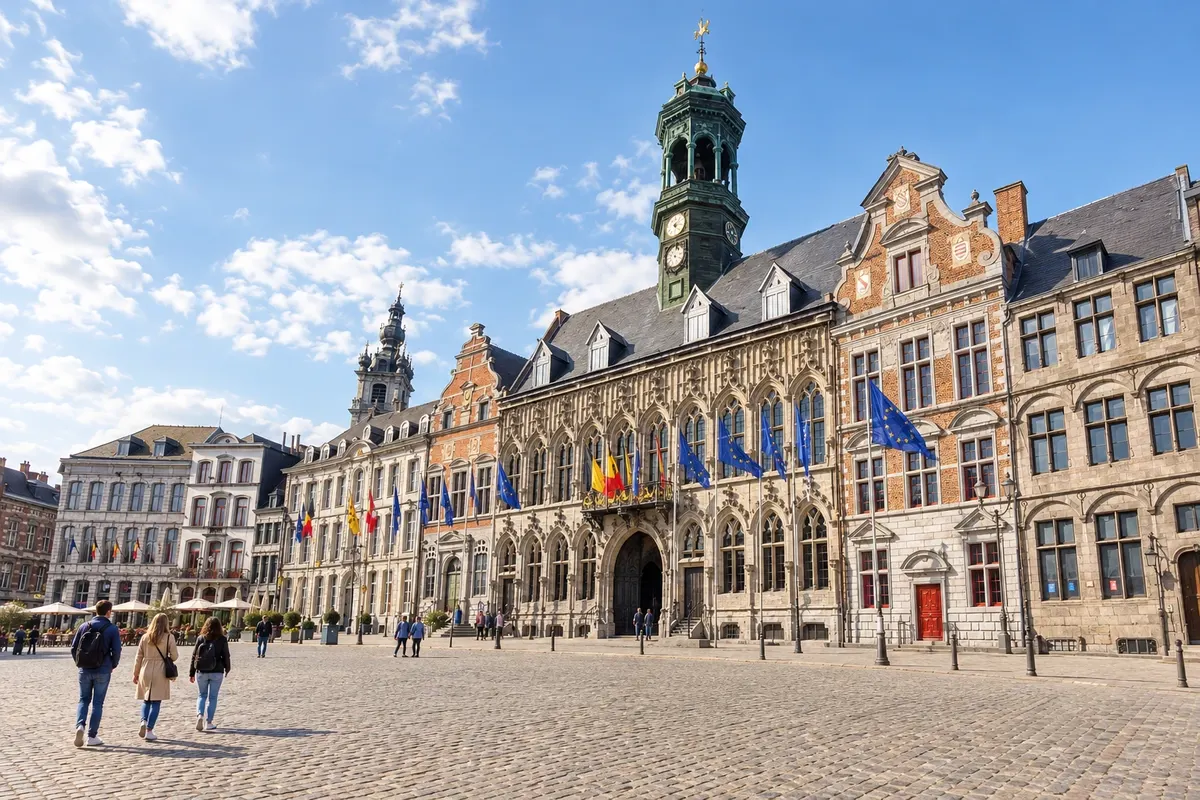
Mons, Bergen in Flemish, is the capital of Hainaut and is French-speaking. The center climbs the hill around the Grand-Place, the Hôtel de Ville with the lucky monkey and the Beffroi de Mons, a UNESCO World Heritage site, up to the Collégiale Sainte-Waudru, the starting point of the Doudou. Museums include the Mundaneum, the BAM and the Mons Memorial Museum. In the surroundings are the Maison Van Gogh in Cuesmes, the flint mines of Spiennes, the Grand-Hornu and, in Brugelette, the Pairi Daiza zoo.
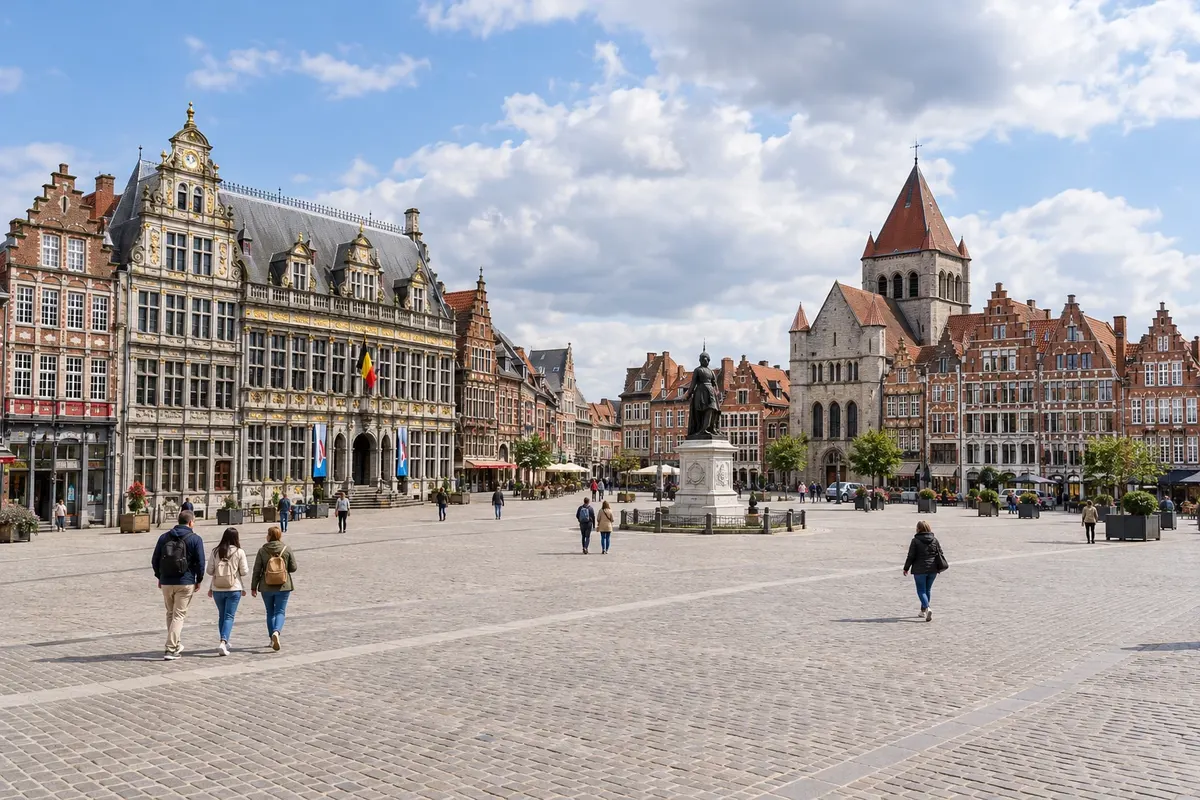
Tournai, Doornik in Flemish, is one of the oldest cities in Belgium; it was the capital of the Franks and French is spoken there. The centre revolves around the Cathédrale Notre-Dame, with five towers, and the Beffroi de Tournai, both UNESCO World Heritage sites, and the triangular Grand-Place. On the banks of the Escalda is the Pont des Trous, a medieval gate over the river. The museums are the Musée des Beaux-Arts, designed by Victor Horta, and the TAMAT, dedicated to tapestry.
The climate is temperate and humid, with seasons reversed compared to Brazil. The European summer, from June to August, has longer afternoons and is the time for visits to the mining sites and parks. The festival calendar affects timing: the carnival of Binche usually falls in February or March, the Doudou of Mons between late May and mid-June, and the Ducasse of Ath at the end of August, with towns often crowded. From November to March it is cold and gets dark early, but museums and churches remain open.
The most used gateway is Brussels Airport, in Zaventem. Connections from Brazil are usually via another city. Check before buying. Brussels South Charleroi Airport, inside the province, mainly handles low-cost European flights, with buses to Charleroi station. From Brussels Airport and from Brussels city, SNCB trains reach Mons, Tournai and Charleroi in about an hour, and Tournai also has trains to Lille in France. By car, the E19 links Brussels to Mons and continues to Paris, and the E42 crosses the province from Tournai to Charleroi.
Your questions
Mons, because it sits in the middle of the province and has train connections to Brussels, Tournai and Charleroi. From there you can do day trips to Tournai, Grand-Hornu, Pairi Daiza and, in carnival season, Binche.
It is the carnival of the town of Binche, east of Mons, a UNESCO Intangible Cultural Heritage since 2003. The high point is usually Fat Tuesday, in February or March, when the Gilles parade wearing wax masks, embroidered costumes and ostrich-feather hats and throw oranges to the crowd.
For the towns, yes: Mons, Tournai, Charleroi and Binche have train stations in or near the center. A car is helpful for more remote sites such as Spiennes, Grand-Hornu and the abbeys in the south of the province, which are served by TEC buses with less frequent schedules.
French. In some festivals and songs Picard and Walloon, regional dialects, still appear. In Flemish, the Dutch spoken in Belgium, the province is called Henegouwen, Mons is Bergen and Tournai is Doornik.
The belfries of Mons, Tournai, Binche, Thuin and Charleroi; the cathedral of Tournai; the Neolithic flint mines of Spiennes; and the mining sites of Grand-Hornu, Bois-du-Luc and Bois du Cazier. Among the festivals, the carnival of Binche, the Doudou of Mons and the Ducasse of Ath.
In general, not as a direct arrival point: it mainly handles low-cost flights within Europe. It can be useful if you connect through another European city. From the airport, buses run to Charleroi station, with trains to Mons and Brussels.