Mons and Tournai

Hainaut · Belgium

Mons and Tournai

Two towns in Hainaut with a UNESCO-listed beffroi: Mons, of the Doudou, of Van Gogh and of the Grand-Hornu, and Tournai, of the cathedral's five towers and the Pont des Trous over the Escalda.

Valônia

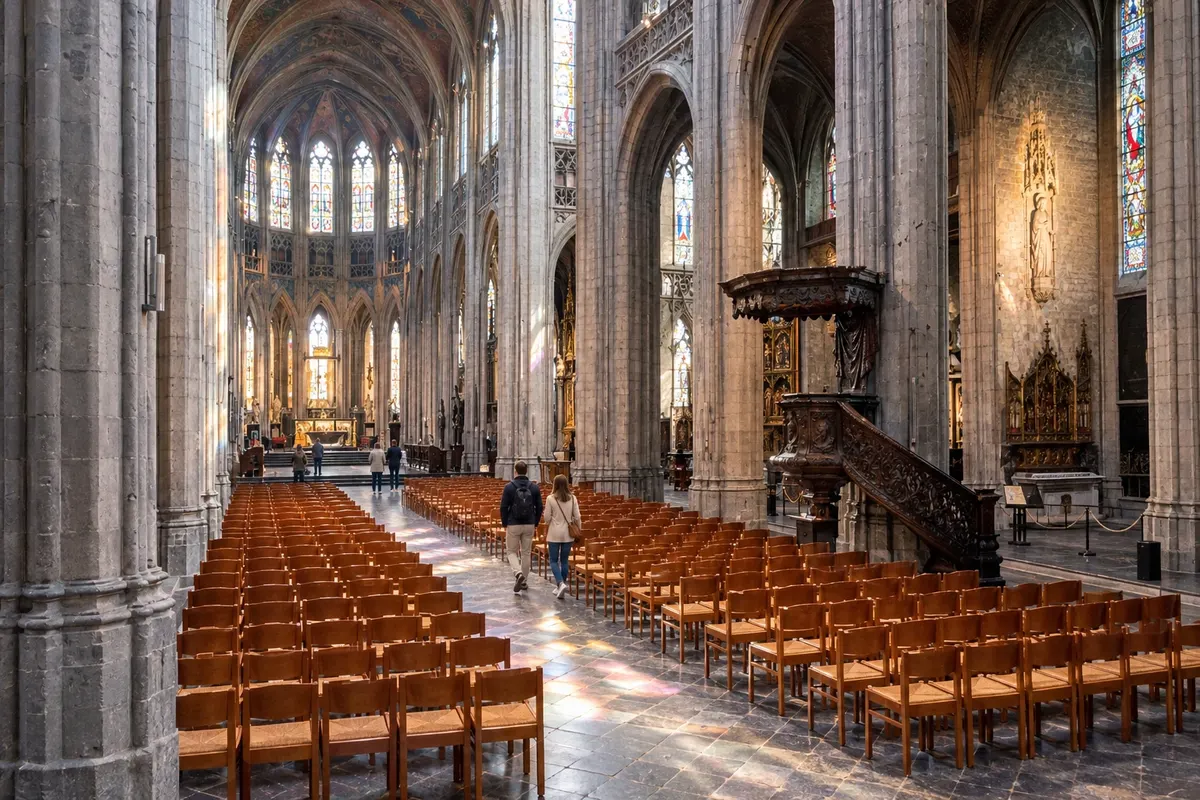
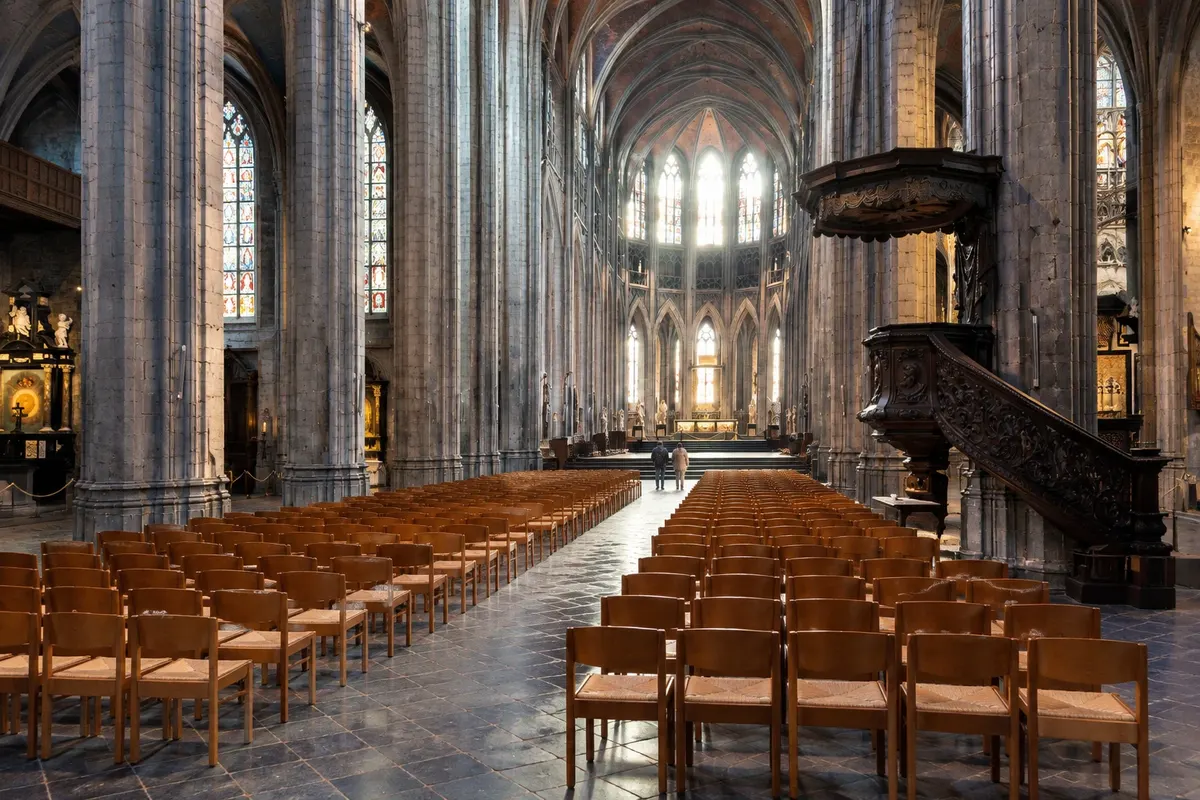
In the photo: Collégiale Sainte-Waudru, Mons

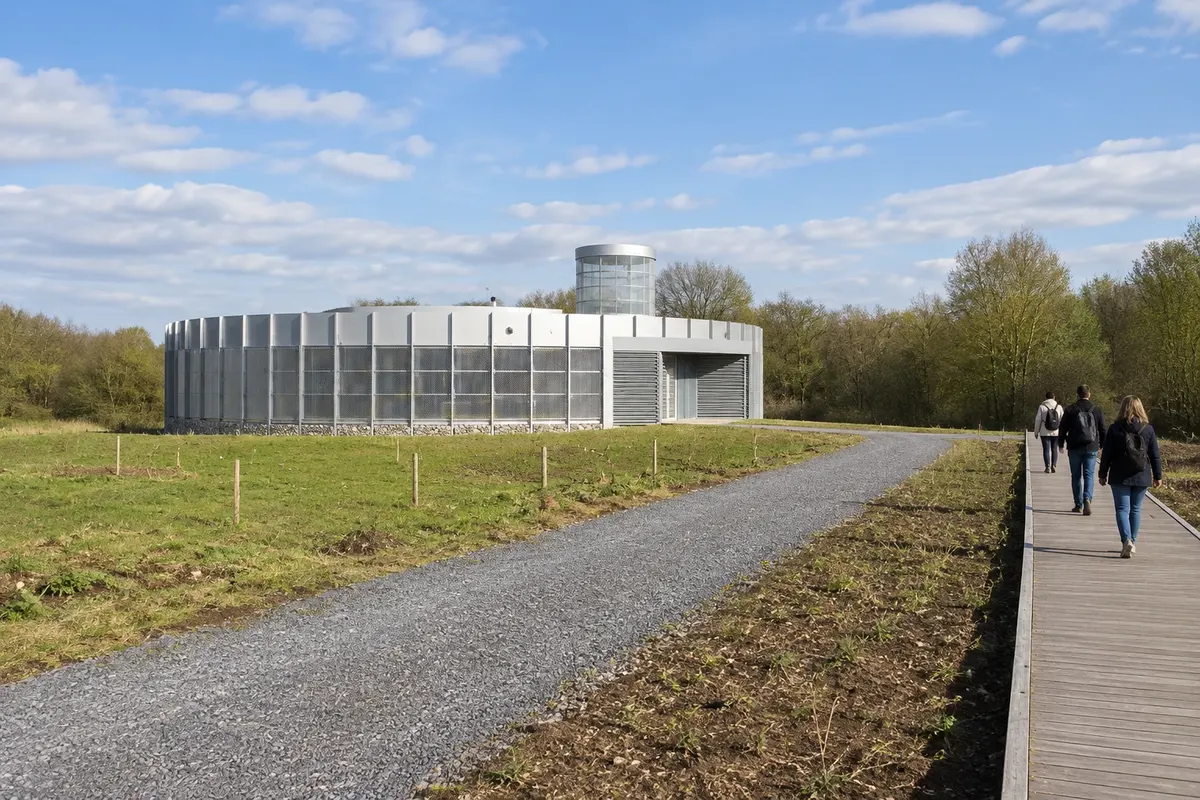
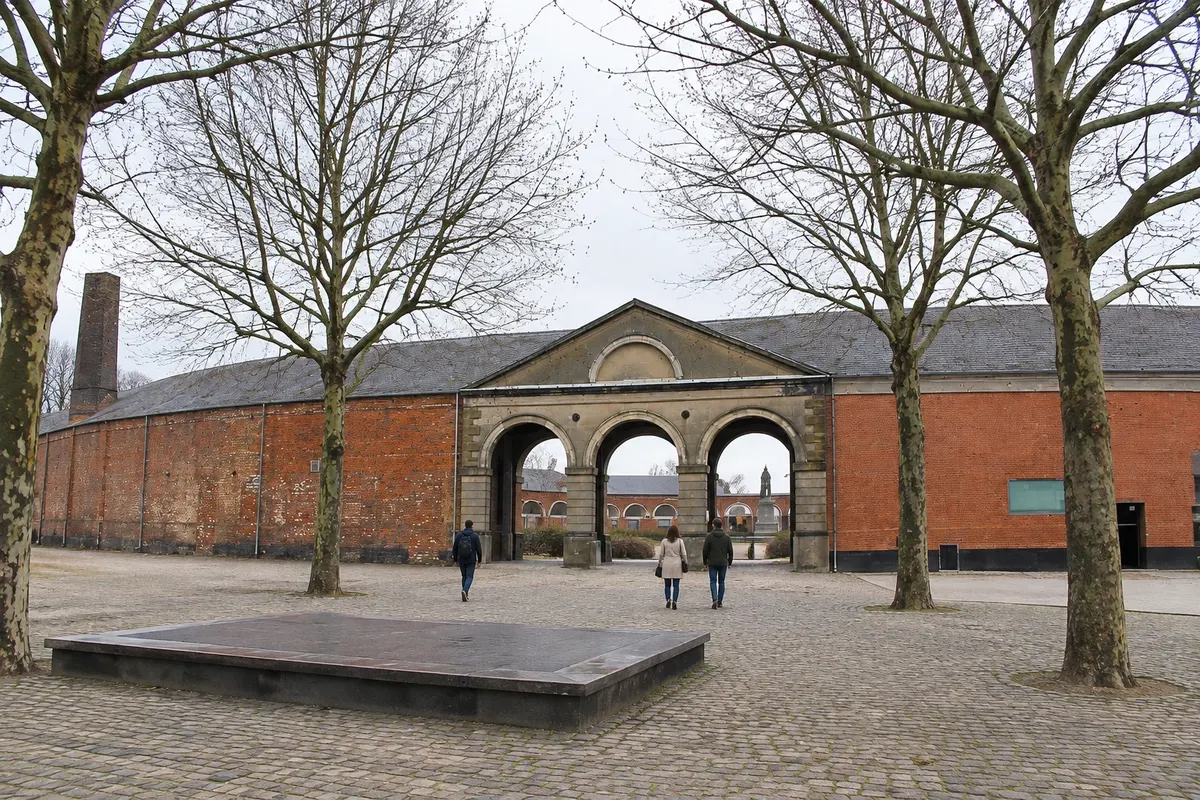
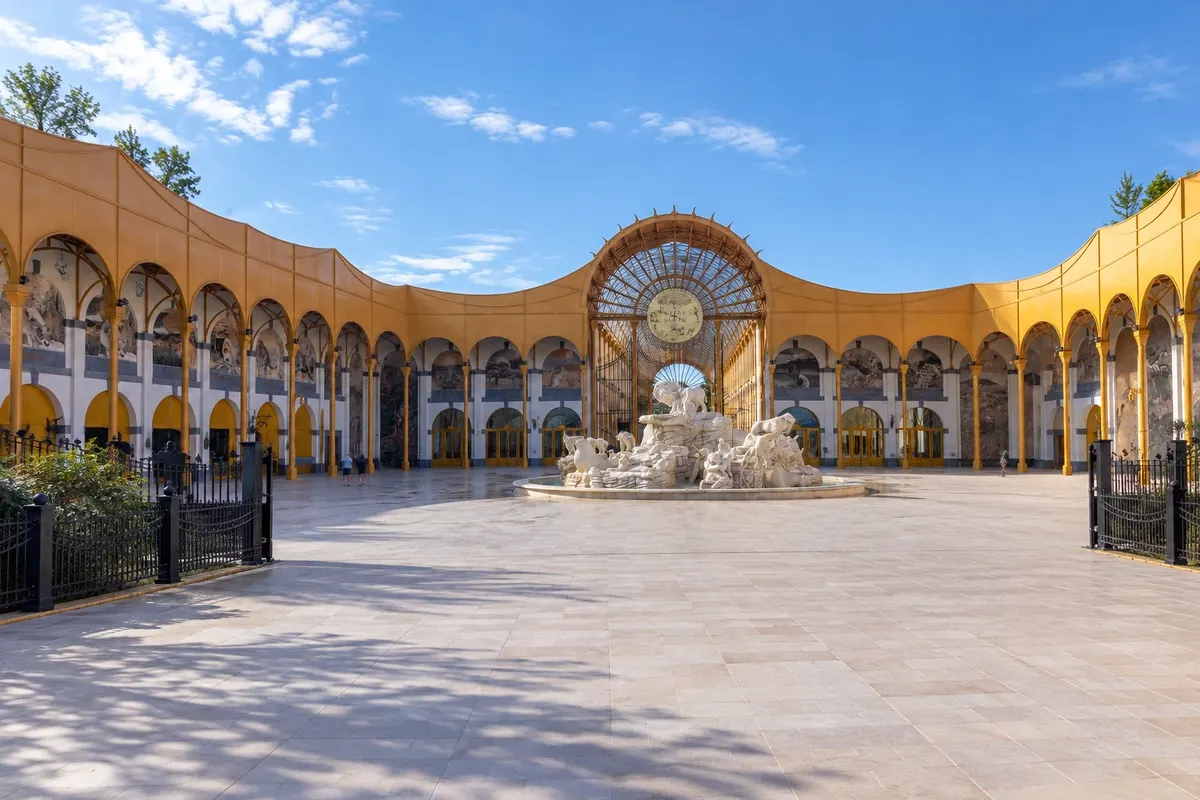
Illustrative images. The pictures in this guide are illustrations based on the real place, not photographs, and may differ from it.

Get it on Google Play Send your photos

Get to know the place

A region to enjoy
at your own pace.

Mons and Tournai are in Hainaut, the province in the west of Wallonia, the part of Belgium where French is spoken. Both are about an hour by train from Brussels and roughly 50 km from each other, which makes it possible to see both on the same trip, by train or by car.

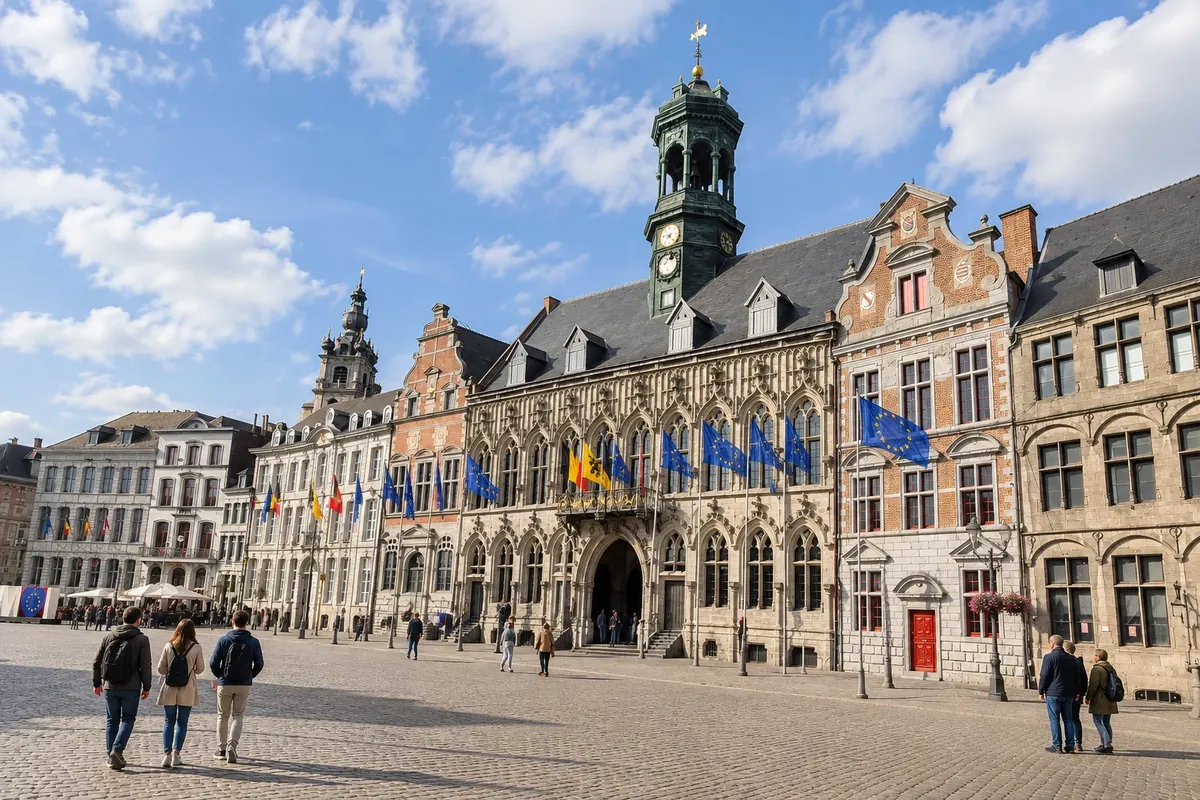
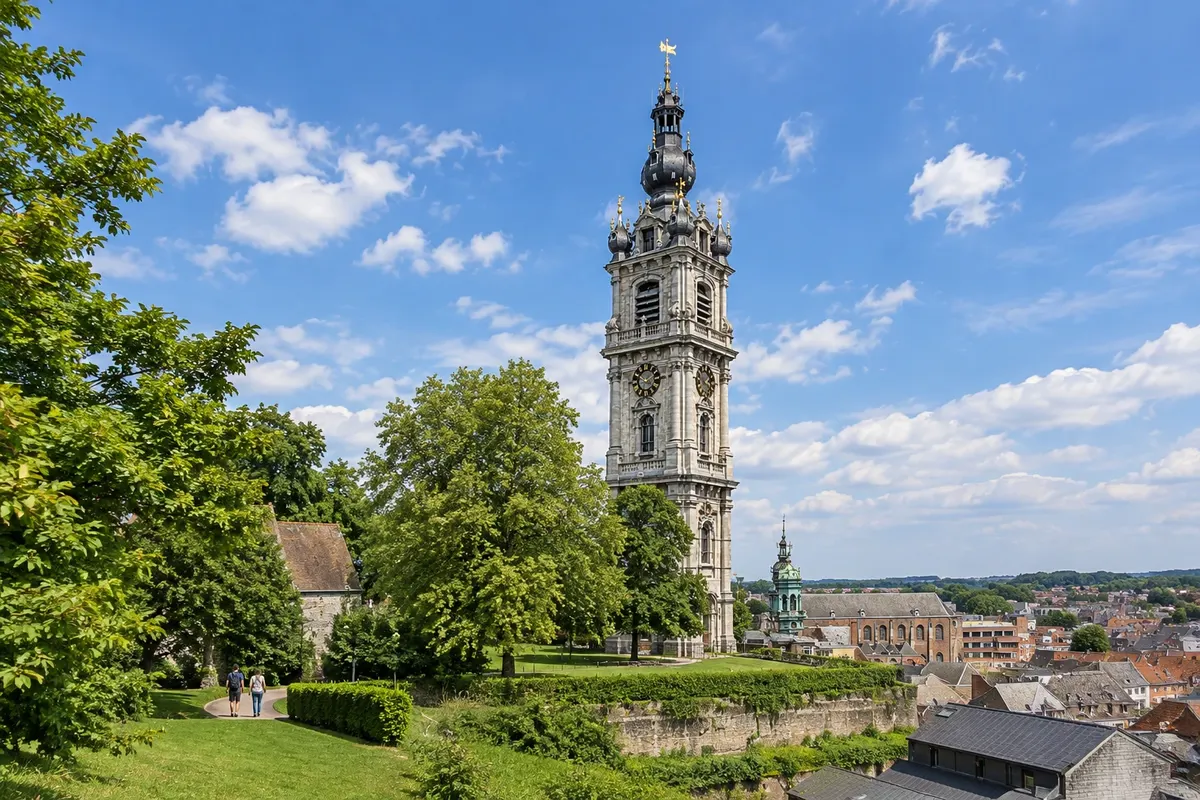
Mons, the provincial capital, has a Grand-Place surrounded by cafés, the only Baroque beffroi in Belgium, and the Collégiale Sainte-Waudru, from which the Car d'Or procession departs each year during the Doudou festival. Around the town are traces of the Borinage, the old coal basin: the house where Vincent van Gogh lived in Cuesmes, the mining complex of the Grand-Hornu and, much earlier, the flint mines of Spiennes, dug around 6,000 years ago.

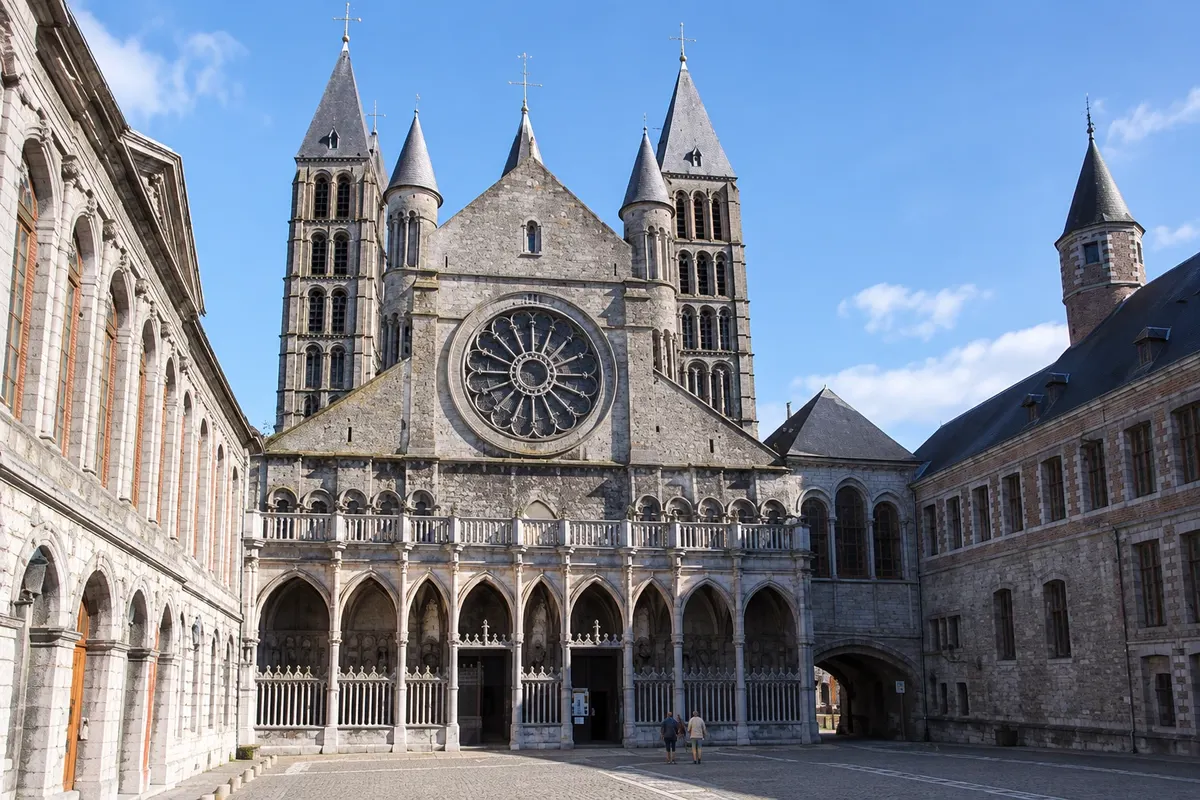
Tournai is one of the oldest cities in the country. It was the capital of the Franks in the 5th century, and Clovis was born there. The cathedral of Notre-Dame, with five towers in a row, combines a Romanesque nave and a Gothic choir. Next to it, the beffroi from the late 12th century is the oldest in Belgium. On the banks of the Escalda, the Pont des Trous is a fortified 13th-century gate that still crosses the river.

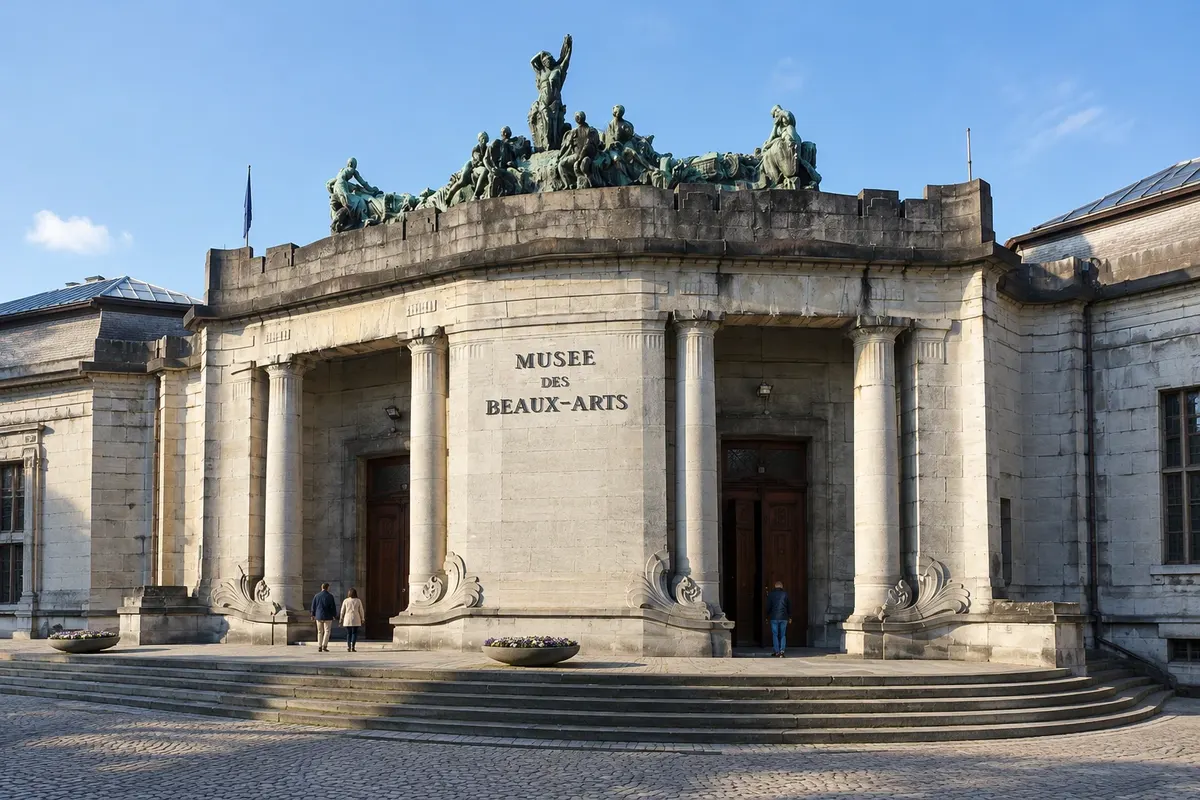
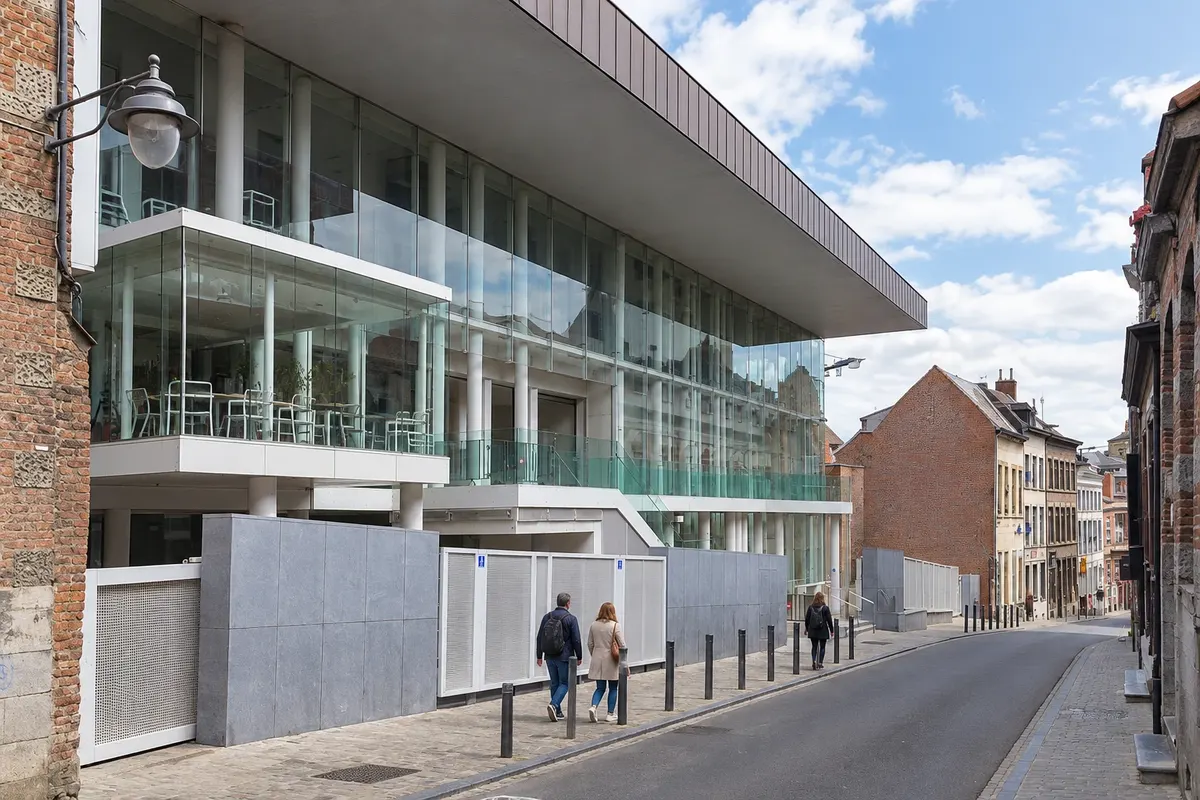
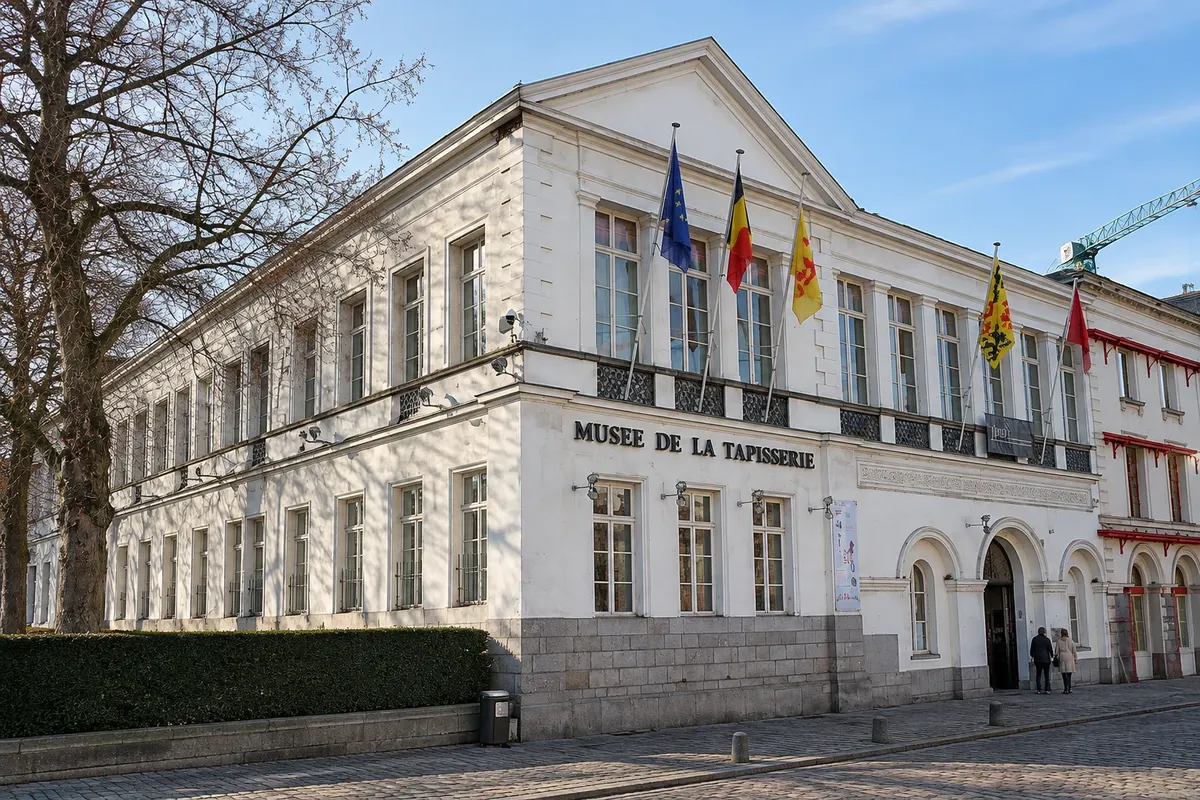
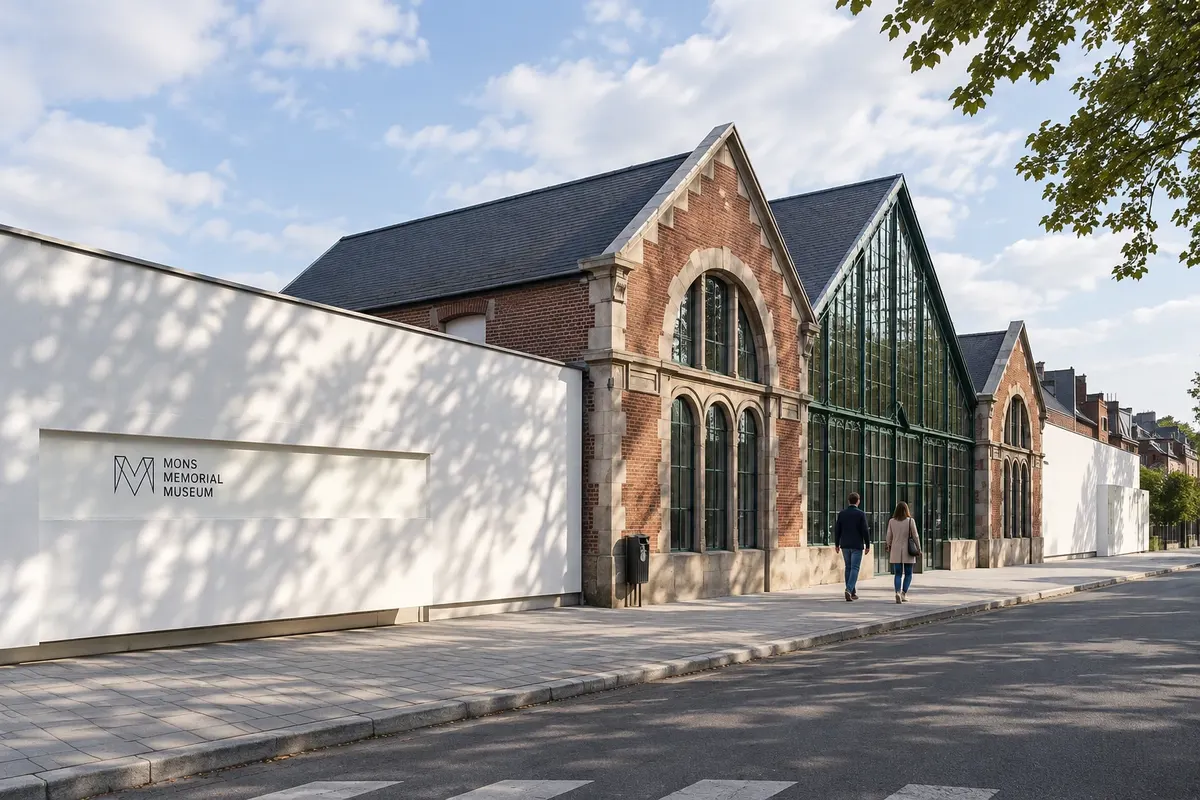
Museums also carry weight in a visit: the Mundaneum, the paper archive that tried to classify all the world's knowledge, the BAM and the Mons Memorial Museum in Mons; the Musée des Beaux-Arts designed by Victor Horta and the tapestry museum in Tournai. Half an hour from Mons, the Pairi Daiza zoo occupies the grounds of a former Cistercian abbey in Brugelette.

This destination brings together 2 cities: Mons, Tournai.

Share: WhatsApp
Traveler, share your experiences through photos Up to 5 photos of each place you visited.

One destination, many paths

The cities on this trip

Start with one city or combine several in your itinerary.

Where Mons and Tournai is
MonsTournai

Contornos: © NGI-IGN, AdminVector, CC BY 4.0. Adaptação do Cidade Turismo.

How to get there: Mons and Tournai

✈ Brussels Airport (BRU), in Zaventem · 76 km to Mons

✈ Brussels South Charleroi Airport (CRL), in Charleroi · 45 km to Mons

The usual gateway is Brussels Airport, in Zaventem; Charleroi airport is about 45 km from Mons. Check before buying. From Brussels, SNCB trains run to Mons and to Tournai in about an hour, and there are trains between the two towns.

Suggested arrival point: Mons

The local experience

Things to do in Mons and Tournai

Cathédrale Notre-Dame de Tournai
Tournai · Hainaut · Cathedral

Cathédrale Notre-Dame de Tournai

Cathedral with five towers in a row, a 12th-century Romanesque nave and a 13th-century Gothic choir, a UNESCO World Heritage site since 2000, with a Renaissance jubé by Cornelis Floris.

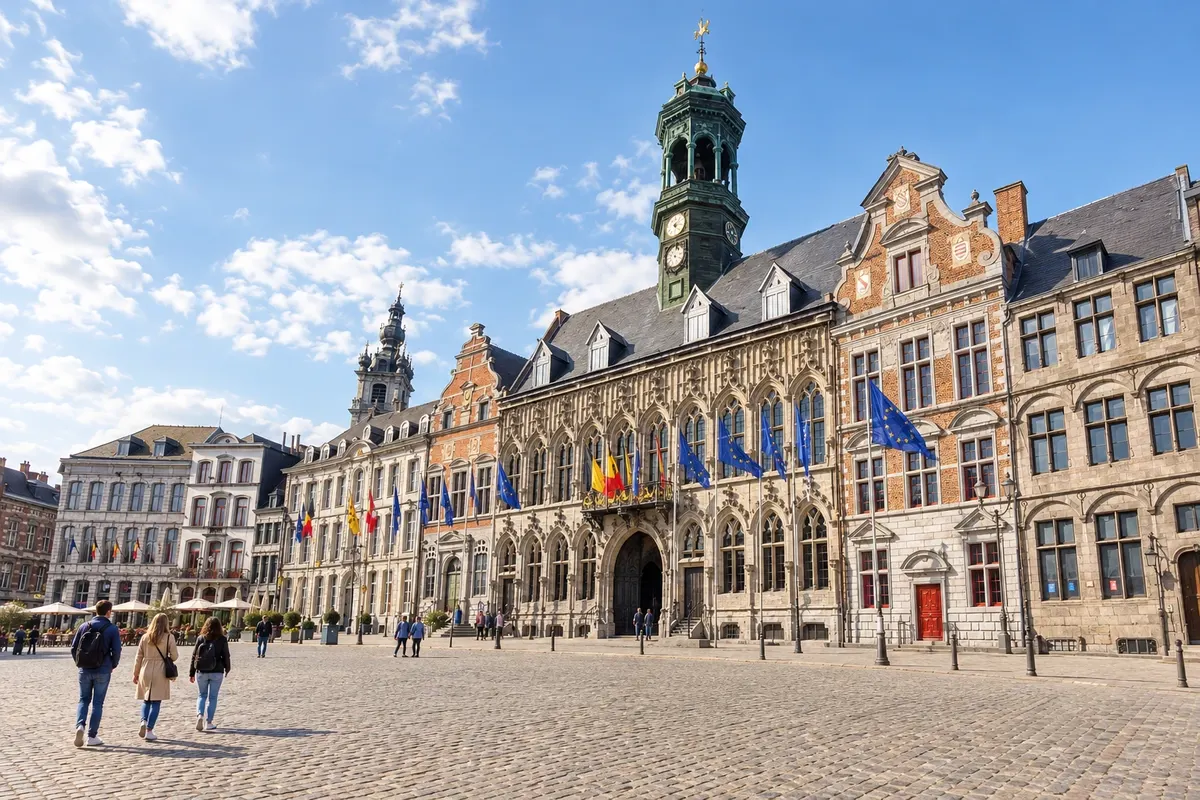
Grand-Place de Mons
Mons · Hainaut · Square

Grand-Place de Mons

Mons's main square, featuring the 15th-century Gothic Hôtel de Ville, the lucky monkey on the façade and, beyond, the Jardin du Mayeur and the Musée du Doudou. It is the stage for the Lumeçon combat.

Beffroi de Mons
Mons · Hainaut · Tower

Beffroi de Mons

The only Baroque beffroi tower in Belgium, at 87 metres with 49 bells, sitting atop the Mons hill. A UNESCO World Heritage site, it has an interpretation centre and a panoramic lift to the viewing platform.

Beffroi de Tournai
Tournai · Hainaut · Tower

Beffroi de Tournai

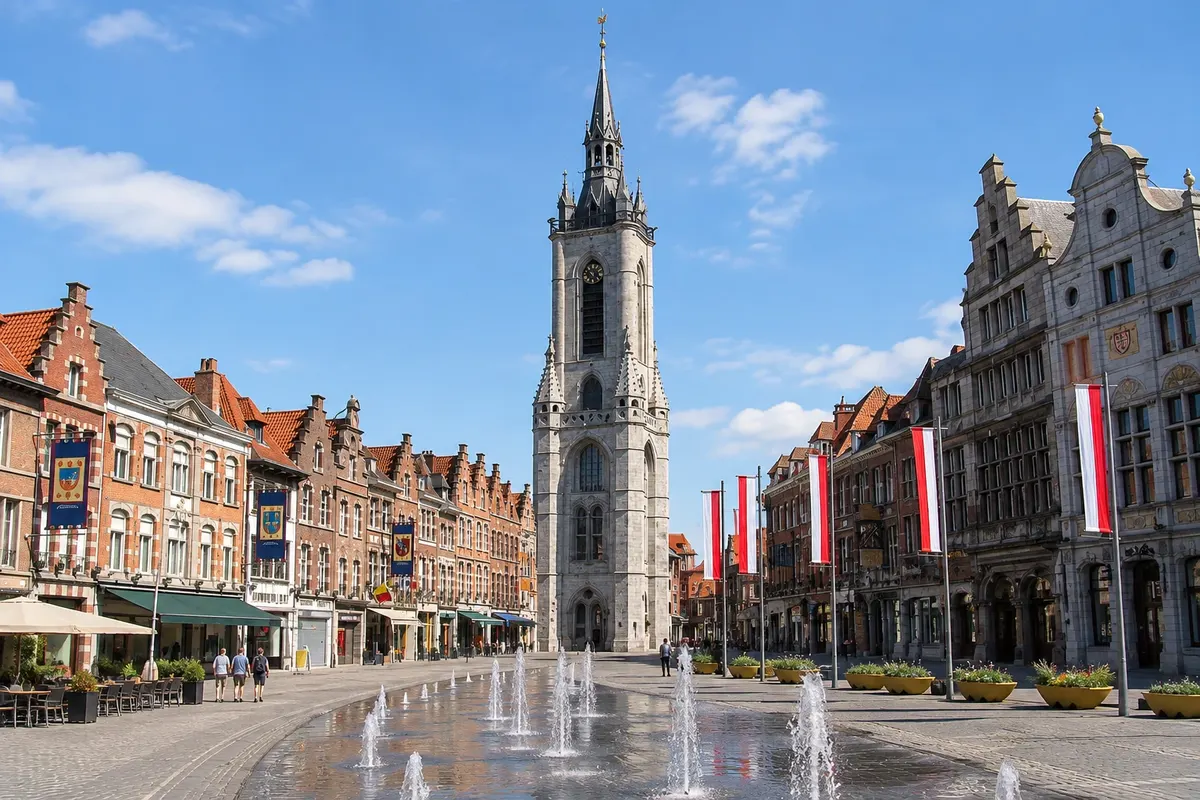
The oldest beffroi in Belgium, dating from the late 12th century, with a height of 72 metres and 257 steps. A UNESCO World Heritage site, it offers views of the cathedral's five towers.

See 12 more places in Mons and Tournai
Collégiale Sainte-Waudru
Mons · Hainaut · Church

Collégiale Sainte-Waudru

Gothic church from the 15th to the 17th centuries, dedicated to Mons' patron saint. It houses the alabaster sculptures by Jacques Du Brœucq, the relics of Saint Waudru and the Car d'Or, the gilded carriage used in the Doudou procession.

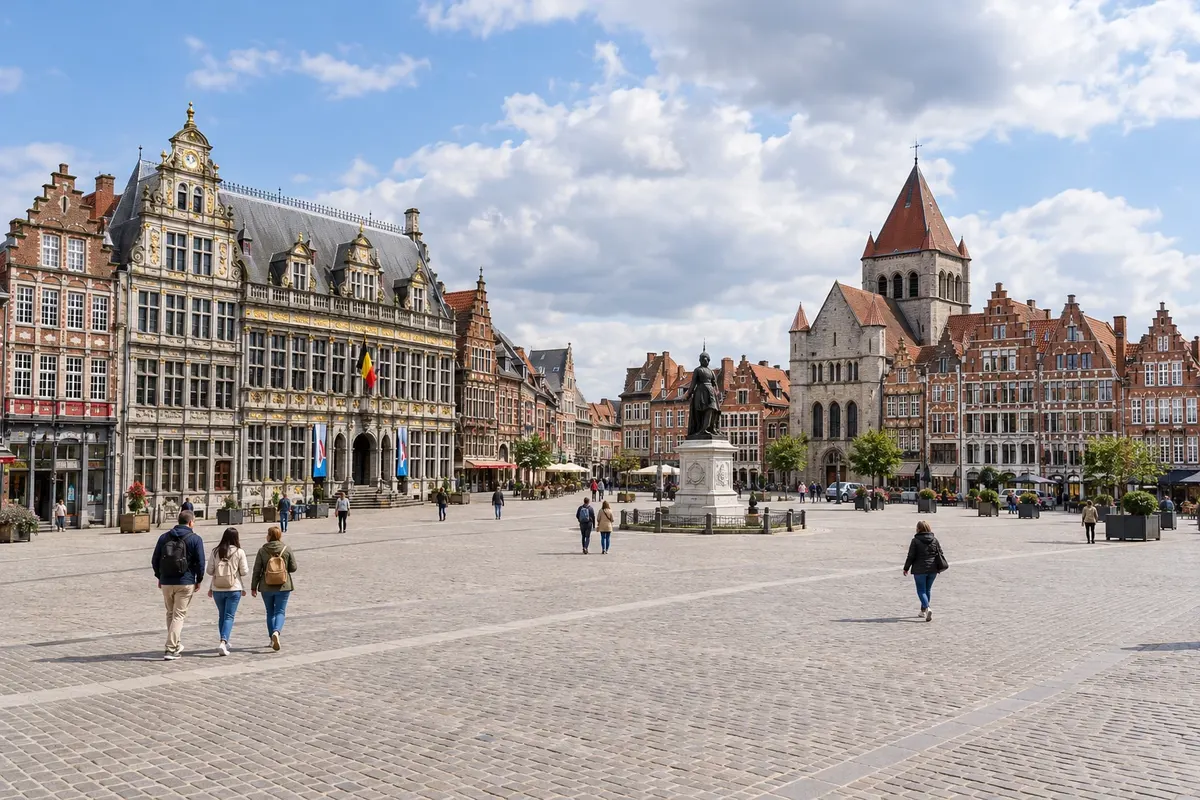
Grand-Place de Tournai
Tournai · Hainaut · Square

Grand-Place de Tournai

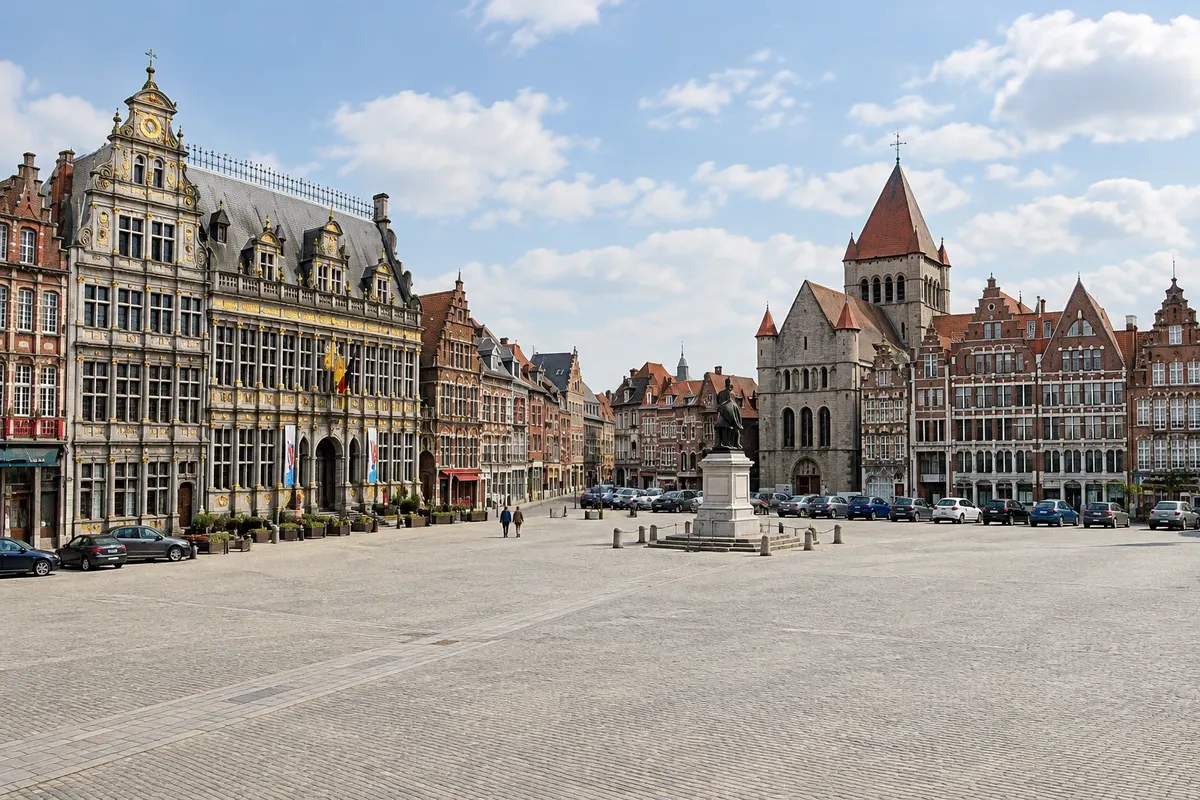
Tournai’s main square, triangular in shape, with the Renaissance Halle aux Draps, the church of Saint-Quentin and the statue of Christine de Lalaing. It lies between the beffroi and the museums.

Maison Van Gogh
Mons · Hainaut · Museum

Maison Van Gogh

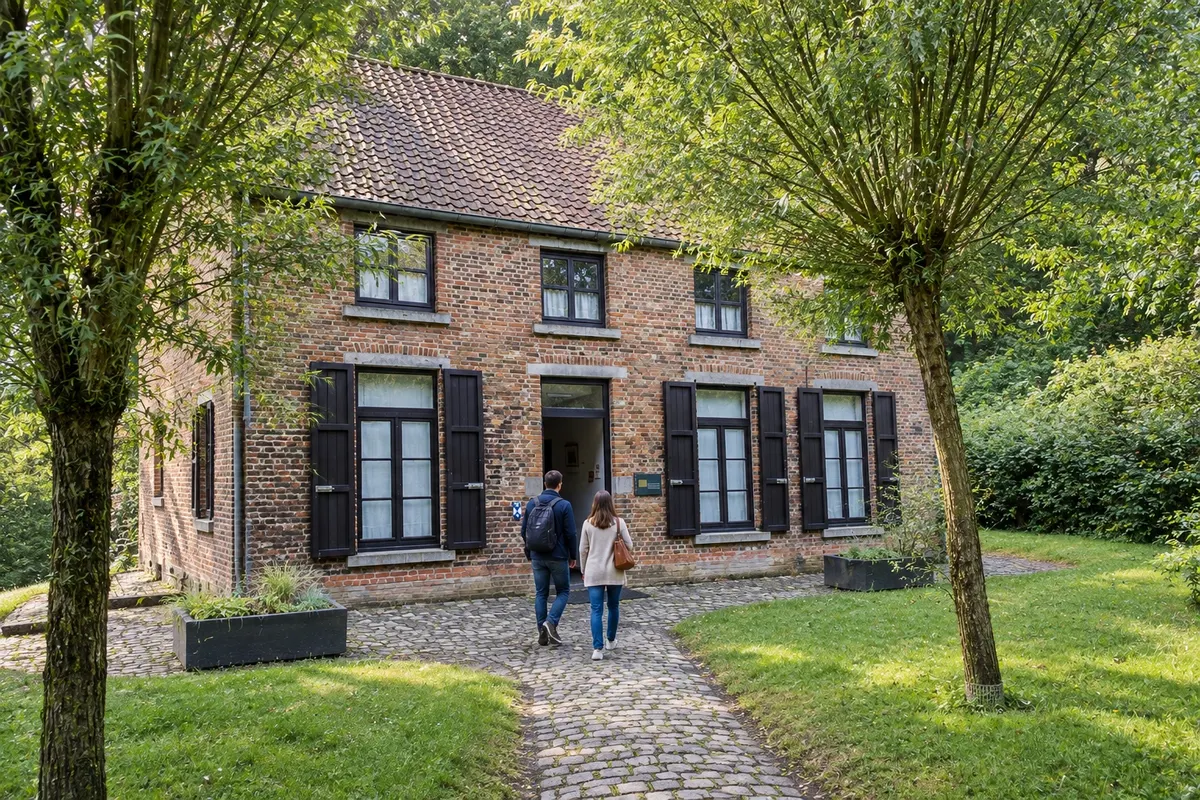
The house in Cuesmes where Vincent van Gogh lived from 1879 to 1880, in the Borinage, when he turned from preaching to painting. The route starts in the garden and ends with a sound installation about the mining region.

Pont des Trous
Tournai · Hainaut · Bridge

Pont des Trous

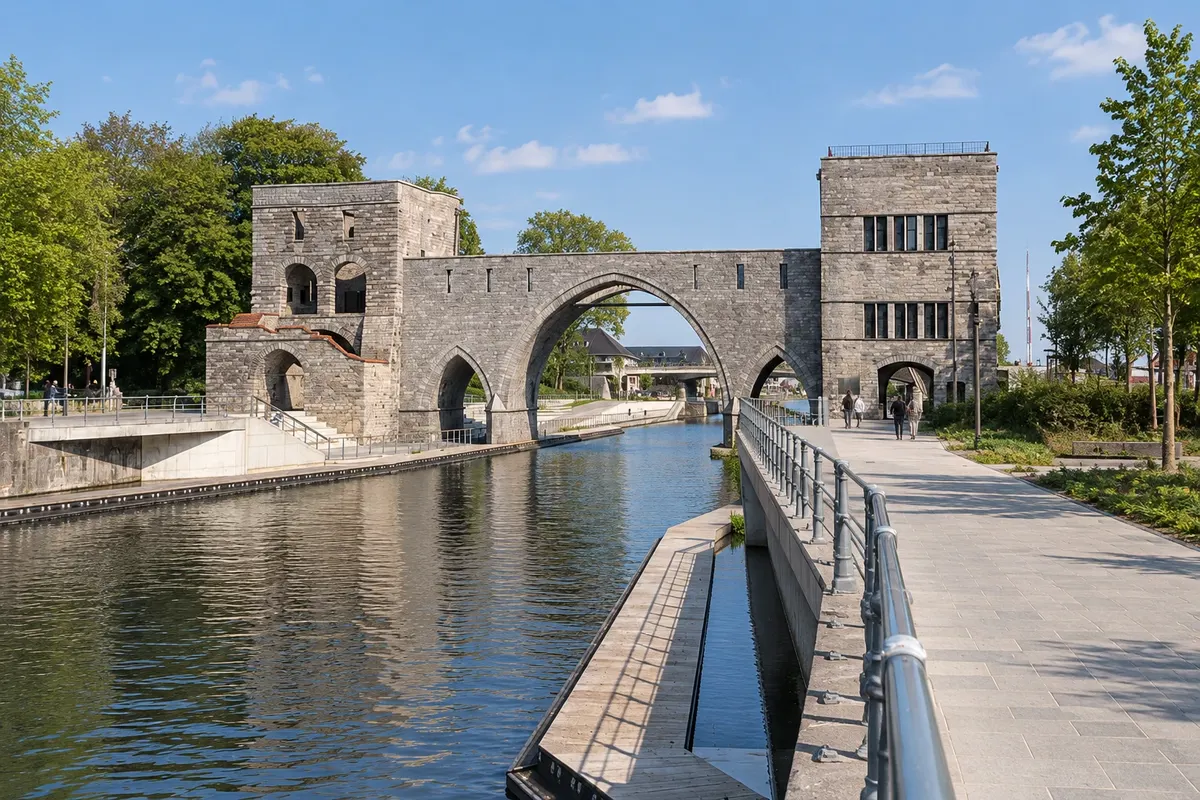
Fortified gate over the Escalda, from the late 13th century, with two towers and three arches. It was part of Tournai's second wall and was renovated up to 2023 to allow passage for larger barges.

Mundaneum
Mons · Hainaut · Museum

Mundaneum

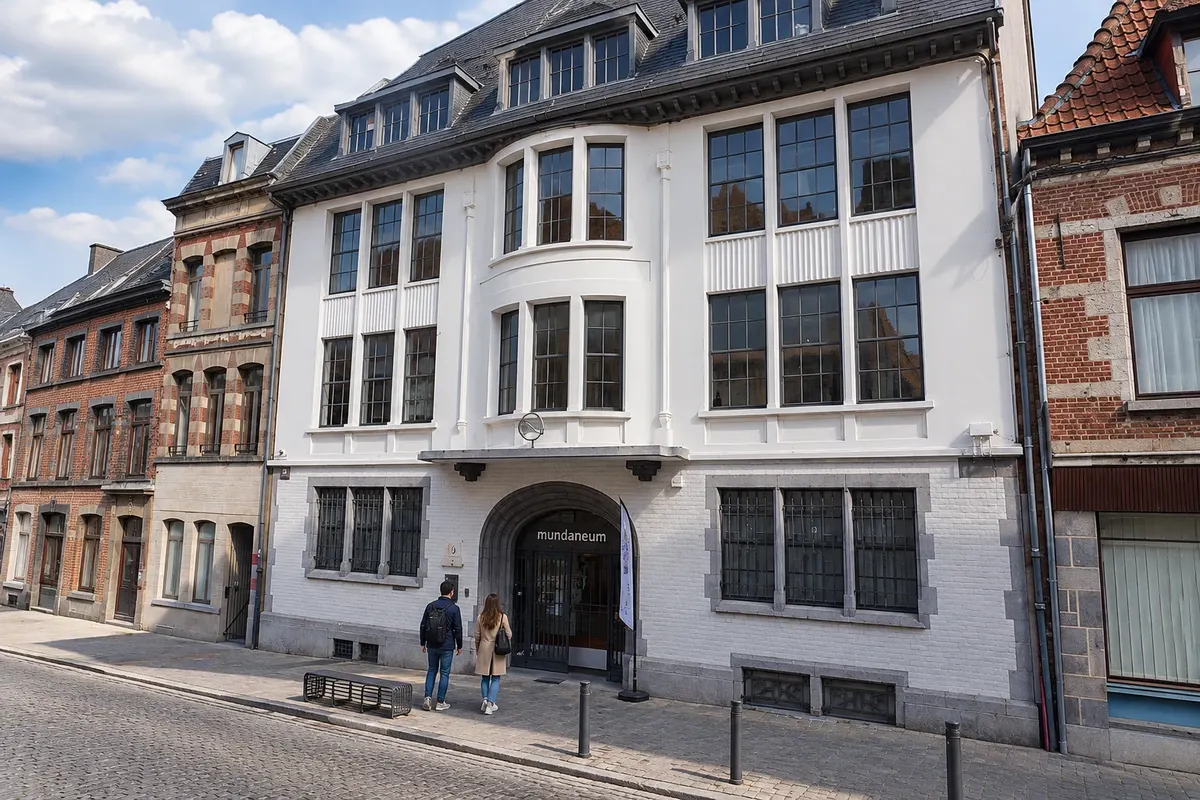
The archive created by Paul Otlet and Henri La Fontaine to classify all the world's knowledge on paper cards, now seen as a precursor to the internet. It is housed in a former department store from the 1930s.

Musée des Beaux-Arts de Tournai
Tournai · Hainaut · Museum

Musée des Beaux-Arts de Tournai

The only museum designed by Victor Horta, opened in 1928, with glass domes and rooms around a large sculpture hall. It houses the collection of Henri Van Cutsem, including the only two works by Manet on display in Belgium.

BAM - Beaux-Arts Mons
Mons · Hainaut · Museum

BAM - Beaux-Arts Mons

The fine arts museum of Mons, in a contemporary building on rue Neuve next to the Grand-Place. It hosts major temporary exhibitions and has a collection of over 15,000 works.

TAMAT - Musée de la Tapisserie
Tournai · Hainaut · Museum

TAMAT - Musée de la Tapisserie

The tapestry and textile arts museum of Tournai, housed in a neoclassical mansion on the place Reine Astrid. More than 250 works spanning six centuries, from 15th-century Tournai tapestries to contemporary textile art.

Mons Memorial Museum
Mons · Hainaut · Museum

Mons Memorial Museum

The museum of military history of Mons and the region, from the Middle Ages to the two world wars, with about 5,000 objects, letters and testimonies. Mons witnessed the British army's first and last battles of the First World War.

Silex's - Minières néolithiques de Spiennes
Mons · Hainaut · Archaeological site

Silex's - Minières néolithiques de Spiennes

One of the largest and oldest flint mines in Europe, dug about 6,000 years ago, a UNESCO World Heritage site. The Silex's museum explains Neolithic mining, and the guided descent goes down 10 metres by stairs.

Grand-Hornu
Mons · Hainaut · Industrial heritage

Grand-Hornu

Neoclassical mining complex built at the beginning of the 19th century by Henri De Gorge, with an oval courtyard, workshops and 425 workers' houses. A UNESCO World Heritage site, it houses the MACS contemporary art museum and the CID design centre.

Pairi Daiza
Mons · Hainaut · Zoo

Pairi Daiza

A 75-hectare zoo and botanical garden in Brugelette, about 25 km from Mons, on the grounds of the former Cistercian abbey of Cambron. More than 7,000 animals in themed worlds representing Asia, Africa, the Americas and the polar regions.

Before you go

Practical information

A little planning leaves more time to enjoy the journey.

When to go

From May to September the days are long and outdoor visits are easier. The Doudou usually falls between late May and mid-June, on the Trinity Sunday weekend. The Spiennes mines welcome visitors from April. In winter, from December to February, it is cold and it gets dark early, but museums and churches remain open.

The seasons shown are the most usual ones; nature doesn't always follow the calendar.

How many days to stay

Two days for Mons: one for the center (Grand-Place, beffroi, Sainte-Waudru and a museum) and another for the surroundings, such as Cuesmes, Spiennes and the Grand-Hornu. Pairi Daiza requires a full day on its own. Tournai fits into a single day, by train from Mons or from Brussels. With three or four days you can see everything without rushing.

Which city to stay in

Mons is the most practical base: the historic center, between the Grand-Place and the Collégiale Sainte-Waudru, puts almost everything within walking distance, and the station is a few minutes' walk away. Travelers arriving by train can also stay near Mons station. In Tournai, the center around the Grand-Place and the cathedral has accommodation a short walk from the banks of the Escalda. For those who prefer not to change hotels, Brussels can serve as a base for day trips to both towns.

Respect the place

Take your trash with you, follow the signs and support local businesses. In natural areas, follow the visiting guidelines.

Get your questions answered

Frequently asked questions about Mons and Tournai

Can you do Mons and Tournai as a day trip from Brussels?

Each town fits into a day trip by train, since the journey takes about an hour. Doing both in the same day is rushed: it's best to stay overnight in Mons, see the center at a relaxed pace and visit Tournai the next day by train. Check train times before you go.

Do I need a car?

For the centers of Mons and Tournai, no: both towns are walkable from the station. A car helps for Mons's surroundings, such as the Spiennes mines and the Grand-Hornu, which have TEC buses but less frequently. Pairi Daiza has a train station just over 1 km from the entrance.

When is the Doudou?

The Ducasse de Mons, known as the Doudou, usually takes place on the Trinity Sunday weekend, between late May and mid-June. On Sunday the Car d'Or procession takes place and, on the Grand-Place, the fight between Saint George and the dragon, called Lumeçon. The town gets very crowded: book accommodation well in advance.

What language is spoken?

French. In Flemish, the Dutch spoken in Belgium, Mons is called Bergen and Tournai is called Doornik, names that appear on signs and station boards in the north of the country. Larger museums have texts in English; in small cafés and shops, a few words of French help.

Explore other destinations Search by state and city
Back