Brazil
 Argentina
 Chile
Chile Colombia
 Peru
Peru Uruguay
 Belgium
 Spain
Spain France
 Greece
 the Netherlands
 Ireland
 Italy
Italy Portugal
 the United Kingdom
 Switzerland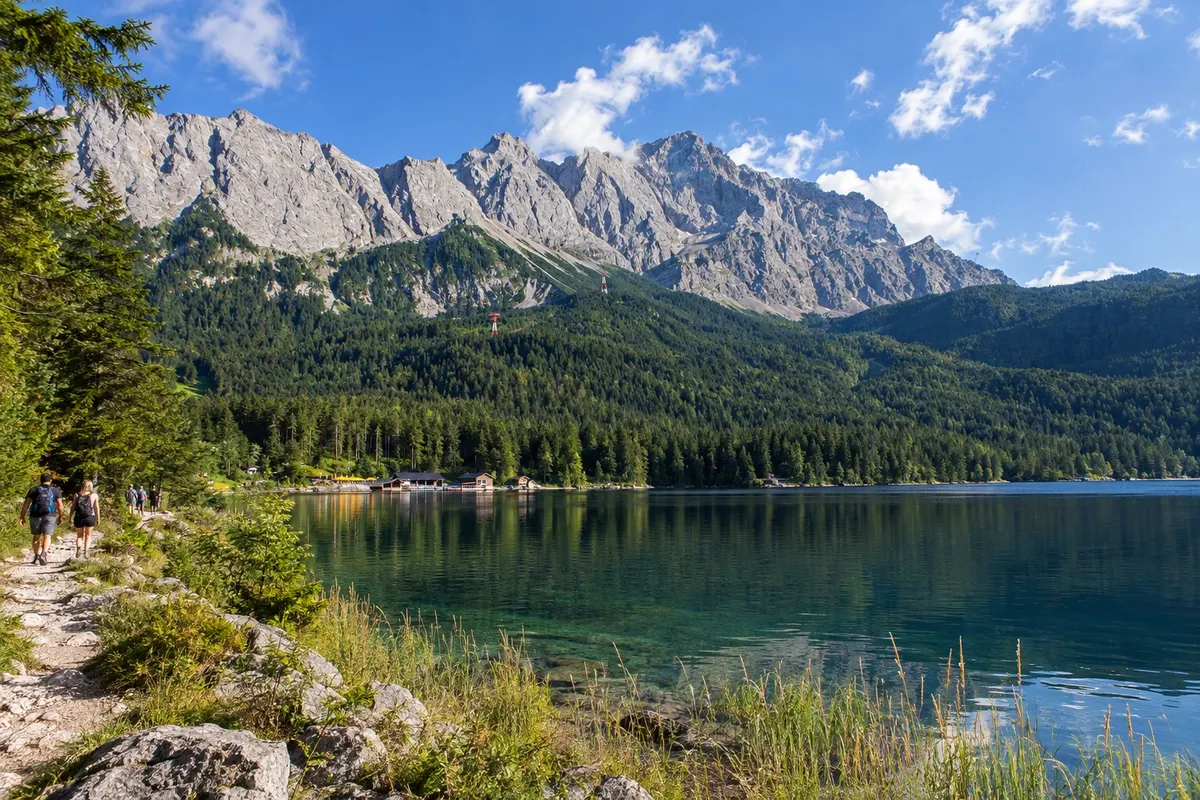
2 cities
State · South
Illustrative images. The pictures in this guide are illustrations based on the real place, not photographs, and may differ from it.

Destinations
Cities
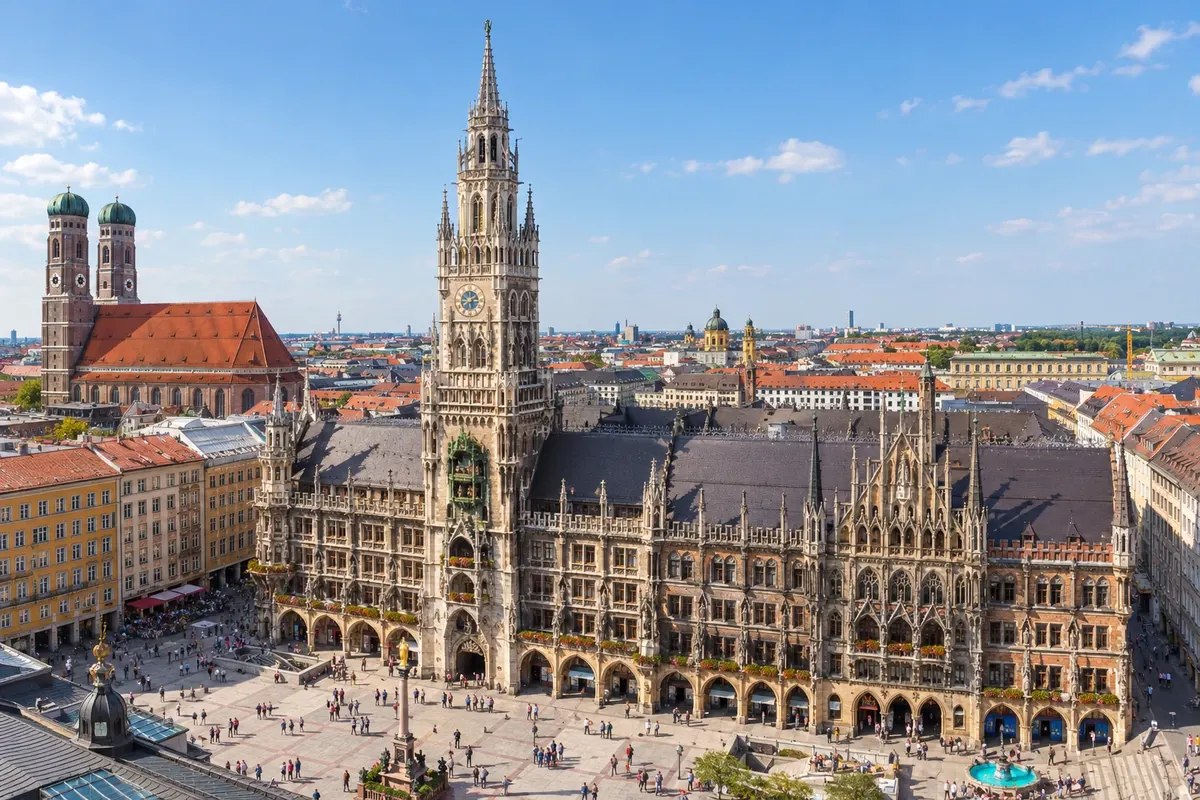
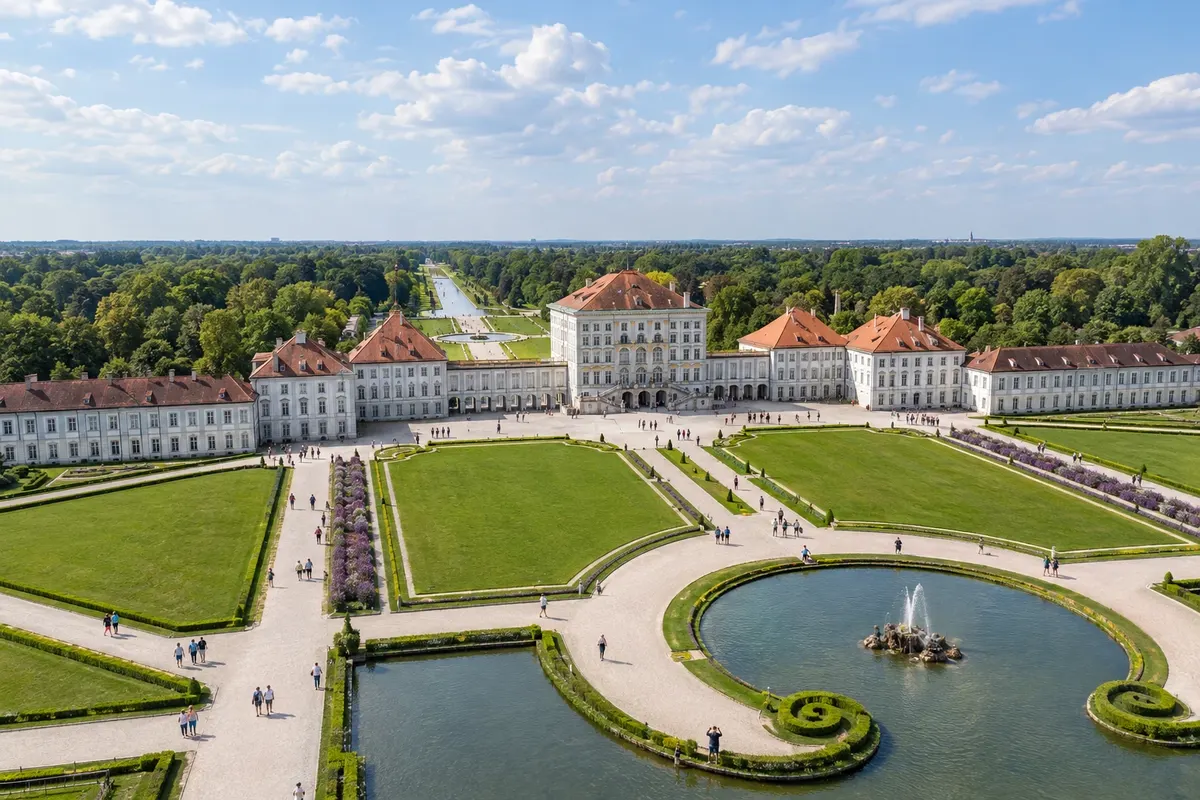
As the capital of Bavaria, Munique brings together the old town around the Marienplatz and the Frauenkirche, the Residenz palace, the Schloss Nymphenburg, the museums of the Kunstareal and the Deutsches Museum, the Englischer Garten with the Eisbach and beerhouse culture from the Hofbräuhaus to the Theresienwiese of the Oktoberfest. Nearby is the Dachau Memorial.
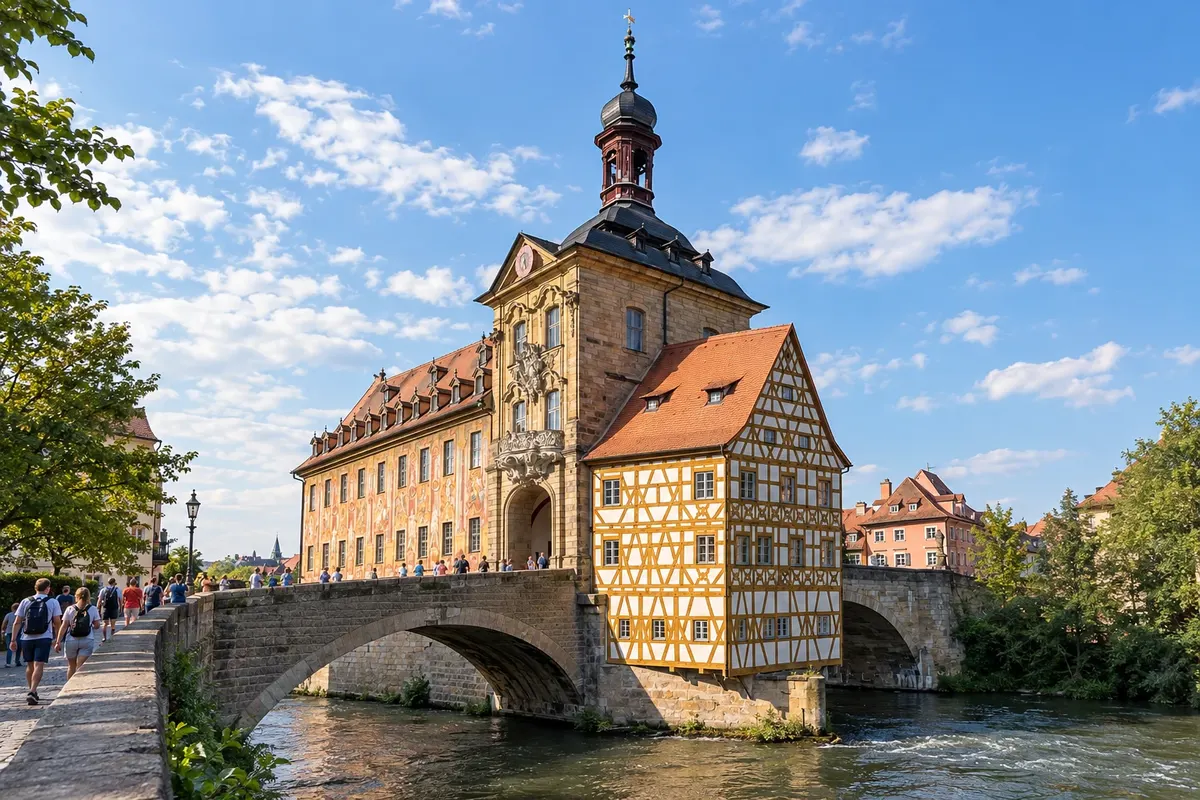
Bamberg, in Upper Francônia, has its old town inscribed as a World Heritage Site by UNESCO since 1993. The city spreads across seven hills and the islands of the Regnitz river. The Altes Rathaus, the town hall built in the middle of the river, links the burghers' town to the bishops' hill, where the Bamberger Dom, the Neue Residenz with its Rosengarten and the Michaelsberg monastery are located. On the riverbank are the fishermen's houses of Klein-Venedig. The smoked beer, Rauchbier, is part of the local culture.
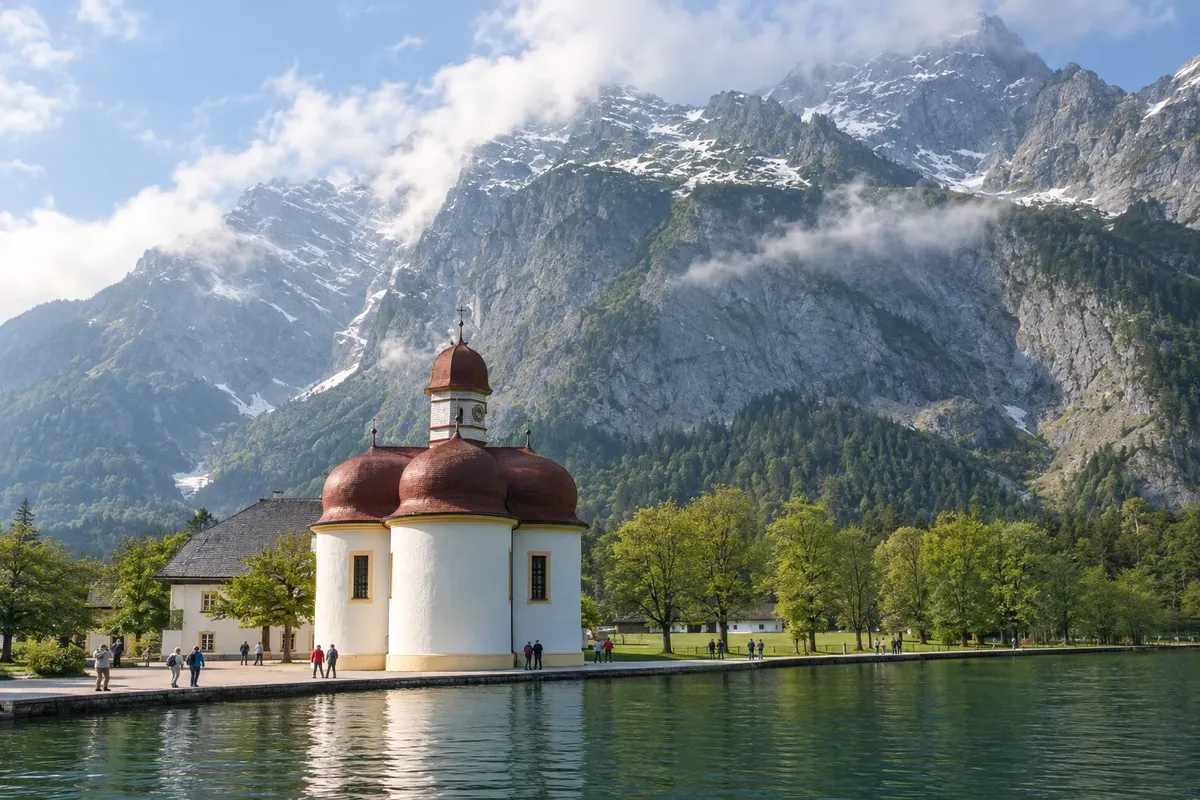
Berchtesgaden sits at the far southeast of Bavaria, surrounded by mountains and the Austrian border; Salzburgo is about 25 km away. The town grew around a monastery and a salt mine active since 1517, the Salzbergwerk. Nearby are the Königssee, with electric boats to St. Bartholomä, the Nationalpark Berchtesgaden and the Obersalzberg, home to the Dokumentation Obersalzberg and the Kehlsteinhaus.
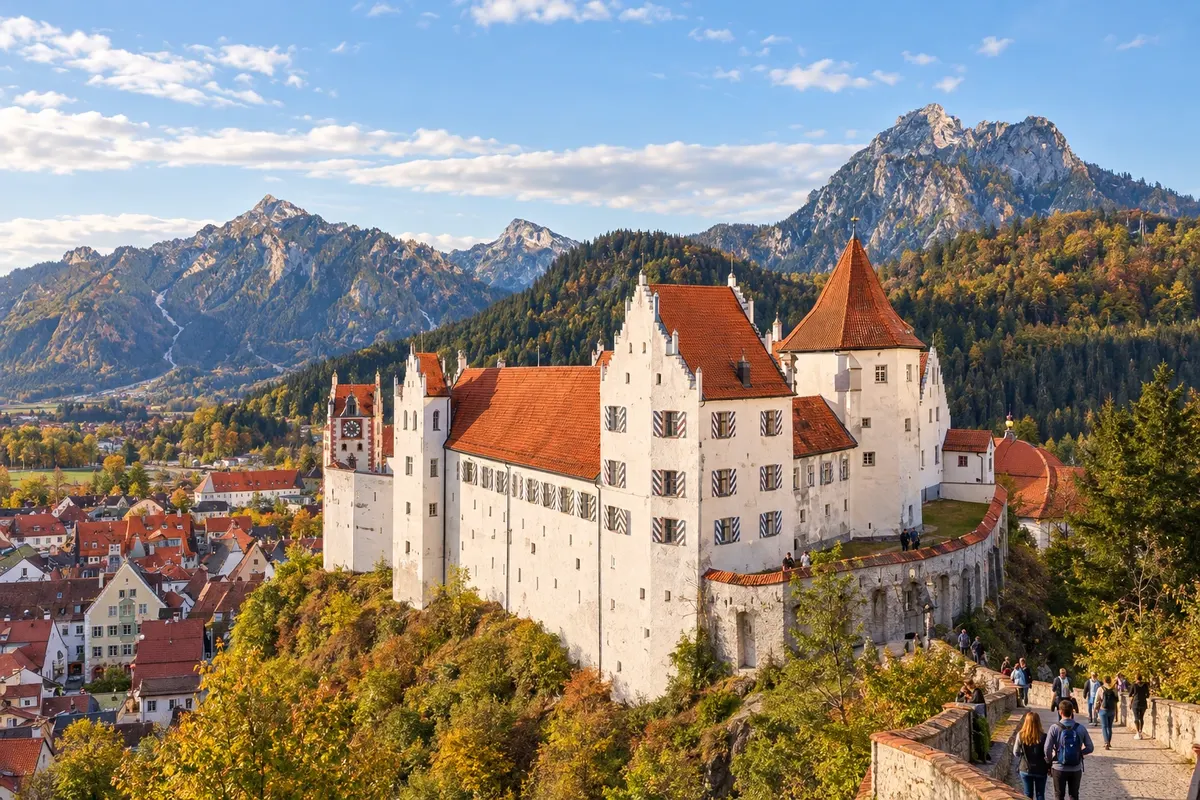
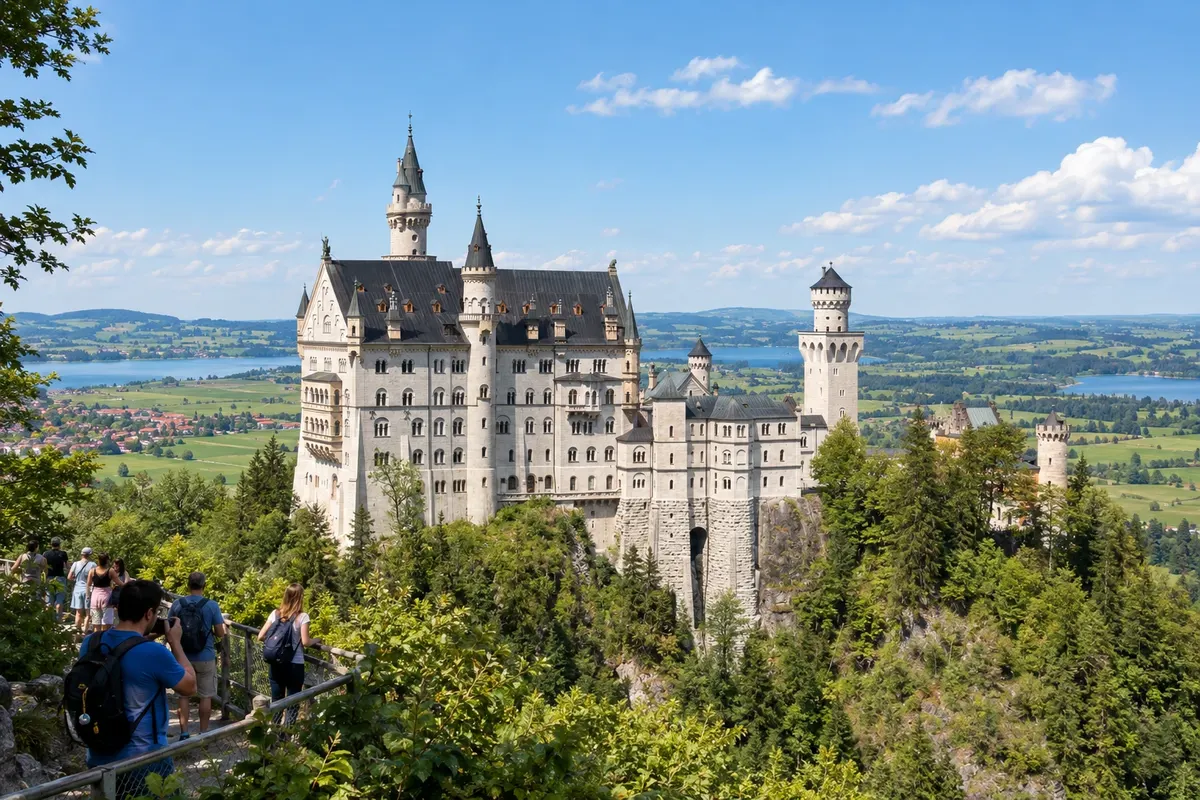
Füssen is the town at the end of the Romantic Road, between the Lech River and the Alps, a few kilometres from Austria. It is the gateway to Neuschwanstein and Hohenschwangau, which lie in the Hohenschwangau district in the neighbouring municipality of Schwangau. In the old town are the Hohes Schloss, the monastery of St. Mang with the city museum and, to the south, the Lechfall. Around the castles are the Alpsee, the Museum der bayerischen Könige and the Tegelberg cable car.
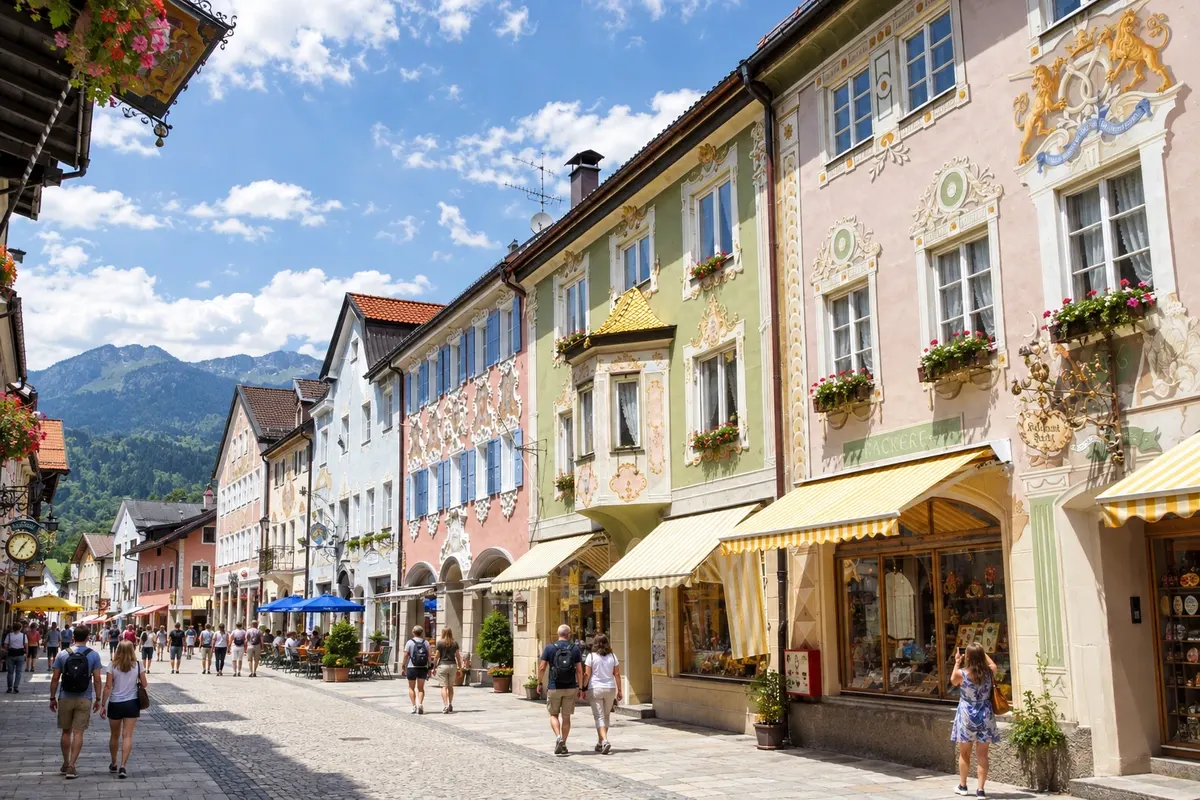
Garmisch-Partenkirchen was formed by the merger of two villages in 1935, on the eve of the 1936 Winter Games. It lies at the foot of the Zugspitze, the highest mountain in Germany, which is reached by rack railway or cable car. Nearby are the Eibsee lake, the Partnachklamm gorge, the Olympia-Skistadion and Ludwigstraße, with painted houses. Close by are Schloss Linderhof, Kloster Ettal and Oberammergau.
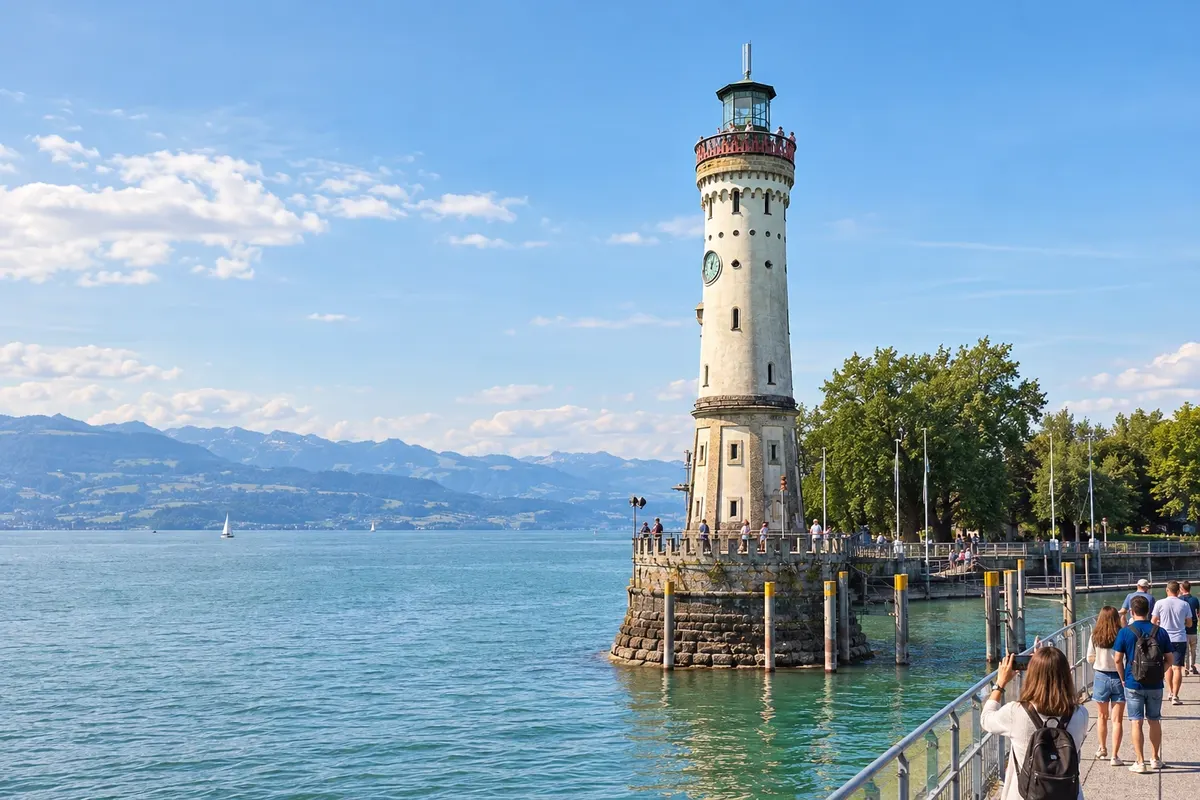
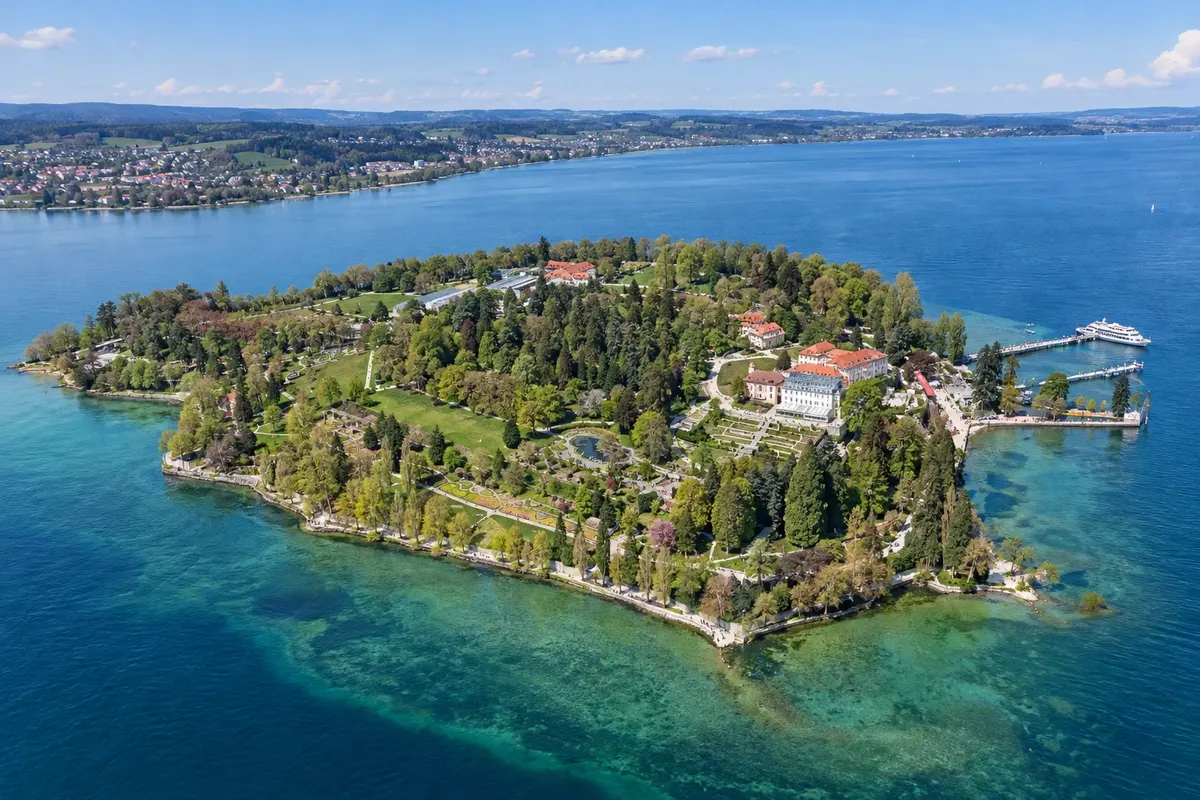
Lindau is the only Bavarian town on Lago de Constança and has its old town on an island of less than 1 km², connected to the mainland by a bridge and a railway causeway. A former Free Imperial City, it preserves the Maximilianstraße with houses from the 16th and 17th centuries, the painted Altes Rathaus, the Mangturm tower and, at the harbor entrance, the Bavarian lion and the lighthouse that can be climbed in season.
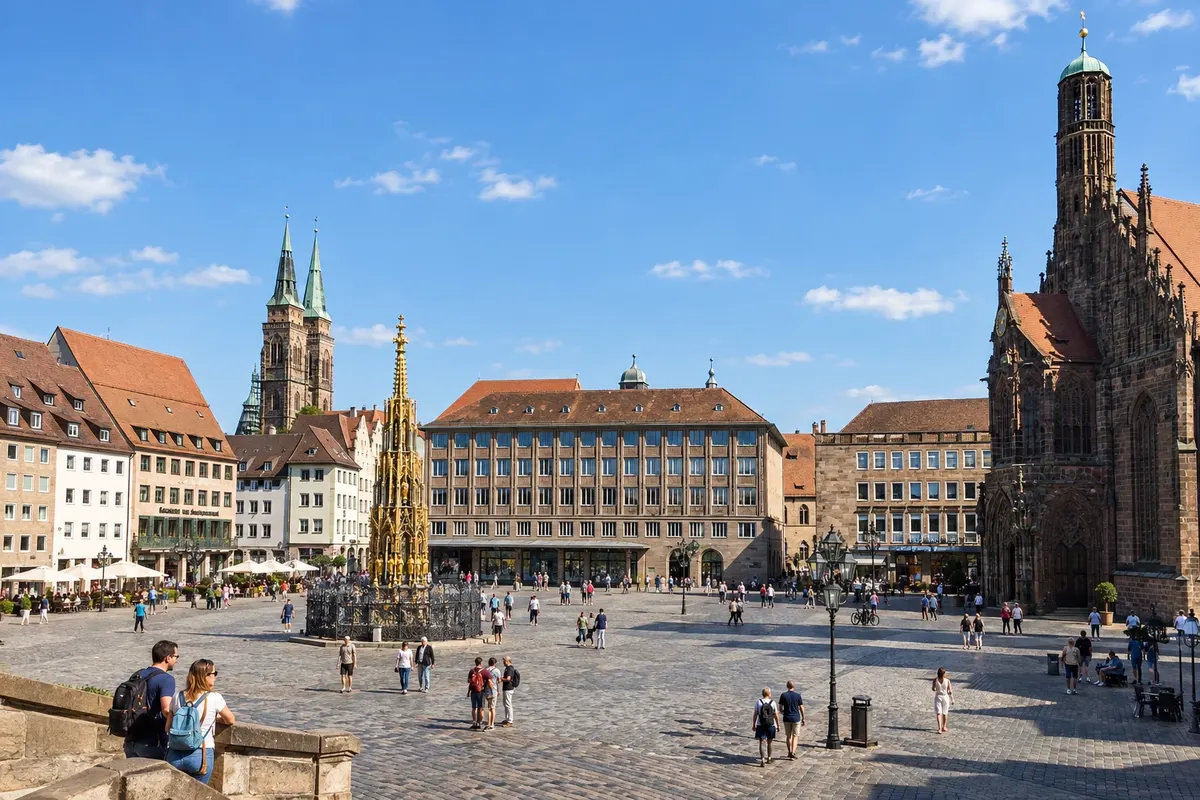
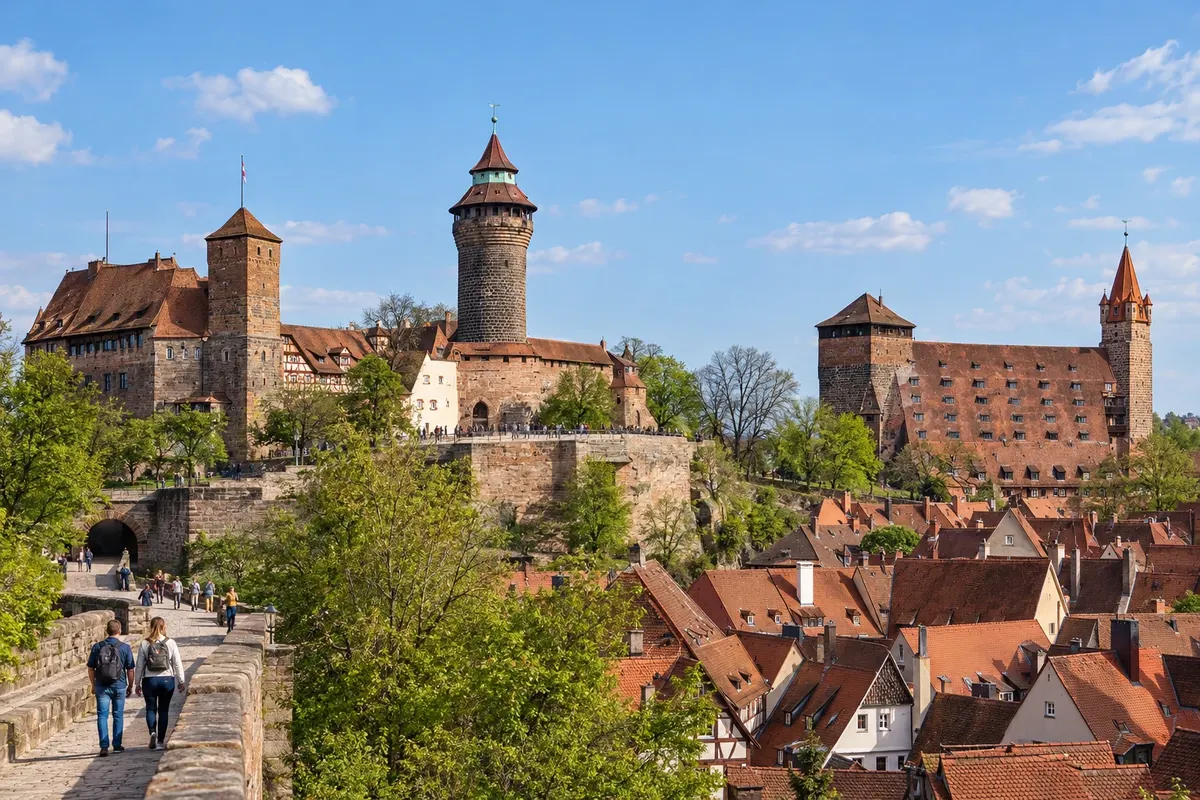
Second-largest city of Baviera, in the Francônia region, Nuremberg has an old town surrounded by walls and crossed by the Pegnitz river. Above stands the Kaiserburg, the imperial castle; below, the Hauptmarkt, the Gothic churches of St. Sebald, St. Lorenz and the Frauenkirche, Albrecht Dürer's house and the Germanisches Nationalmuseum. The city also preserves the memory of Nazism and the 1945 trials, at the Dokumentationszentrum and the Memorium Nürnberger Prozesse.
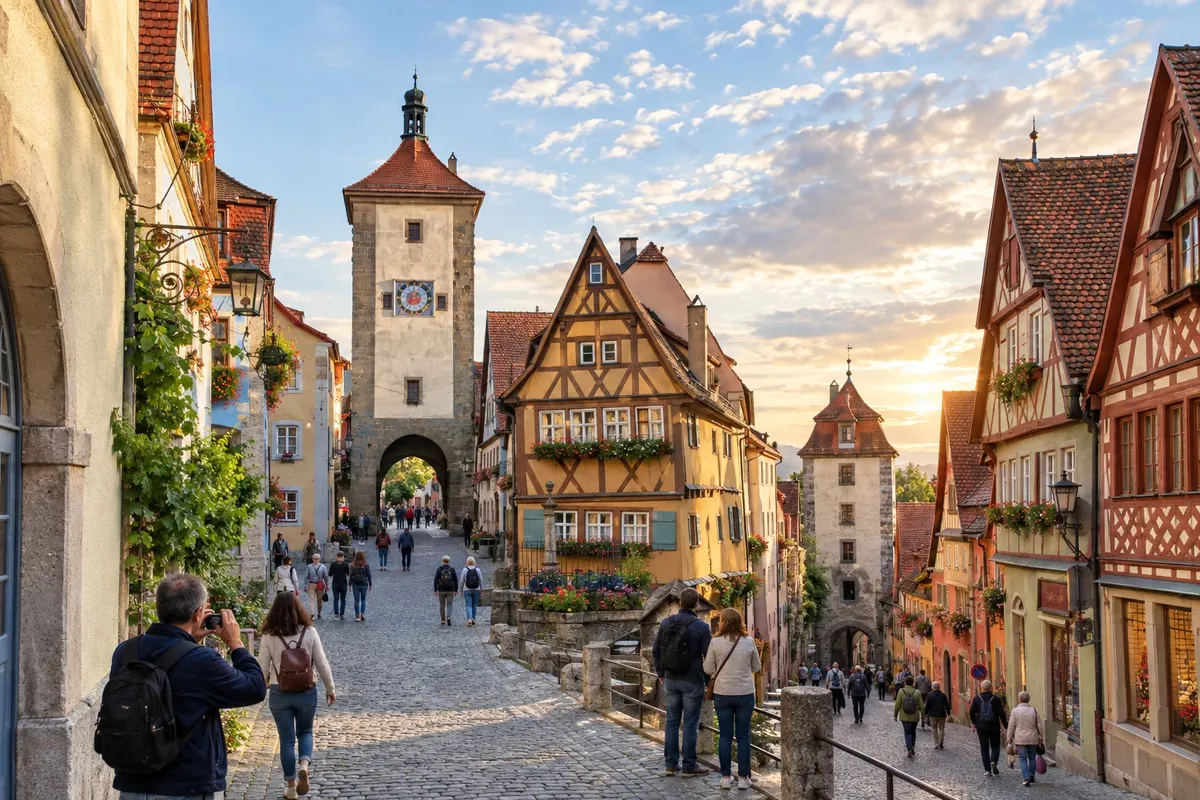
Rothenburg ob der Tauber, in Franconia, is the best-known walled town on the Romantic Road. The center (Altstadt) preserves the entire wall, with a walkway atop the ramparts, towers and gates, and streets of half-timbered houses. The main sights are the Marktplatz with the town hall and its tower, the Plönlein, the Burggarten, the church of St. Jakob with the Riemenschneider altarpiece, the medieval crime museum and the Christmas museum. It was a Free Imperial City from 1274 to 1803.