Bavarian Castles and the Romantic Road

Baviera · Germany

Bavarian Castles and the Romantic Road

Neuschwanstein and Hohenschwangau at the foot of the Alps in Füssen, and the walled town of Rothenburg ob der Tauber: the two ends of the Romantic Road in southern Germany.

South

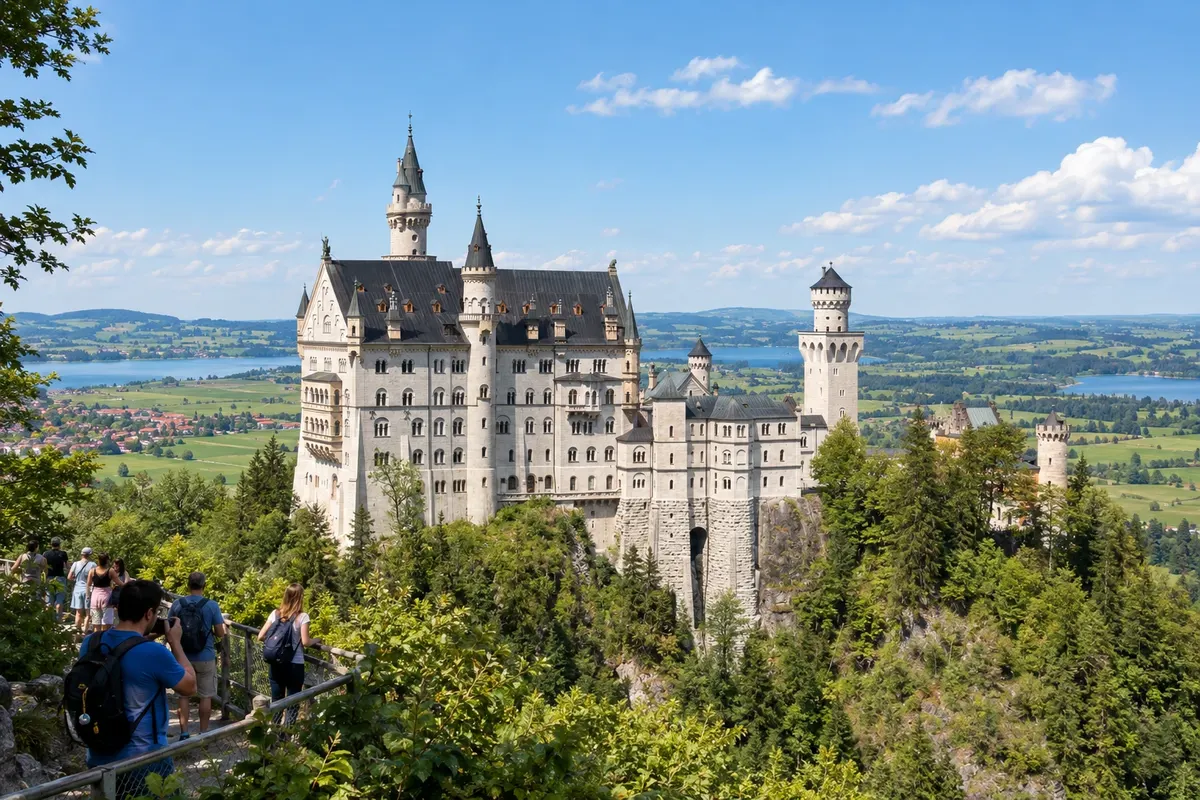
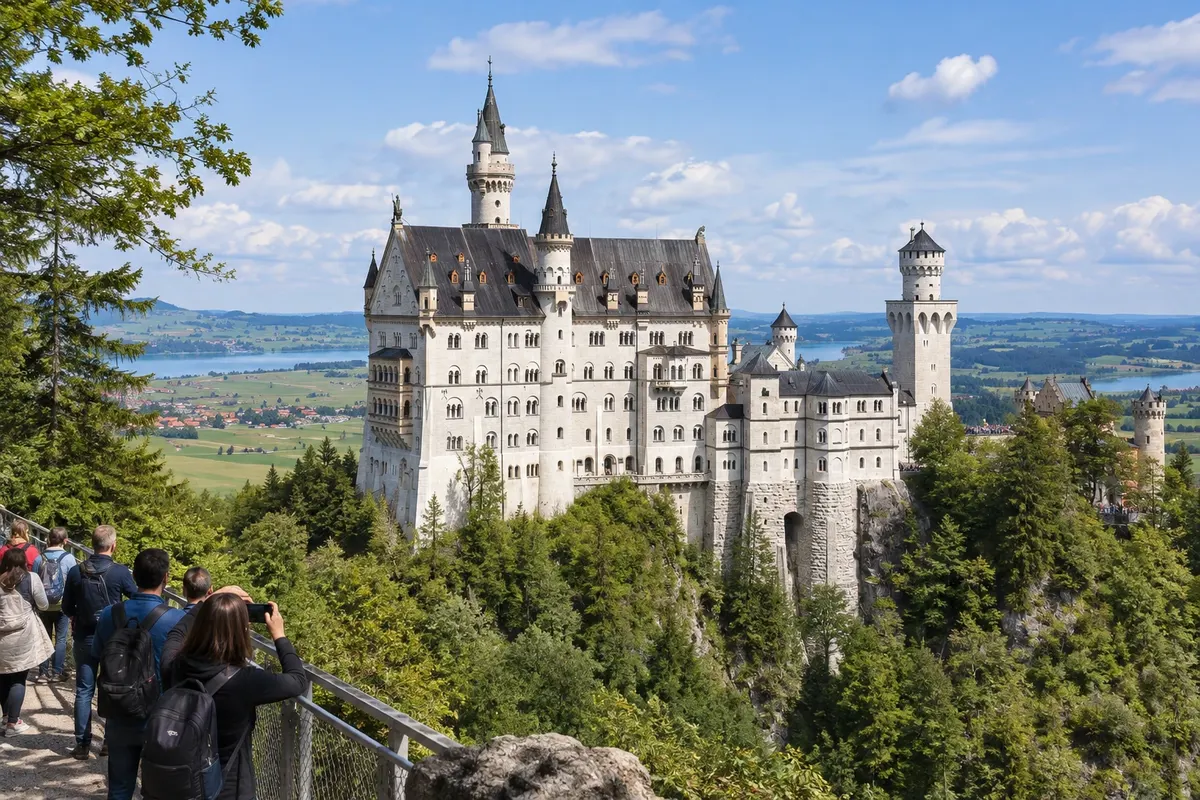
In the photo: Schloss Neuschwanstein seen from the Marienbrücke

Illustrative images. The pictures in this guide are illustrations based on the real place, not photographs, and may differ from it.

Get it on Google Play Send your photos

Get to know the place

A region to enjoy
at your own pace.

The Romantische Straße, the Romantic Road, is a tourist route created in 1950 that links Würzburg, on the banks of the Main River, to Füssen at the foot of the Alps, near the Austrian border. It's about 410 kilometres through medieval towns, river valleys and the fields of Franconia and Swabia. It is not a single road: it's a signposted route with brown signs that uses various smaller roads and passes through Rothenburg ob der Tauber, Dinkelsbühl, Nördlingen, Augsburg and Landsberg am Lech before reaching the castles.

At the southern end is Füssen, a small town with an old centre (Altstadt) between the Lech River and the mountains. A few kilometres away, in the Hohenschwangau district, which belongs to the neighbouring municipality of Schwangau, are the two most visited castles in Bavaria: Schloss Hohenschwangau, where King Ludwig II spent part of his childhood, and Schloss Neuschwanstein, which he had built on a rock from 1869. Ludwig II's castles, including Neuschwanstein, are on the UNESCO World Heritage list.

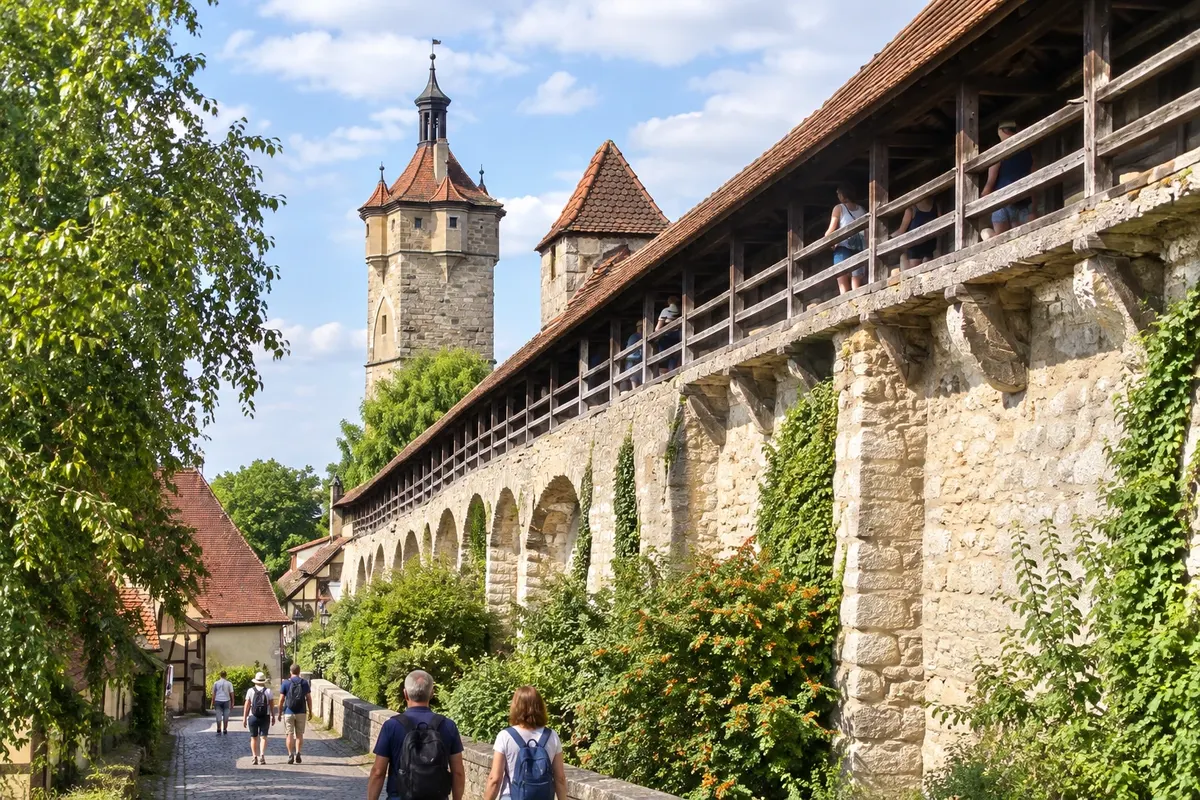
Further north, already in Franconia, Rothenburg ob der Tauber preserves its complete wall around the centre, with a covered walkway along the ramparts, towers, gates and streets of half-timbered houses. The town was a Free Imperial City from 1274 to 1803 and lost importance after the Thirty Years' War, which helped preserve its medieval layout.

Those who want to travel the entire Romantic Road, stopping in the smaller towns along the way, usually rent a car. The visit to Neuschwanstein only takes place as a guided tour with a timed ticket, and buying in advance is recommended.

This destination brings together 2 cities: Füssen, Rothenburg ob der Tauber.

Share: WhatsApp
Traveler, share your experiences through photos Up to 5 photos of each place you visited.

One destination, many paths

The cities on this trip

Start with one city or combine several in your itinerary.

Where Bavarian Castles and the Romantic Road is
FüssenRothenburg ob der Tauber

Contornos: © BKG (2026), dl-de/by-2-0. Adaptação do Cidade Turismo.

How to get there: Bavarian Castles and the Romantic Road

✈ Flughafen München Franz Josef Strauß (MUC) · 160 km to Füssen

Confirm before booking. The most used airports are Munich (for Füssen) and Frankfurt (for Rothenburg). From Munich, the regional train reaches Füssen in about two hours. Rothenburg has its own rail branch, with a change at Steinach on the line coming from Würzburg.

Suggested arrival point: Füssen

The local experience

Things to do in Bavarian Castles and the Romantic Road

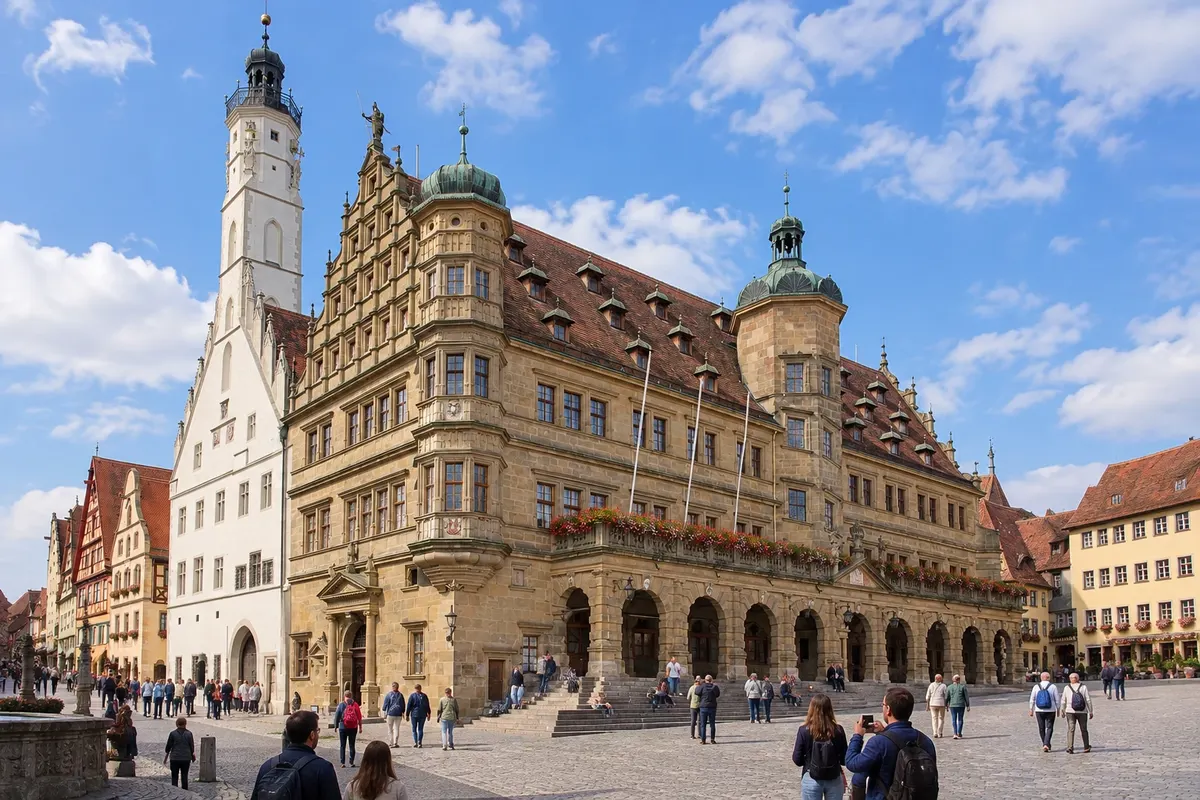
Marktplatz und Rathaus
Rothenburg ob der Tauber · Baviera · Square

Marktplatz und Rathaus

Rothenburg's central square, with the Gothic and Renaissance town hall, the tower with a 60-meter viewpoint, and the Ratstrinkstube clock that enacts the legend of the Meistertrunk.

Schloss Neuschwanstein
Füssen · Baviera · Castle

Schloss Neuschwanstein

The castle that Ludwig II commissioned from 1869, built on a rock above the Pöllat gorge in Schwangau. It can only be visited inside on a guided tour at a pre-booked time.

Marienbrücke
Füssen · Baviera · Bridge

Marienbrücke

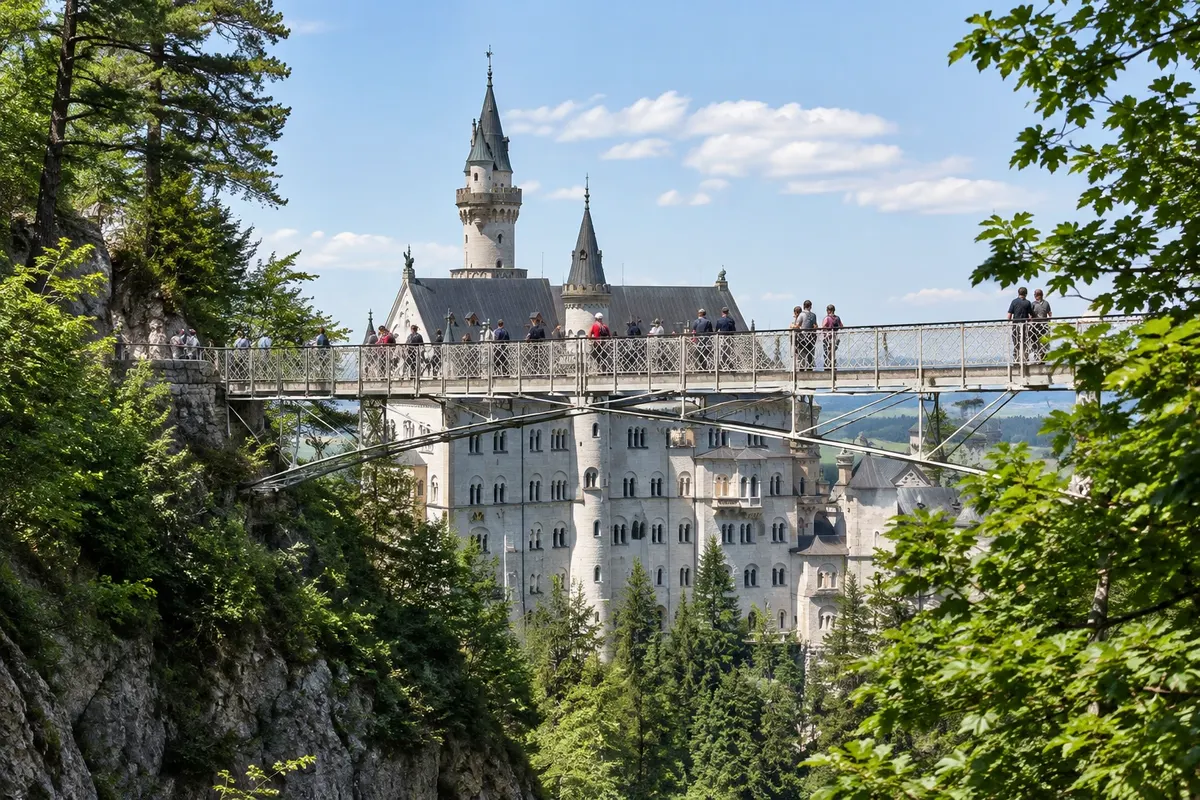
Iron bridge over the Pöllat gorge, offering the best-known view of Neuschwanstein. It usually closes in winter because of ice and snow.

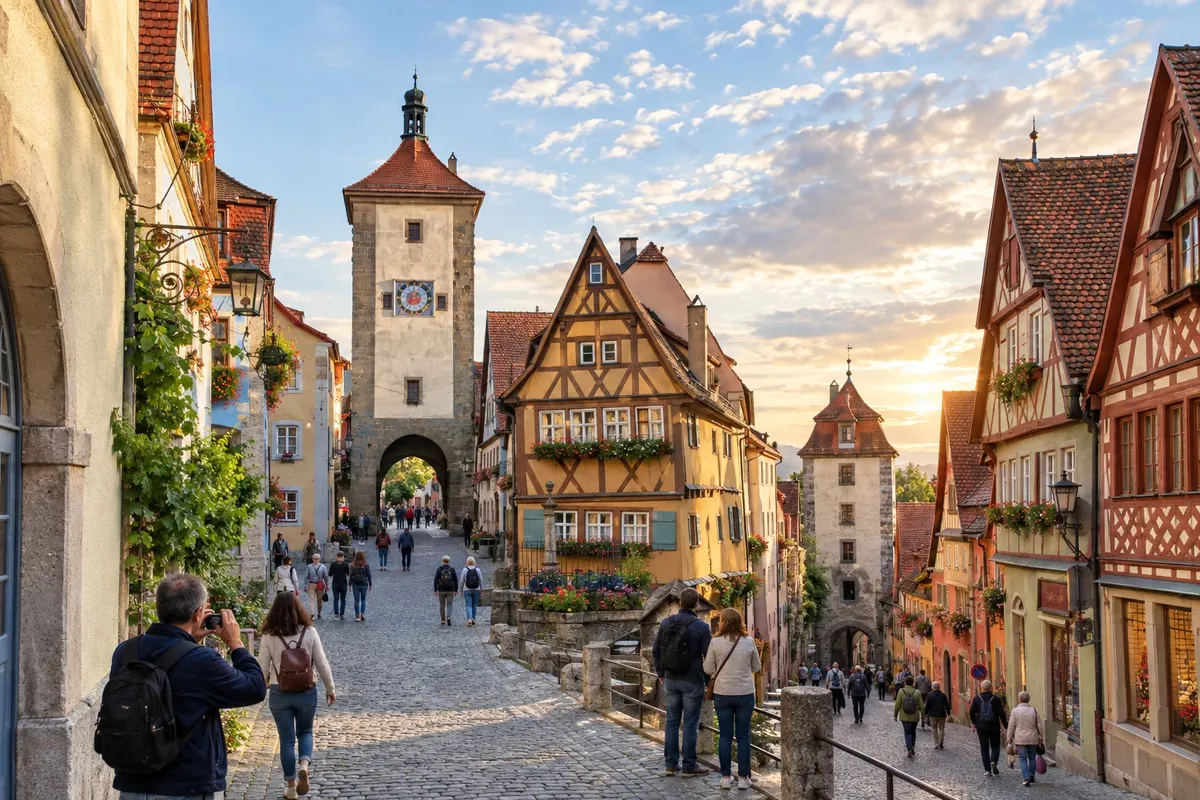
Plönlein
Rothenburg ob der Tauber · Baviera · Street

Plönlein

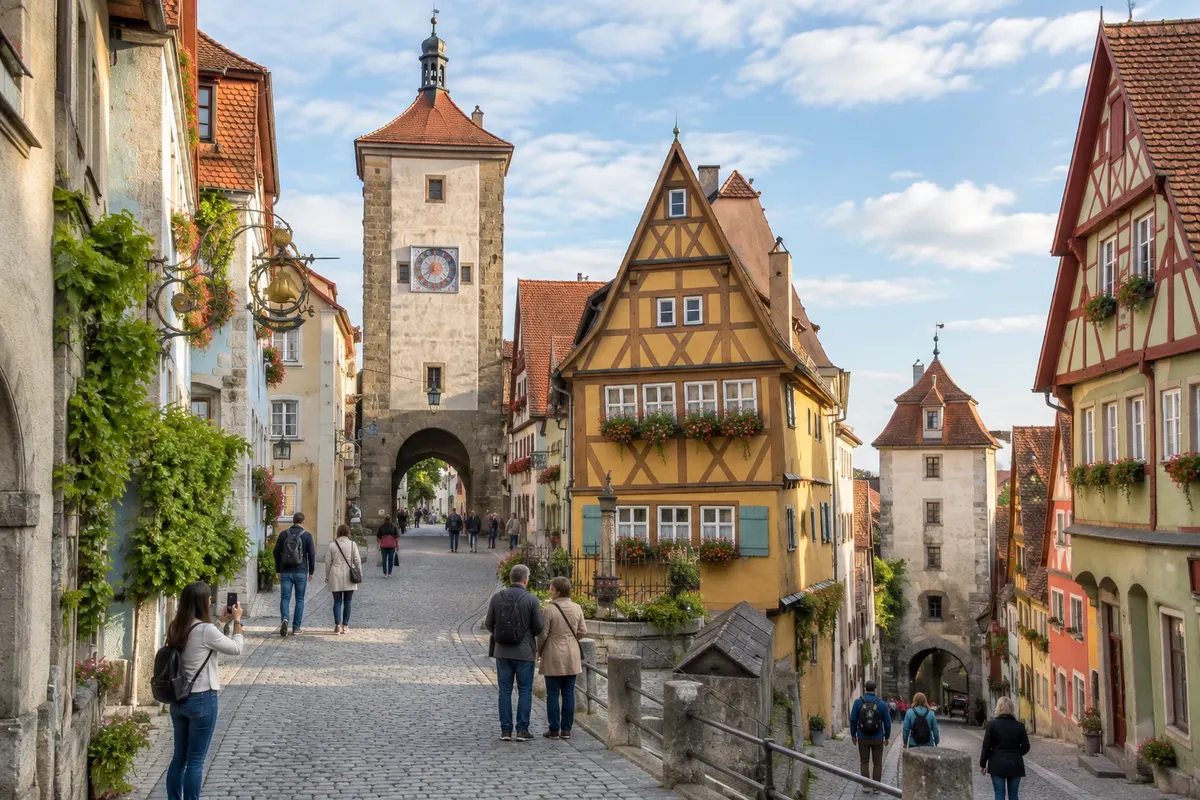
Small triangular square where the street splits in two, with half‑timbered houses and the Siebersturm and Kobolzeller Tor towers in the background: the most photographed scene in Rothenburg.

See 12 more places in Bavarian Castles and the Romantic Road
Schloss Hohenschwangau
Füssen · Baviera · Castle

Schloss Hohenschwangau

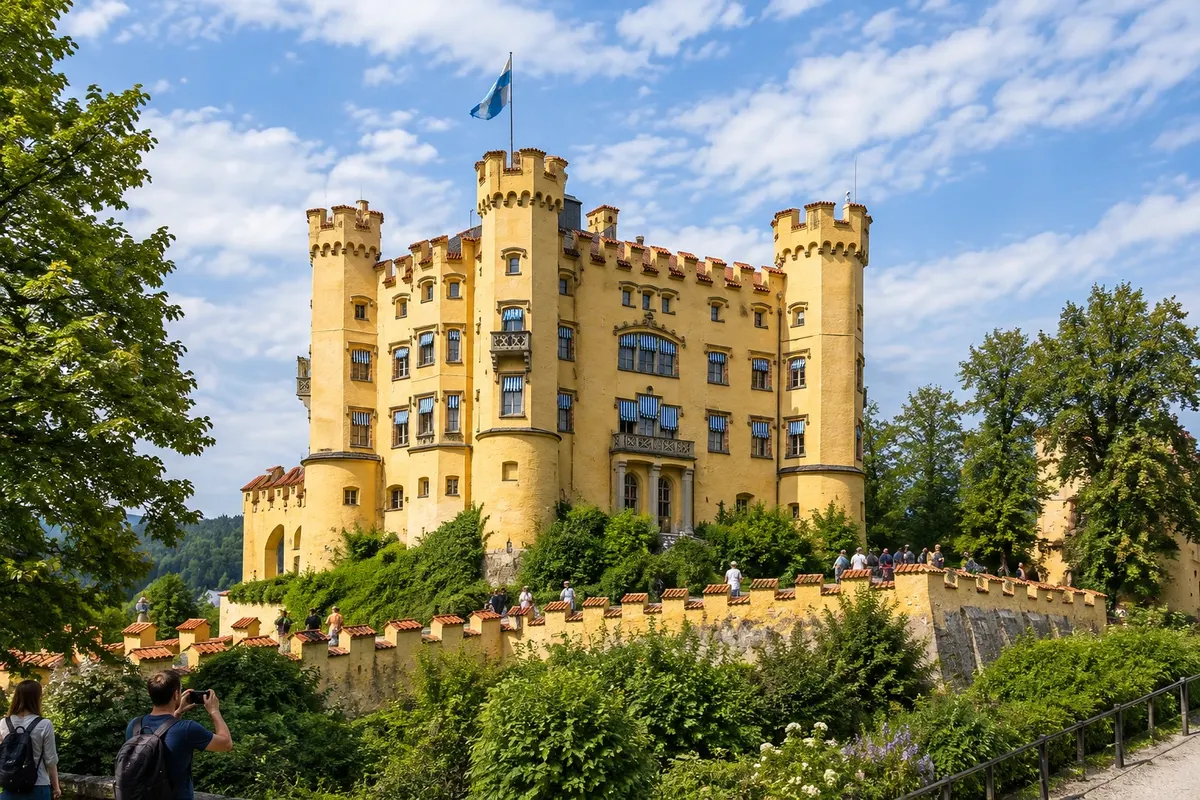
Yellow neo-Gothic castle opposite Neuschwanstein, the summer residence of the Bavarian royal family, where Ludwig II spent part of his childhood.

Stadtmauer Rothenburg
Rothenburg ob der Tauber · Baviera · Wall

Stadtmauer Rothenburg

The medieval wall that still surrounds the entire town, with a covered walkway along the ramparts, towers and gates such as the Rödertor, the Klingentor and the Spitaltor.

Burggarten
Rothenburg ob der Tauber · Baviera · Garden

Burggarten

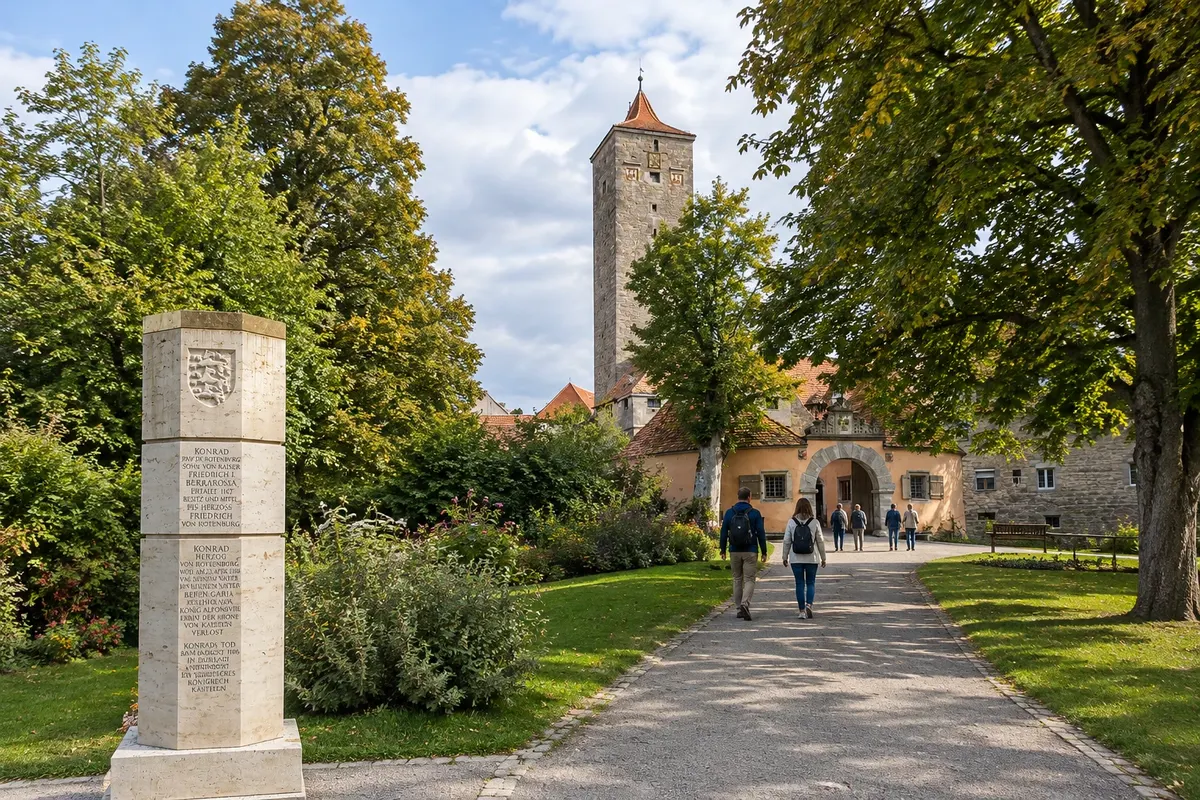
Garden on the site of the former imperial castle of the Staufer, on a promontory over the Tauber valley, with the chapel of São Brás and views of the wall and countryside.

Museum der bayerischen Könige
Füssen · Baviera · Museum

Museum der bayerischen Könige

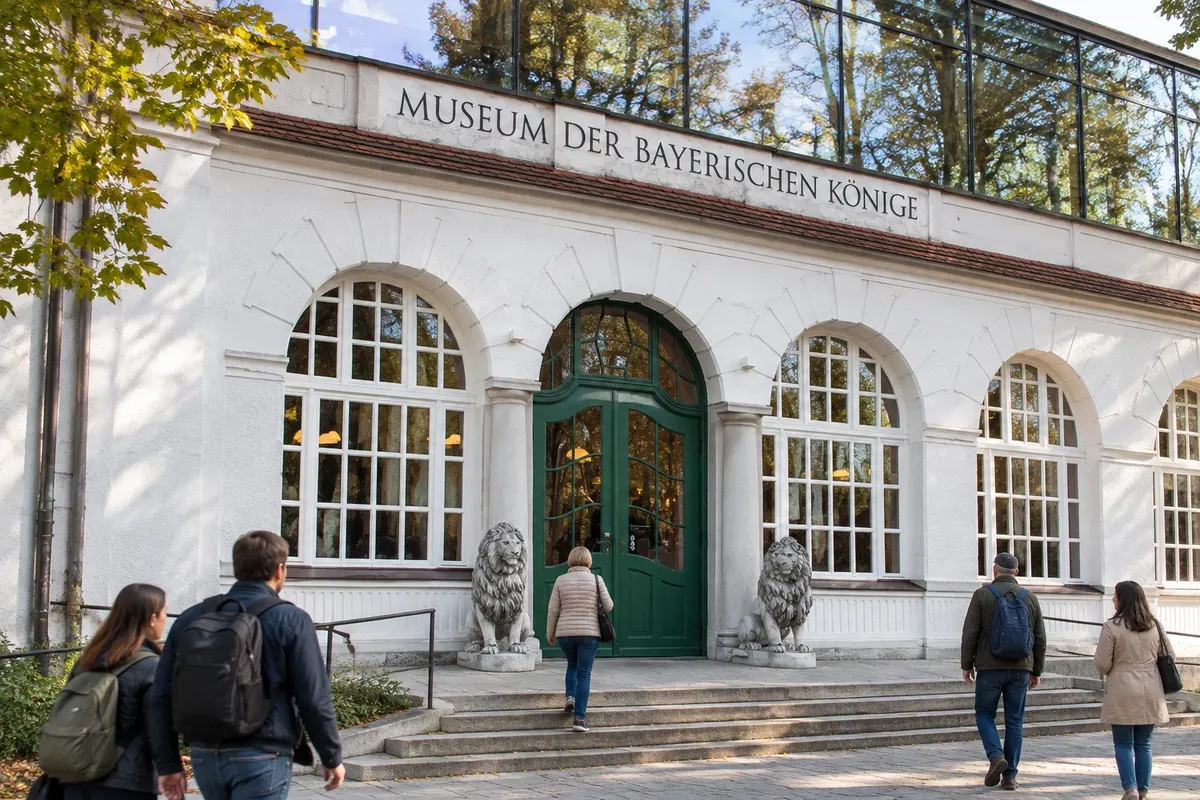
Museum on the shore of the Alpsee in Hohenschwangau about the Wittelsbach dynasty and the kings of Bavaria, with a focus on Maximilian II and Ludwig II.

Alpsee
Füssen · Baviera · Lake

Alpsee

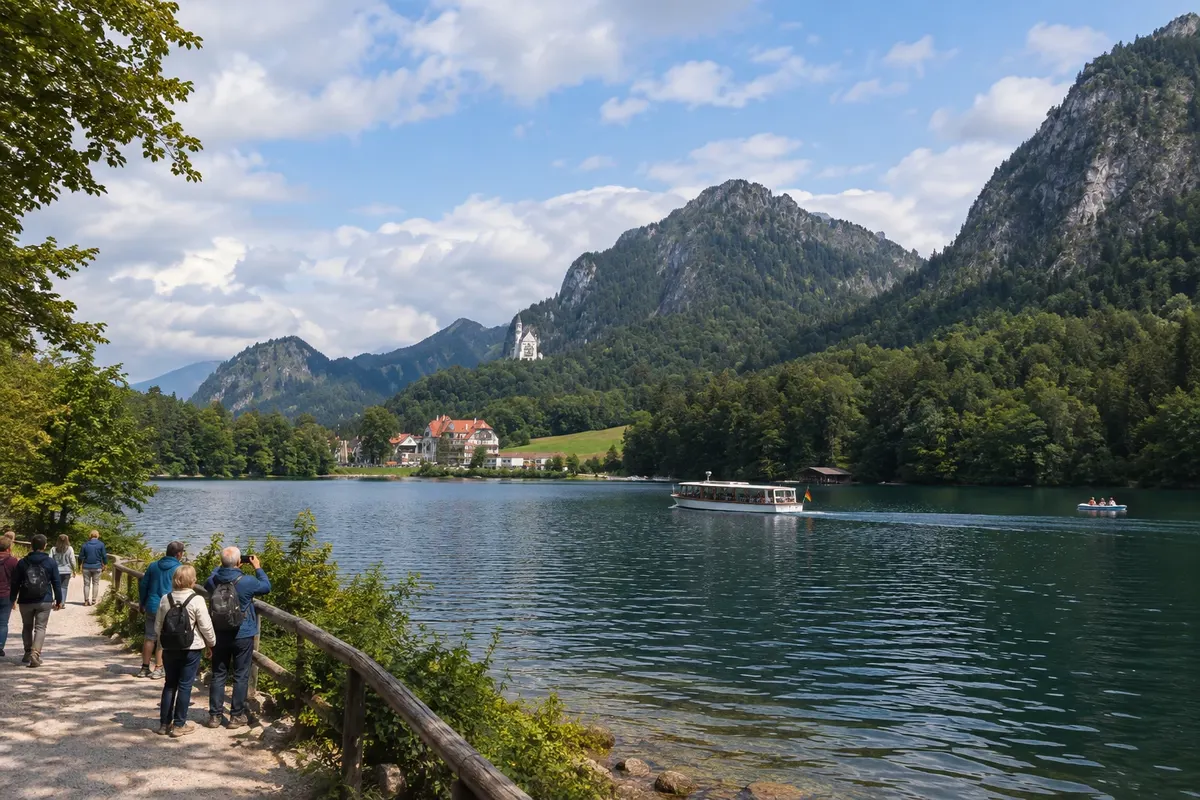
A clear-water lake at the foot of Hohenschwangau, surrounded by mountains, with a trail around it, a viewpoint and boat rentals in summer.

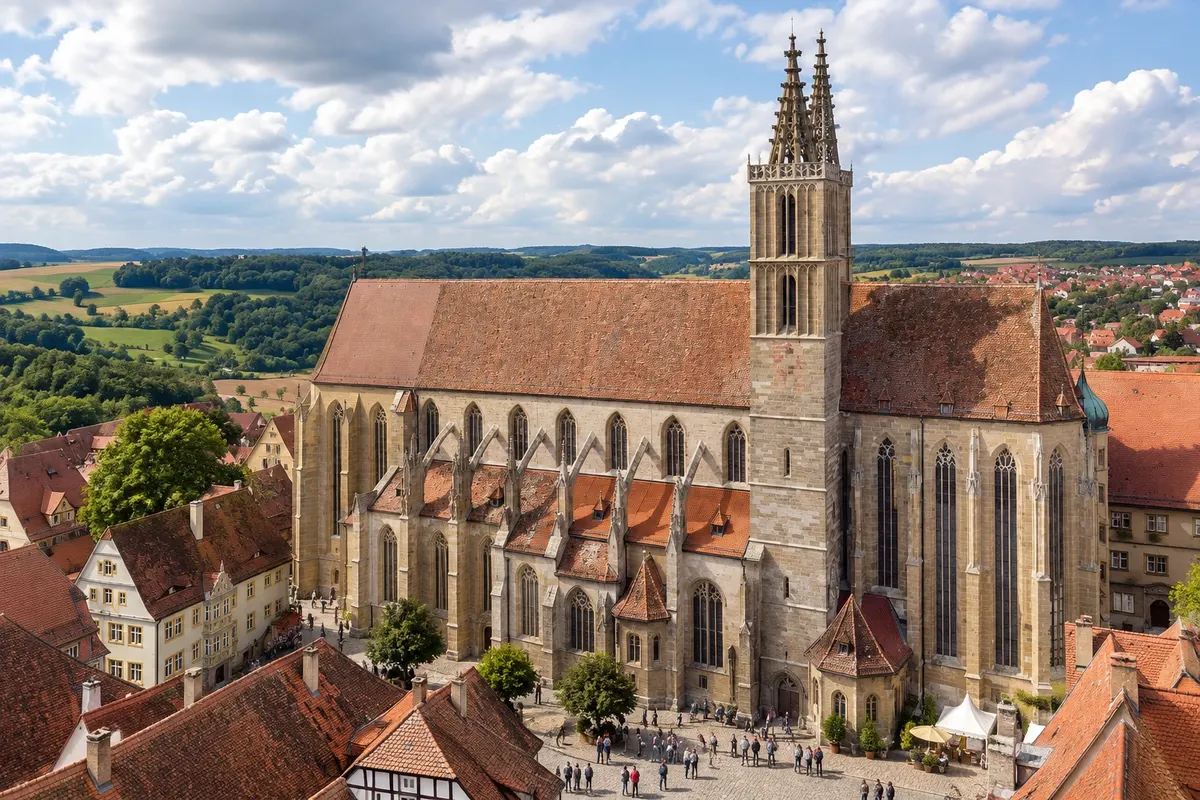
St.-Jakobs-Kirche
Rothenburg ob der Tauber · Baviera · Church

St.-Jakobs-Kirche

Main Gothic church of Rothenburg, with the Holy Blood altarpiece carved by Tilman Riemenschneider between 1500 and 1505.

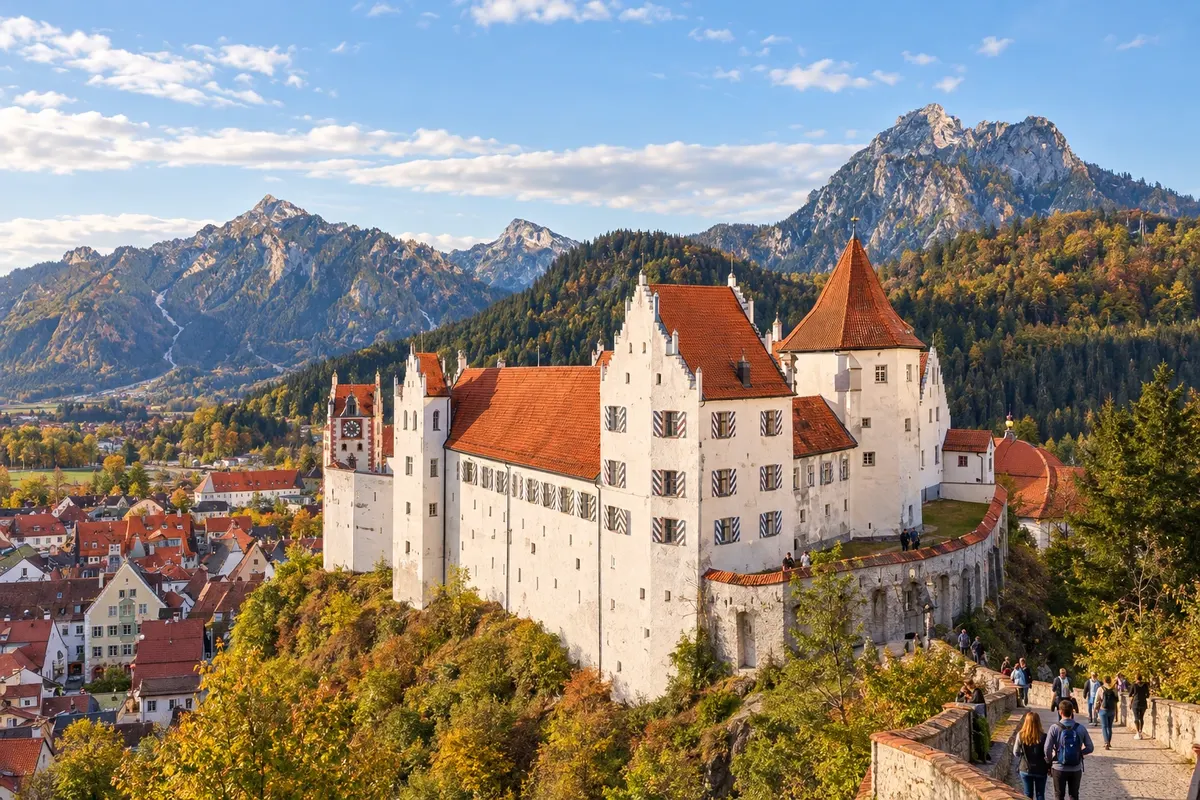
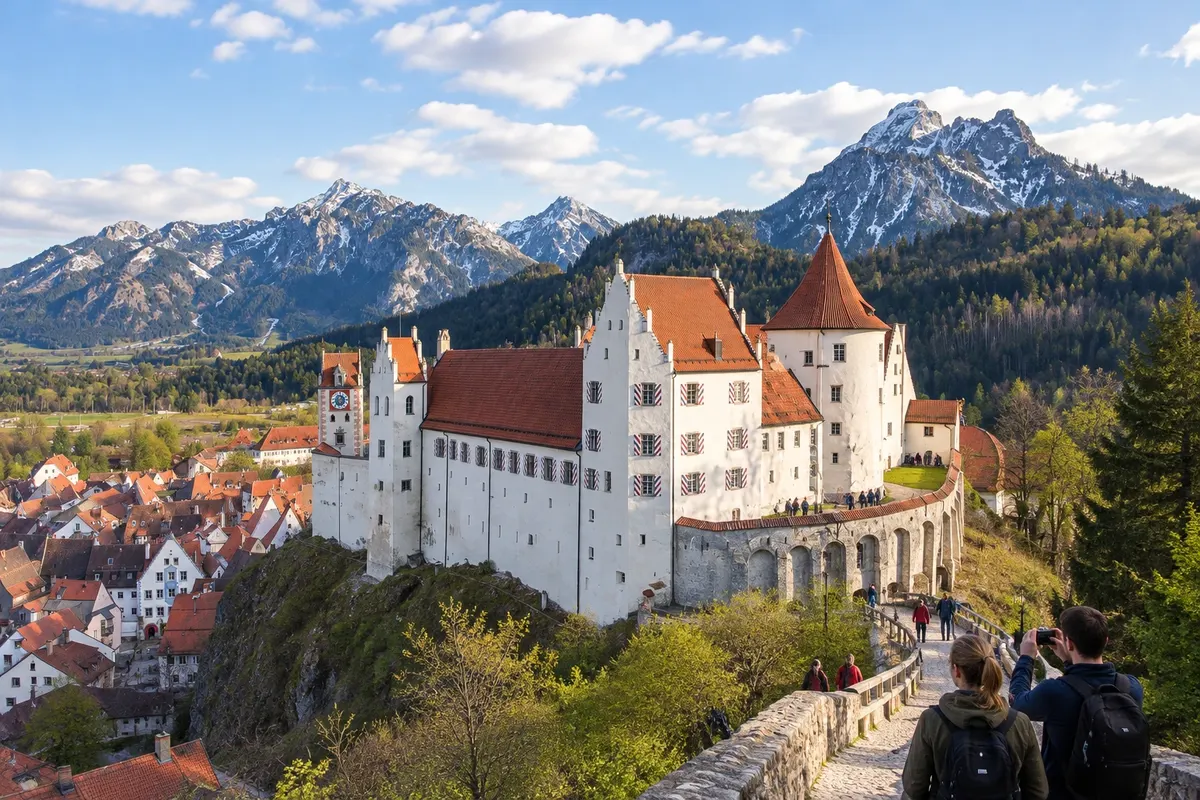
Hohes Schloss Füssen
Füssen · Baviera · Castle

Hohes Schloss Füssen

A Gothic castle of the prince-bishops of Augsburg overlooking the Altstadt of Füssen, featuring trompe-l'œil paintings in the courtyard and galleries of Gothic art from Swabia.

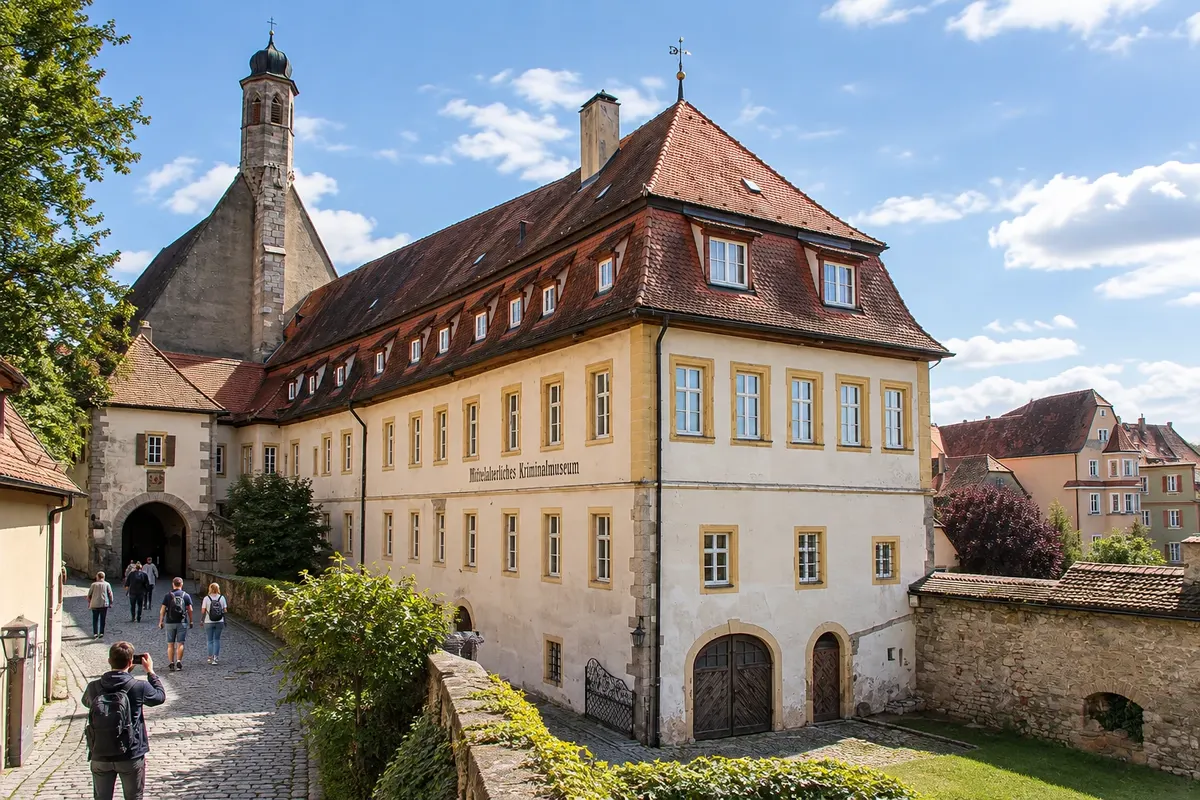
Mittelalterliches Kriminalmuseum
Rothenburg ob der Tauber · Baviera · Museum

Mittelalterliches Kriminalmuseum

Museum of the history of law and justice in Europe over a thousand years, with documents, public punishment objects and a section on the witch hunts.

Rothenburg ob der Tauber · Baviera · Museum

Deutsches Weihnachtsmuseum

Museum about the history of Christmas traditions in Germany, with antique tree decorations, nativity scenes and Advent calendars, inside the Käthe Wohlfahrt shop.

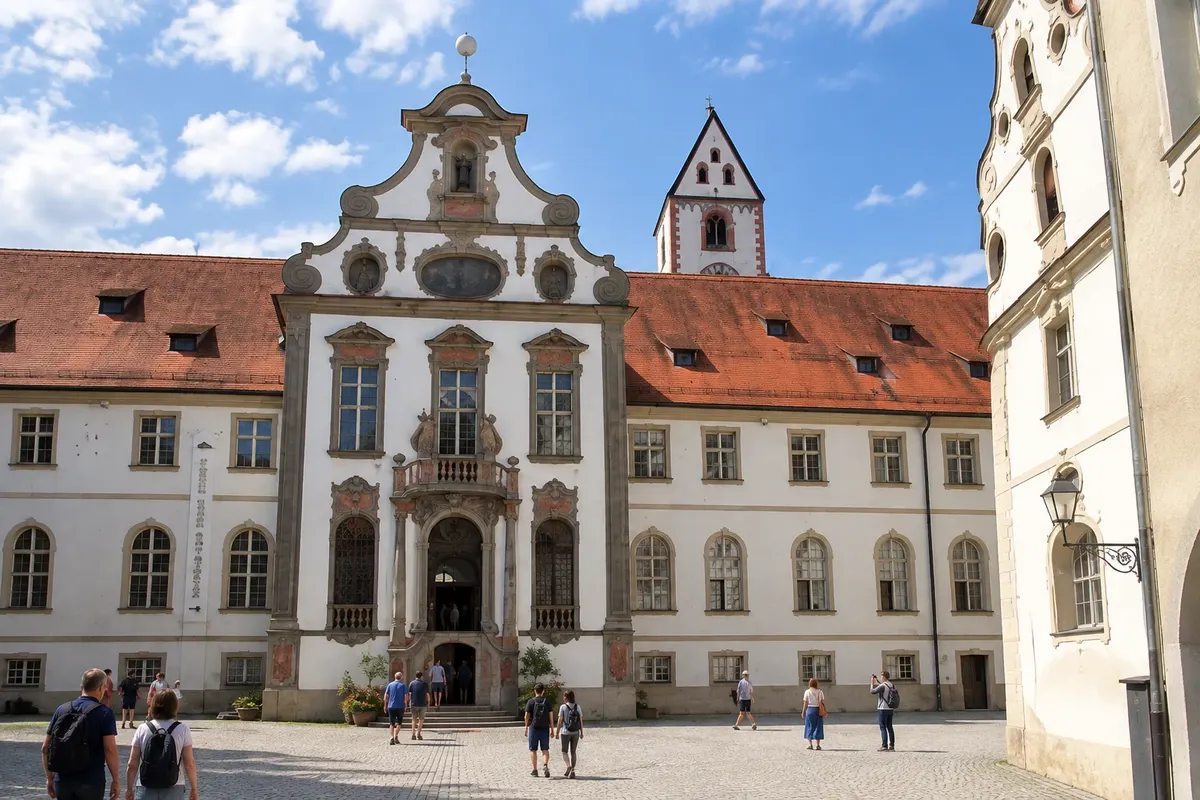
Museum der Stadt Füssen
Füssen · Baviera · Museum

Museum der Stadt Füssen

Museum in the former Baroque monastery of St. Mang, with Baroque halls, the collection of lutes and violins that made Füssen famous, and a Dance of Death from 1602.

Lechfall
Füssen · Baviera · Waterfall

Lechfall

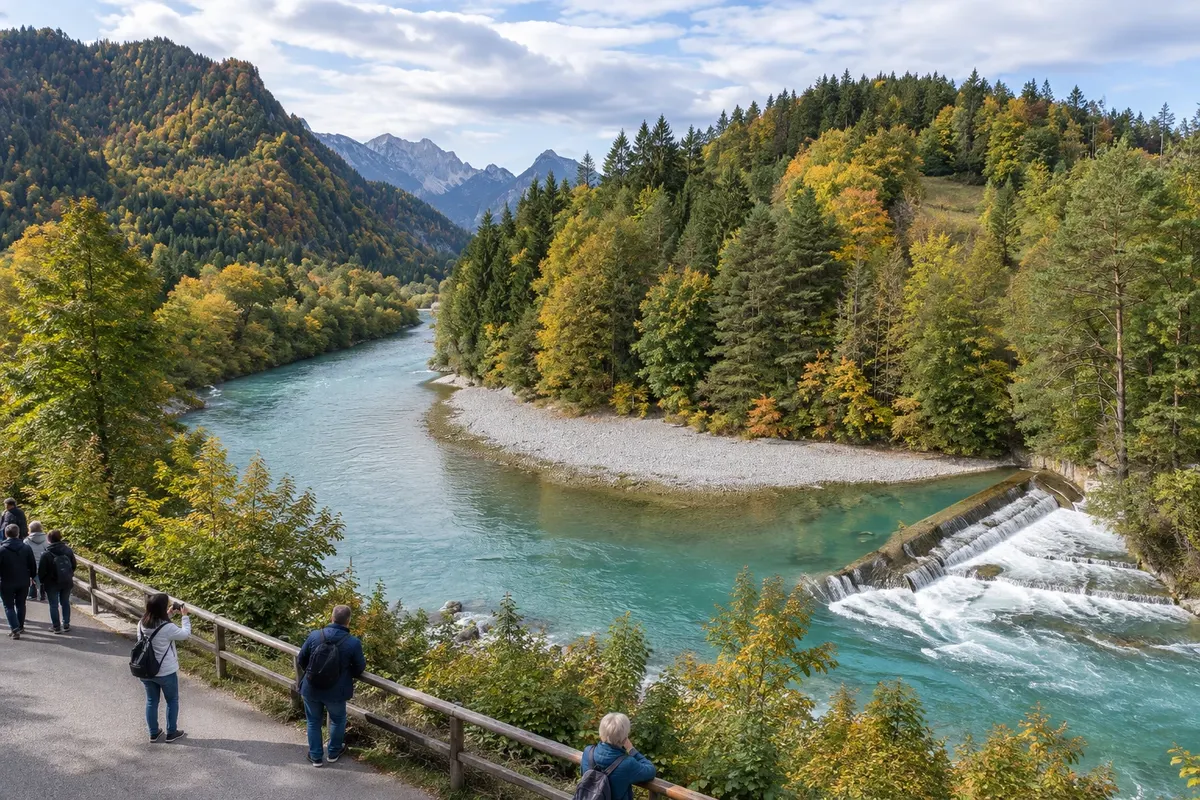
Waterfall of the Lech River where it exits a narrow gorge on the southern edge of Füssen, seen from a 1895 footbridge.

Tegelbergbahn
Füssen · Baviera · Cable car

Tegelbergbahn

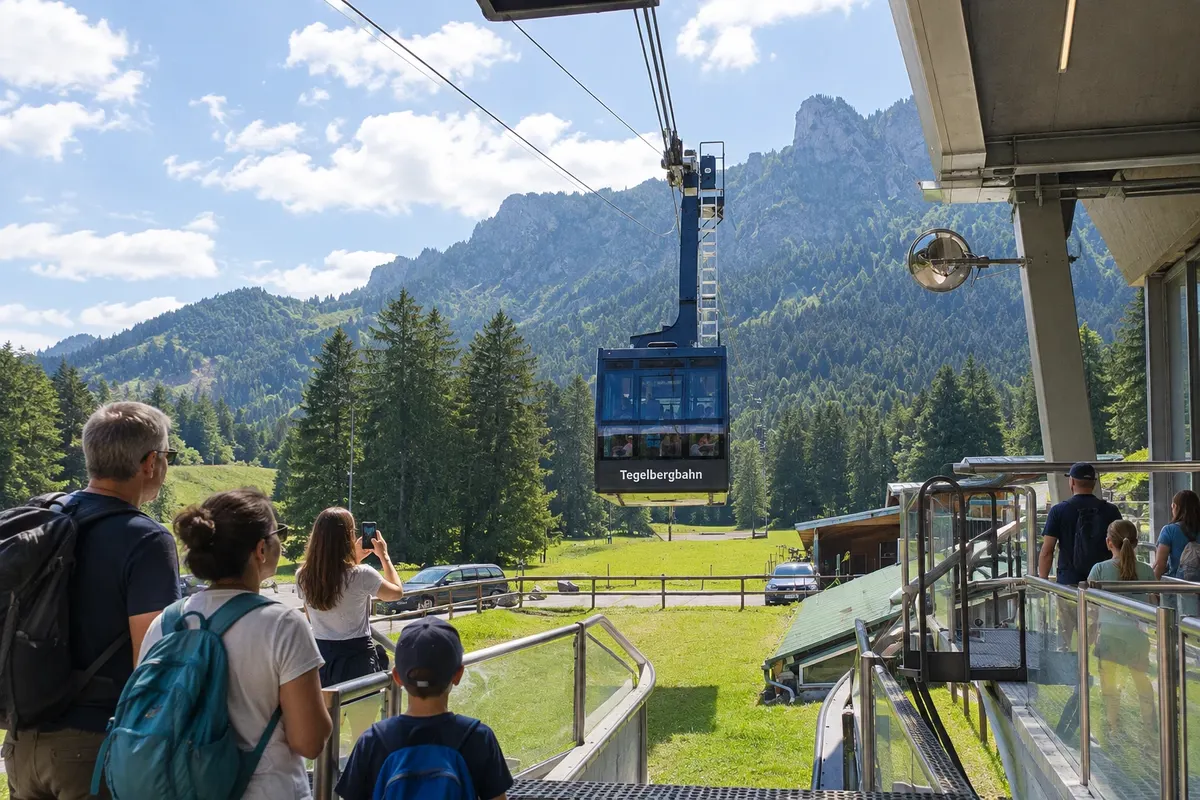
Schwangau cable car that climbs almost 900 meters to Tegelberg, with views of the Ammergau Alps, Mount Säuling and the lakes around the castles.

Before you go

Practical information

A little planning leaves more time to enjoy the journey.

When to go

From May to October the days are long, regional buses and cable cars run more frequently and the lakes are open for boat trips. July and August see the most visitors. In winter, from December to February, it is cold and the days are short; the Marienbrücke often closes due to ice and snow. In Rothenburg, the Christmas market usually runs from late November until around Christmas.

The seasons shown are the most usual ones; nature doesn't always follow the calendar.

How many days to stay

A full day is enough for Neuschwanstein and Hohenschwangau if you arrive early. Staying one or two nights in Füssen allows you to add Hohes Schloss, the Lechfall, the Alpsee and the Tegelberg cable car. Rothenburg needs a day, and one night there lets you see the empty streets after the tour groups leave. To drive the Romantic Road from Würzburg to Füssen, allow four to six days.

Which city to stay in

In Füssen, the Altstadt and the streets near the train station put everything within walking distance and close to the bus to the castles. If you want to wake up near Neuschwanstein you can stay in Hohenschwangau or Schwangau, villages with guesthouses and small hotels but little nightlife. In Rothenburg, it's best to stay inside the wall, near the Marktplatz or Herrngasse; outside the walls, near the station, there are options for those arriving by car. Munich is a good base for day trips to Füssen.

Respect the place

Take your trash with you, follow the signs and support local businesses. In natural areas, follow the visiting guidelines.

Get your questions answered

Frequently asked questions about Bavarian Castles and the Romantic Road

Can you visit Neuschwanstein on a day trip from Munich?

Yes. The regional train from Munich to Füssen takes about two hours, and buses run from Füssen station to Hohenschwangau, where the ticket office and the start of the climb to the castles are located, in about ten minutes. Buy the Neuschwanstein ticket in advance for a time that allows you to arrive: the official recommendation is to be in Hohenschwangau one-and-a-half to two hours before the tour time. The day is full but doable.

What is the Romantic Road and do I need a car to do it?

It is a tourist route of about 410 kilometres between Würzburg and Füssen, signposted with brown signs, that links medieval towns, monasteries and landscapes of southern Germany. To stop in the smaller towns along the way, like Dinkelsbühl and Nördlingen, a car gives more freedom. The two most visited endpoints, Rothenburg and Füssen, are well served by regional trains and can be visited without driving.

How many days should I reserve for the castles and Rothenburg?

At least three: one for Neuschwanstein and Hohenschwangau, one for Füssen and its surroundings, and one for Rothenburg. The two towns are about 250 kilometres apart and by train the journey involves several changes and takes most of a morning. Many people include Rothenburg on the route between Frankfurt and Munich.

What is the best time to see the castles?

From May to October, when the days are longer and buses to the Marienbrücke and boat trips on the Alpsee operate. Summer is the busiest season. In winter the castle remains open for guided tours, but the Marienbrücke often closes because of ice, and the landscape may be snowy or simply grey: it's unpredictable.

Do I need to buy the Neuschwanstein ticket in advance?

It's the safest option. The castle can only be visited on a guided tour with a timed ticket, and places are limited. Remaining tickets are sold at the Hohenschwangau ticket office only for the same day and can sell out in the morning during busy months. Viewing the castle from the outside does not require a ticket.

Explore other destinations Search by state and city
Back