

 Brazil
 Argentina
 Chile
Chile Colombia
 Peru
Peru Uruguay
 Belgium
 Spain
Spain France
 Greece
 the Netherlands
 Ireland
 Italy
Italy Portugal
 the United Kingdom
 Switzerland
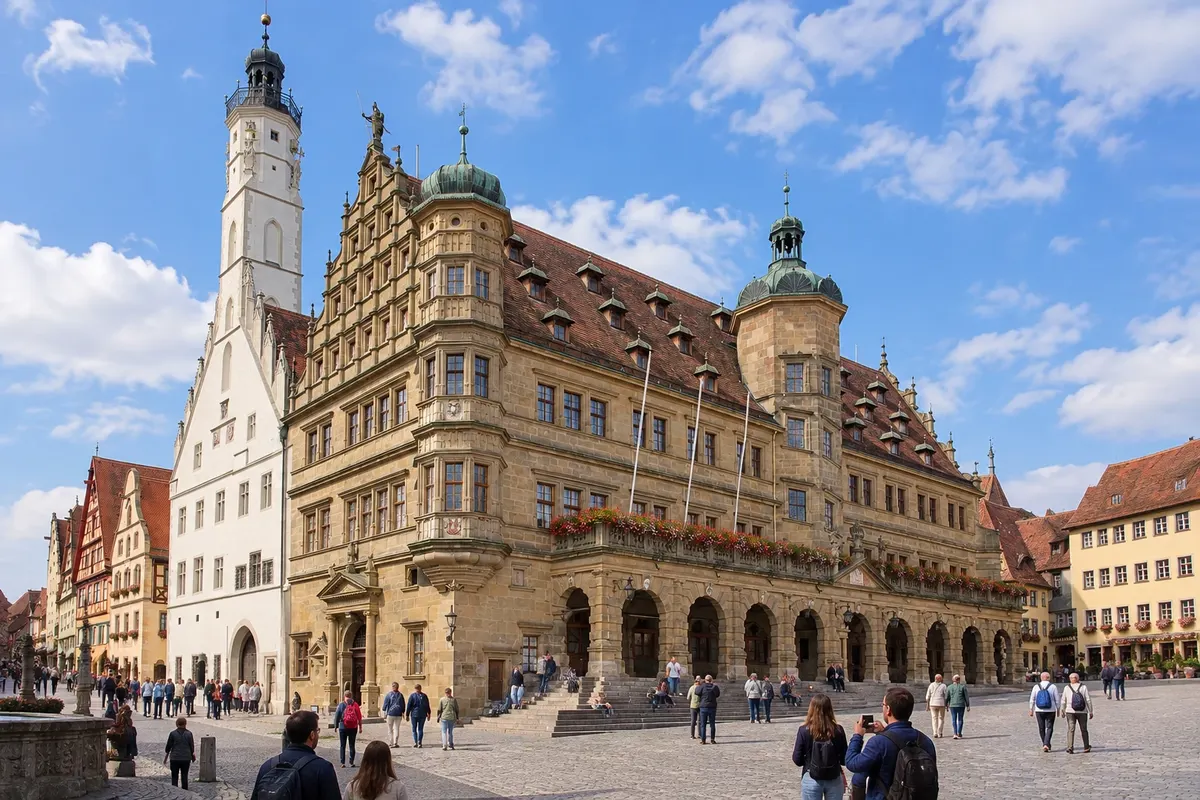
Square
Marktplatz und Rathaus
Rothenburg's central square, with the Gothic and Renaissance town hall, the tower with a 60-meter viewpoint, and the Ratstrinkstube clock that enacts the legend of the Meistertrunk.
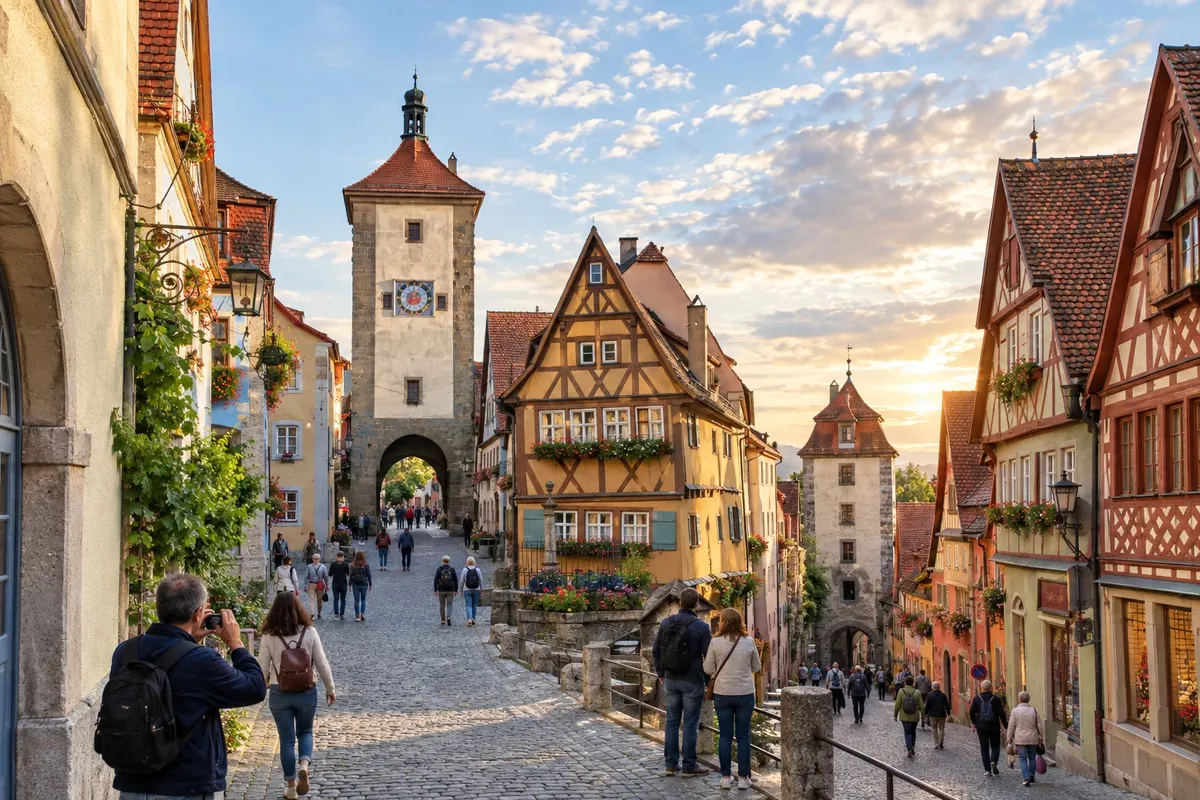
Baviera · Germany
In the destination Bavarian Castles and the Romantic Road.
In the photo: Plönlein, Rothenburg ob der Tauber
Illustrative images. The pictures in this guide are illustrations based on the real place, not photographs, and may differ from it.
The city
Rothenburg ob der Tauber, in Franconia, is the best-known walled town on the Romantic Road. The center (Altstadt) preserves the entire wall, with a walkway atop the ramparts, towers and gates, and streets of half-timbered houses. The main sights are the Marktplatz with the town hall and its tower, the Plönlein, the Burggarten, the church of St. Jakob with the Riemenschneider altarpiece, the medieval crime museum and the Christmas museum. It was a Free Imperial City from 1274 to 1803.
There's no accommodation in the guide yet in Rothenburg ob der Tauber.
There are no restaurants in the guide yet in Rothenburg ob der Tauber.
Know a good one? Recommend it to ushow to get there · how many days · itinerary · questions
The local experience
Rothenburg's central square, with the Gothic and Renaissance town hall, the tower with a 60-meter viewpoint, and the Ratstrinkstube clock that enacts the legend of the Meistertrunk.
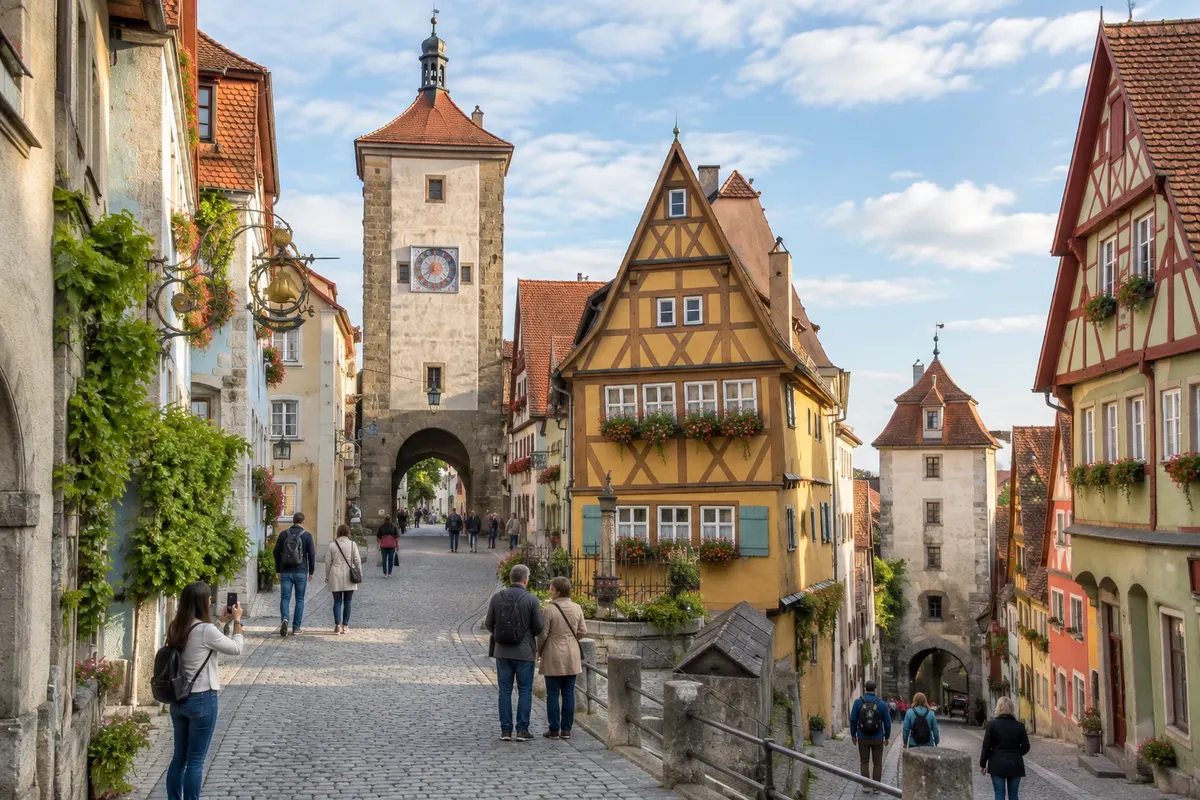
Small triangular square where the street splits in two, with half‑timbered houses and the Siebersturm and Kobolzeller Tor towers in the background: the most photographed scene in Rothenburg.
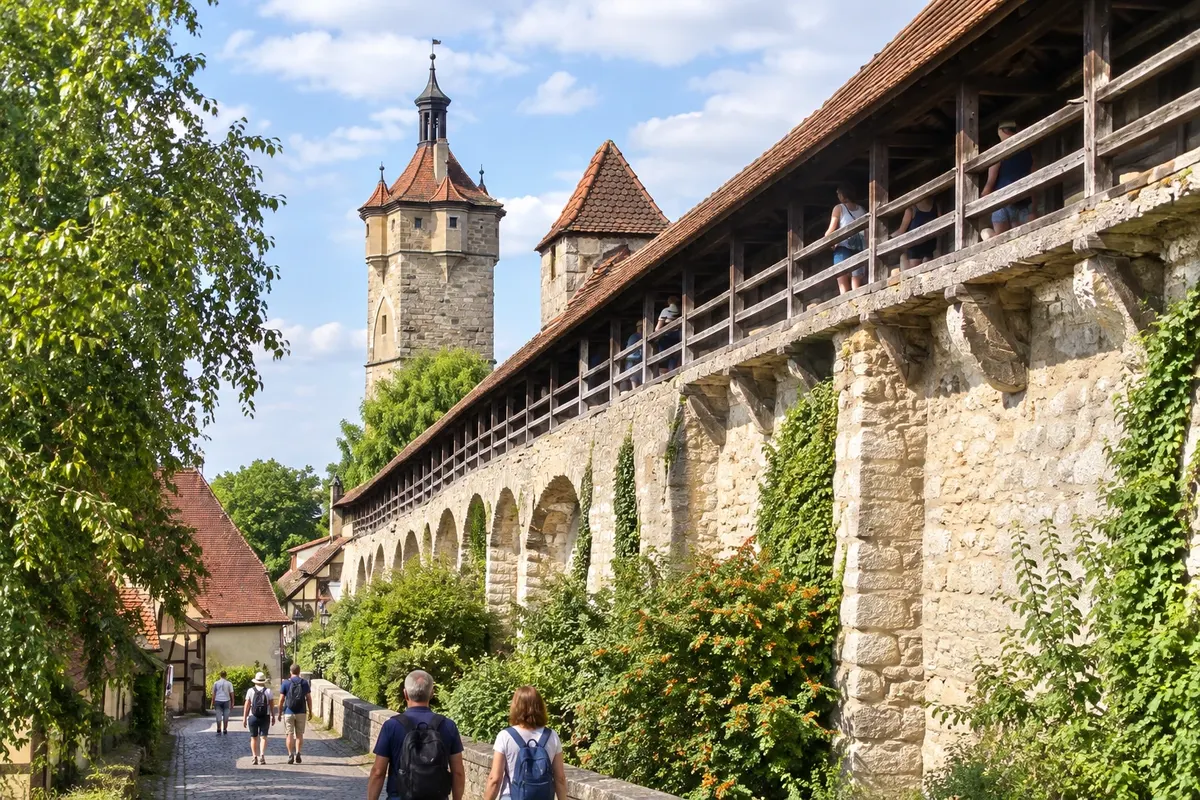
The medieval wall that still surrounds the entire town, with a covered walkway along the ramparts, towers and gates such as the Rödertor, the Klingentor and the Spitaltor.
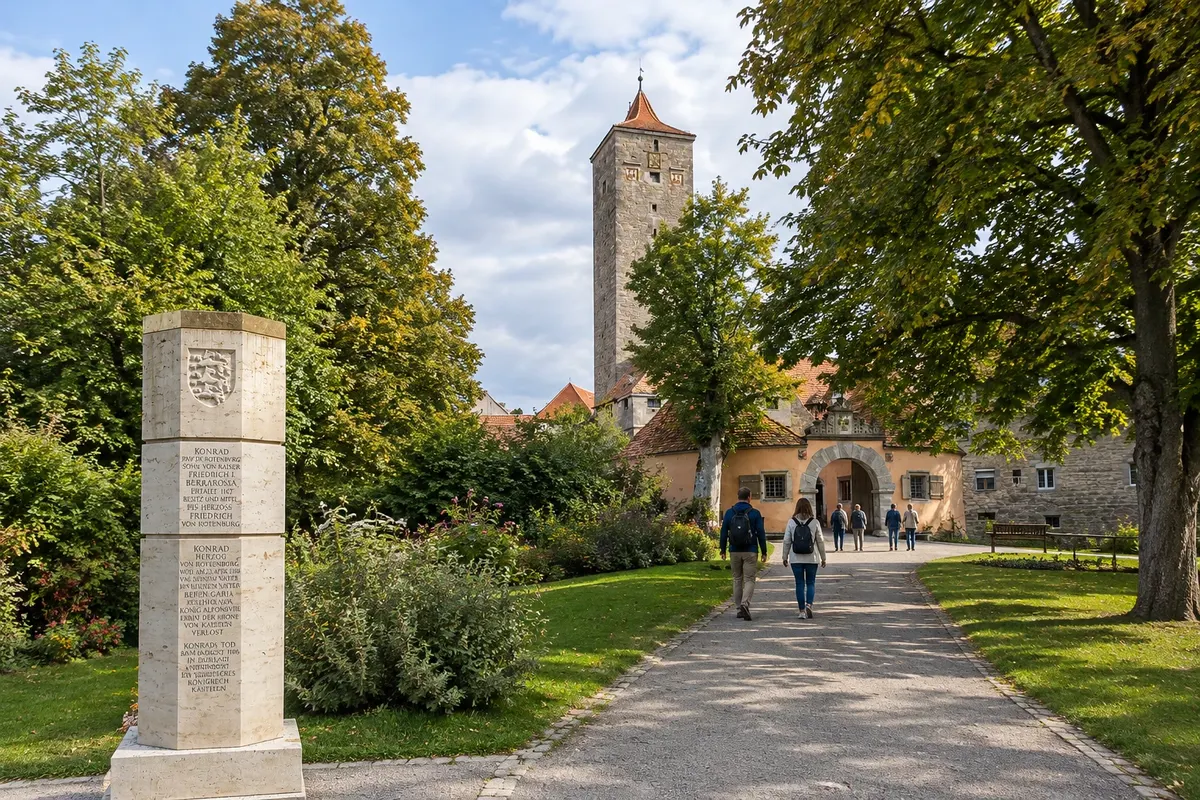
Garden on the site of the former imperial castle of the Staufer, on a promontory over the Tauber valley, with the chapel of São Brás and views of the wall and countryside.
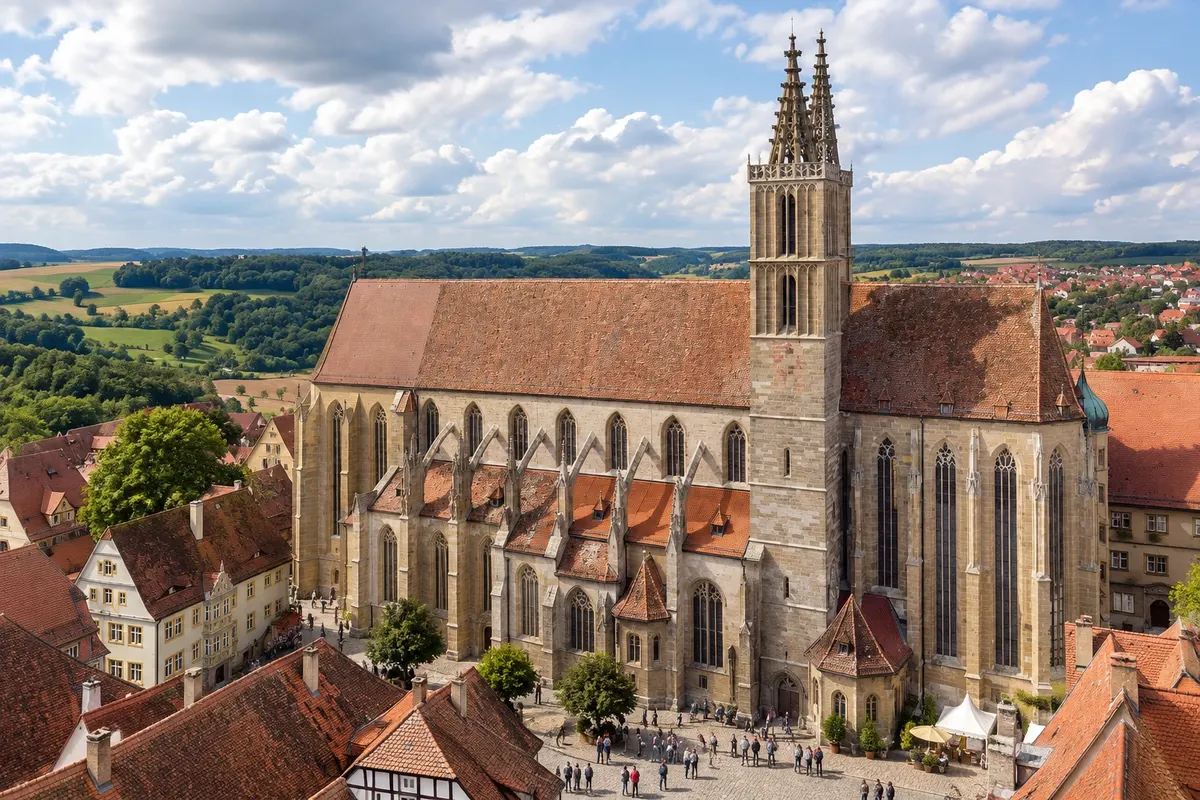
Main Gothic church of Rothenburg, with the Holy Blood altarpiece carved by Tilman Riemenschneider between 1500 and 1505.
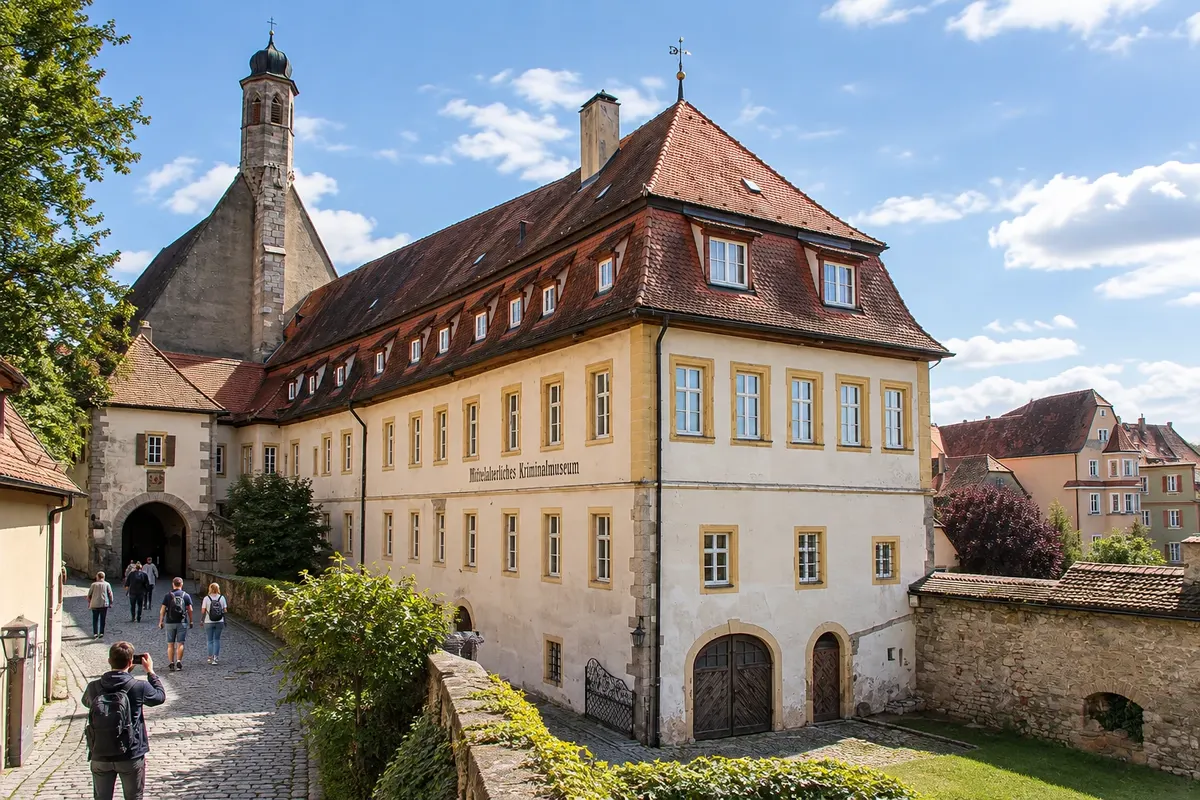
Museum of the history of law and justice in Europe over a thousand years, with documents, public punishment objects and a section on the witch hunts.
Museum about the history of Christmas traditions in Germany, with antique tree decorations, nativity scenes and Advent calendars, inside the Käthe Wohlfahrt shop.