Zugspitze
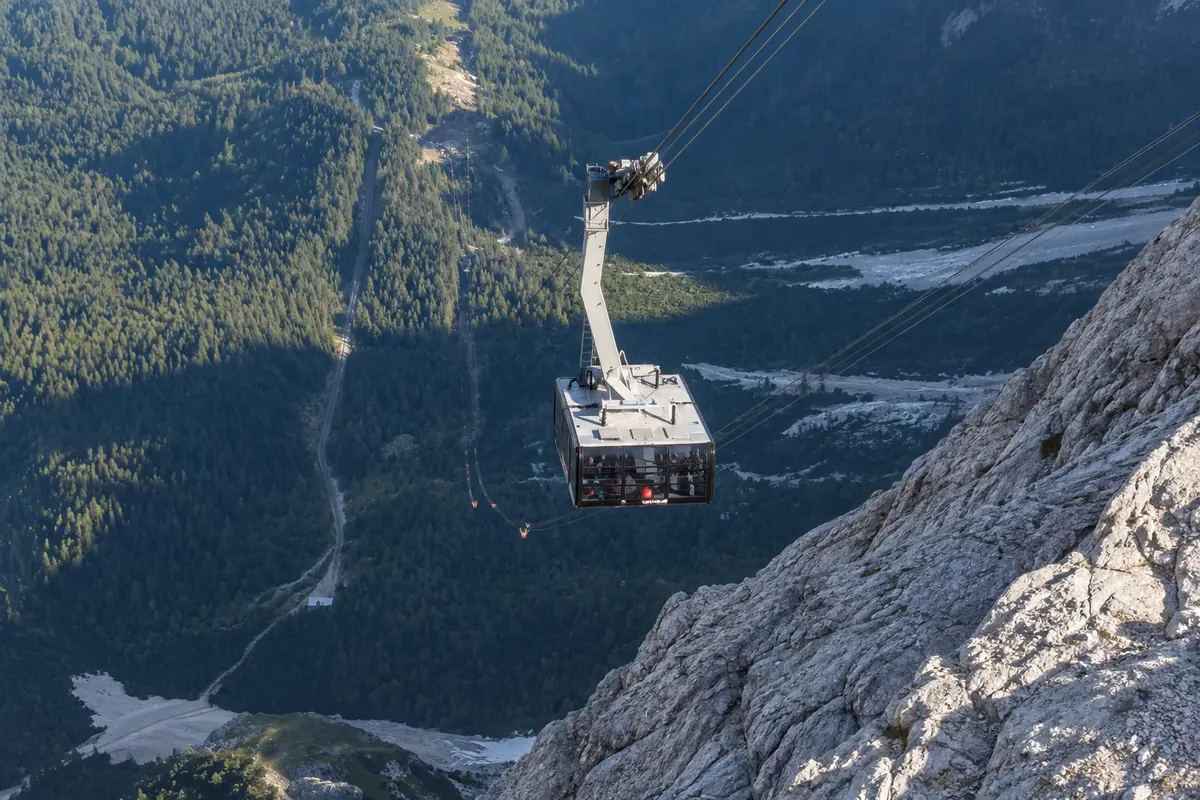
The highest mountain in Germany, at 2,962 metres, on the border with Austria. It is reached by rack railway from Garmisch-Partenkirchen or by cable car from the Eibsee, up to a terrace with views over the Alps.
Baviera · Germany
In the destination Alpes da Baviera.
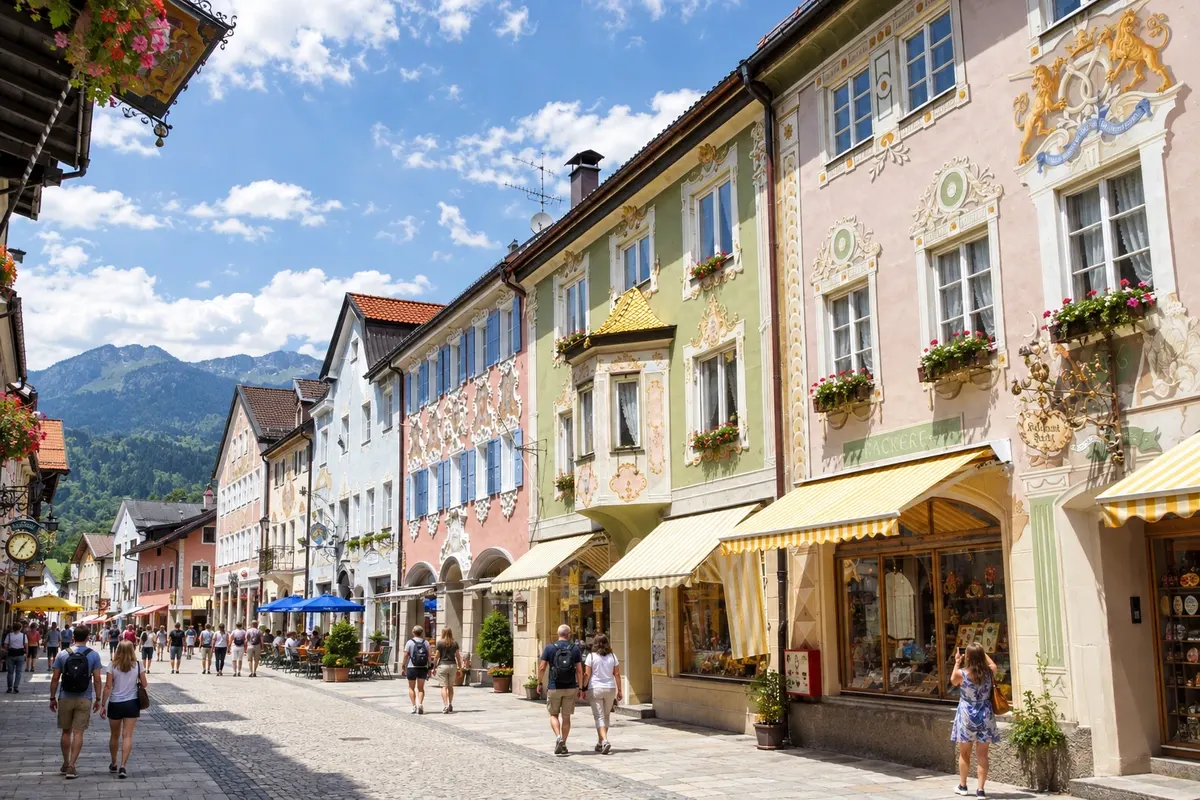
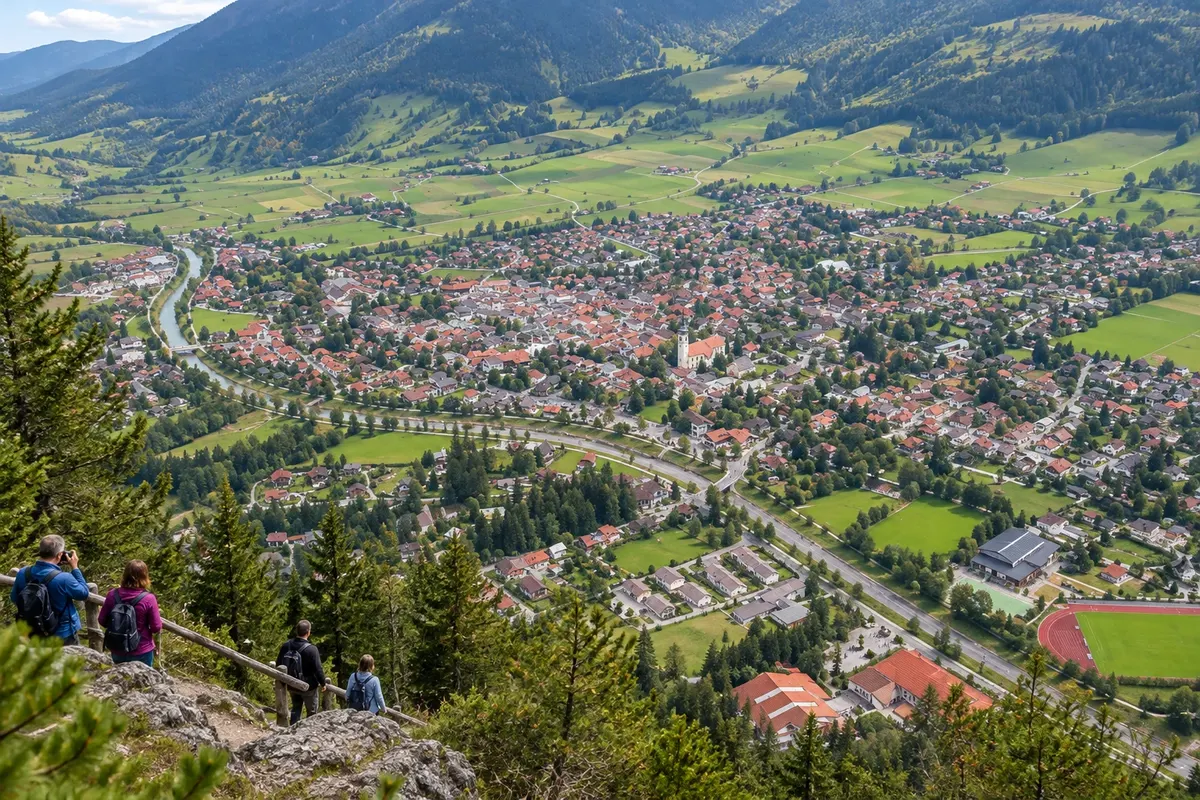
In the photo: Ludwigstraße, Garmisch-Partenkirchen
Illustrative images. The pictures in this guide are illustrations based on the real place, not photographs, and may differ from it.
The city
Garmisch-Partenkirchen was formed by the merger of two villages in 1935, on the eve of the 1936 Winter Games. It lies at the foot of the Zugspitze, the highest mountain in Germany, which is reached by rack railway or cable car. Nearby are the Eibsee lake, the Partnachklamm gorge, the Olympia-Skistadion and Ludwigstraße, with painted houses. Close by are Schloss Linderhof, Kloster Ettal and Oberammergau.
There's no accommodation in the guide yet in Garmisch-Partenkirchen.
There are no restaurants in the guide yet in Garmisch-Partenkirchen.
Know a good one? Recommend it to ushow to get there · how many days · itinerary · questions
The local experience
The highest mountain in Germany, at 2,962 metres, on the border with Austria. It is reached by rack railway from Garmisch-Partenkirchen or by cable car from the Eibsee, up to a terrace with views over the Alps.
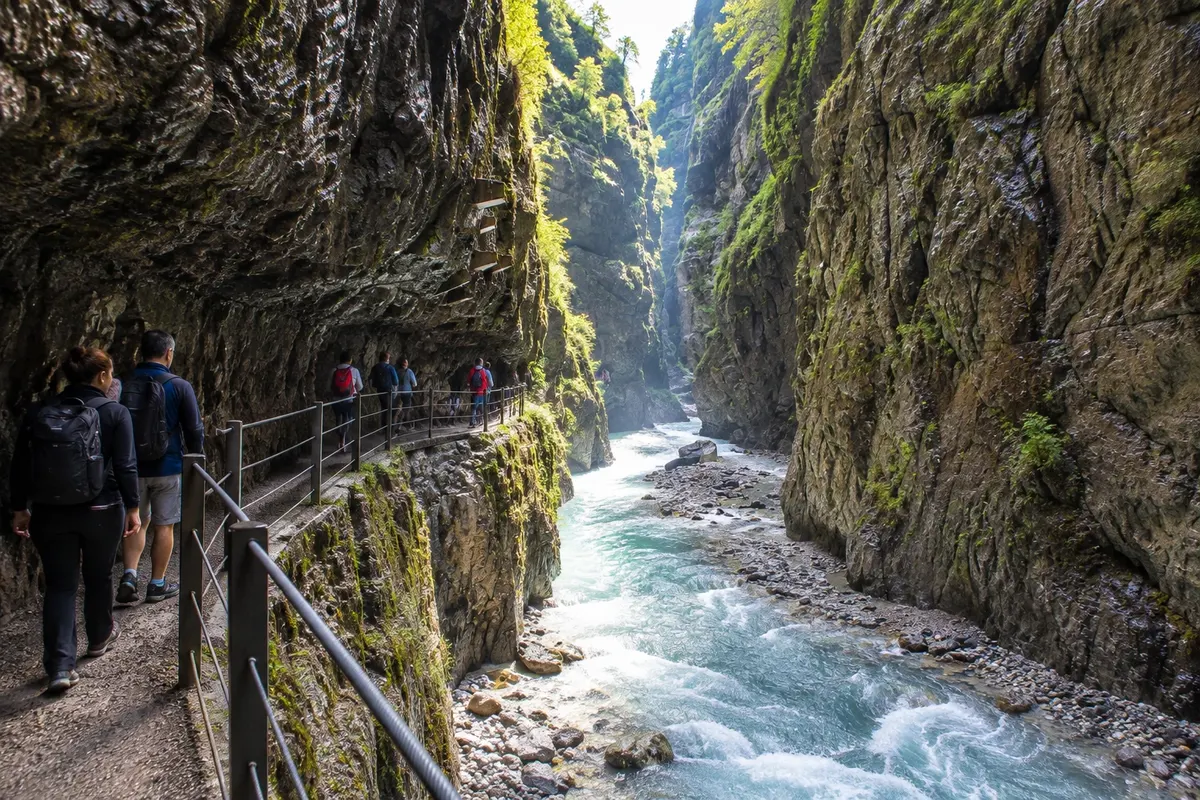
A roughly 700‑metre gorge carved by the Partnach River, with walls over 80 metres high. A path with galleries cut into the rock runs alongside the water. It is open year‑round during daylight hours, with an entrance fee.
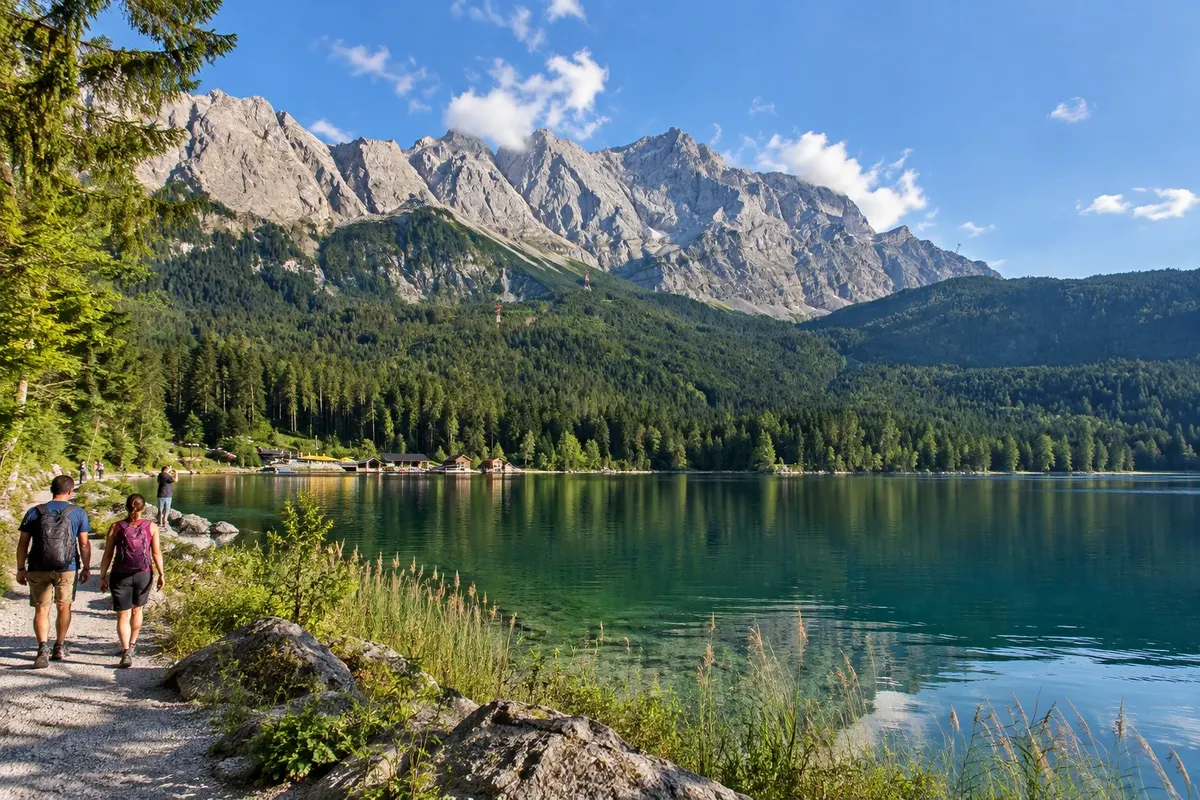
A green‑water lake at the foot of the north face of the Zugspitze, in Grainau, 9 km from Garmisch. It has a path circling the shore and the departure station for the Zugspitze cable car.
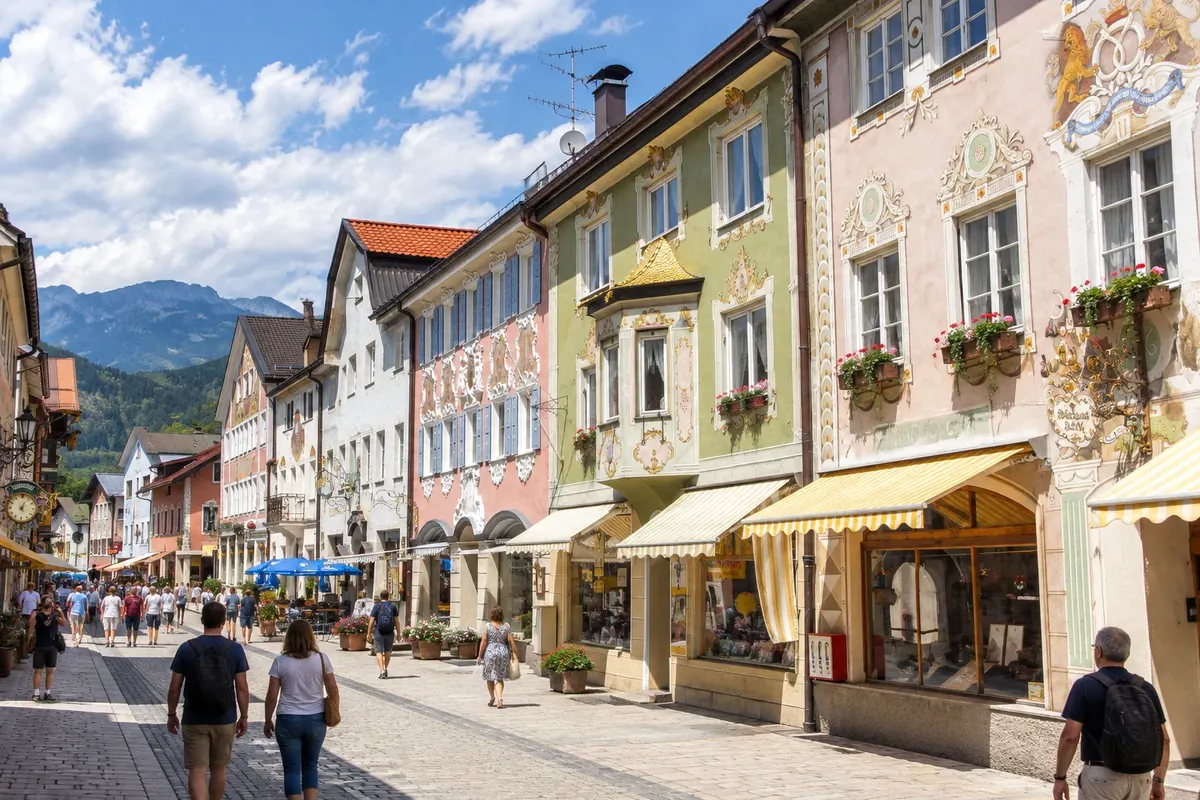
The old market street of Partenkirchen, on the line of the Roman road between the Brenner and Augsburg. It features painted façades, wrought‑iron shop signs and the neo‑Gothic church of Mariä Himmelfahrt.

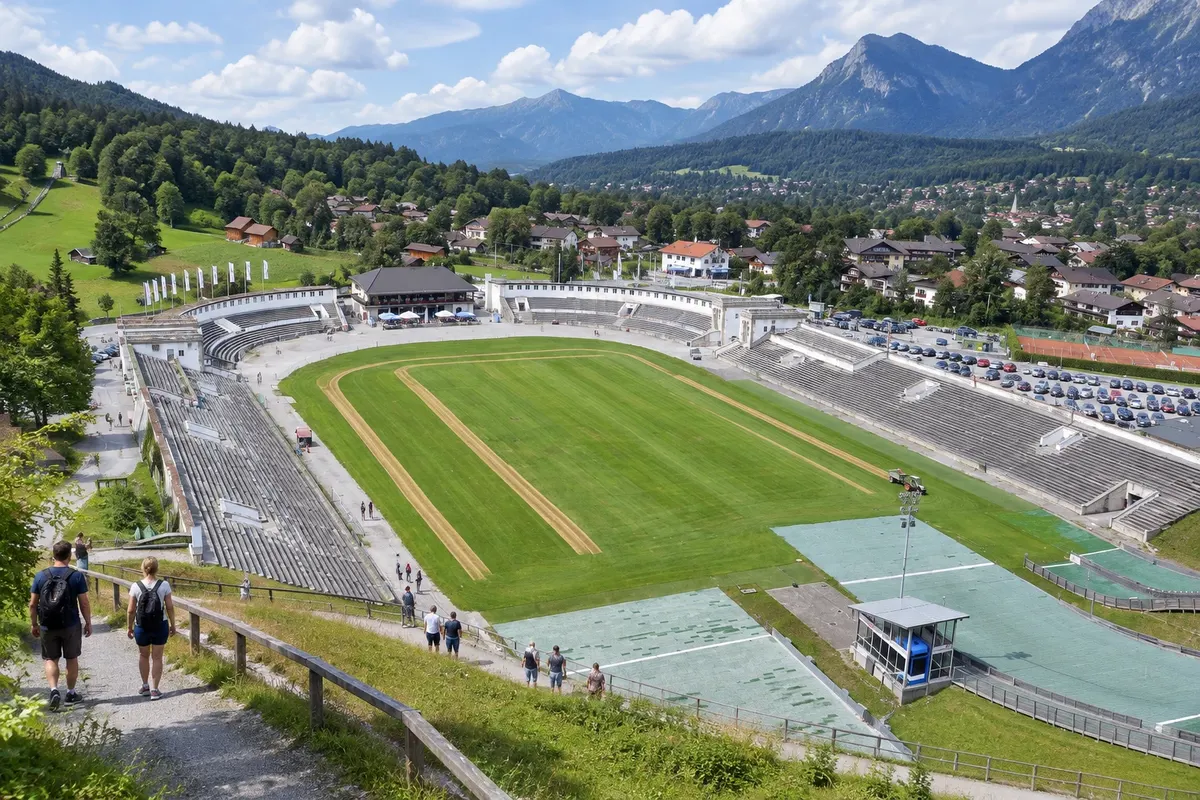
Stadium built for the 1936 Winter Olympics, at the foot of the large ski-jump ramp. It's on the way to the Partnachklamm and hosts the New Year's round of the Four Hills Tournament.
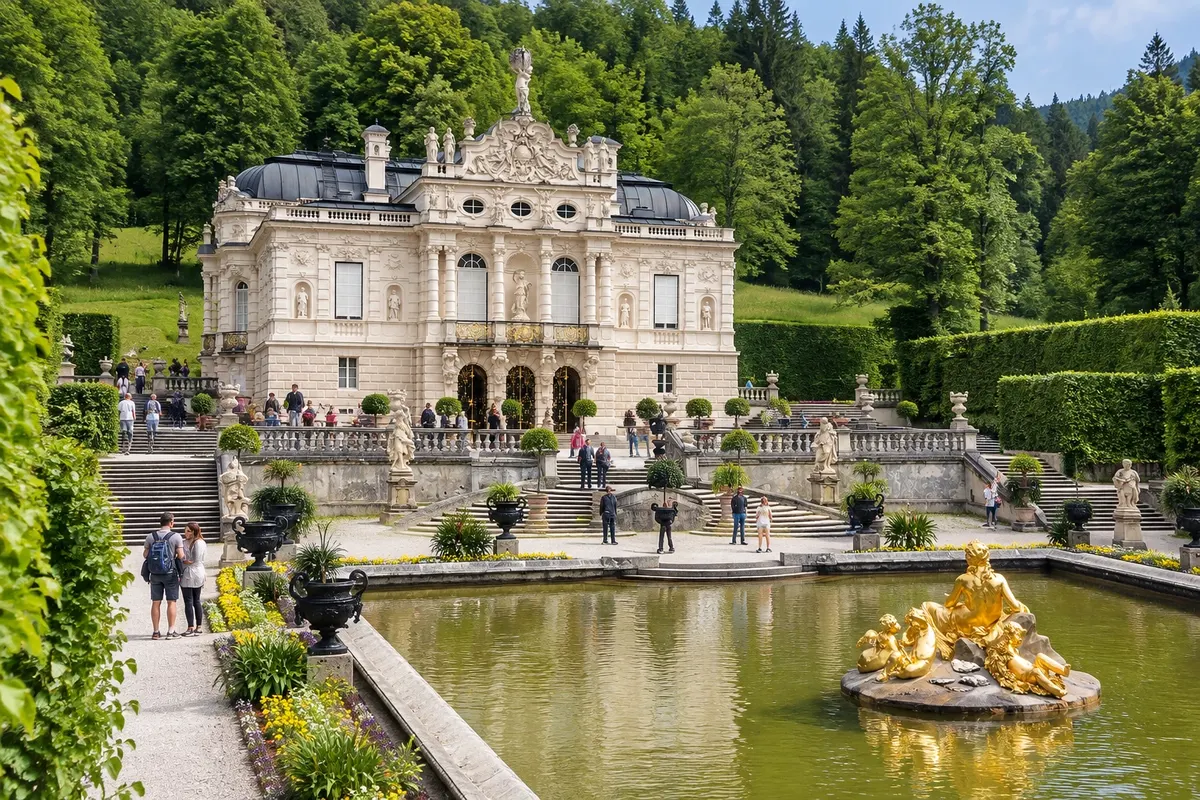
The smallest of King Ludwig II's palaces and the only one he saw completed, in a neorococo style, in an isolated valley about 25 km from Garmisch. Visits are by guided tour only. It is a UNESCO World Heritage Site.
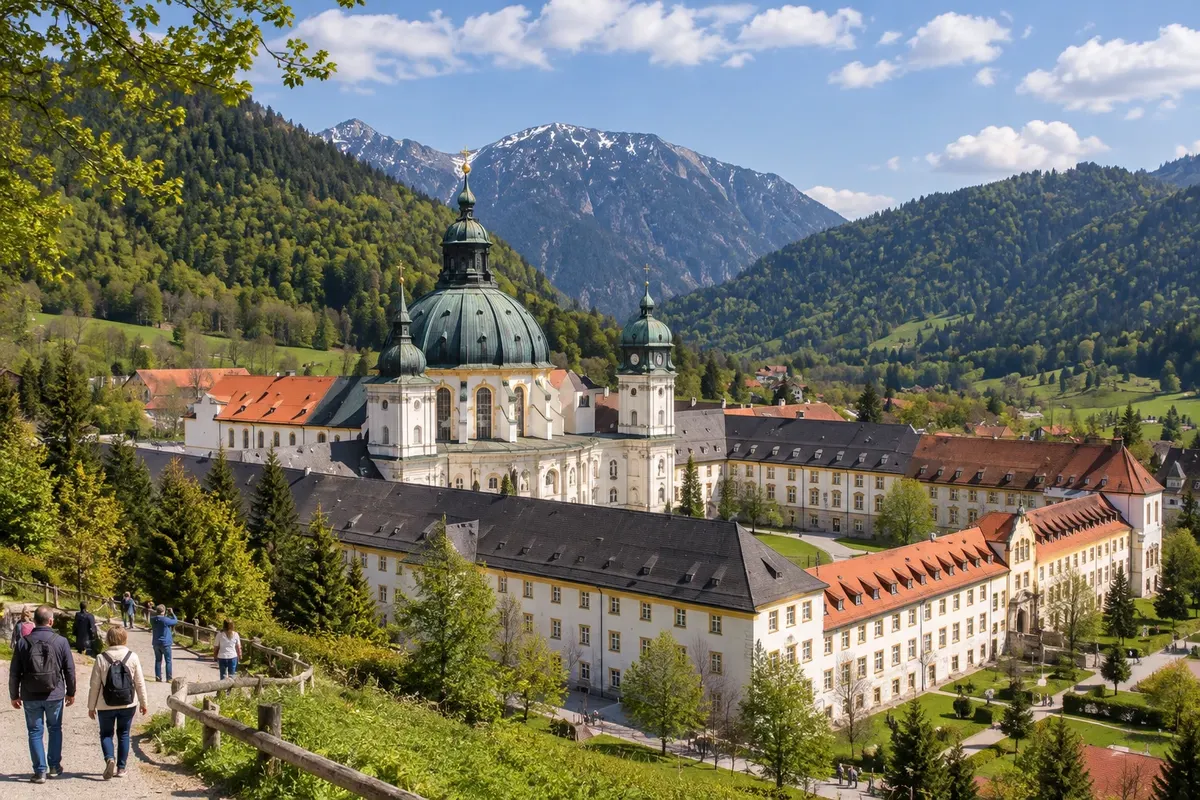
Benedictine abbey founded in 1330 by Emperor Ludwig the Bavarian, about 10 km from Garmisch. The Baroque basilica has a dome over a twelve-sided plan. The monastery maintains a brewery and a liqueur distillery.
Village in the Ammer valley known for the Passion of Christ performed every ten years, for its painted façades and for wood sculptors. It is about 20 km from Garmisch-Partenkirchen.