Blueberry grunt
Blueberries cooked with sugar in a covered pan, with steamed dough dumplings on top. It’s a traditional dessert from Nova Scotia, linked to the blueberry harvest in August and September.
Antarctica
Province · Atlantic Canada
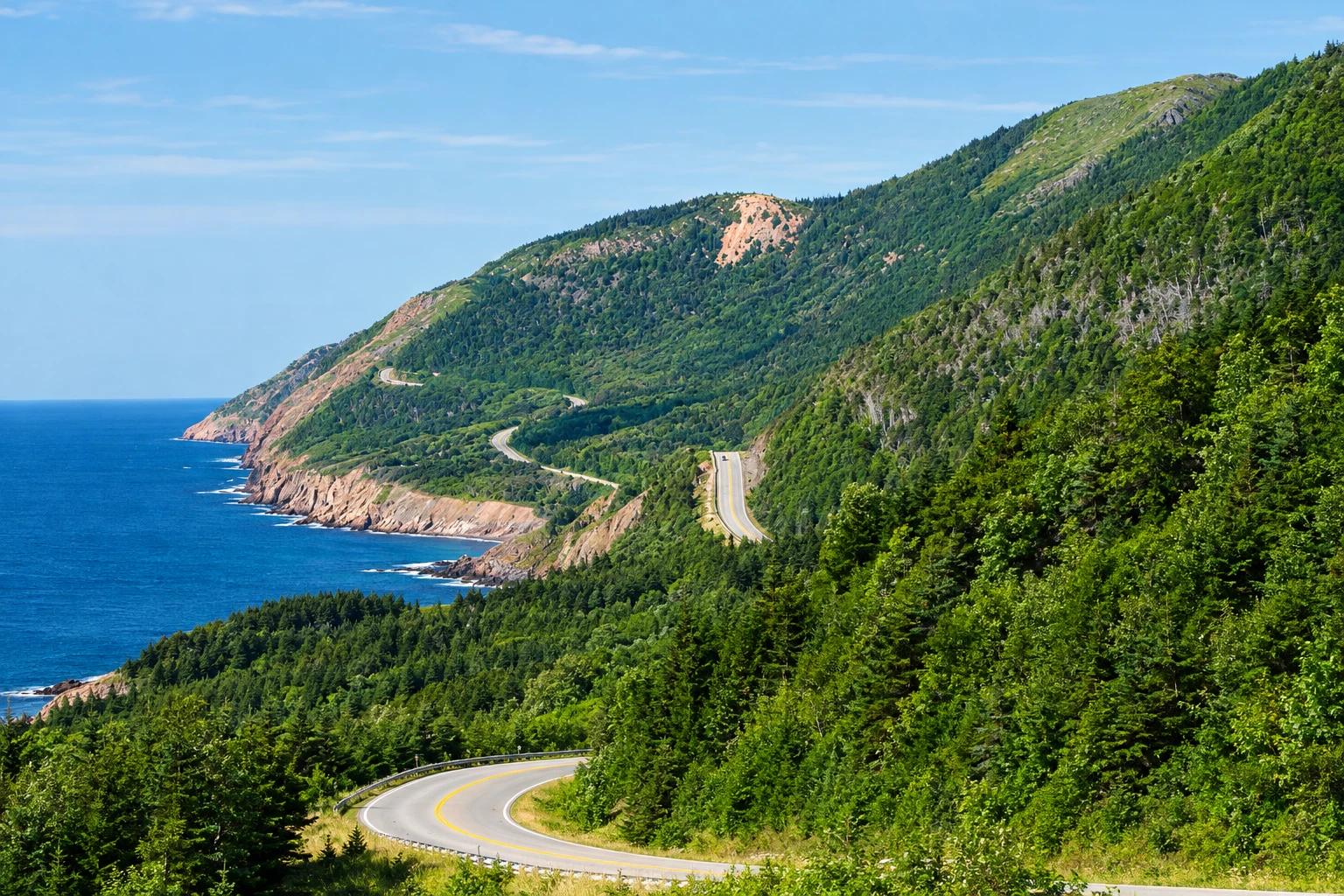
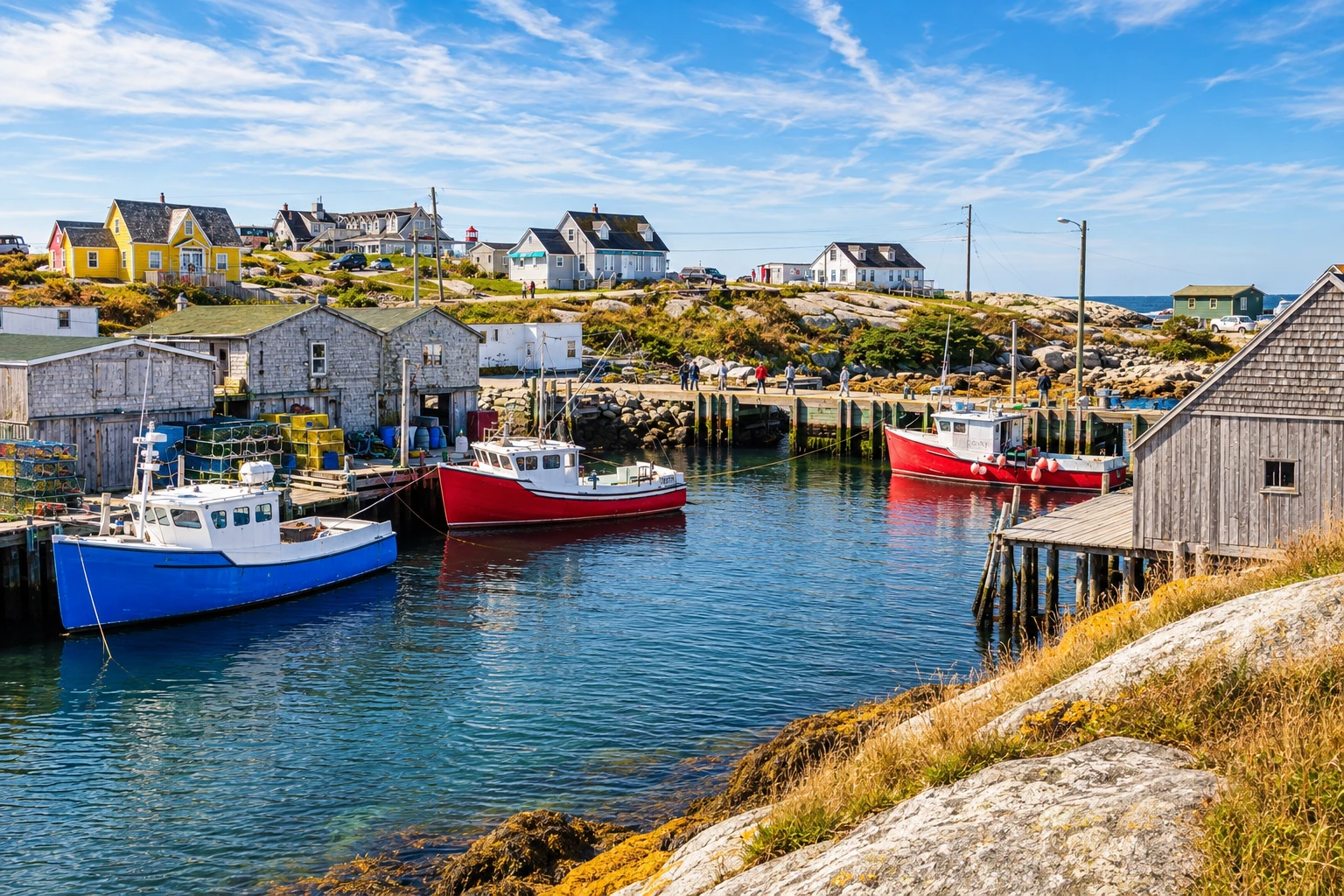
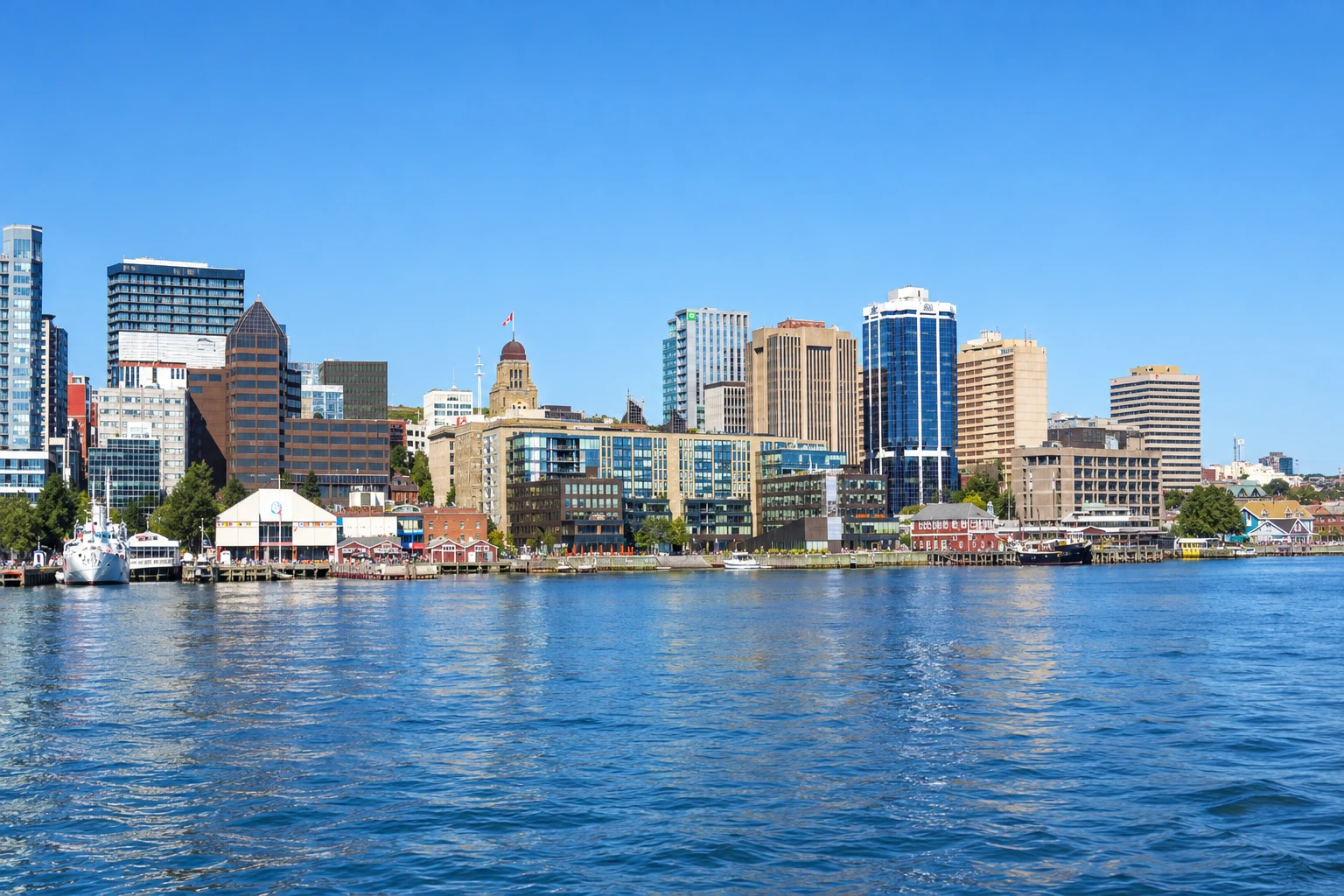
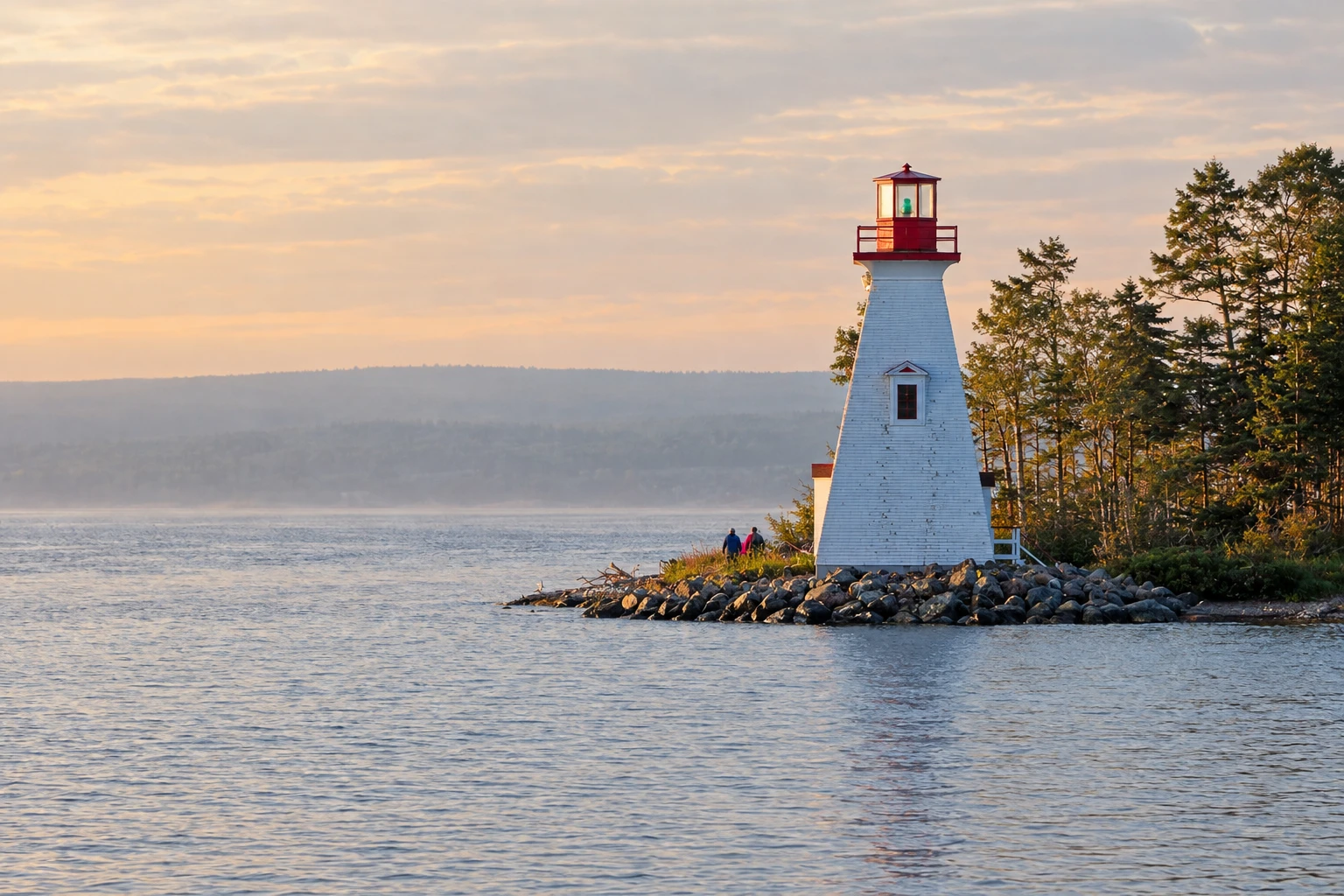
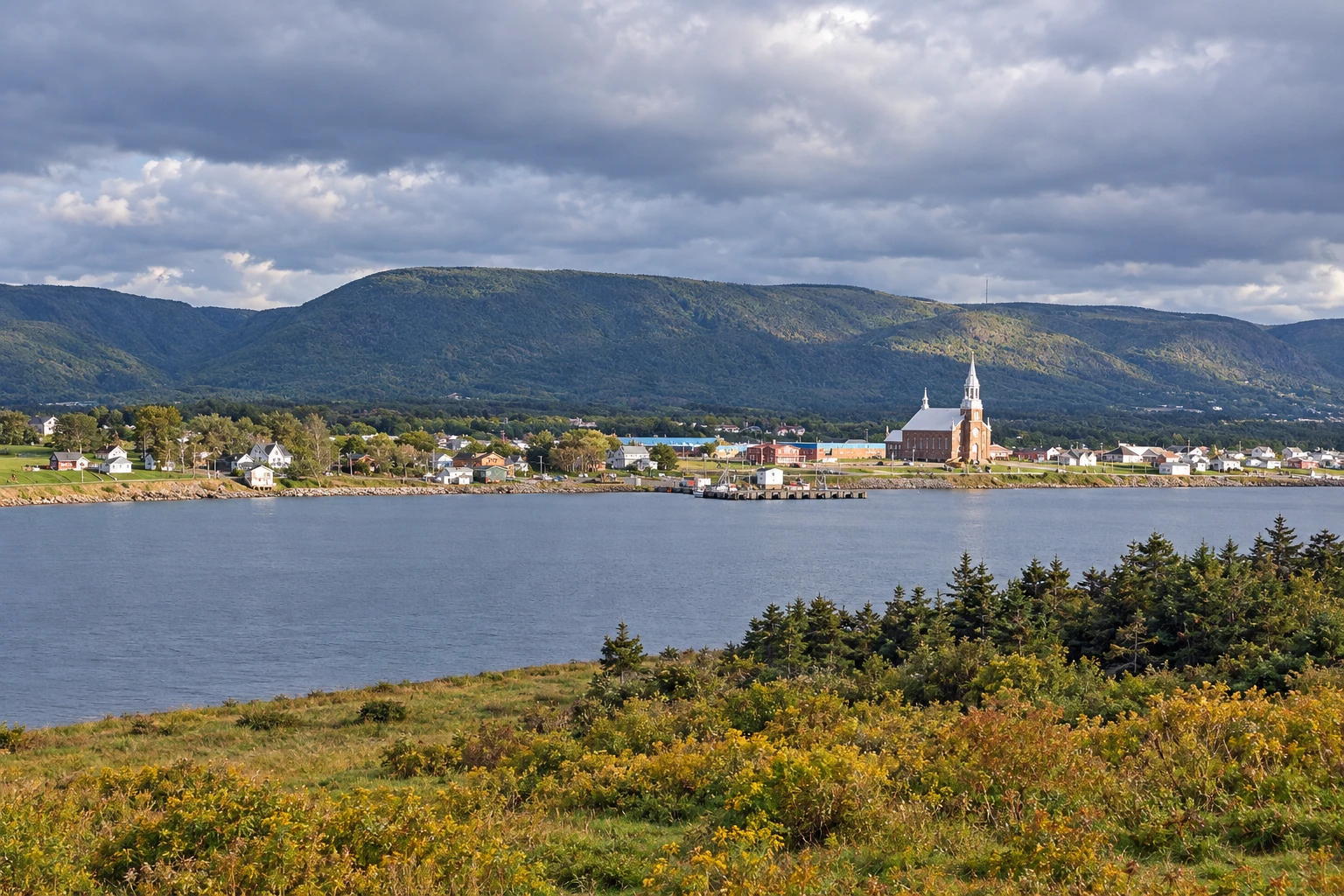
Halifax and its harbour, the Peggy's Cove lighthouse, Lunenburg (a World Heritage site), and the Cabot Trail, Cape Breton Island’s coastal road.
In the photo: Cabot Trail, Nova Scotia
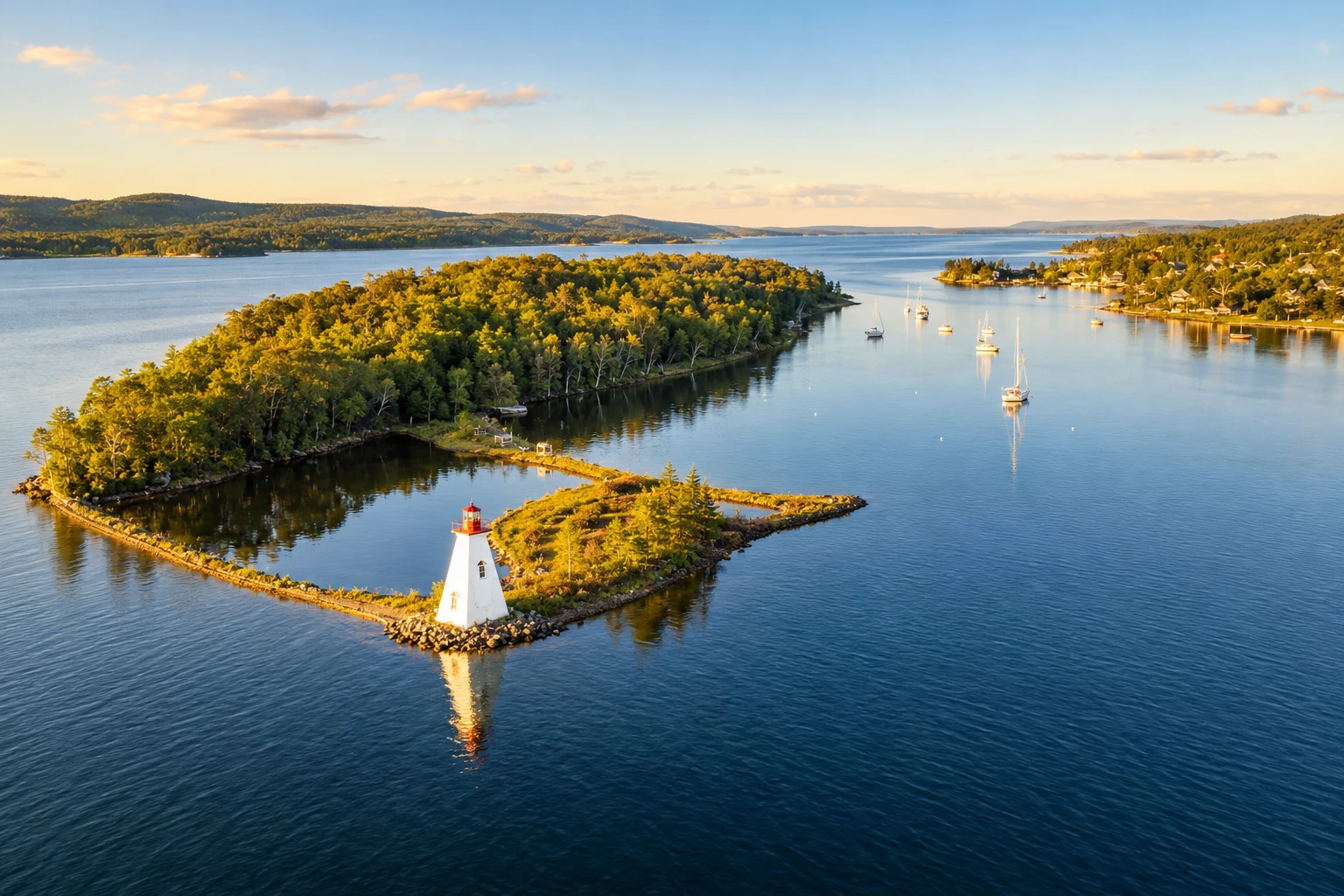
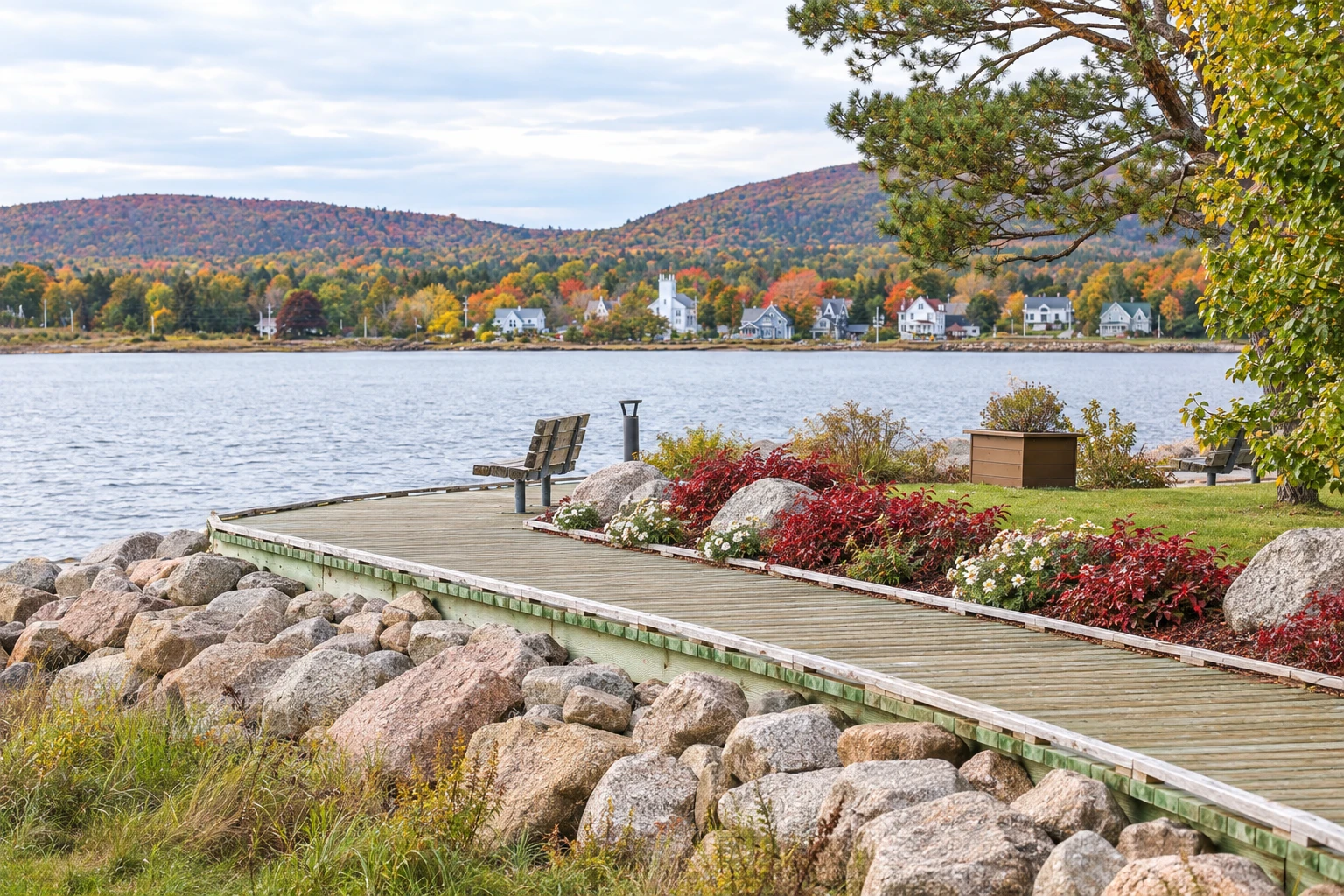
Illustrative images. The pictures in this guide are illustrations based on the real place, not photographs, and may differ from it.
Province
Nova Scotia is almost entirely surrounded by the sea: a peninsula connected to the mainland by a narrow isthmus and the island of Cape Breton to the north. Nowhere in the province is far from the ocean. Halifax is the capital and the largest city in the Atlantic region.
Halifax has one of the world’s largest natural harbours. Along the waterfront, the boardwalk connects the Maritime Museum of the Atlantic, which tells the story of the 1917 explosion and the rescue of Titanic victims, to Pier 21, through which about a million immigrants arrived. High above the city, the Citadel preserves the port’s military history.
On the southern coast, Peggy’s Cove is a fishing village with a lighthouse set on granite rocks. Lunenburg, founded in 1753, is a UNESCO World Heritage site for its British colonial layout and colorful wooden houses, and it is the home port of the schooner Bluenose II.
On Cape Breton, the Cabot Trail makes a roughly 300 km loop along the coast and through Cape Breton Highlands National Park, with viewpoints over the Gulf of Saint Lawrence and the Atlantic. Chéticamp has an Acadian community, and Celtic music—heritage of Scottish immigrants—features in an October festival, Celtic Colours.
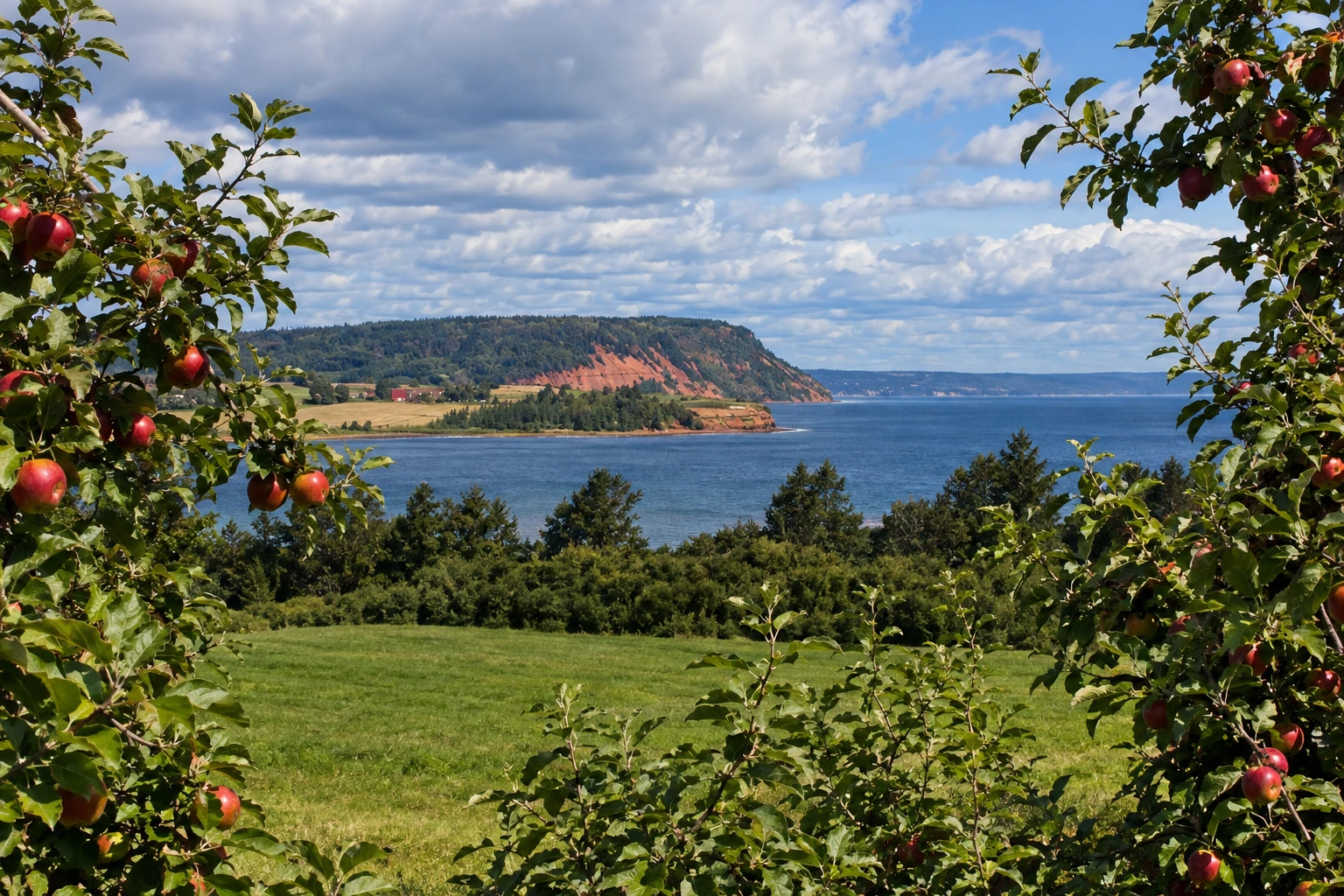
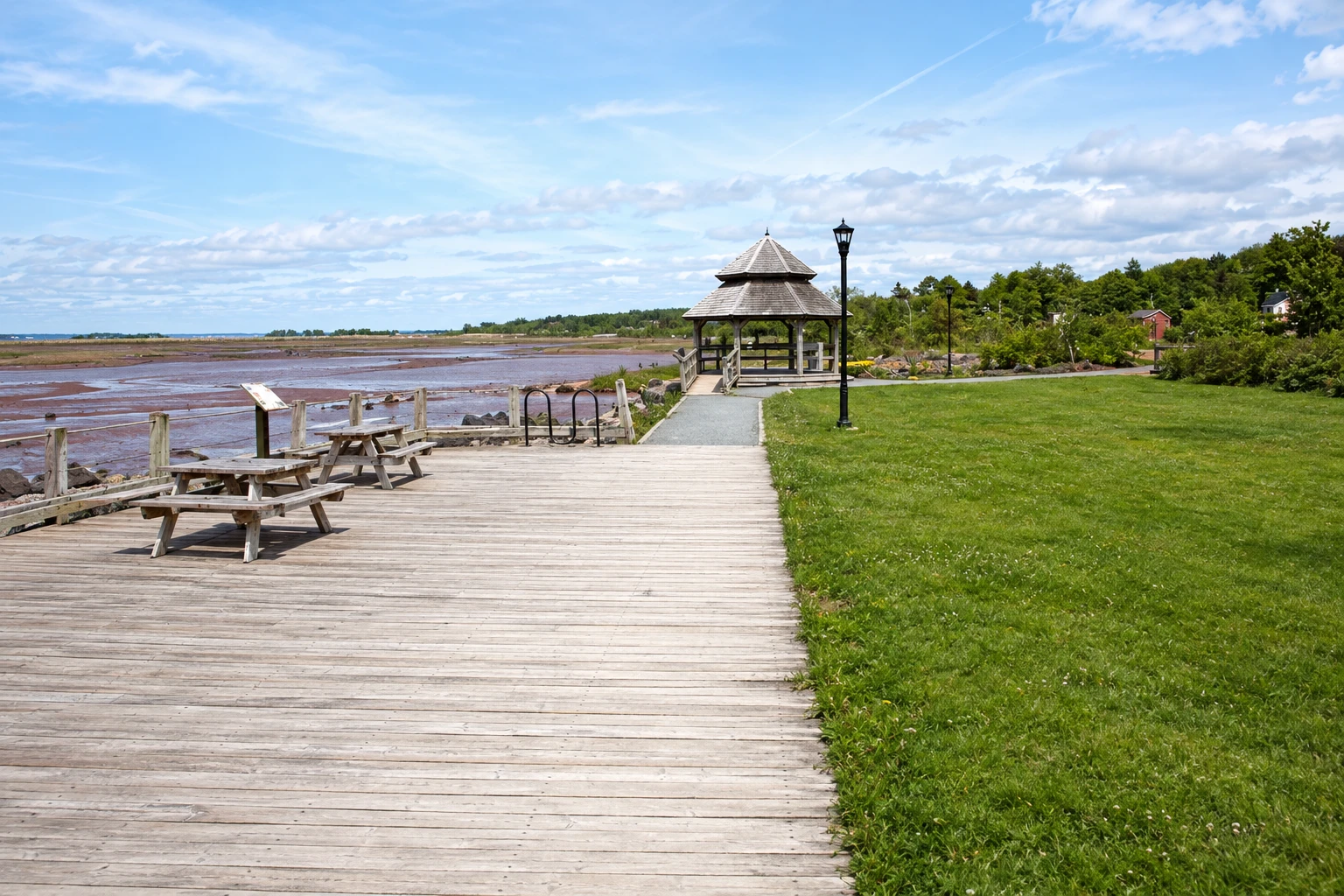
The Bay of Fundy borders the province’s west, with the Annapolis Valley and its wineries, Grand-Pré, a landscape of Acadian memory listed by UNESCO, and the fossil cliffs of Joggins, also a World Heritage site. Lobster, Digby scallops and the white wine Tidal Bay are local specialties.

Flavors of Canada
Destinations
Cities

Capital of Nova Scotia on a large Atlantic harbour. The citadel on the hill, the waterfront boardwalk with the Maritime Museum of the Atlantic, Pier 21 immigration centre and the Victorian public gardens are all within walking distance of downtown. Peggy's Cove and its lighthouse are 45 km away.

Small town in the Annapolis Basin in the western valley, with streets of 18th‑ and 19th‑century houses, Fort Anne and historic gardens. It was Nova Scotia’s capital until Halifax was founded in 1749. About 10 km away is a replica of the Port‑Royal habitation of 1605.

Village on the shore of Bras d'Or Lake, in the center of Cape Breton, where the Cabot Trail begins and ends. Alexander Graham Bell spent the summers of the last decades of his life there, and a national historic site tells of his inventions. It is the island's most complete base, with access to the Fortress of Louisbourg, about 1.5 hours by car.

Acadian village of French language on the west coast of Cape Breton, at the western entrance to Cape Breton Highlands National Park. The church of Saint-Pierre overlooks the harbor, and the village is known for hooked rugs, displayed at the Les Trois Pignons cultural center. A few kilometers away the Skyline Trail begins, along the cliffs above the gulf.

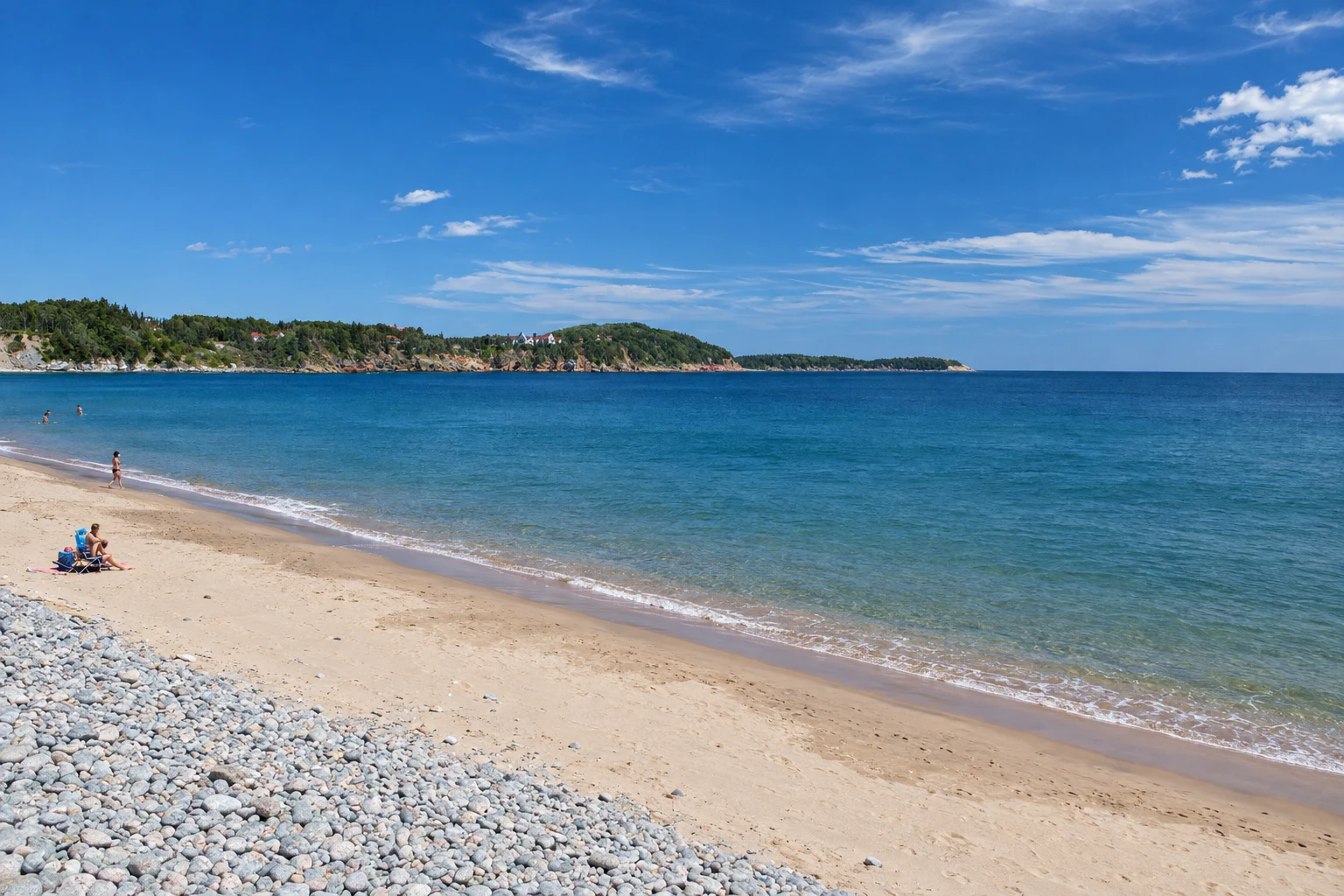
A group of small communities on the east coast of Cape Breton, at the eastern entrance to Cape Breton Highlands National Park. It has two bays separated by the Middle Head peninsula, with the trail that leads to the tip, and Ingonish Beach, with the ocean on one side and a freshwater lake on the other.

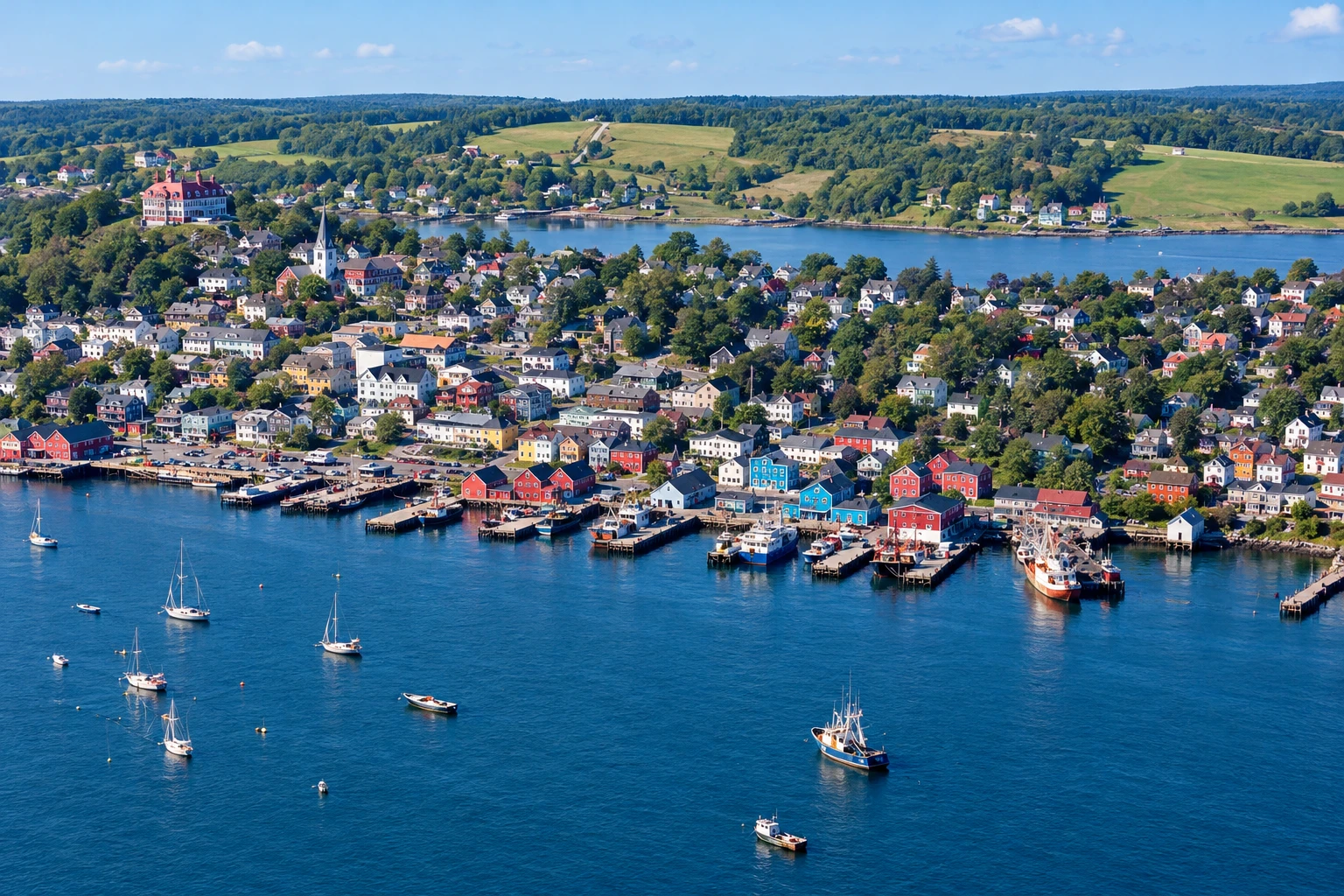
Port town on the south coast of Nova Scotia, founded in 1753, with a British colonial grid plan and wooden houses painted in bright colors climbing the slope above the harbour. The historic centre is a UNESCO World Heritage Site. The Fisheries Museum of the Atlantic is located on the harbour, and the village of Blue Rocks is 5 km away.

University town in the eastern Annapolis Valley, home to Acadia University, with a main street of wooden houses, cafés and wineries on the hills. It is a few minutes from Grand-Pré, a UNESCO World Heritage Site, and from the Minas Basin, where the Bay of Fundy tides leave large expanses of mud exposed.
From June to September days are mild and the coast is busier; sea water is cold for most of the year. The Cabot Trail usually shows fall colours from late September to mid-October, the time of the Celtic Colours festival. Winters are wet and snowy, and many tourist-area services open only for the season, generally from May to October.
Halifax Stanfield International Airport (YHZ) is the main airport in the Atlantic region, with flights to other provinces, the United States and Europe. Sydney, on Cape Breton, has an airport with domestic flights. The Trans-Canada Highway arrives from New Brunswick, the long-distance train links Montreal to Halifax, and ferries operate to Prince Edward Island in season and to Newfoundland from North Sydney.
Beyond the guide
Your questions
The loop can be driven in one day, but two to three days are ideal to allow time for hikes, viewpoints and stops in Chéticamp, Ingonish and Baddeck. A Parks Canada pass is required for the national park. In October accommodations often sell out because of the foliage and the festival.
Peggy’s Cove is about 45 km from Halifax, roughly a one-hour drive along the coastal road. There are day tours that combine Peggy’s Cove and Lunenburg.
The old town, with its grid streets on the hill and painted wooden houses; the Fisheries Museum of the Atlantic by the harbour; and, when she is in port, the schooner Bluenose II. Boat tours of the bay depart from Lunenburg. The town is about an hour and a half from Halifax.
For Halifax, no: the downtown is walkable and there are organized tours to the southern coast. For the Cabot Trail, the Annapolis Valley and coastal villages, a car is the most practical option because public transport between towns is limited.