Jiggs dinner
Salted beef cooked with cabbage, potato, carrot and rutabaga, served with pea pudding and gravy. It is the traditional Sunday dinner in Newfoundland and Labrador.
Antarctica
Province · Atlantic Canada
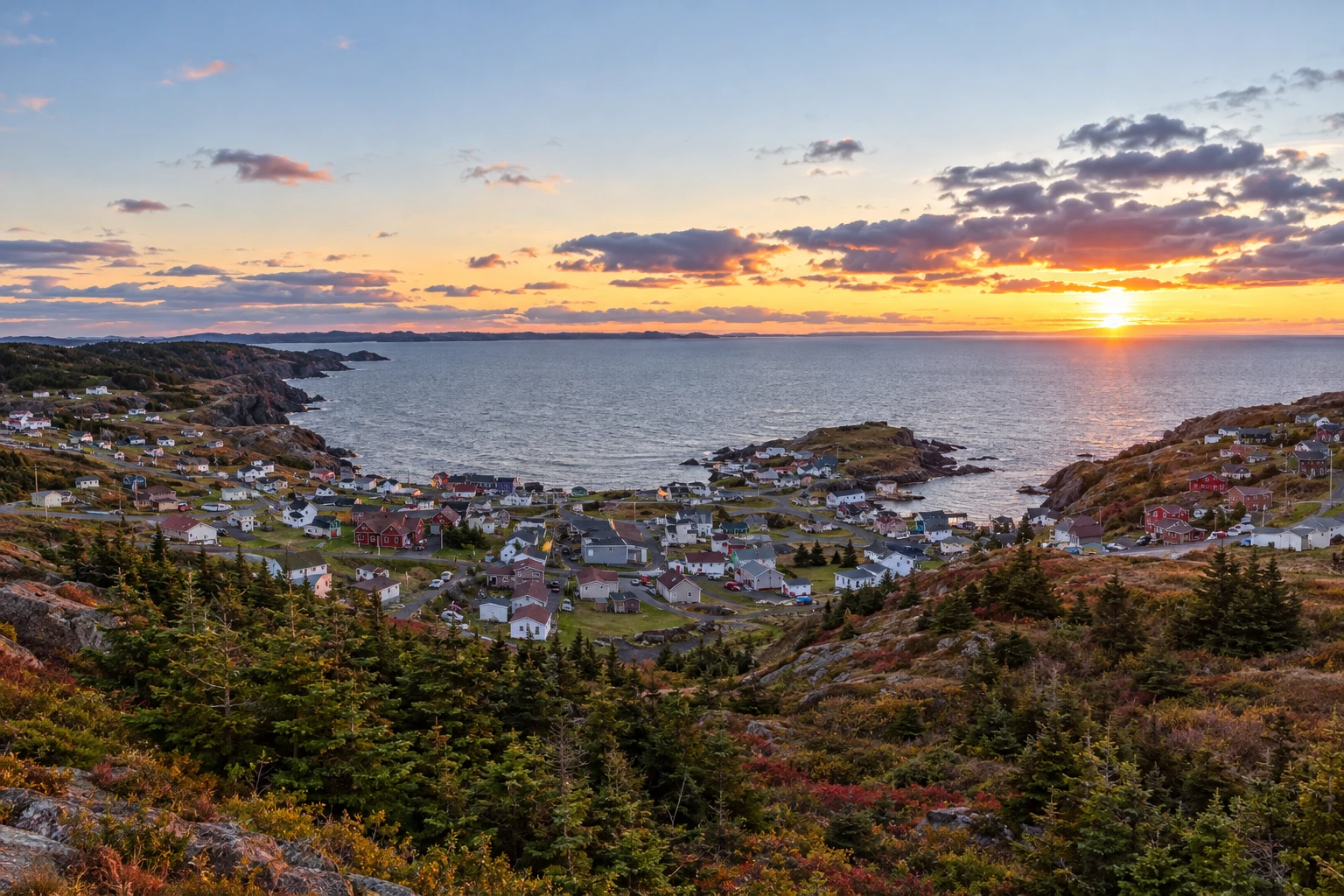
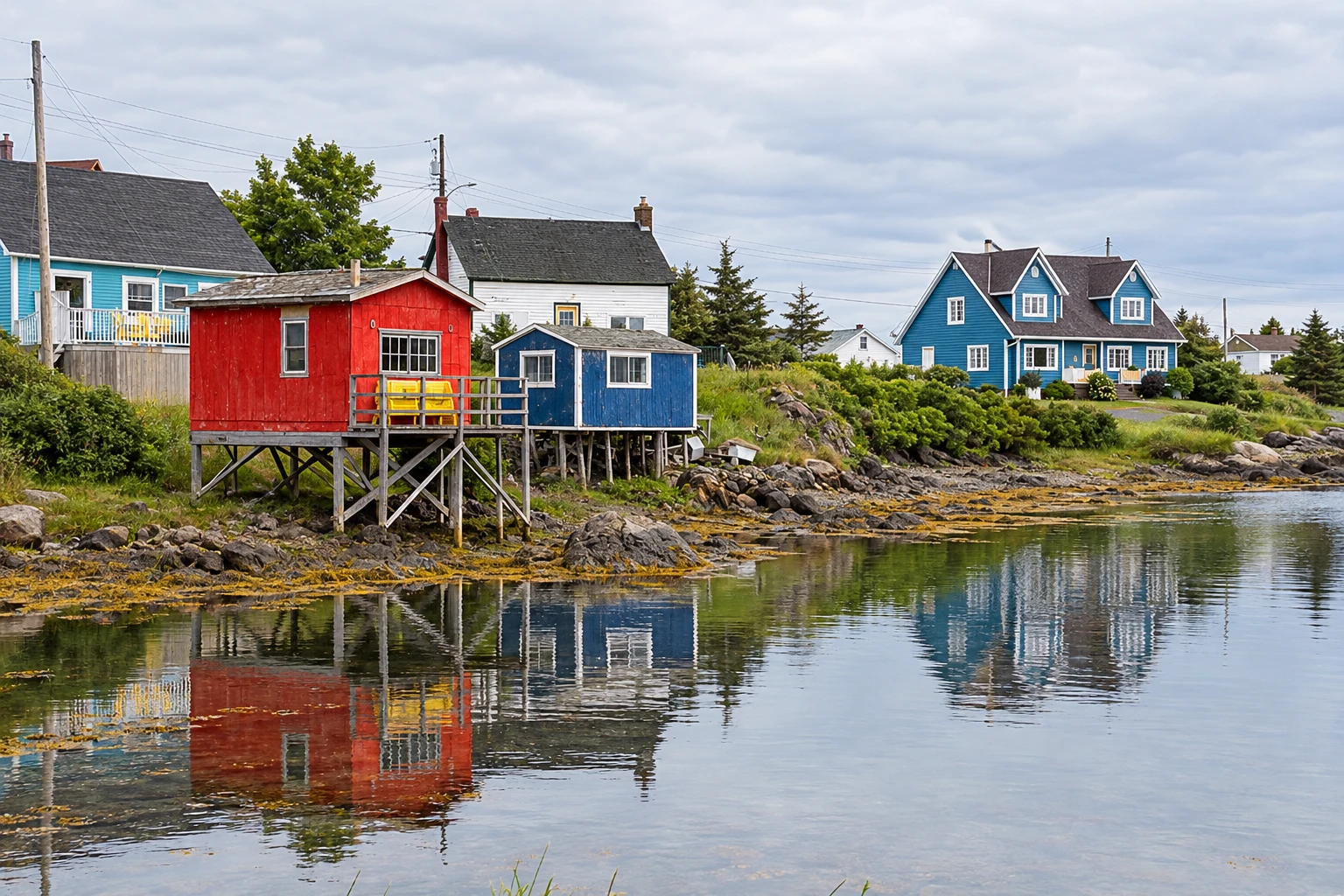
St. John's and its colorful houses, Cape Spear, the fjords of Gros Morne, the Viking site at L'Anse aux Meadows and icebergs coming from the Arctic in spring.
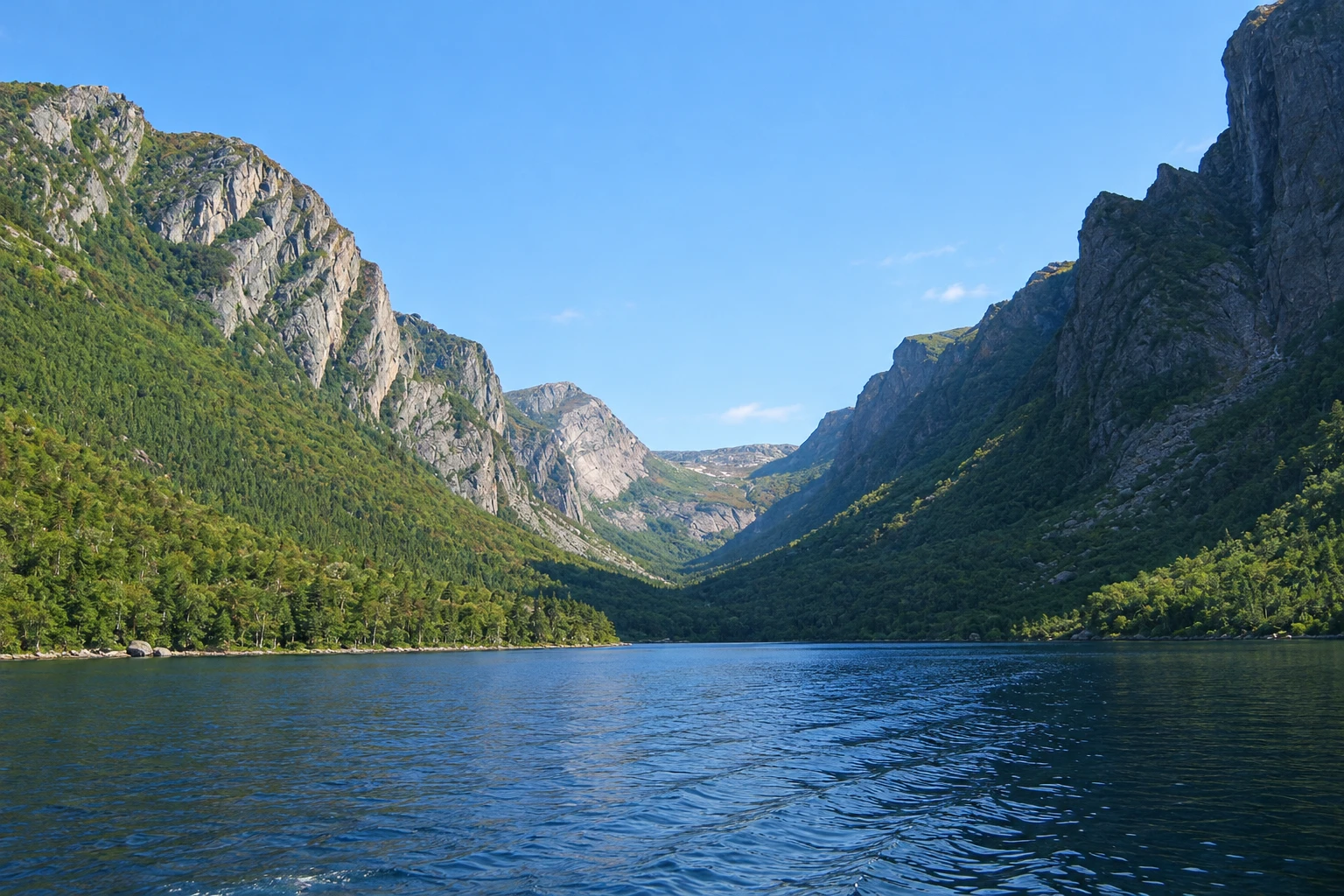
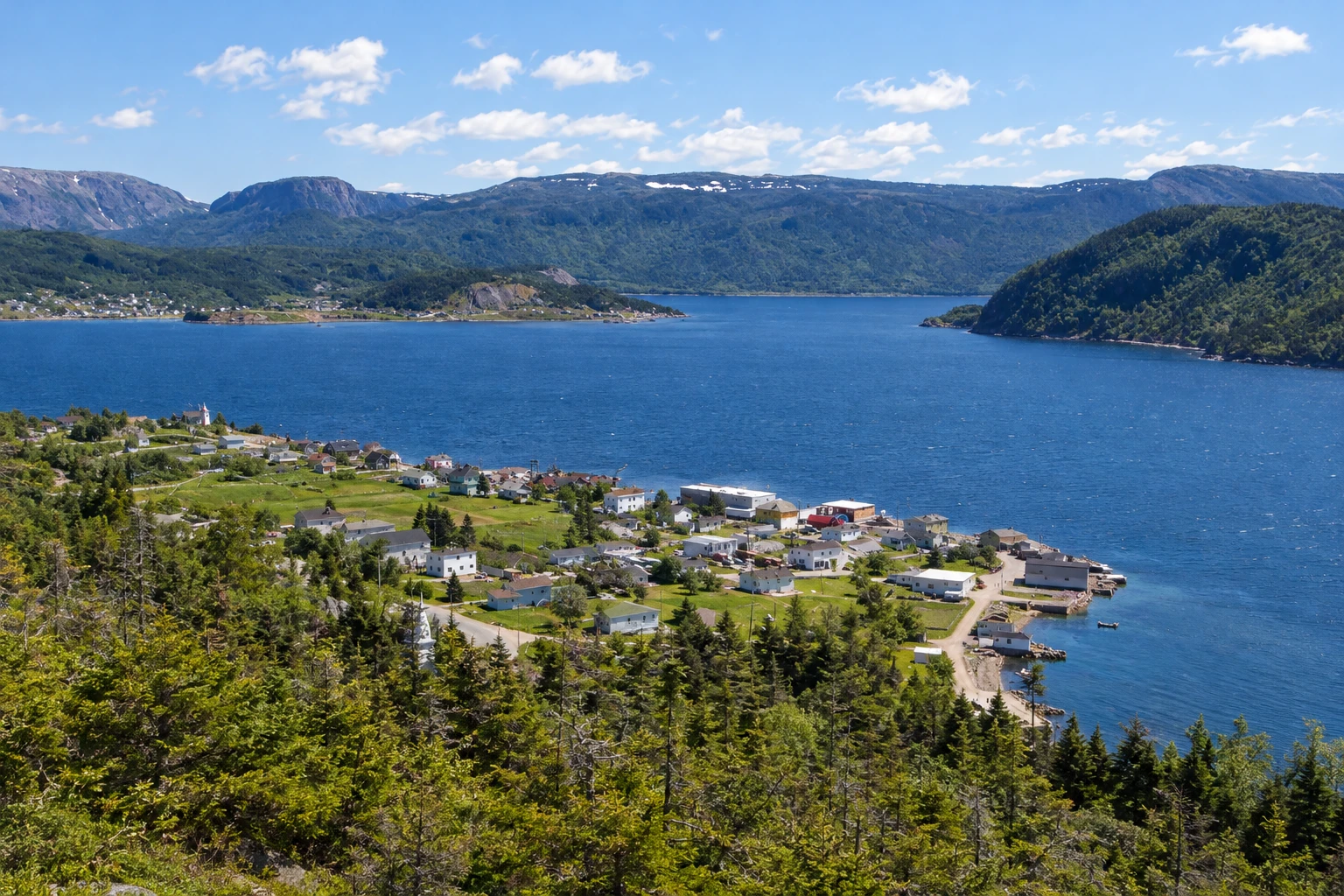
In the photo: Western Brook Pond, Newfoundland and Labrador
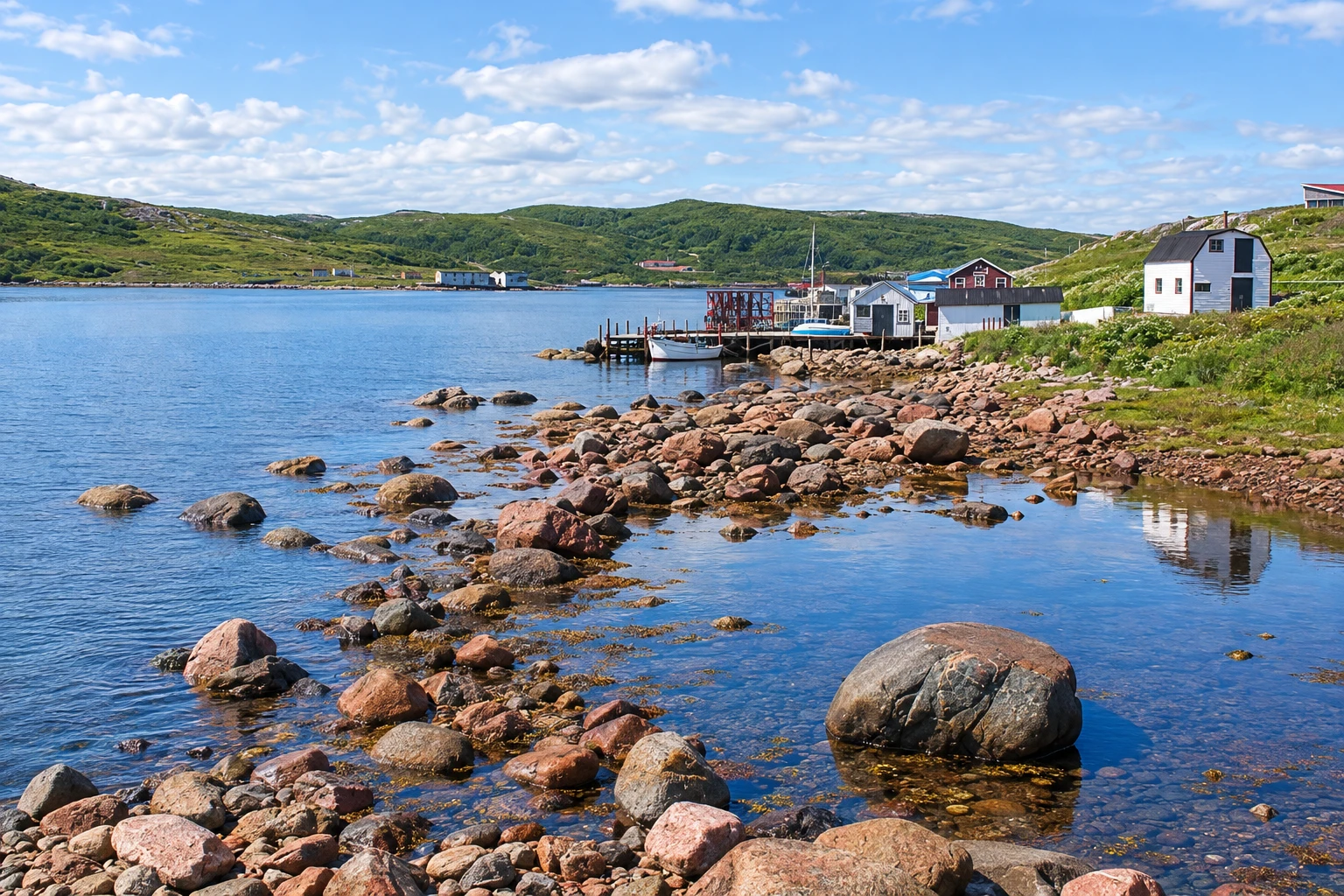
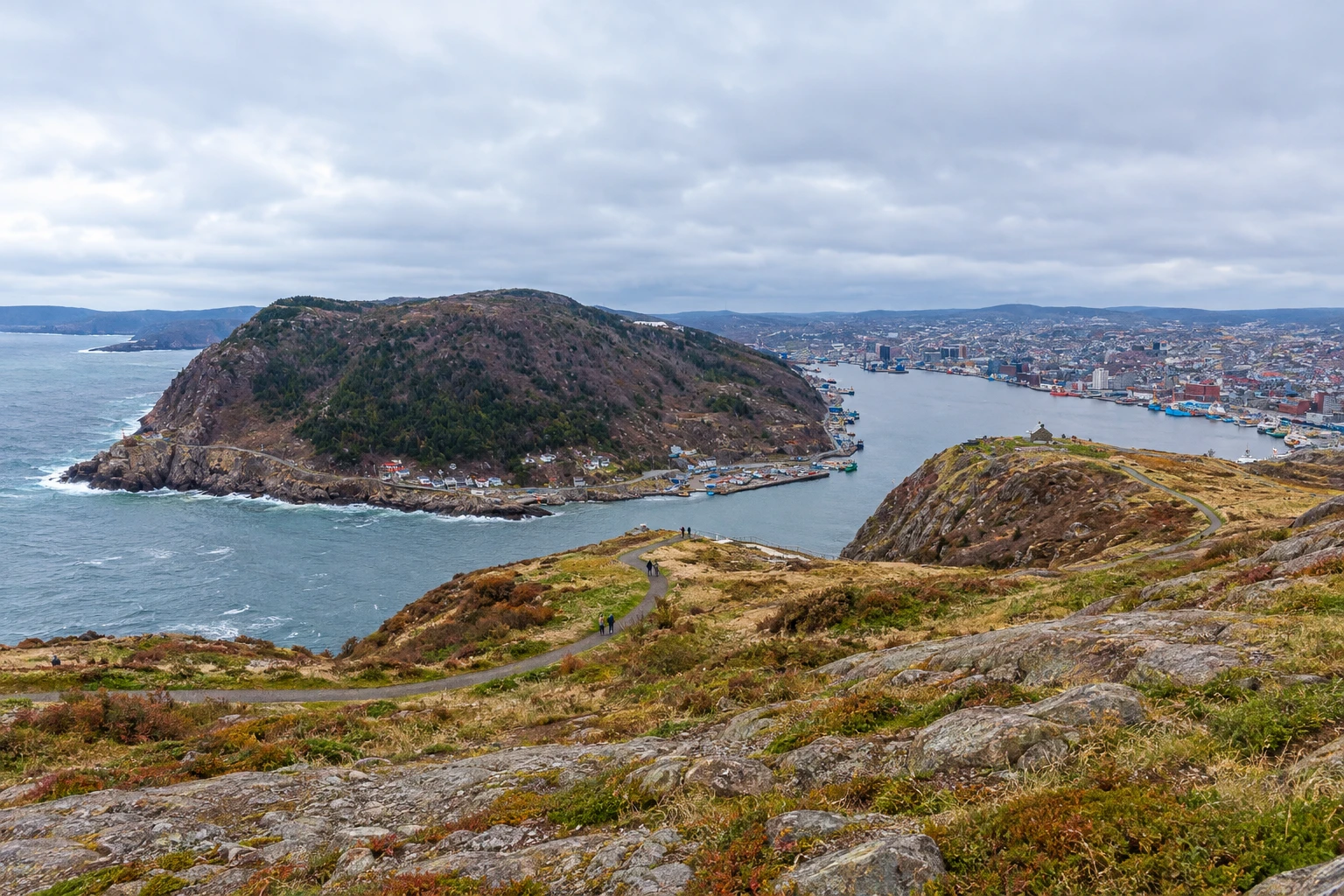
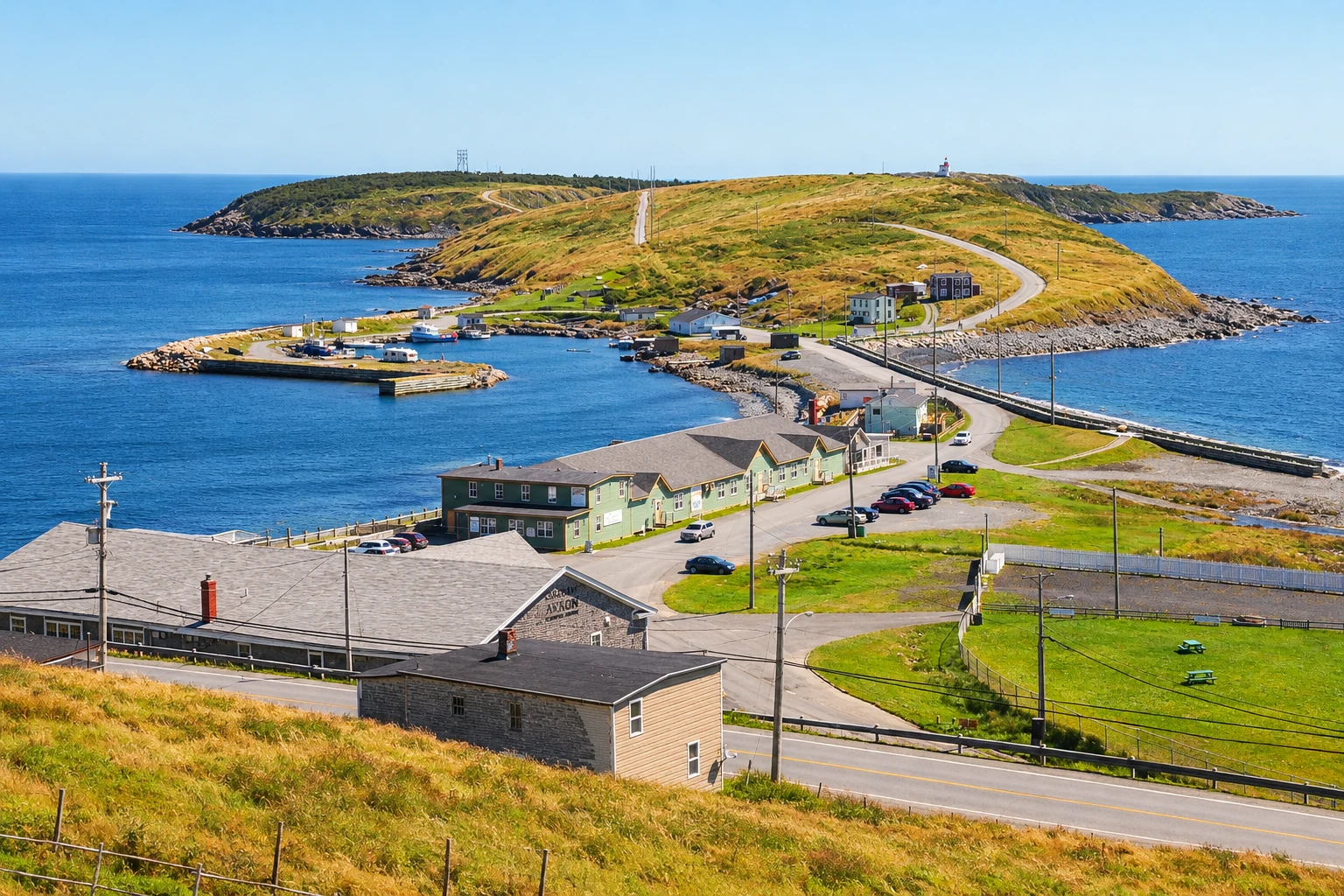
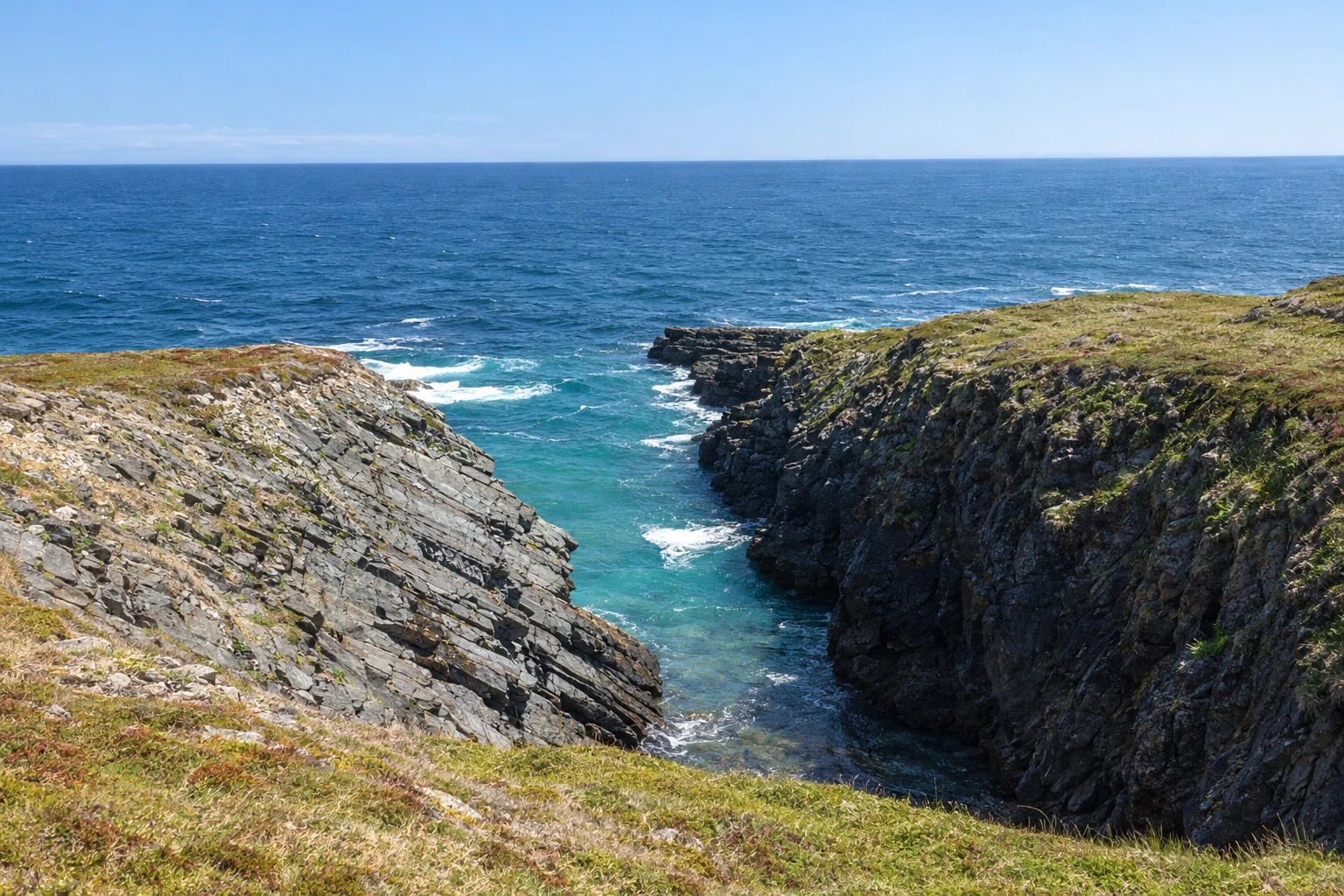
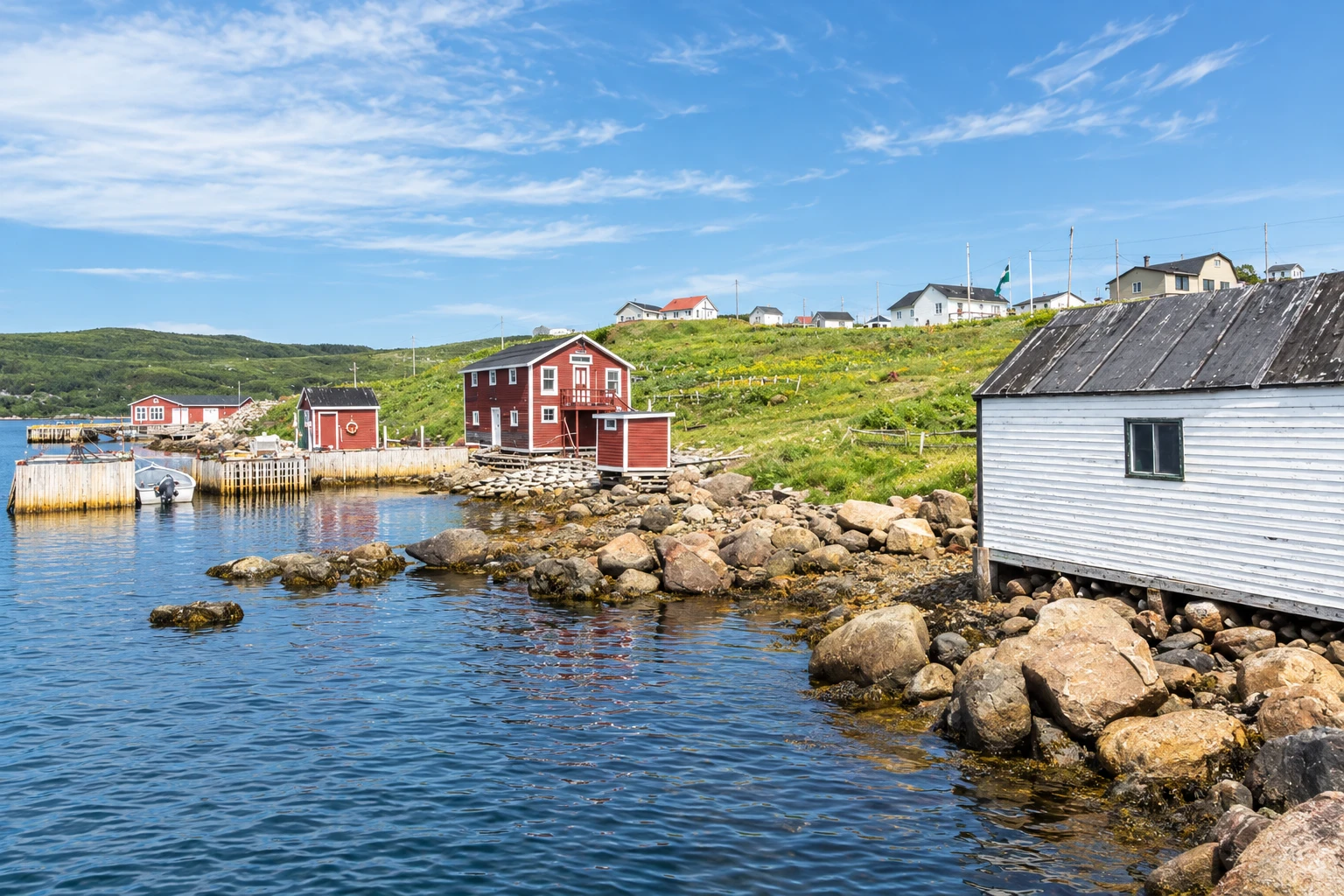
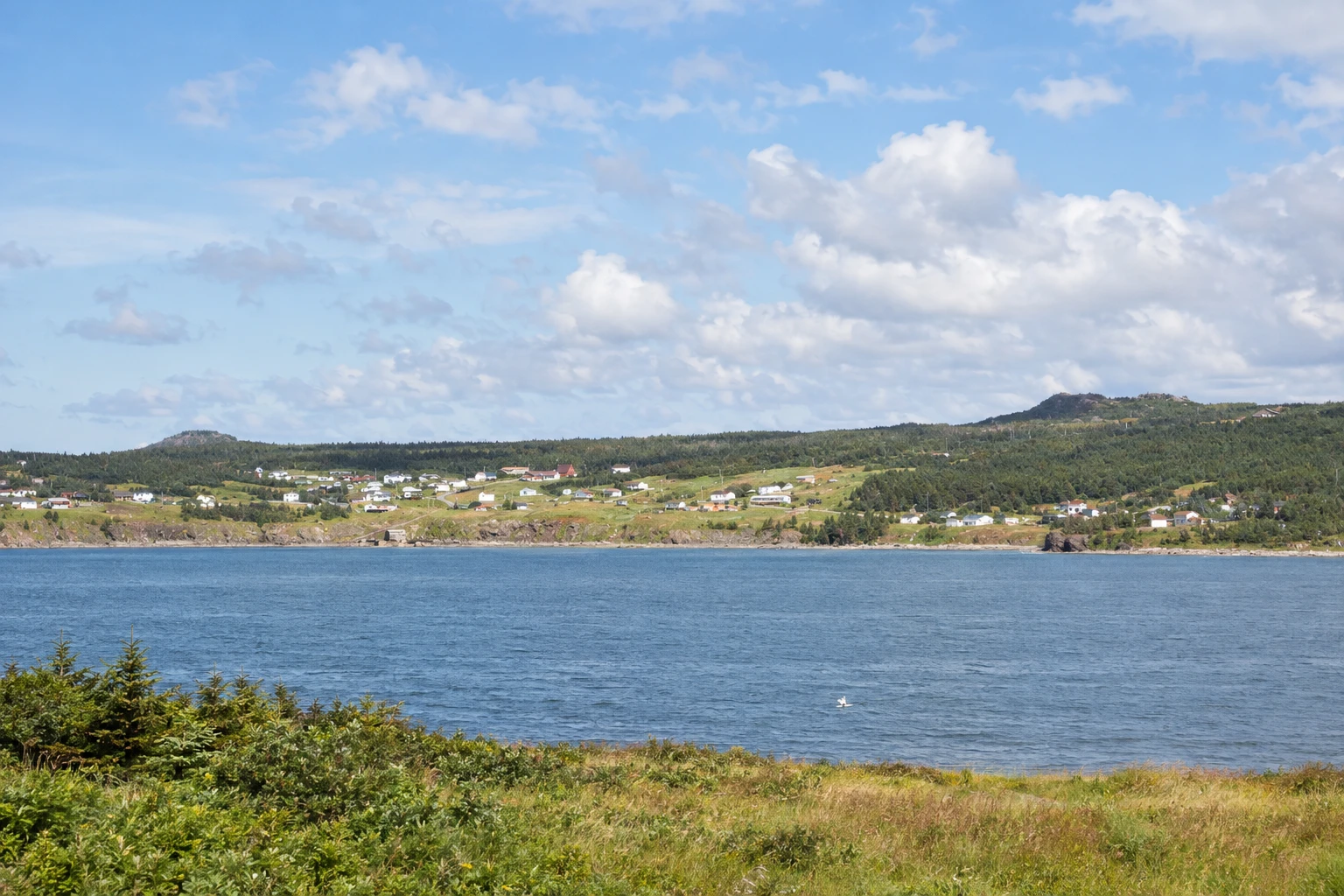
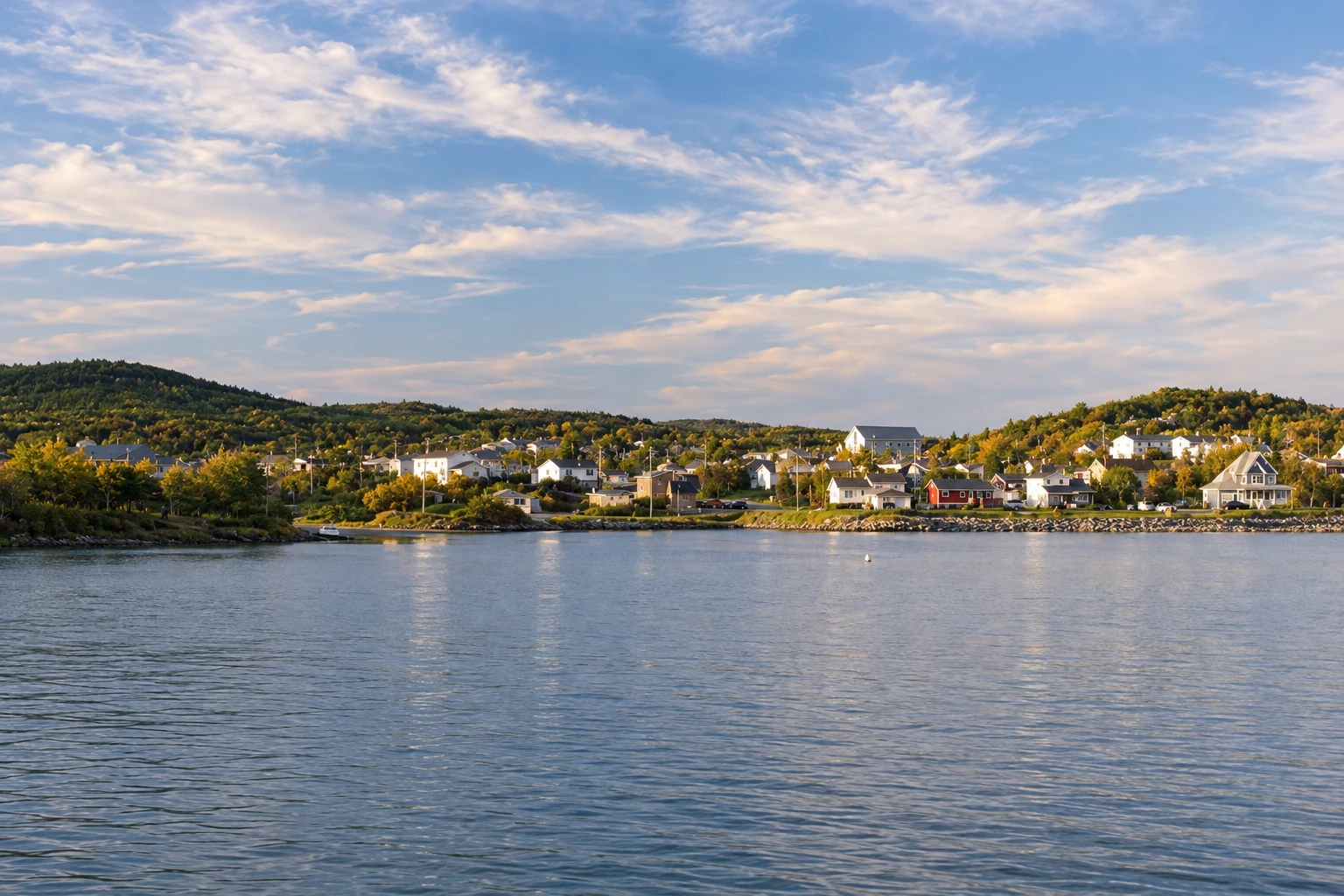
Illustrative images. The pictures in this guide are illustrations based on the real place, not photographs, and may differ from it.
Province
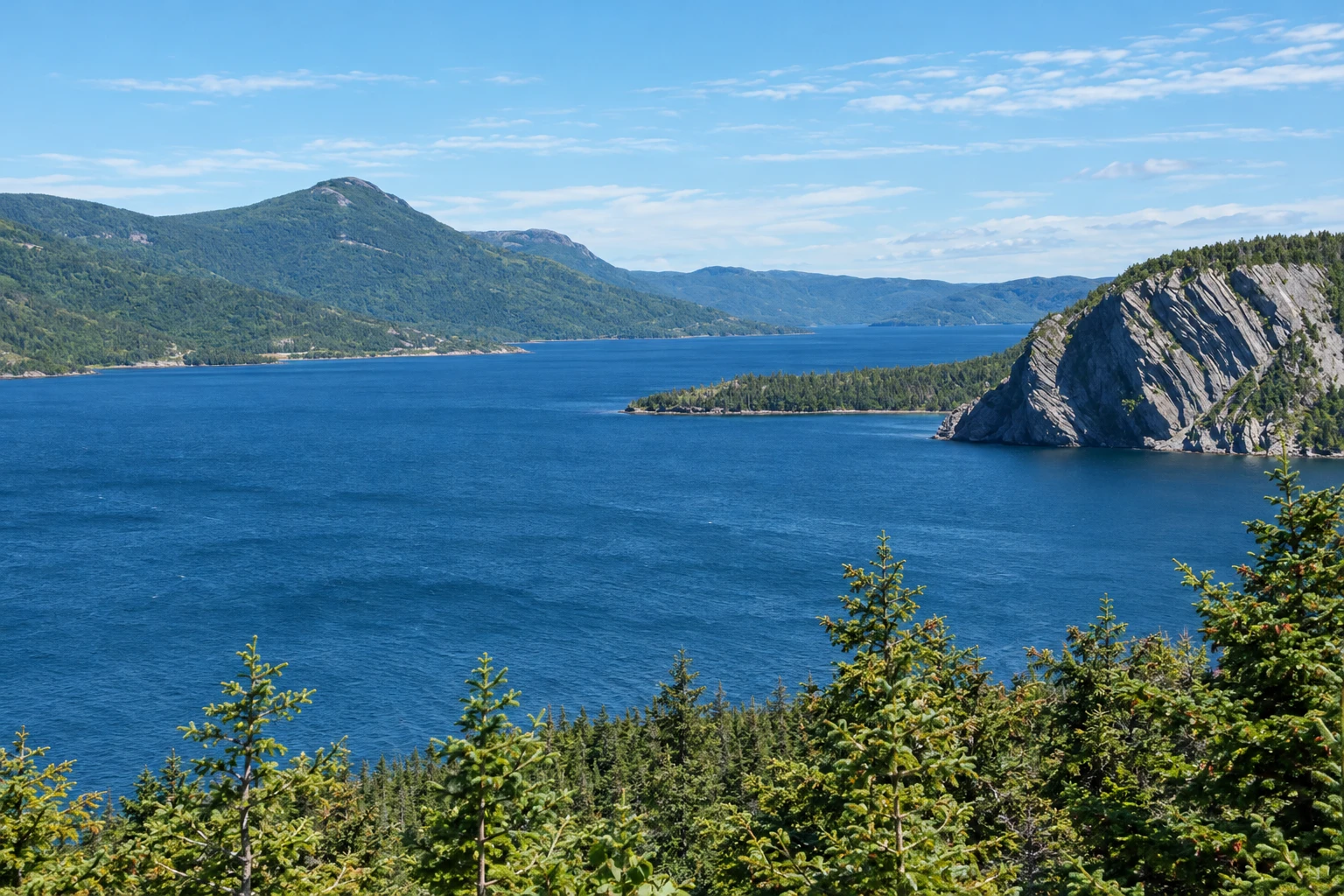
Newfoundland and Labrador is Canada’s easternmost province: the island of Newfoundland in the Atlantic, and Labrador on the mainland. It was a British dominion until 1949, when it joined Canada. The capital, St. John's, is among the oldest European-founded cities in North America.
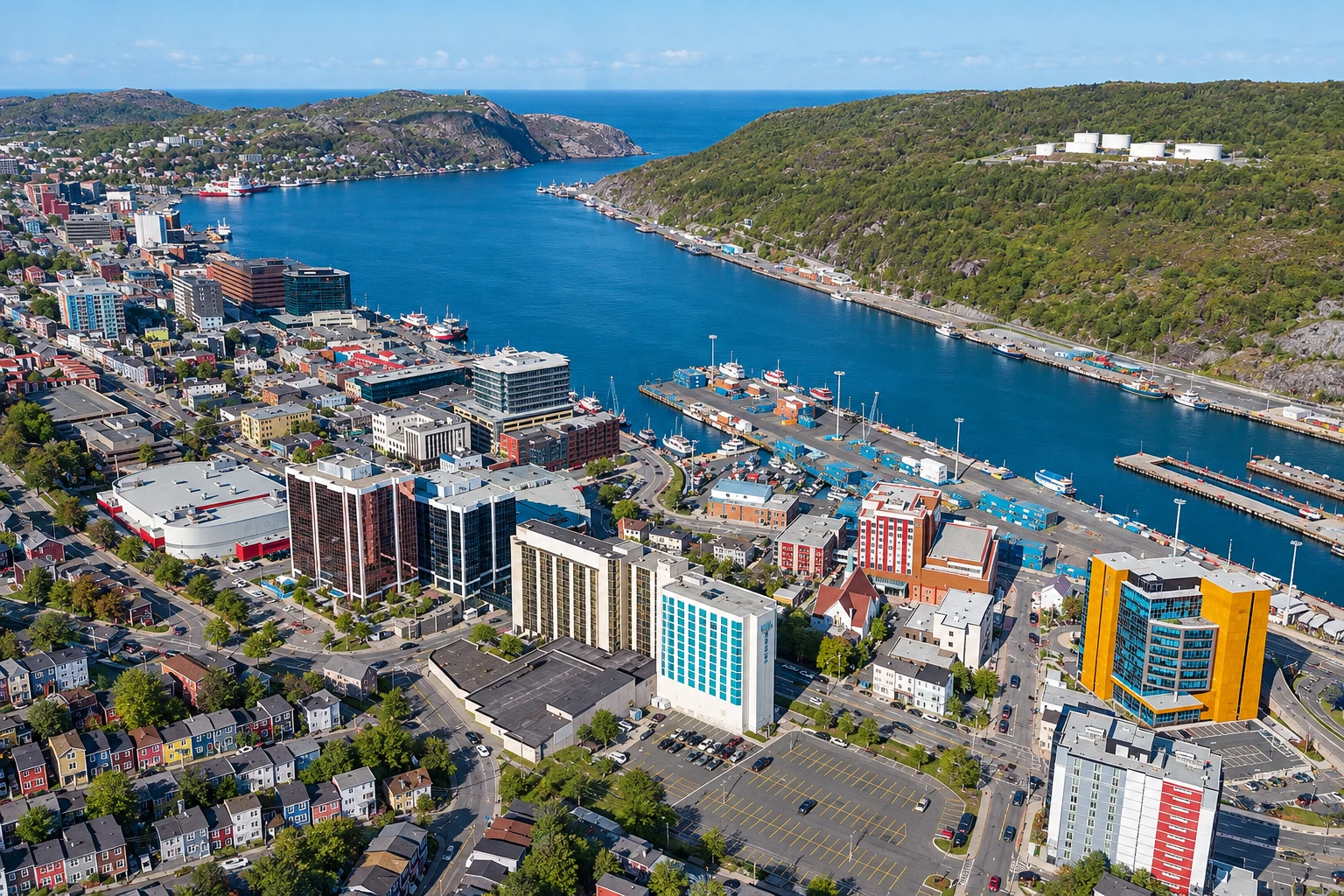
St. John's has colorful houses on slopes above the harbor, like those on Jellybean Row. At the harbor entrance, Signal Hill was where Marconi received the first transatlantic radio signal, in 1901. Nearby, Cape Spear is the easternmost point of North America, with a historic lighthouse.
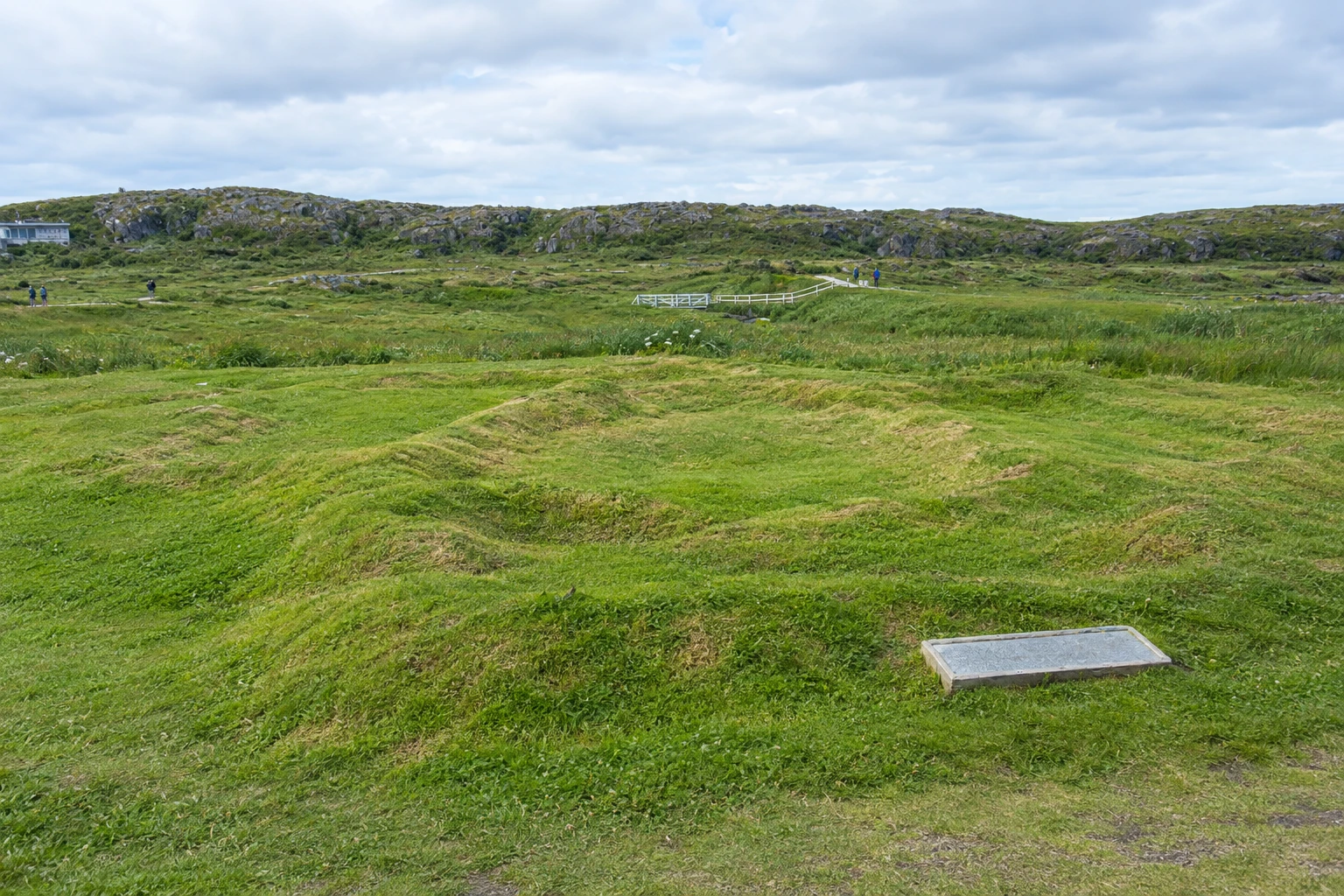
On the west coast, Gros Morne National Park is a UNESCO World Heritage site. It has freshwater fjords, such as Western Brook Pond, and the Tablelands, where mantle rocks are exposed at the surface. At the northern tip of the island, L'Anse aux Meadows preserves the only confirmed Viking site in North America, about a thousand years old.
Between spring and early summer, icebergs from Greenland often pass along the east and north coasts. From Witless Bay, south of St. John's, boats depart in summer to see puffins and whales.
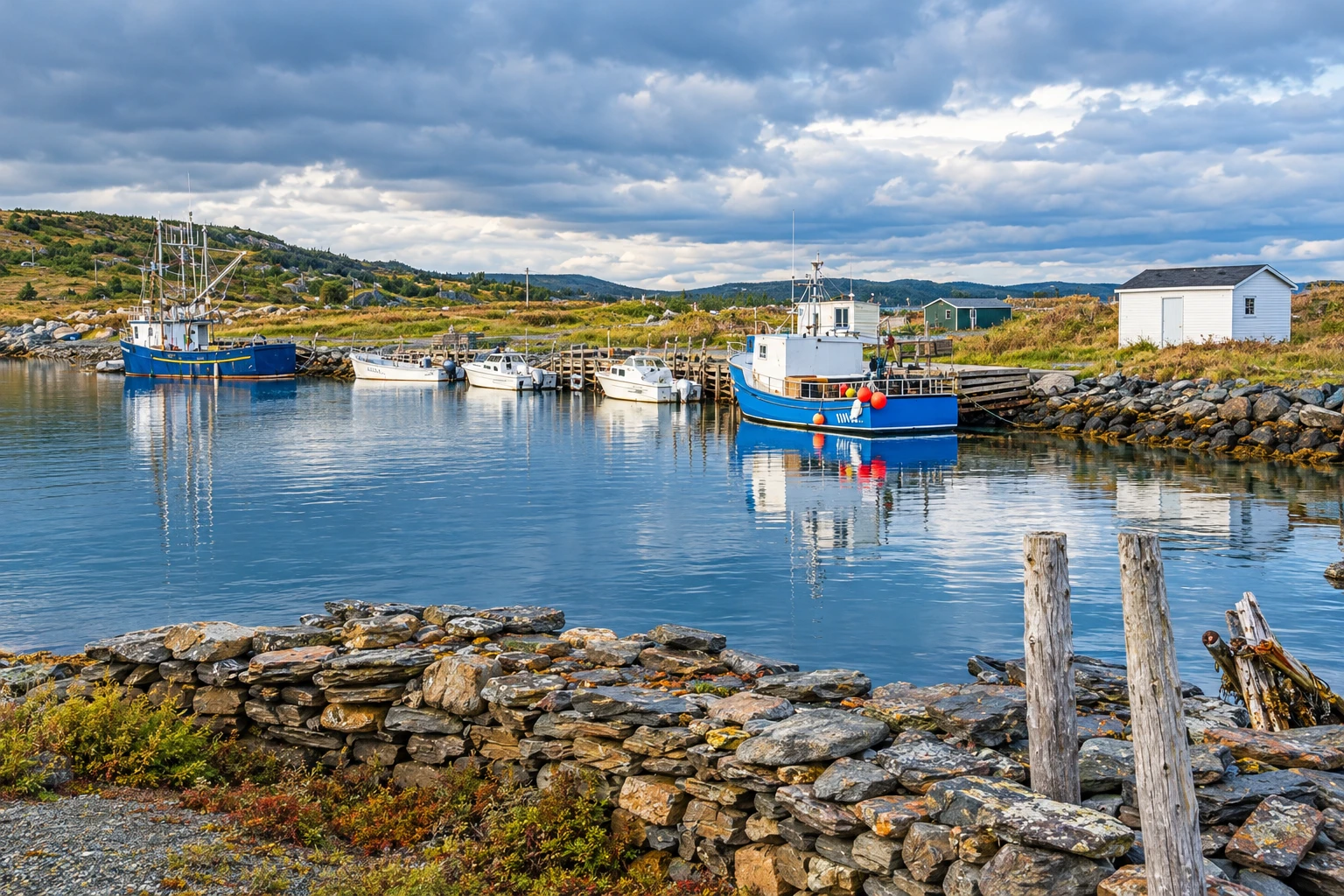
The province has its own time zone, a half hour ahead of Atlantic Time, and a culture tied to the sea, cod fishing and traditional music, with its own way of speaking English.

Flavors of Canada

Salted beef cooked with cabbage, potato, carrot and rutabaga, served with pea pudding and gravy. It is the traditional Sunday dinner in Newfoundland and Labrador.

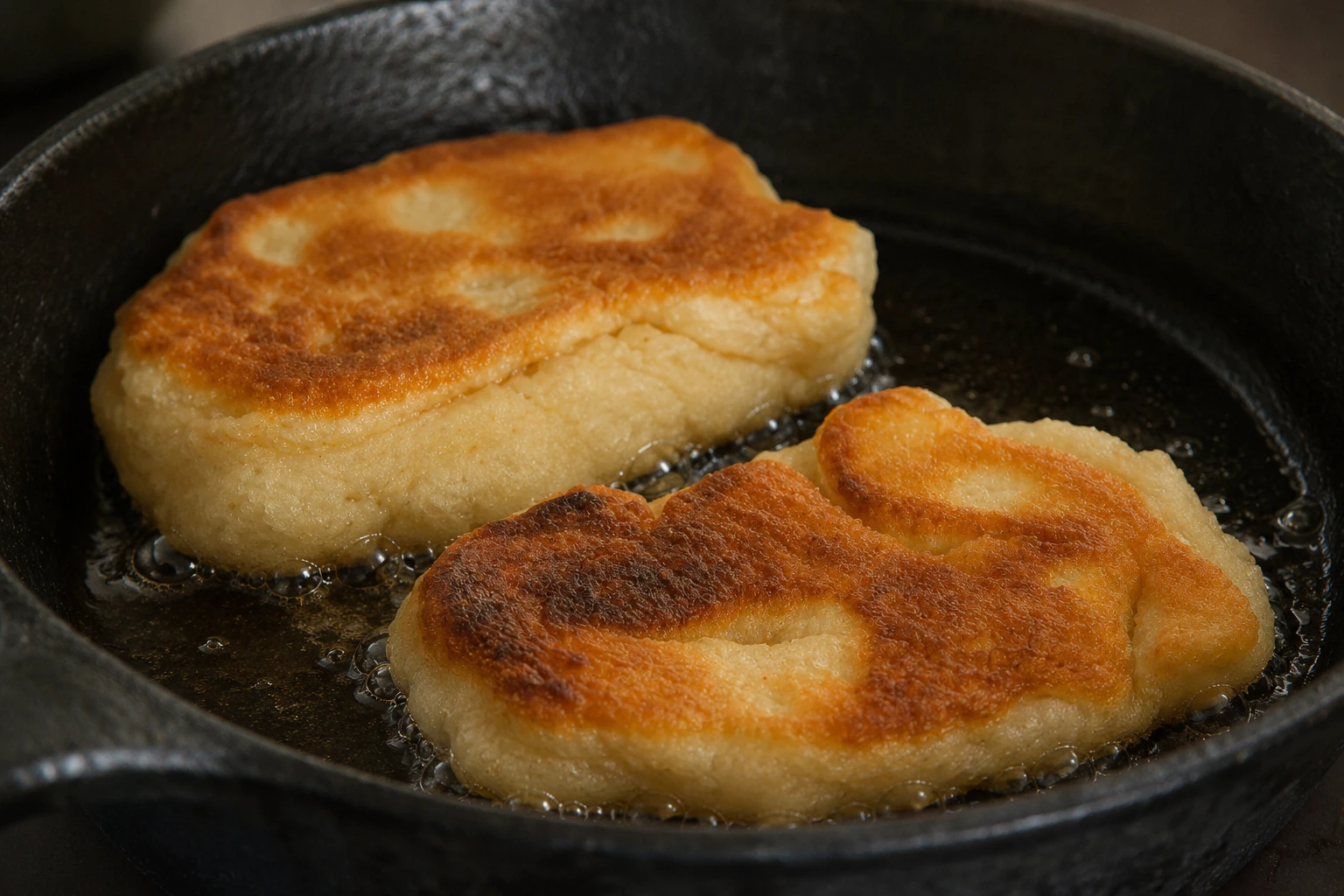
Pieces of bread dough fried in pork lard until golden, served hot with molasses. They are the traditional breakfast of Newfoundland and Labrador.
Destinations
Cities

Capital of Newfoundland and Labrador, in a narrow cove at the eastern tip of North America. Downtown rises in slopes of colorful houses, with pubs playing traditional music and The Rooms museum. Signal Hill guards the harbour entrance, the village of Quidi Vidi lies within the city and Cape Spear is 15 km away.

Fishing village on the southeast coast of the Avalon Peninsula where archaeologists are excavating the Colony of Avalon, founded in 1621. A trail leads to the lighthouse on the cape, and on the way from St. John's are the seabird islands of the Witless Bay reserve.

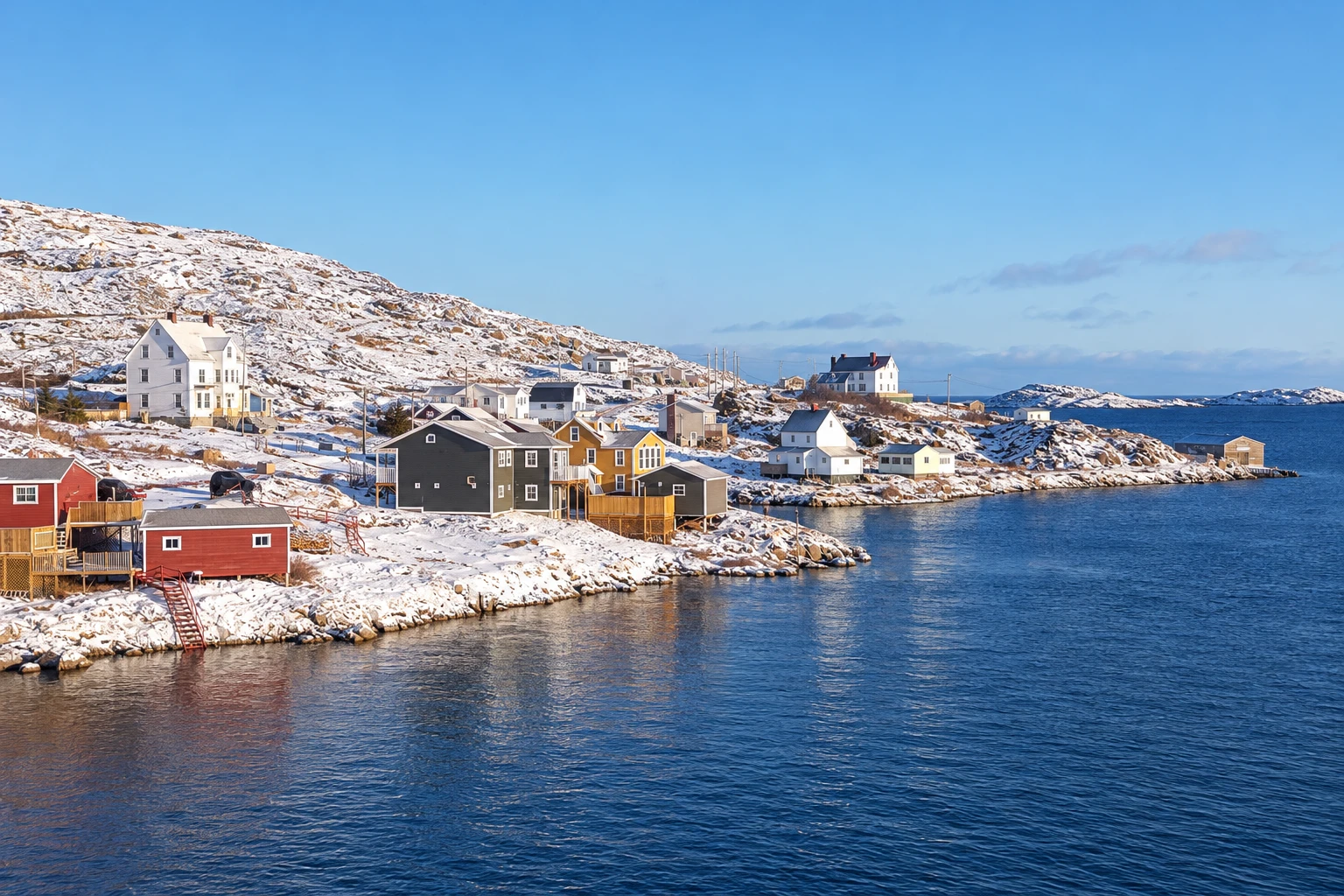
Northeast Newfoundland island with eleven fishing communities, colorful houses, coastal trails and artist studios. Reachable by ferry from Farewell. The village of Fogo sits at the foot of Brimstone Head, and Tilting, of Irish origin, preserves wooden fish stages.

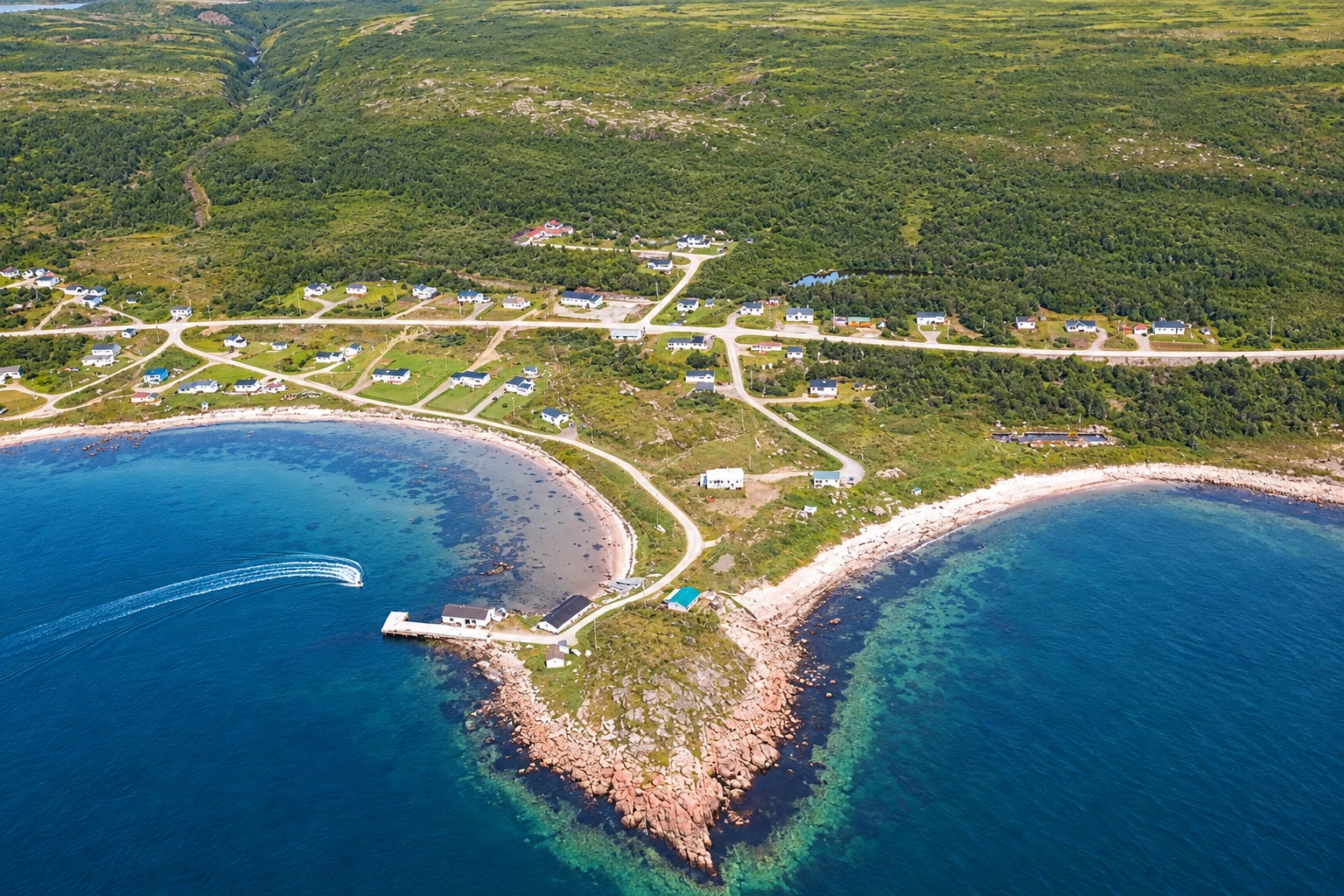
A fishing village on the southeast coast of Labrador, on the banks of the St. Mary’s River. It grew after a fire destroyed the hospital at Battle Harbour in 1930, and is the departure point for the boat to the historic village of Battle Harbour.

Small village on the southern part of the Avalon Peninsula, the departure point for guided visits to the Mistaken Point fossils, a UNESCO World Heritage Site. A dirt road continues to the Cape Race lighthouse at the island’s southeastern tip.

A fishing village on the south coast of Labrador where 16th-century Basque whalers established the largest whaling station of the time in the Americas. The ruins, sunken ships and the visitor centre form a UNESCO World Heritage site. A wooden boardwalk climbs Tracey Hill for views over the bay.

Fishing village in the center of Gros Morne National Park, on a bay opening to the Gulf of St. Lawrence near the entrance to Bonne Bay. It is the park’s most complete base, a few kilometers from Lobster Cove Head Lighthouse, the Mount Gros Morne trail and the Western Brook Pond boat.

The main town at Newfoundland’s northern tip, on a sheltered Atlantic harbor. It preserves the legacy of Dr. Wilfred Grenfell—his house is now a museum—and has Fishing Point, a lookout for seasonal icebergs and whales. The Viking site of L'Anse aux Meadows and Norstead are about 50 km away.

Fishing village on the Twillingate islands off the northeast coast of Newfoundland, with wooden houses around the harbor and the Long Point lighthouse on a cliff. From late spring through summer it receives icebergs that drift down from the north and whales that feed close to shore.

Historic village on the south shore of Bonne Bay, with 19th-century wooden houses and a waterside pier. It is the base for the Tablelands a few kilometers away and for the park’s Discovery Centre, which explains Gros Morne’s geology.
Icebergs typically appear from late April to June, and puffins are in the colonies from May to August. Whales are most often seen from June to August. July and August are the mildest months and the best time for Gros Morne and the Western Brook Pond boat trips. Winter is long, with snow and strong winds, and many attractions outside St. John's open only from June to September.
St. John's International Airport (YYT) has flights to other provinces and, in summer, to Europe. Deer Lake (YDF), on the west coast, is the gateway to Gros Morne, and St. Anthony has regional flights. Ferries connect North Sydney, Nova Scotia, to Port aux Basques and, in season, to Argentia. The Trans-Canada Highway crosses the island from Port aux Basques to St. John's, about 900 km.
Beyond the guide
Your questions
Generally from late April to June, when icebergs from Greenland move down the coast along the corridor known as Iceberg Alley. The number varies greatly from year to year. Tracking maps published during the season show where they are.
It’s over 600 km via the Trans-Canada Highway, about seven hours by car. Many visitors fly to Deer Lake, about an hour from the park, and rent a car there. A trip around the island usually combines both sides, with at least one week recommended.
It is the archaeological site of a Viking settlement about a thousand years old, at the northern tip of Newfoundland, a UNESCO World Heritage site. The place shows remains of the original structures and reconstructions of turf houses, with interpreters demonstrating how the Norse lived.
The island of Newfoundland uses UTC−3:30 in winter and UTC−2:30 from March to November, a half hour ahead of the Atlantic Time used in Halifax. Most of Labrador follows Atlantic Time.