Poutine râpée
Large dumpling made from grated raw potato and mashed cooked potato, filled with salted pork and boiled in water. It is an Acadian dish from southeastern New Brunswick.
Antarctica
Province · Atlantic Canada
The tides of the Bay of Fundy, the Hopewell Rocks, Fundy National Park and Acadian culture in Canada’s only officially bilingual province.
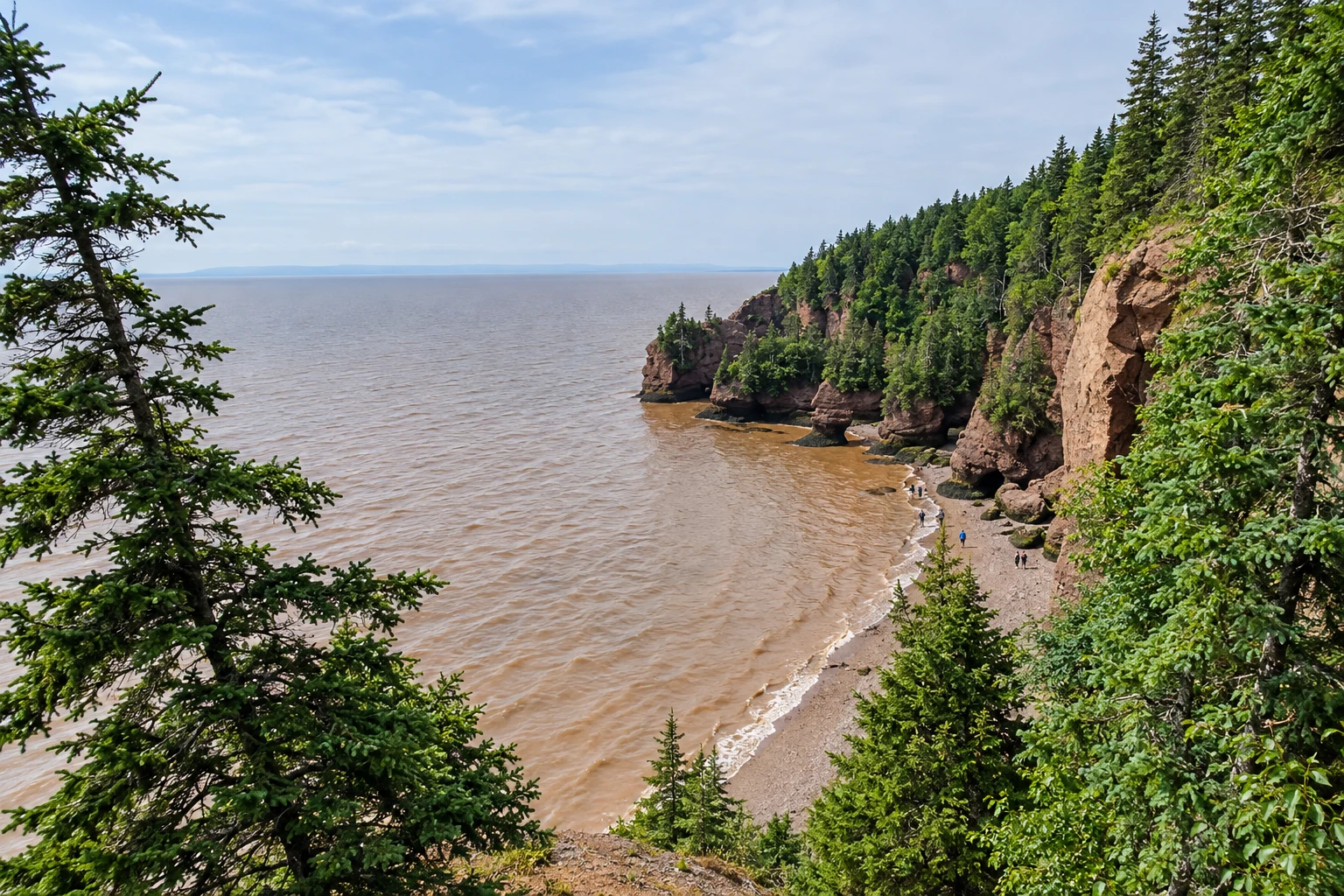
In the photo: Hopewell Rocks and the Bay of Fundy, New Brunswick
Illustrative images. The pictures in this guide are illustrations based on the real place, not photographs, and may differ from it.
Province
New Brunswick lies on the Atlantic coast, between Quebec, Nova Scotia and the U.S. state of Maine. It is the country’s only officially bilingual province: about one third of the population speaks French, mainly in the north and east, in the Acadia region. Fredericton is the capital; Moncton and Saint John are the largest cities.
The Bay of Fundy, between New Brunswick and Nova Scotia, has the highest tides in the world: in some spots the difference between high and low tide exceeds 15 meters. At the Hopewell Rocks, near Moncton, sea-sculpted rock formations can be seen from below by walking on the dry seabed, and hours later by kayak.
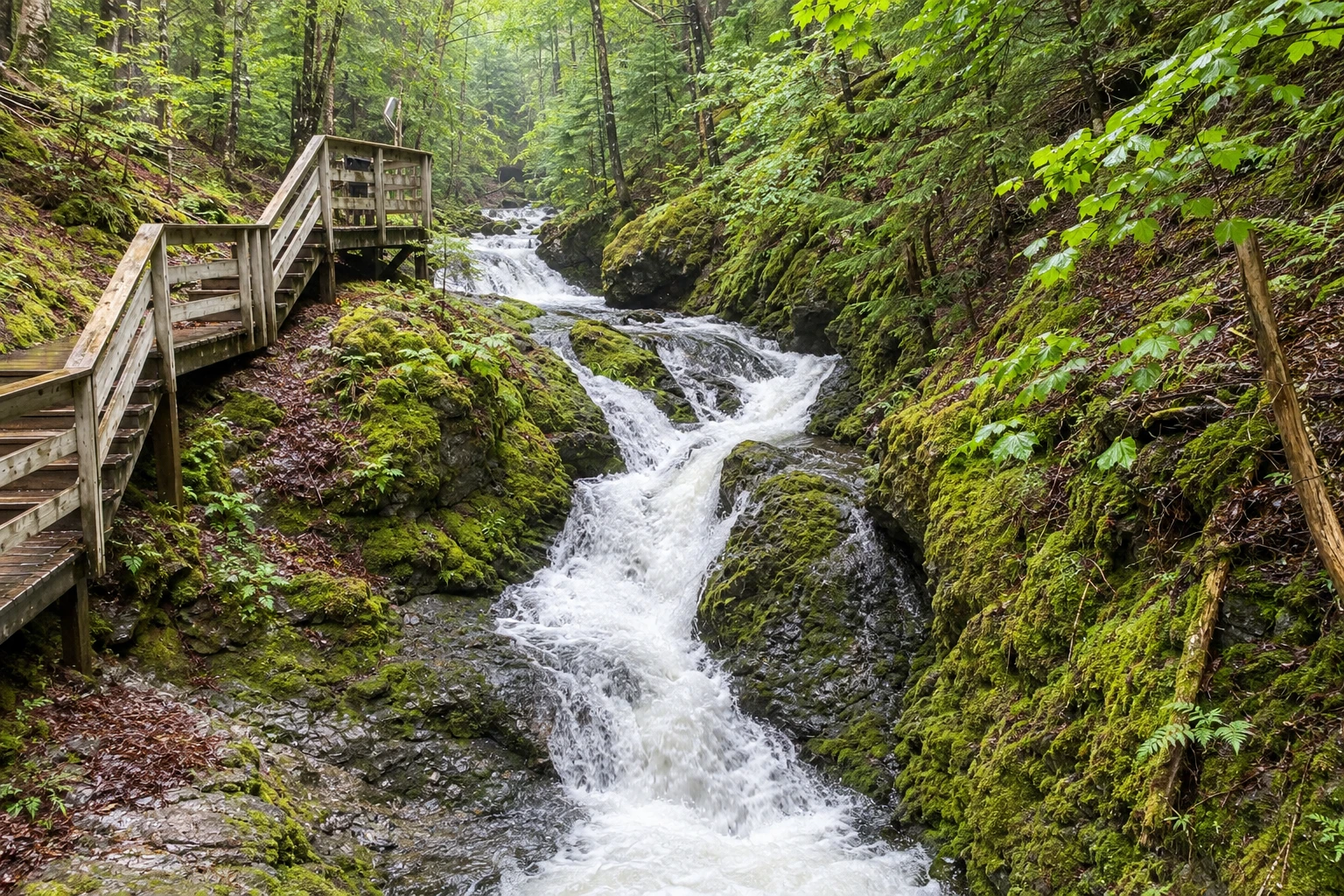
Fundy National Park, near the village of Alma, has forest trails, waterfalls and tidal beaches. On the southern shore, St. Andrews by-the-Sea is a seaside village with historic houses, from where whale-watching boats depart in season. In Saint John, at the mouth of the river of the same name, the tide creates the Reversing Falls, rapids that change direction.
Acadian culture, from the descendants of 17th-century French settlers, marks the north and the east coast. On August 15, National Acadian Day is celebrated with the tintamarre, a noisy street parade, as in Caraquet. Fredericton, the capital, has a historic riverside neighbourhood on the Saint John River.

Flavors of Canada
Destinations
Cities

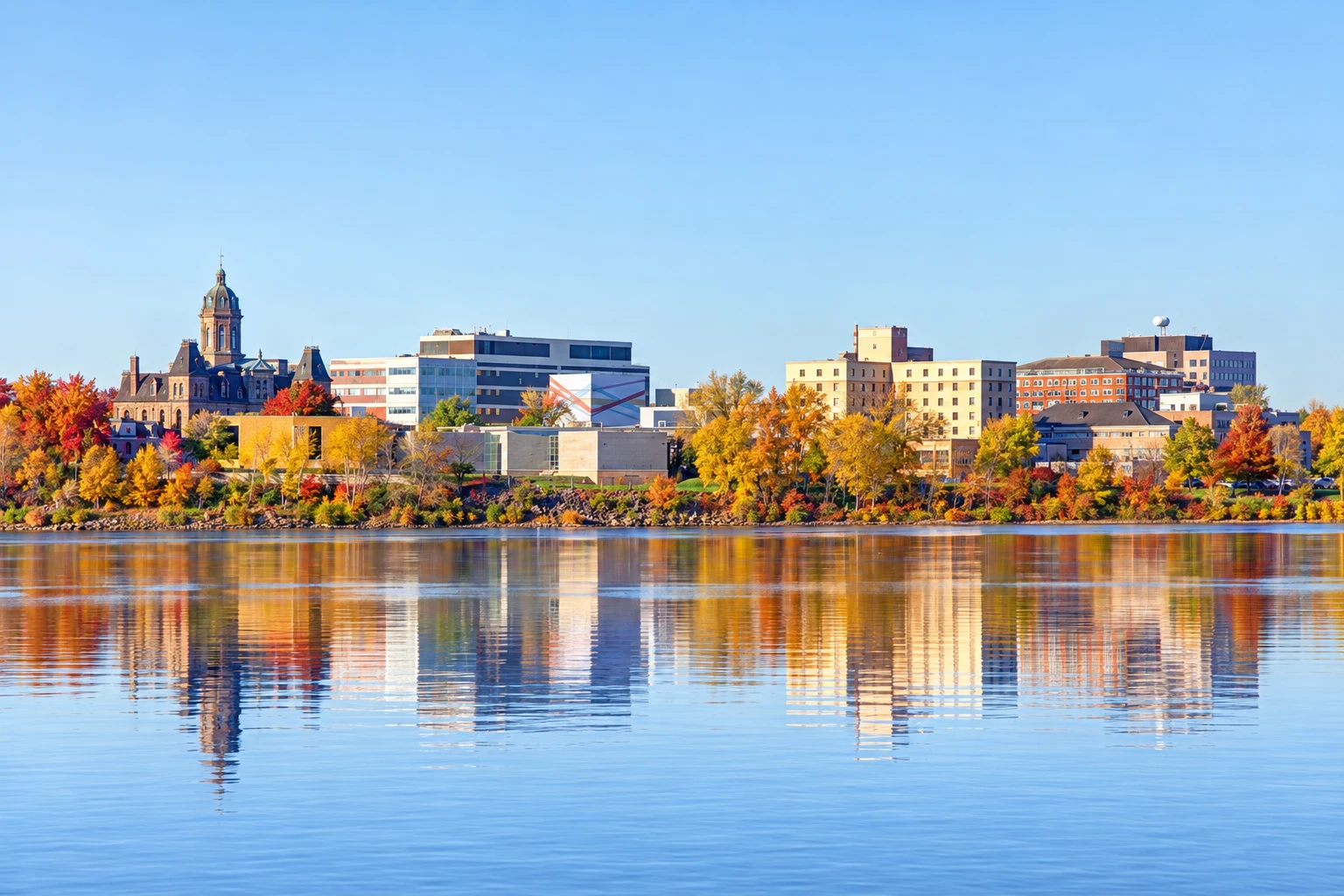
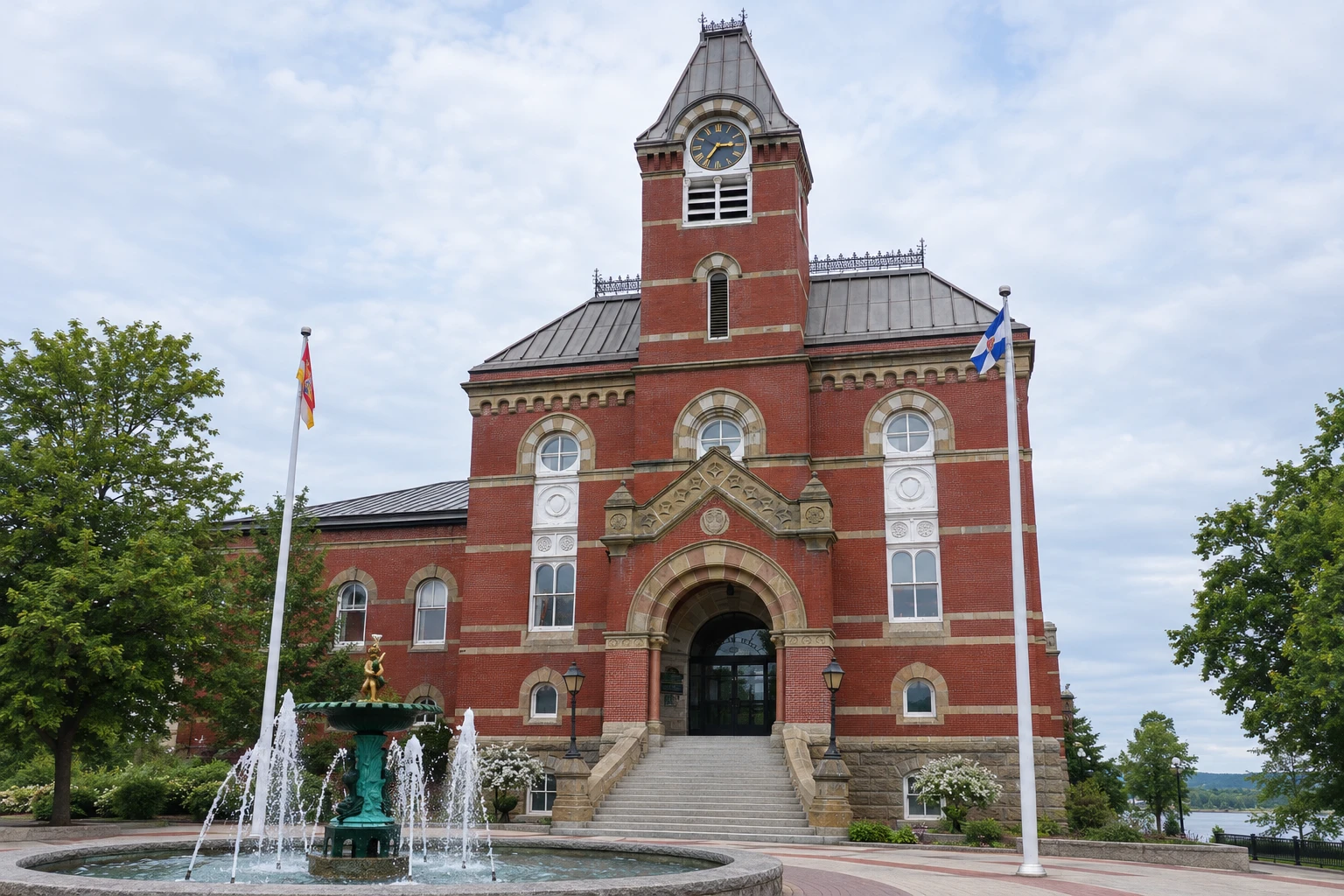
Capital of New Brunswick on the banks of the Saint John River. The downtown includes the Garrison District, with the 19th-century barracks and officers’ square, the Legislative Assembly, the Beaverbrook Art Gallery and the Anglican cathedral. An old railway bridge became a river walkway, and the historic village of Kings Landing is about 37 km away.

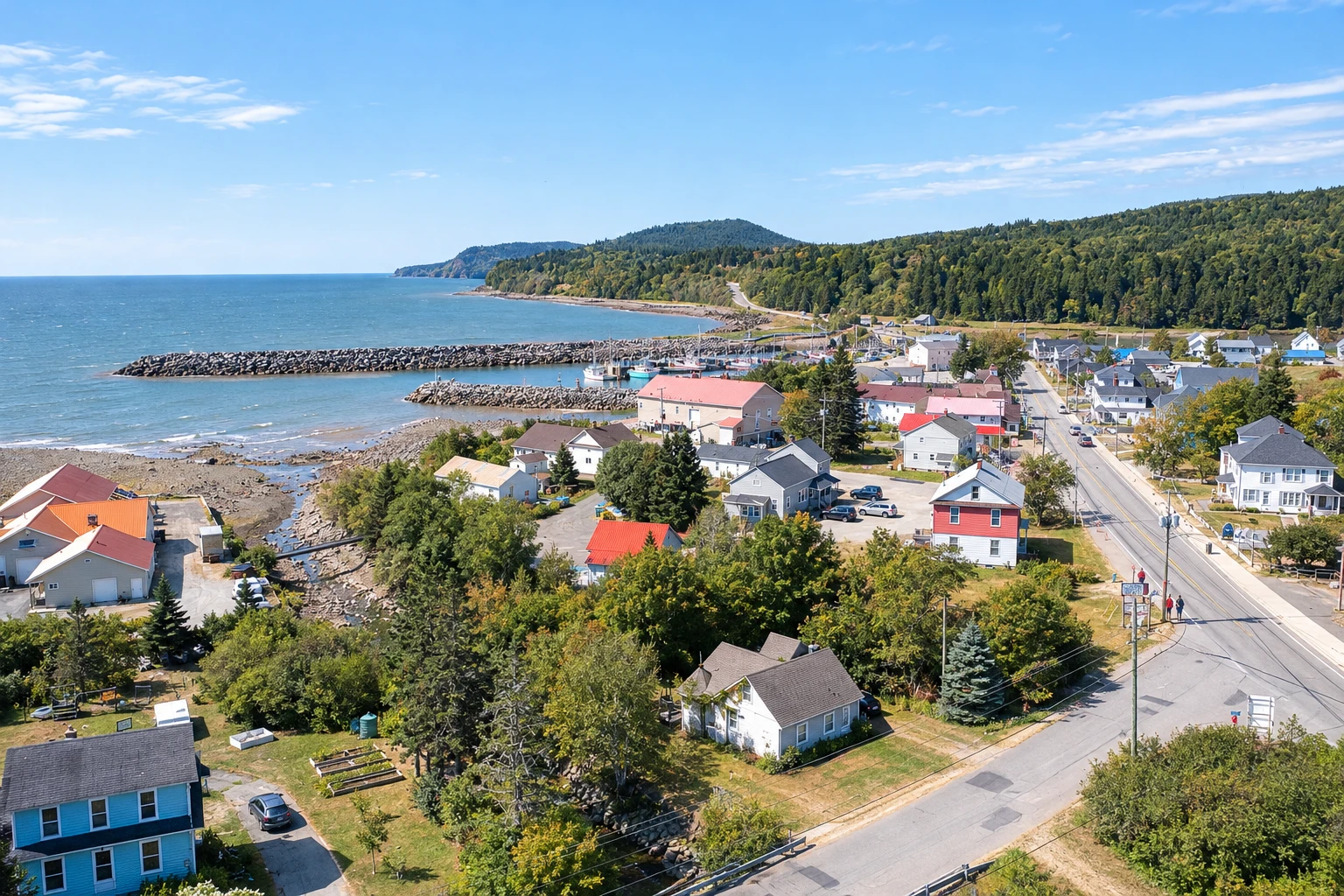
A lobster-fishing village on the shore of the Bay of Fundy, at the eastern entrance to Fundy National Park. In the harbour, boats rest on the seabed at low tide and float at high tide. It is the base for the park, for Hopewell Rocks and for Cape Enrage lighthouse.

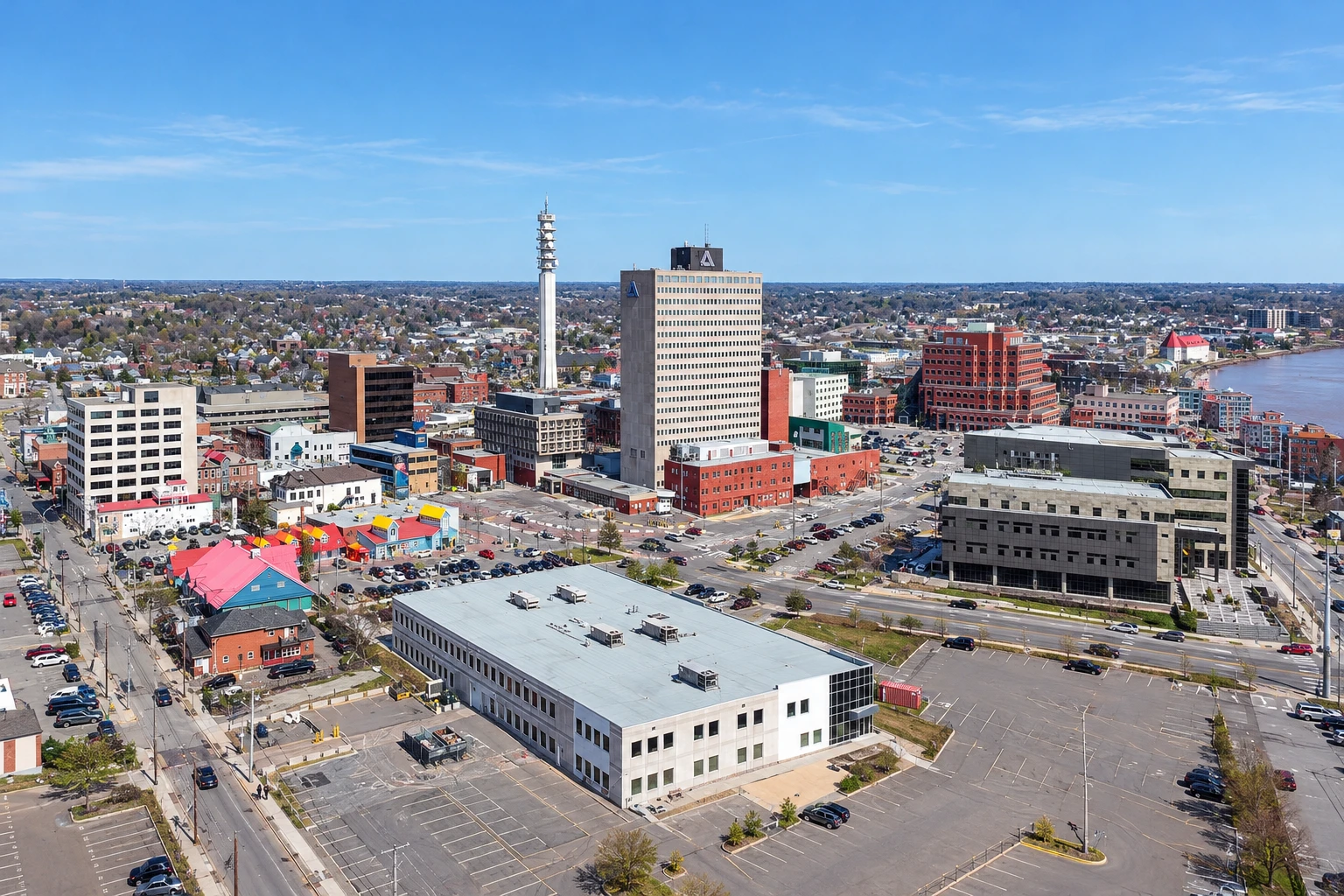
Largest city in New Brunswick and gateway to the Bay of Fundy, bilingual with a strong Acadian presence. On the Petitcodiac River the tide rises like a wave, visible from Bore Park. Just outside the city is Magnetic Hill, and Parlee Beach in Shediac is about 25 km away.

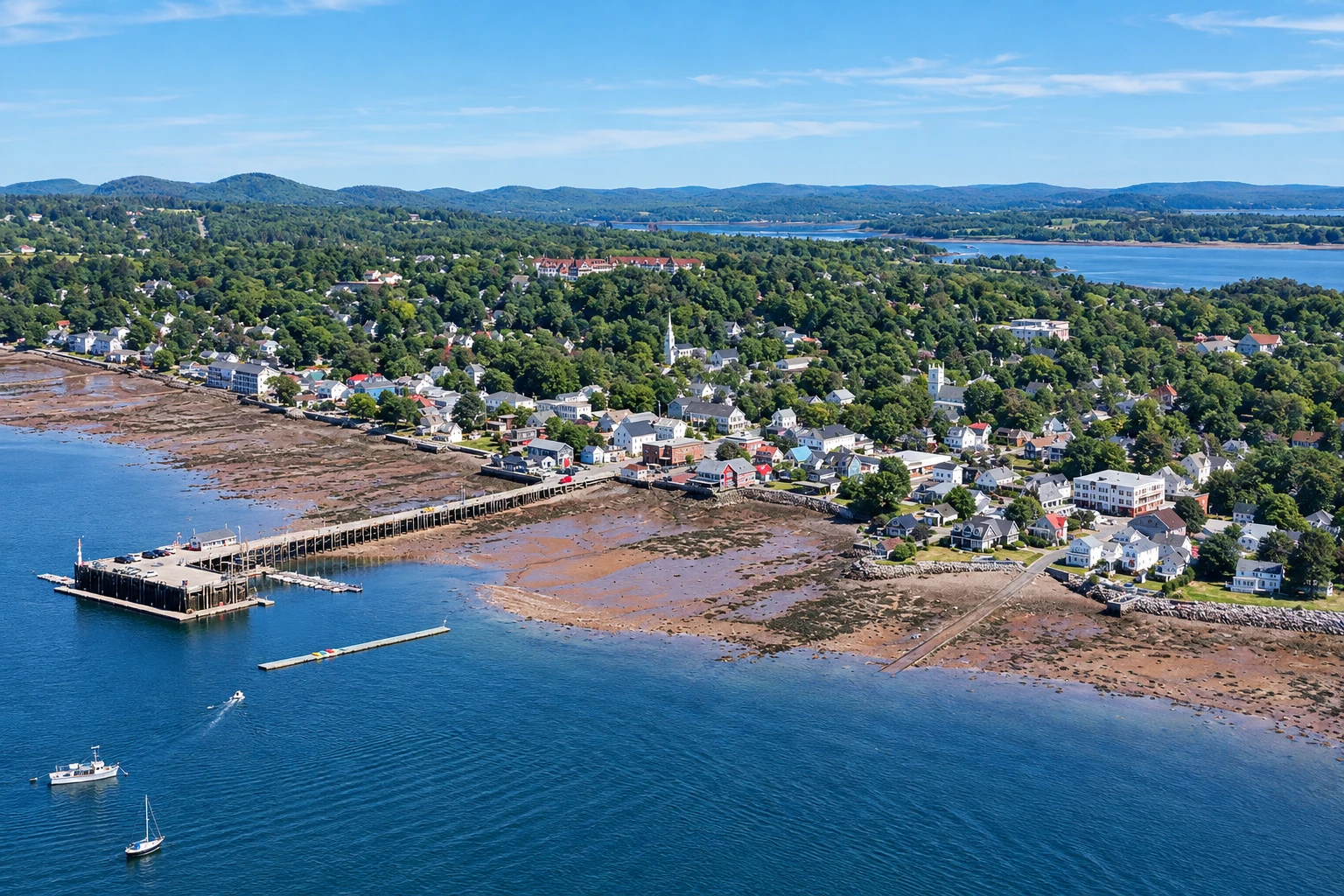
Historic village on the Passamaquoddy Bay, an arm of the Bay of Fundy by the border with the United States, founded in 1783 by settlers loyal to the British Crown. It has 18th- and 19th-century houses, gardens, boat tours to see whales and Minister's Island, which is reached across the seabed at low tide.
From mid-May to mid-October, the Hopewell Rocks and the tidal beaches of Fundy National Park receive visitors; access to the seabed depends on the low-tide schedule, which changes daily. Whale watching typically runs from June to October. Autumn foliage colors the interior in late September and early October. Winters are cold, with snow.
Moncton (YQM), Fredericton (YFC) and Saint John (YSJ) have airports with domestic flights, mainly from Toronto and Montreal. The Trans-Canada Highway connects the province to Quebec and Nova Scotia, and the 12.9 km Confederation Bridge leads to Prince Edward Island. The train between Montreal and Halifax stops in Moncton and other towns in the province, and ferries connect Saint John to Digby, Nova Scotia.
Beyond the guide
Your questions
Ideally visit twice in the same day: at low tide, to descend the stairs and walk on the seabed among the rocks, and at high tide, to see them surrounded by water or go kayaking. The park publishes the tide table with the day’s times; check it before you go.
Two or three days let you see the Hopewell Rocks at both tides, hike the trails of Fundy National Park from Alma and follow the coast to St. Andrews by-the-Sea. With more time you can take a ferry across to Nova Scotia.
Yes. New Brunswick is officially bilingual, and provincial services are offered in both English and French. French predominates in Acadian communities in the north and on the east coast, such as Caraquet and Shediac, while English is more common in the south.
Yes, it’s a common road trip. From Moncton, the Confederation Bridge leads to Prince Edward Island, and the Trans-Canada Highway continues to Halifax. A tour of the three provinces typically takes ten to fourteen days.