Lunenburg · Canada · Historic centre
Old Town Lunenburg
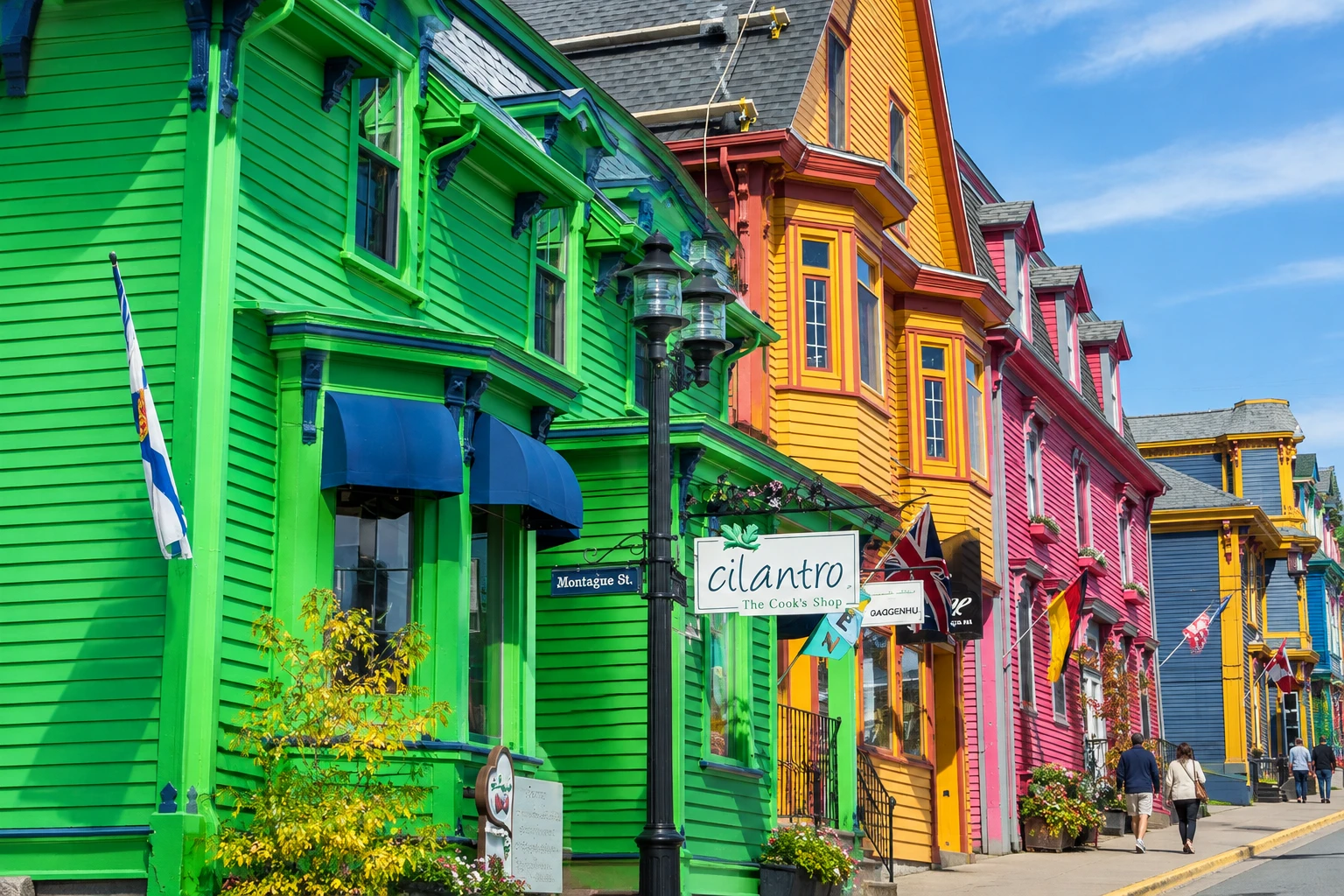
An 1753 British colonial old town, a UNESCO World Heritage Site, with a grid of streets on a slope above the harbour and wooden houses and sheds painted red, yellow and blue.

 Search
 Brazil
 Antarctica
 Argentina
 Bolivia
 Chile
 Colombia
 Ecuador
 Falkland Islands (Malvinas)
 French Guiana
 Guyana
 Paraguay
 Peru
 Suriname
 Uruguay
 Venezuela
 Austria
 Belgium
 Croatia
 Denmark
 Finland
 France
 Germany
 Greece
 Hungary
 Iceland
 Ireland
 Italy
 Luxembourg
 Norway
 Poland
 Portugal
 Slovakia
 Slovenia
 Spain
 Sweden
 Switzerland
 the Czech Republic
 the Netherlands
 the United Kingdom
 Turkey
 BermudaCanada
 Greenland
 Mexico
 Saint Pierre and Miquelon
 the United States
 the Dominican Republic
 JapanTurkey
 Egypt
 South Africa
 Australia
 Fiji
 New Zealand
 Papua New Guinea
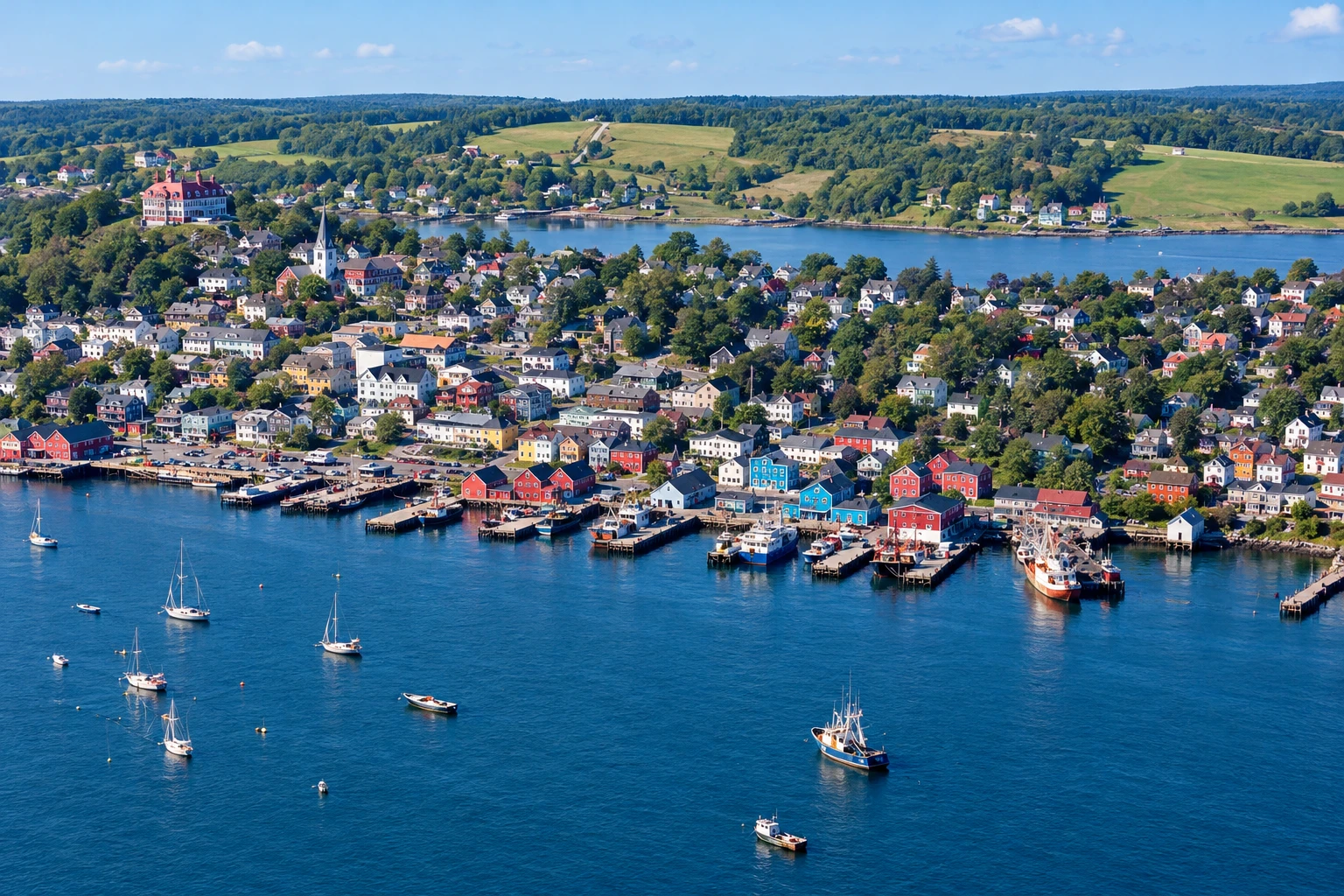
In the photo: Lunenburg and its harbour, seen from above.
Illustrative images. The pictures in this guide are illustrations based on the real place, not photographs, and may differ from it.

The city
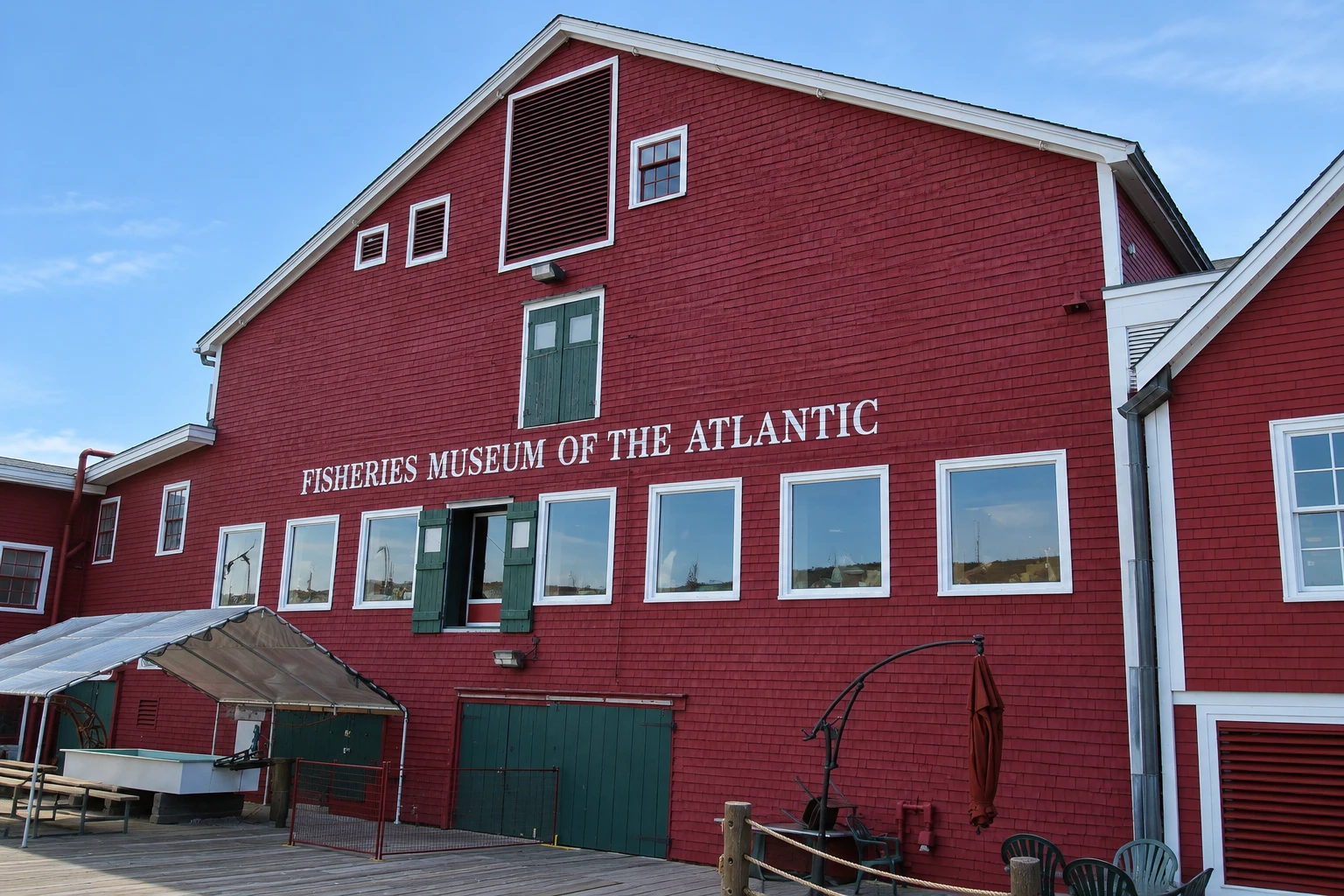
Port town on the south coast of Nova Scotia, founded in 1753, with a British colonial grid plan and wooden houses painted in bright colors climbing the slope above the harbour. The historic centre is a UNESCO World Heritage Site. The Fisheries Museum of the Atlantic is located on the harbour, and the village of Blue Rocks is 5 km away.
There's no accommodation in the guide yet in Lunenburg.
Tem hotel, pousada ou casa de temporada aqui? Cadastre a suaThere are no restaurants in the guide yet in Lunenburg.
Know a good one? Recommend it to usHotéis e restaurantes da cidade no mapa.
how to get there · how many days · itinerary · questions
The local experience
An 1753 British colonial old town, a UNESCO World Heritage Site, with a grid of streets on a slope above the harbour and wooden houses and sheds painted red, yellow and blue.
Museum in red sheds on Lunenburg harbour about fishing in the North Atlantic, with an aquarium, boat workshops and vessels moored for visits.
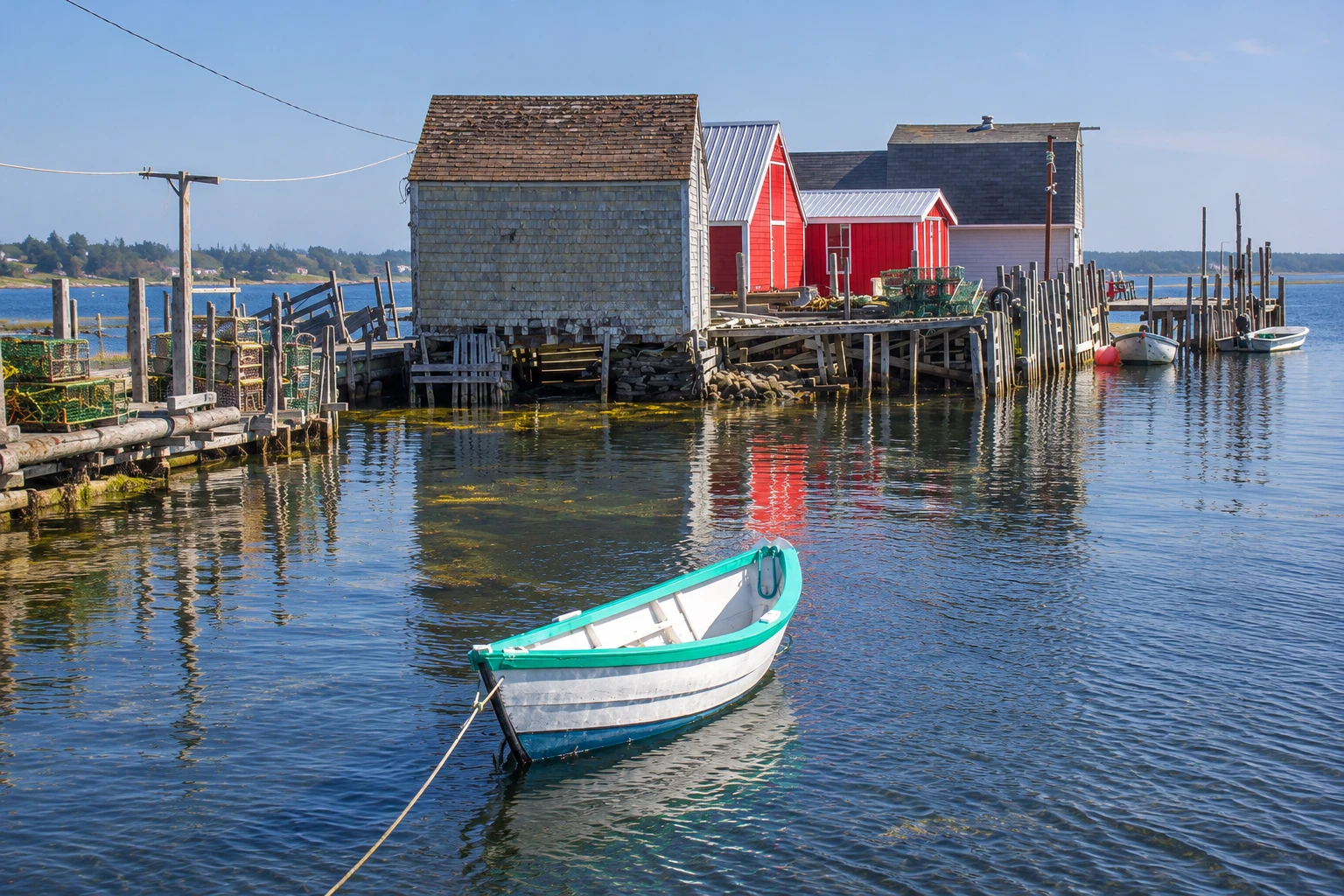
Fishing village 5 km from Lunenburg, with wooden fishing sheds on blue-grey slate rocks, coves and small islands.
Before you go
Lunenburg – Canada Destination Halifax and the South Shore about 100 km from Halifax
Approximate distances. Check flights and bus, train or boat schedules before you travel.
From Halifax, about 100 km via Highway 103, roughly a 1 hour 15 minute drive. Buses and transfers connect the two towns on some days. Mahone Bay is 10 km along the way.
One day for the historic centre and the museum; two days to include Blue Rocks, Mahone Bay and a boat trip.
June to September, when museums and boat services operate; the early August weekend often hosts a harbour festival. In winter many shops close.
The seasons shown are the most usual ones; nature doesn't always follow the calendar.
The historic centre is explored on foot, with steep streets. A car is helpful to get there and to reach Blue Rocks and Mahone Bay.
Suggested itinerary
Built with the places on this page. No rush: it's paced so you have time to see them.
Walk up and down the streets of the old town, pass St. John’s Anglican Church and the colourful houses on King Street.
Visit the Fisheries Museum of the Atlantic and view the town across the harbour from the golf course on the opposite shore.
Day 1
Spend the day between the historic centre, the museum and the harbour, with an afternoon boat trip if one departs.
Day 2
Drive to Blue Rocks along the coastal road and walk among the fishing sheds and the slate rocks.
Continue to Mahone Bay to see the three churches on the bay and the shops along the main street.
Check before you go. Opening hours and days change, and places may close for renovations, holidays or events. This itinerary is a suggestion from Cidade Turismo, not a commitment: plan yours by checking directly with each place you intend to visit.
Before you go
Because it preserves the grid plan and wooden houses of an 18th-century planned British colonial town. It was inscribed by UNESCO in 1995.
About 100 km, roughly a 1 hour 15 minute drive.
Yes, leaving early, with stops in Mahone Bay and, if time allows, Peggy’s Cove. Staying overnight makes the visit more relaxed.
A fishing and racing schooner built in Lunenburg in 1921, a symbol of Nova Scotia and featured on the Canadian ten-cent coin. A replica, the Bluenose II, is based in the town’s harbour.