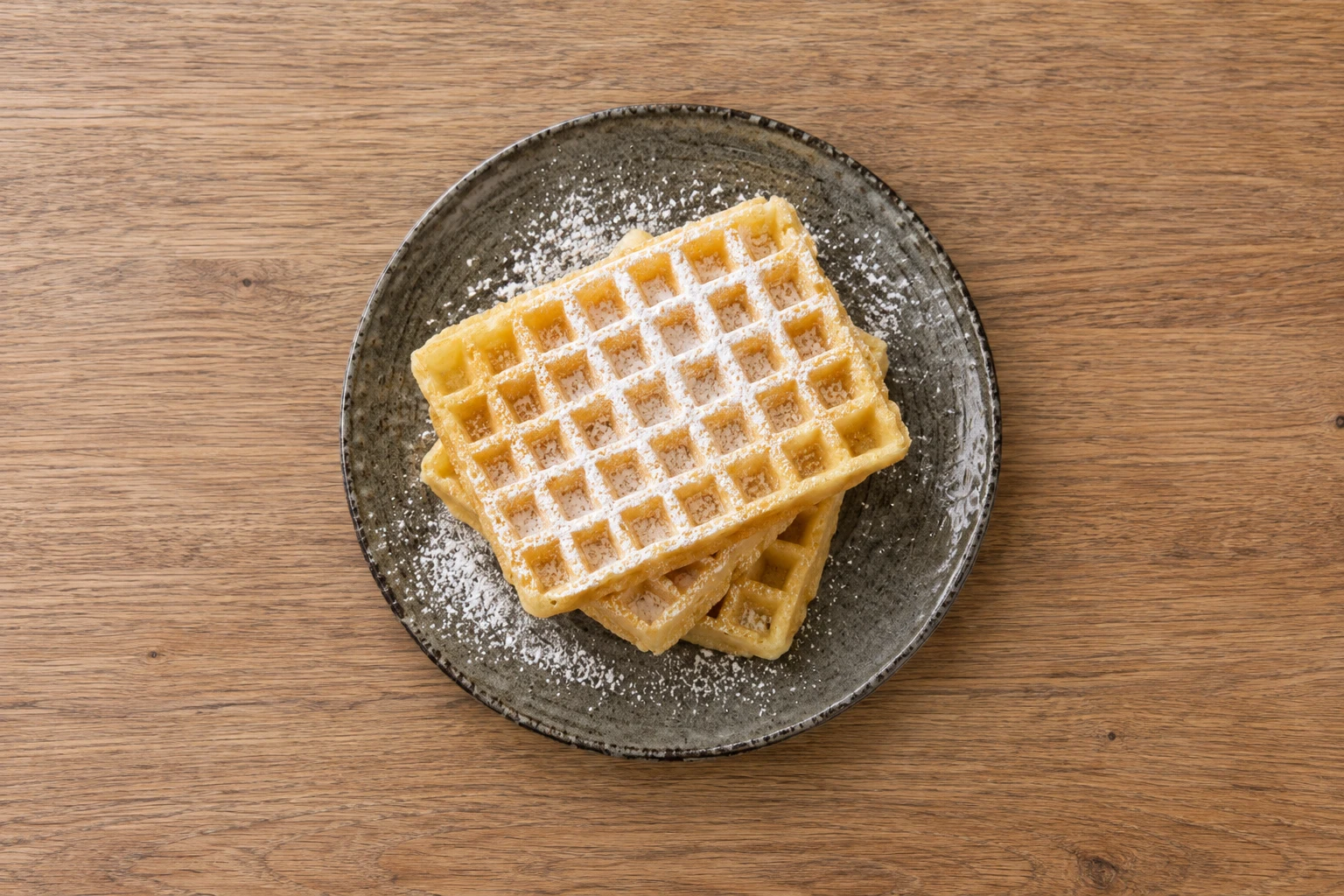
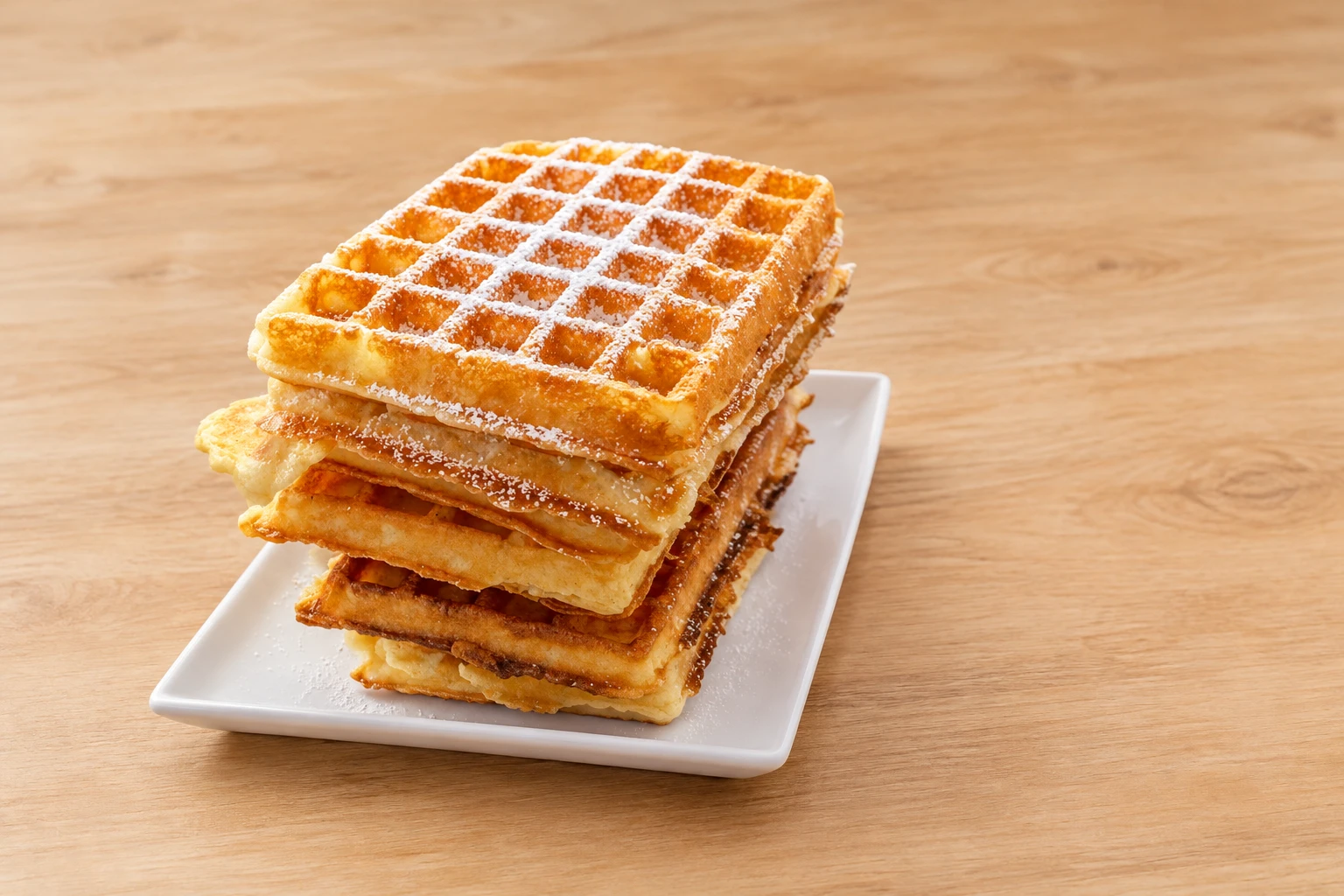
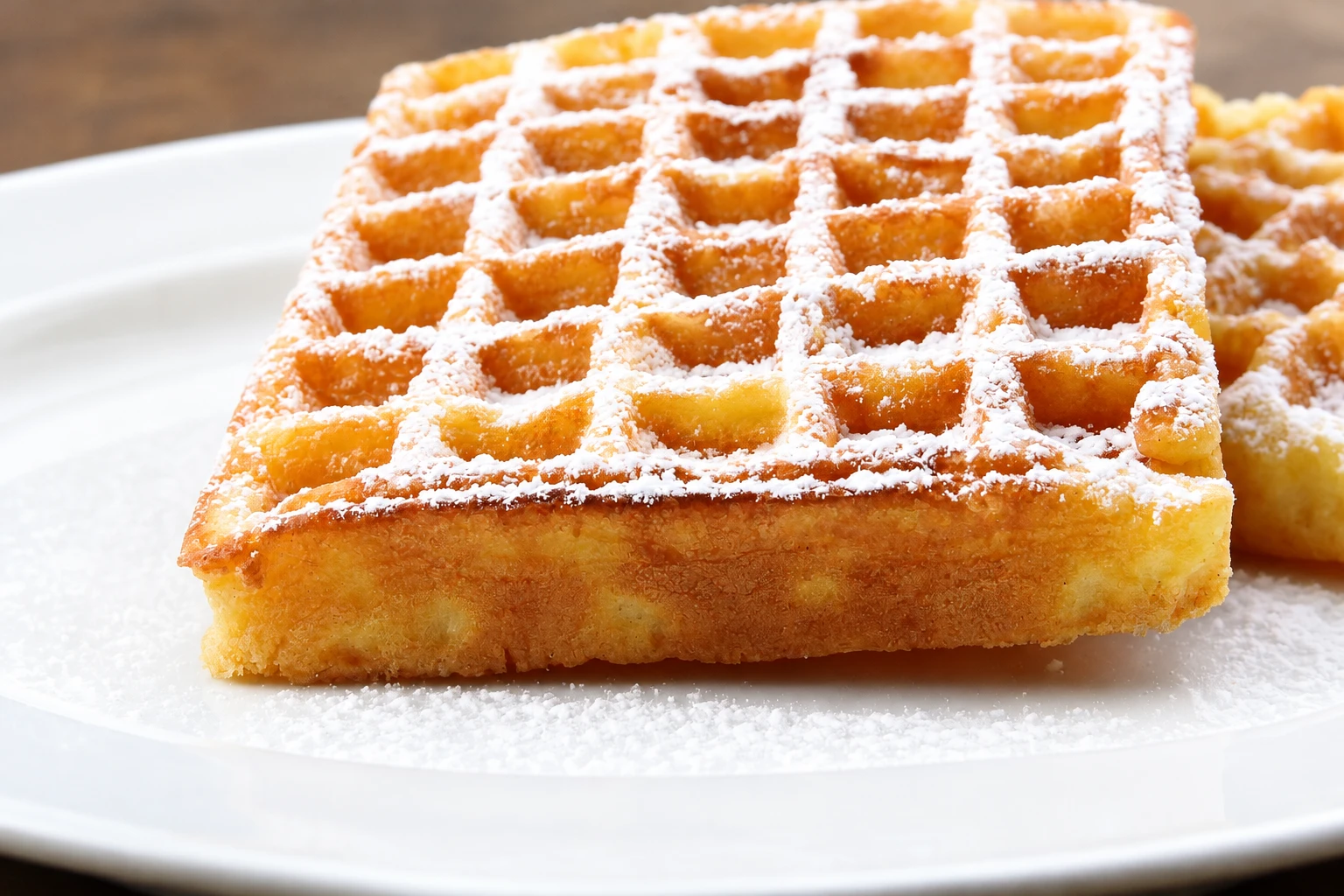
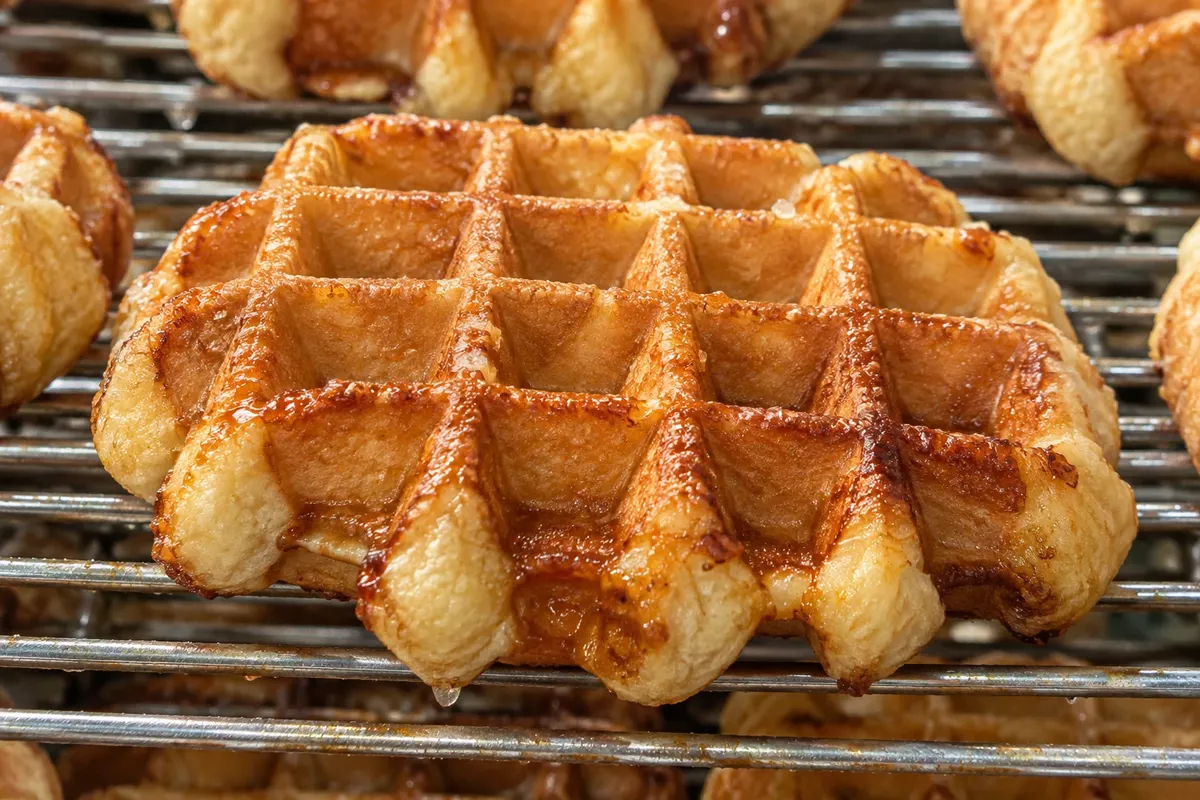
The gaufre de Bruxelles is a rectangular waffle, with straight edges and deep pockets, usually 20 to 24 cavities. The batter is liquid and becomes light thanks to egg whites beaten to stiff peaks and, in many recipes, to yeast. It comes off the iron crispy on the outside and soft on the inside, with little sugar in the batter: it serves as a base for toppings.
Waffles are old in the region. They appear in Bruegel paintings from the 16th century and in the painting The King Drinks by Jacob Jordaens, which is in the Royal Museums of Fine Arts of Belgium in Brussels, where the waffle is part of the Epiphany celebration. For centuries it was a festive sweet, linked especially to carnival.
The name gaufres de Bruxelles appears in writing in the mid-19th century, on the card of a confectioner who had worked in Brussels and opened a shop in Ghent. Ghent also claims the invention, attributed to a confectioner from the city who allegedly presented the waffle at a fair in 1856, and the oldest known written recipe, from 1874, used beaten egg whites instead of yeast. The exact origin is disputed; the name and tradition remained associated with the capital.
It is different from the Liège waffle, the other major Belgian waffle. The Brussels one is light, rectangular and not very sweet; the Liège one is rounded, dense and full of caramelized sugar. Therefore the Brussels waffle is usually served with toppings, and the Liège waffle is eaten without them.
In Brussels, the waffle is eaten at any time: seated in a tearoom, with fork and knife, or on the street, with hands. The classic way is only with confectioners' sugar. Chantilly, fresh fruit and melted chocolate are common additions, especially on the busiest streets of the center.


 Brazilija
 Antarktika
 Argentina
 Bolivija
 Čile
 Kolumbija
 Ekvator
 Gvajana
 Francoska Gvajana
 Falklandski otoki (Malvini)
 Paragvaj
 Peru
 Surinam
 Urugvaj
 Venezuela
 Nemčija
 Avstrija
 Hrvaška
 Danska
 Slovaška
 Slovenija
 Španija
 Finska
 Francija
 Grčija
 Nizozemska
 Madžarska
 Irska
 Islandija
 Italija
 Luksemburg
 Norveška
 Poljska
 Portugalska
 Združeno kraljestvo
 Češka
 Švedska
 Švica
 Turčija
 Bermudi
 Kanada
 Združene države Amerike
 Grenlandija
 Mehika
 Sveta Peter in Mihael
 Dominikanska republika
 Japonska
 Južnoafriška republika
 Egipt
 Avstralija
 Fidži
 Nova Zelandija
 Papua Nova Gvineja