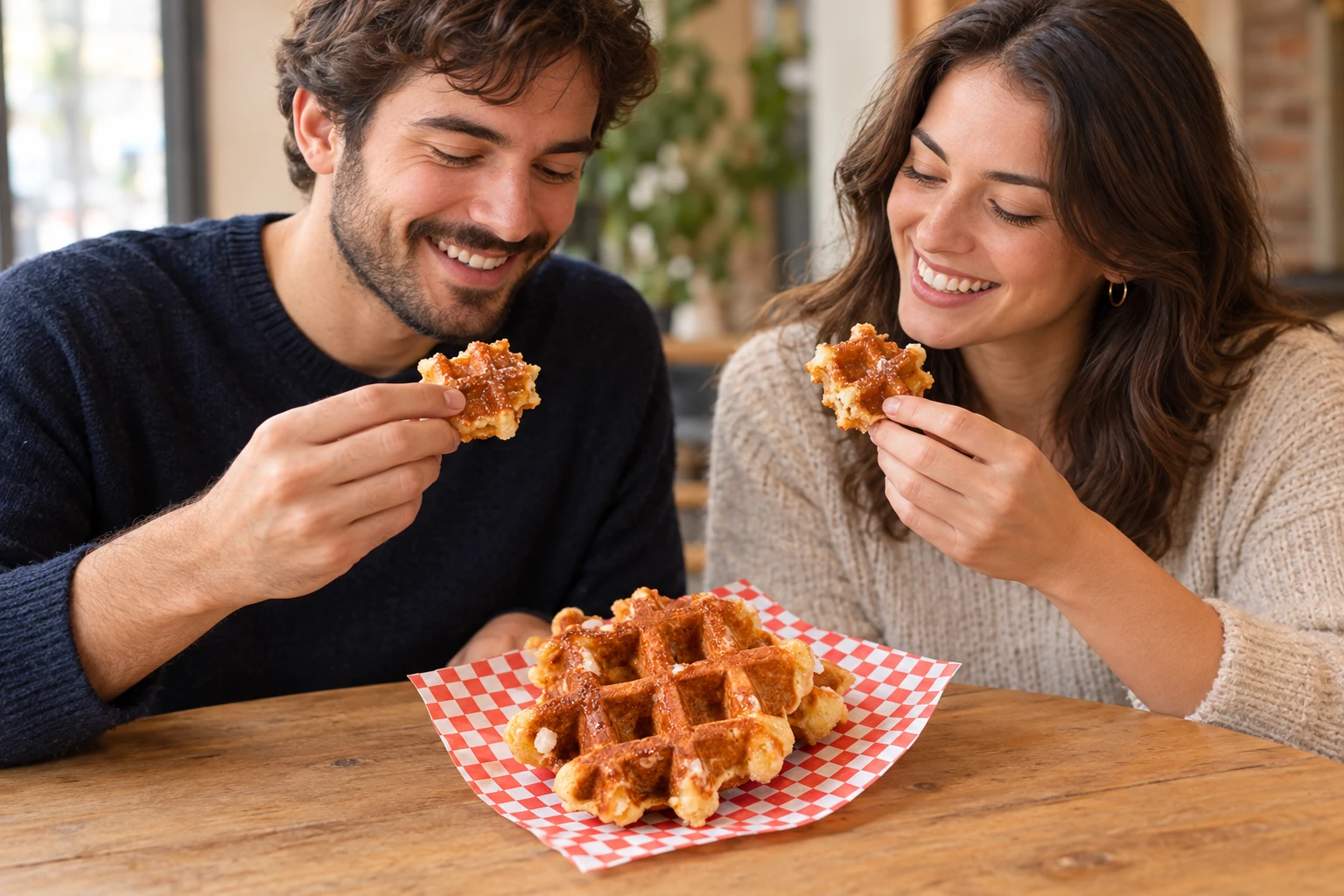
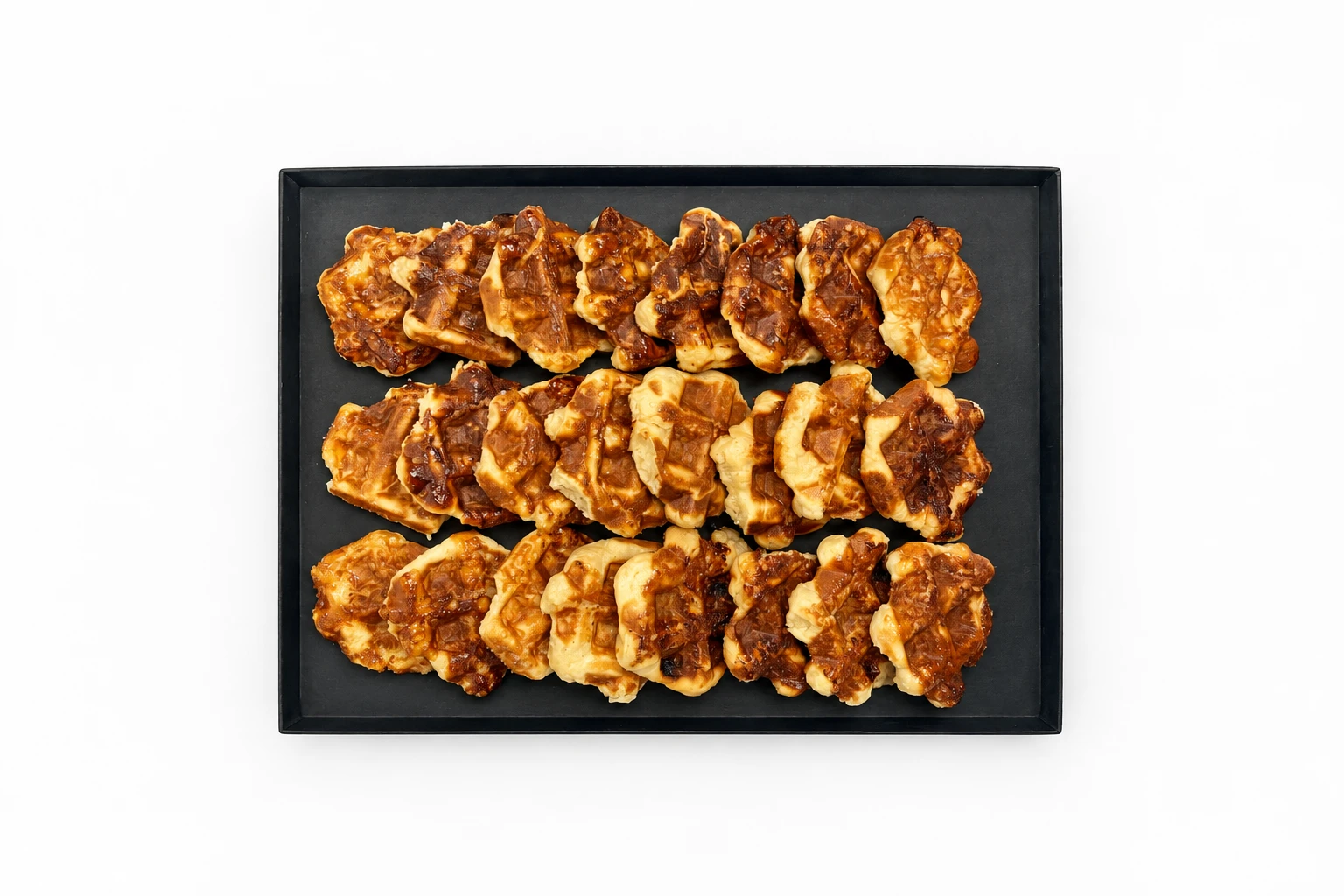
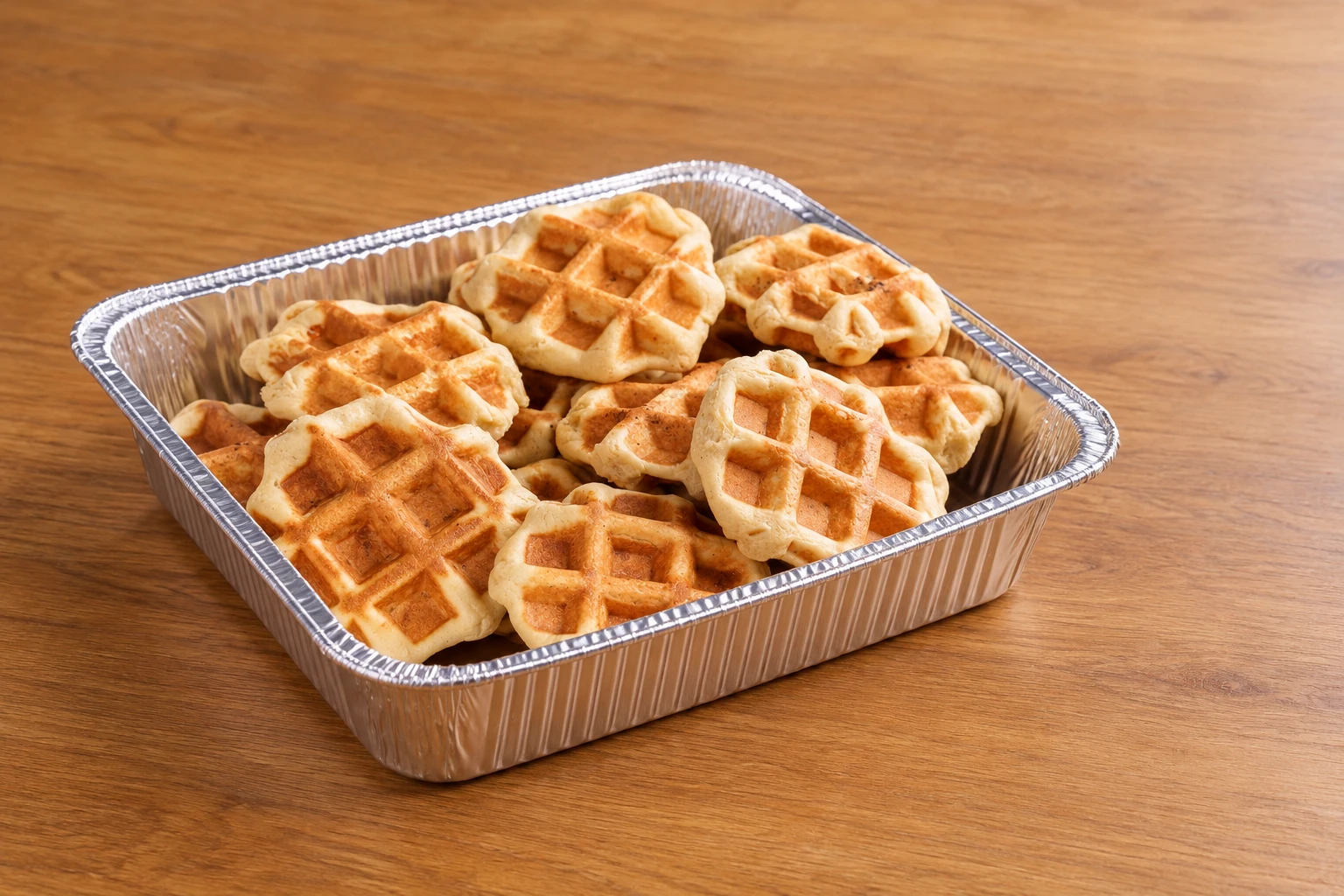
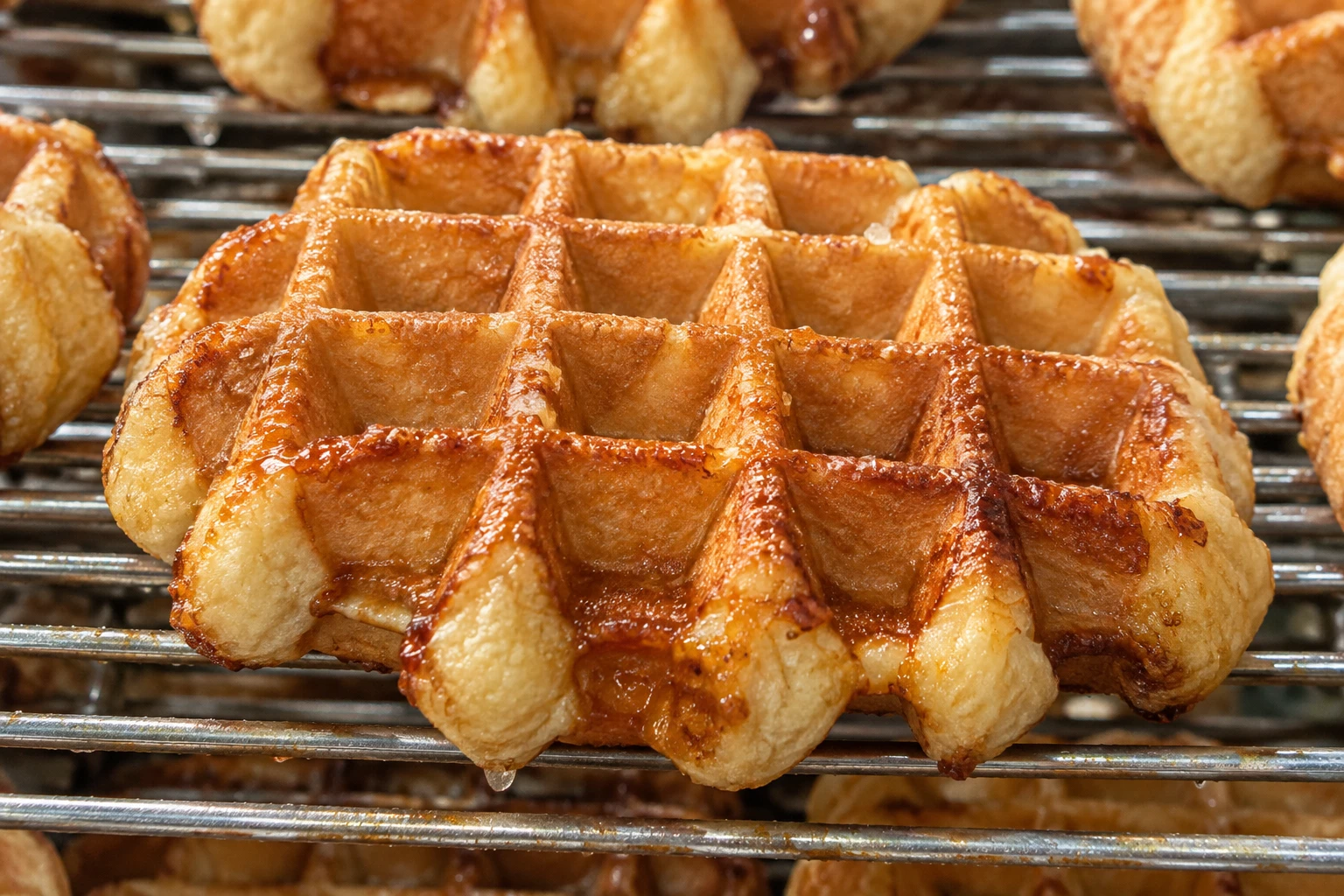
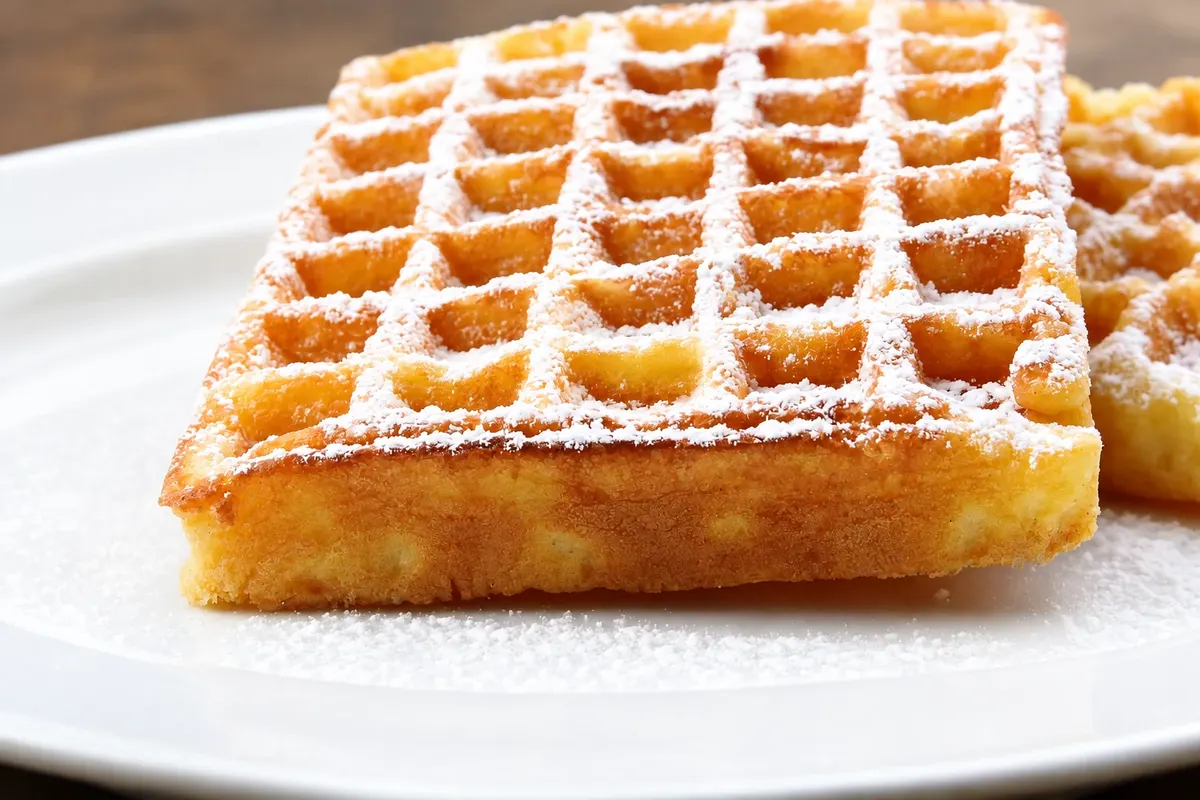
The Liège waffle is made with a thick, fermented dough similar to brioche, rich in butter. The secret is the pearl sugar — clumped pieces of beet sugar that don’t fully melt: on the griddle they caramelize on the outside and leave the waffle crispy on the surface and soft inside. The shape is rounded, without corners, and the traditional form has 24 pockets.
Tradition links the sweet to the prince-bishop of Liège. According to the legend told in the city, in the 18th century he asked his cook for something sweet and tasty, and the cook tried baking a kind of brioche with pieces of sugar in the dough. Early versions may have included cinnamon; pearl sugar entered the recipe between the late 18th and early 19th centuries.
In Liège, a brotherhood defends the recipe, and the city’s tourism promotes the shops that hold the authentic gaufre de Liège seal. The waffle is also the subject of contests and tastings during the city’s festivals.
It is different from the Brussels waffle, light and rectangular, which calls for toppings. The Liège waffle is already sweet enough and is eaten plain. Because it’s compact and reheats well, it spread throughout Belgium: it’s sold at street stalls, bakeries and even supermarkets.
On the street it’s wrapped in paper, hot or reheated, and eaten with the hands at any time of day.


 Brazilija
 Antarktika
 Argentina
 Bolivija
 Čile
 Kolumbija
 Ekvator
 Gvajana
 Francoska Gvajana
 Falklandski otoki (Malvini)
 Paragvaj
 Peru
 Surinam
 Urugvaj
 Venezuela
 Nemčija
 Avstrija
 Hrvaška
 Danska
 Slovaška
 Slovenija
 Španija
 Finska
 Francija
 Grčija
 Nizozemska
 Madžarska
 Irska
 Islandija
 Italija
 Luksemburg
 Norveška
 Poljska
 Portugalska
 Združeno kraljestvo
 Češka
 Švedska
 Švica
 Turčija
 Bermudi
 Kanada
 Združene države Amerike
 Grenlandija
 Mehika
 Sveta Peter in Mihael
 Dominikanska republika
 Japonska
 Južnoafriška republika
 Egipt
 Avstralija
 Fidži
 Nova Zelandija
 Papua Nova Gvineja