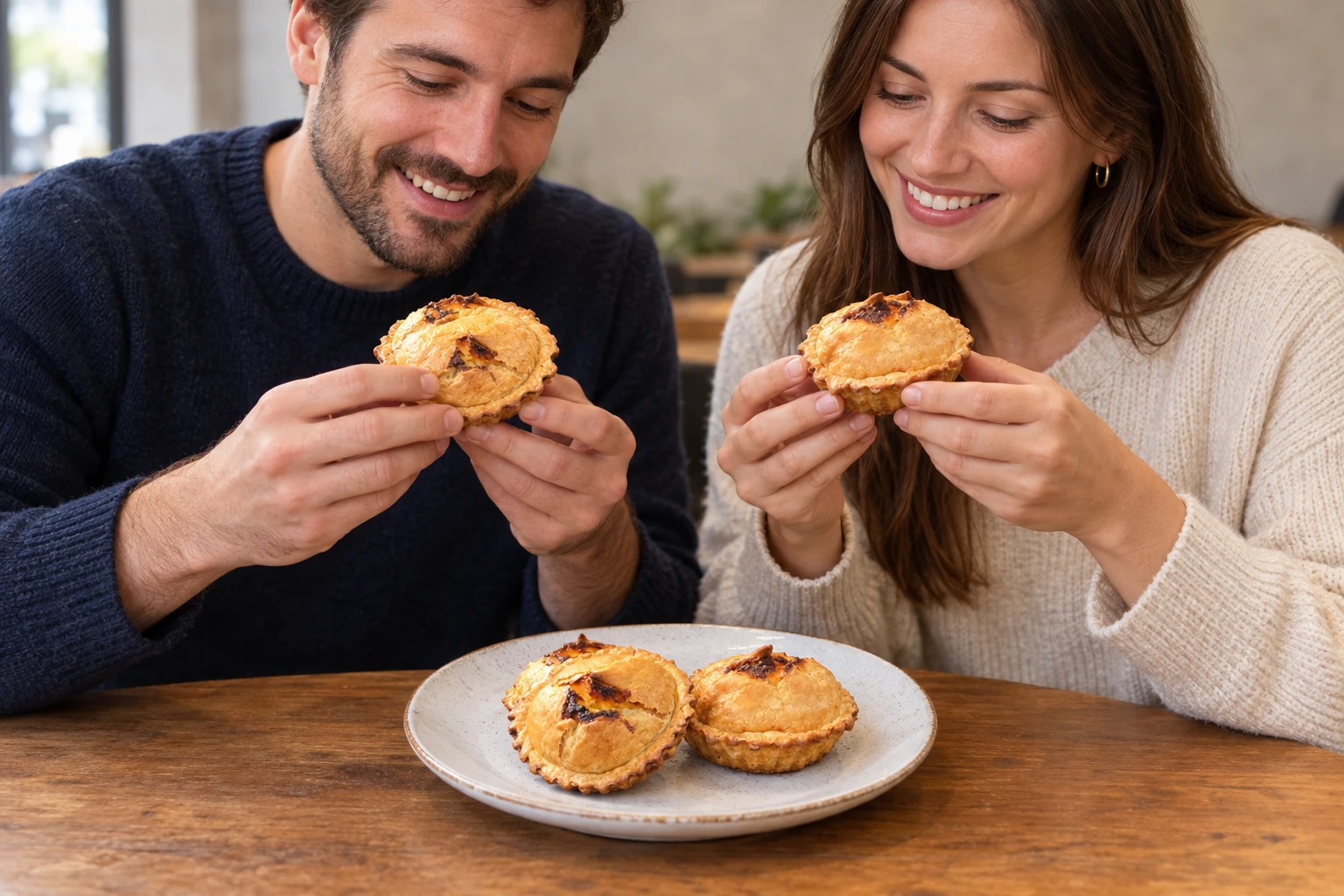
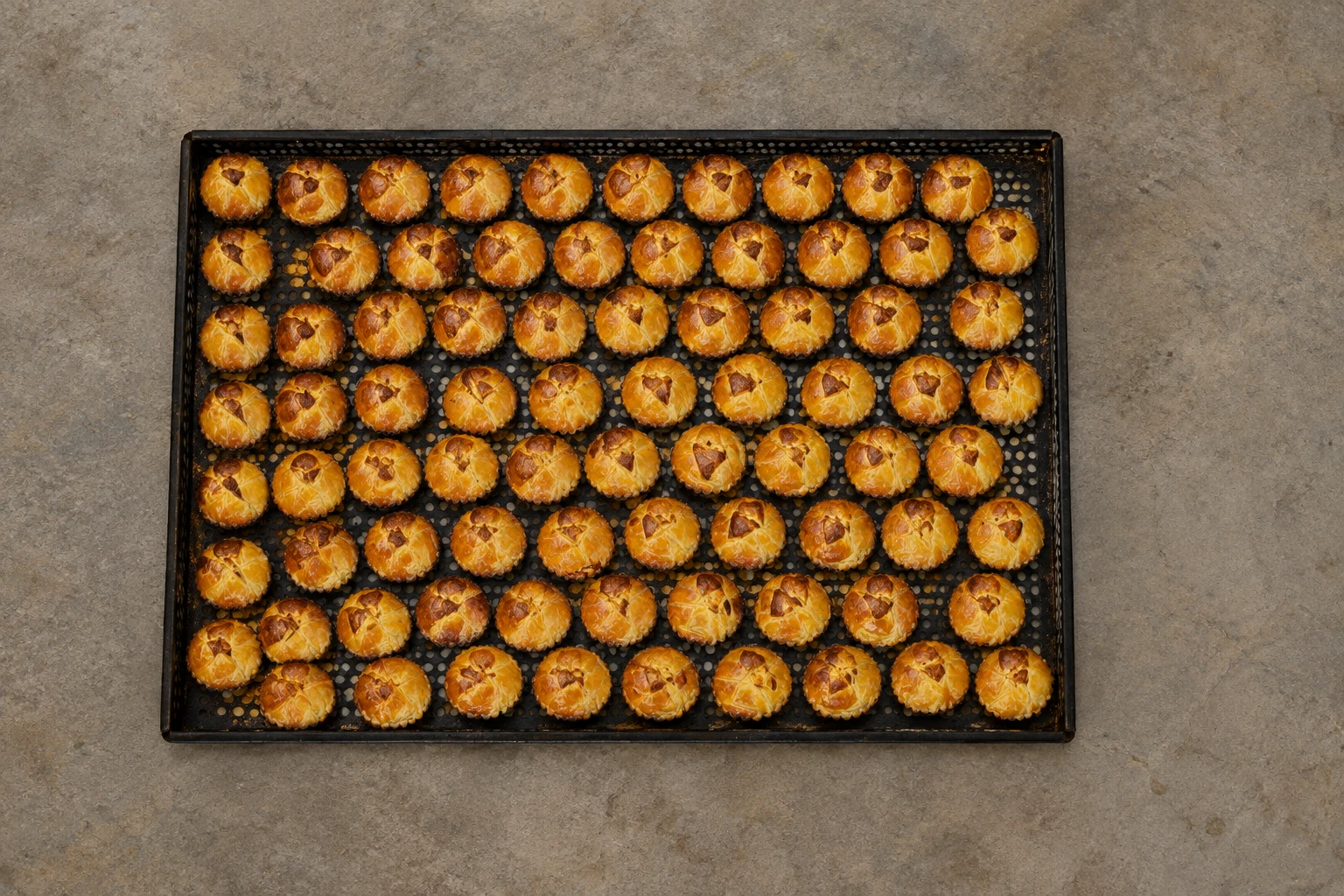
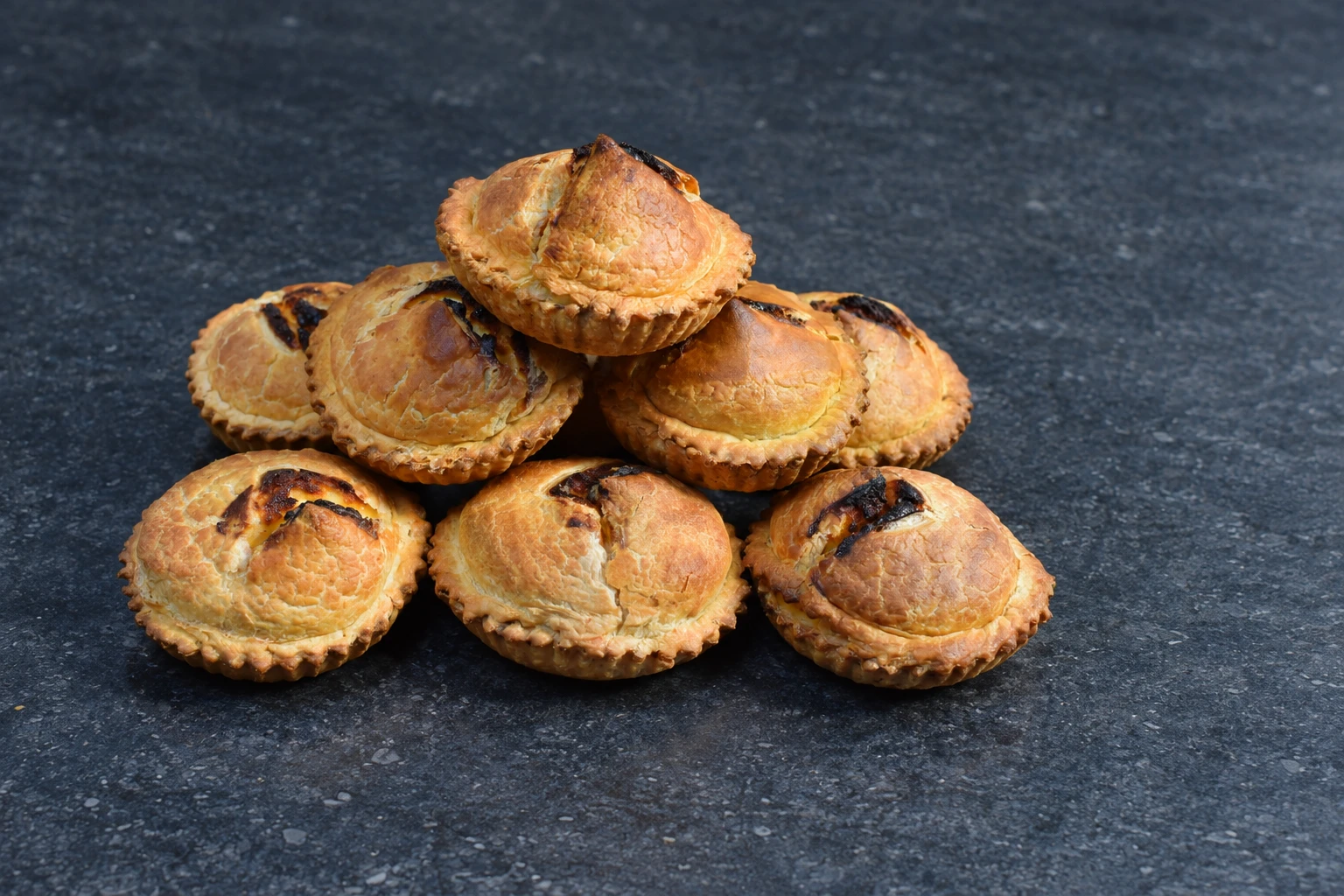
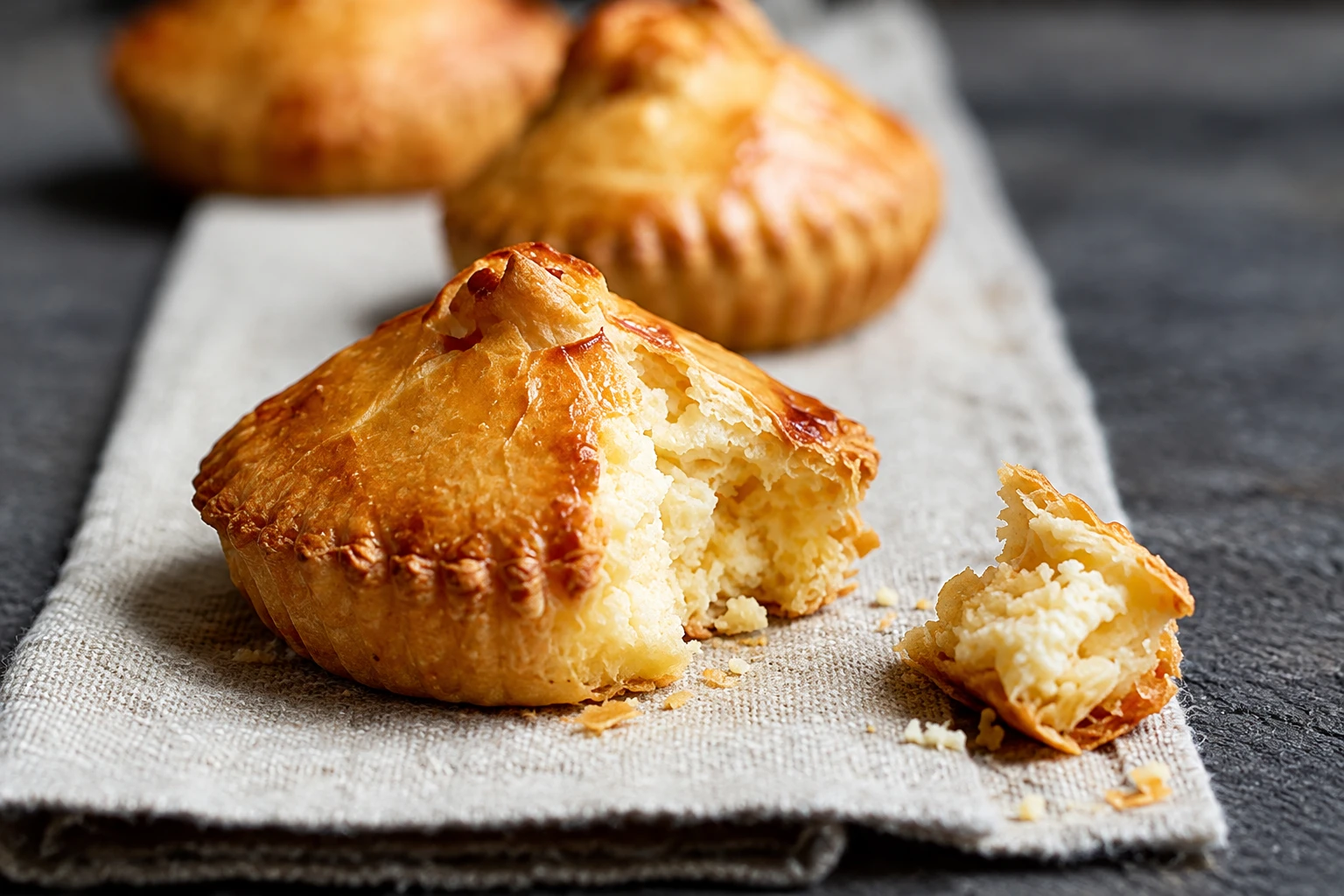
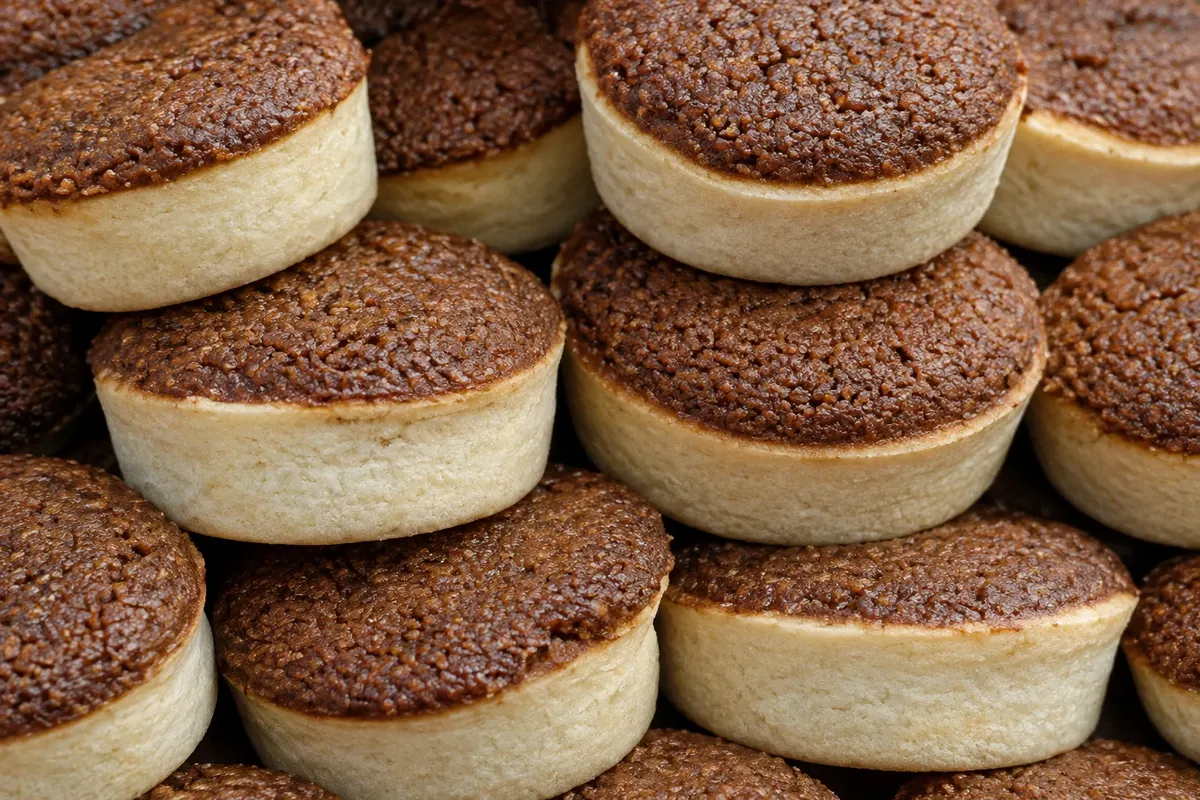
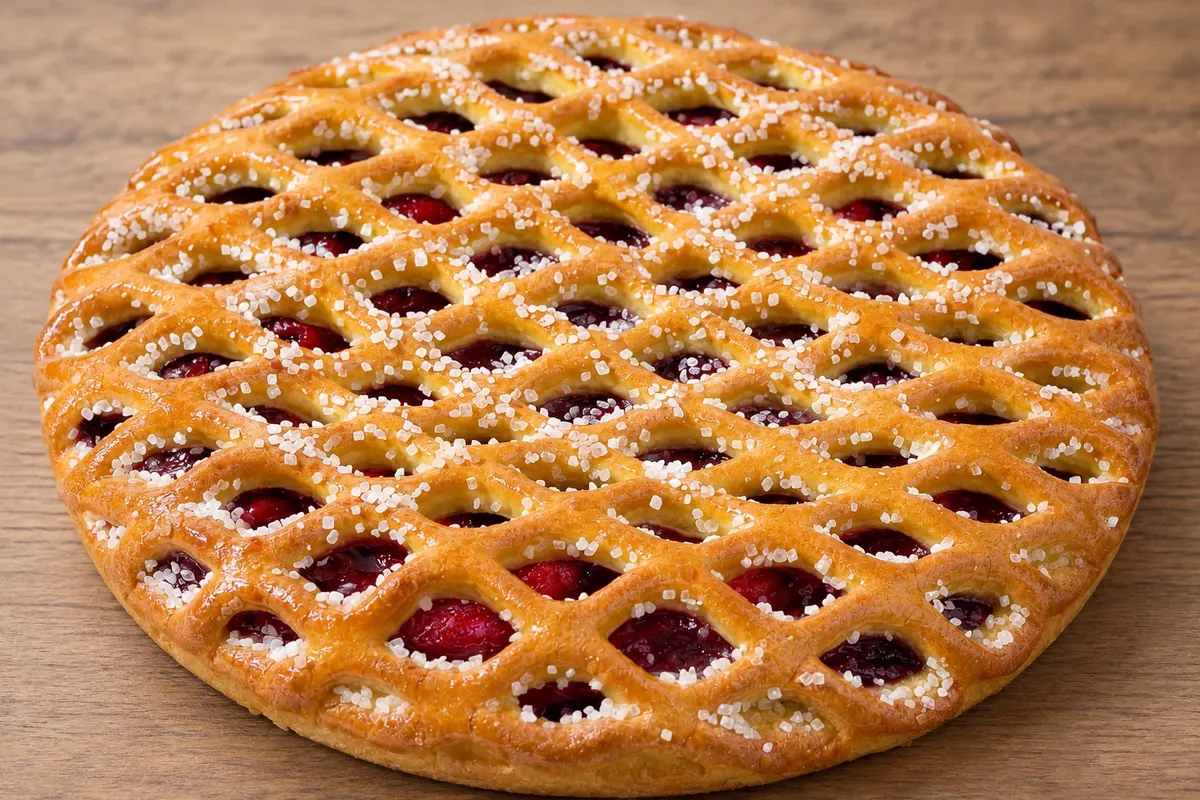
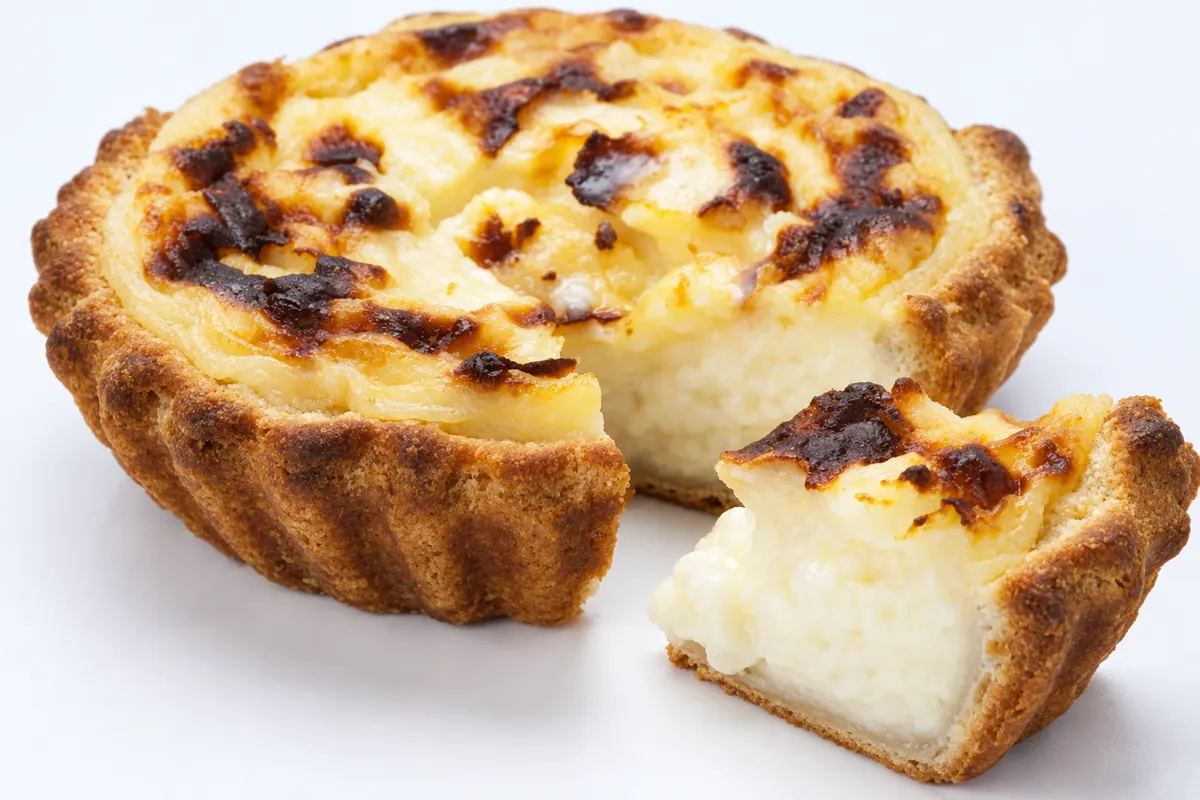
The mattentaart is a round puff-pastry tart with a creamy filling and a crunchy crown on top. The name comes from the main ingredient, the matten: raw cow’s milk curd that has been drained. The filling contains matten, eggs and sugar, and the flavor varies slightly from baker to baker, with more or less vanilla or almond aroma.
The tart originated as a way to use curd in a time without refrigeration, when preserving milk was difficult. A troubadour song from the 13th century already mentions matten, and the first known recipe appears in a 16th-century cookbook. In 1665, Geraardsbergen set quality rules for selling the tart in the town, and in 1752 Empress Maria Theresa of Austria confirmed those standards.
Until the end of the 19th century, the mattentaart was made at home and on farms; later it moved to bakeries. In 1978 the Geraardsbergse mattentaart brotherhood was founded, and in 2007 the European Union protected the name: only bakers from Geraardsbergen and Lierde may make it, using matten and specified ingredients. Raw tarts can be frozen and baked elsewhere.
Matten are also recognized as a regional Flemish product. The tart is part of Flanders’ intangible heritage and remains present in the town’s everyday life.
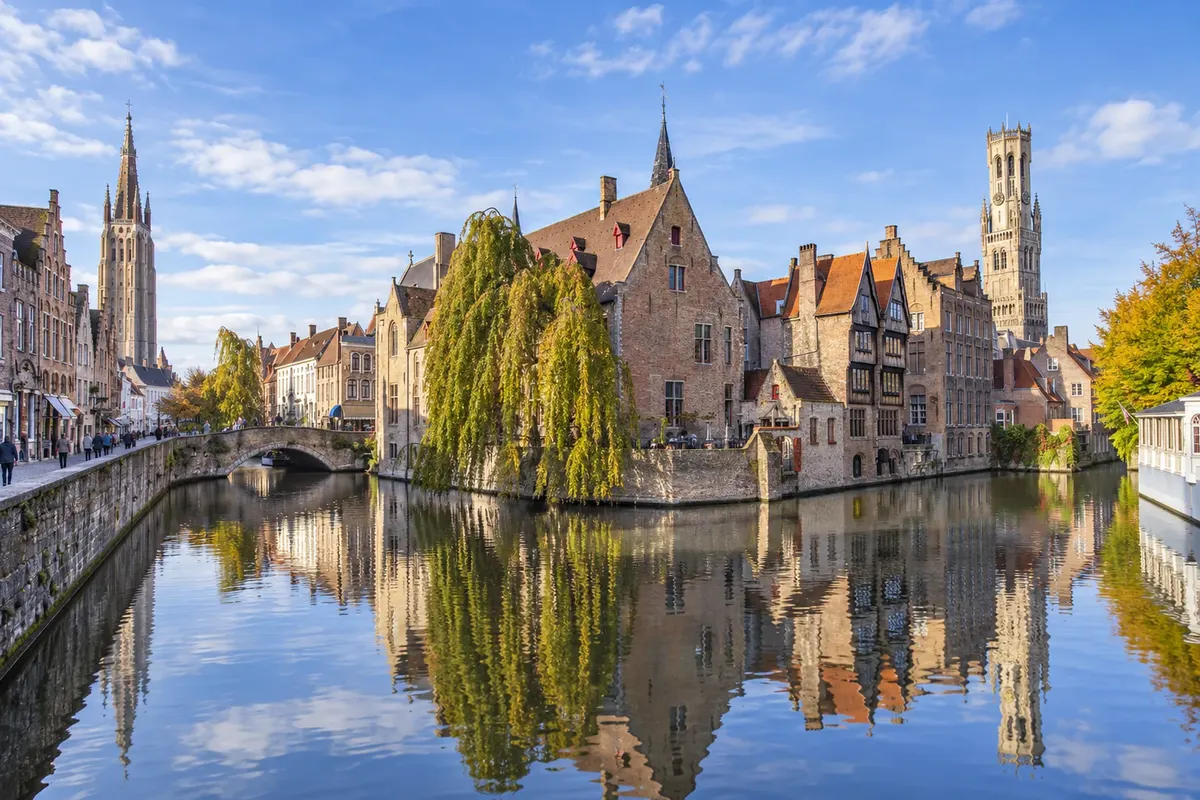
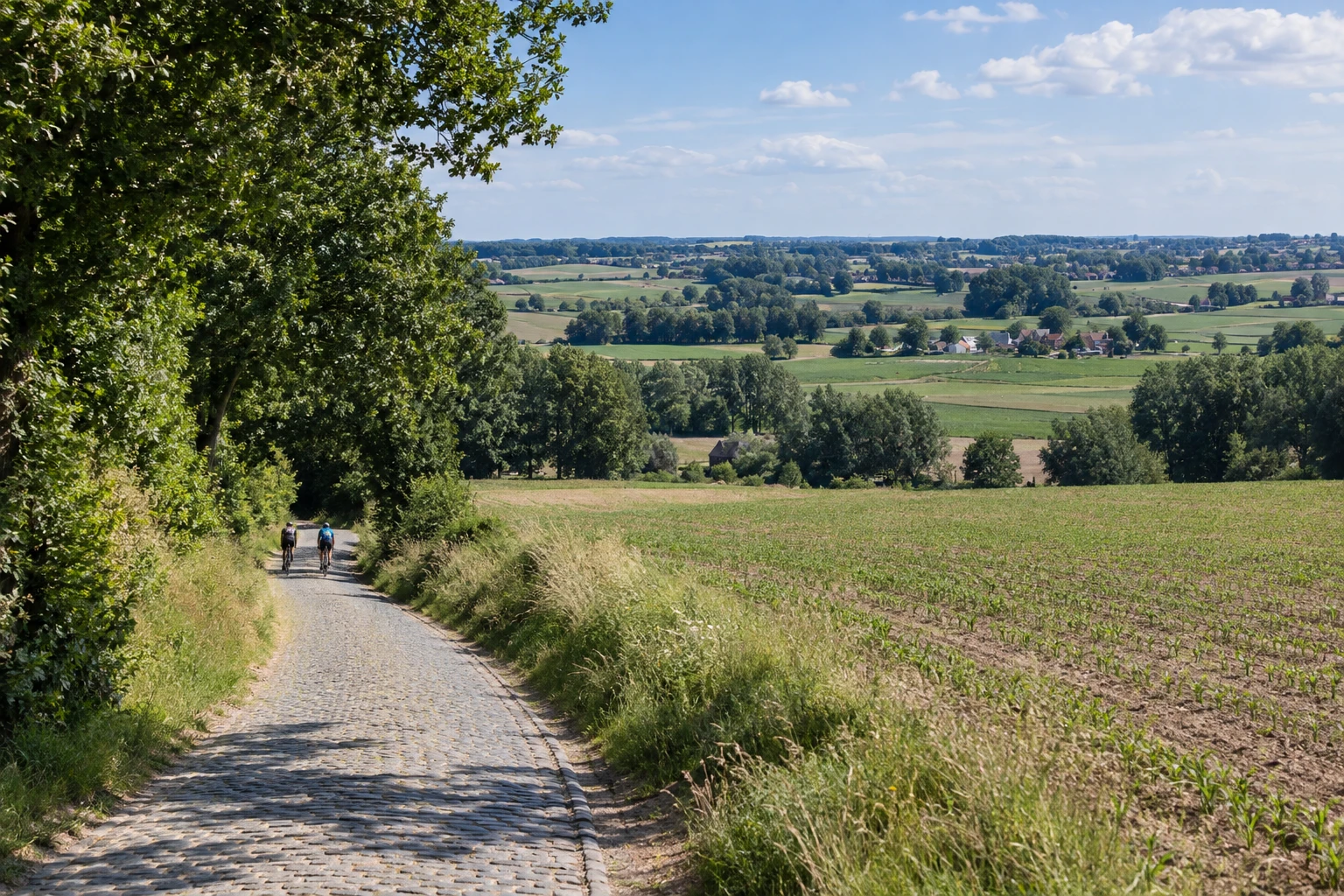
Geraardsbergen lies in the south of the province of East Flanders, on the banks of the river Dender. The mattentaart is found in the town’s bakeries and is eaten as a coffee sweet.


 Brazilija
 Antarktika
 Argentina
 Bolivija
 Čile
 Kolumbija
 Ekvator
 Gvajana
 Francoska Gvajana
 Falklandski otoki (Malvini)
 Paragvaj
 Peru
 Surinam
 Urugvaj
 Venezuela
 Nemčija
 Avstrija
 Hrvaška
 Danska
 Slovaška
 Slovenija
 Španija
 Finska
 Francija
 Grčija
 Nizozemska
 Madžarska
 Irska
 Islandija
 Italija
 Luksemburg
 Norveška
 Poljska
 Portugalska
 Združeno kraljestvo
 Češka
 Švedska
 Švica
 Turčija
 Bermudi
 Kanada
 Združene države Amerike
 Grenlandija
 Mehika
 Sveta Peter in Mihael
 Dominikanska republika
 Japonska
 Južnoafriška republika
 Egipt
 Avstralija
 Fidži
 Nova Zelandija
 Papua Nova Gvineja