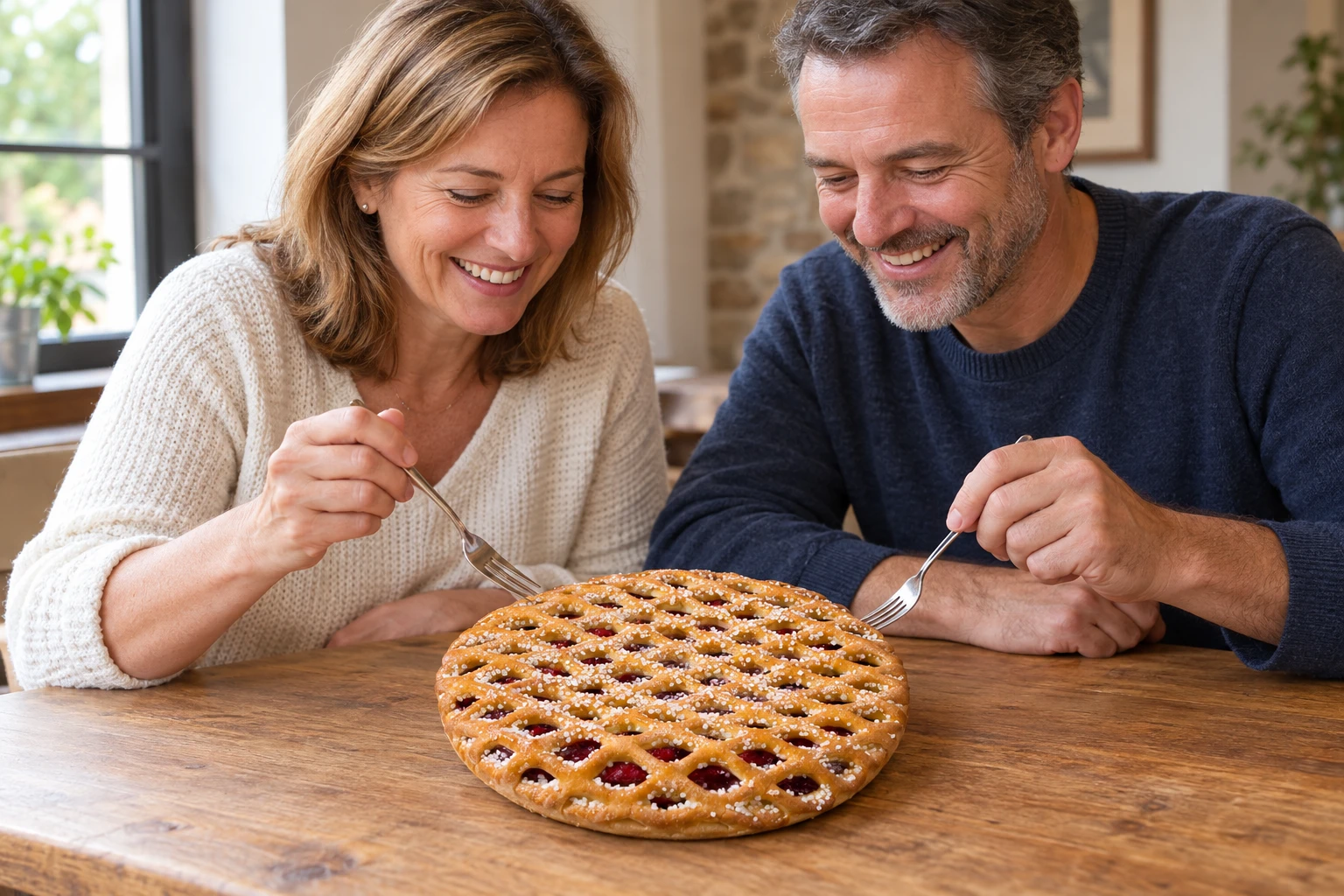
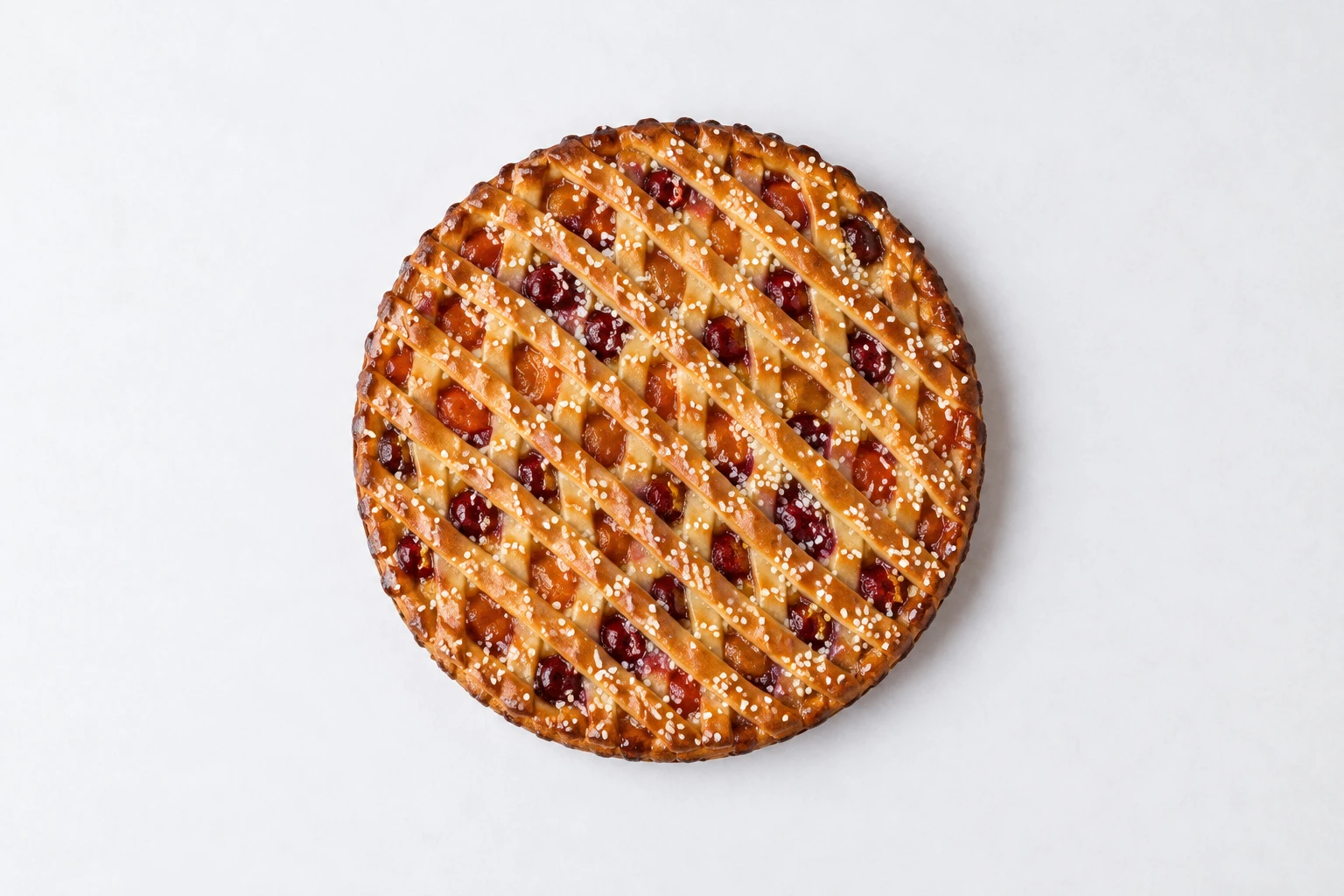
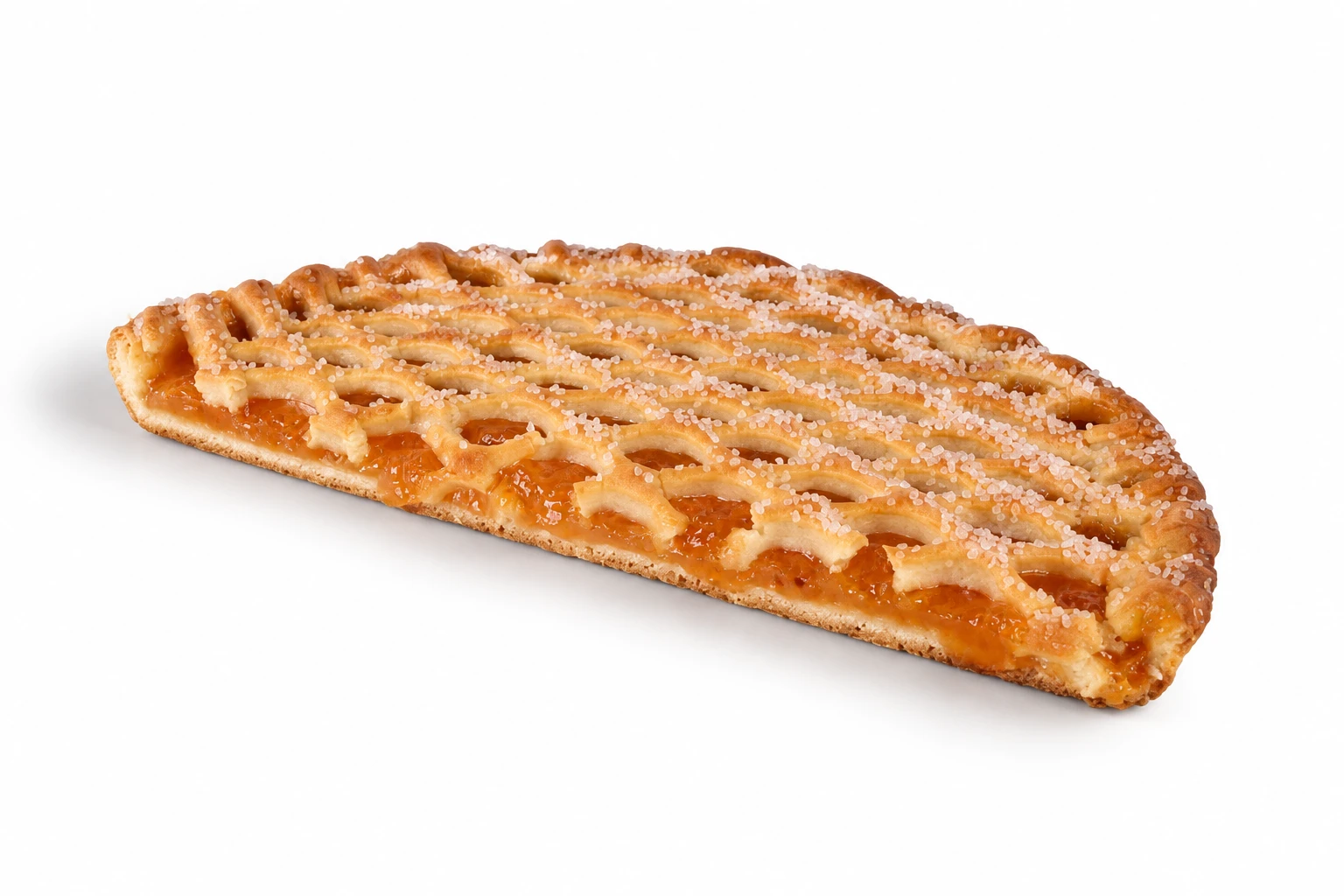
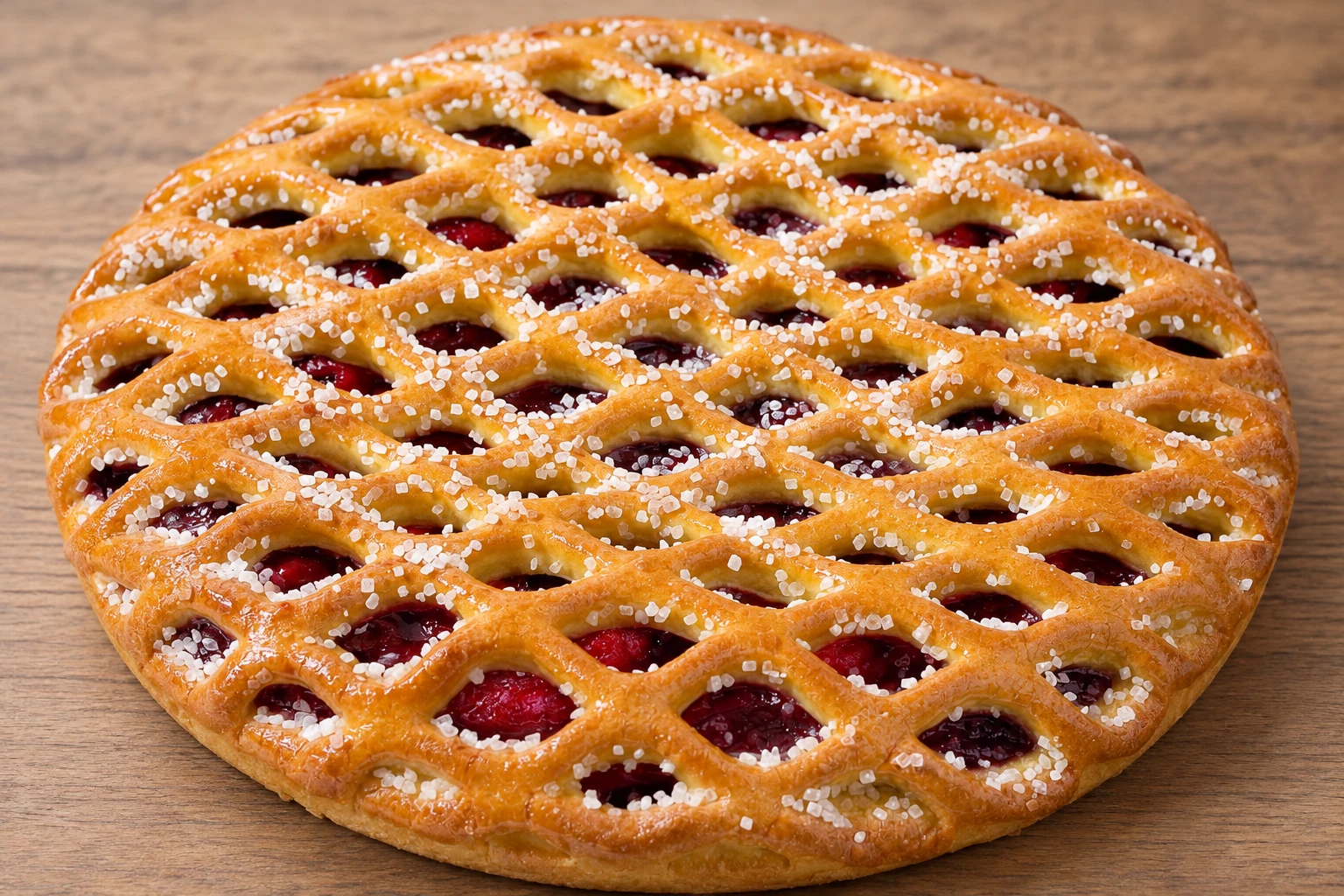
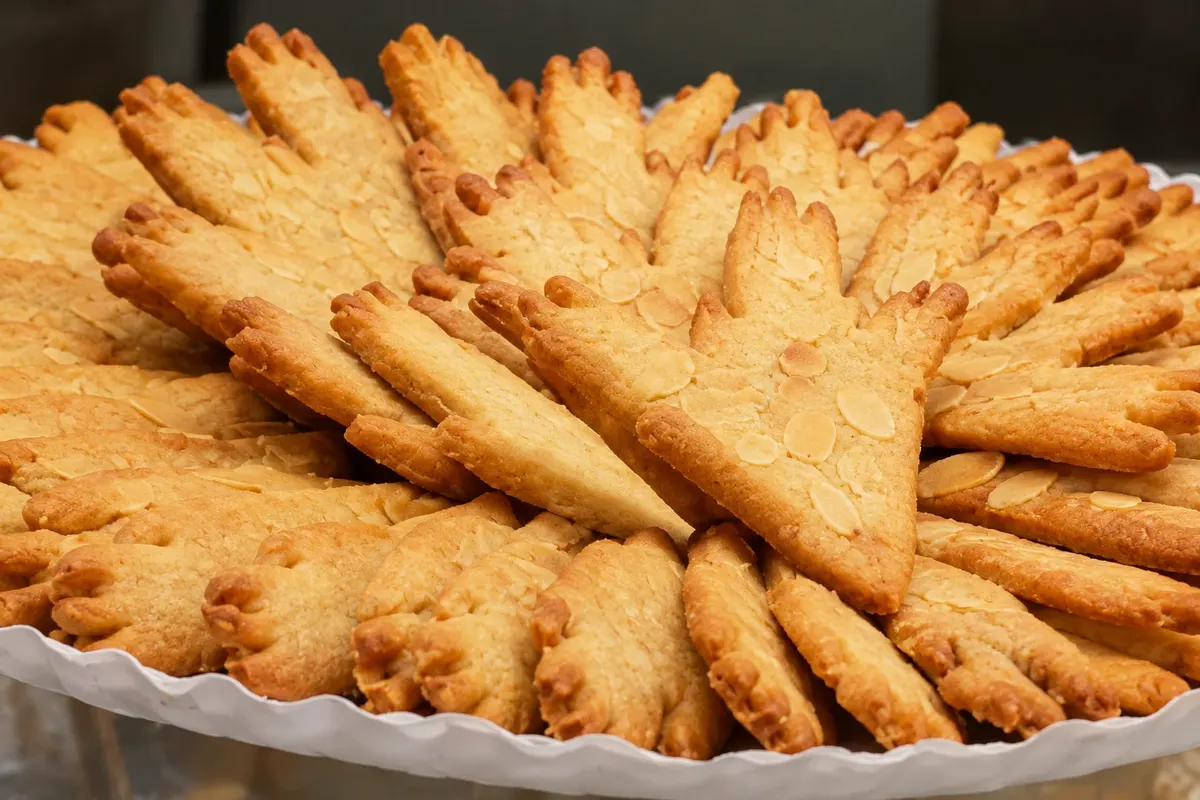
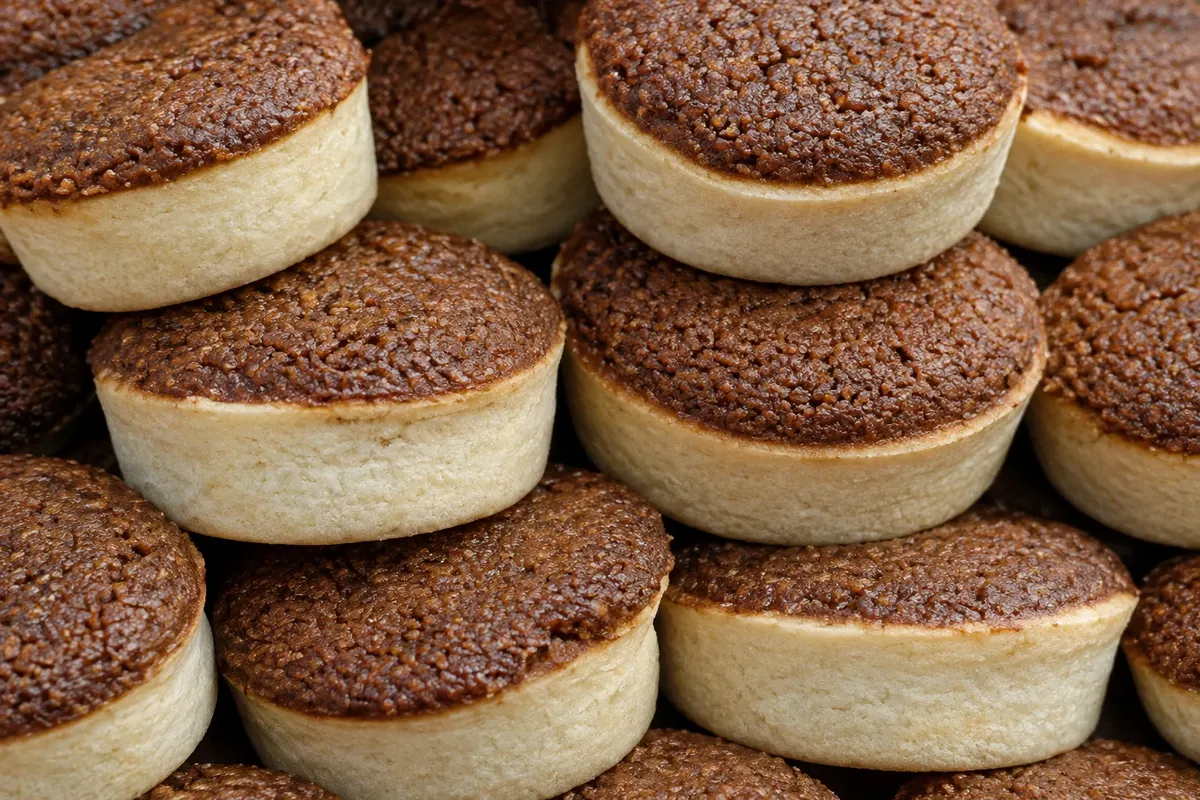
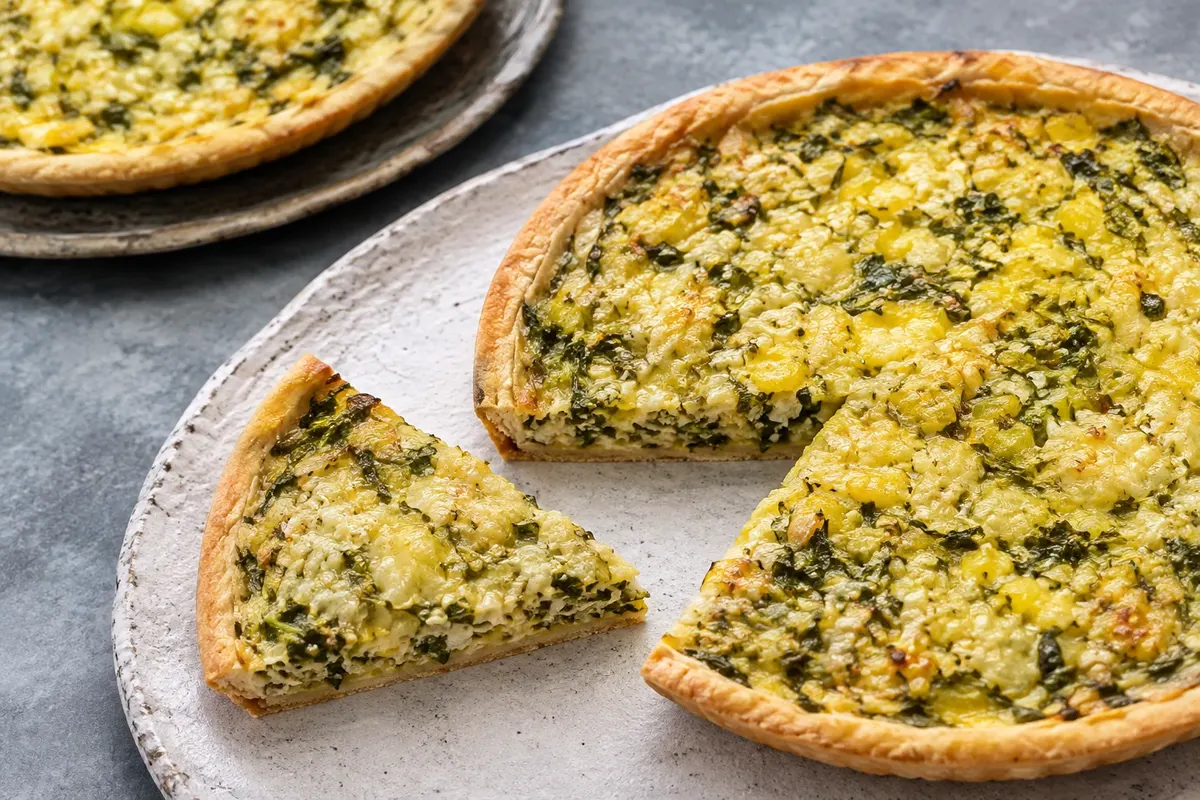
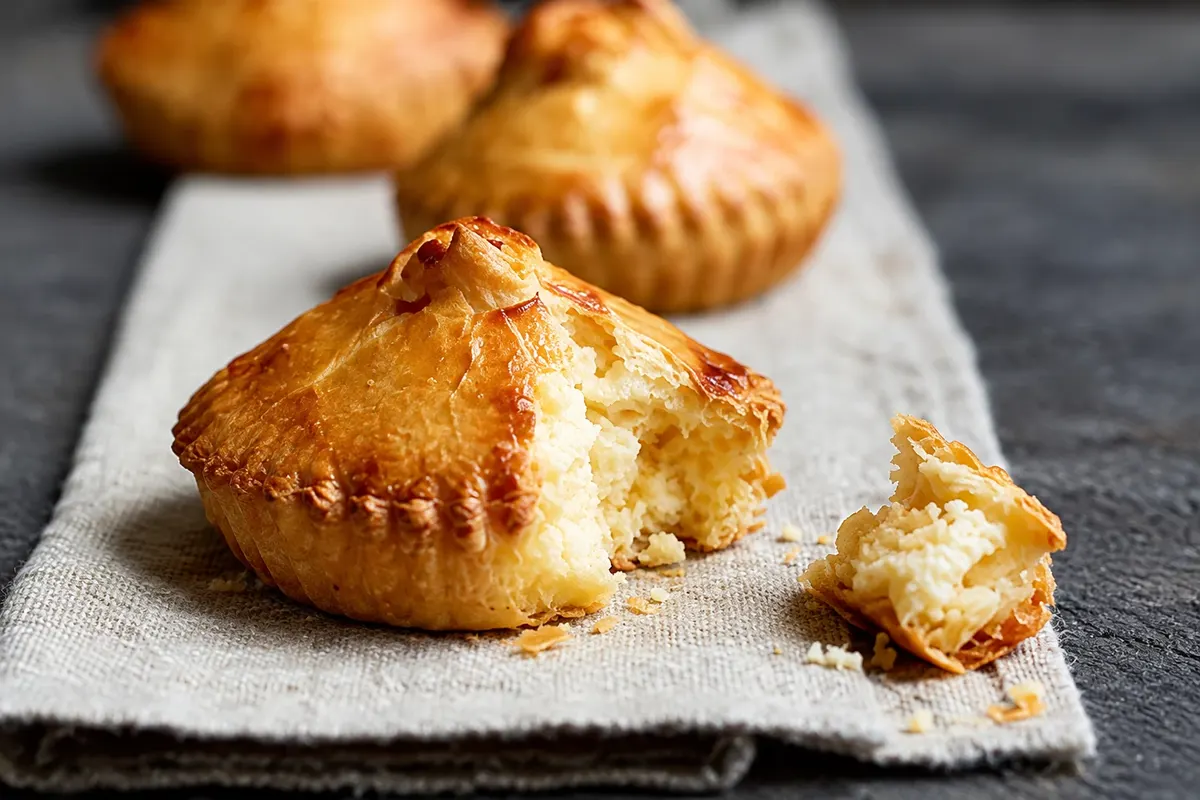
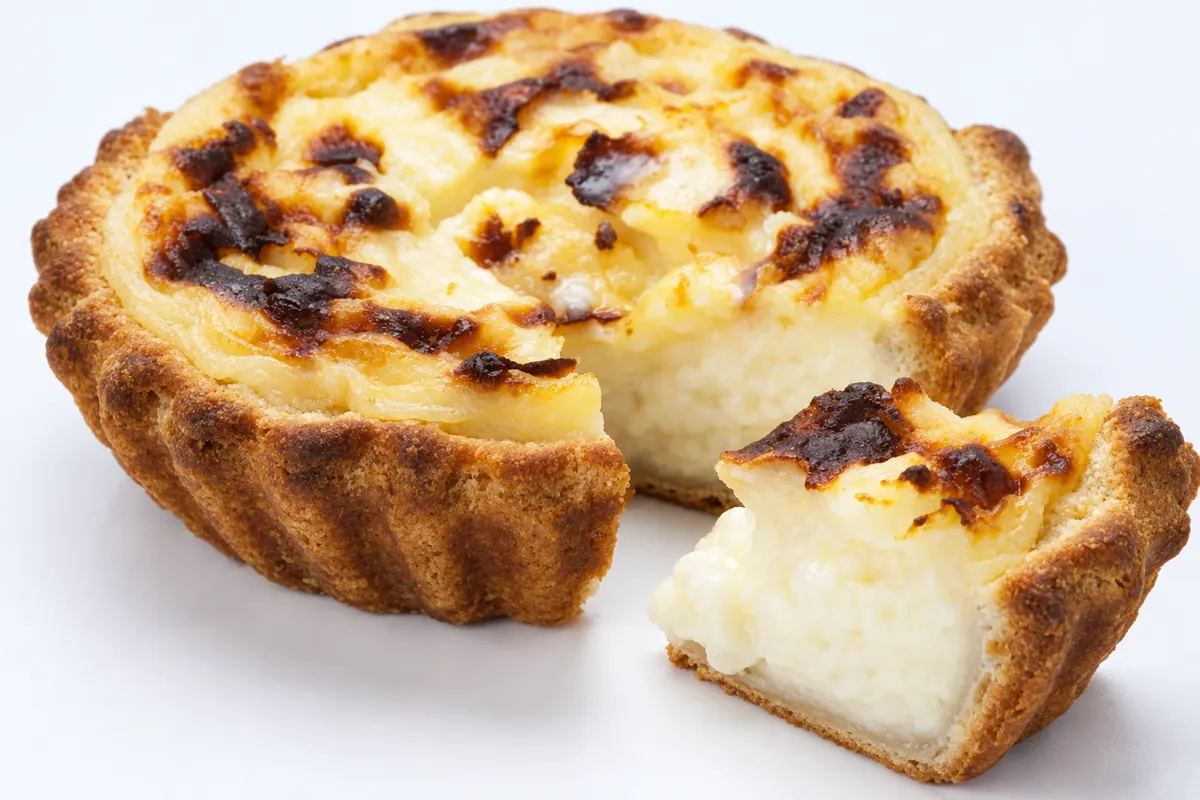
The people of Limburg sum up the vlaai in a saying: dun van leer, dik van smeer — thin dough and generous filling. The base is a fermented, light dough, at most one centimeter after baking; on top goes a generous layer of filling, often covered with a lattice of dough or a sweet crumble.
Classic fillings are cherry, apricot, plum, apple, rice pudding and gooseberry, and there are also versions with custard, semolina, fresh cheese or sugar with egg. Each type of vlaai has its own rules. Whipped cream (chantilly) added after baking is not part of the recipe.
The tradition dates back at least to the 12th century. At first, the vlaai was a luxury reserved for feast days, baked on farms; over time it moved into bakeries and became part of the region’s everyday life.
The name Limburgse vlaai has a protected geographical indication from the European Union, requested jointly by Belgium and the Netherlands. Only bakers from Belgian Limburg and Dutch Limburg may use the name, and the vlaai must be round, 10 to 30 centimeters in diameter.
In Limburg, the vlaai appears at celebrations, family visits and at afternoon coffee, always fresh, bought at the day’s bakery. Local variants, like the bakkemoezenvlaai, also have recognition as regional products.


 Brazilija
 Antarktika
 Argentina
 Bolivija
 Čile
 Kolumbija
 Ekvator
 Gvajana
 Francoska Gvajana
 Falklandski otoki (Malvini)
 Paragvaj
 Peru
 Surinam
 Urugvaj
 Venezuela
 Nemčija
 Avstrija
 Hrvaška
 Danska
 Slovaška
 Slovenija
 Španija
 Finska
 Francija
 Grčija
 Nizozemska
 Madžarska
 Irska
 Islandija
 Italija
 Luksemburg
 Norveška
 Poljska
 Portugalska
 Združeno kraljestvo
 Češka
 Švedska
 Švica
 Turčija
 Bermudi
 Kanada
 Združene države Amerike
 Grenlandija
 Mehika
 Sveta Peter in Mihael
 Dominikanska republika
 Japonska
 Južnoafriška republika
 Egipt
 Avstralija
 Fidži
 Nova Zelandija
 Papua Nova Gvineja