Hakone · Japan · Lake
Lake Ashi
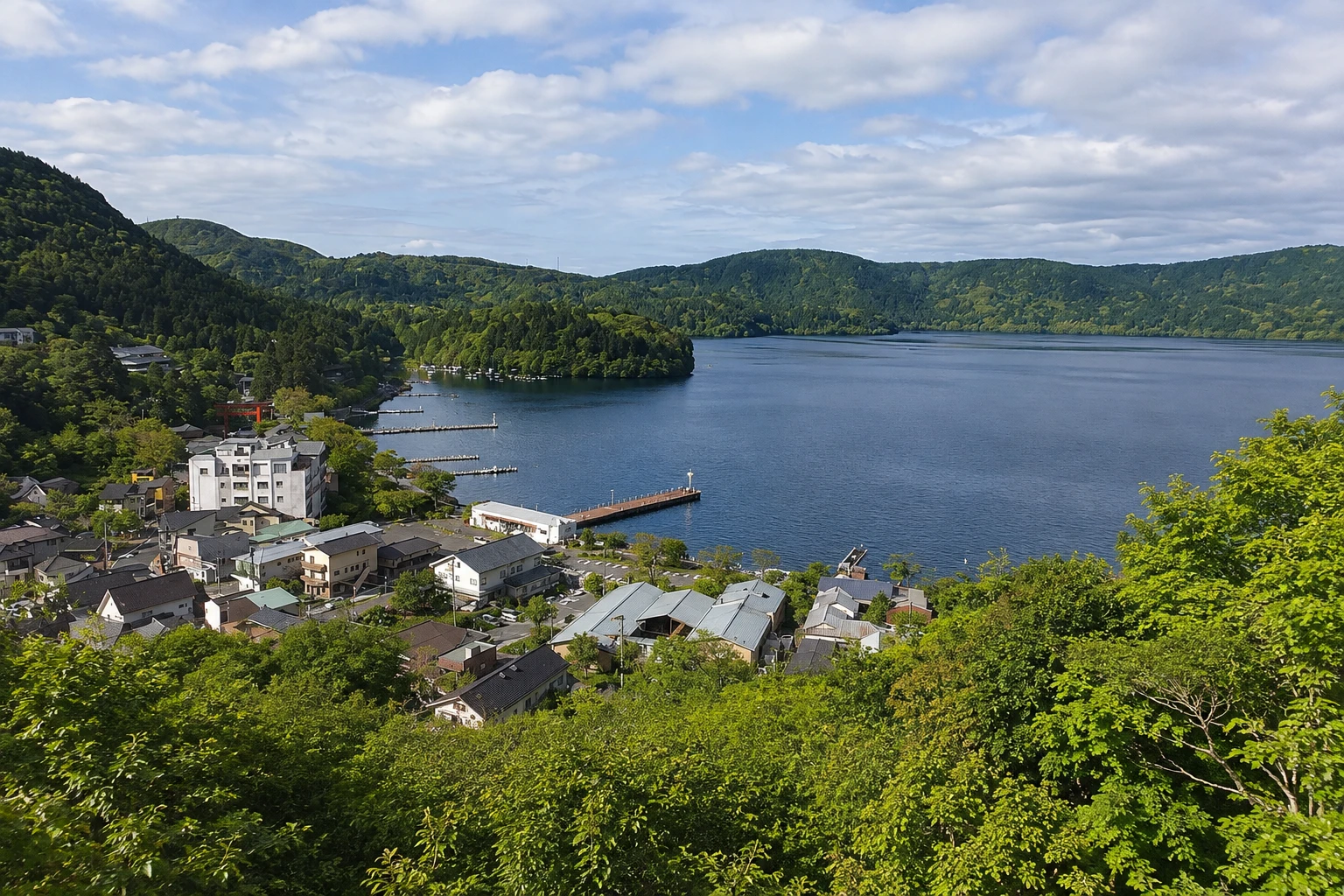
The caldera lake of Hakone, crossed by sightseeing boats between Togendai and Moto-Hakone, with the shrine torii standing in the water and, on clear days, Mount Fuji in the background.

 Search
 Brazil
 Antarctica
 Argentina
 Bolivia
 Chile
 Colombia
 Ecuador
 Falkland Islands (Malvinas)
 French Guiana
 Guyana
 Paraguay
 Peru
 Suriname
 Uruguay
 Venezuela
 Austria
 Belgium
 Croatia
 Denmark
 Finland
 France
 Germany
 Greece
 Hungary
 Iceland
 Ireland
 Italy
 Luxembourg
 Norway
 Poland
 Portugal
 Slovakia
 Slovenia
 Spain
 Sweden
 Switzerland
 the Czech Republic
 the Netherlands
 the United Kingdom
 Turkey
 Bermuda
 Canada
 Greenland
 Mexico
 Saint Pierre and Miquelon
 the United States
 the Dominican RepublicJapanTurkey
 Egypt
 South Africa
 Australia
 Fiji
 New Zealand
 Papua New Guinea
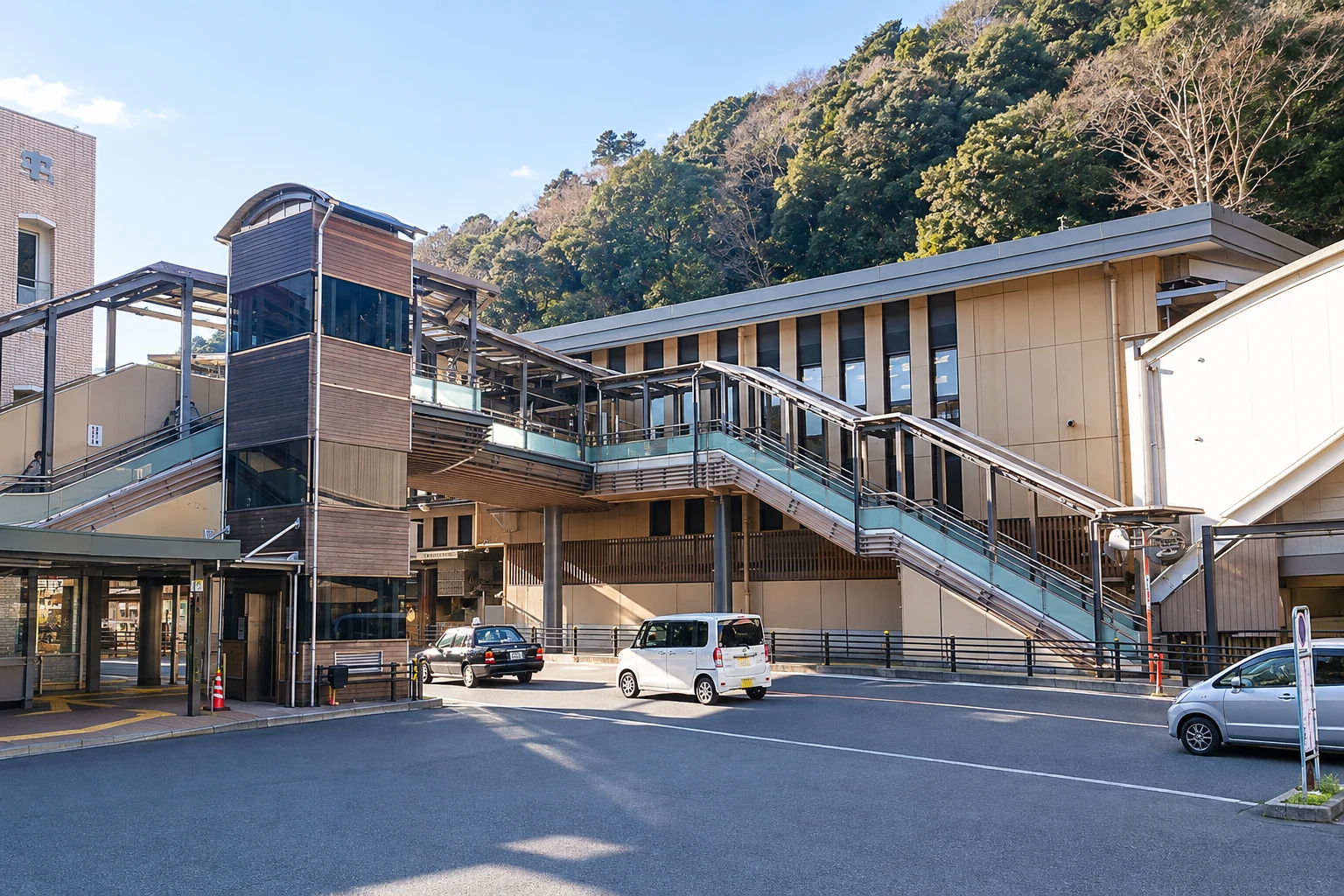
In the photo: Hakone-Yumoto Station.
Illustrative images. The pictures in this guide are illustrations based on the real place, not photographs, and may differ from it.

The city
Hakone is the hot-spring resort of the western Kanagawa mountains, in a volcanic caldera with Lake Ashi at the bottom. At the valley entrance, Hakone-Yumoto concentrates the bathhouses; above on the slopes are the museums of Gora and Sengokuhara, the fumaroles of Owakudani and, on the lake’s southern shore, the shrine’s red gate and the barrier of the old Edo road. Mountain train, funicular, ropeway and boats form a circuit.
There's no accommodation in the guide yet in Hakone.
Tem hotel, pousada ou casa de temporada aqui? Cadastre a suaThere are no restaurants in the guide yet in Hakone.
Know a good one? Recommend it to usHotéis e restaurantes da cidade no mapa.
how to get there · how many days · itinerary · questions
The local experience
The caldera lake of Hakone, crossed by sightseeing boats between Togendai and Moto-Hakone, with the shrine torii standing in the water and, on clear days, Mount Fuji in the background.
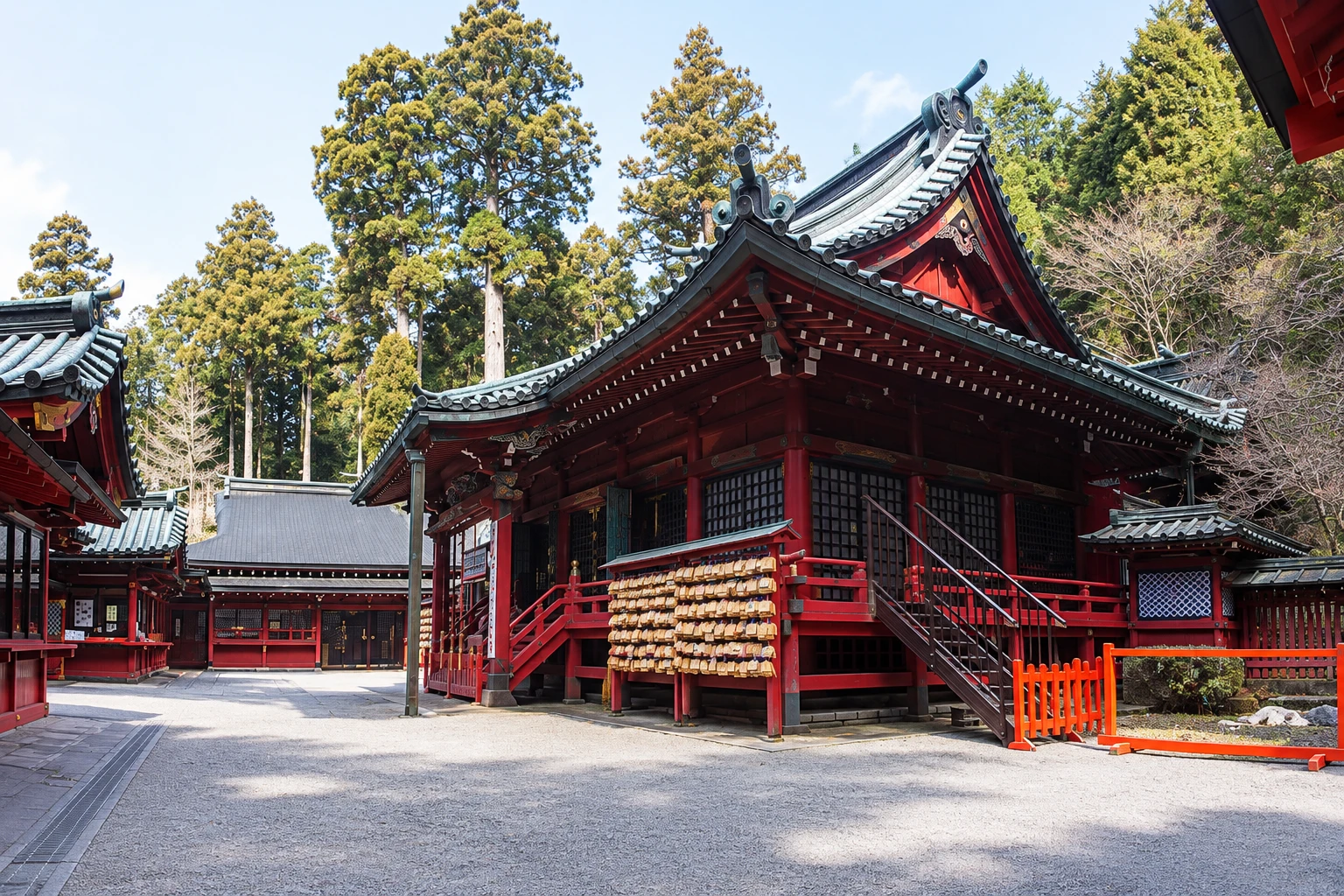
A Shinto shrine in a cedar forest on the shore of Lake Ashi, with the Peace Torii in the water, revered by samurai since the Middle Ages.
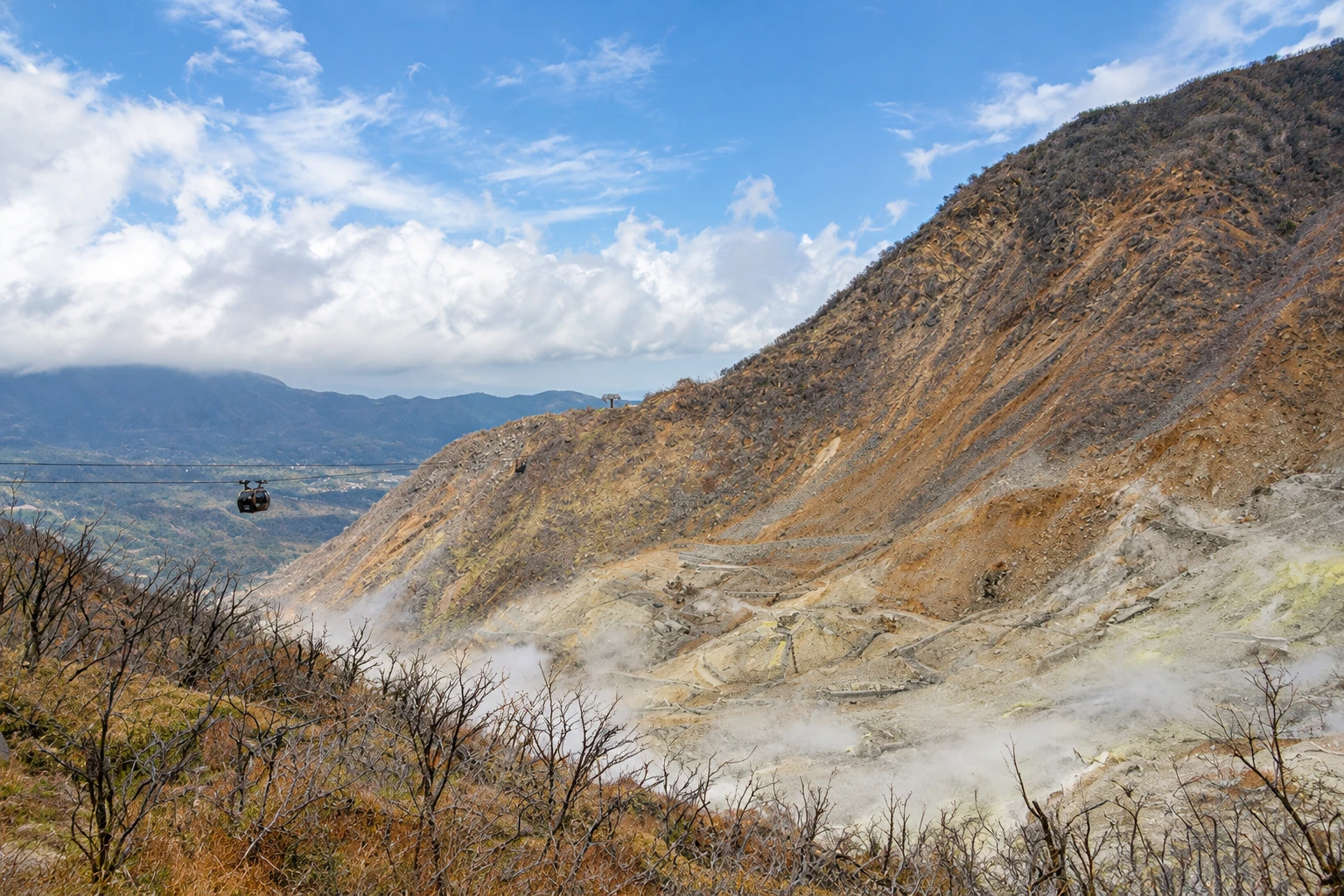
The volcanic valley of Hakone, with fumaroles, sulfur and the black eggs boiled in the hot spring waters, next to the ropeway station; access depends on the volcanic alert level.
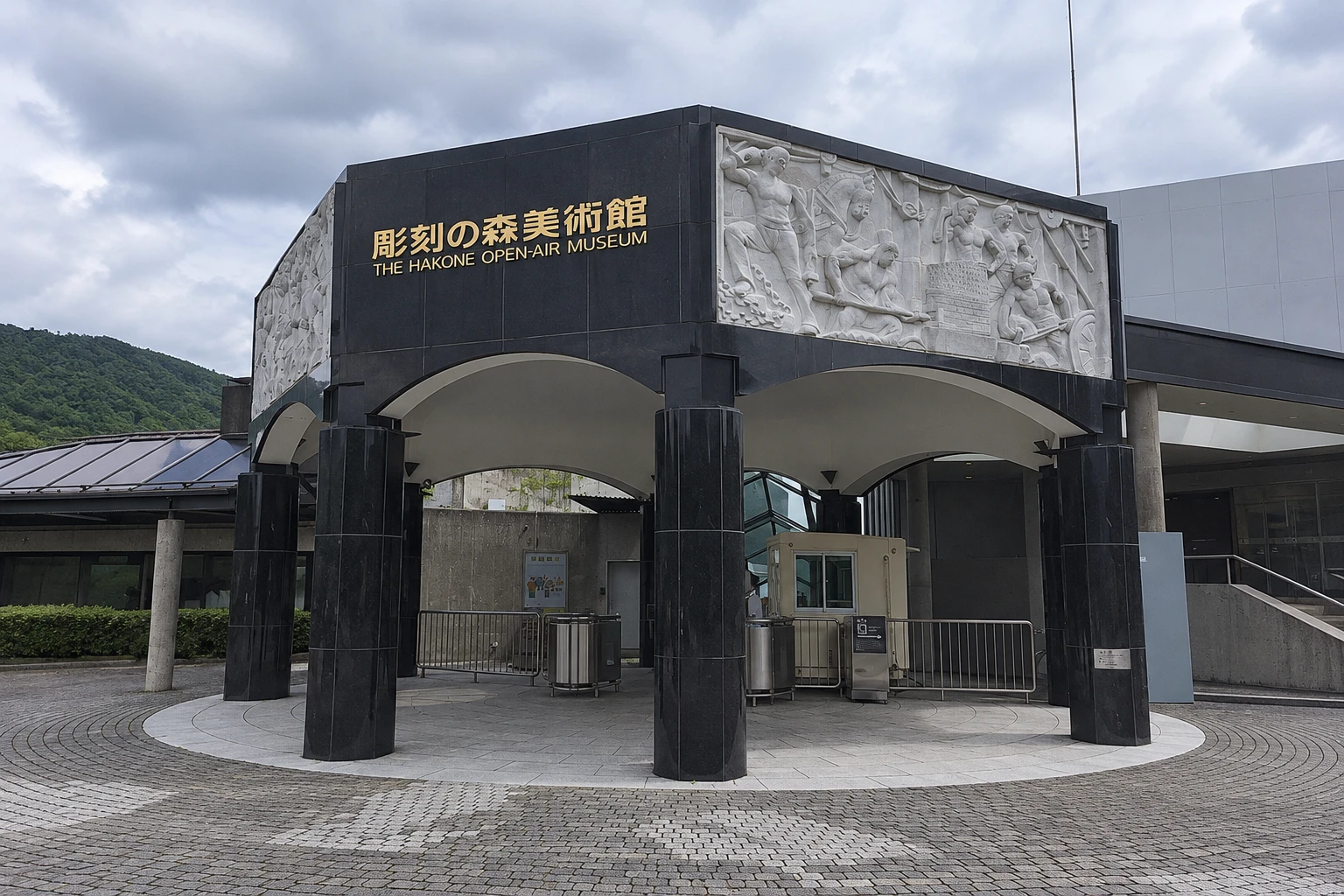
A sculpture museum in a hillside lawn park, with works by Rodin, Henry Moore, and Niki de Saint Phalle, a pavilion dedicated to Picasso, and a hot‑spring footbath.
Before you go
Hakone – Japan about 80 km from Yokohama
Approximate distances. Check flights and bus, train or boat schedules before you travel.
The gateway is Hakone-Yumoto Station, the terminus of the Romancecar from Shinjuku and a 15-minute train ride from Odawara, where the shinkansen stops. From Hakone-Yumoto the mountain train climbs to Gora, and buses go to Lake Ashi.
One day for the train–funicular–ropeway–boat circuit. One night in a ryokan lets you enjoy the onsen and start early; two nights give time for the museums and the old road.
October and November, for autumn leaves, and winter, with higher chances to see Mount Fuji. Hydrangeas along the mountain railway bloom from mid-June to July. Weekends and Japanese public holidays get very crowded.
The seasons shown are the most usual ones; nature doesn't always follow the calendar.
No. The mountain train, funicular, ropeway, boats and buses connect the main points, and there are combined passes. Roads get congested on weekends.
Suggested itinerary
Built with the places on this page. No rush: it's paced so you have time to see them.
Take the mountain train from Hakone-Yumoto up to Chokoku-no-Mori Station and visit the Open-Air Museum.
Continue by funicular and ropeway, stopping at Owakudani, to Togendai, cross the lake by boat and visit Hakone Shrine.
Return by bus to Hakone-Yumoto and finish at a thermal bathhouse.
Day 1
Visit the Open-Air Museum and take a bus to the Pola Museum of Art.
Return to the ryokan and enjoy the onsen before dinner.
Day 2
Take the funicular and the ropeway to Owakudani and descend to Togendai.
Cross the lake by boat to Hakone-machi, visit the checkpoint and walk the cedar avenue to Hakone Shrine.
Check before you go. Opening hours and days change, and places may close for renovations, holidays or events. This itinerary is a suggestion from Cidade Turismo, not a commitment: plan yours by checking directly with each place you intend to visit.
Before you go
An itinerary that uses several transport modes: the mountain train from Hakone-Yumoto to Gora, the funicular to Sounzan, the ropeway over Owakudani to Togendai, a boat across Lake Ashi and a bus back to Yumoto.
Yes. Staying in a ryokan with hot springs and a traditional dinner is the reason for many trips, and it lets you do the circuit at a relaxed pace.
Yes. There are passes that combine the mountain train, the funicular, the ropeway, the boats and the buses, some including travel from Shinjuku. Check the options and validity before buying.
Visit the Pola Museum of Art, the Picasso Pavilion at the Open-Air Museum and other museums, and enjoy the hot springs.
On weekends, public holidays and during the autumn foliage season, yes — with lines at the ropeway and on the boats. On weekdays, there is less crowding.