Palace
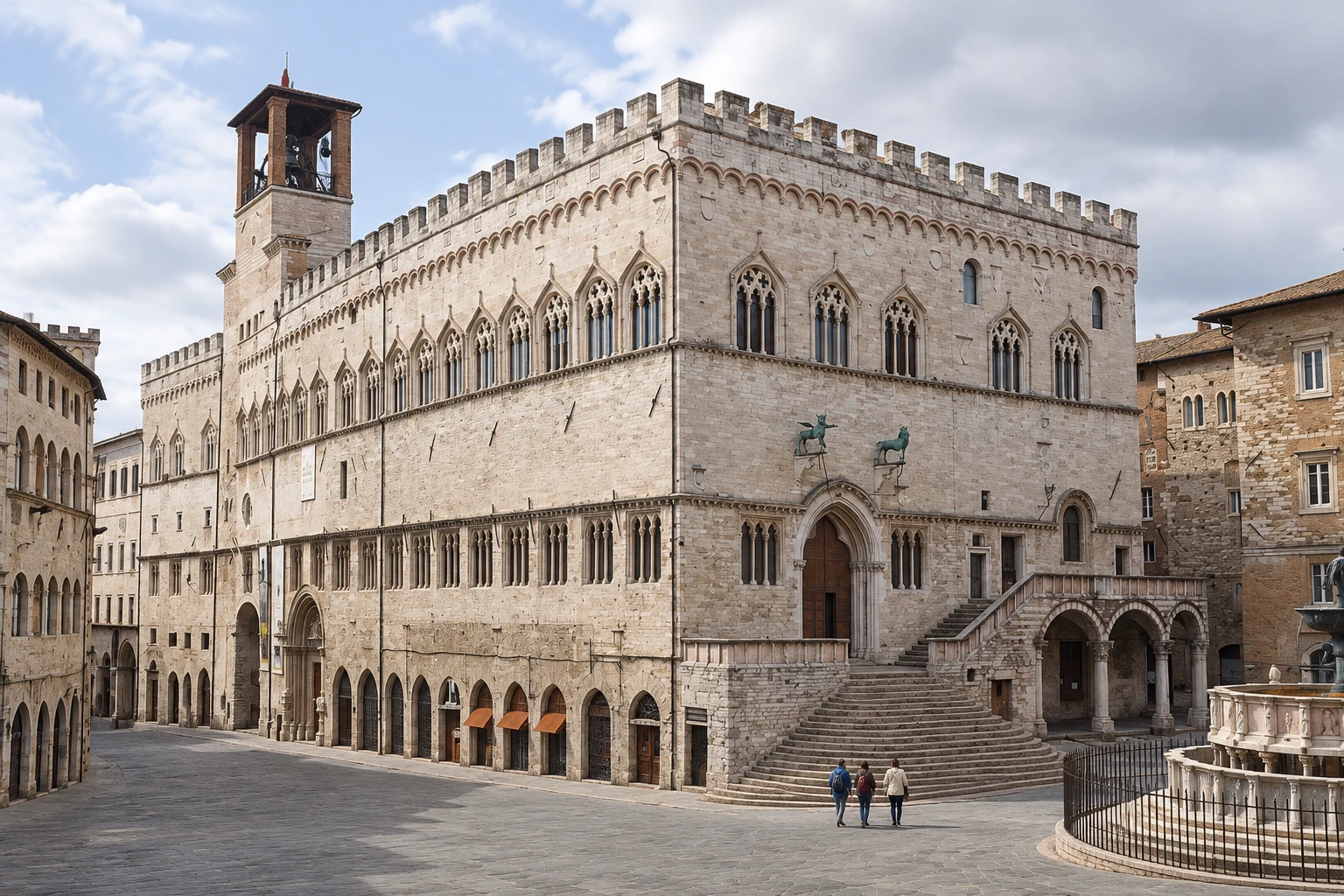
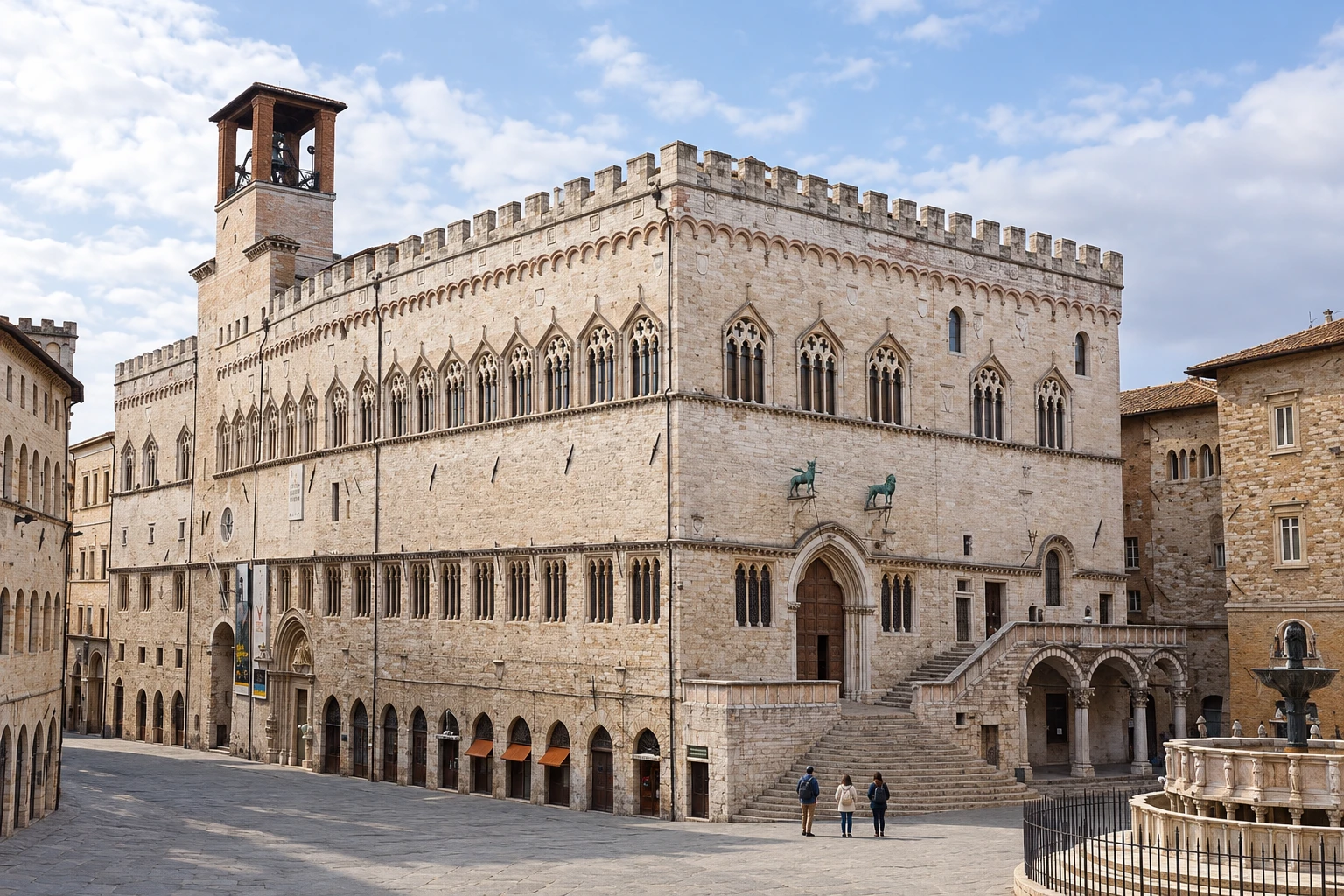
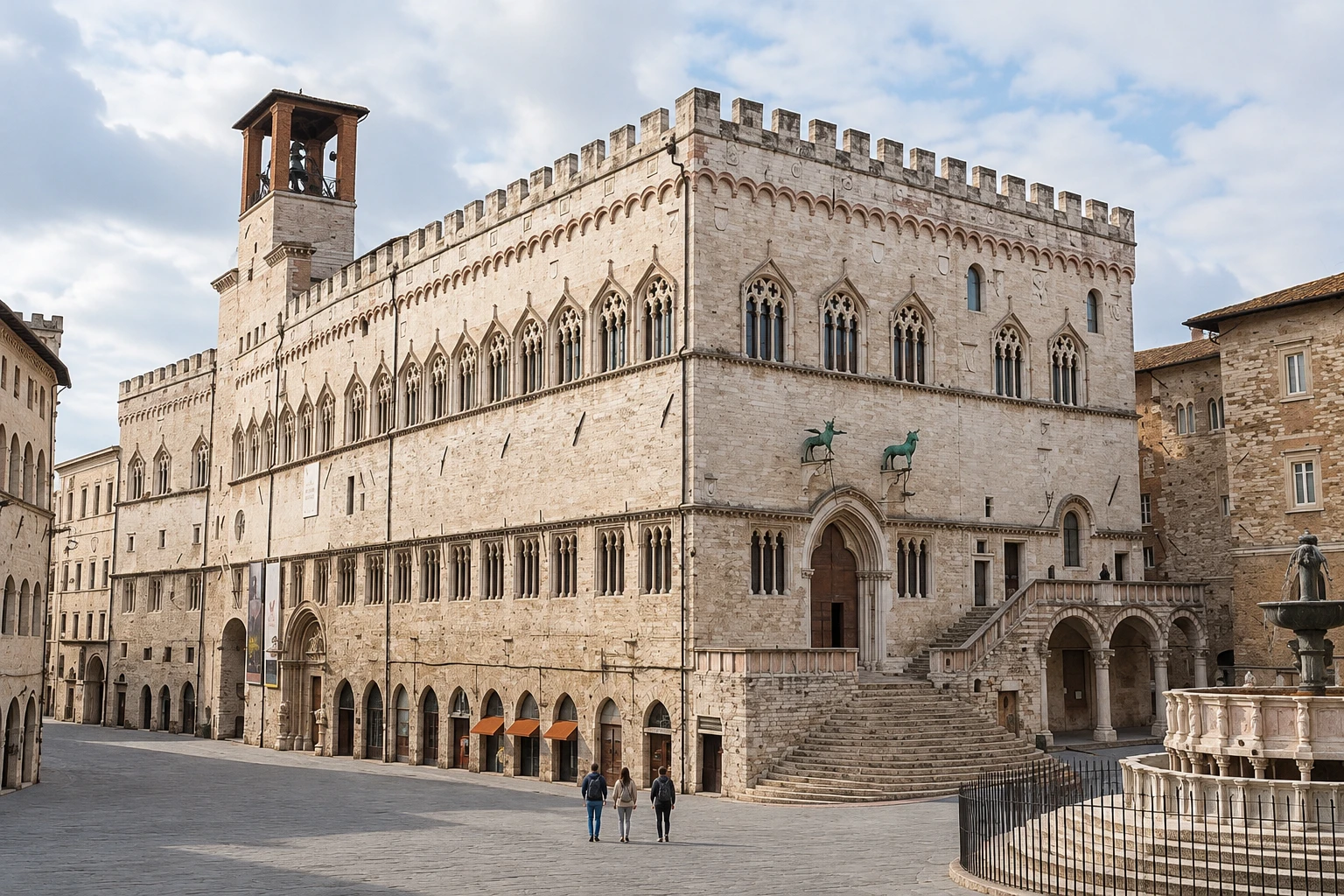
Palazzo dei Priori
Gothic palace of medieval government in Perúgia, between Piazza IV Novembre and Corso Vannucci. It houses the Sala dei Notari, the Galleria Nazionale dell'Umbria and the Collegio del Cambio.

 Search
 Brazil
 Antarctica
 Argentina
 Bolivia
 Chile
 Colombia
 Ecuador
 Falkland Islands (Malvinas)
 French Guiana
 Guyana
 Paraguay
 Peru
 Suriname
 Uruguay
 Venezuela
 Austria
 Belgium
 Croatia
 Denmark
 Finland
 France
 Germany
 Greece
 Hungary
 Iceland
 IrelandItaly
 Luxembourg
 Norway
 Poland
 Portugal
 Slovakia
 Slovenia
 Spain
 Sweden
 Switzerland
 the Czech Republic
 the Netherlands
 the United Kingdom
 Turkey
 Bermuda
 Canada
 Greenland
 Mexico
 Saint Pierre and Miquelon
 the United States
 the Dominican Republic
 JapanTurkey
 Egypt
 South Africa
 Australia
 Fiji
 New Zealand
 Papua New Guinea
Umbria
11 places to visit Perugia (Italy), chosen by the Cidade Turismo guide.
Illustrative images. The pictures in this guide are illustrations based on the real place, not photographs, and may differ from it.
To start
One by one
Gothic palace of medieval government in Perúgia, between Piazza IV Novembre and Corso Vannucci. It houses the Sala dei Notari, the Galleria Nazionale dell'Umbria and the Collegio del Cambio.
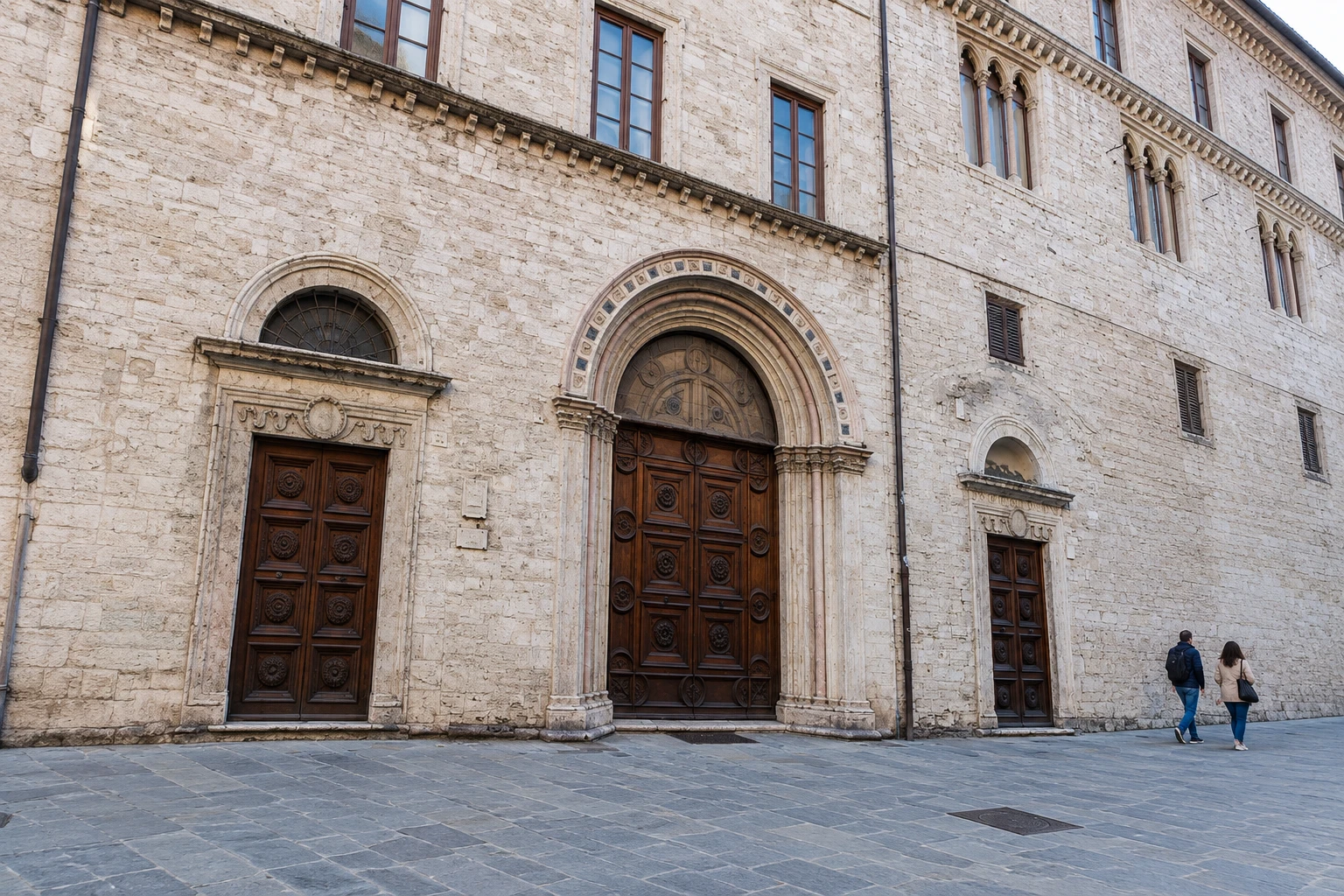
The main art museum of Úmbria, in the Palazzo dei Priori, with paintings from the 13th to the 19th century: Perugino, Pinturicchio, Piero della Francesca, Beato Angelico and Duccio.
Headquarters of Perúgia's former bankers, in the Palazzo dei Priori, with the Sala delle Udienze entirely painted by Perugino around 1500, including a self-portrait of the artist.
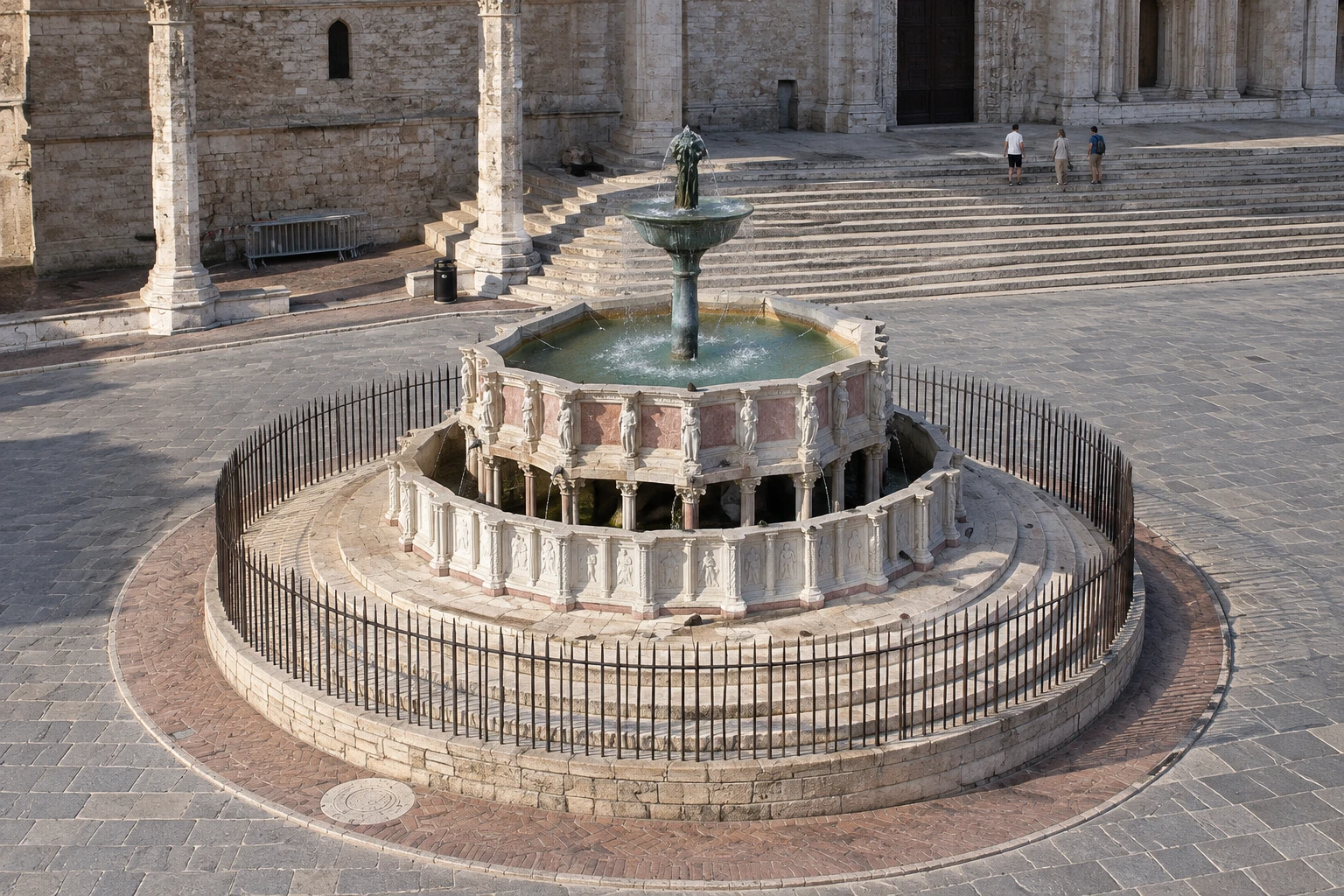
Medieval marble fountain in the center of the Piazza IV Novembre, a symbol of Perúgia, with reliefs by Nicola and Giovanni Pisano depicting the months, the arts and the history of the city.
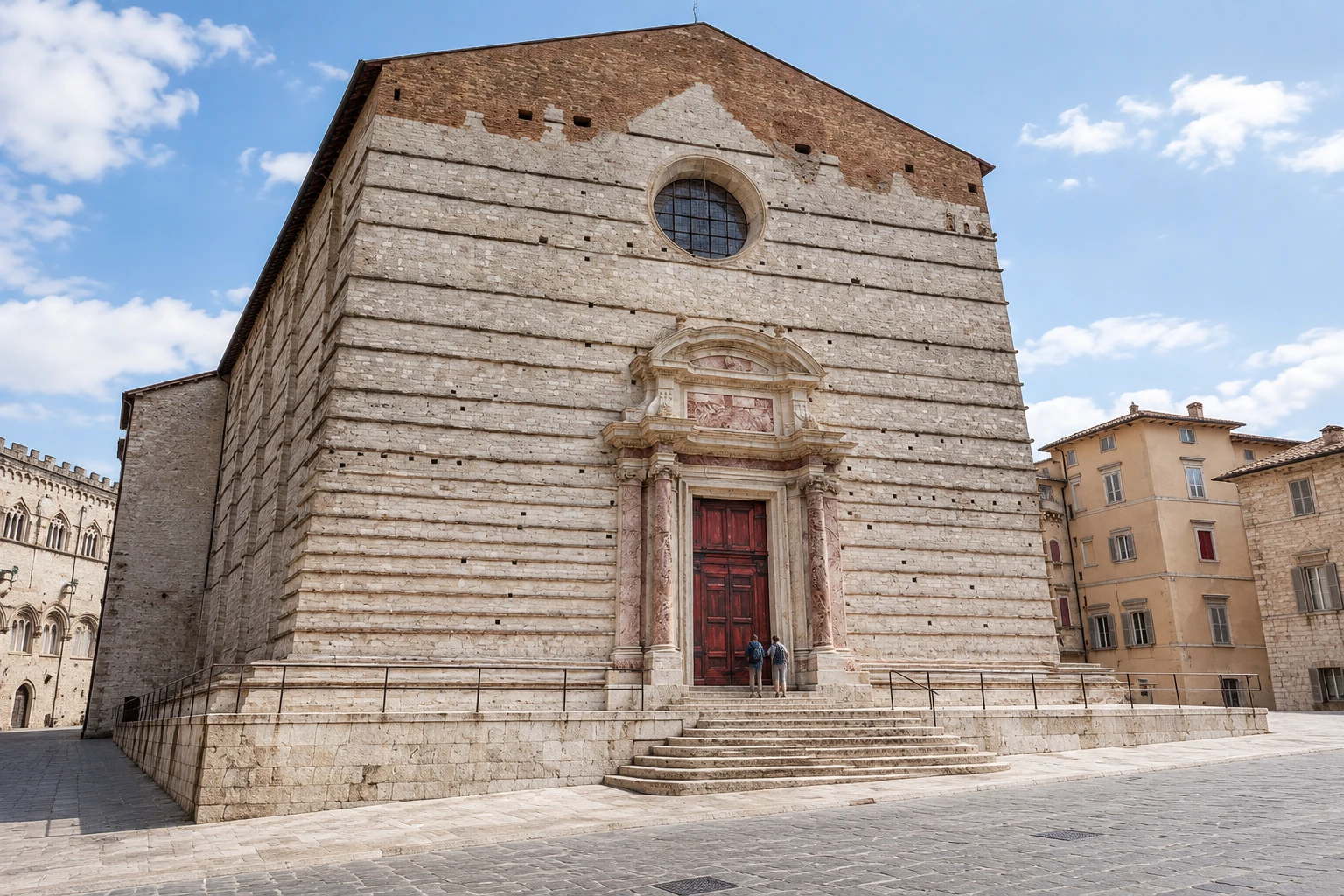
Gothic cathedral of Perúgia on the Piazza IV Novembre, with an unfinished pink-and-white marble side, the external pulpit of São Bernardino and the chapel of the Santo Anel.
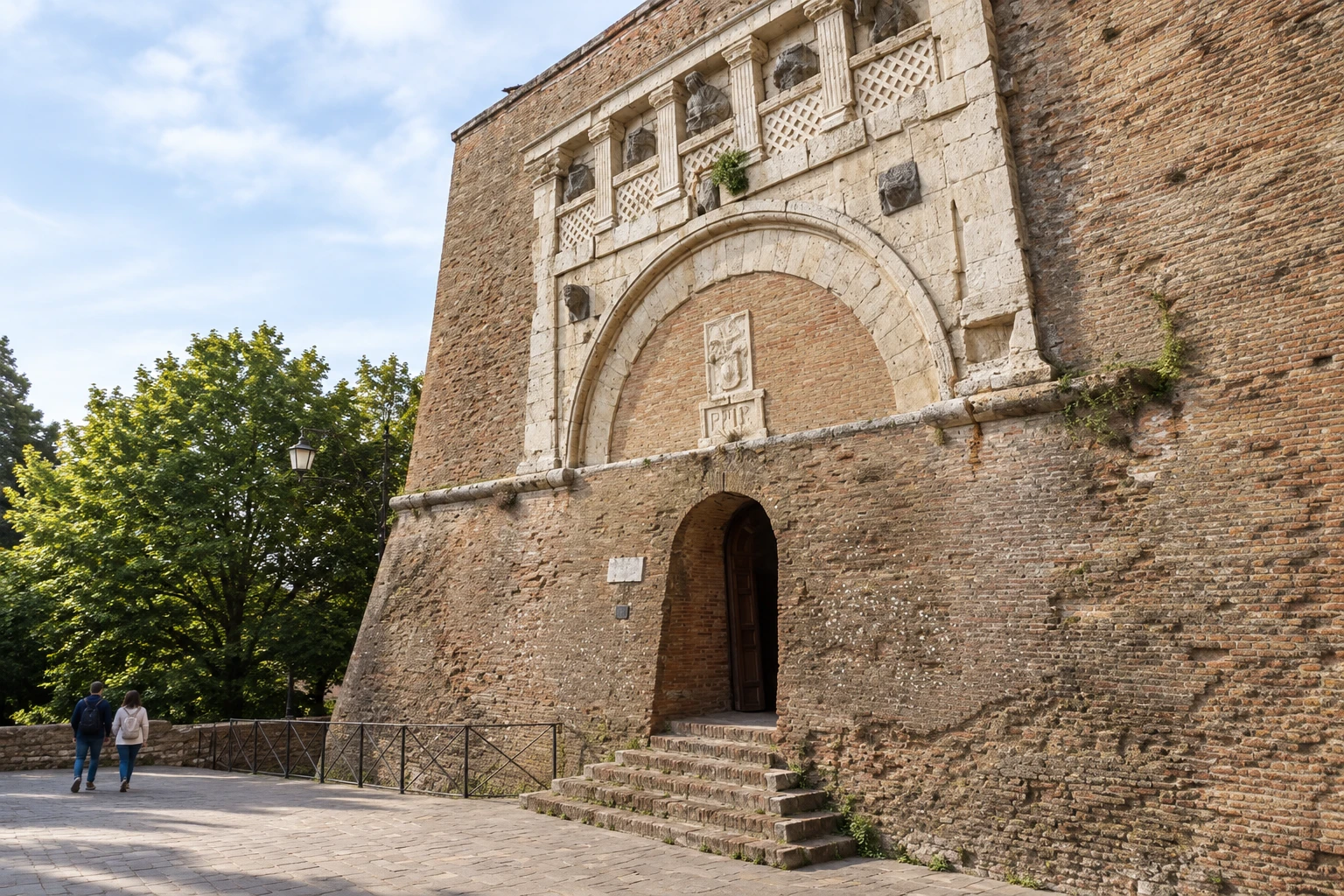
Remains of the 16th-century papal fortress that swallowed an entire medieval neighborhood. Escalators run through the covered old streets, linking the lower part to Piazza Italia.
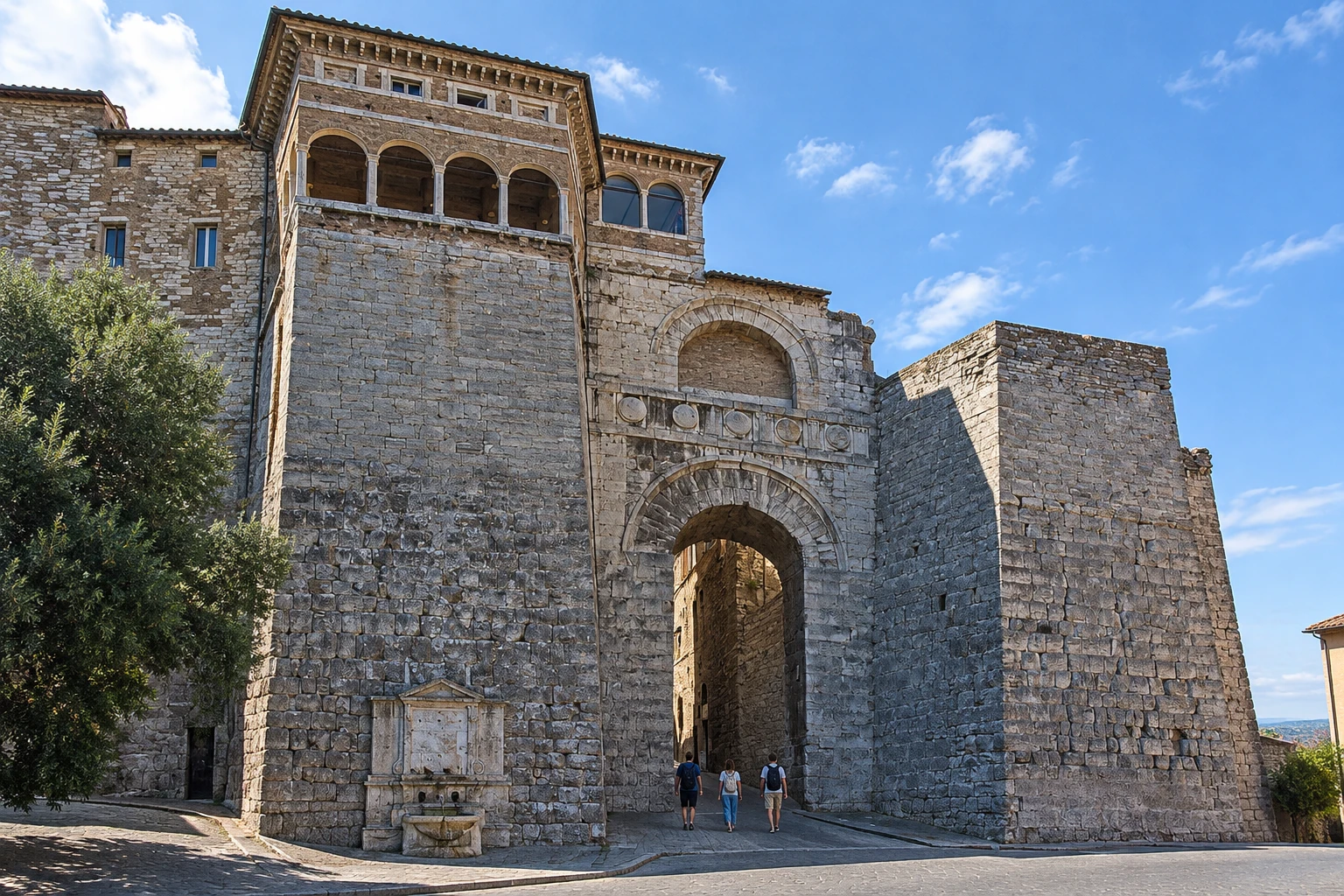
The most intact gate of Perúgia's Etruscan wall, made of large stone blocks, restored in the time of Augustus, who left the inscription AUGUSTA PERUSIA.
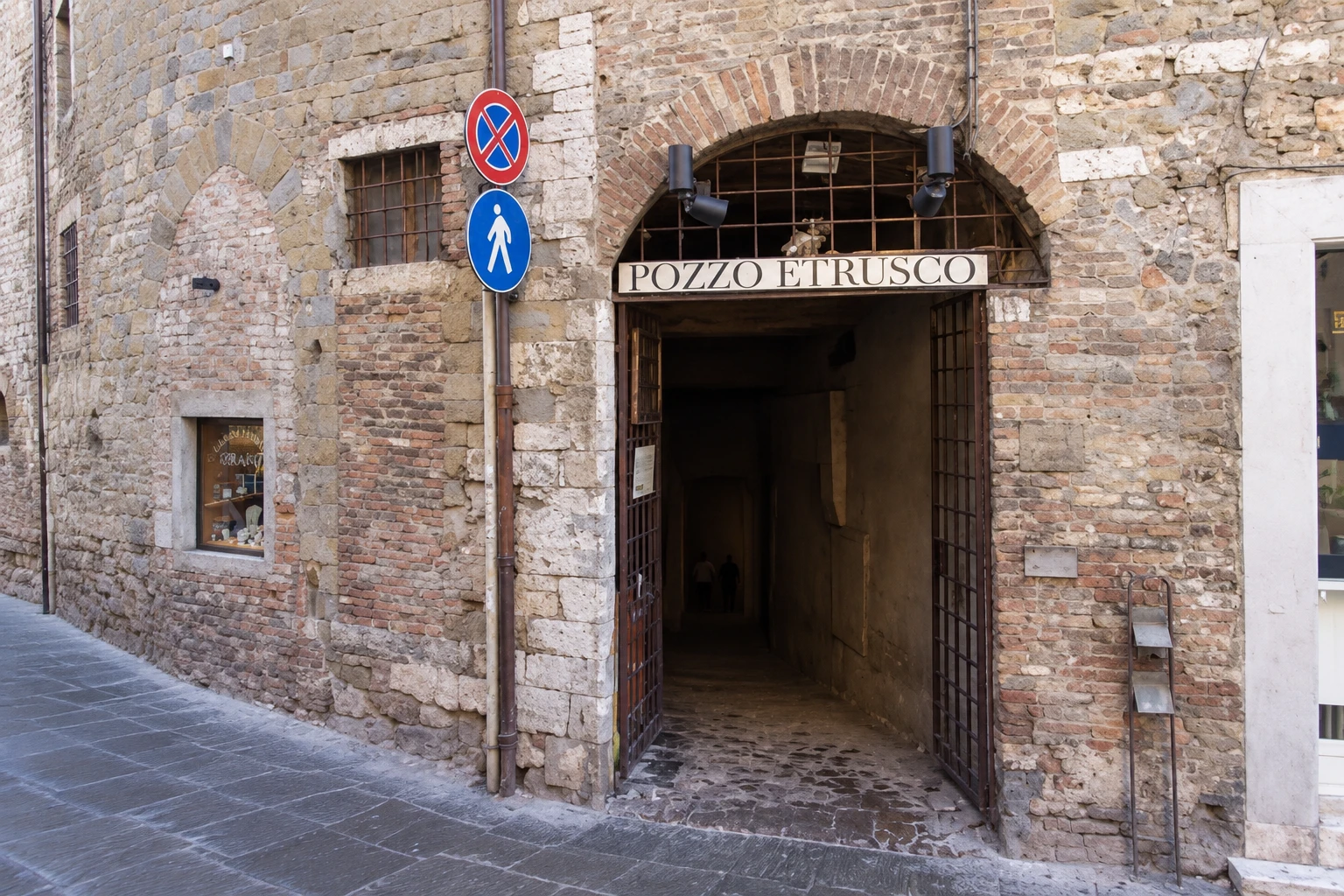
Etruscan cistern from the 3rd century BC excavated beneath the center of Perúgia, about 37 meters deep. A walkway crosses the well from inside.
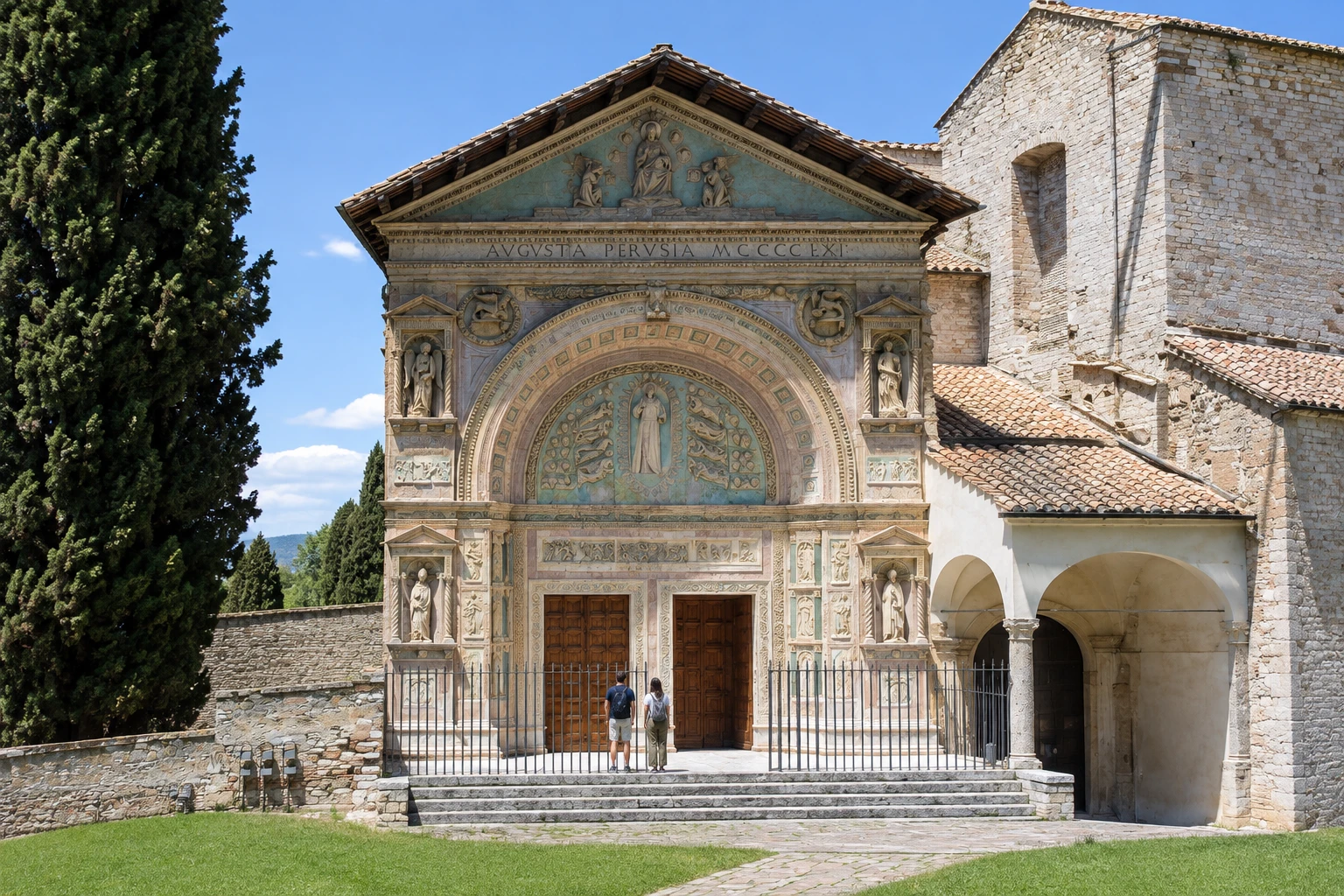
Small 15th-century oratory with a Renaissance façade by Agostino di Duccio, in colored marble and delicate reliefs, next to the church of San Francesco al Prato.
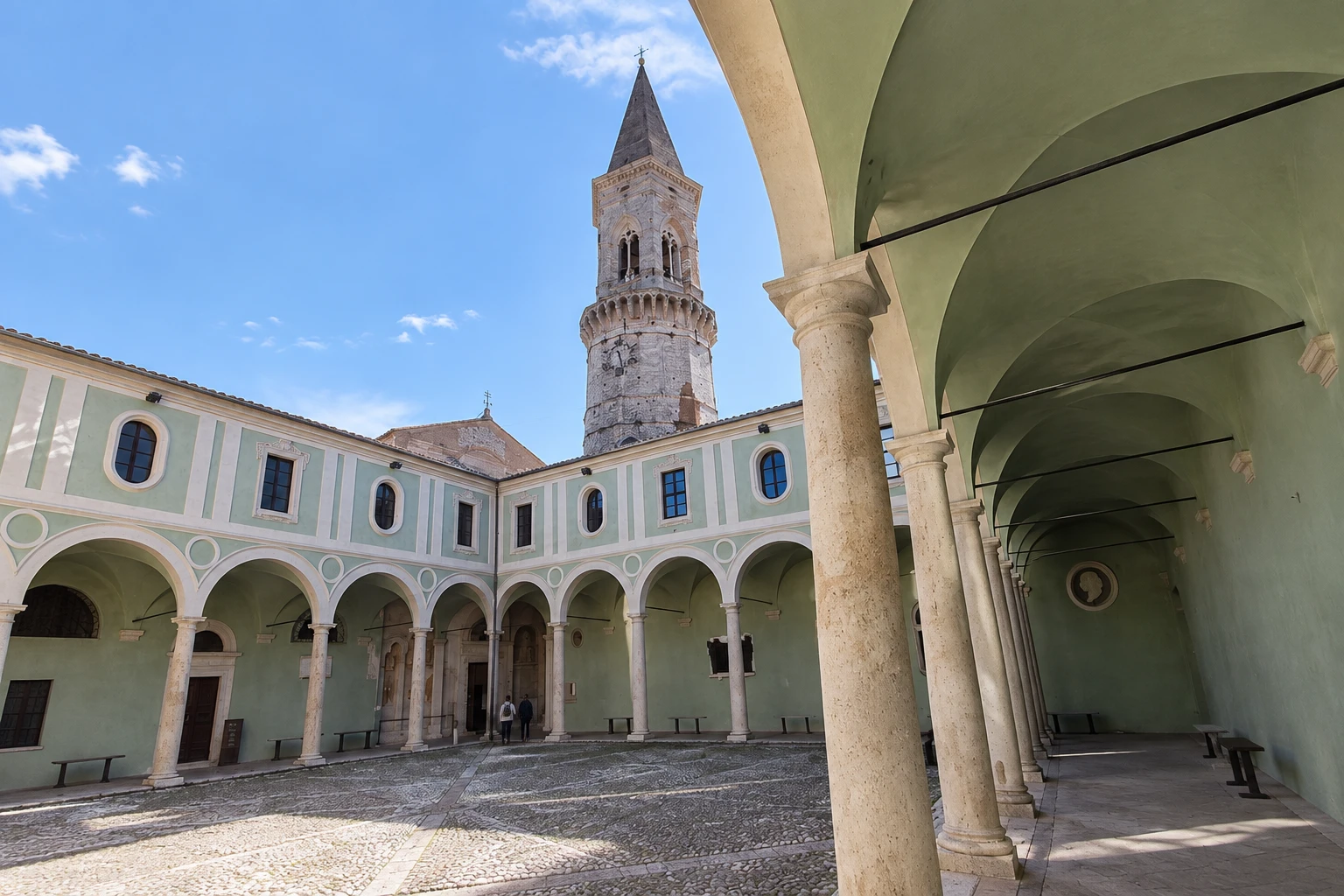
Benedictine abbey founded around the year 1000, with a 70-metre bell tower, an interior covered in paintings and a carved wooden choir. Behind it there is a medieval garden.
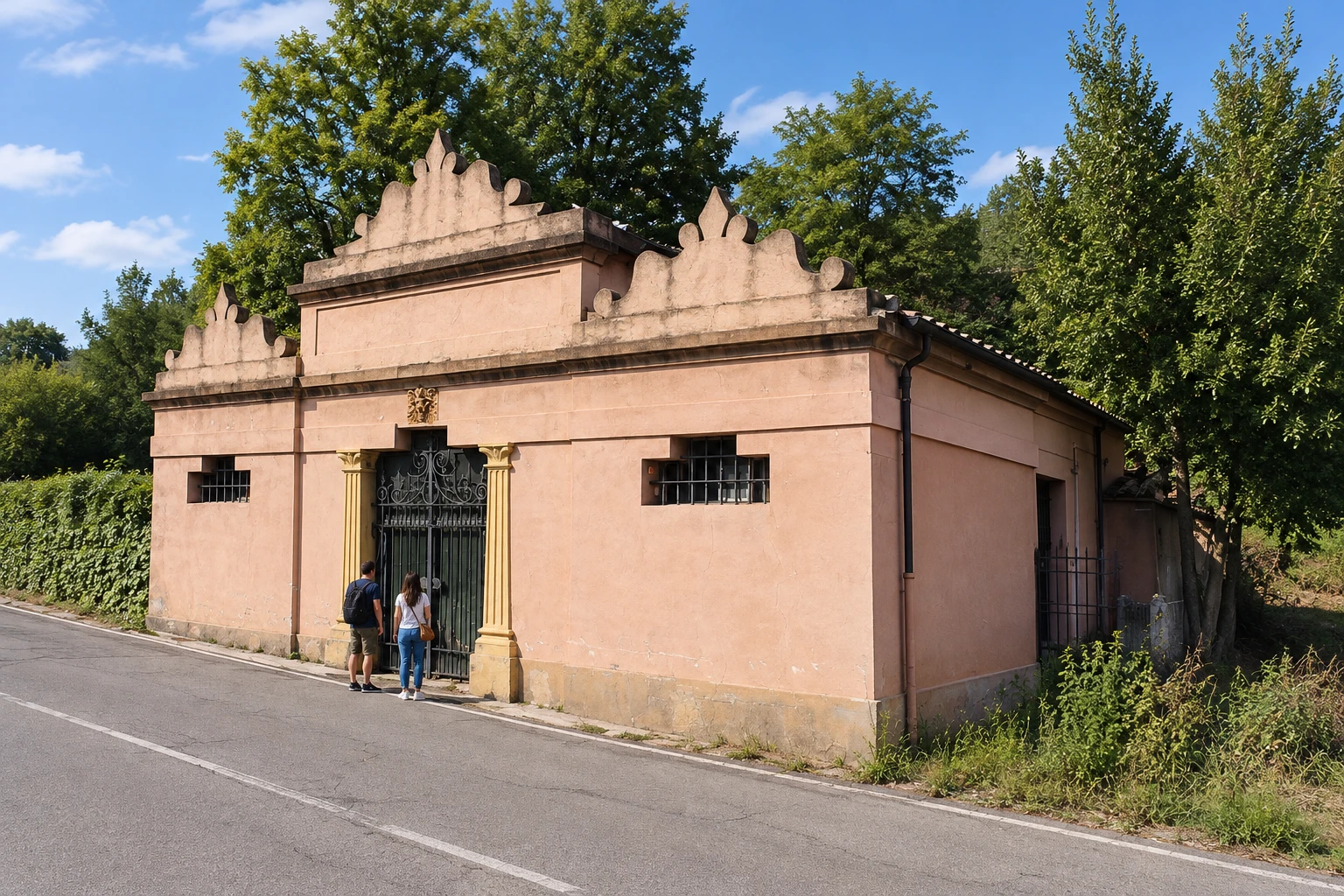
Underground Etruscan tomb of the Velimna family, from the 2nd century BC, carved into the rock like a house, with travertine urns. It is located in the Necropoli del Palazzone, about 5 km from the centre.
To plan