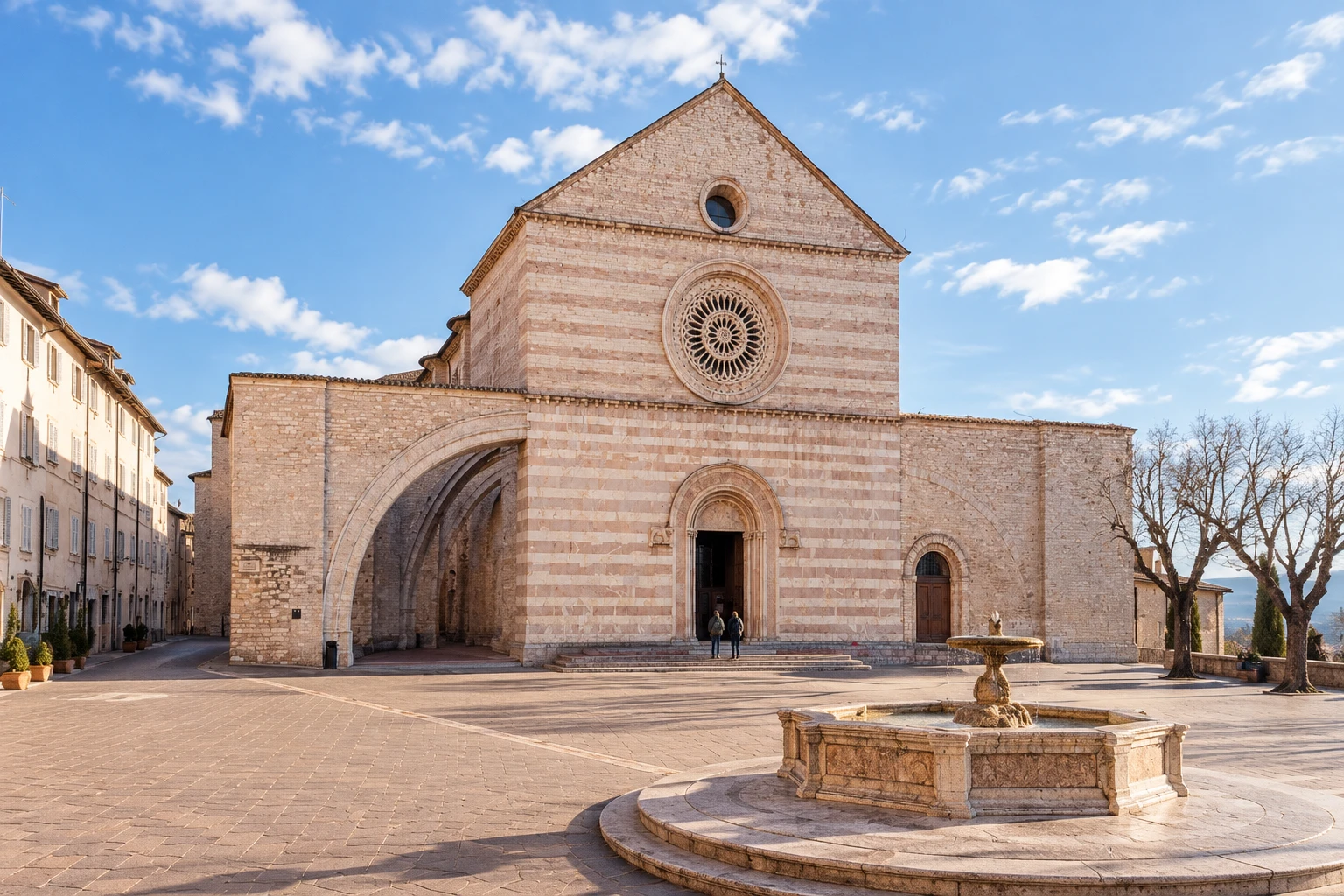
Umbria

Umbria

Umbria

The landlocked region between Rome and Florence: Perúgia on the hilltop, Assis of Saint Francis and Orvieto perched on a rock of tuff, connected by train.

Central

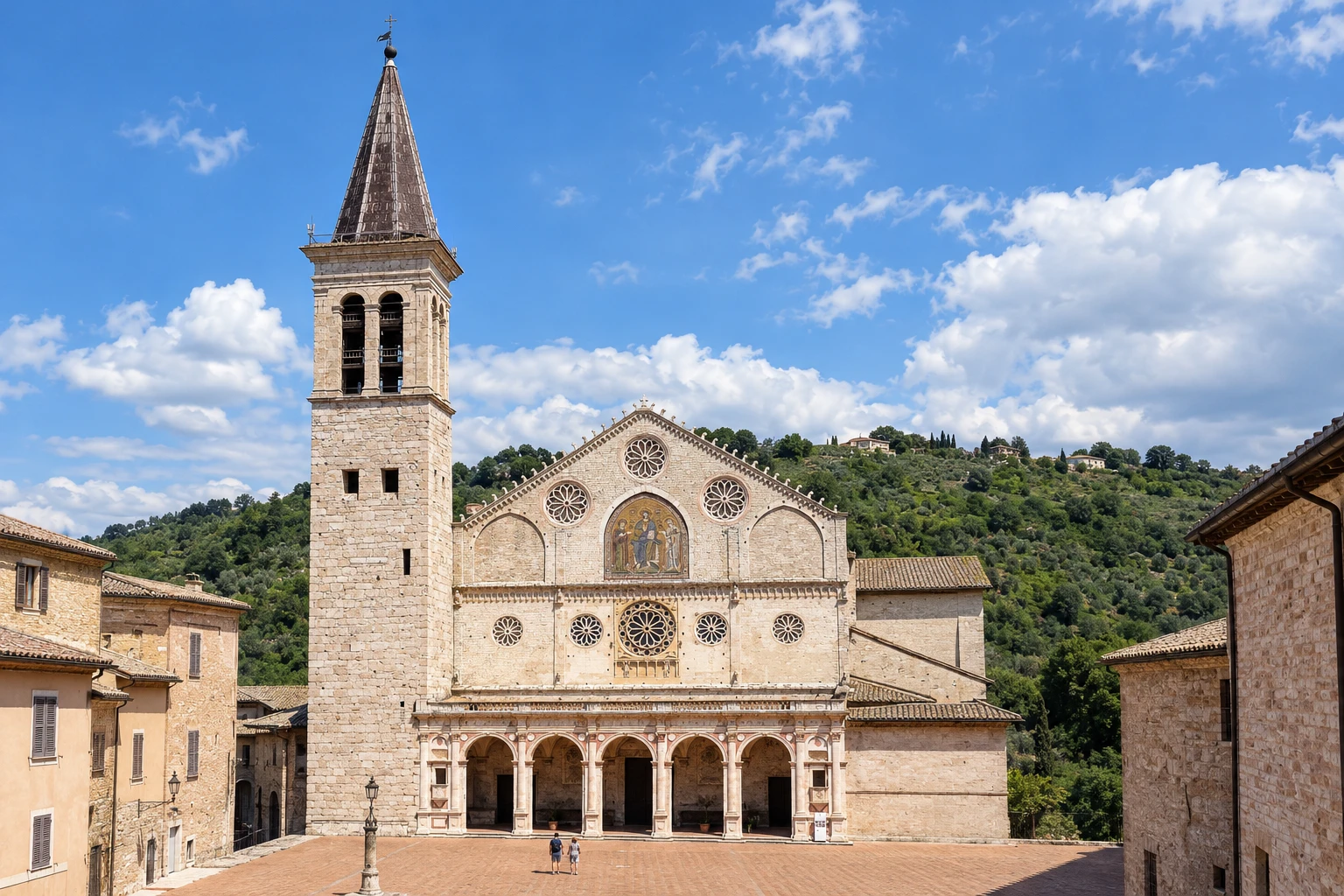
In the photo: Duomo de Spoleto, Úmbria

Illustrative images. The pictures in this guide are illustrations based on the real place, not photographs, and may differ from it.

Get it on Google Play

Get to know the place

A region to enjoy
at your own pace.

Úmbria (Umbria, in Italian) is in central Italy, between Tuscany, the Marche and Lazio. It is the only region on the peninsula without a coast: it has hills covered with olive trees and vineyards, Lake Trasimeno and medieval towns built on hilltops, almost always in stone.

The capital is Perúgia, a city of Etruscan origin, with a university, the Palazzo dei Priori and the Fontana Maggiore. About 25 kilometres away lies Assis, land of Saint Francis and Saint Clare, one of Europe's major pilgrimage destinations. In the southwest, almost on the Lazio border, Orvieto rises on a volcanic tuff rock, with a Gothic cathedral whose façade is in mosaic and an entire town excavated underneath.

The region's history is marked by the Etruscans, the Romans and papal rule; the popes governed Úmbria until 1860. That's why there are wells, fortresses and papal palaces alongside Etruscan tombs and medieval churches. Gubbio, Spoleto, Todi, Spello and Montefalco round out the map for those with more days.

For Brazilian travelers, Úmbria pairs well with Rome or Florence. Orvieto is on the train line between the two cities, and Perúgia and Assis are reached by regional trains. The cuisine is rustic: black truffle, olive oil, Castelluccio lentils, cured meats from Norcia and the wines of Orvieto and Montefalco.

This destination brings together 3 cities: Perugia, Assisi, Orvieto.

Share: WhatsApp
Traveler, share your experiences through photos Up to 5 photos of each place you visited.

One destination, many paths

The cities on this trip

Start with one city or combine several in your itinerary.

Where Umbria is The star marks the capital, Perugia.
PerugiaAssisiOrvieto

Outlines: ISTAT, limites administrativos 2026, CC BY 4.0. Adapted by Cidade Turismo.

How to get there: Umbria

Aeroporto di Roma-Fiumicino Leonardo da Vinci (FCO), in Fiumicino · 200 km to Perugia

Aeroporto Internazionale dell'Umbria - Perugia San Francesco d'Assisi (PEG), in Perugia · 15 km to Perugia

Connections from Brazil usually involve a stopover in another city. Check before buying. The most used airport is Rome–Fiumicino (FCO); Úmbria also has the small Perúgia airport (PEG), with few European flights. From Rome, the regional train reaches Orvieto in about 1–1.5 hours; to Perúgia and Assis there are trains with changes in Foligno or Terontola. Check timetables.

Suggested arrival point: Perugia

Perugia
Umbria · Umbria Capital Suggested arrival point

Perugia

Perúgia, capital of Úmbria, sits atop a hill about 450 metres above sea level, with views over the Tiber valley and Assis. It is a university city of Etruscan origin: the Arco Etrusco and the Pozzo Etrusco recall that past. In the centre, the Fontana Maggiore stands between the Cattedrale di San Lorenzo and the Palazzo dei Priori, which houses the Galleria Nazionale dell'Umbria and the Collegio del Cambio. Under the city, the Rocca Paolina shelters medieval streets.

Assisi
Umbria · Umbria

Assisi

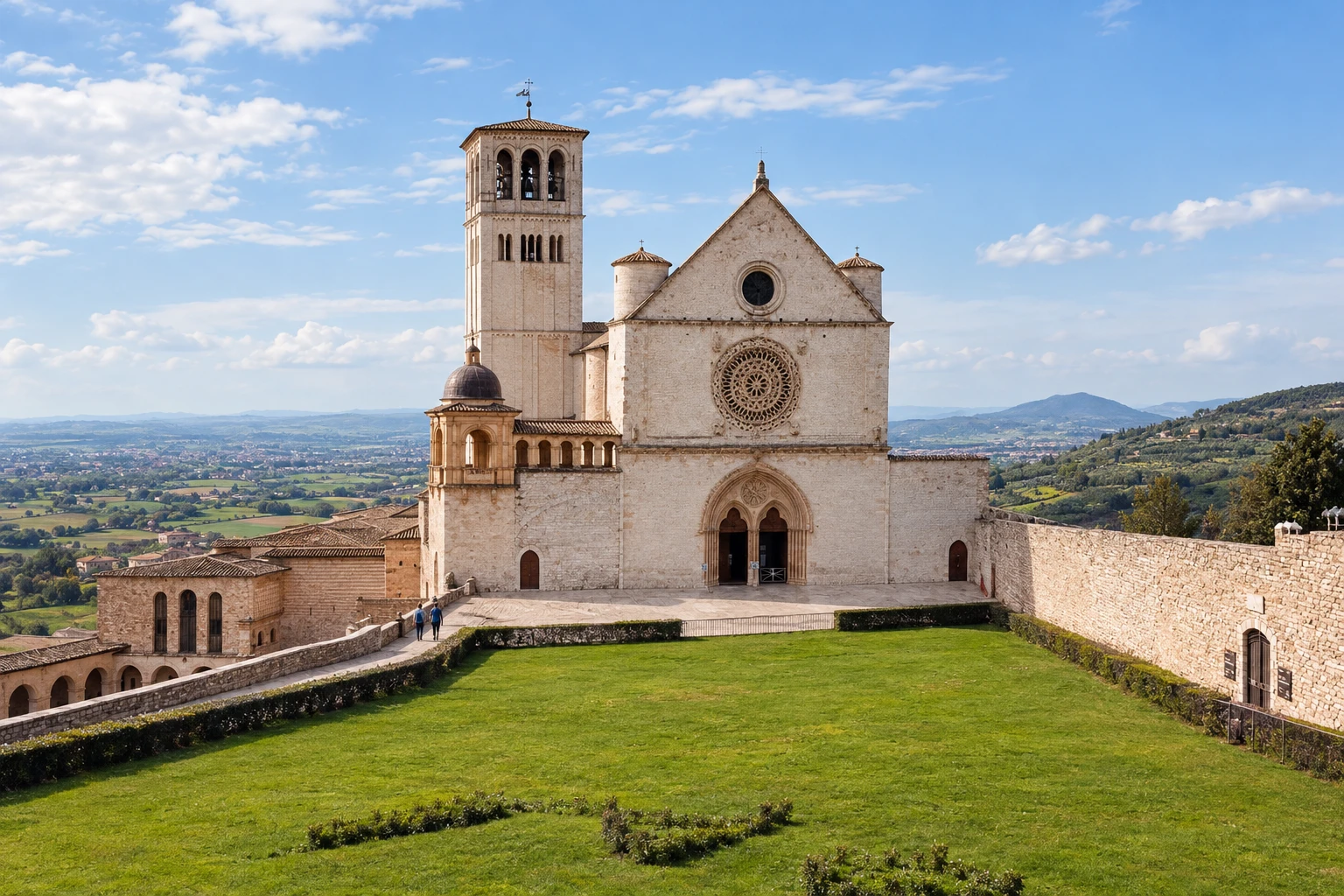
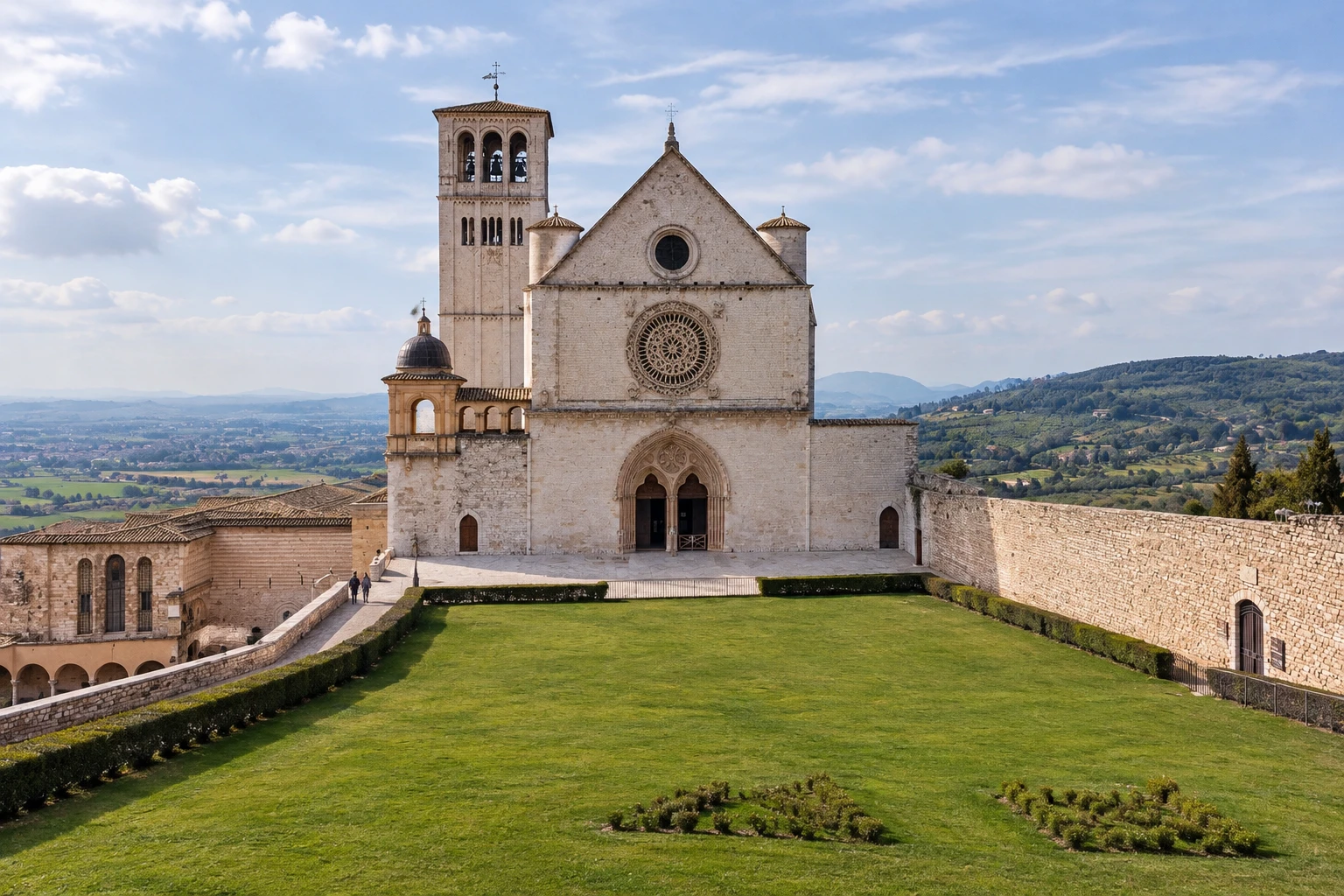
Assis lies on the slopes of Monte Subasio, above the Umbrian Valley, and is the town of Saint Francis and Saint Clare. The Basilica di San Francesco houses the saint's tomb and the frescoes of his life; the Basilica di Santa Chiara holds Clare's remains. The Piazza del Comune has the Tempio di Minerva, and the Rocca Maggiore overlooks the town from above. Below are San Damiano and Santa Maria degli Angeli, with the Porziuncola; on the mountain is the Eremo delle Carceri.

Festivals and events

Festivals Umbria

Dates change every year: check this year's date before you travel.

Festival calendar in Italy

The local experience

Things to do in Umbria

Orvieto · Umbria · Cathedral

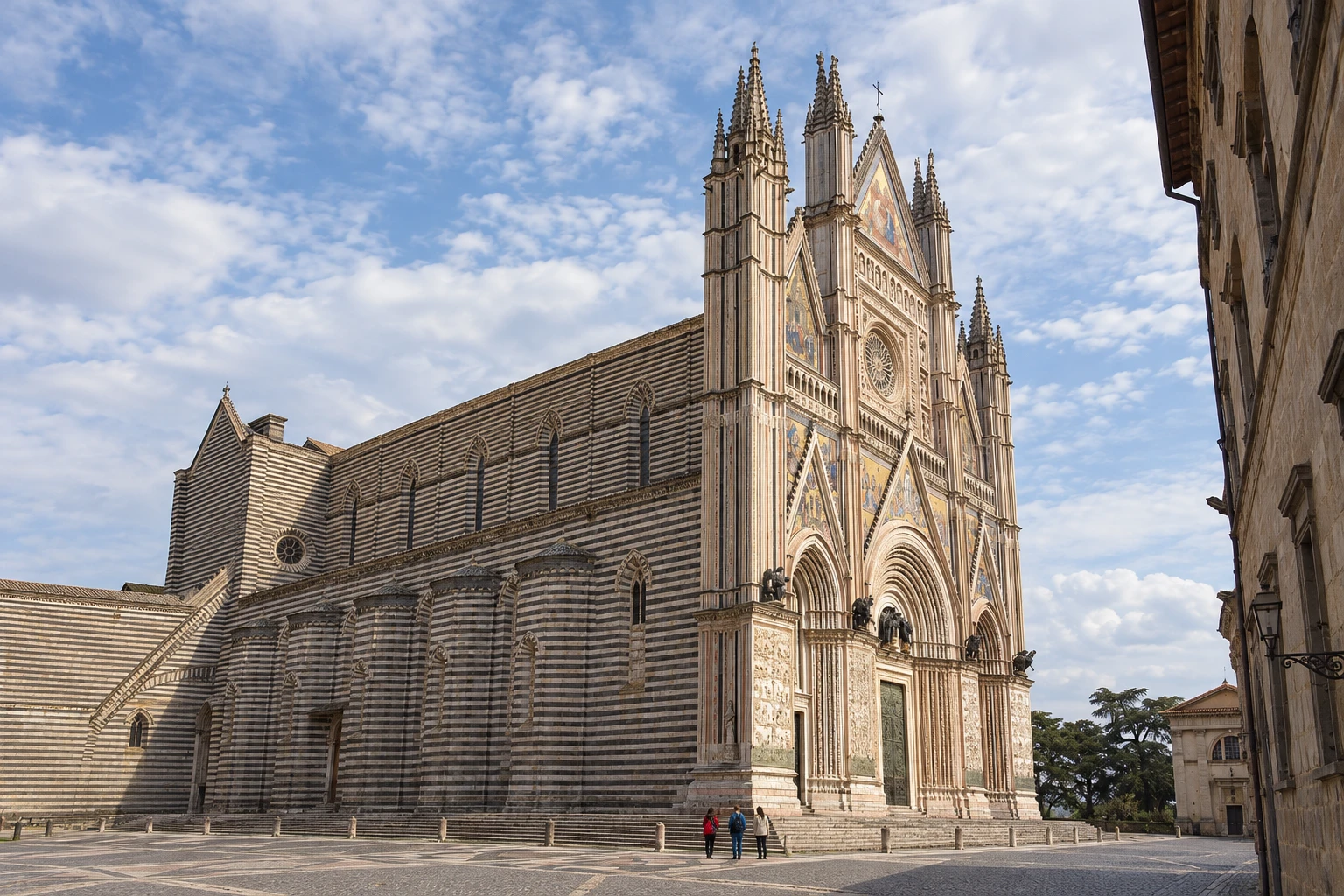
Orvieto Cathedral

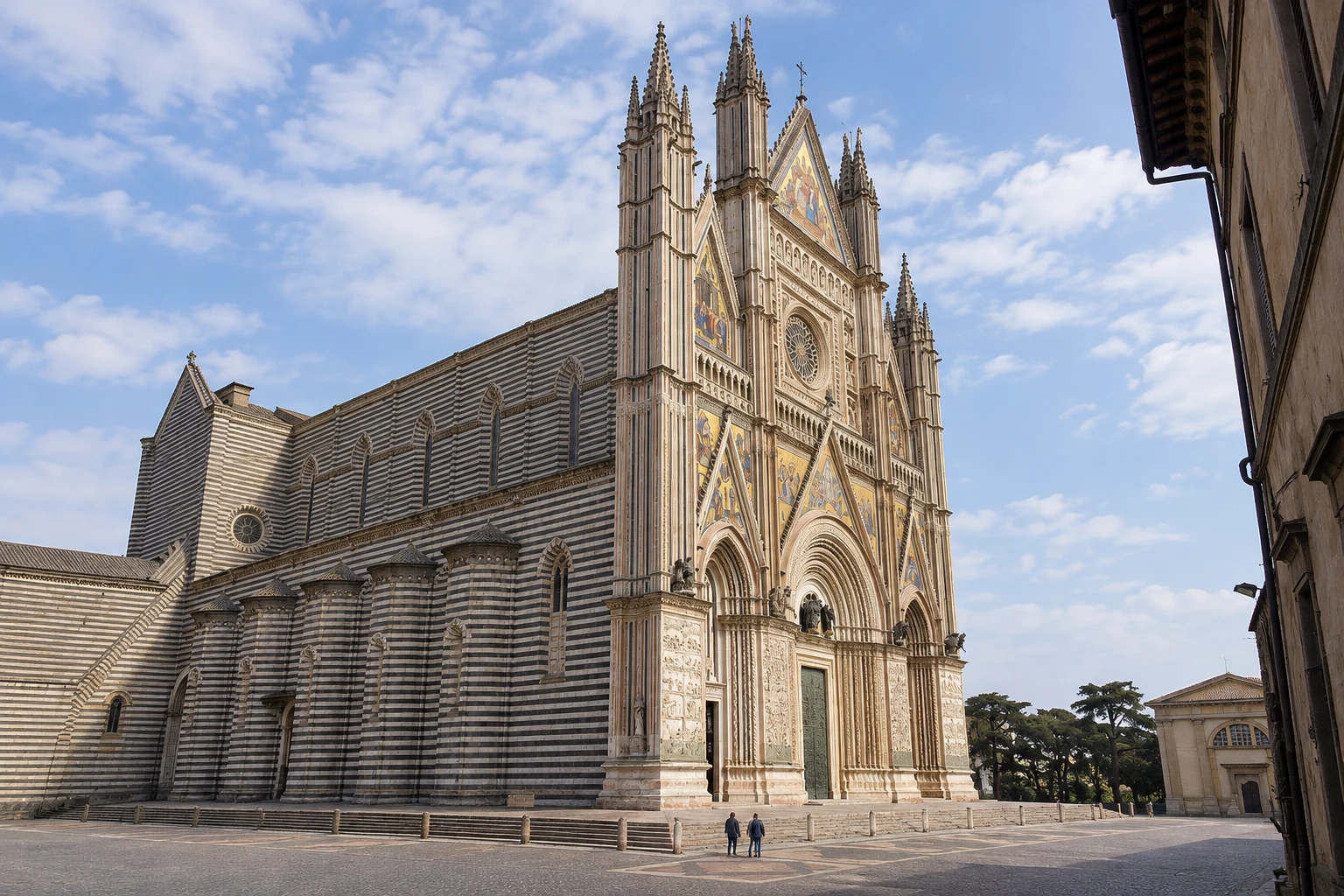
Gothic cathedral begun in 1290, with a façade of golden mosaics and reliefs by Lorenzo Maitani, the Cappella di San Brizio painted by Luca Signorelli and the relic of the miracle of Bolsena.

Explore Orvieto Cathedral

Perugia · Umbria · Palace

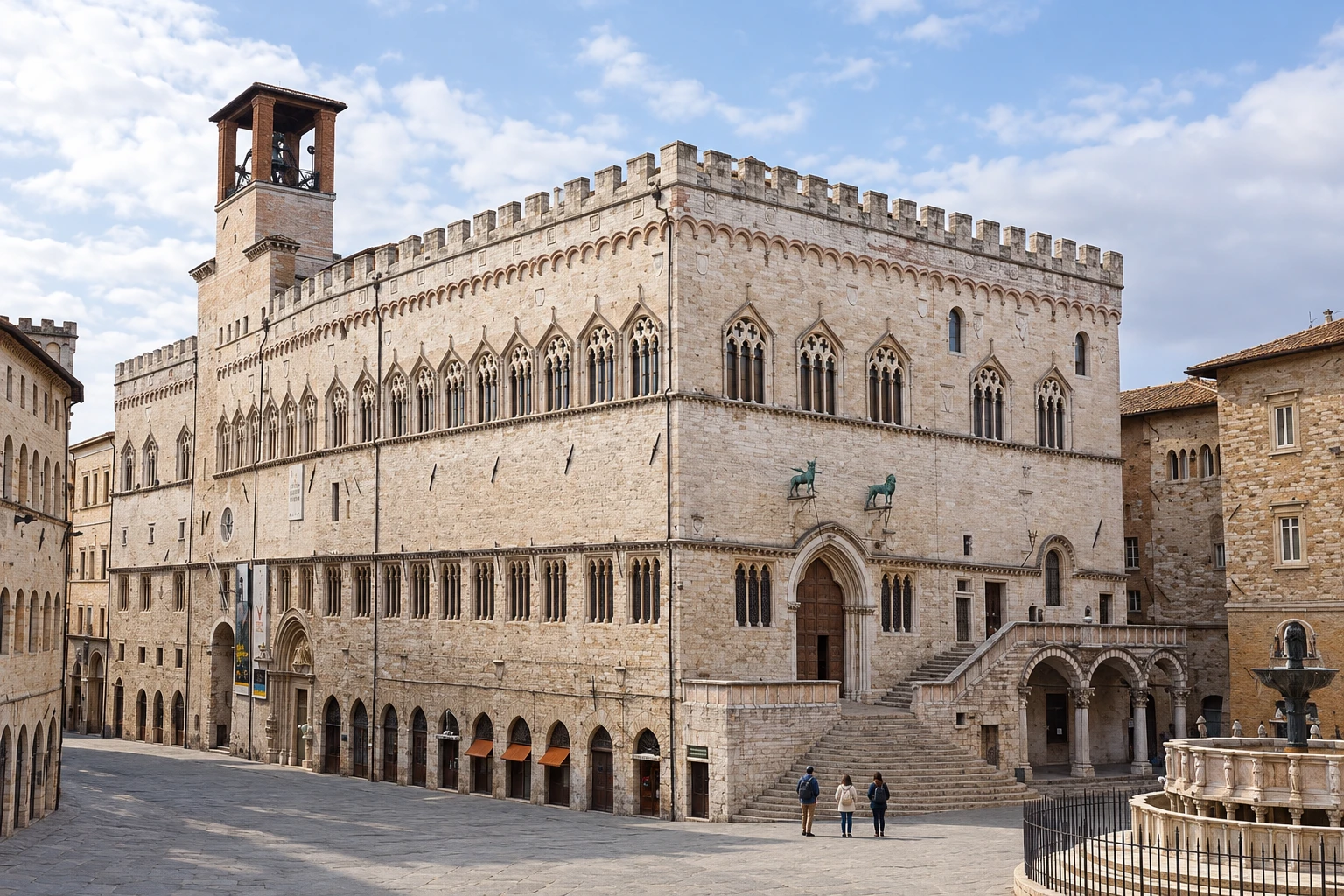
Palazzo dei Priori

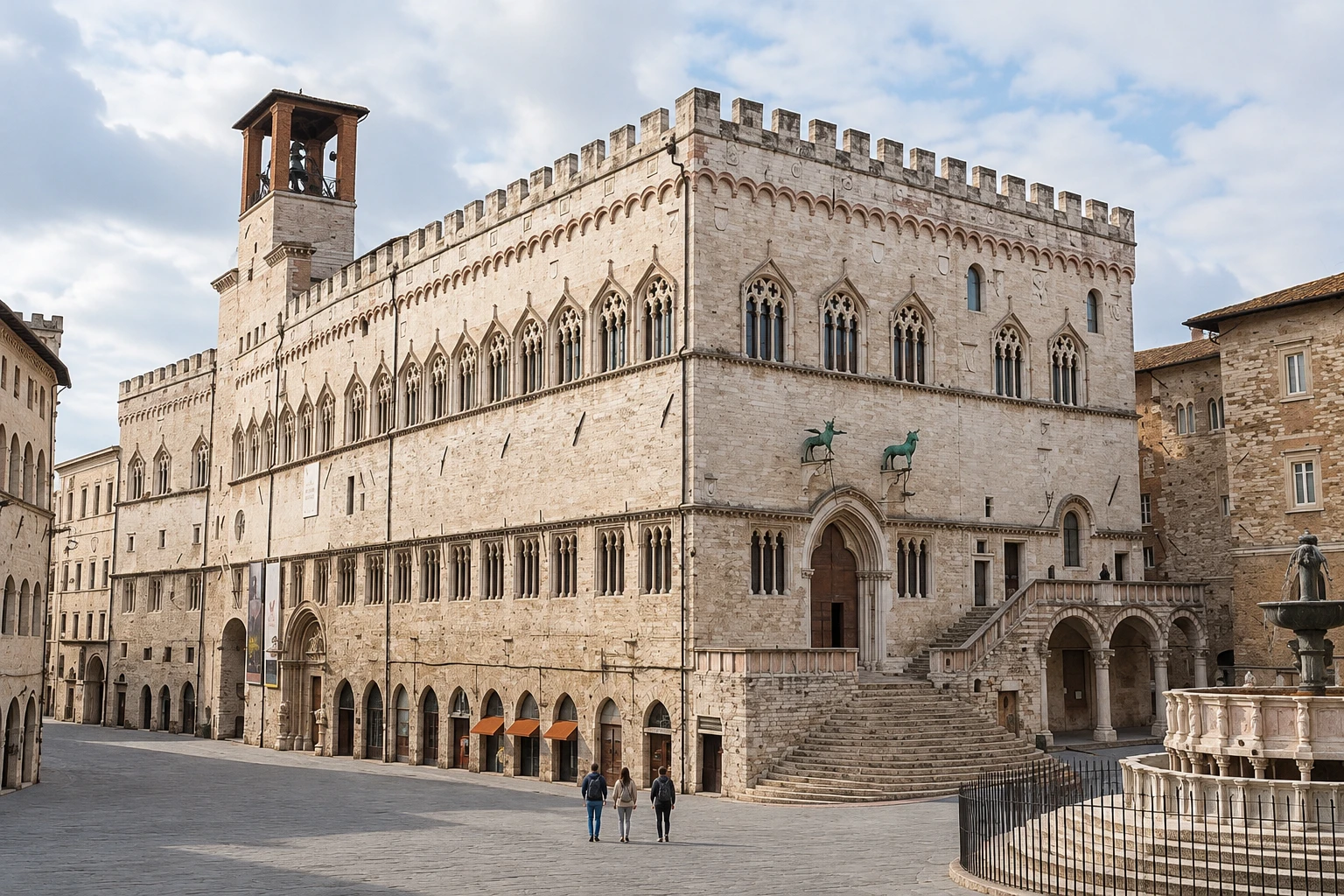
Gothic palace of medieval government in Perúgia, between Piazza IV Novembre and Corso Vannucci. It houses the Sala dei Notari, the Galleria Nazionale dell'Umbria and the Collegio del Cambio.

Explore Palazzo dei Priori

See 22 more places in Umbria

To choose before you go

Tours in Umbria

Where each tour starts, how long it takes, how it is done, what is included and the price range.

Perugia: Corso Vannucci, Palazzo dei Priori, Fontana Maggiore and the Cathedral

From Piazza IV Novembre, Perugia (minimetrò from the station to Pincetto) Walk through the medieval centre about 3 hours morning or late afternoon moderate (hills and stairways)

Perugia (Perúgia), the capital of Umbria, sits on a hill at 493 m, and the medieval center is reached by the minimetrò, the 2008 monorail that climbs from the station in 12 minutes to Pincetto, and by escalators that pass through the Rocca Paolina. Corso Vannucci, the pedestrian street with cafés and the Pasticceria Sandri (est. 1860), leads to Piazza IV Novembre, with the Fontana Maggiore, the 1278 fountain by Nicola and Giovanni Pisano, featuring 50 reliefs of the months, the arts and fables, between the Palazzo dei Priori, the Gothic town hall from 1293 to 1443, with the painted Sala dei Notari and the Galleria Nazionale inside, and the Cattedrale di San Lorenzo, unfinished, with a loggia and, inside, the Virgin’s wedding ring, kept in 15 chests. From Via delle Prome and the Giardini Carducci there are views over the valley to Assisi. The city is a university town, home to the Università per Stranieri since 1921, and hosts Umbria Jazz in July and Eurochocolate in October or November.

Stops: Palazzo dei Priori, Fontana Maggiore, Cattedrale di San Lorenzo.

Includes: Self-guided walk; minimetrò ticket paid separately; Sala dei Notari free of charge; cathedral free of charge (chapter museum has an entry fee).

Tip: Arrive by the minimetrò and exit at Pincetto; use the escalators of the Rocca Paolina to go up and down. Sunset from the Giardini Carducci, at the end of the Corso, is the square’s prime hour. In July, Umbria Jazz fills the squares for ten days.

Best time: year-round; July (Umbria Jazz) and October (Eurochocolate) are crowded.

Galleria Nazionale dell'Umbria and Collegio del Cambio: Perugino and Umbrian painting

From Corso Vannucci, Perugia Two museums in the same palace about 2 h 30 morning or afternoon easy

The Galleria Nazionale dell'Umbria, on the upper floors of the Palazzo dei Priori, renovated in 2022, is the museum of regional painting from the 13th to the 19th century: Piero della Francesca’s Polyptych of Sant'Antonio, Duccio’s Madonna, Fra Angelico’s Pala di Perugia, Perugino (Pietro Vannucci, Raphael’s teacher, born near Perugia) and Pinturicchio, displayed across 40 rooms with valley views. On the ground floor of the same palace, the Collegio del Cambio, the money-changers’ guild hall, has the Sala delle Udienze entirely painted by Perugino between 1498 and 1500, with the sibyls, prophets and ancient sages, the ceiling and the painter’s self-portrait, and carved wooden benches; beside it, the chapel with frescoes by Giannicola di Paolo. The Collegio della Mercanzia, with its 1390 wood-paneled hall, is two doors further on.

Stops: Galleria Nazionale dell'Umbria, Collegio del Cambio, Palazzo dei Priori.

Includes: Galleria with a separate paid ticket (no charge on the first Sunday of the month); Collegio del Cambio and Mercanzia have small tickets (combined ticket).

Tip: The Galleria requires about two hours; the Cambio, 20 minutes, and has reduced hours in winter and on Sundays. The Galleria’s audio guide has a Portuguese version.

Best time: All year.

Rocca Paolina, Arco Etrusco and Pozzo Etrusco: Perugia underground and Etruscan

From Piazza Italia, Perugia Walk through an underground fortress and Etruscan monuments about 2 hours afternoon easy

The Rocca Paolina is the fortress that Pope Paul III ordered built in 1540, after Perugia’s revolt against the salt tax, swallowing an entire neighborhood of the Baglioni family: the houses, streets and medieval towers remained within the walls as an underground city, today traversed by escalators that link Piazza Italia to the lower part, with exhibitions in the halls; the fortress above was demolished in 1860 when the city joined Italy. Perugia was one of the twelve Etruscan cities: the Arco Etrusco (or Arco di Augusto), from the 3rd century B.C., at 11 m, is the best-preserved gate of Etruria, with a Renaissance loggia above; the Pozzo Etrusco, in Piazza Danti, is the 37 m deep cistern from the 3rd century B.C., visited by a walkway down to the bottom; sections of the Etruscan walls still encircle the center. The Ipogeo dei Volumni, on the outskirts, is the 2nd century B.C. Etruscan tomb with the family’s urns.

Stops: Rocca Paolina, Arco Etrusco, Pozzo Etrusco.

Includes: Rocca Paolina free of charge (exhibitions paid); Pozzo Etrusco with small entry fee (combined ticket available with the Cappella di San Severo, which has the Raphael fresco); Arch free of charge.

Tip: Enter the Rocca Paolina via the escalators at Piazza Partigiani and exit at Piazza Italia; it’s the natural route if you come by car. The Pozzo is short but impressive for its scale; the Cappella di San Severo, with the only Raphael fresco in Umbria, is 2 minutes away.

Best time: year-round.

Oratorio di San Bernardino, Basilica di San Pietro and the Ipogeo dei Volumni

From Piazza San Francesco, Perugia Walk between churches and round-trip to the Etruscan tomb about 3 hours morning or afternoon easy

The Oratorio di San Bernardino, from 1457 to 1461, has the façade by Agostino di Duccio, the masterpiece of Renaissance sculpture in Umbria, with reliefs of musician angels in polychrome marble and a polychromed background; inside, a Roman sarcophagus serves as the altar. At the other end of town, along Corso Cavour and the Porta San Pietro, the Basilica di San Pietro, the 10th-century Benedictine abbey, has a nave of ancient columns, the carved wooden choir from 1535—the richest in the region—paintings by Perugino and Vasari, and the medieval gardens with the kitchen garden; the pointed Gothic bell tower is visible from afar. Five kilometers away, in Ponte San Giovanni, the Ipogeo dei Volumni is a 2nd-century BC Etruscan underground tomb, dug into the tuff like a house, with the seven travertine urns of the Volumnia family showing reclining figures, discovered in 1840; the Antiquarium beside it houses other urns.

Stops: Oratorio di San Bernardino, Basilica di San Pietro, Ipogeo dei Volumni.

Includes: Oratory and basilica free of charge; Ipogeo with a small admission (free on the first Sunday of the month). Urban bus to the Ipogeo paid separately.

Tip: The Oratory opens at limited hours; check ahead. The Basilica of San Pietro closes at midday. The Ipogeo is on the Assisi road: stop there on the way.

Best time: All year.

Assisi: Basilica di San Francesco

From Piazza Inferiore di San Francesco, Assisi Visit to the basilica about 2 hours morning easy (ramps between the two churches)

The Basilica of San Francis (Basilica di San Francesco), begun in 1228, two years after the saint’s death, and listed by UNESCO, consists of two stacked churches: the Inferiore, low and dim, with frescoes by Cimabue, Simone Martini (the life of Saint Martin), Pietro Lorenzetti and the crypt with Saint Francis’s tomb, found in 1818 and surrounded by the tombs of four companions; and the Superiore, Gothic and luminous, with 28 scenes of the saint’s life painted by Giotto and the workshop around 1295, the first narrative cycle of Italian painting, and the biblical scenes by Cimabue in the apse and transept, damaged by the 1997 earthquake and restored. Franciscan friars lead tours in several languages, including Portuguese; silence is requested and photography is forbidden. The basilica sits on the west edge of Assisi, atop the Colle del Paradiso, with the square and the colonnade of the Sacro Convento.

Stops: Basilica di San Francesco.

Includes: Free entry (donation); guided visits by the friars with donation or reservation; audio guide paid separately. Dress code: shoulders and knees covered.

Tip: Go at opening time, before the tour groups, and start with the Inferiore and the crypt; the Superiore in the morning has the best light on Giotto’s paintings. On October 4th is Saint Francis’s feast, with the offering of oil from regions across Italy; on August 2nd is the Perdono of Assisi.

Best time: All year; October and Easter are very busy.

Assisi on foot: Piazza del Comune, Santa Chiara, San Rufino and Rocca Maggiore

From Piazza del Comune, Assisi Walk through the town with a climb to the fortress about 3 hours afternoon moderate (hills; 20 minutes to the Rocca)

Assisi is the pink-stone town on Monte Subasio, entirely protected by UNESCO. The Piazza del Comune, the Roman forum, features the Tempio di Minerva, the 1st-century BC temple with six intact Corinthian columns, converted into a church, and the town tower; the underground Roman forum can be visited beneath the square. The Basilica di Santa Chiara, from 1260, striped pink and white with flying buttresses, houses Saint Clare’s body in the crypt and the crucifix of San Damiano, which spoke to Francis; the Cattedrale di San Rufino, Romanesque from 1140 with a façade of three rose windows, has the font where Francis and Clare were baptized. The Rocca Maggiore, the 1367 fortress above the town with towers and walkways, dominates the town and the valley as far as Perugia; the climb takes 20 minutes. The streets are stepped, with geranium pots and shops selling ceramics and Franciscan souvenirs.

Stops: Tempio di Minerva, Basilica di Santa Chiara, Cattedrale di San Rufino, Rocca Maggiore.

Includes: Self-guided walk; churches free of charge; Rocca Maggiore and the Roman forum have small entrance fees.

Tip: Do the Rocca at late afternoon, with the light over the town and the valley; in the morning, visit the churches. Stay overnight in Assisi: at night, after the buses leave, the town is different. Parking is outside the walls, with moving walkways/escalators.

Best time: All year; in May, the Calendimaggio, with the town in medieval dress.

See 4 more tours

San Damiano, Eremo delle Carceri and Santa Maria degli Angeli: the places of Saint Francis

From Assisi (on foot, by bus or by car) Walk or car to the three shrines about 4 hours morning moderate (4 km uphill if you go on foot)

Three places outside the walls tell the life of Saint Francis. The Santuario di San Damiano, 1.5 km below the town among olive groves, is the ruined church where, in 1205, the crucifix spoke to him “rebuild my church,” and the convent where Saint Clare lived 42 years with the Poor Clares and where Francis, blind, composed the Canticle of the Creatures in 1225; the site remains simple, with Clare’s small garden. The Eremo delle Carceri, 4 km uphill on Monte Subasio, at 800 m, is the hermitage of grottoes in the oak wood where Francis and his companions withdrew to pray, with the saint’s grotto, the bridge and the tree where he preached to the birds, still inhabited by friars; the road climbs by car or on foot in about 1 hour. The Basilica di Santa Maria degli Angeli, on the plain, 4 km away, is the 16th-century basilica built around the Porziuncola, the stone chapel of 4 m by 7 m that Francis restored, where he founded the order and where he died, in the Chapel of the Transitus, in 1226; the thornless rosebush and the museum are located in the convent.

Stops: Santuario di San Damiano, Eremo delle Carceri, Basilica di Santa Maria degli Angeli.

Includes: The three shrines have no entrance fee (donations). Urban bus to Santa Maria degli Angeli is paid separately; the Eremo is accessible only on foot, by car, or by taxi.

Tip: Do the Eremo early in the morning, on foot along the road or by taxi, in silence; San Damiano on foot on the descent; Santa Maria degli Angeli by bus or on the way to the station, which is next to the basilica. On August 2 the Perdón della Porziuncola is celebrated.

Best time: All year; the Eremo is cool in summer and can have snow in winter.

Orvieto: Duomo and the Cappella di San Brizio

From Piazza del Duomo, Orvieto (funicular from the station and bus, or on foot) Cathedral approx. 1 h 30 morning or late afternoon easy

The Duomo di Orvieto (Cathedral of Orvieto), begun in 1290 to house the corporal from the miracle of Bolsena (the cloth stained with the host's blood in 1263, origin of the Corpus Christi feast), has the Gothic façade by Lorenzo Maitani, from 1310 to 1330, covered in golden mosaics, with the rose window and four pilasters with reliefs from Genesis to the Last Judgment, which takes an hour to read; the sides are striped in white travertine and dark basalt. Inside, the Cappella di San Brizio contains Luca Signorelli’s Last Judgment cycle, from 1499 to 1504, with the condemned, demons and the resurrection of the bodies, which Michelangelo studied before the Sistine Chapel, and the Cappella del Corporale, with the 1338 reliquary and the frescoes of the miracle. The square in front houses the Museo dell'Opera, with the cathedral’s works, and the Palazzo Soliano.

Stops: Duomo di Orvieto.

Includes: Separate paid ticket (includes the Cappella di San Brizio and the Duomo museums); worshippers attending Mass are not charged.

Tip: See the façade in the late afternoon, when the sun hits the mosaics, and the Signorelli chapel in the morning, with a limited number of people admitted at a time. the Orvieto Carta Unica ticket includes the Duomo and the other monuments.

Best time: All year; at Corpus Christi (June), the procession of the corporal in 1300s costumes.

Underground Orvieto: Pozzo di San Patrizio, Orvieto Underground and Pozzo della Cava

From Orvieto (Piazza Cahen and centre) Wells and grottoes about 3 hours morning or afternoon moderate (496 steps in the well)

Orvieto sits on a 50 m high plateau of volcanic tuff, and beneath the town there are 1,200 cavities excavated since Etruscan times. The Pozzo di San Patrizio, ordered dug by Pope Clement VII in 1527 after the Sack of Rome to ensure water in a siege, is 54 m deep and 13 m across, with two helical staircases of 248 steps each, one for descending and one for ascending, which do not cross, lit by 72 windows; mules carried water down and up. The Orvieto Underground is the guided visit to two grottoes with oil mills, dovecotes carved into the rock (pigeons were the town’s meat) and Etruscan wells; the Pozzo della Cava, in a private house, is a 36 m Etruscan well with nine cavities around it. The Torre del Moro, 47 m high, at the junction of the main streets, is climbed by stairs and elevator to the view over the town and the valley.

Stops: Pozzo di San Patrizio, Orvieto Underground, Pozzo della Cava, Torre del Moro.

Includes: Pozzo di San Patrizio, Orvieto Underground (guided tour at fixed times), Pozzo della Cava and Torre del Moro with separate paid tickets; the Carta Unica includes them all.

Tip: Buy the Carta Unica on arrival; the Orvieto Underground departs at fixed times from the Piazza del Duomo, in Italian and English. The Pozzo di San Patrizio is cold and damp; climbing the 248 steps is tiring.

Best time: All year.

Necropolis of the Crocifisso del Tufo and Claudio Faina Museum: Etruscan Orvieto

From Orvieto (necropolis at the foot of the rock; museum on Piazza del Duomo) Archaeological site and museum about 2 h 30 morning or afternoon easy

Orvieto was Velzna, one of the most important Etruscan cities, destroyed by the Romans in 264 BC. The Necropolis of the Crocifisso del Tufo, at the foot of the rock on the north side, is the “city of the dead” from the 6th century BC: regular streets of tombs cut from tuff blocks, identical, with the family name carved on the architrave — one of the few Etruscan necropolises where urban planning is still visible; it is a 15-minute walk from Porta Maggiore or accessible by road. The Claudio Faina Museum, in the palace opposite the Duomo, is the 19th-century count’s collection of finds from the necropolises: Attic black- and red-figure vases, bronzes, the Etruscan sarcophagus and coins, and windows facing the cathedral façade. The Museo Archeologico Nazionale, in the Palazzo Papale next door, houses the Golini tombs with reconstructed frescoes.

Stops: Necropolis of the Crocifisso del Tufo, Claudio Faina Museum.

Includes: Necropolis with a small entrance fee (state-run, no charge on the first Sunday of the month); Museo Faina with an entrance fee (Carta Unica included).

Tip: The necropolis is on the route for those arriving by car, before climbing up to the town. The Faina is worth visiting for its windows overlooking the Duomo and for its pottery; one hour is enough.

Best time: All year.

Day by day

2, 4 and 6-day itinerary in Umbria

Suggestions to plan the trip. Change the order of the days according to the weather and tour availability.

2 days · Umbria in 2 days: Assisi and Orvieto

For For someone between Rome and Florence who wants the two best-known places in the region. · Based in Assisi (1 night) and Orvieto (1 night), or day trips from Rome
  1. Day 1 · Assisi

    Arrival by train (from Rome about 2 h, from Florence 2 h 30, with a change). Basilica of San Francesco at opening; Piazza del Comune, Santa Chiara, San Rufino; Rocca Maggiore at sunset; night in Assisi, with the town empty.

  2. Day 2 · Orvieto

    San Damiano in the morning; train to Orvieto (about 2 h, via Terontola or Orte); Duomo and the chapel of San Brizio, Pozzo di San Patrizio and Torre del Moro; night in Orvieto or train to Rome (1 h 15).

4 days · Umbria in 4 days: Perugia, Assisi and Orvieto
For The capital, the city of Saint Francis and the tuff city, by train and minimetrò. · Based in Perugia (2 nights), Assisi (1), Orvieto (1)
  1. Day 1 · Perugia

    Arrival and minimetrò to the center. Corso Vannucci, Fontana Maggiore, Cathedral; Galleria Nazionale and Collegio del Cambio in the afternoon; sunset at the Giardini Carducci.

  2. Day 2 · Etruscan Perugia and San Pietro

    Rocca Paolina, Arco Etrusco and Pozzo Etrusco in the morning; Oratorio di San Bernardino; Basilica of San Pietro in the afternoon; aperitivo on the Corso.

  3. Day 3 · Assisi

    Train to Assisi (25 minutes) and bus to the center; Basilica of San Francesco; the town on foot, Santa Chiara and San Rufino; Rocca Maggiore at sunset; night in Assisi.

  4. Day 4 · Sanctuaries and Orvieto

    Eremo delle Carceri and San Damiano in the morning; Santa Maria degli Angeli en route to the station; train to Orvieto; Duomo late afternoon and night in Orvieto, with the Pozzo and the grottoes the following morning.

6 days · Umbria in 6 days: with a car, from Trasimeno to Subasio
For The region at a relaxed pace, with a car for villages that have no train service. · Based in Perugia (2 nights), Assisi (2), Orvieto (2)
  1. Day 1 · Perugia

    Arrival. Corso Vannucci, Fontana Maggiore, Cathedral, Galleria Nazionale and Collegio del Cambio; Giardini Carducci at sunset.

  2. Day 2 · Perugia and Trasimeno

    Rocca Paolina, Arco Etrusco, Pozzo Etrusco, San Bernardino and San Pietro in the morning; Ipogeo dei Volumni; afternoon at Lake Trasimeno, in Castiglione del Lago or Passignano, with a boat to Isola Maggiore.

  3. Day 3 · Assisi

    Drive from Perugia to Assisi (30 minutes), parking outside the walls. Basilica of San Francesco at opening, including both churches and the crypt; Piazza del Comune, Santa Chiara and San Rufino on foot; Rocca Maggiore at sunset; night in Assisi.

  4. Day 4 · Sanctuaries and Spello

    Eremo delle Carceri and San Damiano in the morning; Santa Maria degli Angeli; Spello in the afternoon, with the Baglioni chapel by Pinturicchio and the flowered streets; night in Assisi.

  5. Day 5 · Spoleto, Todi and Orvieto

    Road via Spoleto (Duomo and Ponte delle Torri) and Todi (Piazza del Popolo); arrival in Orvieto and the Duomo late in the afternoon; overnight in Orvieto.

  6. Day 6 · Orvieto

    San Brizio Chapel in the morning; Pozzo di San Patrizio, Orvieto Underground, Torre del Moro and necropolis; Museo Faina; train or car to Rome (1 h 15 by train) or Florence.

Best time to go

When to go: Umbria month by month

April to June and September to October usually have pleasant temperatures for walking the slopes. July and August are hot and busier; in July Perúgia usually hosts Umbria Jazz. Winter, from December to February, is cold in the hill towns, but churches and museums remain open. On October 4, Saint Francis' day, Assis receives many pilgrims.

The seasons shown are the most usual ones; nature doesn't always follow the calendar.

January Some rain

winter · valley fog, sun on the hills

Winter. At Perugia station, 1991–2020 normals (Orvieto, at 325 m, and Assisi, at 424 m, are similar): average 5.5 °C (minimums near 2 °C) and about 53 mm of rain. Morning fog in the plains and sometimes snow in the higher towns; Assisi and Orvieto empty, with the frescoes for few visitors. Heavy coat; fireplaces and Norcia black truffle in restaurants.

February Some rain

winter · Carnival and black truffle

Winter. At Perugia station, 1991–2020 normals (Orvieto, at 325 m, and Assisi, at 424 m, are similar): average 6.5 °C and about 57 mm of rain. Nero Norcia, the black truffle fair, at the end of the month; Carnival in the villages. Still cold and quiet; clear days with the Apennines snow-capped in the background.

March Some rain

spring beginning · almond trees and Easter

Early spring. At Perugia station, 1991–2020 normals (Orvieto, at 325 m, and Assisi, at 424 m, are similar): average 9.4 °C and about 54 mm of rain. Hills turning green, almond trees; Holy Week in Assisi and Orvieto, when it falls in March, features processions. European daylight saving time on the last Sunday: 4 hours ahead of Brasília.

April High rain

spring · Easter and Calendimaggio

Spring. At Perugia station, 1991–2020 normals (Orvieto, at 325 m, and Assisi, at 424 m, are similar): average 12.4 °C and about 72 mm of rain, in heavy showers. Easter fills Assisi; April 25 and May 1 fill the villages. Fields of flowers and olive groves; it is one of the best months for walking between Assisi and the Eremo.

May High rain

spring · Calendimaggio and Corpus Christi

High spring. At Perugia station, 1991–2020 normals (Orvieto, at 325 m, and Assisi, at 424 m, are similar): average 16.6 °C and about 76 mm of rain, in short storms. Assisi’s Calendimaggio, at the start of the month, dresses the town in medieval pageantry; poppies in the fields; Corpus Christi (when it falls in May or June) features the corporal procession in Orvieto and Spello’s Infiorata with flower carpets. High activity.

June Some rain

summer beginning · Infiorata and Festival dei Due Mondi

Summer beginning. At the Perugia weather station, normals 1991–2020 (Orvieto, at 325 m, and Assisi, at 424 m, are similar): average 21 °C and about 70 mm of rain. Sunflowers and wheat; the Infiorata in Spello (Corpus Christi) and the Festival dei Due Mondi in Spoleto, at the end of the month and start of July. Long days, heat is bearable in the hilltop towns.

July Low rain

summer · Umbria Jazz

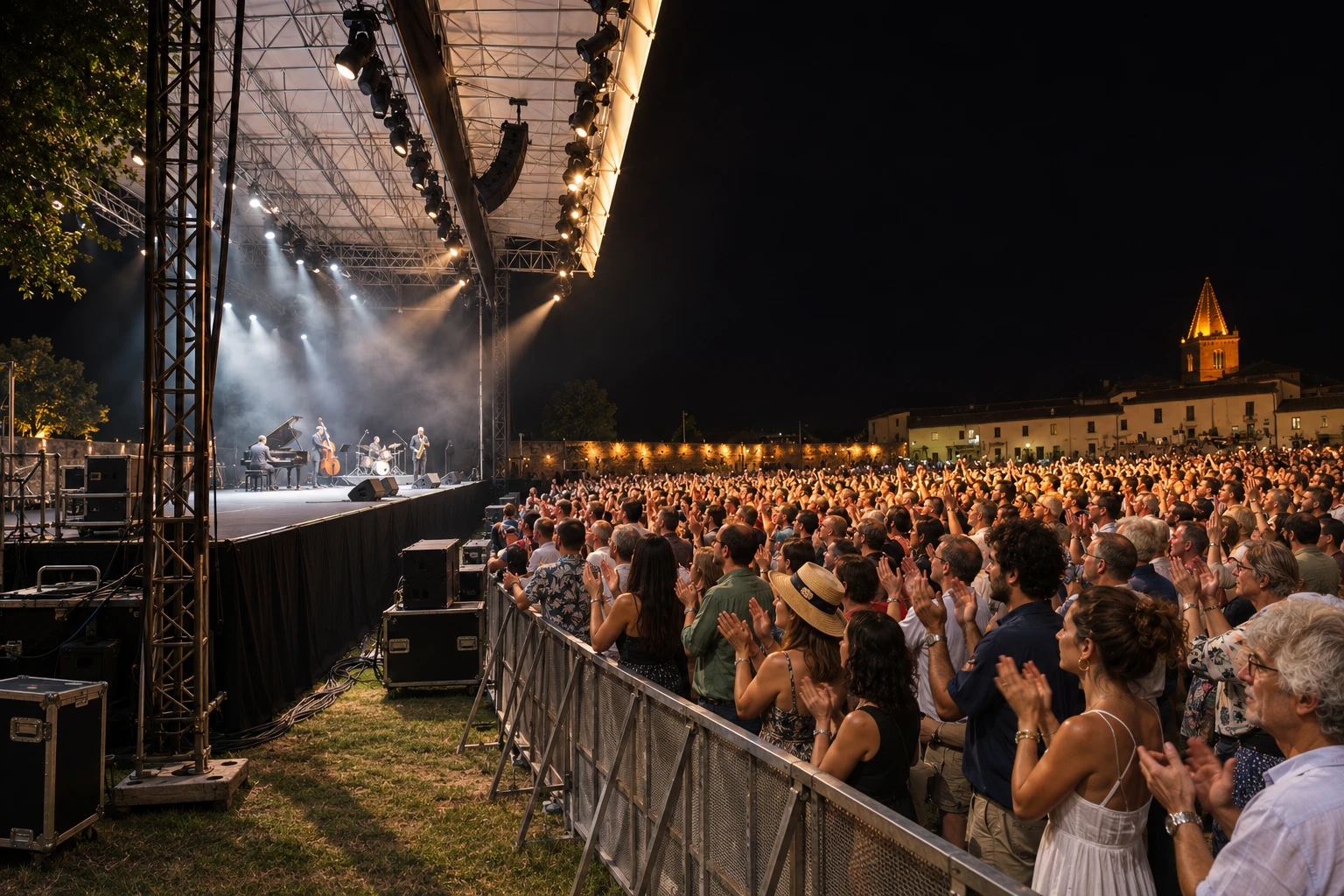
Summer. At the Perugia weather station, normals 1991–2020 (Orvieto, at 325 m, and Assisi, at 424 m, are similar): average 23.6 °C (highs around 30 °C) and about 37 mm of rain. Umbria Jazz fills Perugia for ten days in mid-month, with shows in the squares and hotels busy; Orvieto and Assisi are hot in the afternoon, cool at night. Sunflowers in the fields; small sites and churches in the mornings.

August Low rain

summer · Ferragosto and Perdón of Assisi

Summer. At the Perugia weather station, normals 1991–2020 (Orvieto, at 325 m, and Assisi, at 424 m, are similar): average 23.9 °C and about 50 mm of rain, with storms late in the month. On August 2 the Perdón of Assisi at the Porziuncola; Ferragosto on August 15; the Palio dei Terzieri in Città della Pieve. Villages fill with Italians; Perugia empties of students.

September Some rain

end of summer · harvest and golden light

End of summer. At the Perugia weather station, normals 1991–2020 (Orvieto, at 325 m, and Assisi, at 424 m, are similar): average 19.4 °C and about 88 mm of rain, with stormy days. Sagrantino harvest in Montefalco and Orvieto Classico harvest; cool nights, towns back to normal pace. One of the best months.

October Some rain

autumn · St. Francis and Eurochocolate

Autumn. At Perugia station, 1991–2020 normals (Orvieto, at 325 m, and Assisi, at 424 m, are similar): average 15.3 °C and about 86 mm of rain. On October 4 there is the feast of St. Francis in Assisi, observed across Italy; Eurochocolate in Perugia (in October or November depending on the year) fills the city for nine days; olive harvest and white truffle. European daylight saving time ends on the last Sunday: 5 hours difference to Brasília.

November High rain

autumn · rainiest month and new olive oil

Late autumn. At Perugia station, 1991–2020 normals (Orvieto, at 325 m, and Assisi, at 424 m, are similar): average 10.2 °C and about 95 mm of rain, the rainiest month. New olive oil at mills open to visitors (Frantoi Aperti on weekends), chestnuts, fog. Empty towns; churches and museums for few visitors.

December Some rain

winter · nativity scenes and Gubbio’s tree

Winter. At Perugia station, 1991–2020 normals (Orvieto, at 325 m, and Assisi, at 424 m, are similar): average 6.2 °C and about 68 mm of rain, sometimes snow. Living nativity scenes in Assisi and the villages, the “largest Christmas tree in the world” made of lights on the slope of Gubbio (from December 7 into January), Christmas markets in Perugia. Between Christmas and New Year the towns fill up.

Plan the journey

How to get there: Umbria

From Brazil by plane: via Rome and train

There is no direct flight from Brazil to Umbria. Arrival is via the direct flight from São Paulo or Rio to Rome Fiumicino and then the train: Orvieto is about 1 h 15 from Roma Termini (regional or Intercity), Perugia about 2 h to 2 h 30 and Assisi about 2 h (regionals and Intercity, some with a change in Foligno or Terontola). Perugia airport (PEG) receives few European flights. Confirm before buying. Florence is 1 h 30 from Orvieto and 2 h from Perugia (train, with a change).

By train within Umbria

The Rome–Ancona line stops at Orte, Terni, Spoleto, Foligno and Assisi; the Foligno–Terontola line stops at Assisi, Perugia and Lake Trasimeno; the Rome–Florence line stops at Orvieto. Perugia–Assisi takes about 25 minutes; Perugia–Orvieto about 2 h (with a change at Terontola or Foligno/Orte); Assisi–Spoleto, 40 minutes. The stations of Perugia (Fontivegge, with the minimetrò to the center), Assisi (in Santa Maria degli Angeli, with bus C to the center in 10 minutes) and Orvieto (at the foot of the rock, with funicular to the town in 2 minutes) are outside the historic centers. Regionals require no reservation; validate your ticket.

By car: the way to see the villages

The car is the way to reach Spello, Montefalco, Todi, Gubbio, Norcia, Trasimeno and villages without a station. The A1 (Rome–Florence) has exits at Orvieto, Orte (for Terni and Spoleto, via the E45) and Valdichiana (for Perugia, via the Trasimeno expressway, about 1 hour); Rome–Perugia takes about 2 h 15, Florence–Perugia 2 h, Perugia–Assisi 30 minutes, Perugia–Orvieto 1 h 15. No toll on the region’s superstrade. All hill towns have ZTL (limited traffic zones) with cameras and parking outside the walls with moving walkways (Perugia: Partigiani; Assisi: Giovanni Paolo II and Matteotti; Orvieto: Campo della Fiera, with moving walkways, or the station, with funicular).

How to get around cities

Perugia: minimetrò (Fontivegge–Pincetto station, 12 minutes) and moving walkways at the Rocca Paolina; the center is on foot. Assisi: bus C from the station or from the parking lots to Piazza Matteotti and San Francesco; everything is walkable, with hills. Orvieto: funicular from the station to Piazza Cahen (2 minutes) and bus A to the Duomo, or a 10-minute walk; the Carta Unica includes the funicular and the monuments. Regional Busitalia buses link Perugia with Assisi, Gubbio, Todi and Trasimeno, with few departures on Sundays.

Tickets and reservations

Basilica di San Francesco: free entry; guided visits by the friars with reservation. Orvieto Cathedral and Cappella di San Brizio: ticket office on site or Carta Unica (includes Pozzo di San Patrizio, Underground, Torre del Moro, Faina and the funicular). Galleria Nazionale dell'Umbria: online or on site; state museums are free on the first Sunday of the month. Umbria Jazz and Eurochocolate: book hotels months in advance. Municipalities charge a tourist tax per night, payable at accommodation. Check the current table.

Documents and time zone for Brazilians

Italy is in the Schengen area: Brazilians enter with a valid passport, without a visa for tourism up to 90 days. Entry requirements for Europe can change: confirm before travel. On arrival they may ask for a return ticket, proof of where you will stay and means to cover your stay; travel insurance with medical coverage is required for the Schengen area. Minors traveling without both parents: confirm requirements before going. The time zone is Central European Time (CET): Italy is 4 hours ahead of Brasília during European summer time, from late March to late October, and 5 hours the rest of the year. The socket is the two- or three-round-pin type, 230 V.

Your base to explore

Where to stay and where to eat

Before you go

Practical information

A little planning leaves more time to enjoy the journey.

When to go

April to June and September to October usually have pleasant temperatures for walking the slopes. July and August are hot and busier; in July Perúgia usually hosts Umbria Jazz. Winter, from December to February, is cold in the hill towns, but churches and museums remain open. On October 4, Saint Francis' day, Assis receives many pilgrims.

The seasons shown are the most usual ones; nature doesn't always follow the calendar.

How many days to stay

Three days allow seeing Perúgia, Assis and Orvieto unhurried: one day each. With four or five days you can include Spello, Gubbio or Spoleto. If you only have one day you can make Orvieto a day trip from Rome or Florence, or Assis from Perúgia.

Which city to stay in

Perúgia is the most practical base: it has a station, a connection to Assis in about 20 minutes by train and many restaurants. Stay in the centro storico (historic centre), near Piazza IV Novembre, or near Fontivegge station, linked to the centre by the Minimetrò. In Assis, staying within the walls lets you see the town early and at night, without the day tour groups; Santa Maria degli Angeli, below, is next to the station. Orvieto suits those splitting their trip between Rome and Florence.

Respect the place

Take your trash with you, follow the signs and support local businesses. In natural areas, follow the visiting guidelines.

Beyond the guide

Your questions

Frequently asked questions about Umbria

What is the best way to get to Úmbria from Brazil?

Connections from Brazil usually involve a stopover in another city. Check before booking. The most common route is to fly to Rome and continue by train. Orvieto is on the Rome–Florence line; to Perúgia and Assis regional trains typically require a change in Foligno or Terontola.

How many days to allow for Úmbria?

Three days for Perúgia, Assis and Orvieto. Four or five to include smaller towns like Spello, Gubbio or Spoleto.

Do you need to rent a car in Úmbria?

No for Perúgia, Assis and Orvieto, which have trains and buses. A car helps to reach villages and wineries in the countryside. Historic centres have ZTL (limited traffic zones), closed to outside cars: leave the car in car parks outside the walls.

Can you do a day trip to Úmbria from Rome or Florence?

Yes. Orvieto is the easiest day trip, with direct trains in both directions. Assis and Perúgia are also possible in a long day from Rome or Florence, but are better with an overnight stay.

What's the best time to visit Úmbria?

Spring and autumn are usually the most pleasant periods. Summer is hot and winter is cold in the hill towns. Remember that the seasons are reversed compared to Brazil.

What is Úmbria's time difference relative to Brasília?

Italy is 4 or 5 hours ahead of Brasília, depending on the time of year.

Explore other destinations Search by state and city