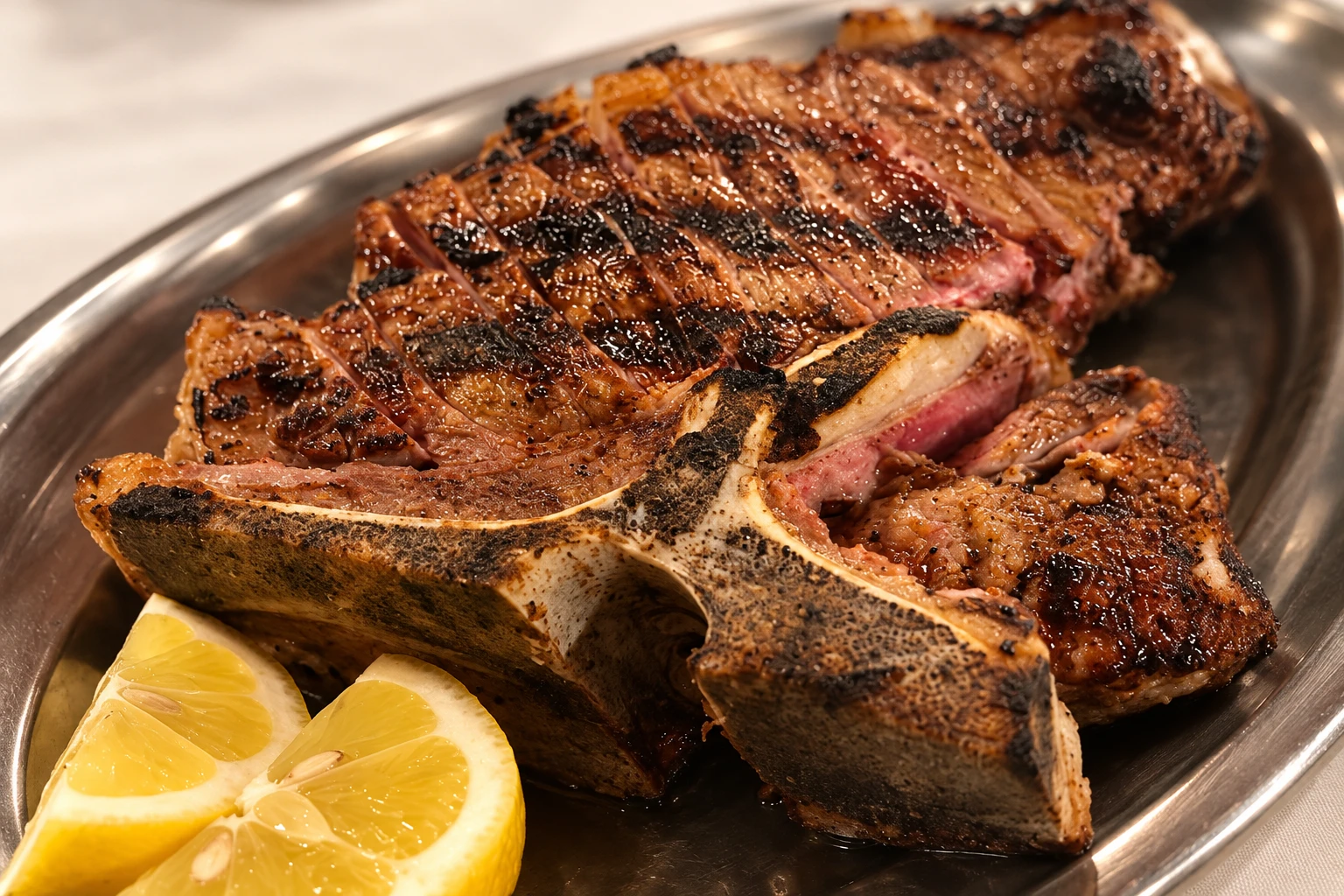
Bistecca alla fiorentina
Thick T-bone beef steak, grilled over embers and served rare, seasoned only with salt and olive oil. It’s named after Florence and is usually ordered to share.
Antarctica
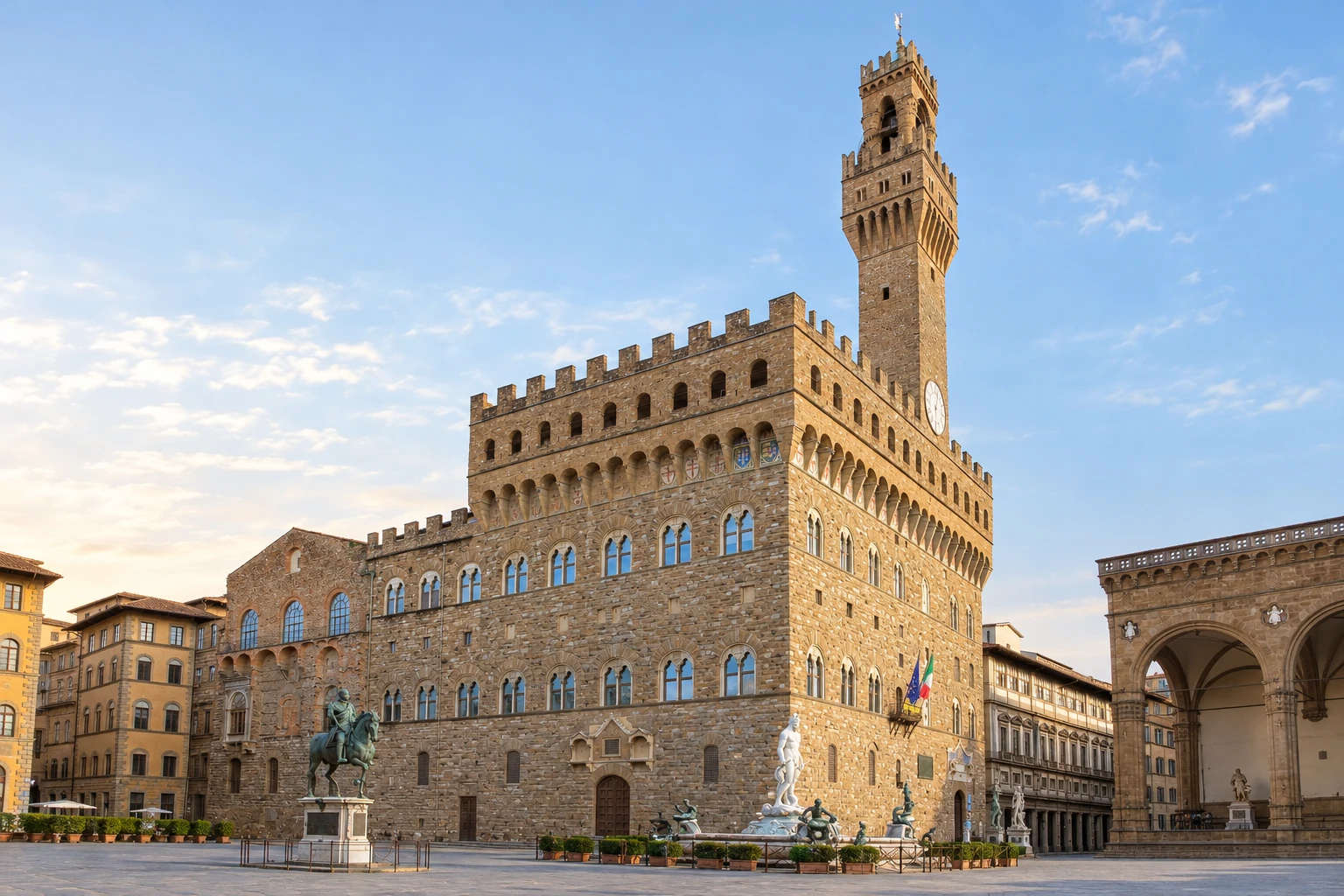
In the photo: Palazzo Vecchio, Florença
Illustrative images. The pictures in this guide are illustrations based on the real place, not photographs, and may differ from it.
The city
Capital of Tuscany and birthplace of the Renaissance, Florença concentrates in a small historic center the Duomo with Brunelleschi's dome, the Galleria degli Uffizi, the Davi of the Galleria dell'Accademia, the Palazzo Vecchio and the Ponte Vecchio. On the other side of the Arno are the Palazzo Pitti, the Giardino di Boboli and the viewpoints of the Piazzale Michelangelo and San Miniato al Monte.
30 places to stay in Florence.
30 places to eat in Florence.
Hotéis e restaurantes da cidade no mapa.
how to get there · how many days · itinerary · questions
Flavors of Italy

Thick T-bone beef steak, grilled over embers and served rare, seasoned only with salt and olive oil. It’s named after Florence and is usually ordered to share.

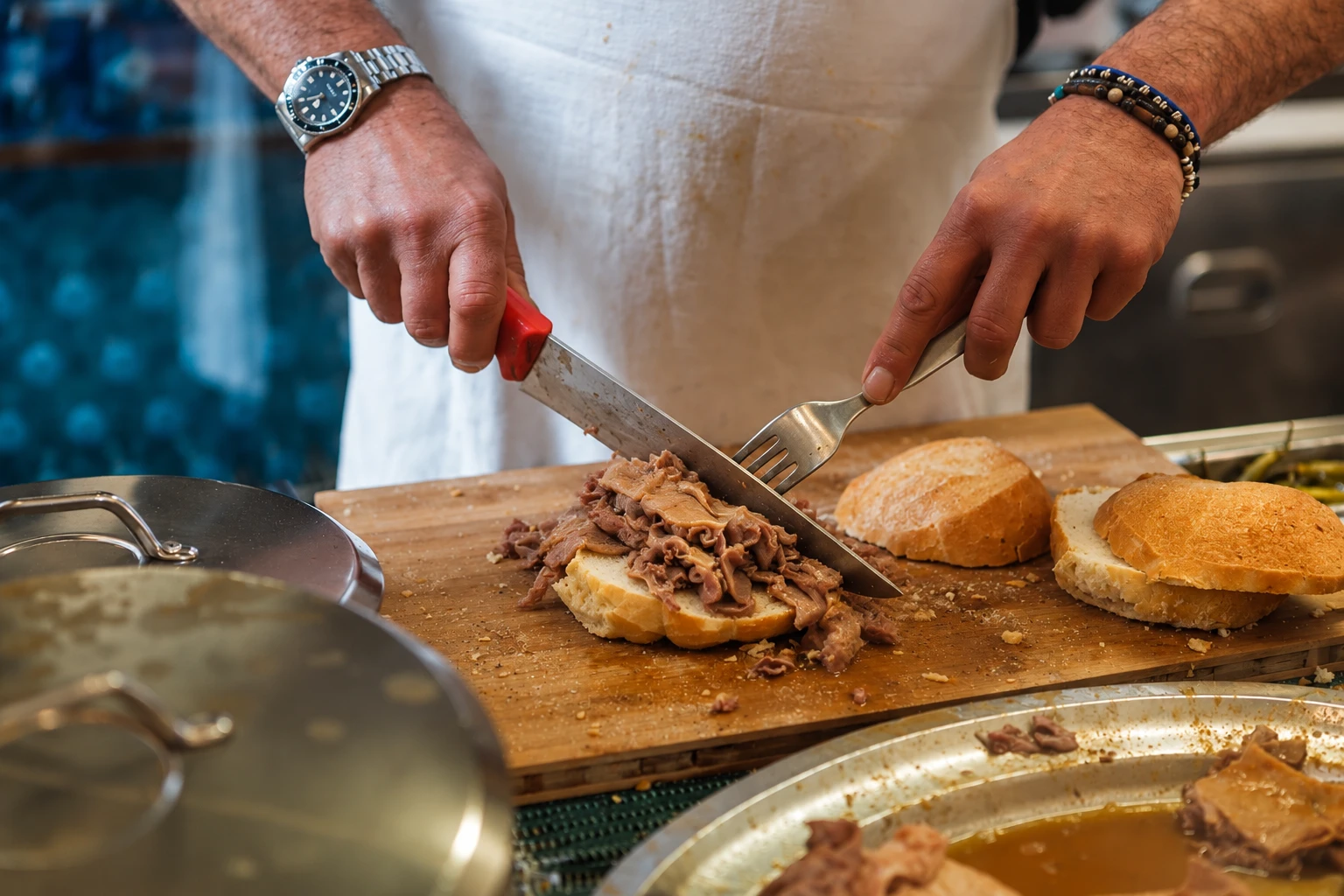
Lampredotto sandwich — the cow’s fourth stomach, slowly cooked in broth and served on a round roll with a green or spicy sauce. It’s Florence’s most typical street food, sold at trippai stalls.
Festivals and events
Dates change every year: check this year's date before you travel.
March/AprilOn Easter Sunday morning.
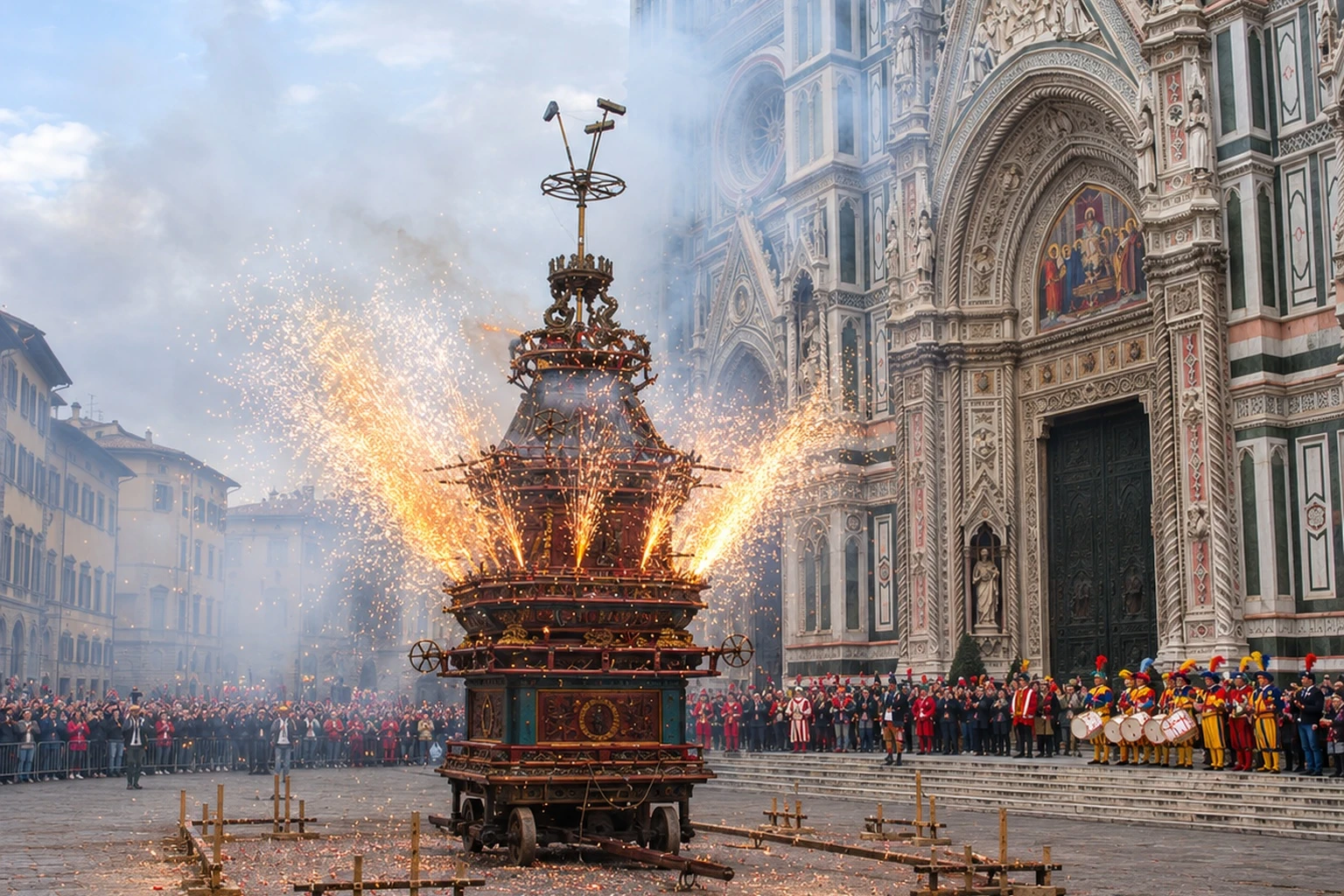
On Easter morning, a tall, ornate cart called the Brindellone is brought to the square in front of Florence Cathedral. During Mass, a mechanical dove is lit at the altar and travels along a wire to the cart, setting off a fireworks display in a tradition that dates back nine centuries.
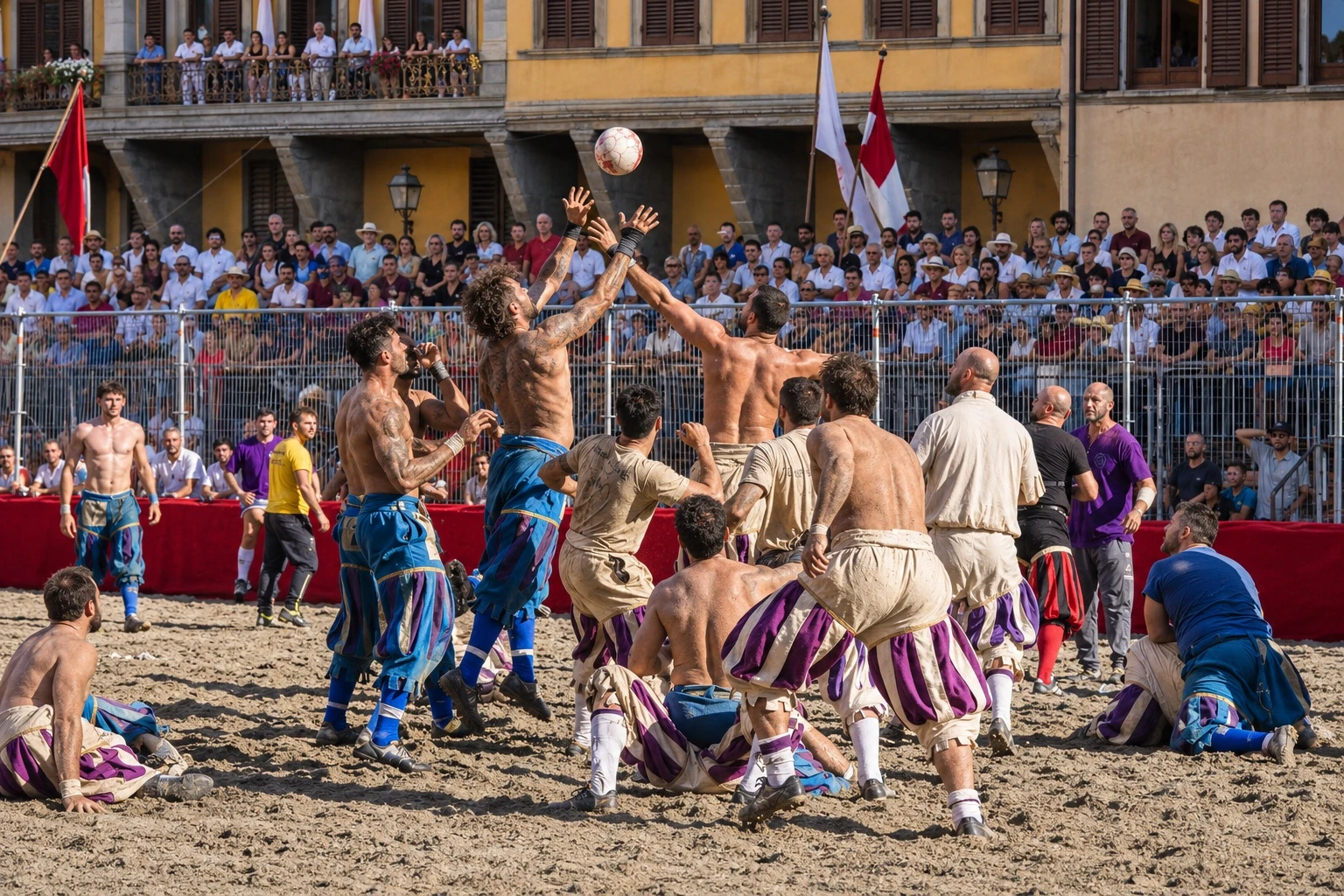
JuneIn June. The final is on June 24, the feast day of St. John, Florence’s patron saint.
In June, Piazza Santa Croce in Florence becomes a sand arena for Calcio Storico, a Renaissance ball game played by the city’s four historic districts. The final takes place on the feast day of St. John, the city’s patron saint, and the celebrations end with fireworks that night.
The local experience
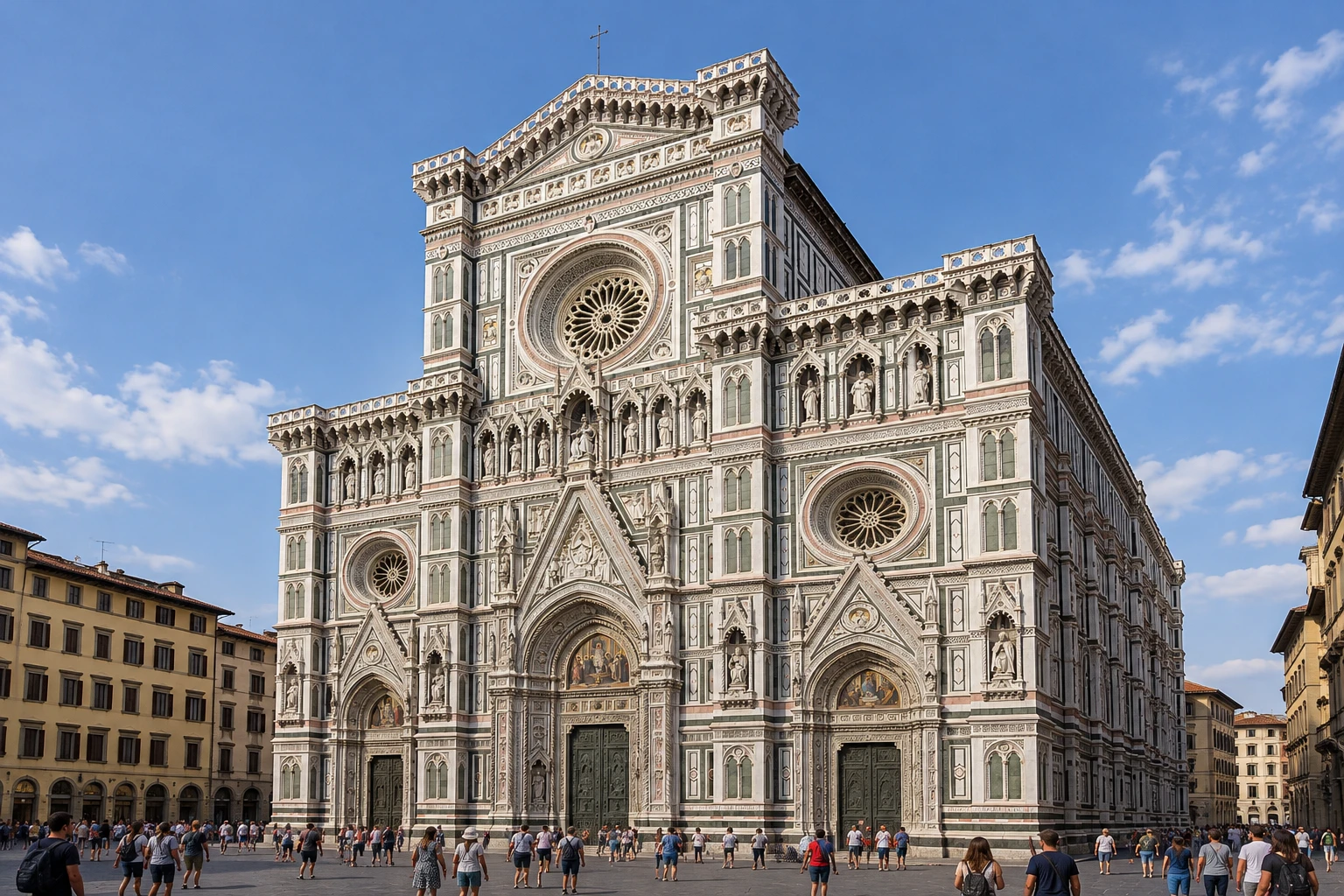
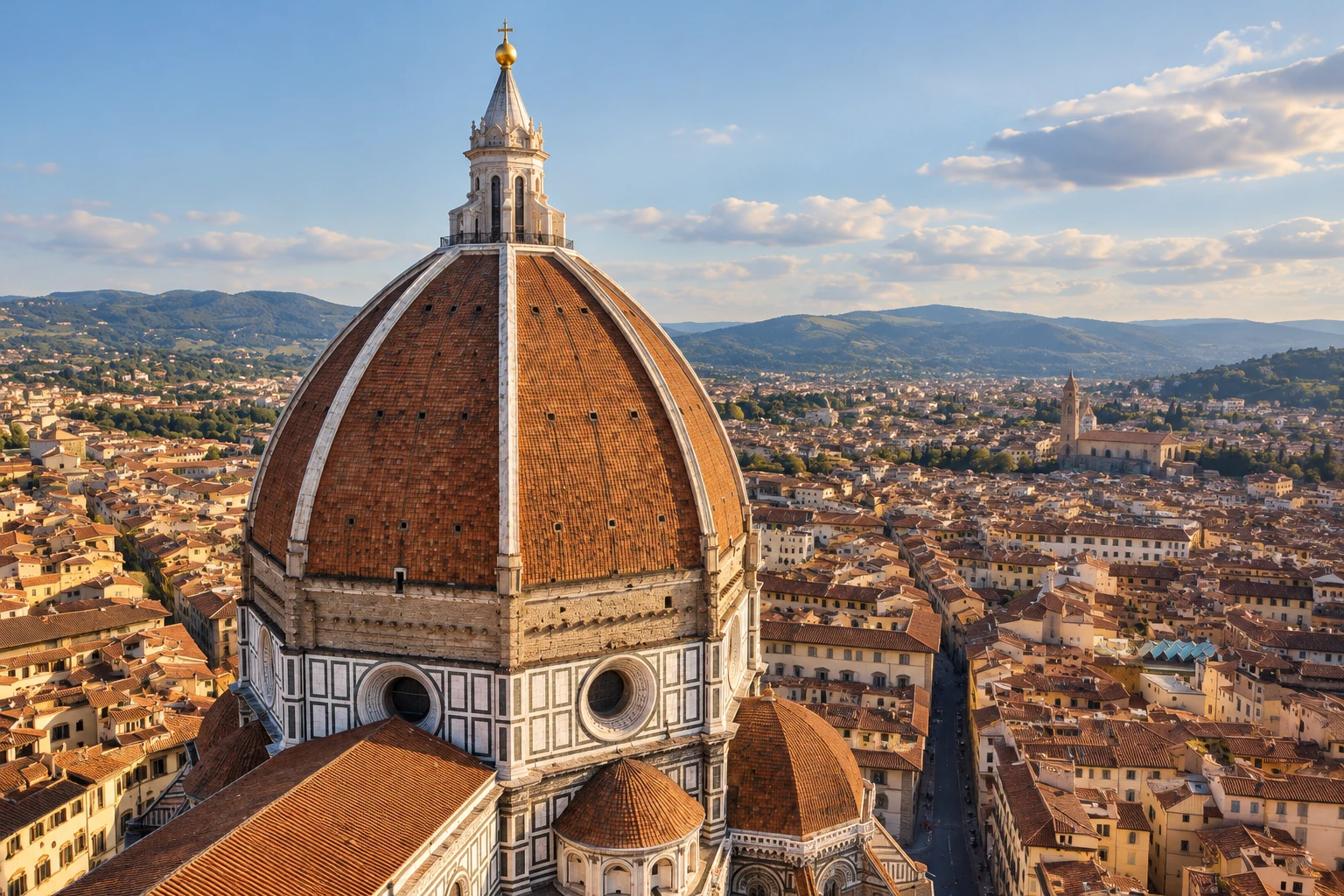
The cathedral of Florença, with a white, green and pink marble façade and Brunelleschi's dome. Under the floor are the ruins of the former church of Santa Reparata.
The brick dome built by Filippo Brunelleschi between 1420 and 1436, without wooden centering. The climb has 463 steps and ends on the lantern terrace.
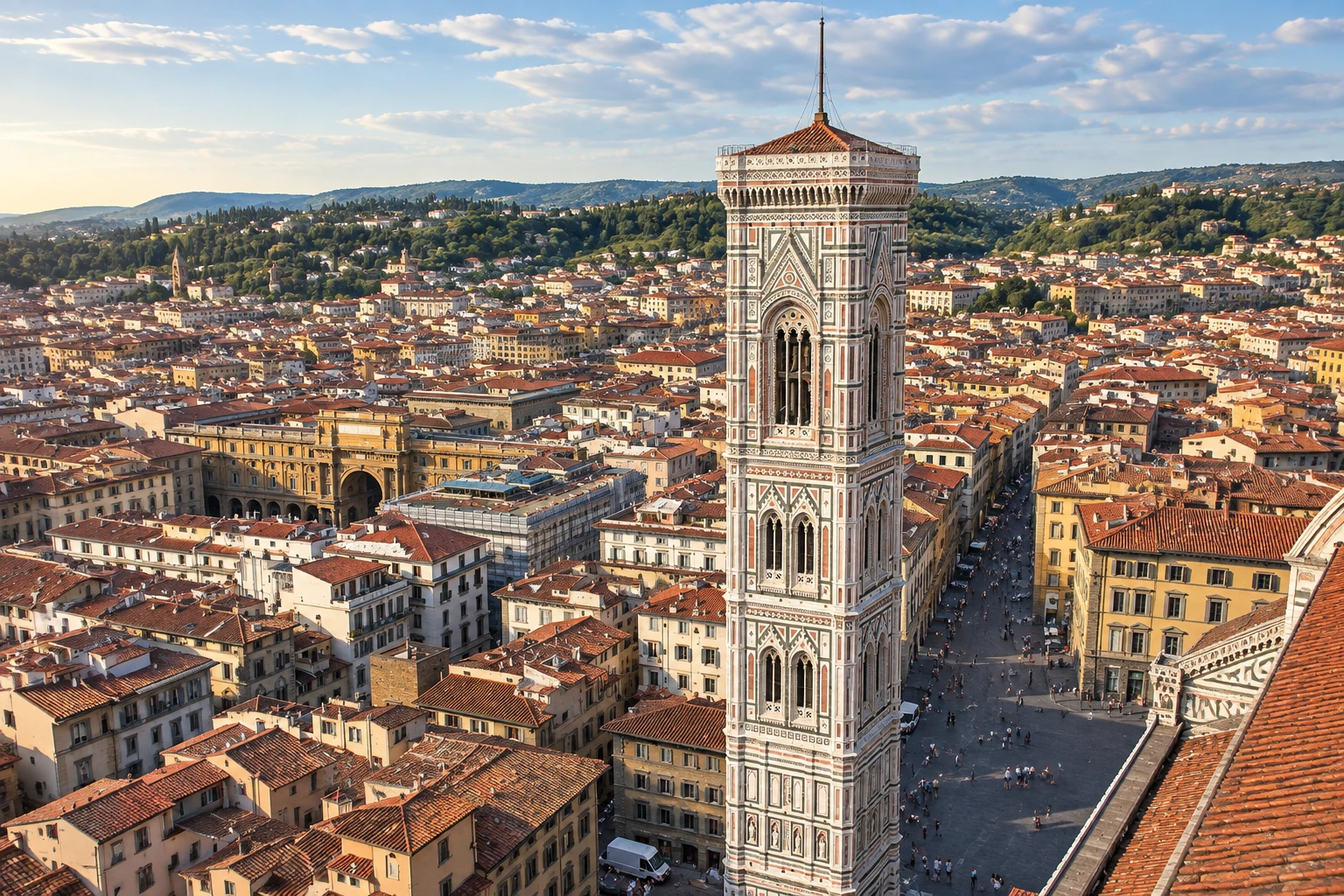
Duomo bell tower, 84.7 meters tall and clad in polychrome marble. Designed by Giotto in the 14th century, it has 414 steps to the terrace.
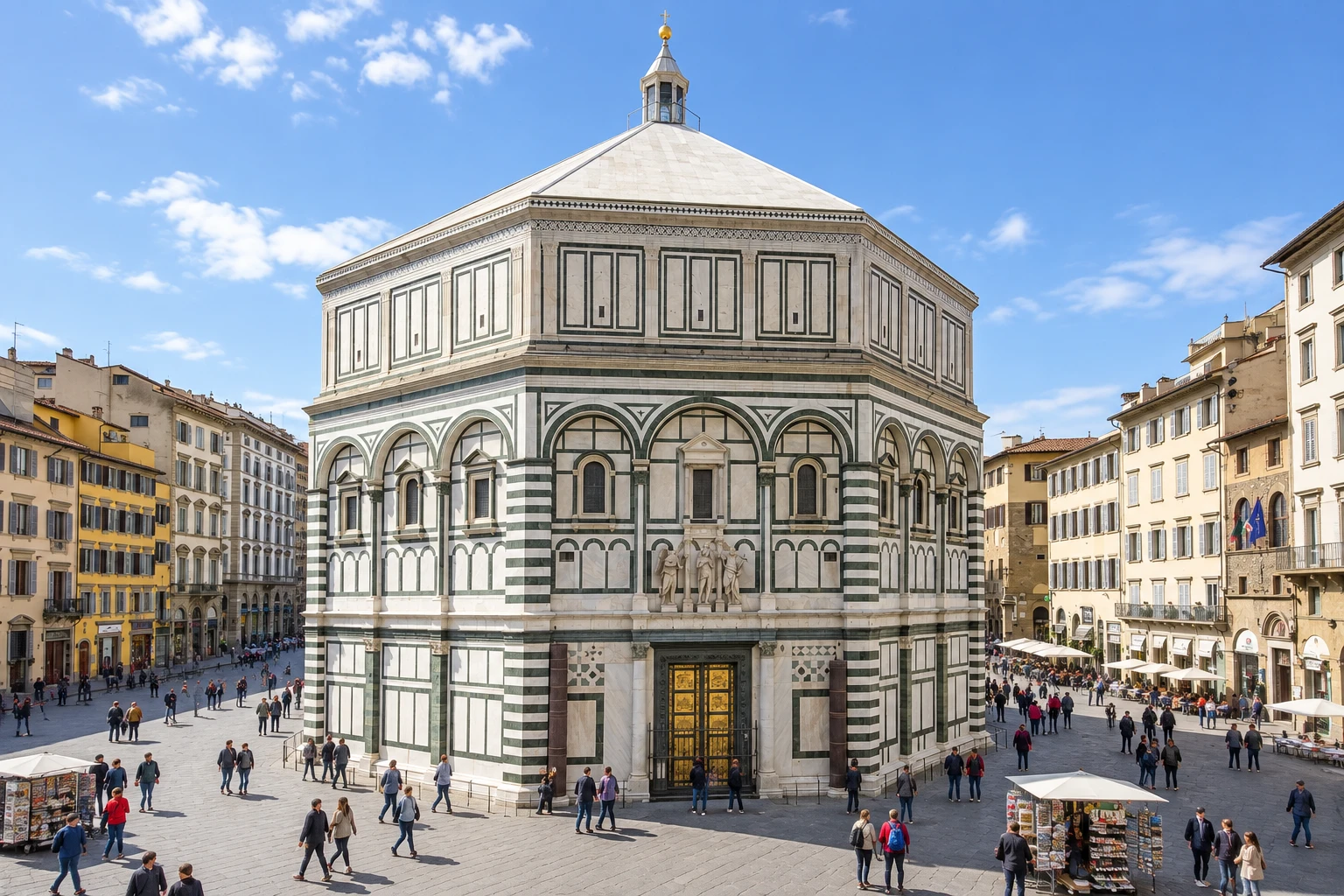
Octagonal baptistery in front of the cathedral, with bronze doors by Andrea Pisano and Lorenzo Ghiberti and an interior dome covered with medieval mosaics.
Before you go
Florence – Italy Destination Florence Capital
Approximate distances. Check flights and bus, train or boat schedules before you travel.
Connections from Brazil usually involve a stopover in another city. Confirm before buying. From Rome, the high-speed train reaches Firenze Santa Maria Novella station in about 1h30; from Milan, in about 2 hours. Peretola airport is linked to the center by tram, and Pisa airport by train.
Two days cover Duomo, Uffizi, Accademia, Signoria, Ponte Vecchio and Piazzale Michelangelo. With three days you can include the Palazzo Pitti, Boboli, Santa Croce, the Bargello and the Oltrarno. Add one day for each day trip: Fiesole, Chianti, Siena or Pisa.
April, May, September and October tend to be the most pleasant months. From June to August the heat is strong and lines increase. Winter, from December to February, is cold and quieter. Lunch is typically served around 12:30–14:30 and dinner from 19:30.
The seasons shown are the most usual ones; nature doesn't always follow the calendar.
No. The historic center is a ZTL (limited traffic zone) closed to outside cars, and everything is done on foot. To Fiesole there is a city bus; to Siena and Pisa, train or bus. A car is only useful for driving around the Chianti: pick it up at the city's exit and do not enter the center.
Suggested itinerary
Built with the places on this page. No rush: it's paced so you have time to see them.
Start early in the Piazza del Duomo. Enter the Cattedrale di Santa Maria del Fiore and climb the dome at your reserved time. Take a close look at the doors of the Battistero di San Giovanni, right opposite.
Choose one of the two museums and book a time: the Galleria dell'Accademia houses Michelangelo's David; in the Uffizi, Botticelli, Leonardo and Raphael. Have lunch near the Mercato Centrale, in the San Lorenzo neighborhood.
Cross the Piazza della Signoria, pass the statues of the Loggia dei Lanzi and follow the Arno's bank to the Ponte Vecchio, with its jewelry shops hanging over the river.
Walk up through the San Niccolò neighborhood or take the bus to the Piazzale Michelangelo to see the city from above at dusk. Dine in the Oltrarno; dinner starts at around 19:30.
Day 1
Cathedral, climb of the dome with a timed entry and the Battistero di San Giovanni. If you have the energy, also climb the Campanile di Giotto.
See the David at the Galleria dell'Accademia and then the Basilica di San Lorenzo and the Cappelle Medicee, including Michelangelo's Sagrestia Nuova. Break at the Mercato Centrale.
Visit the Basilica di Santa Maria Novella, with Masaccio's Trinity, and walk the streets between the station and the Duomo.
The Piazza di Santa Croce and the surrounding streets are full of trattorias and bars. Try the bistecca alla fiorentina, a thick cut of beef typical of the city.
Day 2
Arrive at your reserved time and allow at least three hours for the Uffizi. The visit starts on the second floor, with the Tuscan primitives and Botticelli's rooms.
Enter the Palazzo Vecchio to see the Salone dei Cinquecento or climb the tower. Then cross the Ponte Vecchio toward the Oltrarno.
Climb up to San Miniato al Monte; late in the afternoon the monks chant vespers in Gregorian chant. Descend to the Piazzale Michelangelo for the sunset.
Dine near the Piazza Santo Spirito, where at night locals and students gather on the basilica steps.
Day 1
Start with the Cattedrale di Santa Maria del Fiore and the timed ascent of the dome. Visit the Battistero di San Giovanni on the way out.
The Museo dell'Opera del Duomo houses Ghiberti's original doors and Michelangelo's Pietà Bandini. Afterwards, the steps of the Campanile di Giotto.
Stroll through the Piazza della Signoria and the Loggia dei Lanzi, with Cellini's Perseus, and along the Arno's bank to the Ponte Vecchio.
Dine in the streets between the Signoria and Santa Croce and finish with a gelato, a strong tradition in the city.
Day 2
A full morning at the Uffizi with a reserved entrance. Those who booked the Corridoio Vasariano continue the route to the Palazzo Pitti.
Visit the Palazzo Vecchio or climb Arnolfo's tower. Nearby, the Museo Nazionale del Bargello houses sculptures by Donatello and Michelangelo.
See Michelangelo's and Galileo's tombs and Giotto's frescoes in the Basilica di Santa Croce.
Go up to the Piazzale Michelangelo to see the city's lights and descend to dine in the San Niccolò neighborhood.
Day 3
Start with the David at the Galleria dell'Accademia and continue to the Cappelle Medicee and the Mercato Centrale.
Cross the Arno to the Palazzo Pitti and walk the terraces of the Giardino di Boboli.
Take bus 7 from Santa Maria Novella station to Fiesole, see the Roman theater and the view of Florença from the hilltop.
Back in the city, dine in the Oltrarno, near the Piazza Santo Spirito.
Check before you go. Opening hours and days change, and places may close for renovations, holidays or events. This itinerary is a suggestion from Cidade Turismo, not a commitment: plan yours by checking directly with each place you intend to visit.
Before you go
By high-speed train, with Trenitalia or Italo, between Roma Termini and Firenze Santa Maria Novella, in about 1h30. Florença's station is in the center, a 10-minute walk from the Duomo.
The T2 tram links Peretola airport to the Unità stop, next to Santa Maria Novella station, in about 20 minutes. Tickets must be validated on boarding.
Timed reservations are highly recommended for the Galleria degli Uffizi and the Galleria dell'Accademia, and mandatory to climb Brunelleschi's dome. The Palazzo Vecchio, the tower and the Palazzo Pitti also accept online booking.
The Uffizi, Galleria dell'Accademia, Palazzo Pitti, Bargello and Cappelle Medicee usually close on Mondays. The Palazzo Vecchio and the Duomo complex are open. Confirm before planning your itinerary.
Yes. Siena, Pisa, Lucca and San Gimignano are one to two hours away by train or bus. Pisa and Lucca have frequent regional trains; Siena has train and bus; San Gimignano usually requires a bus with a transfer.
Italy is 4 or 5 hours ahead of Brasília, depending on the time of year, due to European daylight saving time.
Routes in Italy
About 130 km on foot across the Apennines, from Bologna’s porticoes to Florence’s city centre, passing through woodlands, ancient paved sections and villages of the Mugello.