Bistecca alla fiorentina
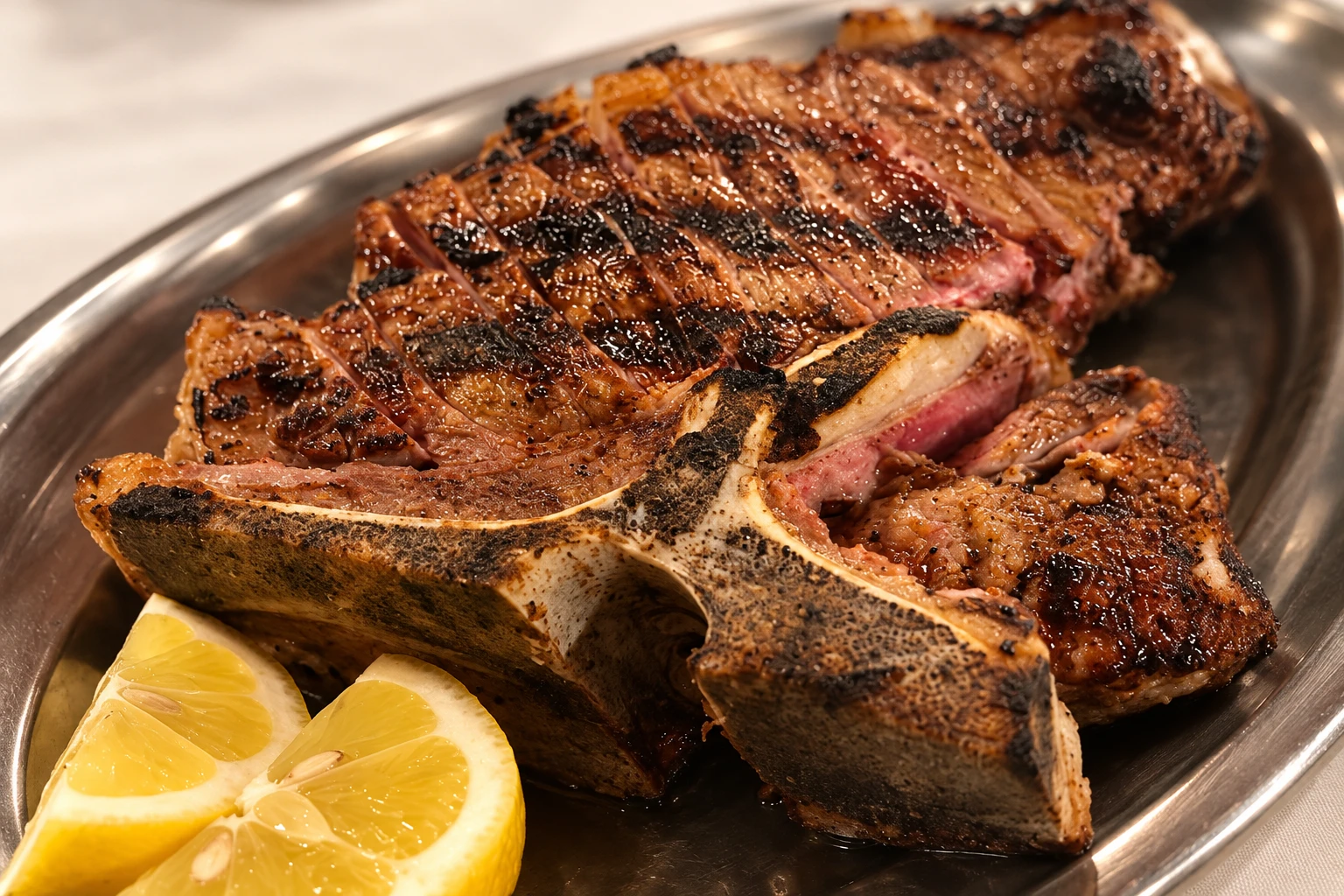
Thick T-bone beef steak, grilled over embers and served rare, seasoned only with salt and olive oil. It’s named after Florence and is usually ordered to share.
Antarctica
Popular festival · Florence
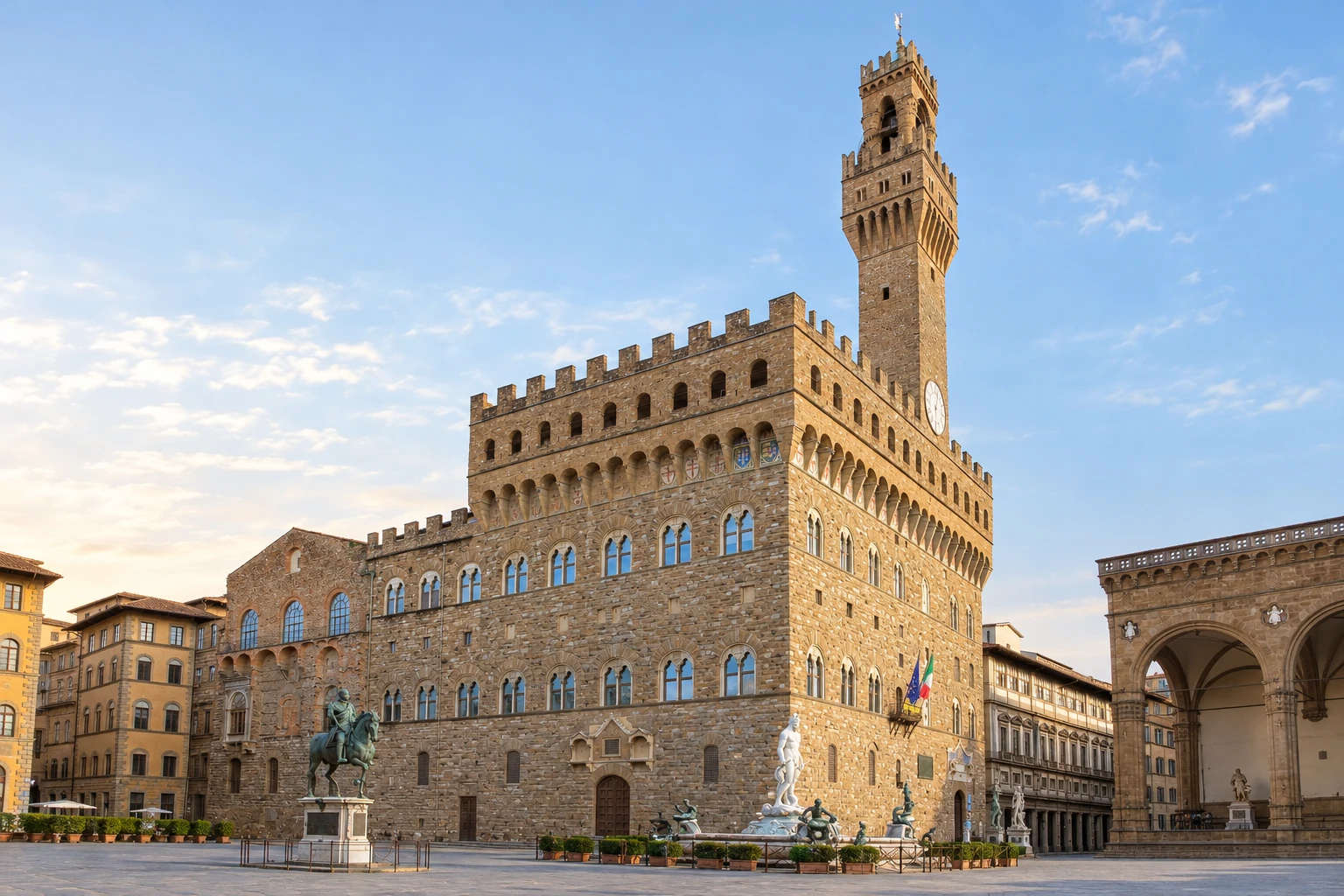
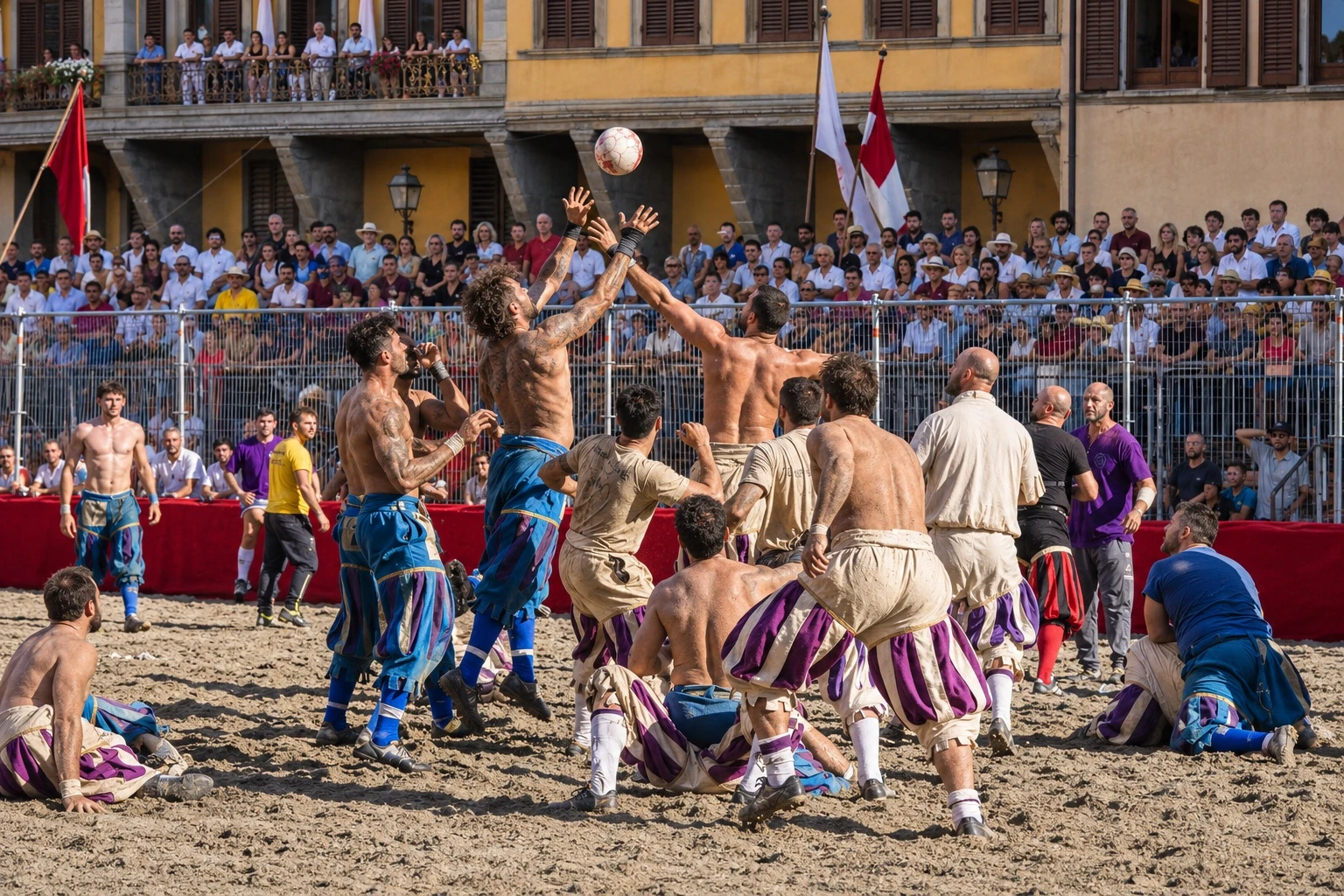
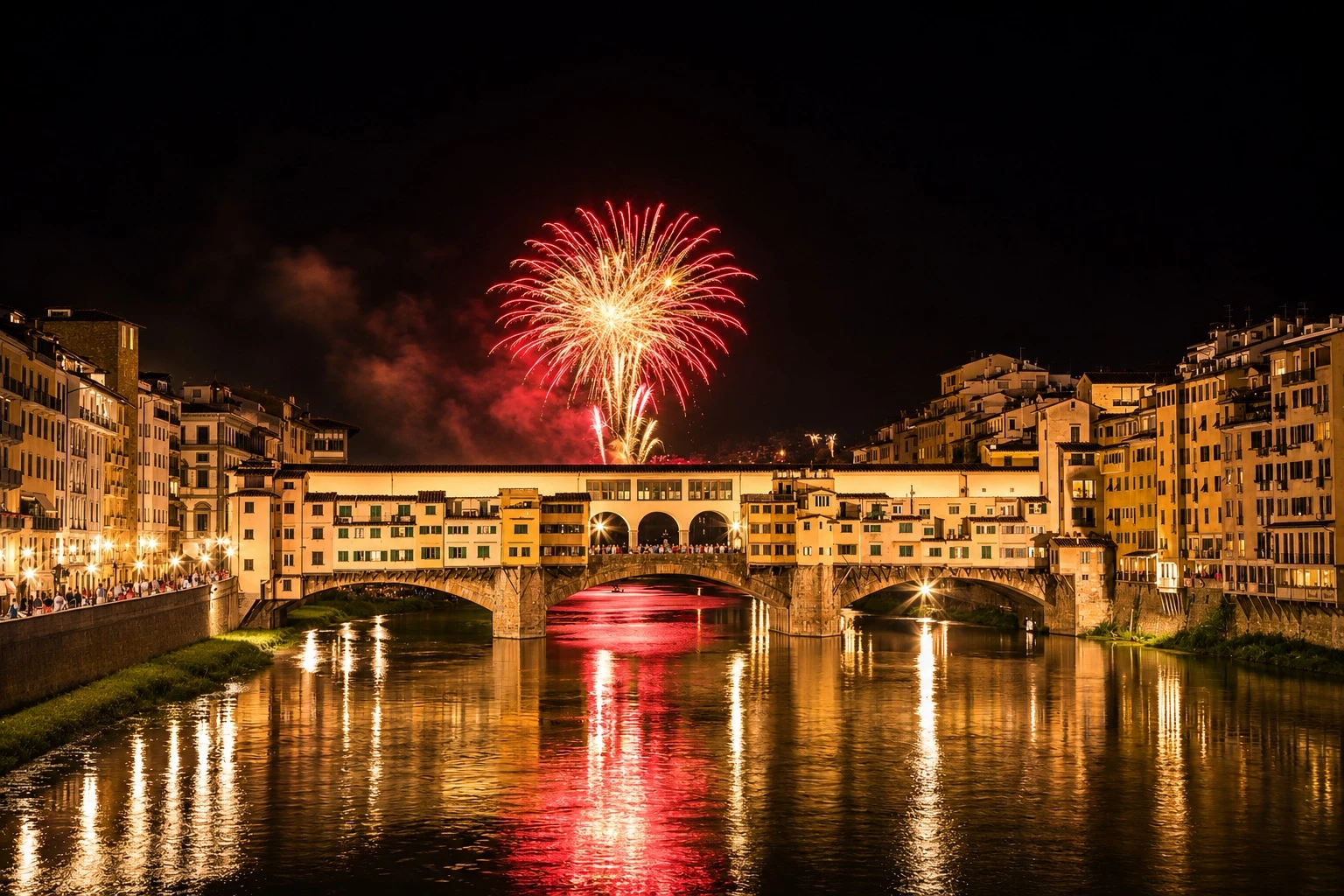
In June, Piazza Santa Croce in Florence becomes a sand arena for Calcio Storico, a Renaissance ball game played by the city’s four historic districts. The final takes place on the feast day of St. John, the city’s patron saint, and the celebrations end with fireworks that night.
In the photo: Florence
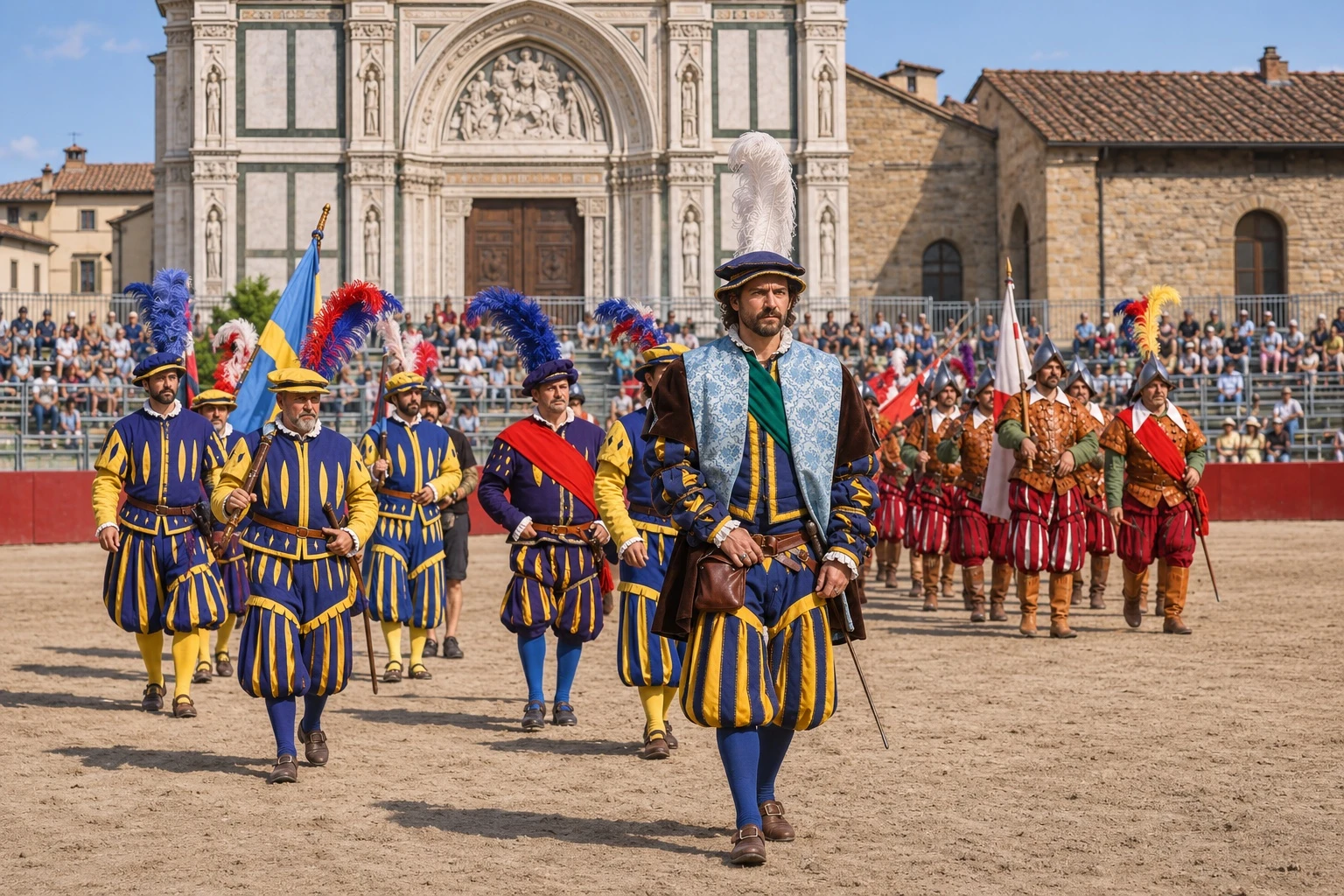
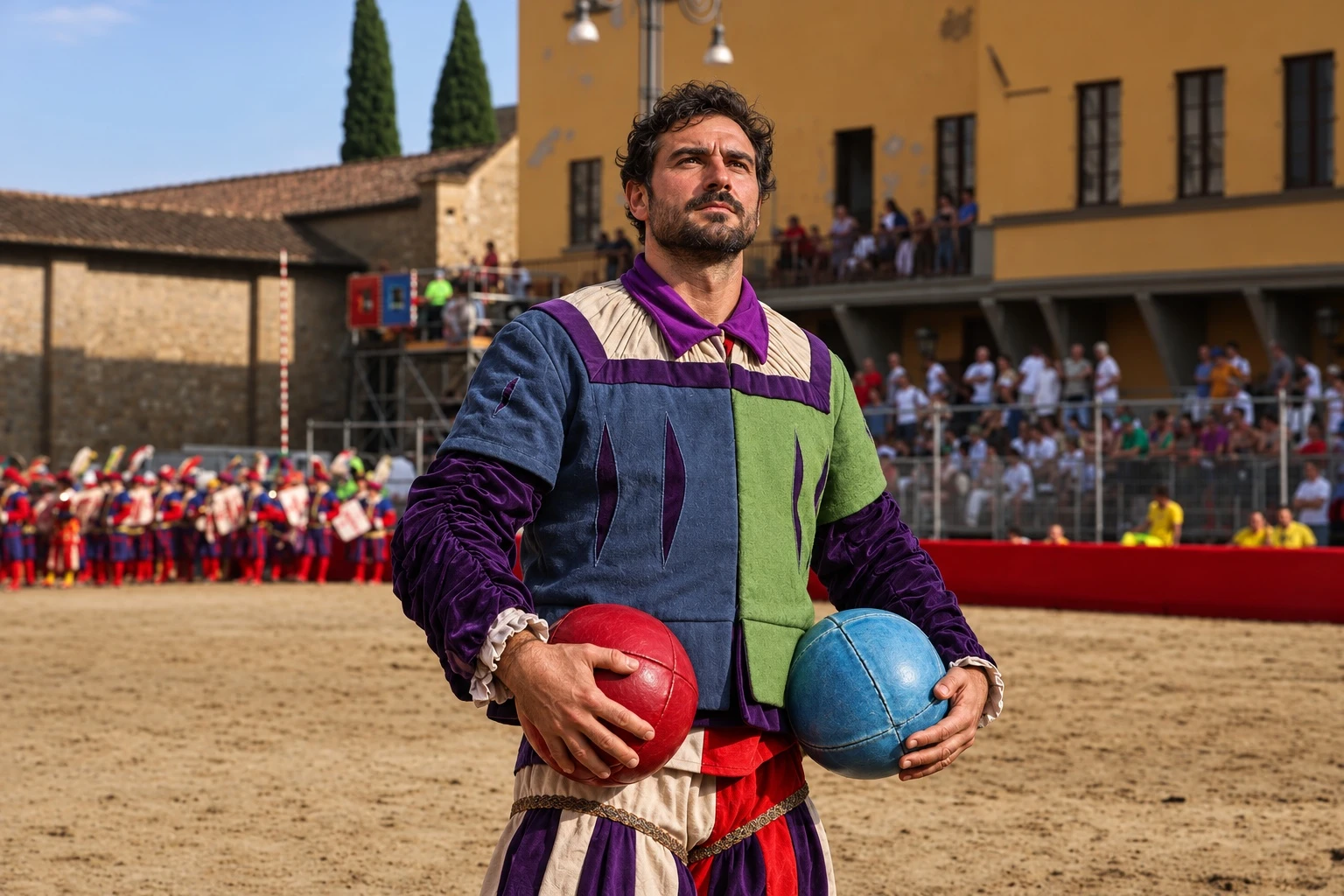
Illustrative images. The pictures in this guide are illustrations based on the real place, not photographs, and may differ from it.
Click the picture to enlarge it.
Calcio Storico Fiorentino — Florence
In June. The final is on June 24, the feast day of St. John, Florence’s patron saint.
June
Dates change every year: check this year's date before you travel.
The festival
Calcio Storico is a ball game that combines soccer, rugby, and wrestling. It has been played in Florence since the Renaissance. The story goes that in February 1530, while the imperial army had the city under siege, the Florentines played a match in Piazza Santa Croce to show the enemy they were not afraid.
Today, the tournament brings together teams from the city’s four historic districts: the Blues of Santa Croce, the Whites of Santo Spirito, the Reds of Santa Maria Novella, and the Greens of San Giovanni. Each team has 27 players, known as calcianti, who wear period clothing. The two semifinals take place in June, and the final is usually held on June 24, the feast day of St. John the Baptist, Florence’s patron saint.
Before each match, hundreds of participants in Renaissance clothing take part in a procession representing the old Florentine Republic. They make their way through the city center to the square, which is covered in sand and lined with stands. During the game, each team tries to get the ball to the far end of the opposing team’s half to score a caccia. The traditional prize is a Chianina heifer.
On June 24, the city celebrates its patron saint with the procession, the final, and, that night, the St. John’s Day fireworks over the Arno River.
It’s worth the trip to see Florence on its feast day, with neighborhood pride on display in Piazza Santa Croce and fireworks at night.
The Florentine Republic procession through the streets of the city center to Santa Croce. The June 24 final in the sand arena in front of the basilica. The St. John’s Day fireworks over the Arno on the night of June 24.
Check the guidelines for spectators in the stands ahead of time. To see the procession, choose a spot along the route to Piazza Santa Croce. In June, bring water and a hat.
Check the city’s official channels for semifinal dates and ticket information. Book your accommodation early for June 24.
In the city
Flavors of Italy

Thick T-bone beef steak, grilled over embers and served rare, seasoned only with salt and olive oil. It’s named after Florence and is usually ordered to share.

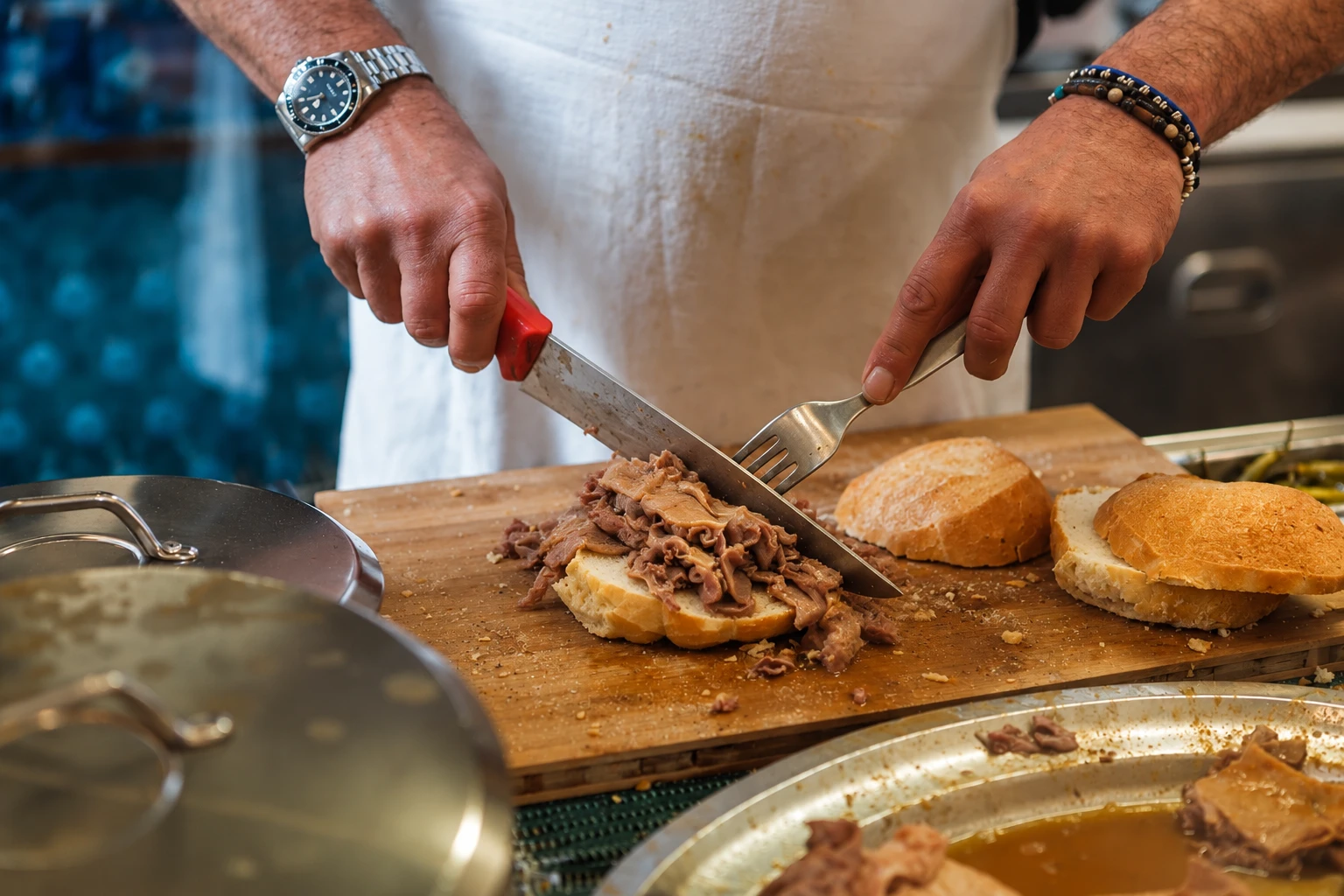
Lampredotto sandwich — the cow’s fourth stomach, slowly cooked in broth and served on a round roll with a green or spicy sauce. It’s Florence’s most typical street food, sold at trippai stalls.
June
Your questions
On June 24, the feast day of St. John, Florence’s patron saint. The semifinals take place a few days earlier in June.
Teams from the four historic districts: the Blues of Santa Croce, the Whites of Santo Spirito, the Reds of Santa Maria Novella, and the Greens of San Giovanni.
In Piazza Santa Croce, which is covered in sand and lined with stands for the tournament.
Festivals and events in Italy
January/February/MarchAbout two and a half weeks before Lent, between late January and early March, depending on the date of Easter; the last day is Fat Tuesday.
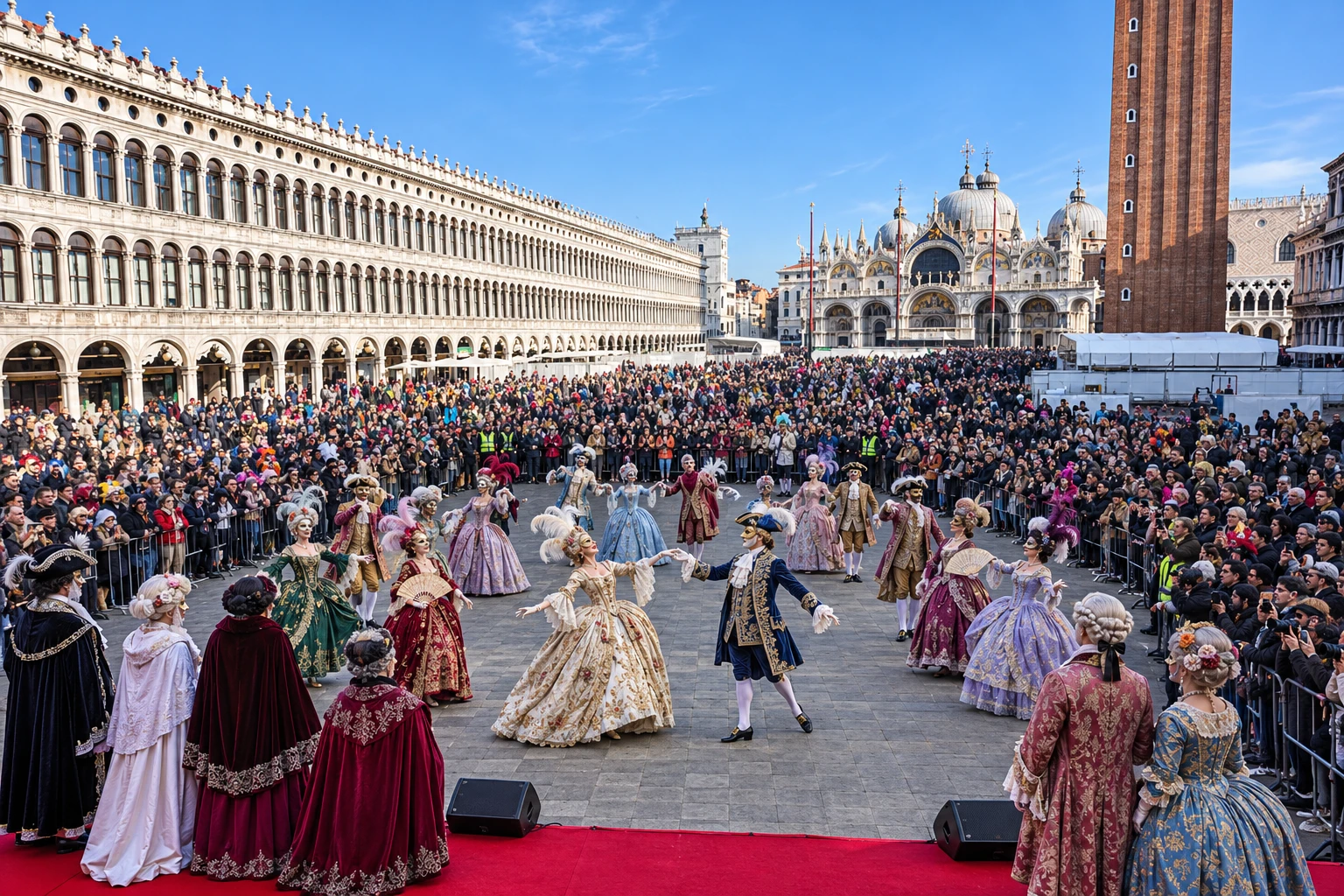
The Venice Carnival takes over the city in the weeks before Ash Wednesday, with masks and period costumes in the streets, processions on the water, the Festa delle Marie and costume parades in St. Mark’s Square.
January/February/MarchIn February, though parades may also take place in late January or early March, depending on the Carnival calendar.
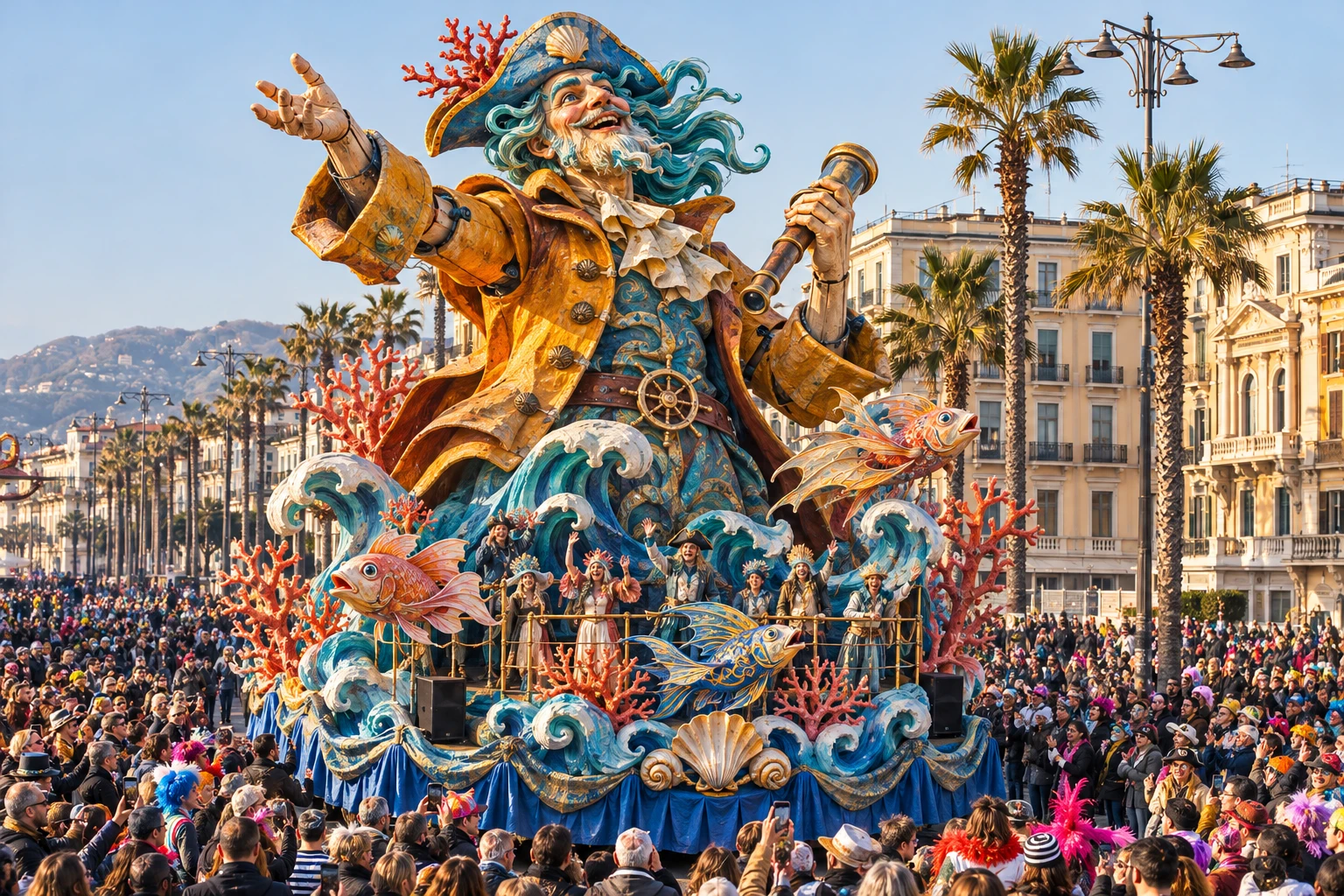
In Viareggio, on the Tuscan coast, Carnival is a month of parades. Giant papier-mâché floats make their way along the seafront promenade through crowds in costume, with moving figures that satirize politics and social customs.
February/MarchIn the weeks leading up to Lent, with the Battle of the Oranges running from Sunday through Shrove Tuesday.
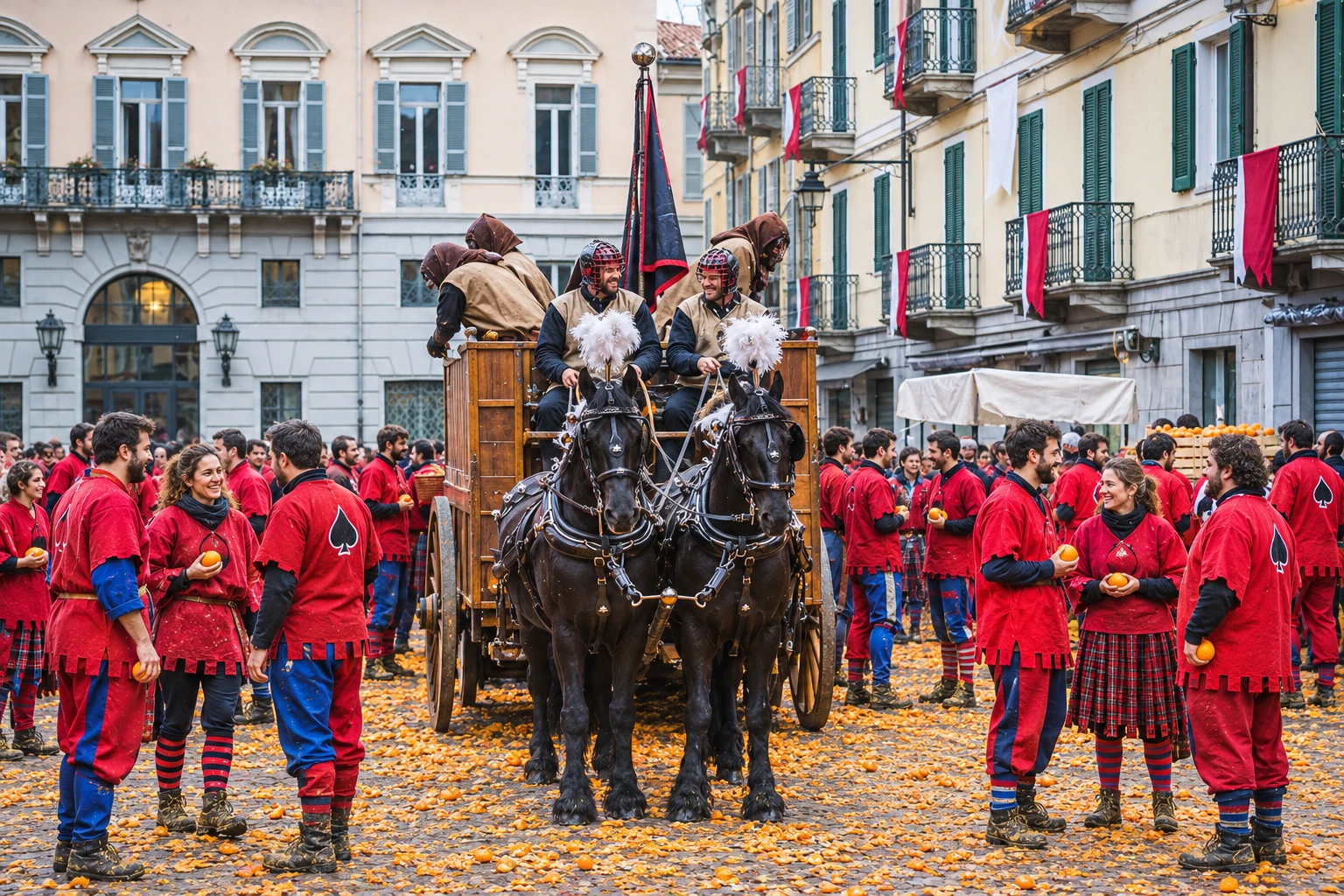
In Ivrea, in Piedmont, the carnival commemorates the medieval town’s revolt against its tyrant. It features historical processions, the Miller, who is the heroine of the carnival, and the famous Battle of the Oranges, in which teams on foot trade volleys of oranges with riders in horse-drawn carts in the town squares.
March/AprilOn Easter Sunday morning.
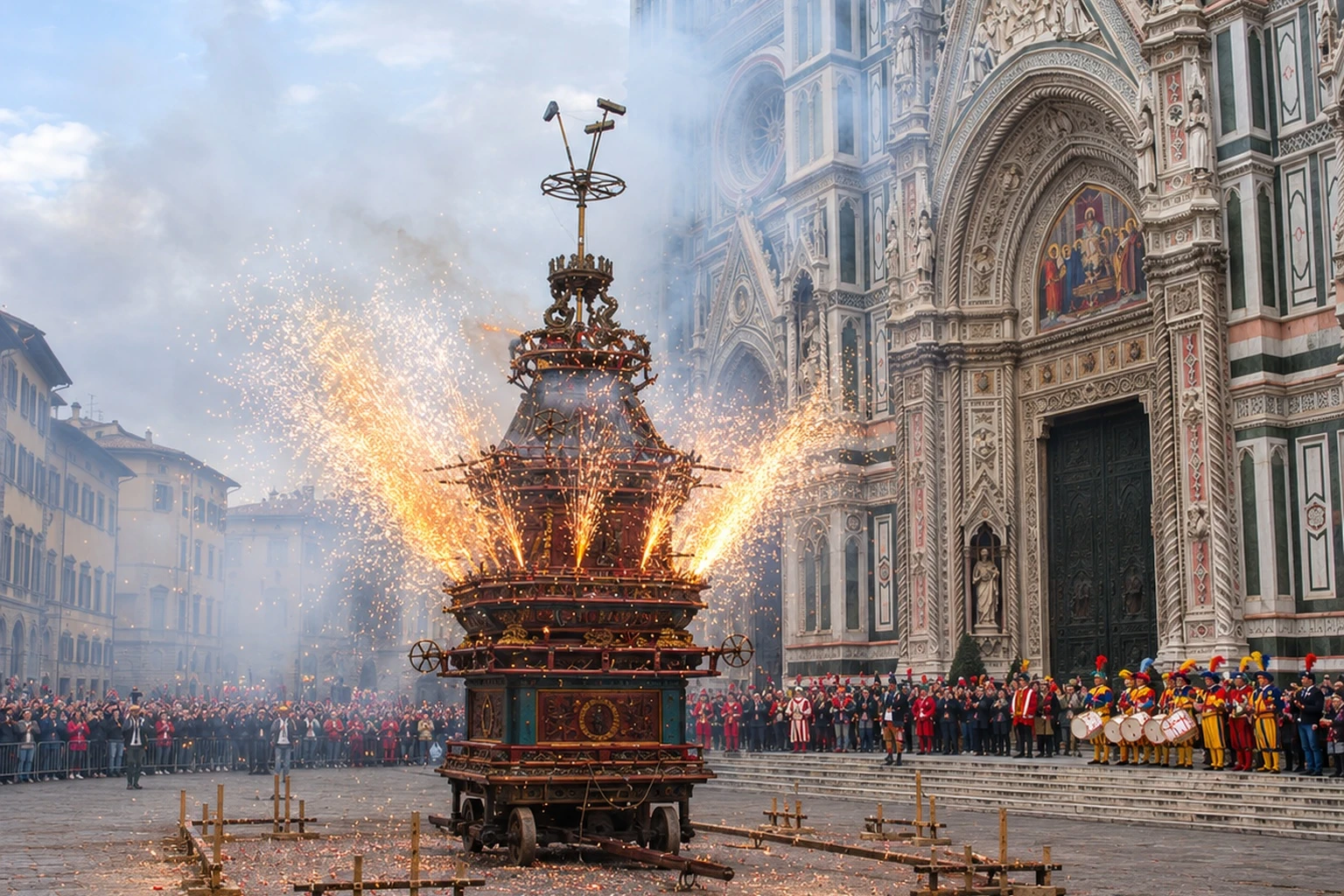
On Easter morning, a tall, ornate cart called the Brindellone is brought to the square in front of Florence Cathedral. During Mass, a mechanical dove is lit at the altar and travels along a wire to the cart, setting off a fireworks display in a tradition that dates back nine centuries.
MayMay 1–4. The main procession takes place on May 1.
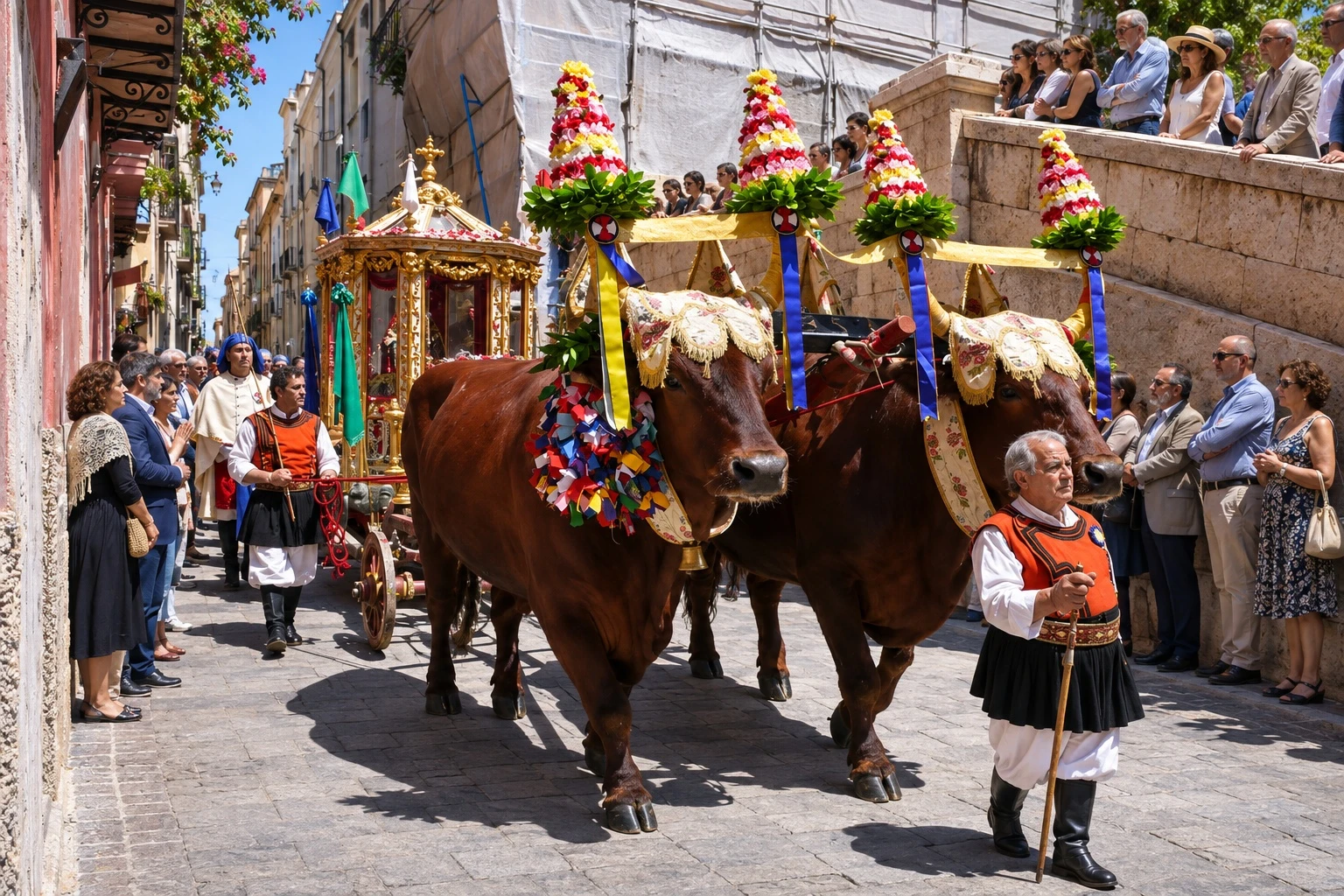
On May 1, Cagliari fulfills a vow it made during the plague of the 17th century. The statue of Sant'Efisio sets out in an ox-drawn carriage, accompanied by decorated carts, riders on horseback, and groups from across Sardinia wearing their traditional dress. The statue then continues on pilgrimage to Nora.
MayThroughout May, with the races on the last weekend of the month.
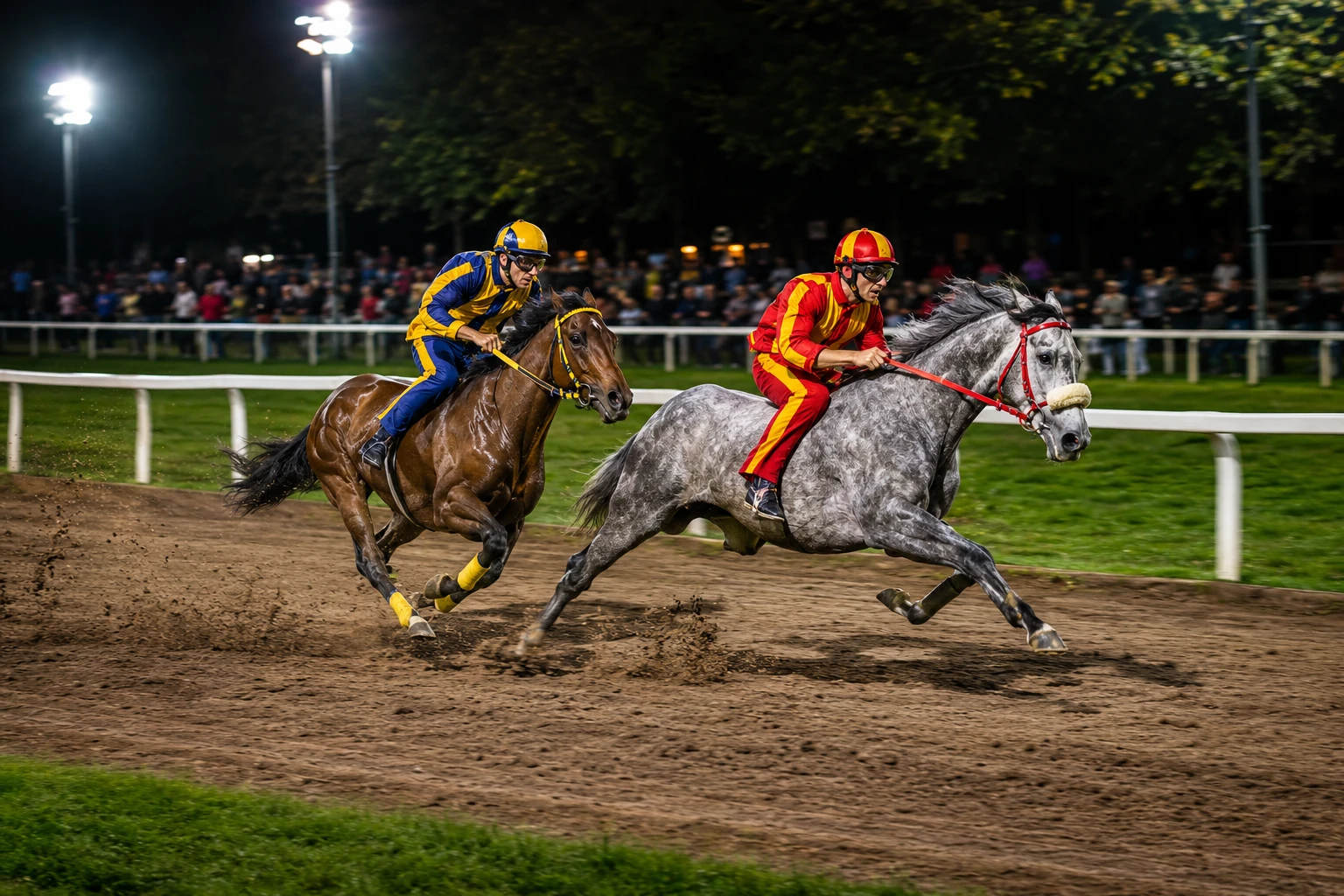
In May, Ferrara’s eight districts, known as contrade, fill the city with Renaissance processions, flag-throwing displays and competitions. The festivities culminate in races in Piazza Ariostea on the last weekend of the month, part of a palio that the city describes as the oldest in the world.