Bistecca alla fiorentina
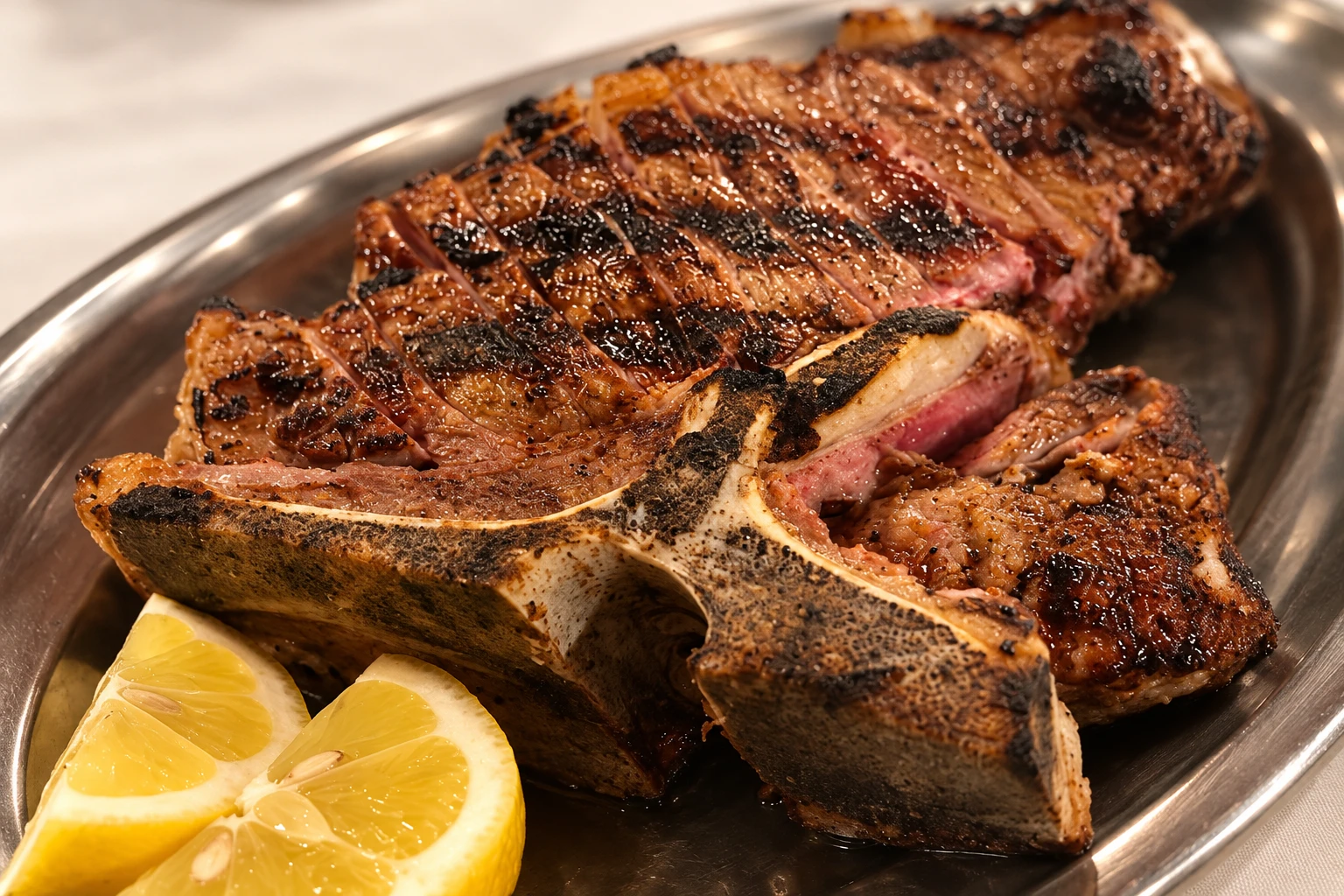
Thick T-bone beef steak, grilled over embers and served rare, seasoned only with salt and olive oil. It’s named after Florence and is usually ordered to share.
Antarctica
Religious festival · Florence
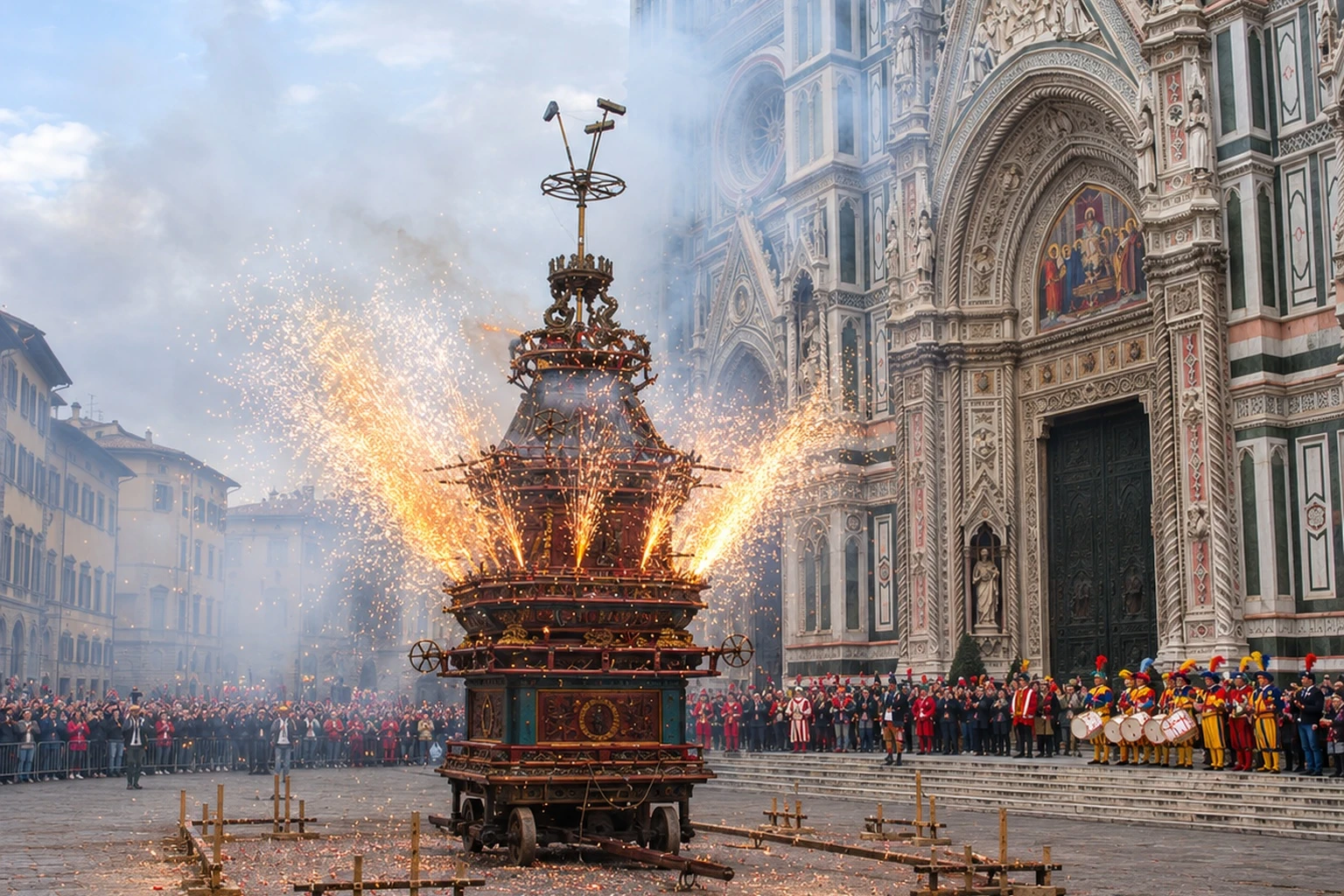
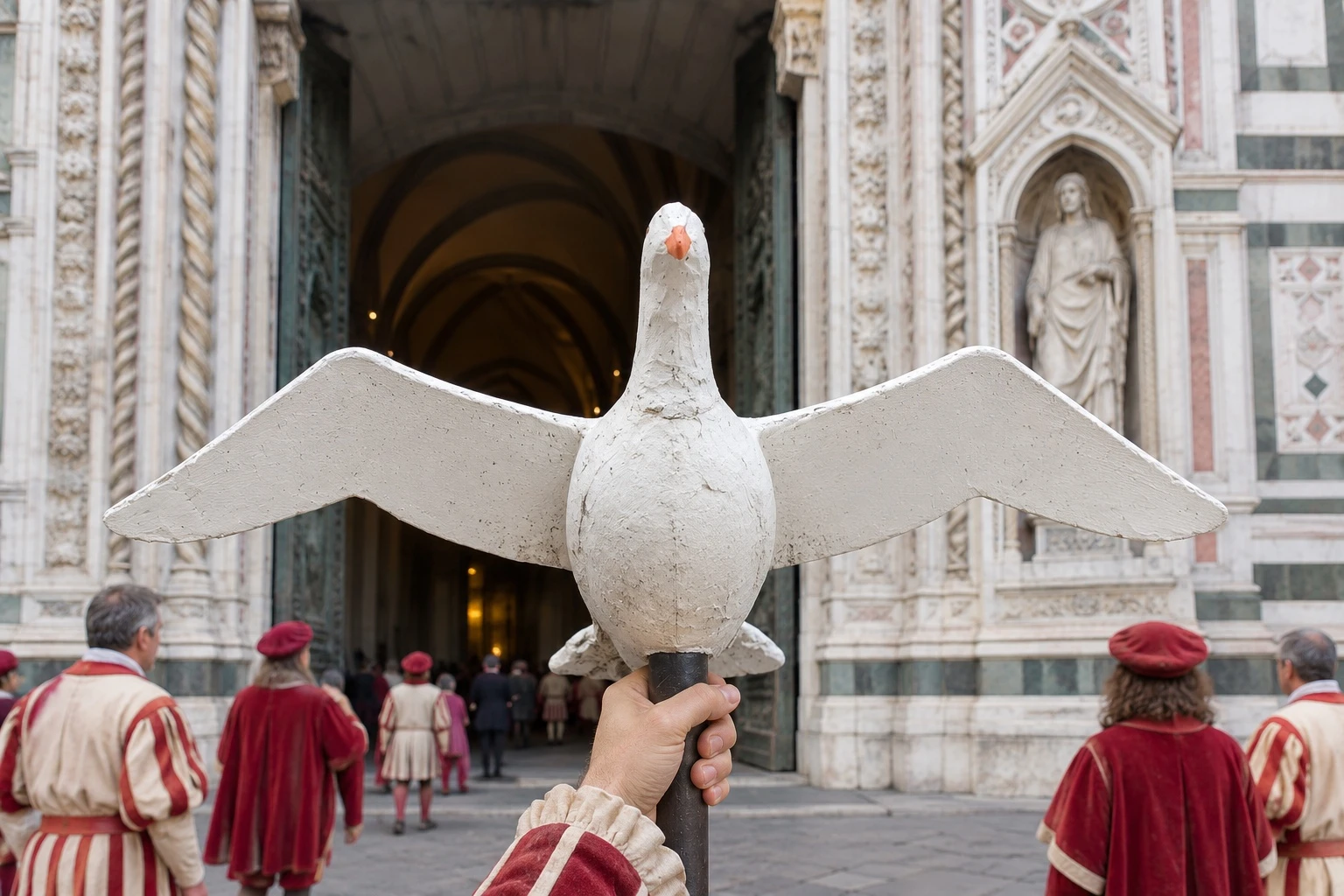
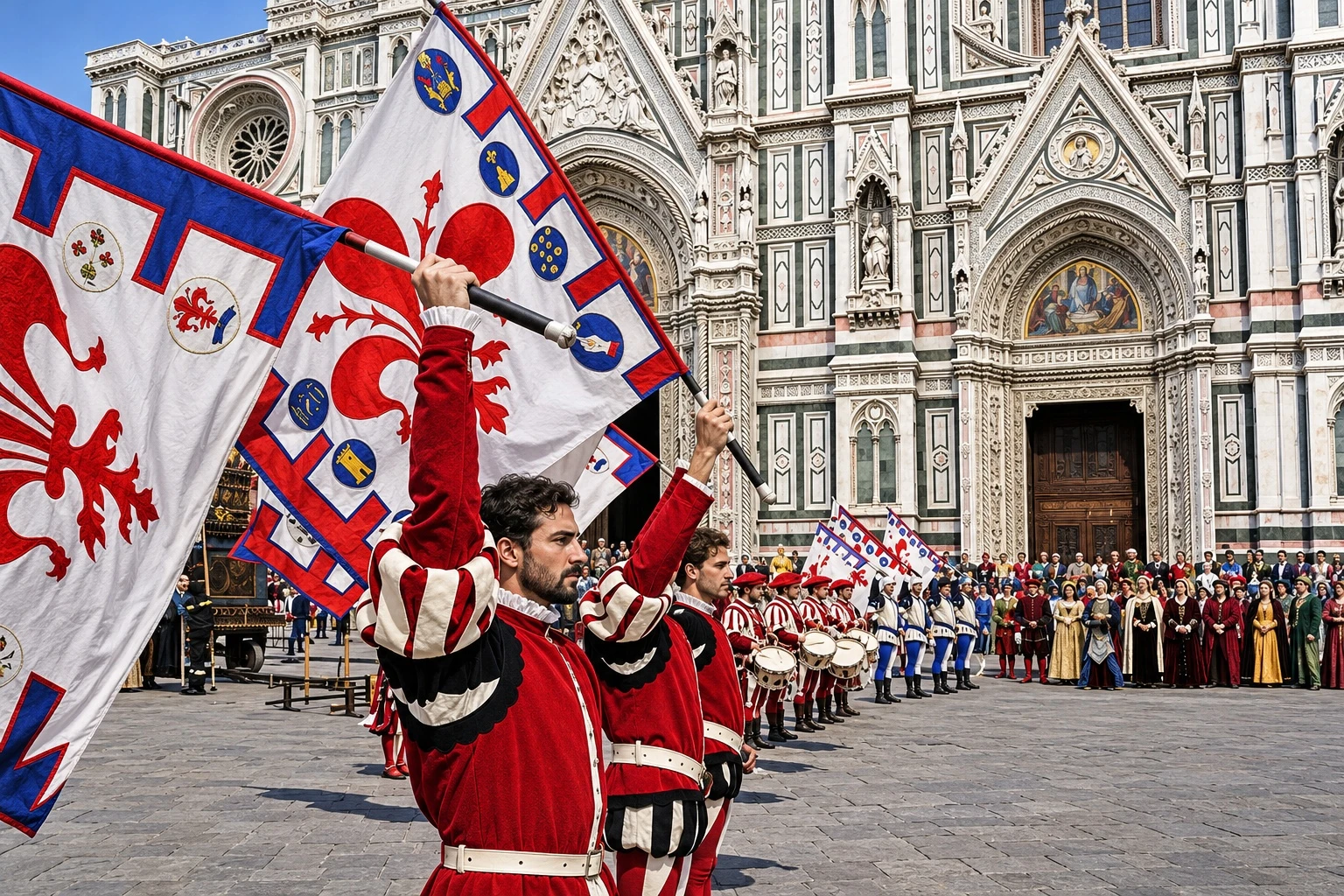
On Easter morning, a tall, ornate cart called the Brindellone is brought to the square in front of Florence Cathedral. During Mass, a mechanical dove is lit at the altar and travels along a wire to the cart, setting off a fireworks display in a tradition that dates back nine centuries.
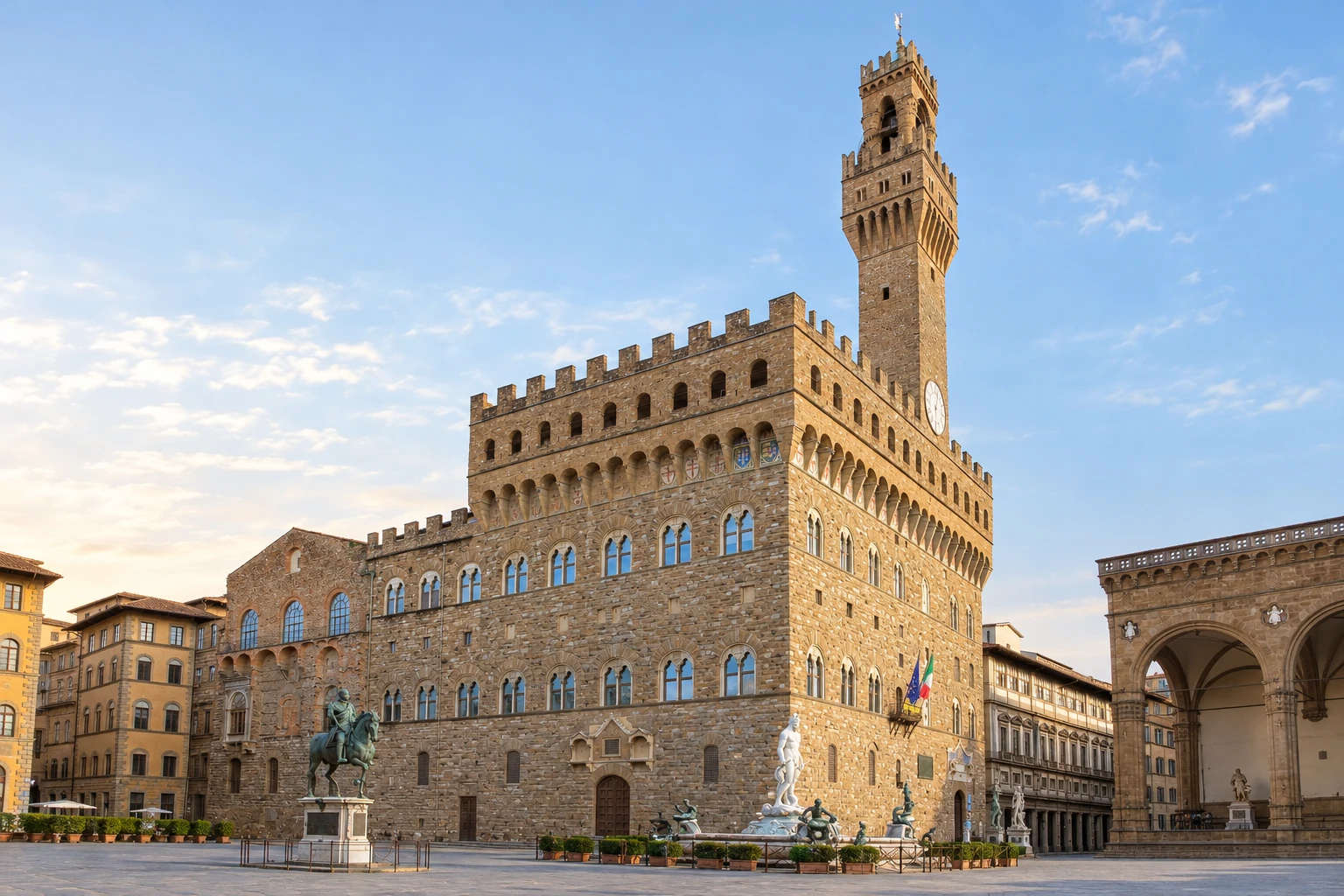
In the photo: Florence
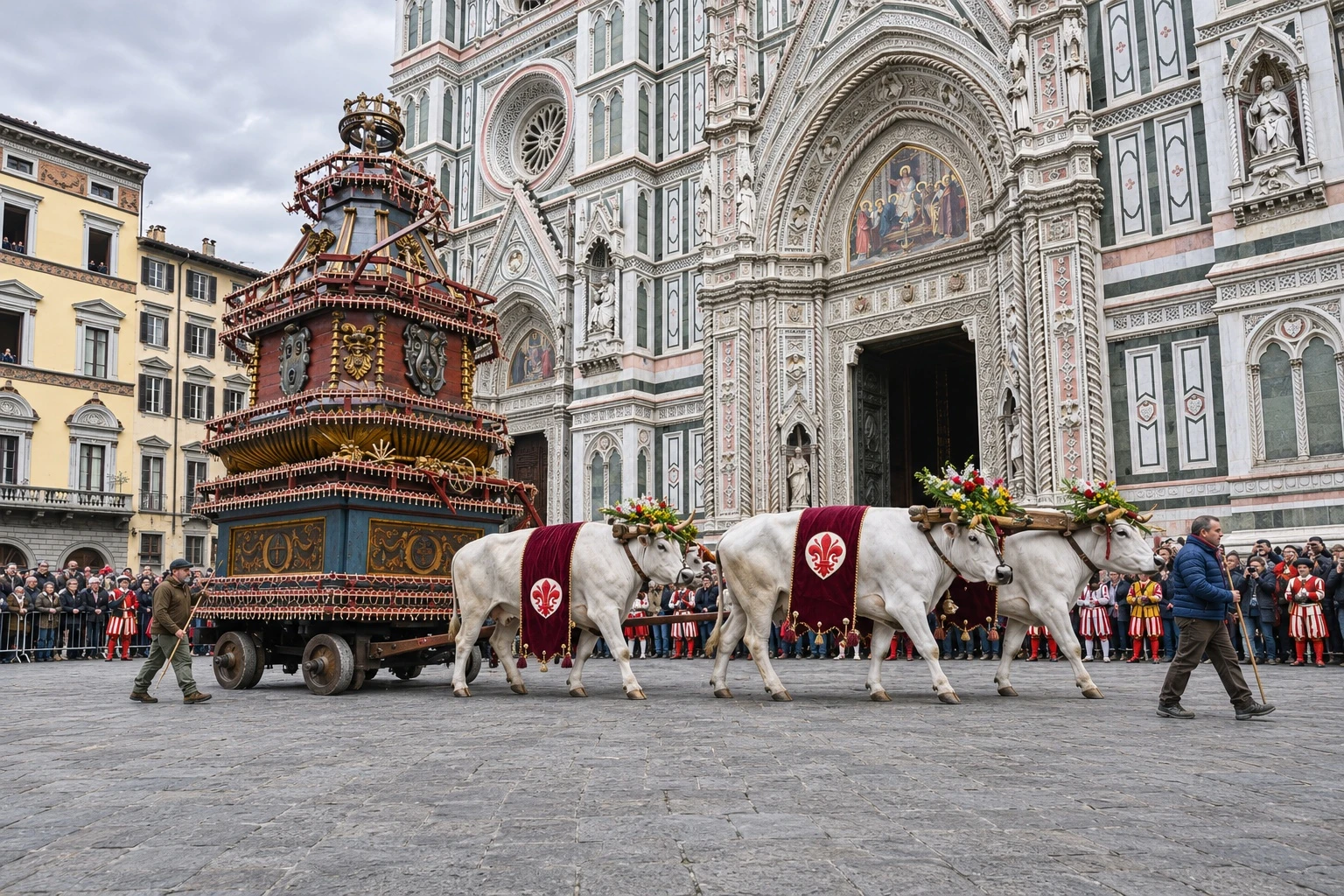
Illustrative images. The pictures in this guide are illustrations based on the real place, not photographs, and may differ from it.
Click the picture to enlarge it.
Scoppio del Carro — Florence
On Easter Sunday morning.
March/April
Dates change every year: check this year's date before you travel.
The festival
The Scoppio del Carro, or Explosion of the Cart, is Florence’s Easter celebration, bringing together faith and civic pride. Tradition traces it to the Crusades: Pazzino de' Pazzi, a Florentine said to have been the first to scale the walls of Jerusalem in 1099, received three chips of stone from the Holy Sepulchre as a gift. The stones were used to light the new Easter fire, which was shared with the city’s residents. The stones are still kept in the Church of Santi Apostoli.
On Easter Sunday morning, the cart, known to Florentines as the Brindellone, leaves its storehouse on Via il Prato. A three-story wooden tower covered in coats of arms and symbols of the city, it is drawn by white oxen in festive trappings and accompanied by a procession in costumes from the days of the Florentine Republic. The evening before, the sacred fire is lit in the cathedral forecourt using the stones from the Holy Sepulchre.
The cart stops between the Duomo and the Baptistery. During Mass, as the Gloria is sung, the sacred fire is used to light the colombina, a mechanical dove that travels along a wire from the altar to the cart and sets off the fireworks. For a few minutes, the Brindellone erupts in a display of rockets, color, and smoke. According to tradition, if the dove makes it to the cart and back to the altar without a hitch, a good year lies ahead.
That same morning, before the Scoppio, a draw determines the semifinal matchups for Calcio Storico, another Florentine tradition.
It’s worth making the trip to spend Easter in Florence and see the celebration that Florentines look forward to all year, right in front of the Cathedral of Santa Maria del Fiore.
The procession with the ox-drawn cart from Via il Prato to the cathedral. The flight of the colombina from inside the Duomo to the cart. The fireworks display on the Brindellone in the square. The lighting of the sacred fire in the cathedral forecourt the night before.
Get to Piazza del Duomo early for a close look at the cart: the square fills up hours before the event. The fireworks are loud, so if you’re with young children, you may prefer to watch from farther away. Afterward, take some time over Easter to explore the churches and museums in the city center.
The date varies with Easter. Book your accommodations early: Easter week is high season in Florence.
In the city
Flavors of Italy

Thick T-bone beef steak, grilled over embers and served rare, seasoned only with salt and olive oil. It’s named after Florence and is usually ordered to share.

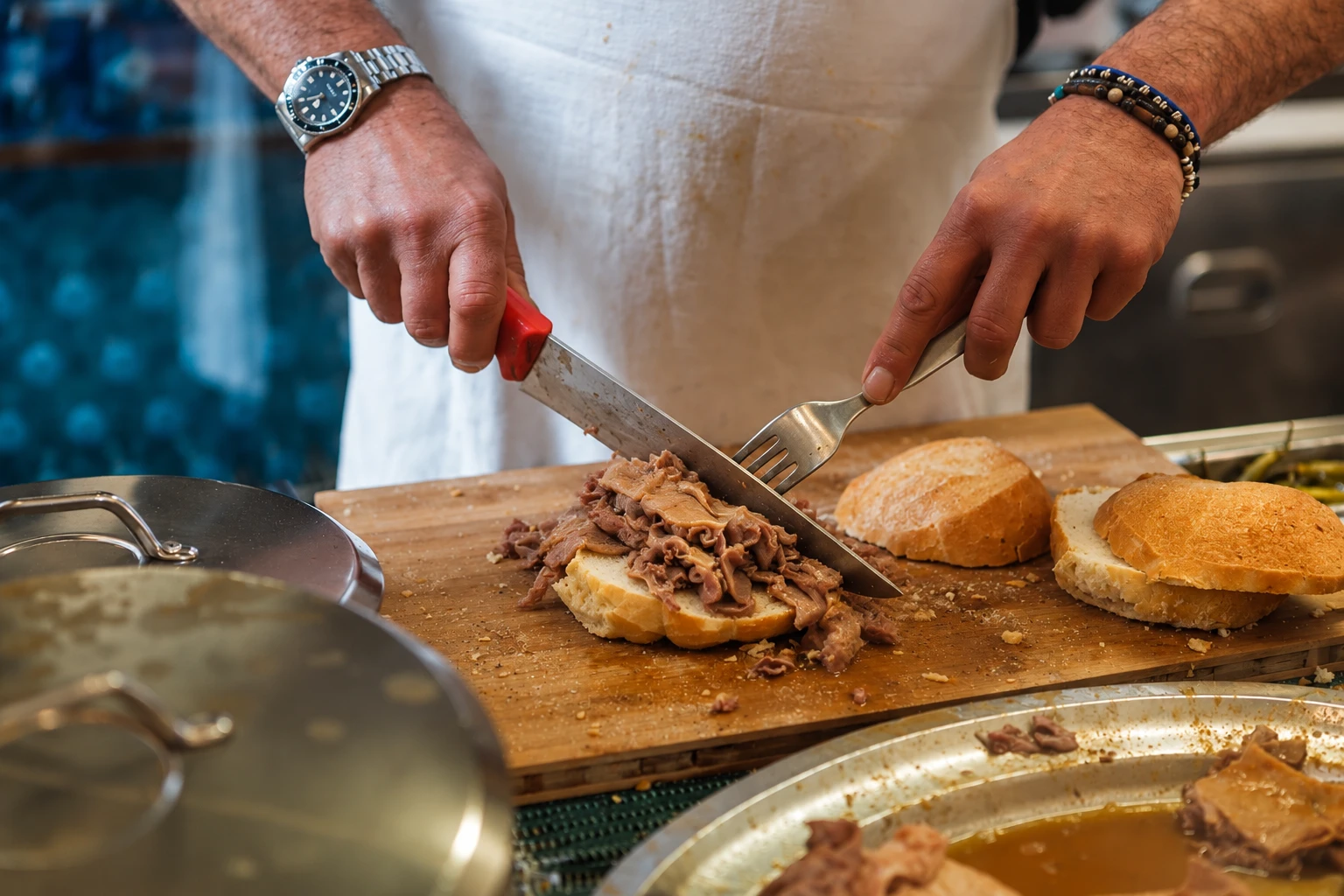
Lampredotto sandwich — the cow’s fourth stomach, slowly cooked in broth and served on a round roll with a green or spicy sauce. It’s Florence’s most typical street food, sold at trippai stalls.
March/April
January/February/MarchAbout two and a half weeks before Lent, between late January and early March, depending on the date of Easter; the last day is Fat Tuesday.
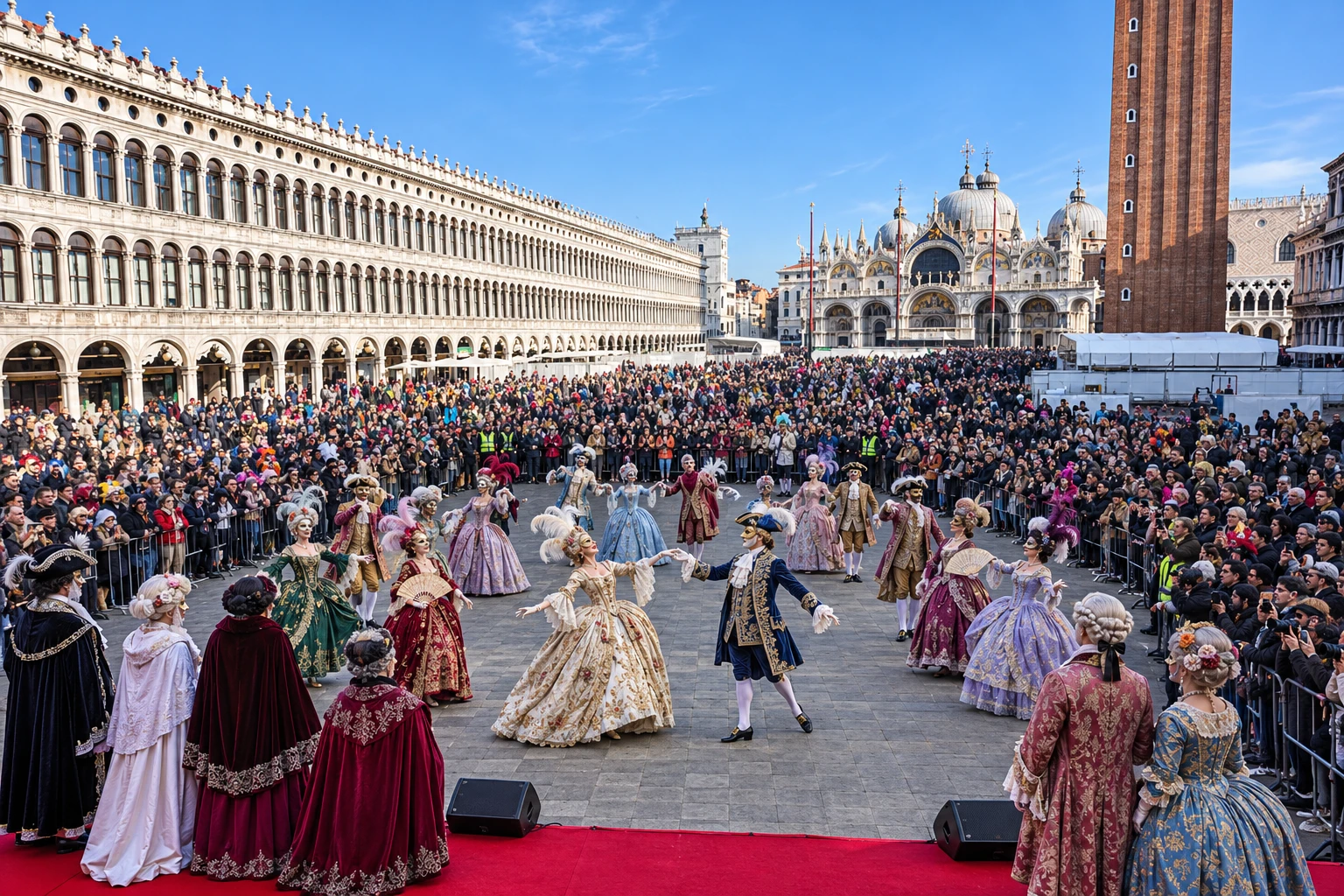
The Venice Carnival takes over the city in the weeks before Ash Wednesday, with masks and period costumes in the streets, processions on the water, the Festa delle Marie and costume parades in St. Mark’s Square.
January/February/MarchIn February, though parades may also take place in late January or early March, depending on the Carnival calendar.
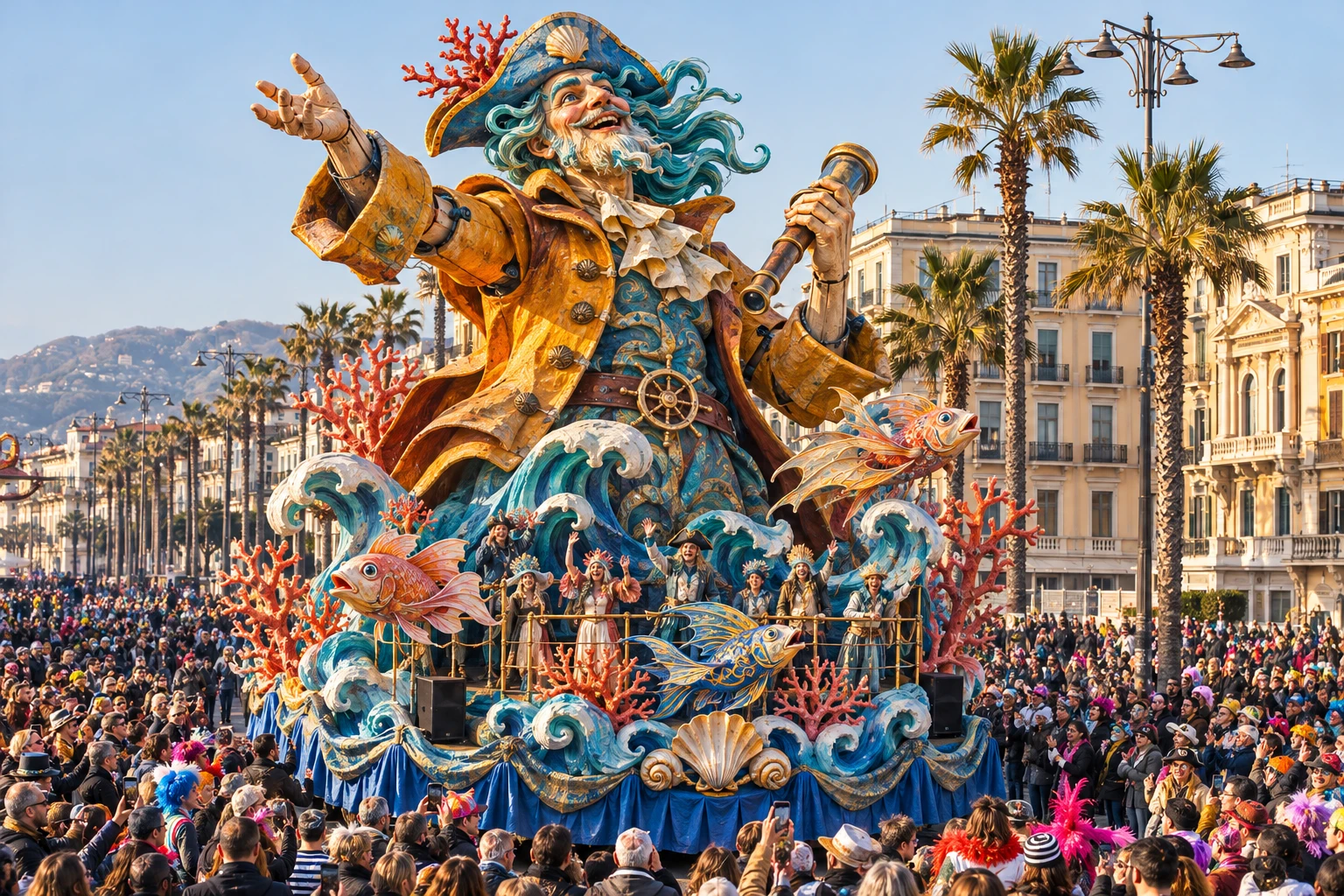
In Viareggio, on the Tuscan coast, Carnival is a month of parades. Giant papier-mâché floats make their way along the seafront promenade through crowds in costume, with moving figures that satirize politics and social customs.
February/MarchIn the weeks leading up to Lent, with the Battle of the Oranges running from Sunday through Shrove Tuesday.
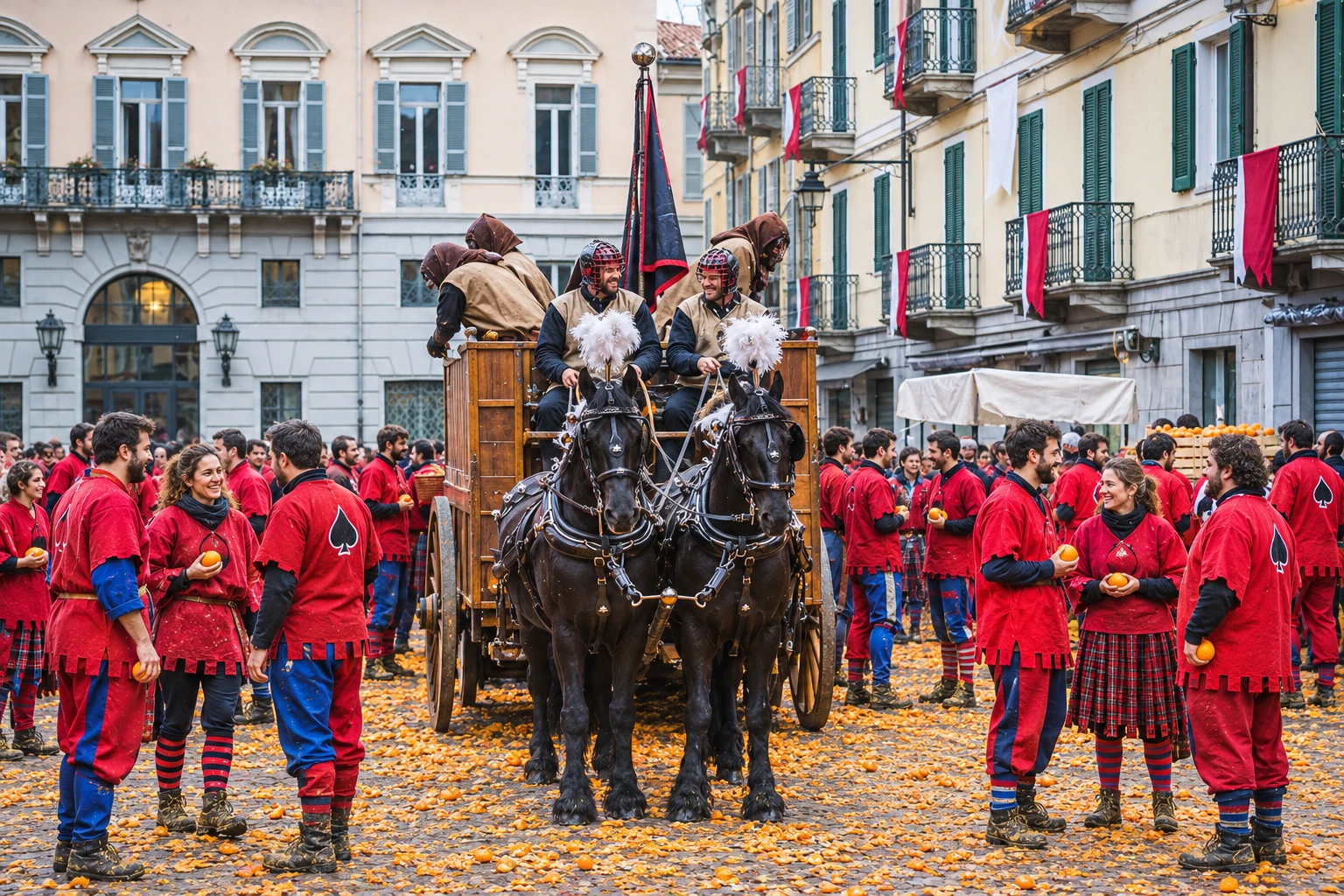
In Ivrea, in Piedmont, the carnival commemorates the medieval town’s revolt against its tyrant. It features historical processions, the Miller, who is the heroine of the carnival, and the famous Battle of the Oranges, in which teams on foot trade volleys of oranges with riders in horse-drawn carts in the town squares.
Your questions
On Easter Sunday morning, in the square in front of Florence Cathedral. The date varies with Easter.
It’s the tall, ornate wooden cart brought to the square, loaded with fireworks that go off when the mechanical dove reaches it.
It dates back to the Crusades: the stones Pazzino de' Pazzi brought back from the Holy Sepulchre were used to light the new Easter fire in Florence.
Festivals and events in Italy
MayMay 1–4. The main procession takes place on May 1.
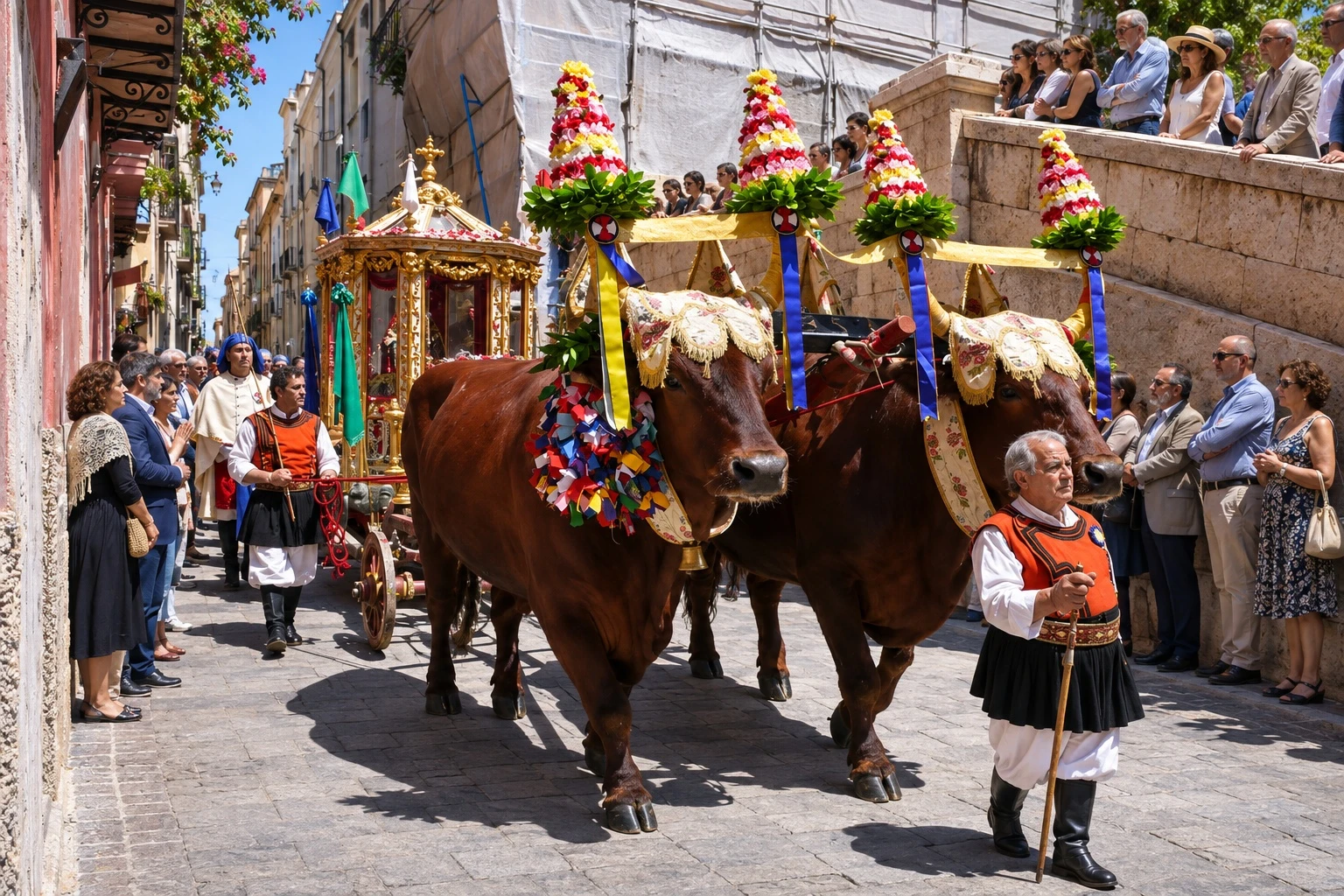
On May 1, Cagliari fulfills a vow it made during the plague of the 17th century. The statue of Sant'Efisio sets out in an ox-drawn carriage, accompanied by decorated carts, riders on horseback, and groups from across Sardinia wearing their traditional dress. The statue then continues on pilgrimage to Nora.
MayThroughout May, with the races on the last weekend of the month.
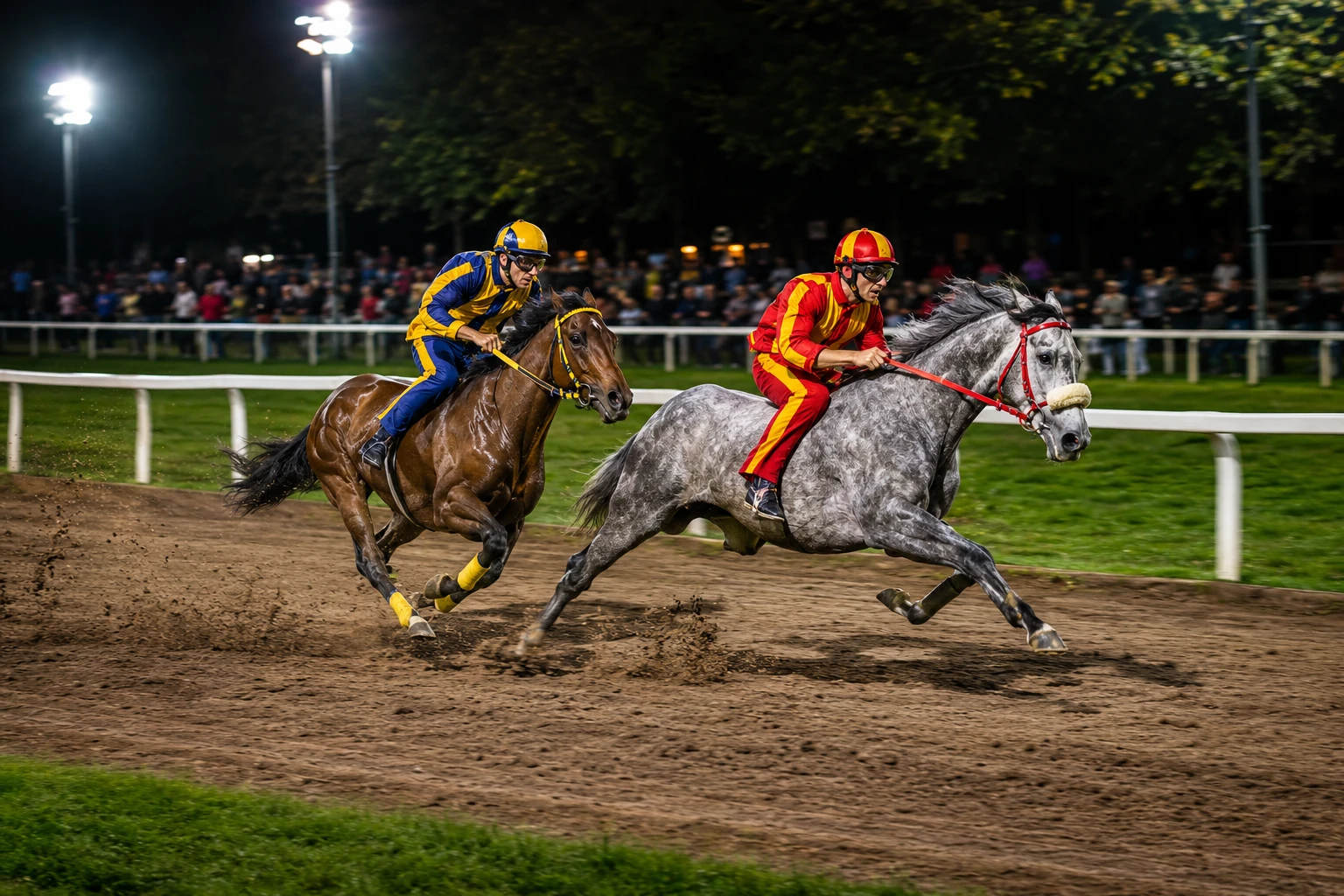
In May, Ferrara’s eight districts, known as contrade, fill the city with Renaissance processions, flag-throwing displays and competitions. The festivities culminate in races in Piazza Ariostea on the last weekend of the month, part of a palio that the city describes as the oldest in the world.
MayOn May 15, the eve of the feast of Saint Ubaldo, Gubbio’s patron saint.
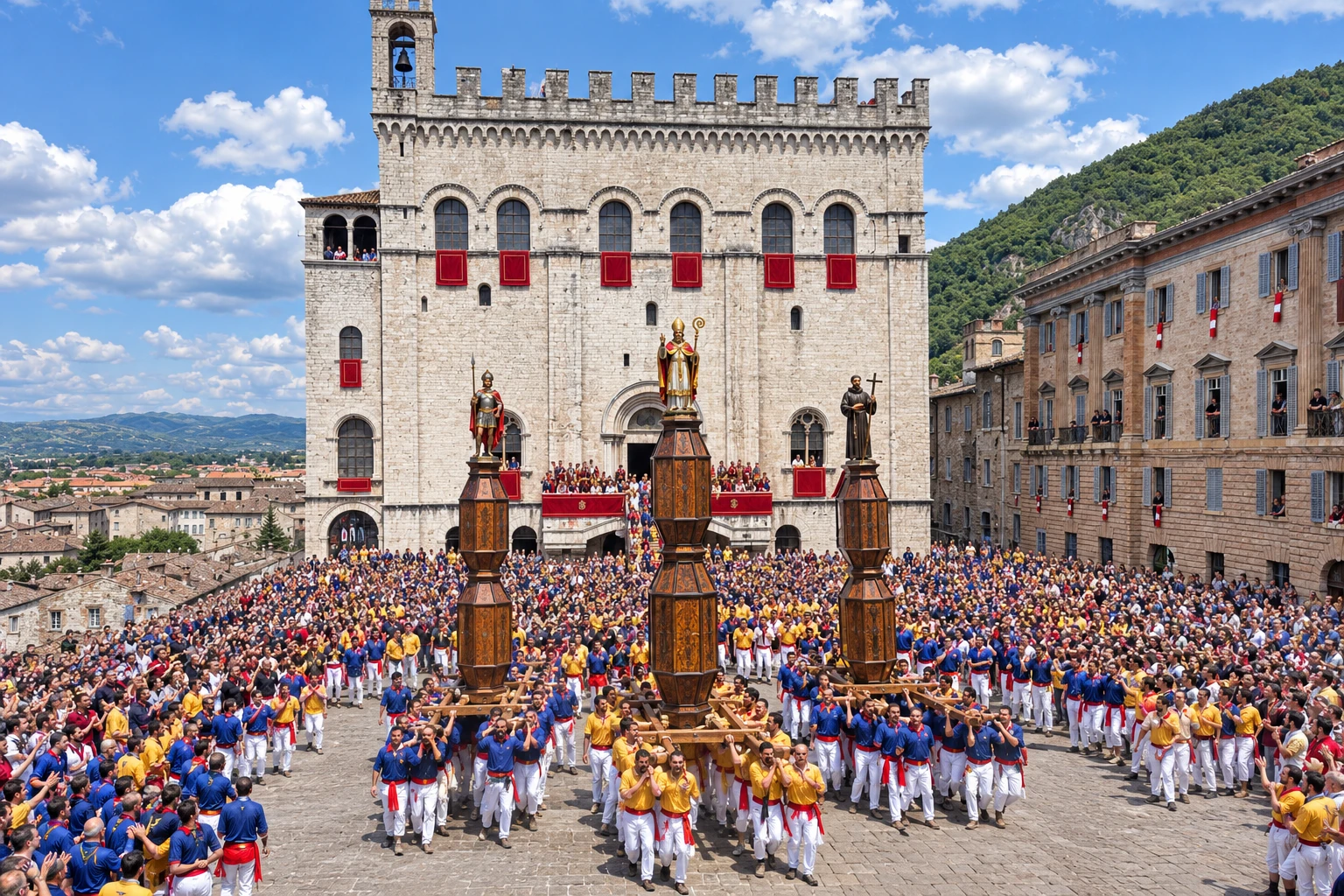
Every year on May 15, the people of Gubbio, a medieval stone town in Umbria, carry the Ceri through the streets and up the mountain in a traditional race. These three enormous wooden structures are topped with statues of Saint Ubaldo, Saint George, and Saint Anthony.
MayAround the third Sunday in May, with the flower carpet on display for a few days.
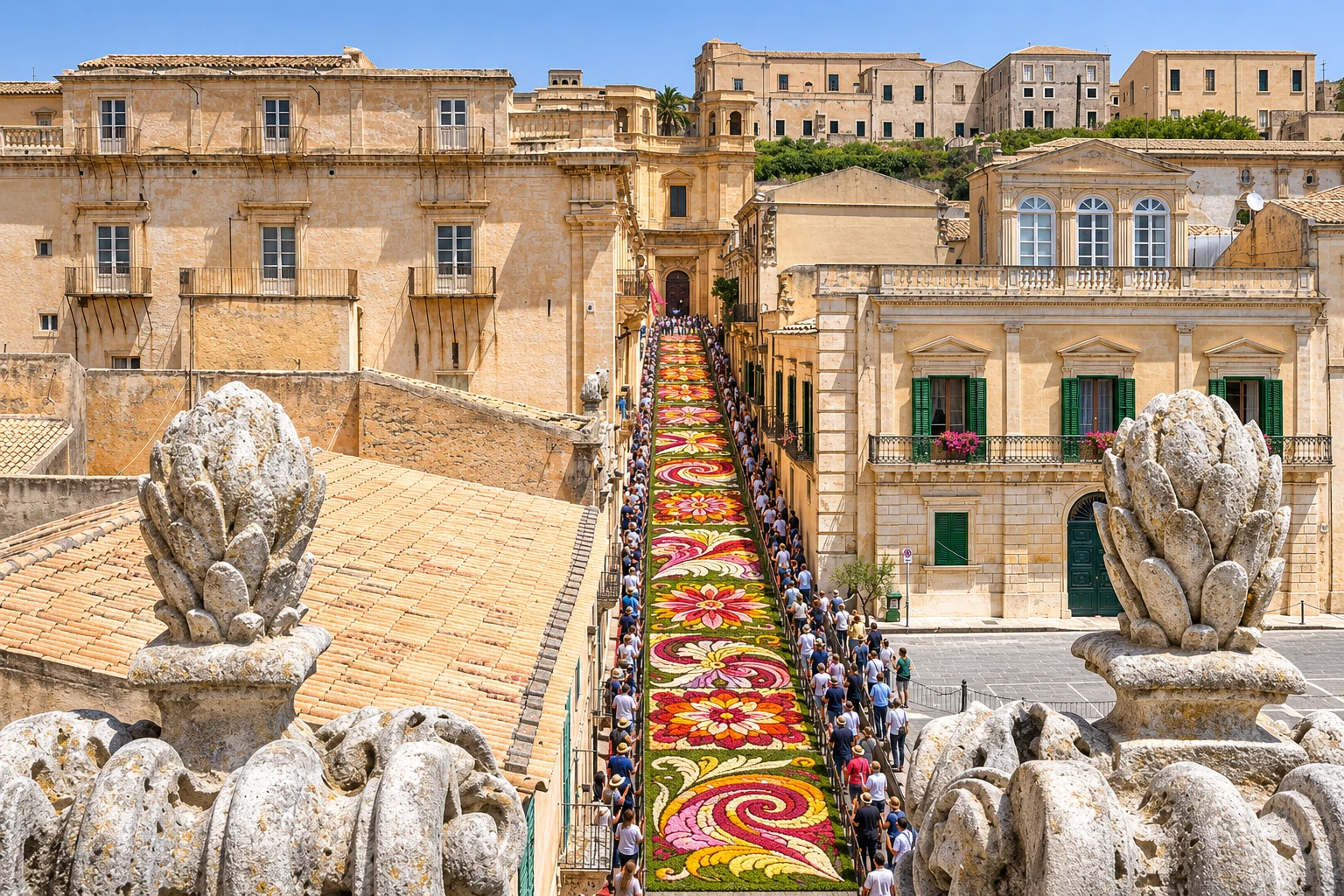
In May, a carpet of pictures made from flower petals covers Via Nicolaci, a sloping street in the Baroque center of Noto, Sicily. The carpet is laid in a single night and stays on display for a few days, while the historic center hosts a procession in 18th-century dress and other festivities.
JuneIn June. The final is on June 24, the feast day of St. John, Florence’s patron saint.
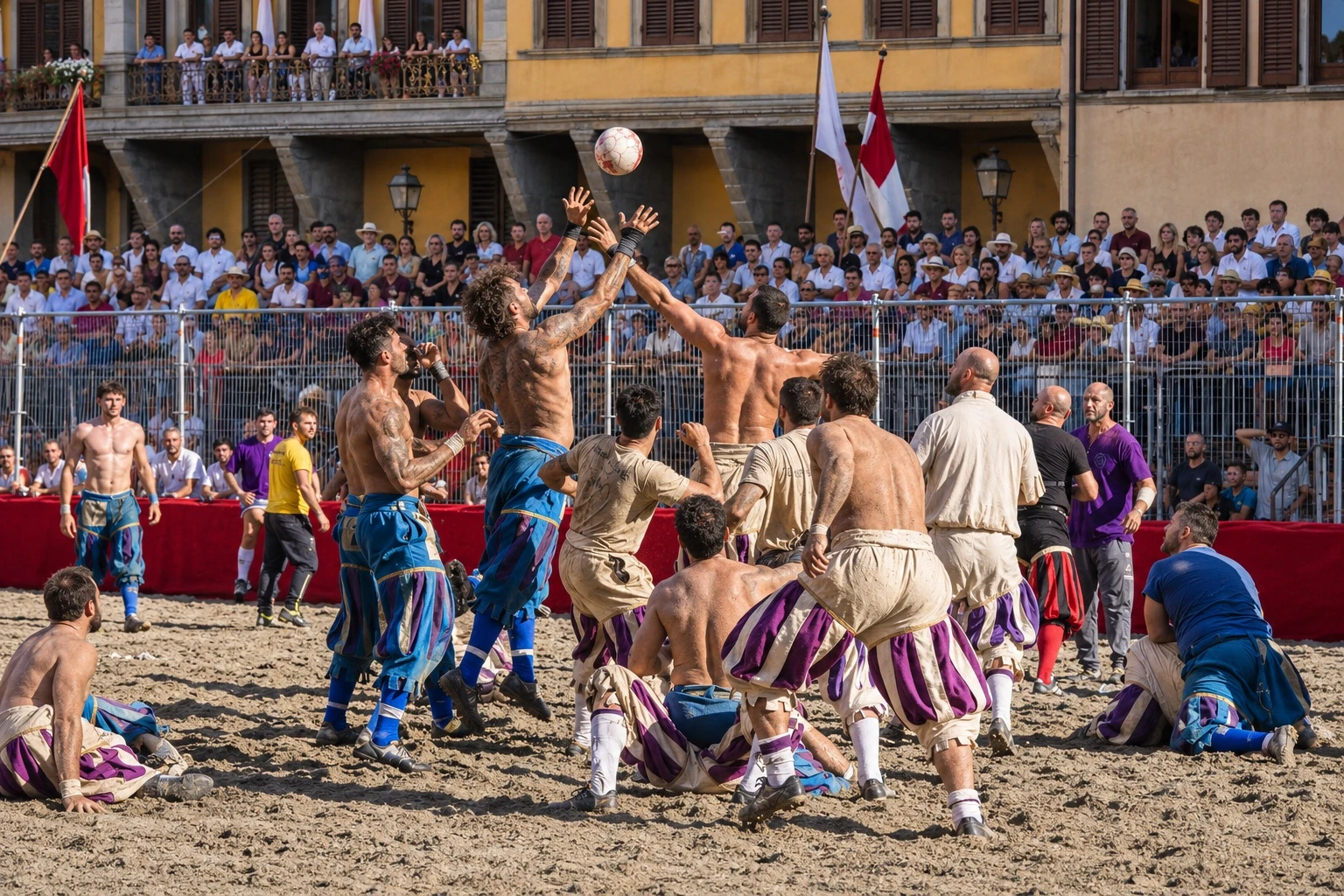
In June, Piazza Santa Croce in Florence becomes a sand arena for Calcio Storico, a Renaissance ball game played by the city’s four historic districts. The final takes place on the feast day of St. John, the city’s patron saint, and the celebrations end with fireworks that night.
June/July/August/SeptemberJune through September, with evening performances.
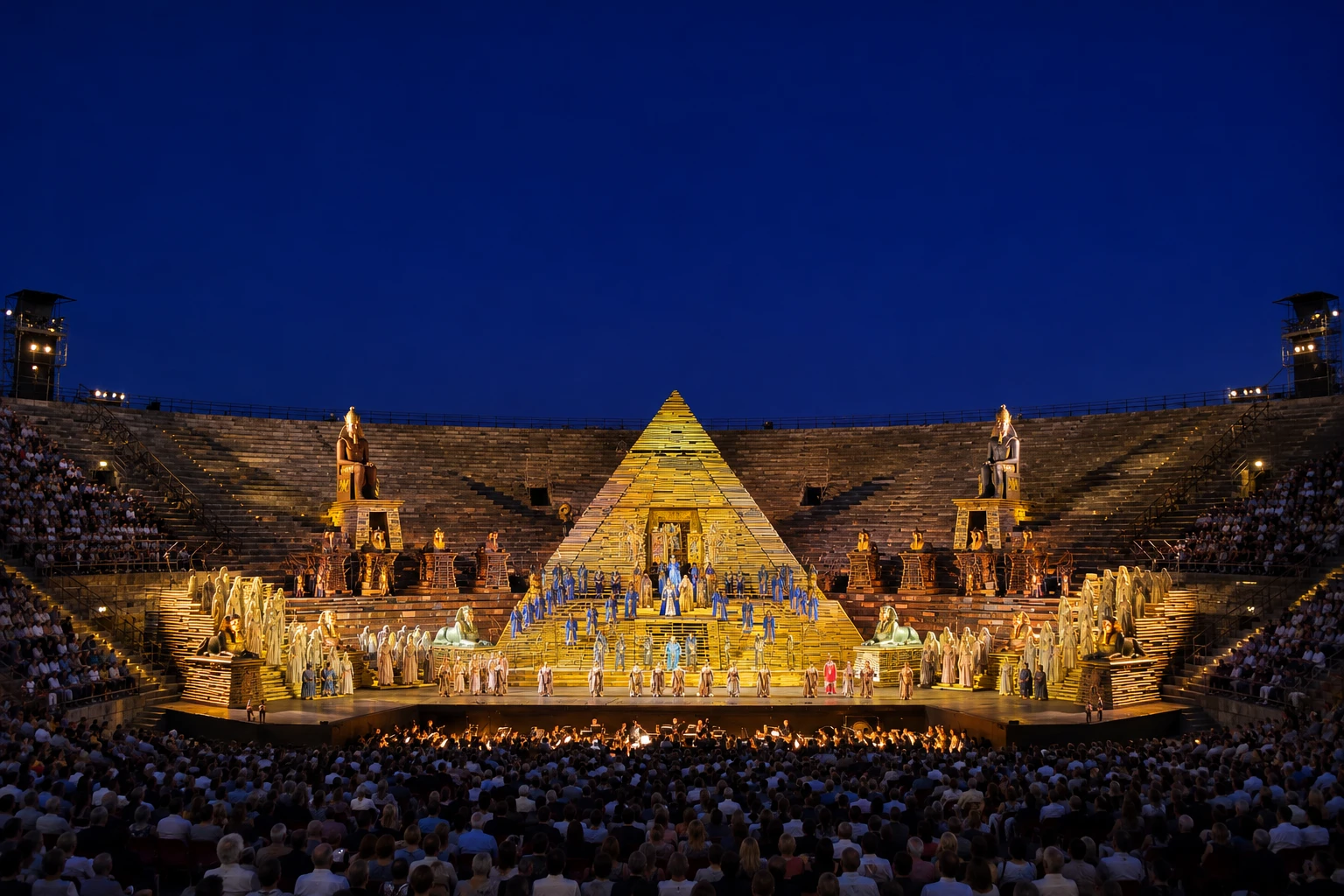
Every summer, Verona’s Roman amphitheater hosts a season of open-air opera. Aida, the opera that opened the festival in 1913, is a mainstay of the program.