Sardinia

Sardinia

Sardinia

Large island in the middle of the Mediterranean, with clear waters, nuraghes from the Bronze Age, the Cagliari of the Castello, the Alghero of Catalan heritage and the Costa Smeralda.

Islands

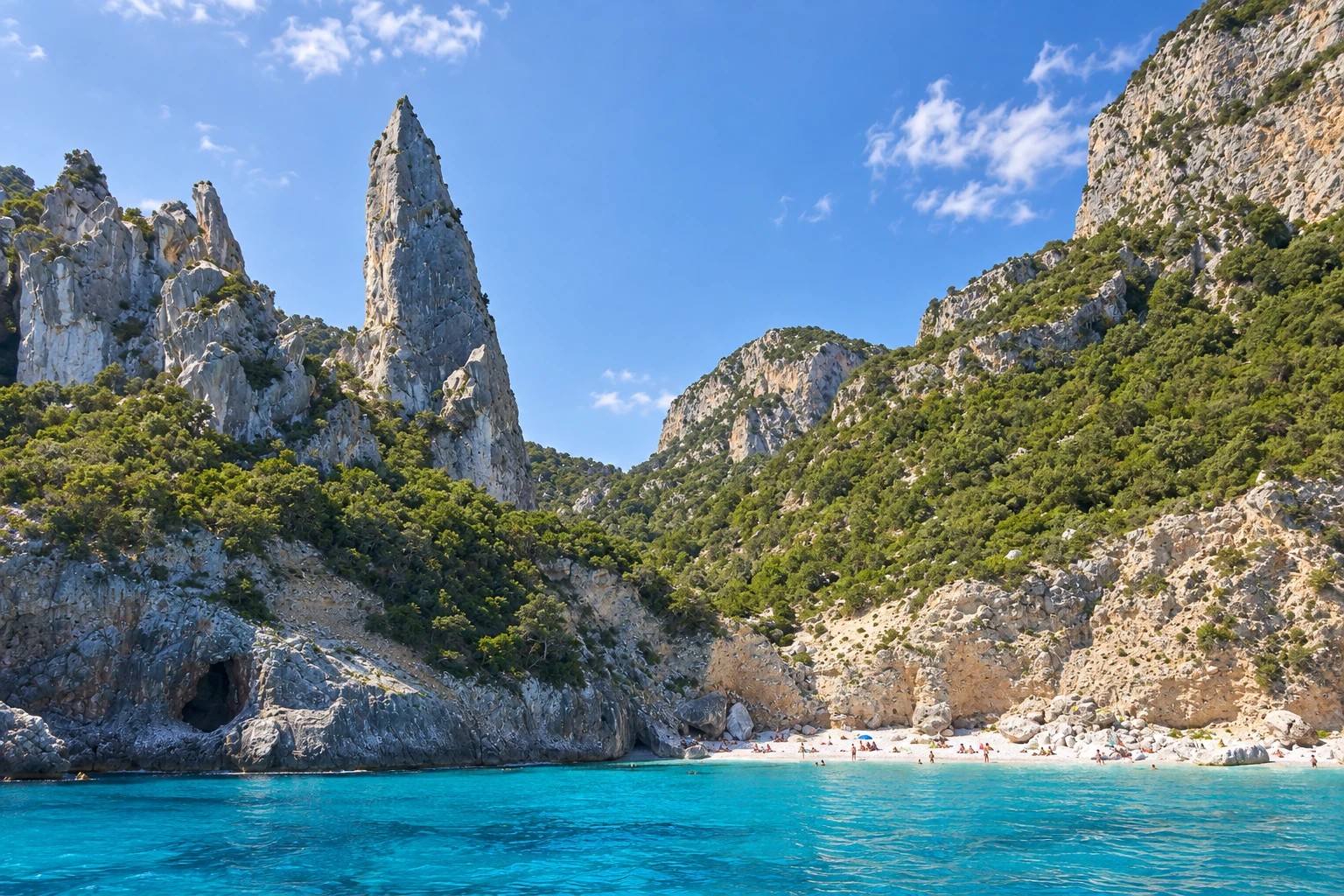
In the photo: Cala Goloritzé and the needle of Punta Caroddi, Baunei, Sardenha

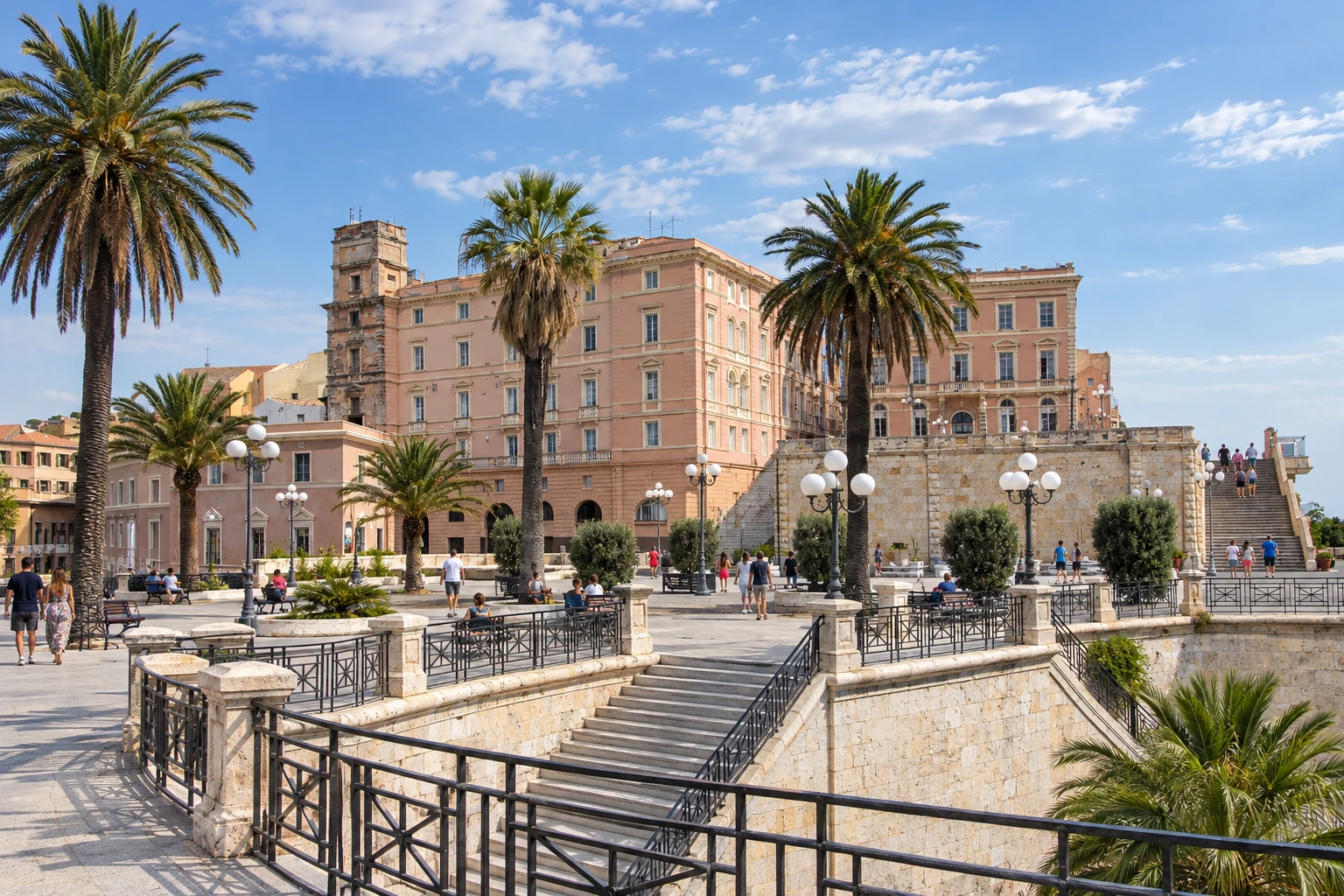
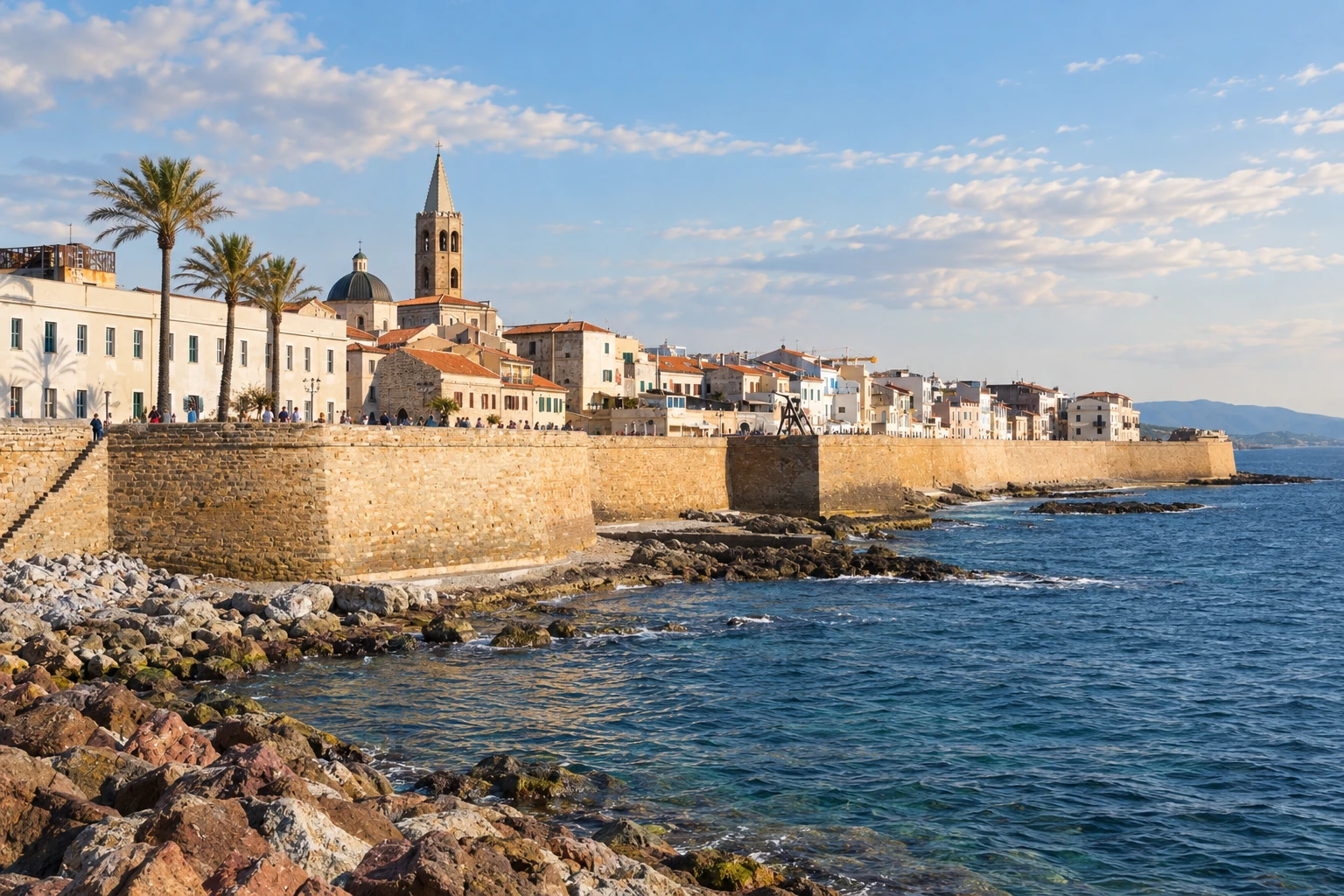
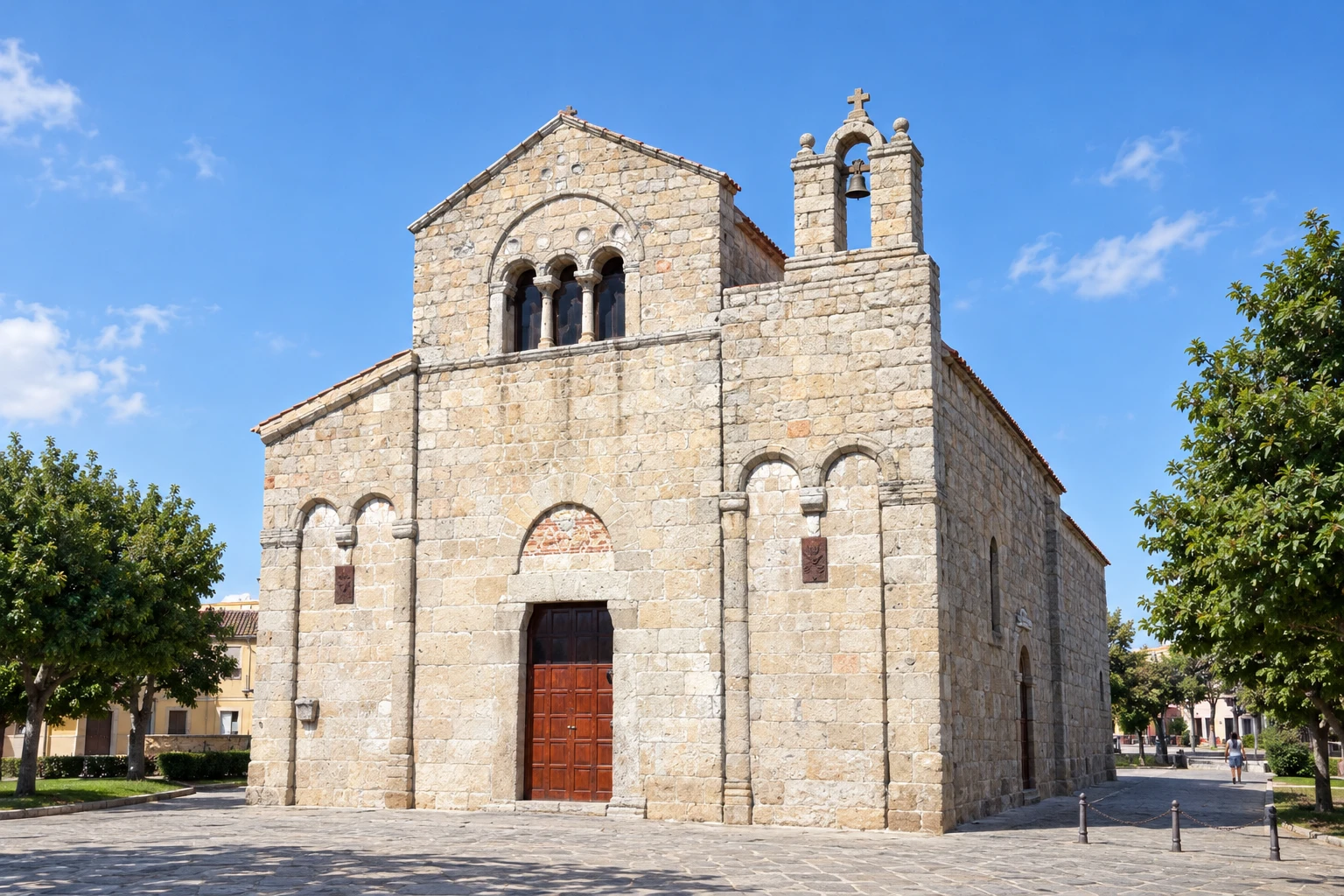
Illustrative images. The pictures in this guide are illustrations based on the real place, not photographs, and may differ from it.

Get it on Google Play

Get to know the place

A region to enjoy
at your own pace.

Sardenha (Sardegna in Italian) is the second-largest island in the Mediterranean, west of the Italian peninsula and south of Corsica. It is an autonomous region, with its capital in Cagliari, and has its own language, sardo, which appears on signs alongside Italian. In Alghero a Catalan dialect is still heard, a legacy of centuries of Aragonese rule.

The island preserves thousands of nuraghes, stone towers raised by the Nuragic civilization in the Bronze Age. The best-known complex is Su Nuraxi, in Barumini, a UNESCO World Heritage Site since 1997. Phoenicians, Carthaginians and Romans left towns such as Nora in the south, and Pisa, Aragón and the Casa de Savoia left their mark on Cagliari and Alghero.

The coast is the main reason to travel. In the south, Cagliari has the Poetto, an urban beach of about 8 kilometers. In the northwest, Alghero lies close to the Capo Caccia headland and the Grotta di Nettuno, and the beach La Pelosa, in Stintino, has limited access in summer. In the northeast, Olbia is the gateway to the Costa Smeralda and the La Maddalena Archipelago.

Distances are large: from Cagliari to Olbia it’s about 270 kilometres by road. For this reason, travelers with few days usually choose one or two bases, and a rental car helps a lot to reach beaches, archaeological sites and viewpoints.

This destination brings together 3 cities: Cagliari, Alghero, Olbia.

Share: WhatsApp
Traveler, share your experiences through photos Up to 5 photos of each place you visited.

One destination, many paths

The cities on this trip

Start with one city or combine several in your itinerary.

Where Sardinia is The star marks the capital, Cagliari.
CagliariAlgheroOlbia

Outlines: ISTAT, limites administrativos 2026, CC BY 4.0. Adapted by Cidade Turismo.

How to get there: Sardinia

Aeroporto di Cagliari-Elmas Mario Mameli (CAG), in Elmas · 7 km to Cagliari

Connections with Brazil are usually via a stopover in another city. Check before buying. From mainland Italy, the quickest route is a domestic flight to Cagliari (CAG), Alghero (AHO) or Olbia (OLB). There are also ferries from Civitavecchia, Livorno and Gênova to Olbia, from Civitavecchia and Gênova to Porto Torres, and from Civitavecchia to Cagliari.

Suggested arrival point: Cagliari

Festivals and events

Festivals Sardinia

Dates change every year: check this year's date before you travel.

Festival calendar in Italy

The local experience

Things to do in Sardinia

Cagliari · Sardinia · Historic neighborhood

Castello

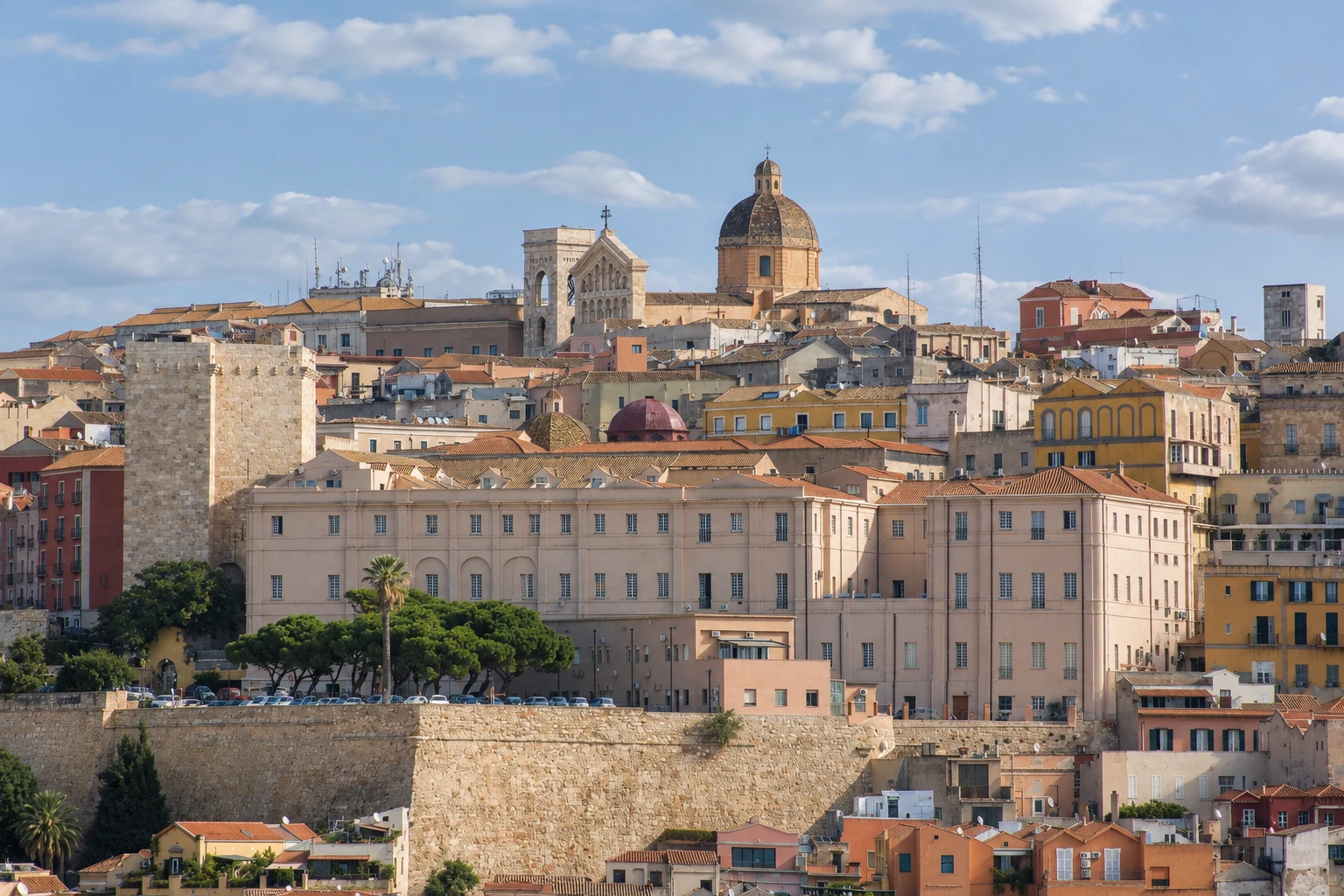
Walled neighborhood atop a hill, founded by the Pisans in the 13th century, with medieval gates, towers, the cathedral, the Palazzo Regio and viewpoints over the port and the lagoons.

Explore Castello

Alghero · Sardinia · Historic quarter

Alghero Old Town

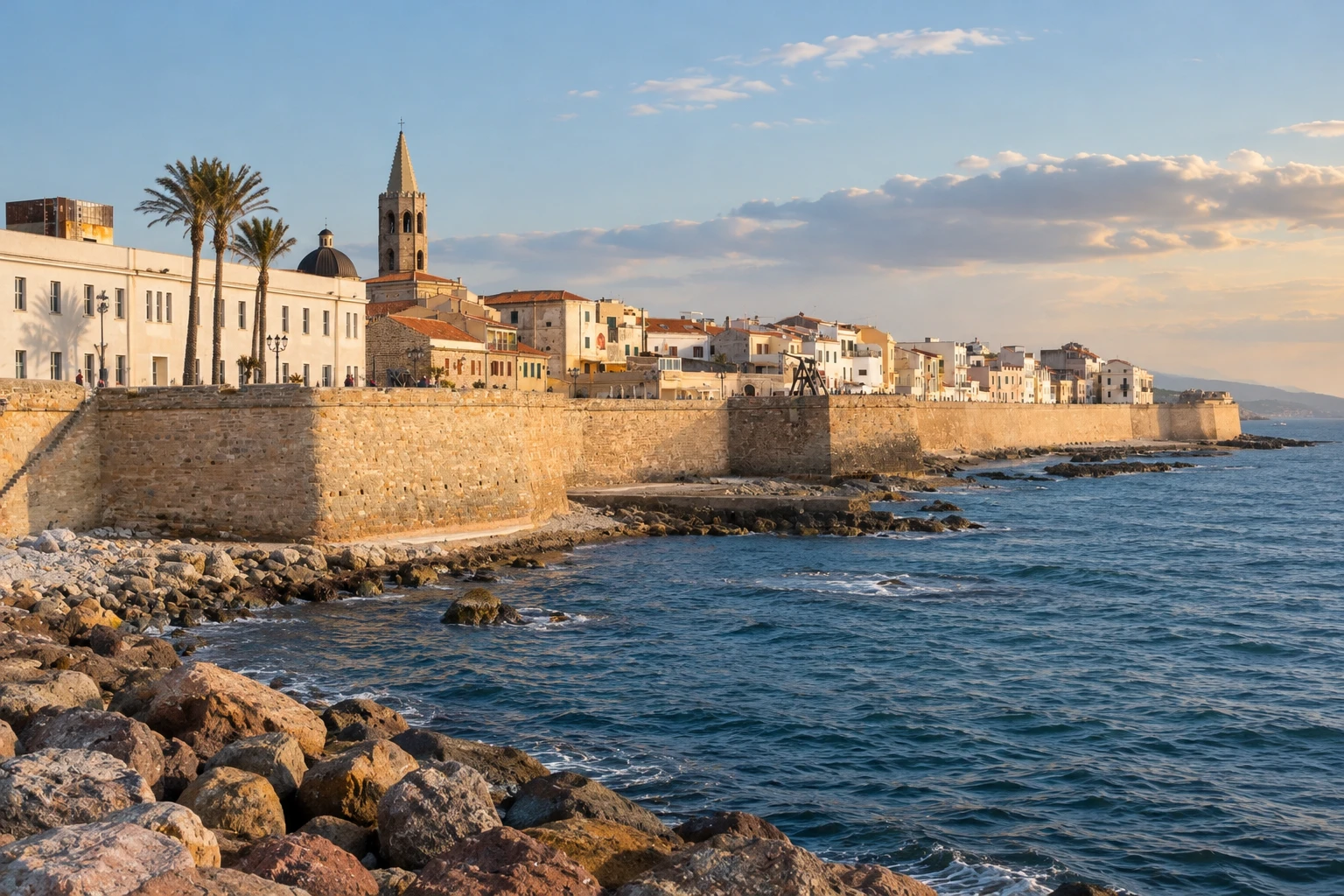
Old town surrounded by walls and Catalan–Aragonese towers overlooking the sea, with stone streets, signs in Italian and Catalan and a promenade along the bastions.

Explore Alghero Old Town

Cagliari · Sardinia · Viewpoint

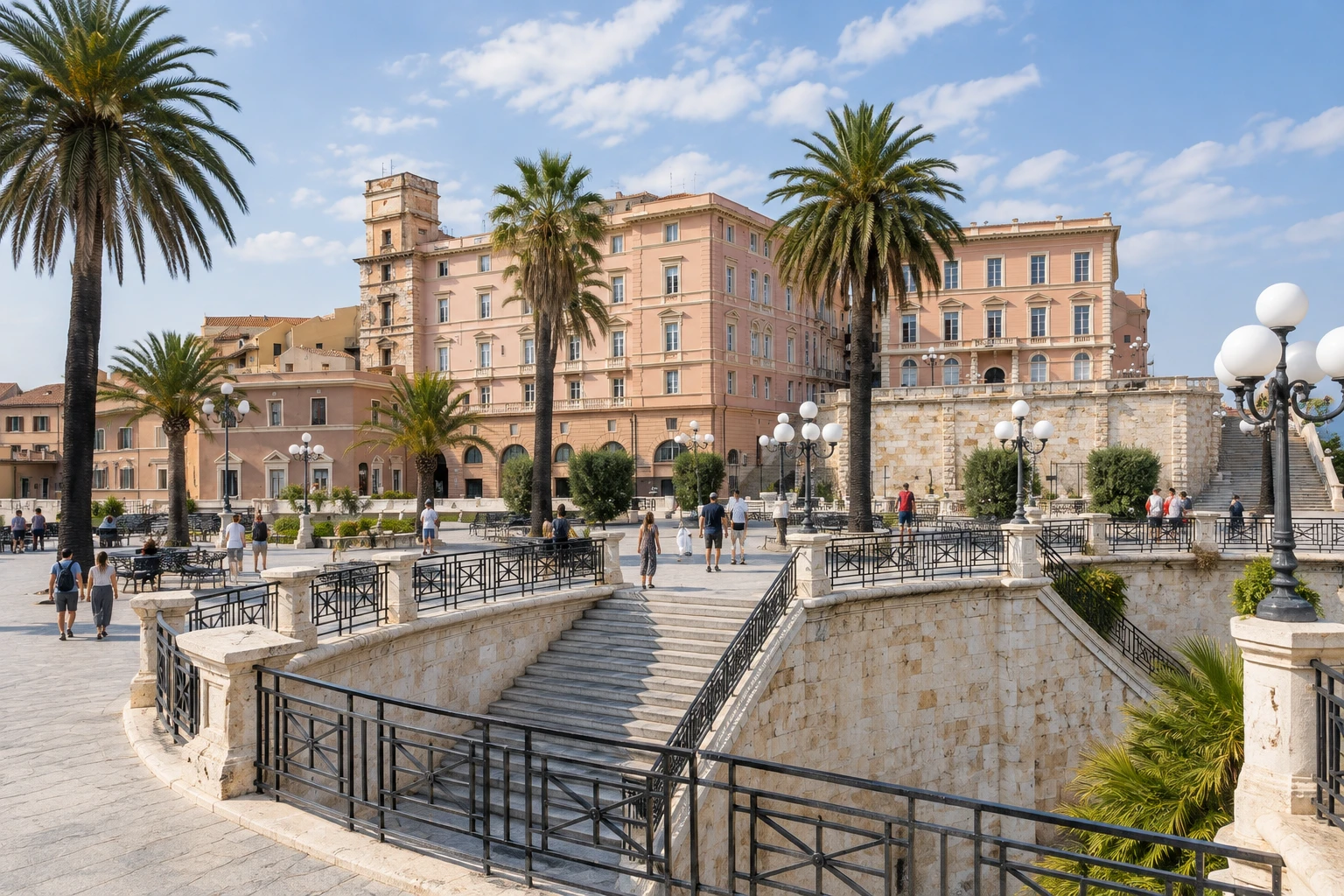
Saint Remy Bastion

Neoclassical bastion with stairways and a monumental arch that link Villanova to the Castello; at the top, the Terrazzo Umberto I has views over the port, the Marina and the lagoons.

Explore Saint Remy Bastion

See 15 more places in Sardinia

To choose before you go

Tours in Sardinia

Where each tour starts, how long it takes, how it is done, what is included and the price range.

Cagliari: the Castello district, the Bastione di Saint Remy and the Cattedrale

From Piazza Yenne or Via Roma, Cagliari (elevator or stairs to the Castello) Walk through the upper town about 3 hours late afternoon moderate (hills; there is an elevator)

Cagliari, the capital of Sardinia, rises from the port through four historic neighborhoods, and the Castello sits at the top: the citadel walled by the Pisans in the 13th century, with the white stone Elephant and San Pancrazio towers, narrow streets and palaces that were once the viceroy's seat and now house the university and museums. The Bastione di Saint Remy, the 1901 terrace with its monumental staircase and arch, is the viewpoint over the gulf, the Molentargius lagoon and the rooftops, a meeting place at sunset; you can reach it by elevator from Piazza Costituzione. The Cattedrale di Santa Maria, from 1217, rebuilt in Baroque and with a neo‑Romanesque facade from 1933, has the two Pisan pulpits from 1162, the marble crypt with the martyrs' relics and the Savoy mausoleum. On Via Roma, the port arcades; in the Marina, the trattoria quarter; in Stampace, Via Manno with shops.

Stops: Castello, Bastione di Saint Remy, Cattedrale di Santa Maria.

Includes: Free walk; cathedral free of charge (crypt with voluntary donation); Pisan towers with a small admission fee.

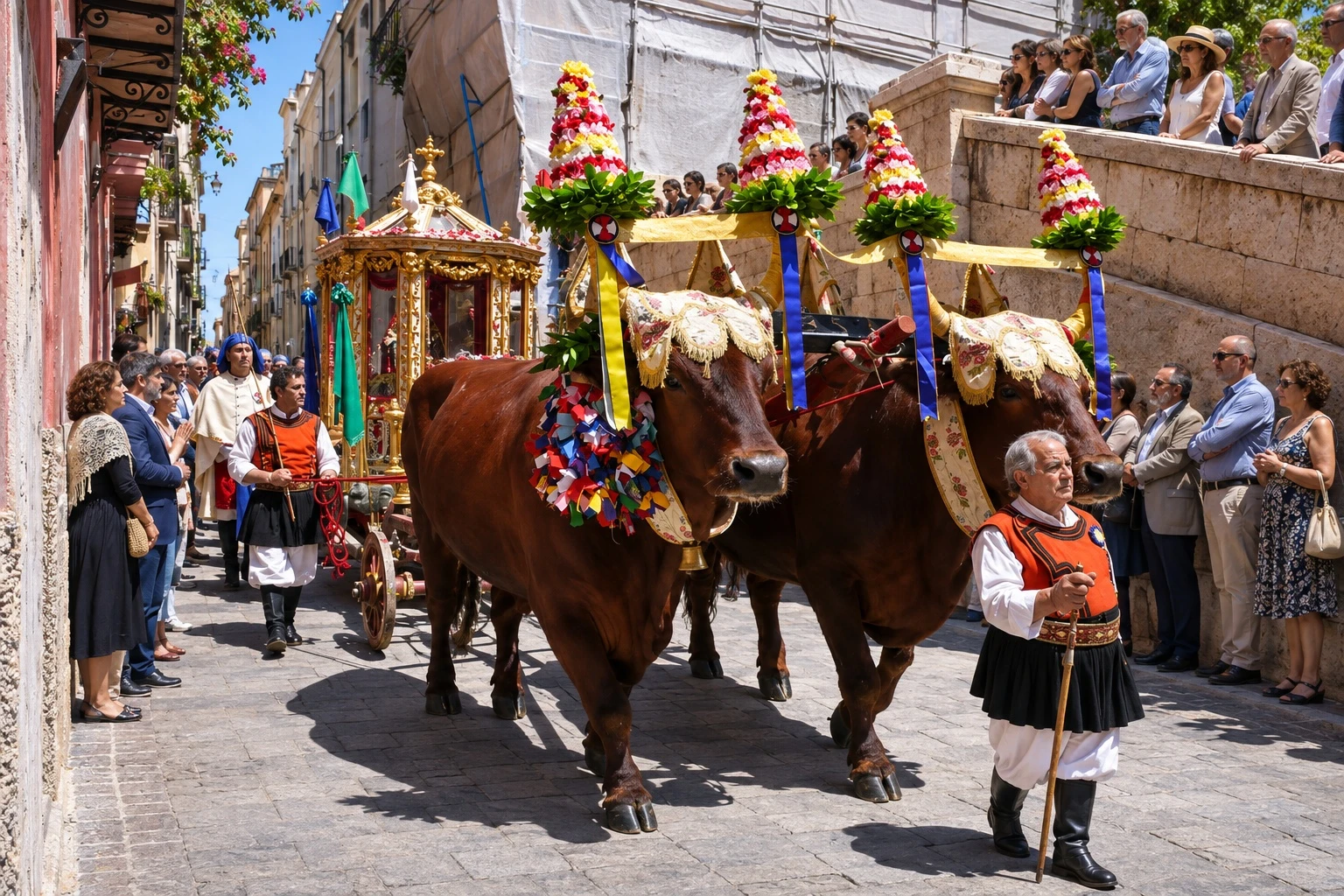
Tip: Climb to the Castello late in the afternoon and stay on the Bastione for sunset; dine in the Marina. San Pancrazio tower looks over the mountains; the Elephant tower faces the sea. From May 1 to 4, the feast of Sant'Efisio, the island's largest procession, departs from Stampace with thousands of people in traditional dress.

Best time: All year; on summer evenings the Castello has bars on the terraces.

Museo Archeologico Nazionale di Cagliari: the Giants of Mont'e Prama and the Nuragic bronzes

From Cittadella dei Musei, Piazza Arsenale (Castello) Museum about 2 hours morning easy

The Museo Archeologico Nazionale di Cagliari, in the Cittadella dei Musei atop the Castello, is the key to understanding Sardinia before the Romans: the Nuragic civilization, which between 1800 and 500 BC built more than 7,000 nuraghi, the stone towers that define the island’s landscape. Here you can see the bronzetti, the small bronze statuettes of warriors, archers, chiefs and votive boats, and part of the Giants of Mont'e Prama, the sandstone statues over 2 m tall from the 9th century BC — the oldest large-scale sculptures in the western Mediterranean — discovered in 1974 and reassembled from thousands of fragments (others are in the museum of Cabras). On the upper floors are Phoenician, Punic and Roman finds from Nora, Tharros and Sulci. The Cittadella also houses the Pinacoteca Nazionale and the Anatomical Wax Museum.

Stops: Museo Archeologico Nazionale di Cagliari.

Includes: Separate paid admission (ticket office on site or online); closed on Mondays; free entry on the first Sunday of the month.

Tip: Go before Barumini and Nora: the museum explains what you will see at the sites. It is small and quiet; two hours are enough.

Best time: All year.

Poetto and Molentargius: Cagliari’s beach and the flamingos

From Cagliari (PF or PQ bus from Via Roma) Beach and natural park by bike about 4 hours afternoon easy

The Poetto is Cagliari’s 8 km stretch of pale sand, running from the Sella del Diavolo promontory (the Sella del Diavolo, with a one-hour trail to the top and views over the bay) to Quartu, about 15 minutes by bus from the centre. The seafront has a bike path, seasonal kiosks day and night, paid umbrella facilities and long free stretches, with shallow, clear water. Behind the beach lies the Parco naturale regionale Molentargius-Saline, the old saltworks and lagoons where a colony of thousands of flamingos has nested since 1993, visible up close from the trails and the bike path; the park rents bicycles and has a visitor centre in the old saltworks buildings. It’s the half-day outing that combines sea and nature without leaving the city.

Stops: Poetto, Parco naturale regionale Molentargius-Saline.

Includes: Free beach access; paid umbrellas and chairs. Park free to enter; bike rental at extra cost. Bus fares extra.

Tip: Go to the park in the late afternoon, when the flamingos come close to the shores and the light is best for photos; the beach in the morning. The Sella del Diavolo trail starts from Calamosca—bring sneakers and water.

Best time: From May to October for swimming; flamingos are present year-round, with more birds in winter and spring.

Nora: the Phoenician and Roman town by the sea

From Cagliari (ARST bus to Pula and local bus to Nora, or car, 40 km) Round-trip visit to an archaeological site with a beach about 5 hours full day easy

The Area Archeologica di Nora, on the Capo di Pula, 40 km from Cagliari, is the town founded by the Phoenicians in the 8th century BC, taken by the Carthaginians and later the Romans, abandoned in the 8th century and partly submerged by the sea. The guided tour goes through the Roman theater of 2,000 seats, still used for the summer festival, the baths with colorful mosaics, the Temple of Aesculapius, the paved streets and the houses of the mosaics quarter, with the sea on both sides of the isthmus; the Spanish Coltellazzo tower closes the tip. Beside it is Nora’s sandy beach and the 11th-century church of Sant'Efisio, where the May procession from Cagliari ends. Pula, the village 3 km away, has a museum with the finds and a square with cafés.

Stops: Area Archeologica di Nora, Poetto.

Includes: Separate paid admission, with guided tour included at fixed times (ticket office on site). Buses are paid separately.

Tip: Go on the first visit of the morning and save the beach for afterwards; in summer the site is hot and has no shade. Without a car, the ARST bus Cagliari–Pula takes about 1 hour and the bus from Pula to Nora runs only in summer; check schedules.

Best time: All year; from May to September with the beach accessible; in July and August the festival La Notte dei Poeti takes place at the theater.

Su Nuraxi di Barumini: the nuraghe listed by UNESCO

From Cagliari (ARST bus to Barumini, or car, 60 km) Round-trip visit to the archaeological site with guided tour about 5 hours full day moderate (stairs and low passages)

Su Nuraxi di Barumini, the only site in Sardinia inscribed by UNESCO, is the largest and most studied of the nuraghes: a central tower 18 m high, from c. 1500 BC, surrounded by four towers joined by a wall and by a village of about 200 circular huts, inhabited until the Roman period, excavated by Giovanni Lilliu between 1951 and 1956. The visit, only with a guide in small groups, enters the central tower through the courtyard, climbs into the false‑dome chambers and walks the walls, from where you can see the village layout. 2 km away is the Giara di Gesturi, the basalt plateau where the Giara’s small wild horses live in herds among holm oaks and ponds; and in Barumini the Giovanni Lilliu Center, with an exhibition about the site, and Casa Zapata, the palace built over another nuraghe, visible through a glass floor.

Stops: Su Nuraxi di Barumini.

Includes: Paid entrance separately, with mandatory guided tour included (Italian and English) at fixed times; combined ticket available with Casa Zapata and the Giovanni Lilliu Center. Buses are paid separately.

Tip: Allow half a day; tours depart every 30 minutes. Without a car, the ARST bus from Cagliari takes about 1 h 30 and has limited schedules: check the return times. By car, combine it with the Giara to see the horses at late afternoon.

Best time: All year; from April to June and from September to October the plateau is green.

Alghero: the Catalan town, the walls and the Cathedral

From Alghero (historic centre) Walk in walled town about 2 h 30 late afternoon easy

Alghero was settled by Catalans in 1354 and preserves the language (algherese, a dialect of Catalan, still spoken), bilingual signs and Catalan-Gothic architecture. The Centro storico di Alghero, enclosed by walls above the sea, has bastions (Magellano, Marco Polo, Colombo) turned into a promenade with tables at sunset, the towers (Porta Terra, Sulis), stone streets lined with red coral shops—caught on the Riviera del Corallo—and the churches of San Francesco, with its cloister, and San Michele, with a colourful maiolica dome. The Cattedrale di Santa Maria, from the 16th century, has an octagonal Catalan-Gothic bell tower you can climb for city views; the neoclassical façade dates to 1862. Boats to Capo Caccia and the Grotta di Nettuno depart from the seafront; the tourist harbour and the Lido beach are a 10-minute walk away.

Stops: Centro storico di Alghero, Cattedrale di Santa Maria.

Includes: Self-guided walk; cathedral bell tower and the cloister of San Francesco have small admission fees.

Tip: Walk the walls at sunset on the seaward side, and dine in the streets of the center; Catalan-style lobster is the city’s signature dish. On August 14 and 15 the feast of Our Lady features fireworks over the sea.

Best time: All year; from May to October for the boats and the beach.

See 6 more tours

Grotta di Nettuno and Capo Caccia: the cave via the Escala del Cabirol or by boat

From Alghero (boat from the port or ARST bus 9321 to Capo Caccia) Sea cave with guided visit about 4 hours morning moderate (656 steps, if accessed by land)

The Grotta di Nettuno (Neptune’s Cave) is a 4 km cave, open to the public for about 500 m, carved by the sea at the base of Capo Caccia, the 168 m limestone headland that closes Alghero’s bay: inside are the Lamarmora lake, of salt water, halls of stalactites and stalagmites, the 'organ' and 9 m columns, visited with a guide in about 45 minutes. There are two ways to reach it: via the Escala del Cabirol, the stairway of 656 steps cut into the cliff in 1954, descending from the road atop the cape with the sea far below (and climbing back up on return), or by boat from Alghero, a 1-hour coastal crossing, docking at the cave entrance only in calm seas. At the top of Capo Caccia is a viewpoint over the island Foradada and the bay, and the reserve with trails and griffon vultures.

Stops: Grotta di Nettuno, Capo Caccia.

Includes: Cave entrance ticket paid separately, with guided visit included; boat from Alghero paid separately (the cave ticket is not included with the boat). ARST bus paid separately, with few departures per day.

Tip: With rough seas the boat does not dock and the cave can only be reached via the stairway; check in the morning. If you use the stairs, go early and bring water: the climb back up in the sun is tiring. The cave may be closed in heavy seas even for visitors arriving by land, in some cases.

Best time: From April to October; in winter the cave operates reduced hours and the boat does not run.

Palmavera and Spiaggia della Pelosa: nuraghe and Stintino beach

From Alghero (car or bus; La Pelosa 50 km away) Nuragic site and beach about 6 hours full day easy

The Complesso nuragico di Palmavera, 10 km from Alghero on the road to Porto Conte, is a two-tower nuraghe from the 15th century BC, surrounded by a village of 50 huts, with the “meeting hut” featuring stone benches around it and a miniature model of the nuraghe; the visit is short and explains the structure of these buildings. On the northern tip of the island, Spiaggia della Pelosa in Stintino, 50 km away, is Sardinia’s most photographed beach: fine white sand, shallow turquoise water for hundreds of meters, the 1578 Aragonese tower on the islet in front and the island of Asinara in the background. Access is limited per day in high season, with reservation on the municipal website, a requirement to use a mat under the towel and a prohibition on taking sand. On the road between them are Porto Conte and the beaches of Le Bombarde and Lazzaretto, closer to Alghero.

Stops: Complesso nuragico di Palmavera, Spiaggia della Pelosa.

Includes: Palmavera has a separate paid entrance. La Pelosa: access by reservation and daily fee in high season (municipal website), paid parking; beach chairs extra.

Tip: Book La Pelosa in advance for July and August and go early; outside the high season access is free. Without a car there are ARST buses Alghero–Porto Torres–Stintino with a transfer; a car solves it.

Best time: May to October for the beach; Palmavera year-round.

Olbia: San Simplicio and the port museum

From Olbia (center, Corso Umberto) Short walk with basilica and museum about 2 hours morning or late afternoon easy

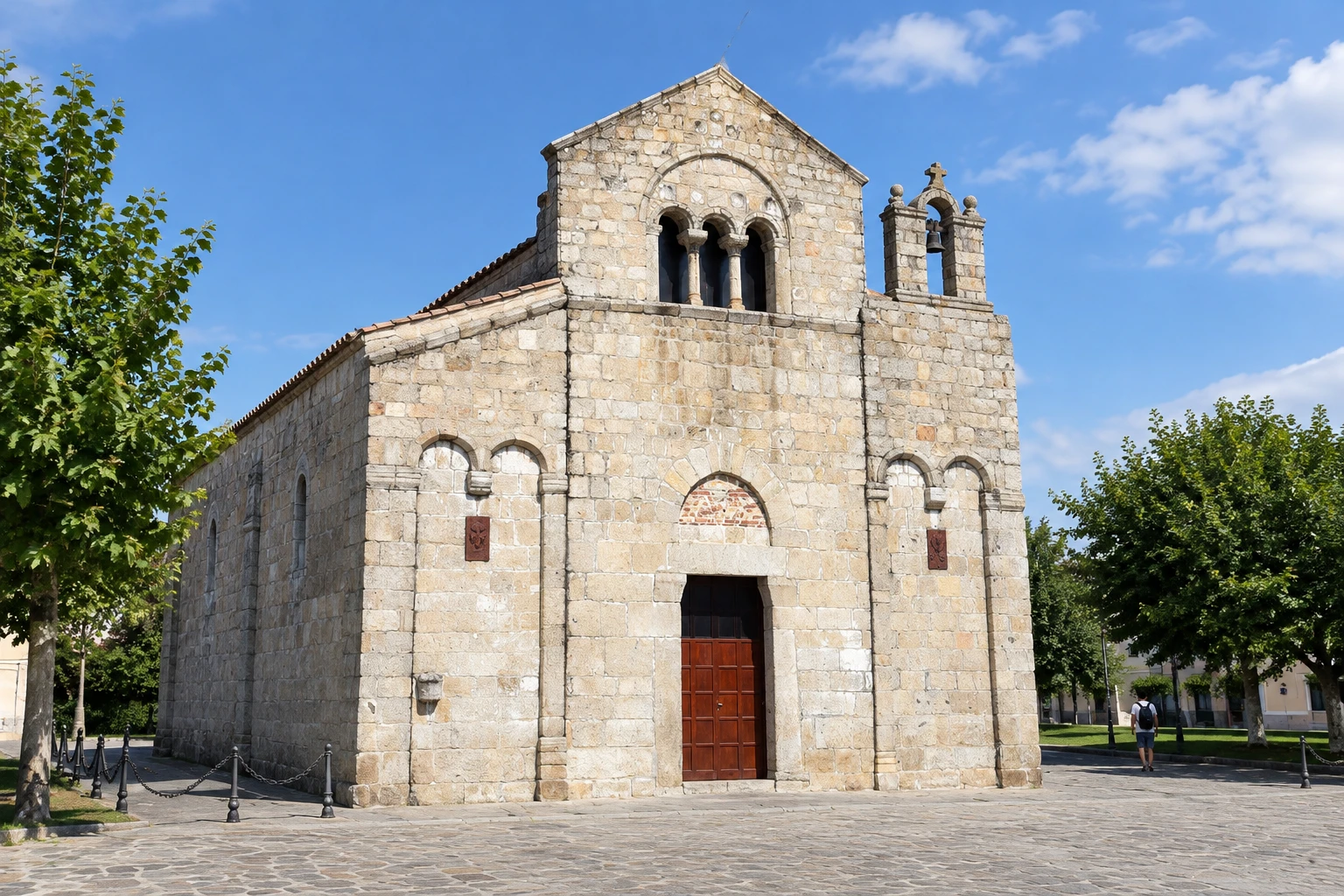
Olbia is the gateway to the Costa Smeralda and the northeast of the island, with an airport and ferry port, and a small pleasant center around Corso Umberto. The Basilica di San Simplicio, from the 11th century, built in granite, is the most important Romanesque church of the Gallura, built over a Roman necropolis (partly visitable beneath the square), with three naves, columns and inscriptions; in May the saint’s festival, patron of the town, lasts a week. The Museo Archeologico di Olbia, on the islet of Peddone in the port, displays the Roman ships found in 1999 during the port tunnel works—12 vessels sunk in the 5th century—and finds from the Phoenician, Greek and Roman city (Olbia was the only Greek city in Sardinia). The Corso has pizzerias and shops; the tourist port has boats to Tavolara.

Stops: Basilica di San Simplicio, Museo Archeologico di Olbia.

Includes: Basilica free of charge; museum free or with a small ticket, check; necropolis requires an entrance fee.

Tip: Olbia is more a base than a destination: use it for the Costa Smeralda, La Maddalena and the beaches of San Teodoro to the south. The island of Tavolara, reached by boat from Porto San Paolo, has a beach and the 'smallest monarchy in the world.'

Best time: All year; May to October for the boats.

Costa Smeralda and Porto Cervo: the yacht coast

From Olbia (car by car or ARST bus to Porto Cervo, 30 km) Drive along the beaches about 6 hours full day easy

The Costa Smeralda, the 55 km of pink granite coastline and emerald-water coves between Olbia and Arzachena, was created in 1962 by Prince Aga Khan as a luxury-tourism consortium, with an invented Mediterranean-village architecture and rules that ban tall buildings. Porto Cervo, the “capital,” is the small village around the yacht harbor, with the Piazzetta, the church of Stella Maris (housing a Greco), designer shops and the evening promenade to see the boats; empty in winter. The beaches are the reason to visit: Capriccioli, Liscia Ruja, Principe (the Aga Khan’s favorite), Romazzino and Cala di Volpe, all public, with paid parking and access by short trails through the rocks; the shallow, clear water is reminiscent of the Caribbean. To the north are Baja Sardinia and Palau, from where ferries depart for La Maddalena.

Stops: Porto Cervo, Arcipelago di La Maddalena.

Includes: Public beaches; paid parking separately. ARST bus paid separately, with more services in summer.

Tip: Rent a car in Olbia: the beaches are spread out and buses are few. Go to the beaches early in July and August, when parking fills up before 10:00; in June and September it is all quieter and the sea is warm.

Best time: From May to October; Porto Cervo shuts most services from November to April.

Arcipelago di La Maddalena: boat tour of the islands and Caprera

From Palau (ferry to La Maddalena, 20 min) or Olbia (excursions) Ferry and boat trip about 7 hours full day easy

The Arcipelago di La Maddalena, a national and marine park of seven main islands and dozens of granite islets in the Strait of Bonifacio between Sardinia and Corsica, has the most mentioned beaches of the area: Spiaggia Rosa on Budelli, with pink sand, closed to landings for protection and viewed from the boat; Cala Corsara on Spargi; and the natural pools of Santa Maria. Tour boats depart from Palau and La Maddalena in the morning and circle the islands with stops for swimming and lunch on board. The ferry from Palau reaches the town of La Maddalena in 20 minutes, with its center of narrow streets and the port, from which a bridge leads to Caprera, the island where Giuseppe Garibaldi lived from 1856 until his death in 1882: his house, the Compendio Garibaldino, is a museum with his tomb in the garden, and the beaches of Cala Coticcio (limited access, with guide) and Due Mari.

Stops: Arcipelago di La Maddalena.

Includes: The Palau–La Maddalena ferry is paid separately (car transport on board possible); boat tours are paid separately and require reservation; Compendio Garibaldino has an admission fee. The park charges an access fee for boats.

Tip: Book the boat tour in Palau the day before; it is cancelled in rough seas. On the island, rent a bike or car for Caprera and the northern beaches. The Spiaggia Rosa can only be seen from the boat: landing on it is prohibited.

Best time: From May to October; in July and August the beaches get crowded and boat trips sell out.

Sanctuary of Bonaria: Cagliari’s sailors’ basilica

From Viale Bonaria, Cagliari (tram or 15 min walk from the station) Visit to the sanctuary about 1 hour morning or afternoon easy

The Sanctuary and Basilica of Nostra Signora di Bonaria, on the hill above Cagliari’s harbor, was founded by the Aragonese in 1324 and is Sardinia’s most venerated shrine: according to tradition, the statue of the Virgin arrived in a box brought by the sea during a storm in 1370, and sailors adopted her as their protector; the city of Buenos Aires was named for her (Santa María del Buen Aire). The small Catalan-Gothic sanctuary houses the image and a museum with ship ex-votos; the basilica next to it, begun in 1704 and completed in 1926, is the large domed church, with the terrace of the staircase above the harbor. Popes visited the sanctuary in 1970, 2008 and 2013. In July there is a festival with a boat procession in the gulf.

Stops: Sanctuary and Basilica of Nostra Signora di Bonaria.

Includes: Sanctuary and basilica free to enter; museum by donation.

Tip: Go mid-morning, when the museum opens; from the basilica steps you can see the harbour and the Sella del Diavolo. Combine it with a visit to the Poetto, 10 minutes away by bus.

Best time: Year-round; on the first Sunday of July there is a festival with a maritime procession.

Day by day

3, 5 and 7-day itinerary in Sardinia

Suggestions to plan the trip. Change the order of the days according to the weather and tour availability.

3 days · Sardinia in 3 days: Cagliari and the south

For For visitors arriving in Cagliari on a short stopover who want the city, a nuraghe and the sea. · Based in Cagliari, at the Marina or in the Castello
  1. Day 1 · Cagliari

    Arrival at Elmas airport (7-minute train to the station). Museo Archeologico in the morning, in the Castello; Cattedrale and the Pisan towers; Bastione di Saint Remy at sunset; dinner at the Marina.

  2. Day 2 · Barumini

    Car or ARST bus to Su Nuraxi di Barumini: guided tour, Casa Zapata and Centro Lilliu; Giara horses in the afternoon (with a car); return to Cagliari.

  3. Day 3 · Nora and Poetto

    Nora in the morning, with the guided visit and a swim at the adjacent beach; afternoon at the Poetto, with the flamingos of Molentargius at the end of the day; Sanctuary of Bonaria on the way.

5 days · Sardinia in 5 days: from the south to the northwest, Cagliari and Alghero
For For those who want the two most interesting towns on the island, by car or by bus. · Based in Cagliari (2 nights) and Alghero (3 nights)
  1. Day 1 · Cagliari

    Arrival at Elmas airport and a 7-minute train to the station. Museo Archeologico in the Castello, with the Nuragic bronzes and the Giants; Cattedrale and Pisan towers; Bastione di Saint Remy at sunset and dinner at the Marina.

  2. Day 2 · Nora and Poetto

    Nora on the first guided visit of the morning, with a swim at the adjacent beach; back to Cagliari, afternoon at the Poetto and the flamingos of Molentargius by bike at the end of the day; Sanctuary of Bonaria at dusk.

  3. Day 3 · Barumini and road to Alghero

    Su Nuraxi in the morning; drive north (about 3 h from Barumini to Alghero via the SS131 and SS291; by bus, Cagliari–Alghero takes around 4 h with a change in Sassari); Alghero walls at sunset.

  4. Day 4 · Grotta di Nettuno and Capo Caccia

    Boat from Alghero to the grotto in the morning (or bus and staircase); viewpoint at Capo Caccia; afternoon on the beaches of Le Bombarde or Lazzaretto; dinner in the Catalan quarter.

  5. Day 5 · Palmavera and Pelosa

    Nuraghe Palmavera in the morning; Spiaggia della Pelosa in Stintino, with a reservation, for the rest of the day; return to Alghero, with outbound flight from Fertilia airport or train to Sassari.

7 days · Sardinia in 7 days: the coastal circuit, from the south to the northeast
For One week by car, from Cagliari to Olbia, including Alghero and La Maddalena. · Based in Cagliari (2), Alghero (2), Palau or La Maddalena (1), Olbia/Costa Smeralda (2)
  1. Day 1 · Cagliari

    Arrival at Elmas, car pick-up or train to the center. Museo Archeologico and the streets of the Castello, Cattedrale and the tower of San Pancrazio; Bastione di Saint Remy at sunset and dinner at the Marina.

  2. Day 2 · Nora and Poetto

    Nora in the morning, with the guided visit to the theatre and the mosaics, and a swim at Nora beach; afternoon at the Poetto, with the Sella del Diavolo trail or the flamingos of Molentargius; Sanctuary of Bonaria on the way back.

  3. Day 3 · Barumini and Alghero

    Su Nuraxi in the morning with the guided tour; drive along the SS131 to Alghero (about 3 h); walls at sunset and dinner in the Catalan centre.

  4. Day 4 · Capo Caccia and the grotto

    Grotta di Nettuno by boat or via the staircase; Capo Caccia; Porto Conte beaches in the afternoon; Palmavera on the way back.

  5. Day 5 · Pelosa and the road to the north

    Spiaggia della Pelosa in the morning, with a reservation; drive via Castelsardo (village on the rock, with the cathedral and palm baskets) to Palau (about 3 h); night in Palau or La Maddalena.

  6. Day 6 · La Maddalena and Caprera

    Boat trip around the archipelago with stops for swimming; or ferry to La Maddalena, Caprera and Garibaldi’s house by car; night in Palau.

  7. Day 7 · Costa Smeralda and Olbia

    Beaches of Capriccioli and Principe in the morning; Porto Cervo in the late afternoon; Olbia, with San Simplicio, for the night and your outbound flight or ferry.

Best time to go

When to go: Sardinia month by month

From May to October for the beach. July and August are the warmest and busiest months, with higher prices. June and September usually offer good sea for swimming and fewer people. Sightseeing boats usually operate from April or May to October. In winter, from December to February, the coast has mild weather, but many beach services close.

The seasons shown are the most usual ones; nature doesn't always follow the calendar.

January Low rain

winter · empty island

Winter. At the Cagliari Elmas station, normals 1991–2020 (Alghero and Olbia: normals 1981–2010, similar): mean 10 °C in Cagliari (highs of 14 °C) and about 37 mm of rain; Alghero with 9.7 °C and 55 mm. Sunny and windy days (the mistral), cold sea; the Costa Smeralda closed, Alghero and Cagliari with a city pace. Archaeological sites empty. On January 16 and 17, the St. Anthony bonfires in the interior.

February Low rain

winter · Sardinian Carnival

Winter. At Cagliari Elmas station, normals 1991–2020 (Alghero and Olbia: normals 1981–2010, similar): average about 10 °C and around 34 mm of rain. Sardinia’s Carnival is among the oldest in Europe: the Mamuthones of Mamoiada, with wooden masks and bells, and the Sartiglia of Oristano, the horse race. Apart from that, activity is very low.

March Low rain

early spring · flowering fields

Early spring. At Cagliari Elmas station, normals 1991–2020 (Alghero and Olbia: normals 1981–2010, similar): average 12.4 °C and about 32 mm of rain. Green fields and flowers inland, almond trees; good days for Barumini, Nora and the walls. Neptune’s Grotto opens on its seasonal schedule. European summer time from the last Sunday: 4 hours ahead of Brasília.

April Some rain

spring · Easter

Spring. At Cagliari Elmas station, normals 1991–2020 (Alghero and Olbia: normals 1981–2010, similar): average 14.8 °C and about 46 mm of rain, the rainiest spring month in Cagliari. Holy Week with processions in Alghero and Cagliari, of Spanish rite; on April 25 beach hotels reopen. Sea still cold.

May Low rain

spring · Sant'Efisio and empty beaches

Full spring. At Cagliari Elmas station, normals 1991–2020 (Alghero and Olbia: normals 1981–2010, similar): average 18.7 °C and about 26 mm of rain. From May 1 to 4, the festival of Sant'Efisio, the island’s largest procession, from Cagliari to Nora; the Cavalcata Sarda in Sassari in the penultimate week. Beaches with cold water but almost empty, flamingos in the Molentargius. One of the most pleasant months.

June Low rain

summer · warm sea and no crowds

Summer. At Cagliari Elmas station, normals 1991–2020 (Alghero and Olbia: normals 1981–2010, similar): average 23 °C and about 12 mm of rain. The sea reaches 22 °C, the beaches of the Costa Smeralda and La Pelosa still without July’s crowds; boats to La Maddalena in full service. Long, dry days.

July Low rain

summer · high season

Summer. At Cagliari Elmas station, normals 1991–2020 (Alghero and Olbia: normals 1981–2010, similar): average 25.7 °C (maximums around 31 °C) and about 3 mm of rain. Beaches and coastal roads crowded; La Pelosa requires mandatory reservation; Porto Cervo at its peak. Inland, heat exceeds 35 °C: archaeological sites best visited in the morning. On the first Sunday, the festival of Bonaria with boats.

August Low rain

summer · Ferragosto

Summer. At Cagliari Elmas station, normals 1991–2020 (Alghero and Olbia: normals 1981–2010, similar): average 26.2 °C and about 11 mm of rain. The busiest month: Ferragosto (August 15), fireworks in Alghero, ferries and flights sold out without reservations. The sea is at its best, but well-known beaches fill up before 10:00. If you can, choose June or September.

September Some rain

late summer · ideal month

Late summer. At Cagliari Elmas station, normals 1991–2020 (Alghero and Olbia: normals 1981–2010, similar): average 22.7 °C and about 39 mm of rain, in short storms. The sea remains warm, beaches empty after the first week, prices fall and the inland becomes viable again during the day. Harvest of Cannonau and Vermentino. For many, the island’s favorite month.

October Some rain

autumn · last swims

Autumn. At the Cagliari Elmas station, normals 1991–2020 (Alghero and Olbia: normals 1981–2010, similar): mean 18.8 °C and about 44 mm of rain. Sunny days around 24 °C with swimming possible until mid-month; beach hotels begin to close and boats to La Maddalena reduce service. European summer time ends on the last Sunday: 5 hours difference to Brasília.

November High rain

autumn · wettest month

Late autumn. At the Cagliari Elmas station, normals 1991–2020 (Alghero and Olbia: normals 1981–2010, similar): mean 14.5 °C and about 74 mm of rain, the wettest month in Cagliari (Alghero with 109 mm). Coast closed, quiet towns, a good time for museums, nuraghes and inland cuisine (porceddu, culurgiones). Strong mistral on some days.

December Some rain

winter · Christmas in the cities

Winter. At the Cagliari Elmas station, normals 1991–2020 (Alghero and Olbia: normals 1981–2010, similar): mean 11.2 °C and about 55 mm of rain. Christmas markets in Cagliari and Alghero, nativity scenes in churches, sunny days around 16 °C between fronts. Between Christmas and New Year people from Sardinia return home and flights get full.

Plan the journey

How to get there: Sardinia

From Brazil by plane: via Rome with a connection to Cagliari, Olbia or Alghero

There are no direct flights from Brazil to Sardinia. Arrival is usually via a direct flight from São Paulo or Rio to Rome Fiumicino and a connecting flight of about 1 hour to Cagliari (CAG), Olbia (OLB) or Alghero (AHO), or via connection in another European city. Confirm before buying. Cagliari Elmas is 7 km from the center, with a 7‑minute train to the station; Olbia Costa Smeralda is 4 km away, with an urban bus; Alghero Fertilia is 10 km away, with a bus. In high season flights to Olbia fill up weeks in advance.

By ferry from the mainland

Ferries link Sardinia to mainland Italy, with car on board: Civitavecchia (port of Rome)–Olbia (about 6 to 8 hours, daytime or overnight; Moby, Tirrenia, Grimaldi), Civitavecchia–Cagliari (about 13 hours), Livorno–Olbia (about 8 hours), Genoa–Porto Torres and Genoa–Olbia (about 10 to 12 hours), Naples–Cagliari and Piombino–Olbia seasonally; from Bonifacio, Corsica, to Santa Teresa Gallura in 1 hour. Cabins and car spots sell out in summer: book. Ports are close to the centers of Olbia and Cagliari.

By car: the way to see the island

Sardinia is large (270 km north–south) and buses are few: a car is the way to see the beaches and sites. The SS131 Carlo Felice links Cagliari to Sassari and Porto Torres (about 2 h 30 to 3 h, no toll); the SS131dcn goes from Abbasanta to Olbia; Cagliari–Olbia takes about 3 h 30; Alghero–Olbia about 2 h. On coastal and inland roads expect curves, sheep and slow stretches. There are no tolls on the island. Cities have ZTL (limited traffic zones) in historic centers (Cagliari, Alghero, Olbia), with cameras; park outside. Rent at your arrival airport and return at your departure airport: agencies allow it.

By train and bus within the island

Trenitalia links Cagliari to Oristano (1 hour), Sassari (about 3 h) and Olbia (about 4 h), and Sassari to Alghero (ARST train, 35 minutes) and Porto Torres; the Trenino Verde, the narrow-gauge tourist train, runs interior sections in season. ARST buses cover the island, with transfers and few schedules outside the towns: Cagliari–Pula (Nora) 1 hour, Cagliari–Barumini about 1 h 30, Olbia–Porto Cervo and Olbia–Palau about 1 hour, Alghero–Capo Caccia (summer). In towns, urban buses CTM (Cagliari) and ASPO (Olbia). Check the day’s schedules; on Sundays service is much reduced.

Tickets, reservations and beaches with limited access

Su Nuraxi di Barumini, Nora and Grotta di Nettuno: guided tour required, ticket office on site (online reservation for groups). Museo Archeologico di Cagliari: buying online avoids queues; free entry on the first Sunday of the month. Spiaggia della Pelosa: daily reservation required and summer fee, via the Stintino municipality website; other beaches (Cala Coticcio, Tuerredda, Cala Goloritzé) also limit daily visitor numbers by reservation. La Maddalena Park: fee for boats. Municipalities charge a tourist tax per night, payable at accommodation. Check the current table and rules.

Documents and time zone for Brazilian travelers

Italy is in the Schengen area: Brazilian citizens enter with a valid passport, without a visa for tourism up to 90 days. Entry requirements for Europe can change: confirm before travel. On arrival authorities may ask for a return ticket, proof of where you will stay and means to support your stay; travel insurance with medical coverage is required for the Schengen area. Minors traveling without both parents: check requirements before going. The time zone is Central European Time (CET): Italy is 4 hours ahead of Brasília during European summer time, from late March to late October, and 5 hours ahead the rest of the year. The socket is the two- or three‑round‑pin type, 230 V. In Sardinia, besides Italian, Sardinian is spoken and, in Alghero, Algherese (Catalan).

Your base to explore

Where to stay and where to eat

Before you go

Practical information

A little planning leaves more time to enjoy the journey.

When to go

From May to October for the beach. July and August are the warmest and busiest months, with higher prices. June and September usually offer good sea for swimming and fewer people. Sightseeing boats usually operate from April or May to October. In winter, from December to February, the coast has mild weather, but many beach services close.

The seasons shown are the most usual ones; nature doesn't always follow the calendar.

How many days to stay

One week allows you to see two regions of the island, for example Cagliari in the south and Alghero or Olbia in the north. With 10 to 14 days you can go around the island, with time for beaches, Su Nuraxi, Capo Caccia and a boat trip in La Maddalena. With 3 or 4 days, it’s best to stay in just one region.

Which city to stay in

In Cagliari, the historic neighborhoods Marina and Stampace are close to the station and the port, and the Castello has views from above; the Poetto is the option for those who want the beach. In Alghero, the walled historic center and the Lungomare make everything walkable. In the northeast, Olbia is convenient because of the airport and the port; Palau is the base for La Maddalena, and the Costa Smeralda, with Porto Cervo, Cala di Volpe and Baja Sardinia, concentrates high-end accommodation.

Respect the place

Take your trash with you, follow the signs and support local businesses. In natural areas, follow the visiting guidelines.

Beyond the guide

Your questions

Frequently asked questions about Sardinia

How to get to Sardenha from Brazil?

Connections with Brazil are usually via a stopover in another city. Confirm before purchasing. The most common option is to fly to Rome or Milan and continue on a domestic flight to Cagliari, Alghero or Olbia, or to connect in another European city directly to one of those airports. Those already traveling in Italy by car can cross by ferry from Civitavecchia, near Rome, from Livorno or from Gênova.

Do you need a car in Sardenha?

It helps a lot. Trains and buses link the main towns, but beaches, nuraghes and viewpoints are often far from bus stops, and frequency drops outside the summer. With a car, leave it outside historic centers: Cagliari and Alghero have ZTL, a limited-traffic zone closed to non-local cars.

Which airport to choose: Cagliari, Alghero or Olbia?

It depends on the region. Cagliari (CAG) serves the south, including the capital, the Poetto, Nora and Su Nuraxi. Alghero (AHO) serves the northwest, with Capo Caccia, the Grotta di Nettuno and Stintino. Olbia (OLB) serves the northeast, with the Costa Smeralda and La Maddalena. You can arrive at one and depart from another.

How many days to set aside for Sardenha?

At least 5 days for one region, a week for two, and 10 to 14 days to circle the island. Road distances are long: Cagliari to Olbia takes about 3 hours by car.

Is it possible to see Sardenha on a day trip from Rome?

It’s not ideal. The flight is short, but adding airport time and transfers leaves little time. To make it worthwhile, book at least three nights in one of the towns.

What is the best time to go to Sardenha?

From May to October for beaches and boats. June and September usually combine warm sea and less crowding than July and August. The seasons are reversed compared with Brazil, and Italy is 4 or 5 hours ahead of Brasília, depending on the time of year.

Explore other destinations Search by state and city