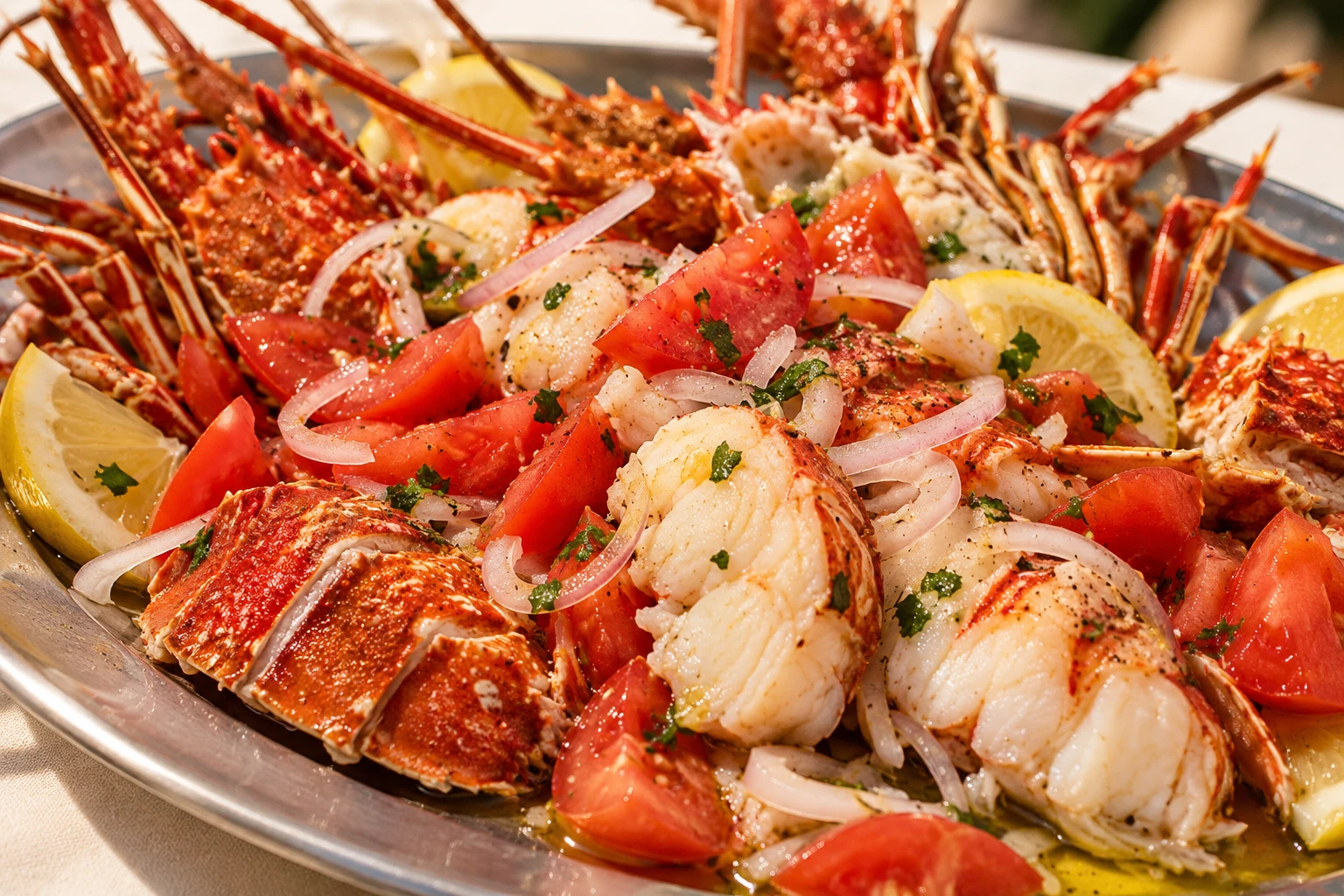
Aragosta alla catalana
Cooked lobster served cold in pieces, with ripe tomato, raw onion, olive oil and sometimes lemon. It is the dish that best symbolizes Alghero, a city of Catalan heritage in northwest Sardinia.
Antarctica
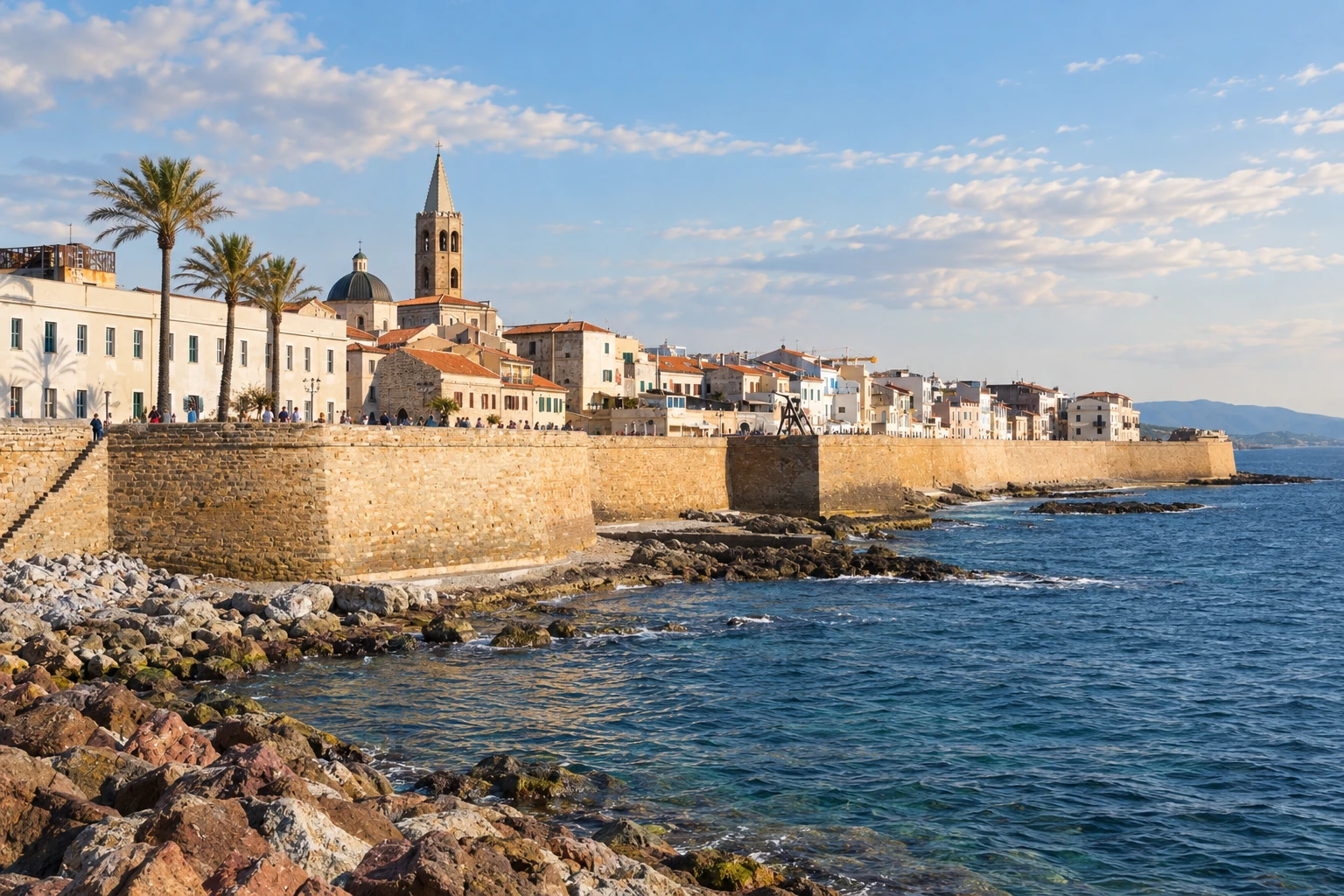
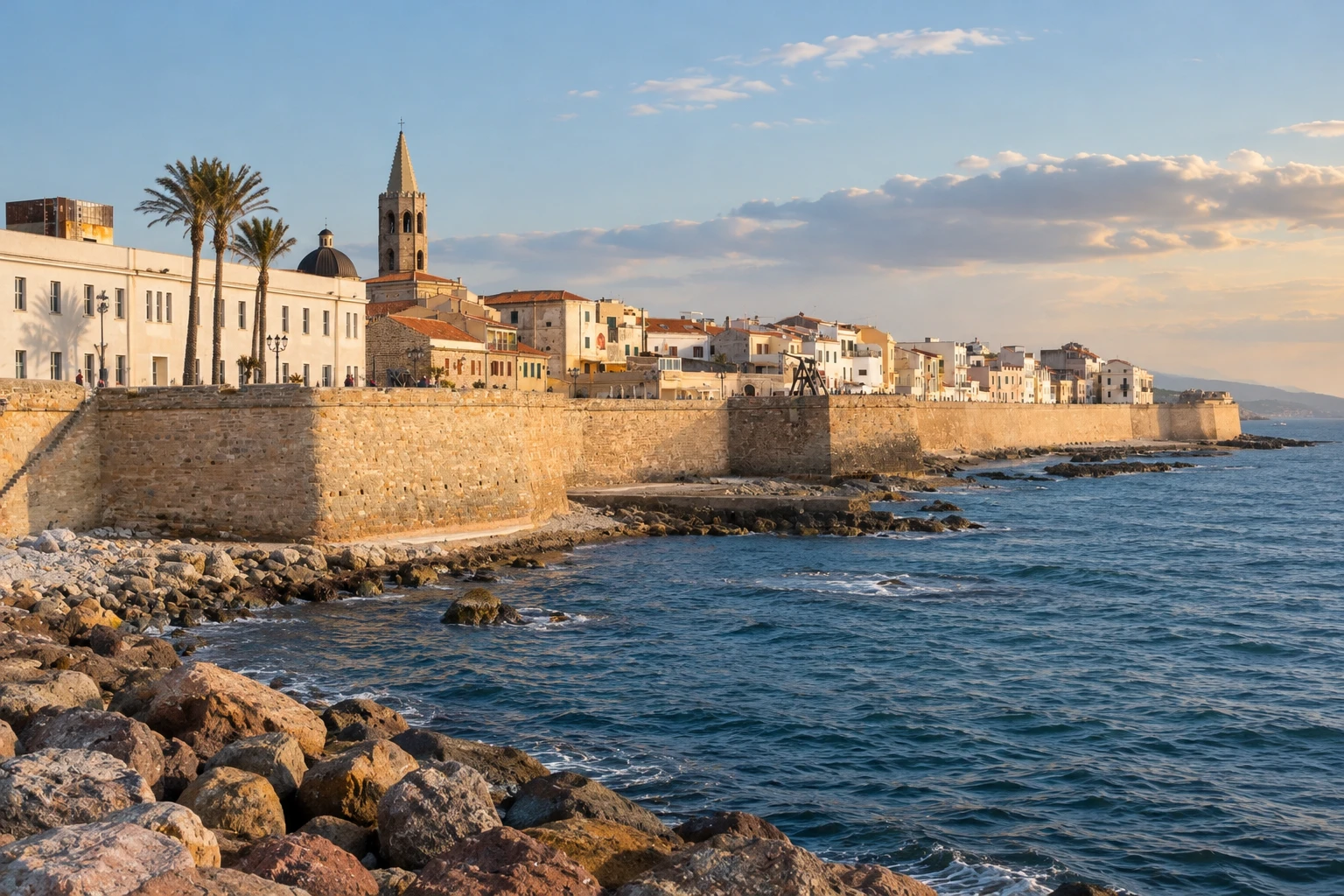
In the photo: Walls and seaside bastions of Alghero's historic center
Illustrative images. The pictures in this guide are illustrations based on the real place, not photographs, and may differ from it.
The city
Walled city on the northwest coast of Sardenha, known as the little Barcelona: it was settled by Catalans in the 14th century and still preserves a Catalan dialect, bilingual street names and walls over the sea. In the historic center are the Cattedrale di Santa Maria and the bastions. In the surroundings are the Capo Caccia promontory, the Grotta di Nettuno, the nuraghe of Palmavera and, further north, the beach La Pelosa in Stintino.
29 places to stay in Alghero.
29 places to eat in Alghero.
Hotéis e restaurantes da cidade no mapa.
how to get there · how many days · itinerary · questions
Flavors of Italy
The local experience
Old town surrounded by walls and Catalan–Aragonese towers overlooking the sea, with stone streets, signs in Italian and Catalan and a promenade along the bastions.
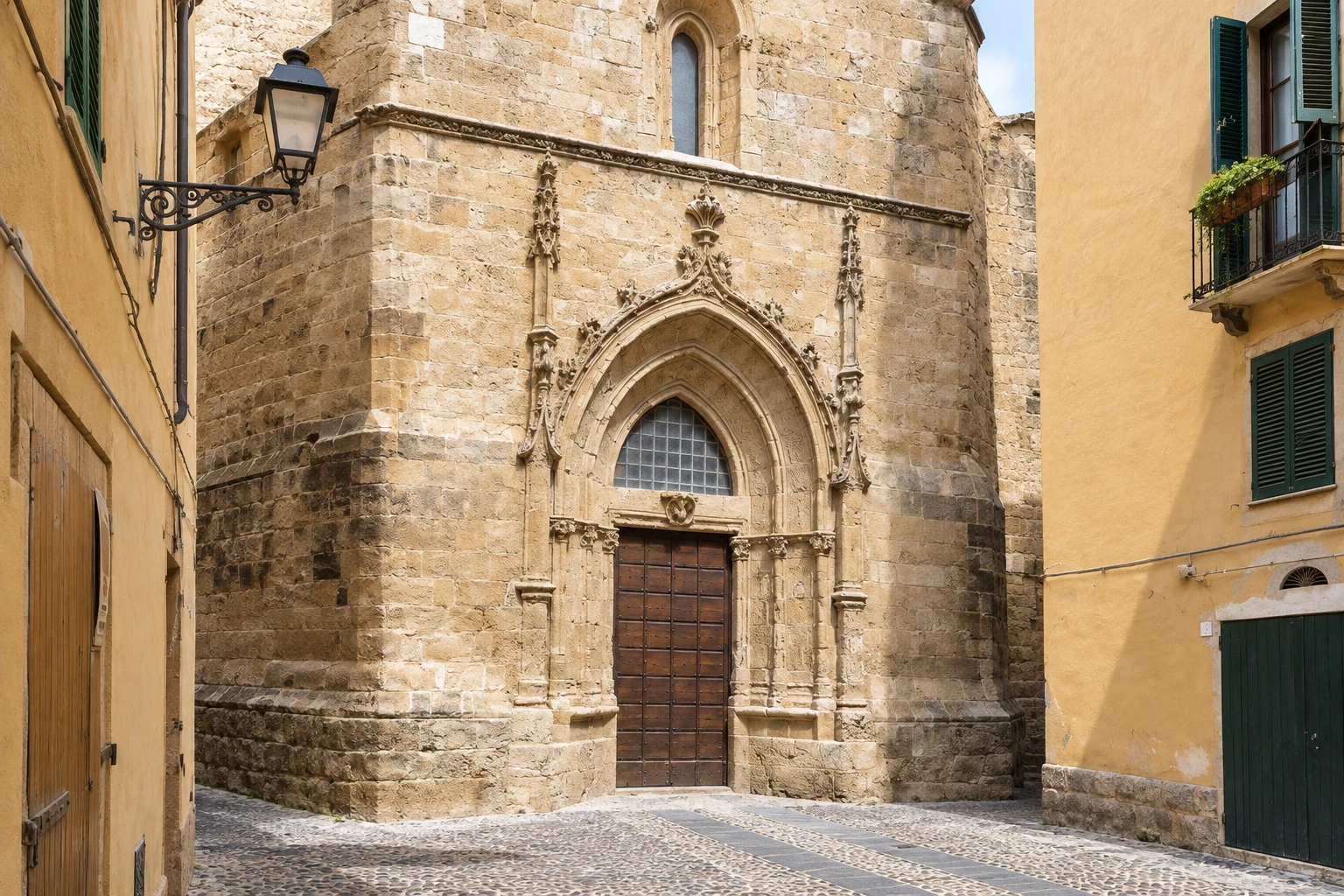
Alghero Cathedral, begun in the 16th century, with an octagonal Gothic–Catalan bell tower, a Renaissance interior and a 19th-century neoclassical façade.
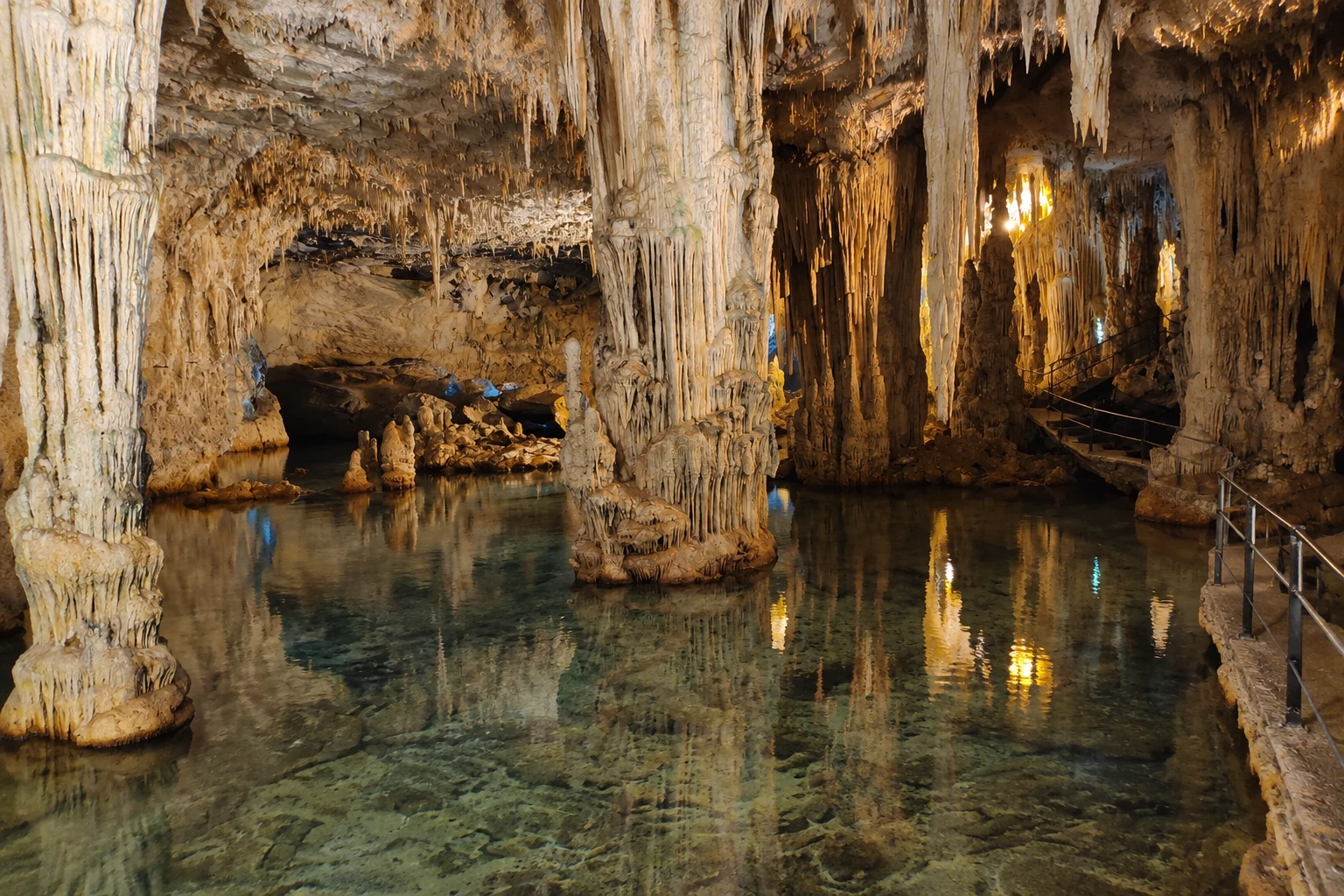
Sea cave at the base of Capo Caccia, with stalactites, an underground saltwater lake and columned chambers; access via the Escala del Cabirol stairway or by boat, depending on the sea.
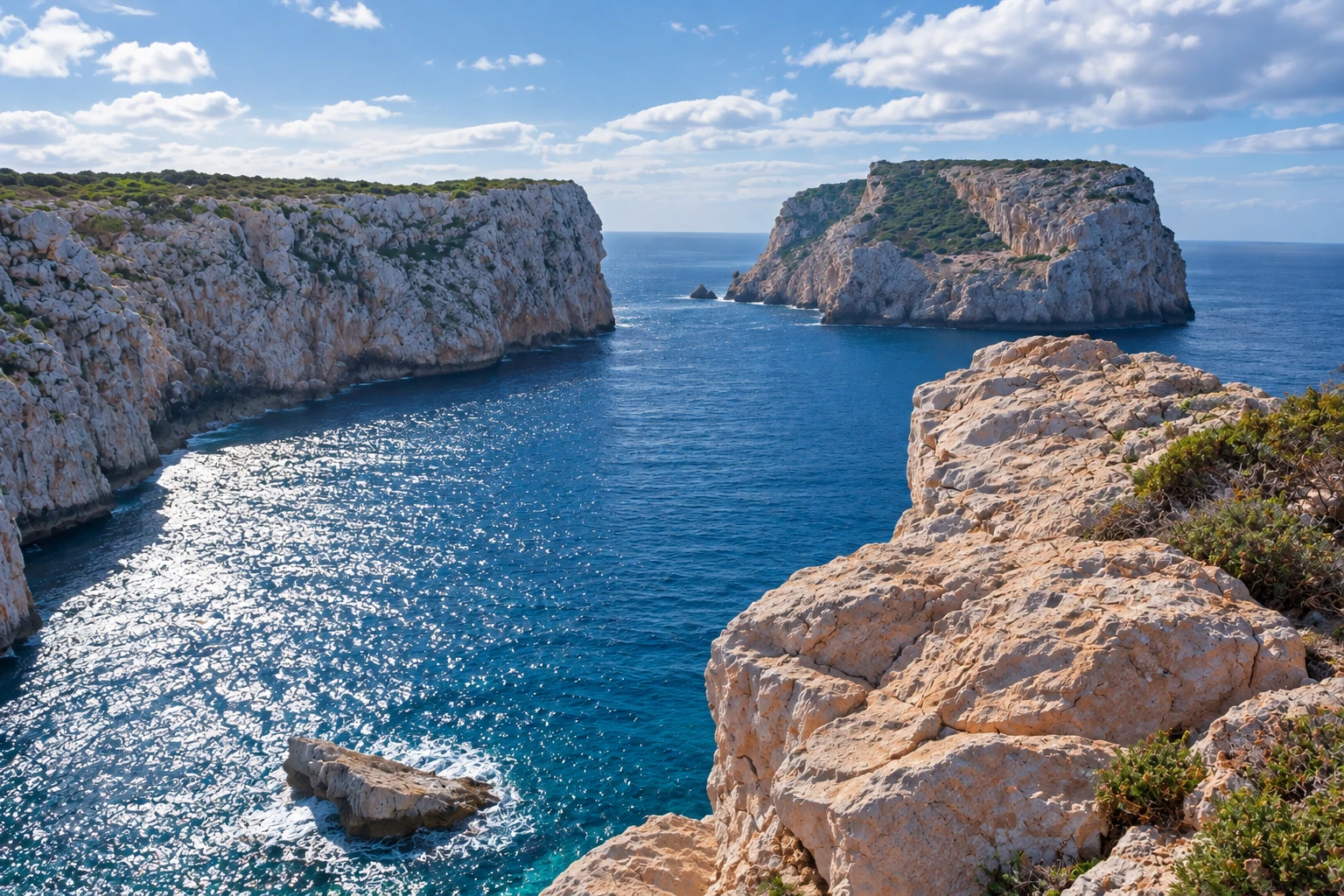
Limestone promontory that closes Porto Conte bay, with cliffs over the sea, a lighthouse, viewpoints toward the island Foradada and access to the Grotta di Nettuno.
Before you go
Alghero – Italy Destination Sardinia about 230 km from Cagliari
Approximate distances. Check flights and bus, train or boat schedules before you travel.
Connections with Brazil are usually via a stopover in another city. Check before purchasing. From Rome or Milan, domestic flights go to Alghero-Fertilia Airport (AHO), about 10 km from the center, with buses to the town. Those arriving by ferry disembark in Porto Torres, about 35 km away.
Two days for the historic center, the bastions, Capo Caccia and the Grotta di Nettuno. With three or four days you can include Palmavera, a day at the beach in La Pelosa and the area's beaches.
From May to October for beaches and for the boats to the Grotta di Nettuno, which have more departures in spring and summer. July and August are the hottest and busiest months. In spring and autumn the center and the trails of Capo Caccia are quieter.
The seasons shown are the most usual ones; nature doesn't always follow the calendar.
Not for the center: everything is done on foot, and the historic center has a ZTL. For Capo Caccia, Palmavera and La Pelosa, a car is very helpful; there are buses to Capo Caccia and to Stintino in season, with limited schedules. You can also reach the Grotta di Nettuno by boat from the harbour.
Suggested itinerary
Built with the places on this page. No rush: it's paced so you have time to see them.
Enter through the Torre di Porta Terra and walk along the stone streets to the Cattedrale di Santa Maria, with its Gothic–Catalan bell tower. Notice the signs in Italian and in Catalan.
After lunch, take the boat from the harbour to the Grotta di Nettuno; the visit inside the cave is guided. Departures depend on the sea and the season.
Walk along the Bastioni Cristoforo Colombo and Marco Polo, above the sea, with Capo Caccia on the horizon.
Have dinner in the historic center from around 19:30–20:00. Catalan-style lobster and local fish feature on many menus.
Day 1
Walk through the walled centre, the Cattedrale di Santa Maria and the Sulis and Porta Terra towers.
After lunch, drive to the Complesso nuragico di Palmavera, about 10 km away, on the way to Porto Conte.
Back in town, walk along the bastions and the Lungomare Dante in the late-afternoon light.
Dine in one of the alleys of the historic centre or in the harbour area.
Day 2
Drive to Capo Caccia, descend the 654 steps of the Escala del Cabirol and take the guided tour of the Grotta di Nettuno. Leave early to avoid the heat on the climb back.
Have lunch in the Porto Conte area and go up to the Capo Caccia viewpoint, near the lighthouse, with views of the island Foradada.
End the afternoon on one of the beaches of Porto Conte bay, such as Mugoni, sheltered from the northwest wind.
Return to Alghero to dine and take a final walk along the illuminated bastions.
Check before you go. Opening hours and days change, and places may close for renovations, holidays or events. This itinerary is a suggestion from Cidade Turismo, not a commitment: plan yours by checking directly with each place you intend to visit.
Before you go
After the Aragonese conquest in the 14th century, the city was repopulated by Catalans. The local dialect, algherese, survived, and street signs appear in Italian and in Catalan. In Catalan the city is called L'Alguer.
By bus in about 20 minutes, or by taxi. The airport is in Fertilia, about 10 km away.
The boat, which departs from Alghero's harbour, shows the cliffs of Capo Caccia and avoids the climb. The Escala del Cabirol, with 654 steps, is cheaper and offers wide views, but requires stamina on the return. In both cases, entry to the cave depends on the sea conditions.
Yes, by car in just over an hour, to Stintino. In the summer season, access to the beach is limited and requires advance reservation.
Not for the city. For Capo Caccia, Palmavera and Stintino it's very useful. Leave the car outside the historic centre, which has a ZTL.