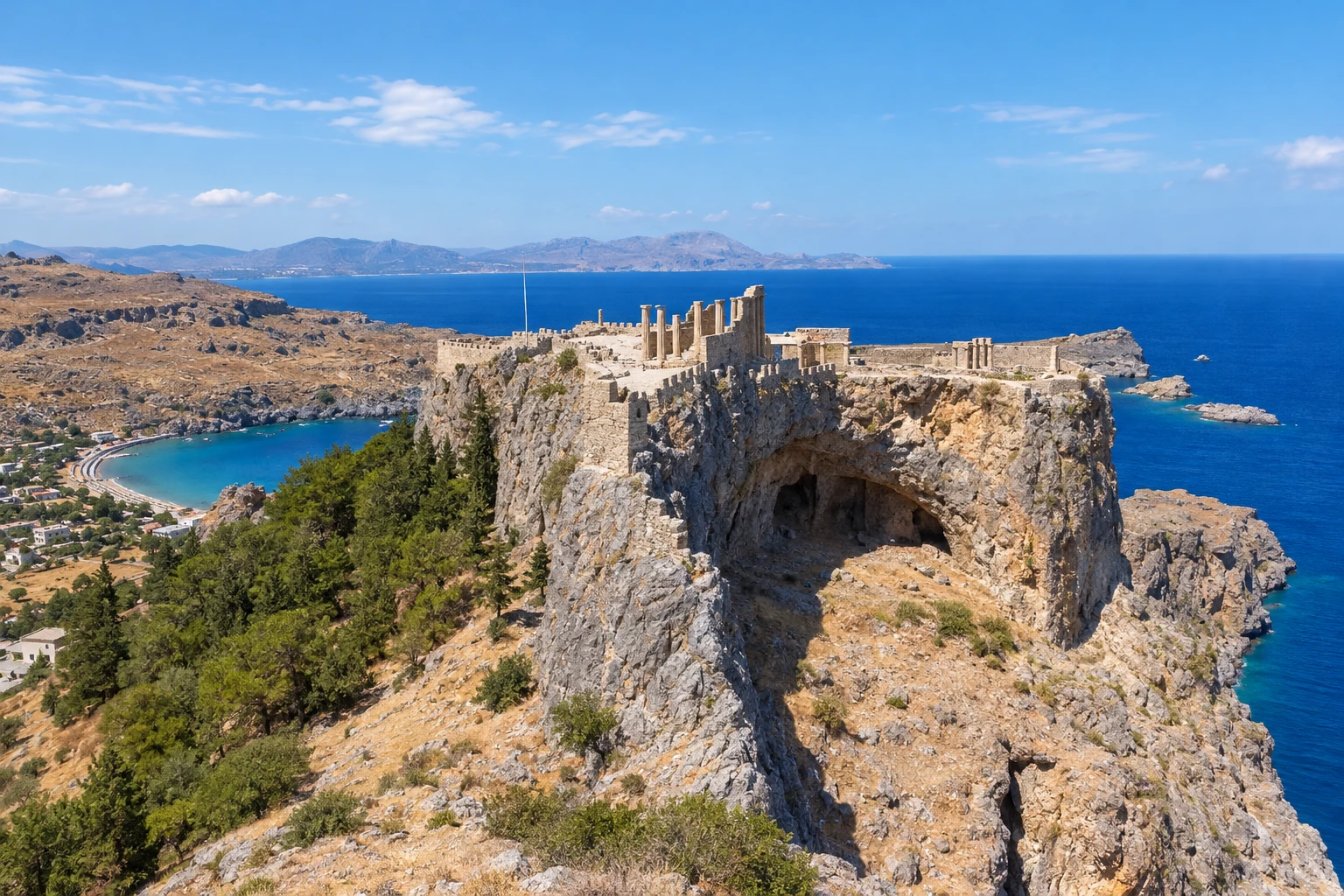
Rhodes
The largest island of the Dodecaneso holds the walled city of the Cavaleiros de São João, the acropolis of Lindos above the sea, sandy beaches and a valley where butterflies often land in summer.
Antarctica
Greece travel guide
What to do, when to go and how to get there, destination by destination.
10 destinations · 16 citiesin Greece
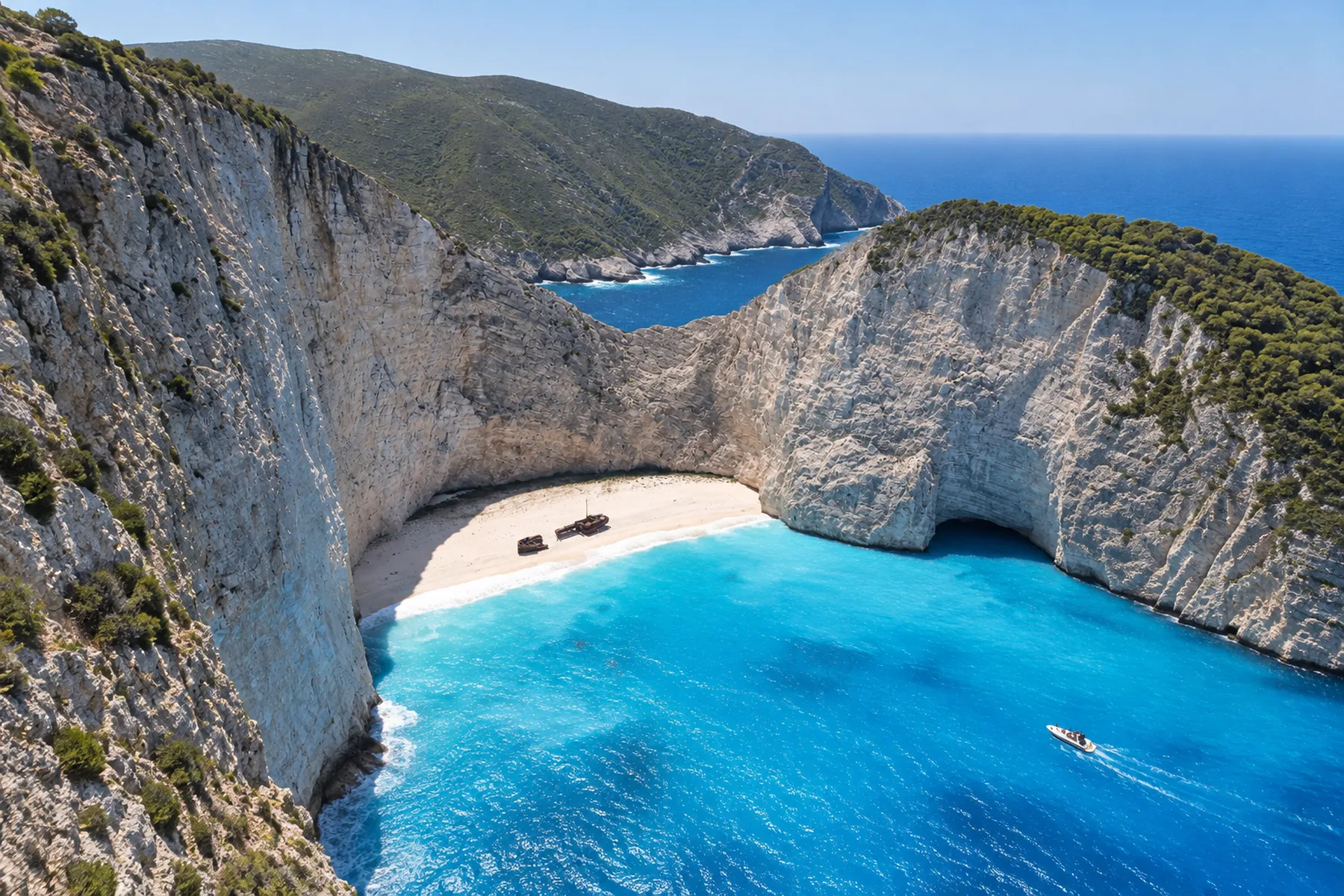
In the photo: Navagio Beach — Zakynthos
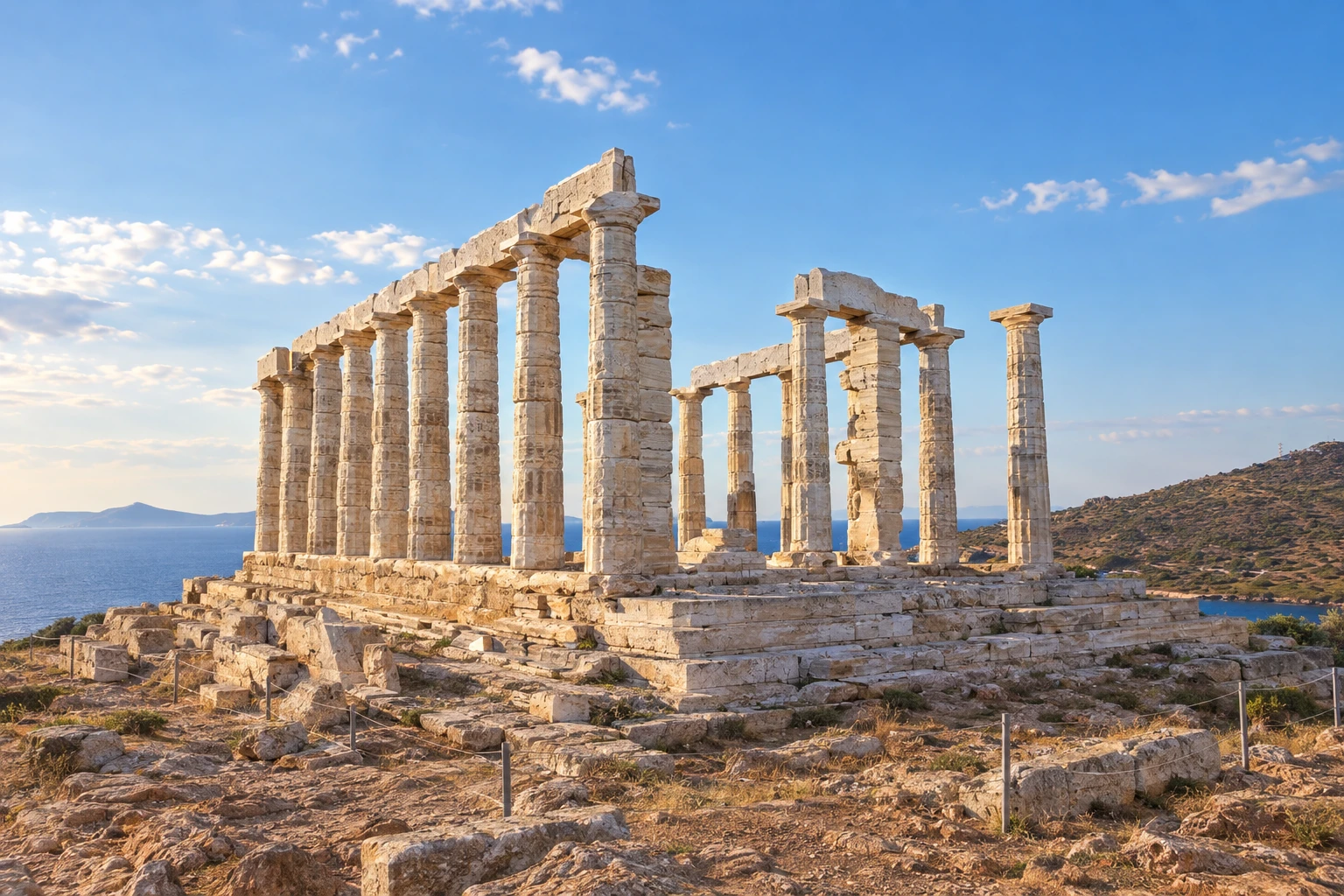
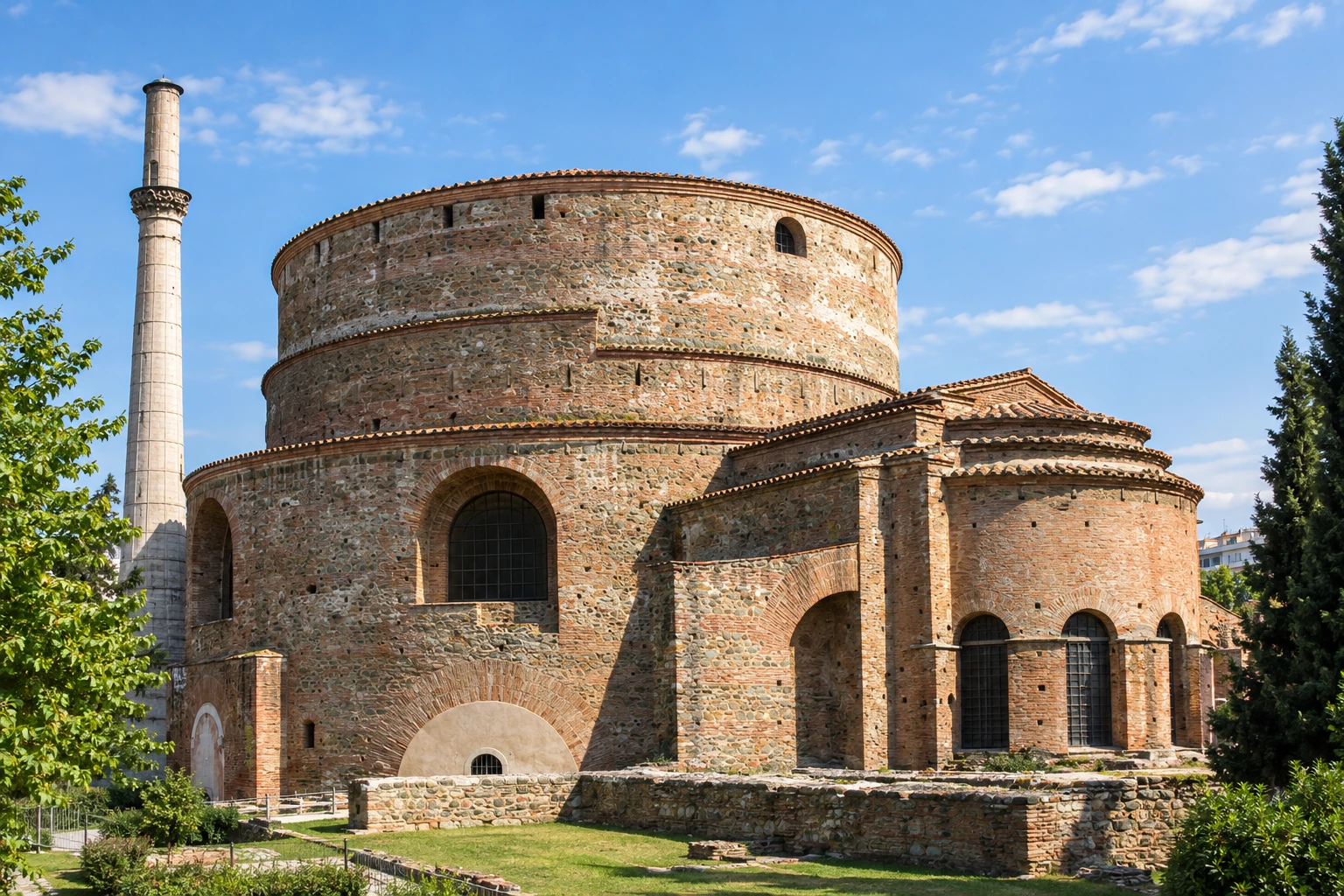
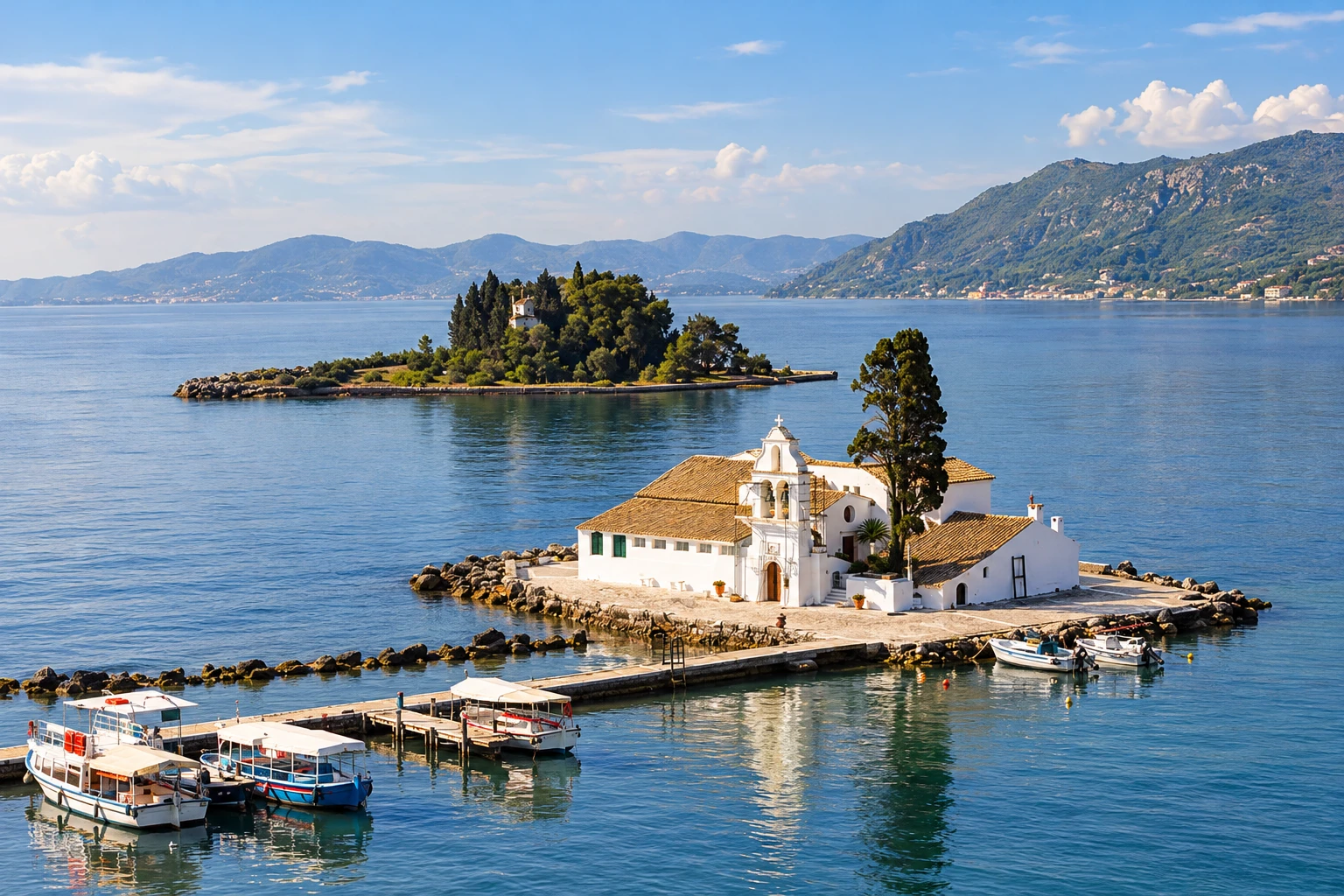
Illustrative images. The pictures in this guide are illustrations based on the real place, not photographs, and may differ from it.
A destination is a region you visit as a single trip: it can bring together several cities or be a large city with everything it offers. Each destination has the tours, the itineraries, the best time to go month by month and how to get there.
The guide currently has 10 destinations, with 16 cities in 10 regions.
Today's highlights
A destination is more than a city: it's everything you can experience there.
The largest island of the Dodecaneso holds the walled city of the Cavaleiros de São João, the acropolis of Lindos above the sea, sandy beaches and a valley where butterflies often land in summer.
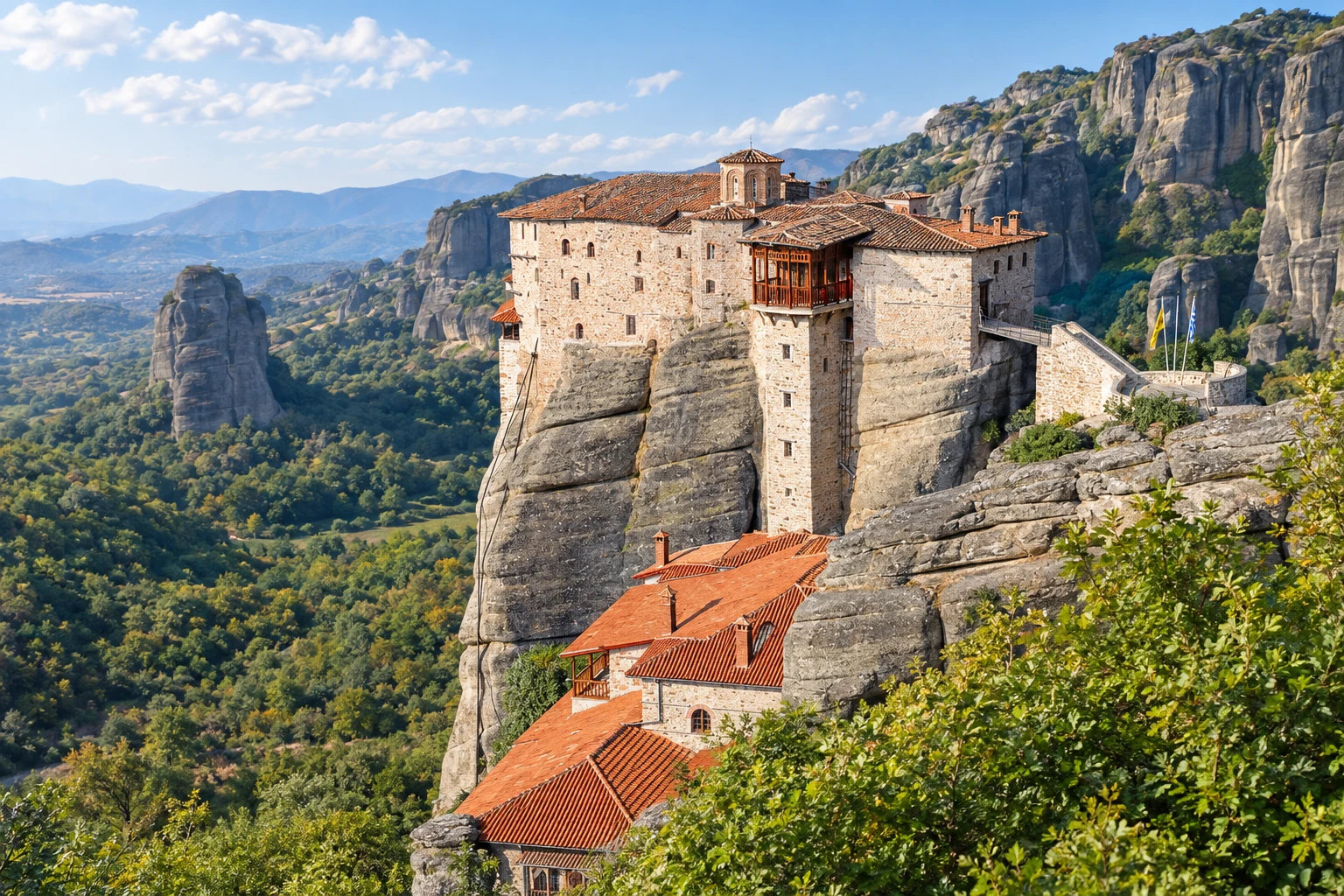
Six Orthodox monasteries atop rock towers in Tessália, a World Heritage Site: stairways carved into the rock, 16th‑century frescoes and ancient trails between Kalambaka and Kastraki.
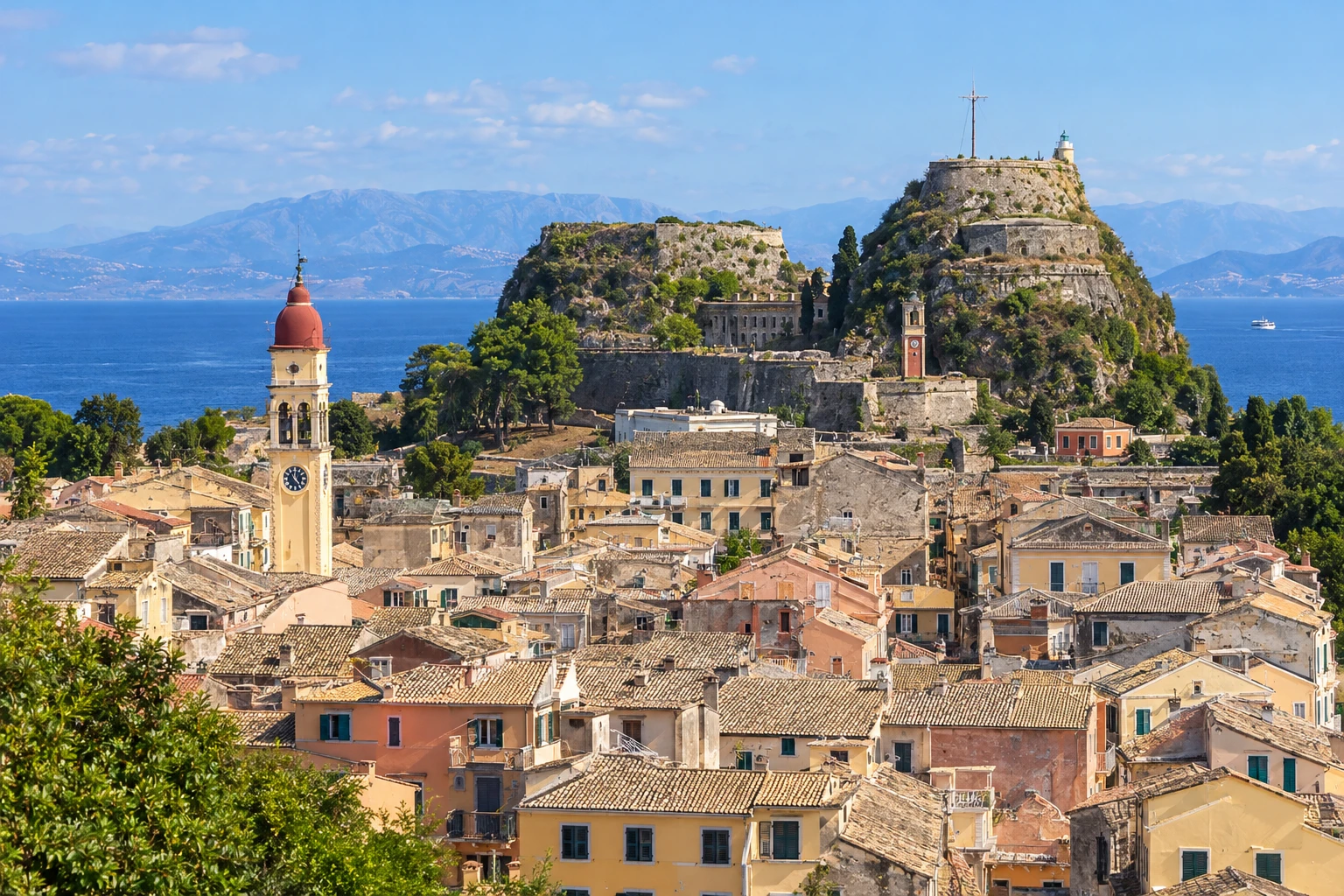
The green island of the Ionian Sea, with an old Venetian town listed by UNESCO, two fortresses, churches with Italian bell towers, monasteries above the sea and sandy beaches on the west coast.
The Acrópole and the Partenon, the ancient agoras, top-tier museums, neighborhoods of narrow streets beneath the rock, and the changing of the guard at Syntagma square: the Greek capital is the gateway to the country.
The second city of Greece, on the bay of Termaico: Torre Branca, Byzantine churches listed by UNESCO, markets, the long waterfront and, an hour by car, the royal tombs of Macedonia.
The peninsula south of Athens links Micenas, Epidauro, Olímpia and Corinto with the Venetian town of Náuplia and the fortified rock of Monemvasia, in an itinerary best done by car.
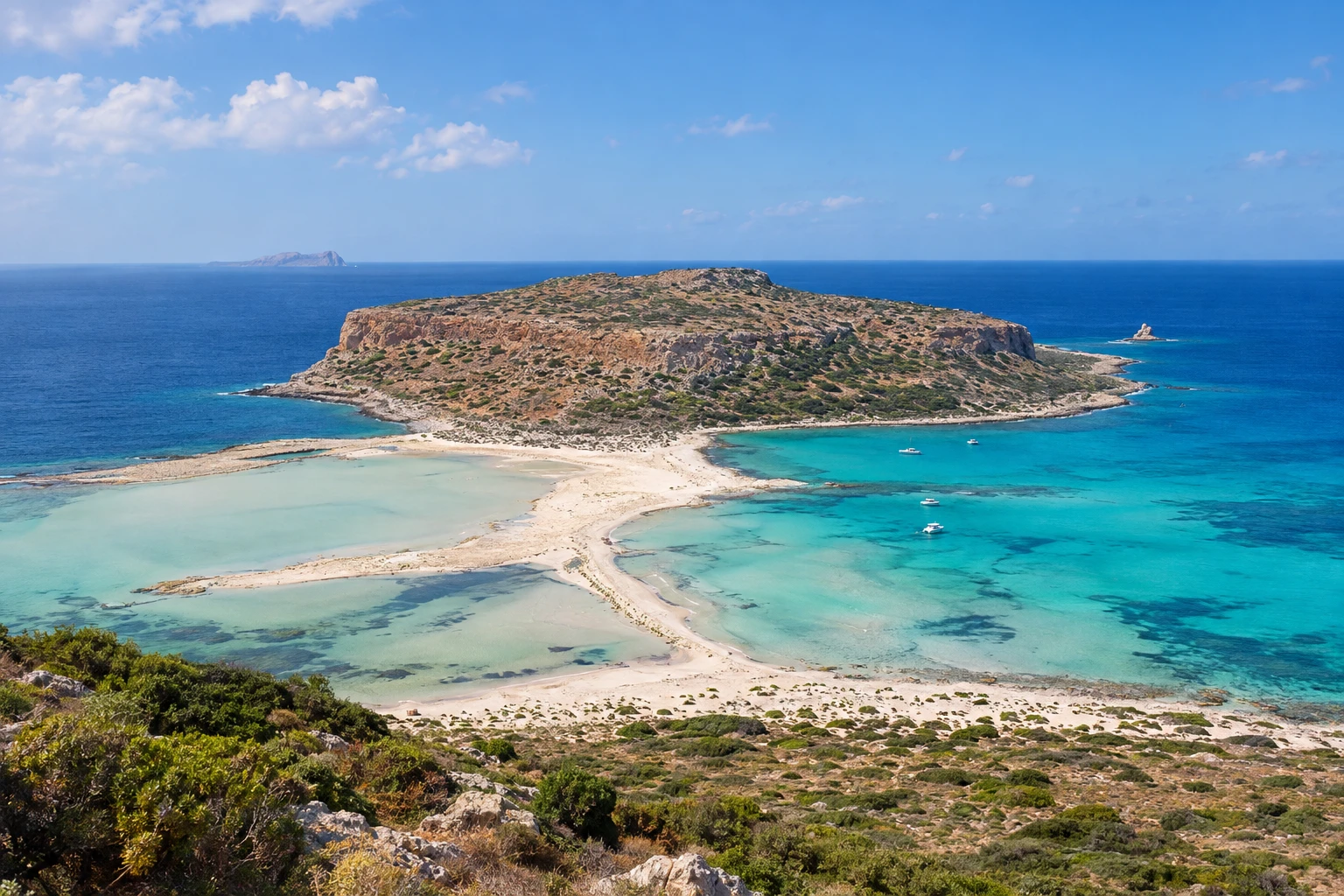
The largest island of Greece: the Minoan palace of Cnossos, Venetian ports in Heraclião, Chania and Rethymno, monasteries in the mountains and beaches like Elafonisi, Balos and Preveli.
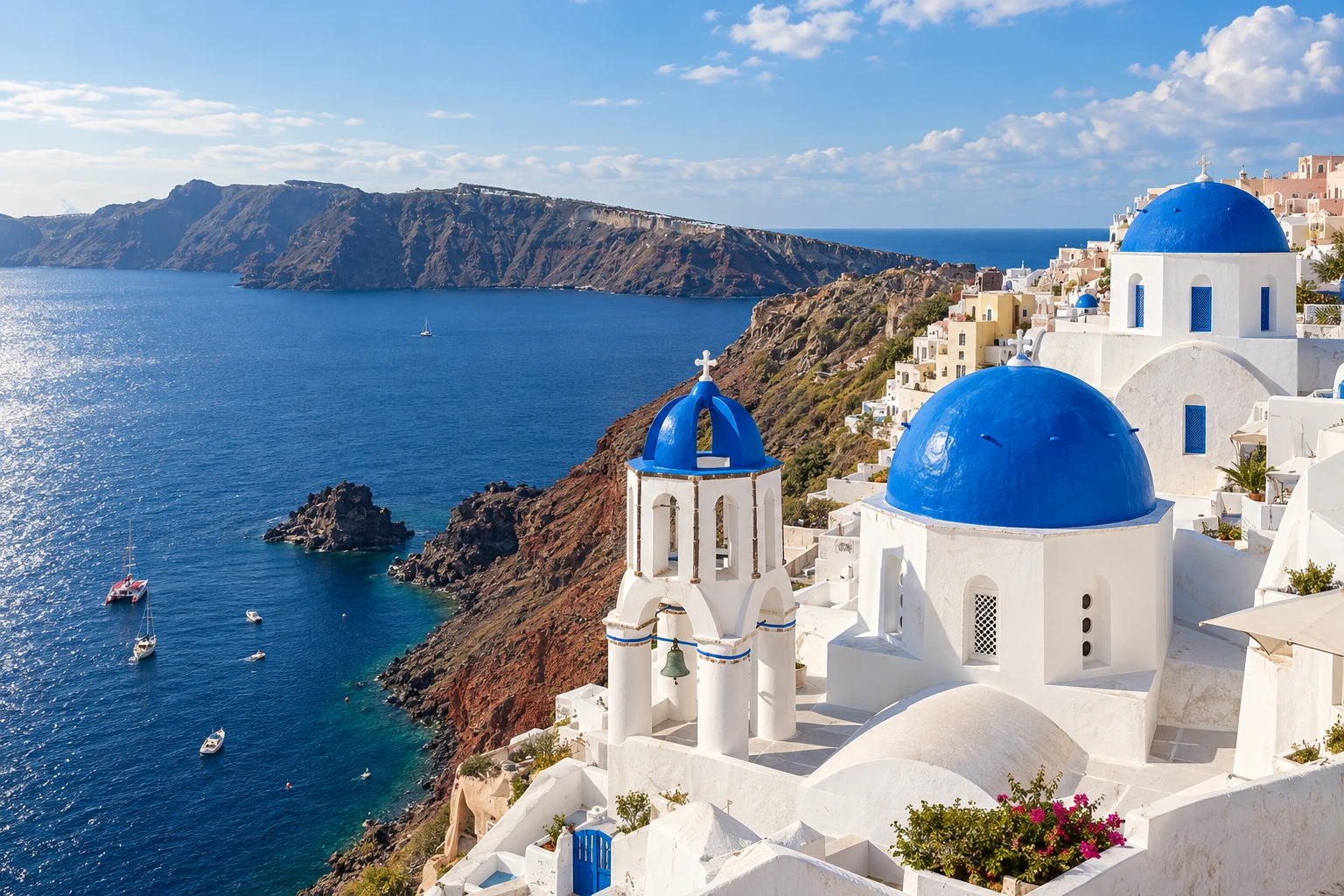
Volcanic island of the Cíclades, with white villages on the rim of the caldera, the prehistoric town of Akrotiri, dark-sand beaches and vineyards planted in volcanic ash.
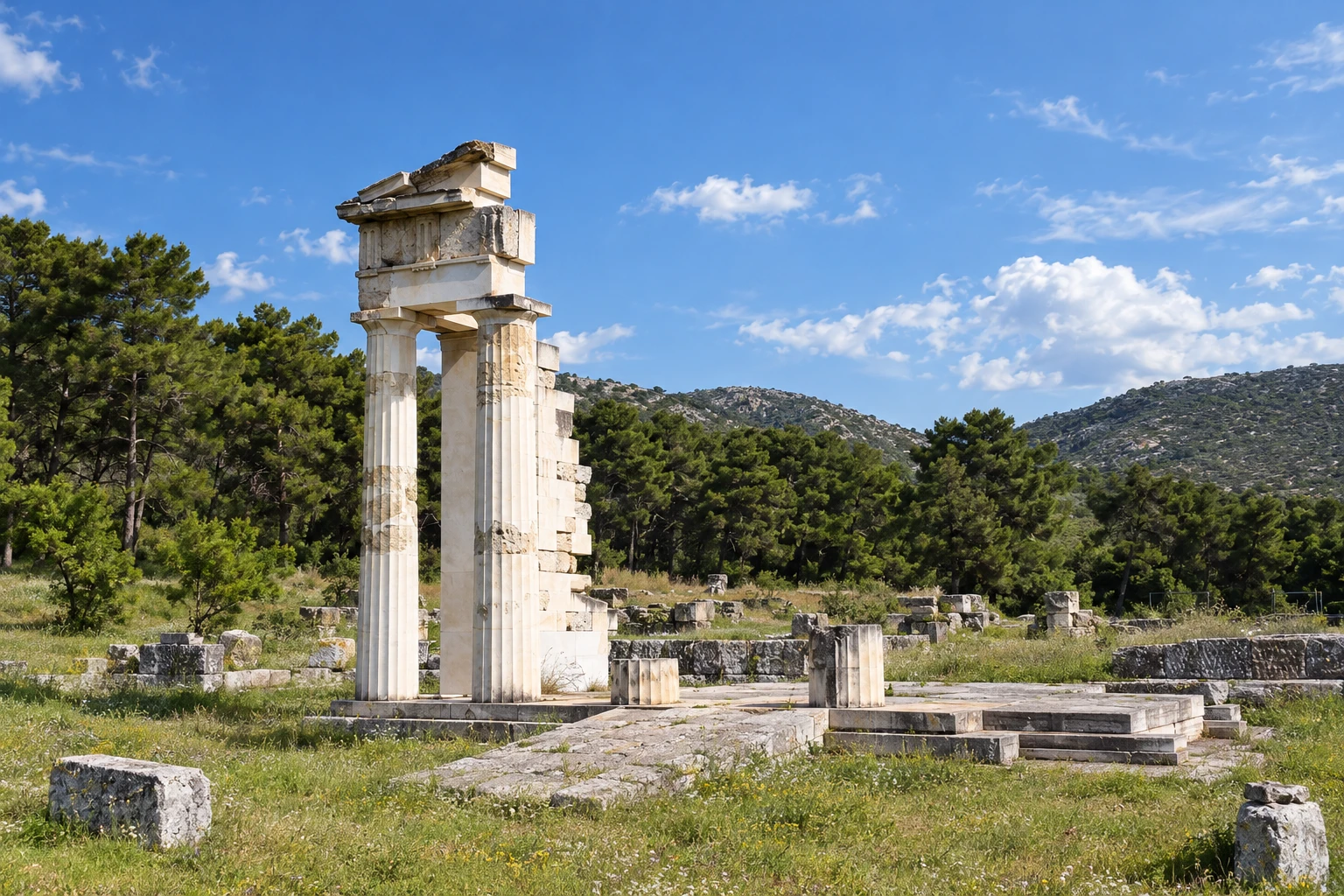
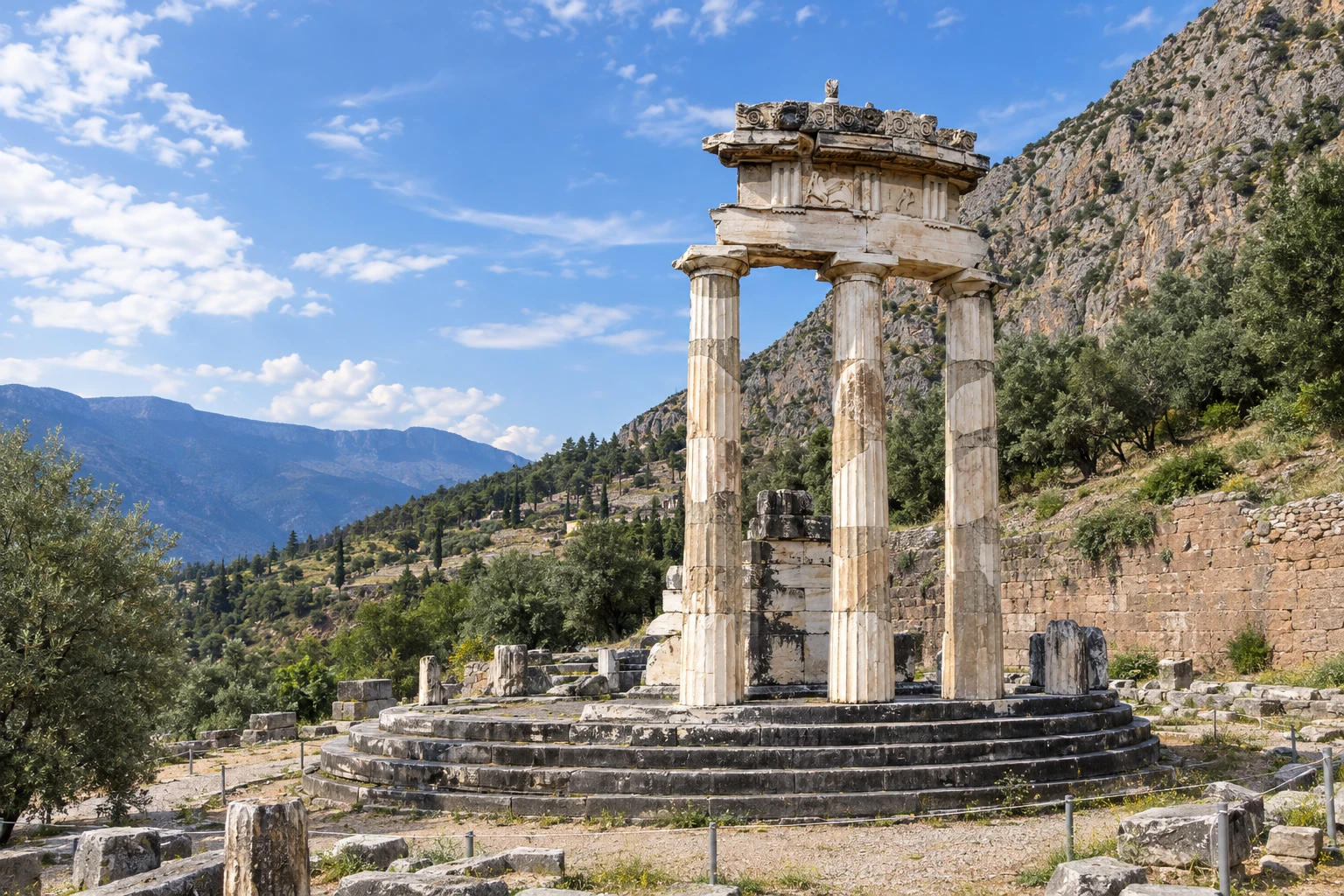
The sanctuary of Apollo and the most famous oracle of Antiquity, on the slope of Parnaso: temple, theater, stadium, the museum with the Auriga and, around it, the mountain village of Arachova and the golfo de Corinto.
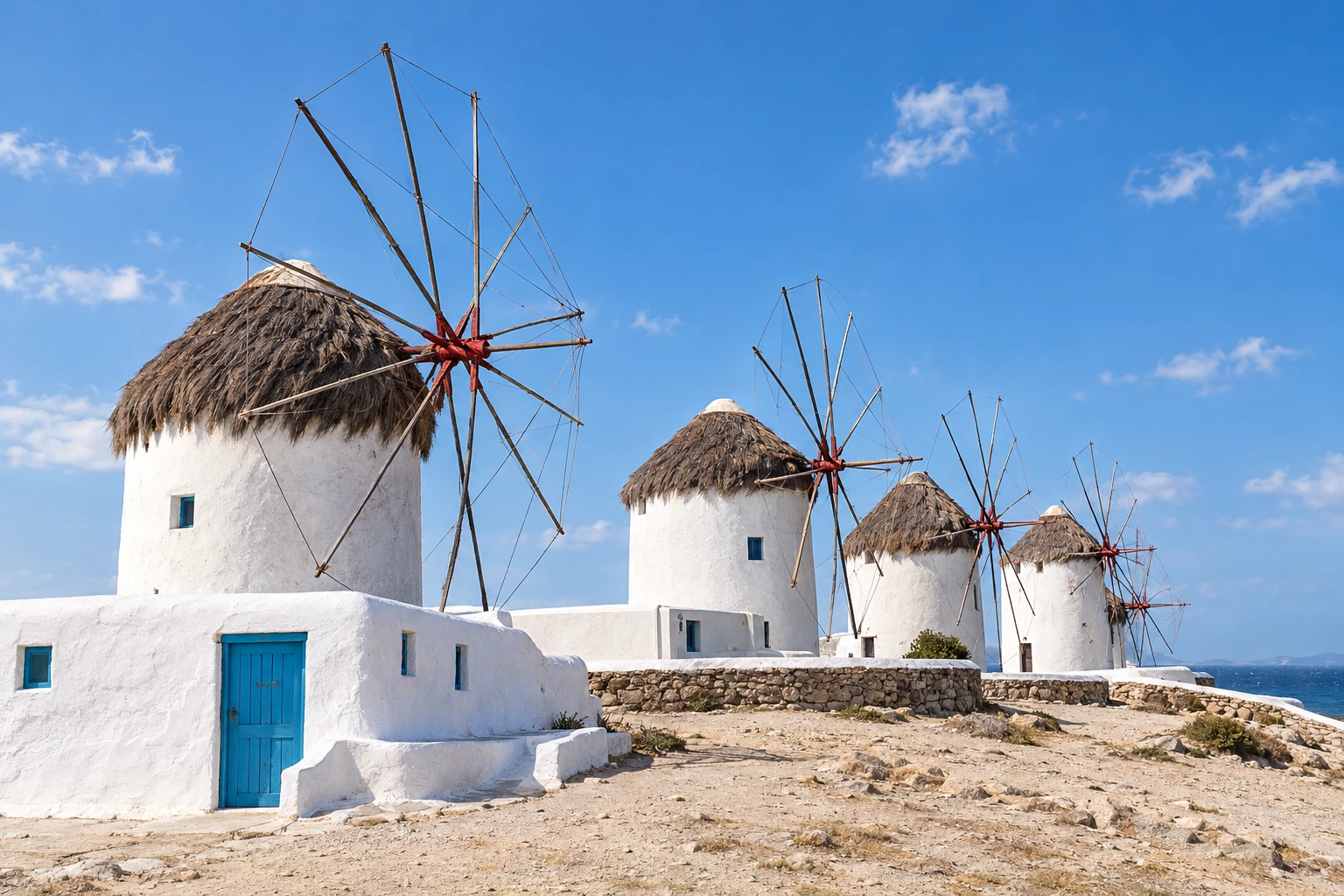
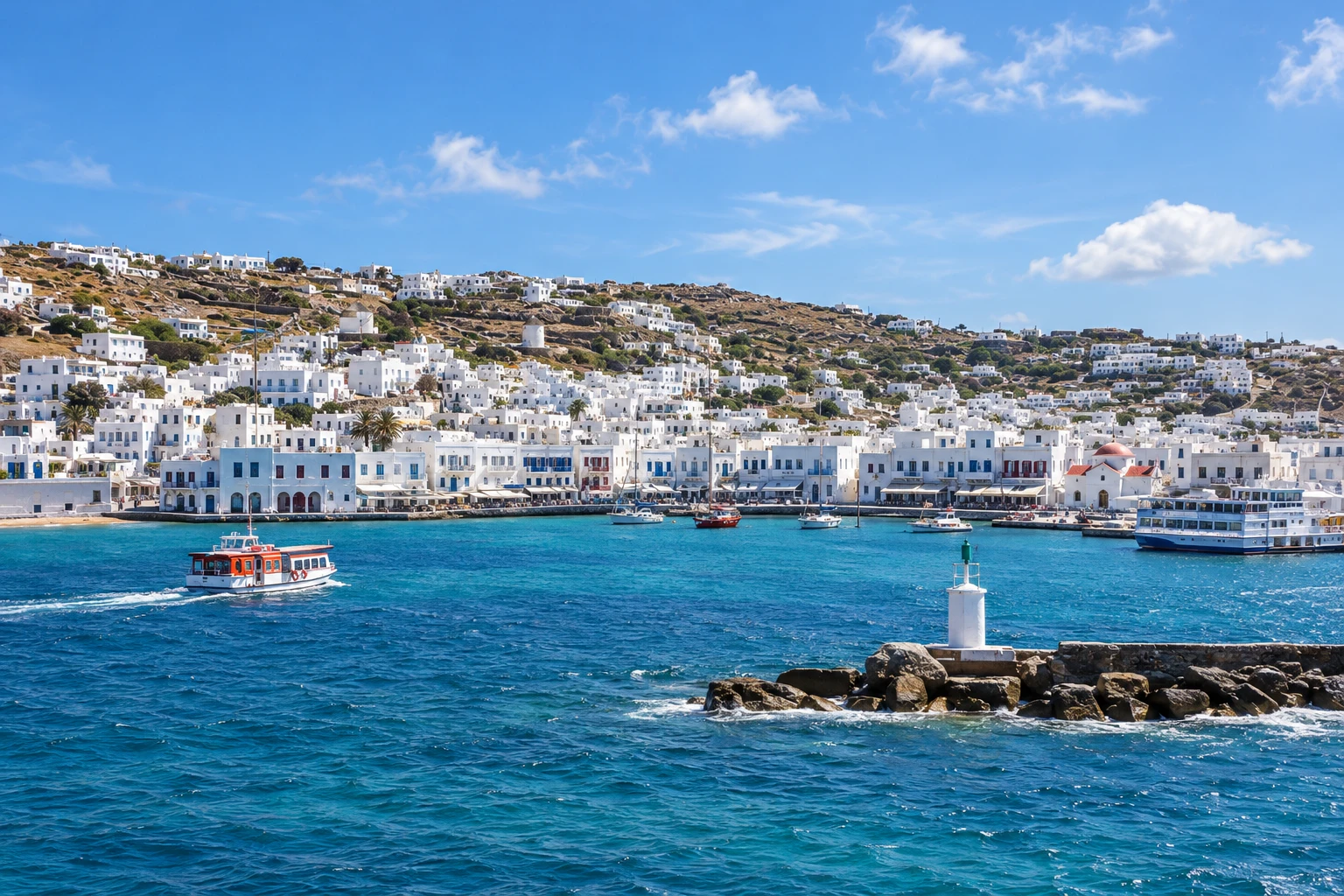
Island of the Cyclades with the Chora of white alleys, windmills, Little Venice, sandy beaches on the south coast and, a 20-minute boat ride away, the archaeological site of Delos.
Cities to start with
Each city has a page with what to do there.

Mykonos, or Chora, is the main town of the island of the same name, on the west coast, around the old port. It is a maze of pedestrian white alleys with domed churches, shops and bars, ending at the sea at Little Venice and the Kato Mili windmills. From there boats depart for Delos and buses go to the southern beaches and Ano Mera. Ferries arrive at the new port of Tourlos, 2 km away, and the airport is 4 km away.

Corfu (Kerkyra) is the capital of the island and of the Ionian Islands region, in northwestern Greece. The old town, inscribed by UNESCO, grew between two Venetian fortresses on a peninsula facing the mainland: stone alleys, tall buildings with shutters, the church of São Spyridon, the British palace and the Spianada with the arcades of the Liston. It is the base for the entire island, with the airport 3 km away, the ferry port to Igoumenitsa and Italy, and the KTEL green buses to the beaches and villages.

The village of Delfos is on the slope of Parnaso, 500 meters from the sanctuary of Apollo and the Museu Arqueológico, with three parallel streets of hotels, tavernas and balconies overlooking the valley and the golfo de Corinto. It was built in 1893, when the old village was removed to excavate the ruins. It is the base for the site, Arachova, Hosios Loukas and the coast of Itea and Galaxidi.

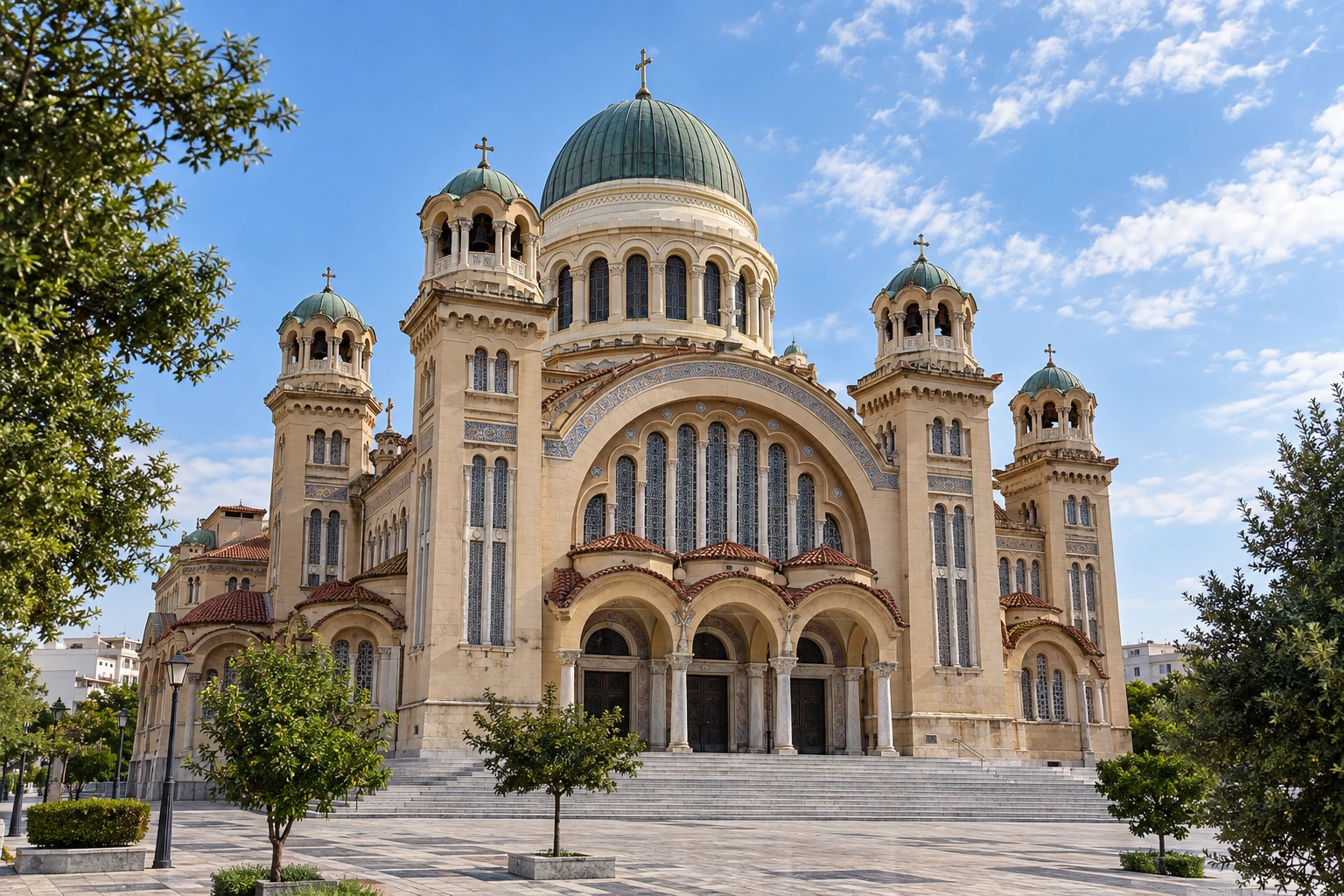
Patras is the largest city in the Peloponnese, capital of Western Greece and one of the country’s main ports. The lower town, with a grid of streets and arcades, has Georgiou I Square and the Apollon theatre; stairways lead up to the upper town, with the Roman odeon and the Byzantine castle. On the seafront, the church of Santo André houses relics of the apostle, the city’s patron. The archaeological museum holds Roman mosaics, and to the north the Rio–Antirrio bridge crosses the Gulf of Corinth. Patras’s carnival is one of the best known in Greece. Greek is spoken.

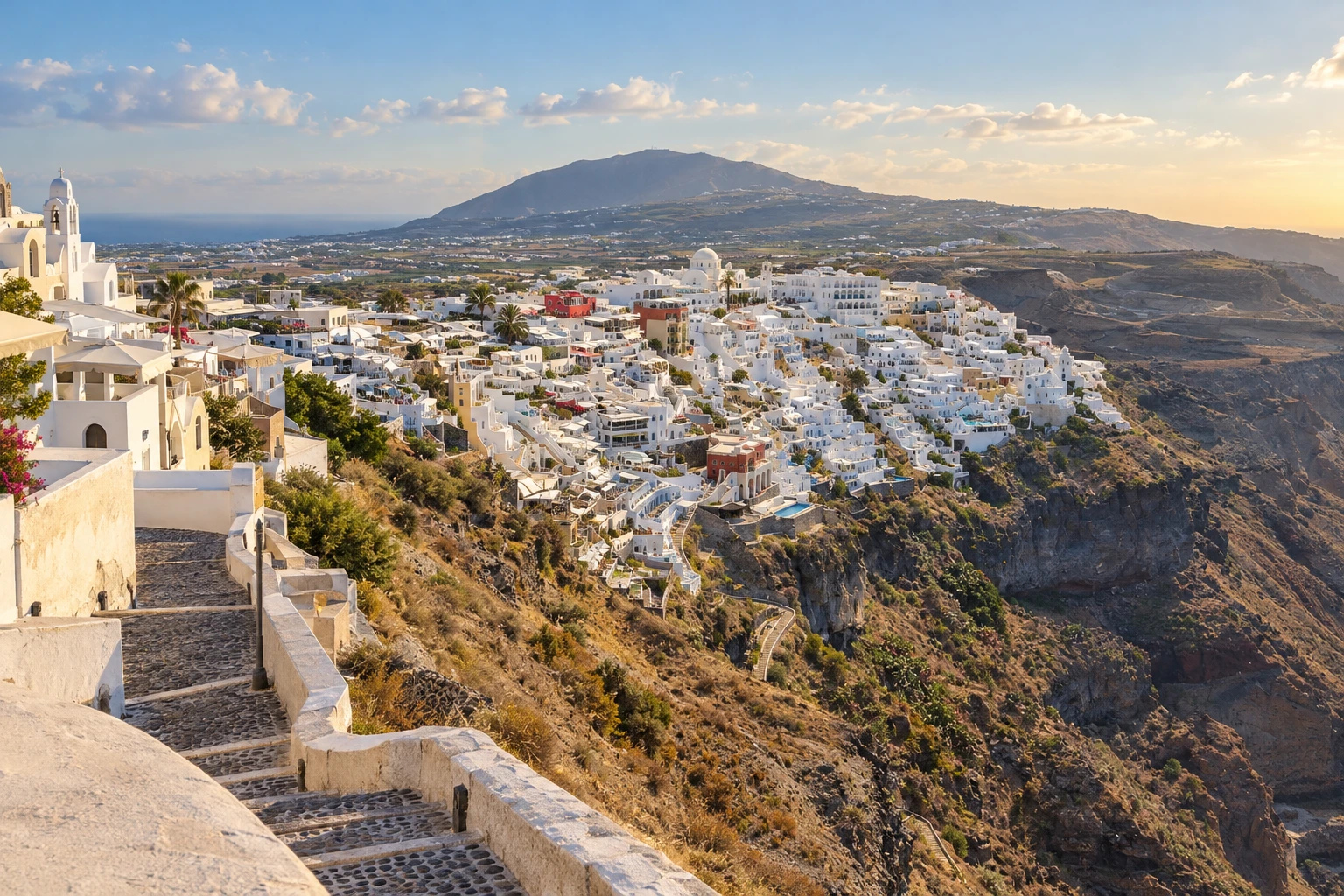
Fira (Thira) is the capital of Santorini, on the rim of the caldera, about 260 meters above the sea. It concentrates the bus station from which buses depart to the whole island, the two archaeological museums, the cable car that descends to the old port, and the largest offering of shops, restaurants and accommodations. From the rim promenade you can see the volcano and the Kameni islets, and from there the trail to Firostefani, Imerovigli and Oia departs. The town was rebuilt after the 1956 earthquake and mixes cave-houses, domed churches and hotels on the hillside.

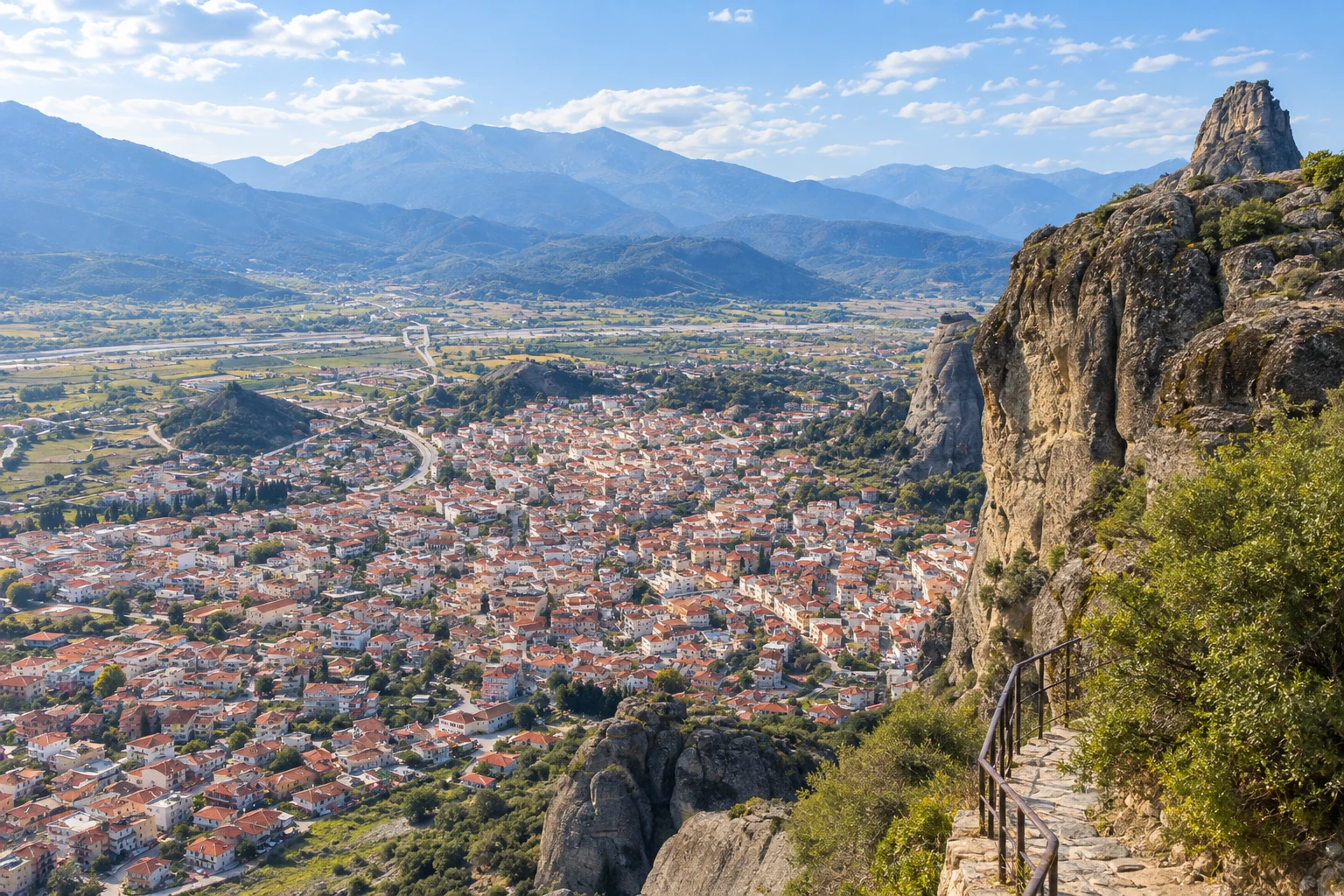
Kalambaka is the town at the foot of the rocks of Meteora, in Tessália, with about 8,000 inhabitants. It has a train station, a bus terminal, hotels and tavernas, and is the base for visiting the six monasteries, the Byzantine Church of the Dormition, the village of Kastraki and the Theopetra cave. It is about 350 km from Atenas and 230 km from Tessalônica.
The map
Tap a region to see the names. Use two fingers to zoom in.
Outlines: Natural Earth (public domain). Adapted by Cidade Turismo.
Greece
Another way into the same trip
Choose the region and the city to find your place in the guide.
Beyond the guide