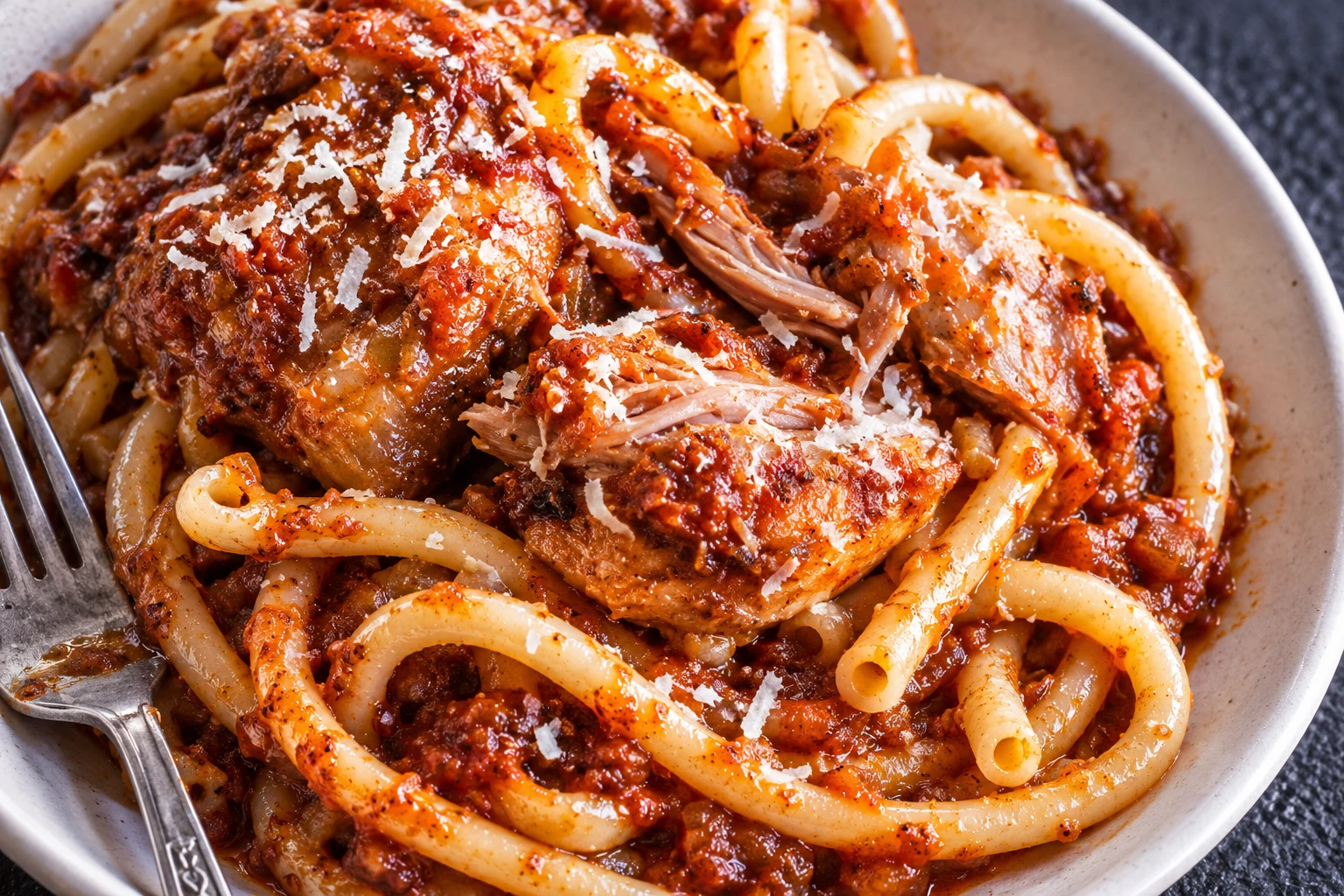
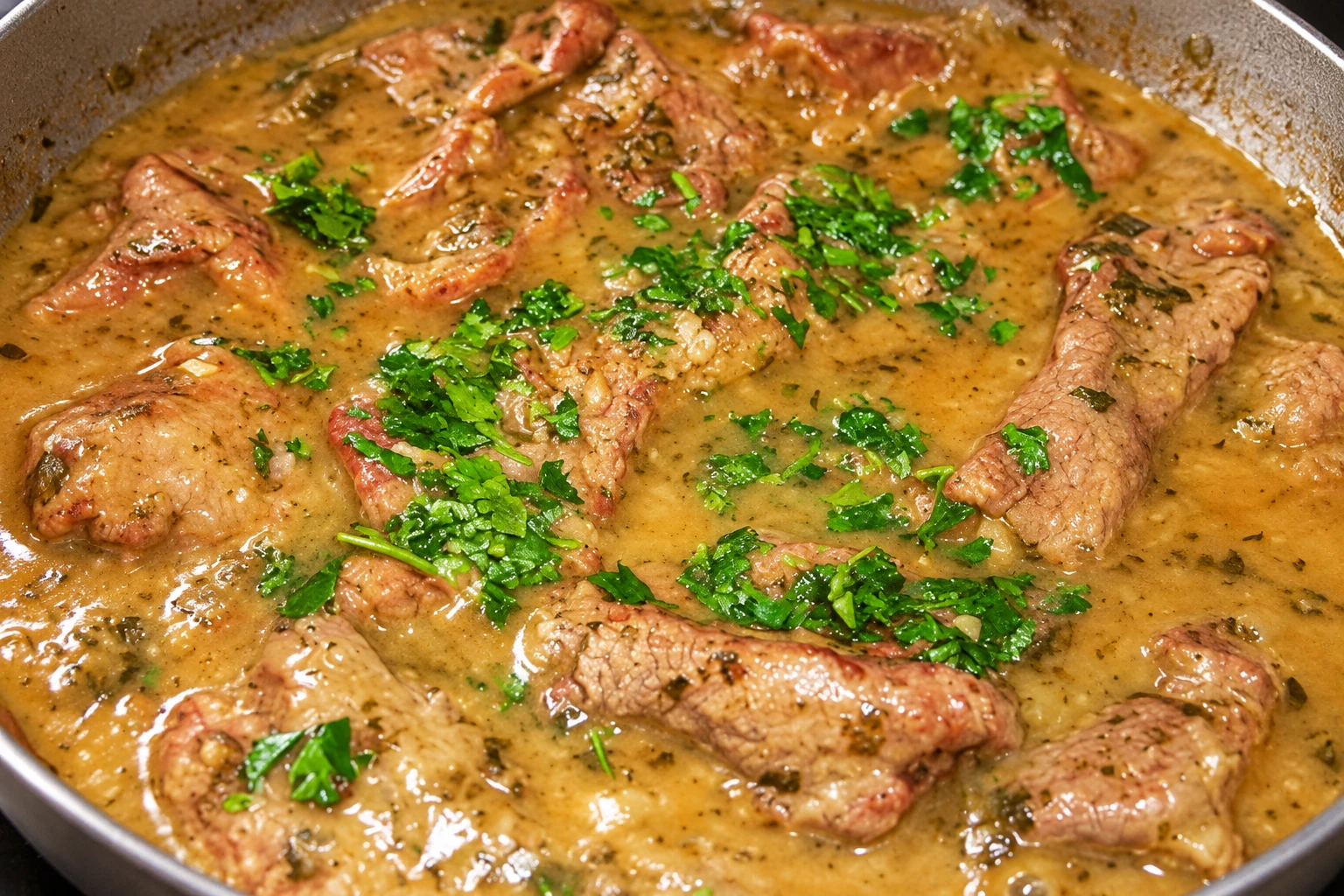
Pastitsada
Rooster or veal slowly cooked in a tomato and wine sauce seasoned with cinnamon, bay leaf, nutmeg and other spices, served with thick pasta and grated cheese. It’s Corfu’s Sunday and festive dish, of Venetian heritage.
Antarctica
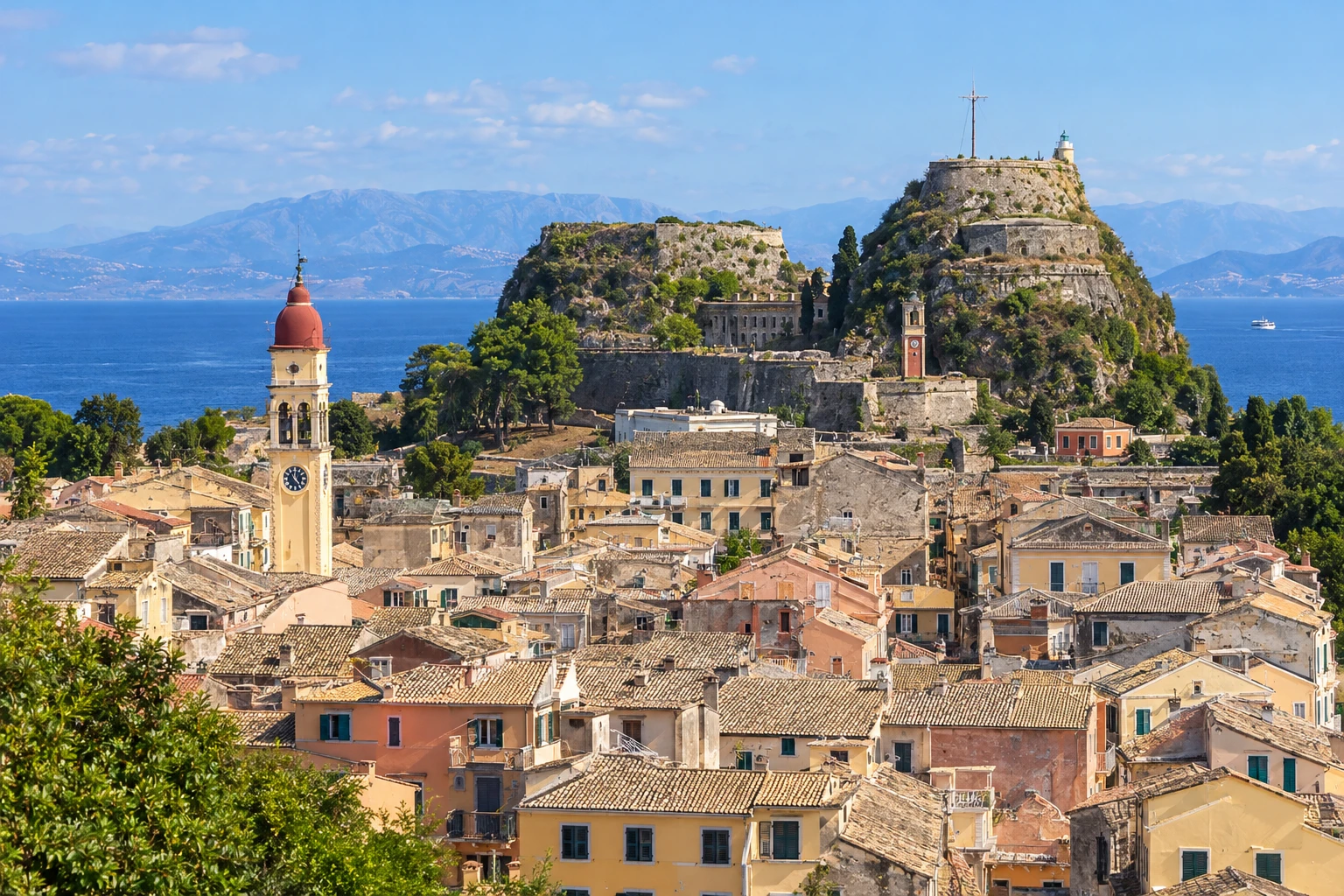
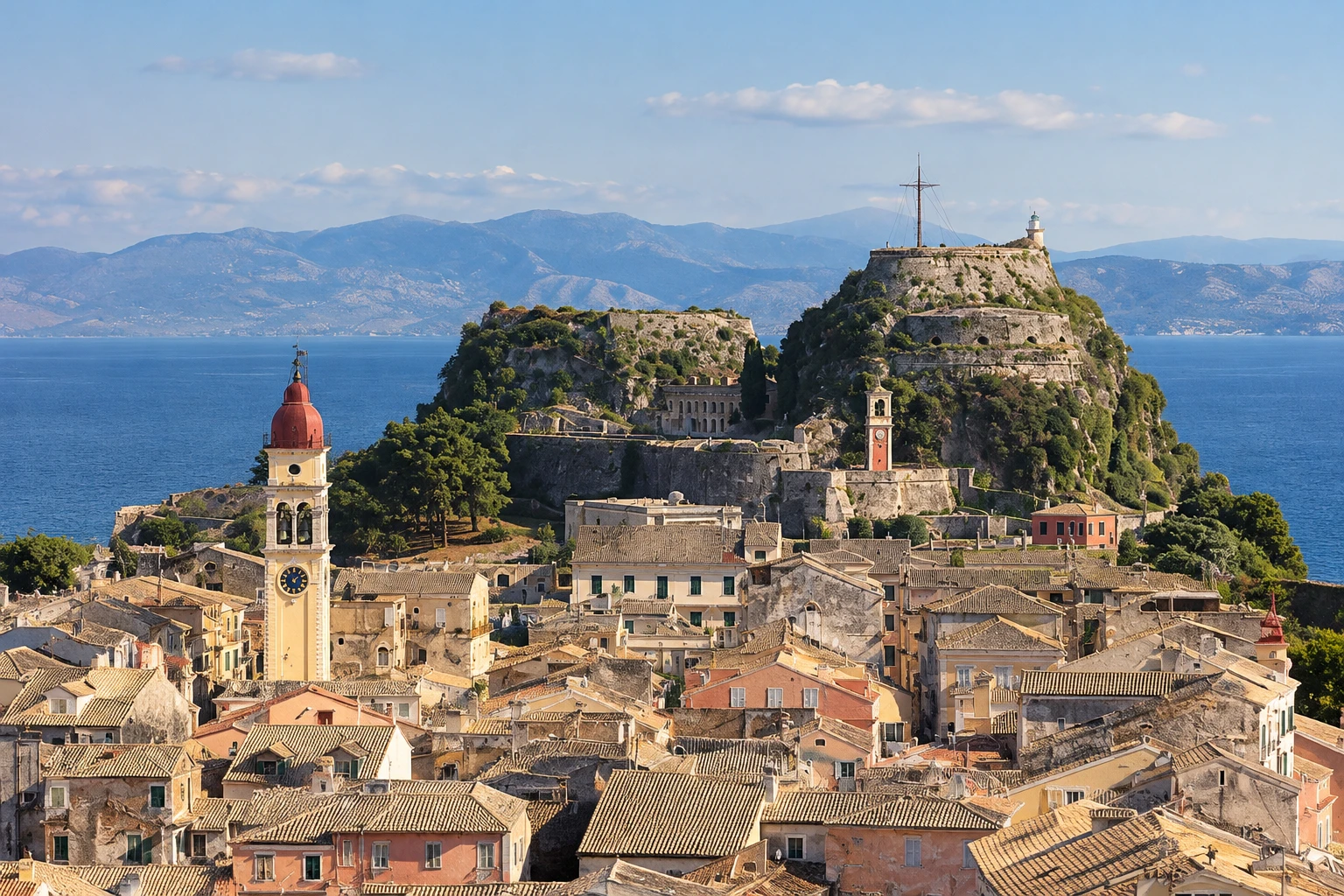
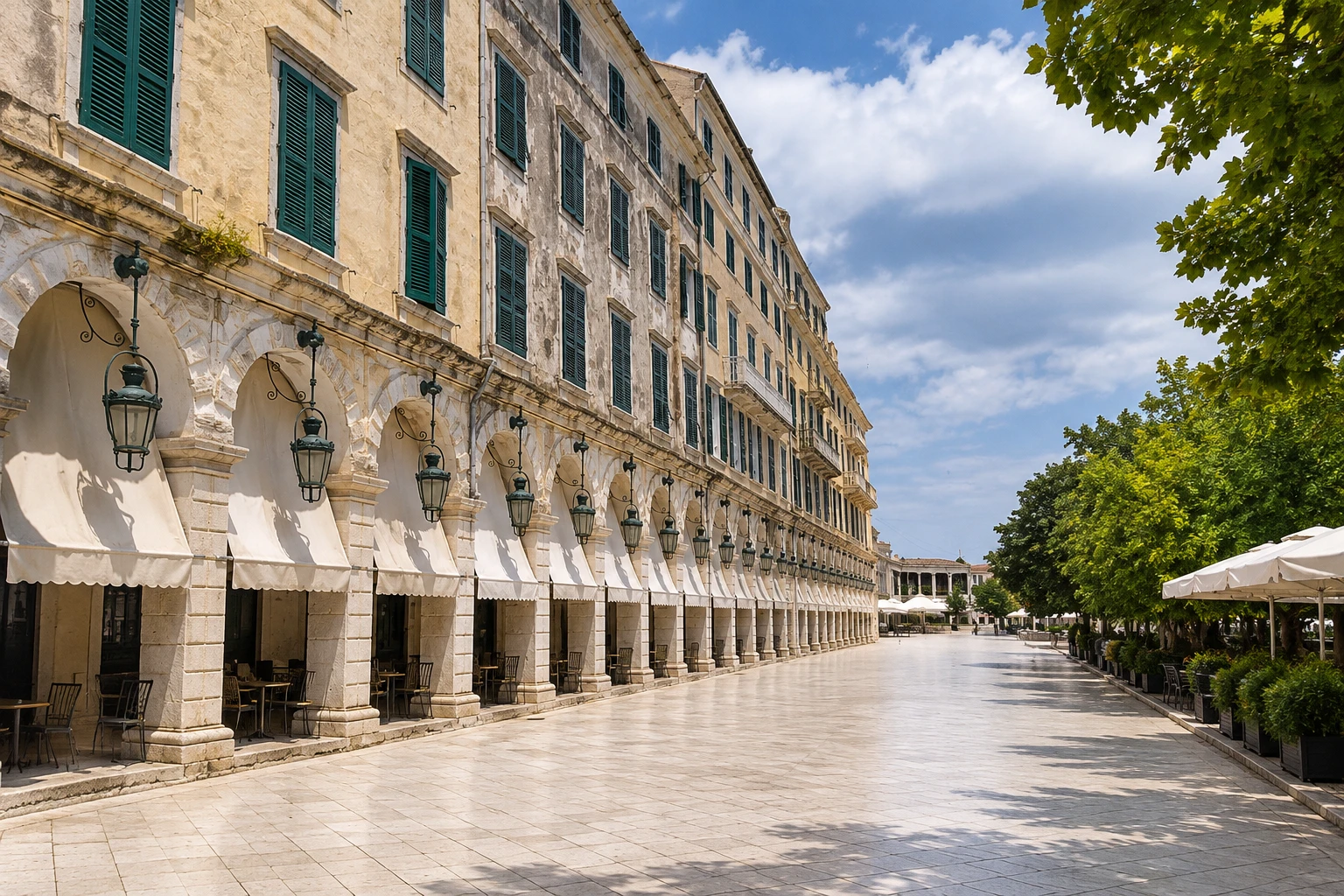
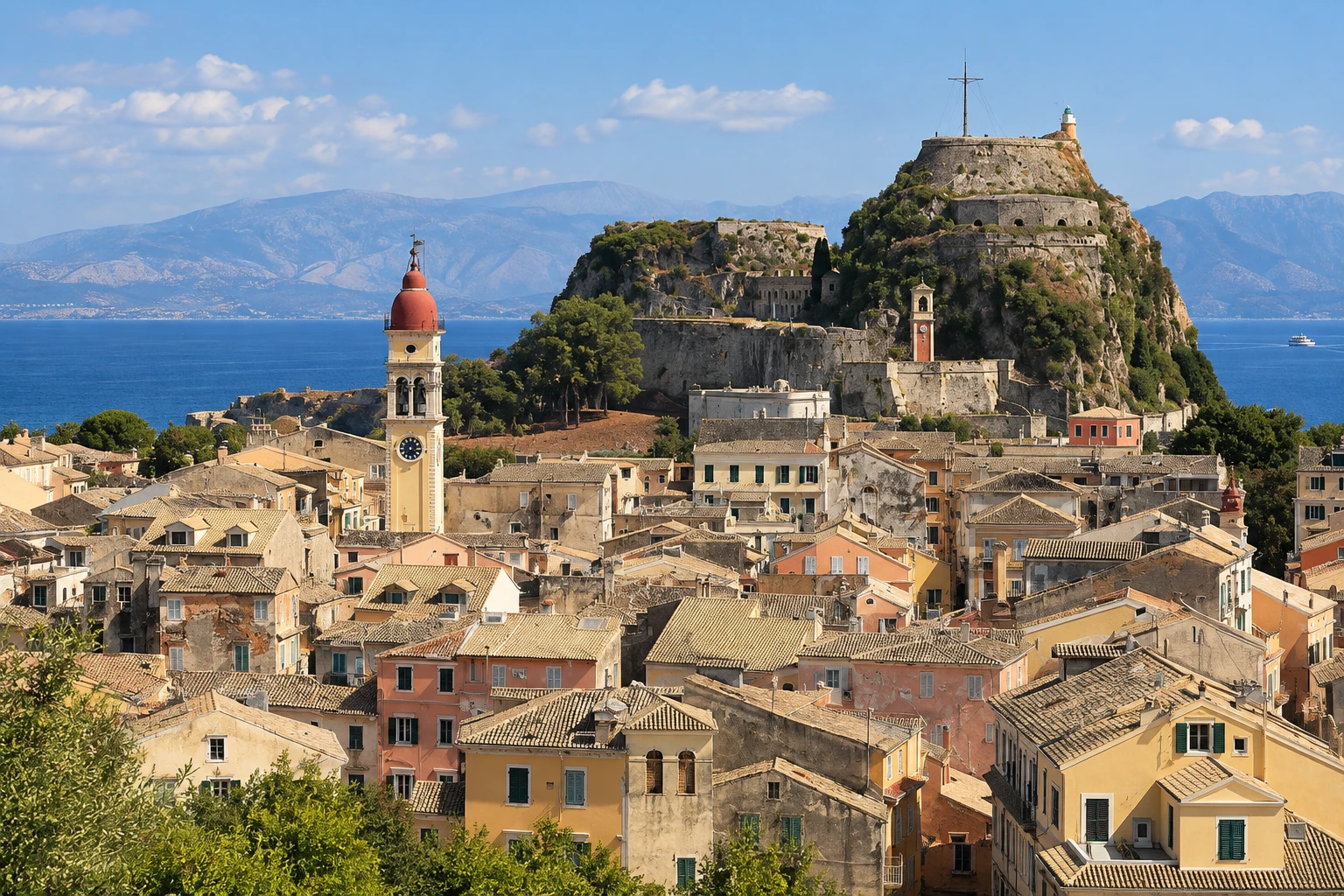
In the photo: Old Town and Fortaleza Velha de Corfu
Illustrative images. The pictures in this guide are illustrations based on the real place, not photographs, and may differ from it.
The city
Corfu (Kerkyra) is the capital of the island and of the Ionian Islands region, in northwestern Greece. The old town, inscribed by UNESCO, grew between two Venetian fortresses on a peninsula facing the mainland: stone alleys, tall buildings with shutters, the church of São Spyridon, the British palace and the Spianada with the arcades of the Liston. It is the base for the entire island, with the airport 3 km away, the ferry port to Igoumenitsa and Italy, and the KTEL green buses to the beaches and villages.
There's no accommodation in the guide yet in Corfu.
Tem hotel, pousada ou casa de temporada aqui? Cadastre a suaThere are no restaurants in the guide yet in Corfu.
Know a good one? Recommend it to usHotéis e restaurantes da cidade no mapa.
how to get there · how many days · itinerary · questions
Flavors of Greece

Rooster or veal slowly cooked in a tomato and wine sauce seasoned with cinnamon, bay leaf, nutmeg and other spices, served with thick pasta and grated cheese. It’s Corfu’s Sunday and festive dish, of Venetian heritage.

Thin slices of beef dredged in flour, browned and cooked in a light sauce of white wine or wine vinegar, with plenty of garlic, parsley and pepper. It is a Corfu dish of Venetian heritage, served with potatoes, rice or pasta.
The local experience
Corfu’s Old Town, a UNESCO World Heritage site: Venetian alleys (kantounia), tall houses with laundry at the windows, churches with Italian-style bell towers and squares between the two fortresses.
The Fortaleza Velha, on a peninsula separated from the town by a sea-water moat, with 16th-century Venetian bastions, a Doric church of São Jorge, a lighthouse and views over the town and the mainland.
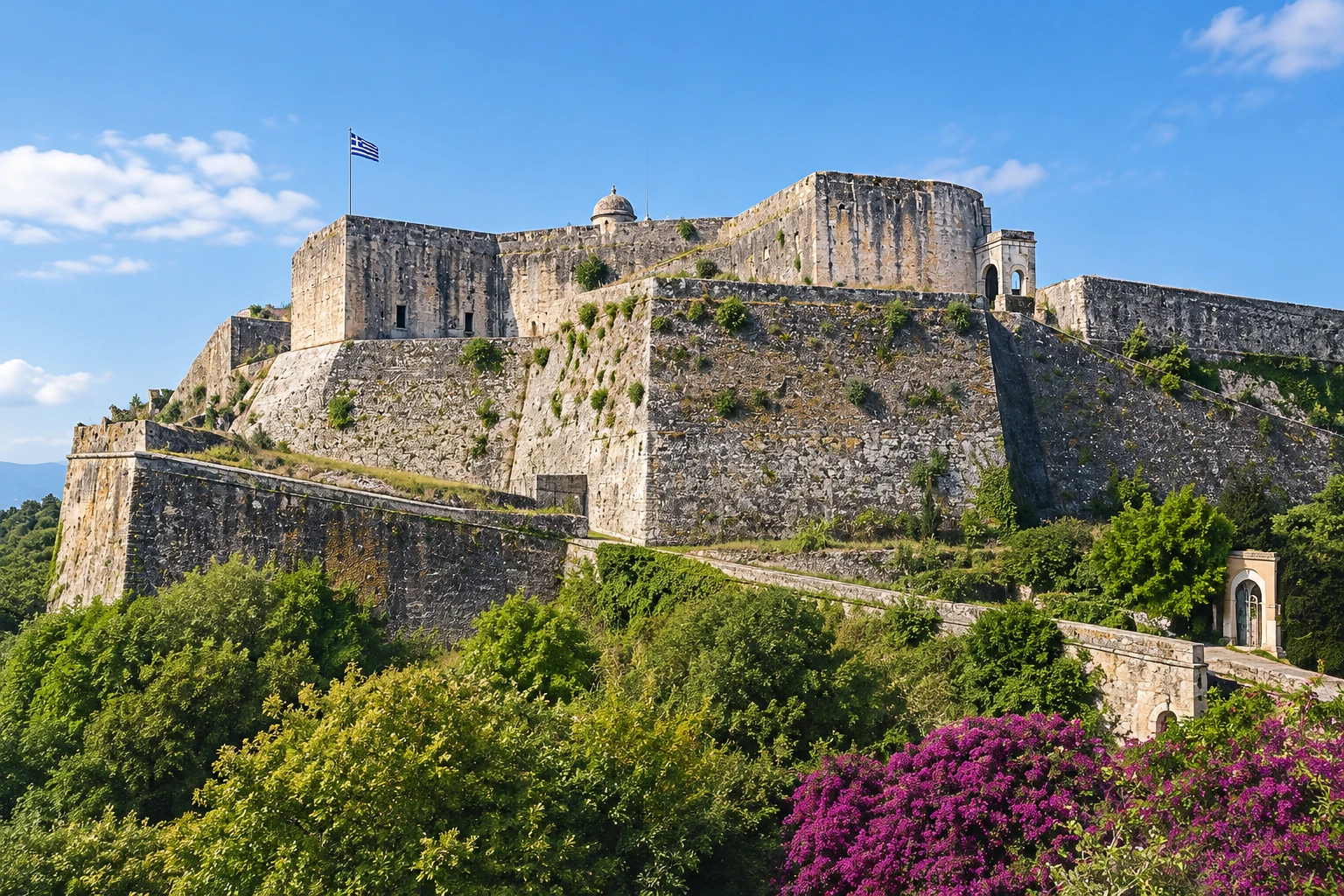
The Fortaleza Nova, from the late 16th century, on the hill of São Marcos above the old port: galleries, cisterns and Venetian bastions with the Lion of São Marcos over the gate and views over the town and the sea.
The large esplanade between the old town and the Fortaleza Velha, with a cricket field, a bandstand, the rotunda de Maitland and the arcades of the Liston, inspired by the rue de Rivoli, full of cafés.
Before you go
Corfu – Greece Destination Corfu Capital
Approximate distances. Check flights and bus, train or boat schedules before you travel.
Connections to Brazil are usually via another city. Check before buying your ticket. From Athens, the flight to Corfu airport, 3 km from the centre, takes about an hour; in season there are flights from several European cities. From the mainland, take the KTEL bus or drive to Igoumenitsa and a one-and-a-half-hour ferry to the porto novo, with several crossings per day year-round. Ferries depart from Italy (Bari, Brindisi and Ancona) in season. From the port and the airport to the centre, take a taxi or the city bus.
Two days for the town: Old Town and São Spyridon, the two fortresses, the palace with the Museum of Asian Art, the Archaeological Museum, Mon Repos and Kanoni. One more day for Paleokastritsa and Angelokastro and another for Pelekas or Sidari. If you want beach every day, stay a week.
From May to June and from September to early October, with warm sea and fewer people. July and August are hot, crowded and more expensive; the Old Town's alleys get packed around midday when cruise ships arrive. From November to March it rains a lot, the boats to the beaches stop and some coastal restaurants close; the town operates normally. Orthodox Easter, in April or May, is the main celebration, with processions and bands.
The seasons shown are the most usual ones; nature doesn't always follow the calendar.
Not for the town, which is best explored on foot; cars do not enter the Old Town and parking is difficult. For the island, the green KTEL buses depart from the terminal near the porto novo to Paleokastritsa, Sidari, Pelekas, Kavos and other beaches, with more services from May to October. A rental car gives freedom to reach smaller beaches and villages; roads are narrow and winding, and traffic drives on the right, as in Brazil.
Suggested itinerary
Built with the places on this page. No rush: it's paced so you have time to see them.
Start early at the Fortaleza Velha, climb up to the lighthouse before it gets hot. Return via the Spianada, pass the statue of Kapodistrias and have a coffee under the arcades of the Liston.
Enter the church of São Spyridon, get lost through the kantounia to the Town Hall square and walk up Campiello to the Antivouniotissa. Finish at the Palace of São Miguel and São Jorge, with the Museum of Asian Art and the garden café.
Take the bus to Kanoni and view the monastery of Vlacherna and Pontikonisi from the lookout, at sunset. Descend to the jetty if you have time.
Dine on pastitsada or sofrito at a taverna in the alleys behind the Liston, after 9 pm, like the locals of Corfu.
Day 1
Fortaleza Velha early, then coffee at the Liston and the statue of Kapodistrias on the Spianada.
Museum of Asian Art in the palace, walk through Mouragia and Campiello to the Antivouniotissa.
Church of São Spyridon and return via Nikiforou Theotoki Street when the shops reopen.
Taverna in the alleys behind the Liston.
Day 2
Archaeological Museum, with the Gorgon pediment, and a walk along the Garitsa waterfront to Mon Repos and the ruins of Paleópolis.
Return to the centre, have lunch and climb to the Fortaleza Nova via the market for views of the Old Town.
Bus to Kanoni: lookout, descent to the Vlacherna jetty and, in season, boat to Pontikonisi.
Return via the Spianada and have an ice cream or tsitsibira under the arcades.
Day 1
Fortaleza Velha early and coffee at the Liston.
Museum of Asian Art, Mouragia, Campiello and the Byzantine Museum.
Church of São Spyridon and Nikiforou Theotoki Street.
Taverna in the alleys.
Day 2
Archaeological Museum and a walk along Garitsa to Mon Repos.
Market and Fortaleza Nova.
Kanoni, Vlacherna and Pontikonisi.
Ice cream and return via the Spianada.
Day 3
Drive or take the KTEL bus to Paleokastritsa: the monastery up above, before the tour groups, and a swim in one of the coves.
Lunch in Lakones, with the Bella Vista viewpoint over the bay, and climb to the Angelokastro castle from Krini.
On the way back, detour to Pelekas for sunset at the Kaiser’s Throne.
Have dinner at a taverna in Pelekas square before heading back down to the town.
Check before you go. Opening hours and days change, and places may close for renovations, holidays or events. This itinerary is a suggestion from Cidade Turismo, not a commitment: plan yours by checking directly with each place you intend to visit.
Before you go
It's about 3 km. A taxi takes 10 minutes; the blue city bus stops near the terminal and goes to the Spianada. Many Old Town hotels are a 20-minute walk from the airport.
Yes, with several crossings per day of about one and a half hours, and fewer sailings in winter. It is the island’s main connection to the mainland for those coming by car or bus.
The green KTEL buses to Paleokastritsa, Sidari, Kavos and other beaches depart from the terminal near the porto novo. The blue city buses serve Kanoni, Pelekas, Dassia and Gouvia from San Rocco square.
Yes. The Old Town is entirely pedestrian and the main sights are a few minutes apart. Only Mon Repos, Kanoni and the Archaeological Museum require a longer walk or the bus.
The island’s most important celebration, with processions of São Spyridon, philharmonic bands and, on Holy Saturday morning, the custom of throwing clay pots filled with water from the Old Town windows. Book accommodation months in advance.
For the town, no. To explore beaches and villages freely, yes — for a day or two. Roads are narrow and winding, and parking in the town is difficult; many rent outside the Old Town.