14 places to visit Corfu (Greece), chosen by the Cidade Turismo guide.
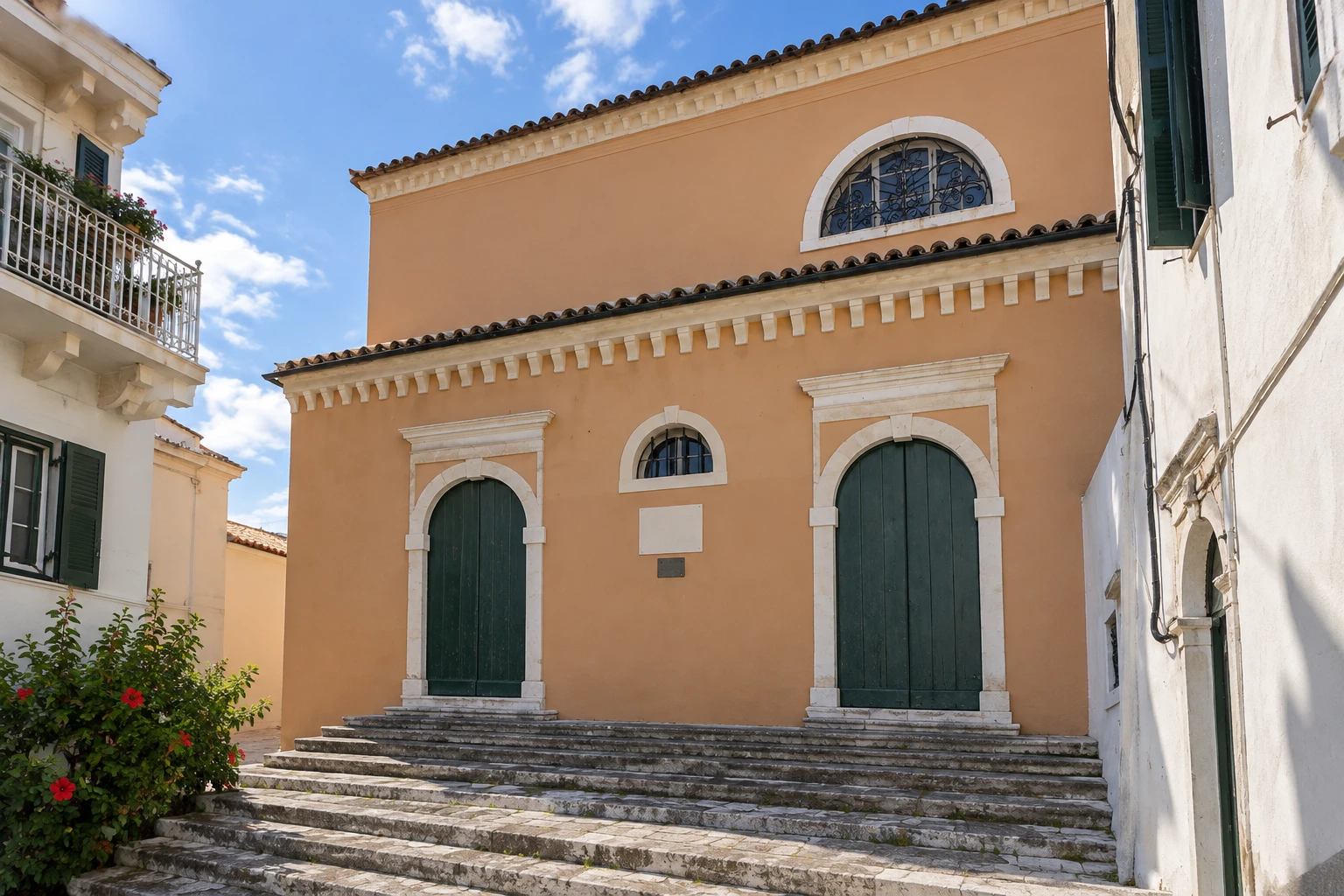
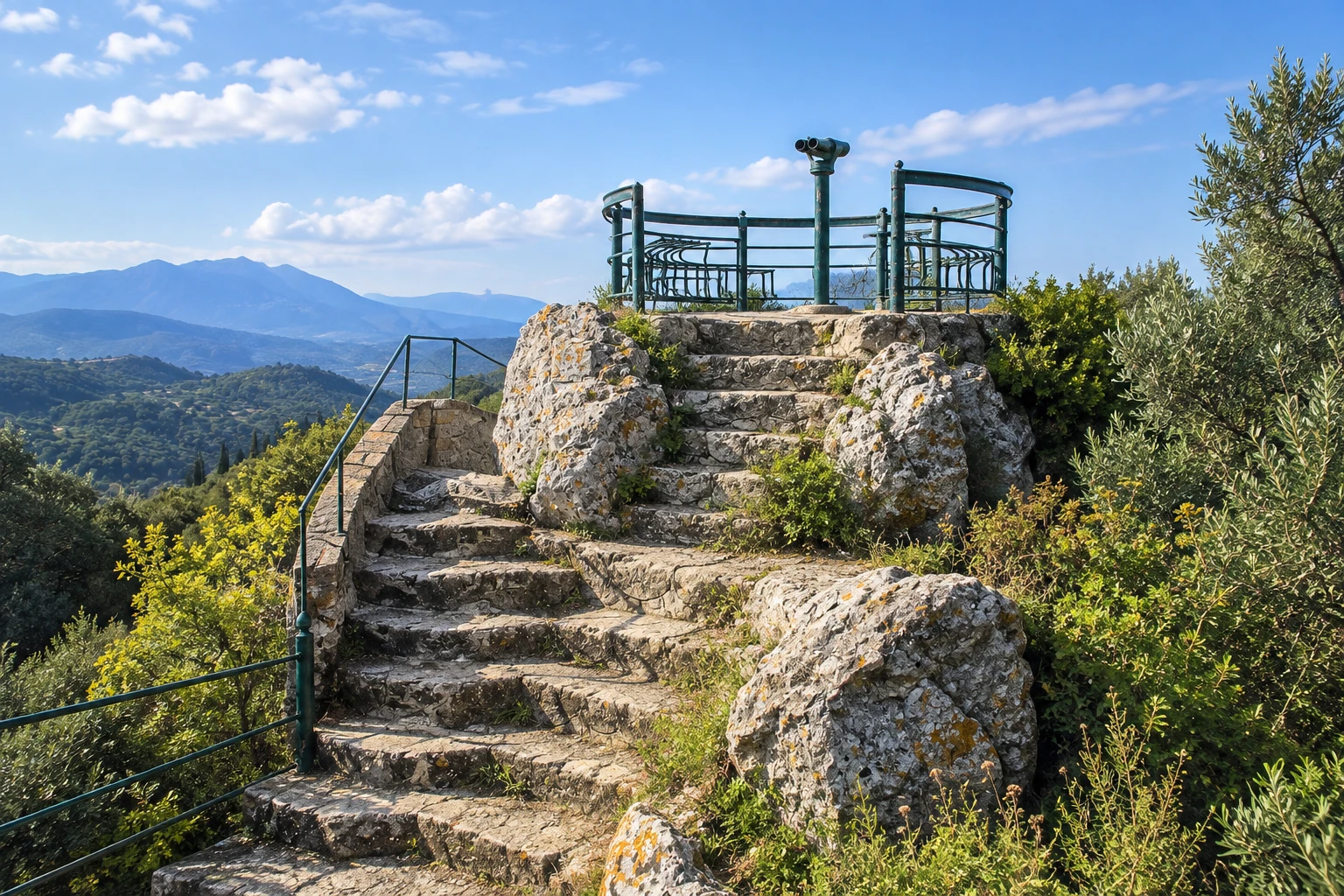
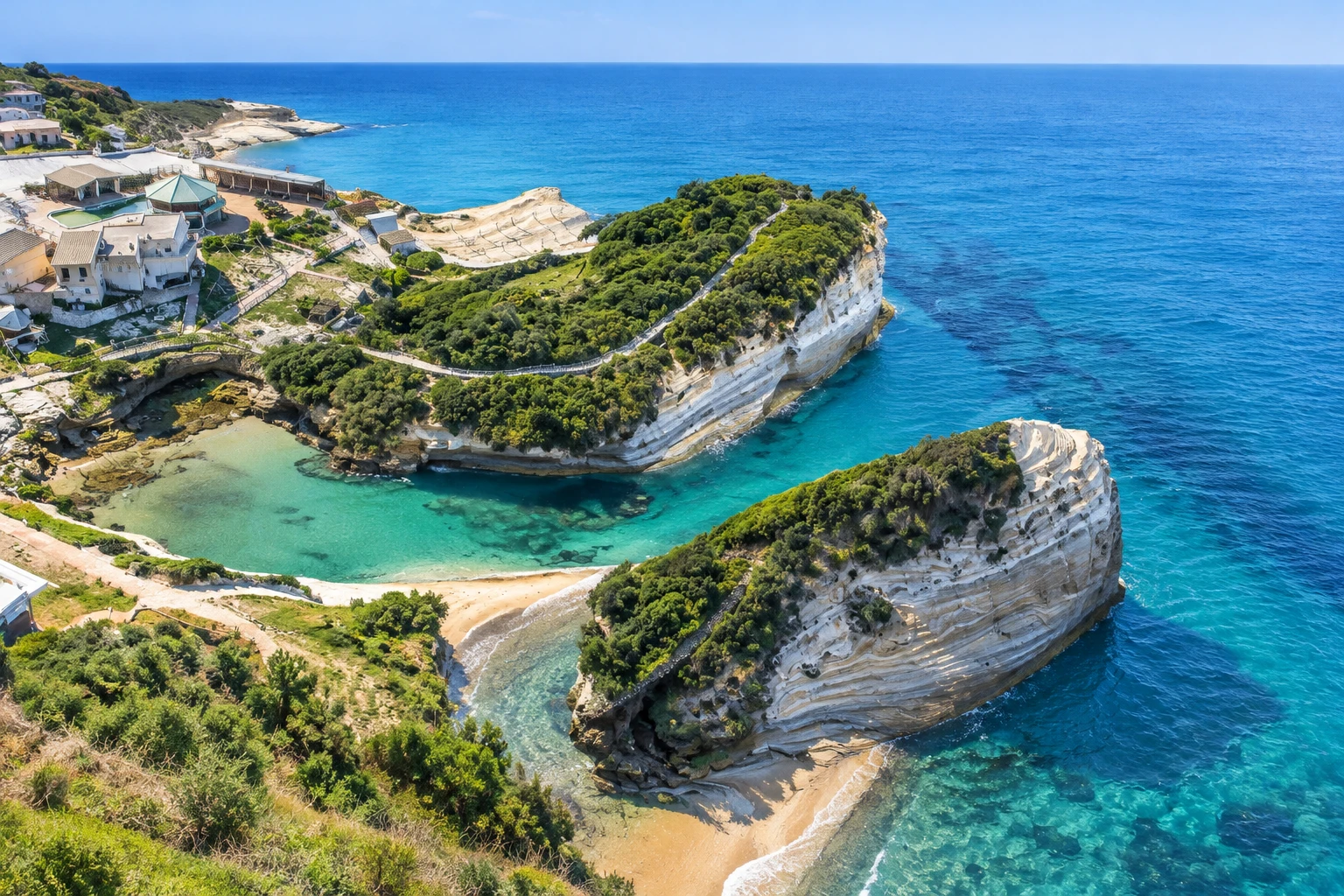
Illustrative images. The pictures in this guide are illustrations based on the real place, not photographs, and may differ from it.
To start
The 10 main places Corfu
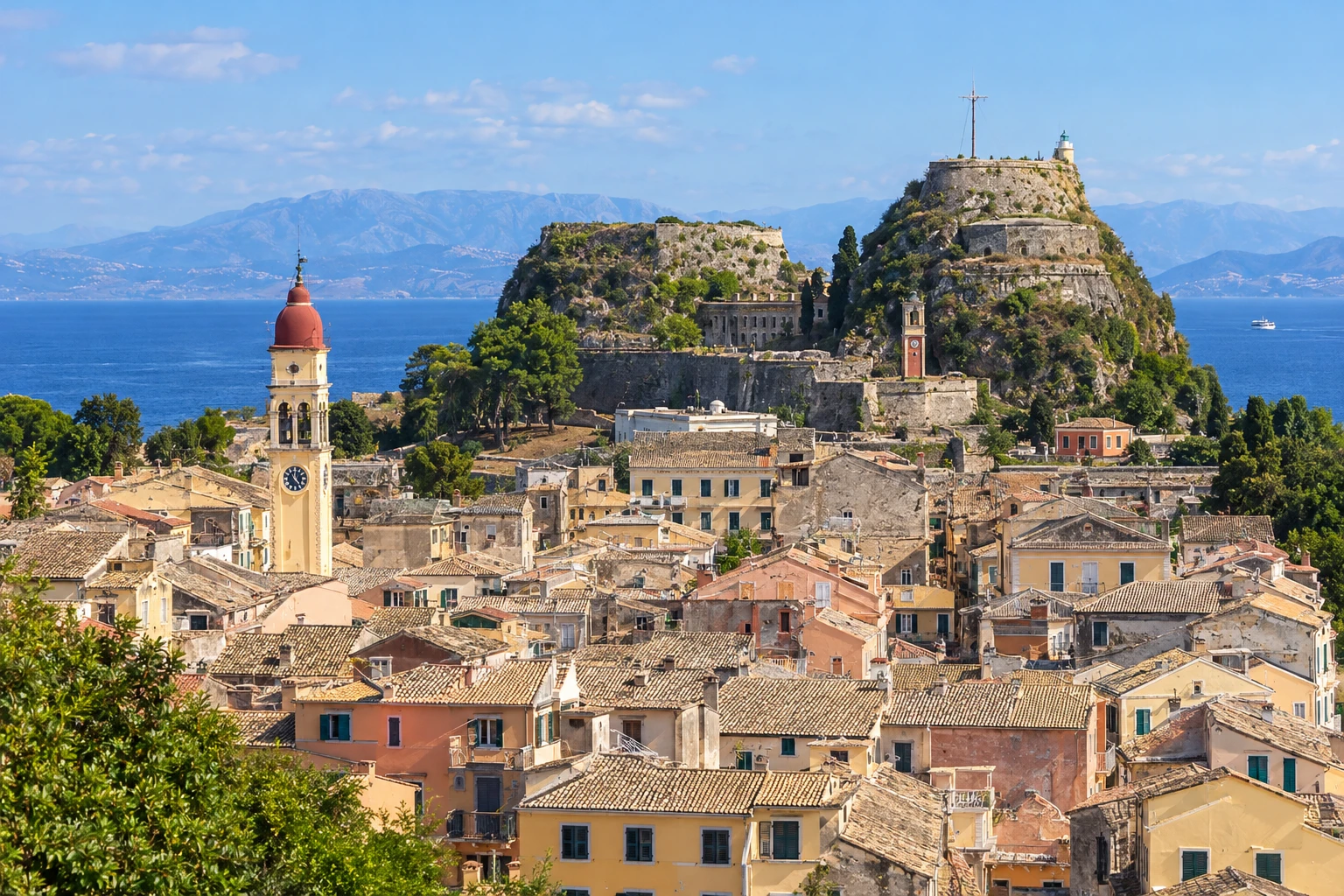
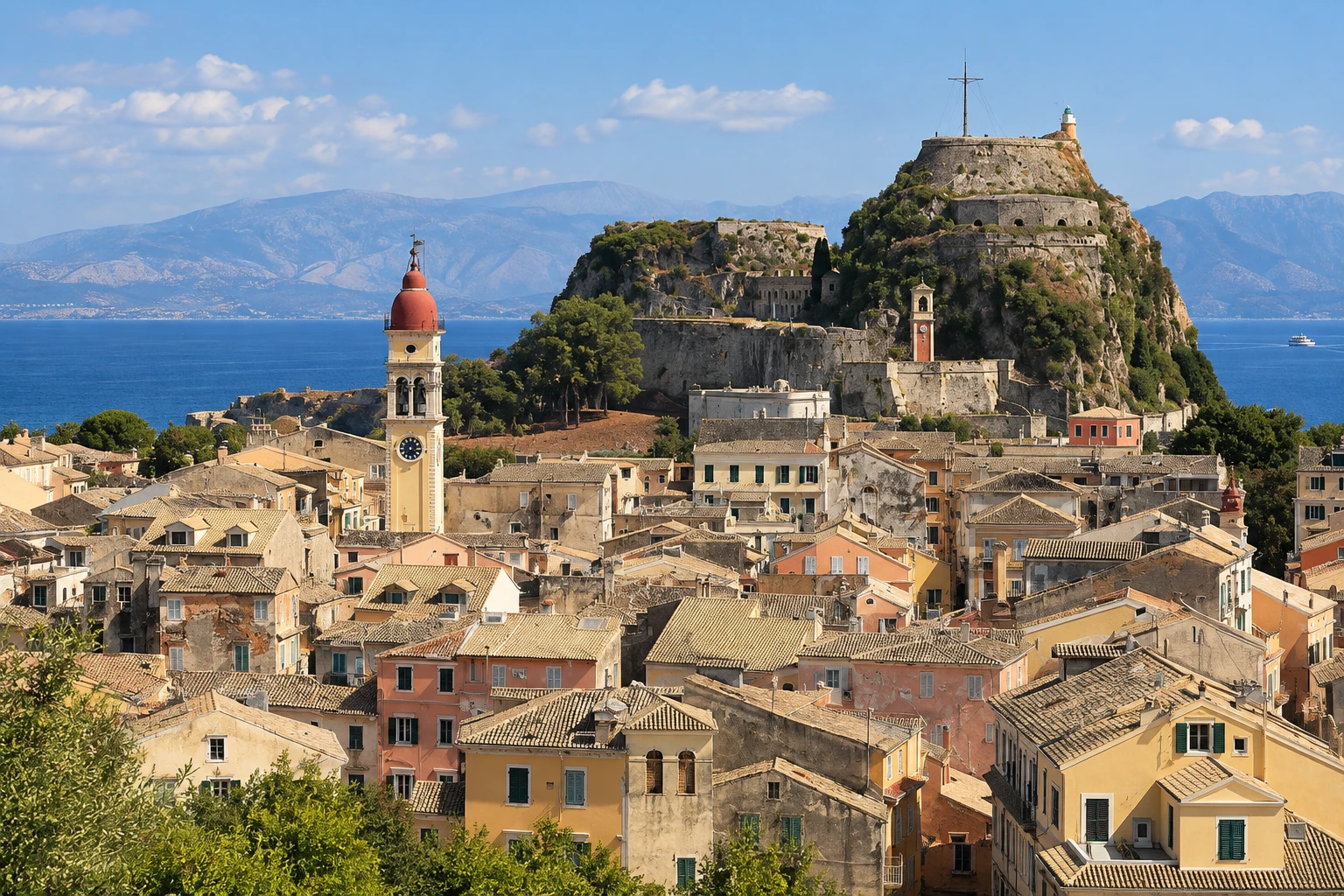
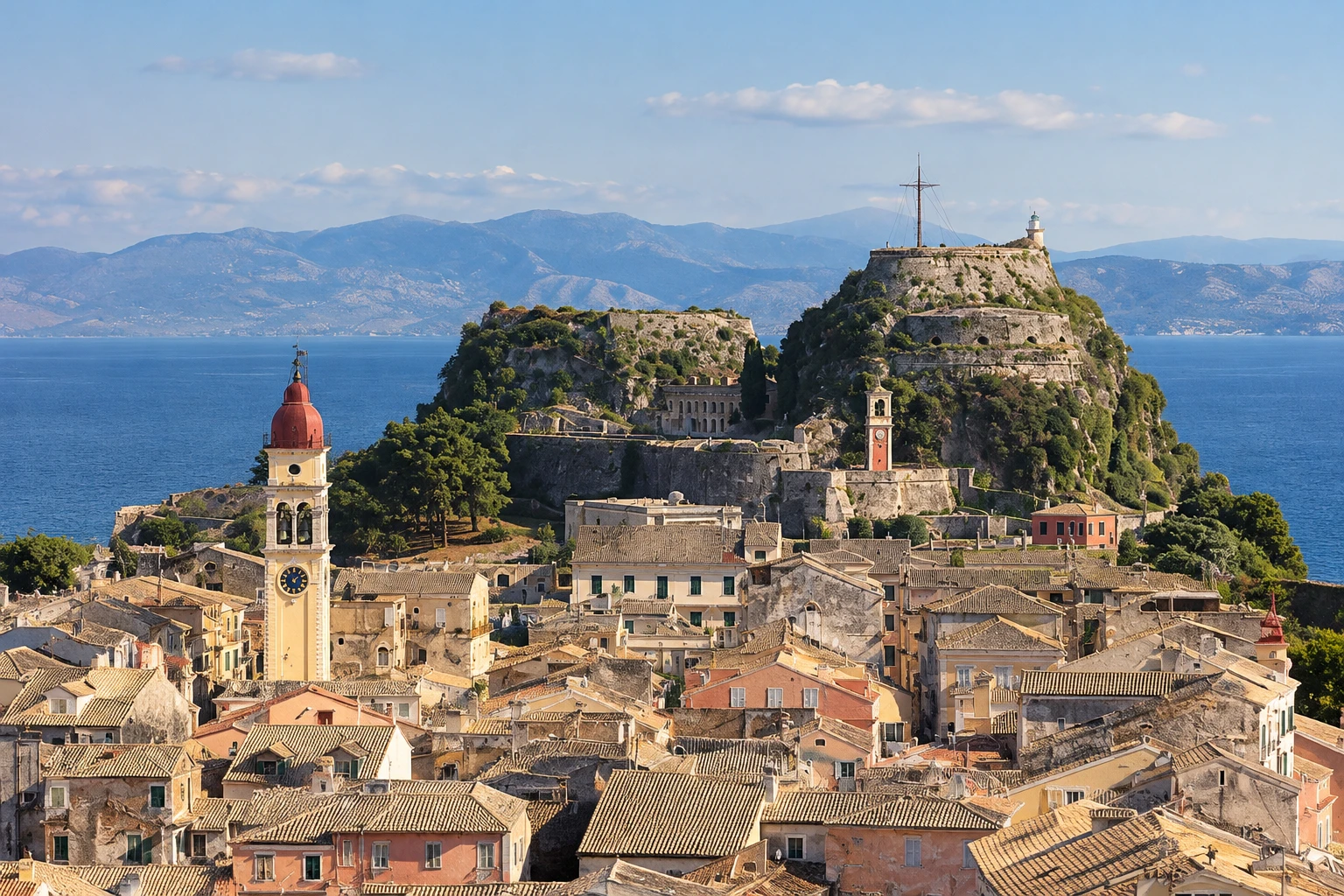
Old Town of Corfu (Palia Poli tis Kerkyras)Corfu’s Old Town, a UNESCO World Heritage site: Venetian alleys (kantounia), tall houses with laundry at the windows, churches with Italian-style bell towers and squares between...
Old Fortress (Palaio Frourio)The Fortaleza Velha, on a peninsula separated from the town by a sea-water moat, with 16th-century Venetian bastions, a Doric church of São Jorge, a lighthouse and views over th...
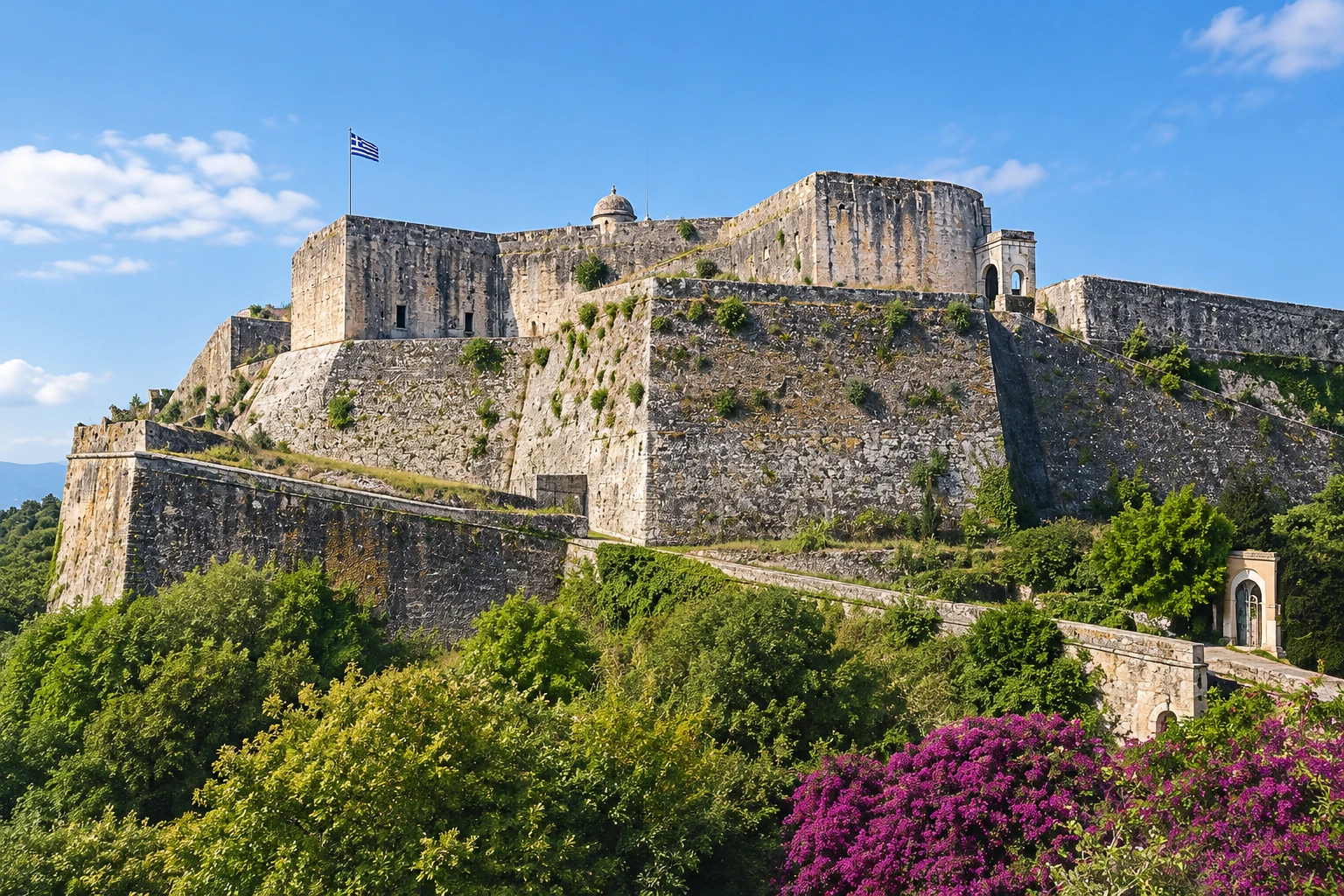
New Fortress (Neo Frourio)The Fortaleza Nova, from the late 16th century, on the hill of São Marcos above the old port: galleries, cisterns and Venetian bastions with the Lion of São Marcos over the gate...
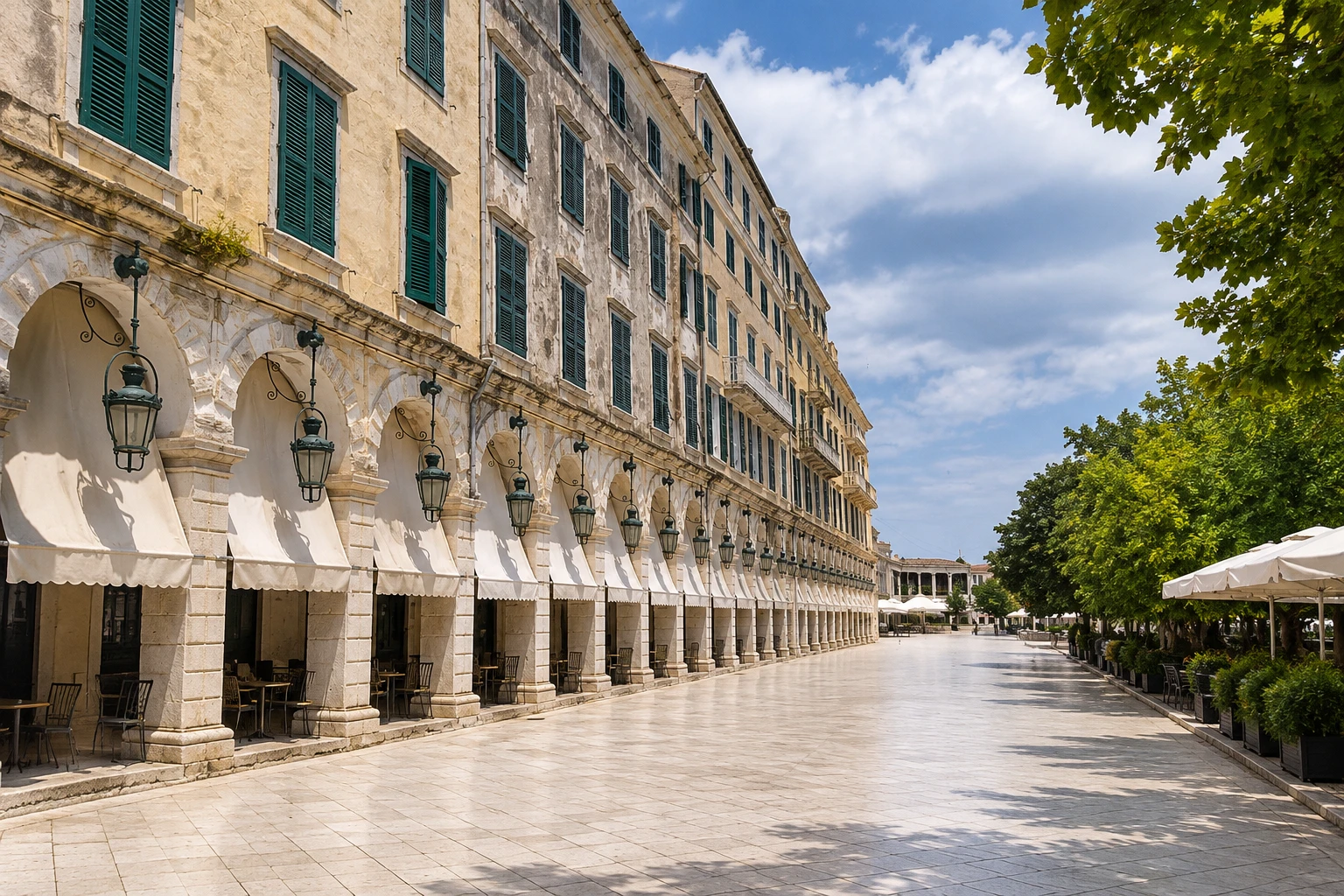
Spianada Square and the ListonThe large esplanade between the old town and the Fortaleza Velha, with a cricket field, a bandstand, the rotunda de Maitland and the arcades of the Liston, inspired by the rue d...
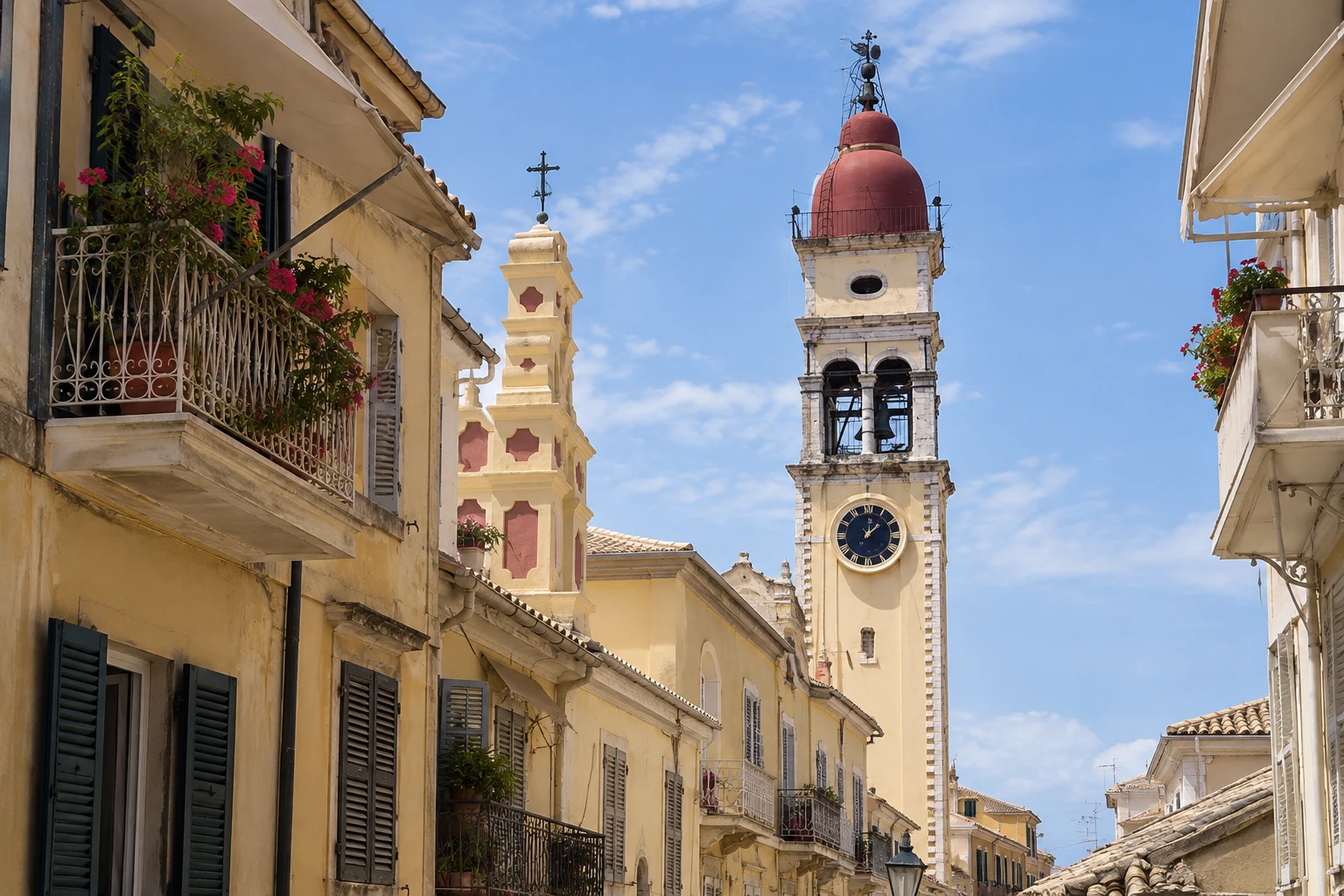
Saint Spyridon Church (Agios Spyridonas)The church of Corfu’s patron saint, dating from 1589, with the tallest bell tower in the Ilhas Jônicas and the saint’s body in a silver reliquary, carried in procession through...
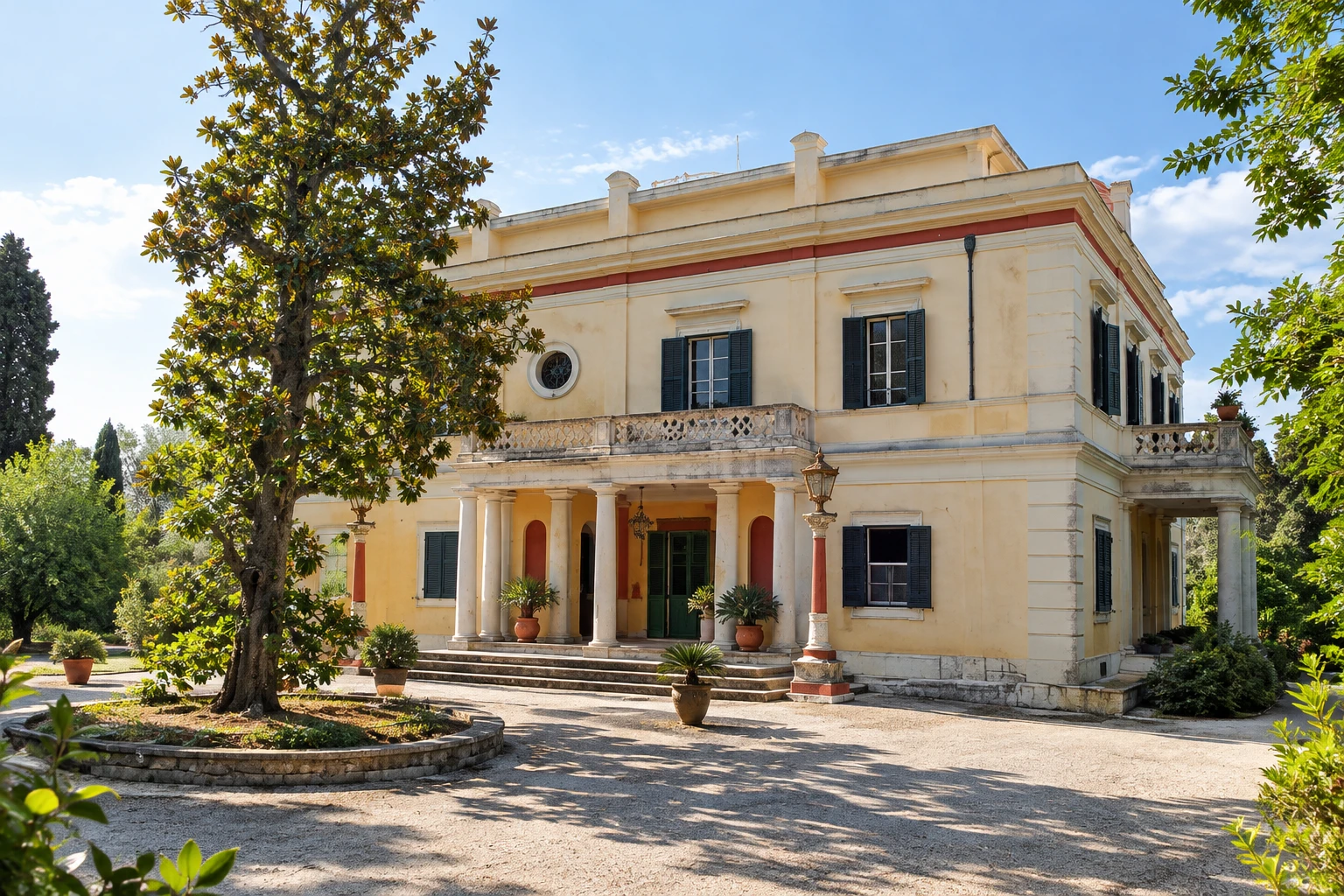
Mon ReposNeoclassical villa from 1831 in a woodland overlooking the sea, where Prince Philip, husband of Queen Elizabeth II, was born.
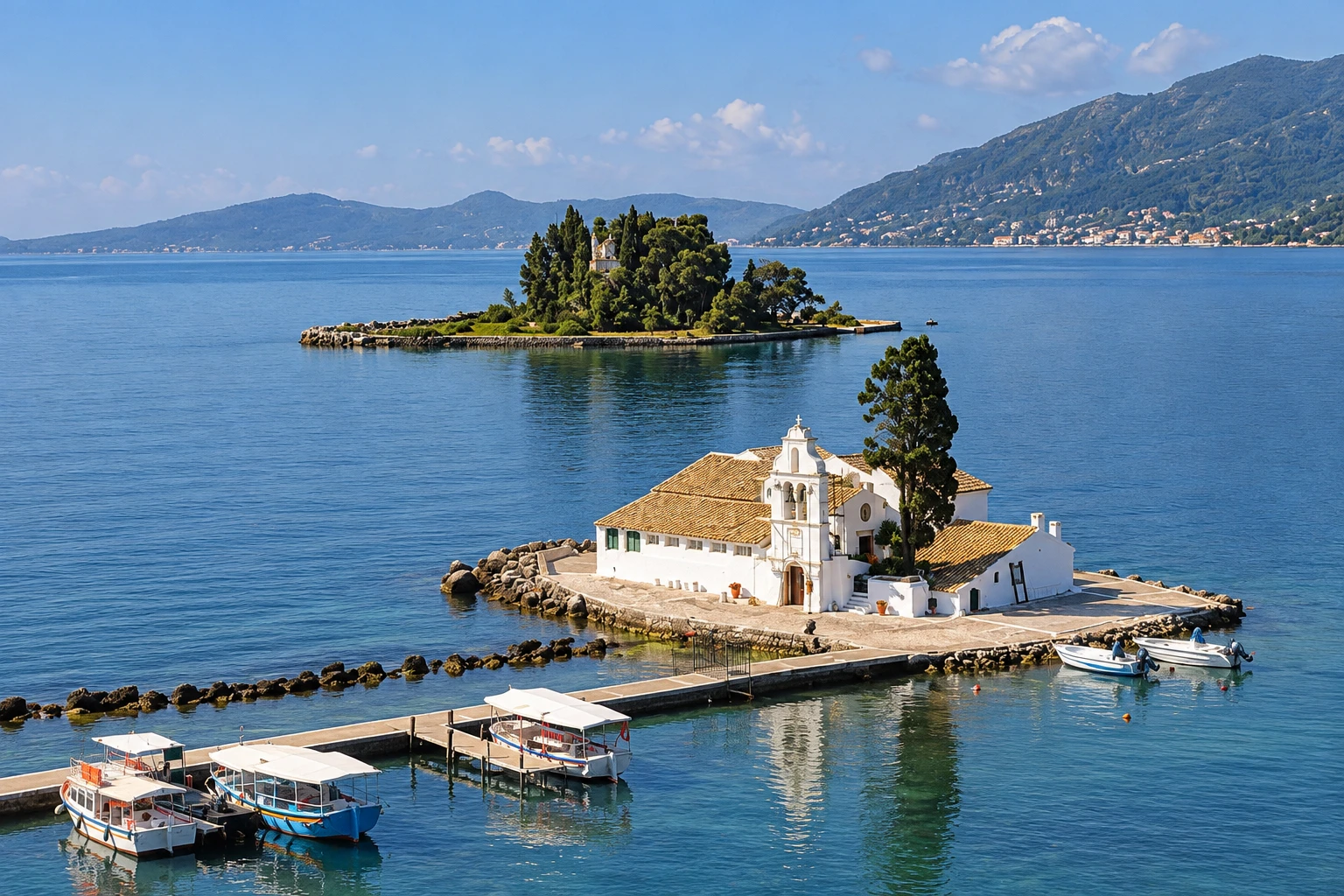
Kanoni, Vlacherna and PontikonisiThe Kanoni lookout over the lagoon, with the white monastery of Vlacherna connected to the mainland by a causeway and, behind it, the islet of Pontikonisi with its Byzantine cha...
Corfu’s Old Town, a UNESCO World Heritage site: Venetian alleys (kantounia), tall houses with laundry at the windows, churches with Italian-style bell towers and squares between the two fortresses.
The Fortaleza Velha, on a peninsula separated from the town by a sea-water moat, with 16th-century Venetian bastions, a Doric church of São Jorge, a lighthouse and views over the town and the mainland.
The Fortaleza Nova, from the late 16th century, on the hill of São Marcos above the old port: galleries, cisterns and Venetian bastions with the Lion of São Marcos over the gate and views over the town and the sea.
The large esplanade between the old town and the Fortaleza Velha, with a cricket field, a bandstand, the rotunda de Maitland and the arcades of the Liston, inspired by the rue de Rivoli, full of cafés.
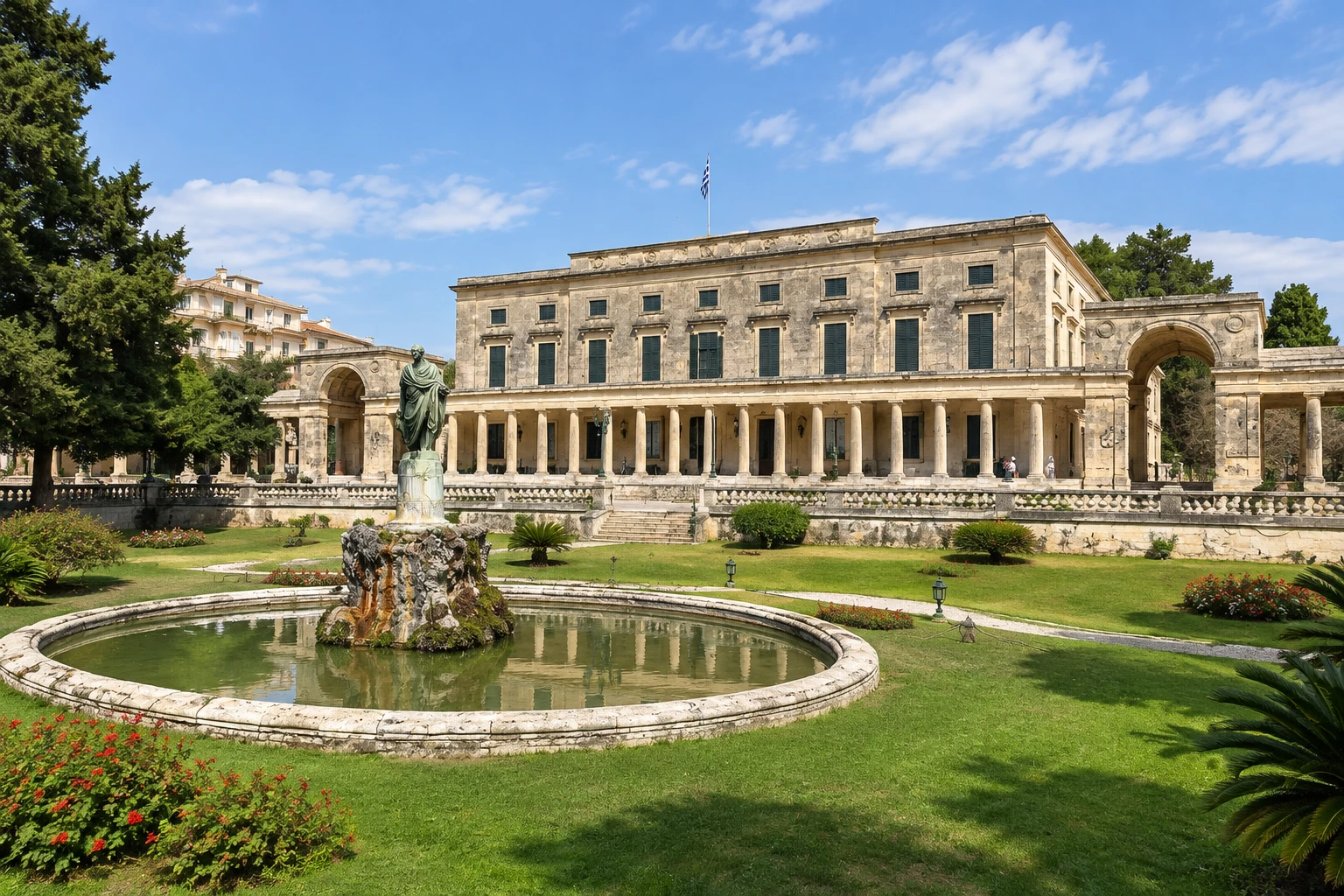
The neoclassical palace of the British high commissioners, dating from 1824, at the end of the Spianada, today houses the Museu de Arte Asiática, with about 10,000 pieces from China, Japan, India and Southeast Asia.
The church of Corfu’s patron saint, dating from 1589, with the tallest bell tower in the Ilhas Jônicas and the saint’s body in a silver reliquary, carried in procession through the town four times a year.
Neoclassical villa from 1831 in a woodland overlooking the sea, where Prince Philip, husband of Queen Elizabeth II, was born. Today it houses the Museu de Paleópolis, with the finds from the ancient city that once stood around it.
The Kanoni lookout over the lagoon, with the white monastery of Vlacherna connected to the mainland by a causeway and, behind it, the islet of Pontikonisi with its Byzantine chapel: the most iconic image of Corfu.
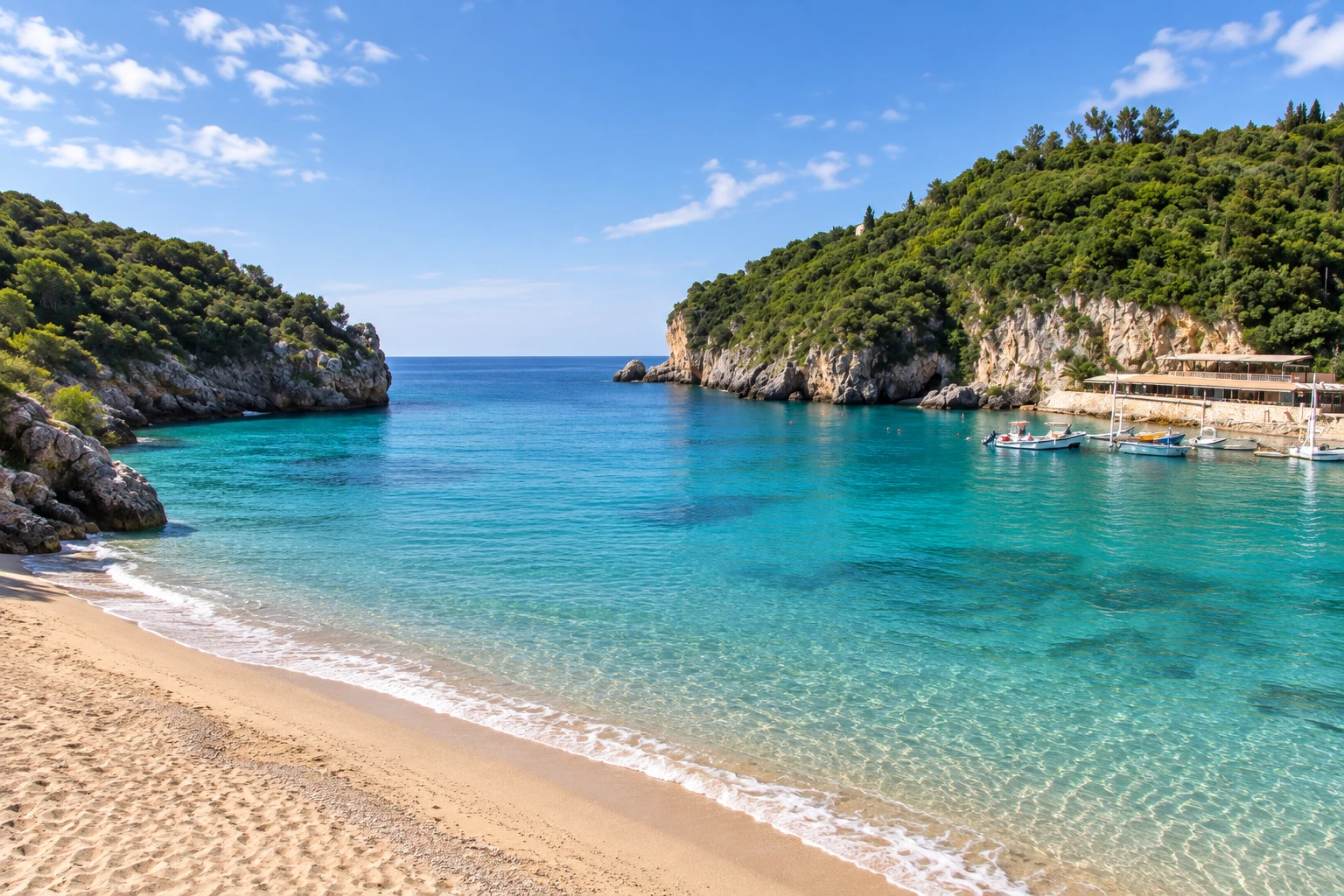
The Monastery of the Virgin atop the Paleokastritsa promontory, founded in 1225 and rebuilt in the 18th century, with a courtyard of bougainvillea, a small museum and views over the coves of the west coast.
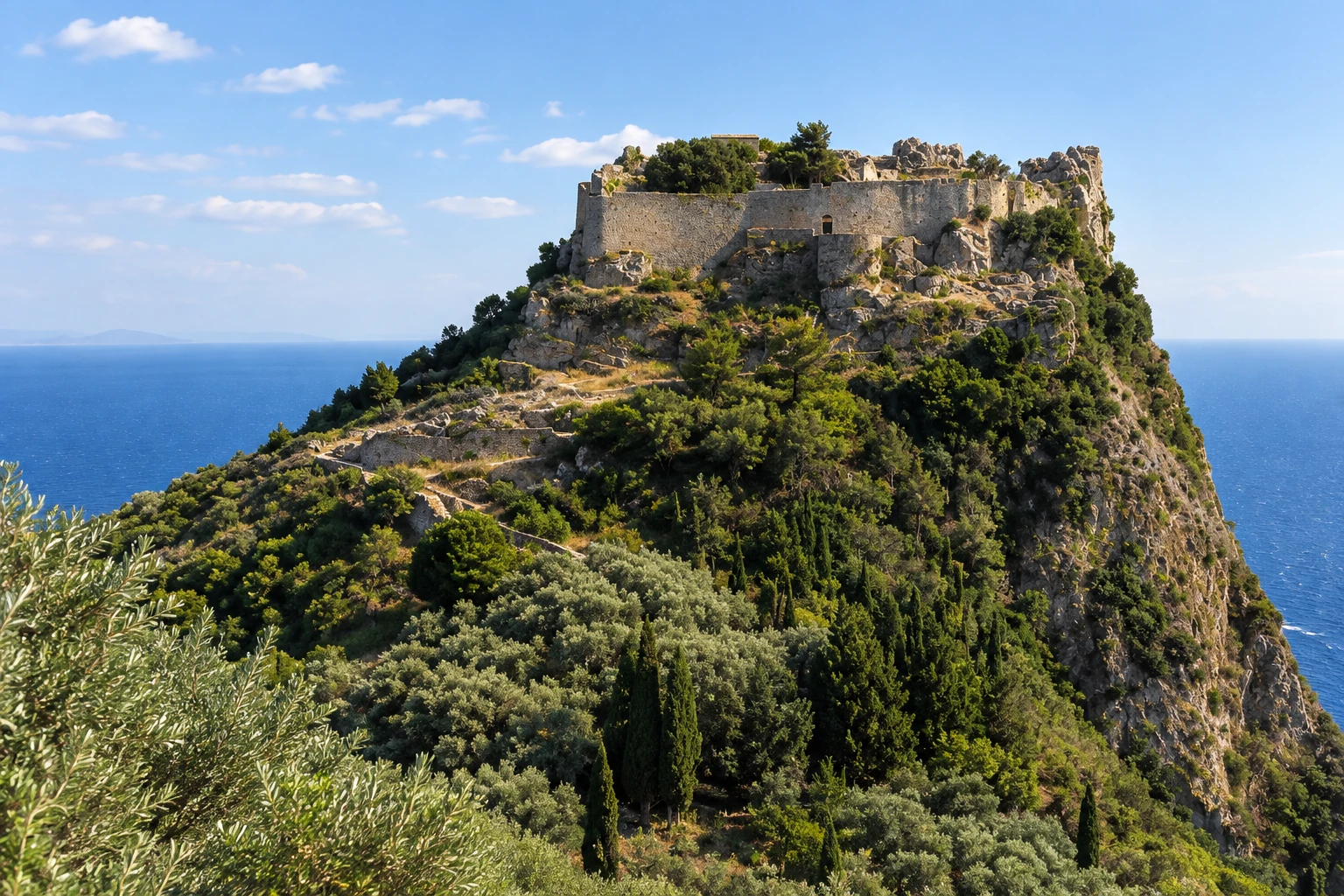
Byzantine castle ruins atop a cliff 305 meters above the sea on the northwest coast, which was never captured. A 20-minute walk up and views from Paleokastritsa to the open sea.
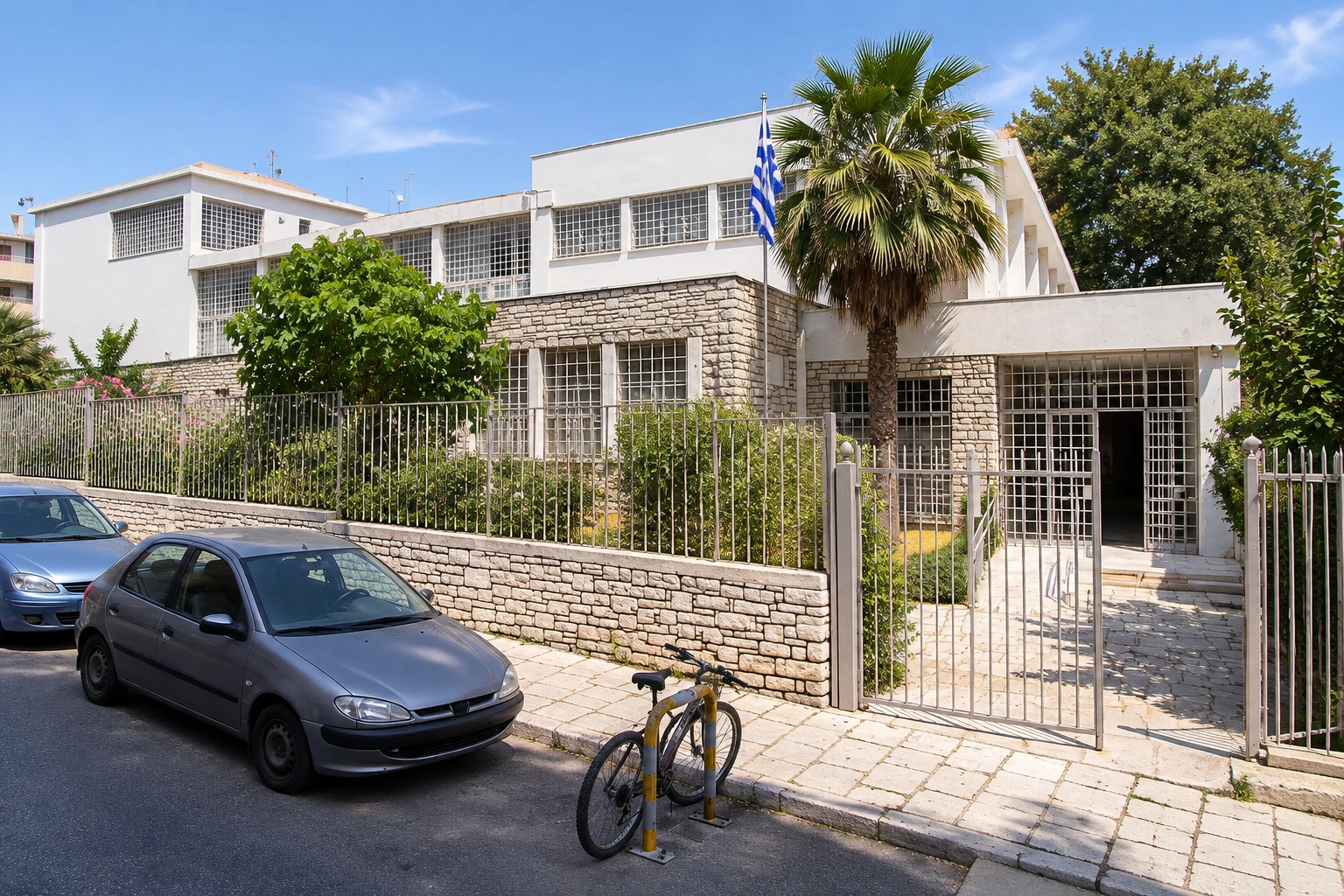
The renovated Archaeological Museum of Corfu, featuring the Gorgon pediment from the temple of Artemis—the oldest stone pediment in Greece—the Lion of Menecrates and finds from the ancient city.
Byzantine museum of Corfu in a 15th-century church in Campiello, with icons from the 15th to the 19th centuries of the Cretan and Ionian schools and a courtyard with views of the sea and the mainland.
Village on top of a hill on the west coast, 13 km from the town, with the viewpoint called Trono do Kaiser where Wilhelm II used to watch the sunset, and the beaches of Kontogialos and Glyfada below.
Sandstone formations sculpted by the sea at Sidari, on the north of the island: a narrow channel between stone walls, small coves and the legend that those who swim through it find love.


 Brazil
 Antarctica
 Argentina
 Bolivia
 Chile
 Colombia
 Ecuador
 Falkland Islands (Malvinas)
 French Guiana
 Guyana
 Paraguay
 Peru
 Suriname
 Uruguay
 Venezuela
 Austria
 Belgium
 Croatia
 Denmark
 Finland
 France
 Germany
 Hungary
 Iceland
 Ireland
 Italy
 Luxembourg
 Norway
 Poland
 Portugal
 Slovakia
 Slovenia
 Spain
 Sweden
 Switzerland
 the Czech Republic
 the Netherlands
 the United Kingdom
 Turkey
 Bermuda
 Canada
 Greenland
 Mexico
 Saint Pierre and Miquelon
 the United States
 the Dominican Republic
 Japan
 Egypt
 South Africa
 Australia
 Fiji
 New Zealand
 Papua New Guinea