Crete

Crete

Crete

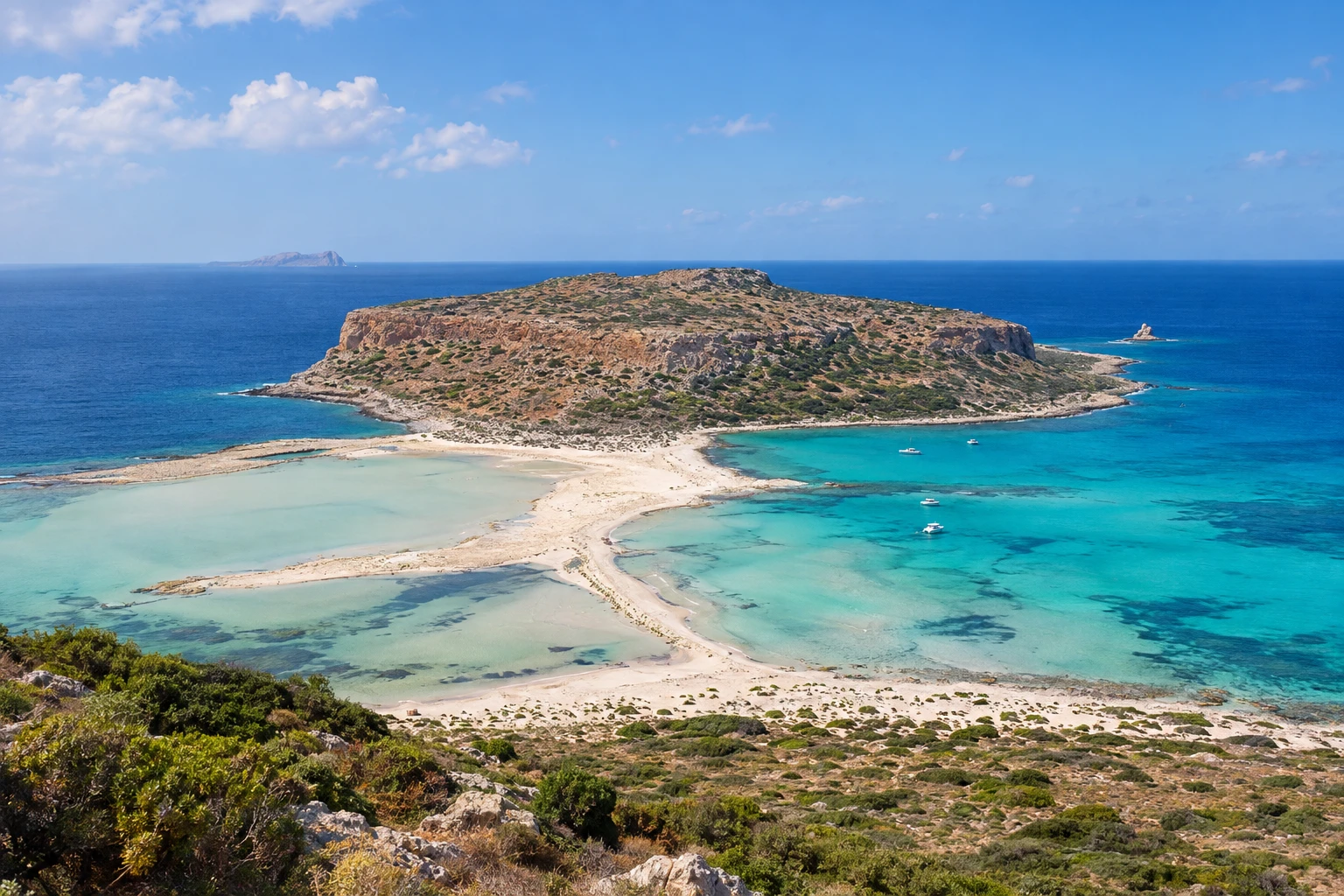
The largest island of Greece: the Minoan palace of Cnossos, Venetian ports in Heraclião, Chania and Rethymno, monasteries in the mountains and beaches like Elafonisi, Balos and Preveli.

Islands

In the photo: Lagoa de Balos

Illustrative images. The pictures in this guide are illustrations based on the real place, not photographs, and may differ from it.

Get it on Google Play

Get to know the place

A region to enjoy
at your own pace.

Creta lies at the southern tip of Greece, between the Aegean Sea and the Libyan Sea, and it is a large island: about 260 km from end to end, with mountains rising above 2,400 metres in the middle. For that reason you visit it more like a small country than like an island with a single port. The northern coast concentrates the three cities on the itinerary: Heraclião (Heraklion), the capital, Rethymno and Chania, all with Venetian ports, walls and an old town that mixes Venice and the Ottoman Empire.

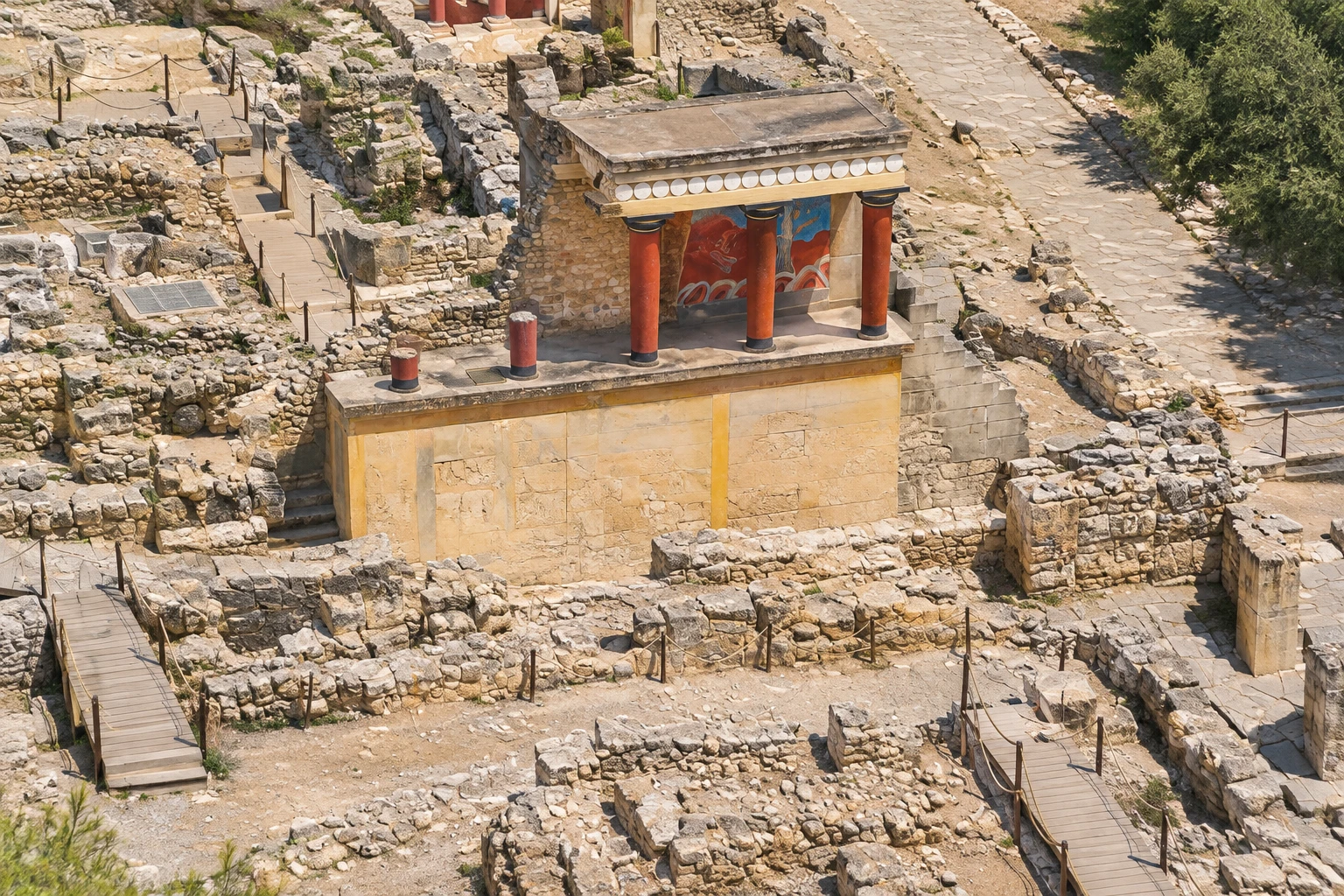
History is the primary reason to visit. The Minoan civilization, which predates classical Greece, left in Cnossos, five kilometres from Heraclião, the island’s most visited palace, and the Archaeological Museum in the capital houses what came from there: frescoes, the Phaistos Disc and the figurines of the snake goddess. Romans, Byzantines, Venetians (from 1204 to 1669) and Ottomans (until the late 19th century) followed. Creta only joined Greece in 1913, and Cretans make a point of saying they are Cretan before they are Greek.

The second reason is nature. In the west are the beaches of Elafonisi, Balos and Falasarna and the Samaria Gorge, a day hike that crosses the mountains to the sea. South of Rethymno is the palm grove of Preveli. In the mountains are monasteries such as Arkadi and Agia Triada, with olive trees, vineyards and Cretan cuisine, based on olive oil, herbs, cheese and bread: the Mediterranean diet was born, in part, from studying what people eat here.

For Brazilians, Creta requires time and a car. Distances between cities are short by bus, but beaches and monasteries lie off the regular routes. Summer, from June to September, is hot and dry with a strong midday sun; winters are mild on the coast and snowy in the mountains. Arrival is usually by plane from Athens, or by overnight ferry departing from Pireu.

This destination brings together 3 cities: Heraklion, Chania, Rethymno.

Share: WhatsApp
Traveler, share your experiences through photos Up to 5 photos of each place you visited.

One destination, many paths

The cities on this trip

Start with one city or combine several in your itinerary.

Where Crete is The star marks the capital, Heraklion.
HeraklionChaniaRethymno

Outlines: Natural Earth (public domain). Adapted by Cidade Turismo.

How to get there: Crete

Aeroporto Internacional de Heraclião Nikos Kazantzakis (HER) · 5 km to Heraklion

Connections from Brazil are usually via a stopover in another city. Check before booking. From Athens there are flights to Heraclião (HER) and Chania (CHQ) of about one hour, and overnight ferries that depart from the port of Pireu and arrive in the morning at Heraclião or Souda, Chania’s port; check the season. On the island, KTEL buses link the three cities along the northern road.

Suggested arrival point: Heraklion

Heraklion
Crete · Crete Capital Suggested arrival point

Heraklion

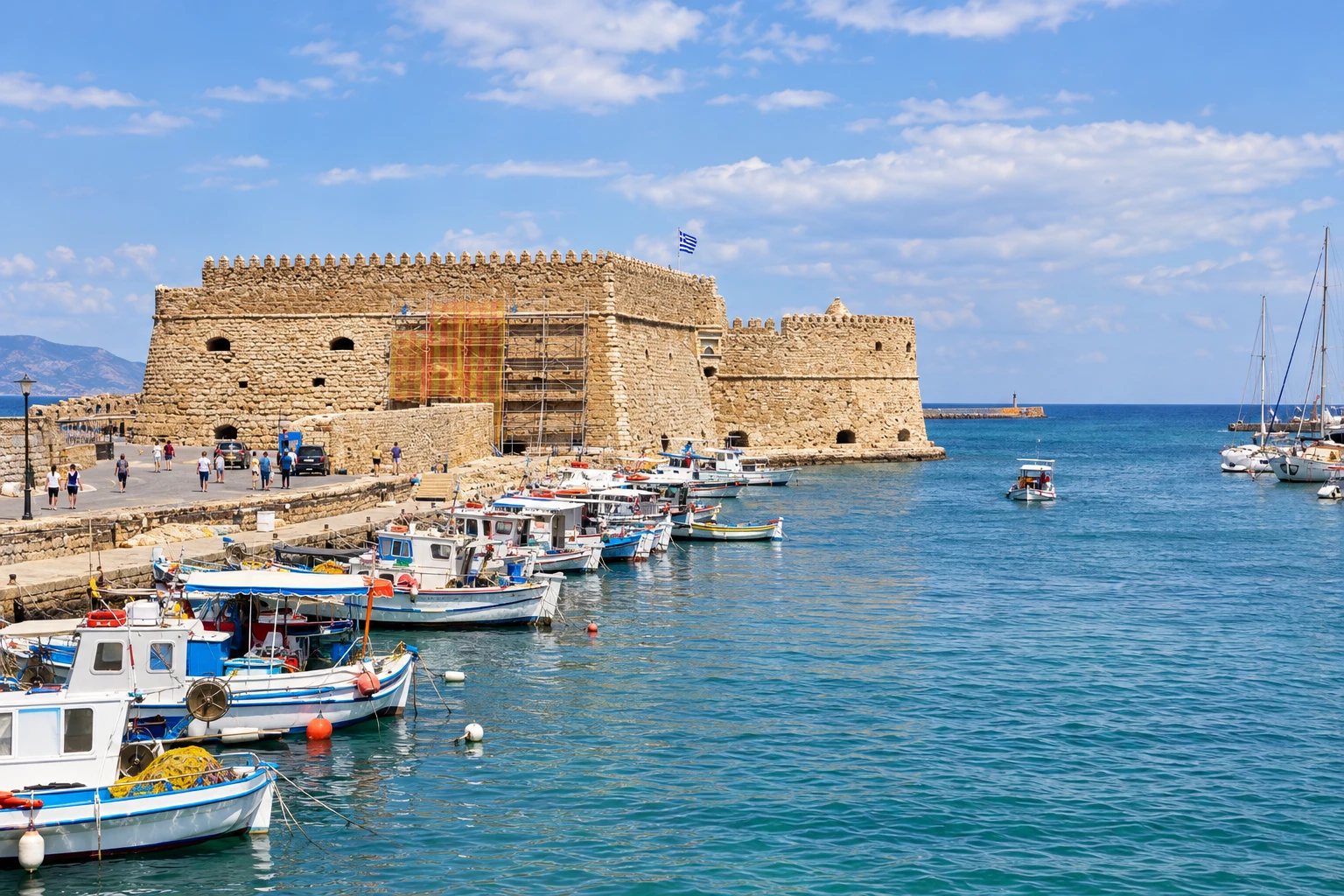
Capital and largest city of Crete, Heraclião (Heraklion) is the gateway to the island, with the busiest airport and the ferry port of Pireu. The centre is surrounded by 16th-century Venetian walls, and the fortress of Koules guards the entrance to the old harbour. Five kilometres away is the Palácio de Cnossos, and in the centre the Museu Arqueológico houses what was found there. Between Praça dos Leões and the rua 1866 market, the city is noisy and lively, less tidy than Chania and Rethymno, but it is the place you depart from for the rest of the island.

Chania
Crete · Crete

Chania

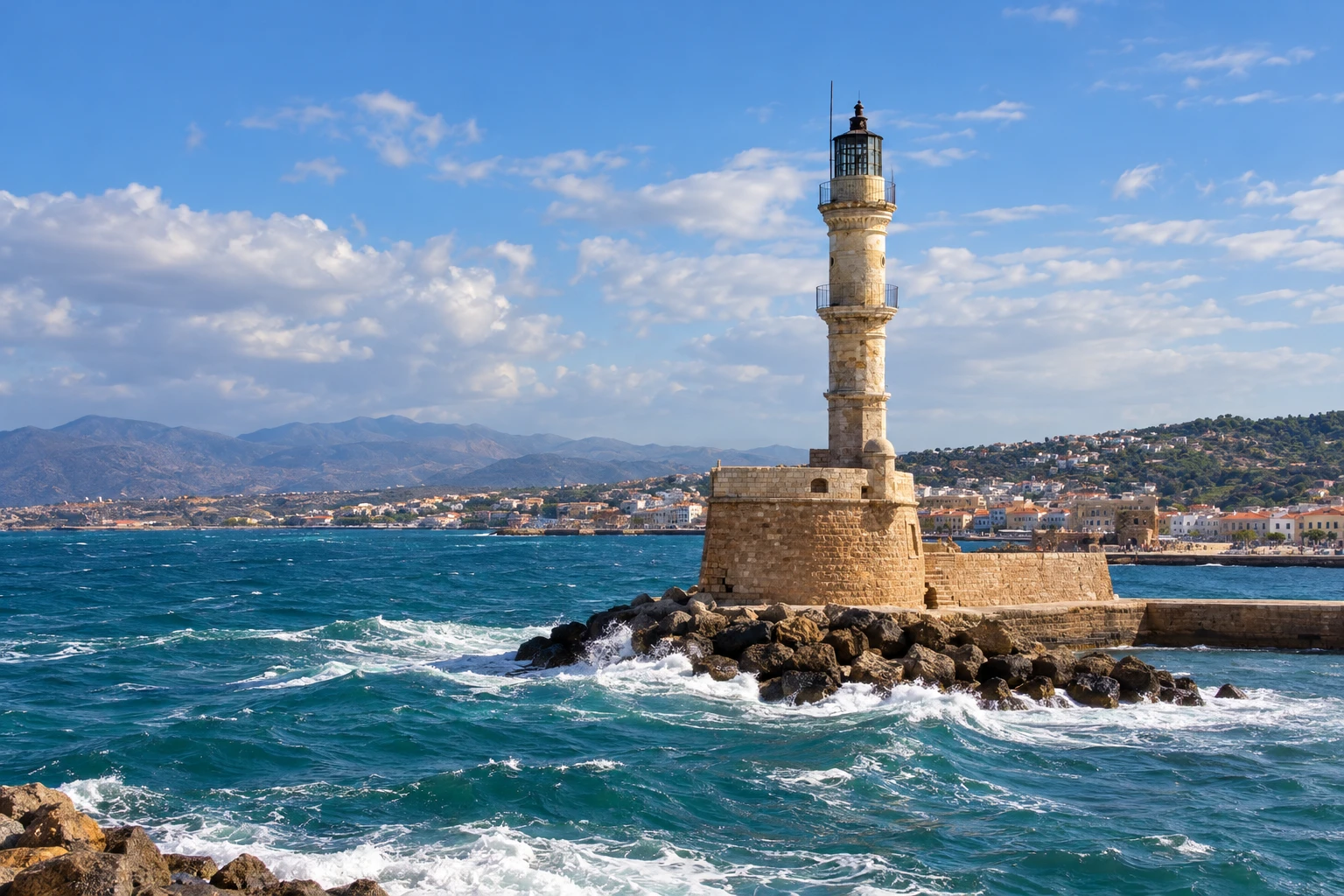
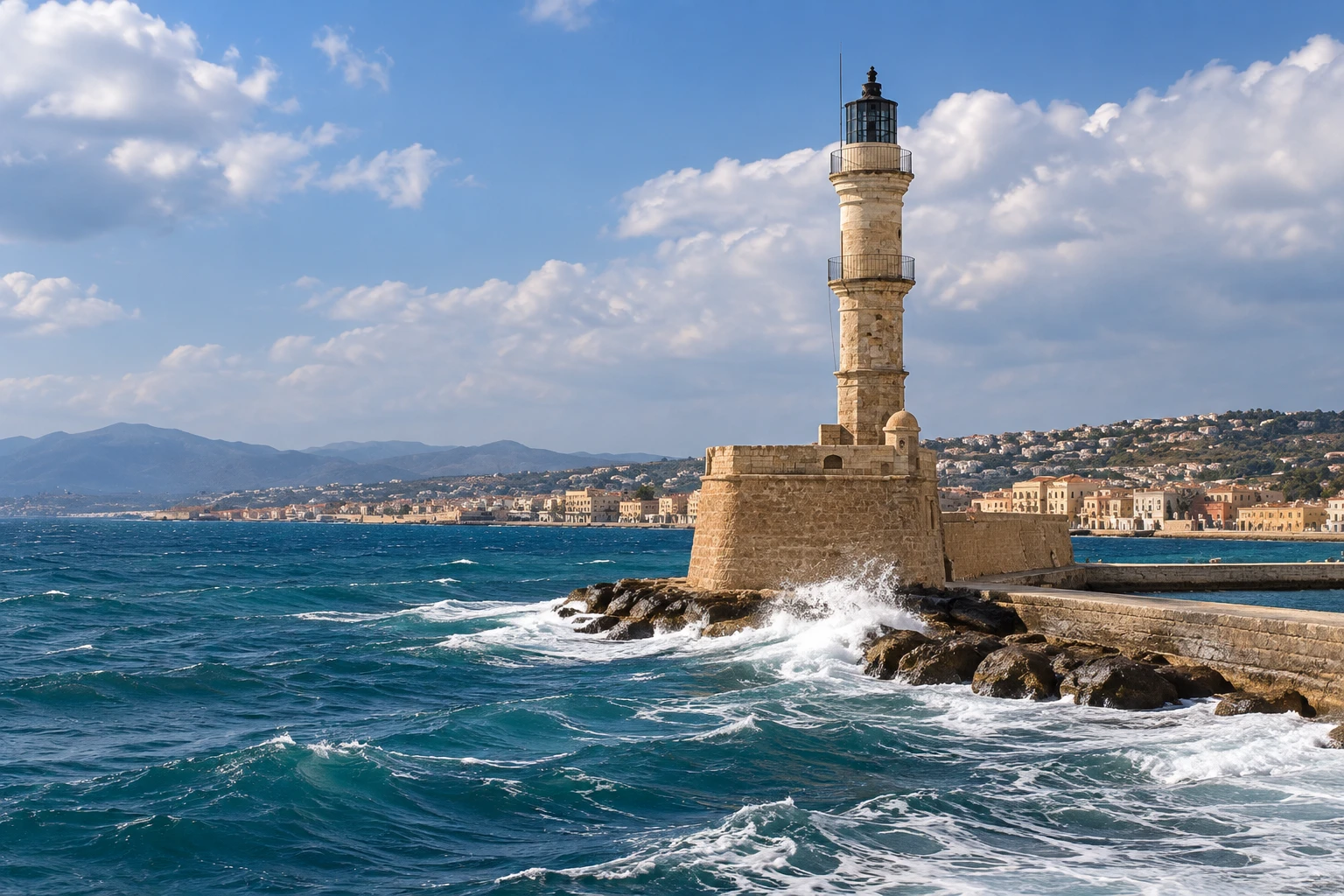
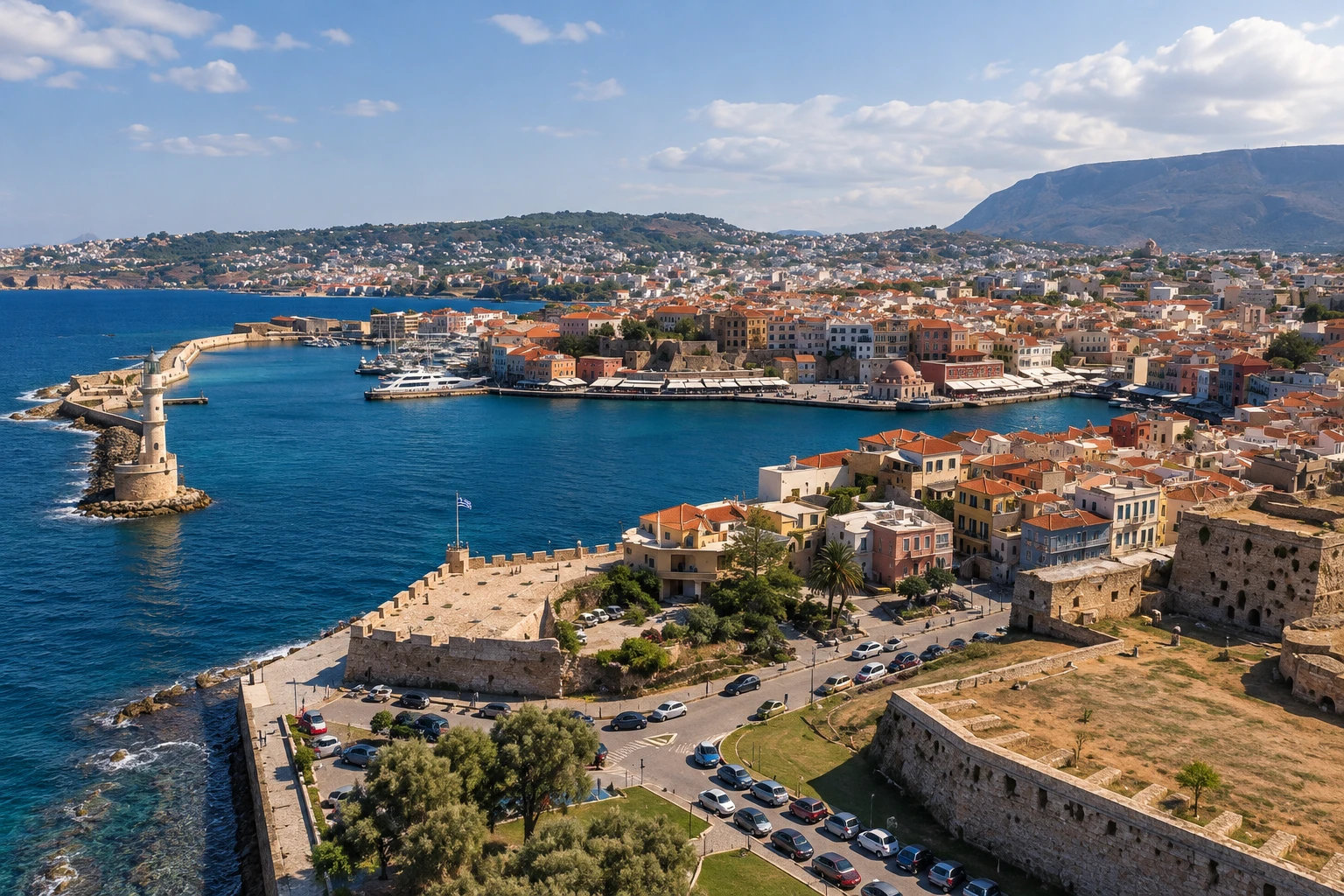
Chania is the second city of Creta and the most beautiful place to stay: the crescent-shaped Venetian harbour, with the lighthouse at the end of the breakwater and the old mosque of the janissaries on the waterfront, is the centre of an old town of narrow lanes, Venetian and Ottoman houses, neighbourhoods such as Topanas and Splantzia and the Etz Hayyim synagogue. It is the base for the west of the island: the Samaria Gorge, the beaches of Elafonisi, Balos and Falasarna, and the Akrotiri peninsula, with monasteries and the beach of Stavros.

Rethymno
Crete · Crete

Rethymno

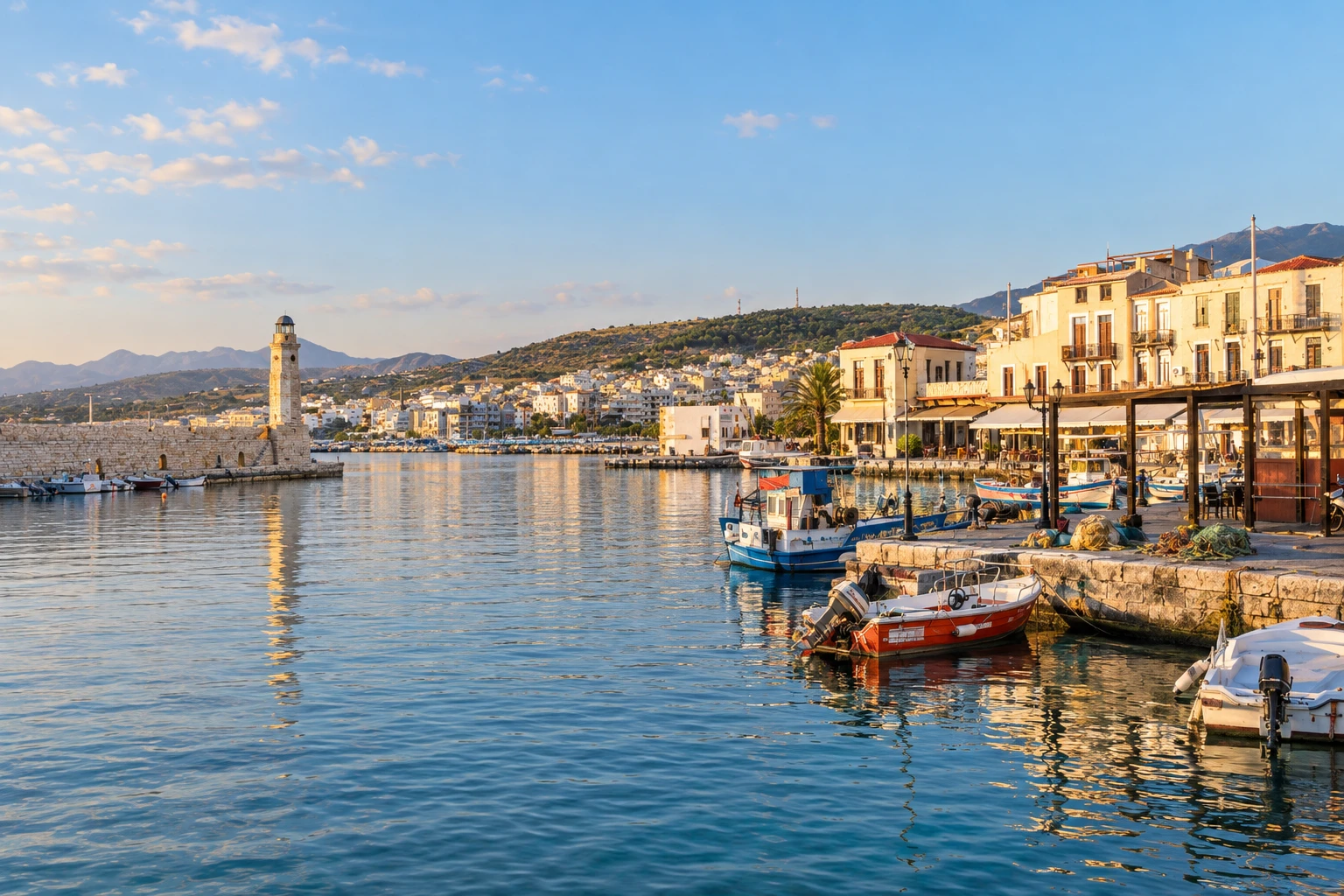
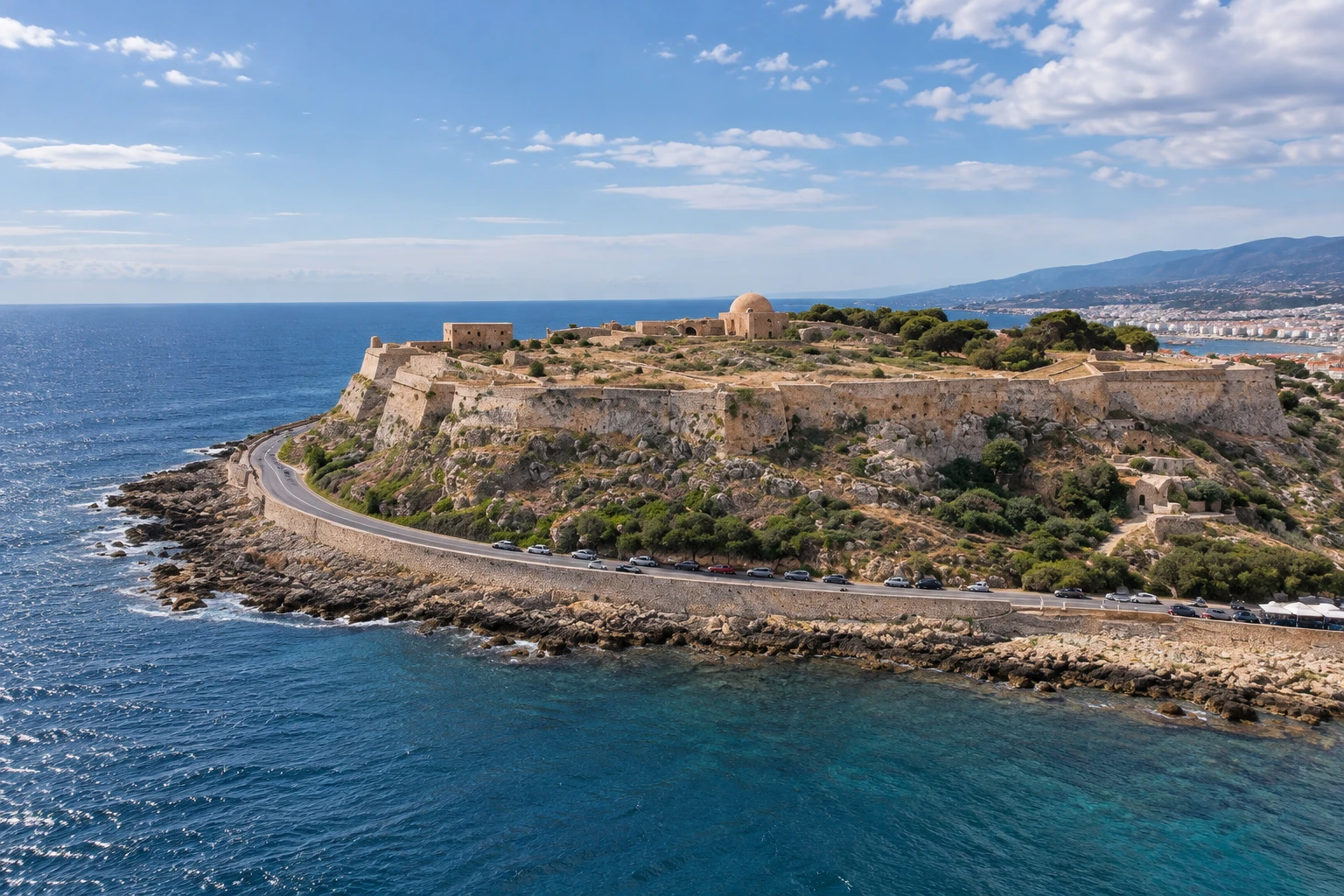
Rethymno lies halfway between Heraclião and Chania, on the north coast of Crete. The old town, at the foot of the Fortezza veneziana of 1573, is the best preserved on the island: stone lanes, fountains and Venetian portals, Ottoman minarets and a small harbour with a lighthouse. East of the centre a several-kilometre sandy beach begins, with resort hotels. In the surroundings are the monastery of Arkadi, a symbol of Cretan resistance, and, to the south, the palm grove and the beach of Preveli.

The local experience

Things to do in Crete

Rethymno · Crete · Fortress

Fortezza of Rethymno

The Venetian fortress atop Paleokastro hill, built between 1573 and 1580, with 1.3 km of ramparts, the mosque of Sultan Ibrahim in the middle and views over the old town and the sea.

Explore Fortezza of Rethymno

Chania · Crete · Neighborhood

Chania Old Town

The old town behind the port: Topanas, with Venetian and Ottoman houses, the old Jewish quarter with the synagogue Etz Hayyim, Splantzia and the hill of Kastelli, where Chania began.

Explore Chania Old Town

See 24 more places in Crete

Before you go

Practical information

A little planning leaves more time to enjoy the journey.

When to go

From May to October the weather is dry and the sea is good for swimming; July and August are the hottest and busiest months. May, June, September and October usually have milder heat and fewer people. The Samaria Gorge typically opens from May to October; check the season. In winter, from November to March, many beaches and boat services stop, but the towns and museums remain open.

The seasons shown are the most usual ones; nature doesn't always follow the calendar.

How many days to stay

Five days is a good minimum: two in Heraclião, with Cnossos and the museum, one in Rethymno and two in Chania, with a beach on the west. With a week you can include the Samaria Gorge, Elafonisi and Balos without rushing. If you only have three days, choose a single base, Heraclião or Chania, and do a round-trip outing by car.

Which city to stay in

Heraclião is the base for Cnossos and the museum, and has the busiest airport; the old town, around the Lions Square and rua 25 de Agosto, makes everything walkable. Chania has the best-preserved historic centre, around the Venetian harbour: Topanas, Splantzia and the lanes behind the lighthouse are the most sought-after areas to stay. Rethymno sits midway, with the old town at the foot of the Fortezza and a long stretch of beach to the east where the resort hotels are. For beaches and peace, the southern coast (Plakias, Paleochora) and the west (Kissamos, Elafonisi) have small villages but require a car.

Respect the place

Take your trash with you, follow the signs and support local businesses. In natural areas, follow the visiting guidelines.

Beyond the guide

Your questions

Frequently asked questions about Crete

How to get to Creta from Brazil?

Connections from Brazil are usually via a stopover in another city. Check before buying. Then, from Athens, the quickest way is the roughly one-hour flight to Heraclião or Chania. The ferry from Pireu is an alternative for those who want to arrive in the morning and sleep on board: check the season and timetables.

How many days to stay in Creta?

Five days cover the three northern towns and Cnossos; a week allows for the Samaria Gorge and the western beaches. With three days, stay in one base and take a day trip by car.

Do you need to rent a car in Creta?

For the towns and Cnossos, no: KTEL buses connect Heraclião, Rethymno and Chania, and there is an urban bus to Cnossos. For beaches like Elafonisi, Balos and Preveli, for the monasteries and for the Samaria Gorge, a car or an organized tour makes a difference. Mountain roads are narrow and winding.

Can you do Creta as a round-trip day trip from Athens?

It’s not worth it. Even by plane, going and returning the same day leaves only a few hours on the island. Book at least three nights.

Which is the best base: Heraclião or Chania?

Heraclião is more practical for Cnossos, the museum and the main airport. Chania is nicer to stay in and is closer to the western beaches and the Samaria Gorge. Those with five days or more often split their stay between the two.

Is Creta hot in summer?

Yes. In July and August daytime highs often exceed 30°C and the sun is strong between 11:00 and 16:00. Archaeological sites have little shade: bring water, a hat and sunscreen, and visit early or late in the afternoon.

Explore other destinations Search by state and city