Rethymno · Crete · Fortress
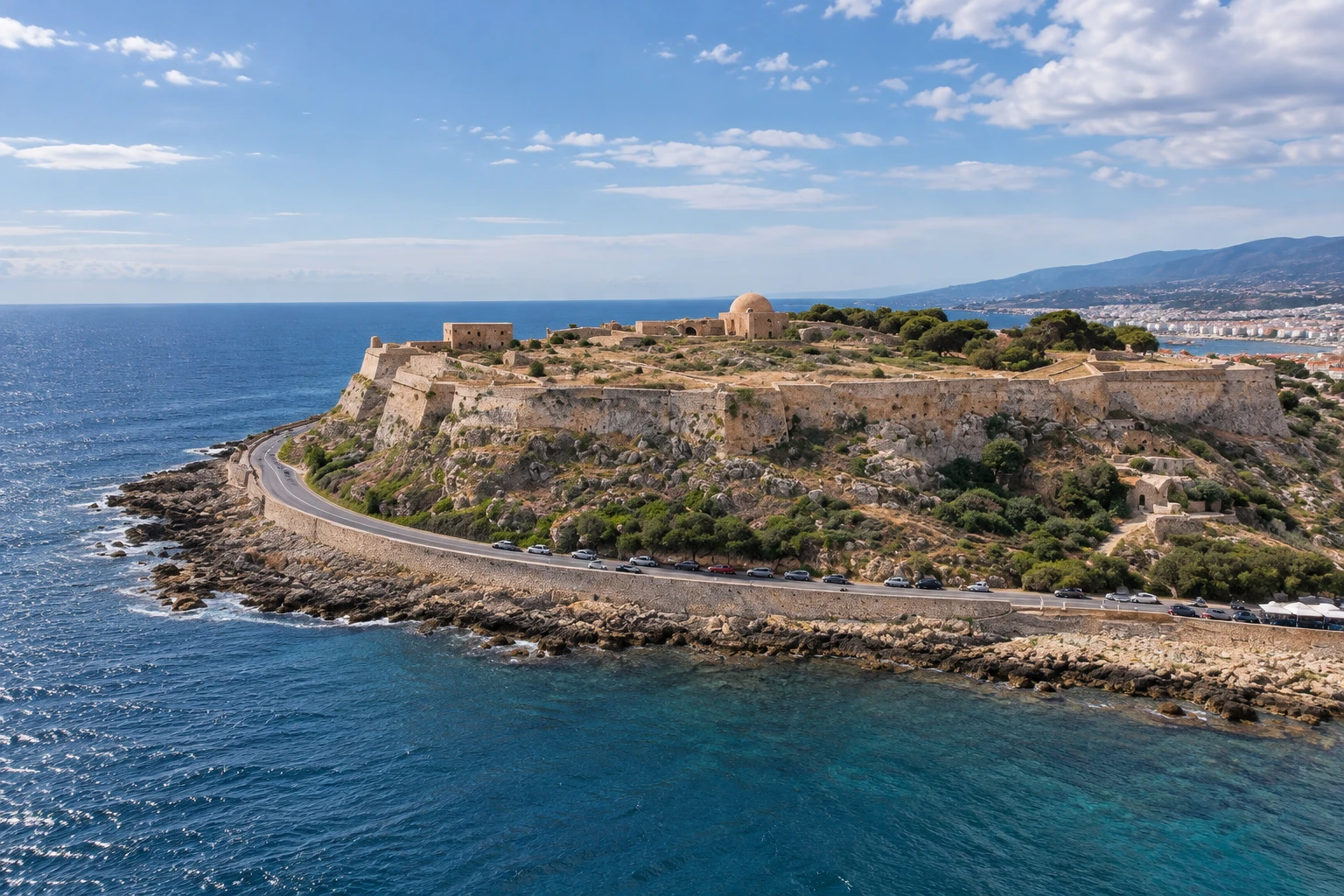
Fortezza of Rethymno
The Venetian fortress atop Paleokastro hill, built between 1573 and 1580, with 1.3 km of ramparts, the mosque of Sultan Ibrahim in the middle and views over the old town and the sea.

 Search
 Brazil
 Antarctica
 Argentina
 Bolivia
 Chile
 Colombia
 Ecuador
 Falkland Islands (Malvinas)
 French Guiana
 Guyana
 Paraguay
 Peru
 Suriname
 Uruguay
 Venezuela
 Austria
 Belgium
 Croatia
 Denmark
 Finland
 France
 GermanyGreece
 Hungary
 Iceland
 Ireland
 Italy
 Luxembourg
 Norway
 Poland
 Portugal
 Slovakia
 Slovenia
 Spain
 Sweden
 Switzerland
 the Czech Republic
 the Netherlands
 the United Kingdom
 Turkey
 Bermuda
 Canada
 Greenland
 Mexico
 Saint Pierre and Miquelon
 the United States
 the Dominican Republic
 JapanTurkey
 Egypt
 South Africa
 Australia
 Fiji
 New Zealand
 Papua New Guinea
Crete
28 places to visit, chosen by the Cidade Turismo guide.
Illustrative images. The pictures in this guide are illustrations based on the real place, not photographs, and may differ from it.
To start
One by one
The Venetian fortress atop Paleokastro hill, built between 1573 and 1580, with 1.3 km of ramparts, the mosque of Sultan Ibrahim in the middle and views over the old town and the sea.
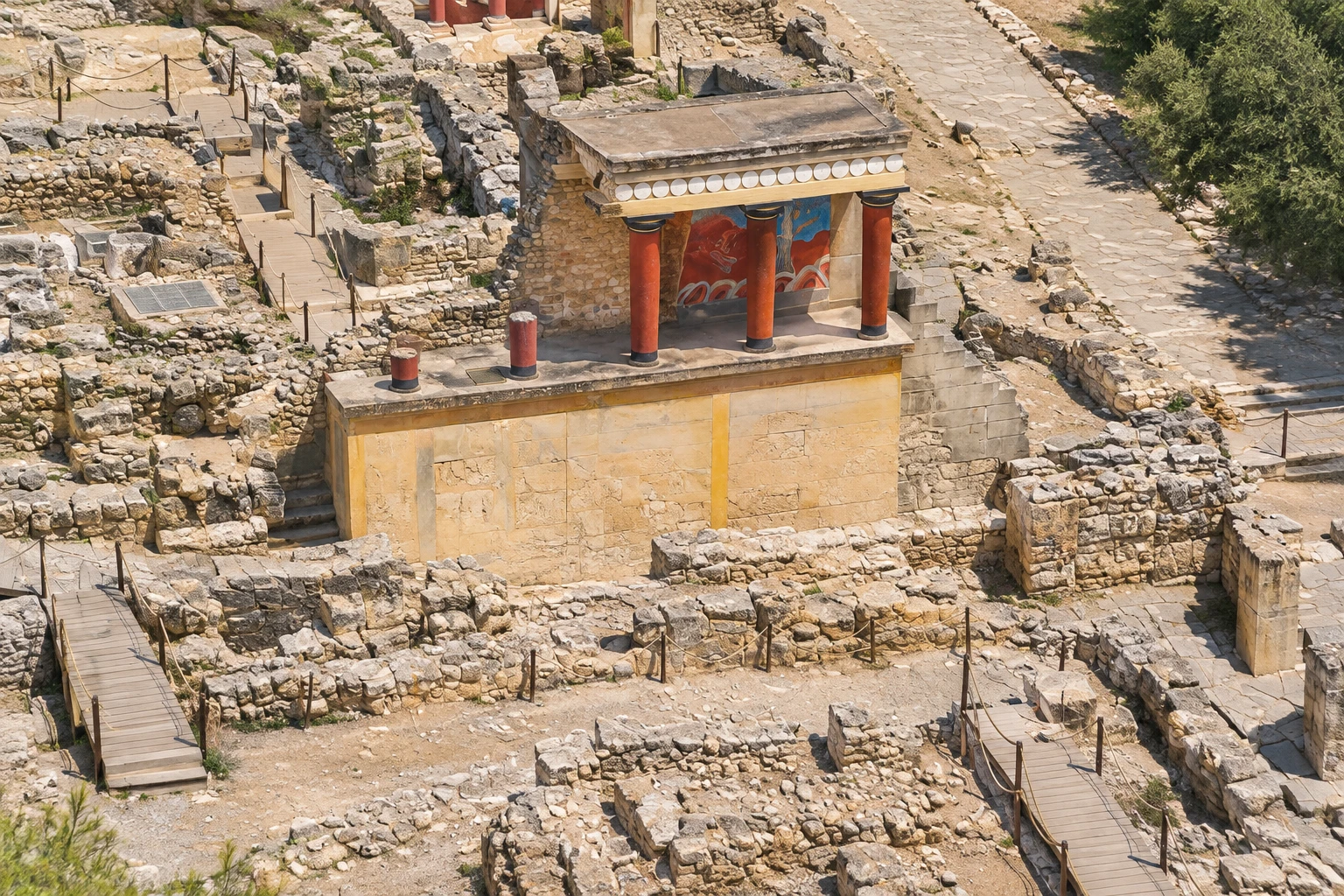
The largest palace of the Minoan civilization, 5 km from Heraclião, with a central courtyard, throne room, staircases and Arthur Evans's reconstructions from the early 20th century.
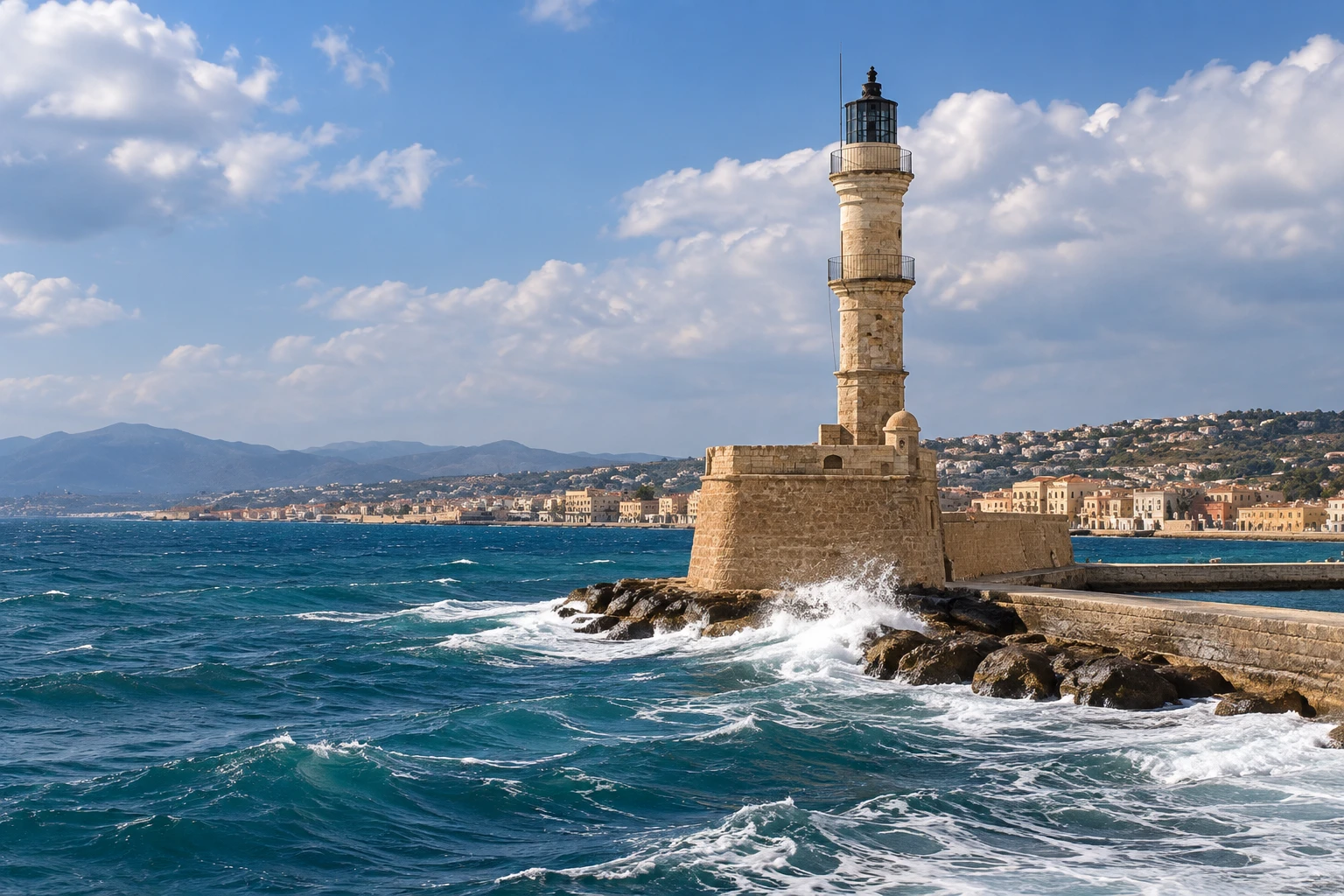
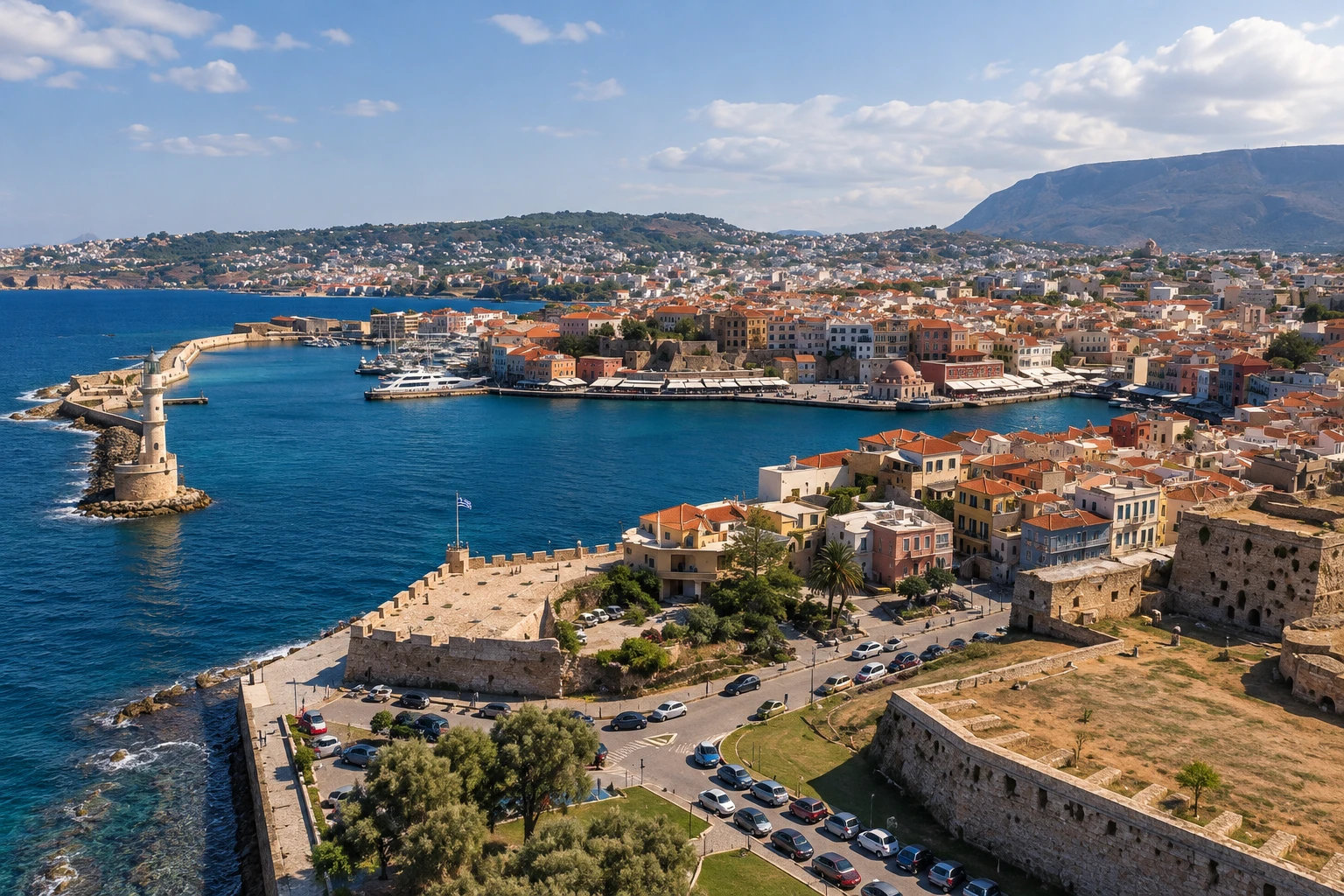
The porto veneziano in a crescent, with the mesquita dos janízaros on the water’s edge, the arcades of the shipyards and the 1864 lighthouse at the tip of the breakwater: Chania's iconic image.
The old town behind the port: Topanas, with Venetian and Ottoman houses, the old Jewish quarter with the synagogue Etz Hayyim, Splantzia and the hill of Kastelli, where Chania began.
The main museum of the Minoan civilization, housing the frescoes from Cnossos, the Phaistos Disc, the snake-goddess figurines and the rhyton shaped like a bull's head.
Explore Heraklion Archaeological Museum (Archaiologiko Mouseio Irakleiou)
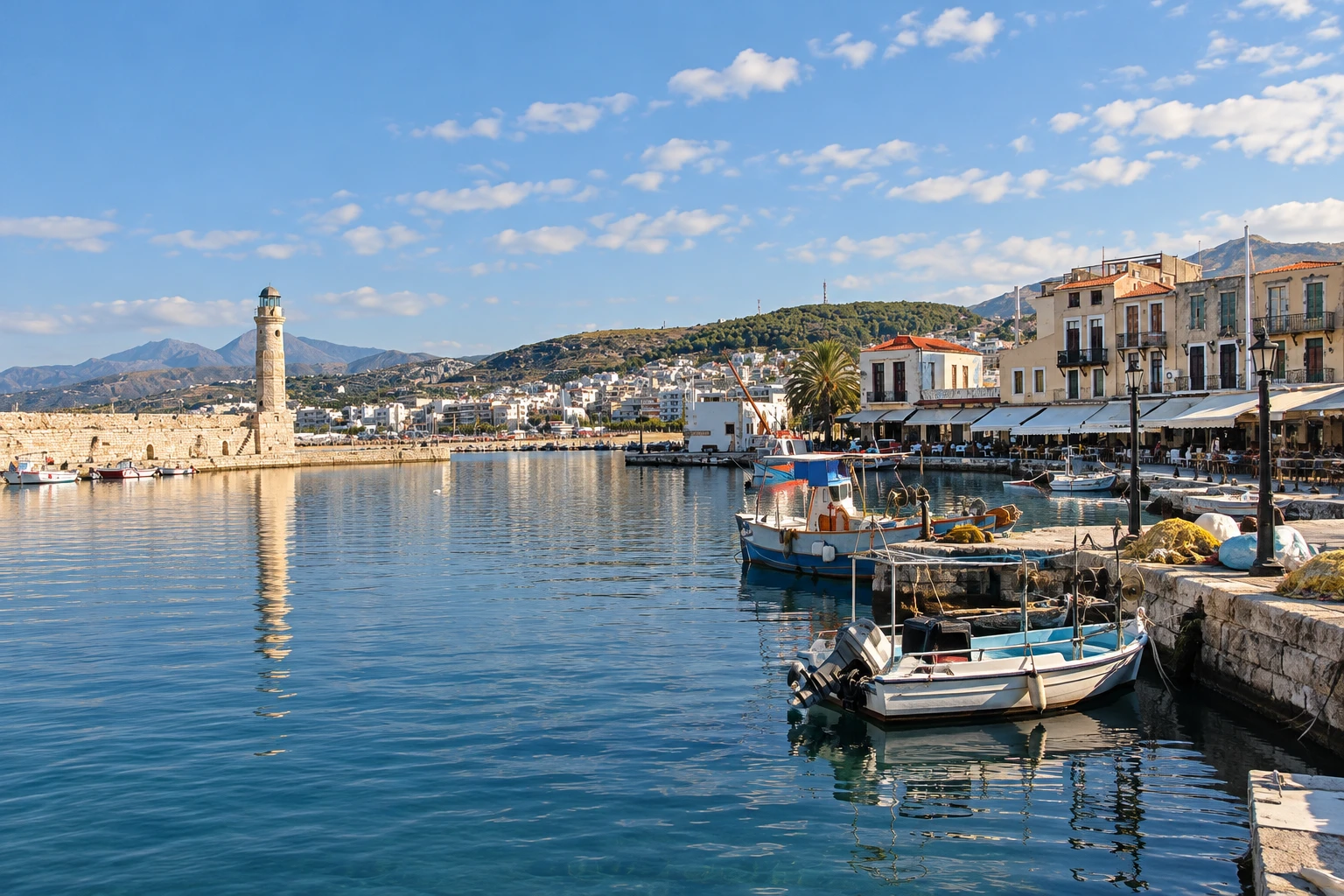
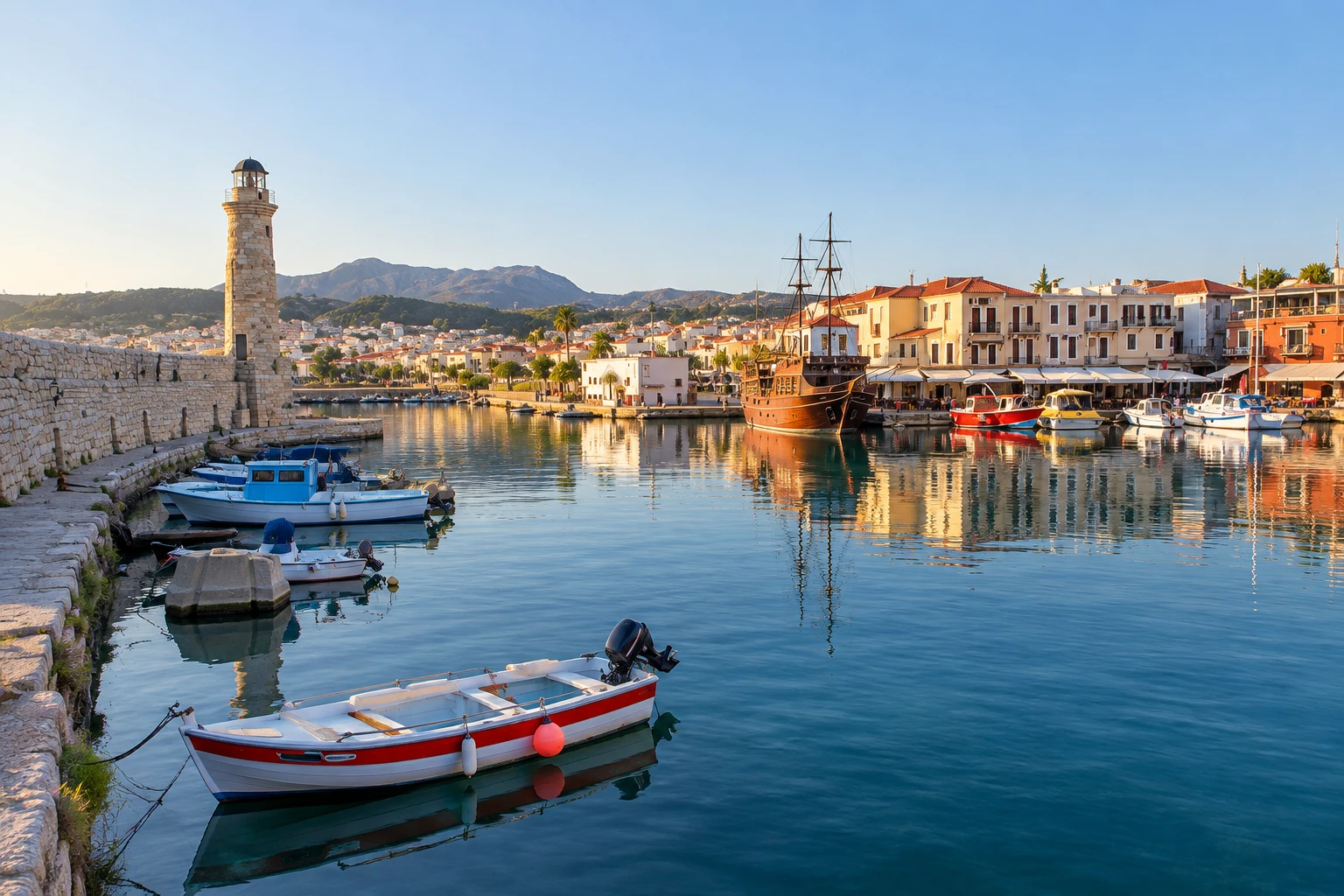
The small Venetian port of Rethymno, in a crescent shape, with tavernas on the waterfront and the stone lighthouse from the Egyptian period at the end of the breakwater; from there the city's long beach begins.
Rethymno's Venetian and Ottoman old town: the Rimondi fountain (1626), the Loggia, the Neratze mosque with the city's tallest minaret, Porta Guora and lanes with stone portals and wooden balconies.
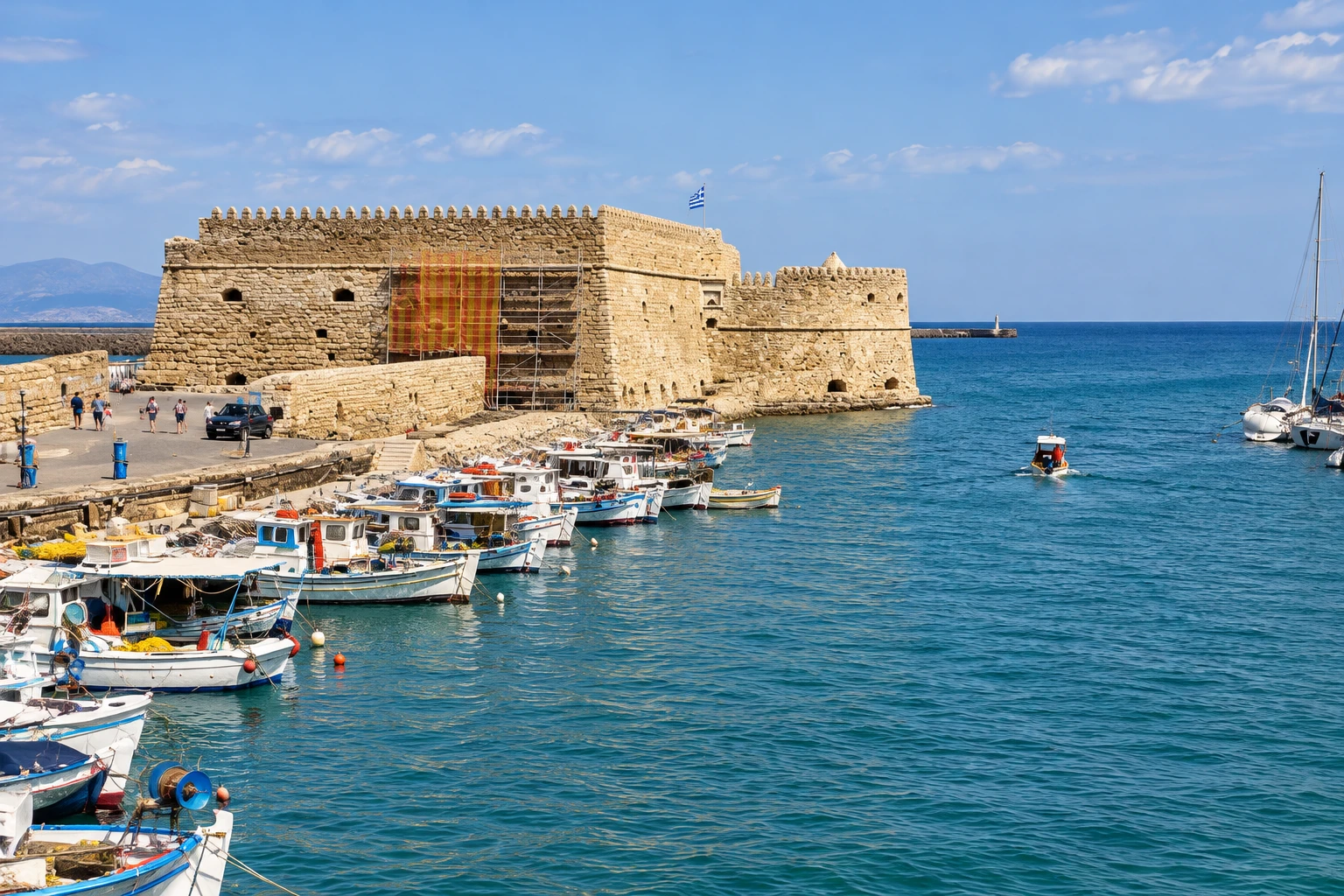
The Venetian fortress guarding the entrance to Heraclião’s old harbour, built between 1523 and 1540, with vaulted rooms and a terrace overlooking the city and the sea.
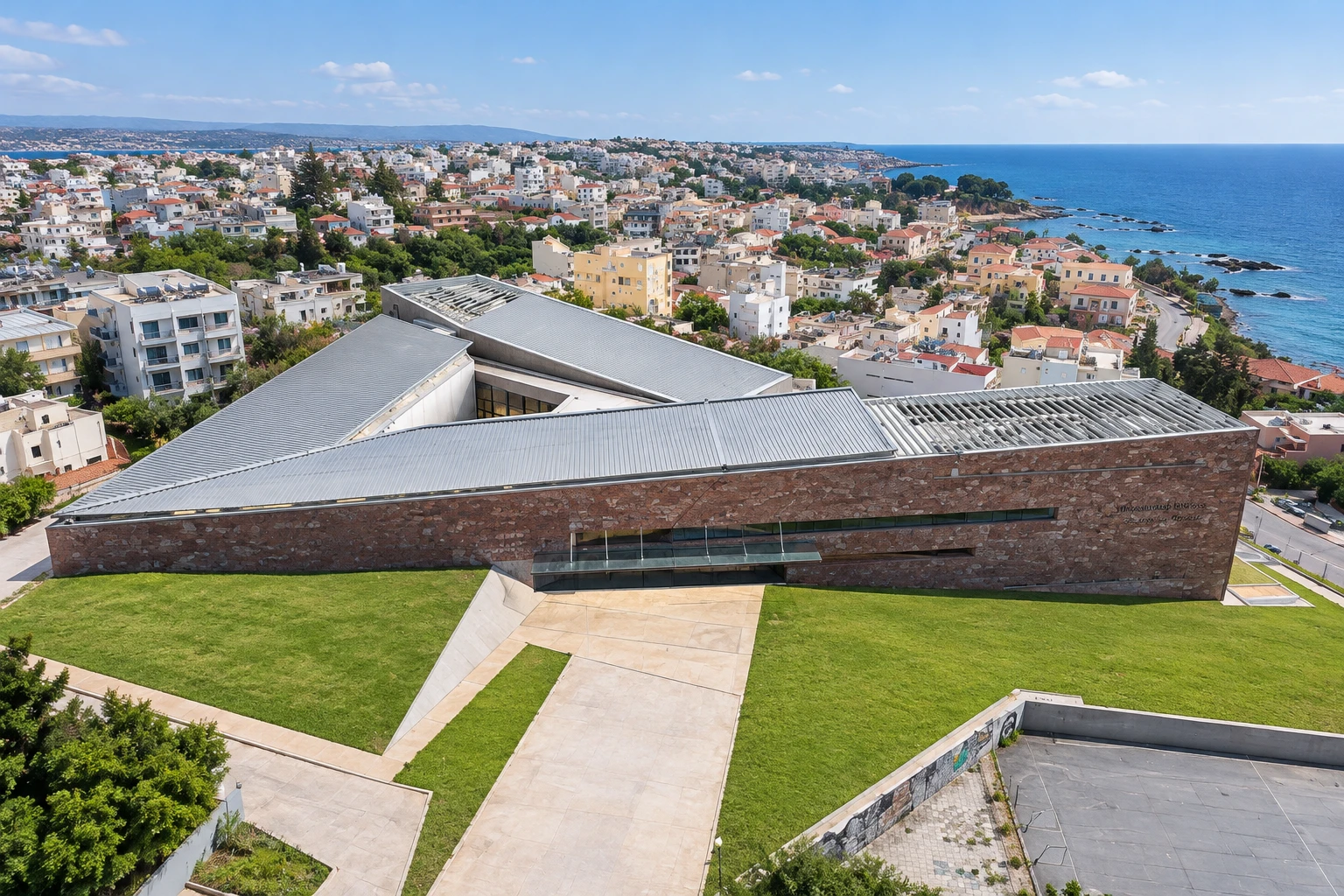
The archaeological museum of western Crete, in a new building in the Halepa district, with finds from Kydonia, Minoan Chania, Aptera and other ancient towns in the region.
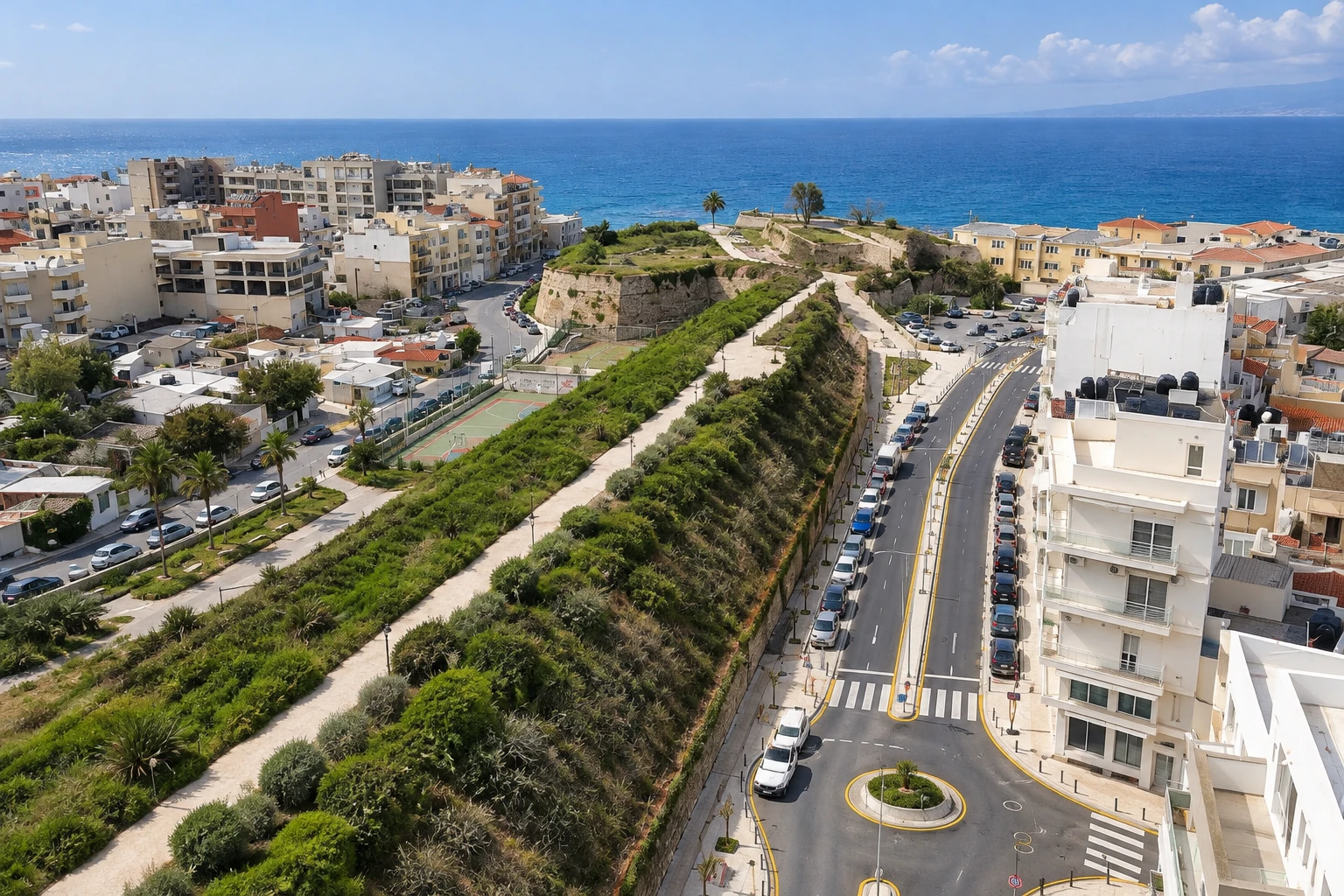
The 16th-century Venetian walls that encircle central Heraclião, over 4 km long with seven bastions. The tomb of the writer Nikos Kazantzakis is on the Martinengo bastion.
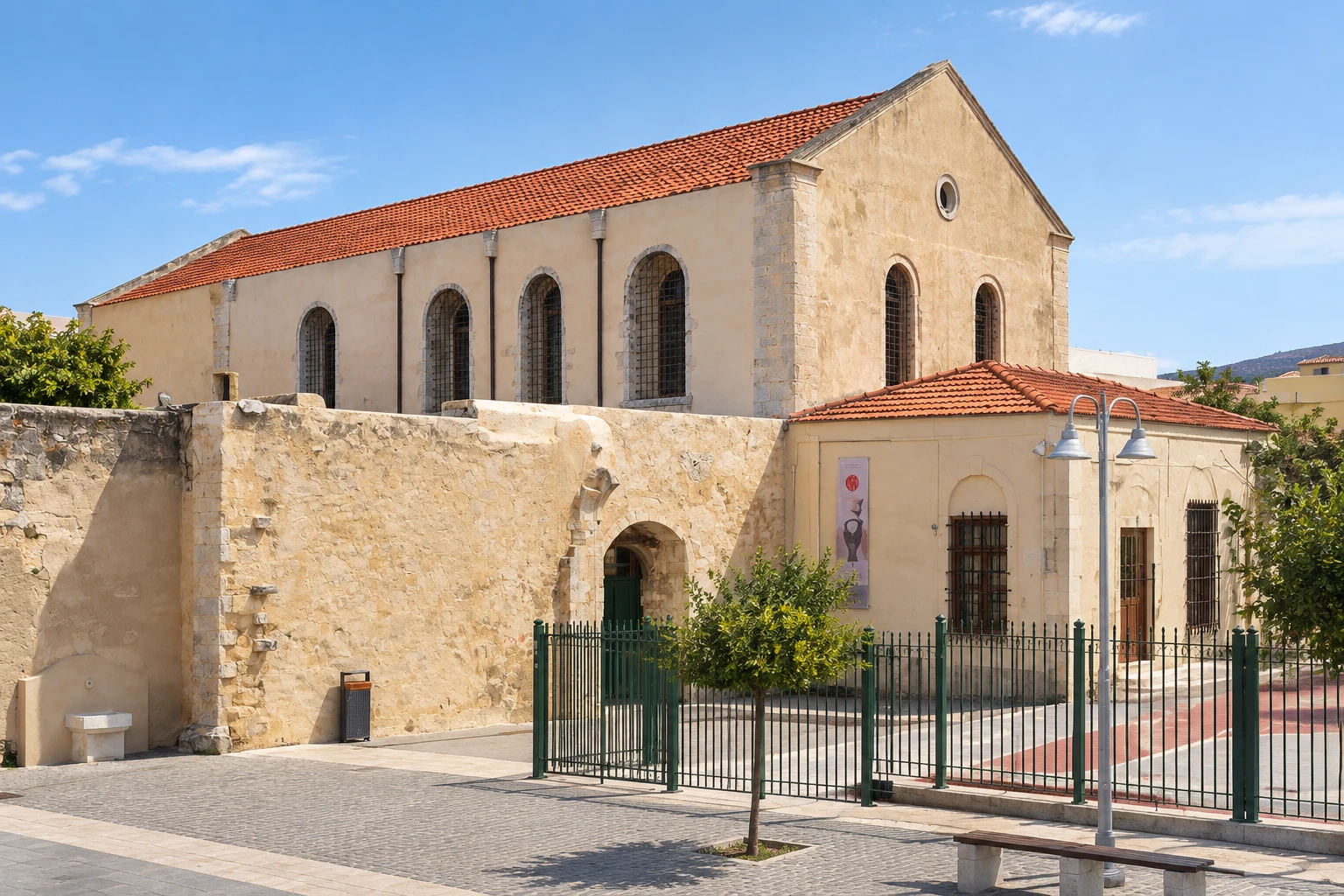
The archaeological museum of the Rethymno region, housed in the former Venetian church of São Francisco, with Minoan finds from the Melidoni cave and the Armeni necropolis, a Roman Aphrodite and mosaics from Lappa.
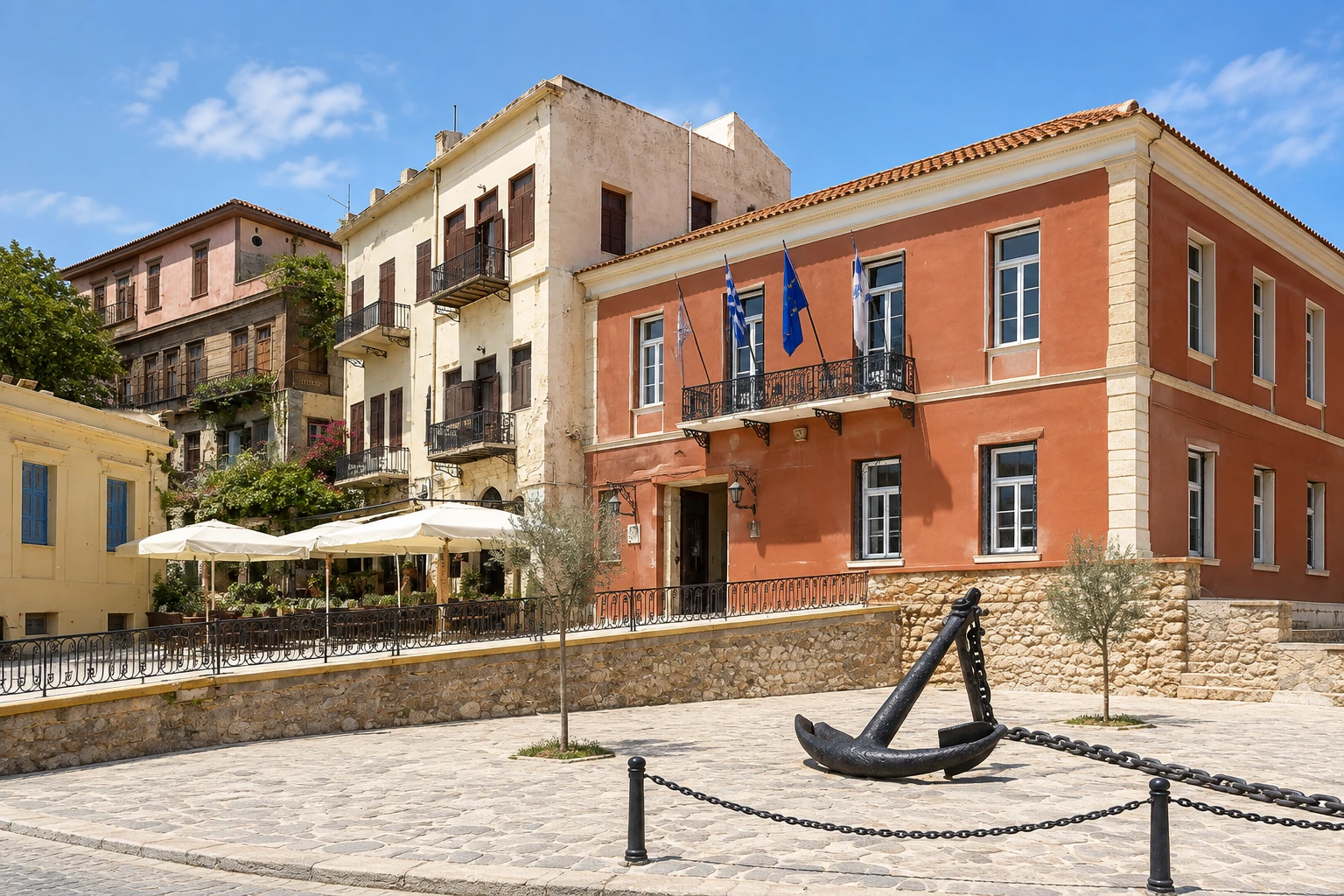
The maritime museum in the Venetian fortress Firkas, at the western entrance of the port, with ship models, navigation instruments and the story of the Battle of Crete; on the other side of the port, the replica of a Minoan ship.
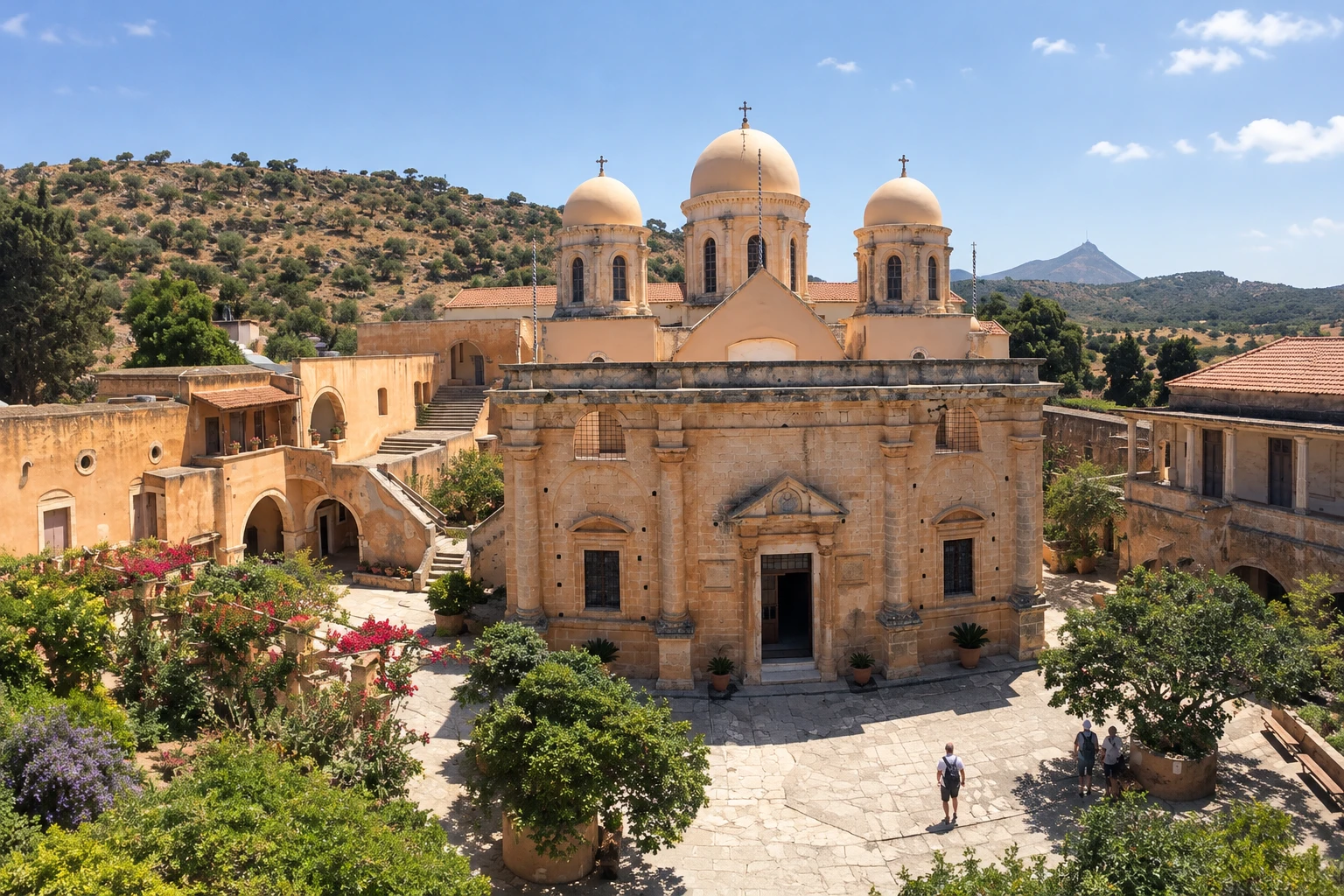
17th-century monastery on the Akrotiri peninsula, 15 km from Chania, with a three‑domed church, a columned façade, an icon museum and on-site production of olive oil and wine.
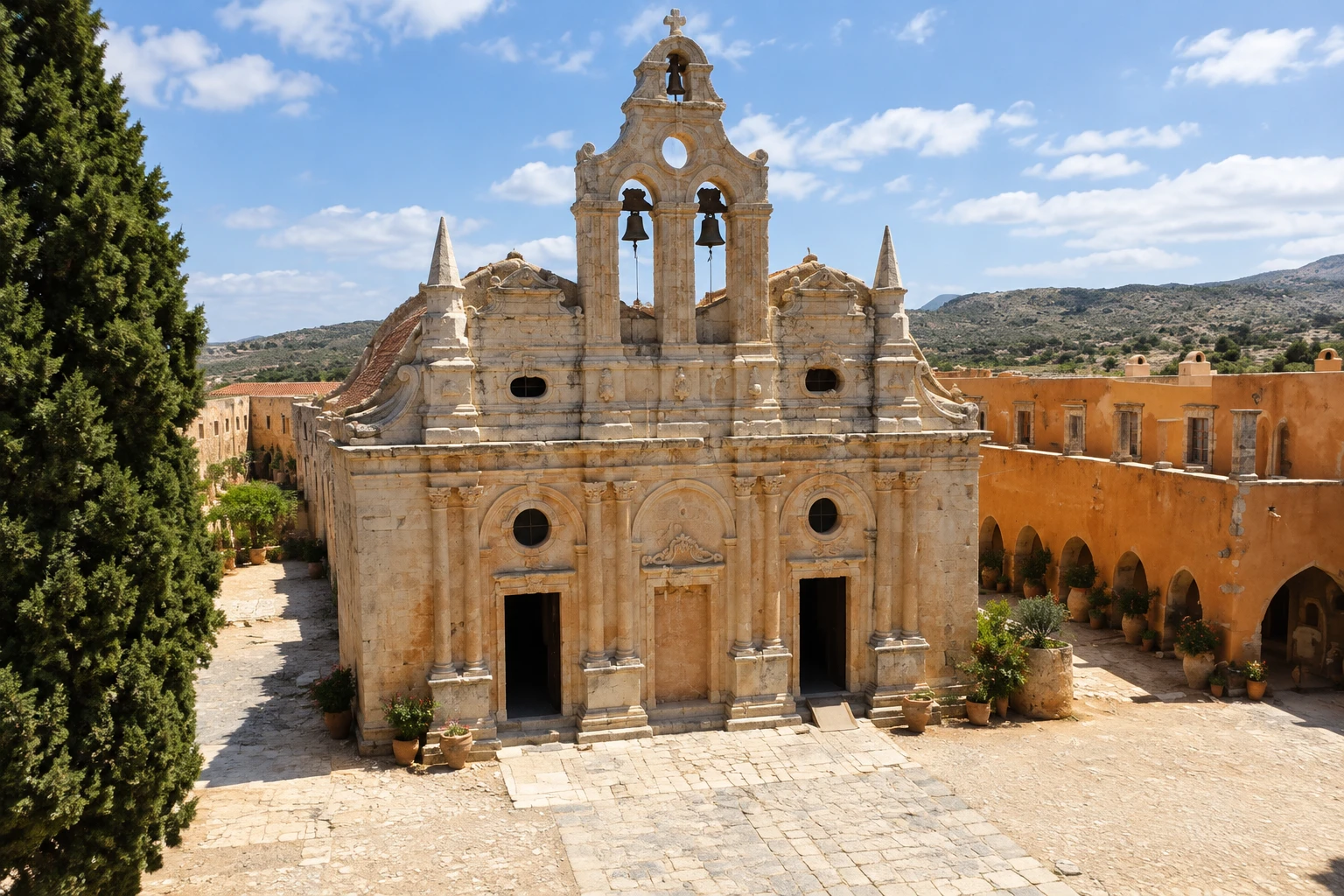
The monastery of Arkadi, 23 km from Rethymno, with a Renaissance façade dating from 1587 and the memory of the 1866 explosion, when hundreds of Cretans died resisting the Ottoman siege; a symbol of Crete's freedom.
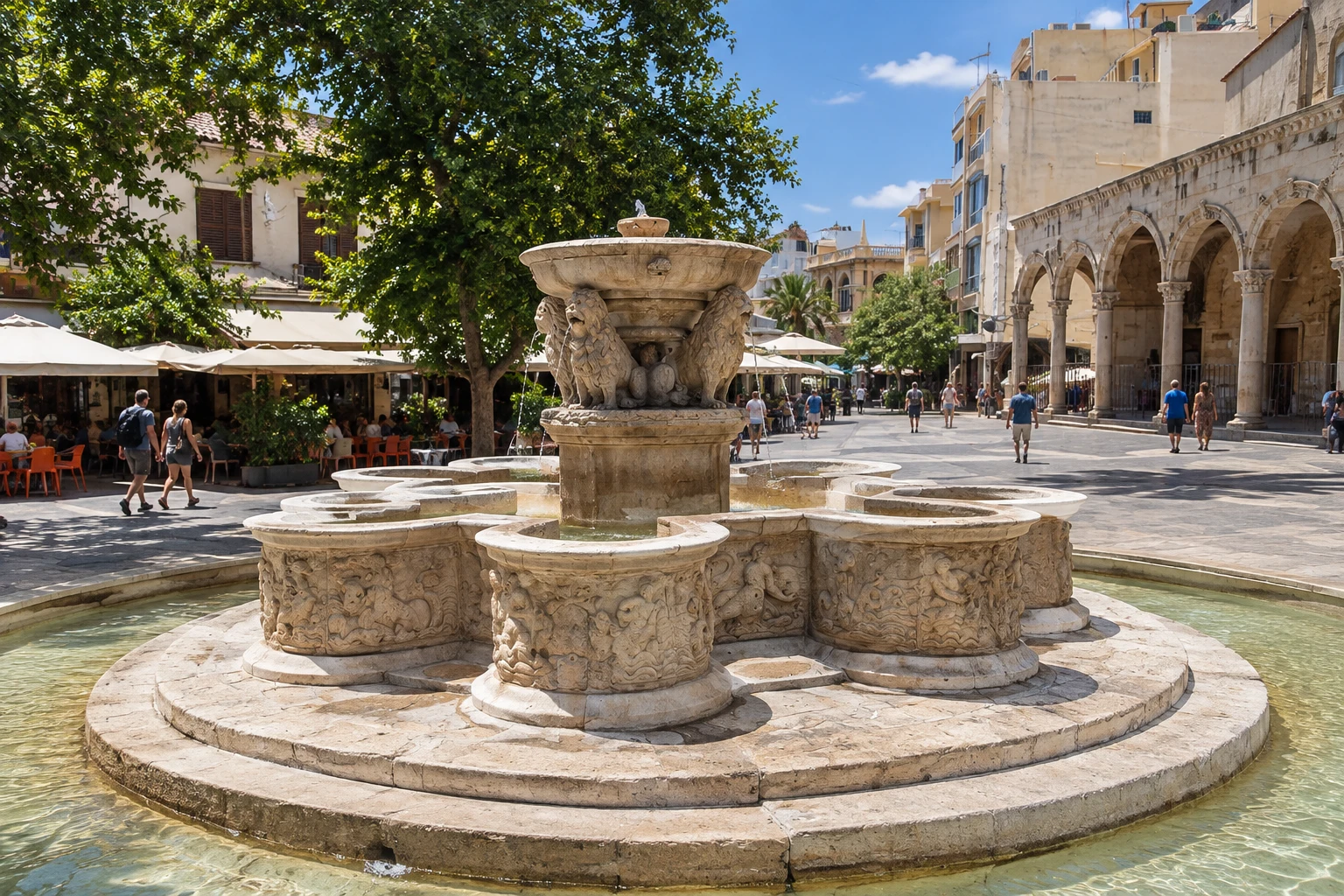
The centre of Heraclião: the praça da fonte veneziana dos quatro leões, from 1628, with the Loggia beside it and rua 1866, the market street, which descends to praça Kornarou.
Explore Lions Square and Morosini Fountain (Plateia Liontarion)
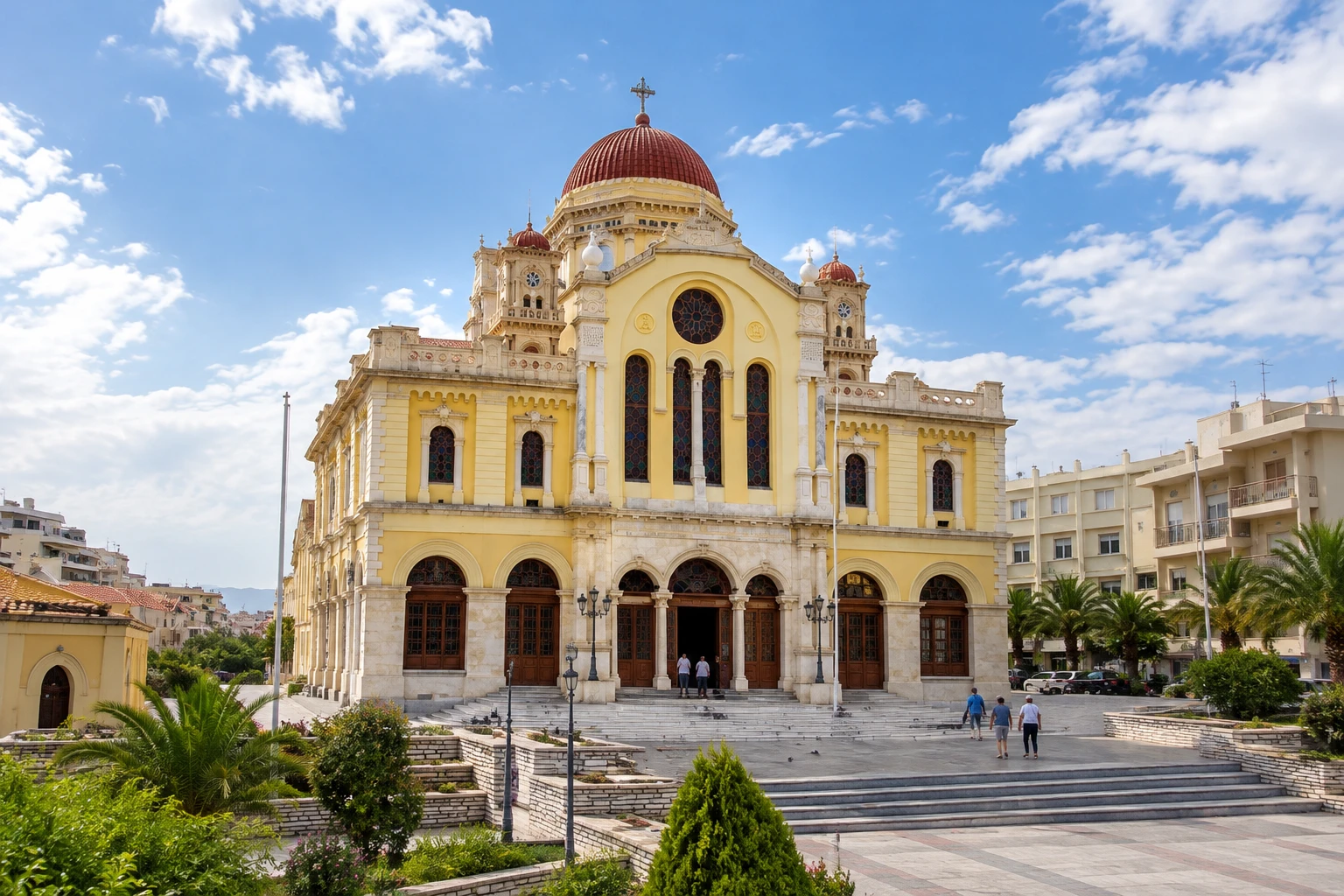
The cathedral of Heraclião, dedicated to São Menas, the city’s patron, built between 1862 and 1895 and one of the largest in Greece, next to the older church of Agios Minas from 1735.
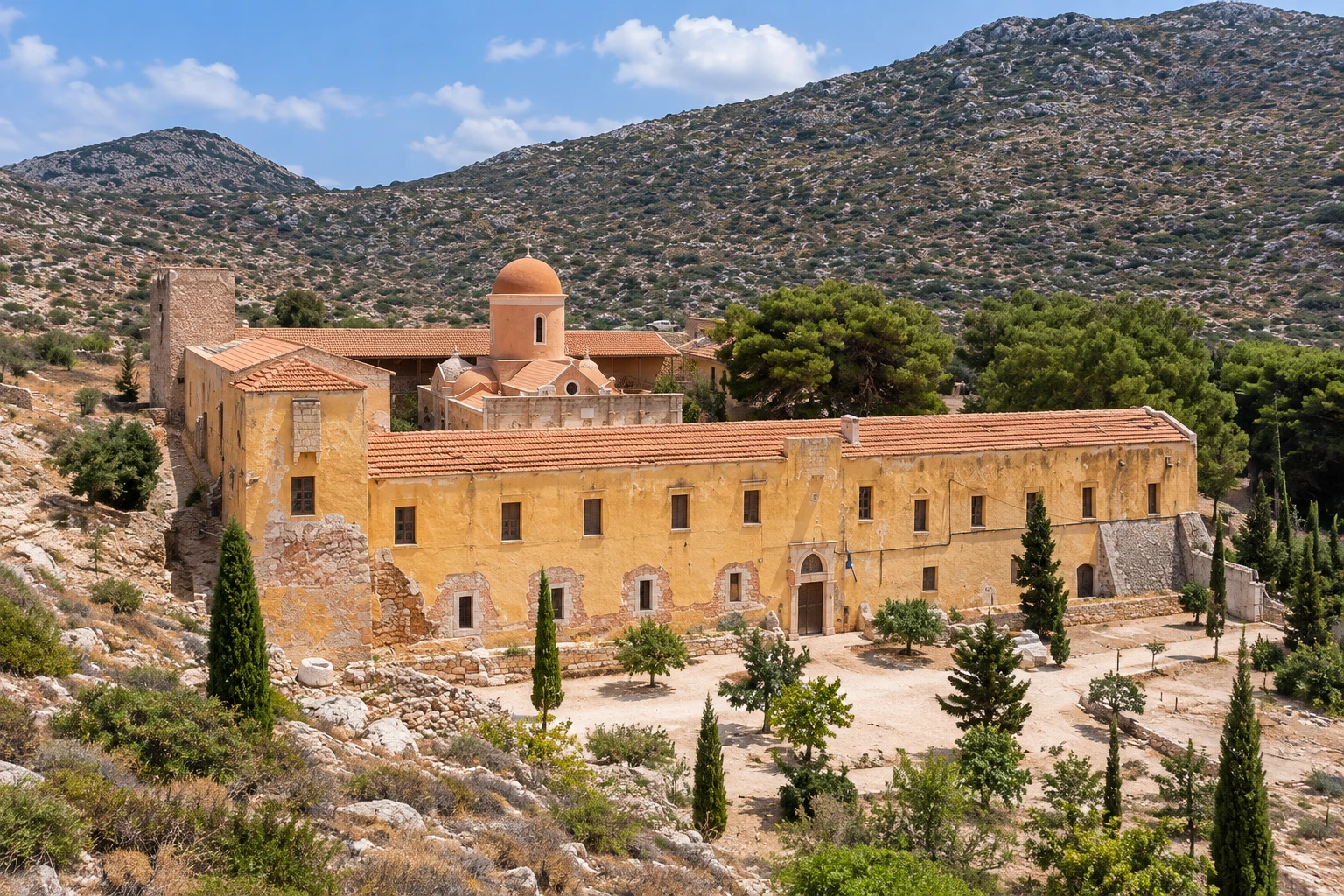
16th-century fortified monastery in the northern Akrotiri peninsula, the starting point for the trail to the Arkoudiotissa cave and the ruins of the seaside monastery of Katholiko.
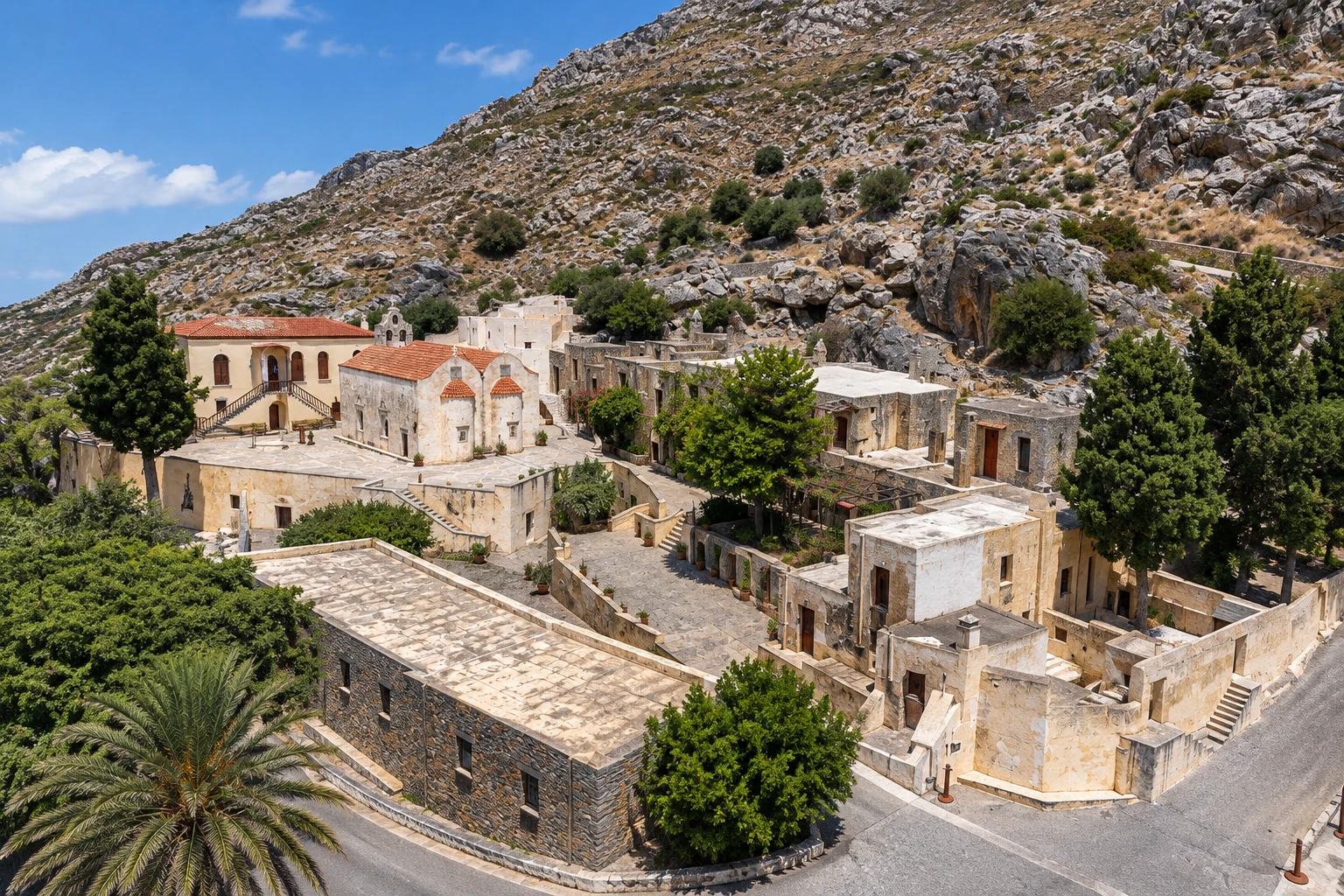
The Preveli monastery, high above the south coast, 35 km from Rethymno, with a 19th‑century church, an icon museum, views over the Libyan Sea and the memory of the rescue of Allied soldiers in 1941.
Museum that tells the history of Crete from the Byzantine era to the 20th century, with the only paintings by El Greco on the island, the model of Venetian Cândia and the room of Nikos Kazantzakis.
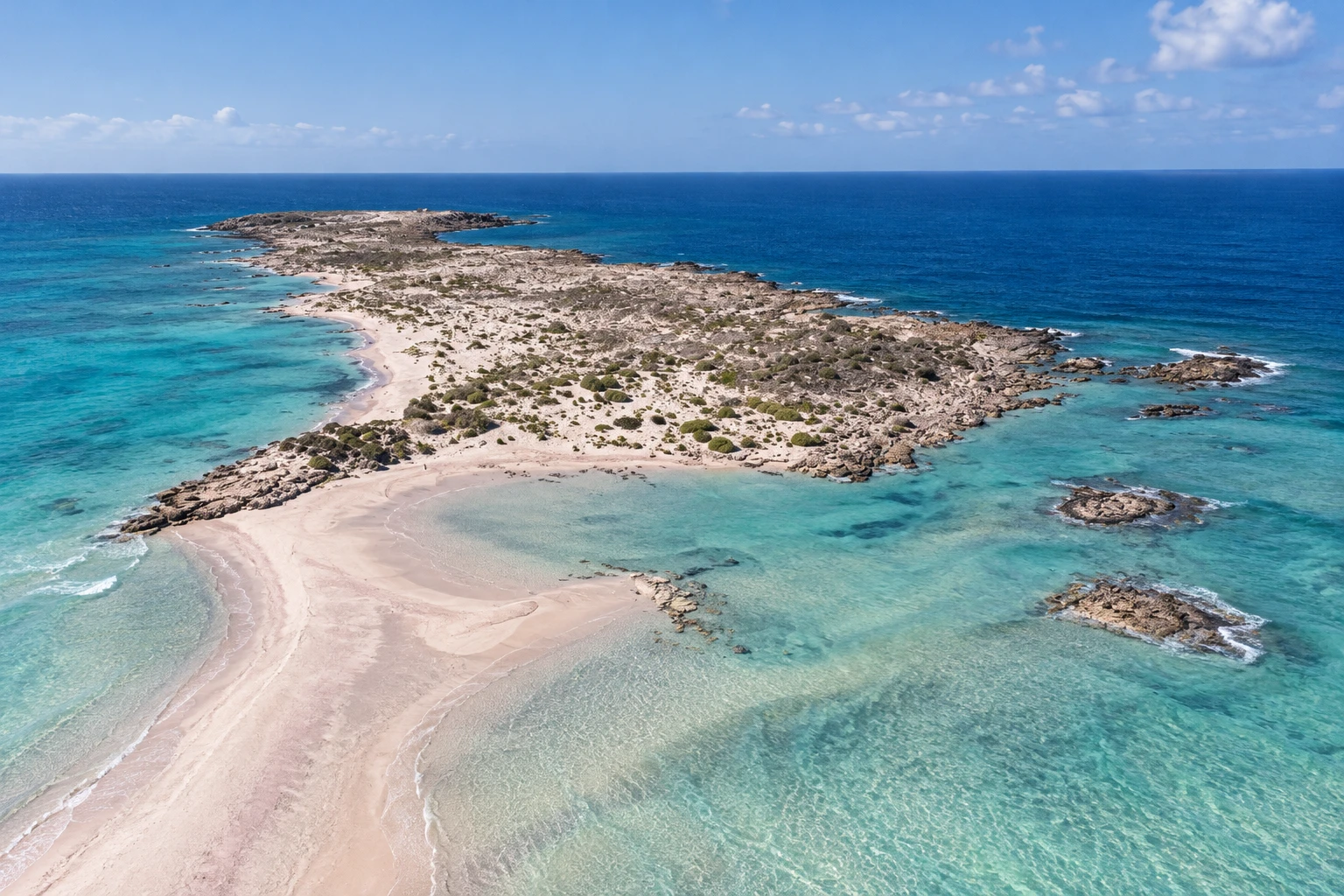
A pale‑sand beach with pinkish tones and a shallow lagoon that separates the coast from the islet of Elafonisi, at the extreme southwest of Crete, about 75 km from Chania, in a protected natural area.
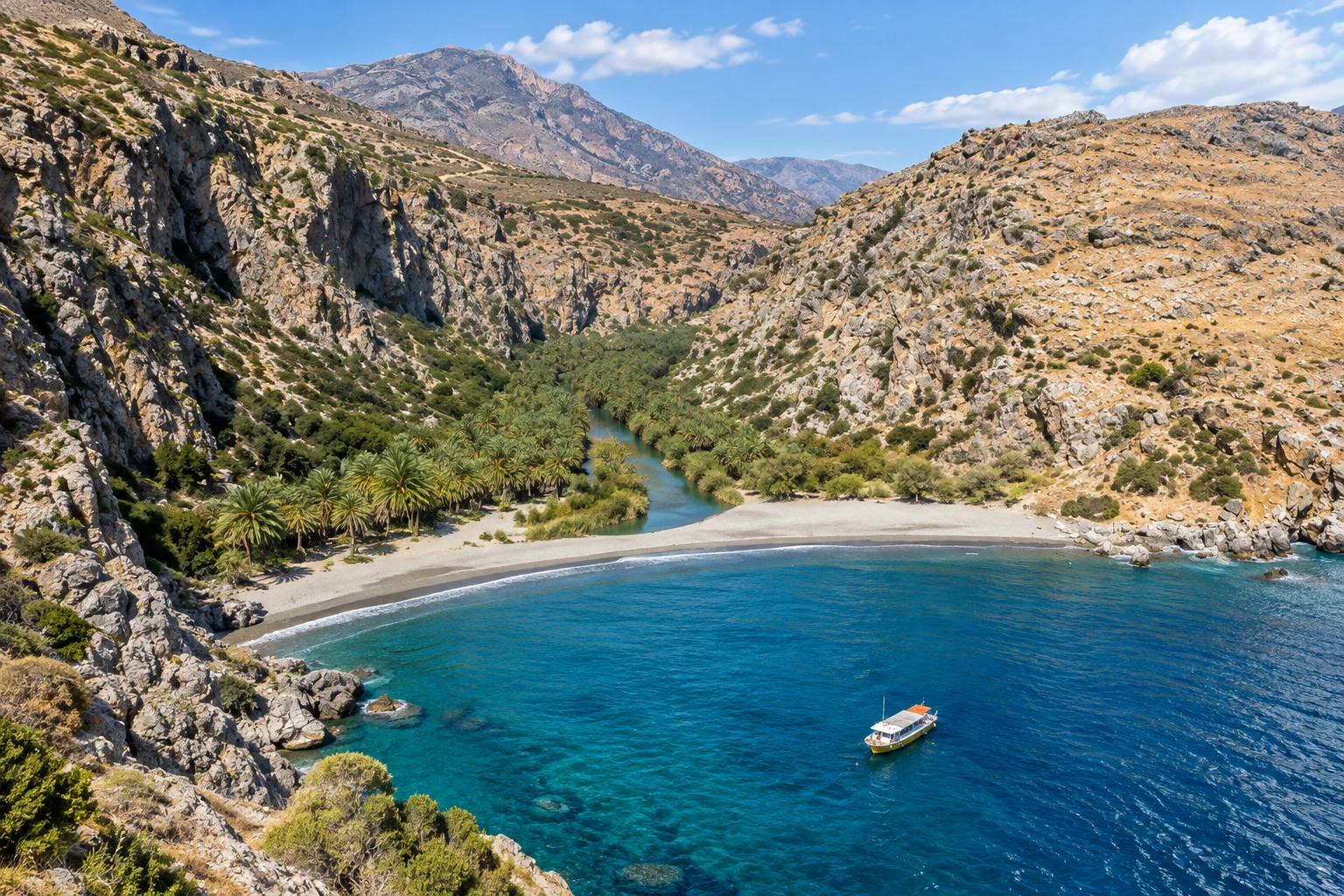
Preveli beach, on Crete's south coast: the Megalopotamos river descends through the Kourtaliotiko gorge amid a grove of Cretan palms and forms a freshwater lagoon before reaching the sea.
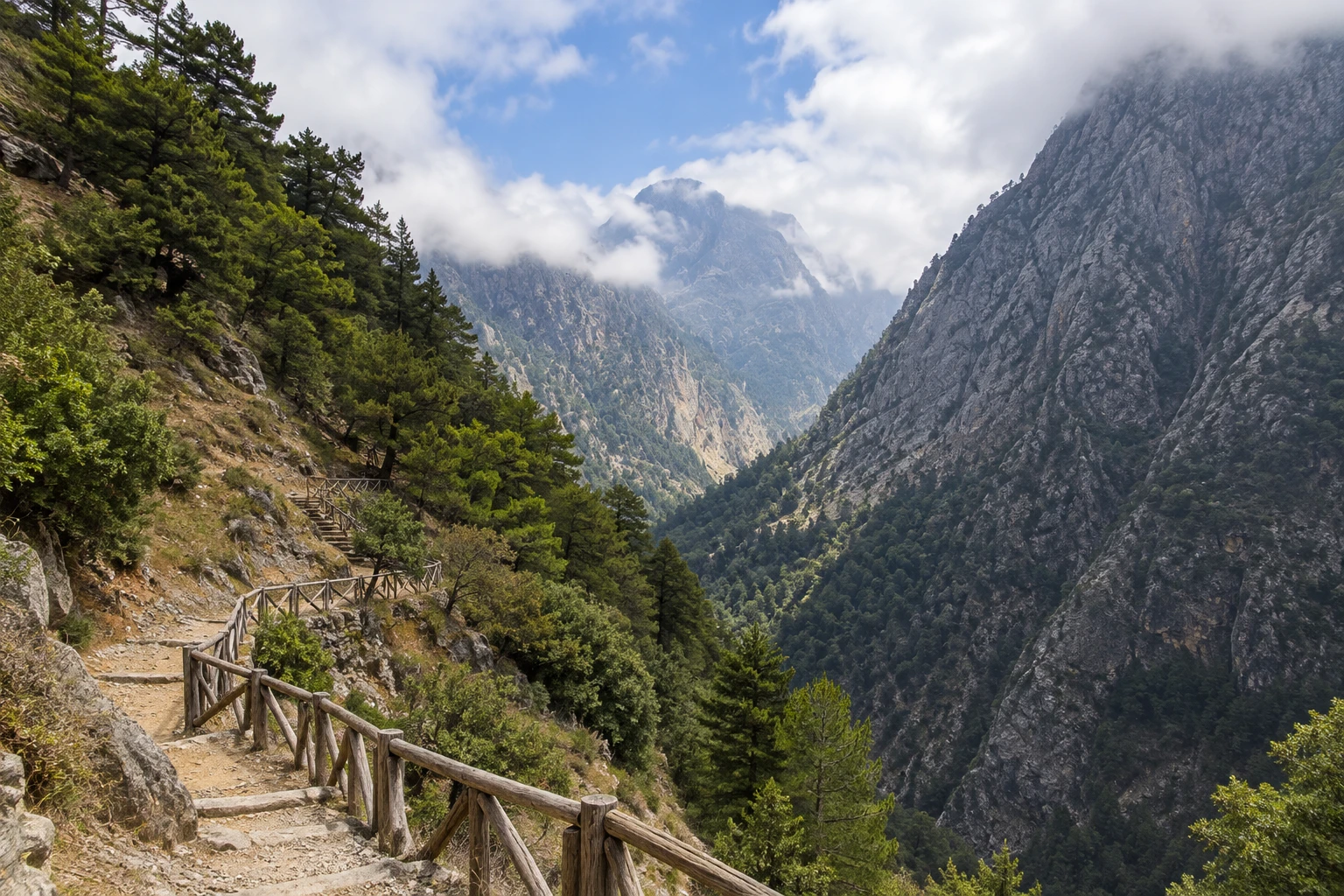
The one-day hike through the Samaria Gorge, a national park since 1962: 16 km downhill from the Omalos plateau to the Libyan Sea at Agia Roumeli, passing the Portões which are 4 meters wide.
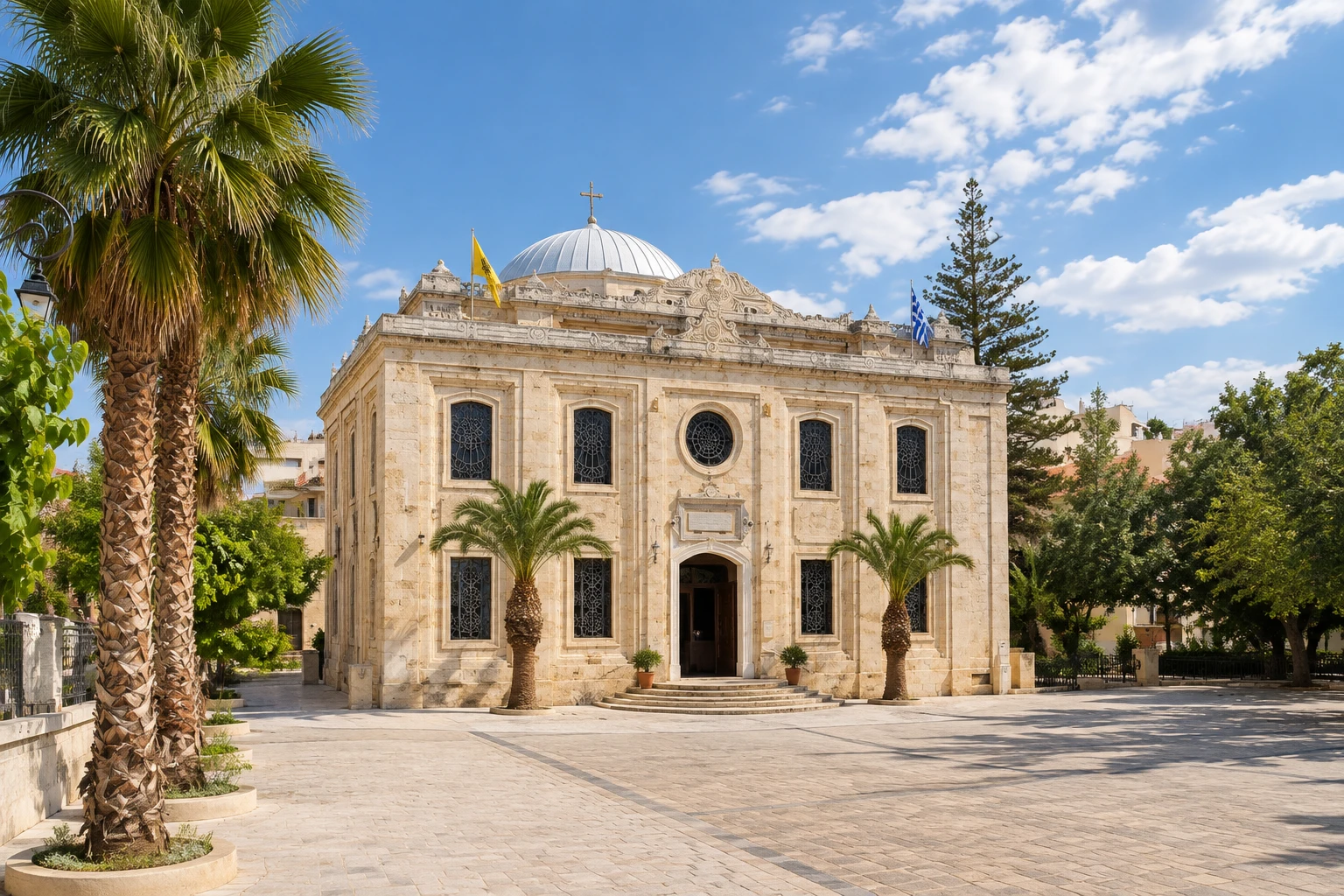
The church of São Tito, the first bishop of Crete, rebuilt in 1869 as a mosque and returned to Orthodox worship in 1925, where the saint’s skull is kept; next to it, the Loggia veneziana.
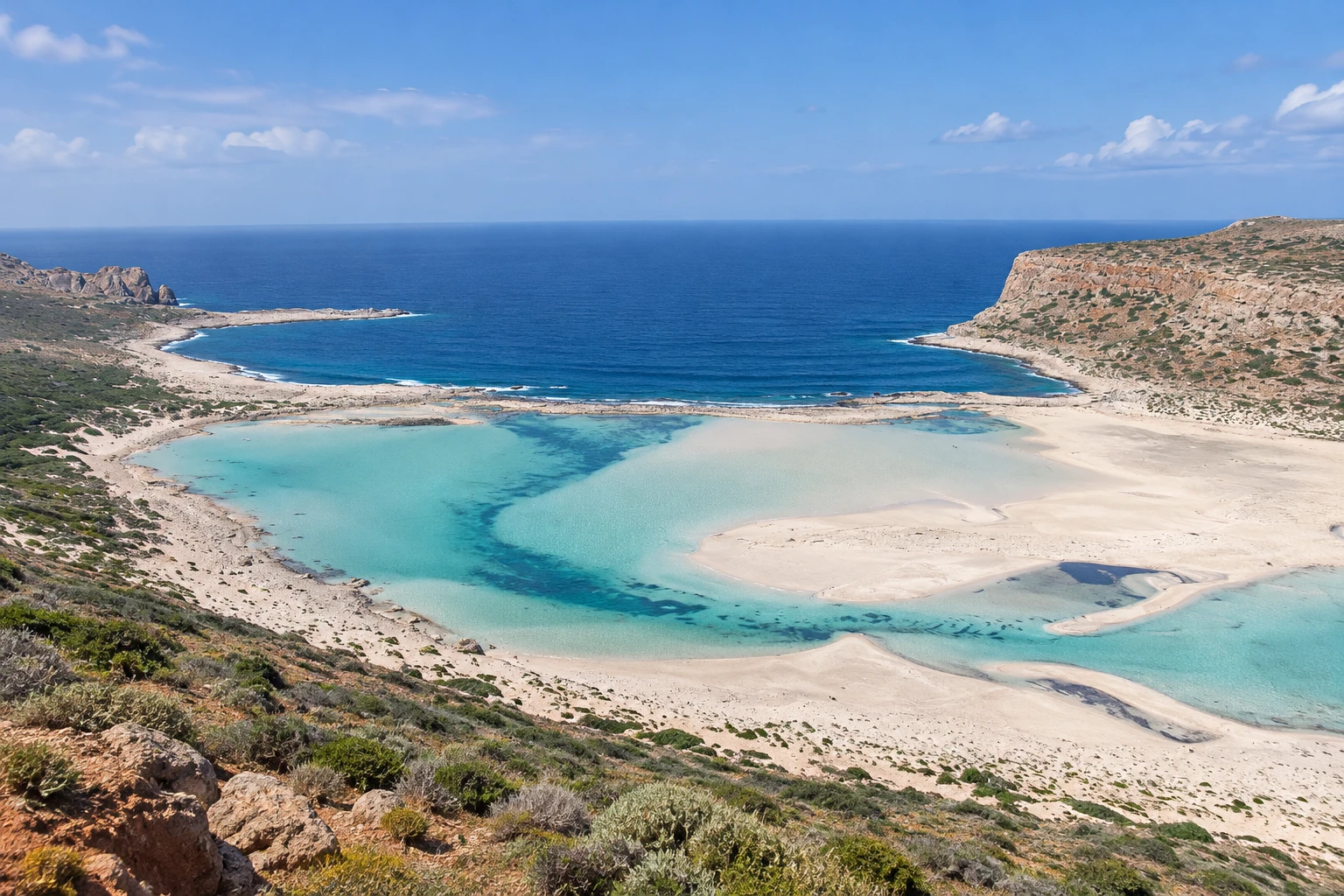
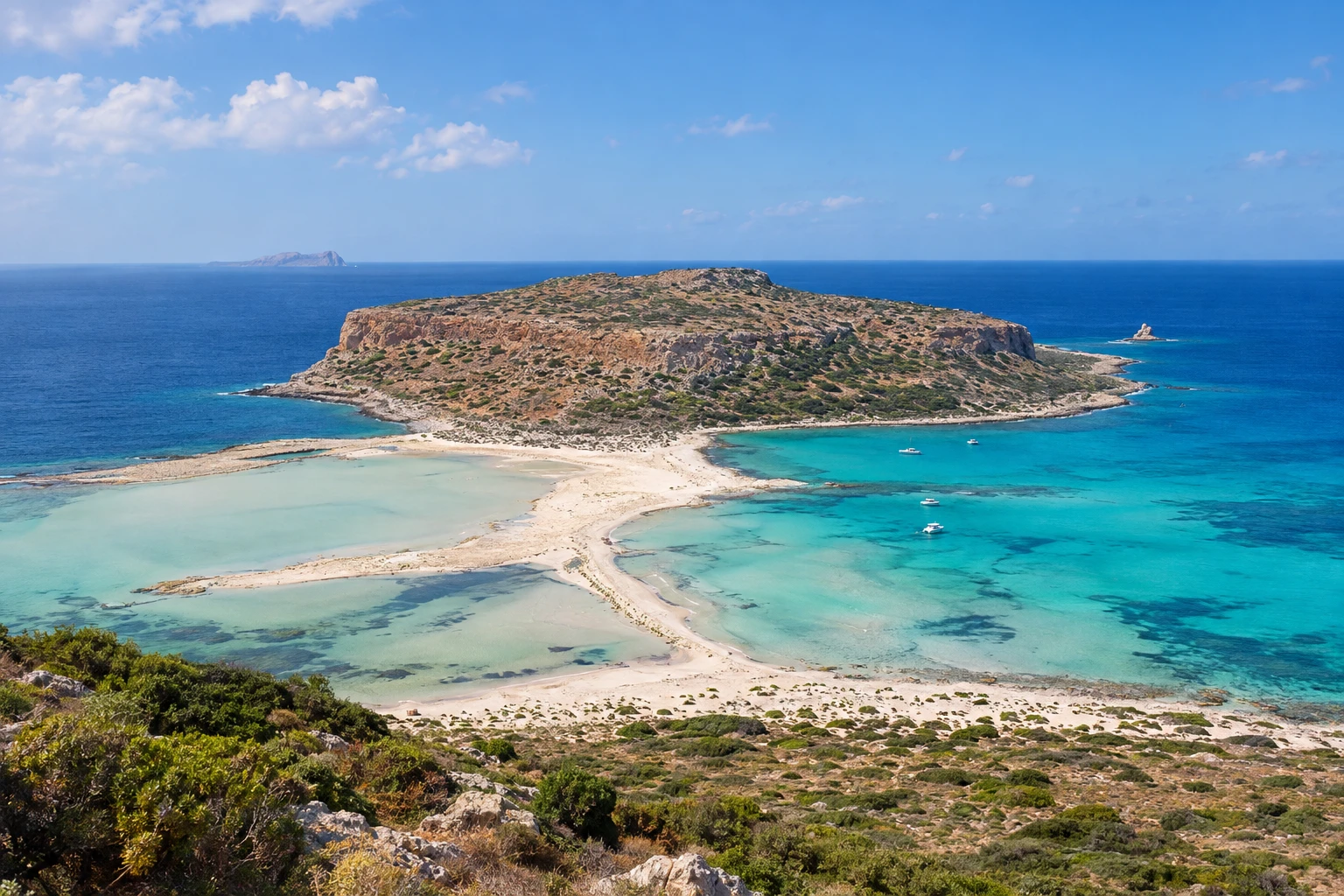
The Balos lagoon, at the far northwest of Crete: shallow water in shades of blue and green between the Gramvousa peninsula and Cape Tigani, seen from the top of the access trail, in a protected natural area.
University of Crete museum about the nature of the eastern Mediterranean, in a former power company building on the seafront, with dioramas, a life‑size prehistoric elephant and an earthquake simulator.
Public aquarium in Gournes, about 15 km from Heracliion, with dozens of tanks dedicated to Mediterranean species, from sharks and rays to seahorses and jellyfish.
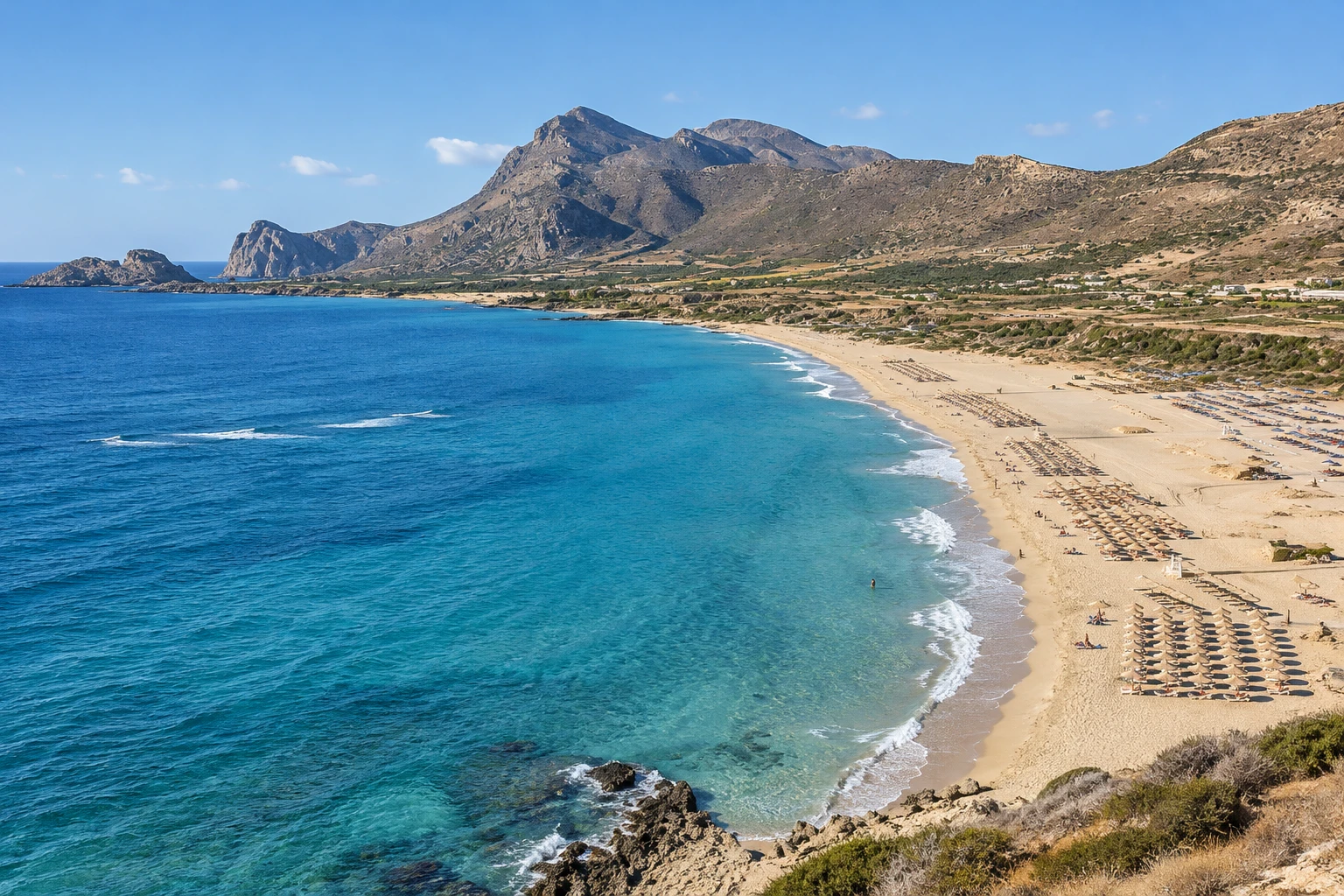
Wide pale-sand beach on the west coast of Crete, 60 km from Chania, with open sea and, on the hill to the north, the ruins of the ancient city of Falasarna, including a harbor that uplifted terrain has left away from the sea.
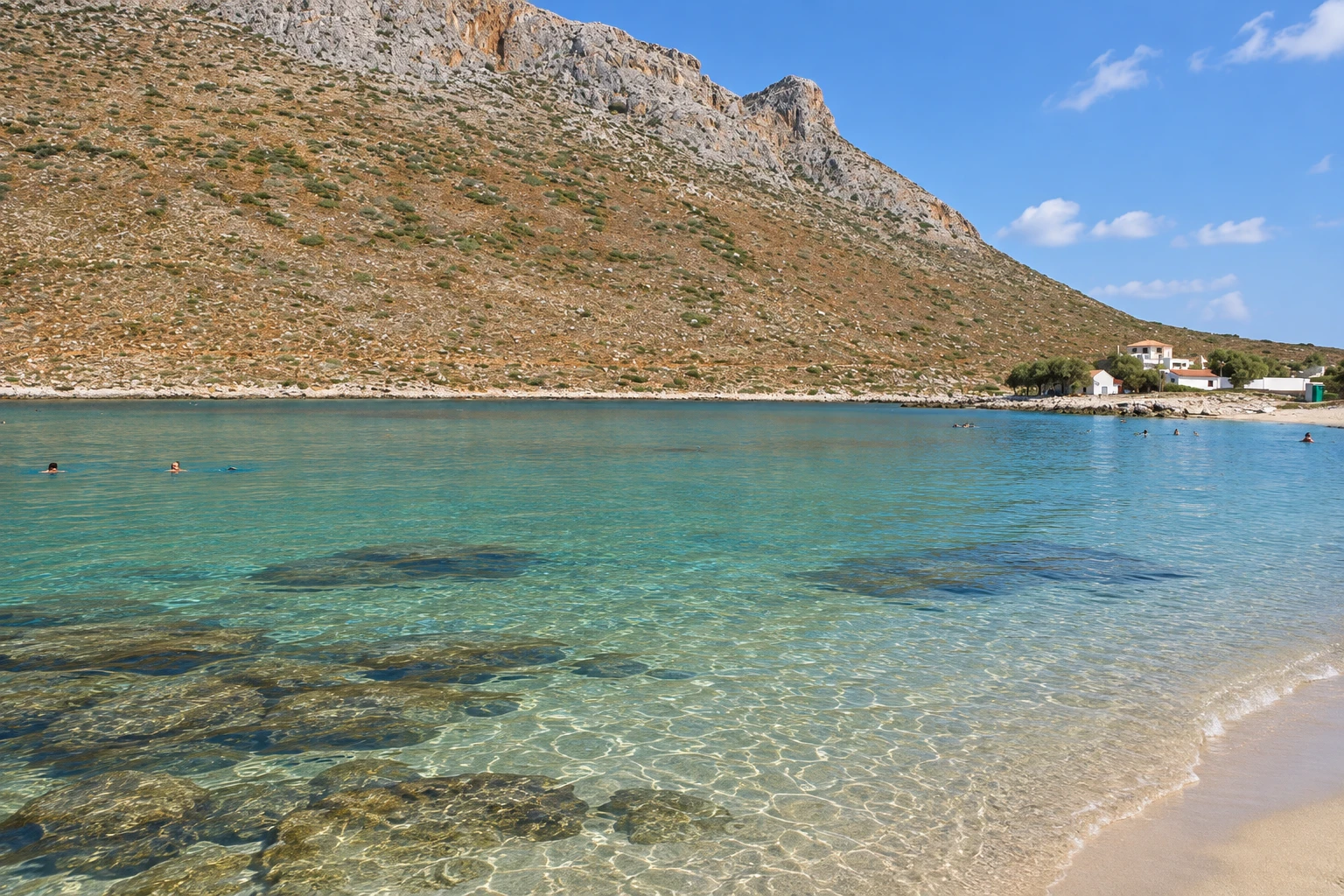
A shallow, calm-water cove on the northern tip of the Akrotiri peninsula, 15 km from Chania, enclosed by a rocky hill: it was here that the final dance in Zorba the Greek was filmed.
To plan