Peloponnese

Peloponnese · Western Greece

Peloponnese

The peninsula south of Athens links Micenas, Epidauro, Olímpia and Corinto with the Venetian town of Náuplia and the fortified rock of Monemvasia, in an itinerary best done by car.

Peloponnese

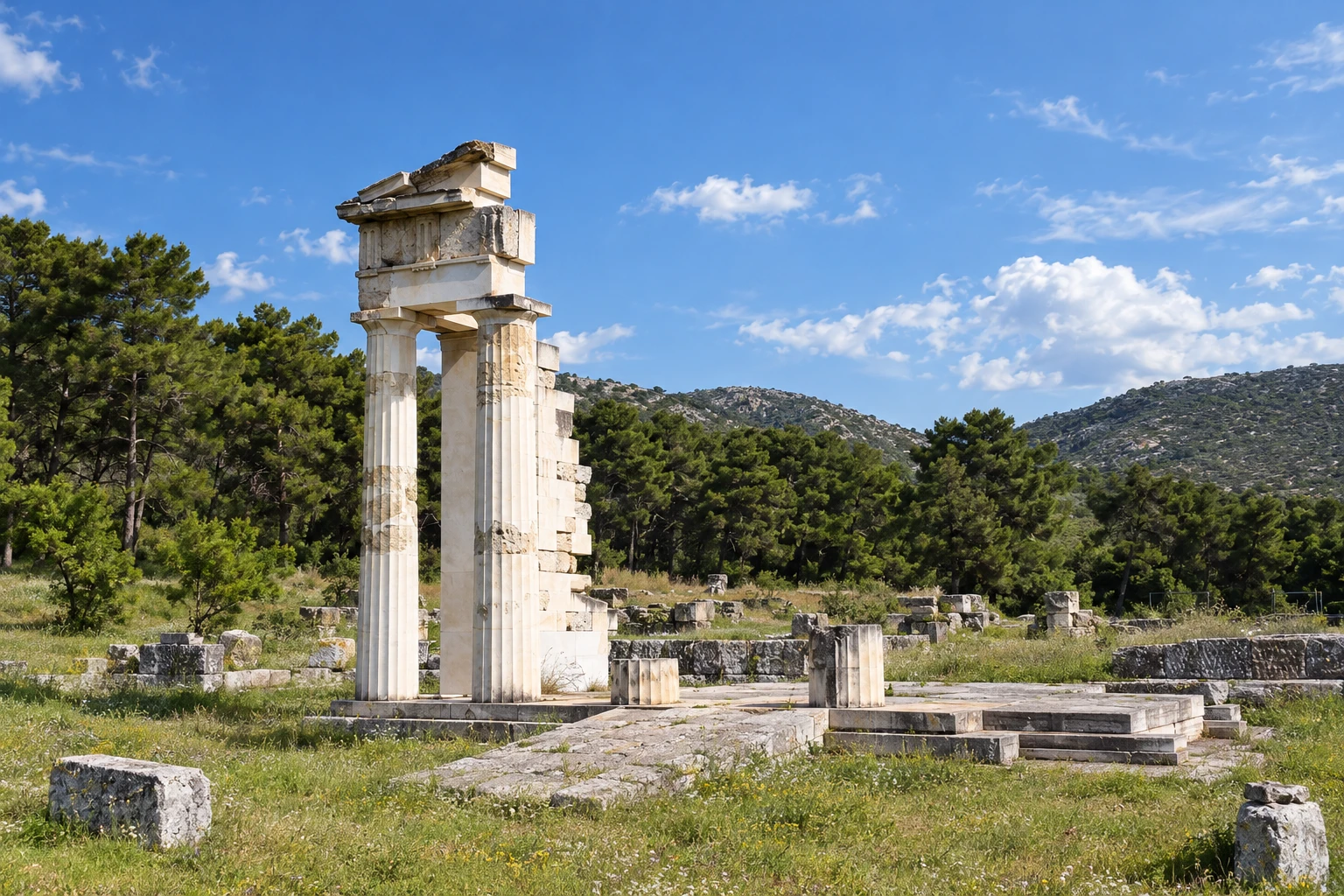
In the photo: Santuário de Asclépio, Epidauro

Illustrative images. The pictures in this guide are illustrations based on the real place, not photographs, and may differ from it.

Get it on Google Play

Get to know the place

A region to enjoy
at your own pace.

The Peloponeso is the large peninsula in southern Greece, separated from the mainland by the Canal de Corinto. For Brazilians who have already seen the Acrópole, this is where ancient Greece gains depth: Micenas, the citadel of the Bronze Age kings; Epidauro, with the best-preserved theatre in the Greek world; Olímpia, where the Games were born; and Corinto, the city of merchants and of the apostle Paul. Between one ruin and another there are olive groves, orange orchards, vineyards and a rugged coastline.

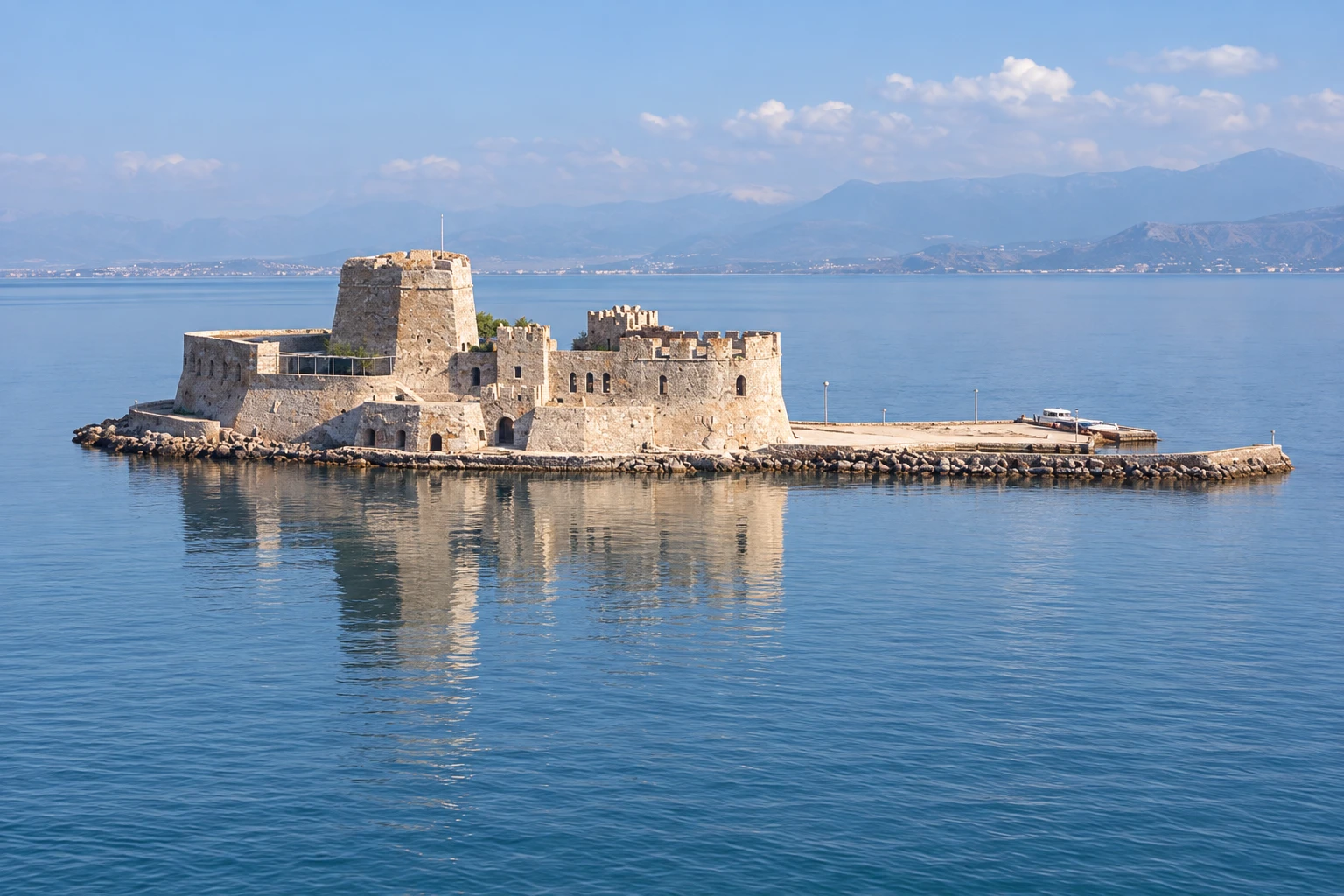
The most practical base is Náuplia (Nafplio), the first capital of independent Greece, about two hours from Athens. The old town has stone streets, Venetian balconies, the Palamidi fortress above and the small Bourtzi castle in the middle of the bay. From there, Micenas, Tirinto, Epidauro, Argos and Corinto are less than an hour's drive away.

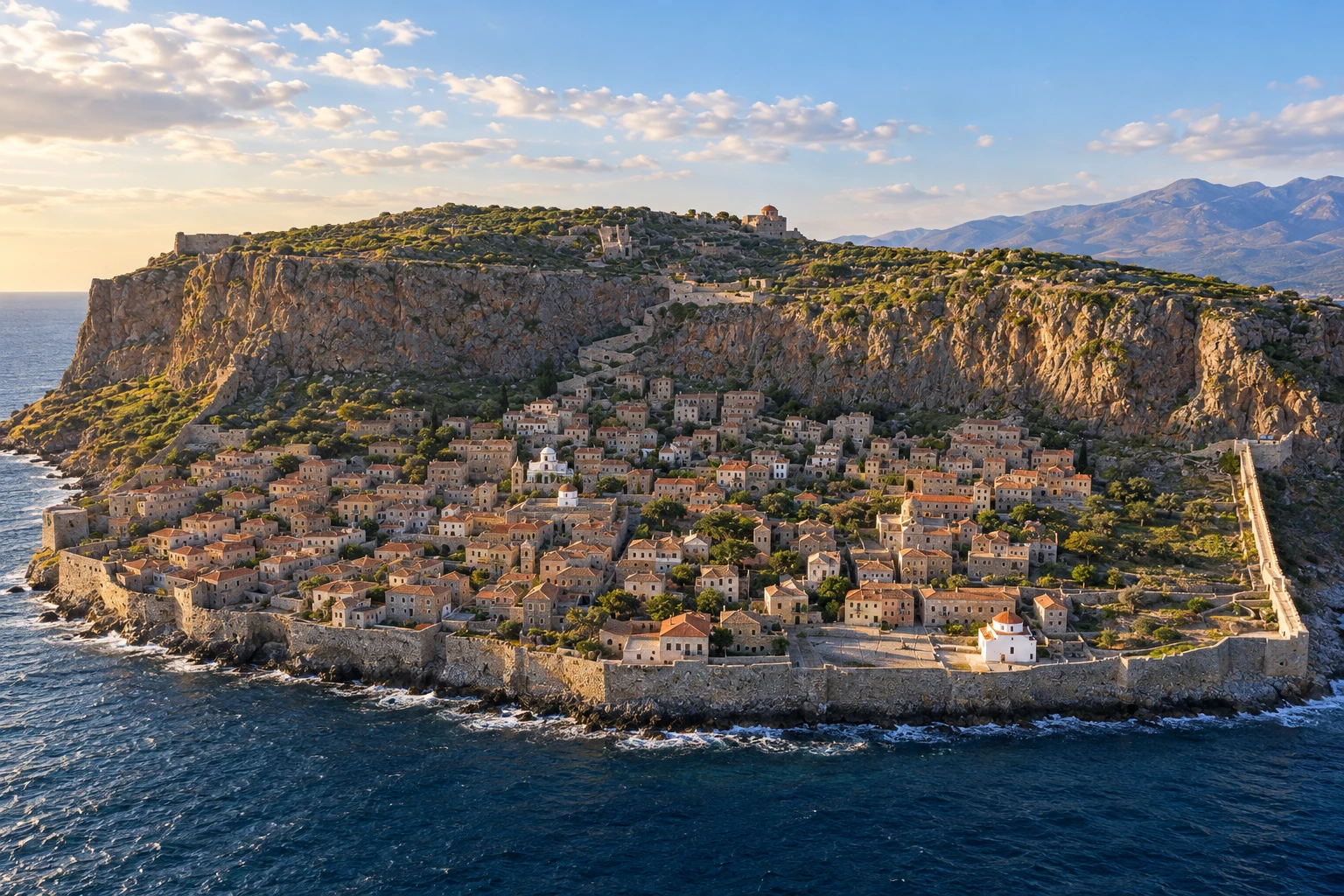
On the other side of the peninsula, to the west, lies Olímpia, with the site of the Games and one of Greece's best museums. At the southeastern tip, Monemvasia is an entire medieval town clinging to a rock in the sea, connected to the mainland by a narrow bridge closed to cars. Nearby, Mystras preserves churches and palaces from late Byzantium.

The Peloponeso is best explored by car, with good roads between the main towns and slower mountain stretches inland. Those who don't drive can reach the larger towns by KTEL buses from Athens, but archaeological sites outside them require an excursion or a taxi. The heat in July and August is strong at the ruins, almost always without shade; spring and autumn are the best seasons for walking among the stones.

This destination brings together 4 cities: Nafplio, Monemvasia, Olympia, Patras.

Share: WhatsApp
Traveler, share your experiences through photos Up to 5 photos of each place you visited.

One destination, many paths

The cities on this trip

Start with one city or combine several in your itinerary.

Where Peloponnese is The star marks the capital, Patras.
PatrasNafplioMonemvasiaOlympia

Outlines: Natural Earth (public domain). Adapted by Cidade Turismo.

How to get there: Peloponnese

Aeroporto Internacional de Atenas Eleftherios Venizelos (ATH), in Spata · 165 km to Nafplio

Connections with Brazil usually involve a stopover in another city. Check before booking. From Athens, the A7 motorway takes you to Corinto in about 1 hour and to Náuplia in about 2 hours; Olímpia is around 4 hours and Monemvasia 4½ hours. KTEL buses depart from the Kifissos terminal in Athens to Náuplia, Corinto, Esparta, Pyrgos and Trípoli. The suburban train links the airport to Corinto.

Suggested arrival point: Nafplio

Nafplio
Peloponnese · Peloponnese Suggested arrival point

Nafplio

Náuplia (Nafplio) was the first capital of independent Greece, from 1827 to 1834, and is the most charming town in the Peloponnese: cobbled streets with Venetian and Ottoman balconies, praça Syntagma with the Museu Arqueológico, the Palamidi fortress atop the hill and the Bourtzi in the middle of the bay. It is about 2 hours from Athens and serves as a base for Micenas, Tirinto, Epidauro, Argos and Corinto, all less than an hour by car.

Monemvasia
Peloponnese · Peloponnese

Monemvasia

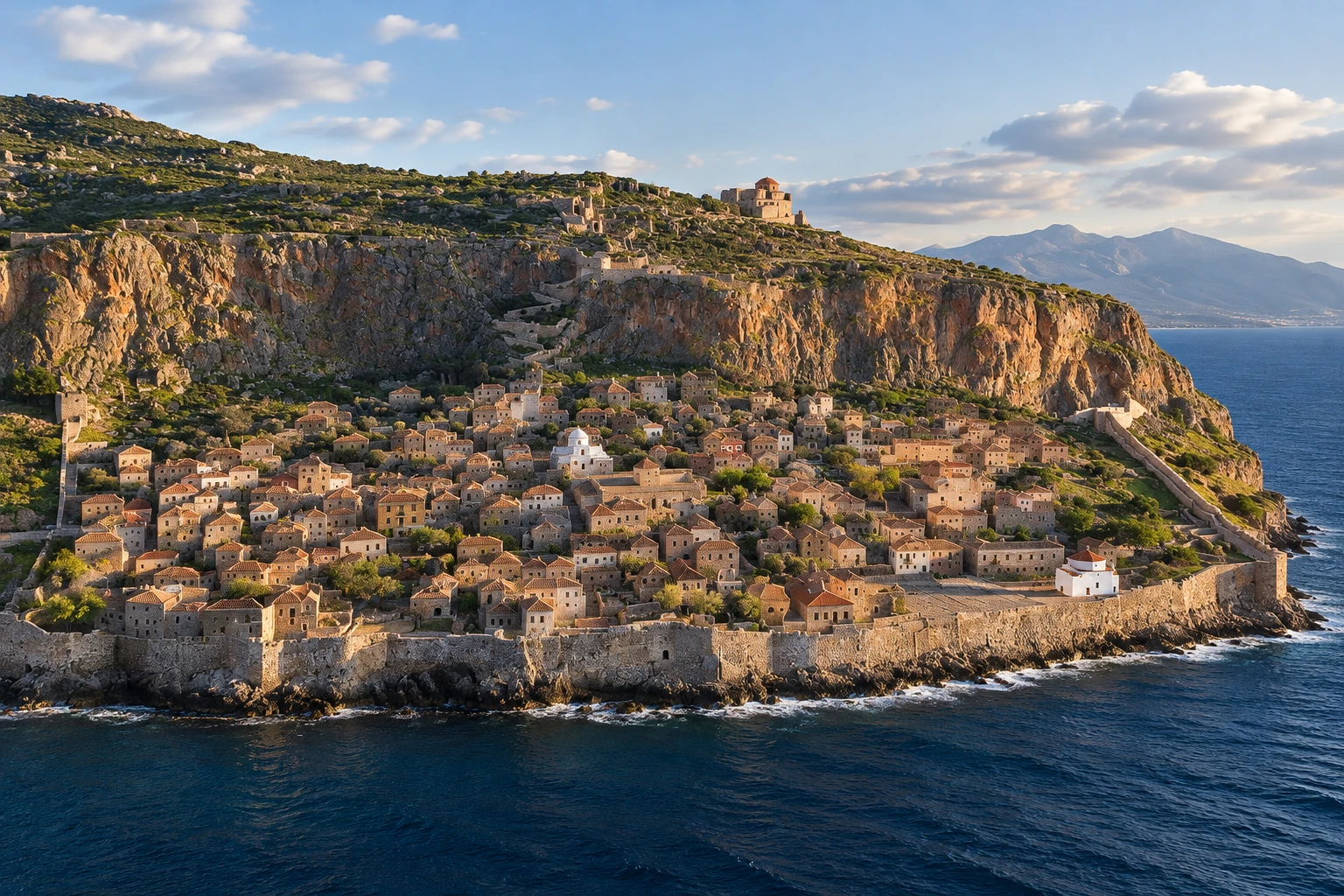
Monemvasia is an entire walled medieval town clinging to a rock in the sea, in the southeast of the Peloponeso, connected to the mainland by a narrow bridge closed to cars. Founded in the 6th century by refugees from Esparta and contested by Byzantines, Venetians and Ottomans, it has a main stone street, stepped alleys, dozens of churches and restored houses turned into guesthouses. On the top of the rock, the upper town in ruins shelters the Byzantine church of Agia Sofia. It is about 4½ hours from Athens and 1½ hours from Esparta and Mystras.

Olympia
Western Greece · Peloponnese

Olympia

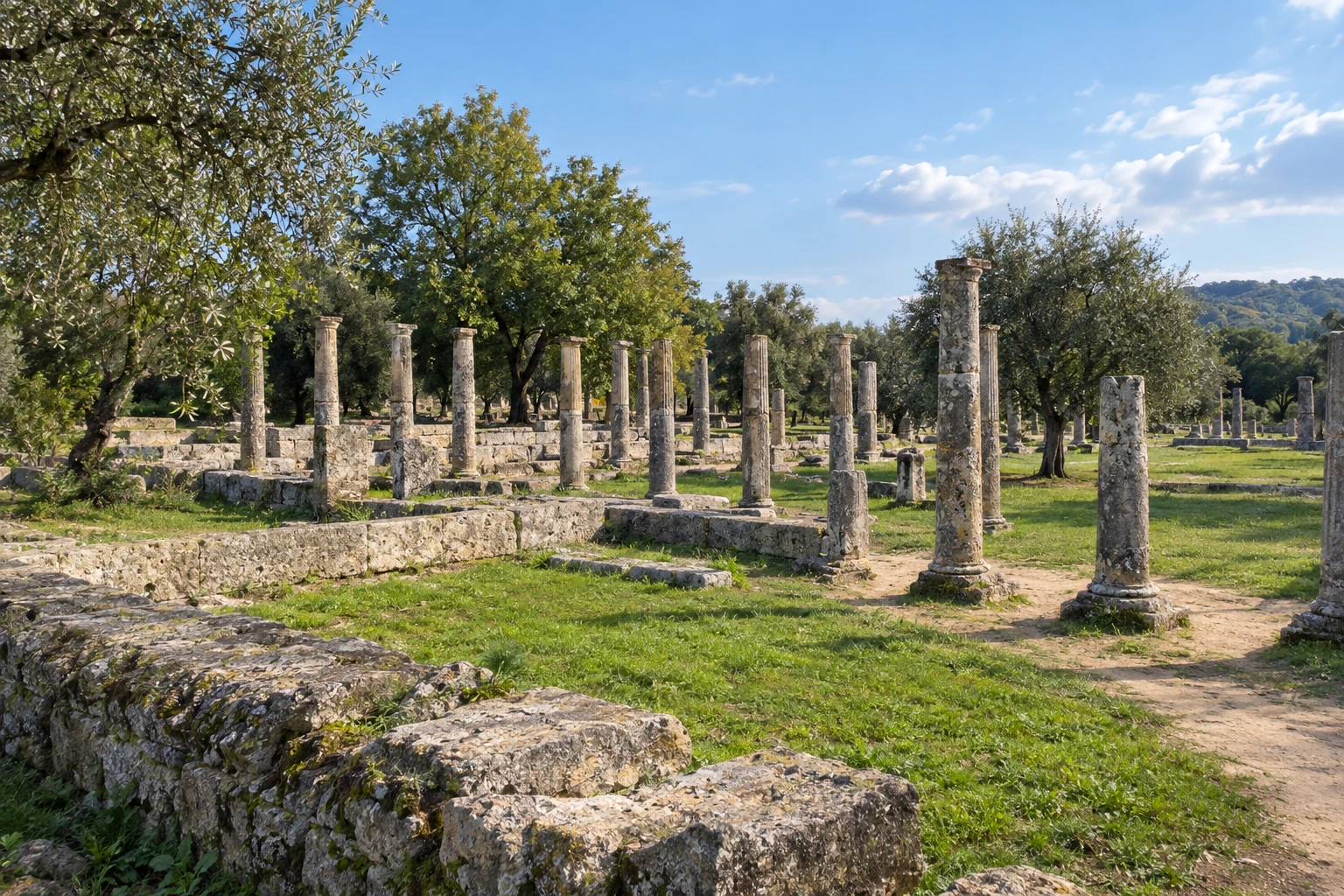
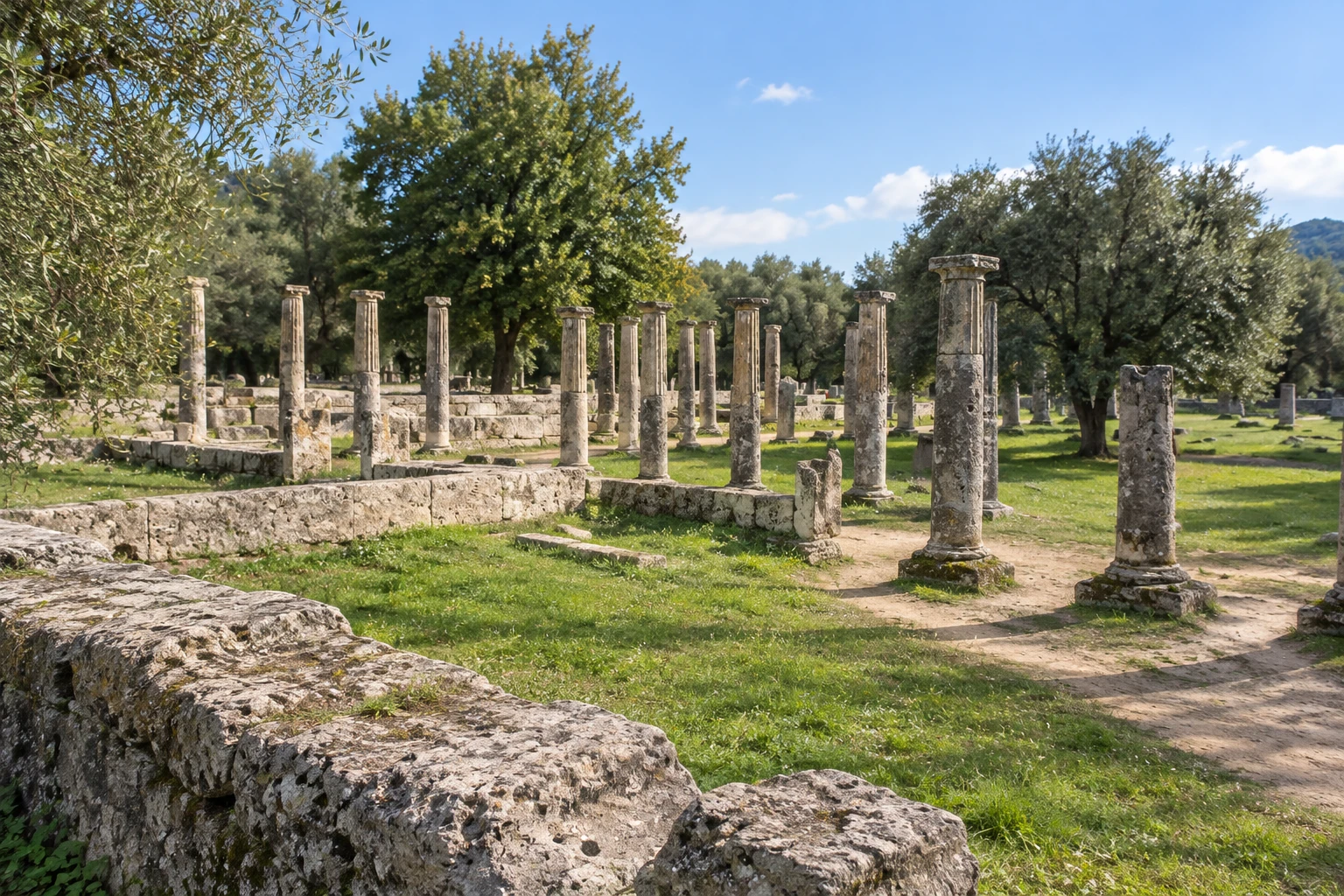
Olímpia is the village that grew up beside the sanctuary of Zeus where the Olympic Games began in 776 BC. It is in the west of the Peloponnese, about 4 hours from Athens, in a pine valley between the Alfeu and Cládeo rivers. The archaeological site, with the stadium and the Temple of Hera where the Olympic flame is lit, the Museu Arqueológico with the Hermes de Praxíteles and two smaller museums fill a full day. The village, called Archaia Olympia, has a main street with hotels, tavernas and shops.

Patras
Western Greece · Peloponnese Capital

Patras

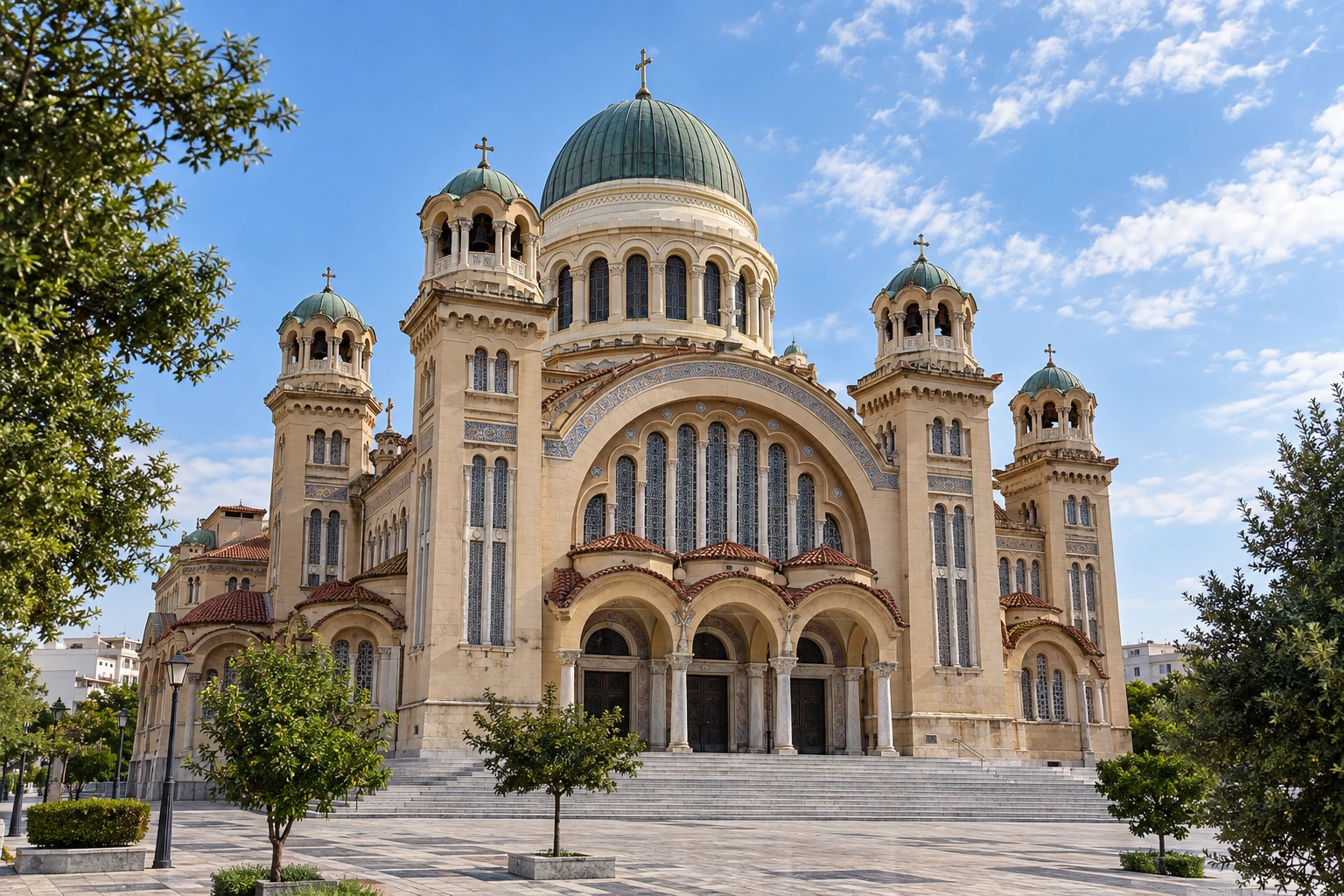
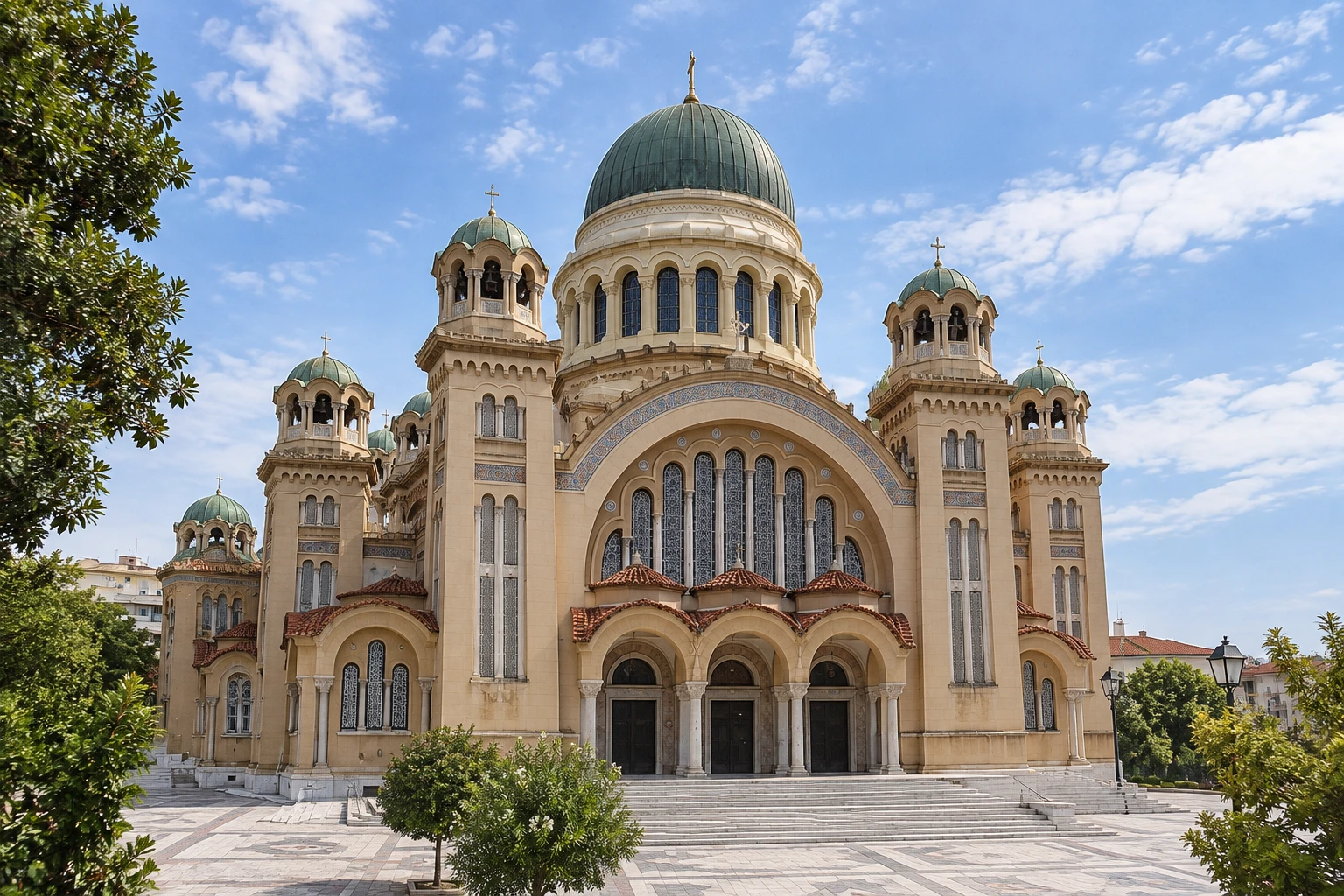
Patras is the largest city in the Peloponnese, capital of Western Greece and one of the country’s main ports. The lower town, with a grid of streets and arcades, has Georgiou I Square and the Apollon theatre; stairways lead up to the upper town, with the Roman odeon and the Byzantine castle. On the seafront, the church of Santo André houses relics of the apostle, the city’s patron. The archaeological museum holds Roman mosaics, and to the north the Rio–Antirrio bridge crosses the Gulf of Corinth. Patras’s carnival is one of the best known in Greece. Greek is spoken.

The local experience

Things to do in Peloponnese

Nafplio · Peloponnese · Fortress

Palamidi Fortress

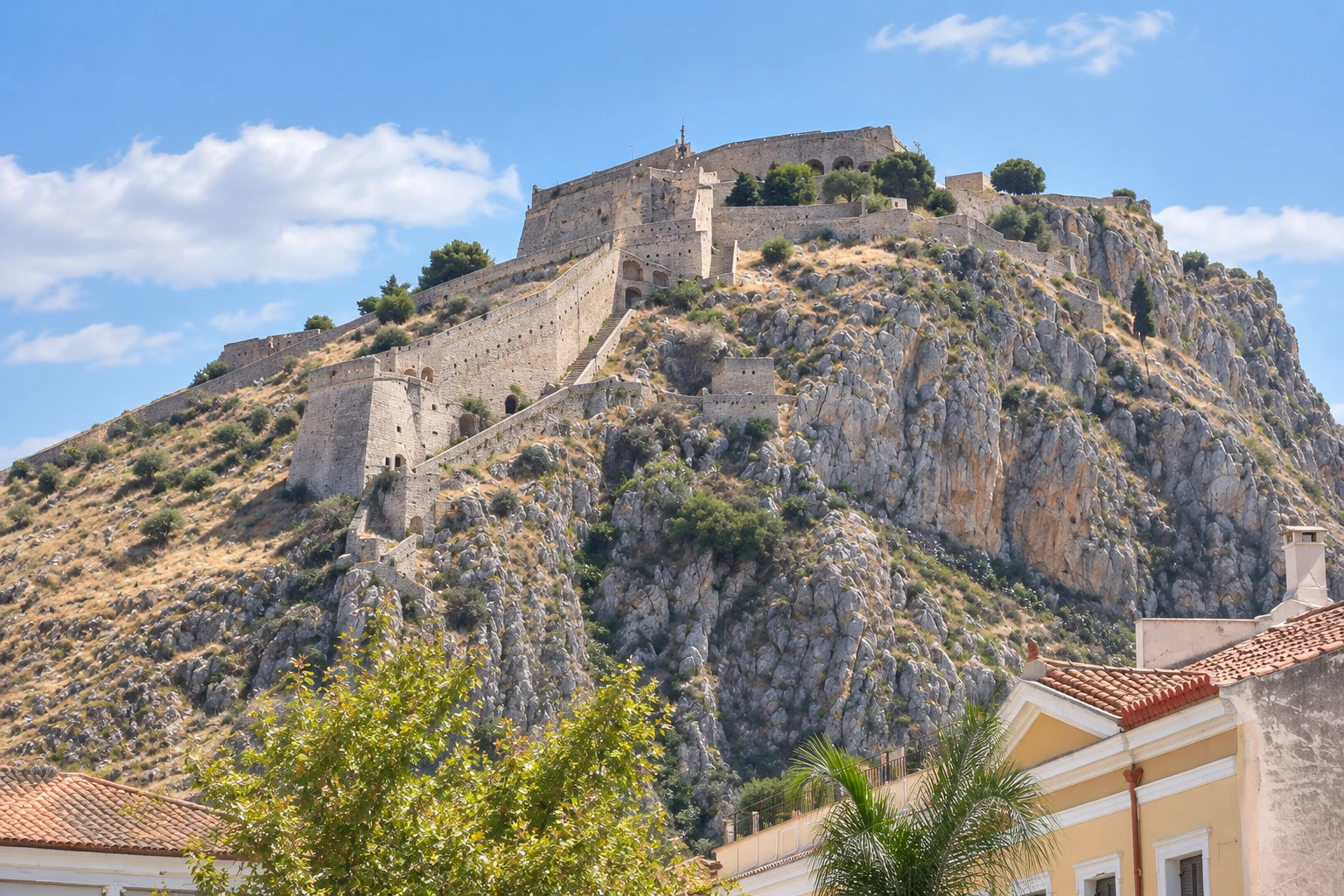
Venetian fortress built between 1711 and 1714 on top of a hill 216 metres above Náuplia, with eight bastions, the cell where the hero Kolokotronis was imprisoned and a staircase of hundreds of steps rising from the old town.

Explore Palamidi Fortress

See 23 more places in Peloponnese

Before you go

Practical information

A little planning leaves more time to enjoy the journey.

When to go

From April to June and from September to October: mild days, flowers at the sites in spring and the sea still warm in autumn. July and August often exceed 35°C at the ruins, with no shade. In winter, from November to March, sites open on reduced hours and some guesthouses in Monemvasia close; check before you go.

The seasons shown are the most usual ones; nature doesn't always follow the calendar.

How many days to stay

Three days cover the essentials of the Argólida from Náuplia: the town, Micenas and Tirinto in one day; Epidauro and a beach the next; Corinto on the way there or back. With five days you can add Olímpia to the west and Monemvasia with Mystras to the south. A week allows a complete circuit of the peninsula at a relaxed pace, including the mountainous interior.

Which city to stay in

Náuplia is the best base for the Argólida: the old town, between Syntagma square and the harbour, puts everything within walking distance, and the Pronoia neighbourhood at the foot of Palamidi offers quieter accommodation. In Olímpia, the village of Archaia Olympia is a 15-minute walk from the site, with simple hotels on the main street. In Monemvasia, staying inside the Kastro, in restored houses without car access, is the experience; Gefyra on the mainland is more practical and has parking. Those who prefer the beach can stay in Tolo, 12 km from Náuplia.

Respect the place

Take your trash with you, follow the signs and support local businesses. In natural areas, follow the visiting guidelines.

Beyond the guide

Your questions

Frequently asked questions about Peloponnese

Can you visit the Peloponeso without a car?

Yes, with limitations. KTEL buses link Athens to Náuplia, Corinto, Esparta, Pyrgos and Trípoli, and from Náuplia there are local lines to Argos, Micenas, Epidauro and Tolo, with few departures per day. Olímpia is reached by bus via Pyrgos. Monemvasia has buses from Esparta. To string together several sites in one day, a rental car or a tour from Náuplia is the simplest option.

Can Micenas and Epidauro be done as a day trip from Athens?

Yes. Athens-based agencies sell day tours that combine Canal de Corinto, Micenas, Náuplia and Epidauro, lasting around 12 hours. By car the route is similar. It's a full day: if possible, spend a night in Náuplia to see the sites at a more relaxed pace.

How many days are enough for the Peloponeso?

Three days based in Náuplia cover Micenas, Tirinto, Epidauro, Argos and Corinto. Five days allow you to include Olímpia or Monemvasia with Mystras. To do the entire peninsula, including the interior and the west coast, allow a week.

What's the best time to visit the archaeological sites?

Spring and autumn. From April to June the fields around Micenas and Olímpia are green and the heat is still bearable. September and October have long days and warm sea. In July and August the sun is strong at the ruins, with no shade: visit right at opening and bring water and a hat. In winter the sites operate on reduced hours.

Is it worth including Olímpia on a short itinerary?

Olímpia lies on the opposite side of the peninsula from Náuplia, about three hours' drive. It's worth the trip for those interested in the history of the Games: the site, the archaeological museum with the Hermes by Praxíteles and the museum of the ancient Games fill a whole day. On a three-day itinerary it's better to leave it out and focus on the Argólida.

Is Monemvasia far? Is it worth it?

Monemvasia is at the southeastern tip, about 4½ hours from Athens and 3 hours from Náuplia. It's worth it for those with at least five days who want to sleep inside a car-free medieval town. On the way or back, Mystras, near Esparta, adds late Byzantine churches and the Frankish castle.

Cross-border routes

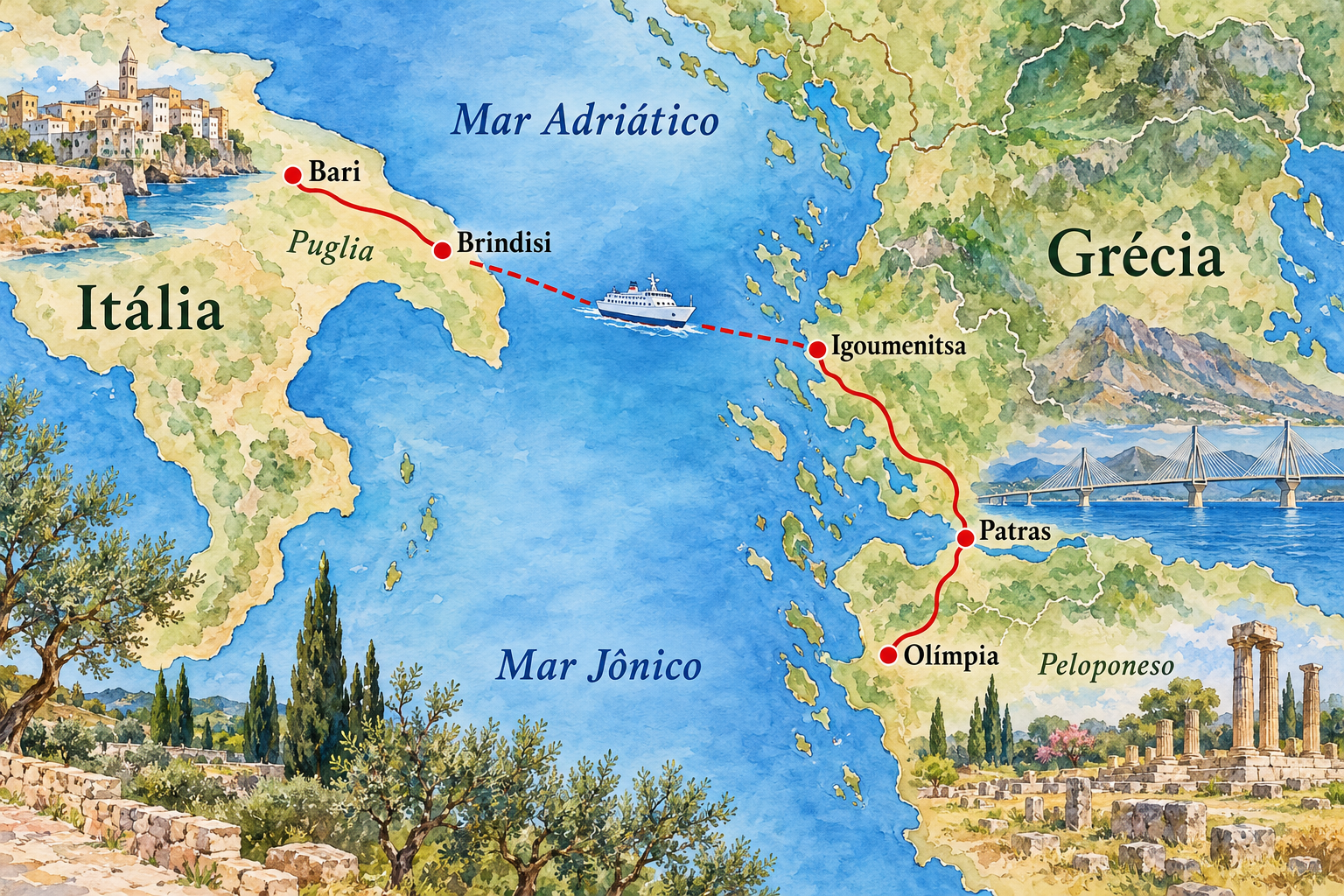
Peloponnese is on the Italy–Greece ferry across the Adriatic

From Puglia to Greece by sea: overnight ferries depart Bari and Brindisi and arrive in the morning at Igoumenitsa, in Epirus, or continue to Patras, the gateway to the Peloponnese.

Illustrative map, not to scale. Tap a city to open its page.
Illustrated map of Italy–Greece ferry across the Adriatic
Explore other destinations Search by state and city