Burgos and León

Castile and León

Burgos and León

The Gothic cathedrals of Burgos and León, the fossils of Atapuerca, Gaudí's palace in Astorga and the Templar castle of Ponferrada, along the Caminho Francês.

Central

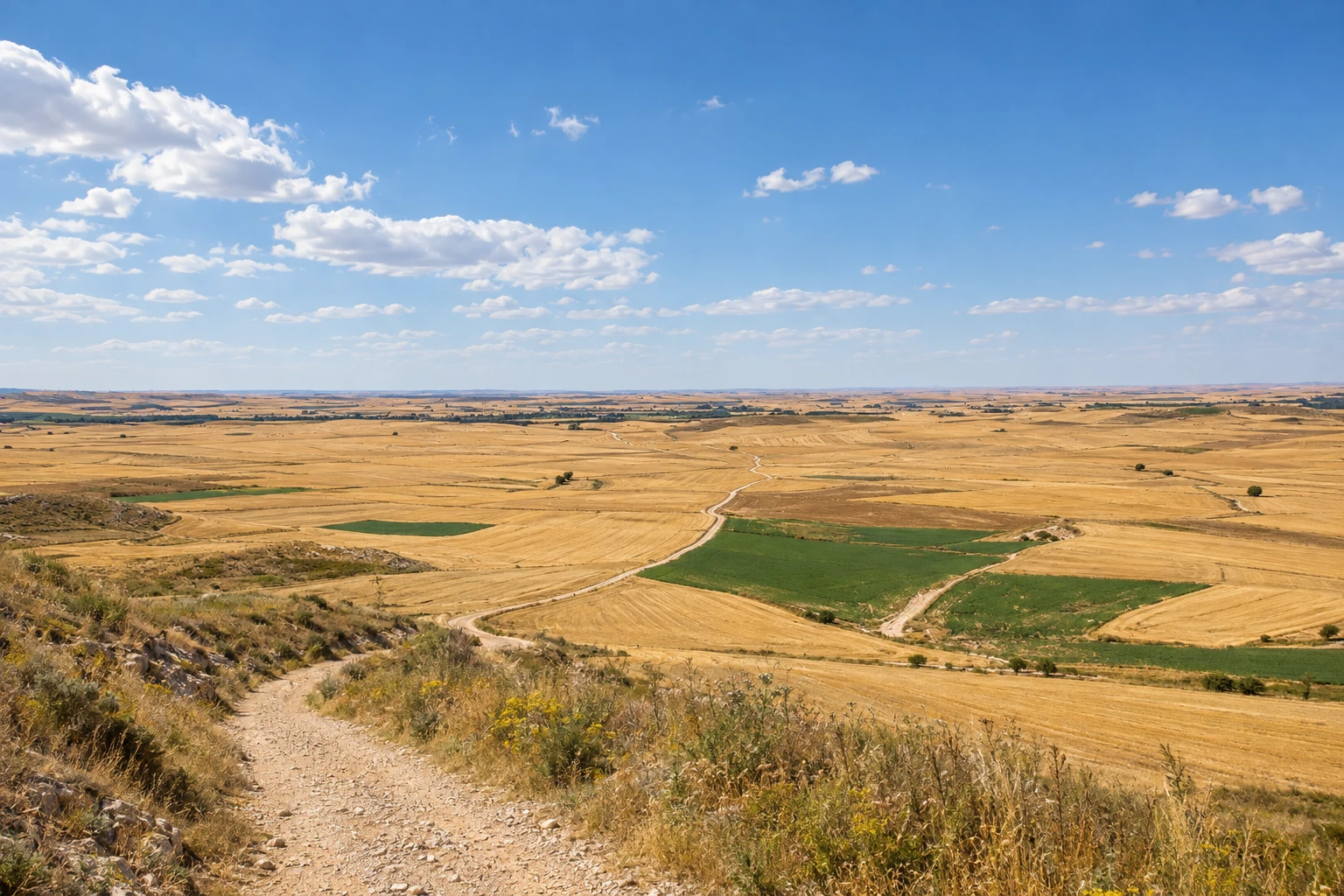
In the photo: Meseta of the Caminho Francês near Castrojeriz

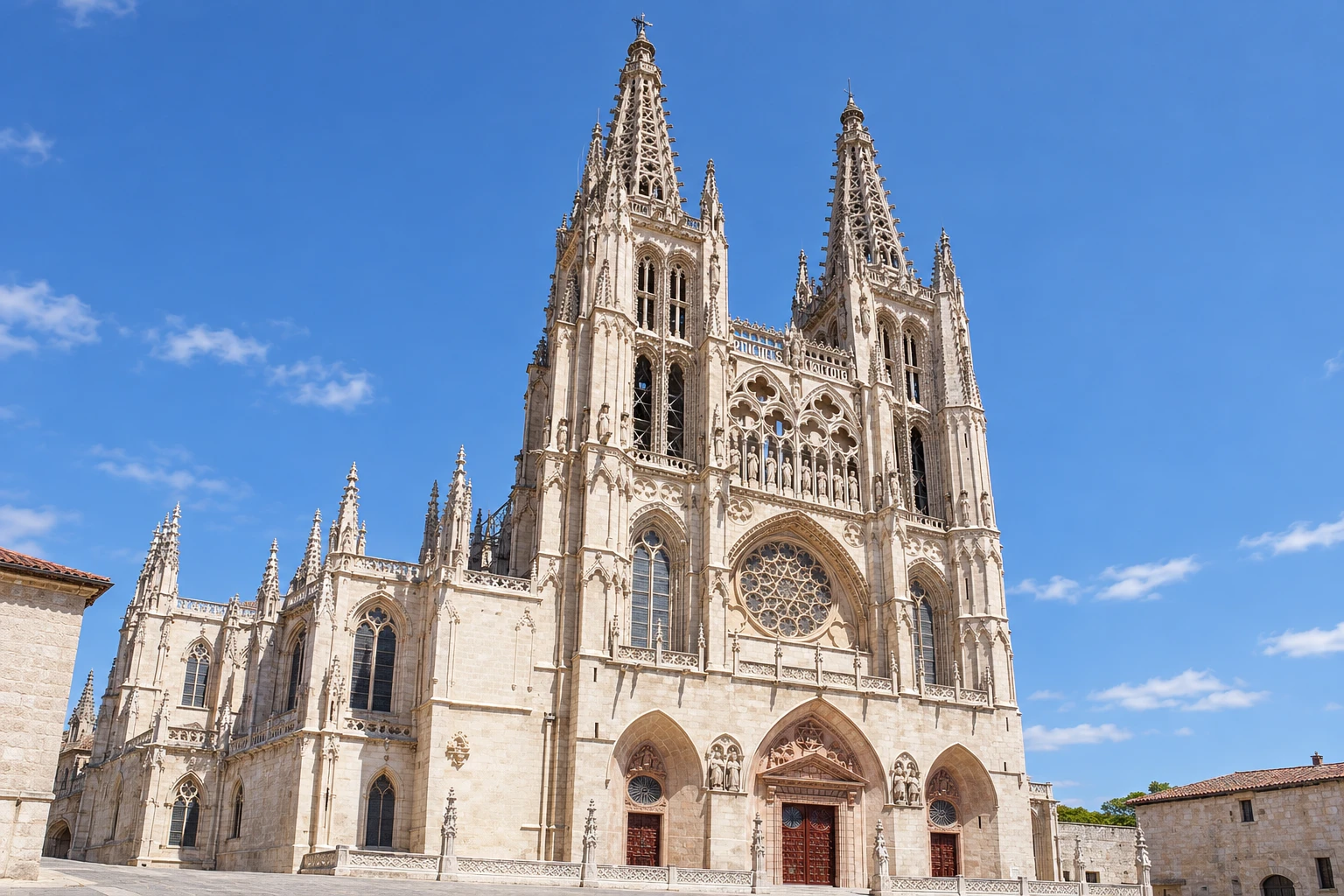
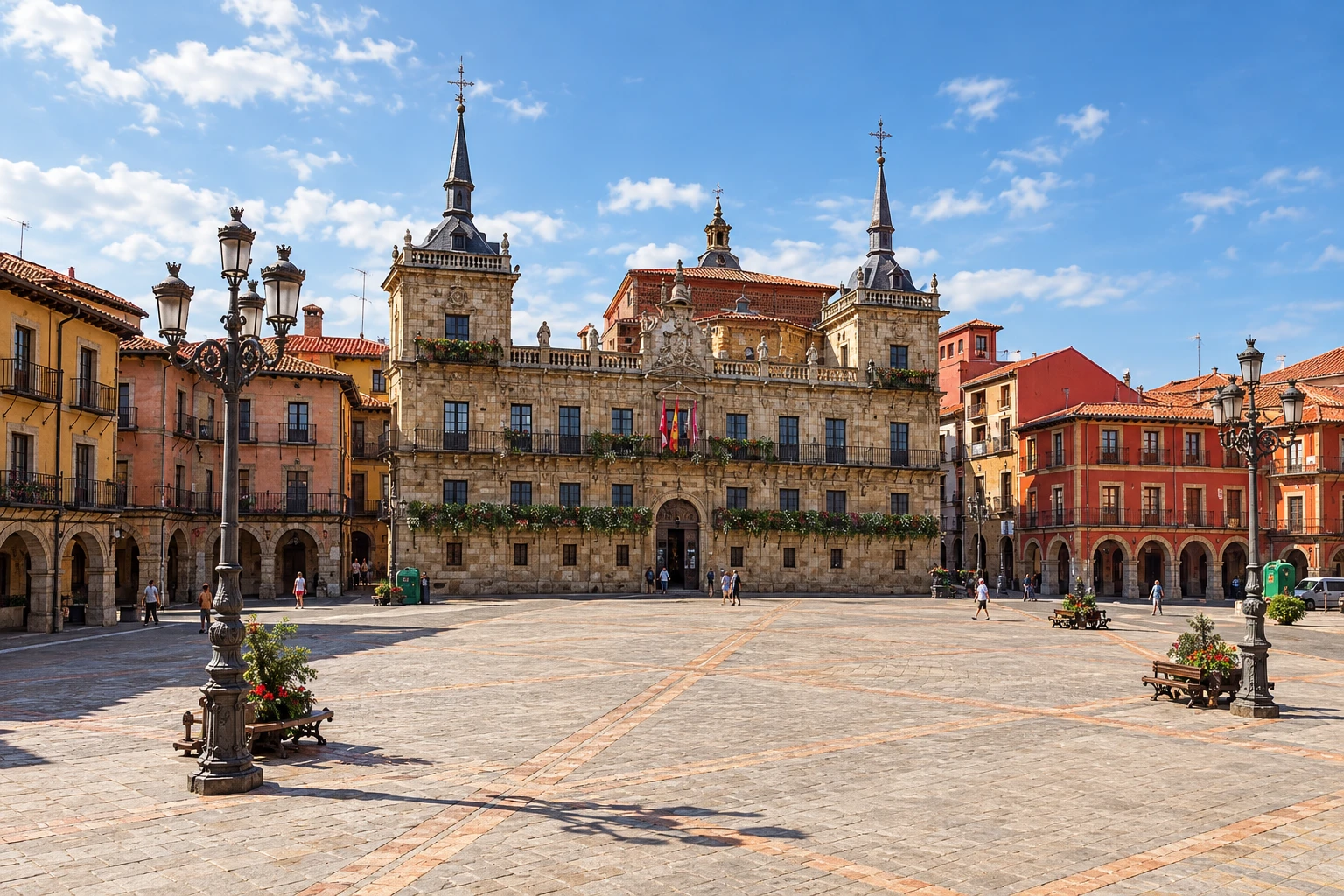
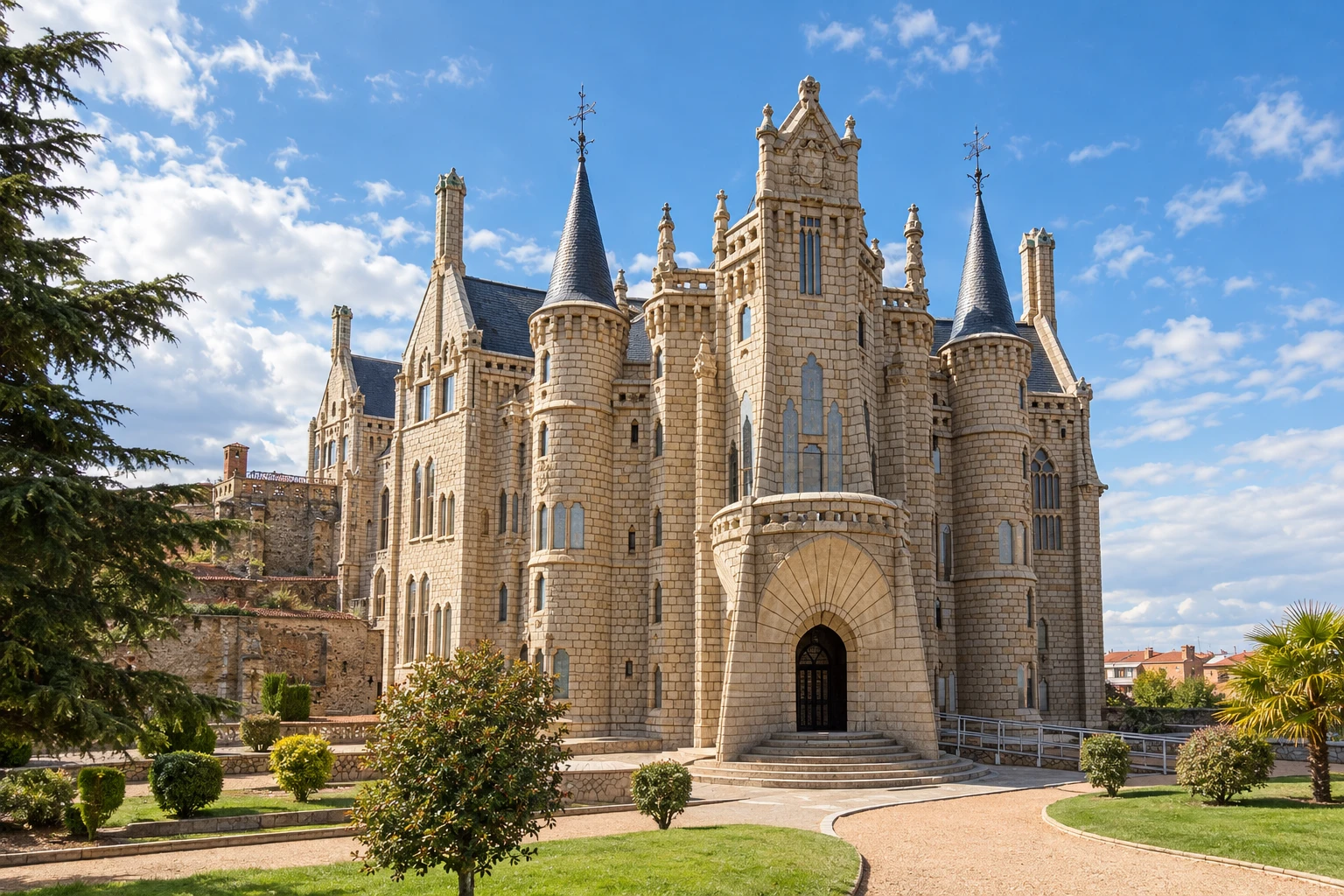
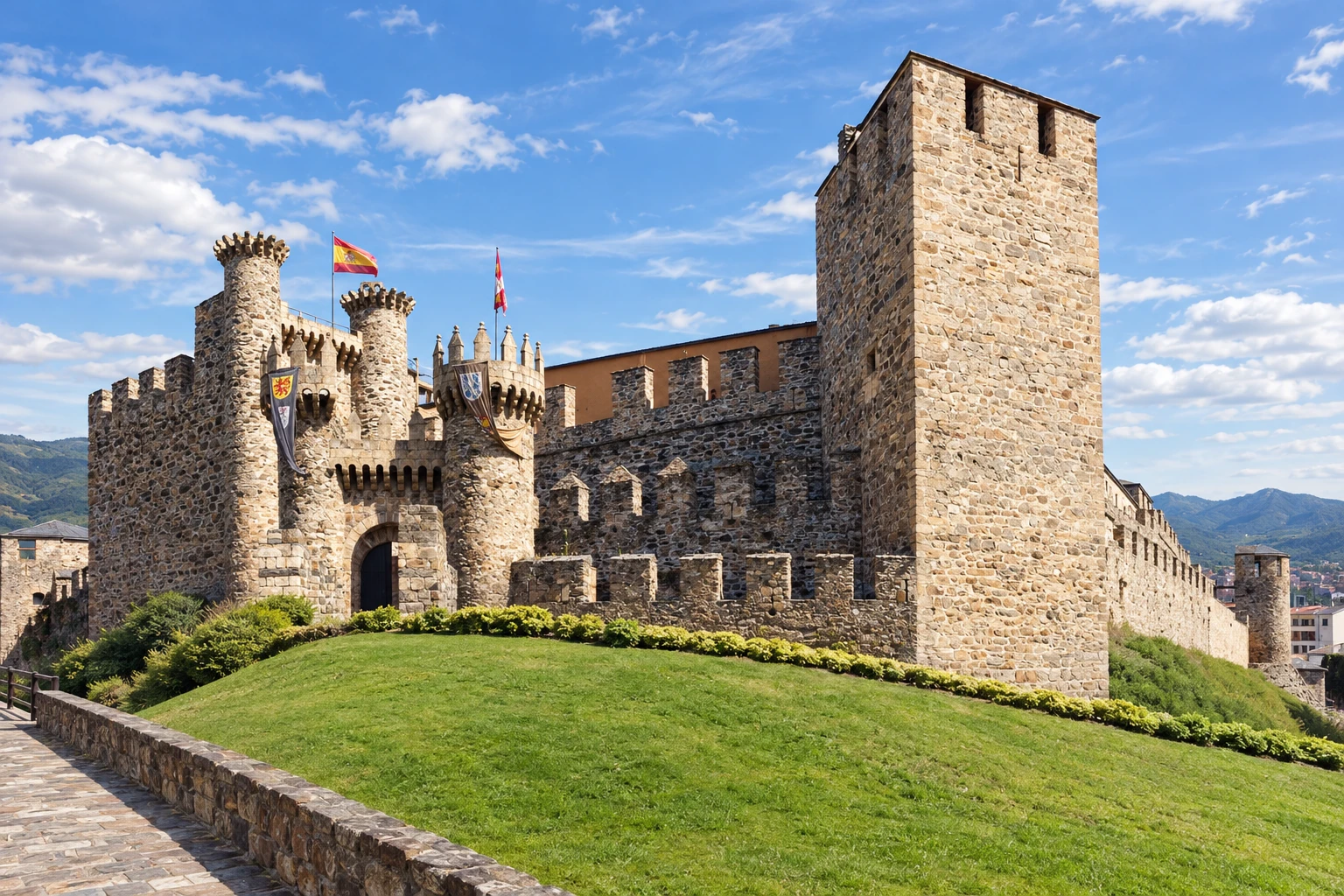
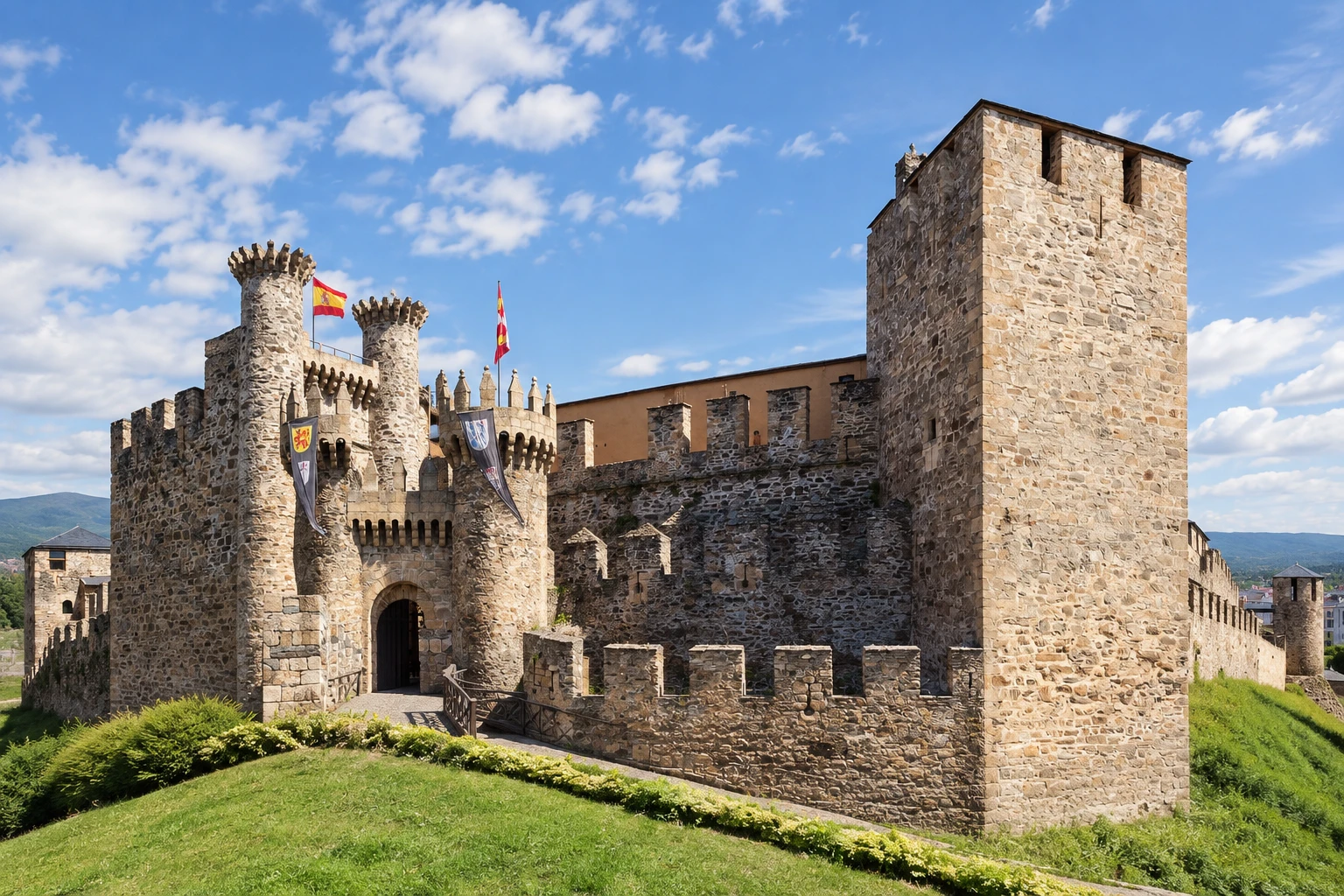
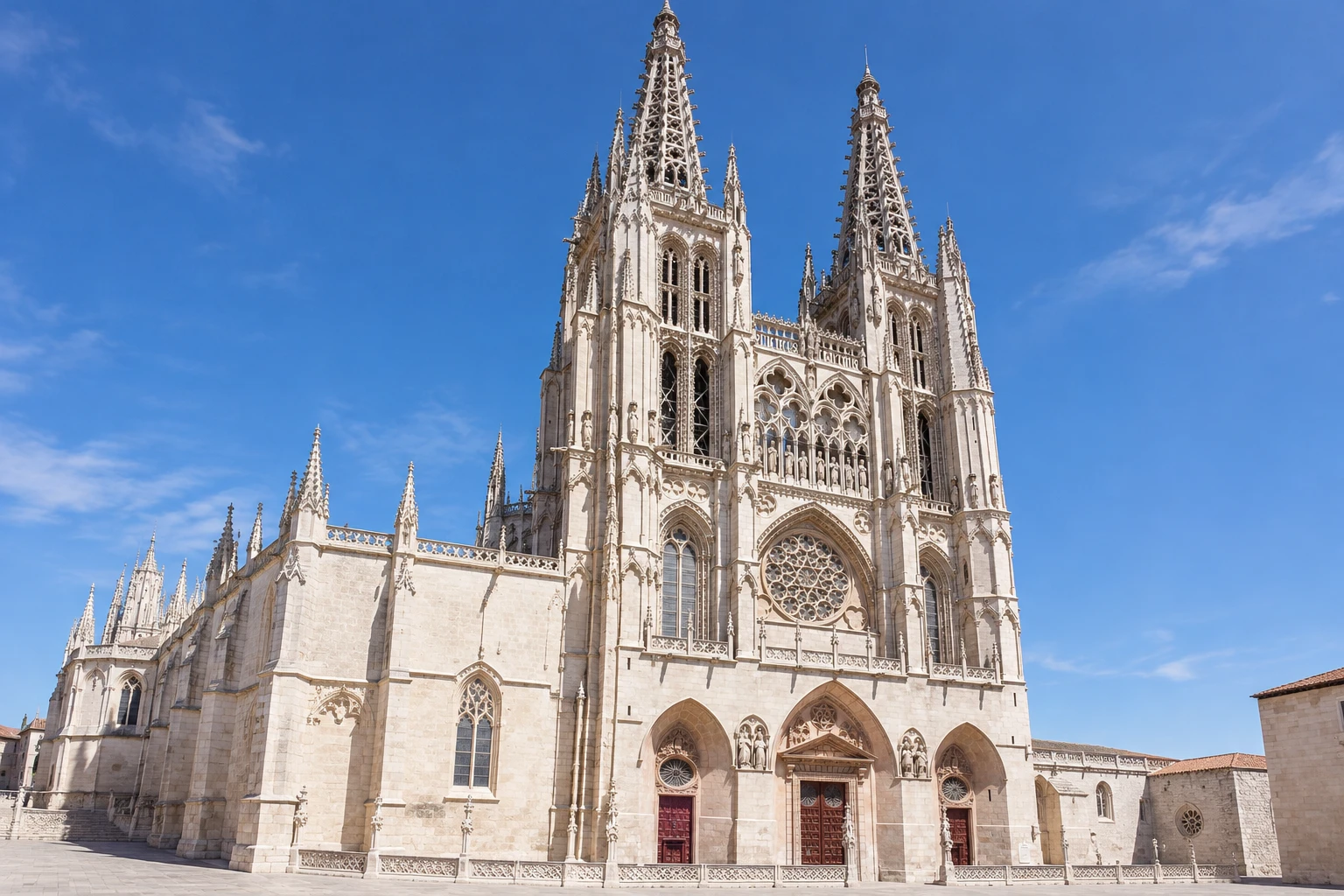
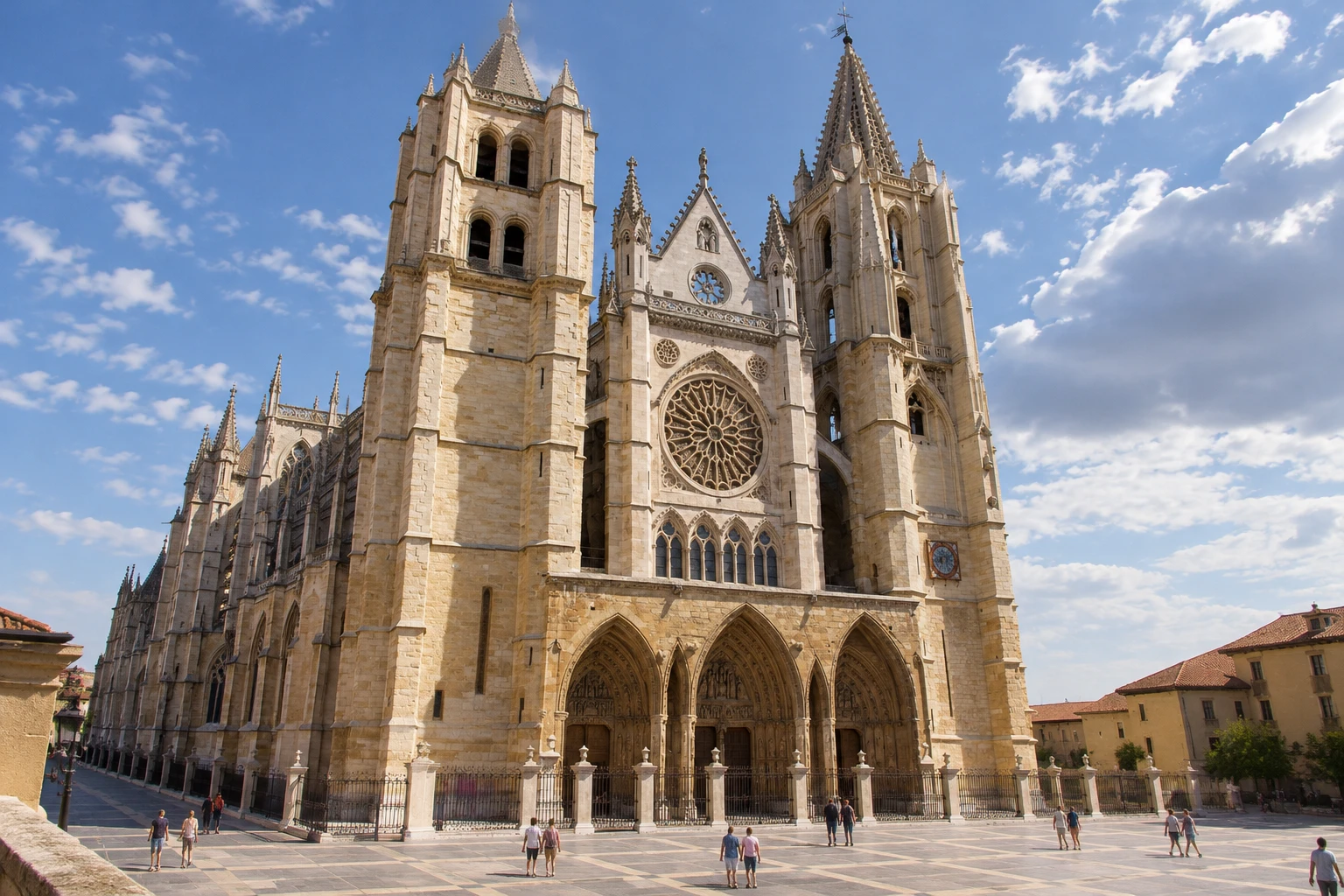
Illustrative images. The pictures in this guide are illustrations based on the real place, not photographs, and may differ from it.

Get it on Google Play

Get to know the place

A region to enjoy
at your own pace.

Burgos and León are two provinces of Castile and León on the northern Spanish plateau, crossed east–west by the Caminho Francês de Santiago. Between them lies the Meseta, the high plain of wheat fields, open sky and adobe-and-stone villages such as Castrojeriz, Frómista and Sahagún, which pilgrims cross in about a week. West of León, the landscape changes to the hills of the Maragatería and the green Bierzo valley.

Burgos, the former capital of Castile and the land of El Cid, has a Gothic World Heritage cathedral with the hero's tomb. About 15 km away, the Atapuerca range holds some of Europe's oldest human remains, displayed at the Museu da Evolução Humana in the city. León has the other great Gothic cathedral of the region, known for its medieval stained glass, the Panteón de los Reyes de San Isidoro and Casa Botines by Gaudí.

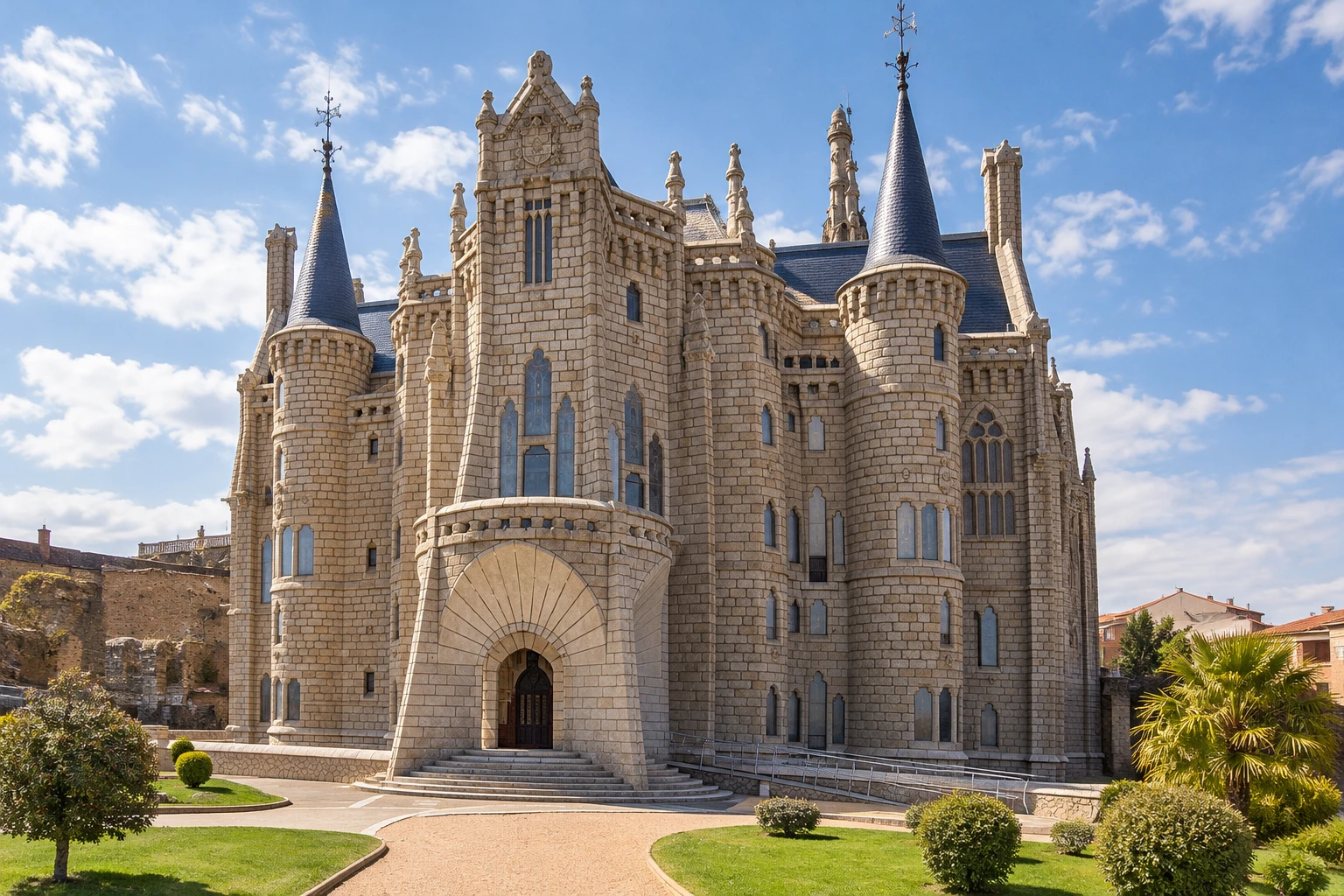
Further west, Astorga, ringed by a Roman wall, has the Palácio Episcopal de Gaudí and a tradition of chocolate and cozido maragato. Ponferrada, the capital of Bierzo, has the Templars' castle above the river Sil and, about 25 km away, the Médulas, ancient Roman gold mines, a World Heritage site of red earth among chestnut trees.

The four cities lie on the rail line linking central Spain to Galicia, which makes the route doable without a car. Spanish is spoken. The climate is continental: hot days and cool nights in summer, cold winters.

This destination brings together 4 cities: Burgos, León, Astorga, Ponferrada.

Share: WhatsApp
Traveler, share your experiences through photos Up to 5 photos of each place you visited.

One destination, many paths

The cities on this trip

Start with one city or combine several in your itinerary.

Where Burgos and León is The star marks the nearest capital, Oviedo.
OviedoBurgosLeónAstorgaPonferrada

Outlines: IGN/CNIG, unidades administrativas, CC BY 4.0. Adapted by Cidade Turismo.

How to get there: Burgos and León

Aeroporto de Madri-Barajas (Aeropuerto Adolfo Suárez Madrid-Barajas) (MAD), in Madri · 240 km to Burgos

Aeroporto de Bilbao (Aeropuerto de Bilbao) (BIO), in Loiu · 160 km to Burgos

Connections from Brazil usually involve a stop in another city. Check before buying. International flights arrive at Madri. From there, trains take about 1h30 to 2h30 to Burgos and about 2 hours to León. The train continues from León to Astorga and Ponferrada, and links Burgos to León in about 1h30 to 2 hours.

Suggested arrival point: Burgos

Burgos
Castile and León · Burgos and León Suggested arrival point

Burgos

Burgos is a city in Castilla y León on the banks of the rio Arlanzón, the former capital of Castilla and the land of El Cid. The Gothic cathedral, a World Heritage Site, features lace-like spires, the capela do Condestável and El Cid's tomb. Pilgrims enter the centre through the Arco de Santa María. The city also has the royal monastery of Las Huelgas, the cartuxa de Miraflores, the Casa del Cordón and the castle on the hill. The Museu da Evolução Humana displays the Atapuerca fossils, a prehistoric World Heritage site about 15 km away. Spanish is spoken.

León
Castile and León · Burgos and León

León

León is the capital of the province of the same name, in Castile and León, born from a Roman camp and the capital of the old Kingdom of León. It is one of the main stops on the Caminho Francês. The Gothic cathedral has one of the largest sets of medieval stained-glass windows in the world, and San Isidoro houses the Pantheon of the Kings, with Romanesque paintings. Gaudí left the Casa Botines, now a museum, and the Hostal de San Marcos has a plateresque façade. The MUSAC displays contemporary art. At night, the Barrio Húmedo around the Plaza Mayor fills with tapas bars. Spanish is spoken.

Astorga
Castile and León · Burgos and León

Astorga

Astorga is a small town in the province of León, capital of the Maragatería, on a hill surrounded by more than 2 km of Roman-origin wall. Founded as Asturica Augusta, it preserves Roman remains and a museum in the former ergástula. The Palácio Episcopal de Gaudí stands next to the Gothic cathedral, and in the Plaza Mayor two maragato figures strike the hours. The town is known for chocolate, mantecadas and the cozido maragato. It is where the Caminho Francês meets the Via de la Plata. The village of Castrillo de los Polvazares is 5 km away. Spanish is spoken.

Ponferrada
Castile and León · Burgos and León

Ponferrada

Ponferrada is the capital of the comarca of Bierzo, in the west of the province of León, at the meeting of the rivers Sil and Boeza. The name comes from the iron-reinforced bridge built in the 11th century for pilgrims, and the town remains a stop on the Caminho Francês. The castelo dos Templários dominates the old town, alongside the basílica da Encina and the Museu do Bierzo. The old power station became the Museu da Energia. Nearby are the Médulas, Roman gold mines that are a World Heritage Site, and Peñalba de Santiago, with a Mozarabic church from the 10th century. Spanish is spoken.

The local experience

Things to do in Burgos and León

Ponferrada · Castile and León · Castle

Templars' Castle

Fortress from the 12th to 15th centuries at the confluence of the Sil and Boeza rivers, linked to the Order of the Temple, with walls, towers, courtyards and a library of reproductions of old books.

Explore Templars' Castle

Burgos · Castile and León · Church

Burgos Cathedral

Gothic cathedral begun in 1221, a World Heritage Site, with lace-like spires, the capela do Condestável, the Escada Dourada and El Cid's tomb.

Explore Burgos Cathedral

León · Castile and León · Church

León Cathedral

13th-century Gothic cathedral, the Pulchra Leonina, known for the medieval stained-glass windows that replace almost all the walls and fill the nave with colour.

Explore León Cathedral

See 24 more places in Burgos and León

Before you go

Practical information

A little planning leaves more time to enjoy the journey.

When to go

From May to October the days are long and the weather is more stable. In summer the Meseta gets hot and is exposed at midday. Autumn brings the colors of the chestnut trees in the Bierzo. Winter is cold, with frosts and sometimes snow. The seasons are the opposite of Brazil.

The seasons shown are the most usual ones; nature doesn't always follow the calendar.

How many days to stay

Five to seven days: two in Burgos, with Atapuerca; two in León; one in Astorga; one or two in Ponferrada, with the Médulas. If you have less time you can choose Burgos and León, two days in each. Time difference: 4 to 5 hours ahead of Brasília, depending on the time of year.

Which city to stay in

In Burgos, the center between the cathedral and the Espolón lets you see the monuments on foot; the train station is far away, about 5 km. In León, the old town near the cathedral and the Barrio Húmedo is lively at night; the ensanche area near Casa Botines is calmer. In Astorga and Ponferrada, it's best to stay within the old town, near the cathedral and the castle.

Respect the place

Take your trash with you, follow the signs and support local businesses. In natural areas, follow the visiting guidelines.

Beyond the guide

Your questions

Frequently asked questions about Burgos and León

Can you visit Burgos and León by train?

Yes. The four cities are on the line that links Madri with Galicia: Burgos and León have trains between them in about 1h30 to 2 hours, and from León there are trains to Astorga and Ponferrada. For Atapuerca and the Médulas, a car or organized tours are helpful.

Which cathedral should you visit, Burgos or León?

Both, if possible. Burgos' cathedral impresses with its spires, chapels and the tomb of El Cid; León's is remarkable for its medieval stained glass that fills the nave with color on sunny days.

What is the Meseta of the Caminho de Santiago?

It's the stretch of the Caminho Francês between Burgos and León, a high plain of open fields and small villages that pilgrims cross in about a week.

How to visit Atapuerca?

Visits to the sites, about 15 km from Burgos, are guided and have limited places, departing from the villages of Atapuerca and Ibeas de Juarros, and on some days from the Museu da Evolução Humana. Book in advance.

Are the Médulas near Ponferrada?

Yes, about 25 km away, roughly 35 minutes by car. Public transport is limited; there are organized tours from Ponferrada.

Cross-border routes

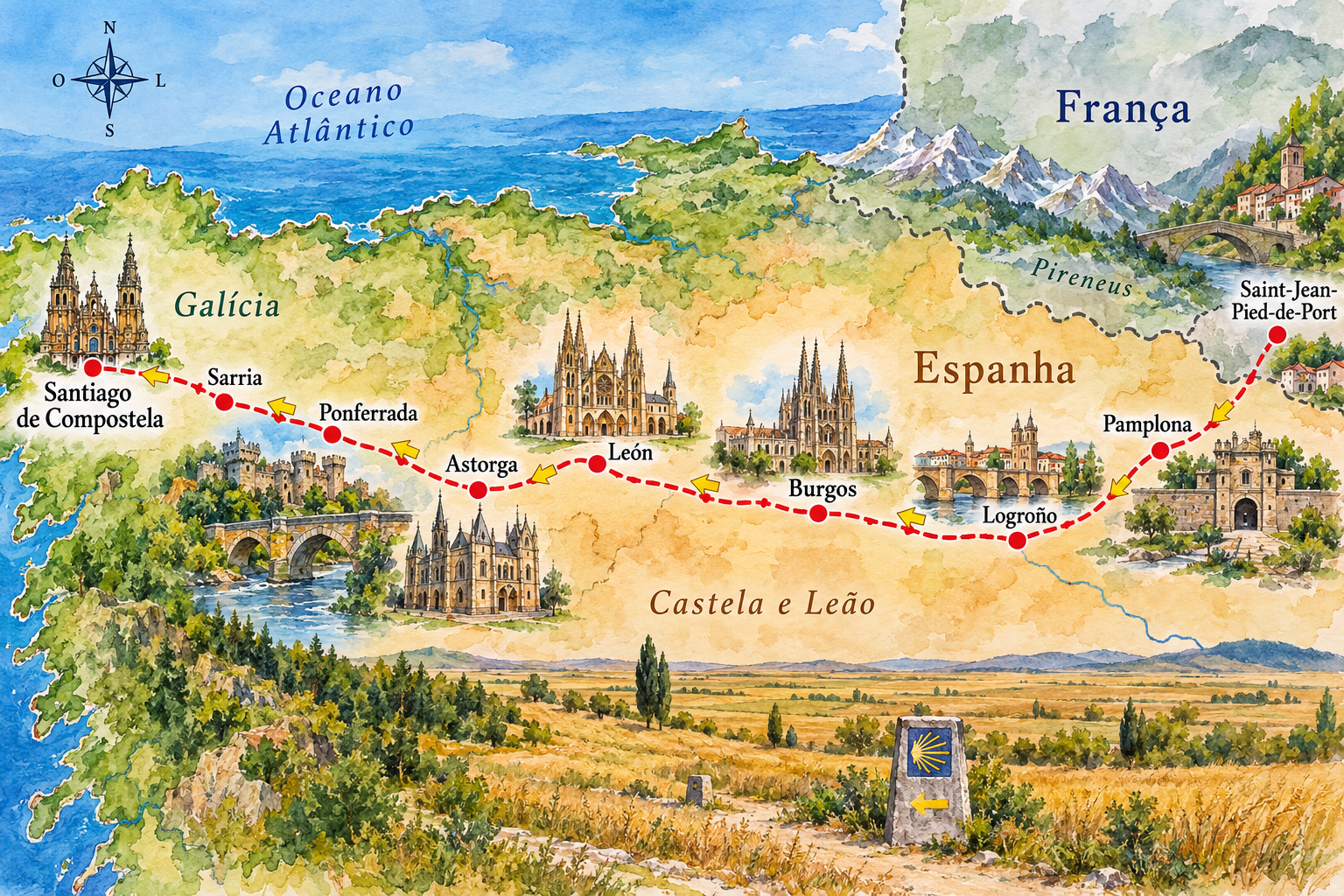
Burgos and León is on the French Way (Camino Francés) to Santiago on foot

The most travelled pilgrimage route to Santiago de Compostela: from the French Pyrenees to Galicia, on foot, via Pamplona, Burgos and León, following the yellow arrows.

Illustrative map, not to scale. Tap a city to open its page.
Illustrated map of French Way (Camino Francés) to Santiago on foot
Explore other destinations Search by state and city