

 Brazil
 Argentina
 Bolivia
 Chile
Chile Colombia
 Ecuador
 Guyana
 French Guiana
 Falkland Islands (Malvinas)
 Paraguay
 Peru
Peru Suriname
 Uruguay
 Germany
 Belgium
 Denmark
 Spain
Spain France
 Greece
 the Netherlands
 Ireland
 Italy
Italy Luxembourg
 Norway
 Portugal
 the United Kingdom
 Sweden
 Switzerland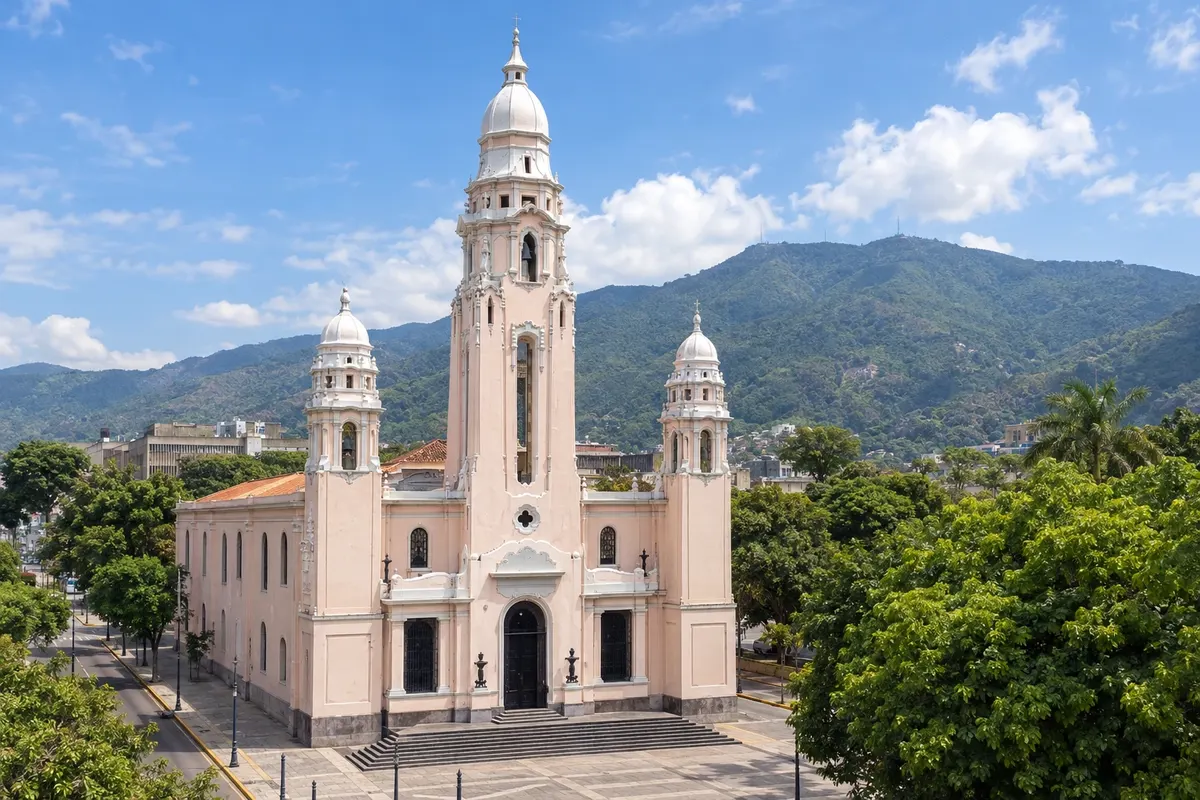
Before you go
Your trip to Caracas.
Illustrative images. The pictures in this guide are illustrations based on the real place, not photographs, and may differ from it.

Caracas – Distrito Capital Destination Caracas and El Ávila Capital
How to get there
-
Aeropuerto Internacional Simón Bolívar (CCS) Maiquetía · 30 km
-
Terminal de Pasajeros La Bandera 5 km
Approximate road distances. Check flights and bus schedules before you travel.
Check before buying. Simón Bolívar International Airport is in Maiquetía on the coast, about 30 km from the center; the highway trip takes from 40 minutes to over an hour. Long-distance buses arrive at the La Bandera terminal in the southwest and the Oriente terminal in the east. Within the city, the metro links the center to the eastern neighborhoods.
How many days
Two days for the historic center, the Ciudad Universitaria, the Plaza de los Museos and the cable car. With three days, add a morning hike on the Ávila. Because domestic flights depart from Maiquetía, it's common to spend one or two days on arrival and another on the return.
When to go
The climate is mild year-round, with highs usually between 25 °C and 28 °C and cool nights. From December to April, the dry season, the sky is often clearer for views from the top of the Ávila. From May to November it rains more, generally in the afternoons, and the mountain often wakes up shrouded in clouds. Carnival and Holy Week fill the outbound roads to the coast.
The seasons shown are the most usual ones; nature doesn't always follow the calendar.
Do you need a car?
No. The metro links the historic center with Bellas Artes, the Ciudad Universitaria and the eastern neighborhoods, and taxis and ride‑hailing apps cover the rest. The cable car base, in Maripérez, and the trailheads for the Ávila are near avenida Boyacá, the Cota Mil. For Colonia Tovar and the coast, a car with a driver or an organized tour is a better option than driving in the mountains.
Suggested itinerary
An order that works
Built with the places on this page. No rush: it's paced so you have time to see them.
One day in Caracas
-
Morning
Plaza Bolívar and Casa Natal
Start at Plaza Bolívar, with the equestrian statue and the Cathedral, where the Bolívar family chapel is located. Walk two blocks to the Casa Natal del Libertador, with murals by Tito Salas, and continue north on foot to the Panteón Nacional.
-
Afternoon
Cable car to the top of Ávila
Take a taxi to the Maripérez station and ride the Warairarepano cable car up. At the top, walk along the viewpoints, with the valley on one side and the sea on the other, and descend on foot or by car to Galipán for hot chocolate and strawberries.
-
Late afternoon
View of the valley
Stay up top until late afternoon, when the city lights begin to come on below, and take the cable car down before the last departure; check schedules before you go up.
-
Evening
Dinner in Las Mercedes or Los Palos Grandes
Dine in the eastern neighborhoods. Order pabellón criollo—shredded beef with black beans, rice and fried plantain—or stuffed arepas, and try Venezuelan rum.
2 days in Caracas
Day 1
-
Morning
Historic center
Plaza Bolívar, the Cathedral and the Casa Natal del Libertador, with time for the colonial courtyard and the rooms painted by Tito Salas.
-
Afternoon
Panteón Nacional
After lunch in the center, go up avenida Norte to the Panteón Nacional, which houses Bolívar's sarcophagus in the central nave and a ceiling painted with scenes from his life.
-
Late afternoon
Plaza de los Museos
Take the metro to Bellas Artes and walk through Los Caobos park to the Museo de Bellas Artes, in the Villanueva buildings, with its sculpture garden.
-
Evening
Sabana Grande
Walk along the Sabana Grande boulevard and have dinner there or return to the eastern neighborhoods.
Day 2
-
Morning
Ciudad Universitaria
Visit the Ciudad Universitaria: the Plaza Cubierta, the Aula Magna with Calder's clouds, the Léger stained glass in the library, and the sculptures spread through the gardens.
-
Afternoon
Teleférico Warairarepano
Take the cable car up to the top of Ávila and have lunch in Galipán, among flower and strawberry plantations.
-
Late afternoon
Ávila viewpoints
Enjoy the viewpoints at the upper station, with views of the Caribbean Sea to the north and the valley to the south, before descending.
-
Evening
Altamira
Dine in Altamira or Los Palos Grandes, near plaza Francia and the obelisk.
Check before you go. Opening hours and days change, and places may close for renovations, holidays or events. This itinerary is a suggestion from Cidade Turismo, not a commitment: plan yours by checking directly with each place you intend to visit.
Before you go
Frequently asked questions
How to get around Caracas?
The metro links the historic center, Bellas Artes, the Ciudad Universitaria, Sabana Grande and the eastern neighborhoods. For the cable car base and the Ávila trails, take a taxi or a ride‑hailing app.
What is the altitude of Caracas?
The valley sits at about 900 meters. The top of Ávila, where the cable car arrives, exceeds 2,000 meters, and up there the temperature is usually much lower—bring a warm layer.
What to eat in Caracas?
Stuffed arepas, pabellón criollo with shredded beef, black beans, rice and fried plantain, corn cachapas with cheese, cheese tequeños and, at year’s end, the hallaca. Venezuelan coffee is served in various sizes and strengths, from "negrito" to "marrón."
Which days are the museums usually open?
Most museums in Caracas are closed on Mondays and open Tuesday through Sunday. Hours vary, so check before you go.
Where is colonial Caracas located?
Around Plaza Bolívar, on the west side of the valley: the Cathedral, the Casa Natal del Libertador, the Capilla de Santa Rosa de Lima and, a little to the north, the Panteón Nacional. All can be done on foot in half a morning.