

 Brazil
 Argentina
 Bolivia
 Chile
Chile Colombia
 Ecuador
 Guyana
 French Guiana
 Falkland Islands (Malvinas)
 Paraguay
 Suriname
 Uruguay
 Venezuela
 Germany
 Belgium
 Denmark
 Spain
Spain France
 Greece
 the Netherlands
 Ireland
 Italy
Italy Luxembourg
 Norway
 Portugal
 the United Kingdom
 Sweden
 Switzerland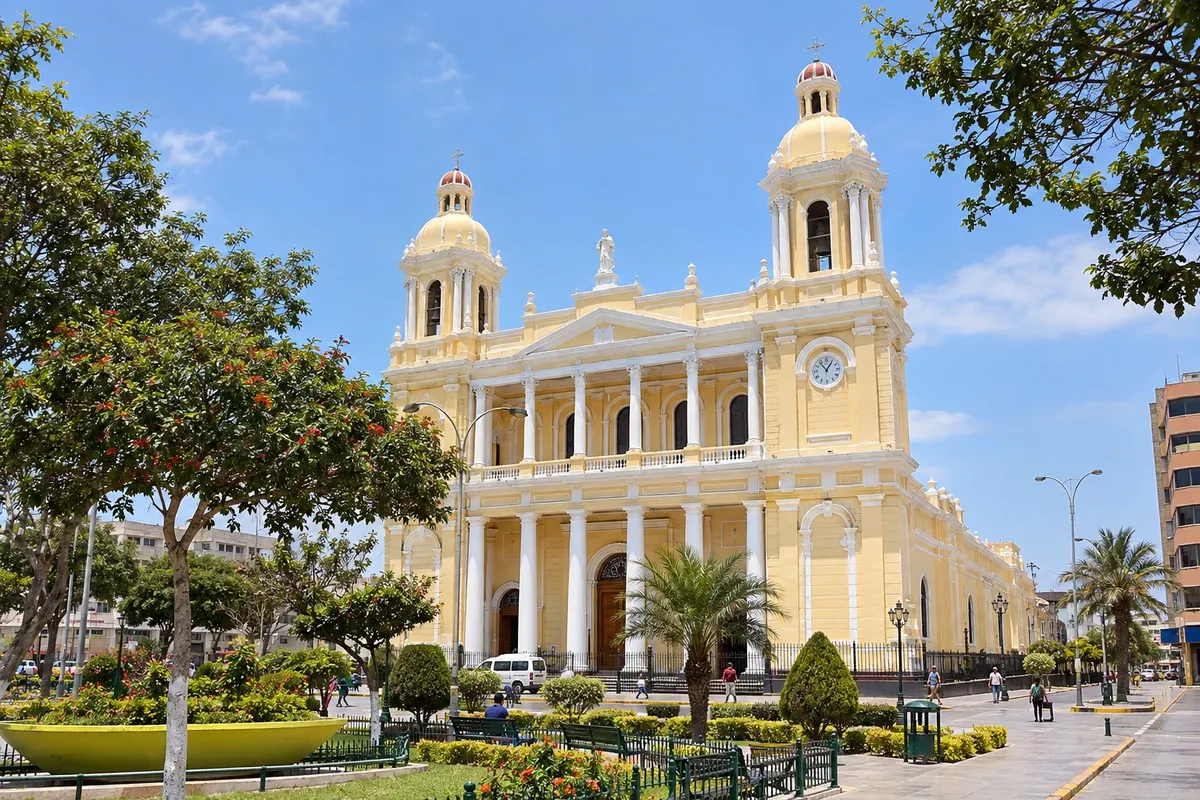
Before you go
Your trip to Chiclayo.
Illustrative images. The pictures in this guide are illustrations based on the real place, not photographs, and may differ from it.

Chiclayo – Lambayeque Destination Chiclayo and Lambayeque Capital
How to get there
-
Aeropuerto Internacional Capitán FAP José Abelardo Quiñones Gonzales (CIX) Chiclayo · 2 km
Approximate road distances. Check flights and bus schedules before you travel.
Check before buying. Chiclayo airport is about 2 km from the center, with flights from Lima of around 1h30. By bus, Lima is about 12 hours away, Trujillo 3 or 4 hours and Chachapoyas 9 or 10 hours; each company has its terminal in the city.
How many days
Three days, with Lambayeque included: the Lambayeque museums one day, Túcume, Pómac and Sicán the next, and Sipán with the town and Pimentel on the third.
When to go
From December to April it is usually sunny and hot, the beach season. From June to October the sky is usually cloudier, with cooler days. Since it hardly ever rains, archaeological sites can be visited year-round.
The seasons shown are the most usual ones; nature doesn't always follow the calendar.
Do you need a car?
No. The center is walkable, and taxis take you to Lambayeque and Pimentel in 20 to 30 minutes. For Túcume, Pómac, Sicán, Sipán and Zaña, an organized tour or a hired taxi is the most practical; there are also shared vans.
Suggested itinerary
An order that works
Built with the places on this page. No rush: it's paced so you have time to see them.
One day in Chiclayo
-
Morning
Museo Tumbas Reales de Sipán
Go early to Lambayeque for the Museo Tumbas Reales de Sipán and the Lord of Sipán's gold.
-
Afternoon
Huaca Rajada–Sipán
Head to Huaca Rajada, near the village of Sipán, to see the excavated tombs and the site museum.
-
Late afternoon
Plaza de Armas and Mercado Modelo
Back in Chiclayo, stop by the Mercado Modelo and finish at the Plaza de Armas with the Catedral.
-
Evening
Dinner in the center
Try arroz con pato and northern ceviche at the downtown restaurants.
3 days in Chiclayo
Day 1
-
Morning
Museums of Lambayeque
Museo Tumbas Reales de Sipán and Museo Brüning in Lambayeque.
-
Afternoon
Centro de Lambayeque
Lunch in Lambayeque and a walk through the center, with the Casa de la Logia and the iglesia de San Pedro.
-
Late afternoon
Pimentel
Late afternoon on the beach of Pimentel, with the pier and the caballitos de totora.
-
Evening
Dinner in Pimentel or Chiclayo
Fish and seafood on the waterfront, or a return to downtown Chiclayo.
Day 2
-
Morning
Túcume
Leave early for the pyramids of Túcume and climb the viewpoint of Cerro Purgatorio.
-
Afternoon
Bosque de Pómac and Museo Sicán
Head to Bosque de Pómac and, on the way back, visit the Museo Nacional Sicán in Ferreñafe.
-
Late afternoon
Return to Chiclayo
Arrival in Chiclayo in the late afternoon.
-
Evening
Rest
Dinner downtown and rest.
Day 3
-
Morning
Huaca Rajada–Sipán
Visit to the excavated tombs of Huaca Rajada and the site museum.
-
Afternoon
Zaña
Continue to the colonial ruins of Zaña, with the arches of the old churches.
-
Late afternoon
Mercado Modelo
Back in Chiclayo, stop by the herbal stalls of the Mercado Modelo.
-
Evening
Plaza de Armas
Last night at the Plaza de Armas, with the Cathedral lit up.
Check before you go. Opening hours and days change, and places may close for renovations, holidays or events. This itinerary is a suggestion from Cidade Turismo, not a commitment: plan yours by checking directly with each place you intend to visit.
Before you go
Frequently asked questions
What to eat in Chiclayo?
Arroz con pato, cooked with cilantro and dark beer; ceviche and northern-style fish; cabrito (goat); and for dessert, the King Kong, a large pastry filled with dulce de leche and fruit, typical of Lambayeque.
Why is Chiclayo called the city of friendship?
It's an old nickname of the city, linked to the tradition of welcoming newcomers, in a trading region between the coast, the highlands, and the jungle.
Is Chiclayo at altitude?
No, it's on the coast, close to sea level. Altitude only becomes a factor if the trip goes to the highlands, like Chachapoyas or Cajamarca.
What currency is used?
The sol. There are ATMs and currency exchange offices in downtown Chiclayo; carry cash for villages and entrance fees to the sites.