

 Brazil
 Argentina
 Bolivia
 Chile
Chile Colombia
 Ecuador
 Guyana
 French Guiana
 Falkland Islands (Malvinas)
 Paraguay
 Suriname
 Uruguay
 Venezuela
 Germany
 Belgium
 Denmark
 Spain
Spain France
 Greece
 the Netherlands
 Ireland
 Italy
Italy Luxembourg
 Norway
 Portugal
 the United Kingdom
 Sweden
 Switzerland
Plaza
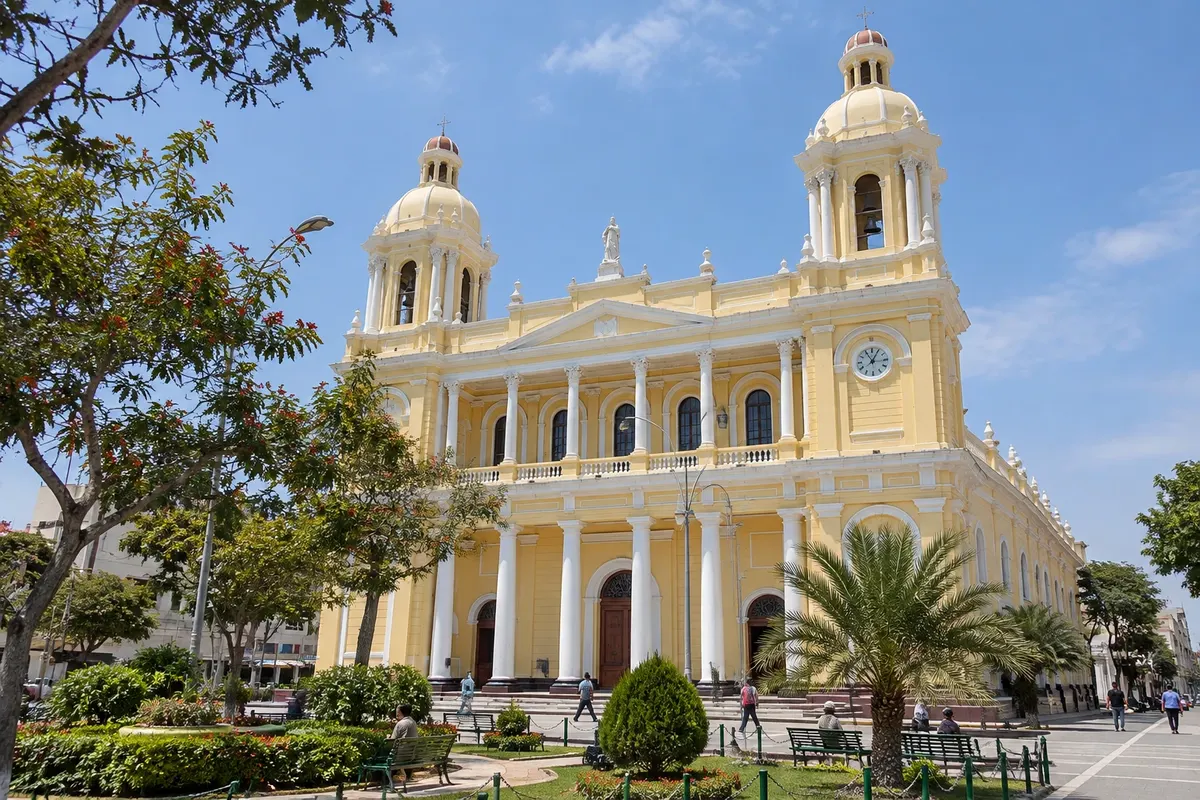
Plaza de Armas de Chiclayo
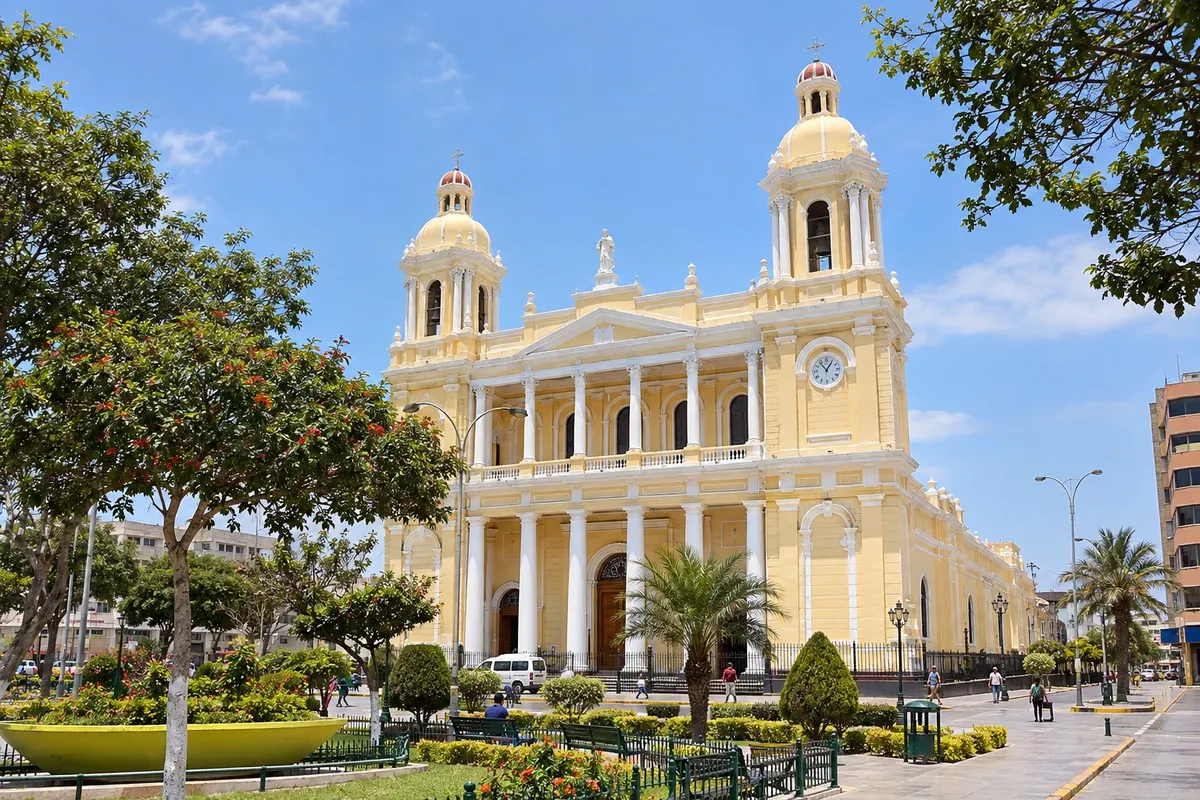
Chiclayo's main square, with the neoclassical Cathedral of Santa María, a columned façade and two towers, the Municipal Palace, and the bustle of the surrounding downtown.
Lambayeque · Peru Capital
In the destination Chiclayo and Lambayeque.
In the photo: Catedral de Chiclayo
Illustrative images. The pictures in this guide are illustrations based on the real place, not photographs, and may differ from it.
The city
Chiclayo, the capital of Lambayeque, is on the northern coast of Peru, 14 km from the Pacific. It is a commercial city, with the Plaza de Armas, the Catedral and the Mercado Modelo, known for its herb stalls. It is the base for Huaca Rajada–Sipán, the pyramids of Túcume, the Bosque de Pómac, the Museo Nacional Sicán, the ruins of Zaña and the beach of Pimentel, as well as the museums of neighboring Lambayeque.
There's no accommodation in the guide yet in Chiclayo.
There are no restaurants in the guide yet in Chiclayo.
Know a good one? Recommend it to ushow to get there · how many days · itinerary · questions
The local experience
Chiclayo's main square, with the neoclassical Cathedral of Santa María, a columned façade and two towers, the Municipal Palace, and the bustle of the surrounding downtown.
Chiclayo's main market, known for stalls selling medicinal plants, roots, amulets and objects used in traditional rituals, as well as fruit, food and the surrounding downtown commerce.
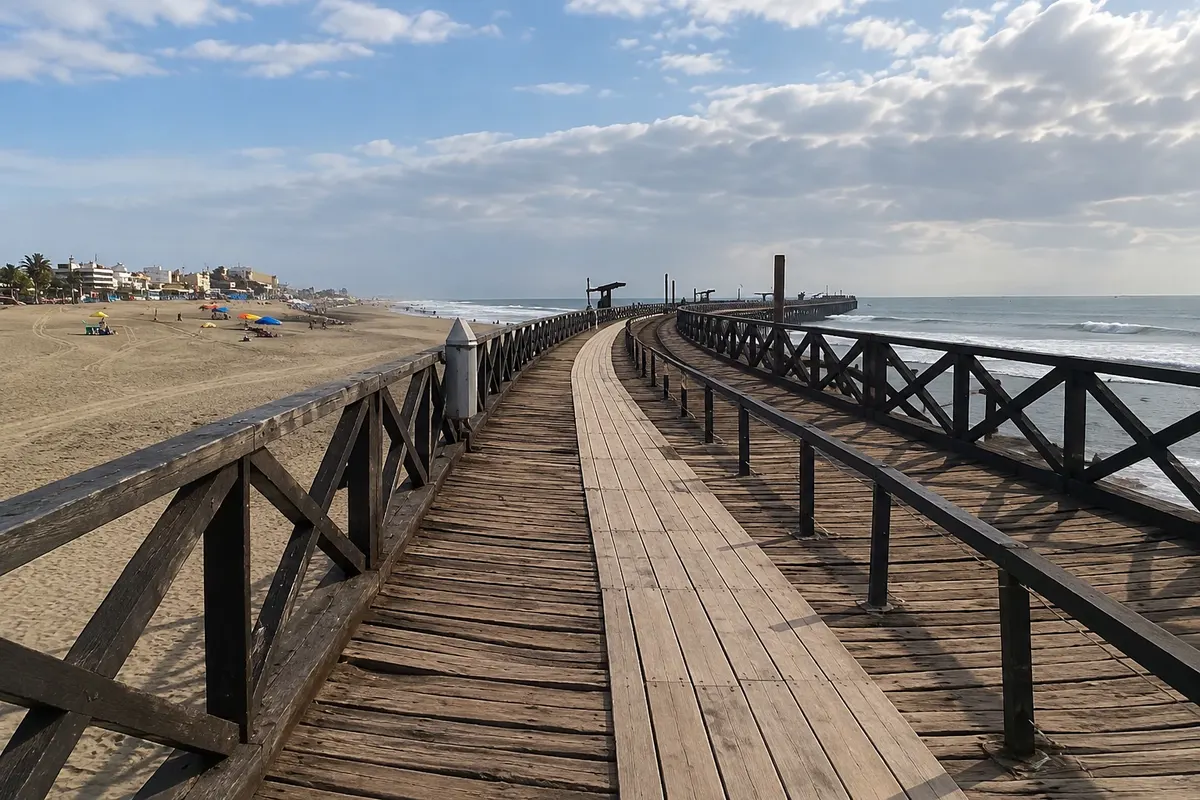
The beach of Pimentel, 11 km from Chiclayo, with a wooden pier about 700 meters over the Pacific, a promenade, summer mansions and fishermen who still use caballitos de totora.
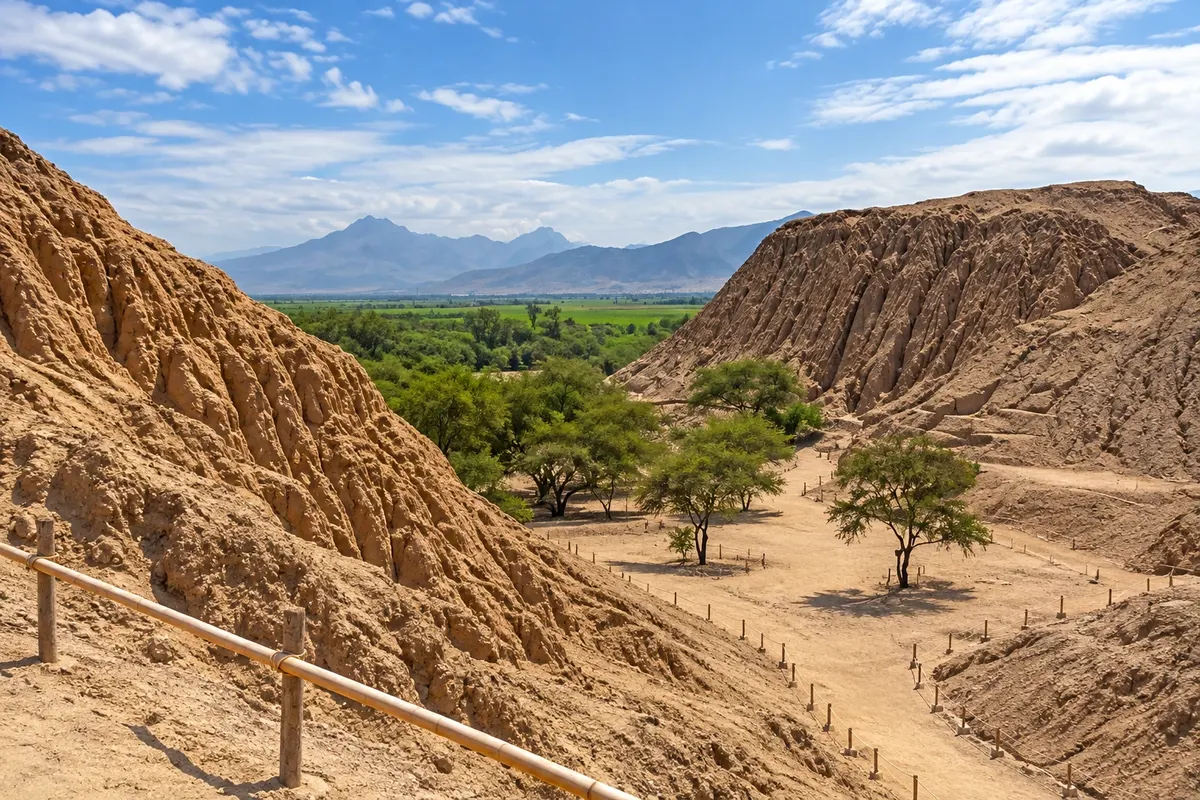
The Moche site near the village of Sipán, where in 1987 the intact tomb of the Lord of Sipán was found. It has the excavated tombs, with replicas of the burials, and a site museum.
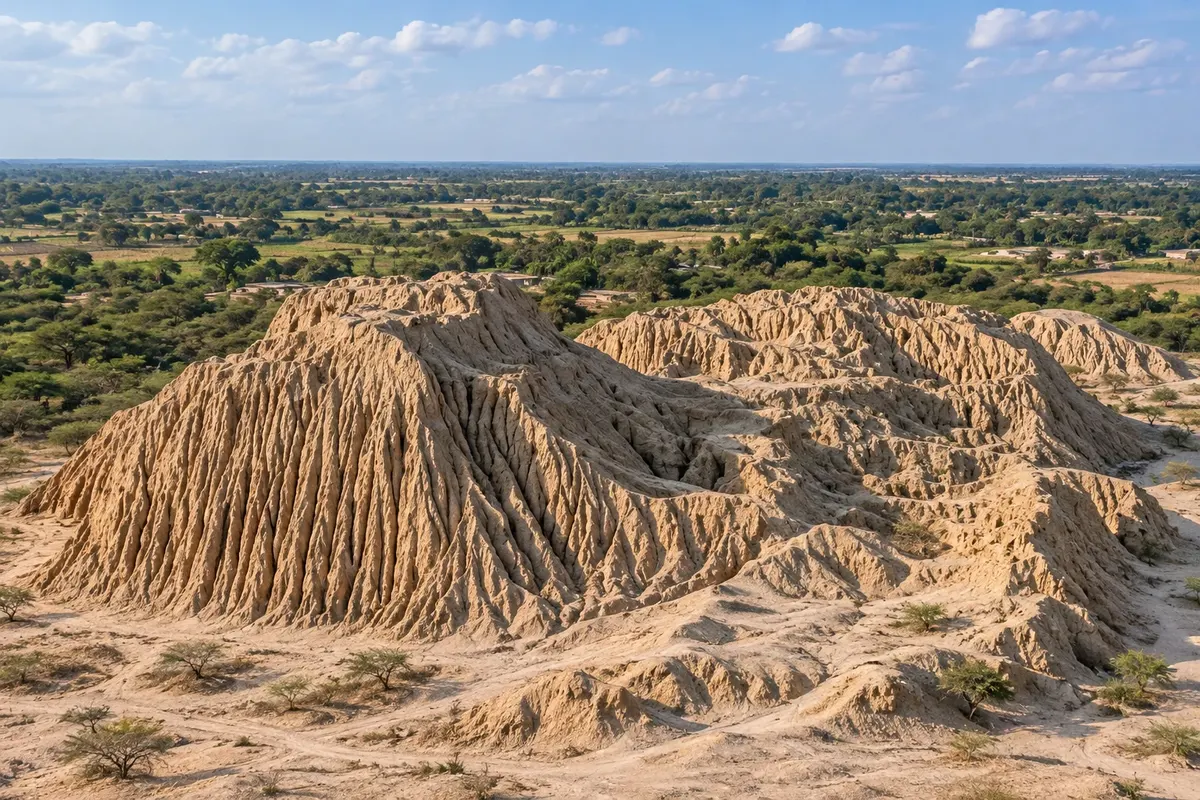
The valley of the pyramids of Túcume, with 26 large adobe pyramids around Cerro Purgatorio, a late capital of the Lambayeque culture, later occupied by the Chimú and the Inca, with a viewpoint and a site museum.
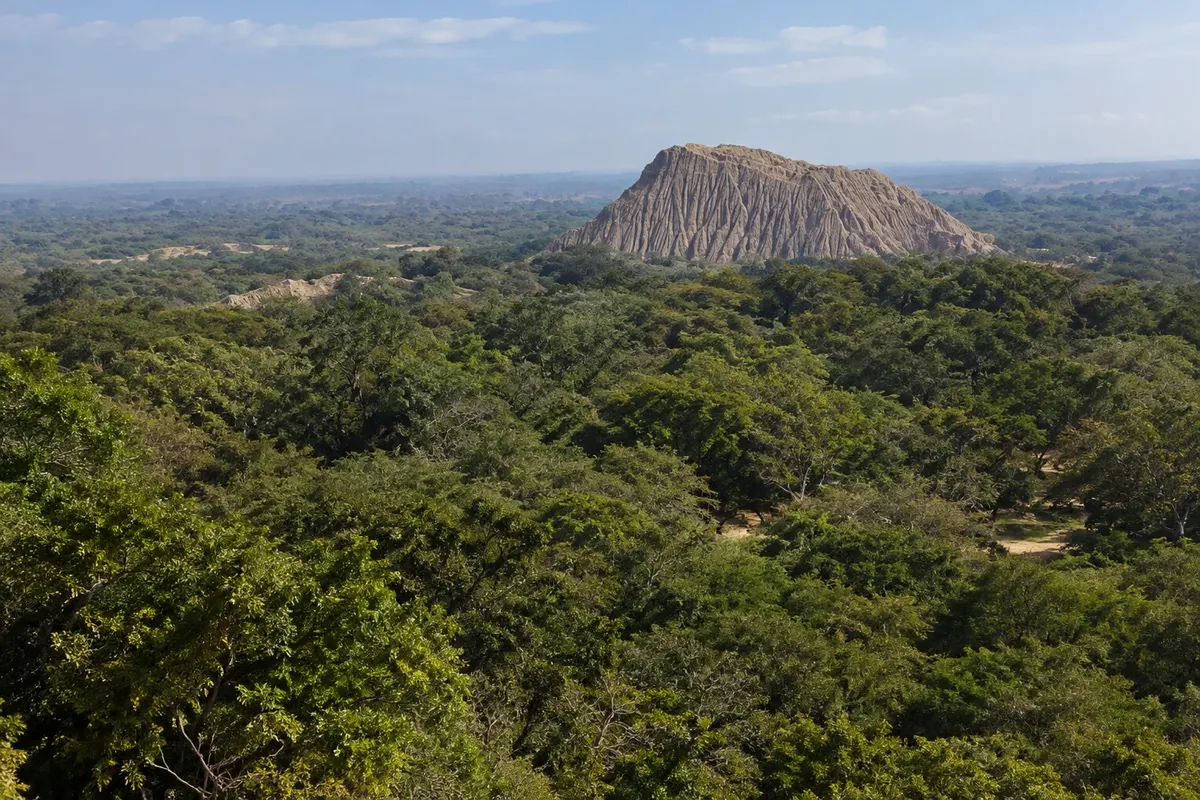
A protected area of dry algarrobo woodland, with over 5,800 hectares, that preserves the adobe pyramids of Batán Grande, the center of the Sicán culture, northern coastal bird species and an algarrobo known as the millenary tree.
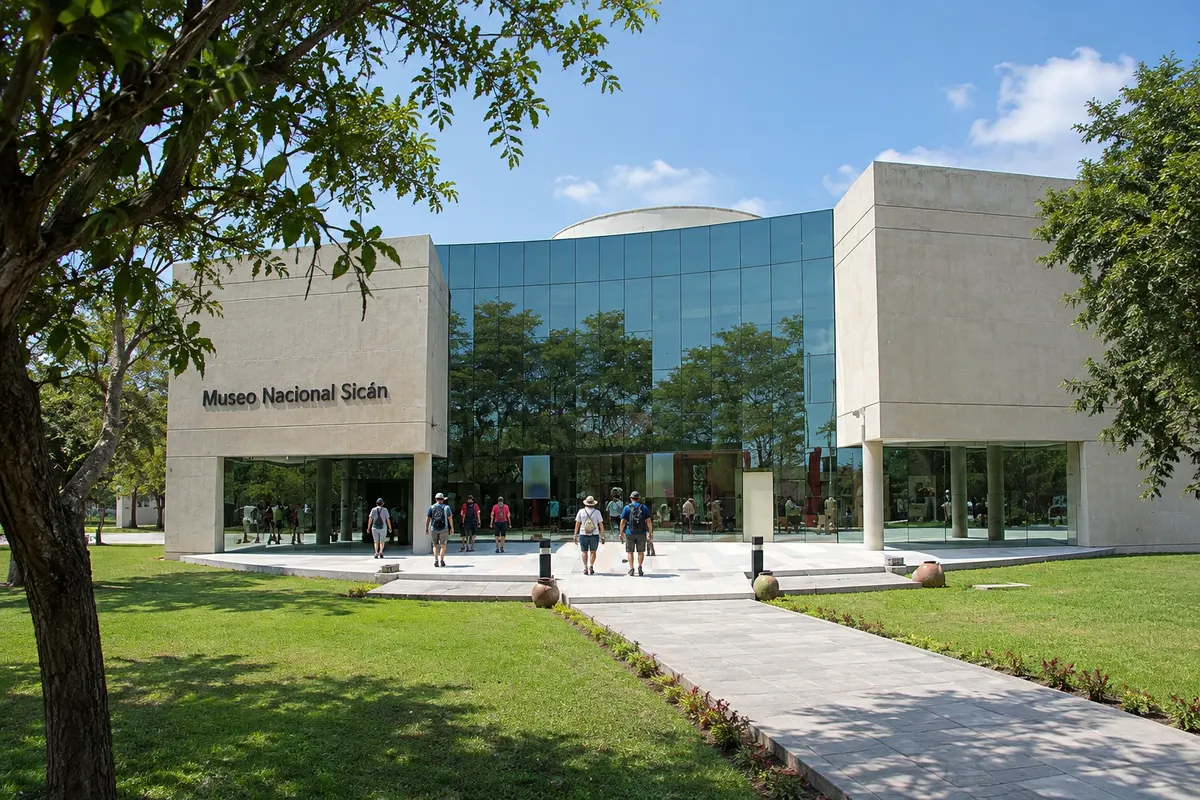
The Ferreñafe museum dedicated to the Sicán or Lambayeque culture, with the reconstruction of the tomb of the Lord of Sicán, found in Batán Grande, funerary gold masks and tumis, the ceremonial knives.
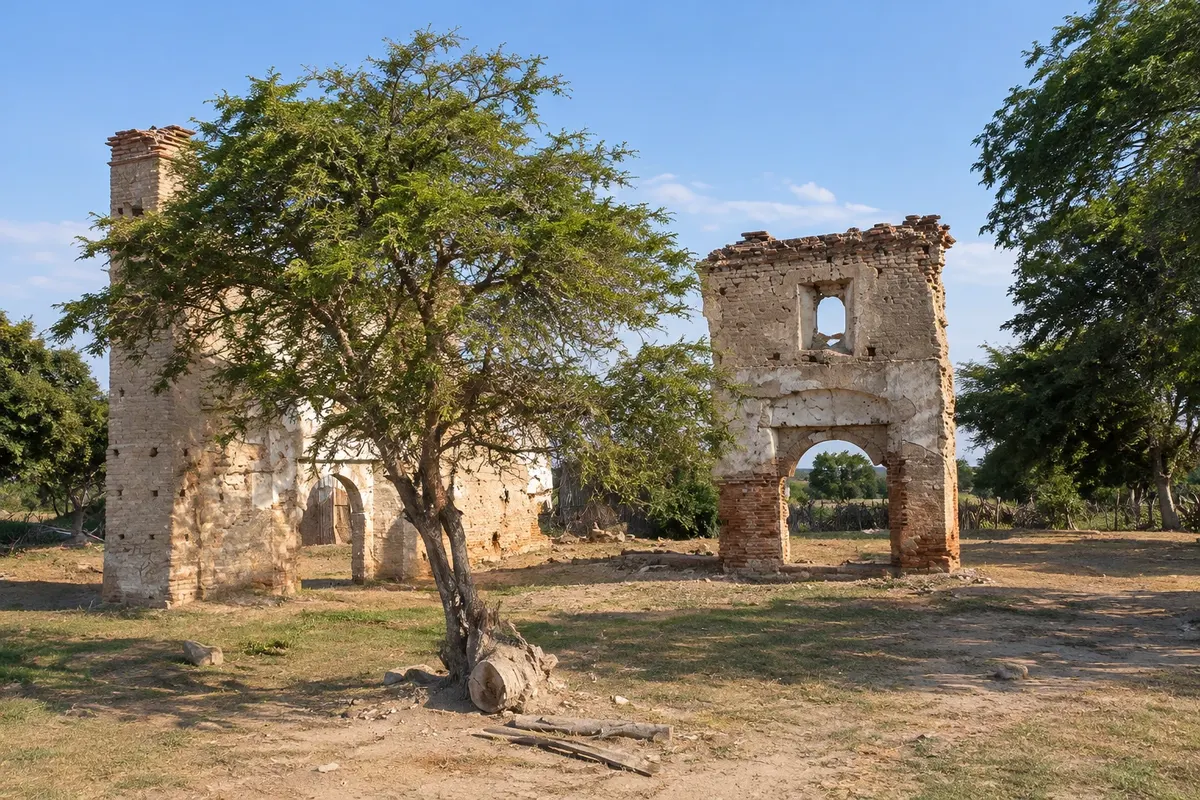
The ruins of the old Spanish town of Zaña, founded in 1563 and abandoned after a pirate raid in 1686 and the floods of 1720, featuring arches and walls of the churches of San Agustín, San Francisco and La Merced. A place of memory for Afro-Peruvian culture.