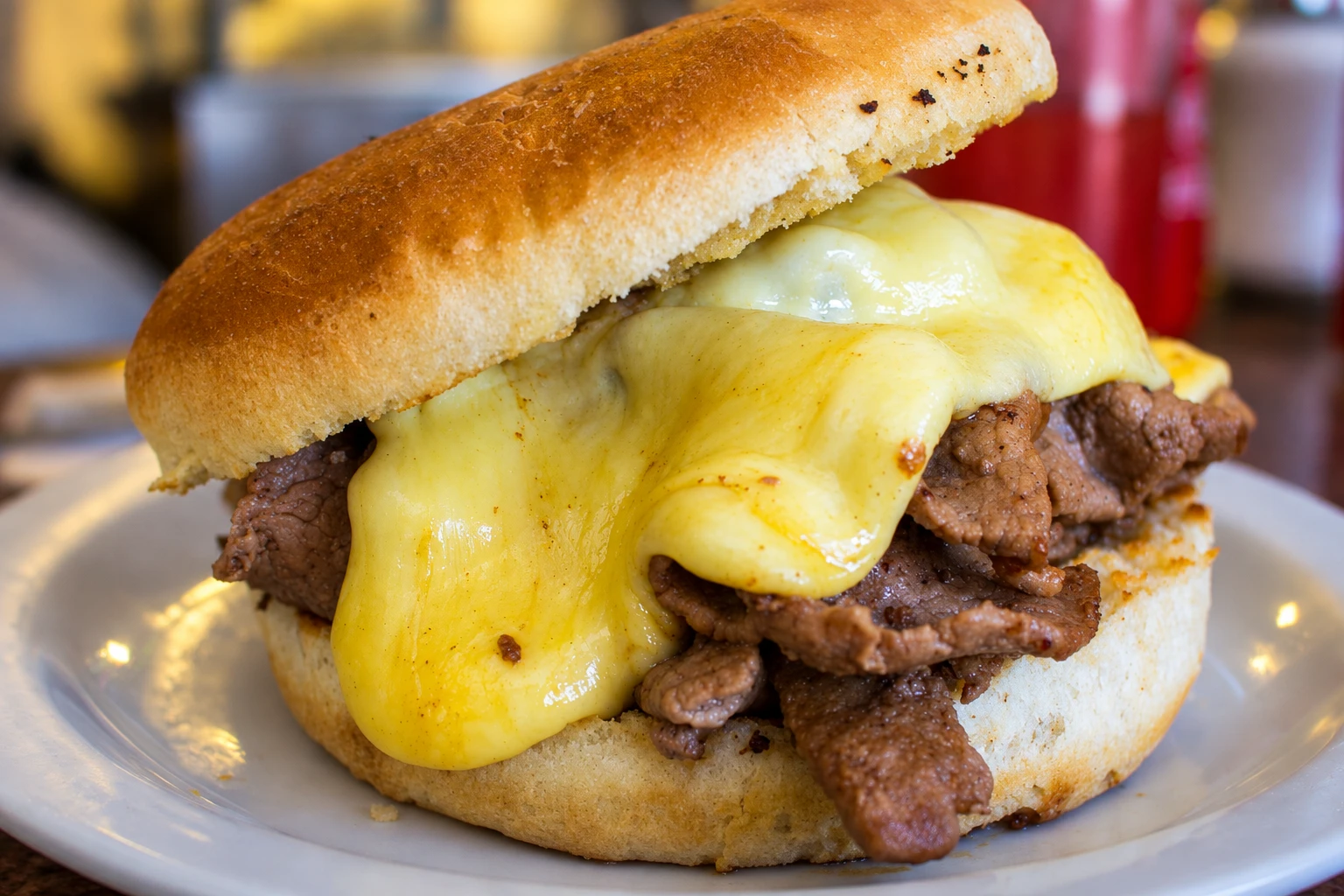
Barros Luco
Hot sandwich of thin beef cooked on a griddle with melted cheese, usually served on marraqueta bread. It’s named after President Ramón Barros Luco, who used to order it in Santiago.
Antarctica
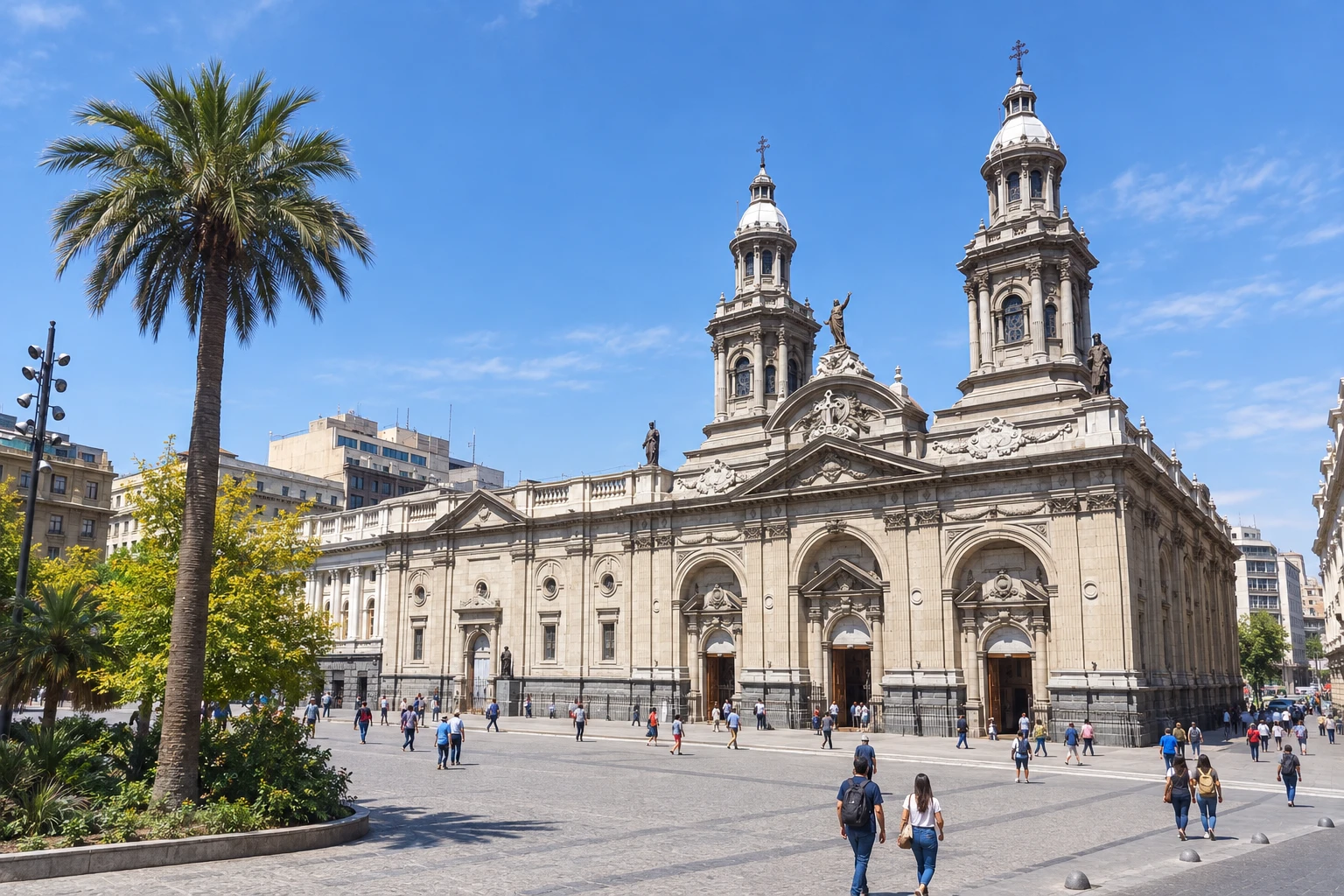
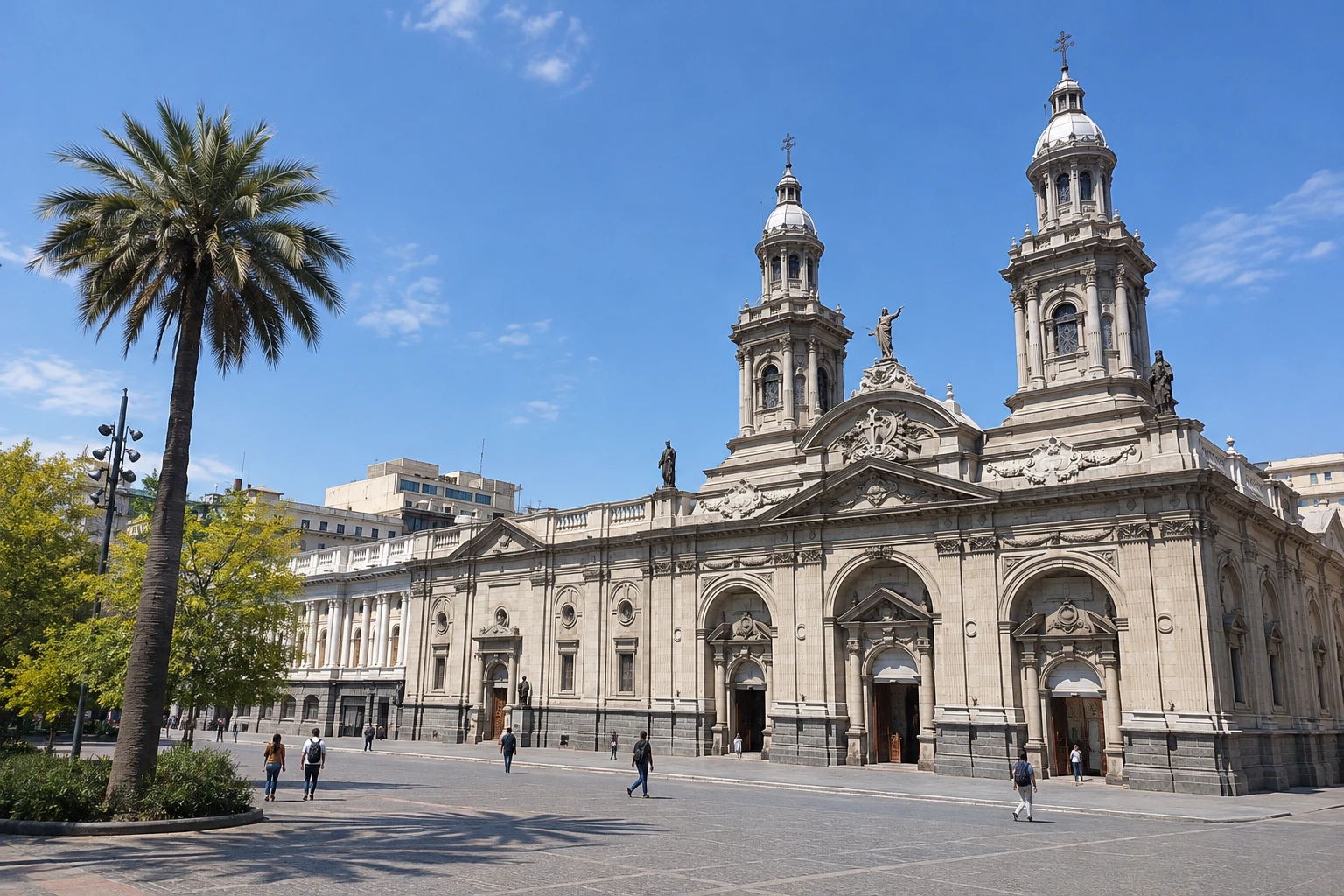
In the photo: Catedral Metropolitana and Plaza de Armas, Santiago
Illustrative images. The pictures in this guide are illustrations based on the real place, not photographs, and may differ from it.
The city
Capital of Chile, Santiago sits in a valley surrounded by the Andes. The center brings together the Plaza de Armas, the Palacio de La Moneda, the Mercado Central, La Vega Central and museums such as the Precolombino, the Bellas Artes and the Museo de la Memoria. The hills Santa Lucía and San Cristóbal serve as viewpoints; Bellavista, Lastarria and Barrio Italia concentrate cafés and nightlife; Sky Costanera shows the city from above.
There's no accommodation in the guide yet in Santiago.
Do you run a hotel, guesthouse or vacation rental here? List itThere are no restaurants in the guide yet in Santiago.
Know a good one? Recommend it to usThe city's hotels and restaurants on the map.
how to get there · how many days · itinerary · questions
Flavors of Chile

Hot sandwich of thin beef cooked on a griddle with melted cheese, usually served on marraqueta bread. It’s named after President Ramón Barros Luco, who used to order it in Santiago.

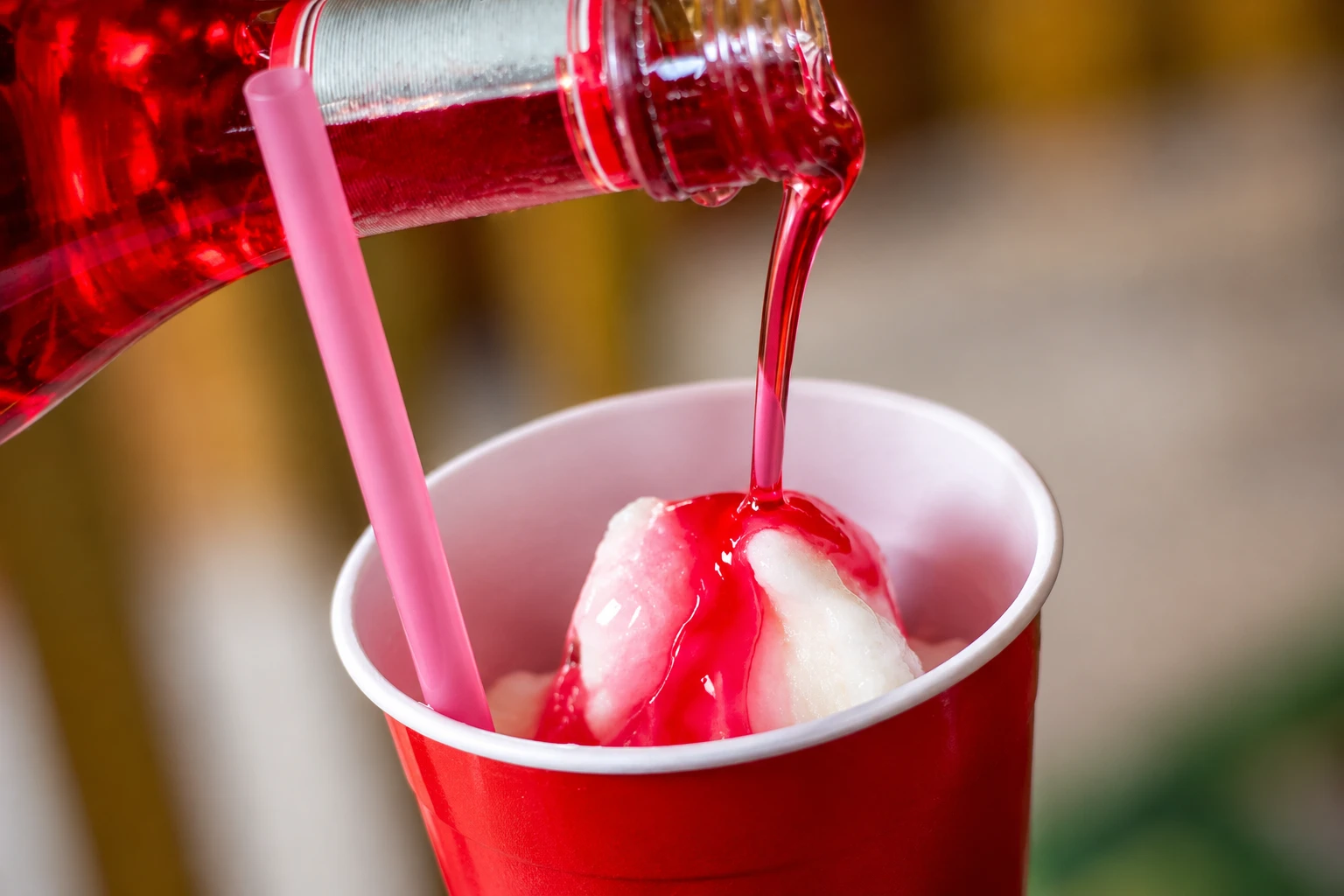
Pipeño wine drink with pineapple ice cream, sometimes with grenadine or fernet. Its name is linked to the bars of Santiago and the 1985 earthquake, and it became a drink of the Fiestas Patrias.
The local experience
Santiago's zero point, laid out in 1541. Around it are the Catedral Metropolitana, the Correo Central and the municipal headquarters; in the middle, palm trees, benches, street painters and chess players.
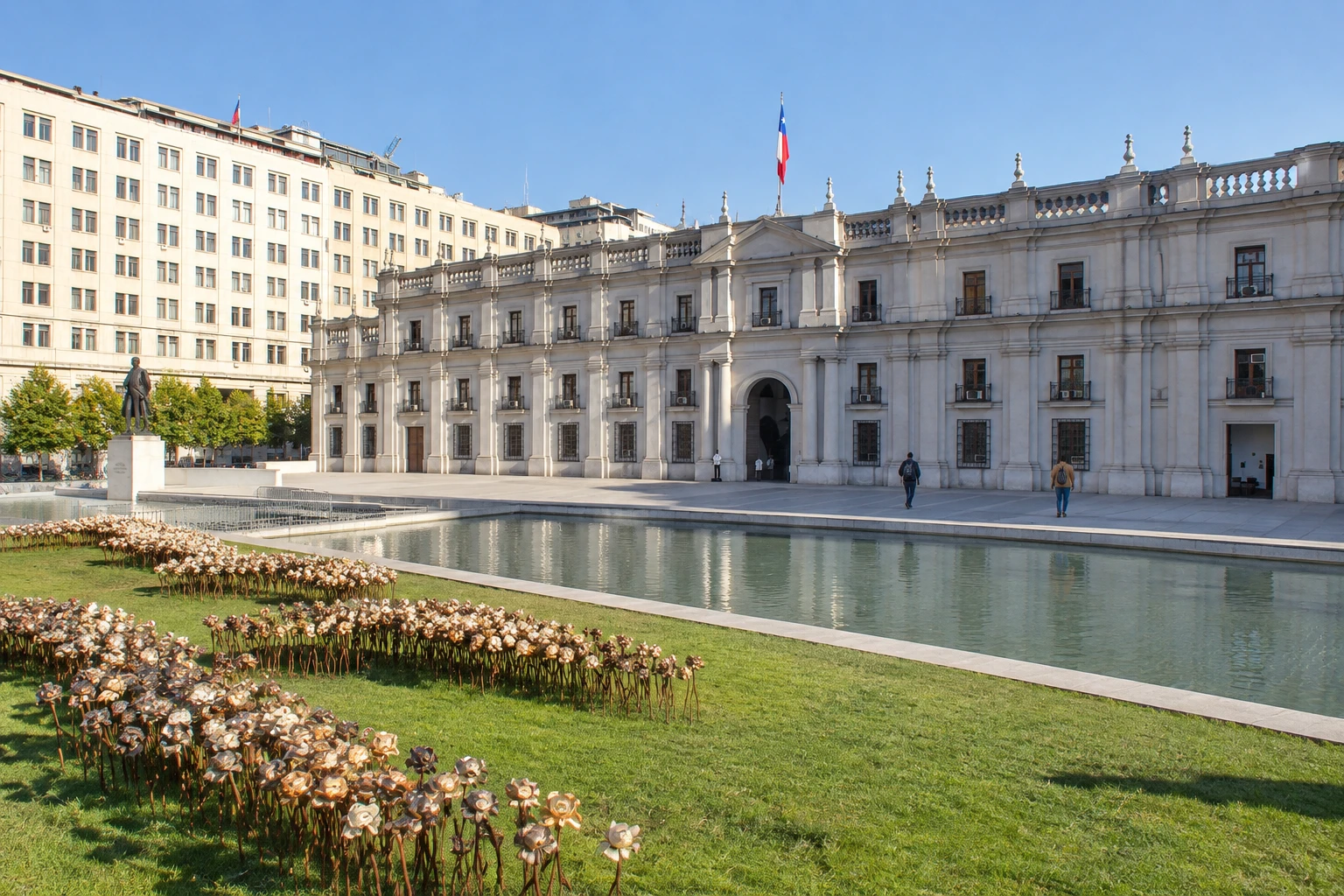
Seat of the Presidency of Chile, in neoclassical style, designed by Joaquín Toesca to serve as the colonial mint. Under the southern plaza is the Centro Cultural La Moneda, with art and history exhibitions.
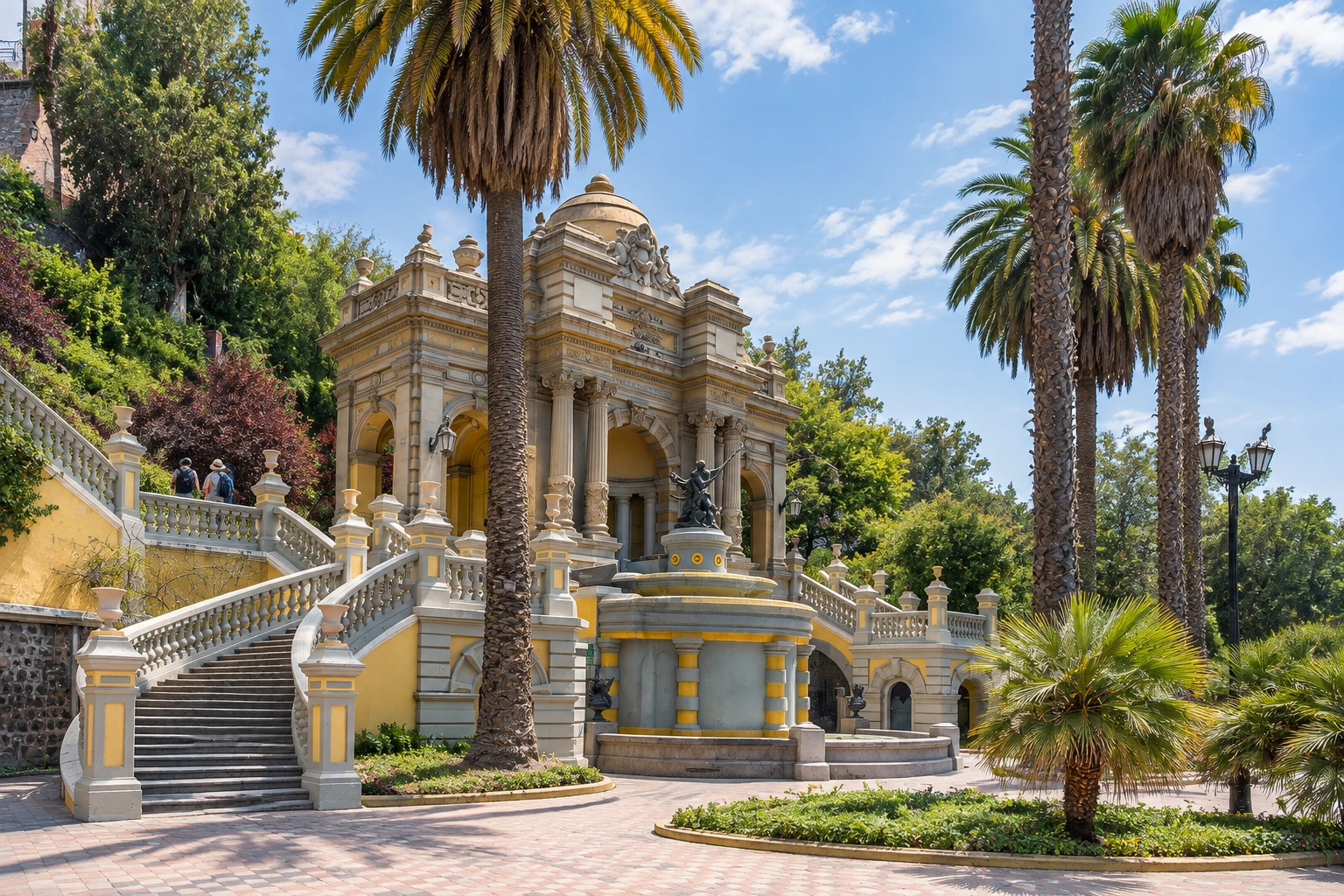
Hill in the middle of the city center, where Santiago was founded. Stairways, fountains, terraces and the Castillo Hidalgo lead up to the summit viewpoint, with views over the city and the mountain range.
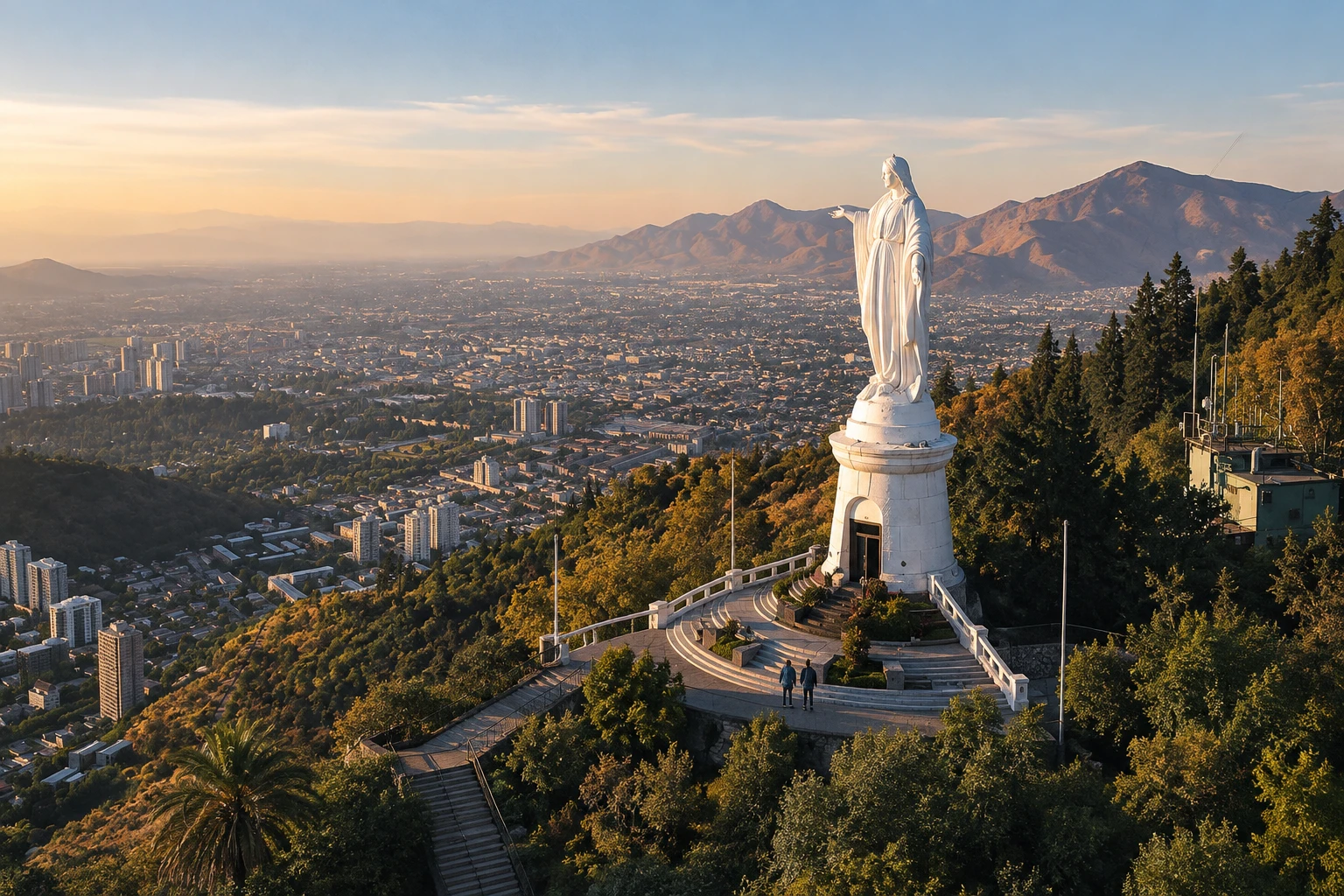
The large green hill of Santiago, the heart of the Parque Metropolitano. A funicular and cable cars climb to the sanctuary of the Virgin, with wide views of the city and the mountain range; along the way are swimming pools, gardens and trails.
Before you go
Santiago – Chile Capital
Approximate distances. Check flights and bus, train or boat schedules before you travel.
Arturo Merino Benítez airport is in Pudahuel, about 17 km from the center, with official taxis, shared vans and buses to the Los Héroes and Pajaritos metro stations. Connections with Brazil may be direct flights or with a stopover, depending on the season and the airline. Confirm before booking. Long‑distance buses arrive at the Alameda terminals in Estación Central.
Three days cover the historic center, the hills, the neighborhoods and the main museums. With five days you can add a winery, the Cajón del Maipo or, in winter, a day in the snow at Farellones or Valle Nevado.
Spring, from September to November, and autumn, from March to May, have mild days and clearer skies. Summer is hot and dry, with afternoons above 30°C. Winter, from June to August, has nights near freezing, some rain and snow in the mountains, when the ski resorts open.
The seasons shown are the most usual ones; nature doesn't always follow the calendar.
Not for the city. The metro covers the center, Providencia and Las Condes, and traffic and parking make driving difficult. A car helps for trips to the Cajón del Maipo, wineries and the mountains, but agencies run those tours. To pay urban tolls you need the electronic TAG device, which rental companies usually provide.
Suggested itinerary
Built with the places on this page. No rush: it's paced so you have time to see them.
Start at the Plaza de Armas and go into the Catedral Metropolitana. Walk one block to the Museo Chileno de Arte Precolombino and then walk along the Paseo Ahumada to the Palacio de La Moneda, in time to see the changing of the guard on the days it takes place.
Have seafood at the Mercado Central and take a walk through La Vega on the other side of the river. Then climb Cerro Santa Lucía via Terraza Neptuno and descend down Merced street.
Walk through Barrio Lastarria and Parque Forestal to Bellavista. Take the funicular up to Cerro San Cristóbal to see the sunset over the city and the Andes.
Go down to Barrio Bellavista and dine at one of the restaurants on Constitución street or in Patio Bellavista. Remember that in Chile dinner starts late.
Day 1
Plaza de Armas, Catedral Metropolitana, Correo Central and Museo Chileno de Arte Precolombino, all a short walk from each other.
Walk past the Palacio de La Moneda and the Centro Cultural in the basement. Have lunch at the Mercado Central and cross the bridge to La Vega Central.
Climb Cerro Santa Lucía for views of the city and end the day in the streets of Barrio Lastarria, with a coffee or a glass of wine on the sidewalk.
Day 2
Visit the Museo Nacional de Bellas Artes and walk through Parque Forestal to Plaza Baquedano.
Visit Neruda's house in Bellavista and take the funicular up Cerro San Cristóbal. Descend by cable car to the Oasis station and pass by the Jardín Japonés.
Take the metro to Tobalaba and go up to Sky Costanera to see the city lights. Dine in Providencia or return to Bellavista.
Day 3
Take the Concha y Toro tour in Pirque or the Cousiño Macul tour in Peñalolén, including a tasting. Book in advance.
Return by metro and visit the Museo de la Memoria y los Derechos Humanos, next to the Quinta Normal park.
End the trip browsing the galleries and antique shops of Barrio Italia, with an once (the Chilean tea‑time snack) at one of the cafés on avenida Italia.
Check before you go. Opening hours and days change, and places may close for renovations, holidays or events. This itinerary is a suggestion from Cidade Turismo, not a commitment: plan yours by checking directly with each place you intend to visit.
Before you go
There are official taxis with a desk in the arrivals hall, shared vans that drop each passenger at their address, and buses to the Los Héroes and Pajaritos metro stations. The trip takes from half an hour to an hour, depending on traffic.
Yes. The lines are numbered and color‑coded, stations have clear maps, and the rechargeable Bip! card works for both the metro and urban buses.
Lunch runs from noon to mid‑afternoon and is the main meal. In the late afternoon many people have an once, a snack with tea and bread. Restaurant dinner starts late, after eight in the evening.
Afternoons are cool and nights can approach freezing from June to August. It usually doesn't snow in the city, but the mountain range turns white. Bring a coat, a hat and gloves for the evenings and for the mountains.
Cachai, which means 'you understand?', appears at the end of many sentences. Po, which emphasizes what was said (as in 'sí po'). And 'completo' is the Chilean hot dog, topped with avocado, tomato and mayonnaise.