

 Brazil
 Antarctica
 Argentina
 Bolivia
 Colombia
 Ecuador
 Falkland Islands (Malvinas)
 French Guiana
 Guyana
 Paraguay
 Peru
 Suriname
 Uruguay
 Venezuela
 Albania
 Austria
 Belgium
 Croatia
 Denmark
 Finland
 France
 Germany
 Greece
 Hungary
 Iceland
 Ireland
 Italy
 Luxembourg
 Norway
 Poland
 Portugal
 Slovakia
 Slovenia
 Spain
 Sweden
 Switzerland
 the Czech Republic
 the Netherlands
 the United Kingdom
 Turkey
 Bermuda
 Canada
 Greenland
 Mexico
 Saint Pierre and Miquelon
 the United States
 the Dominican Republic
 Japan
 Egypt
 South Africa
 Australia
 Fiji
 New Zealand
 Papua New Guinea
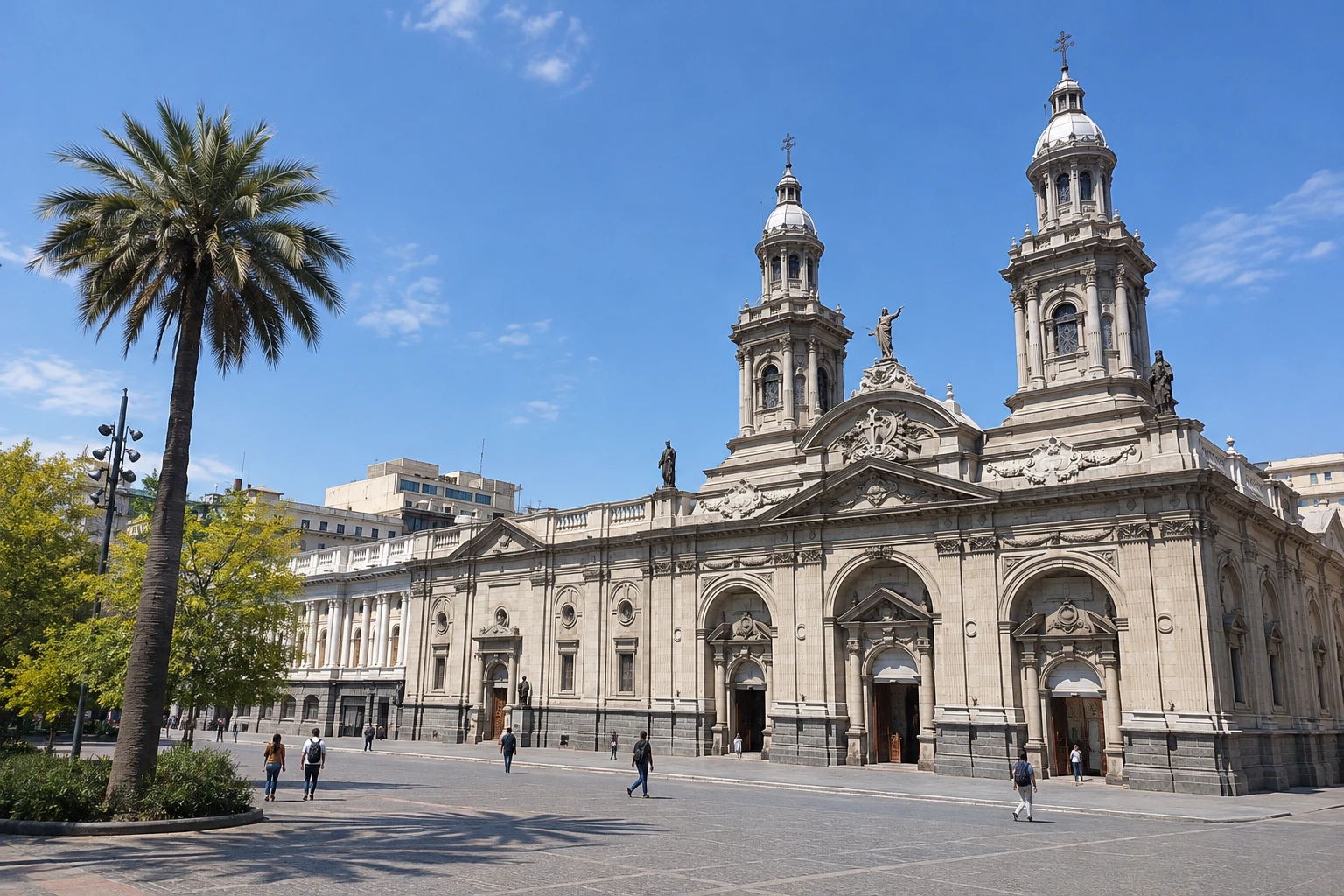
Historic square · Santiago, Chile
Plaza de Armas
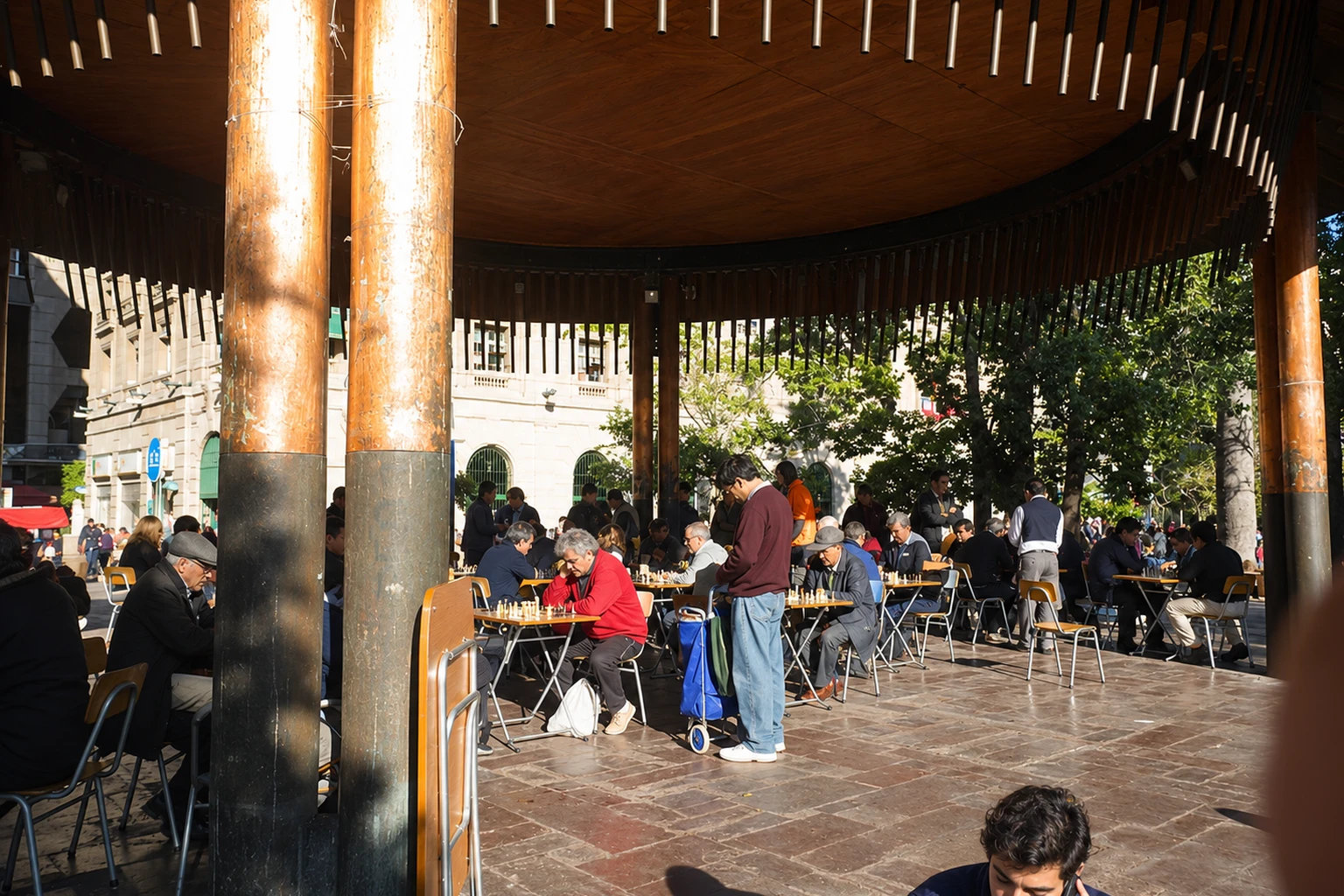
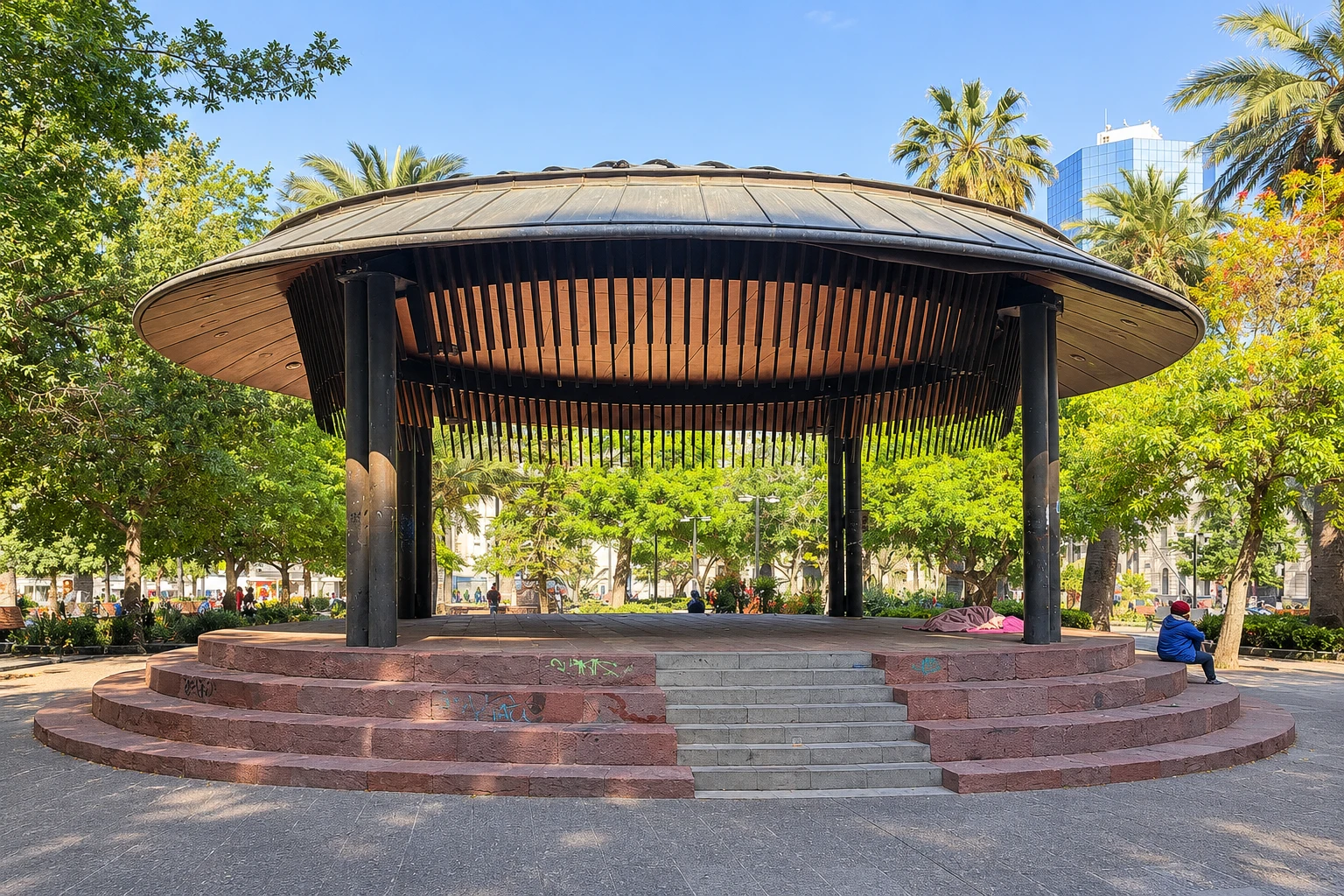
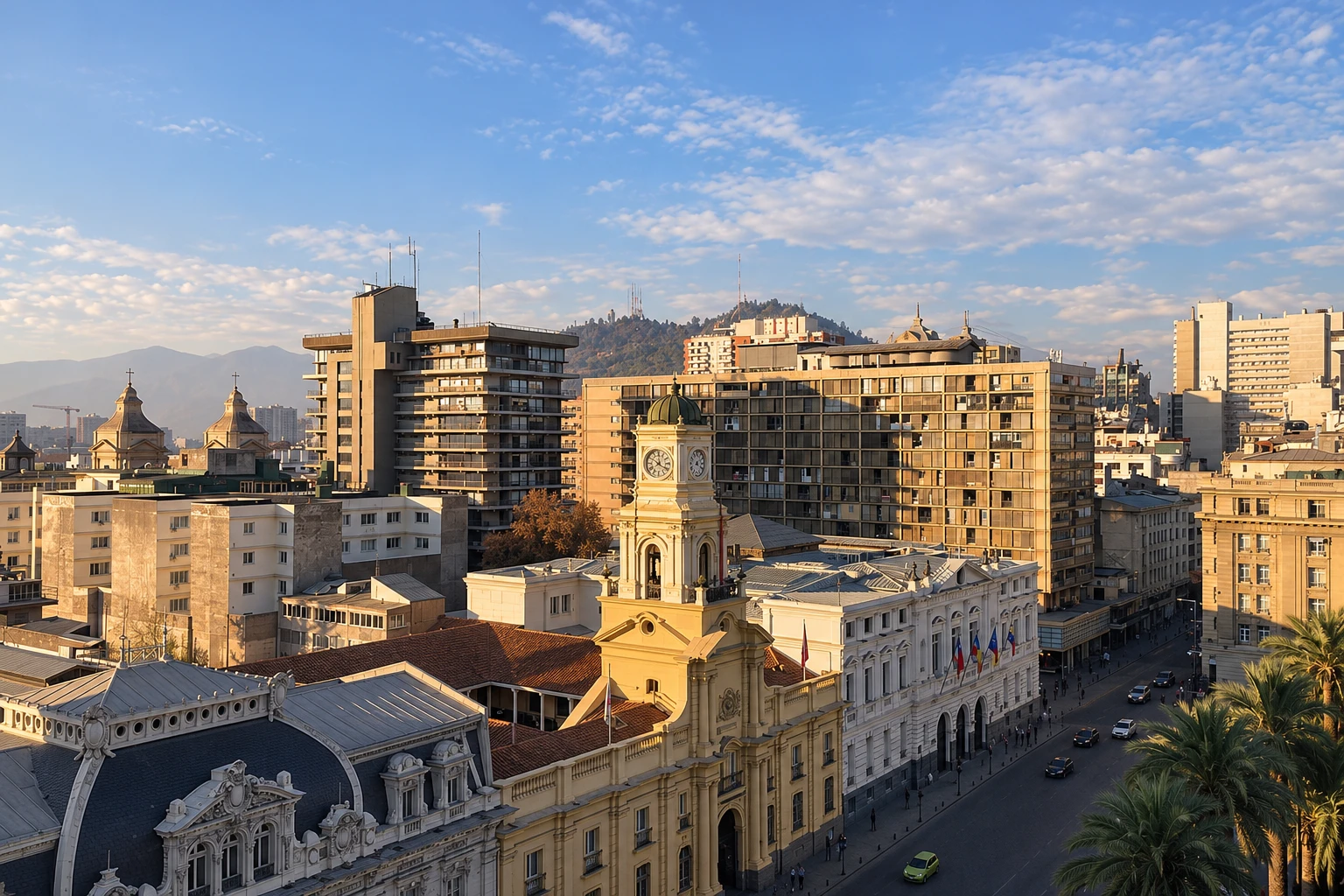
Santiago's zero point, laid out in 1541. Around it are the Catedral Metropolitana, the Correo Central and the municipal headquarters; in the middle, palm trees, benches, street painters and chess players.
Illustrative images. The pictures in this guide are illustrations based on the real place, not photographs, and may differ from it.

A look at the place
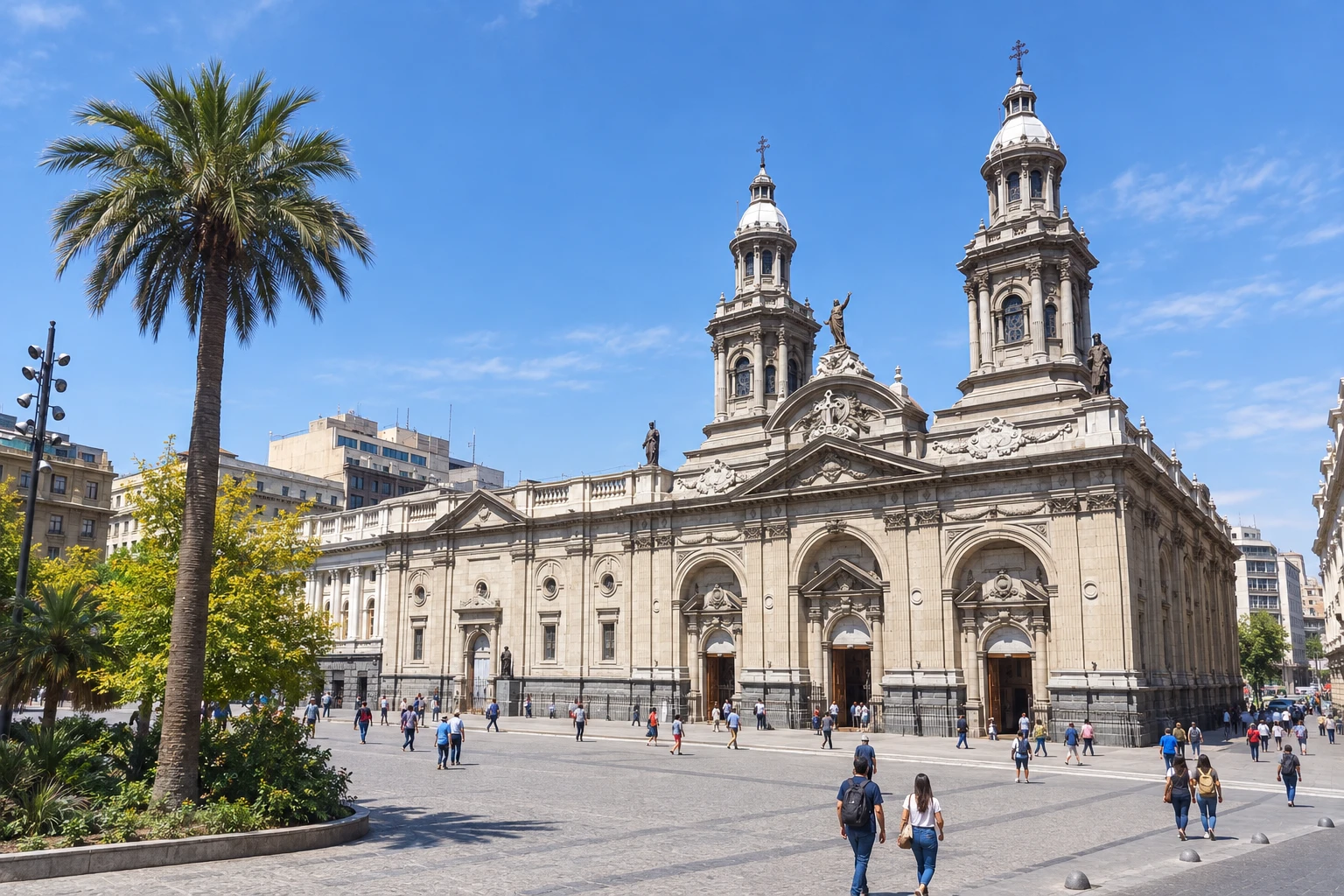
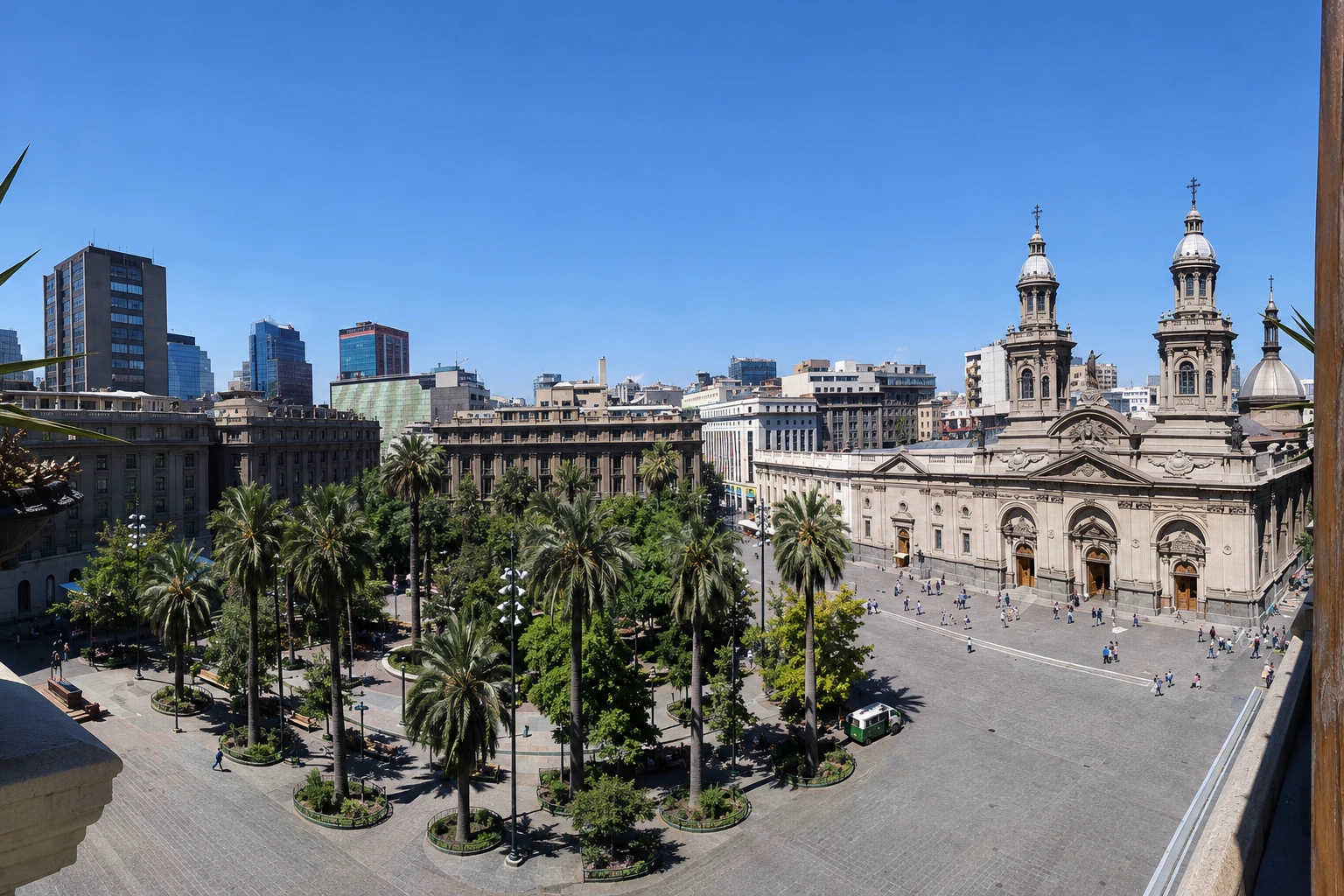
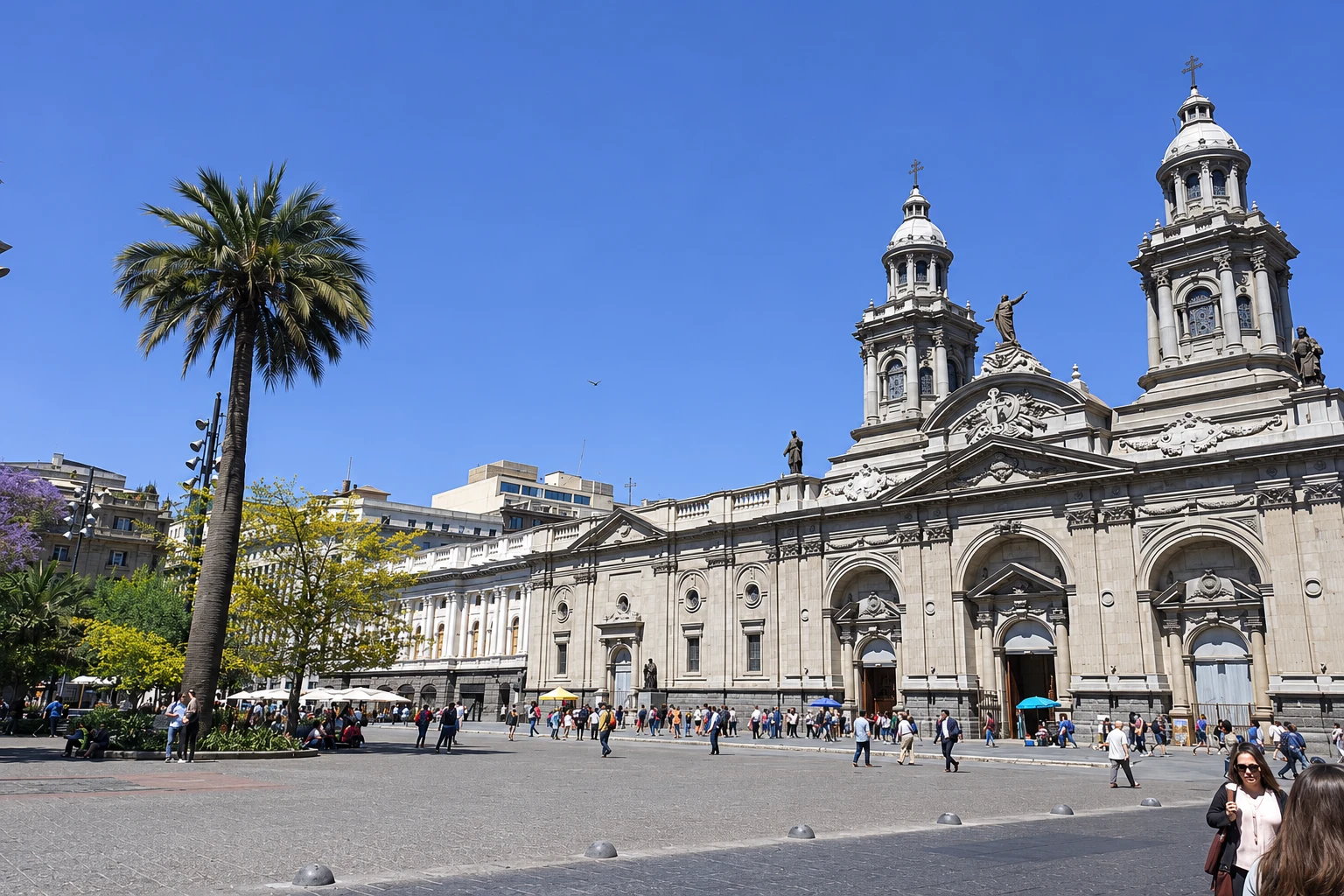
Plaza de Armas in pictures
These pictures are illustrations based on the real place, not photographs. They may differ from the place.
Click the picture to enlarge it.
Discover
About Plaza de Armas
The Plaza de Armas is the point from which Santiago grew. Pedro de Valdivia founded the city in February 1541 and the grid plan, drawn by Pedro de Gamboa, started from this block. To this day the streets of the historic center follow that layout, which makes it easy to walk around the area.
The west side is occupied by the Catedral Metropolitana, the fifth church built on the same site. Construction began in 1748, received the neoclassical design of the Italian Joaquín Toesca, and was only completed at the start of the 20th century, with interventions by Ignacio Cremonesi. Inside, the central nave is long and dim, with gilded altars; archbishops of Santiago are entombed in the crypt.
On the north side sits the Correo Central, a light‑faced building that occupies the land allocated to Valdivia at the founding. Next to it is the Municipalidad de Santiago, dating from 1895, built where the old cabildo and the colonial jail once stood. In the center of the square there is an equestrian statue of Valdivia, a monument to indigenous peoples and a Carrara marble fountain representing liberty.
The square is lively all day: painters displaying canvases, chess players at covered tables, preachers, musicians and families. From here you can walk to the Mercado Central, the Museo Chileno de Arte Precolombino and the Palacio de La Moneda, all a few blocks away.
Before you go
Practical information
Cidade Turismo reviews its information regularly, but something may have changed. Check with the place before planning your trip.
How much time to set aside
Half an hour for the square and another half hour for the Catedral. Since it's a common stop between other points in the center, it usually appears on any walking itinerary.
Best time
In the morning on a weekday the square is quieter and the light hits the cathedral façade head‑on. On weekend afternoons there are more street performers and family activity. Masses can restrict circulation inside the Catedral; check before you go.
How to get there
Plaza de Armas metro station (lines 3 and 5) opens directly onto the square. From Cerro Santa Lucía it's about a ten‑minute walk via Huérfanos or Merced streets; from the Palacio de La Moneda, around eight minutes via Bandera street or the Paseo Ahumada.
Tip
The pedestrian streets Ahumada and Huérfanos cross the center and link the square to La Moneda and Santa Lucía. A walk around the block reveals the Correo Central and the Municipalidad, which many people miss because they focus only on the Catedral.
Your questions
Frequently asked questions about Plaza de Armas
Can you enter the Catedral Metropolitana?
Yes. The Cathedral functions as an active church and welcomes visitors outside service times. Wear modest clothing and speak quietly. Opening hours change throughout the year; confirm before you go.
What is around the Plaza de Armas?
The Catedral Metropolitana on the west side, the Correo Central and the Municipality on the north side, and shopping arcades on the other sides. A few blocks away are the Mercado Central, the Museo Chileno de Arte Precolombino and the Palacio de La Moneda.
Who founded Santiago?
The Spanish conquistador Pedro de Valdivia, on February 12, 1541. His equestrian statue stands in the square itself.