

 Brazil
 Antarctica
 Argentina
 Bolivia
 Colombia
 Ecuador
 Falkland Islands (Malvinas)
 French Guiana
 Guyana
 Paraguay
 Peru
 Suriname
 Uruguay
 Venezuela
 Albania
 Austria
 Belgium
 Croatia
 Denmark
 Finland
 France
 Germany
 Greece
 Hungary
 Iceland
 Ireland
 Italy
 Luxembourg
 Norway
 Poland
 Portugal
 Slovakia
 Slovenia
 Spain
 Sweden
 Switzerland
 the Czech Republic
 the Netherlands
 the United Kingdom
 Turkey
 Bermuda
 Canada
 Greenland
 Mexico
 Saint Pierre and Miquelon
 the United States
 the Dominican Republic
 Japan
 Egypt
 South Africa
 Australia
 Fiji
 New Zealand
 Papua New Guinea
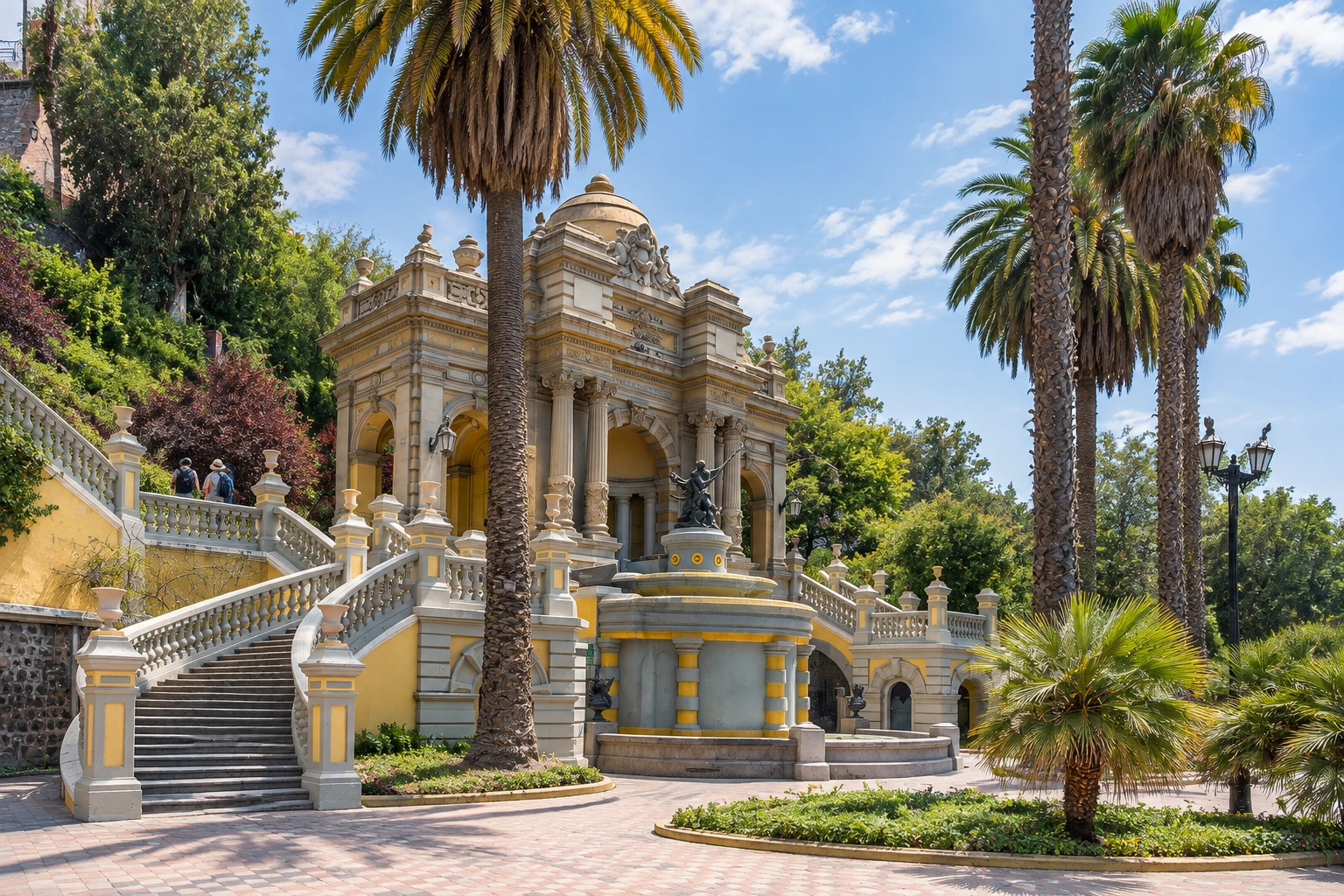
Park and viewpoint · Santiago, Chile
Santa Lucía Hill
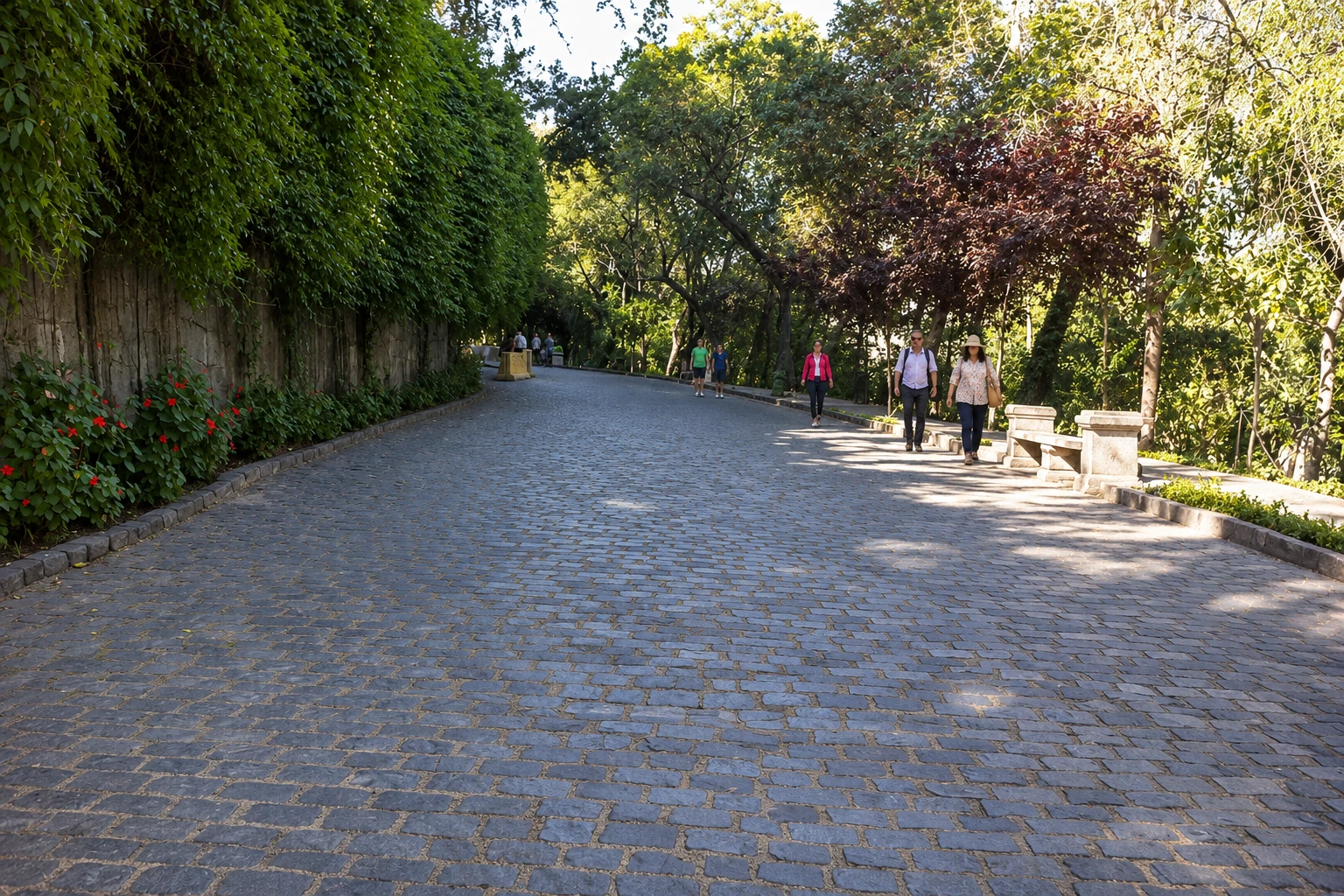
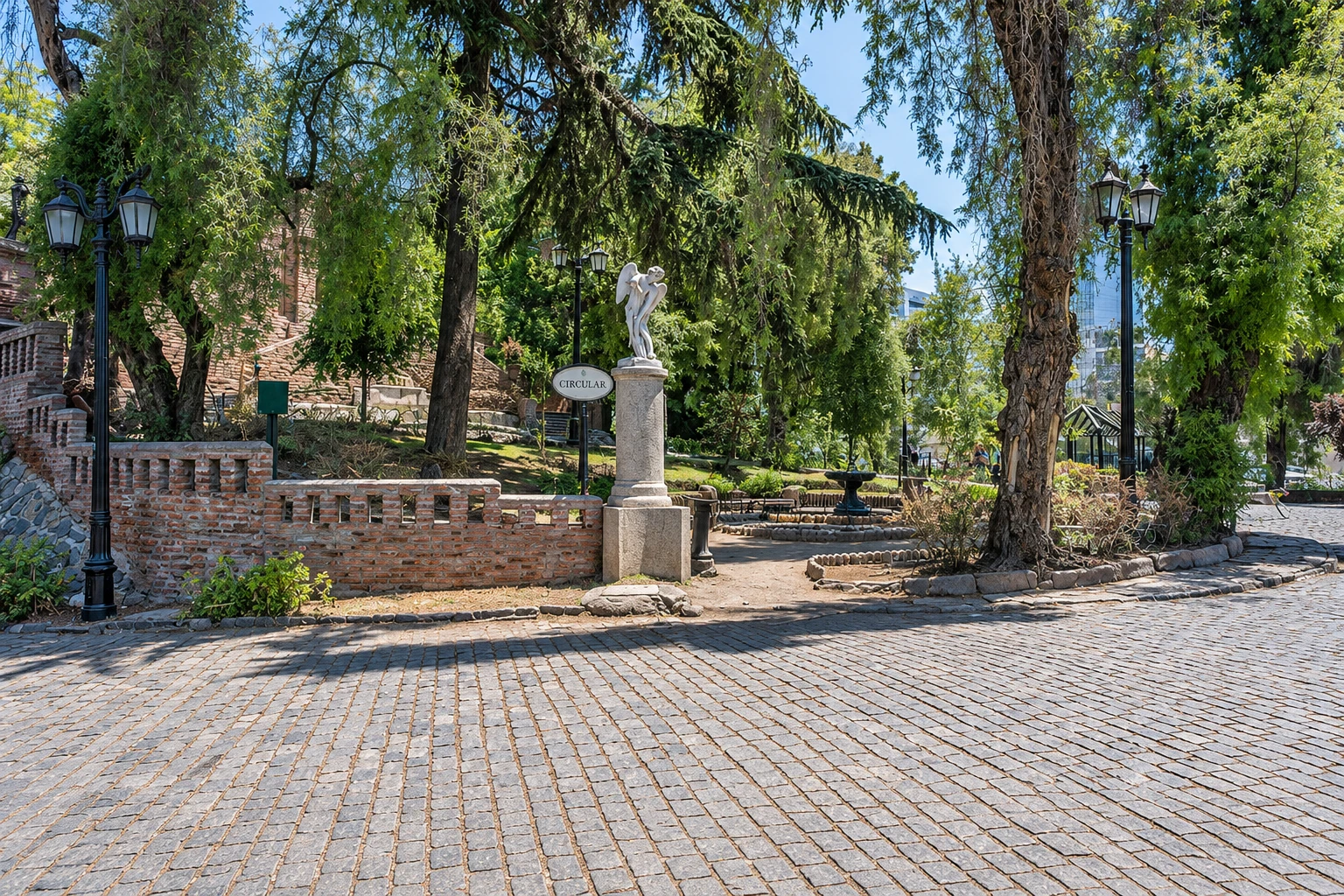
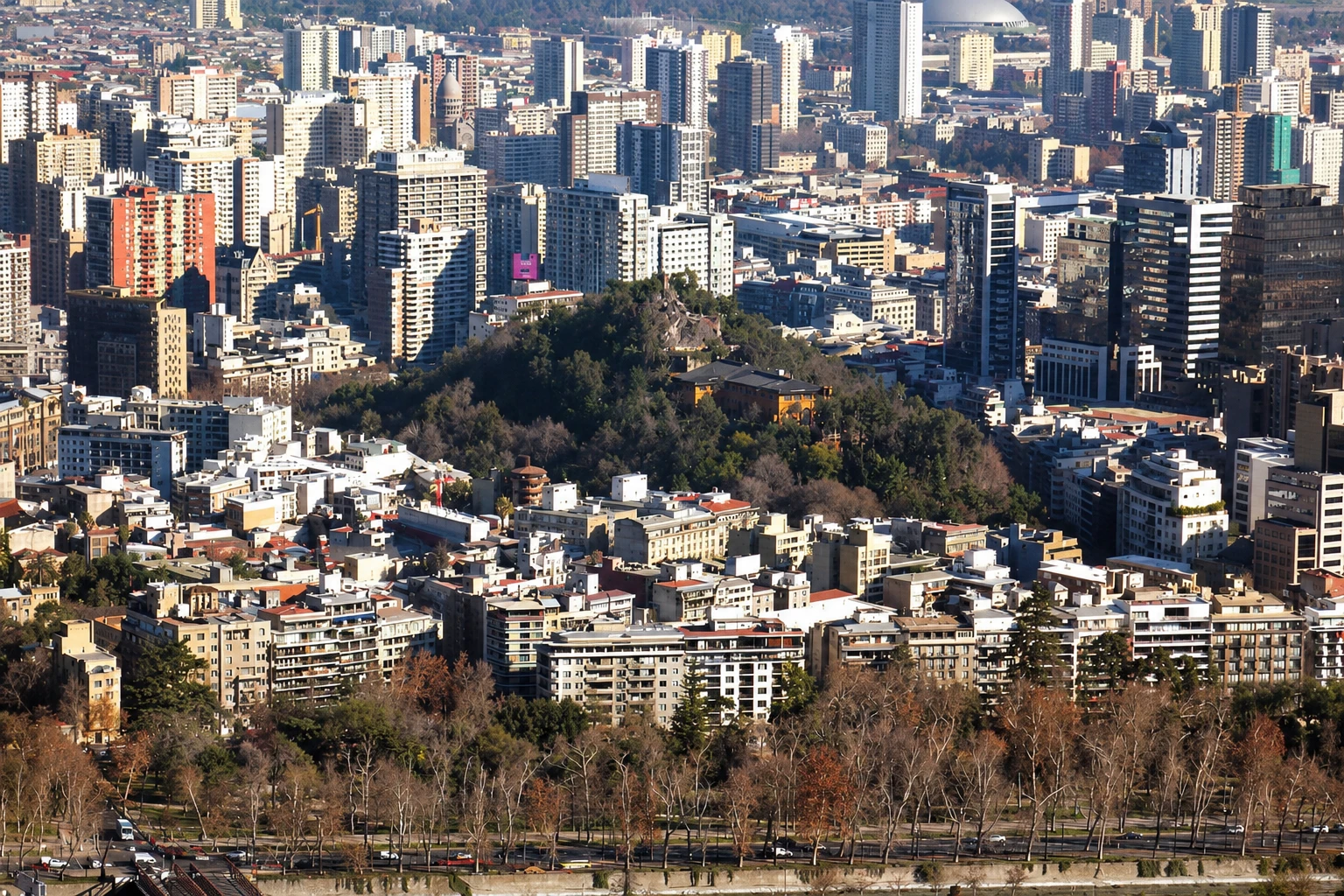
Hill in the middle of the city center, where Santiago was founded. Stairways, fountains, terraces and the Castillo Hidalgo lead up to the summit viewpoint, with views over the city and the mountain range.
Illustrative images. The pictures in this guide are illustrations based on the real place, not photographs, and may differ from it.

A look at the place
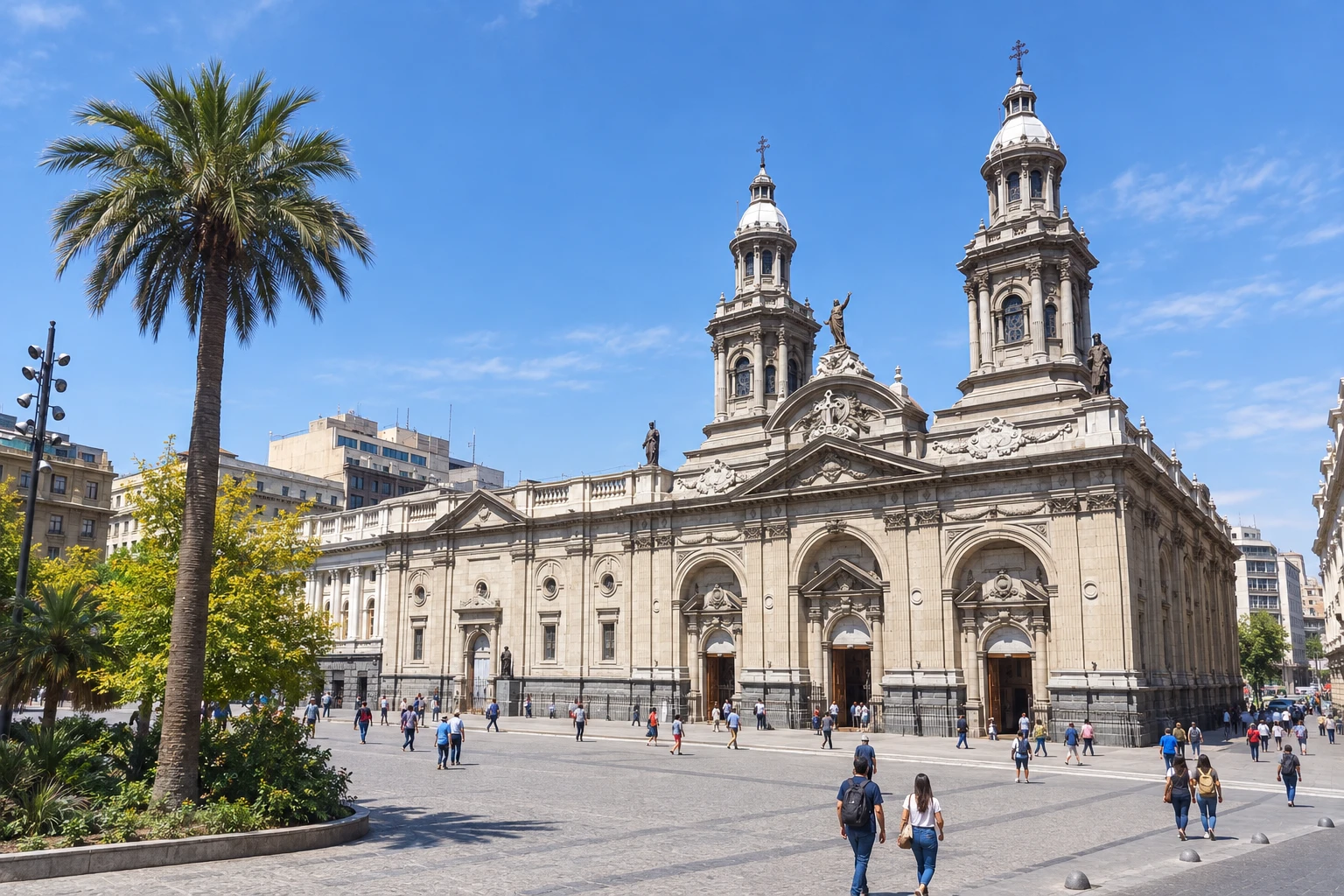
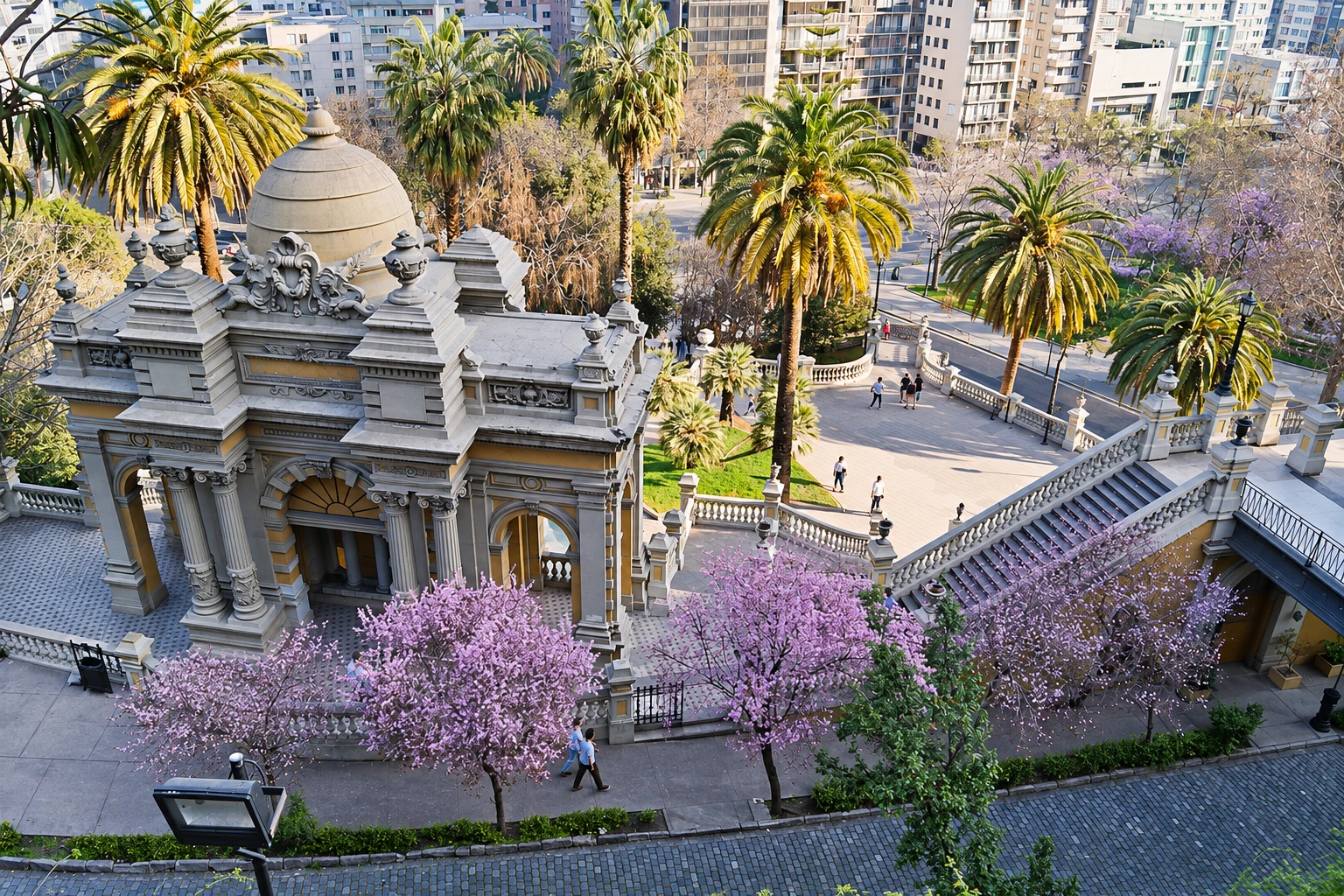
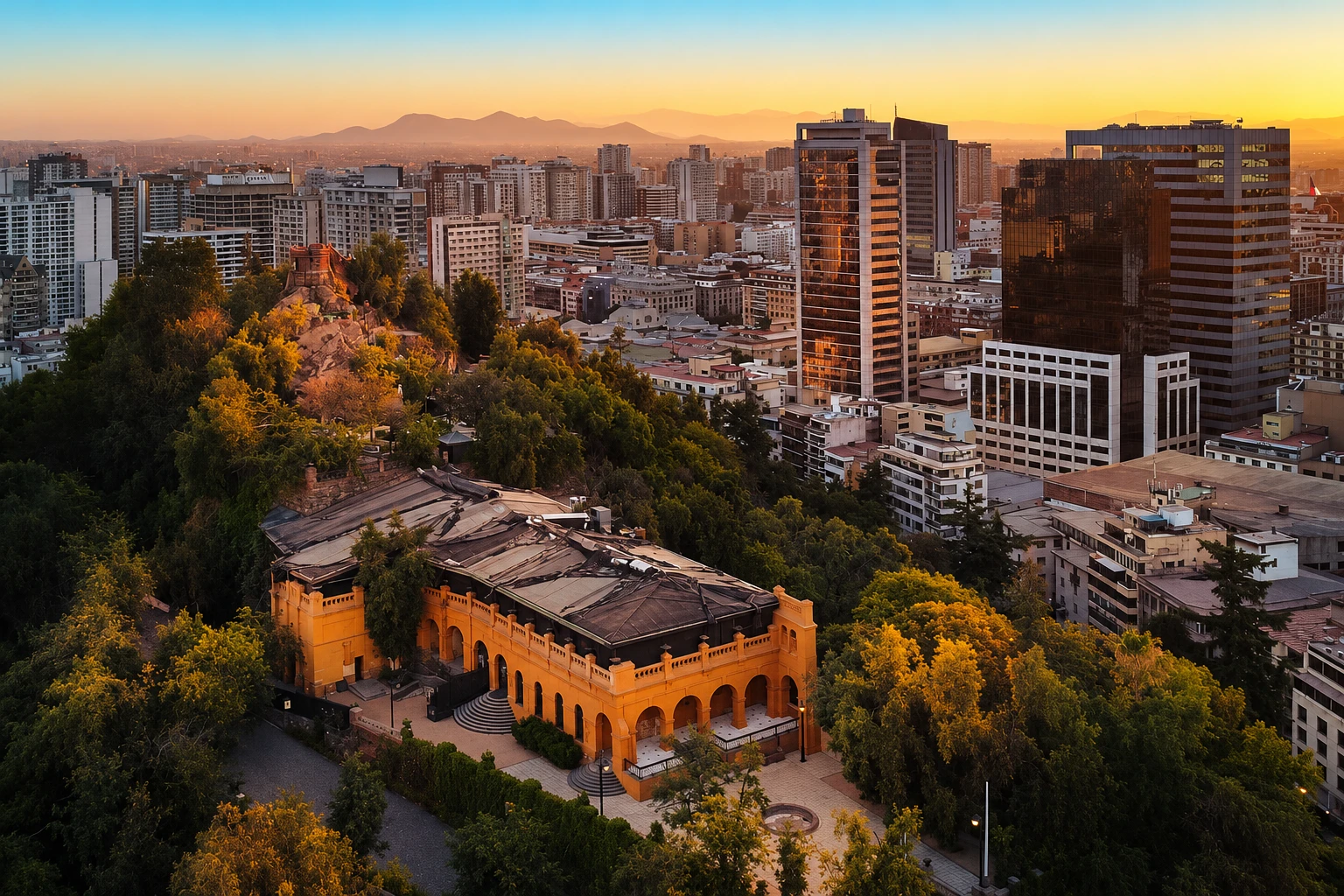
Santa Lucía Hill in pictures
These pictures are illustrations based on the real place, not photographs. They may differ from the place.
Click the picture to enlarge it.
Discover
About Santa Lucía Hill
Indigenous peoples called the hill Huelén. Pedro de Valdivia camped here in December 1540, on Saint Lucy’s Day, and founded Santiago at its feet two months later. The hill rises 69 meters above the surrounding city and covers about 6.5 hectares.
Its current appearance comes from the renovation overseen by mayor Benjamín Vicuña Mackenna between 1872 and 1874. He turned the bare rock into a park of French inspiration, with carriage paths, gardens, fountains and balustrades. The main entrance on the Alameda opens onto the Terraza Neptuno, with a large fountain and a statue of the Roman god brought from France.
At the top are the Castillo Hidalgo, a former colonial military battery turned events center, and the summit viewpoint, reached by narrow stone stairs. From up there the view covers the center, Cerro San Cristóbal and, on clear days, the snow-capped Andes. At noon a cannon fires a blank shot, a tradition dating from 1825.
The hill also has a Japanese garden, next to the Merced street entrance, and a plaque with the letter in which Valdivia describes the city’s foundation to Emperor Charles V. Paths are steep in places; comfortable sneakers make a difference.
Before you go
Practical information
Cidade Turismo reviews its information regularly, but something may have changed. Check with the place before planning your trip.
How much time to set aside
Between one hour and one and a half hours to climb at a relaxed pace, stop on the terraces and come back down.
Best time
Late afternoon, when the light turns the mountain range orange. Around noon you can hear the cannon shot. The park usually closes on Mondays for maintenance and ends visits at dusk; check before you go.
How to get there
Santa Lucía station on metro line 1 is on the corner of the main entrance on the Alameda. There is also access via Merced street, a short walk from Barrio Lastarria and Bellas Artes station (line 5).
Tip
Ascend via the Terraza Neptuno and descend on the Merced street side: that way you pass the Japanese garden and come out directly into Barrio Lastarria, a good spot for a coffee after the climb. Bring water on hot summer days.
Your questions
Frequently asked questions about Santa Lucía Hill
Is the ascent to Cerro Santa Lucía difficult?
It's short, but there are steep stairs and narrow stone steps near the top. Someone in good shape can climb in about twenty minutes. There is no elevator operating to the top.
What is the noon cannon?
A tradition started in 1825: every day at noon a cannon fires a blank shot from the top of the hill. The noise can be heard across much of the city center.
What is the main entrance?
The Alameda entrance, at Terraza Neptuno, next to the Santa Lucía metro station. There is another on Merced street, near the Japanese garden and Barrio Lastarria.